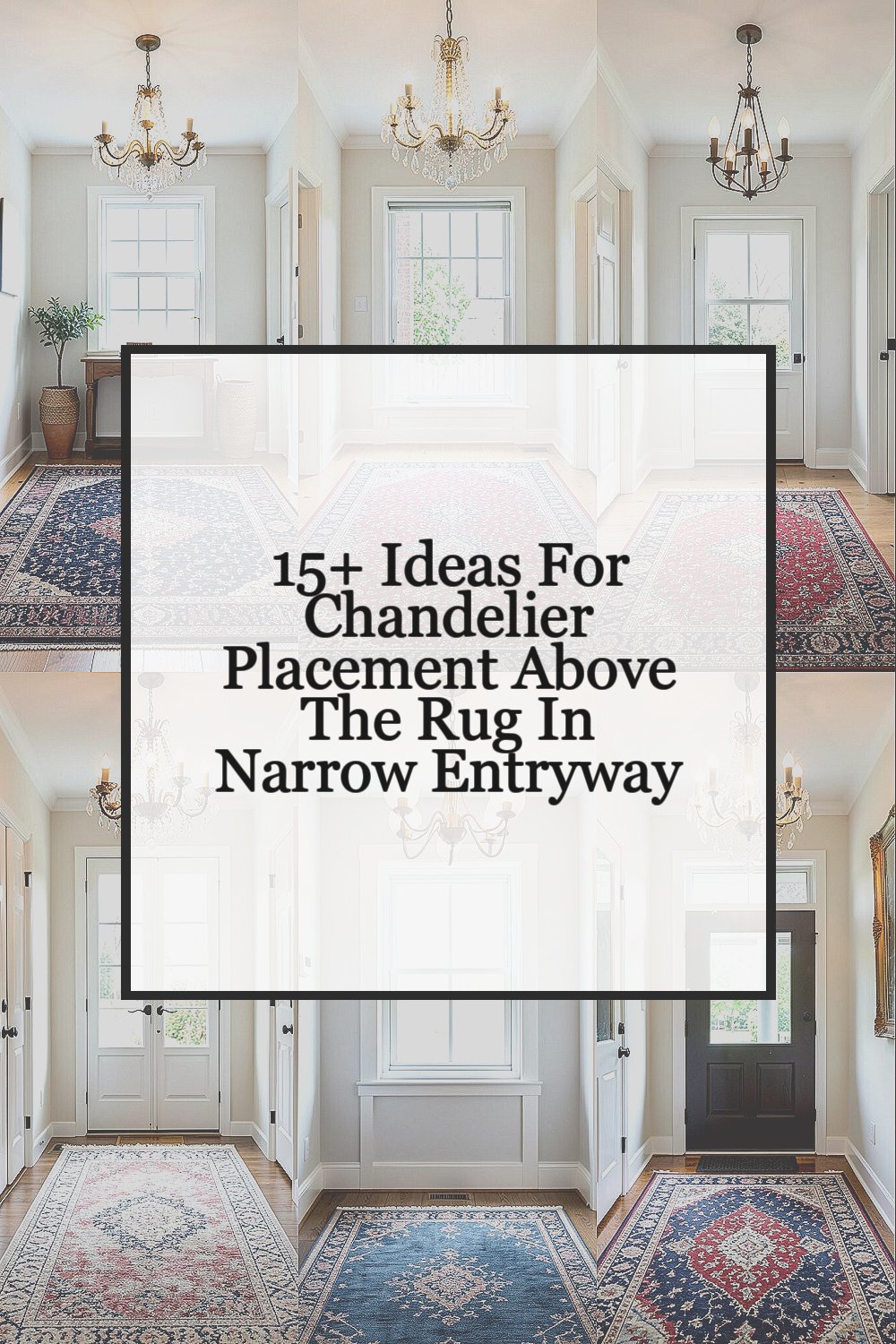
A narrow entryway can feel dramatic when the lighting hits just right. The trick is placing the chandelier so it looks intentional, not cramped.
Done well, it frames your rug, lifts the whole hallway, and makes guests feel instantly welcomed.
1. Center It Above the Rug for a Clean First Impression
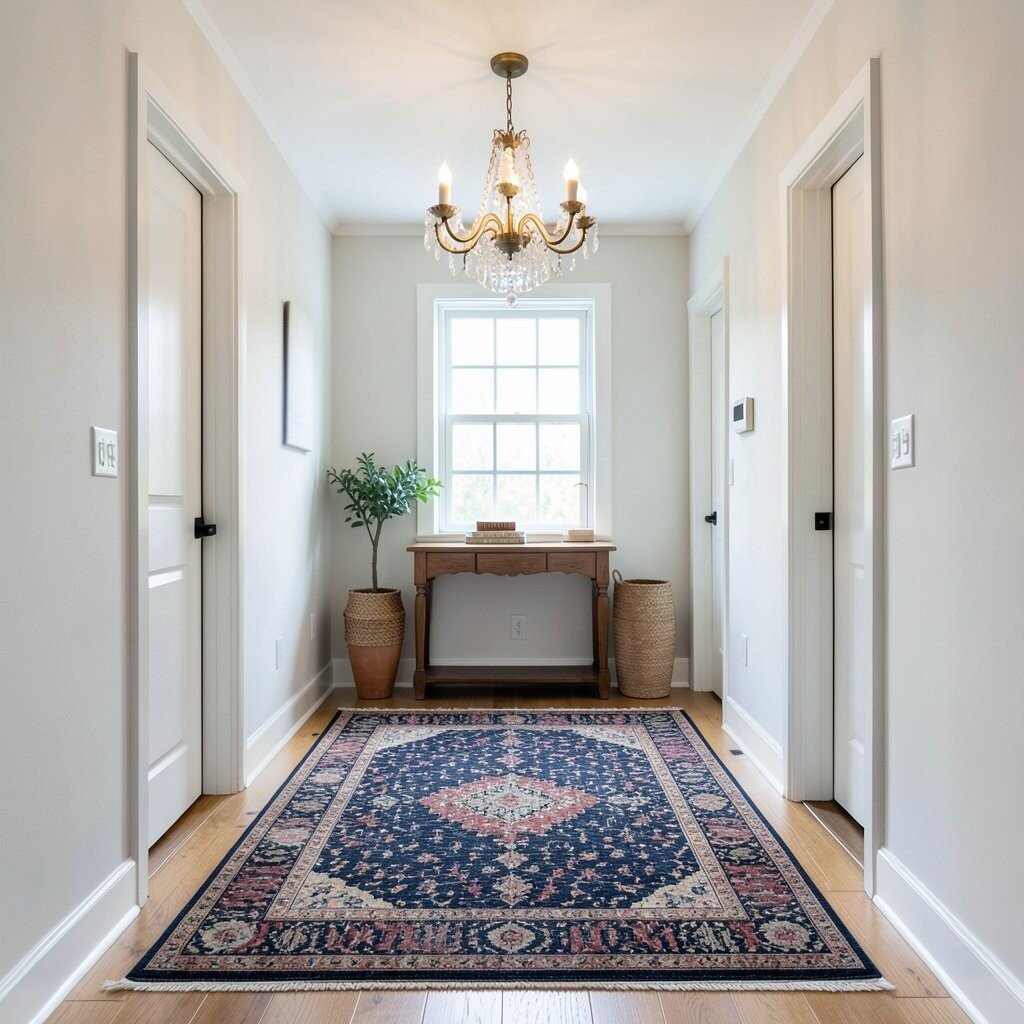
Place the chandelier so the center of the fixture lines up with the center of the rug. When the beam and crystal work sit in the same visual lane as the rug, the entryway feels balanced.
To make it work in a tight space, choose a chandelier with a slim profile or fewer arms. Keep the bottom of the chandelier high enough that you can walk under it without ducking. This centered placement also helps the light land evenly across the rug so the path feels clear and inviting.
2. Hang Slightly Forward to Visually Lengthen the Hall
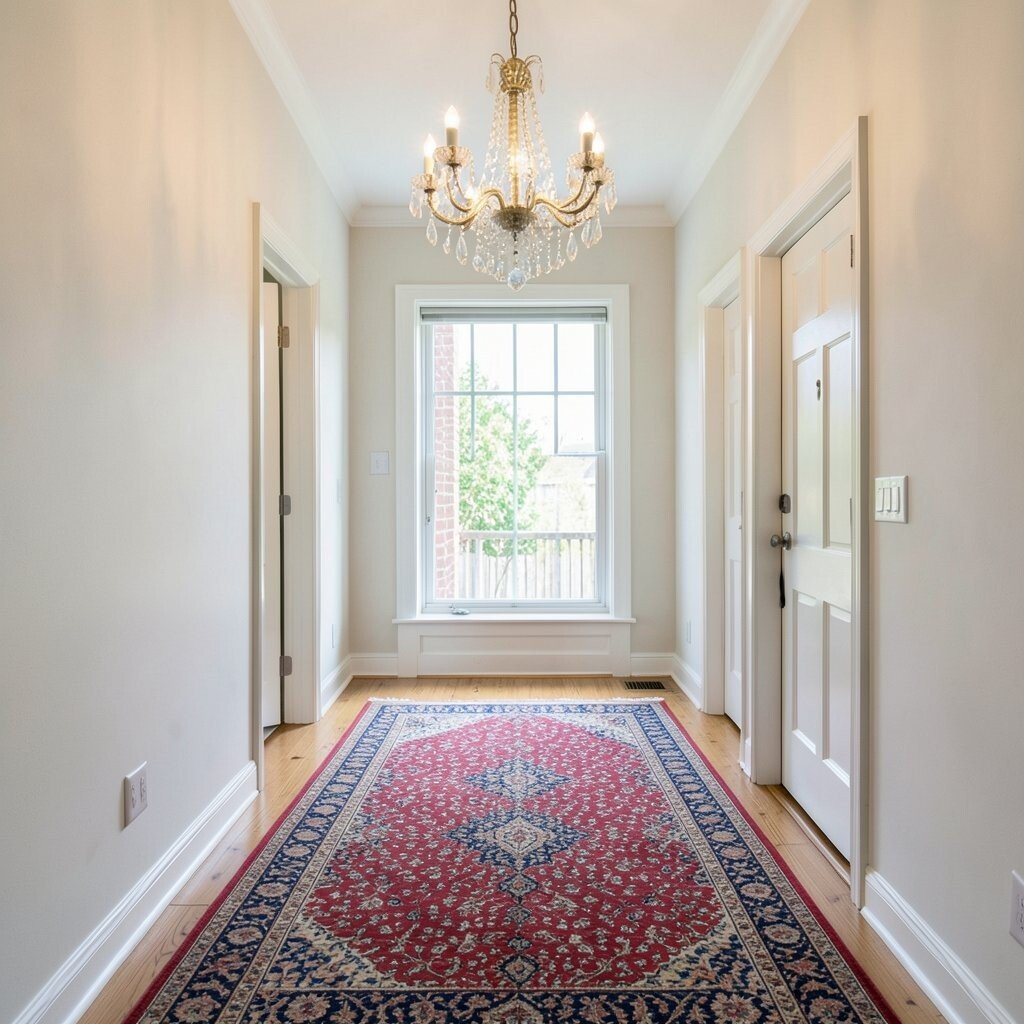
If your rug sits farther back under a console or wall area, consider shifting the chandelier forward a bit. Even a small change can pull the eye toward the doorway and make the entryway look longer.
Try aligning the chandelier’s center with the rug’s front edge instead of the midpoint. That tiny visual move often brings more glow to the spot where shoes, coats, and bags end up.
This is a great option when you have a runner rug with a patterned face that deserves extra light. It can also help avoid shadows behind you when you step inside. Keep adjusting by a few inches until the chandelier feels like it “belongs” to the rug rather than floating above empty space.
3. Use a Pendant-Style Chandelier for a Narrow Ceiling
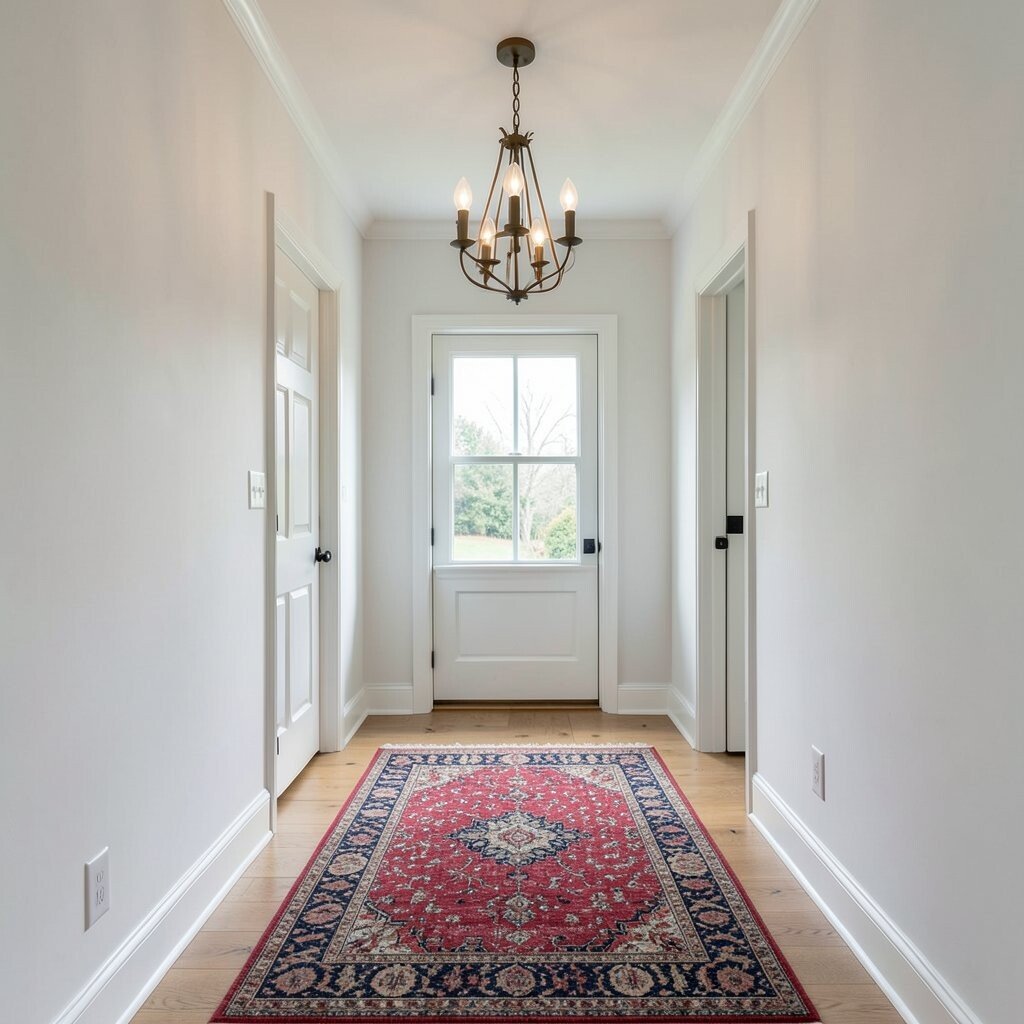
In very narrow entries, a pendant-style chandelier can feel elegant without taking over the room. Look for a design where the light source sits vertically and the body stays compact.
Visualize it like a tall lantern effect, with light streaming downward onto the rug. This creates a clear focal point while leaving the sides open for mirrors, artwork, and slim furniture.
Many homeowners love this look because it blends modern lines with a warm glow. If you enjoy today’s trend of “airy lighting,” this style fits right in. For practicality, choose an adjustable cord length so final height is easy to fine-tune.
4. Match the Chandelier Height to Your Rug Pile and Traffic Flow
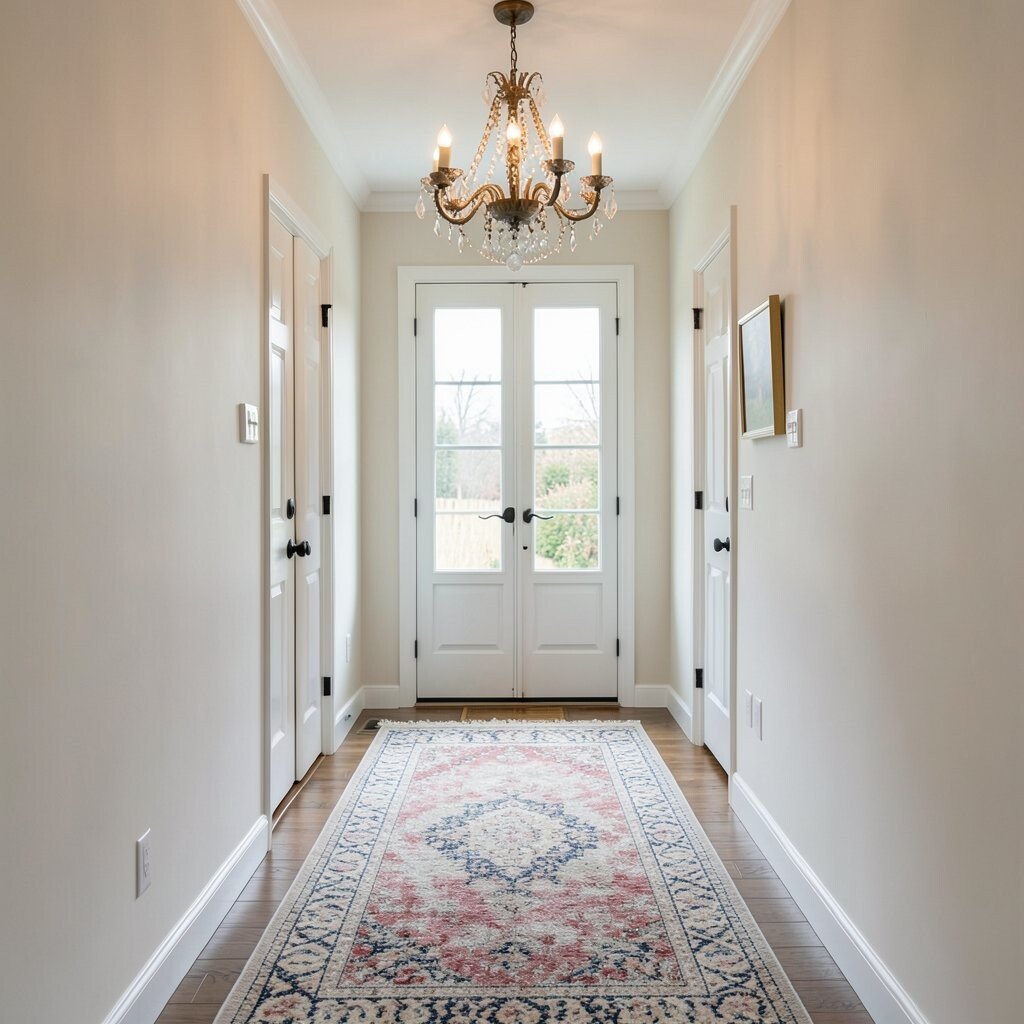
Height matters most in an entryway because people pass through without thinking about lighting. A chandelier that’s too low can feel like it steals space, even if it looks beautiful.
Aim for a gap that keeps the fixture safely above your head while still making the rug feel spotlighted. If your rug has a thicker pile, you can lower the fixture slightly to create stronger contrast on the texture. Keep tall items like a coat rack or tall shoes in mind too, so nothing competes with the chandelier visually.
5. Create a Two-Tone Look by Pairing Warm Metal With Soft Glass
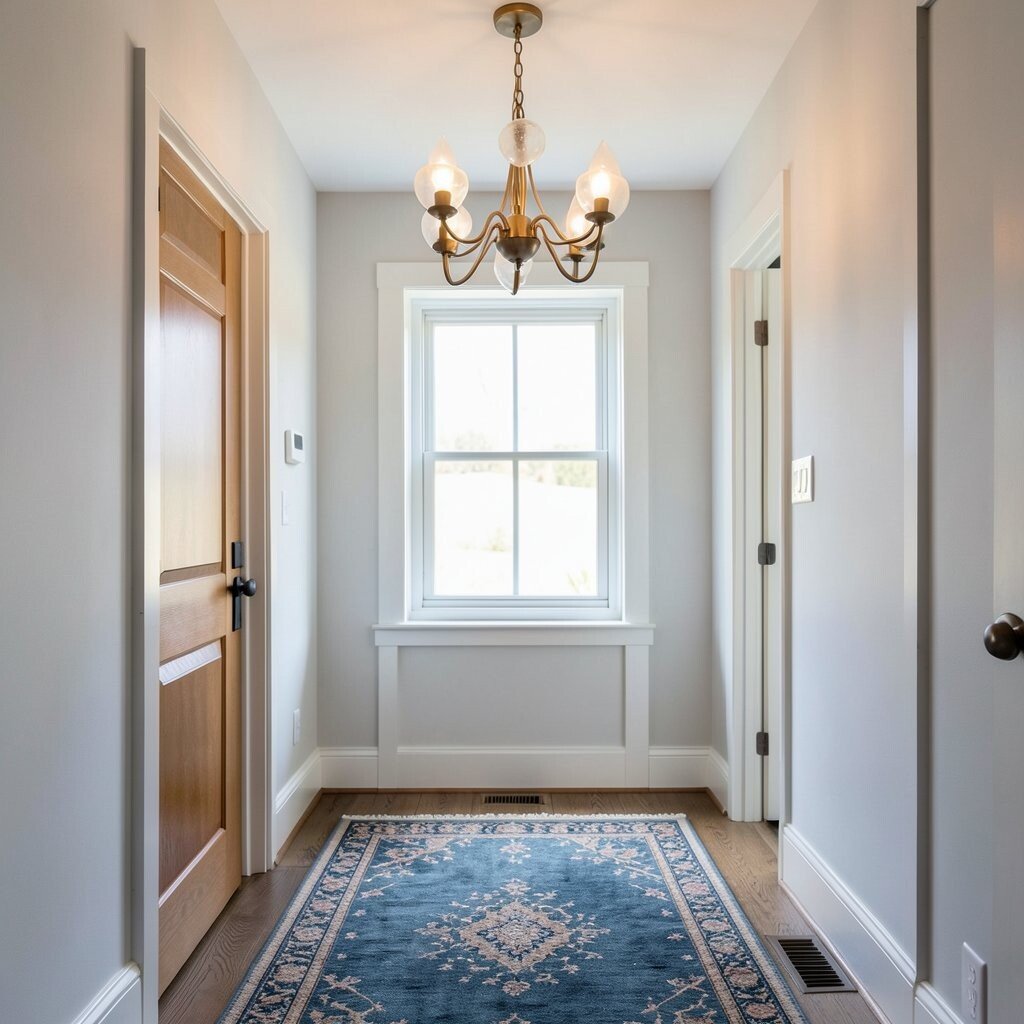
For a narrow entryway, the chandelier can do more than brighten. Choose finishes that reflect light without overpowering the walls, like warm brass or brushed gold with gentle glass.
Soft glass shades or clear crystals can bounce light onto the rug and make colors look richer. This kind of glow is unique because it feels “layered,” not flat, which is especially helpful in tight spaces.
If your rug has muted tones, warm metal can bring the pattern forward. If your entryway feels bright already, a touch of amber glass adds cozy character. Consider the cost carefully by balancing splurge glass with a more budget-friendly frame, since the frame still holds the visual center.
6. Tie the Chandelier to a Mirror So the Entryway Feels Bigger
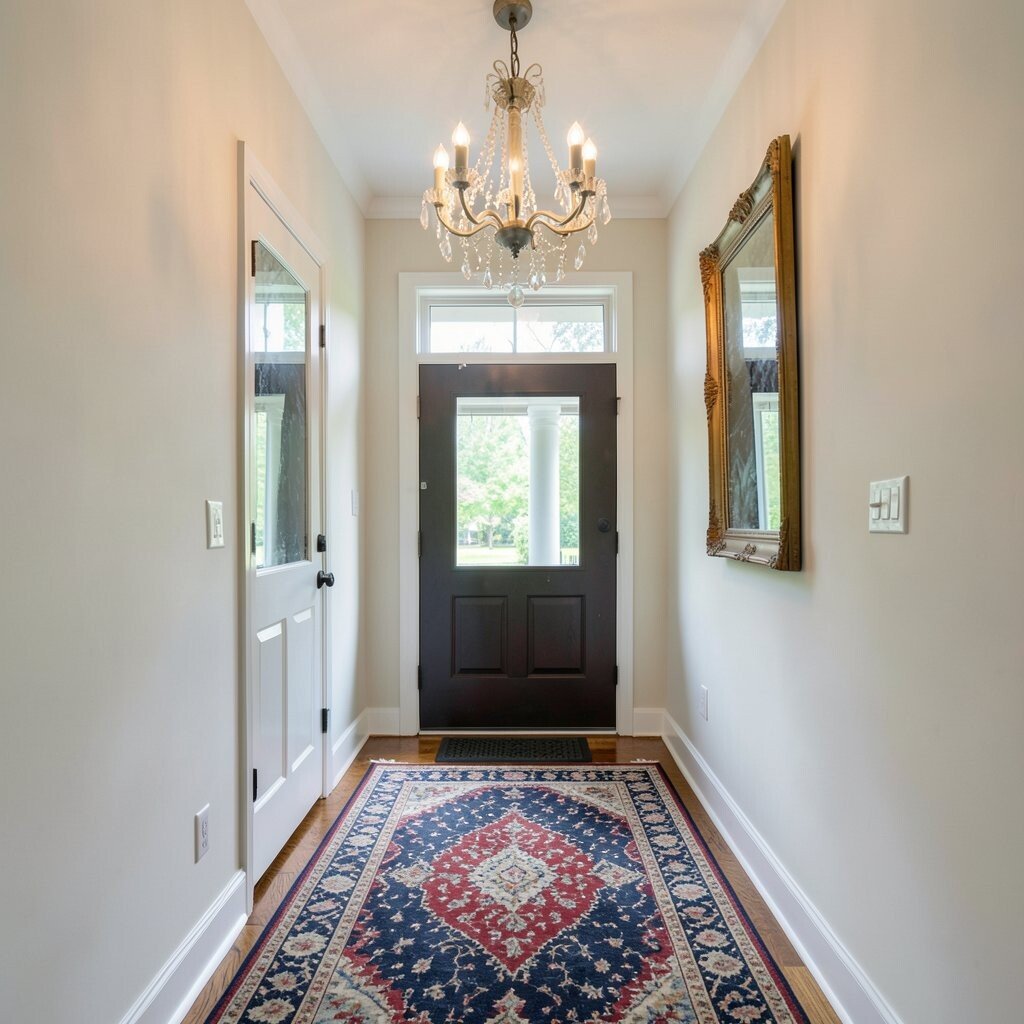
Place a mirror on the wall across from the rug, then center the chandelier so both reflect light together. When the mirror catches the glow, the narrow entryway starts to feel wider.
You’ll notice it right away as the rug pattern appears echoed, with fewer dark corners. This also makes the chandelier feel less like an object and more like part of a lighting plan.
Try a chandelier with enough sparkle to show up in the mirror without creating harsh glare. If you’re personalizing your entry, match the mirror frame finish to the chandelier metal so the whole look feels planned. A simple frame update can be a budget-friendly way to make the chandelier feel more “designed.”
7. Hang It Slightly Lower Over the Rug for a Cozy Spotlight
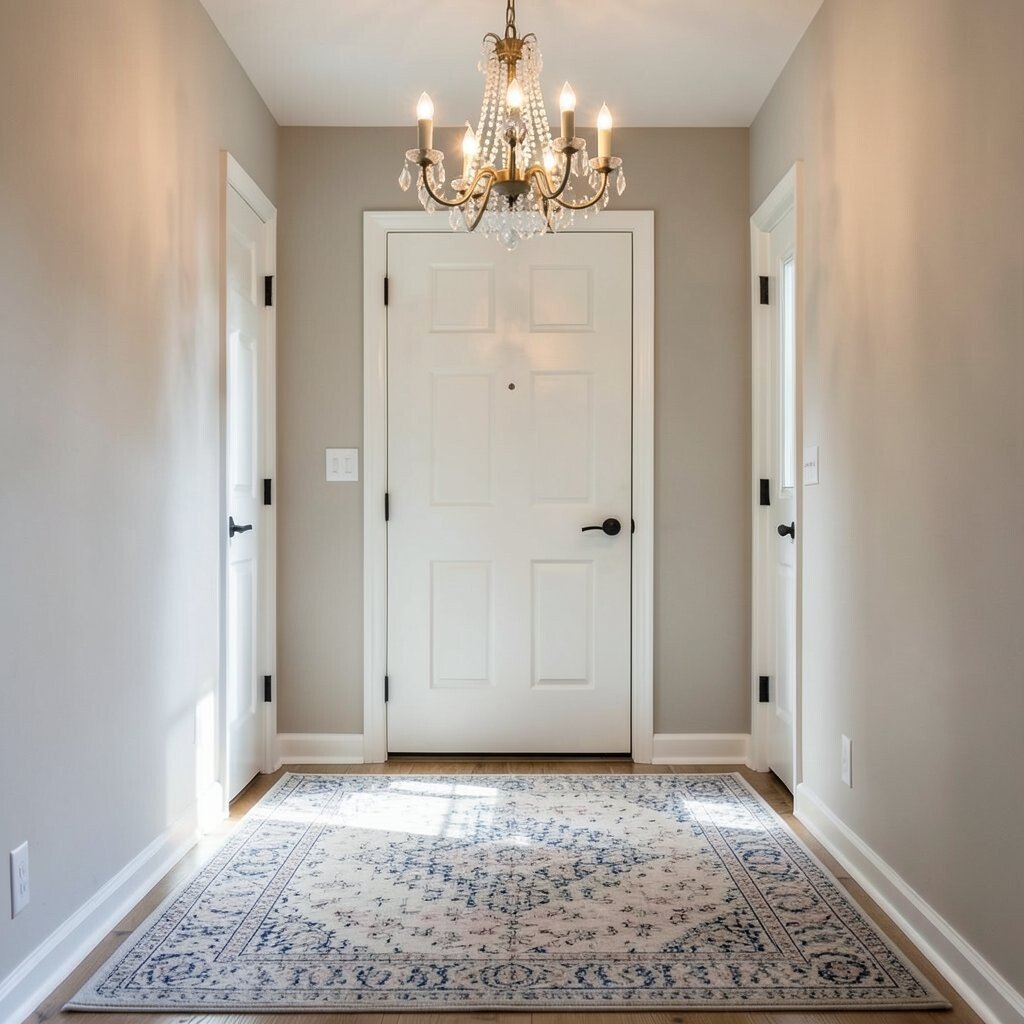
Sometimes a narrow entryway needs a little drama, and lowering the chandelier can create it. When the light comes closer to the rug, the space feels like it’s dressed for arrival.
A cozy spotlight helps the entryway read as a destination, not just a hallway. You can also use that glow to highlight a rug border, fringe, or a standout pattern.
Just keep safety and comfort in mind by leaving clearance for heads and hanging items. If the entryway gets used often throughout the day, choose a chandelier with well-positioned arms so the silhouette stays open. Many people find that a slightly lower height lets warm bulbs do extra work, which can reduce the need for additional lights.
8. Aim for Symmetry With Wall Sconces or Picture Frames
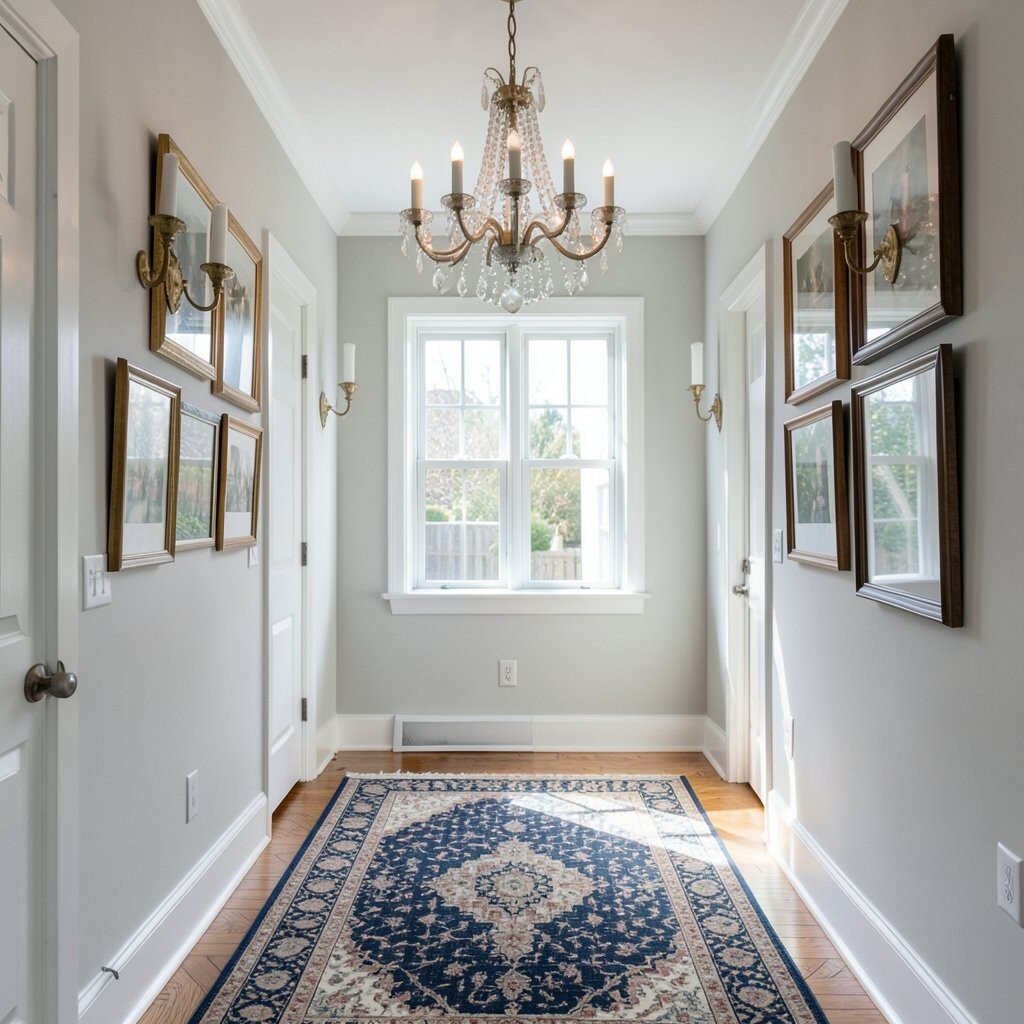
If you already have wall sconces or a tight gallery wall, coordinate the chandelier placement with them. Symmetry makes narrow spaces feel calm instead of cluttered.
Try measuring so the chandelier’s center lines up with the center point of the rug and the artwork span. This gives your eye a simple path to follow and makes the room feel intentional.
You can personalize by matching the chandelier scale to the size of the framed pieces, so nothing feels too heavy. If your budget is tight, consider keeping the chandelier simpler and letting the art carry some visual richness. Current trends often blend statement lighting with carefully spaced wall decor, so this approach feels modern without being flashy.
9. Use a Smaller-Scale Chandelier to Keep the Sides Open
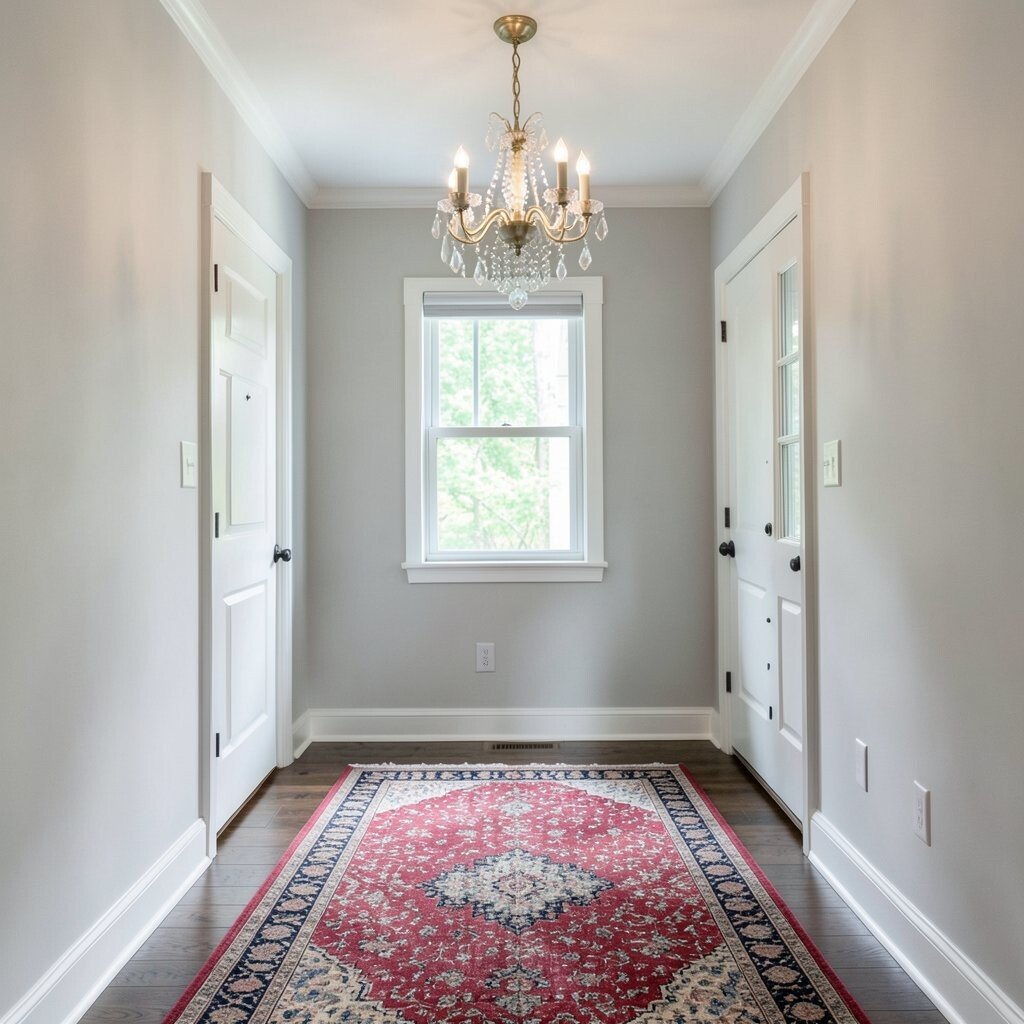
In narrow entryways, bigger can sometimes look like it’s crowding the room. A smaller chandelier can feel more precise and keeps wall space clear for hooks and storage.
Choose a fixture that doesn’t flare out too wide, especially if your rug is narrow too. When the light stays compact, the entryway keeps its “breathing room,” which is a real practical benefit.
This option is unique because it leans into delicate design rather than loud presence. Look for fewer hanging elements or a more straight-lined shape if your ceiling is low. You’ll often get a better fit for your space without spending as much, since smaller fixtures typically cost less than oversized statement pieces.
10. Adjust for an Offset Rug so the Fixture Looks Intentional
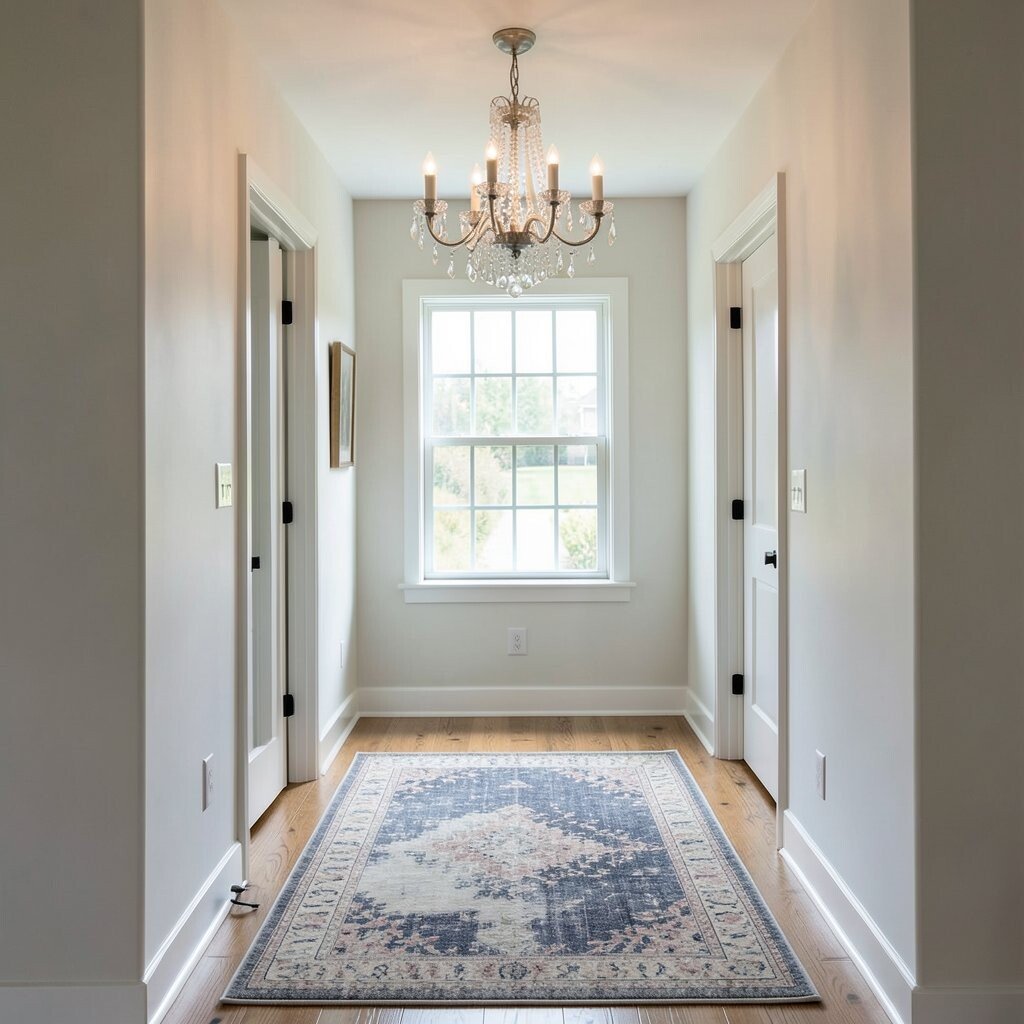
Some rugs aren’t perfectly centered because doors, hall bends, or furniture layouts push them. If your rug is offset, don’t force the chandelier to fight the floor plan.
Shift the chandelier so it “sits above” the rug in the same way the runner leads through the space. A slightly offset placement can make the chandelier look tailored to your exact entryway, not copied from a magazine photo.
To get it right, stand at the doorway and check the alignment from eye level. This small habit helps you catch awkward angles that measurements alone can’t solve. Personalize further by choosing a chandelier finish that matches your door hardware, so the off-center alignment still feels harmonious.
11. Hang Over the Rug’s Pattern Focal Point, Not Just the Center
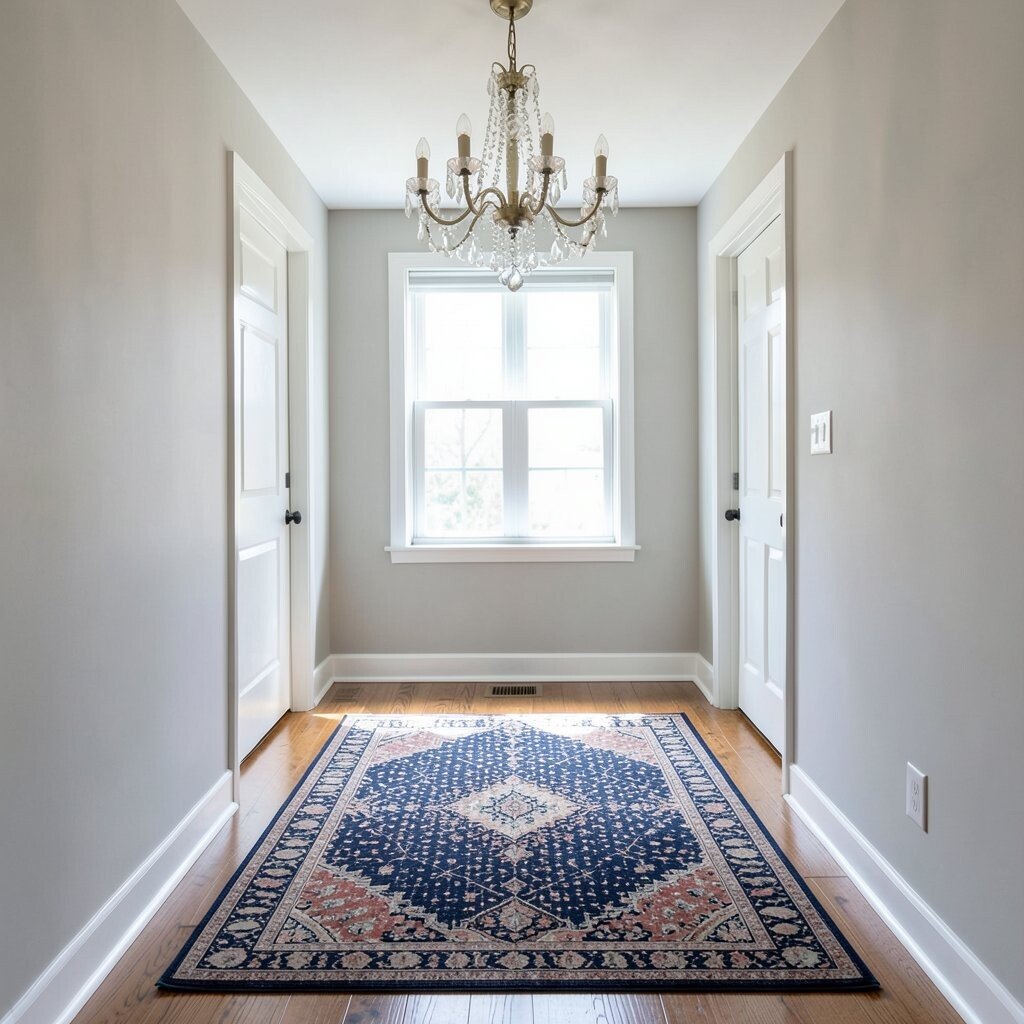
Many rugs have a central medallion, a bold stripe, or a decorative border that naturally draws attention. If your rug has one main “wow” area, place the chandelier so it lights that point.
This makes the fixture feel like it supports the rug’s design instead of competing with it. When the chandelier’s glow lands on the focal pattern, the entryway looks styled from the first step in.
Try turning off overhead lights and using the chandelier alone while you observe how the pattern reads. This is a practical way to see whether glare hides the texture or whether shadows create depth. If you want a trend-forward look, pick a chandelier with a warm, glossy shade that adds richness to the colors in patterned rugs.
12. Keep the Chandelier Centered But Use a Clear Visual Path to the Door
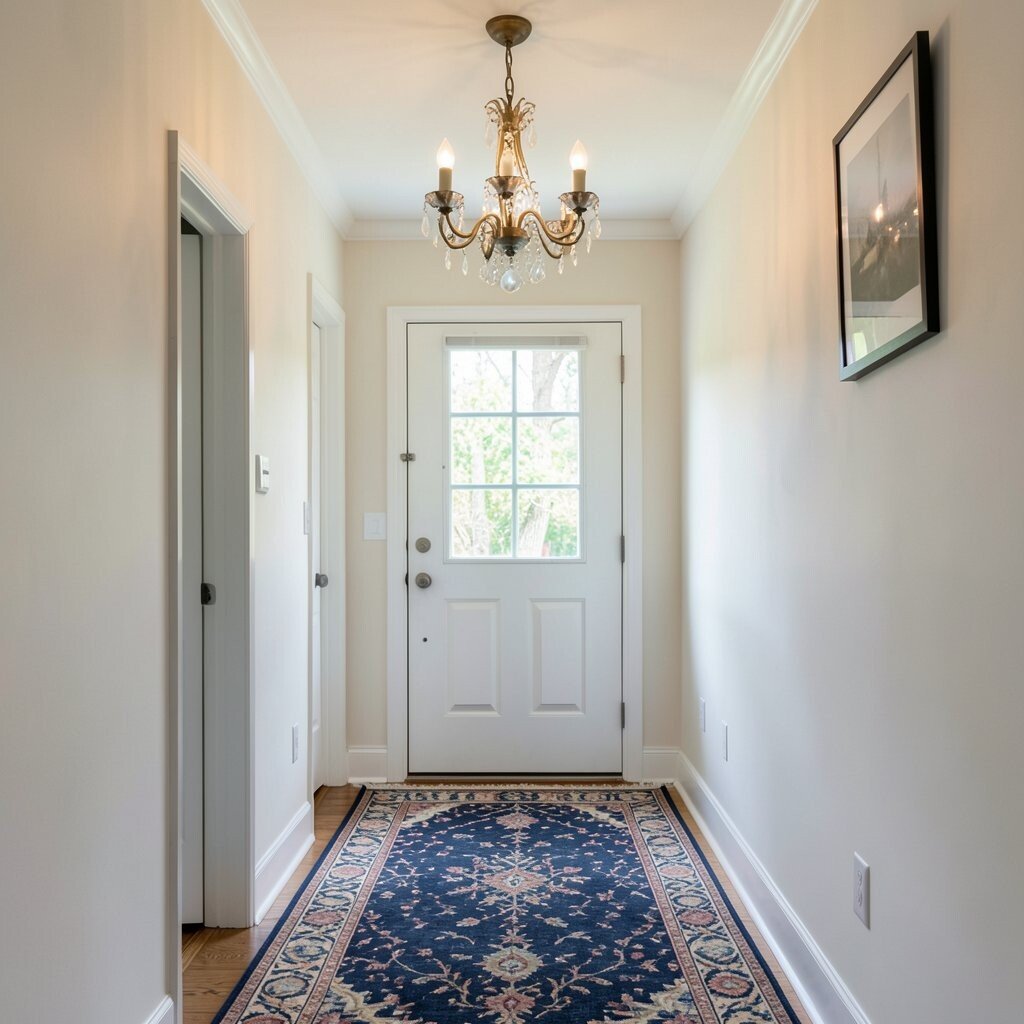
Even when the chandelier is centered, you can still guide the eye with spacing. Leave a clear visual path from the chandelier down to the rug area closest to the doorway.
That means avoiding fixture styles with bulky elements that block your view into the entry. A cleaner silhouette can make the space feel open, which is crucial in narrow homes.
You can personalize by selecting a chandelier design that feels light and open, such as one with vertical lines or fewer dangling pieces. This also makes the entryway more functional because it won’t clutter where people naturally walk. In terms of cost, it can be smarter to invest in a well-shaped frame and save on extra decorative drops that won’t add much in a tight footprint.
13. Choose a Sculptural Chandelier With Vertical Lines for Height Emphasis
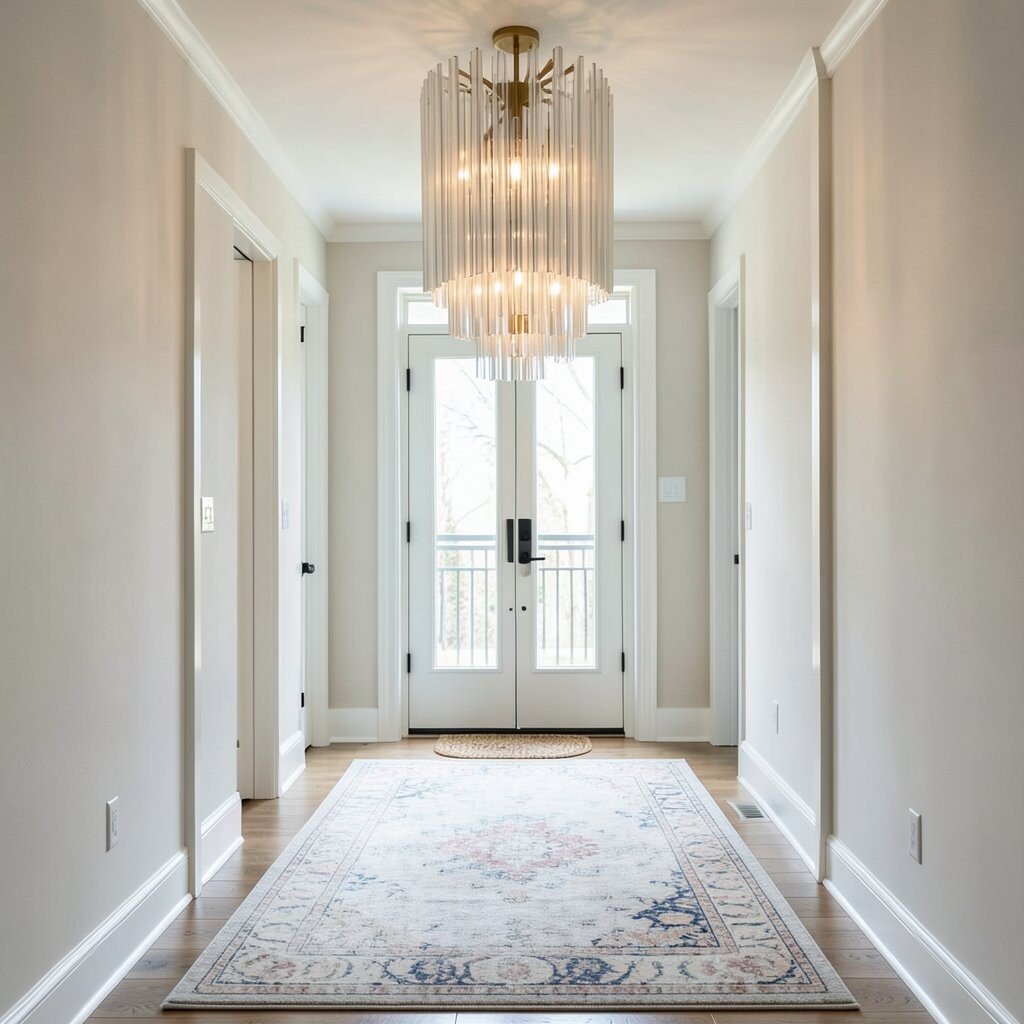
To make a narrow entry feel taller, pick a chandelier that emphasizes height. Sculptural shapes with vertical lines draw the eyes upward and reduce the sense of cramped width.
When light travels upward and then down, the entryway often feels more elegant. This visual trick is especially helpful if your walls are painted a darker color or if the hallway feels dim.
Look for designs that echo the lines in your door trim or railing. That kind of matching makes the chandelier feel custom to your home. It’s a nice trend right now to use “architectural” lighting that blends with modern millwork and clean shapes while still feeling cozy.
14. Place the Chandelier Slightly Off Center When the Entryway Has a Side Nook
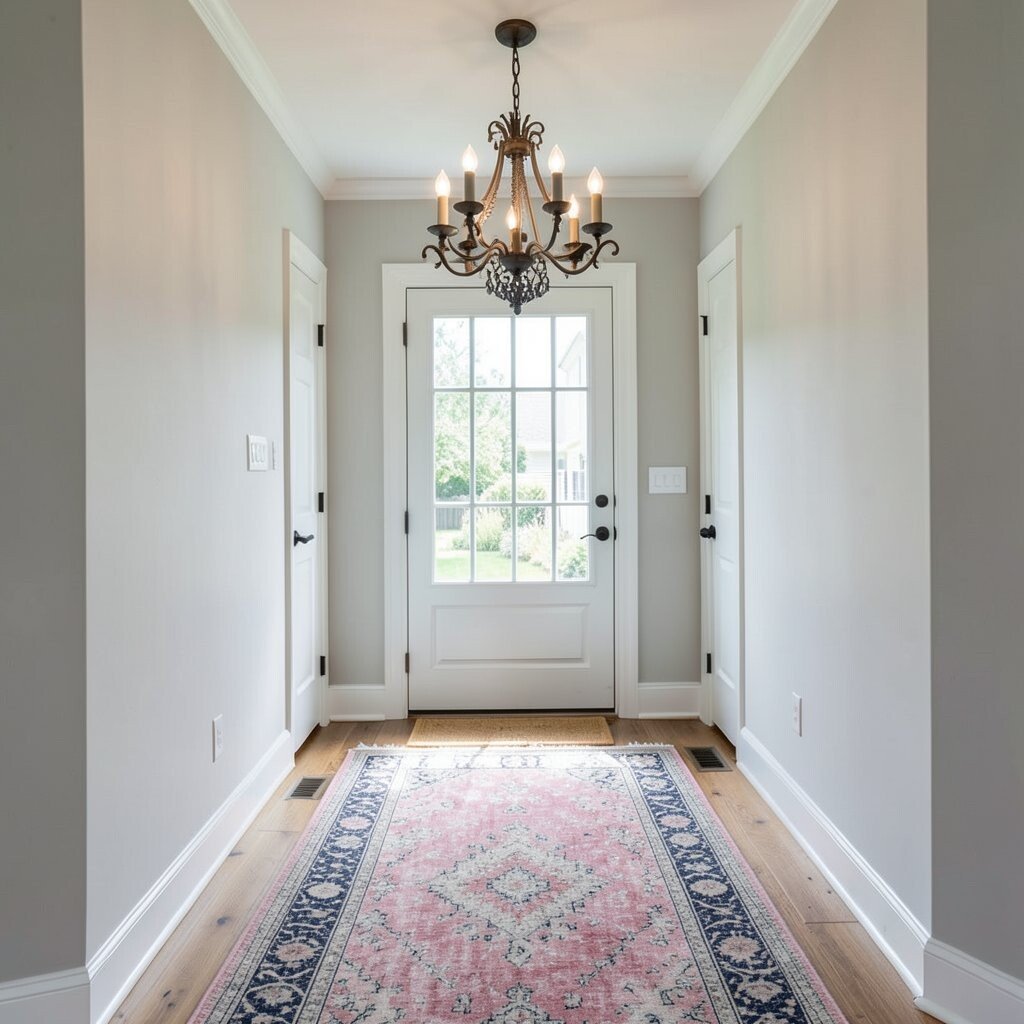
If your entry includes a side bench, plant corner, or a narrow closet door, strict centering might look awkward. Instead, shift the chandelier a little so it balances the full layout, not only the rug.
This approach helps each zone feel supported by light, which makes the nook feel intentional. The chandelier becomes the anchor that ties the rug to the nearby functional area.
Personalize the effect by choosing a fixture that shares design language with the nook features, like curved metal near a curved bench back. If the side area is used often, consider a chandelier with good downward light so the nook doesn’t become shadowy. Cost-wise, it may be easier to get the right scale in a mid-range chandelier when you’re not trying to overpower a wide open room.
15. Coordinate Lighting Temperature With Rug Color and Wall Paint
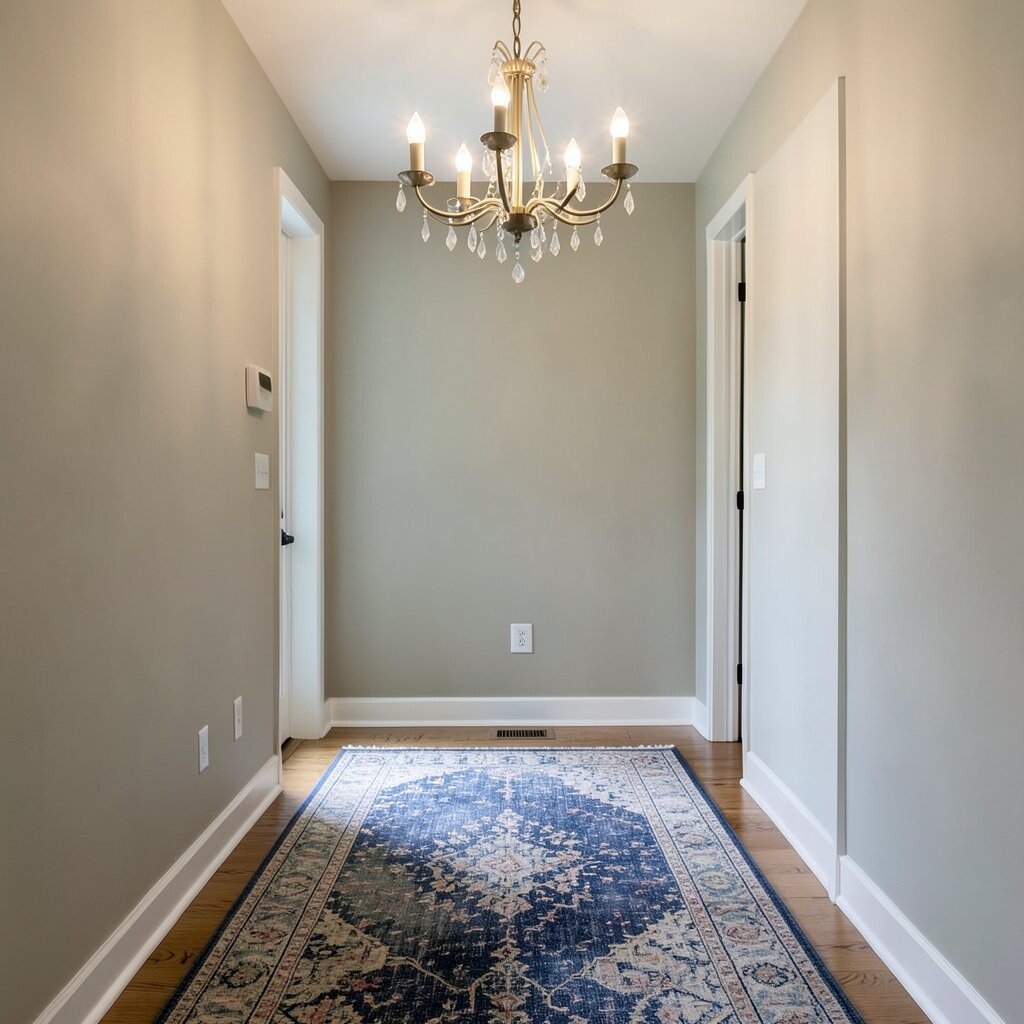
The placement is important, but the bulb tone changes how the rug and chandelier look together. Warm light can make a rug feel rich and inviting, while cooler light can make some fibers look flatter.
When the chandelier is properly centered over the rug, test different bulbs if you can. Notice whether the rug pattern pops or if the colors turn dull in your specific entryway lighting.
This is unique because it’s practical and personal at the same time. Many people assume chandelier placement alone solves the look, but color temperature often decides whether the space feels cozy or clinical. If your paint color is cool, warm bulbs can bring comfort without changing anything else, and that’s a budget-friendly upgrade.
16. Use a Dimmer and Fine-Tune After Dark for the Perfect Placement
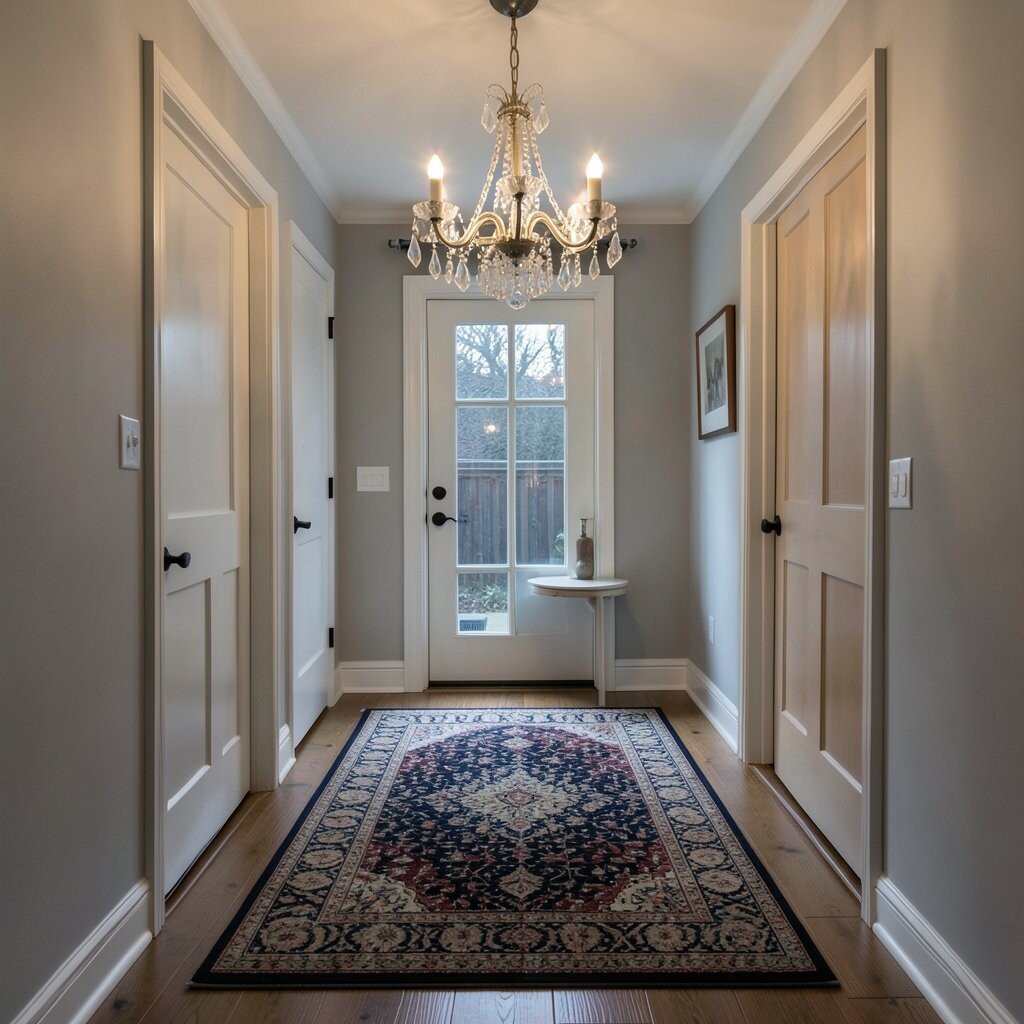
Once the chandelier is installed, the real test happens at night when the entryway becomes a calm landing space. A dimmer lets you adjust the mood so the rug always looks like the main attraction.
This makes the placement feel more confident because you can fine-tune brightness rather than moving hardware again. Start with a medium level, then slowly lower it while you watch how light hits the rug texture and edges.
Trends right now often lean toward controllable lighting, and a dimmer is one of the easiest upgrades to match that vibe. Personalize by setting different scenes for arrivals, evenings, and gatherings so the chandelier never looks “too much” at the wrong time. From a cost view, a dimmer is usually far less expensive than replacing a chandelier, so it’s a smart move for narrow entryways where lighting needs to be just right.