The room starts to feel friendlier when kids can choose a cozy spot. Bean bags turn learning into something softer, safer, and more fun.
Here are many kindergarten learning-center ideas that use bean bags to support different skills, moods, and play styles.
1. Cozy Reading Nook
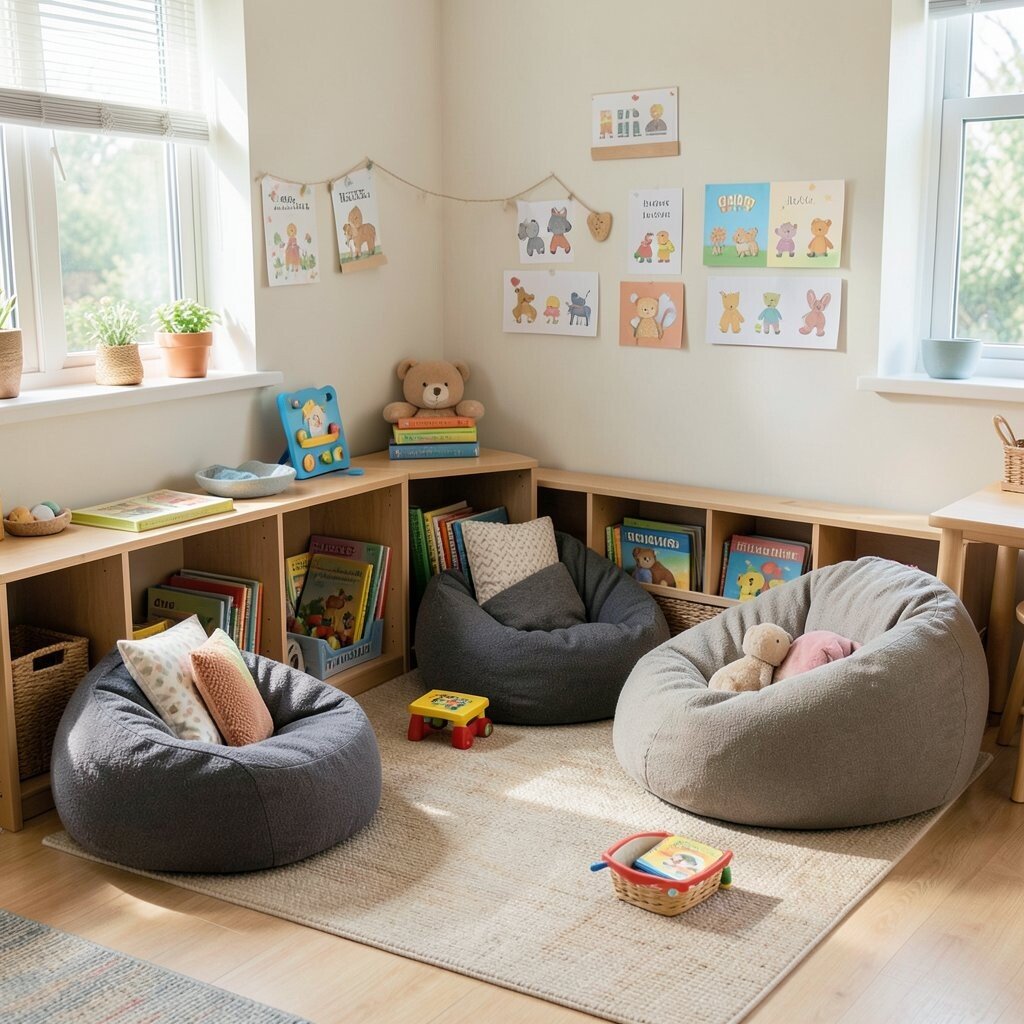
A bean bag reading nook makes story time feel like a calm blanket. Kids can curl up close to the books instead of standing back and waiting their turn.
Choose a small rug or mat so the bean bags stay in one comfy area. Add book bins at kid height and keep a simple picture schedule nearby to reduce chaos during transitions.
2. Listening and Sound Station
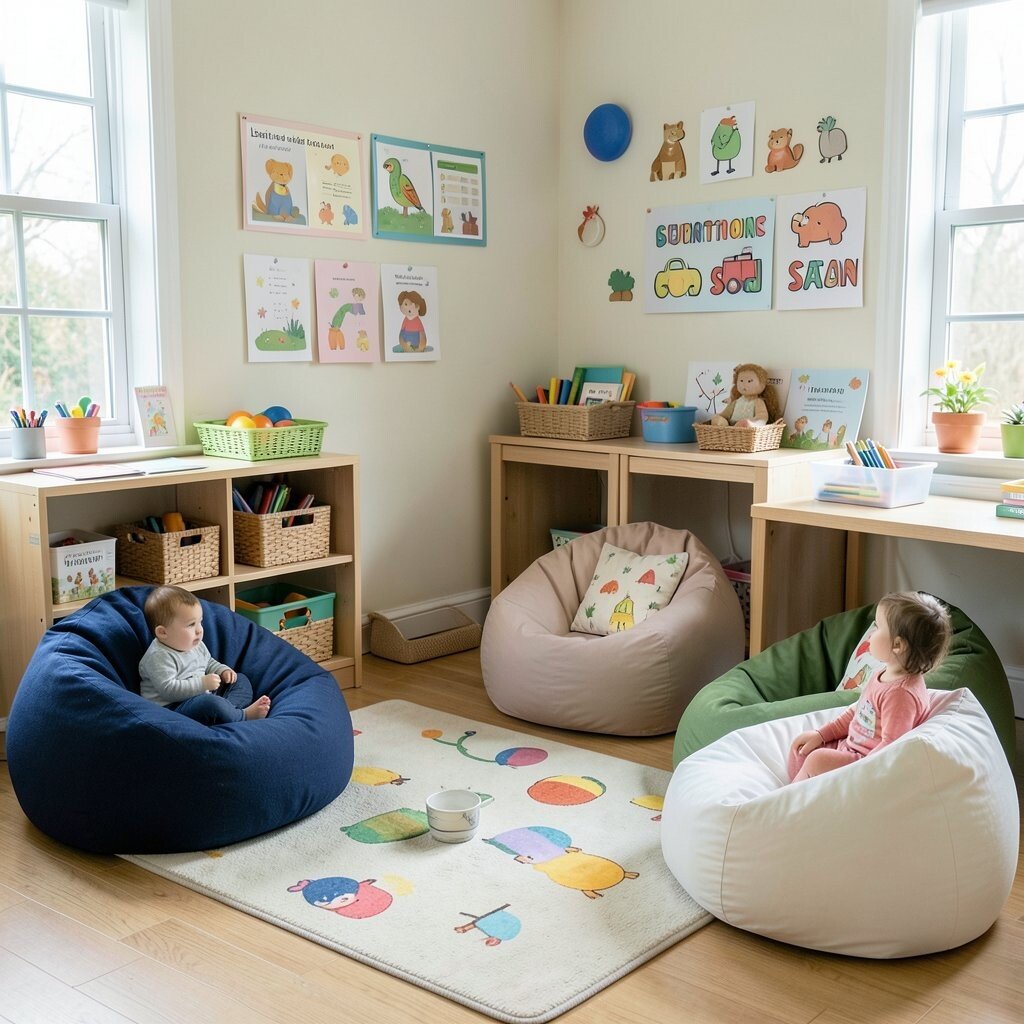
Place bean bags around a quiet listening spot so children can focus on audio stories and songs. You’ll notice fewer wiggles when everyone has a soft seat to settle into.
Use an audiobook player or teacher tablet with kid-safe volume. A gentle background chart with pictures of “listen,” “repeat,” and “remember” helps children know what to do while they sit.
Try rotating bean bag colors by theme, like ocean blues for “wave sounds” week. Keep a small basket with headphones and backup earbuds so the space stays tidy.
3. Alphabet Bean-Bag Path
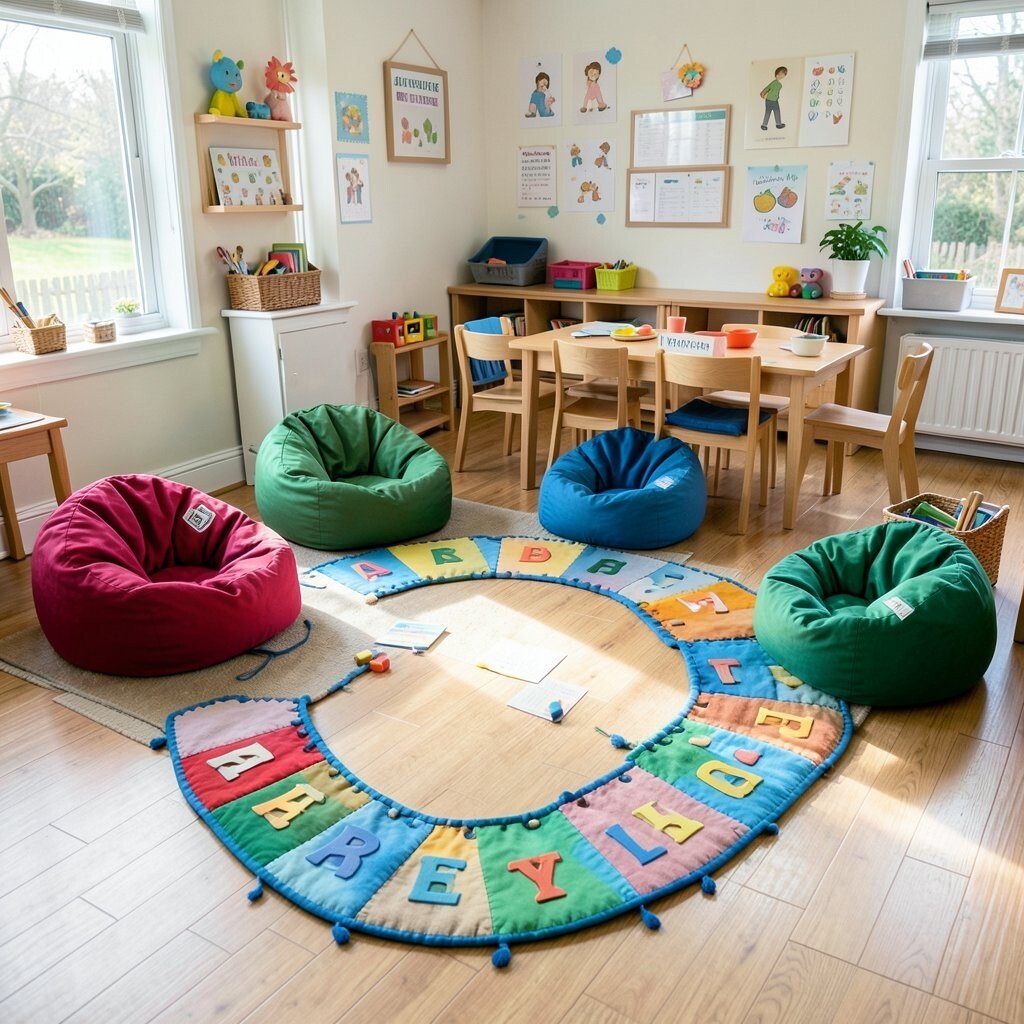
Create an “alphabet path” where bean bags mark letters across the floor. Children hop or step to the letter they hear, and their bodies stay busy while their minds learn.
Write large letters on painter’s tape or sturdy card mats and place one bean bag near each letter. Keep the cards spaced so kids don’t trip, and use bright colors for quick recognition.
For personalization, let children decorate a bean bag with their own initial sticker. Use gentle rewards like earning a stamp for correctly matching the sound to the letter.
If you want it to match current trends, look for short “movement breaks” tied to phonics practice. Even a quick routine after circle time can keep momentum going without overworking students.
4. Sight Word Landing Zone
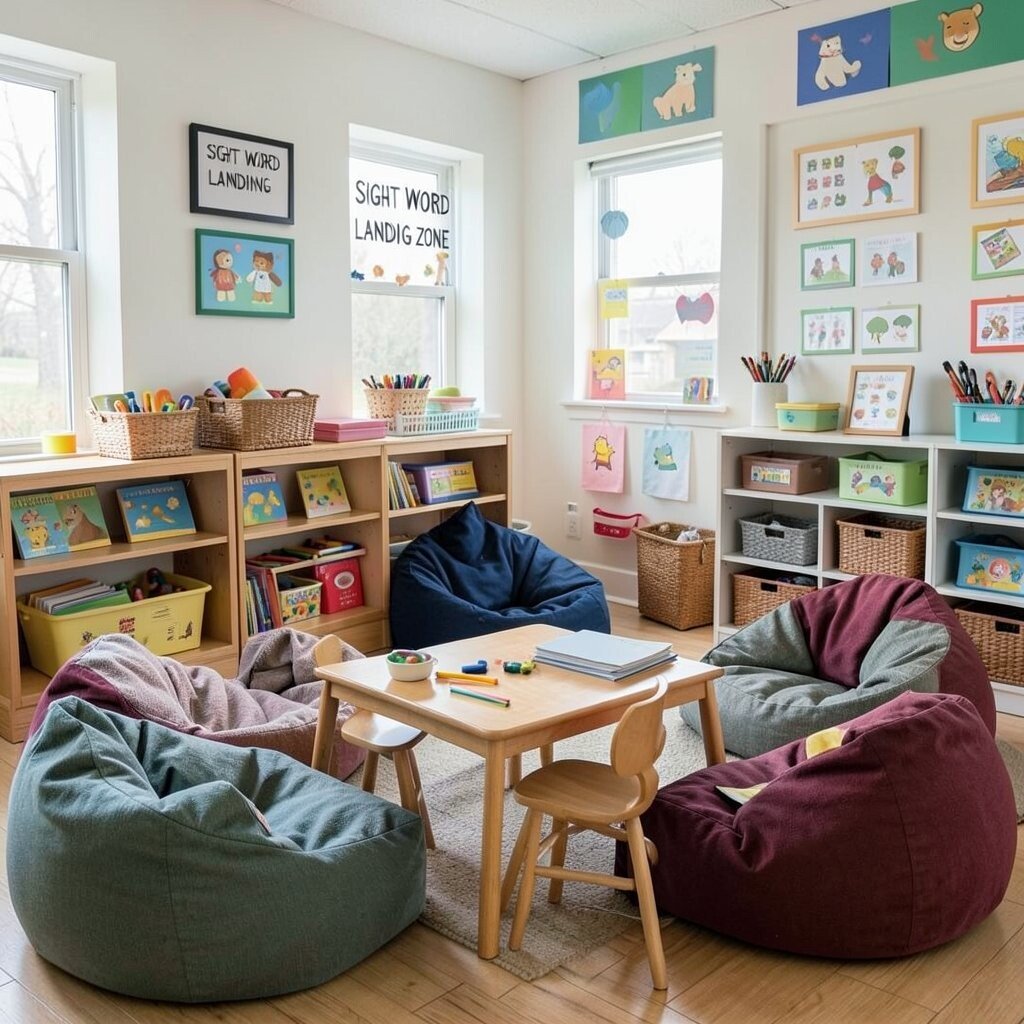
Set bean bags in a circle and place sight word cards at kid eye level around the room. When the teacher says a word, children toss or touch the matching card and then claim a bean bag seat.
This setup helps early readers connect words with movement, which can improve recall. Use laminated cards so they can be wiped clean, and rotate the word set every week to keep it fresh.
Try adding a “word hero” bean bag that feels special, like a favorite color or pattern. Kids enjoy earning a turn to sit there after they read a card aloud.
Keep cost in mind by printing words in black and white and letting students add color with markers. That way you update the set without buying new materials all the time.
5. Block Play Build Site
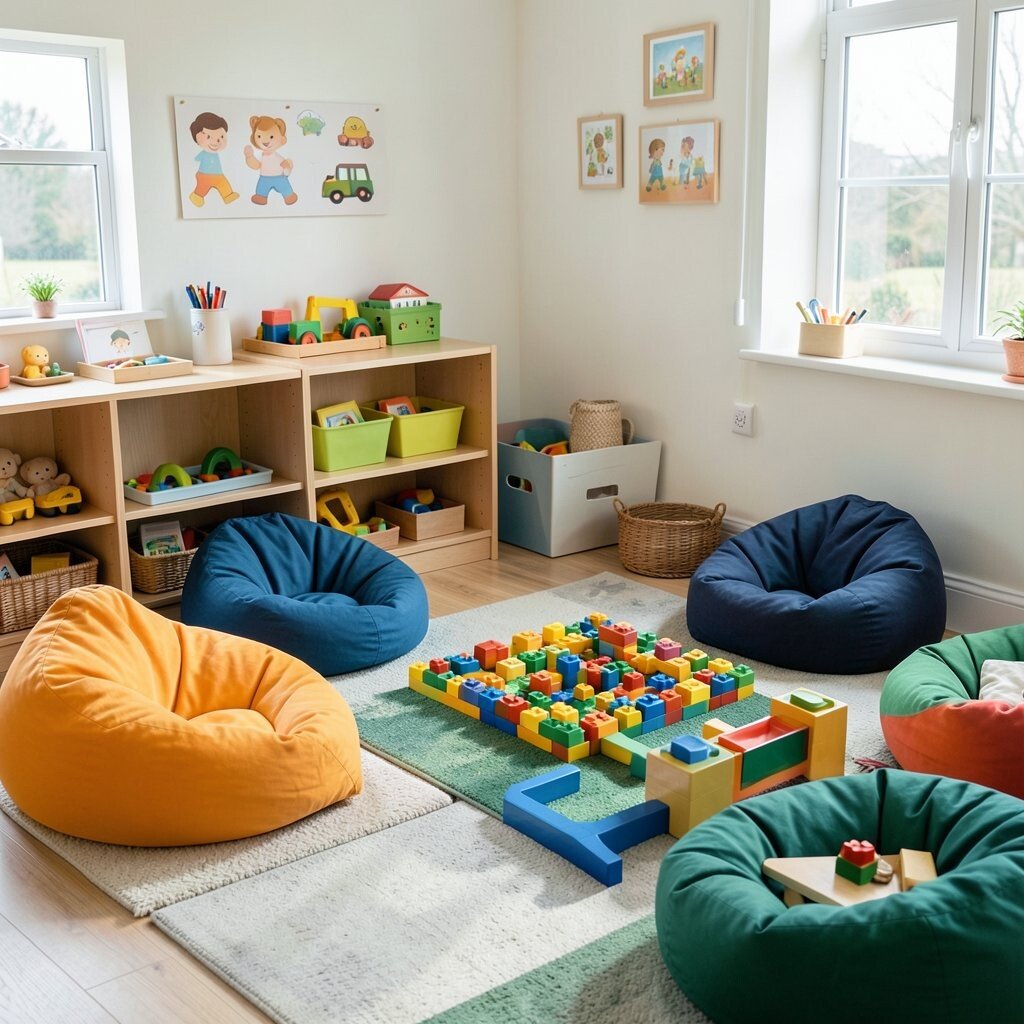
A bean bag corner near the blocks gives kids a place to pause, plan, and rest. When children sit down to talk about their building, the whole group benefits from calmer conversations.
Arrange a few bean bags along the side so the center stays open for building. Set up a “build talk” prompt card with simple pictures like house, bridge, and tower to guide questions.
Use uniqueness by choosing patterned bean bags that match your classroom theme, like safari animals or outer space. Add a small bin of story figure blocks so students can recreate scenes from read-aloud books.
For practical comfort, keep bean bags away from sharp block edges and place them on mats. This protects the bean bag seams and also reduces distraction during active play.
6. Cozy Art Studio Seating
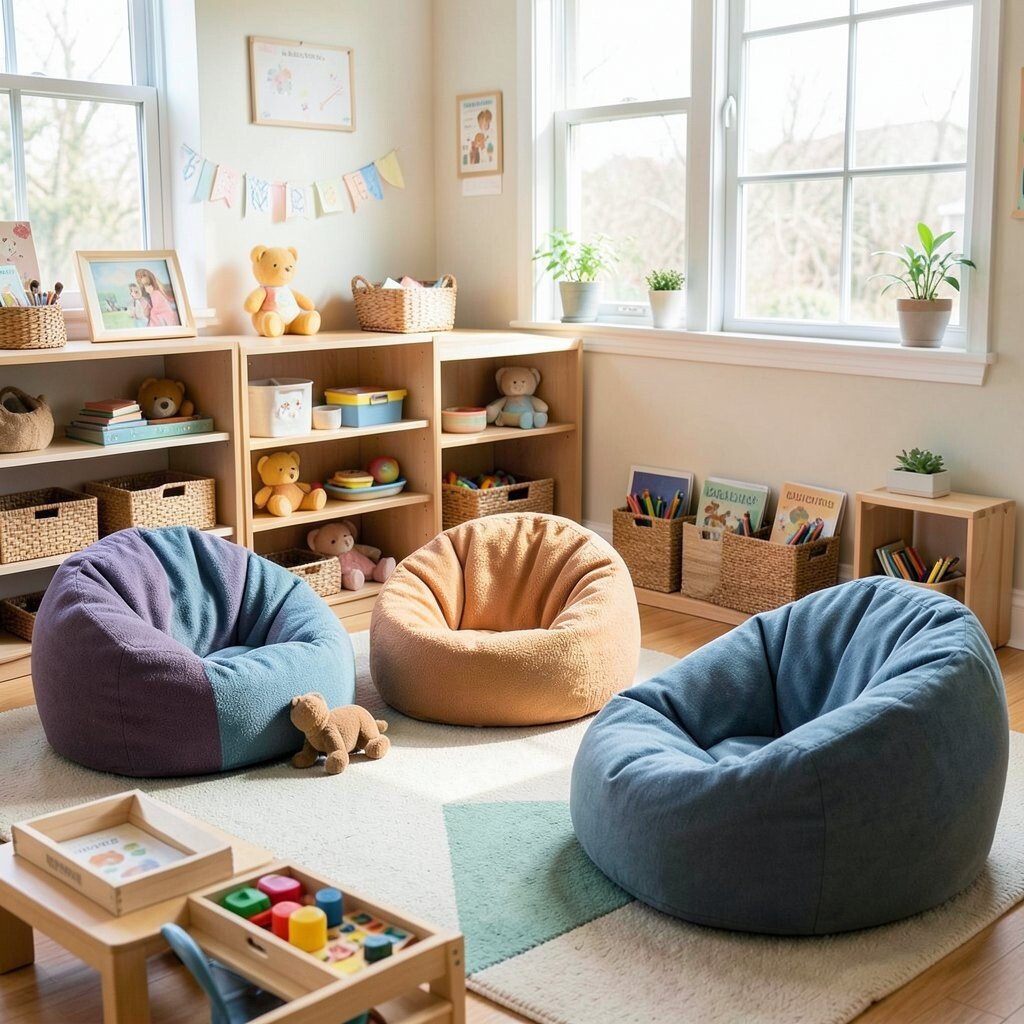
Bean bags in the art area make it easier for children to focus while using crayons, paint, or clay. You’ll see smoother routines because each student has a soft “stay here” seat.
Set one bean bag per work station area and add a small tray for supplies. When kids know where their things go, cleanup becomes less stressful.
For personalization, let students create a name label that matches their bean bag color. You can also offer two types of bean bags, one for seated sketching and one slightly larger for painting.
7. Math Manipulatives Mat
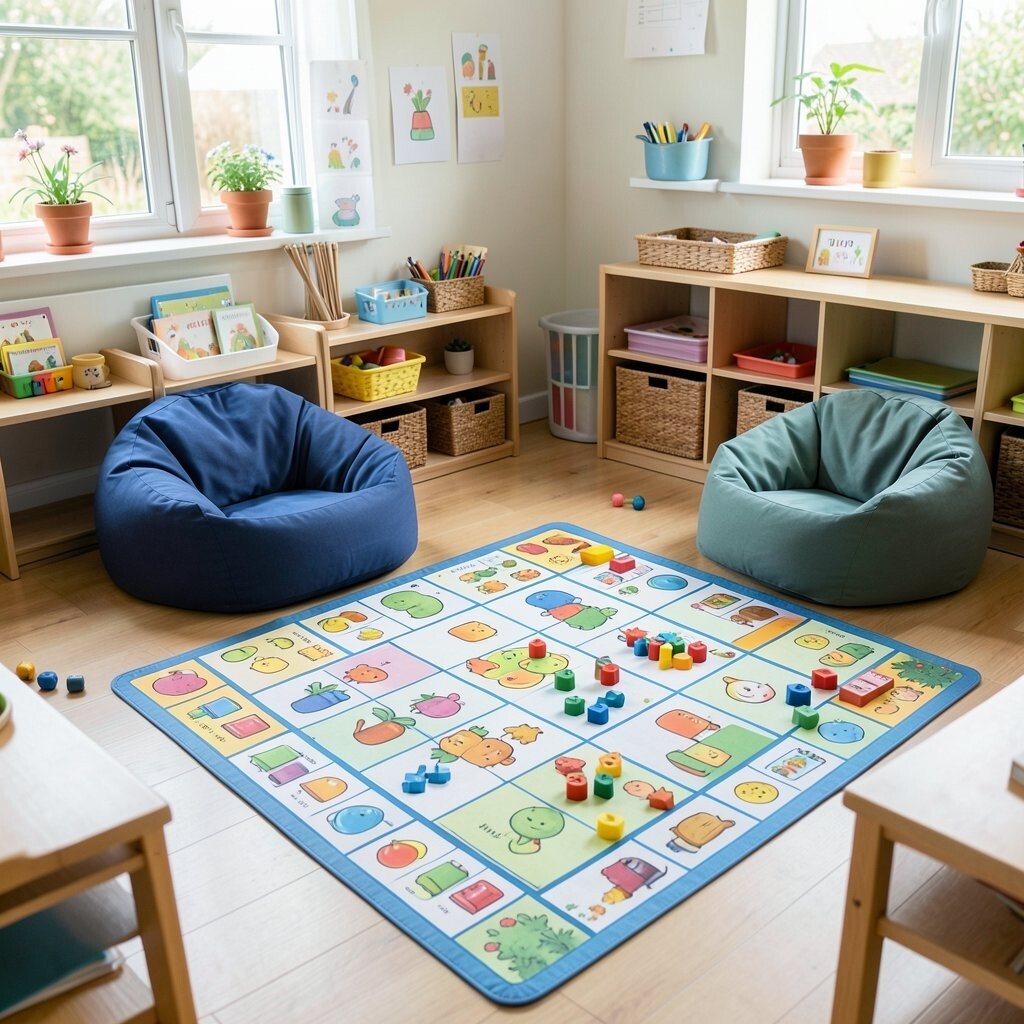
A bean bag mat beside counting blocks, pattern tiles, and number cards helps kids work at the right level. It’s like a gentle invitation to slow down and try one more time.
Try placing bean bags in a semicircle around a low table or activity rug. That arrangement supports eye contact during quick mini-lessons without crowding.
Use current trends by keeping centers choice-based, so kids pick which math game to try first. Offer a simple “grab and go” folder with instructions in pictures to reduce teacher talking.
For cost considerations, use leftover foam shapes or cardboard cutouts as game pieces. Bean bags add comfort without needing expensive new shelves.
8. Sensory “Settle and Breathe” Corner
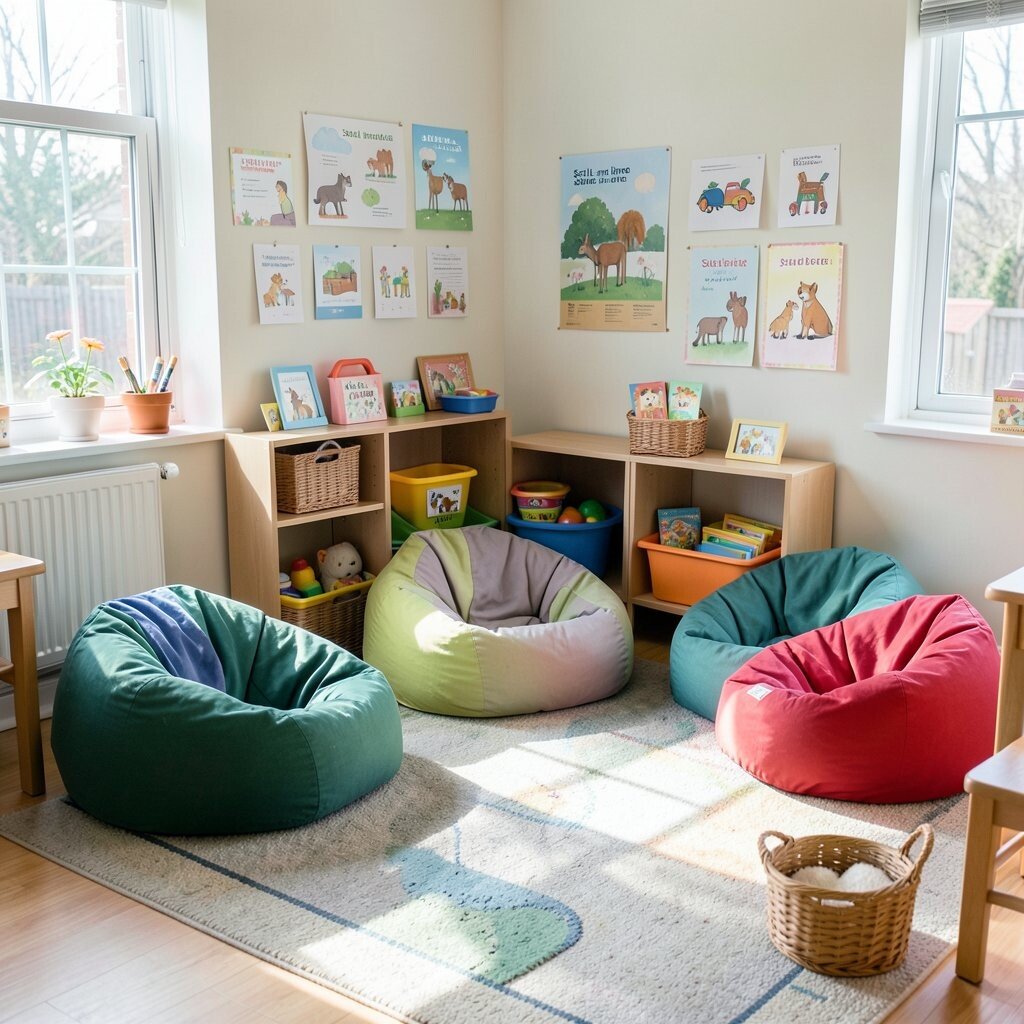
Some days call for soothing tools, and bean bags are perfect for that. When children feel upset, sitting with a bean bag can help them calm their bodies.
Create a quiet corner with a few bean bags, soft lighting, and a small calming basket. Add tools like a fidget strip, a textured scarf, or a simple breathing card with pictures.
Uniqueness comes from how you decorate the area, like using calming colors and nature sounds. A small “feelings” poster with faces can help kids name their emotions more easily.
9. Pretend Play Storytelling Stage
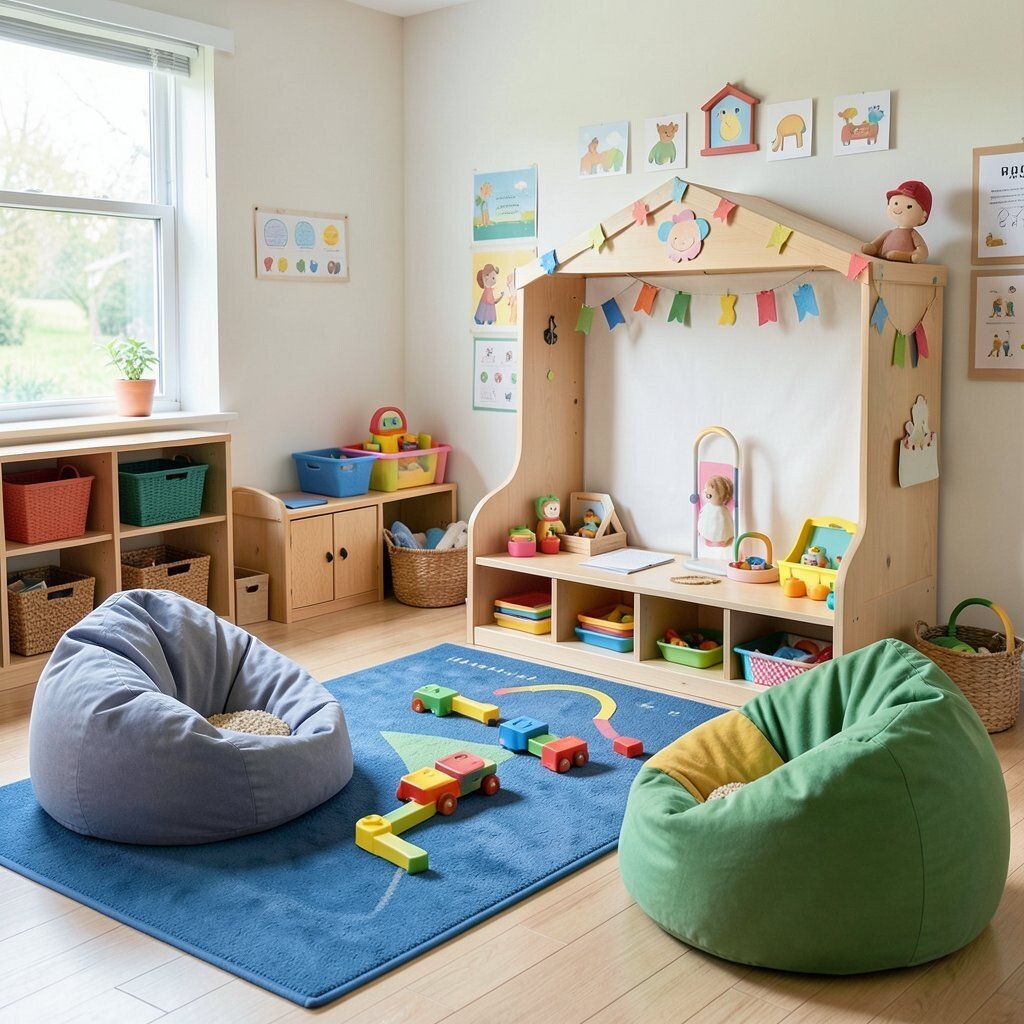
Place bean bags in a pretend play area so children can narrate their scenes like little performers. The soft seating helps keep acting time organized and fun.
Add a small puppet or prop shelf so kids can choose costumes or props before they speak. When children sit and take turns, you get natural practice with speaking and listening skills.
Personalization idea is to create themed bean bag zones, such as “doctor,” “chef,” or “space traveler.” Kids love choosing the zone that matches their play mood.
To keep things practical, use low mirrors or clear backdrops so kids can see their work without getting off task. Regularly sort props by theme so the room stays manageable.
10. STEM Building With Bean-Bag Teams
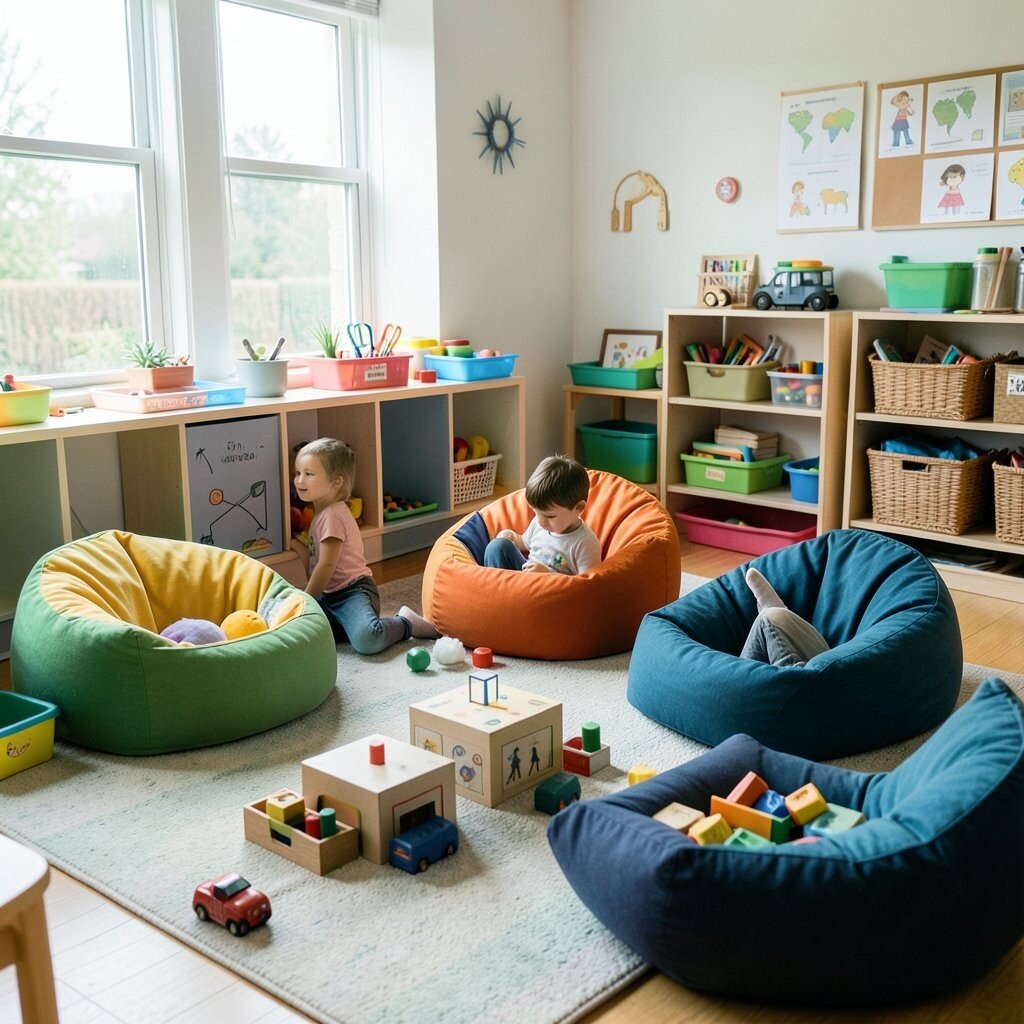
Bean bags can turn STEM time into a team-building experience instead of a race for materials. Kids sit in small groups, talk through ideas, and build with focus.
Set up a “team circle” using bean bags around a bin of building parts like straws, connectors, or wooden blocks. Start with short challenges, such as building something that can stand or bridge a gap.
For uniqueness, make one bean bag “engineer of the day” with a special design. Let that child choose the first challenge card to encourage leadership.
Cost considerations are easier than you think since you can reuse recyclable items. Keep a collection of bottle caps, paper towel rolls, and safe tape for hands-on experiments.
11. Science Observation Launchpad
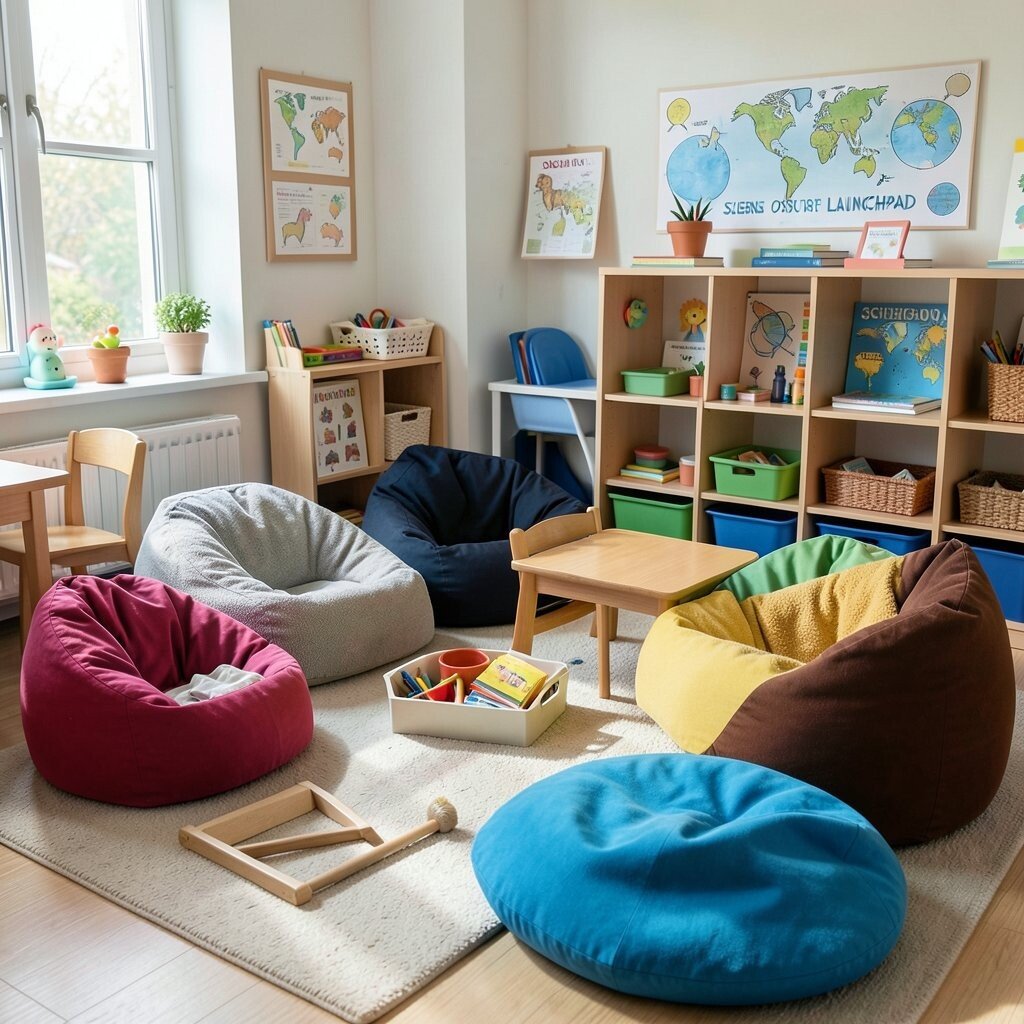
When kids sit on bean bags during science time, they’re more ready to observe closely. Watching a magnifying glass, a terrarium, or a simple weather tool becomes calmer and more detailed.
Place bean bags near a student lab area with magnifiers and display trays. Keep observation cards nearby so children can point to what they notice, like “smooth,” “bumpy,” or “changes.”
Try personalization by adding a “scientist sticker” sheet where kids add a sticker each time they test or predict. You can also label observation trays with pictures so children can work more independently.
12. Writing Center With Soft Seats
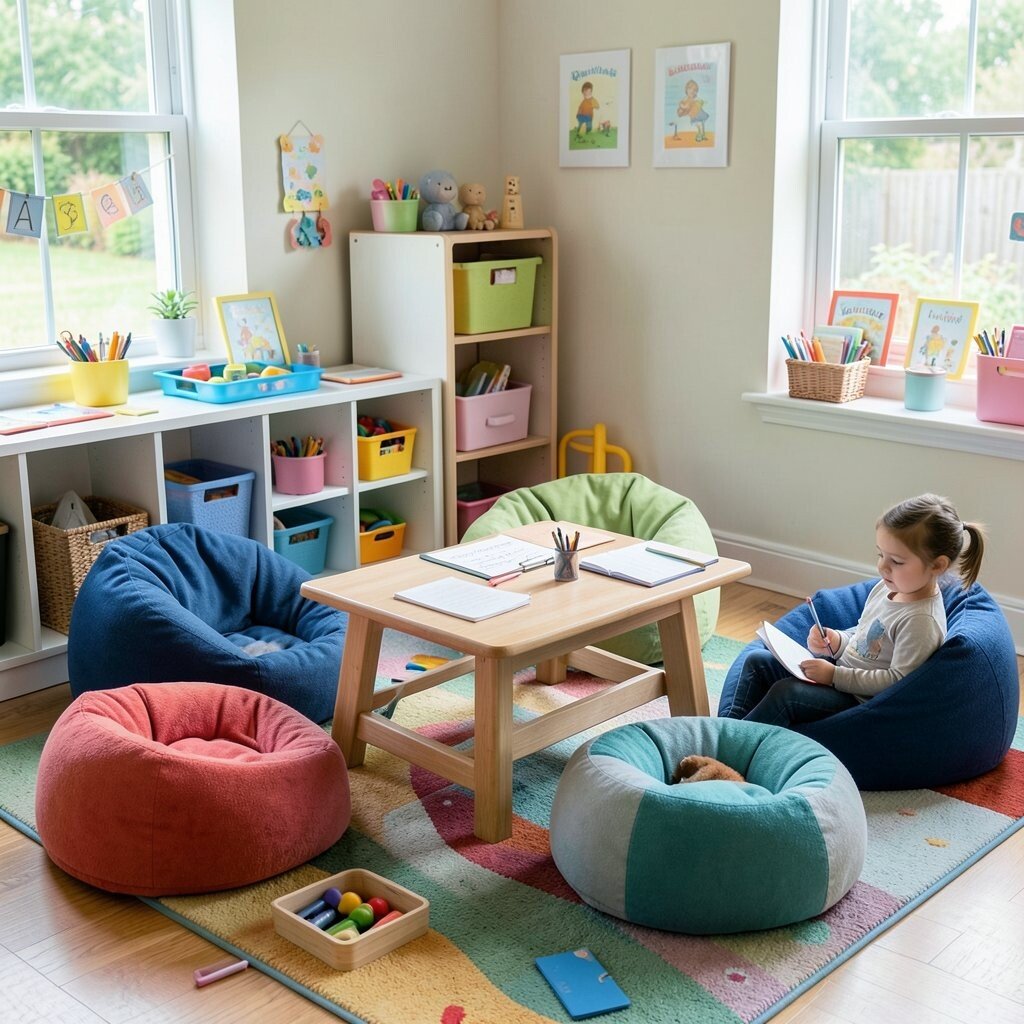
Bean bags make the writing center feel less like a desk job and more like a cozy workspace. Kids can sit comfortably while practicing letters, drawing stories, or copying words.
Choose a few bean bags that fit your layout, and keep writing materials on a low shelf. Use clipboards or foam-backed paper so children can write without sliding.
For practical tips, offer short writing prompts with picture cues. Students can choose to write the same sound, trace a letter, or write their name as they practice.
13. Motor Skills and Movement Zone
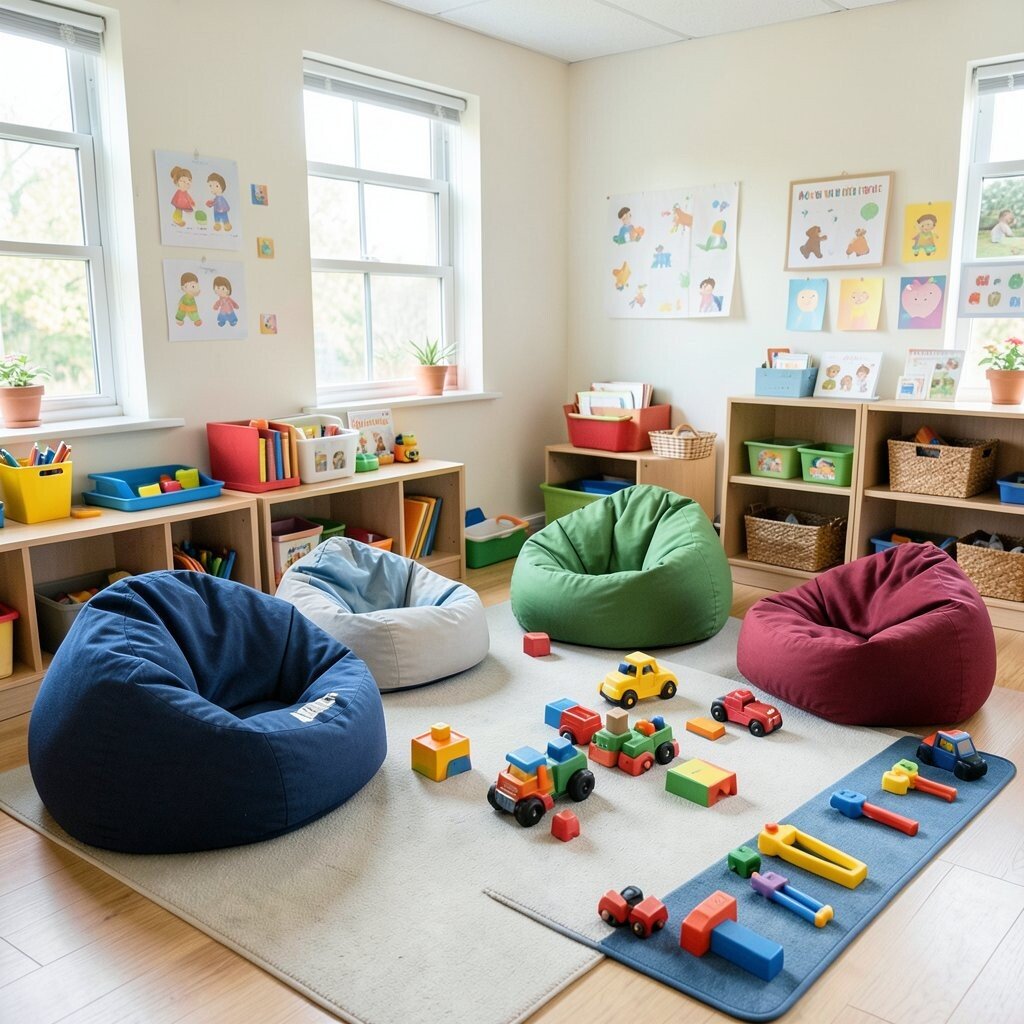
A movement zone with bean bags helps children meet their energy needs while still learning. You can guide them through balance activities and then reward focus with a cozy rest seat.
Use bean bags as “safe stepping spots” during obstacle courses. Place them at measured distances so kids learn spatial awareness while staying steady.
Uniqueness comes from how you decorate the pathways with themed footprints. Add sound effects cards like “tiptoe” or “march” to make the activity feel like play.
14. Social Skills Circle Seats
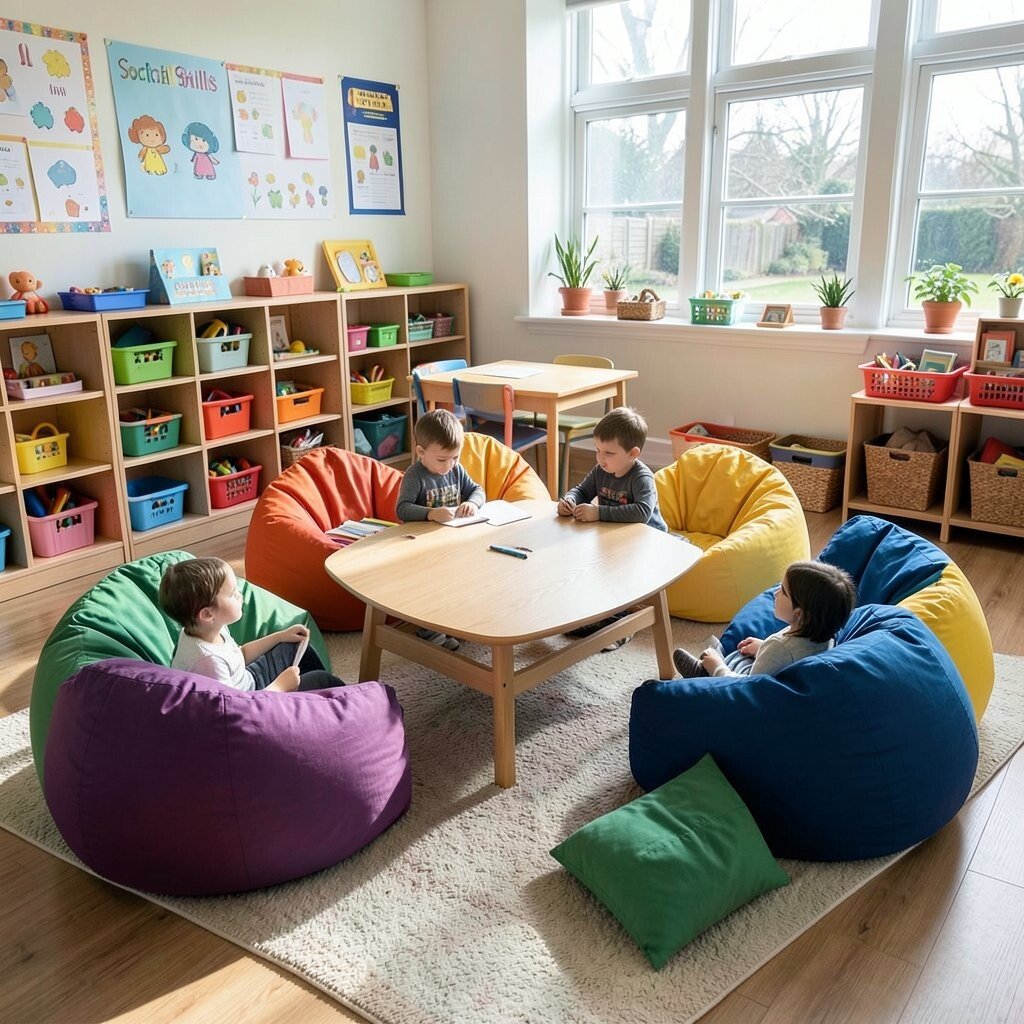
Bean bags can help social skills practice feel gentle and non-threatening. When children sit side by side, it’s easier to talk about sharing, turn-taking, and kindness.
Create a circle using bean bags and add picture cards for common scenarios. Kids can practice what to say, such as “Can I have a turn?” or “You can help me.”
For personalization, let students choose which bean bag color matches their feelings, like calm blue or brave red. Keeping a small feelings chart nearby supports self-awareness.
Cost considerations are manageable because you mostly need printables and a few calm materials. Bean bags do the heavy lifting by making the space comfortable for sensitive moments.
15. Culture and Community “Share Time” Corner
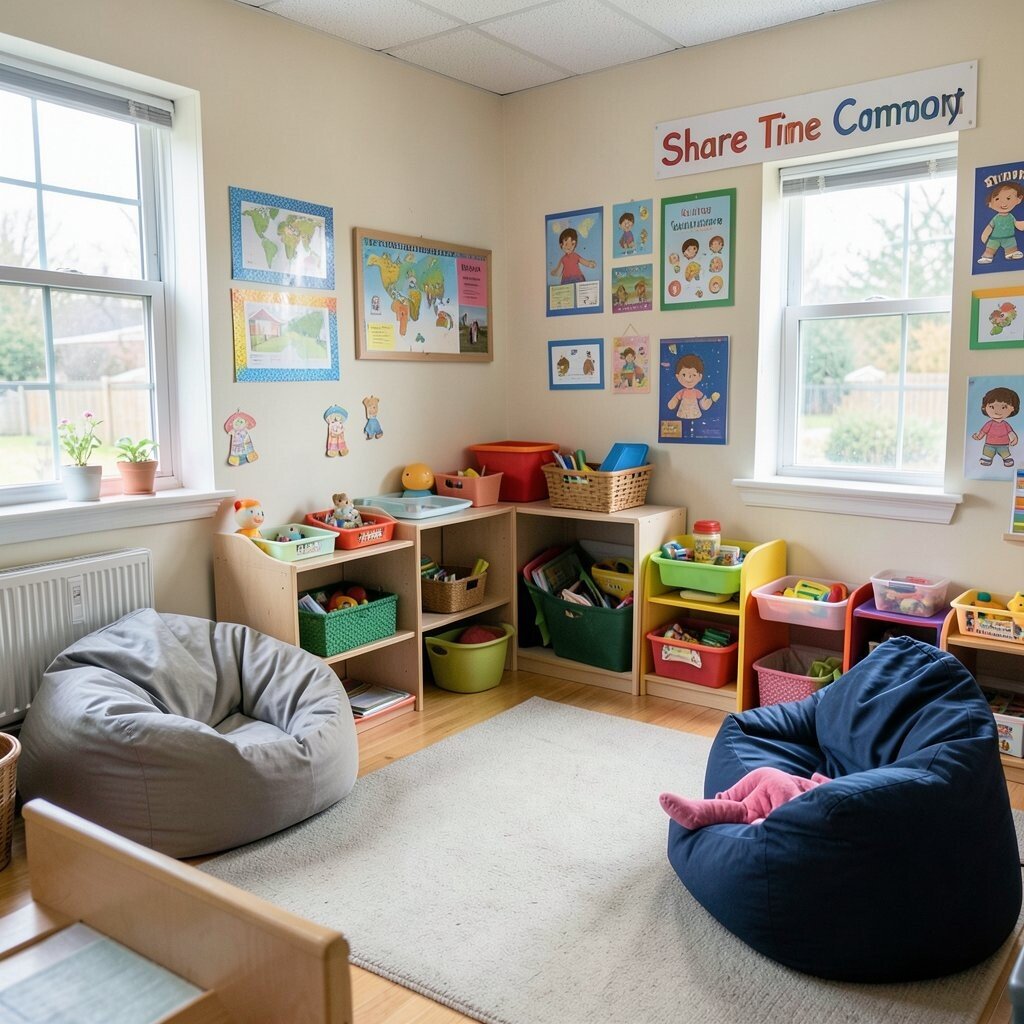
A bean bag share time corner supports family stories, show-and-tell, and community lessons. Kids feel more secure when they have a cozy seat that signals this is a listening space.
Arrange bean bags facing a small display area with photo cards and simple prompts. Encourage students to talk about their families, favorite foods, or traditions in a calm routine.
Try making one bean bag “story holder” that stays near the book or photo. Let children take turns holding it when they share so everyone recognizes whose turn it is.
Uniqueness shines when you decorate with student artwork and class memory colors. You can update the space often without spending more by changing the display items each month.
16. Cooking and Life Skills Learning Lounge
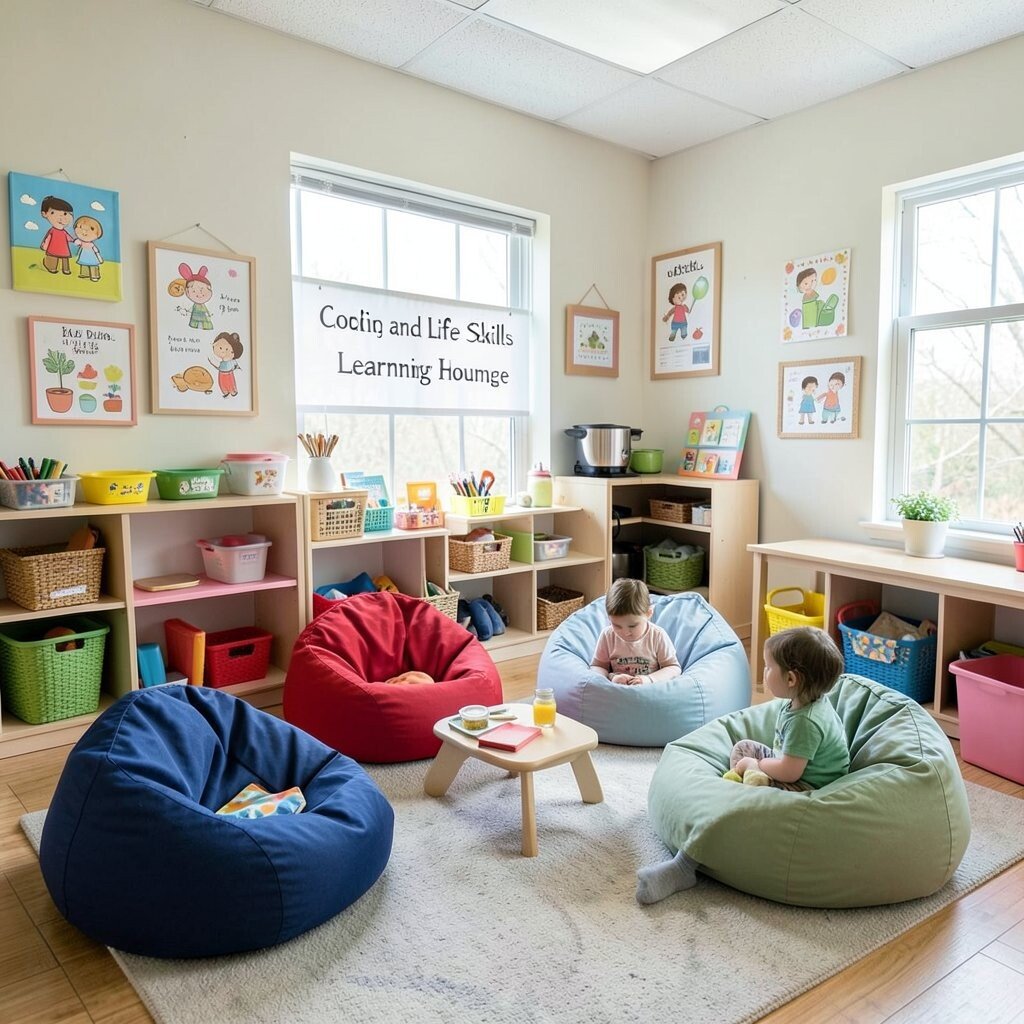
Life skills centers work beautifully with bean bags because they support steady sitting during directions. When children are comfortable, they listen better before they start hands-on tasks.
Place a small group of bean bags near a counter or low prep area. Use picture steps so children can follow along with mixing, pouring, or sorting practice.
For practical tips, keep a damp cloth and hand wipes nearby for quick cleanups. Bean bags should stay dry, so set a barrier mat to prevent spills from reaching them.
Personalization idea is to let children “decorate” a recipe card folder with stickers. As the year goes on, the folder becomes a keepsake of skills they’ve practiced.
17. Technology and Coding Comfort Corner
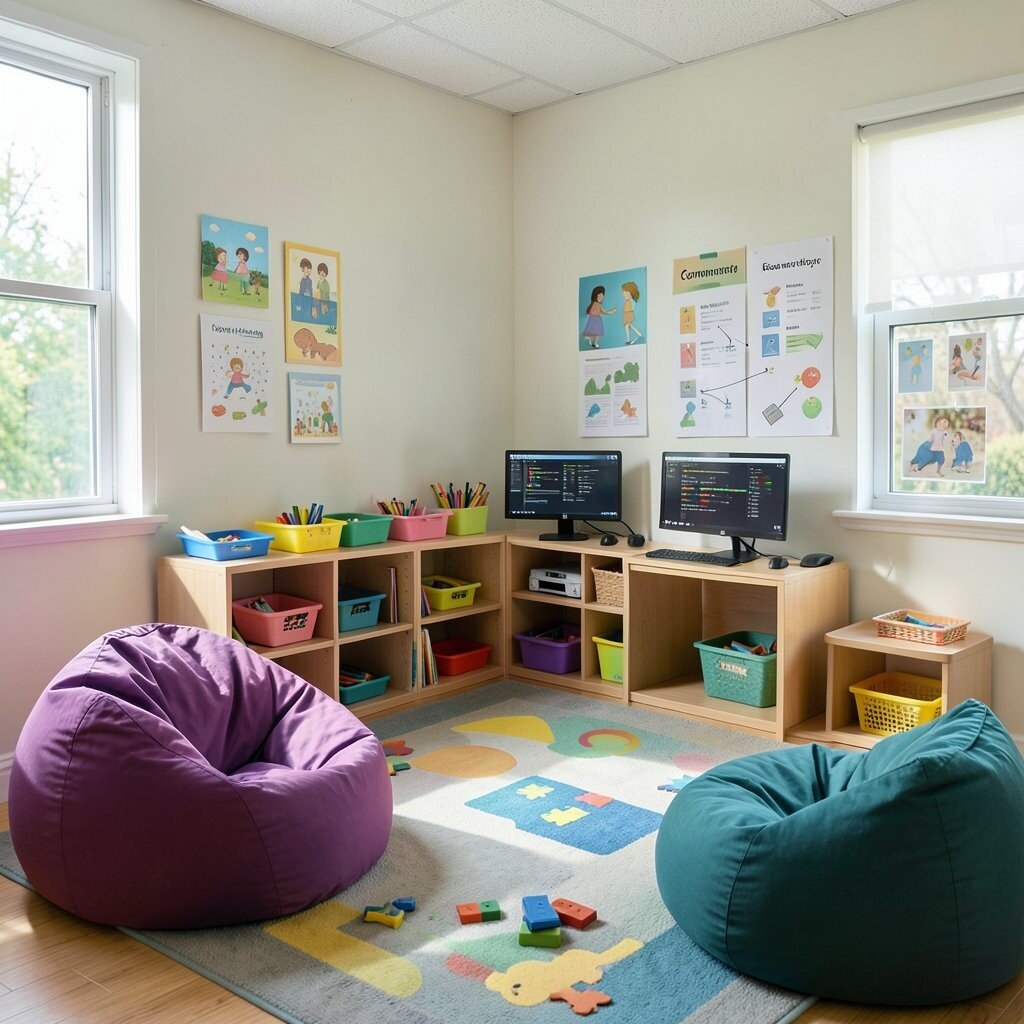
When you add bean bags near tablets or simple coding kits, kids can focus on small steps. The soft seating supports longer attention, especially during guided tasks.
Set bean bags in a row or cluster so students can watch instructions while keeping devices in reach. Use visual cue cards for what buttons to press or what commands to follow.
Keep current trends in mind by using short project cycles like “build, test, adjust.” Bean bags help children settle between tries instead of hopping up right away.
For cost considerations, start with one shared set of coding tools. Comfortable seating means fewer disruptions, so even a small device collection can do a lot.
18. Geography and Map Play Bed of Bean Bags

Bean bags can turn maps into a hands-on game space for young learners. Kids love pointing at pictures, tracing routes, and placing small items on a simple map rug.
Create a map floor using a large laminated sheet or taped paper. Place bean bags along the edge so children can reach the map safely without crowding.
For uniqueness, decorate with landmarks like mountains, roads, and “home” dots made from felt. Students can add small tokens, such as animal figurines or vehicle pieces, to show where things go.
Practical tips include using washable markers for updating locations. You can change the map theme often, like seasons, neighborhoods, or farm life.
19. Theater Drama and Music Circle
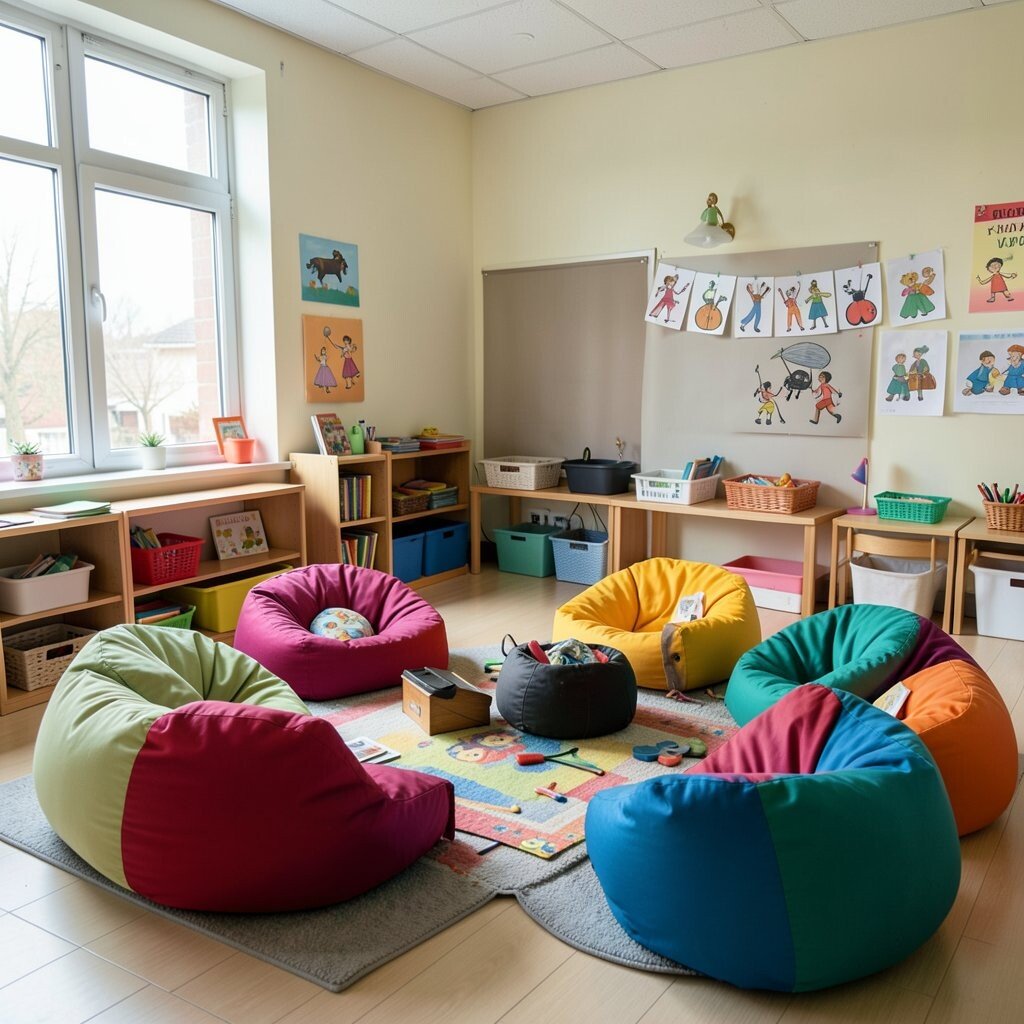
A bean bag music circle makes rehearsals feel warm instead of formal. Kids can sit comfortably while you play rhythm patterns or sing songs together.
Arrange bean bags so kids face an instrument area and a teacher cue space. Add a simple chart with pictures of instruments so children can choose the right sound during activities.
Personalization idea is to assign each child a “sound spot” color that matches their bean bag. That makes transitions smoother when you call out which group is ready to play.
To keep costs lower, use homemade rhythm tools like shakers filled with rice in capped containers. Bean bags help you get more calm practice time, which is valuable in early music learning.
20. Calm Mind Mindfulness and Yoga Ledge
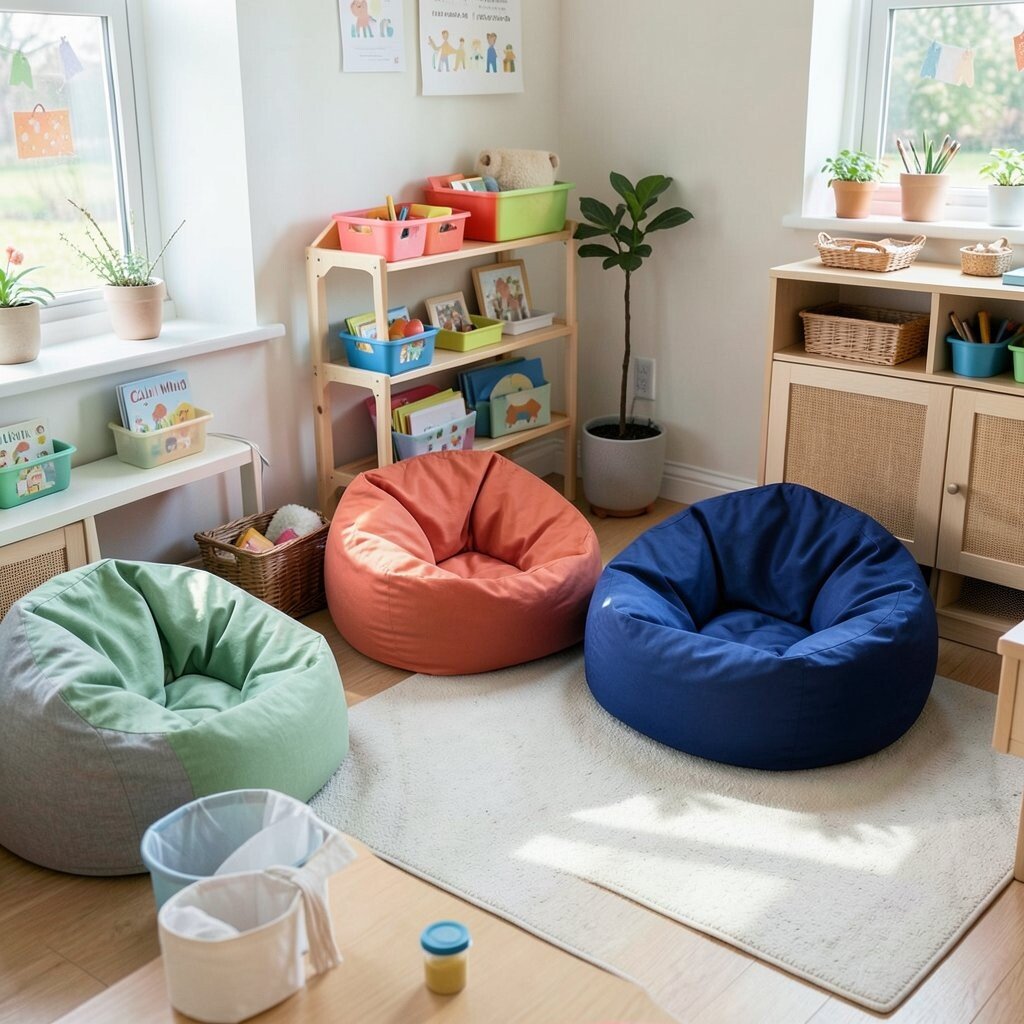
Bean bags work well for gentle yoga, breathing, and mindfulness routines in kindergarten. Kids can sit or lie down comfortably while learning to slow their bodies.
Create a small mindfulness lane with bean bags and a clear “start and stop” picture cue. Use short prompts, like stretching arms or taking slow breaths, so children can follow without frustration.
For uniqueness, choose bean bag covers that feel soothing, like textured fabric or soft patterns. A small basket with mindfulness cards can guide kids when they need help remembering the steps.
Cost considerations are simple since you can reuse mats and print only a few cue images. Bean bags add comfort that kids will ask for again and again.
21. Parent-Friendly Center Display With Bean-Bag Zones
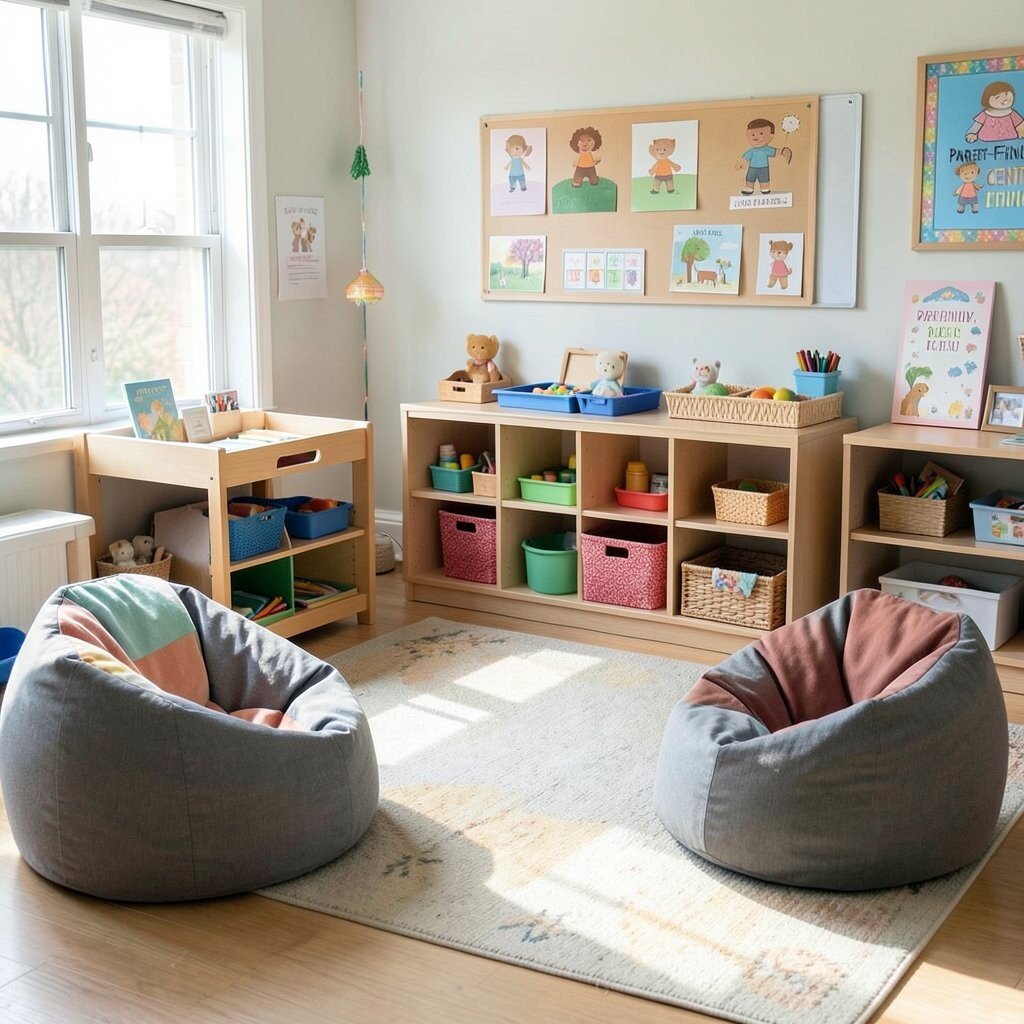
When bean bags have clear zones, families can understand the classroom routine quickly. A neat display helps everyone see how kids use the space for learning and comfort.
Set up a wall area with photos of each center, plus a simple list of what happens there. Bean bags should be easy to spot so children know where to sit, and visitors can understand the flow of the room.
Try personalization by adding student-made signs beside each bean bag zone. Kids can help draw the center name pictures, like a book for reading or blocks for building.
For practical tips, keep a spare bean bag in a labeled storage bin so the classroom stays ready for quick changes. Current trends often focus on transparency and child choice, and visible zones support both without extra spending.