
The right shelf light can make everyday objects feel special. Small changes in glow and placement can also make a room look brighter, calmer, and more put-together.
1. Warm Micro-LEDs for a Cozy Library Look

Picture a row of tiny lights tucked along the inside edge of your shelf, like a soft sunrise behind your books. The glow stays gentle, so your favorite spines and framed photos look crisp without harsh glare.
Micro-LED strips or puck-style fixtures use little power and create a clean line of light. To make it look intentional, aim the LEDs slightly upward or toward the back panel rather than straight at eye level. Choose a warm white tone if you want a homey vibe, and pick a dimmable option if you like adjusting the mood. If you have dust or textured shelves, keep the light subtle so it hides imperfections instead of highlighting them.
2. Rope Lighting Inside Deep Shelves
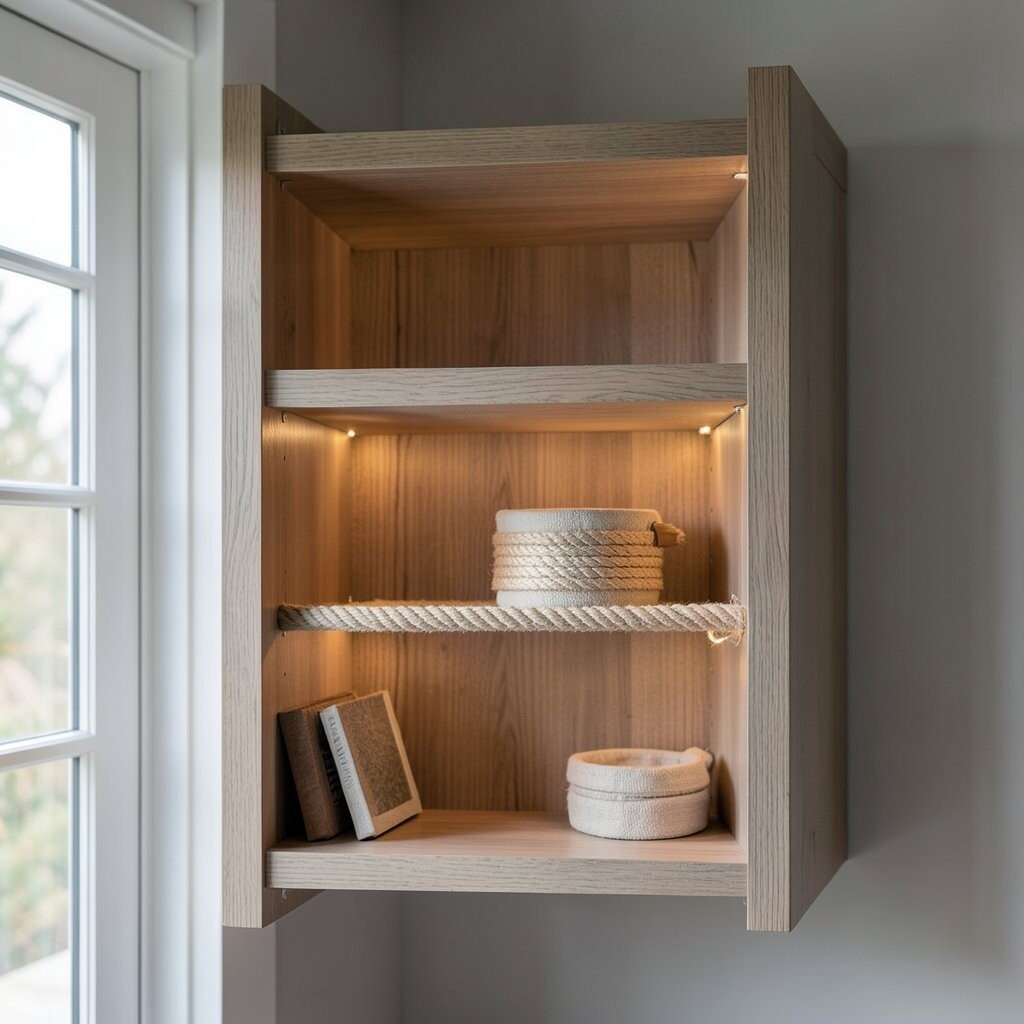
Deep shelving can swallow light, leaving the back corner dim and gloomy. Rope lighting placed inside the shelf creates a bright tunnel effect that makes the space feel wider.
Use a lightweight, flexible LED rope with a diffuser cover so the light spreads evenly along the back. Mount it to the underside or back lip with simple clips, and route the wire through a small channel to keep things neat. For best results, choose a color temperature that matches your room’s existing bulbs so the shelf light doesn’t look out of sync.
If you’re on a budget, rope lighting is often cheaper than individual spot fixtures, especially for long shelves. A quick personalization move is to dim the rope on evenings, so the glow feels inviting rather than bright and busy. Consider hiding the controller inside a cabinet space nearby if you hate extra boxes showing up.
3. Under-Shelf Linear Lights for Floating Style
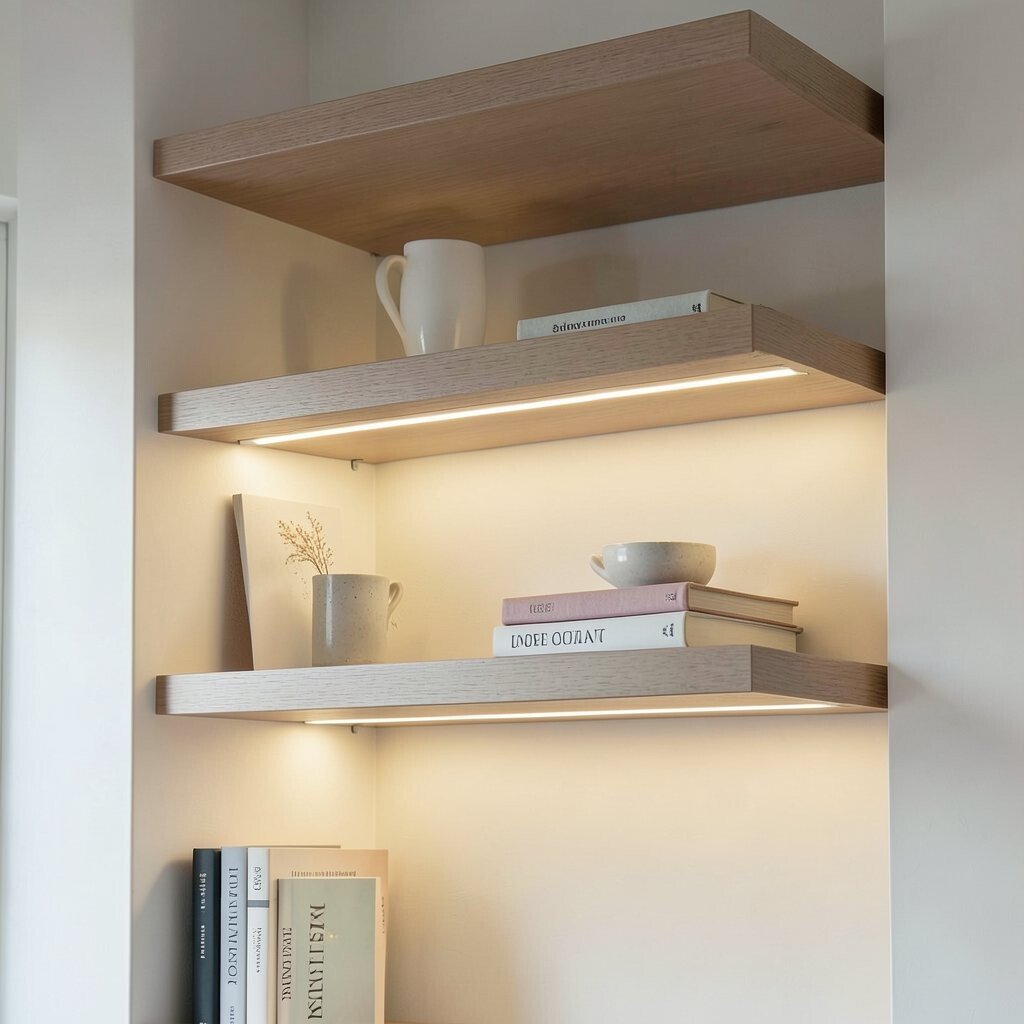
When shelves feel like they float, the lighting should match the illusion. Under-shelf linear lights cast a clean wash upward, making the wall behind your items look brighter and smoother.
This setup works especially well for floating shelves, where there’s no bulky fixture at the side. Install a slim bar light under the shelf edge and leave a small gap so the light reflects off the wall instead of bouncing directly into your face. If you’re styling with ceramics, glass, or plants, the upward glow adds shine and makes colors look more alive.
For practical results, measure the shelf length and choose a light that fits without stretching or bending awkwardly. Many current options use low-profile housings and simple mounting tape, which can cut down on labor. If your room has warm lighting, pick warm white so your wood tones and artwork stay rich.
To personalize, set the lights on a smart plug and use a schedule for mornings and evenings. You can also place the bars slightly offset so one side feels more dramatic than the other.
4. LED Profile Channels for a Sleek, Hidden Finish
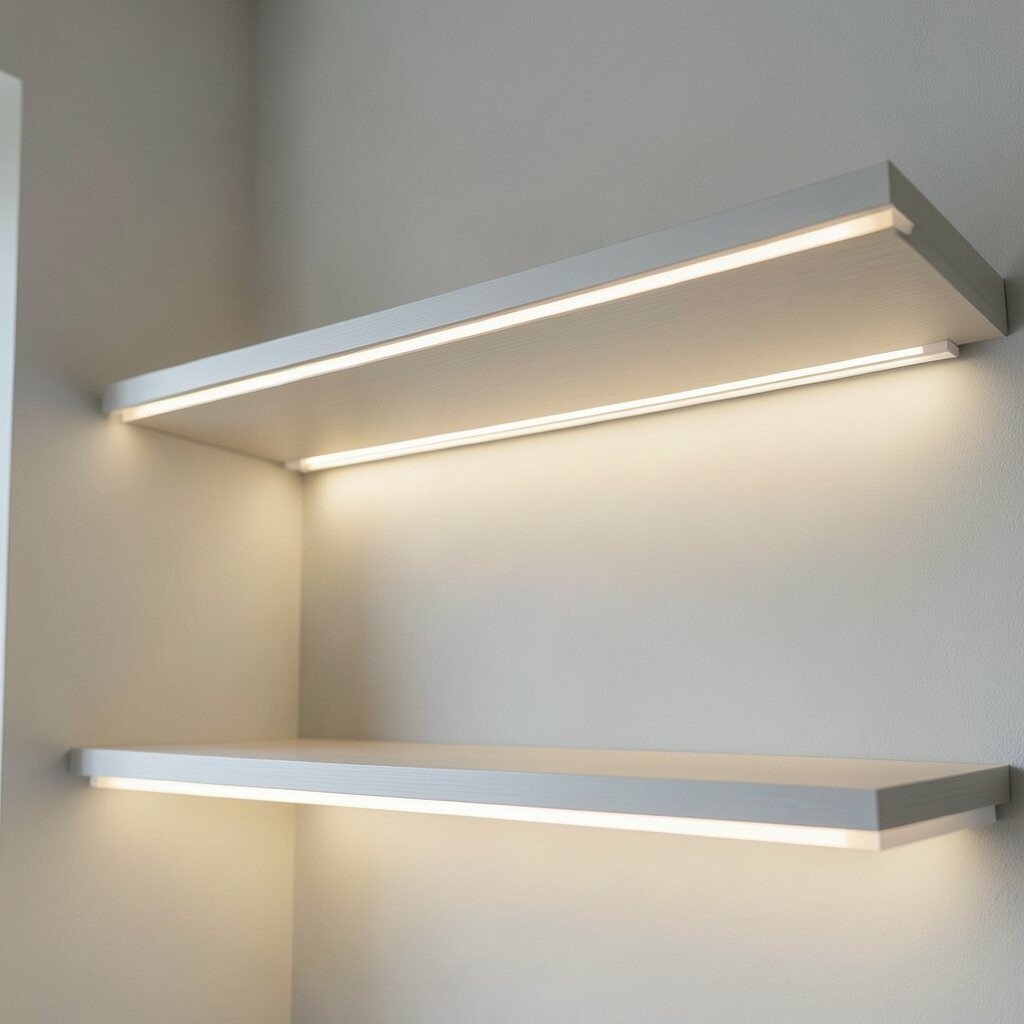
If you want a super tidy look, LED profile channels hide the light source behind a slim metal track. From the room, you mainly notice the glow on the shelf items and the wall, not the fixture itself.
These channels also help spread light evenly and protect LEDs from smudges during cleaning. Choose a frosted or diffused lens if you dislike visible bright points. For a neat install, align the channel with the shelf edge so it forms a straight, modern line.
Profile channels tend to cost a bit more than basic strips, but they look “built-in.” A practical trick is to reuse the same channel style in multiple shelves so your lighting looks like one consistent design. This is a nice match for modern interiors and current minimalist trends.
When personalizing, pair different lengths of channels with matching finishes like matte black or brushed aluminum. It’s an easy way to make small shelves look designer without major renovations.
5. Backlit Acrylic Panels for a Gallery Feel
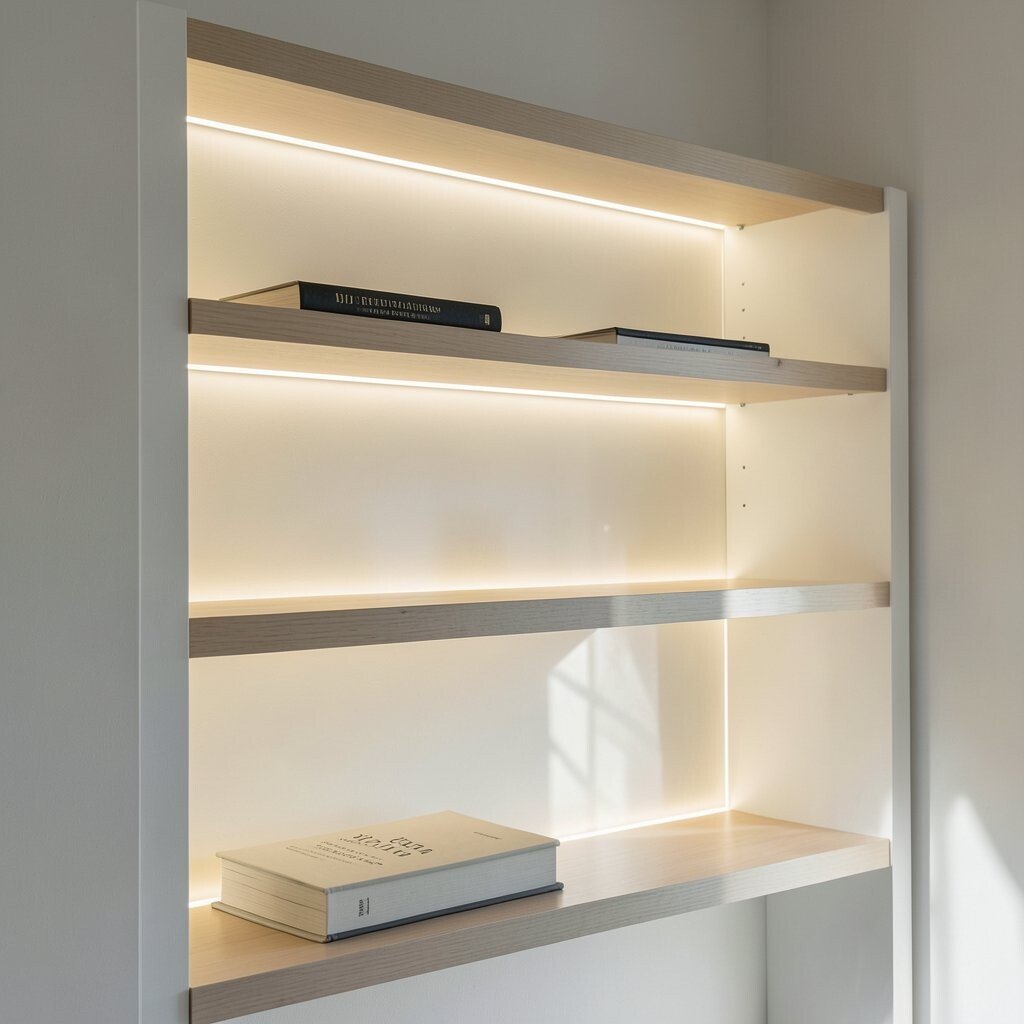
Imagine your shelves like mini display cases, glowing from behind the items. A backlit acrylic panel creates a soft, even light that makes prints, collectibles, and small art pieces look curated.
You can place the acrylic behind the shelf items, either as a full panel or as a slim strip that fills the background. The benefit is that it reduces glare on glass frames and helps your items look balanced. It also makes colors pop because the light spreads evenly instead of creating bright hotspots.
For practicality, use a diffuser acrylic and keep the light close enough to the panel so the glow looks smooth. Current design taste favors gentle, indirect lighting, and this method fits that style without feeling flashy. If you’re working with budget constraints, start with one shelf first, then expand once you see how it changes the room.
6. Color-Changing LED Lights for Seasonal Mood
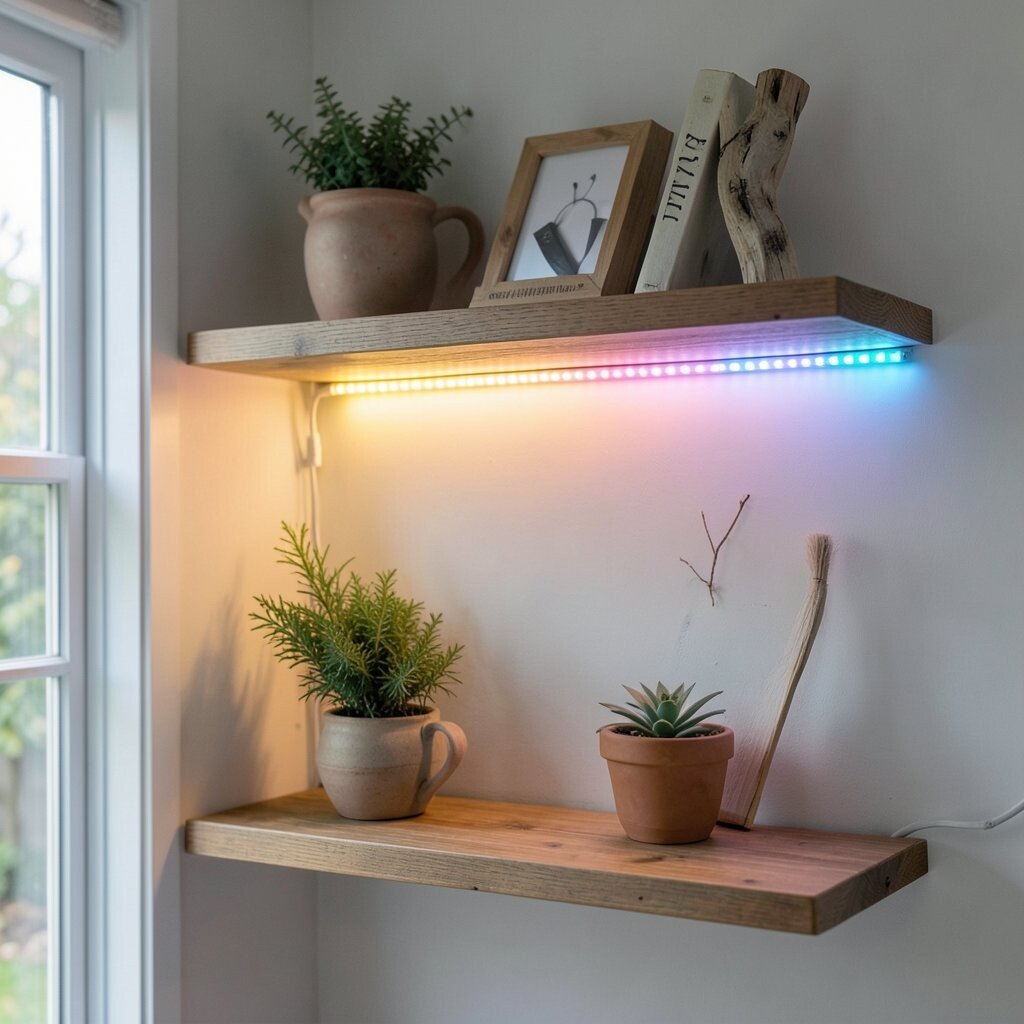
Sometimes a shelf should feel playful, not just bright. Color-changing LEDs let you switch the shelf glow for holidays, movie nights, or cozy evenings with friends.
Set the lights to a warm white for everyday use, then pick a fun color for special occasions. Many systems use remote controls or app control, which makes it easy to adjust without climbing ladders. If you live with guests often, use gentle colors to avoid making the room feel like a party room.
To keep it from looking messy, choose one color family and avoid constantly cycling. A practical trick is to use lower brightness for vivid colors and higher brightness for calmer colors. This is a popular trend because people want flexible lighting that matches changing routines.
Consider placing the color-changing LEDs inside the shelf back so the glow feels layered. It also helps hide the light source and makes the effect look more premium.
7. Solar-Powered Shelf Lights for Easy Install
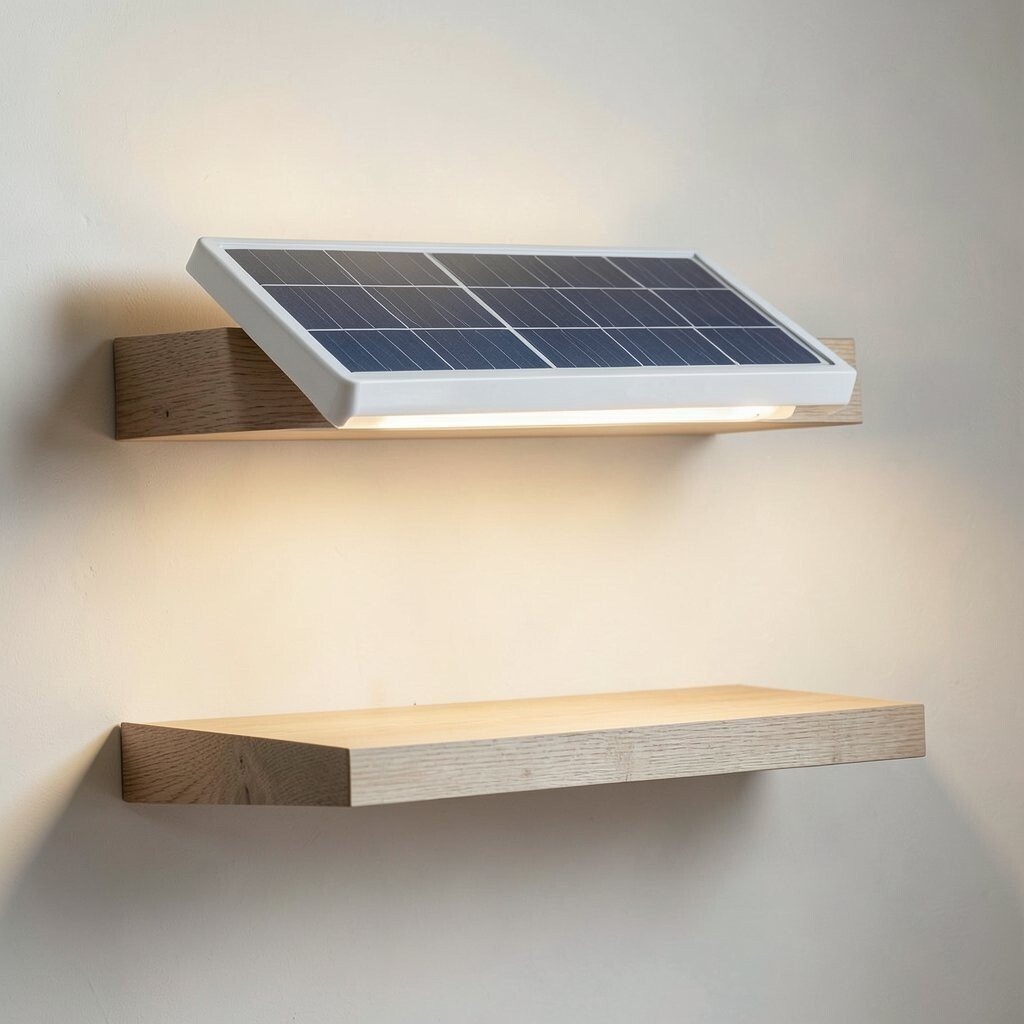
Not every space has a nearby outlet, and that’s where solar-powered shelf lights can shine. They charge in daylight and then give a soft glow after sunset, which is great for hall shelves or small book ledges.
The benefit is simple installation with fewer wires, so you can start quickly without major electrical work. Look for models with a built-in sensor and a timer so the lights behave predictably. For best performance, mount them where they receive sunlight during the day.
When you personalize, try them near natural textures like woven baskets or potted plants, so the glow complements the organic feel. Current small-space living trends favor flexible, low-effort upgrades like this. If you’re cost-conscious, solar options can reduce installation costs because you avoid hiring help for wiring.
8. Cabinet-Style Pin Spot Lights for Directional Drama
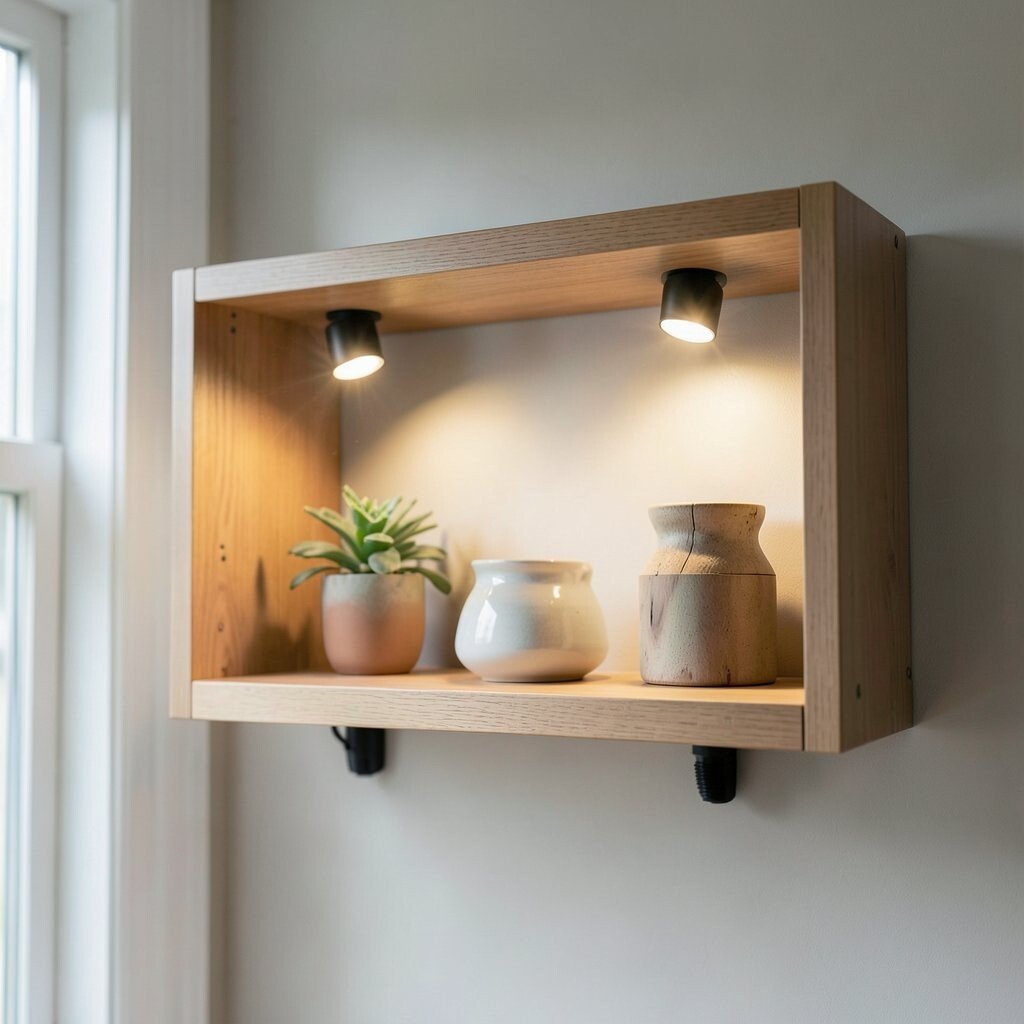
Pin spot lights let you aim brightness right at the objects you love. Think of a spotlight on a sculpture, vase, or framed piece, making it feel like it has its own spotlight moment.
These fixtures are great for shelves with a few “hero” items rather than everything needing equal light. Position the spots so the beam hits the display surface at a slight angle, which reduces glare on glossy frames. If your shelves are shallow, keep the spots closer together so the light doesn’t leave dark gaps.
For practical tips, secure the wire neatly along the back and test the angle before fully tightening. Many pin spot systems include adjustable heads, which is helpful if you change decor often. Although directional fixtures can cost more than basic strips, the look feels high-end because the lighting is intentional.
To personalize, rotate which items get the spotlight depending on the season. It’s a fun way to keep your shelf display fresh without buying new furniture.
9. Lighted Shelf Edges for a “Backlit Wall” Effect
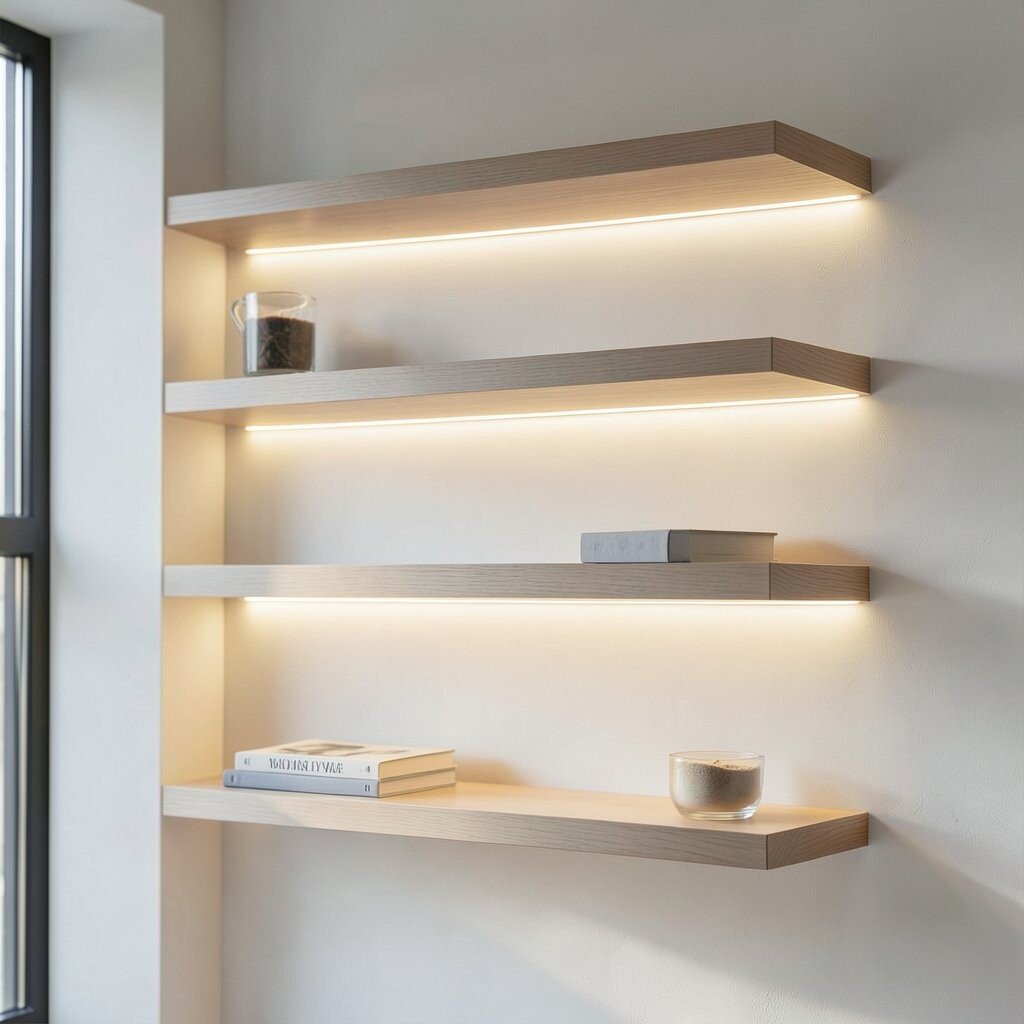
If you want the glow to feel built into the shelf itself, try lighting the edges. Edge lighting creates a subtle rim of light that outlines your shelf and makes the objects sit in a bright frame.
This method works well in tight rooms because it visually separates shelves from the wall without adding bulk. You can use slim LED edge channels or special edge-lighting strips designed for a clean border. Install carefully so the light line stays straight and consistent along the length.
For personalization, match the edge lighting color to your existing bulbs, like warm white for wood walls or neutral white for light paint. A practical benefit is that edge lighting often hides smudges better than direct lights, because it doesn’t shine straight toward your eyes. Current trends lean toward “invisible lighting,” and edge lighting is a great way to get that effect.
10. Vertical LED Strips on Side Panels for Depth
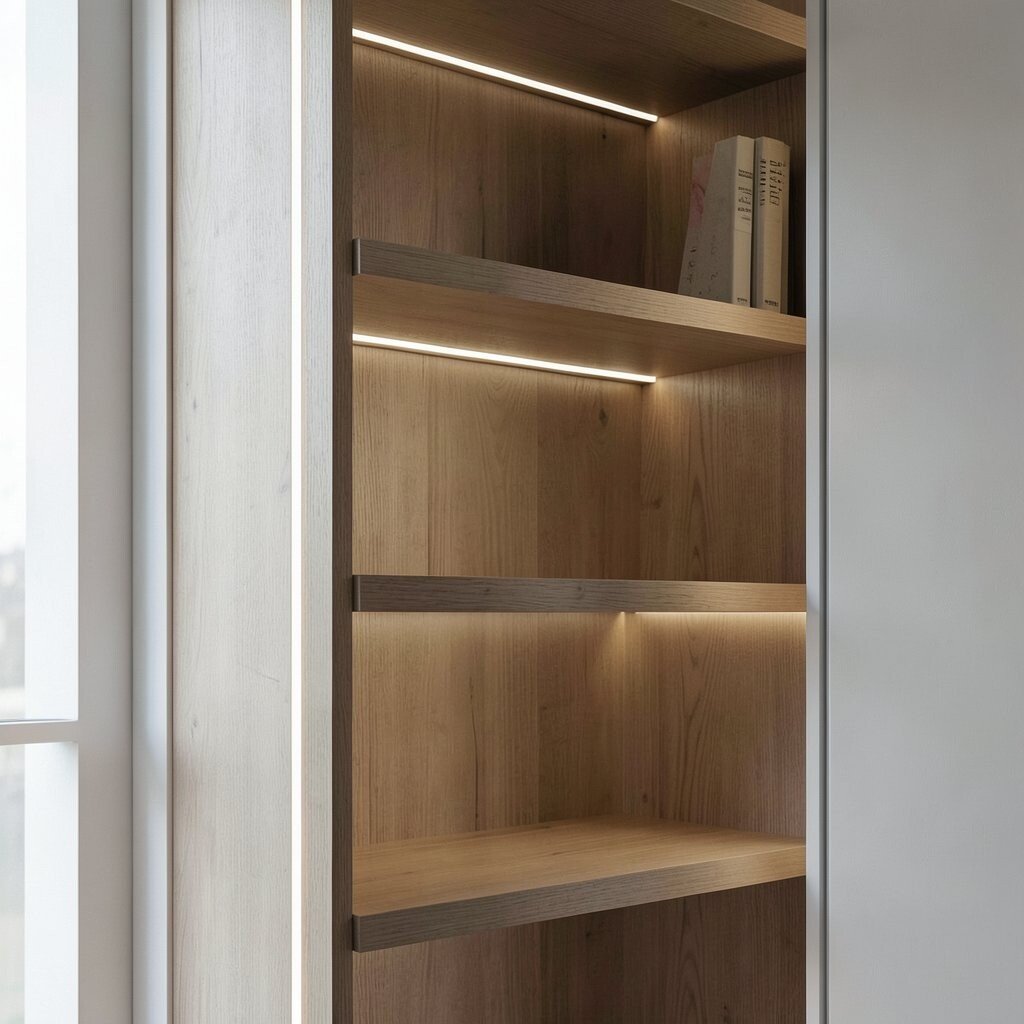
Some shelves look flat because the light comes from only one direction. Adding vertical LED strips on the side panels creates depth, making your display feel layered and more dimensional.
The visual effect is like adding a backdrop glow, which helps your objects stand out. Mount the strips near the back corners and keep the brightness moderate so the shelf doesn’t feel washed out. This setup is especially nice for shelves that hold stacked books, tall vases, or woven baskets.
For practical tips, check that the strips have a diffuser so the light looks soft rather than pixel-like. If you want a calmer vibe, choose warm white or neutral white instead of cool white. Although side-panel lighting can require a bit more planning, it’s a great way to brighten deep displays without adding more fixtures.
To personalize, use two strips at equal brightness or vary them slightly for a more artistic look. It can feel like your shelves have their own curated spotlighting system.
11. Picture-Ledge Lighting for Framed Art and Photos
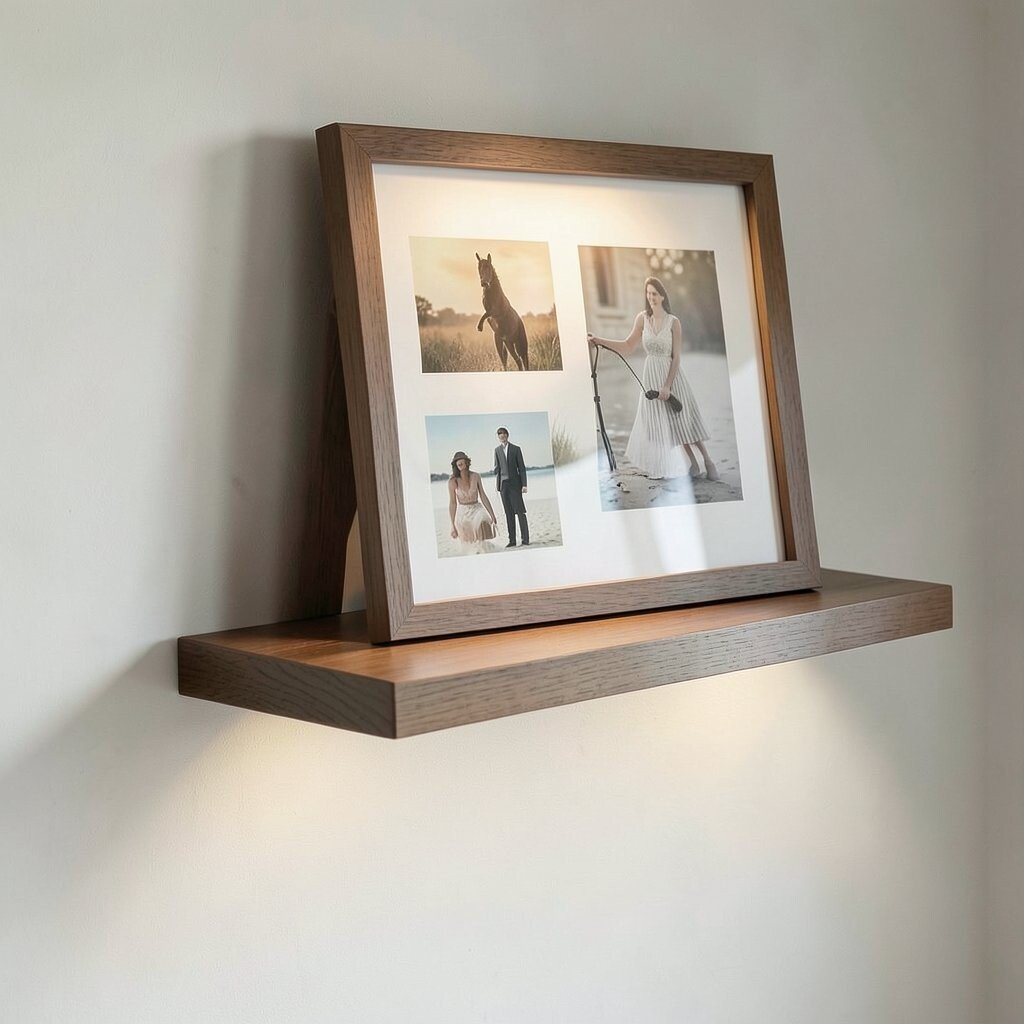
Picture ledges deserve careful light because frames can reflect. With a thin shelf light positioned to reduce glare, your photos and artwork can look clear and vibrant without annoying shine.
Use a slim linear light or micro-LED strip near the inside edge, angled slightly toward the back wall. This helps the light bounce softly rather than hitting glass directly. It also helps you see details in frames, like subtle textures in matte prints or the sheen of metallic borders.
For practical setup, clean the light lens if your fixtures get dusty, since shelf spaces tend to collect residue. Many people love this approach because it makes small gallery walls feel more intentional. Cost-wise, a small light for a single ledge is often less expensive than fully upgrading room lighting.
12. Indirect Channel Lighting with Diffusers for Soft Spread
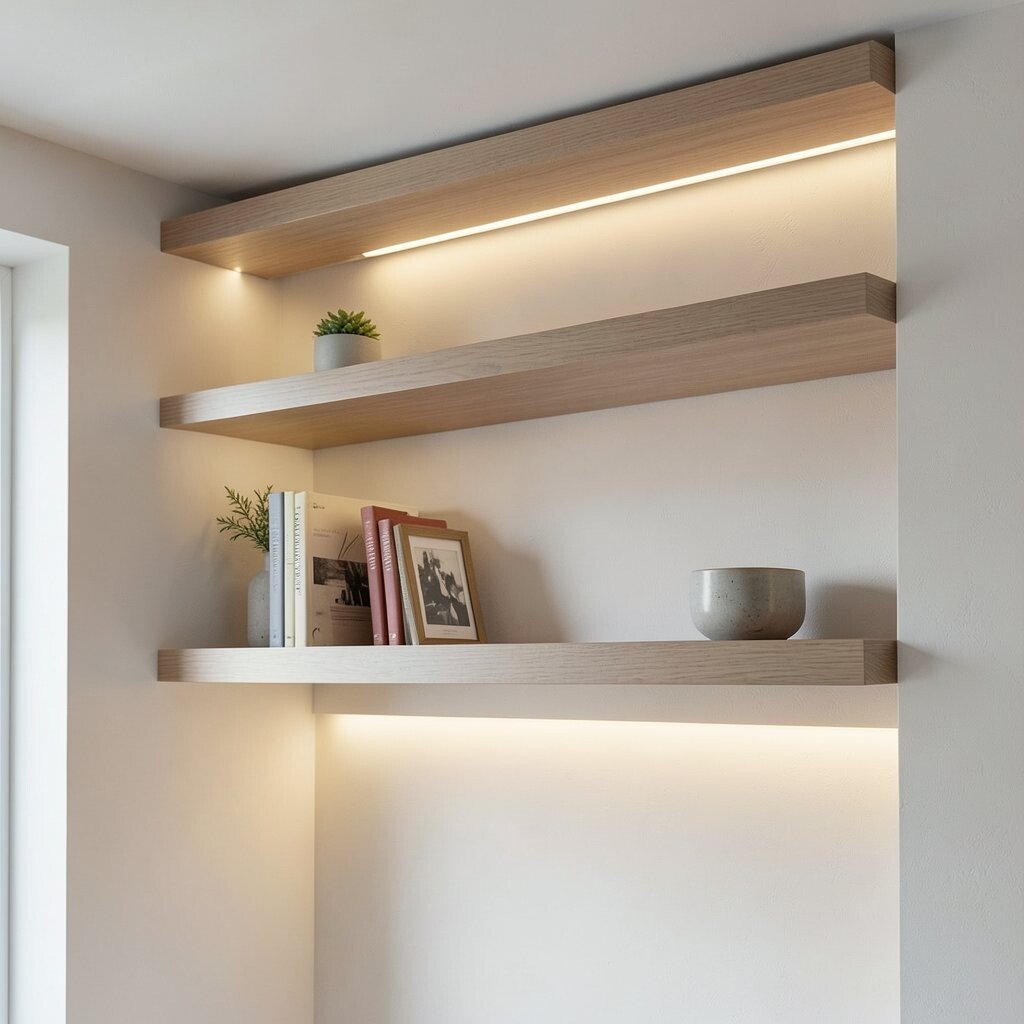
Sometimes the goal is brightness that feels gentle, not sharp. Indirect channel lighting with a diffuser spreads light across the shelf and nearby wall, creating an even glow that feels comfortable.
This is a smart choice if you want to brighten your space but still keep a calm mood. Install the channel behind or under the shelf surface so light travels indirectly before reaching your eyes. The diffuser helps avoid visible LED dots and reduces hotspots that can distract from your decor.
For personalization, choose different dimming levels for each shelf so you can highlight certain items without overpowering the rest. Current lighting designs often aim for layered effects, and indirect lighting gives you that “styled” look. If you’re budget-minded, start with one channel and expand later when you know the brightness you like.
As a practical tip, test the glow at night before committing to the final angle. Small adjustments can make a big difference in how art, plants, and collectibles look.
13. Smart Light Strips with Scenes for Daily Routines
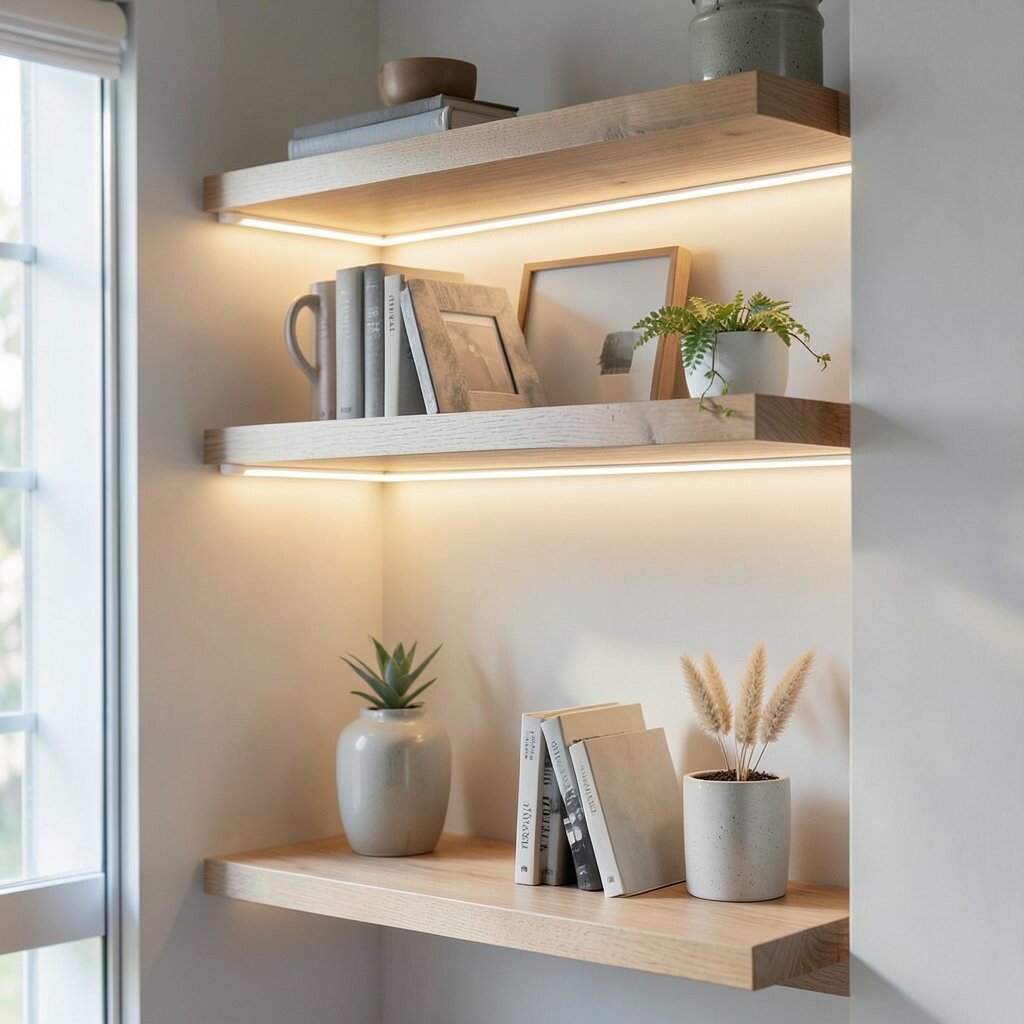
Your shelves can keep up with your day, from morning focus to evening wind-down. Smart light strips let you create scenes that automatically adjust brightness and color, so your display matches your mood.
Set a “morning” scene with brighter neutral tones and a “night” scene with warm dim light. Many systems sync with voice assistants or phone apps, which means you can change the shelf vibe without fuss. The benefit is personalization that’s not just about fixtures, but about how they behave across the day.
For practical tips, start by choosing a consistent color temperature across your home so nothing looks mismatched. Place the strips inside the shelf or under the lip so the light feels indirect and clean. Smart strips can cost more upfront, but they save energy and reduce the need for repeated manual adjustments.
To make the look feel intentional, limit scenes to a few favorites and name them based on what’s on your shelves. As trends move toward connected home setups, this option remains popular because it blends style with everyday convenience.