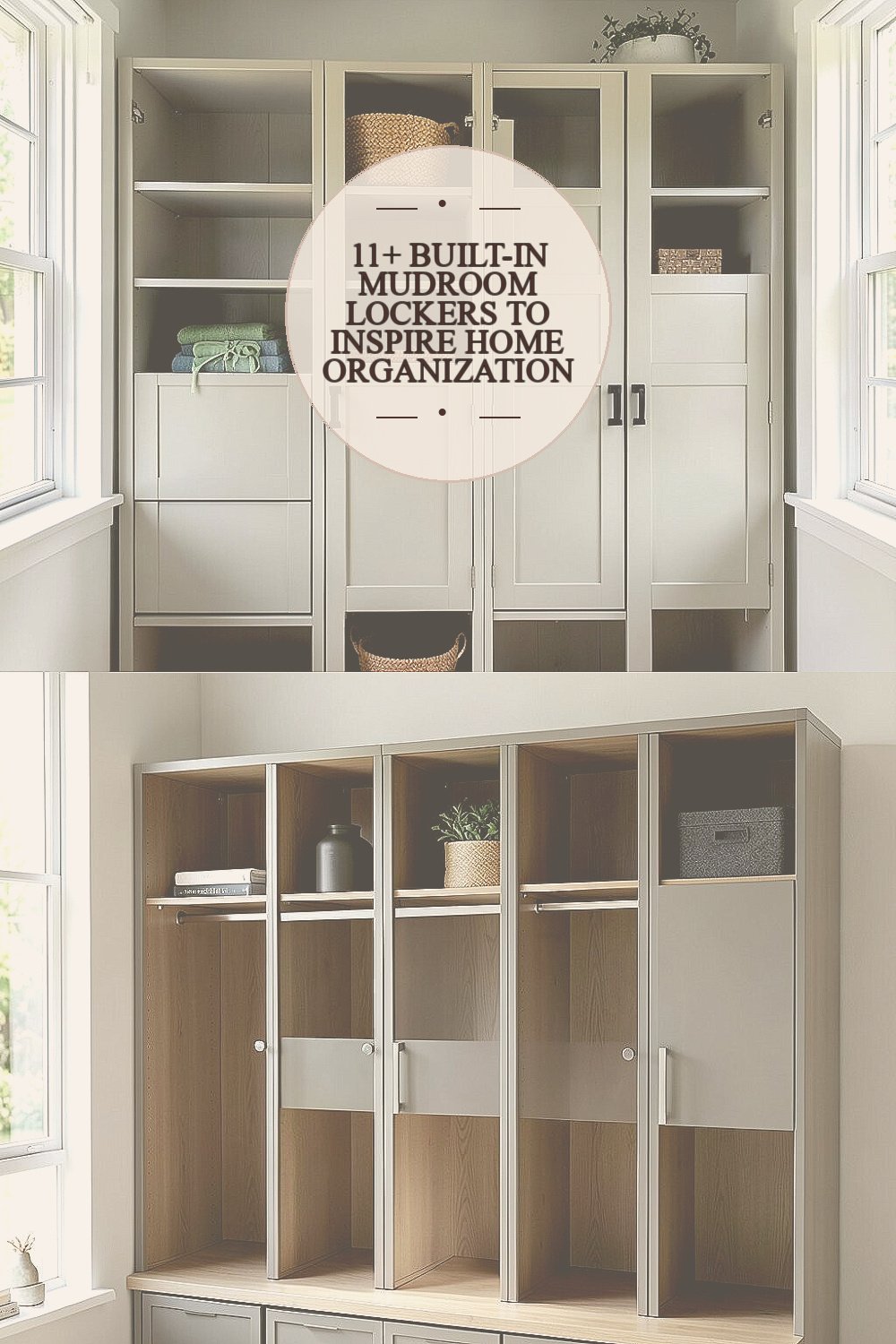
The mudroom is where the day’s mess tries to move in. With the right lockers built in, everything can have a home before it spreads.
Thoughtful storage turns muddy shoes, wet coats, and random items into a neat routine you actually enjoy.
1. Deep Cubbies With Weatherproof Doors
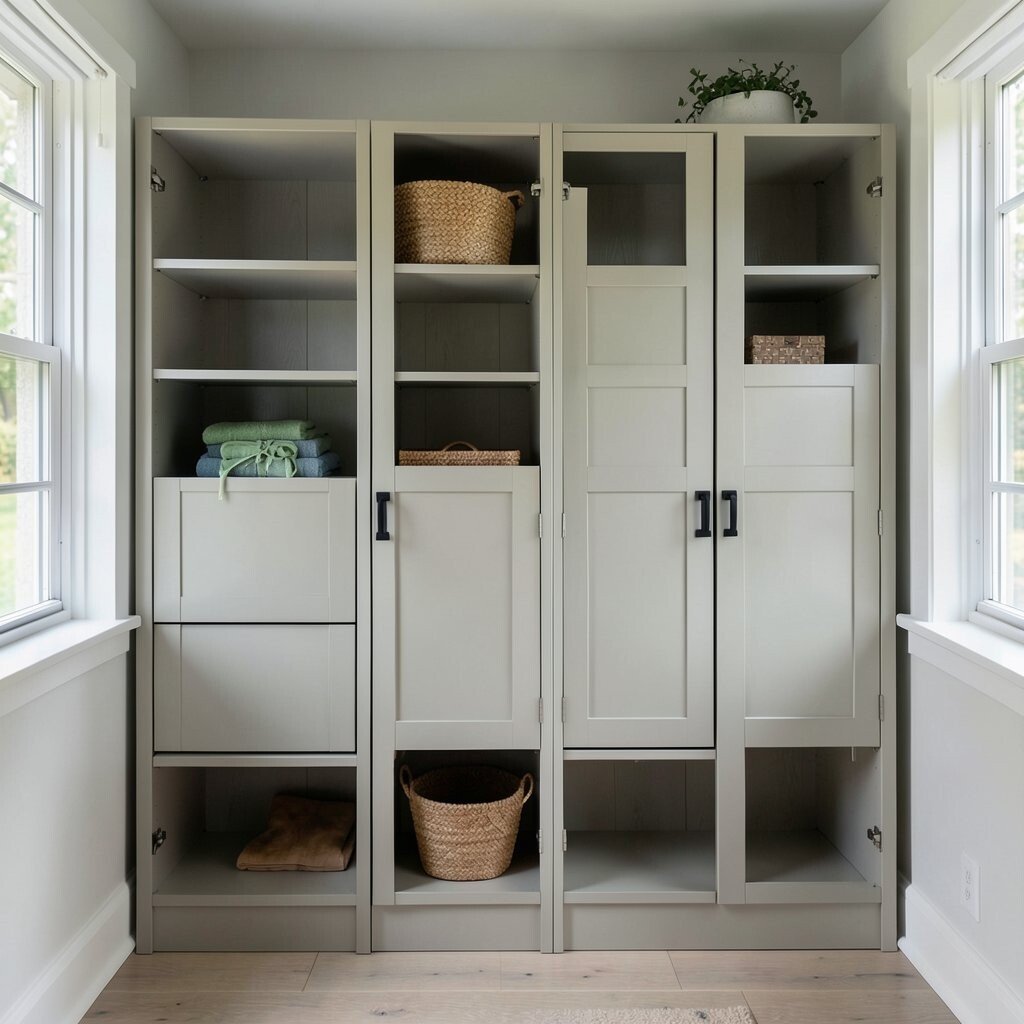
Imagine stepping into a mudroom and seeing deep cubbies lined up with sturdy, weatherproof doors. Each compartment feels like a small vault for shoes, sports gear, and damp gloves.
You get fast sorting without the clutter pile that often forms near the door. Add a simple shoe rack insert at the bottom and baskets for smaller items so you can grab and go. Consider swapping cabinet knobs for pulls you can open even with wet hands.
2. Bench-Top Lockers With Lined Seat Storage
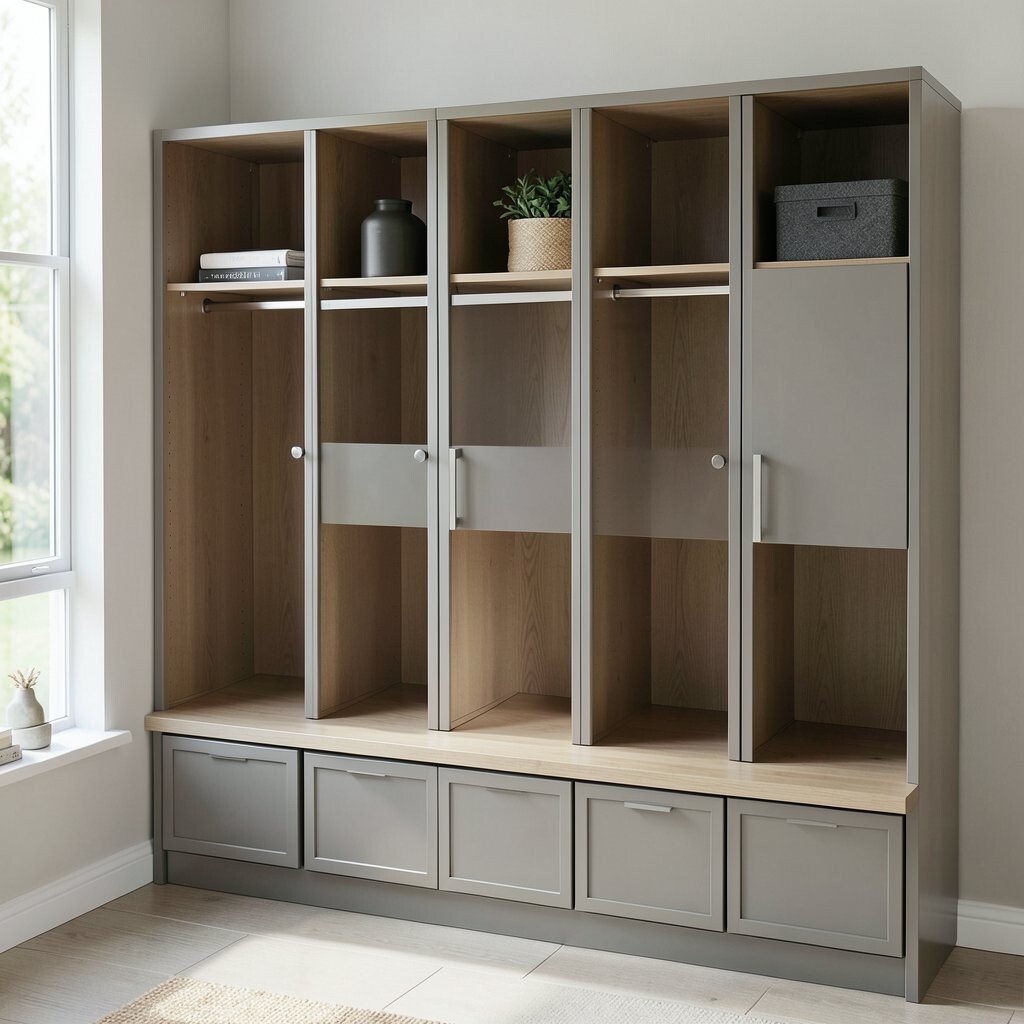
A built-in bench with lockers underneath looks welcoming and practical at the same time. The seat top feels like a place to pause while the lockers below keep the floor clear.
When families come and go, the bench supports quick shoe changes instead of balancing on one foot. Install a soft close feature to reduce bangs, and use removable bins so you can wash or wipe them down. For personalization, match the bench tone to your flooring and add a small tray for keys and earbuds.
In a typical home, this can be a mid-range upgrade, especially if you already plan to renovate the entry area. If budget is tight, start with one wall section and expand later as you discover what you store most.
3. Tall Lockers for Coats, Backpacks, and Season Changes
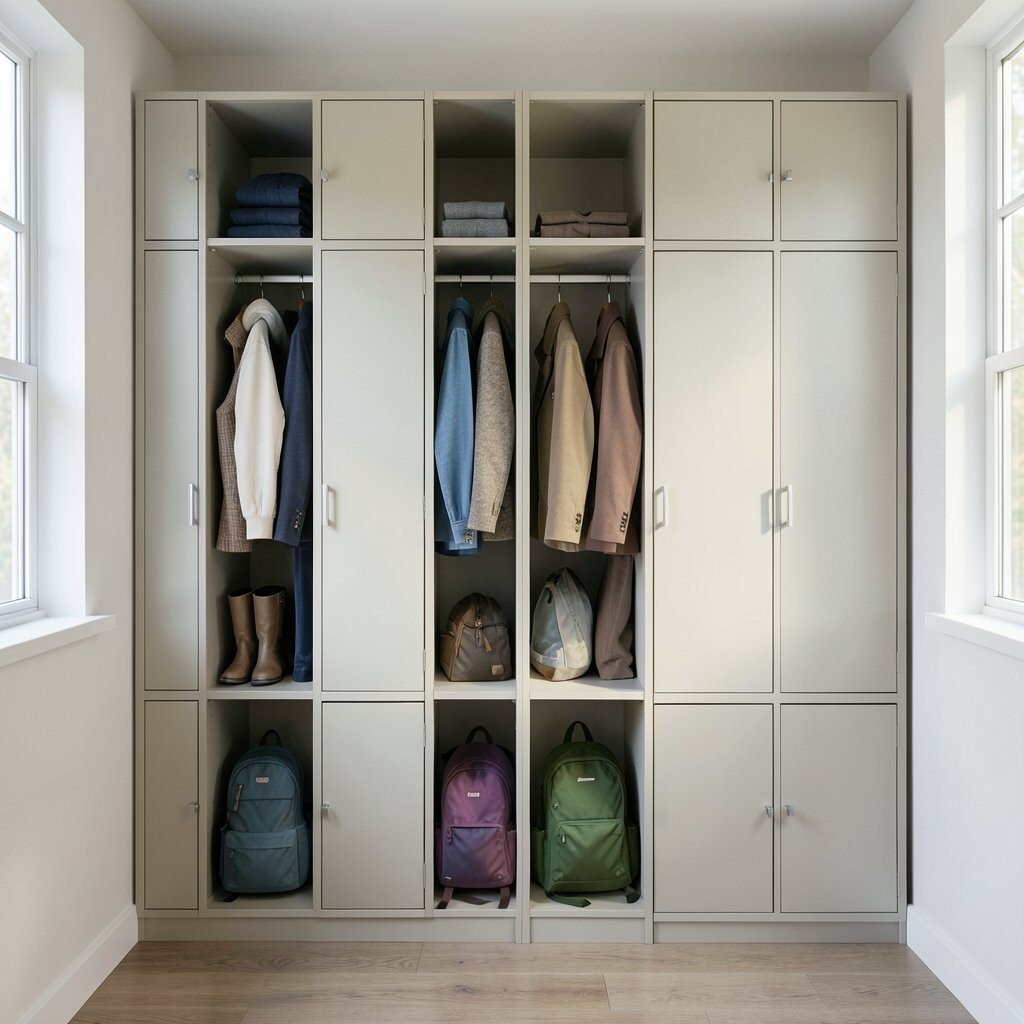
Long coats, backpacks, and scarves look so much better when they hang straight in tall lockers. You can picture it as a clean vertical line of storage that stays out of the way.
Keeping outerwear together makes mornings smoother because everyone knows where to drop their items. Add adjustable hanging rails so the locker works for kids today and adults tomorrow. A small shelf near eye level helps with hats, sunglasses, and charging cords.
To keep things fresh, add a breathable liner and a vented panel so wet fabrics don’t trap moisture. Plan for seasonal rotation by giving each family member one dedicated locker slot, then swap items as weather changes. This approach can cost more than shallow cabinets, but it often saves money by reducing the need for extra storage furniture.
4. Locker Columns With Labeled Sliding Bins
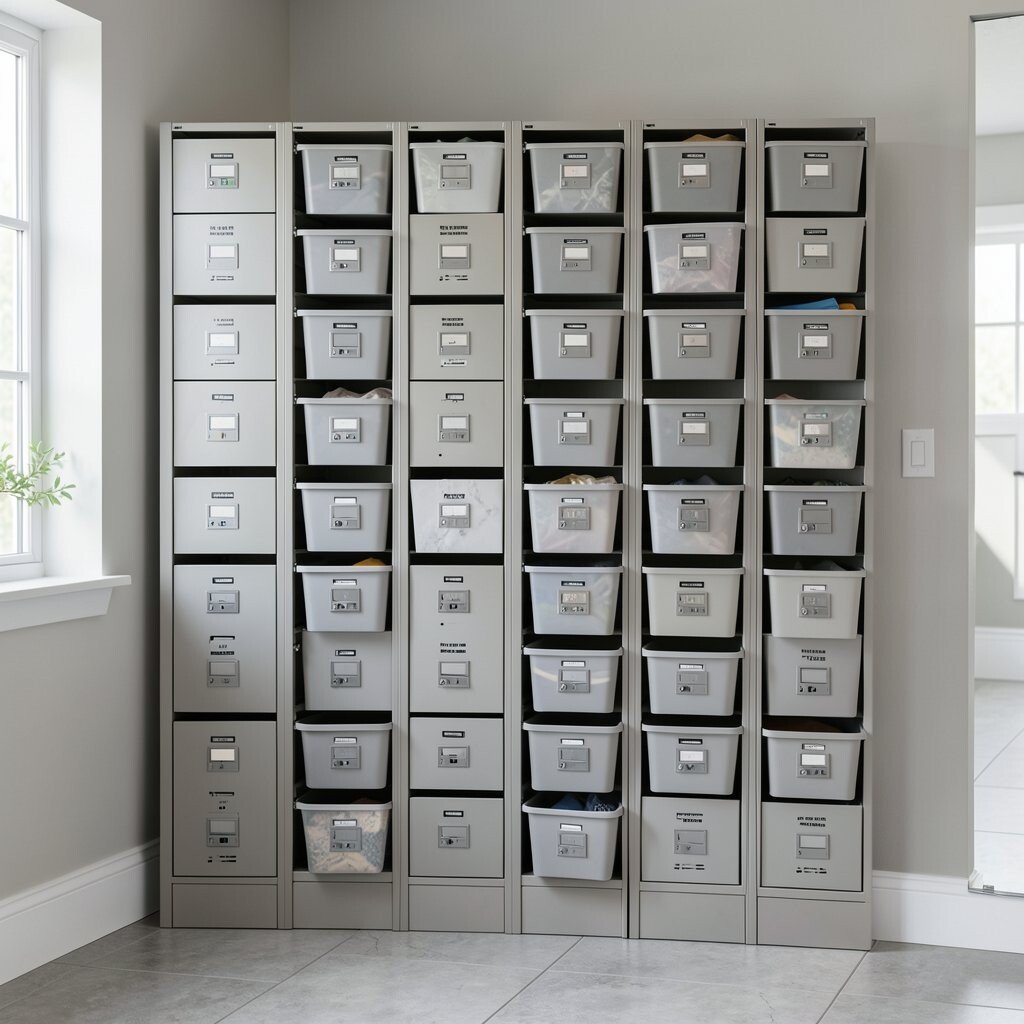
Picture a row of locker columns with sliding bins that glide out smoothly. The front faces look crisp, and the bins reveal exactly what’s inside.
Labeled storage reduces that last-minute scramble when you cannot find the right gloves. Choose bins in two sizes so you can fit everything from mittens to small helmets. A simple personalization trick is to use family color accents on the bin fronts so the system feels friendly.
If you want a budget-friendly start, install the locker fronts first and use stackable bins later as you fine-tune your routine. Keep in mind that sliding mechanisms cost more than fixed shelves, but they are worth it for daily use. Newer hardware options also tend to run quieter, which matters in entryways.
5. Shoe Lockers With Tilting Pull-Out Trays
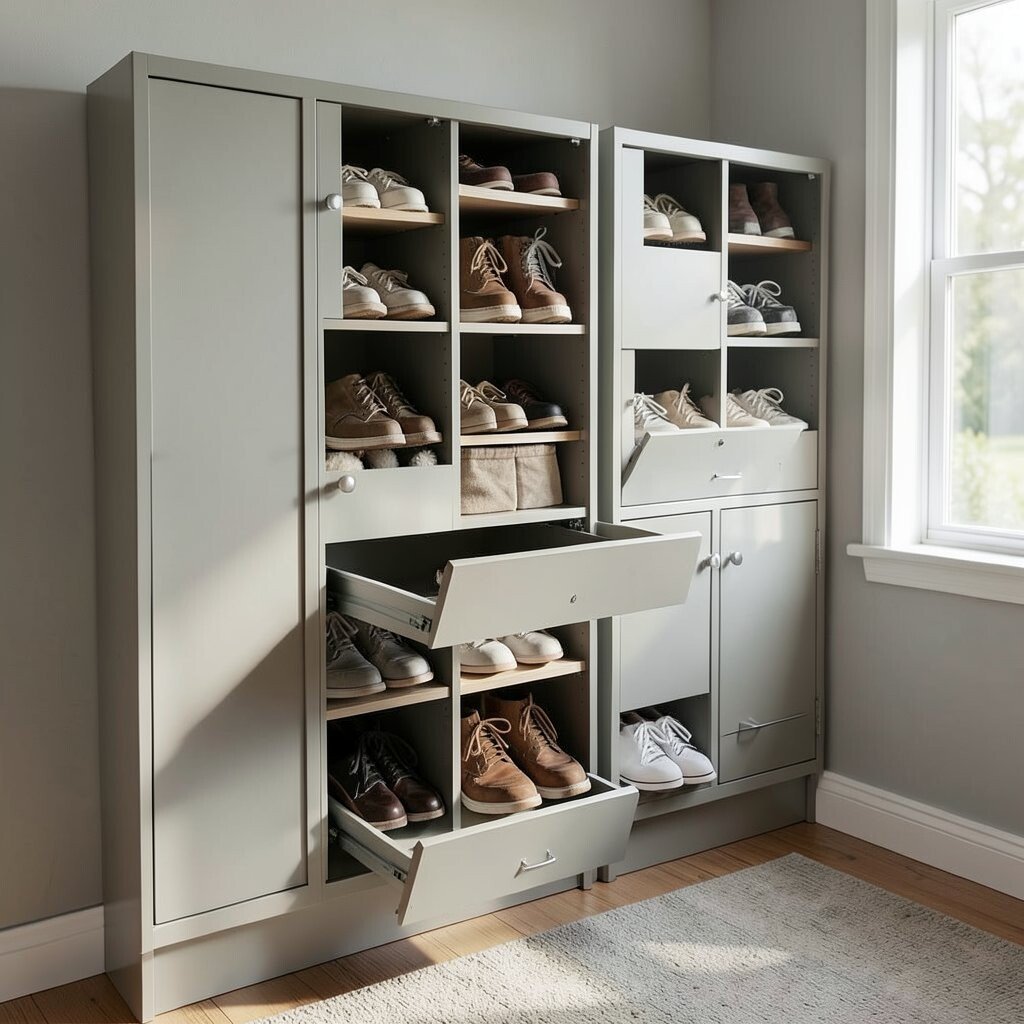
Some shoes need more care than a simple shelf allows, and tilting trays make that easier. You can see each pair resting at an angle, ready to dry while still staying tidy.
This style helps with airflow, so damp sneakers do not turn the whole mudroom into a smelly zone. Use a tray liner that wipes clean, and add a small drip mat for rainy days. For practical personalization, store shoe spray or wipes in a slim side cubby so you can clean right away.
These lockers can be a little pricier because of the tray hardware, but the daily convenience feels worth it. If cost is a concern, prioritize the tray setup for the most-used shoes, then use standard shelves for the rest.
6. Half-Height Lockers With Upper Shelf Display
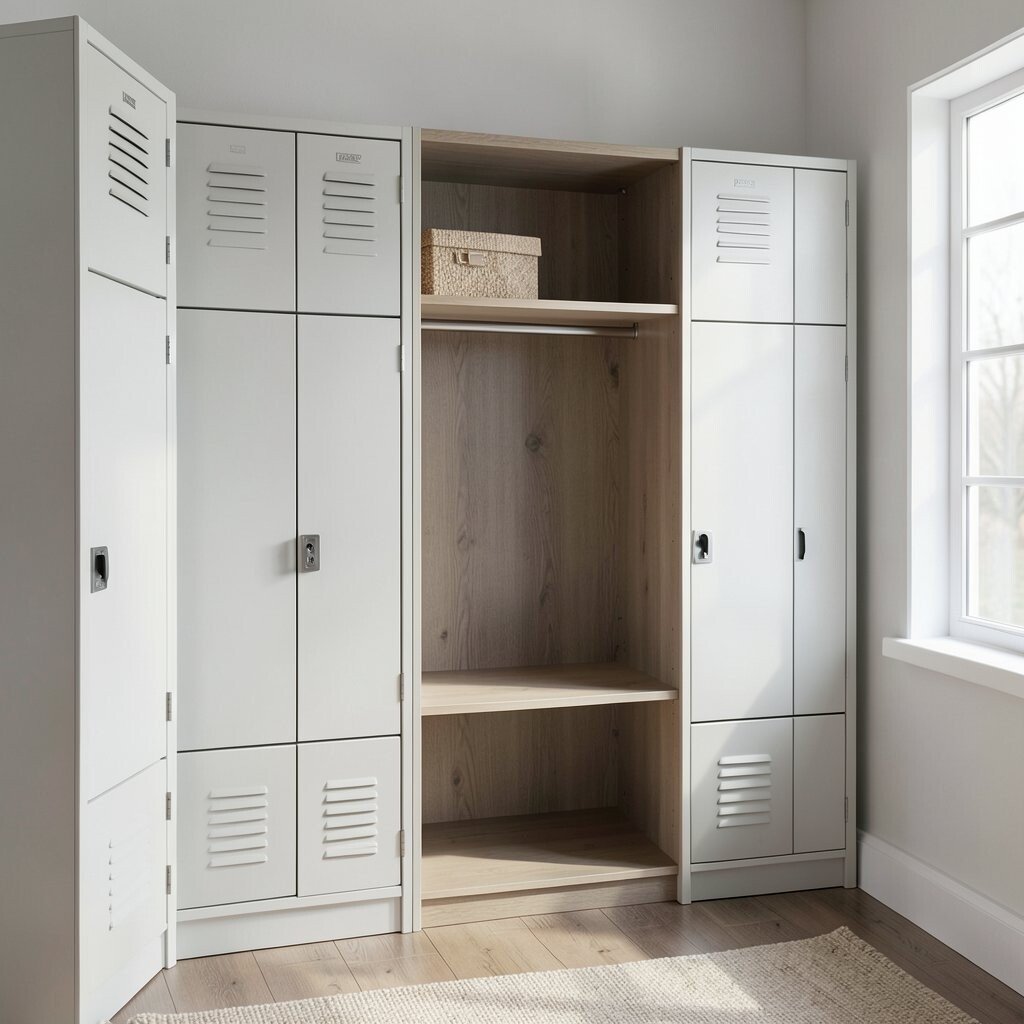
A half-height locker layout creates an open, airy look while still keeping the essentials hidden. You might picture it as clean fronts with a top shelf that catches light and shows neat, curated items.
This setup works great for items you grab often, like leashes, lint rollers, or umbrella sets. Add small hooks under the top shelf so coats can hang briefly before they go into deeper storage. For personalization, use a tray for seasonal decor such as wreath accents or holiday scarves.
Because the compartments are shallower, this option can be more budget friendly than fully tall lockers. It also fits smaller mudrooms where you still want the feel of openness.
7. Corner Built-Ins With Wraparound Lockers
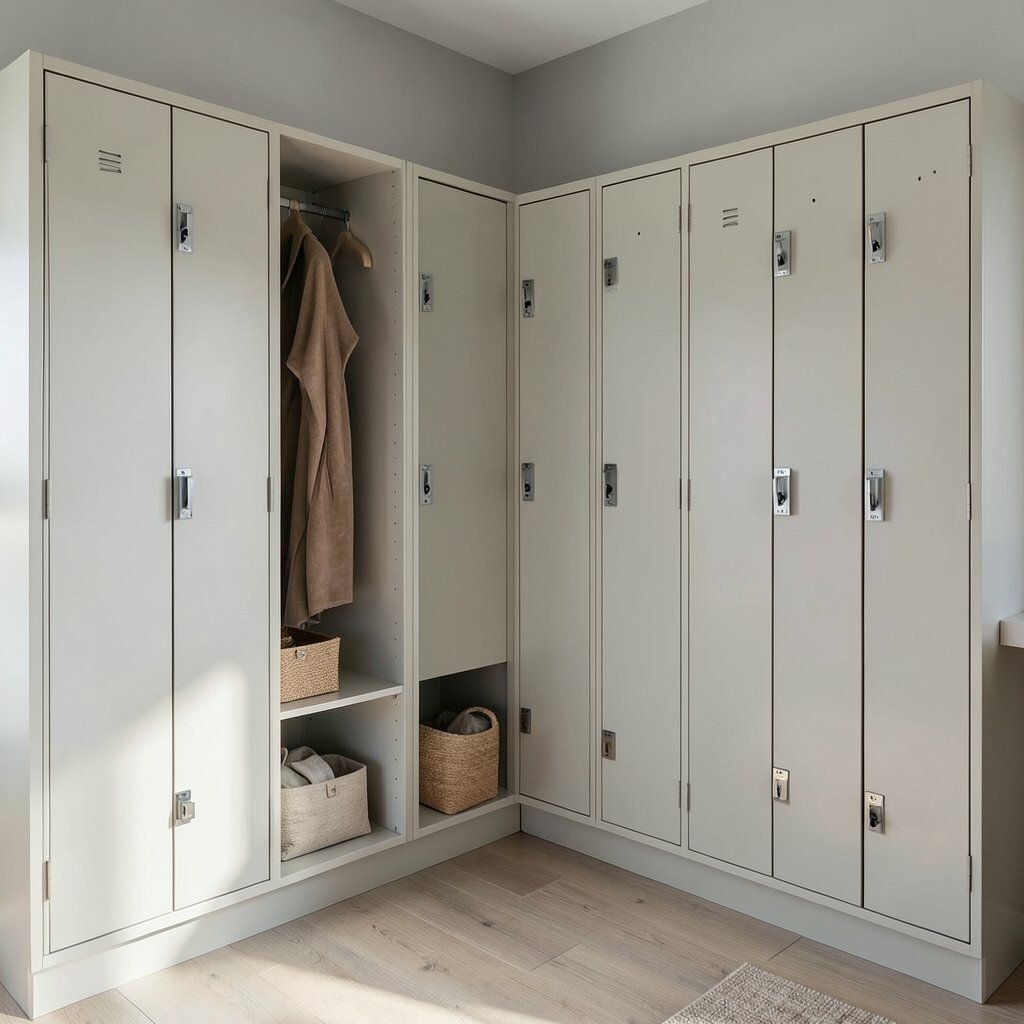
When the mudroom has a tricky corner, wraparound lockers can turn wasted space into useful storage. The visual effect is smooth continuity, with cubbies that hug the walls instead of blocking paths.
Corner lockers are a smart way to keep bulky items like sports balls, folded blankets, or extra towels from wandering around. Add a rotating organizer inside if you want easy access without awkward reaching. For uniqueness, try a deeper finish on the corner section so it feels like a design feature rather than an afterthought.
Custom corner storage can raise the project cost, so measure carefully and consider partially pre-made panels. You will get the best value if you design the corner unit to match existing millwork and avoid extra structural changes.
Current trends also favor efficient layouts, and corner storage fits right into that “use every inch” mindset.
8. Locker Wall With Hidden Laundry and Linens Compartment
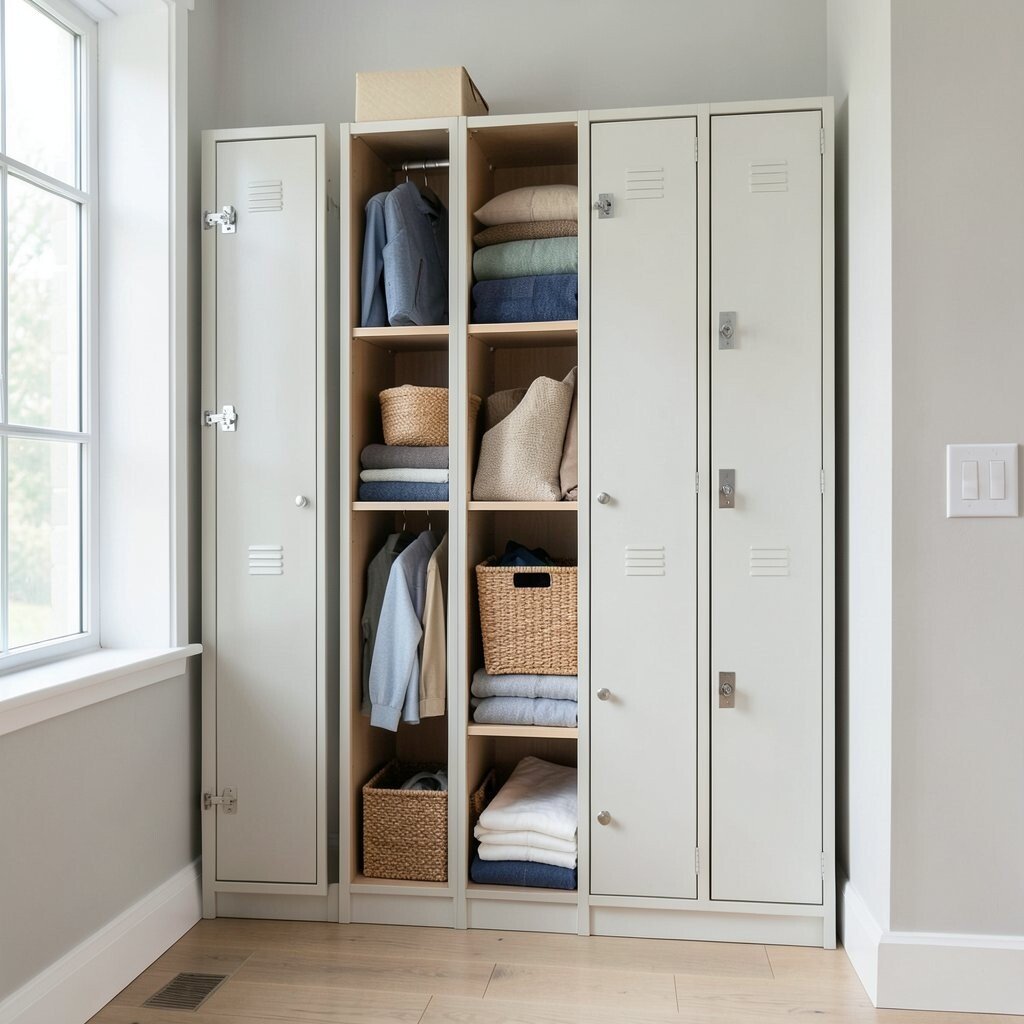
Wet items often end up in a hamper, but the process can feel messy if laundry storage is too far away. A locker wall that includes a hidden linens and laundry space keeps everything contained.
The visual is satisfying because the front stays clean, while the inside supports a fast change routine. Use a pull-out hamper bin with a lid so the area looks neat even when you are mid-week. Add a top shelf for spare towels and quick-dry wipes so spills and water drops have a plan.
For practical tips, keep one set of liners dedicated to “outdoor” use and another set for everyday cleaning. This helps you maintain hygiene without overthinking it. When you budget, remember that pull-out bins and doors for concealment can add cost, but they also reduce clutter that otherwise needs extra furniture.
9. Locker System With Bench Back Panels and Hooks
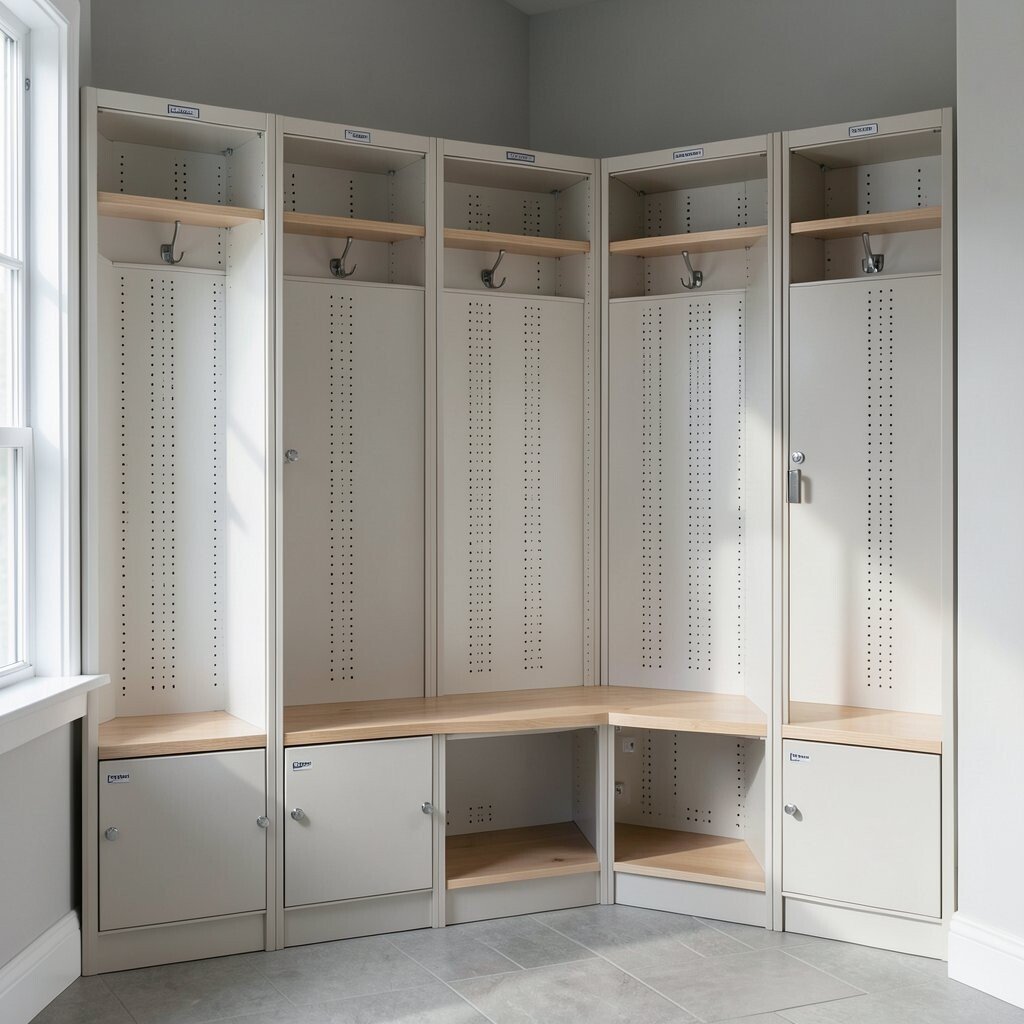
Some mudrooms feel busy because coats and bags hang in too many random places. A locker system with a built-in back panel can guide everything into a clear pattern.
You can picture hooks neatly lined above lockers where backpacks can sit after school. This keeps wet coats from brushing the floor and helps the room look organized from any angle. Install a few hooks at kid height and a few at adult height so the system works for everyone.
To personalize the look, choose hook finishes that match your door handles and lighting. If you are planning a renovation, pairing lockers with a durable back panel can cost less than buying extra wall racks later. Many homeowners are leaning toward built-in “full wall” solutions because they look polished and reduce maintenance.
10. Locker Doors With Built-In Venting and Air Filters
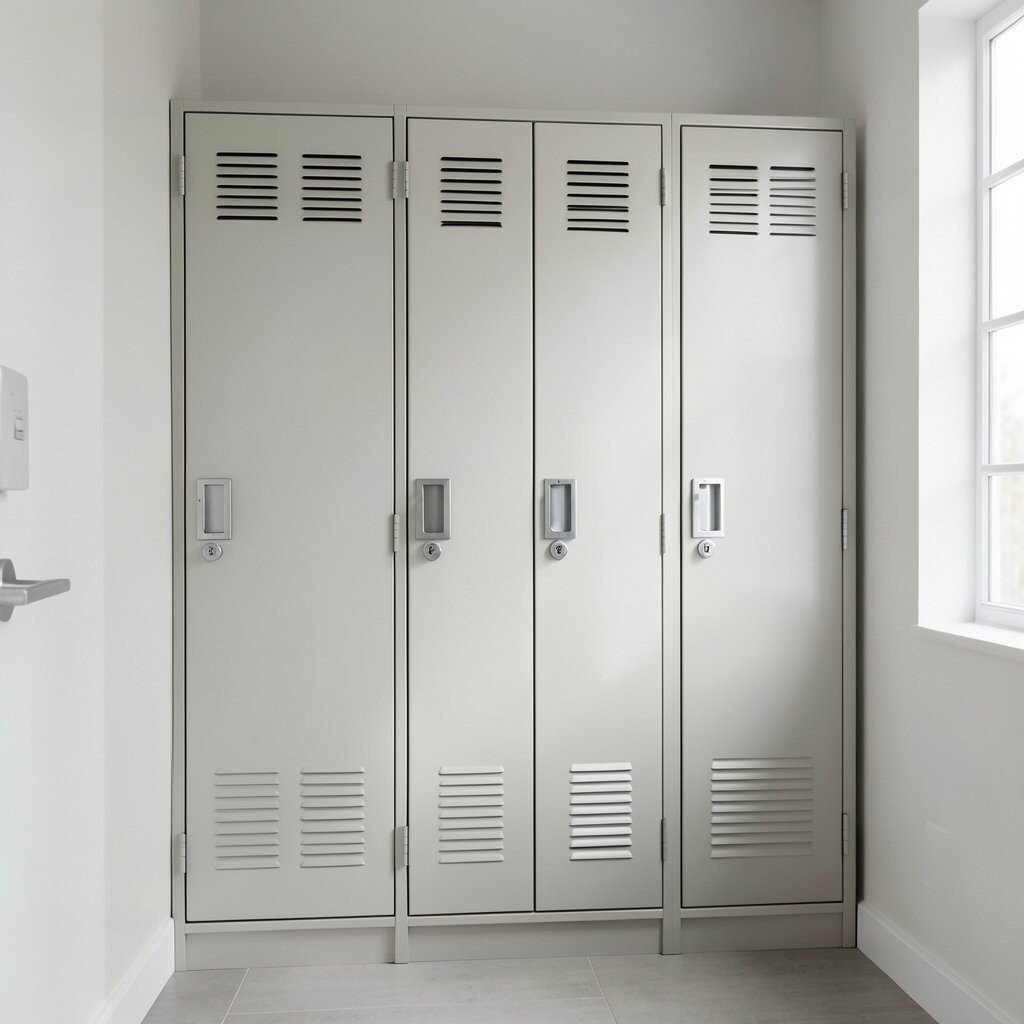
Bad odors often come from trapped moisture, and built-in ventilation changes the whole vibe. Locker doors with vented panels can look sleek and purposeful while letting air move.
This feature helps shoes, helmets, and gloves dry out more quickly, so the mudroom stays fresh. Pair venting with an easy-to-clean filter or replaceable pad for practicality. For personalization, choose a vent style that fits your design, like subtle slats that feel modern.
Vent upgrades can add to cost, especially if the system includes specialty parts. If you want to keep it realistic, focus venting on the shoe and wet-item zones first, then extend it later only if needed.
Current trends lean toward healthier home comfort, and smarter airflow in storage spaces fits right in.
11. White Shaker Lockers With Glass-Front Storage for Small Gear
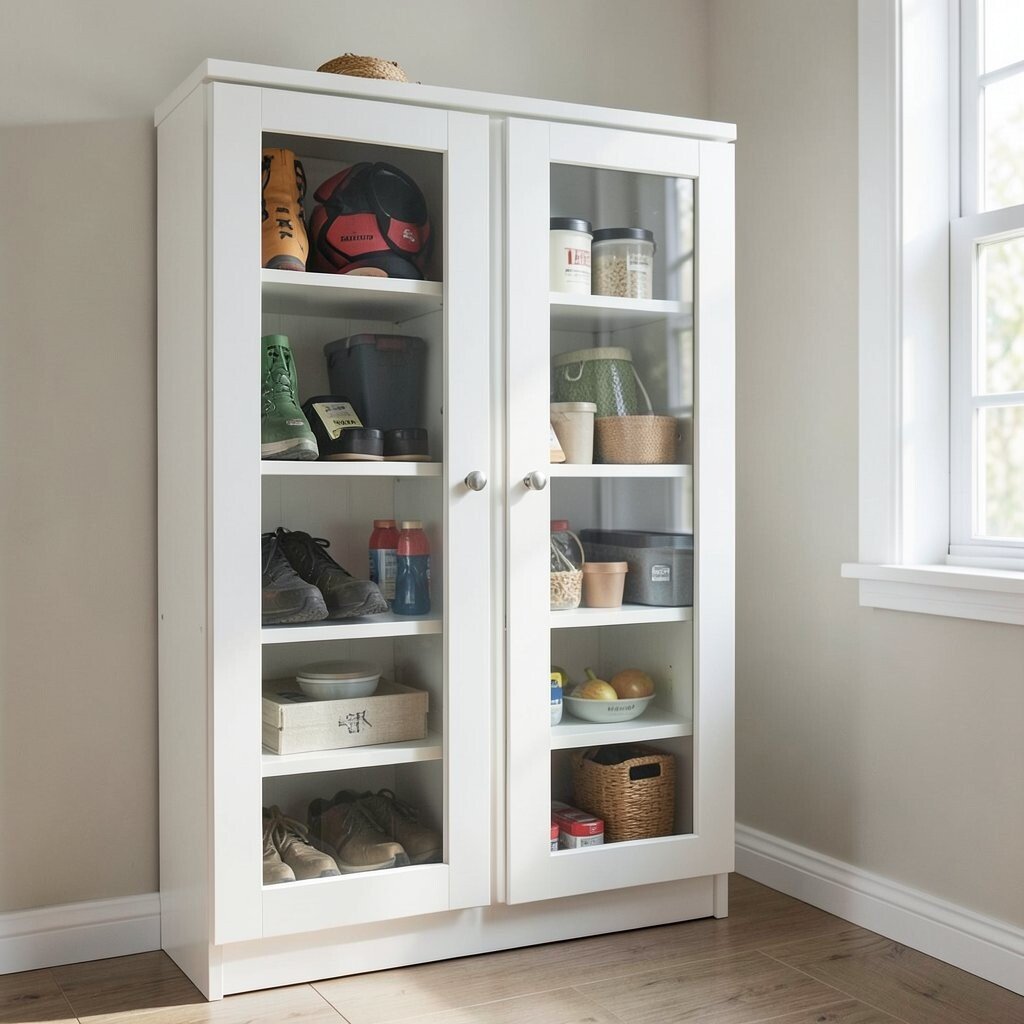
White shaker locker fronts bring a classic feel, and glass-front sections add a bright, tidy look. You can almost see how the room stays lighter because the small items do not feel buried.
Glass-front areas are great for items you want to check quickly, like first-aid supplies, spare shoelaces, or car accessories. Use clear, stackable organizers inside so everything stays visible without looking messy. For practical tips, pair glass sections with doors on the lower lockers so wet shoes stay hidden.
This can be a mid to high-cost option because glass inserts require careful installation and durable shelving. Still, the design can feel timeless, and it reduces the need for extra decorative storage that costs money too.
12. Textured Metal-Look Lockers With Tool-Station Compartments
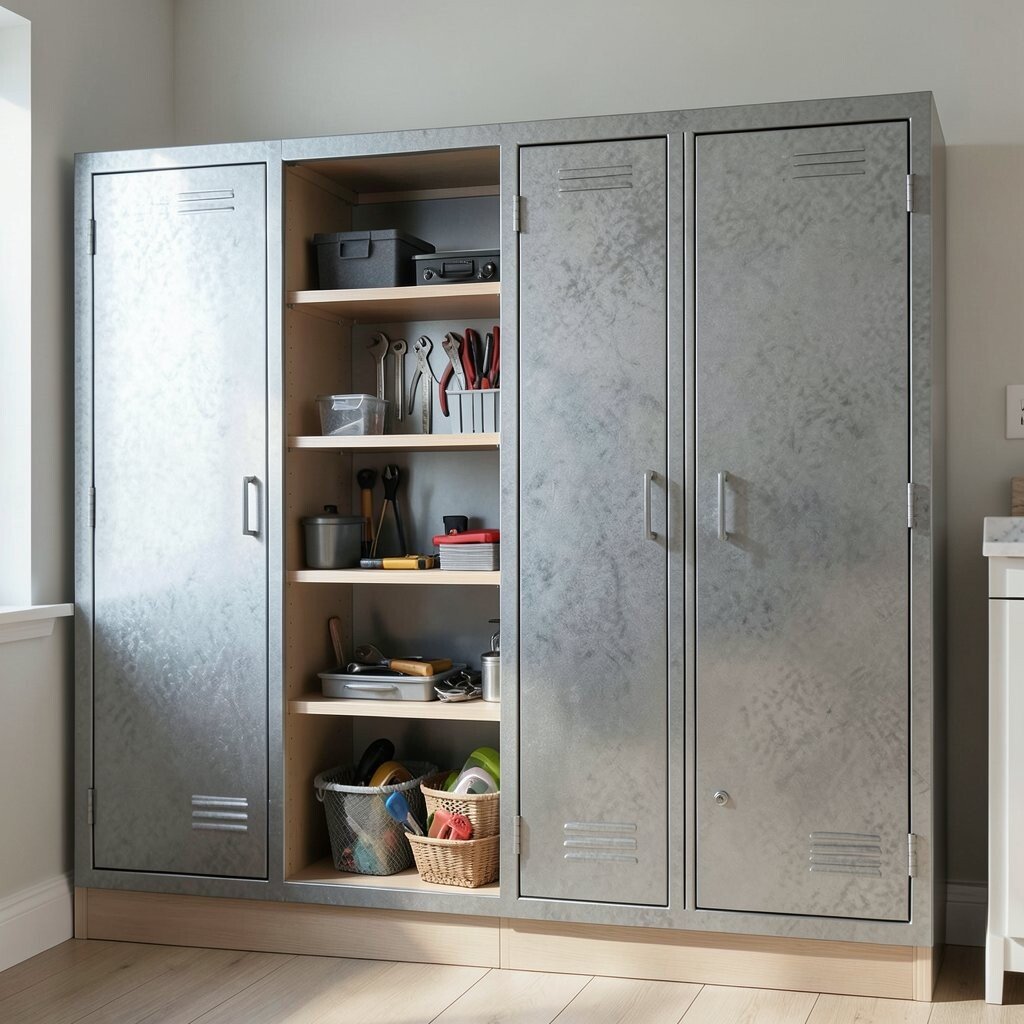
Some mudrooms double as a utility spot, and metal-look lockers give that industrial, ready-for-anything feel. Picture a robust wall of lockers where one section holds tools, tape, and spare batteries.
This kind of built-in storage keeps small repair items from taking over drawers and counters. Add a deep compartment with a peg insert for screwdrivers and a slim shelf for everyday essentials like batteries and marker pens. For personalization, match the metal finish to your kitchen hardware or lighting so the whole home feels connected.
Cost can vary widely because metal-look finishes and specialized inserts may be more expensive than basic wood cabinetry. You can keep spending under control by choosing metal accents only for the tool-station side while using simpler finishes on the rest of the lockers.
Many homeowners are using the mudroom as a multi-purpose command center, and this locker style supports that trend with style.