A small balcony can hold a lot of green life. With the right herbs, it can smell fresh, look lovely, and feed your kitchen too.
1. Basil for Bright, Leafy Pots
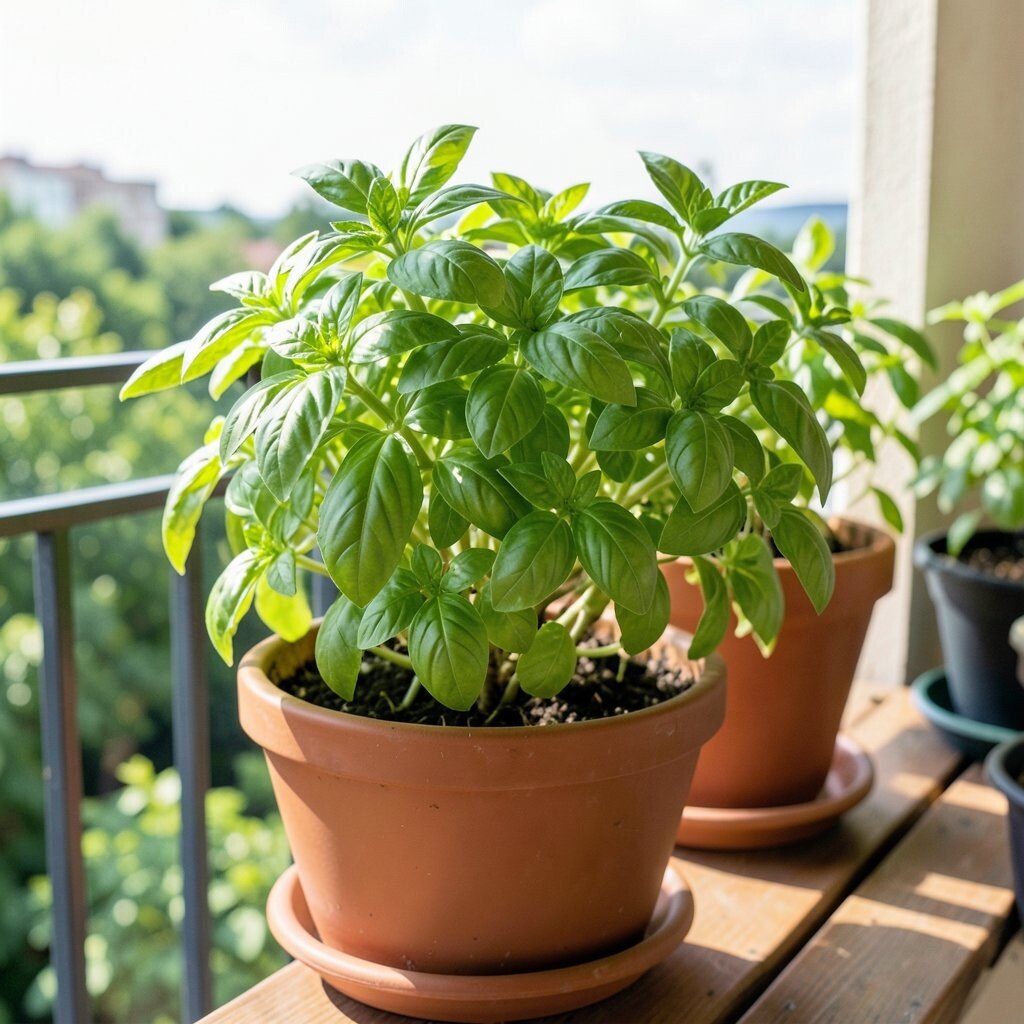
Basil brings soft green leaves and a sweet smell that feels cheerful on a balcony rail or sunny shelf. It grows fast, looks full and lively, and gives you fresh flavor for pasta, toast, and salads.
This herb likes warm weather and a bright spot, so a south-facing balcony often works well. Small nursery starts are usually cheap, though seed packets save money if you want many plants, and you can pinch the tops often to keep each plant bushy and neat.
2. Mint for Fast, Fresh Growth
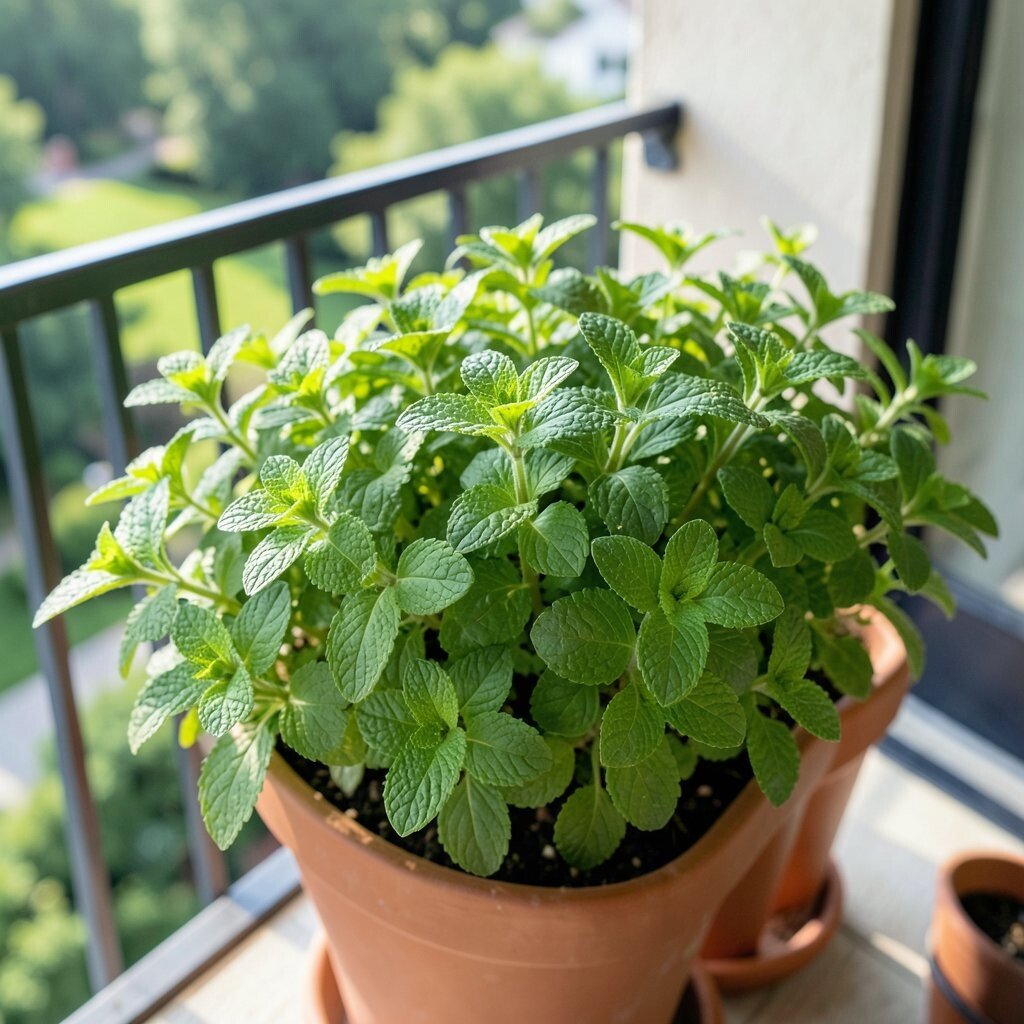
Mint has shiny leaves and a cool smell that can wake up a whole little corner of your balcony. It stands out because it grows with a bold, spreading habit, and many people love it for tea, fruit bowls, and quick drinks.
A deep pot helps keep the roots happy, and it is smart to give mint its own container so it does not crowd other herbs. This plant is easy on the wallet because one healthy plant can last a long time, and striped or chocolate types can add a fun twist if you want something less common.
Try placing mint near a chair so you can brush past it and catch the scent when you sit outside. The leaves stay useful for months if you trim them often, and that steady harvest makes it feel like a tiny green machine.
3. Rosemary for a Small, Upright Accent
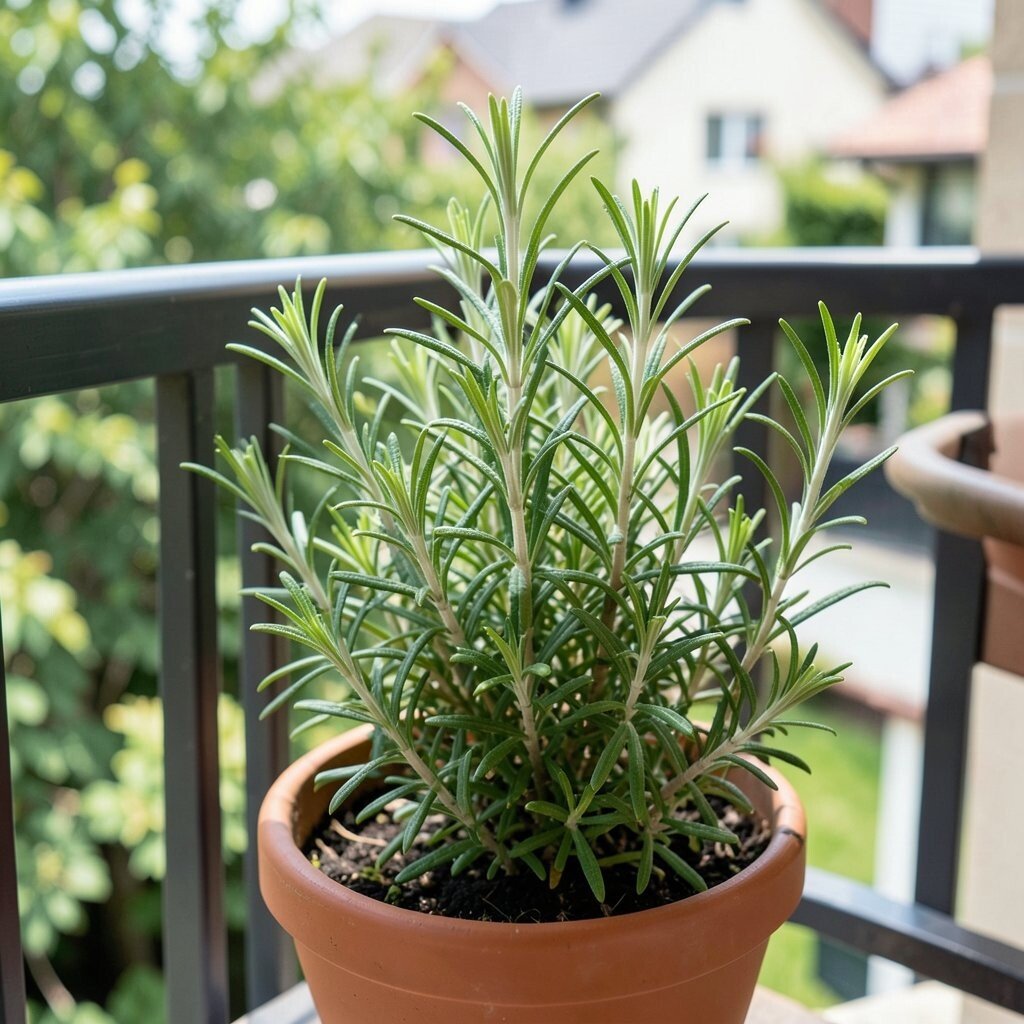
Rosemary looks a bit like a little evergreen bush, with narrow leaves that add shape and order to a balcony garden. It is useful for potatoes, roasted vegetables, and bread, and its woodsy smell gives the whole space a cozy feel.
This herb likes sun and dry soil, so a pot with drainage is worth the small cost. A compact variety works well in tight spaces, and you can place one in a simple clay pot for a clean, classic look or pick a glazed pot for a more modern style.
Many balcony gardeners enjoy rosemary because it asks for less water than some herbs, which can fit busy days. Trim only what you need, and the plant often keeps its neat shape while giving you fresh sprigs for cooking.
4. Parsley for Full, Curly Green Clumps
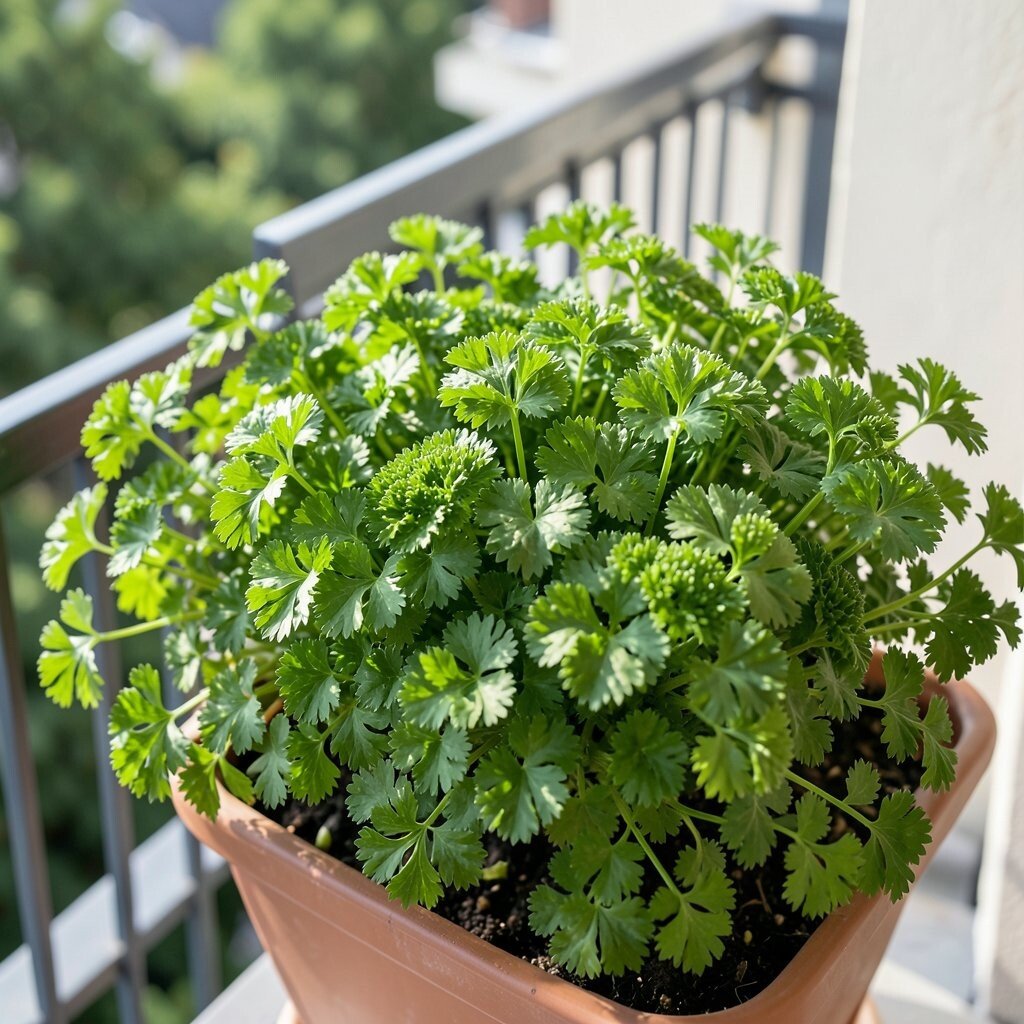
Parsley can look soft and fluffy in a pot, especially the curly type with its ruffled leaves. It adds a fresh taste to soups, eggs, and dips, and it is one of those herbs that makes a balcony feel useful every day.
It grows well in bright light with a bit of shade in hot weather, so it can handle many balcony spots. Starter plants are usually low cost, and flat-leaf parsley has become a favorite in home gardens because it looks sleek and tastes strong, which makes it a smart choice for simple meals.
You can tuck parsley beside flowers or in a mixed herb box for a lush, layered look. Keep cutting the outer stems first, and the plant will often keep producing more leaves without looking bare.
For a personal touch, pair a plain pot with a colorful plant marker or a painted stone. That small detail can make the space feel like your own little kitchen corner in the sky.
5. Chives for Slim, Grass-Like Clusters
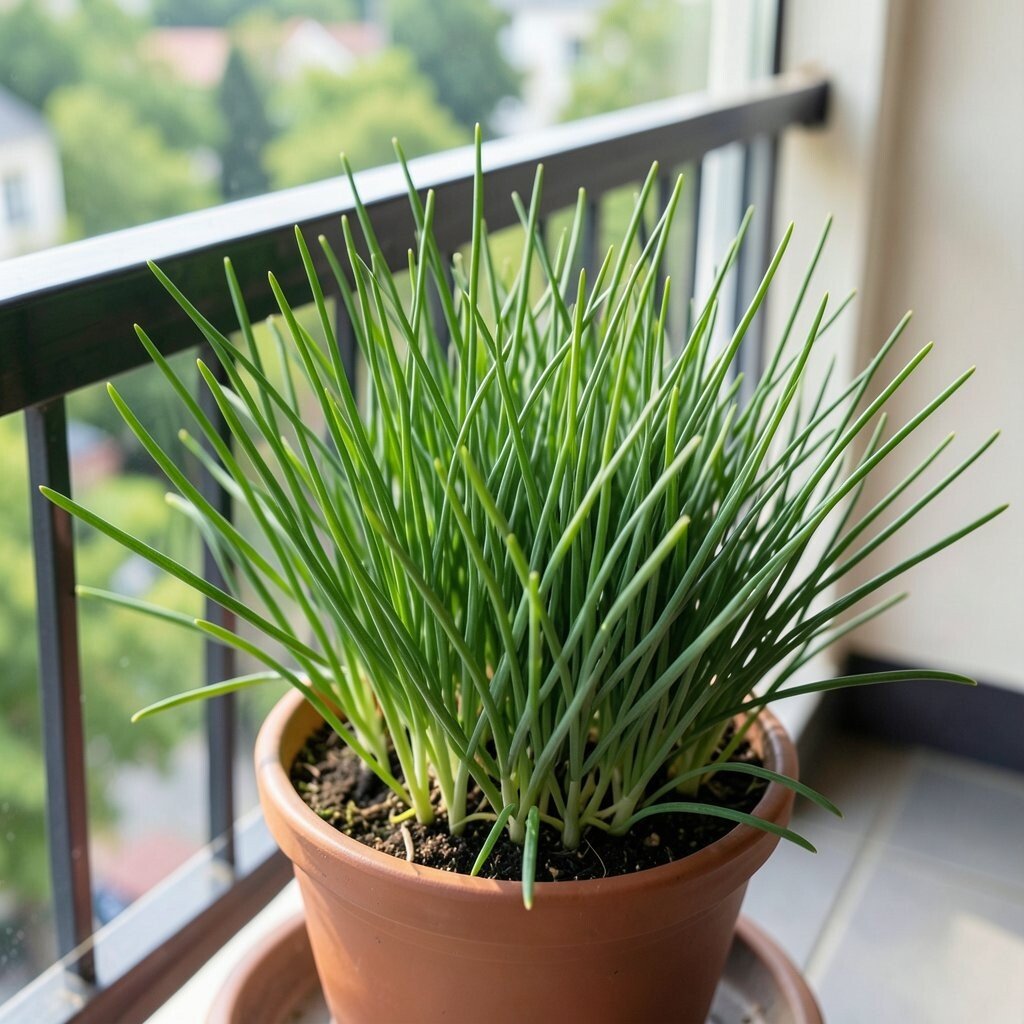
Chives add tall, thin leaves that sway gently in the breeze and make a balcony garden look neat and tidy. Their mild onion taste works well with potatoes, eggs, and cream cheese, and the purple flowers are pretty enough to earn a spot in a sunny display.
This herb is friendly to beginners because it grows back after cutting and does not need much space. A small nursery plant is usually affordable, and if you want a trend that feels fresh, many gardeners now mix chives with edible flowers for a pretty, pickable pot.
Use a pot that is not too wide, and place it where you will remember to snip it often. The more you trim, the more it can stay full, which makes it a great choice for quick balcony harvests.
If you like a tidy look, group chives with a few round stones or a clean metal tray. That simple style can make even a tiny balcony feel polished without spending much.
6. Thyme for Tiny Leaves and Big Flavor
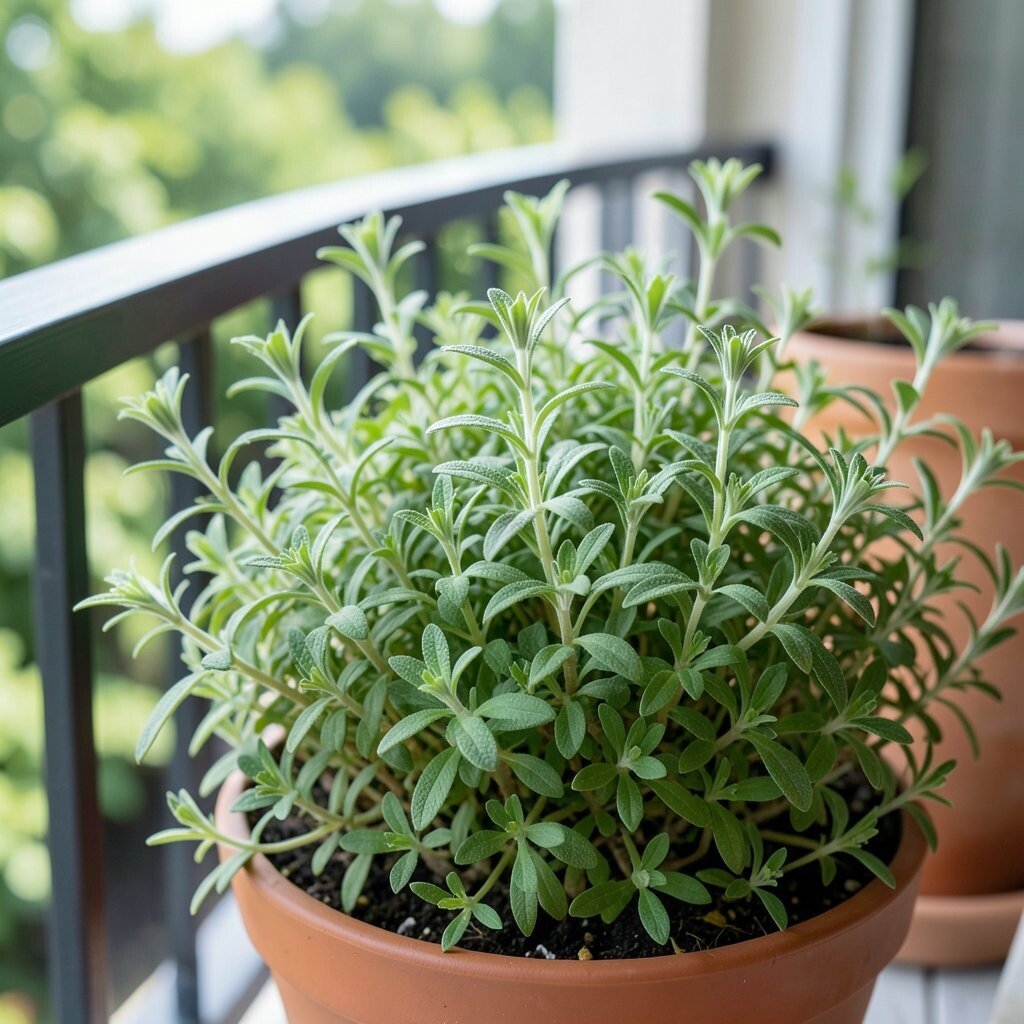
Thyme has tiny leaves and short stems, but it gives food a strong, warm taste that feels rich and savory. It looks sweet in a shallow pot or hanging planter, and its small size makes it a clever fit for narrow ledges and shared spaces.
It likes sun and light watering, which means it can be a low-fuss herb for busy homes. The cost stays friendly because a small plant can go a long way, and lemon thyme or woolly thyme can add a special look and scent if you want something a little different.
Try setting thyme near rosemary or sage so the pot group has a nice mix of shapes and shades. That pairing also helps create a tiny herb shelf that looks planned, not crowded.
7. Sage for Soft, Fuzzy Leaves

Sage has soft gray-green leaves that look almost velvety under balcony light. It brings a deep, earthy taste to butter sauces, chicken, and beans, and it adds a calm, old-fashioned charm to the whole setup.
This herb prefers sun and soil that drains well, so a sturdy pot helps keep it happy. It is a smart buy because one plant can last a long time, and purple or golden sage can feel current if you want a more stylish garden look without much extra cost.
Give it room to spread a little so the leaves do not crowd each other. A single sage plant in a simple pot can look rich and full, even when the rest of the balcony is small.
You can also place sage near seating since the leaves smell nice when touched. That small sensory touch makes the balcony feel more alive and more personal.
8. Cilantro for Quick, Fresh Pickings
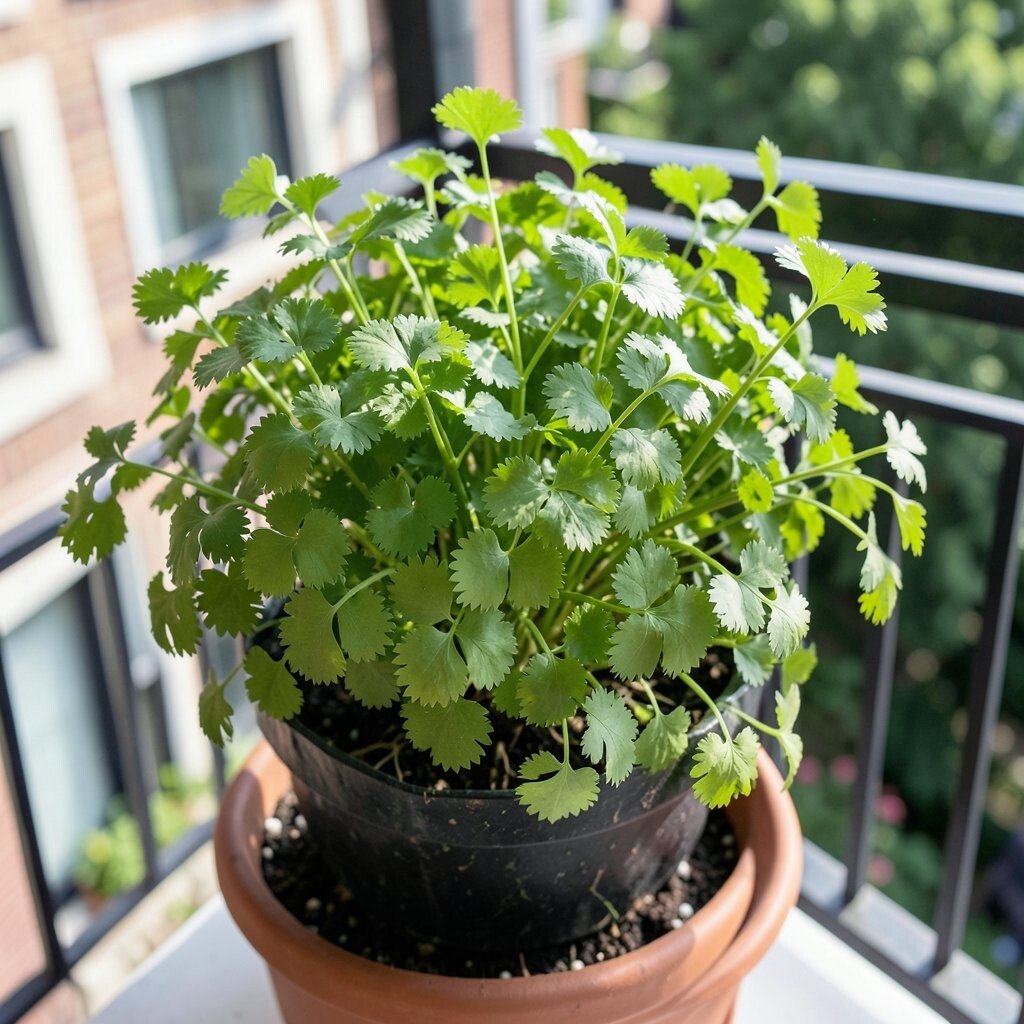
Cilantro grows fast and adds bright green leaves that look lively in a shallow container. It is loved for salsa, tacos, noodles, and soups, and it gives a fresh taste that many people want right at their door.
This herb can bolt in heat, so cooler balcony spots and regular harvesting help keep it going longer. Seeds are often cheap, and many gardeners now sow small batches every few weeks so they can keep a steady supply without spending much on store herbs.
Choose a pot with good drainage and keep the soil a little moist, not soggy. If you want a personal touch, mix cilantro with tiny labels or colorful pots so it feels like part of a fun little food garden.
Because the leaves are delicate, snip them often and use them fresh for the best taste. That simple habit makes the plant more productive and gives your meals a bright lift.
9. Oregano for a Spreading, Sunny Look
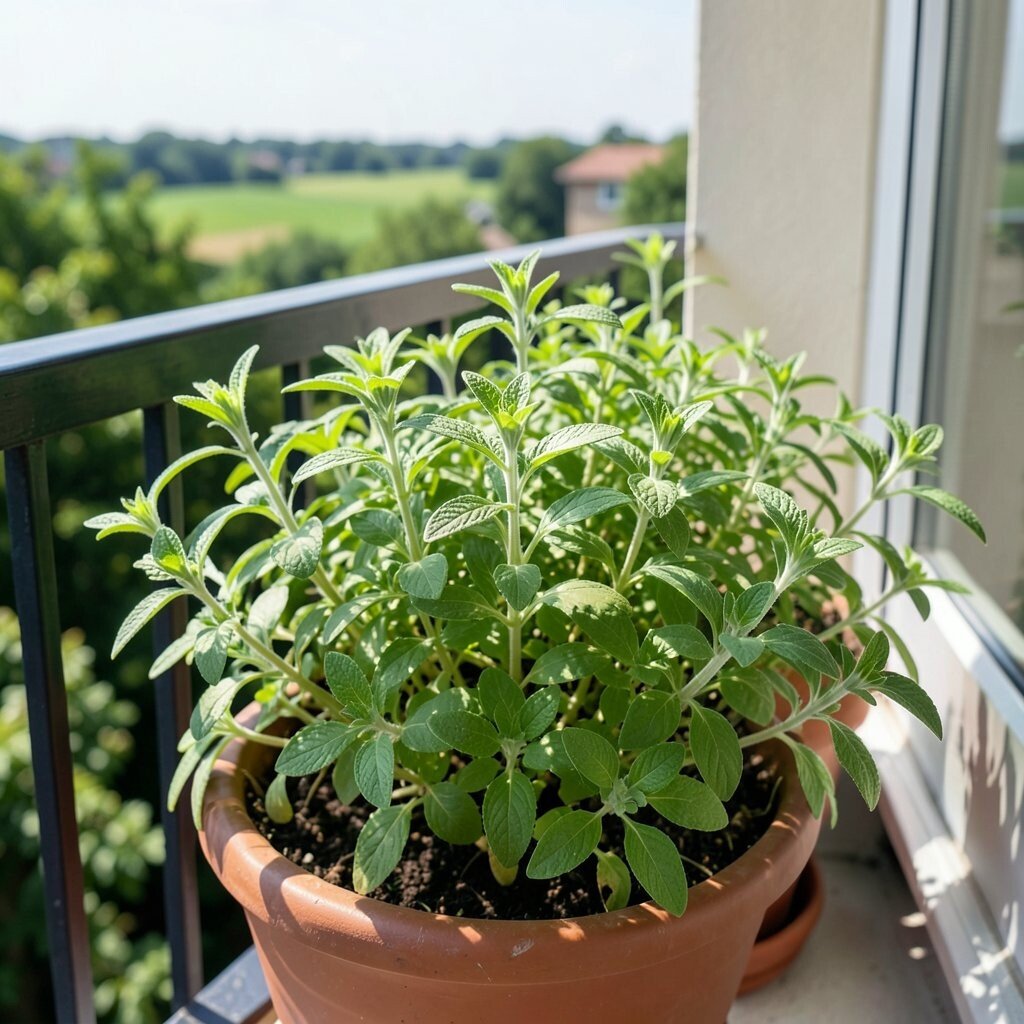
Oregano grows in loose mounds with small leaves that bring a relaxed, natural look to a balcony. It is perfect for pizza, tomato dishes, and grilled vegetables, and its strong flavor means a little plant can do a lot of work in the kitchen.
Sun and dry soil keep oregano happiest, so it fits well with other Mediterranean herbs on warm balconies. It is usually easy on the budget, and golden oregano can add a trendy pop of color if you want a pot that feels a bit more decorative.
This herb can spill softly over the edge of a container, which gives your garden a fuller look. Place it where the breeze can move through the leaves, and it will feel both pretty and practical.
If you want more personality, try a rustic pot or a woven basket cover around a plain container. Those little choices can make a low-cost plant look thoughtful and styled.
10. Dill for Feathery, Airy Texture
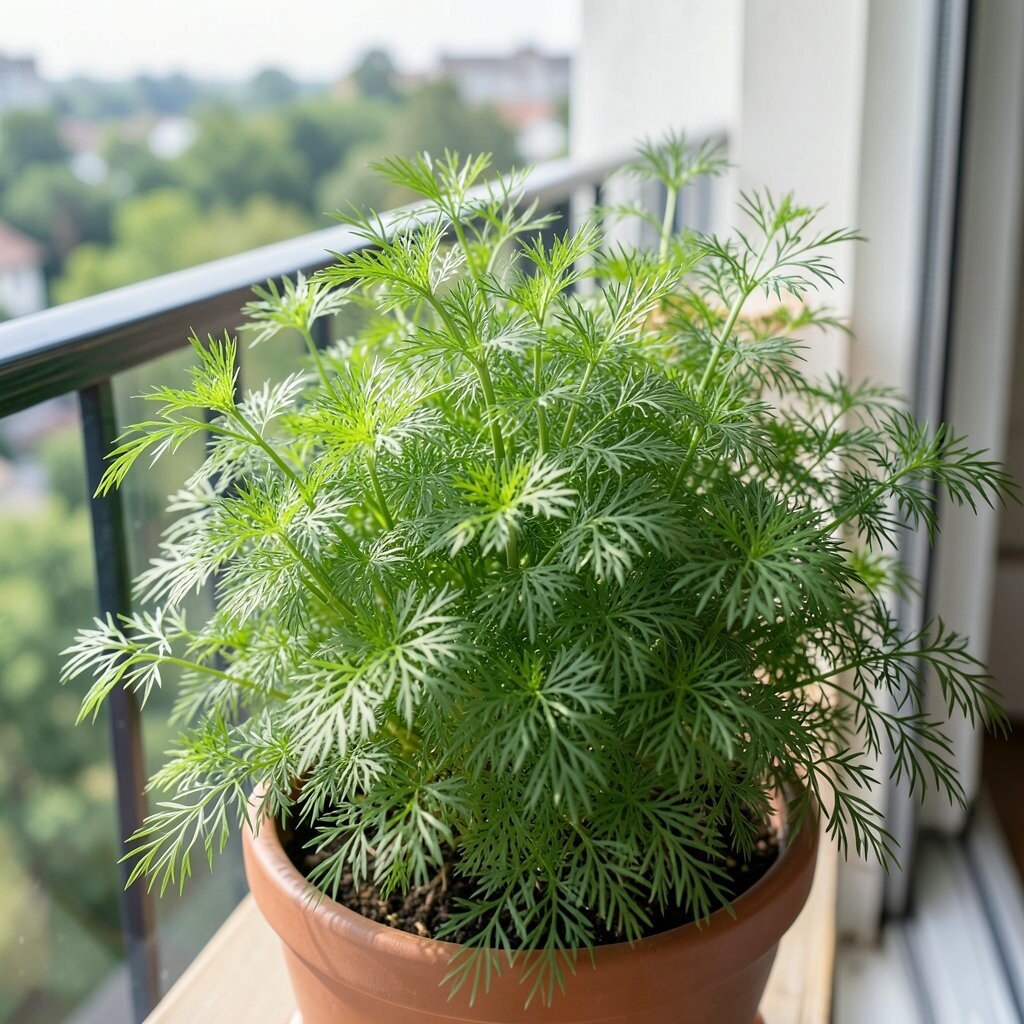
Dill has light, feathery leaves that look almost like green fireworks in a pot. It brings a fresh taste to pickles, fish, potatoes, and yogurt dips, and it adds a soft, airy feel that stands out from thicker herbs.
This herb likes sun and steady moisture, so it does best when the soil never gets too dry for long. Seeds are very affordable, and many balcony gardeners enjoy sowing dill in short rounds so the plants stay young and tender, which fits the current love for fresh cut-and-come-again herbs.
Because dill can grow tall, a deeper pot helps keep it stable on windy balconies. You can set it beside lower herbs for a layered look that feels fuller without taking up extra floor space.
If you like fresh garnish on meals, dill is a good match because the fronds look delicate on a plate. That makes it both useful and pretty, which is a nice bonus for a tiny outdoor garden.
11. Lemongrass for Tall, Clean Lines

Lemongrass adds a bold, upright shape that can make a balcony feel lush and a little tropical. Its citrus smell is bright and clean, and it works well in soups, teas, and rice dishes when you want a fresh flavor with a bright edge.
This plant likes heat and plenty of sun, so it suits warm balconies and larger pots. It can cost more than some herbs at first, but the tall clumps look dramatic, and many people enjoy growing it now because it brings a spa-like feel without needing much fuss once it settles in.
A wide container helps the roots spread, and a simple ceramic pot can make the stalks look elegant. If you want a personal twist, pair lemongrass with smooth stones or a small stool to give the spot a calm garden feel.
Cut the stalks near the base when they are thick enough, and keep the plant watered during hot spells. That care helps it stay strong and gives your balcony a strong visual line from top to bottom.
12. Lavender for Scent, Color, and Calm
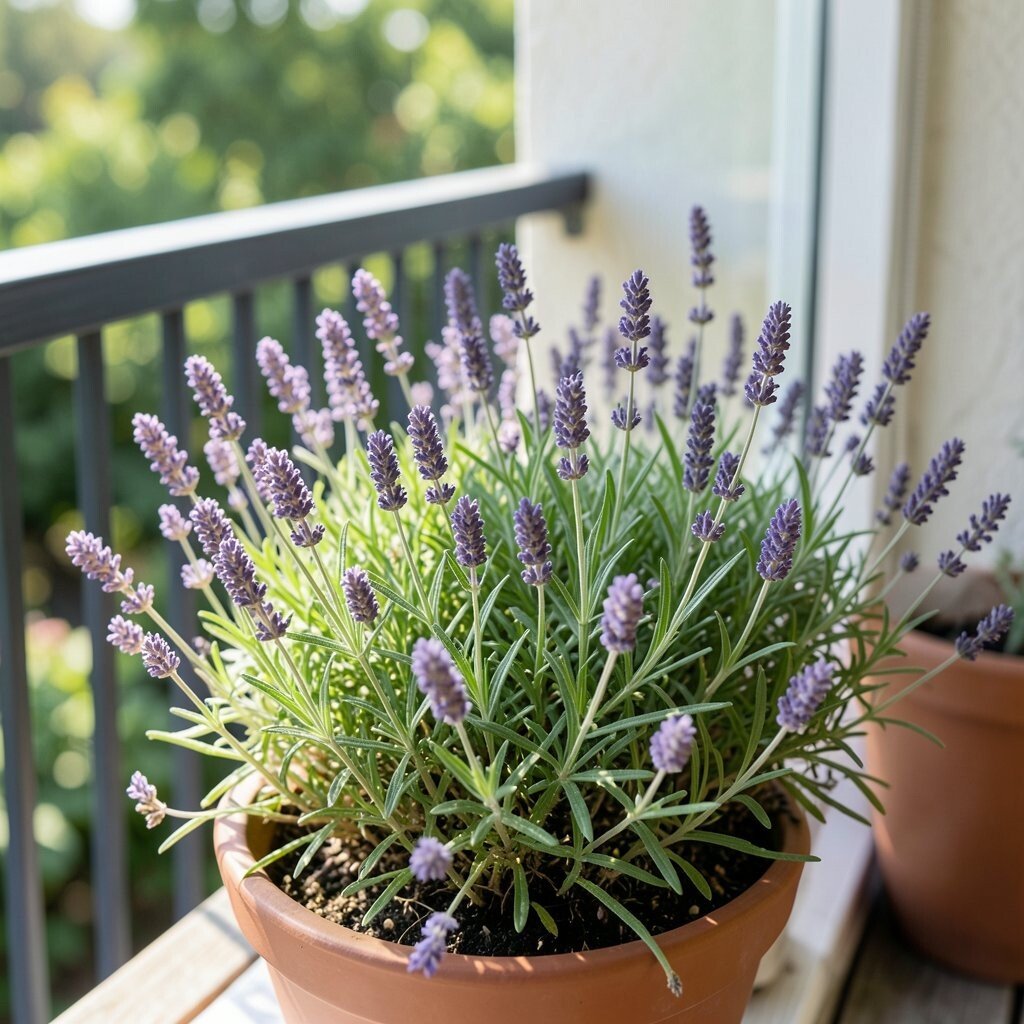
Lavender offers silvery leaves and purple blooms that make a balcony feel peaceful right away. Its scent is lovely in dried bundles, teas, and sachets, and it draws bees and butterflies when the setting is right.
This herb likes full sun and dry, fast-draining soil, so it is a good match for bright balconies with good airflow. A small plant may cost a little more than common herbs, but the long bloom time and strong fragrance make it feel special, and compact varieties are popular right now for people who want beauty and usefulness in one pot.
Use a pot with a wide base so the stems stay steady, and keep the plant trimmed after flowering for a tidy shape. Lavender looks beautiful beside white pots, blue pots, or natural clay, so it is easy to match with your own style.
You can dry the flowers for drawers or tiny home gifts, which adds more value to the plant. That extra use makes lavender feel like a little luxury that keeps paying you back.