A bright art corner can change the whole mood of a preschool homeschool room. Little hands love a space that feels open, colorful, and ready for making.
1. Sunlit Window Art Nook
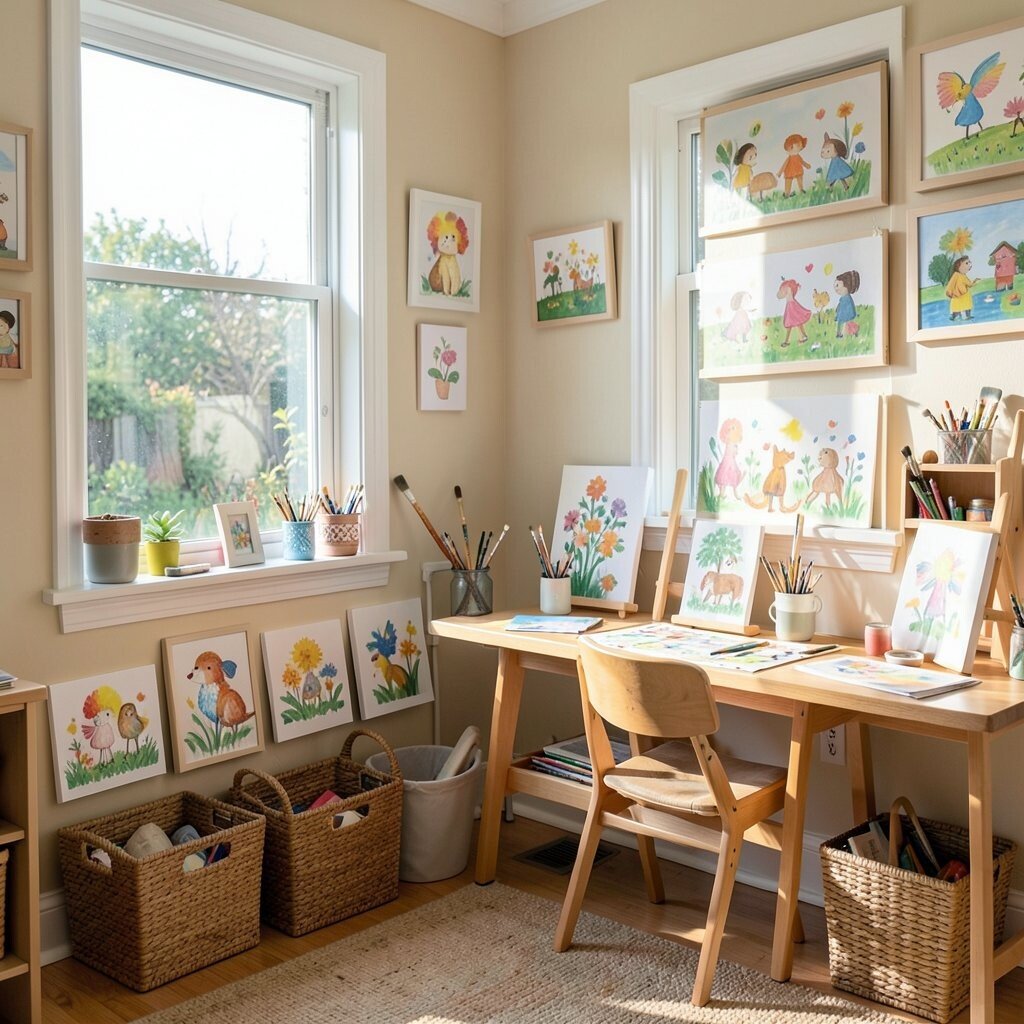
A small table by a sunny window can make art time feel warm and cheerful. Natural light helps children see colors better, and it gives the room a calm, happy look.
This setup is simple and often low cost if you already have a sturdy table and a chair. Add a few jars of crayons, washable markers, and paper in a basket, then let your child choose a favorite color theme for the space.
2. Rolling Supply Cart Corner
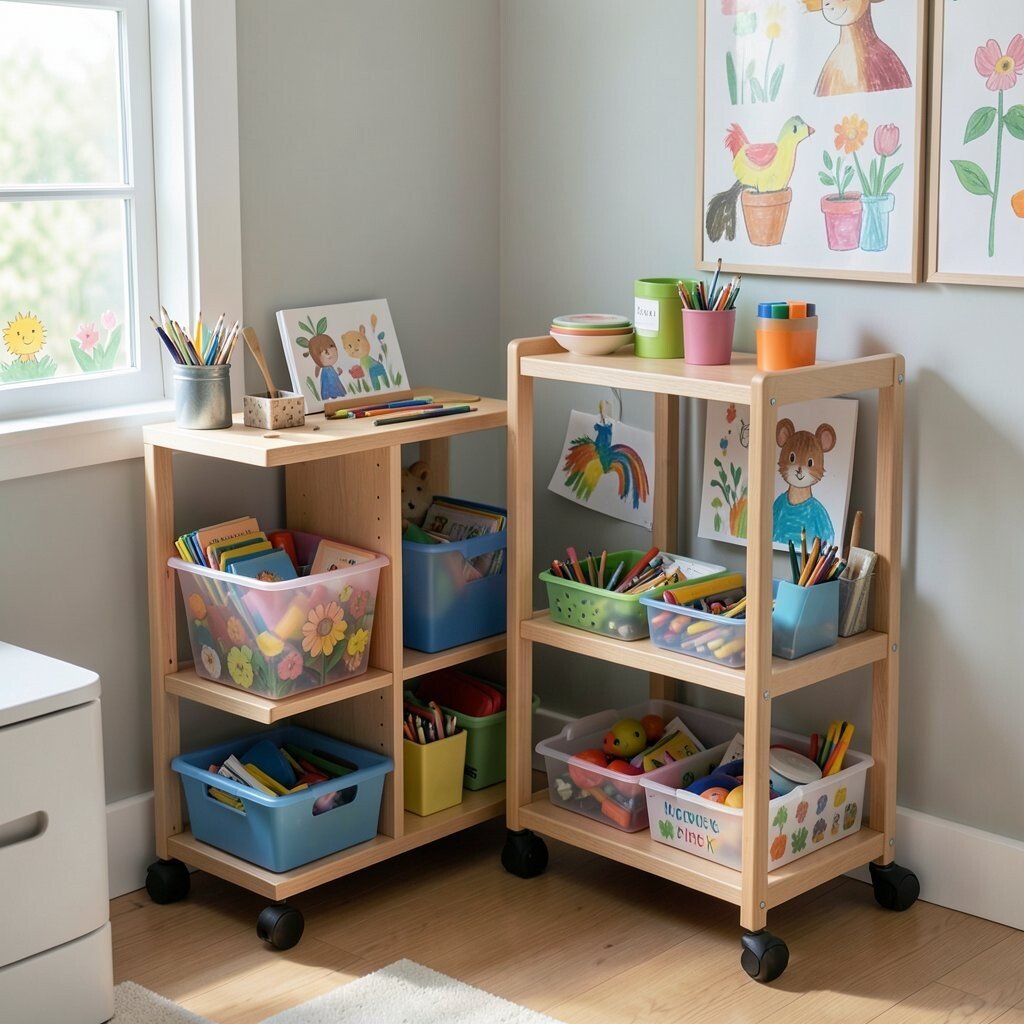
A rolling cart brings a neat, colorful look to a preschool art area. It keeps supplies close by and can move out of the way when the room needs more floor space.
Many families like this trend because it works in small rooms and costs less than built-in storage. You can fill the shelves with paper, paint sticks, stickers, and glue, then label each level with pictures so children can help put things back.
The cart also makes cleanup faster, which is a big win for busy homeschool days. Choose one bright color or mix a few shades for a playful feel that matches your child’s style.
3. Chalkboard Paint Wall Space
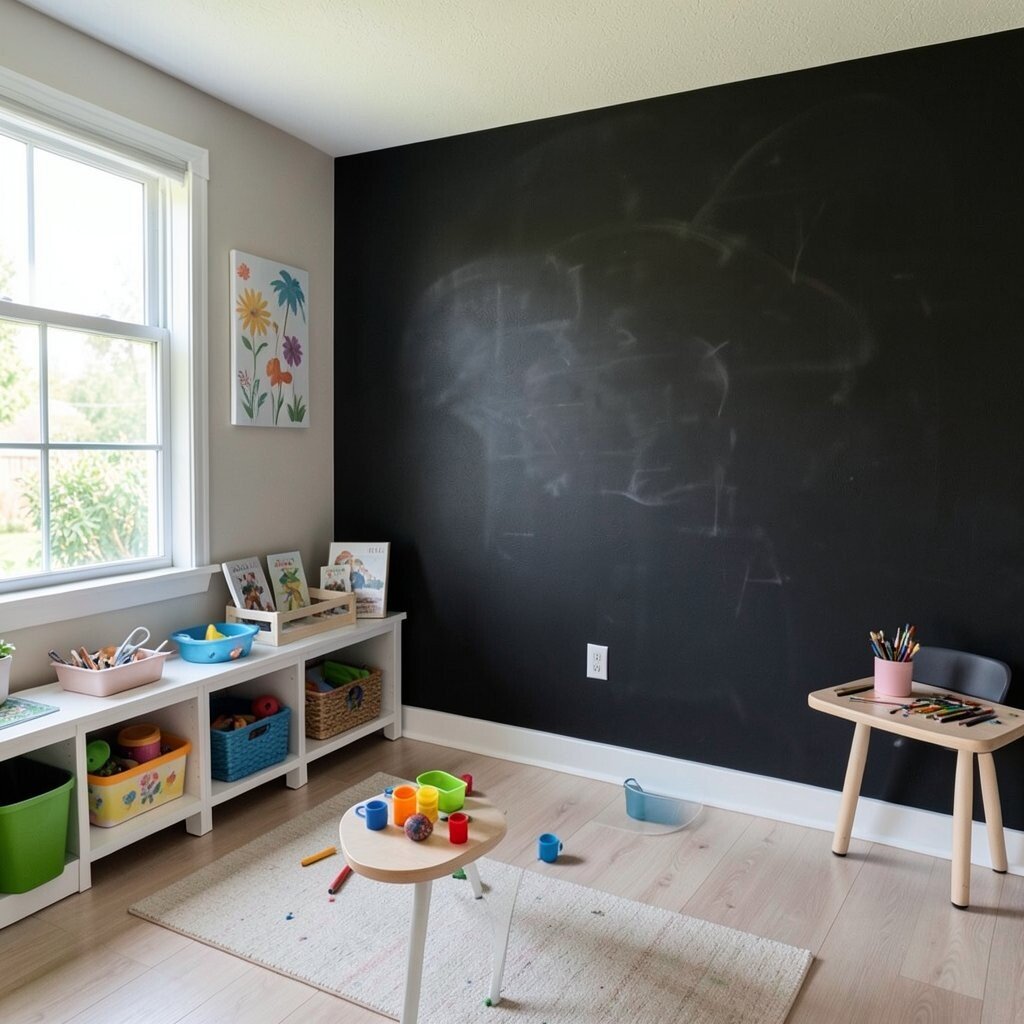
A chalkboard wall gives preschoolers a big place to draw without using much room. The dark surface makes chalk colors pop, and the whole area feels bold and fun.
This idea can be budget friendly if you paint just one section of the wall or use a small board. Add a tray for chalk and an eraser, and invite your child to draw shapes, letters, or silly faces that can be changed anytime.
It also works well for children who like to stand and move while they create. You can soften the look with a little shelf, a rug, or framed art nearby so the space feels cozy instead of plain.
4. Mini Easel Station
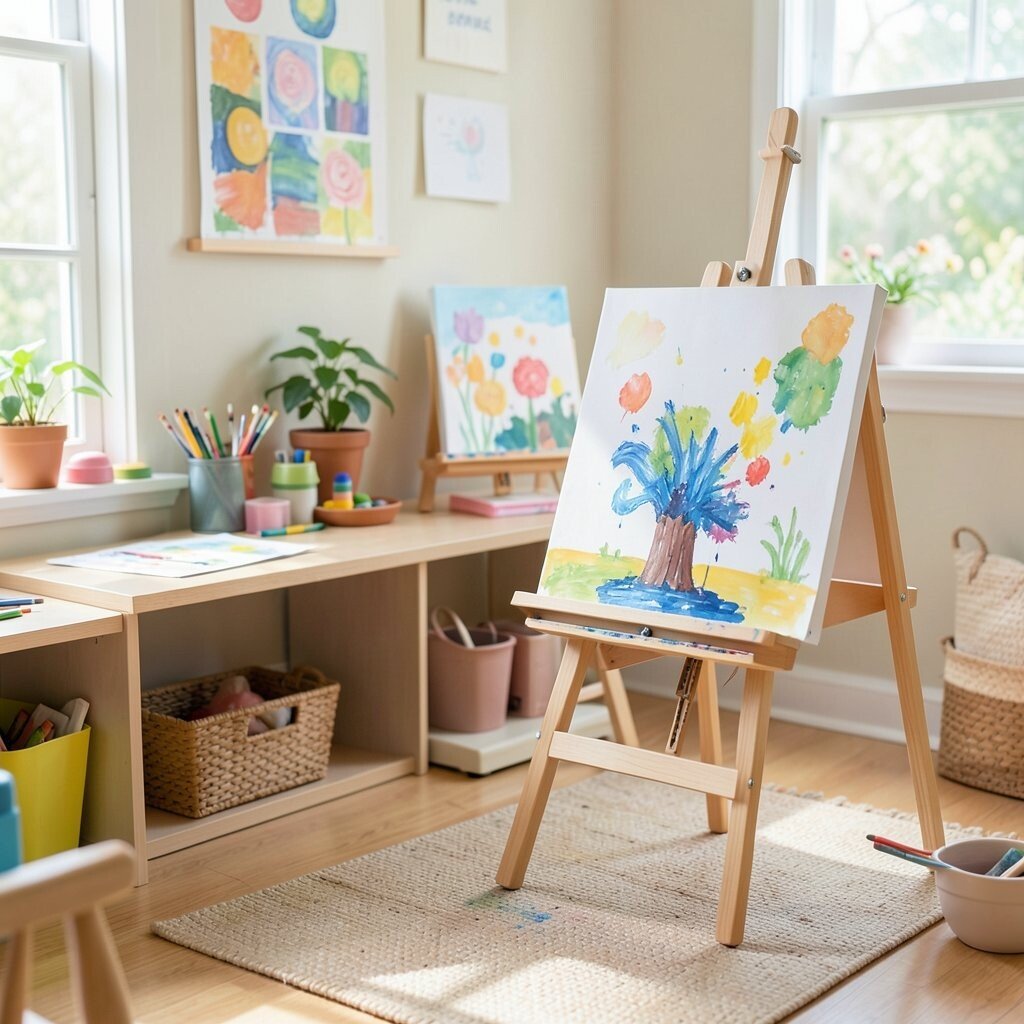
A child-sized easel brings a real studio feel to a preschool homeschool room. It stands tall and proud, which helps children feel like true artists while they paint or draw.
Some easels can be pricey, but simple wooden ones or foldable styles often cost less and store easily. Place a paint cup, thick brushes, and smocks nearby, then switch between paper, watercolor, and dry erase surfaces to keep the space fresh.
5. Open Shelf Art Display

Open shelves can make art supplies look neat and inviting. When children see the materials in plain sight, they often feel more eager to start creating.
This setup is easy to personalize with clear bins, woven baskets, and colorful labels. It helps teach order and responsibility, and it can be made on a small budget with basic shelves from a store or even repurposed bookcases.
Use the top shelf for special items and the lower shelves for daily tools that little hands can reach. A mix of textures, like wood, plastic, and fabric bins, adds charm while keeping the area practical.
6. Nature-Themed Art Table
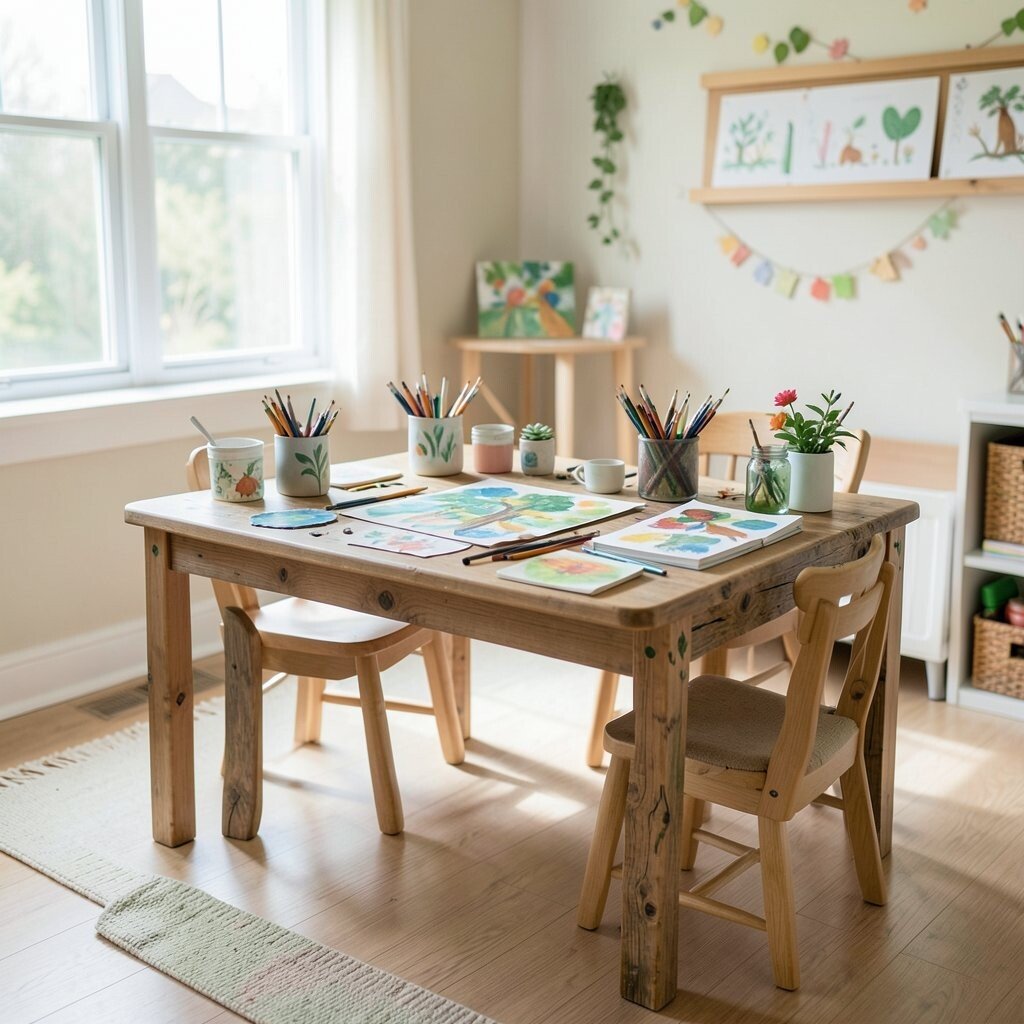
A nature-themed table can make art time feel calm and fresh. Soft greens, browns, and blues give the room a gentle outdoor look that many young children enjoy.
You can keep costs low by using simple baskets, leaf prints, and jars filled with twigs, stones, and pinecones for collage play. This style fits current home trends because many families want more natural materials and fewer toy overloads in their learning spaces.
Children can glue leaves, paint rocks, or press flowers onto paper for hands-on creativity. Add a small plant or a framed nature picture to make the corner feel special and personal.
7. Rainbow Craft Cabinet
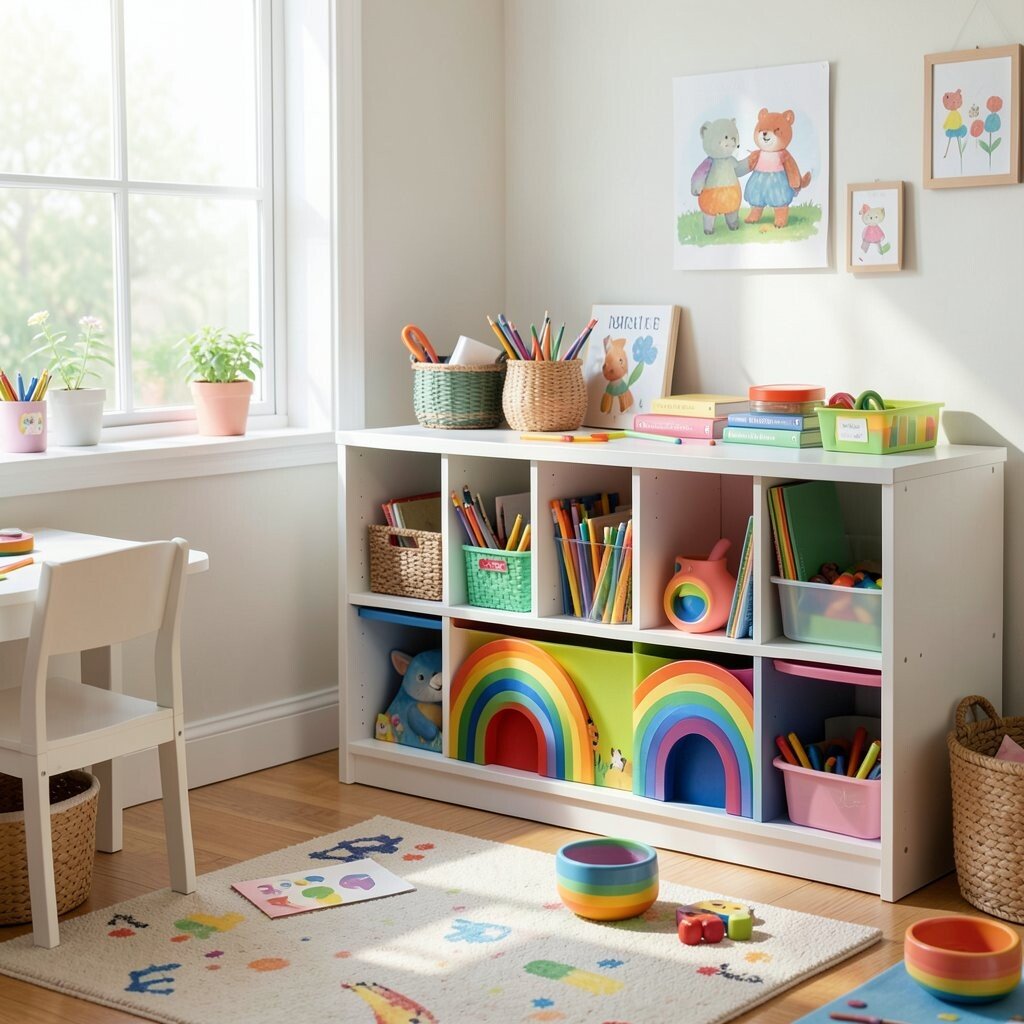
A rainbow craft cabinet brings instant joy to a preschool room. Each drawer or bin can hold a different color, which makes sorting and choosing supplies part of the fun.
This colorful look is especially nice if you want the space to feel lively without adding lots of decor. It can be done with low-cost labels, colored folders, or bright storage boxes, and children can help match items to the right shade.
The cabinet also supports early learning because color sorting builds thinking skills in a playful way. Keep the most used items in the middle drawers so kids can reach them easily and stay independent.
8. Cozy Floor Art Mat
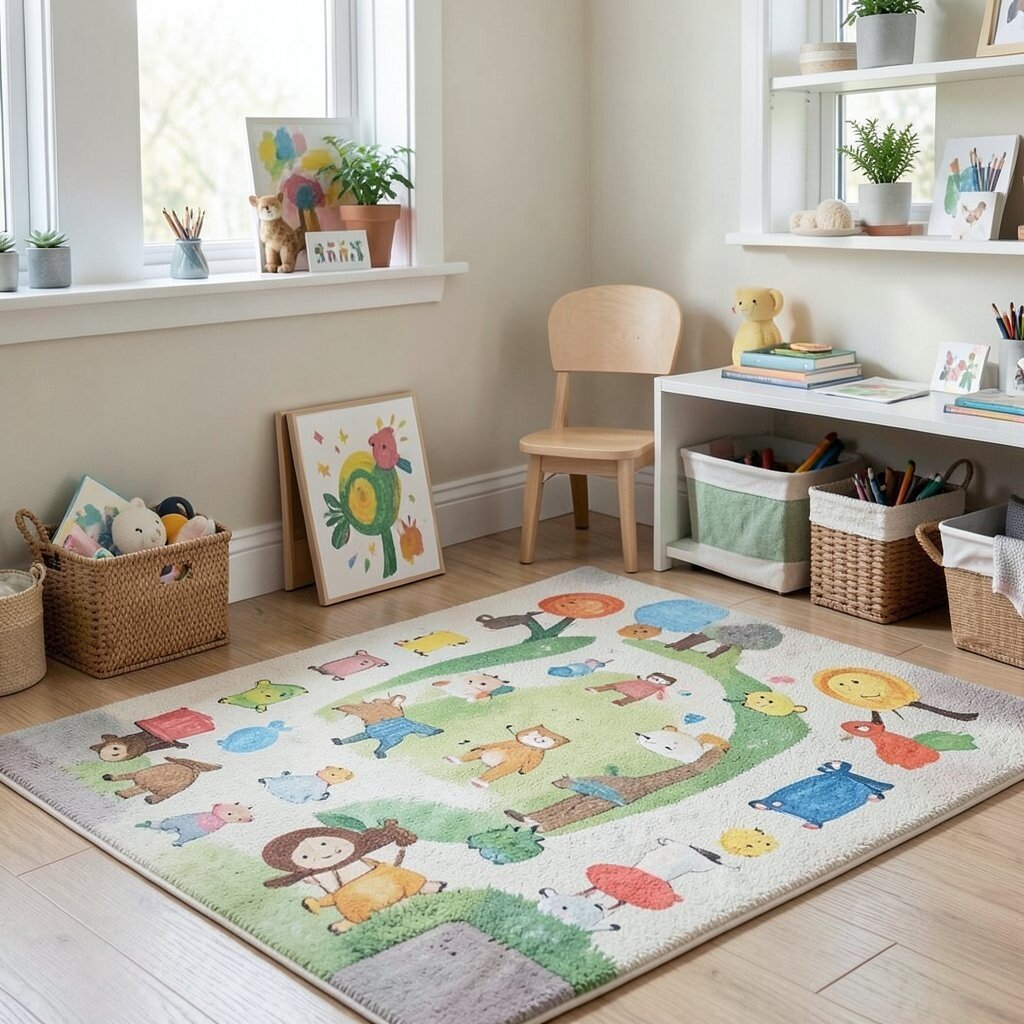
A soft floor mat can turn any corner into a gentle art zone. It gives children a defined spot to sit, stretch, and create with paper, crayons, and stickers.
This works well in homes where the art area doubles as a play space or reading spot. Mats with wipeable surfaces are useful, and many come at a fair price, especially if you choose simple patterns instead of themed prints.
You can make the mat feel unique with cushions, a low tray table, or a basket of portable supplies. The low setup is great for young children who like to work close to the ground and spread out their materials.
9. Clip-and-Hang Gallery Wall
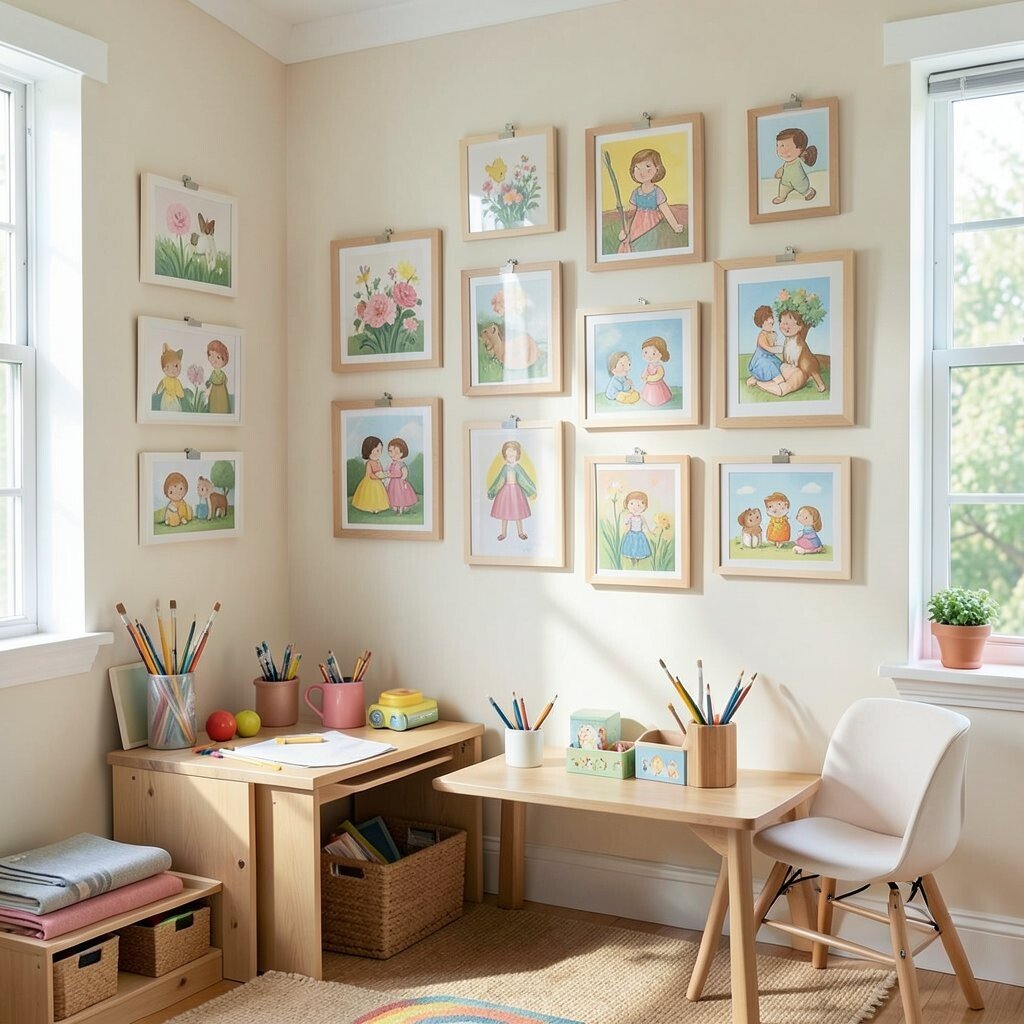
A gallery wall can make preschool art feel important and loved. Clip systems let you display new drawings, paintings, and collages without making the room look crowded.
This idea is both beautiful and practical because it gives children pride in their work while keeping papers organized. Use string, clothespins, or rails, and change the art often so the wall always feels fresh and exciting.
It does not take much money to set up, and it can fit almost any wall size. Children may enjoy picking which pieces to hang, which adds a personal touch and helps them feel part of the room design.
10. Washable Tabletop Art Zone
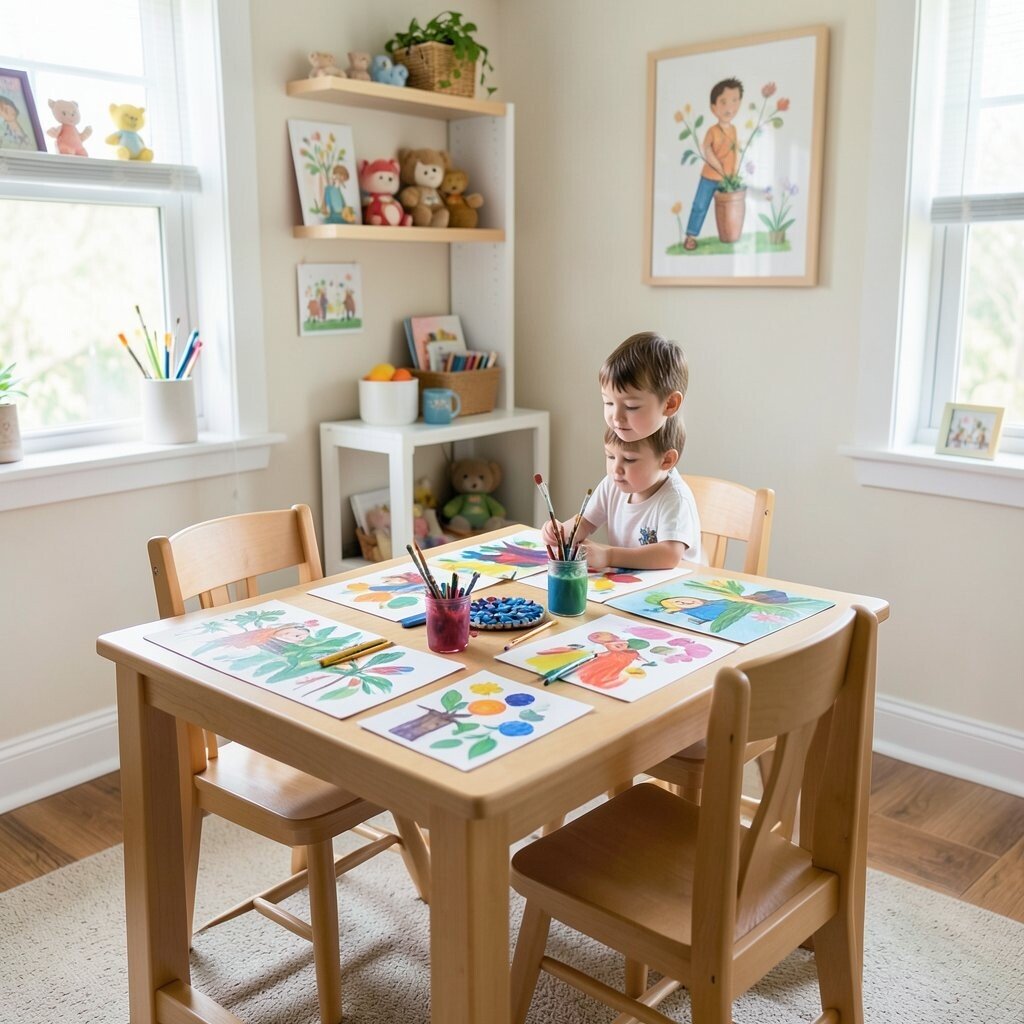
A washable tabletop can make art time far less stressful. A smooth surface with an easy-clean finish lets children paint, stamp, and glue with more freedom.
This is a smart choice for homeschool families who want a tidy room without buying lots of extras. If a special table is too costly, a clear plastic mat or a wipeable tablecloth can give the same helpful result for less money.
Keep a small caddy on the table with only a few supplies at once so the space stays calm instead of cluttered. The clean look also helps children focus, which is useful during short attention spans and busy days.
11. Sensory Art Tray Shelf
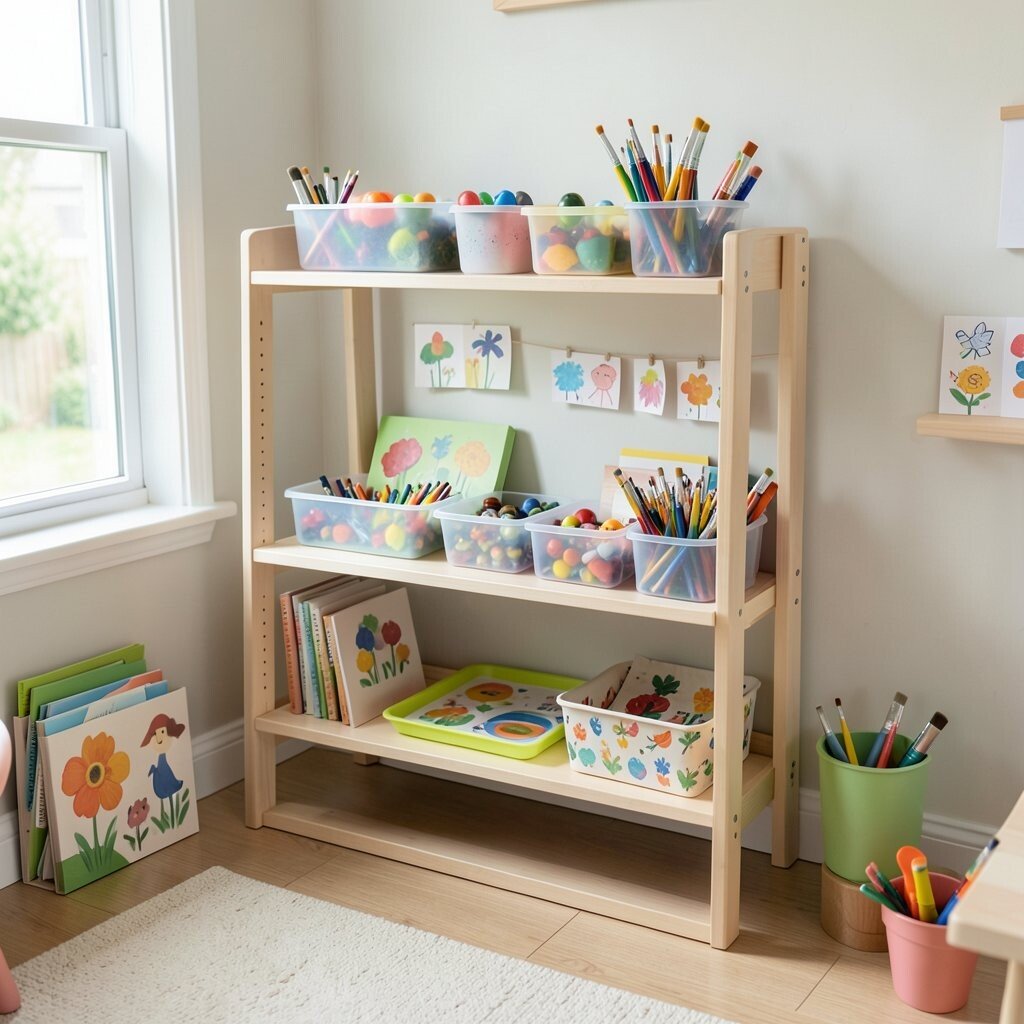
A shelf full of sensory trays can make art time feel exciting right away. Kids can use trays for sand, rice, foam shapes, beads, or textured paper to build rich art projects.
This style is popular because it mixes art with touch, sound, and movement, which suits many preschool learners. It can be done on a modest budget by using baking trays, muffin pans, or shallow boxes you already have at home.
Change the tray contents with the seasons to keep the area fresh and interesting. A few scoops, spoons, and small containers nearby will make the setup even more playful and useful.
12. Whiteboard Creation Wall
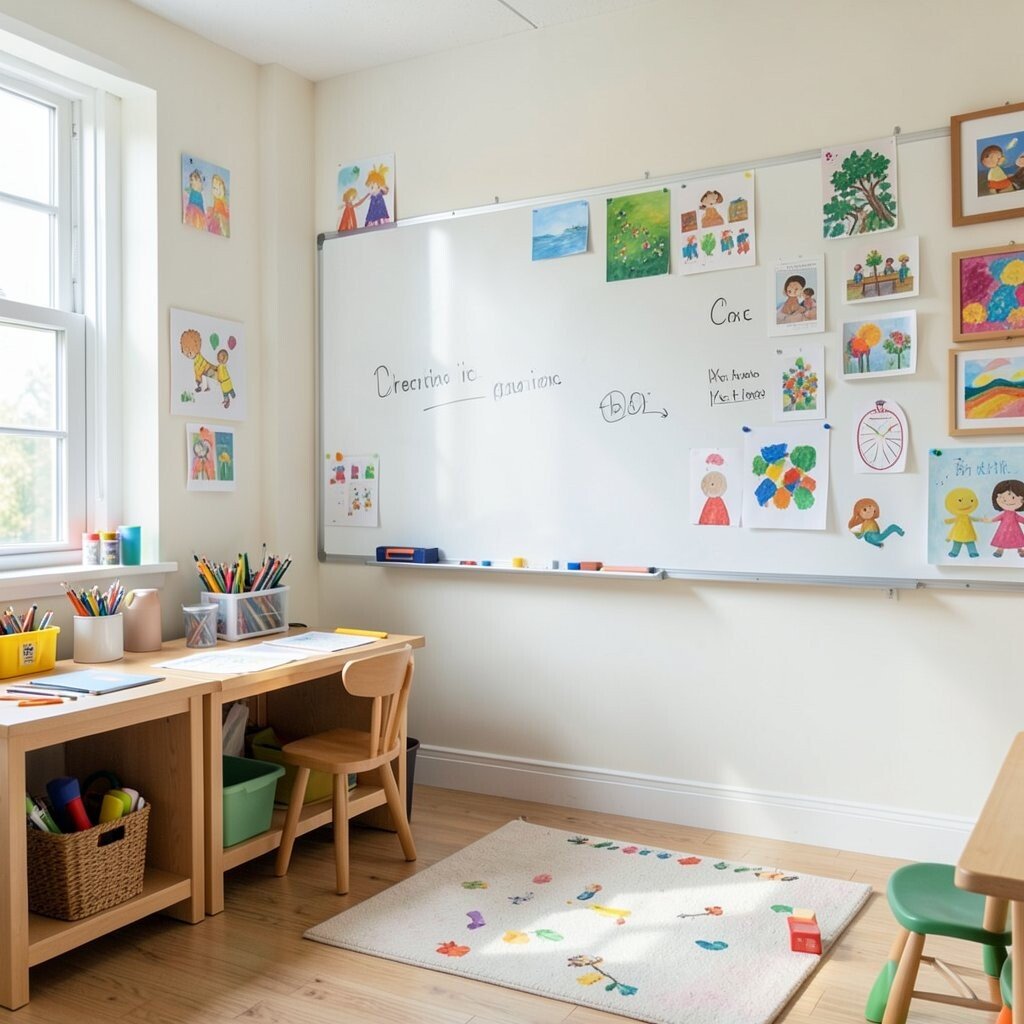
A whiteboard wall gives preschoolers a bright, clean place to make big marks. The shiny surface makes colors stand out, and it feels modern and easy to use.
This design works well in current homes because it looks simple and neat while still being playful. Full wall panels can cost more, but a large board or smaller mounted surface can still create the same cheerful effect on a smaller budget.
Children can draw, erase, and start again as often as they like, which supports confidence and creative risk-taking. Add magnets, number cards, or letter tiles if you want the space to support early learning too.
13. Recycled Art Materials Station
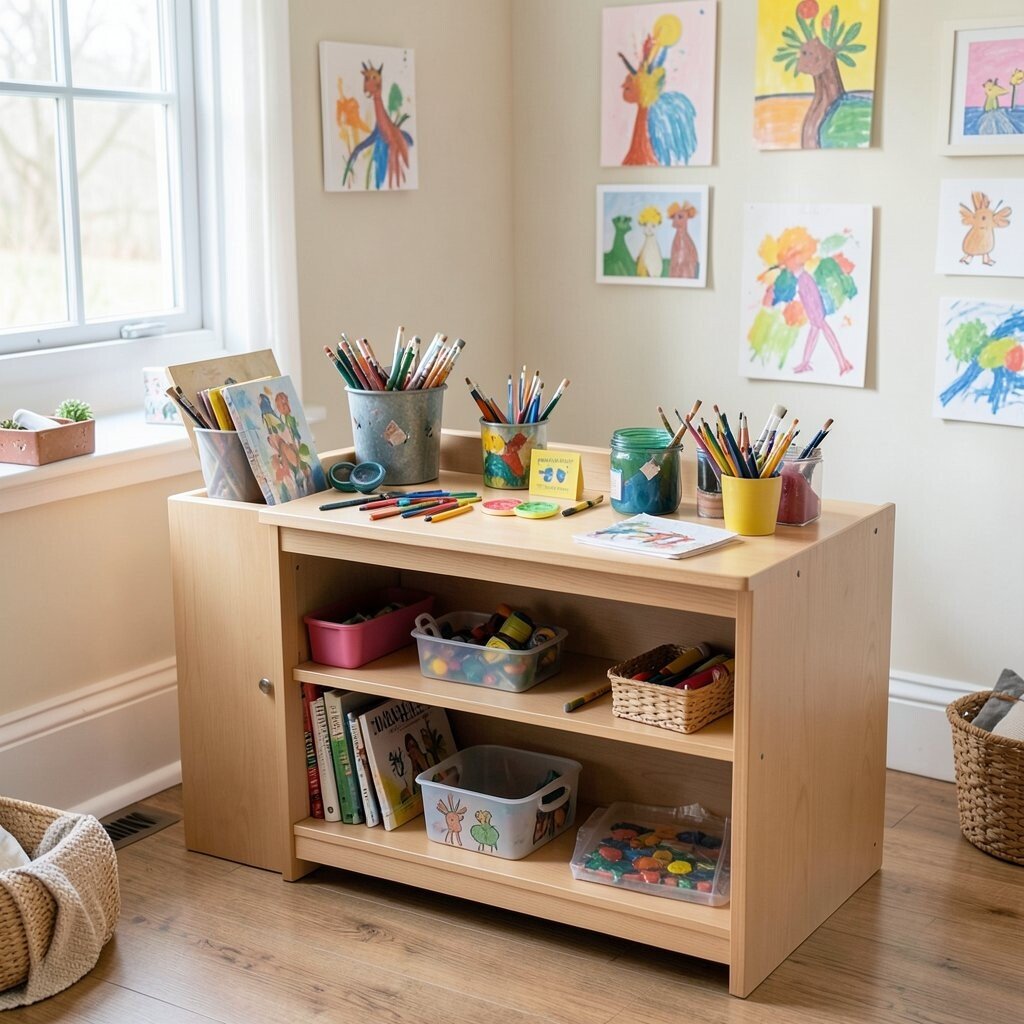
A recycled materials station can give a preschool room a fun, eco-friendly feel. Cardboard tubes, tissue boxes, bottle caps, fabric scraps, and paper rolls become art treasures when they are sorted and easy to reach.
This area is especially unique because it teaches children to see beauty in everyday items. It costs very little if you save clean items from home, and it can grow over time as your child adds more materials to use.
Store the supplies in clear bins or jars so the display looks neat and inviting instead of messy. Children often enjoy building robots, collages, and sculptures from these pieces, which makes the station both creative and practical.
14. Soft Pastel Maker Space
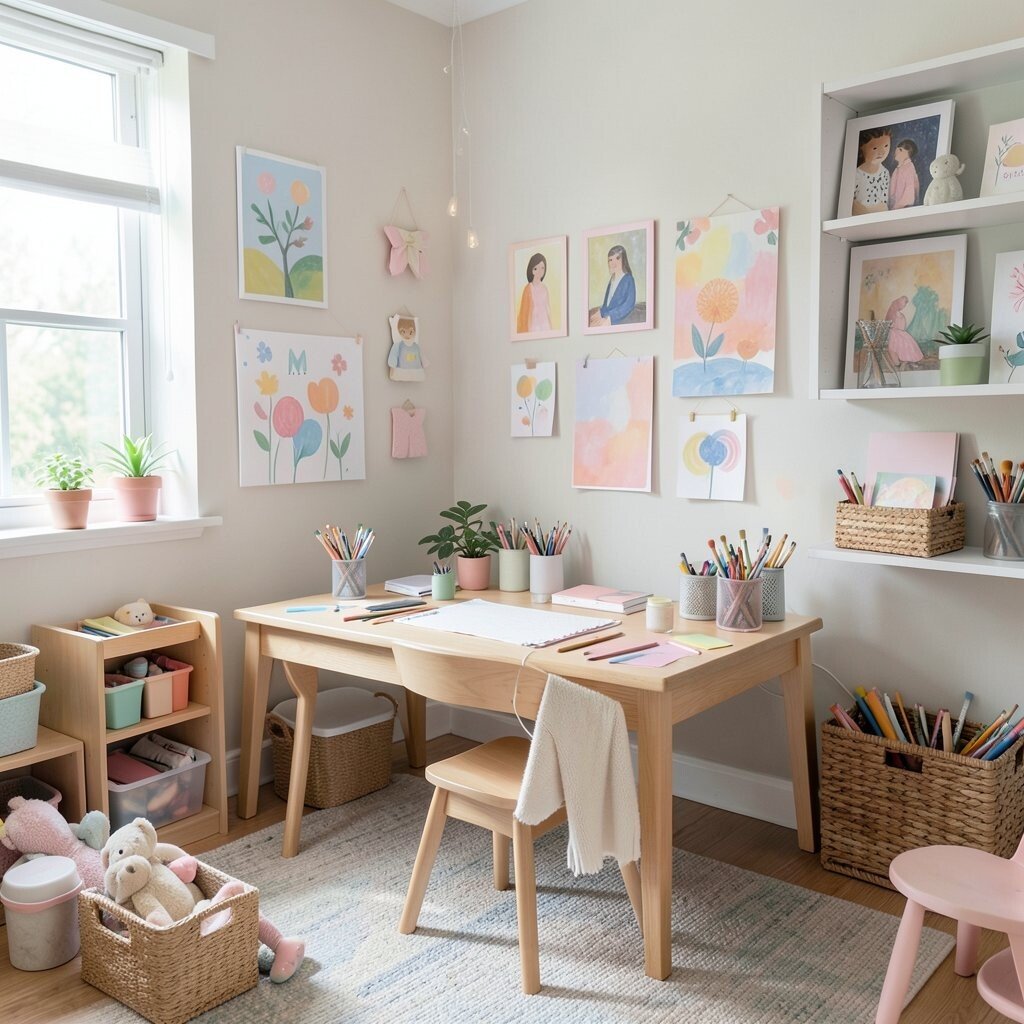
Soft pastels can give a preschool art area a calm and dreamy look. Gentle pinks, mint greens, pale yellows, and light blues create a sweet mood without feeling too busy.
This style can be very affordable because a few paint samples, simple bins, and pastel folders can set the tone. It also works well with current decor trends that favor soft colors and light, airy rooms.
Add pastel crayons, paper, and fabric scraps to match the look and keep the theme consistent. A child’s name sign or favorite artwork can make the space feel personal and one of a kind.
15. Art Cart With Magnetic Tools
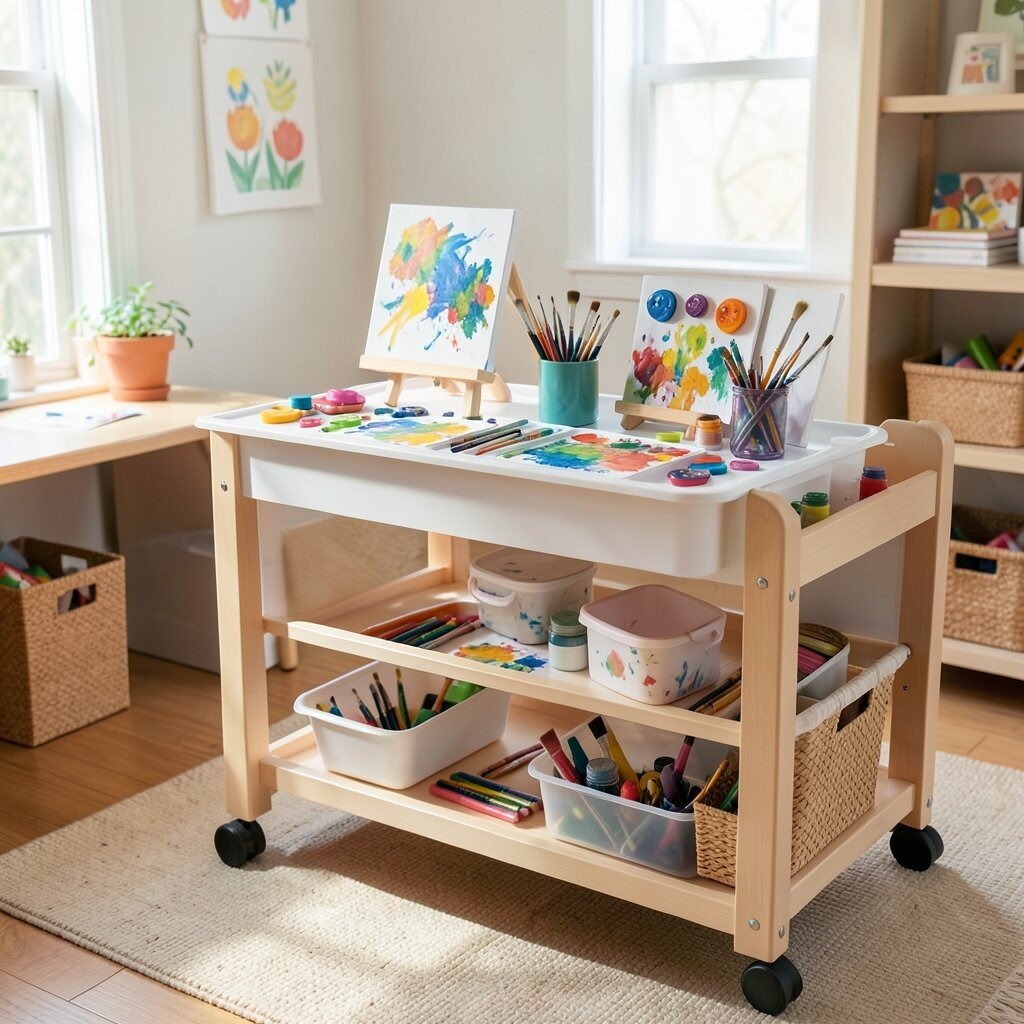
An art cart with magnetic tools adds a clever twist to the preschool homeschool room. Magnetic letters, clips, or tool holders can keep supplies easy to see and fun to use.
This idea looks neat and modern, and it can help reduce lost materials because everything has a clear place. The cart can be a simple low-cost find, then you can add magnetic cups, strips, or hooks as your budget allows.
Children often enjoy moving pieces around, which gives them a sense of control over their space. The setup is also useful for quick changes, since you can roll it into another room or tuck it beside a shelf when needed.
16. Storybook Art Wall
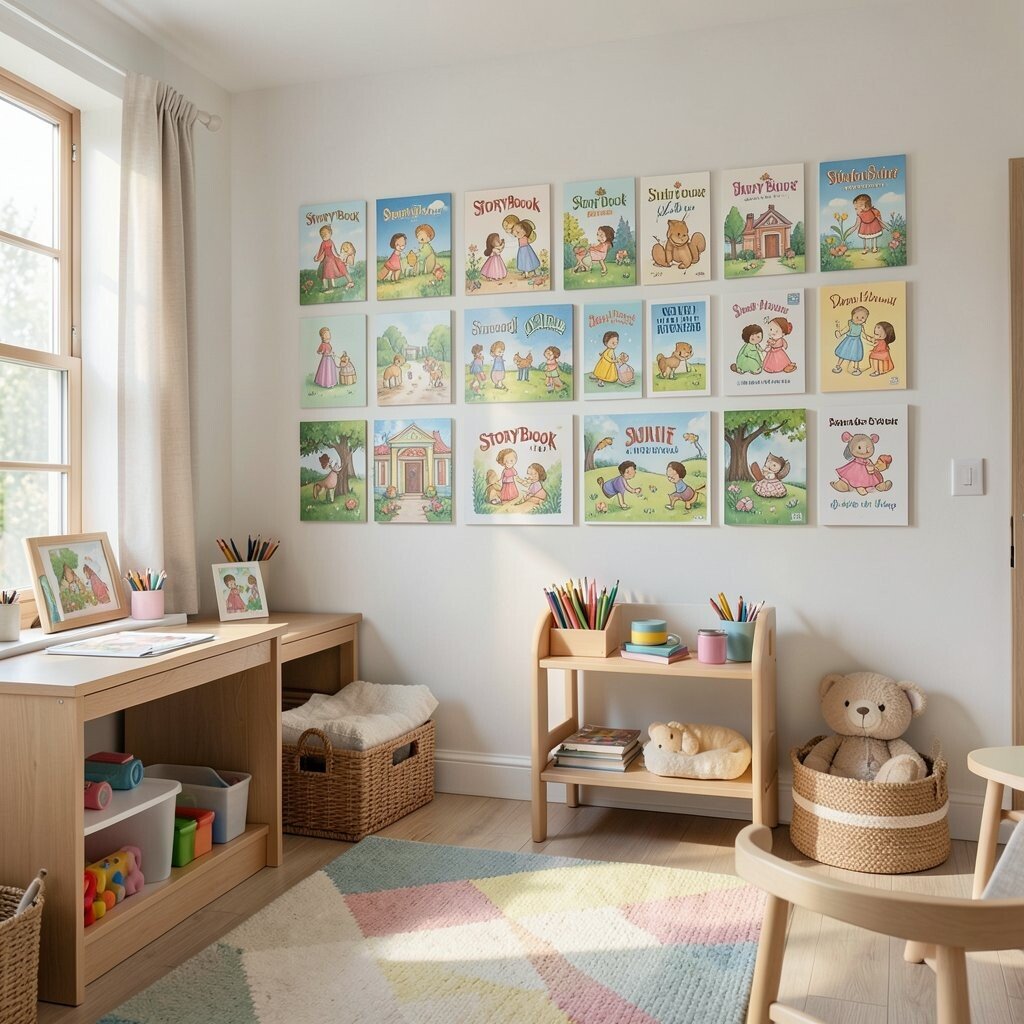
A storybook art wall brings favorite characters and scenes into the art area. Children may feel inspired when the room includes pictures, colors, and items linked to books they already love.
This approach is special because it blends reading and creating in one cozy space. You can use low-cost prints, handmade drawings, or pages placed in frames, and then switch them out as new books become favorites.
Try matching crayons or paper colors to the book themes for a simple but thoughtful touch. The space feels personal and lively, and it may encourage children to tell their own stories through art.
17. Pegboard Supply Wall
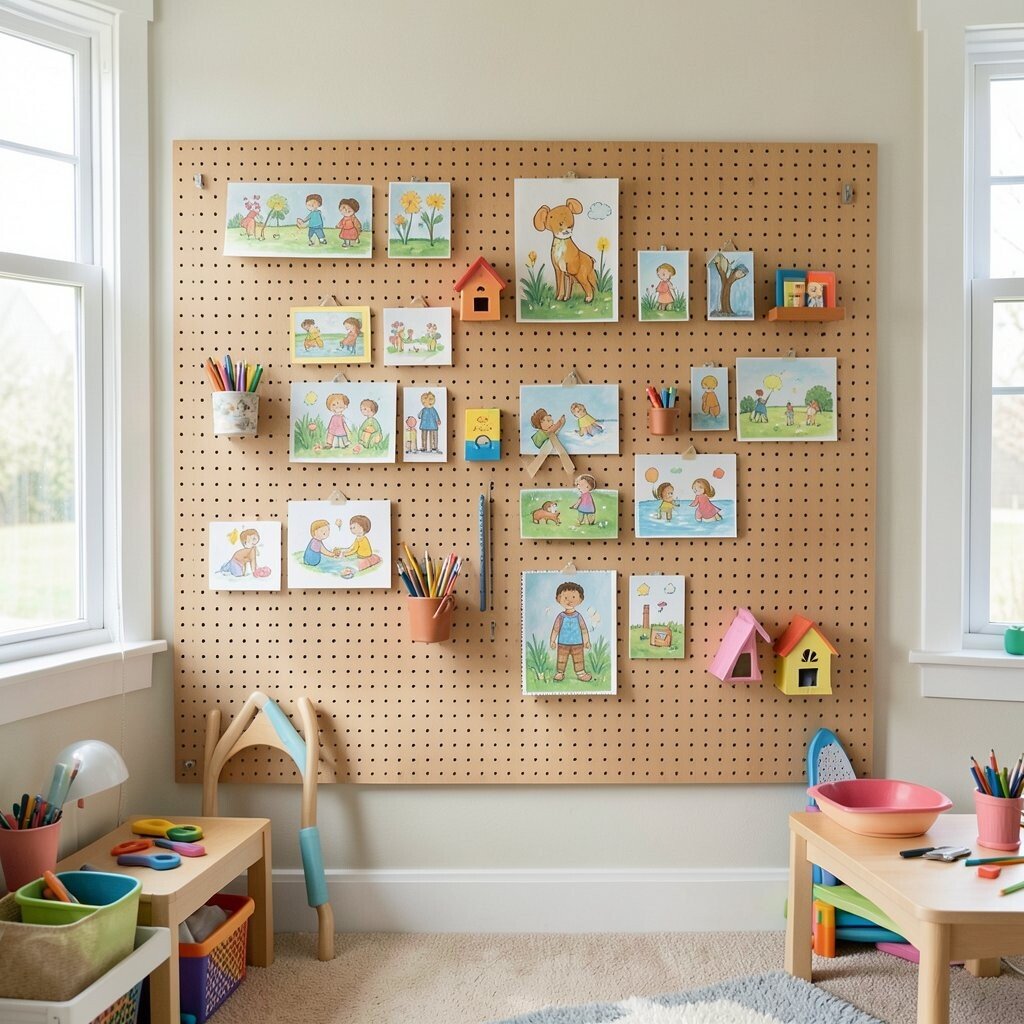
A pegboard wall gives a preschool art area a tidy workshop feel. Hooks, baskets, and small holders can keep supplies off the table while still leaving them easy to grab.
This setup is both flexible and stylish, which makes it a strong choice for families who like changing things often. It can stay affordable if you start with one board and a few hooks, then add more pieces later as needed.
Children can help choose where brushes, scissors, and tape should go, which builds ownership and care. The clean look also makes even a small corner feel larger and more organized.
18. Bright Rug and Easel Pairing
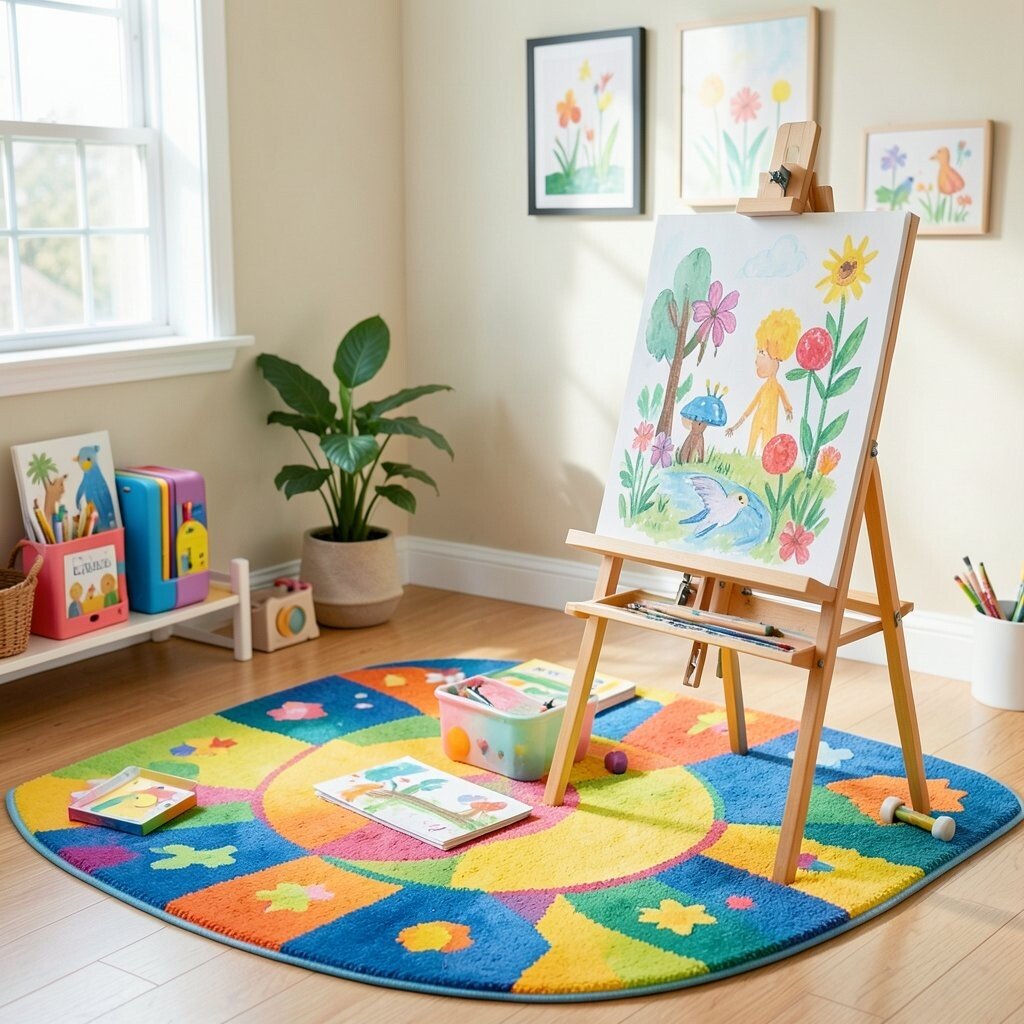
A bright rug under an easel can anchor the whole art corner. The color and pattern on the floor help define the space, while the easel gives children a strong place to stand and create.
This pairing is easy to personalize with shapes, stars, or bold stripes that match your child’s taste. A rug does not have to be expensive if you choose a simple indoor option, and it can make the room feel more complete right away.
Use the rug to mark the art zone so materials stay in one clear spot. That small boundary can help children understand where to sit, stand, and clean up after they finish their work.
19. Tiny Artist Supply Library
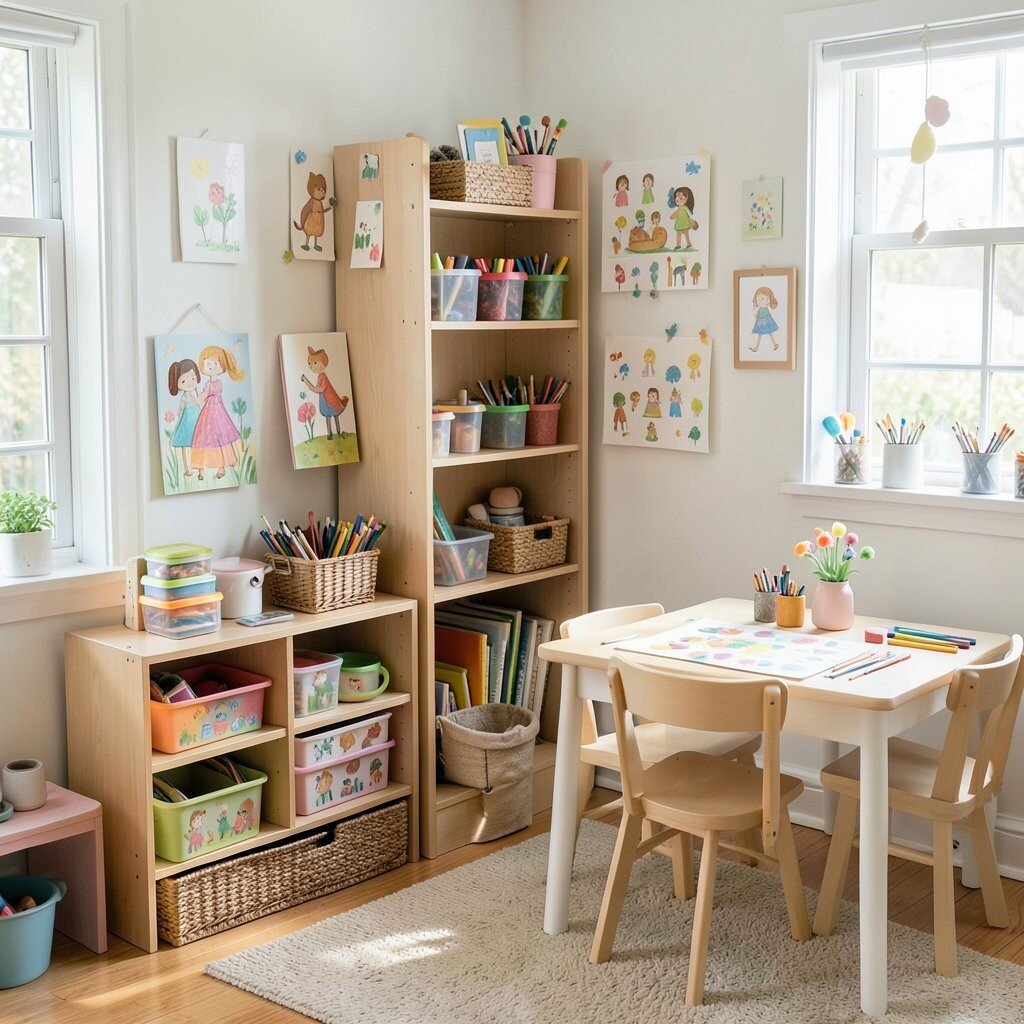
A tiny supply library can make the art area feel organized and calm. Instead of one huge pile of materials, each basket or box can hold a small set of items that are easy to find.
This setup works well for preschoolers because it feels manageable and not overwhelming. It can also save money, since you may only need a few useful supplies at a time rather than a big collection that goes unused.
Label bins with pictures and words so children can match them during cleanup. You can add a favorite color, a special sticker, or a handmade sign to make the library feel warm and personal.
20. Creative Rotating Theme Corner
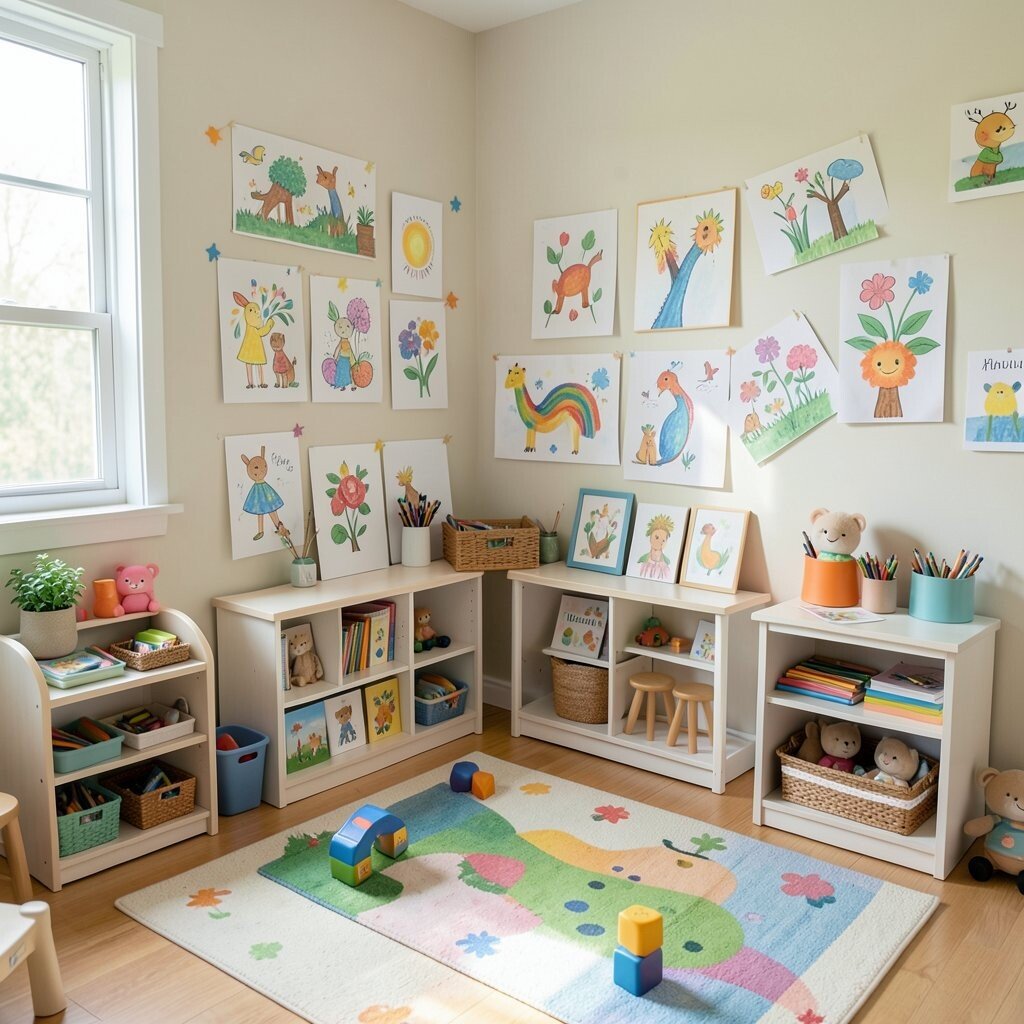
A rotating theme corner keeps a preschool art area feeling fresh all year long. One week it might hold ocean colors, and the next it might show flowers, bugs, or stars.
This idea is fun because it lets the room change with your lessons and your child’s interests. It does not need to cost much if you reuse basic supplies and only swap a few display pieces, which makes it a smart choice for homeschool families.
Children often stay excited when they see something new waiting for them, and that can lead to more drawing, painting, and crafting. Add a few themed books, matching papers, or simple props to make each new look feel complete and special.