
The room feels playful the second you can see toys ready for play. With open cubbies, everything looks tidy while kids still get freedom.
You can get a modern feel, keep supplies visible, and make daily cleanup feel almost effortless.
1. Rainbow-Stacked Open Cubby Walls

Imagine a full wall of open cubbies where each cubby is a bright slice of color, from soft pastel to bold primary. Toys sit upright like little exhibits, and the room instantly looks organized instead of cluttered.
Pick a color order that matches how your kids think, like toys that go together living in neighboring cubbies. Use shallow baskets for small items so pieces don’t scatter. For a modern look, choose matching cubby dimensions and paint the frames in a clean matte finish.
2. Low-Ledge Cubbies With Rolling Toy Bins

Try open cubbies set slightly higher than floor level, with a low ledge that makes grabbing easy. You’ll see quick visual cues, and the room keeps its open, modern feel.
Slide rolling bins into each cubby so toys can be carried to the play spot in one trip. When it’s time to tidy, kids can roll the bins back and push them neatly into place. Choose quiet wheels and durable bins so they glide smoothly and survive busy playdays.
3. Monochrome Cubby Grid With Texture Inserts
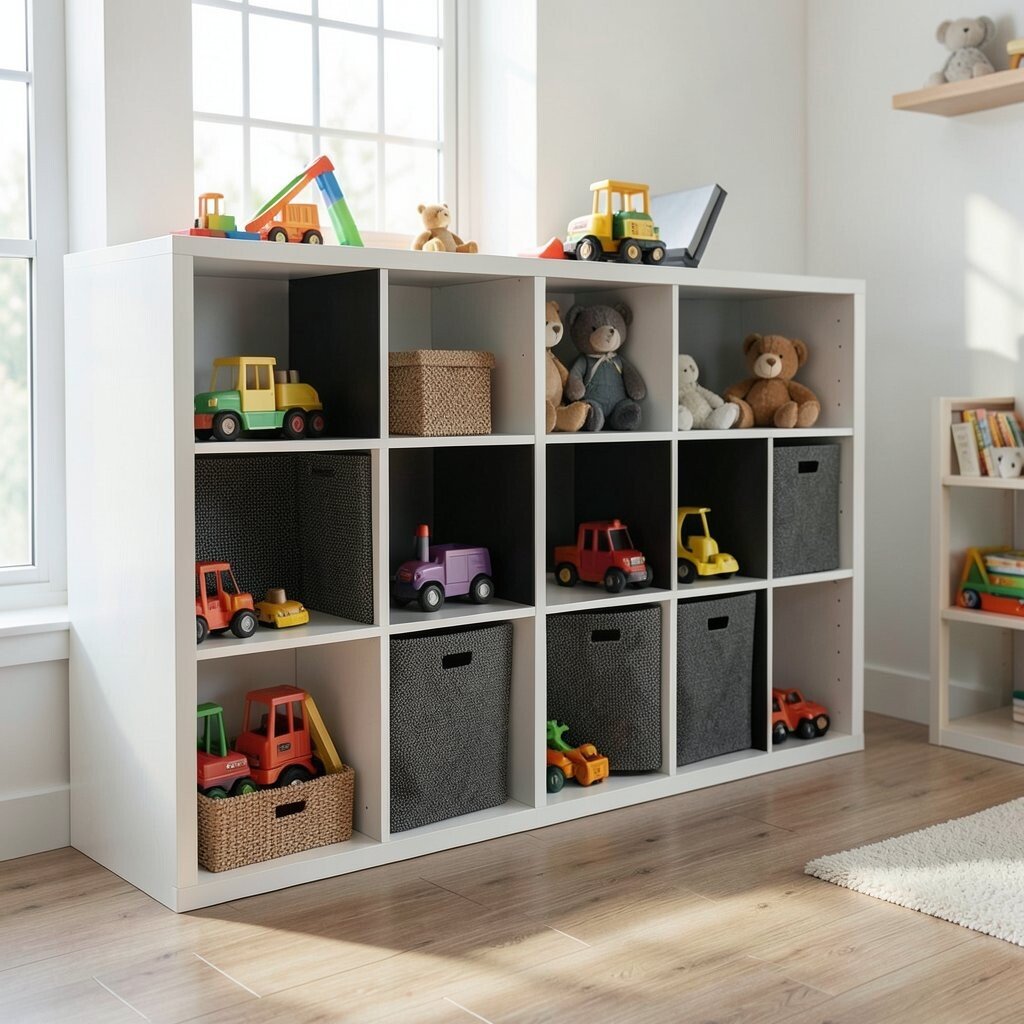
Picture an all-white or all-wood cubby grid that looks calm and modern, then add texture inserts inside each cubby. The toys pop because each cubby has a different fabric or mat backing.
Use felt liners for soft toys, woven trays for building sets, and a simple clear organizer for art supplies. This keeps everything easy to sort while the wall looks stylish even when it’s full. For cost, start with fewer cubbies and add inserts over time as you learn what your child uses most.
Personalize by swapping liners as interests change, like switching from dinosaur mats to space mats without replacing the whole unit.
4. Open Cubbies Behind a Storage Window Look

Make the playroom feel like a modern showroom by framing the cubbies with a “window” style grid. You get the visual openness of open shelving, but the layout feels more designed and polished.
Arrange toys by height so taller items go on top cubbies and smaller toys sit lower. Add a slim ledge to support books, coloring pads, or a child-safe lamp. For trends, this look pairs well with light wood, black accents, and clean lines that feel current.
5. Floor-to-Ceiling Cubbies With Book-Led Zones

Go vertical with floor-to-ceiling open cubbies, then anchor the top sections with books and story props. The moment kids walk in, they can see where to start, which makes play feel smoother.
Keep themed zones by stacking items with similar use, like “build” materials in one column and “pretend play” items in another. Add a clear label-free system by using picture icons on the backs of the cubbies. Keep a few empty cubbies so the room can adapt as toys grow and change.
To manage cost, measure your wall and buy modular pieces that expand later rather than filling everything at once.
6. Corner Cubby Nooks With Soft Play Mats
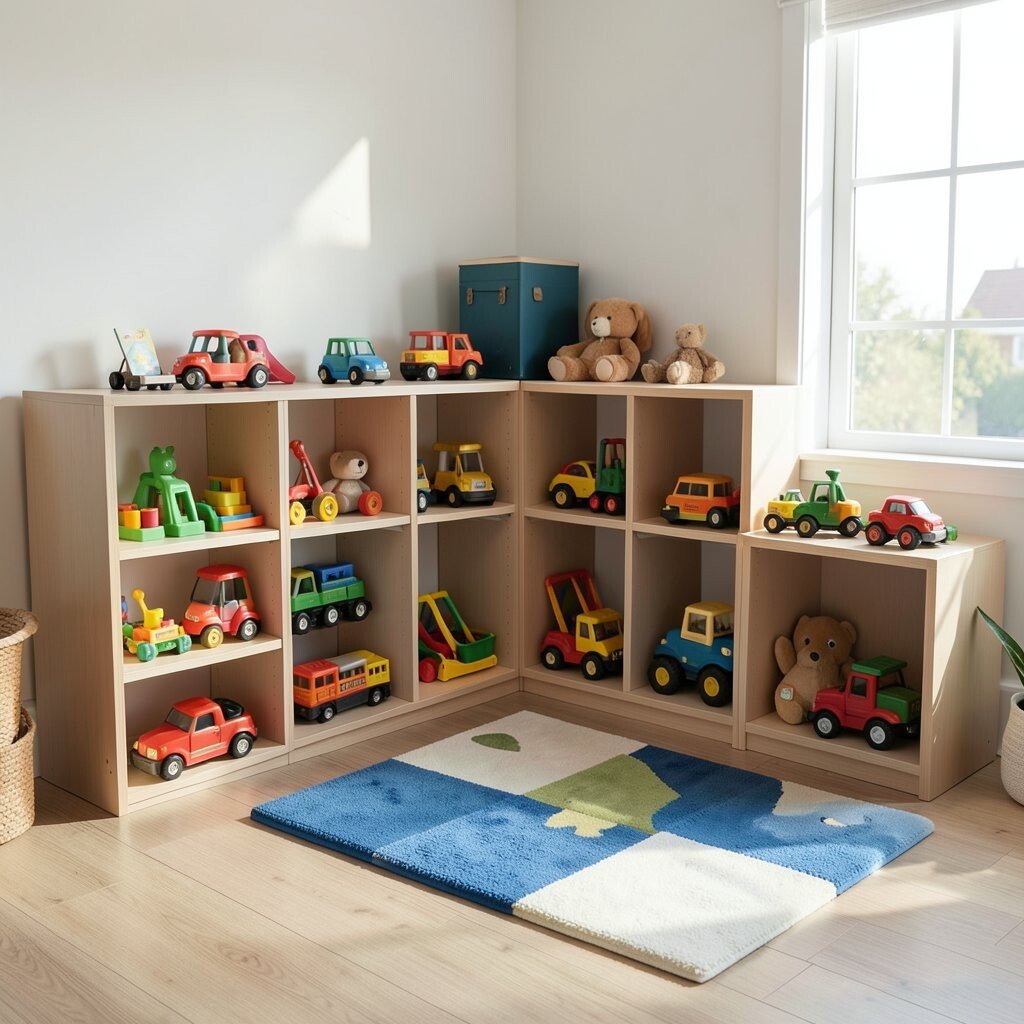
Use an angled corner unit of open cubbies to create a cozy toy nook instead of a storage area that feels like an afterthought. The shelves wrap around the space and make the room feel intentionally set up for play.
Place a soft play mat in front of the cubbies so kids can sit close to what they grab most. Put the most-used toys at the child’s eye level and save the higher spots for rotation items. Personalize the corner by matching the mat color to the cubby finish for a clean, modern blend.
7. Open Cubbies With Picture-Back Sorting Panels

Imagine every cubby having a simple picture backing, like a small car for toy cars or a paintbrush for art supplies. Even without reading, kids can match toys to the right spot.
Use removable backing cards so you can update the system when interests shift. This gives you a practical routine for cleanup because returning toys becomes a game. For a modern style, keep the graphics minimal and use consistent fonts and colors across all cubbies.
Consider using magnets or clip frames so you can swap images without tools. It’s a small change that makes a big difference in daily flow.
8. Mixed Materials Cubbies With Clear Front Trays
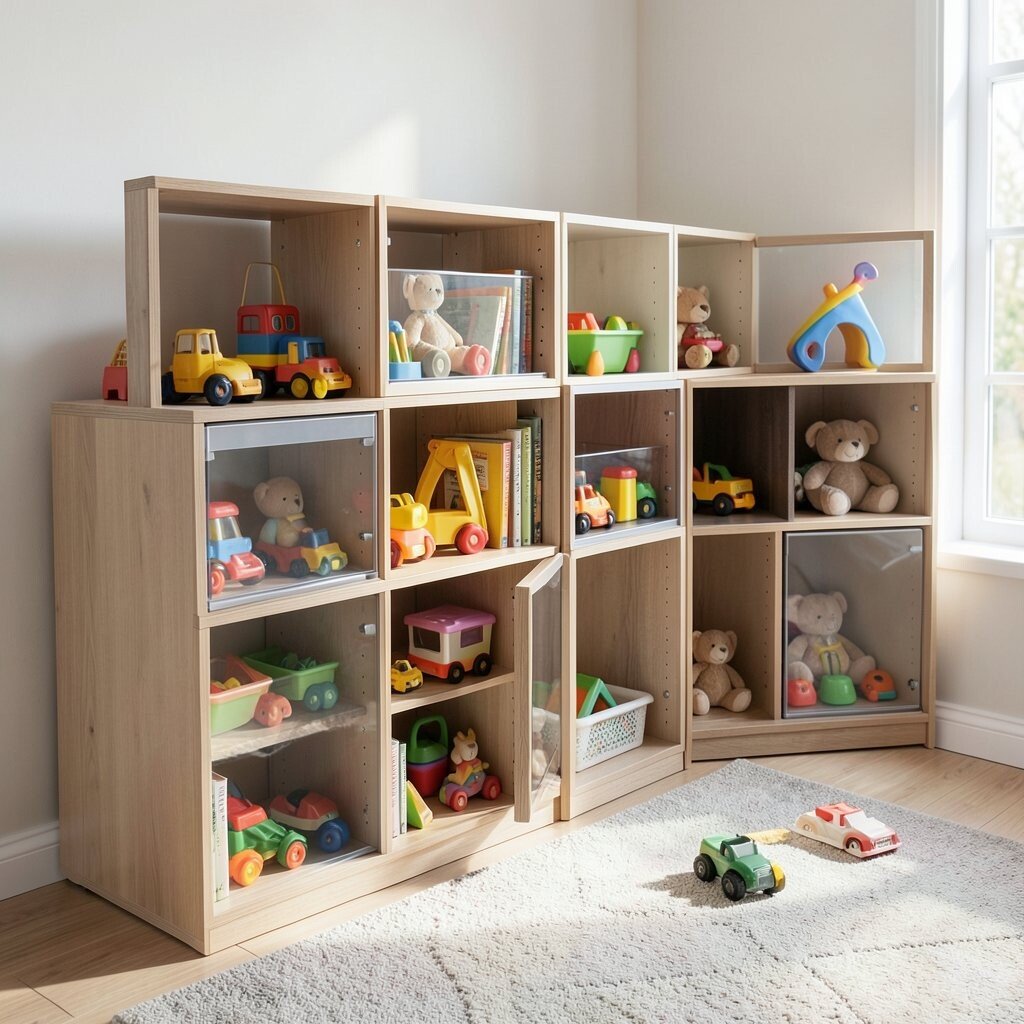
Mix open cubbies with clear front trays so smaller pieces don’t disappear into the back. The room stays bright, and you can still see what’s inside at a glance.
Use trays for building parts, craft beads, or puzzle pieces, while leaving open spaces for larger toys. This is great for keeping the modern look while reducing the chaos that small items cause. Choose UV-friendly clear trays that won’t cloud over time, especially if the room gets lots of light.
9. Built-In Cubbies In a Bench and Wall Seat

Picture a modern built-in bench with open cubbies underneath, like seating with a hidden toy library. Kids can sit down, put toys nearby, and start play without climbing or tugging.
The benefits are real for cleanup, because toys live right under the seat where they naturally belong. Add a hinged top cushion or a removable seat panel if you want a little extra storage for seasonal items. For personalization, paint the bench back panel a subtle accent color so it feels like a design choice, not just storage.
To keep costs friendly, reuse a bench base if you already have one, then add the cubby dividers and organizers.
10. Textured Wood Cubbies With Color-Coordinated Bins

Warm textured wood cubbies can make a modern playroom feel cozy instead of cold. When you pair them with color-coordinated bins, the whole wall looks intentional and easy to maintain.
Put bins for categories like dolls, vehicles, and blocks so cleanup takes less time and less arguing. Keep bins consistent in size so the room looks neat even when toys are temporarily messy. Choose bins in a few repeating colors that match your room’s decor, like sage, navy, and cream.
11. Open Cubbies With a Rotating Toy Schedule Shelf

Set up open cubbies, then dedicate one section to a “today shelf” where a small batch of toys always lives. Everything else can be stored out of sight, which keeps the open cubbies from looking overwhelmed.
This creates variety without constant buying, and it helps kids focus because the visible choices stay manageable. Swap toys on weekends or after a few weeks so newness stays exciting. For cost, it’s one of the best ways to refresh the room using what you already own.
Personalize the schedule by using a small color dot system on the inside of the cubby doors or the backs of the shelves.
12. Floating Cubby Ledge With Art Supply Zones

Use a floating style cubby ledge to create an airy look, then carve out clear zones for art supplies. The shelves appear lighter, and the room keeps that modern, uncluttered vibe.
Assign one cubby for crayons, one for markers, and one for paper, then keep bins inside for tape, scissors, and extra accessories. This reduces lost pieces and makes it easy to start a creative project quickly. Choose wipeable liners and easy-grip storage so small messes can be cleaned fast.
13. Open Cubbies Lined With Chalkboard Labels

Think about open cubbies that have small chalkboard surfaces on the inside edges where kids can mark their favorite toy groups. It feels playful and modern at the same time because the chalk stays neat and simple.
Write names or draw tiny icons, and update them whenever a toy gets new attention. This supports independence since kids can choose based on what they see. For durability, use chalk markers that wipe clean with a damp cloth and keep a spare eraser nearby.
14. Curved-Edge Cubbies for a Softer Modern Look
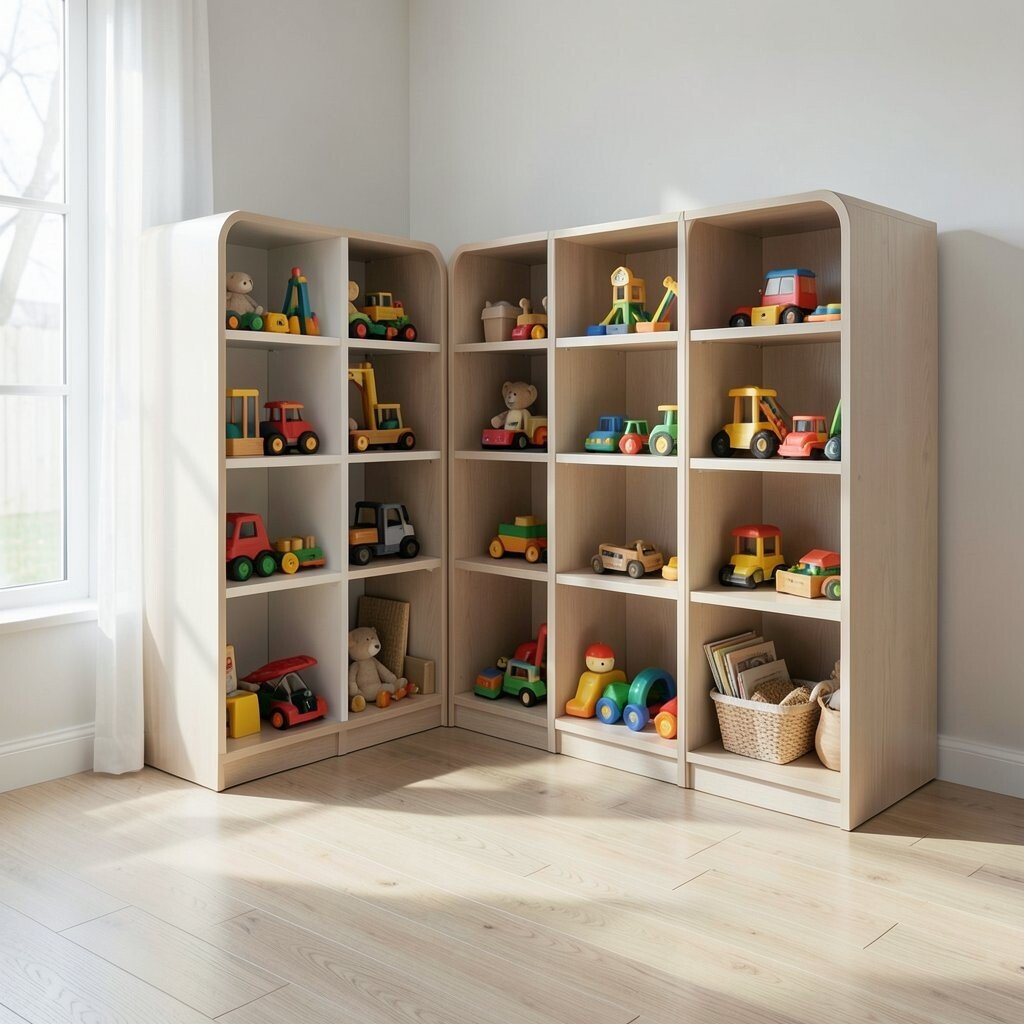
Curved-edge open cubbies can soften the look of a modern playroom and make the design feel friendly. The rounded shapes also make bumps less scary in a busy space.
Keep the most-used toys in the center cubbies so kids don’t have to reach awkward angles. Add a small basket for loose pieces like small dolls or toy figures to keep floors safer. Personalize with a mix of neutral colors and one playful accent color in the cubby backing panels.
15. Open Cubbies With Theme Columns for Pretend Play

Set up columns dedicated to pretend play, like a kitchen column, a dress-up column, and a “community helpers” column. The visual structure makes it feel like a real mini world, not just storage.
This layout helps kids stay in the story longer because everything they need is grouped together. Use open cubbies for larger items and add a few covered bins for tiny accessories like buttons or pretend food pieces. For personalization, let each column include one themed fabric runner so the room looks curated.
16. Narrow Open Cubbies for Small Spaces

If your playroom is tight, narrow open cubbies can give you storage without stealing precious space. A slim unit placed along a hallway wall can still make toys visible and easy to grab.
Choose shallow cubbies for lighter toys and add a floor basket for extra bulky items. Mount the unit securely and keep heavier bins on lower shelves for safety. For cost, narrow units are often less expensive, and you can add more as your collection grows.
17. Open Cubbies With Integrated Lighting
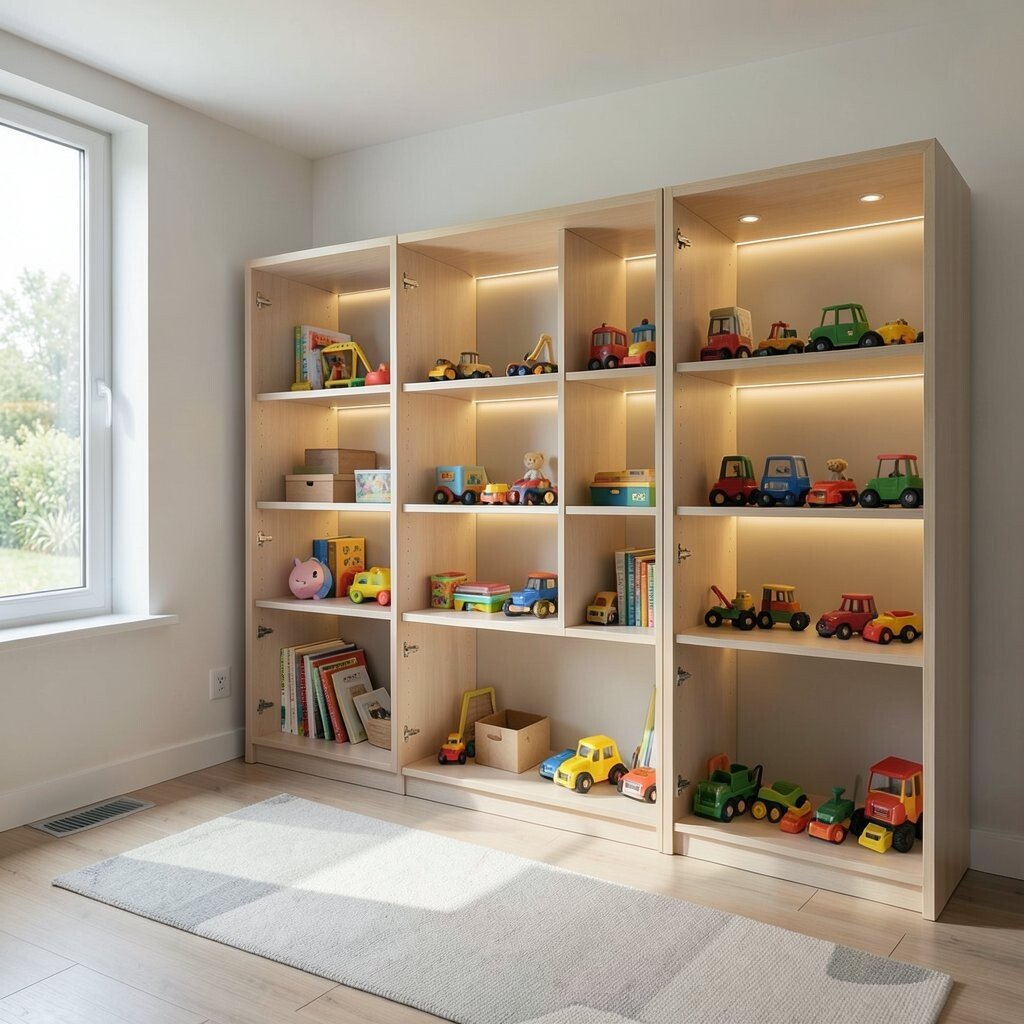
Light up your cubby wall with subtle LED strips so toys look brighter and the room feels warm at night. The glow makes the storage area feel like part of the decor, not just equipment.
Use lighting to highlight reading corners and book cubbies, which encourages calm play after dinner. This also helps parents see quickly when it’s time to do a quick reset. If you’re trying to manage cost, start with one section of lighting near the most-used cubbies and expand later.
Personalize the glow by choosing a warm white tone that matches your room’s overall lighting and keeps the space cozy.
18. Open Cubbies With Removable Dividers for Growth

Choose open cubbies that use removable dividers, so the layout can change as kids grow and toy types change. You’ll love how flexible the storage becomes without replacing the whole system.
This flexibility is a big benefit because toy collections don’t stay the same size or shape. Adjust cubby spacing for board games, art sets, or building blocks, and keep the room feeling modern and tidy. Personalize by letting your child help choose divider colors or add simple shapes to match their favorite themes.
For practical setup, measure the biggest toy you own first, then design around that item so everything fits comfortably from day one.