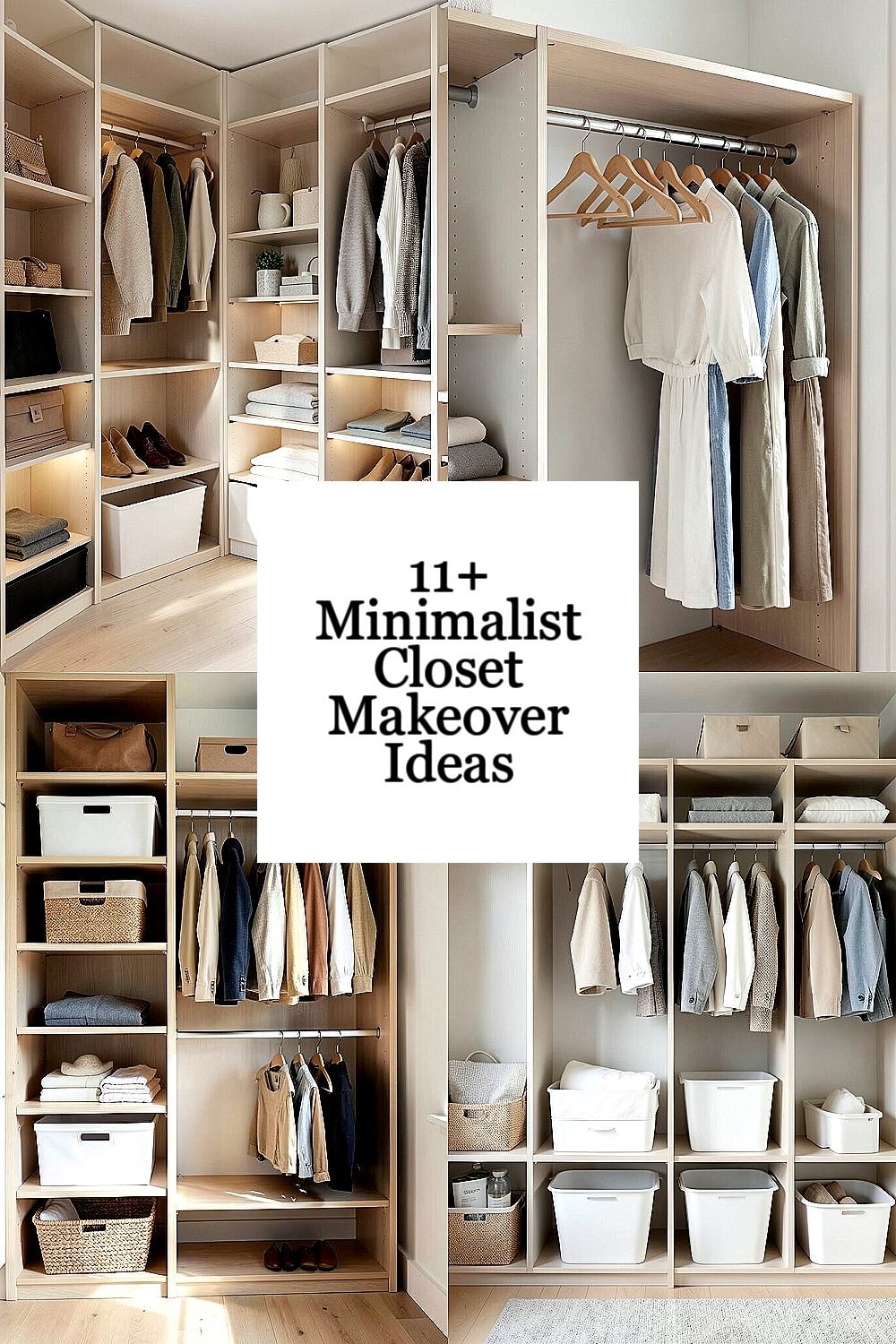
Your closet can look calm and sharp without feeling empty. A few small changes can make getting dressed feel easier and more fun.
1. Start With A Color-Coordinated Capsule
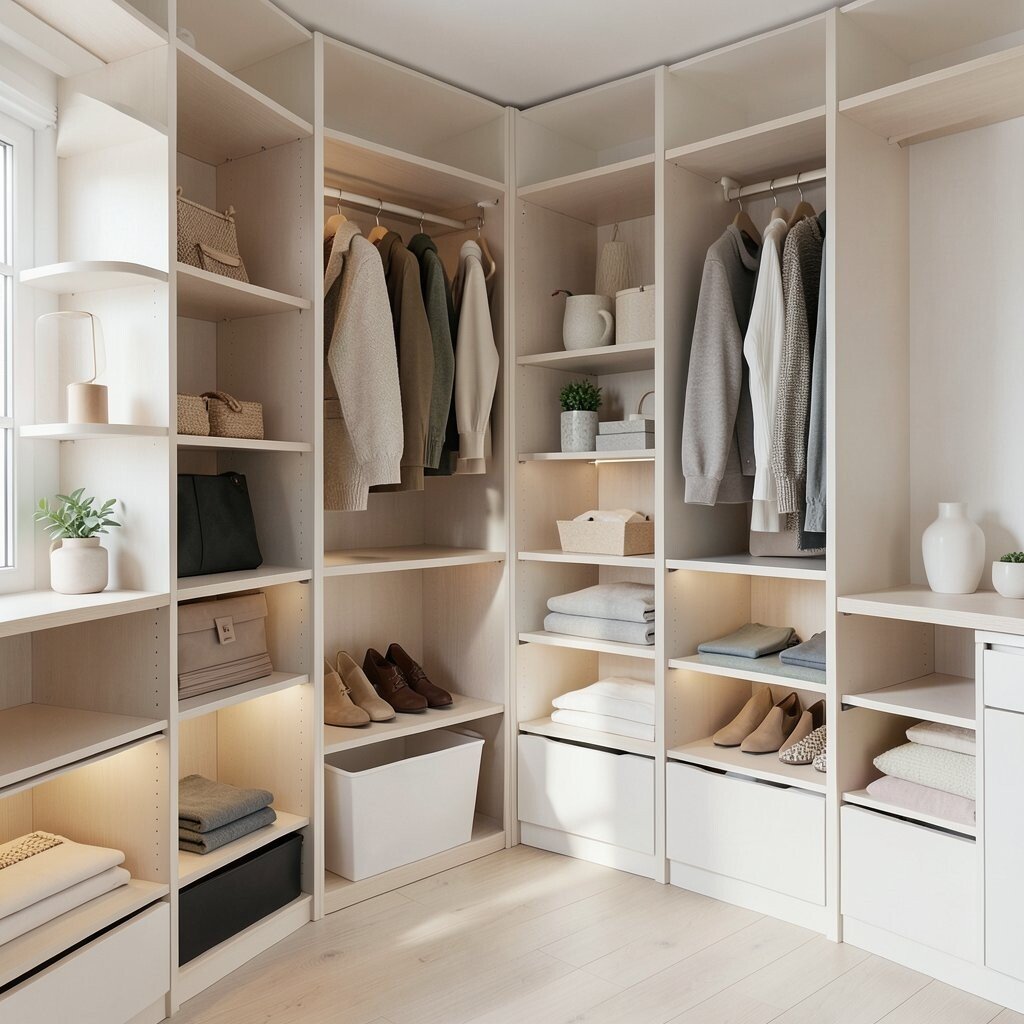
Pick a tight color range so your clothes look like they belong together. When outfits share similar tones, the closet suddenly feels cleaner and more organized.
Choose a simple base like black, white, and gray, then add one or two accent colors you truly wear. Keep everything visible by hanging similar shades together, which makes mornings faster. Consider keeping only what fits well and matches your chosen palette to cut down on clutter.
2. Switch To Matching Hangers That Feel Slim
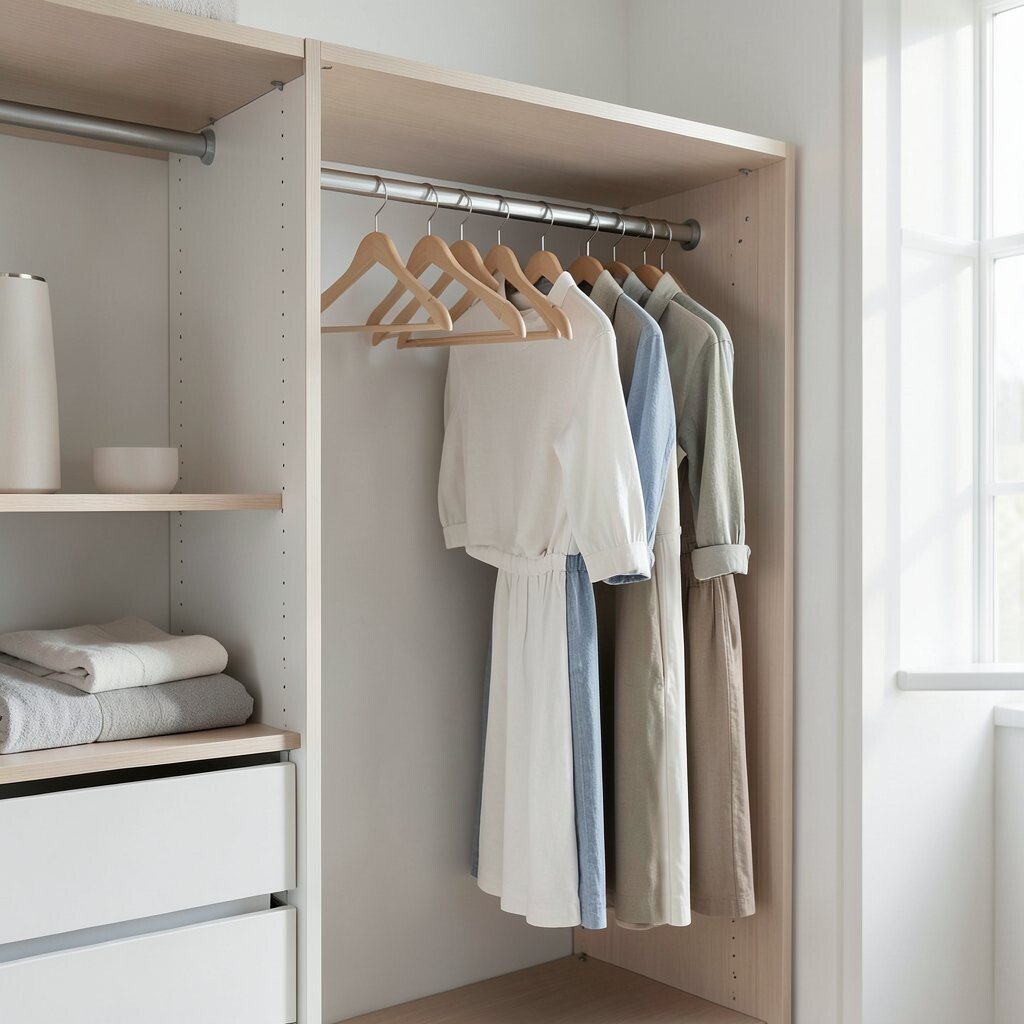
Swap the mixed hangers for uniform, slim ones so your closet looks neat at a glance. The visual calm is immediate, and it also helps you see space you may have been missing.
Go with the same material across the closet to keep the look consistent, like wood for warmth or felt for grip. If you own delicate fabrics, use hangers with gentle edges to prevent stretching. This change is low effort, and it usually costs less than people expect.
To personalize, choose a finish that matches your room, such as matte black for a modern feel or light wood for a cozy mood. Place your most worn items at eye level so your daily picks stay effortless. Rotate seasonal pieces into bins that match the color theme to keep everything looking intentional.
3. Use A One-In, One-Out Closet Rule
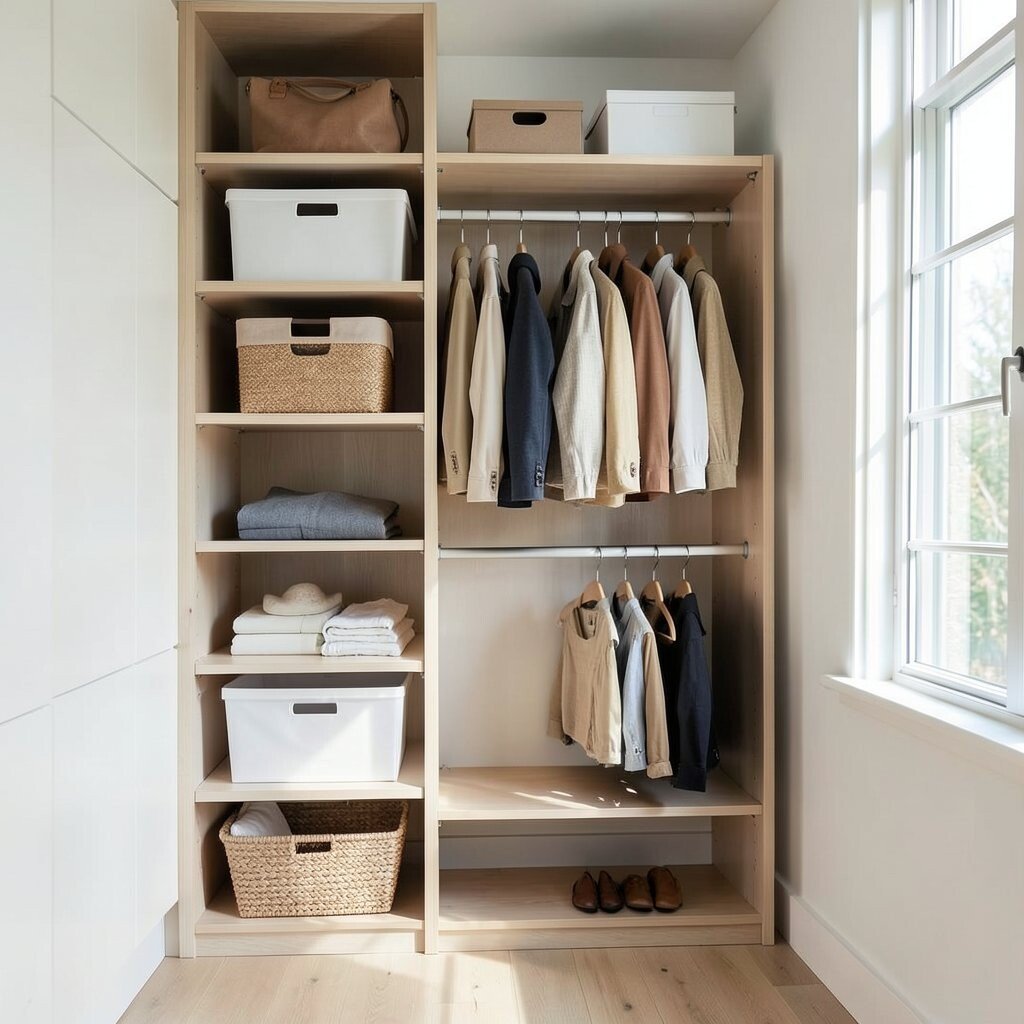
Limit new items by removing one piece each time you bring something in. This keeps your closet from quietly growing into chaos again.
When you remove an item, decide based on how it fits and how often you actually wear it. Many people find they can keep favorites and let go of duplicates or “someday” clothes. You end up with a smaller collection that feels easier to style.
Make the system personal by setting the rule to categories you struggle with, like shoes or tops. Try storing the removed items in a donation bag immediately so it doesn’t return to the rack. The benefit is big, because your closet stays fresh without constant reorganization.
4. Create Zones With Simple Storage Buckets
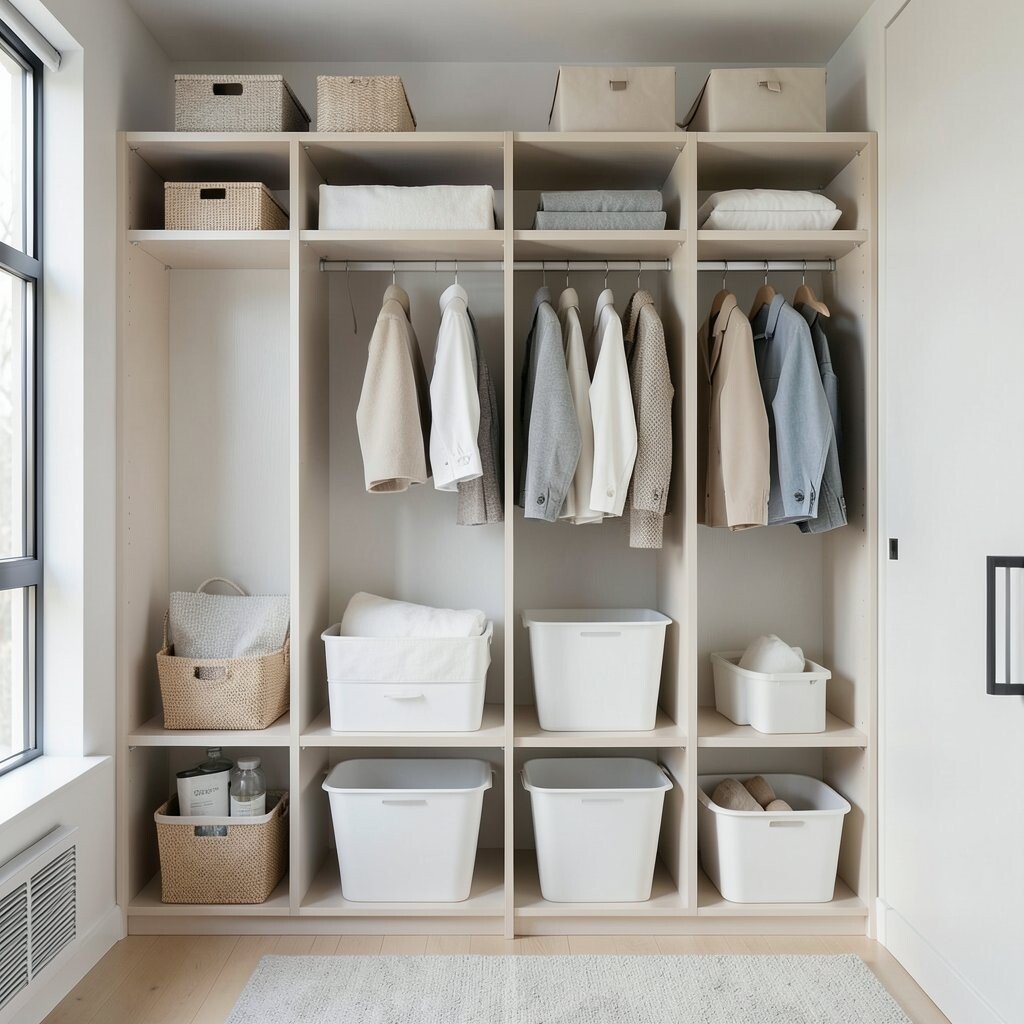
Divide your closet into clear zones so your space feels guided instead of random. You’ll see everything faster when items live near their closest match.
Use simple buckets or labeled bins for socks, accessories, and workout gear, keeping the visuals tidy. If you prefer a minimalist style, choose solid colors and avoid busy prints. You can also use clear containers for items you like to see, since that keeps decision-making easy.
5. Fold Like A Pro With Uniform Vertical Stacks
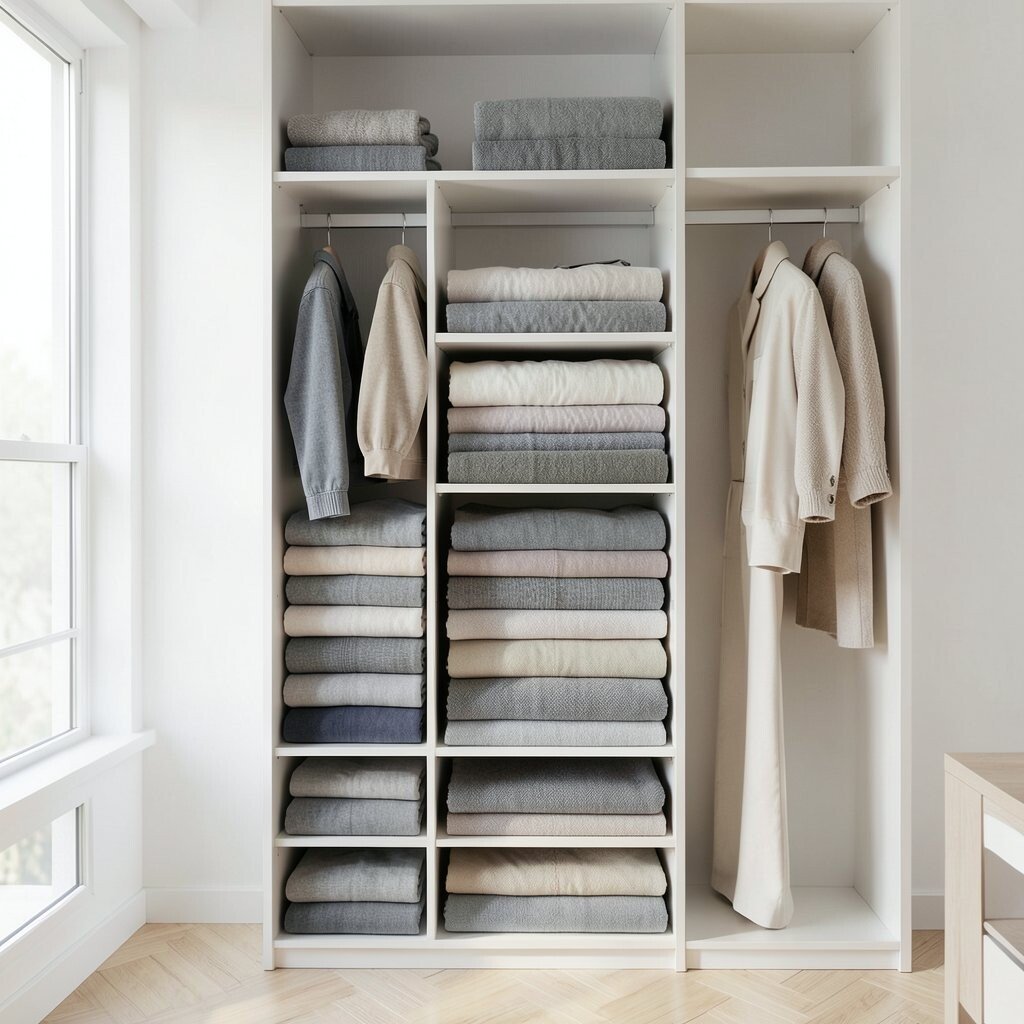
Try folding so shirts, knits, and tees form neat vertical stacks. The look is tidy, but the real win is how quickly you can grab what you want.
Use the same fold method for similar items, then line stacks up like a shelf display. This reduces rummaging and helps prevent wrinkly piles. It also makes space feel bigger, especially in smaller closets.
For personalization, match the fold height to the drawer size so everything fits without bending. Keep a small section for “today” items you’re actively wearing this week. You can make the whole system cheaper by reusing what you already own, like shoe boxes or simple trays.
6. Add A Full-Length Mirror Near Your Main Rack
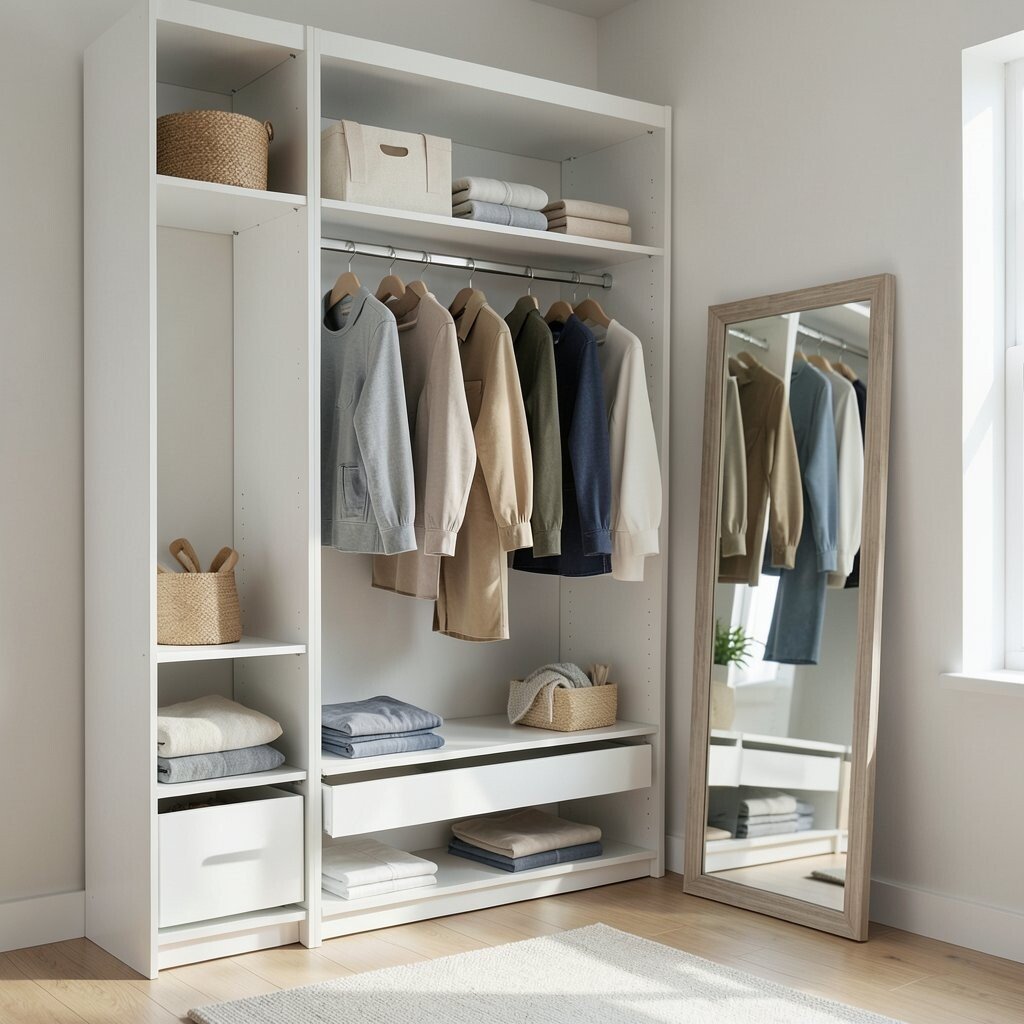
A mirror brings instant brightness and makes your closet feel more open. When you can see your outfits clearly, you choose faster and with more confidence.
Place it where you can get dressed in one spot, ideally near the clothes you use most. You can lean it against the wall or mount it for a cleaner look. If your closet is narrow, an angled mirror helps reflect light and makes the area feel wider.
7. Keep Only One Option Per Style Category
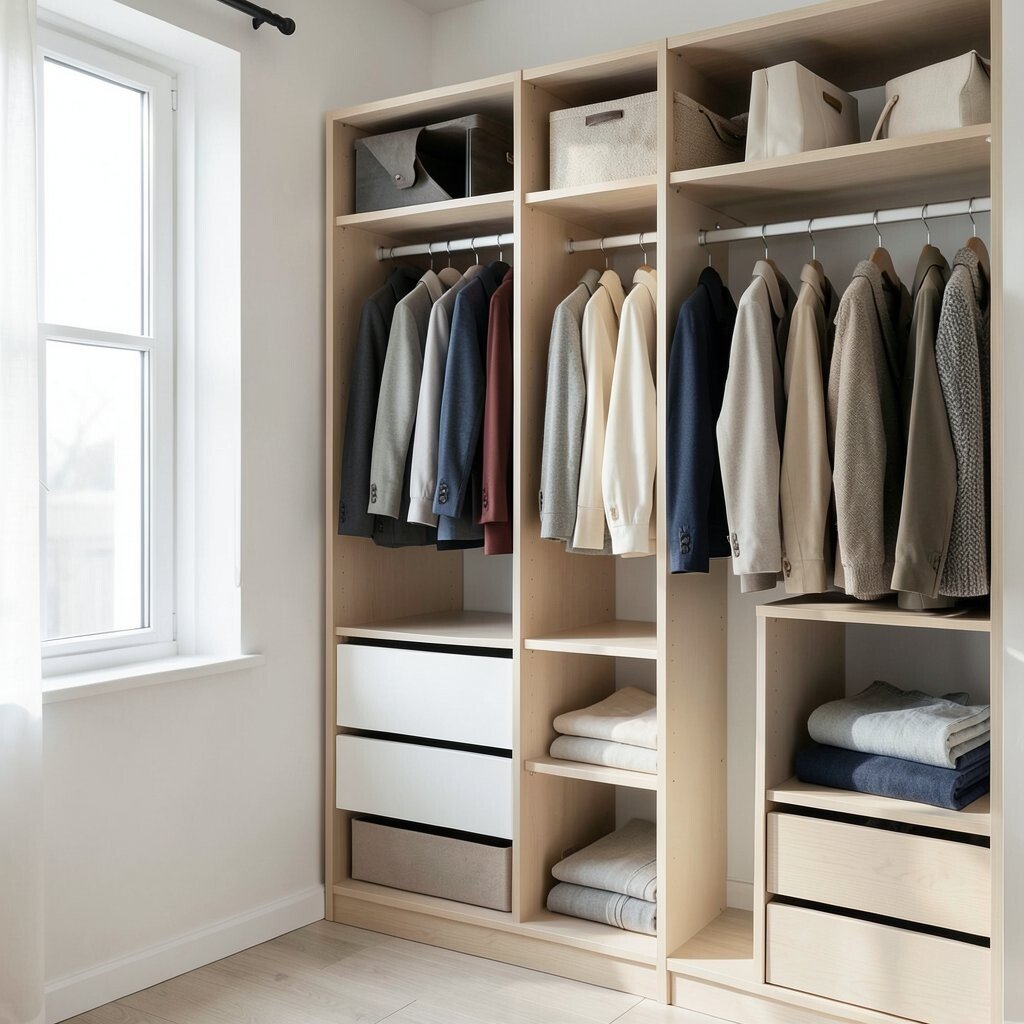
Choose one favorite piece for each style job, like one go-to blazer or one everyday dress. When you reduce duplicates, your closet looks sharper and decisions get simpler.
Try to remove the “almost the same” items so each category has a clear winner. Many people keep multiple versions of the same item, then never wear them because they feel too similar. With fewer choices, you’ll actually rotate what you own.
Personalize this by picking categories that matter most in your real routine, like work tops or weekend layers. If you work in a casual setting, keep fewer formal pieces and focus on comfortable fits. This approach keeps cost under control because you buy less when you already have solid favorites.
8. Upgrade Lighting With Warm, Even Bulbs
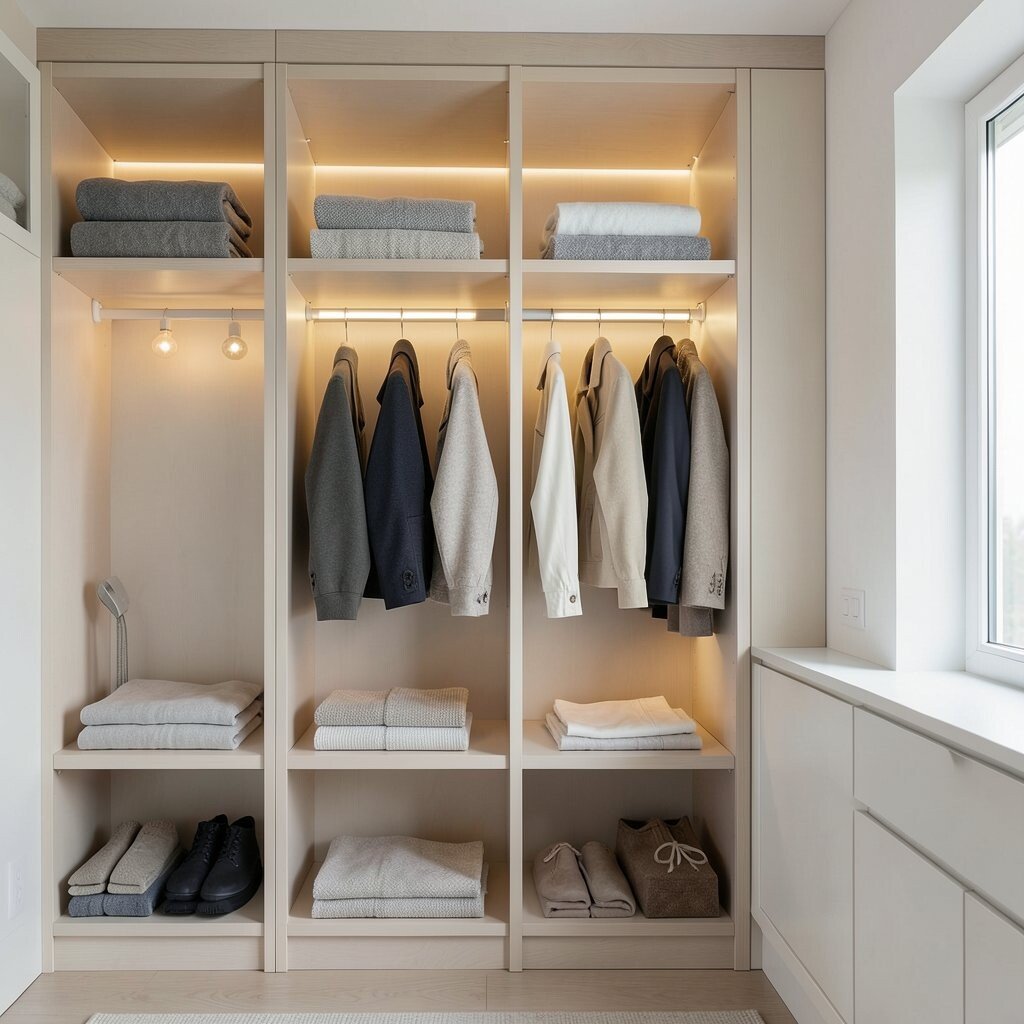
Better lighting makes even basic clothes look nicer in your closet. It also helps you spot stains, missing buttons, and fabric wear before they become problems.
Choose warm bulbs that make colors look true to life, especially for darker items. Even lighting reduces harsh shadows, so you can see textures like denim, knit, and satin more clearly. If you can, add a small lamp or a light strip to brighten the rack zone.
9. Hang Statement Pieces As Art, Not Storage
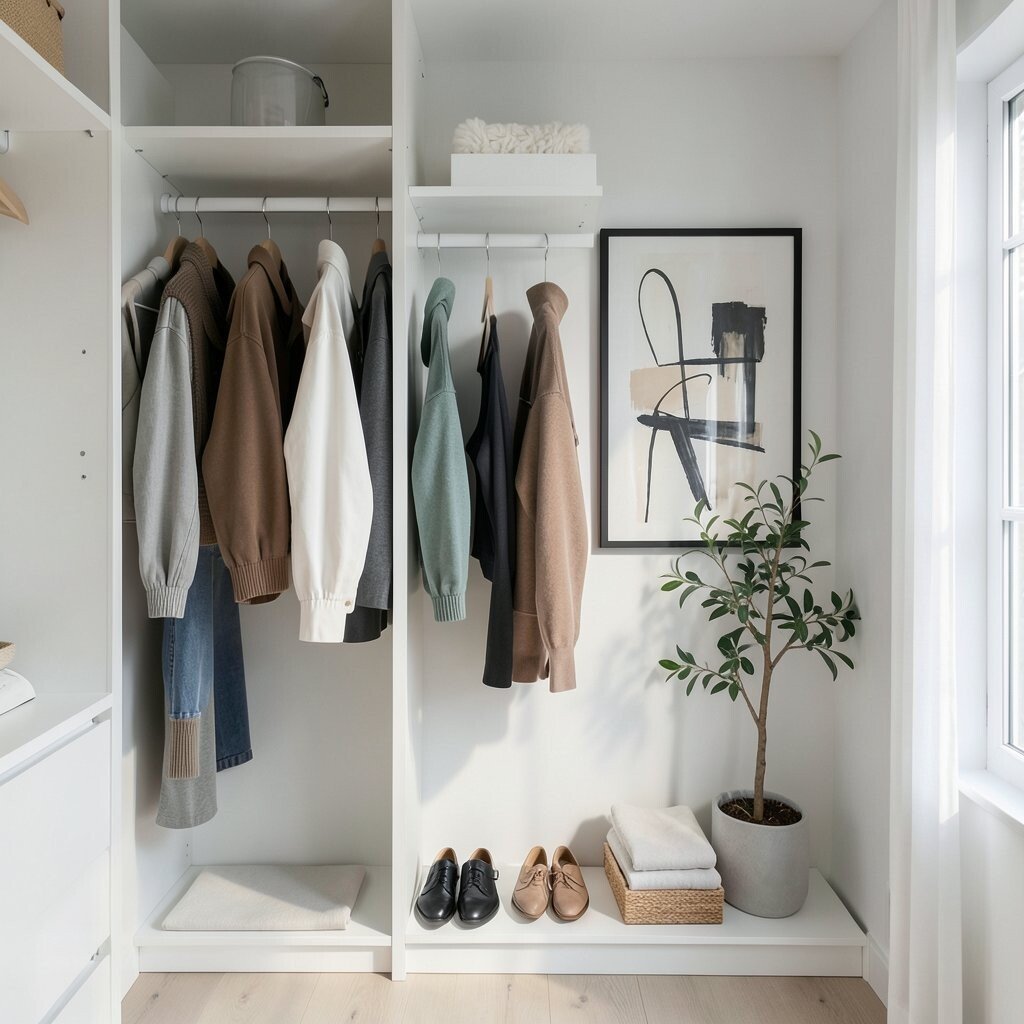
Pick a few standout items and hang them where they show instead of disappear in a back corner. A bold coat, a patterned scarf, or a favorite jacket can act like artwork in your closet.
Use a dedicated hook or section for these pieces so they stay easy to grab. This makes your closet feel more personal and less like a storage room. For a minimalist look, limit the statement area to only the pieces you truly love, so it stays intentional.
To personalize, rotate these art-like pieces by season or by mood, like changing scarves with the weather. If you have limited space, fold accessories neatly and display only one or two at a time. The benefit is strong because you’ll wear your favorites more often, which reduces the need to buy new items.
10. Tailor The Fits You Already Own
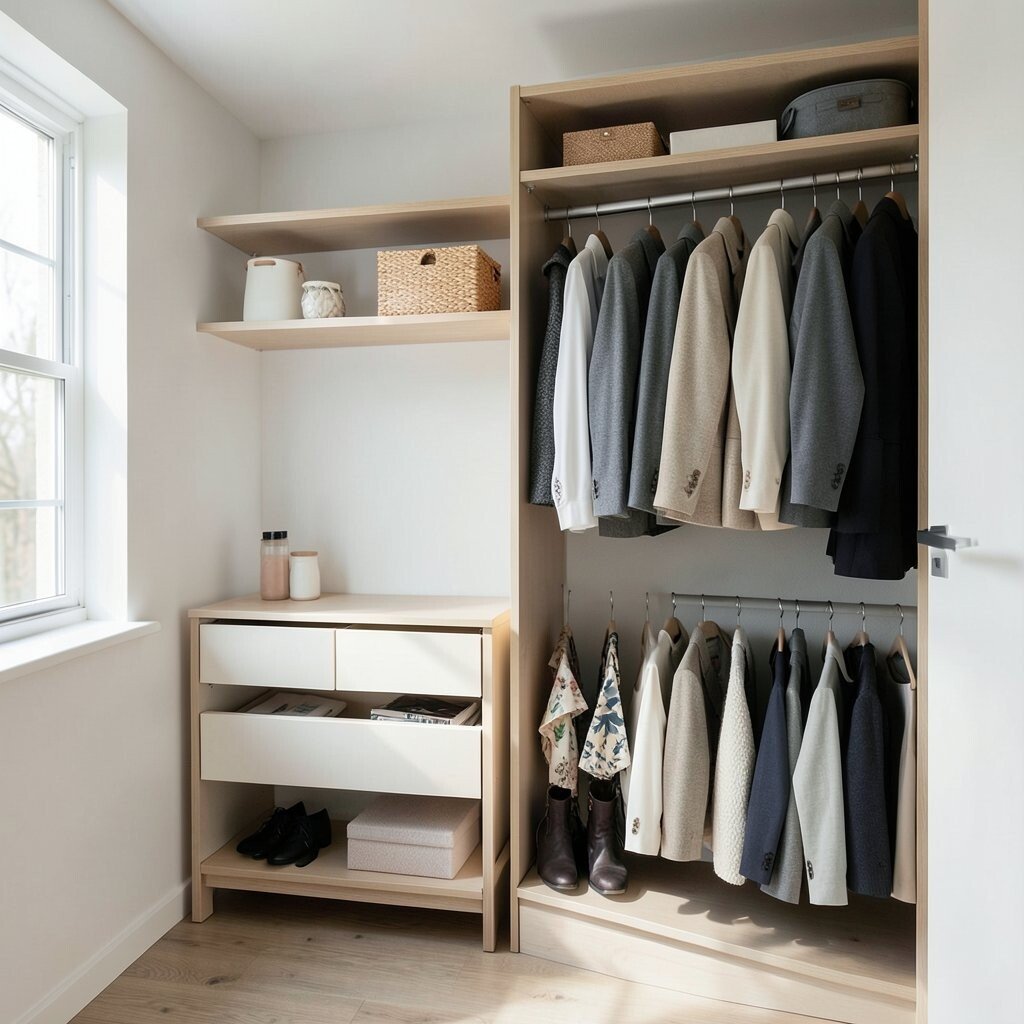
A closet makeover doesn’t always mean buying new clothes. Small tailoring changes can make your current pieces fit better and look more polished.
Consider hemming pants, adjusting jacket sleeves, or letting out a waist seam for a cleaner shape. When clothes fit well, they feel easy to wear and you stop avoiding them. Many alterations are affordable compared to replacing whole outfits.
11. Use Scent-Free Closet Care For Freshness
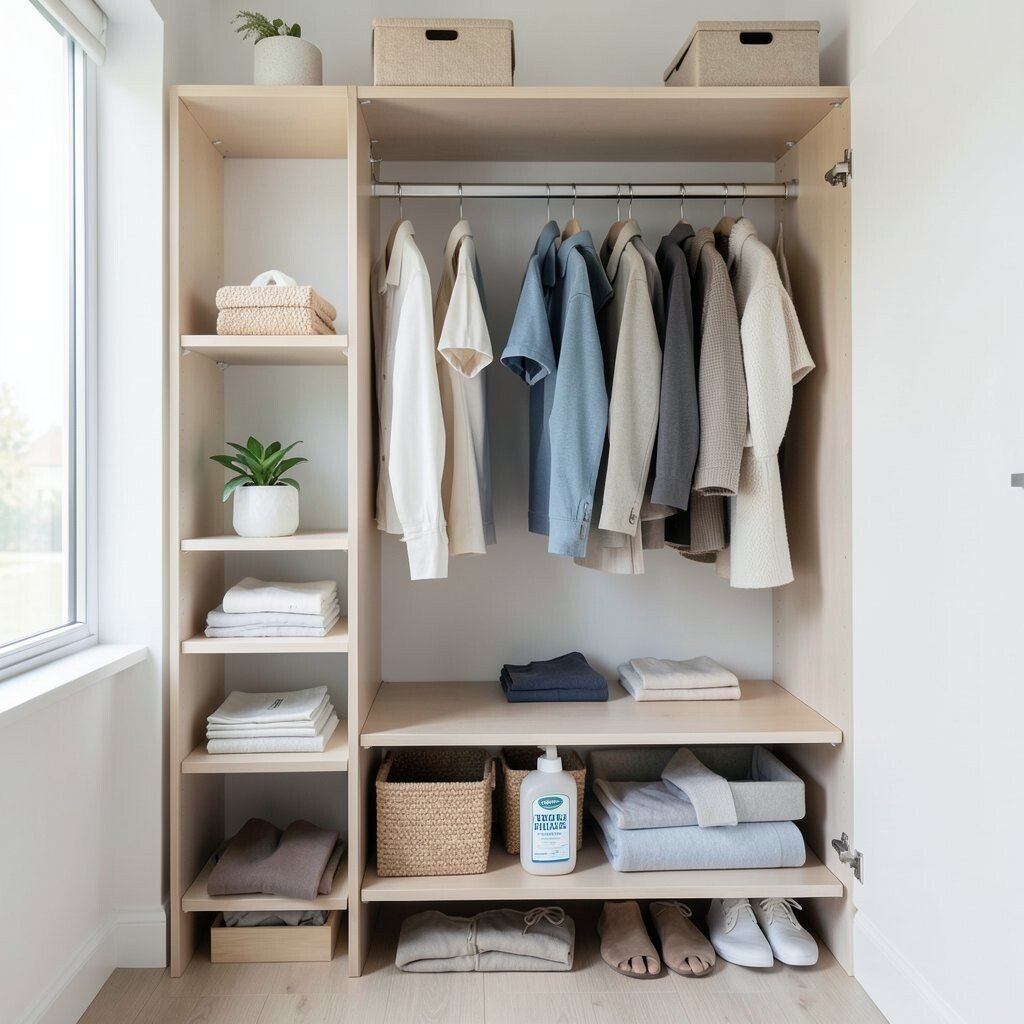
Keeping your closet smelling clean helps everything feel ready to wear. You don’t have to rely on strong sprays to get a fresh vibe.
Try simple options like cedar blocks, breathable sachets, or a gentle fabric-safe refresher for drawers. These help prevent musty smells and can protect fabrics from lingering odors. If you have sensitive skin or allergies, choose products labeled as fragrance-free.
To personalize, place small sachets near shoes or folded knits, where odors build faster. Keep a routine by checking scent items every season, especially after summer humidity. The cost is usually low, and the benefit is you’ll open the closet and feel instantly calmer.
12. Set A Monthly Reset With A Quick Clothing Audit
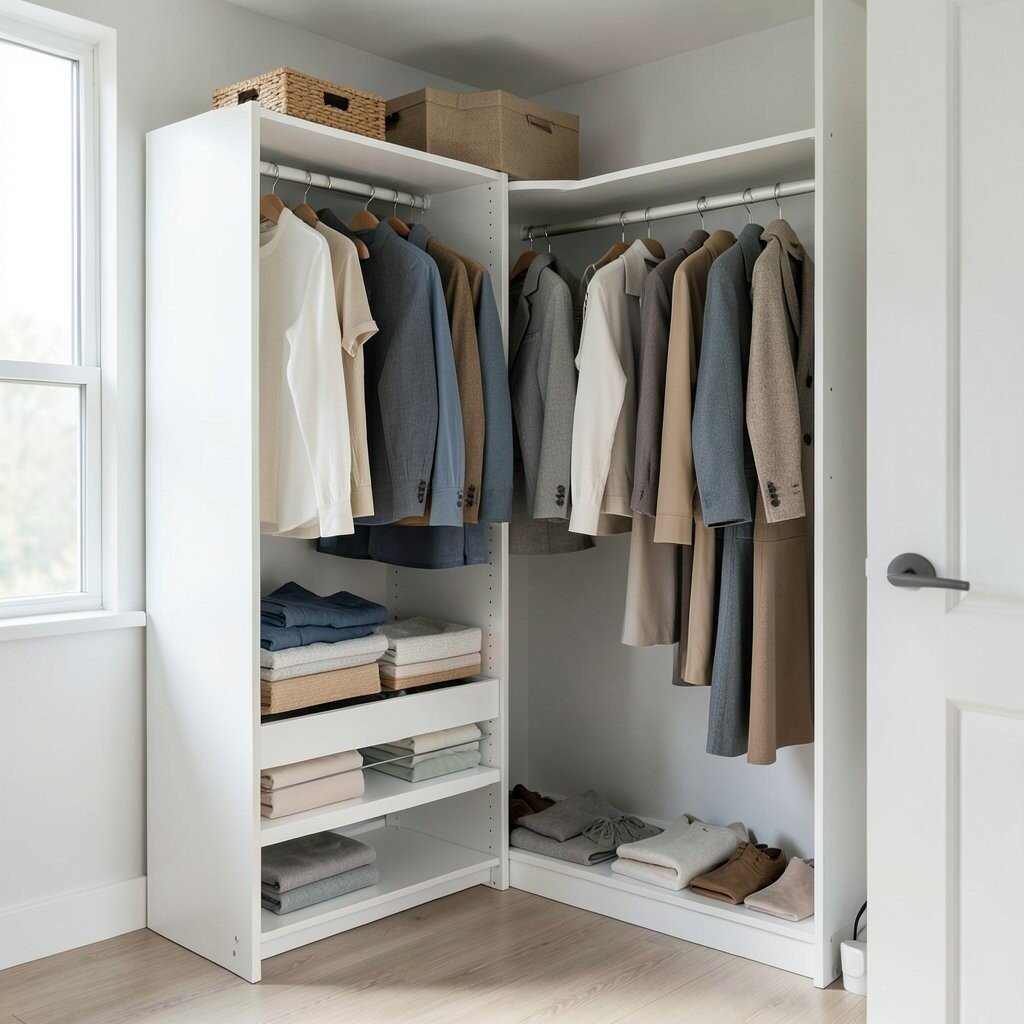
Once a month, do a short check to see what you wore, what you missed, and what feels off. This prevents slow clutter and keeps your closet aligned with your life right now.
Look for items that don’t fit well, don’t match your current style, or sit unworn for too long. Then decide what to repair, donate, or re-style with accessories you already have. A quick audit also helps you plan ahead for weather and events without panic shopping.
Personalize the timing by choosing a day that’s easy for you, like a weekend morning when you have energy. Set aside a small bag for donations while you sort so it doesn’t turn into a long project. Cost stays controlled because you’ll buy fewer things after you see what you already have.