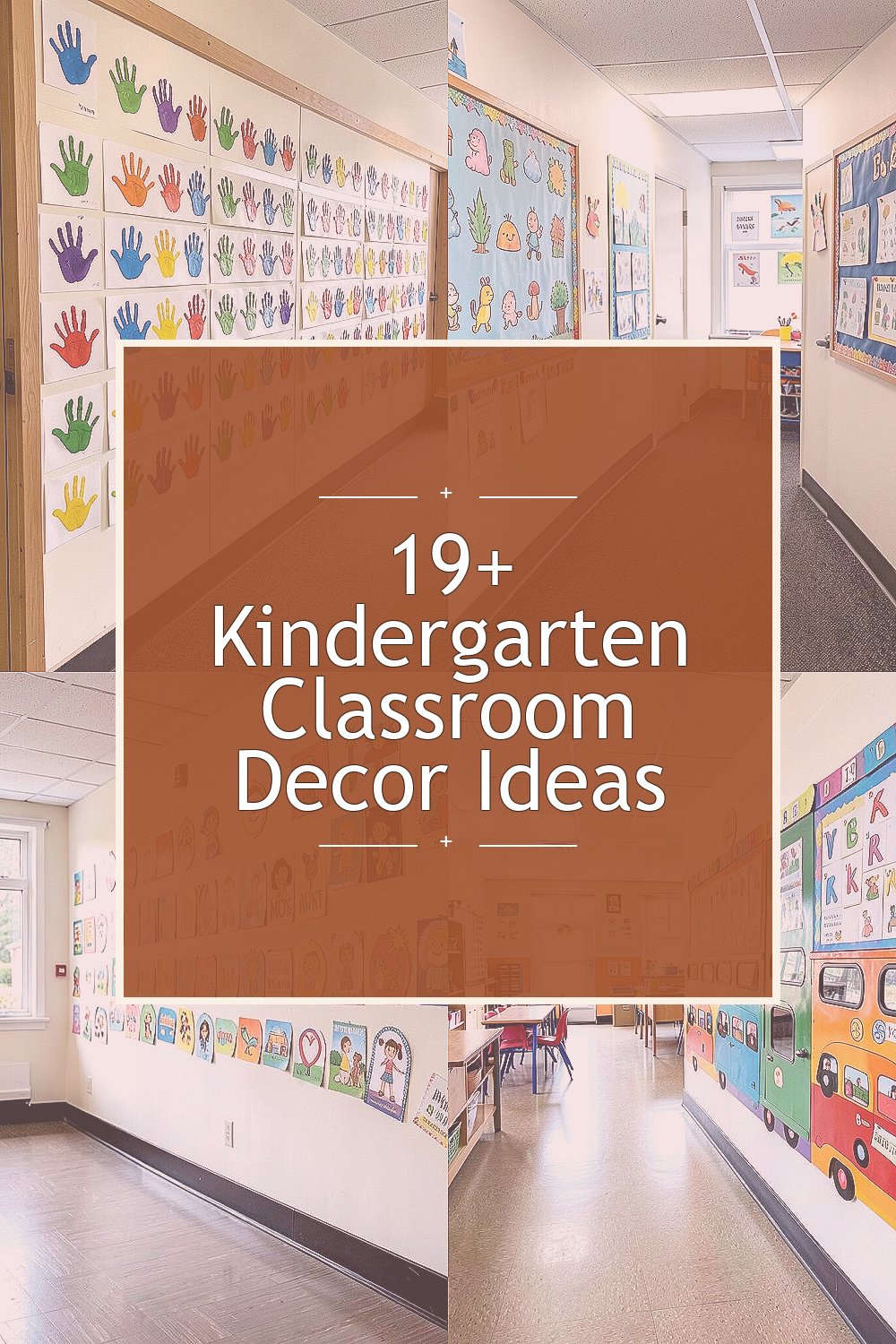
1. Handprint Story Wall
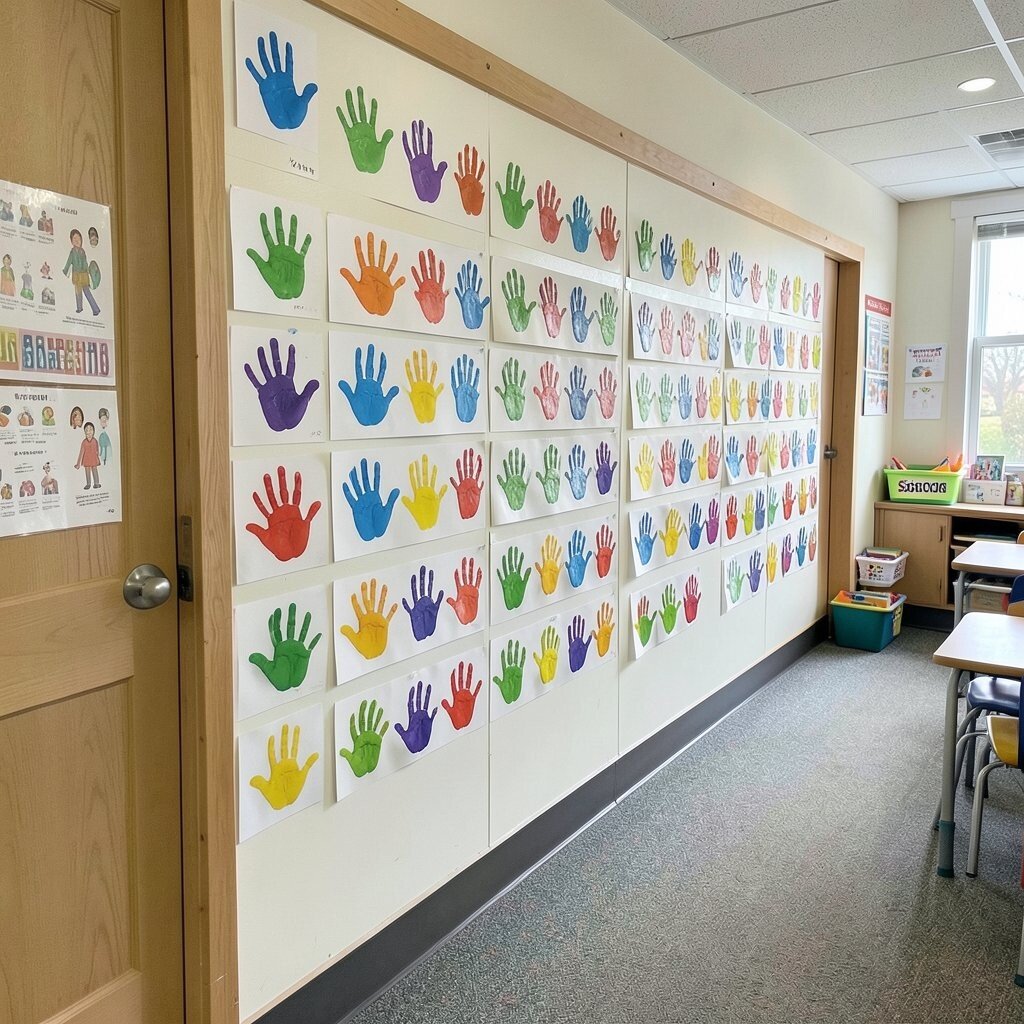
There is something magical about seeing little handprints line up like a friendly parade. They instantly make a hallway feel warm, personal, and full of life.
Choose one theme for the season, like “All About Me” or “Growing Like Flowers.” Use thick paper and non-toxic paint so families can contribute safely at home or during a short classroom session.
2. Weather Buddies Bulletin Board
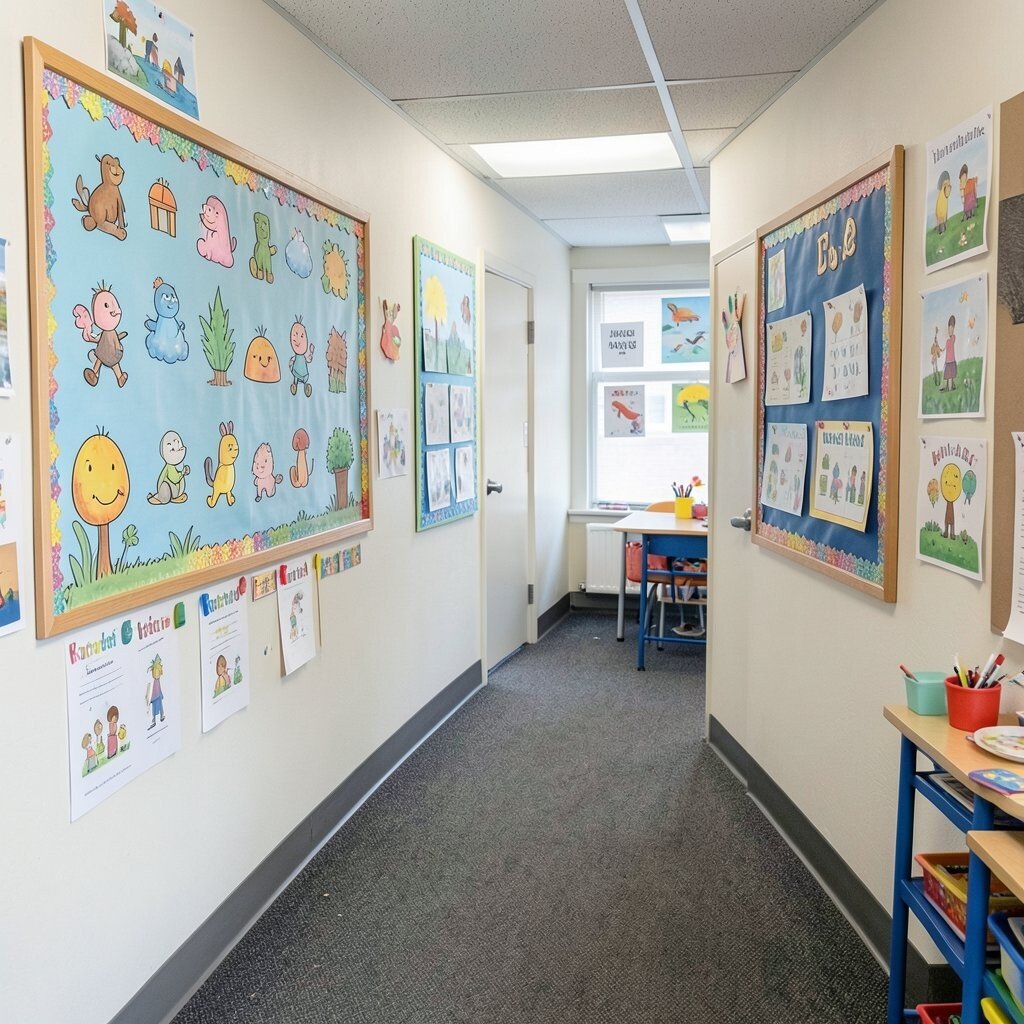
Turn the hallway into a daily sky by adding small weather buddies that match the classroom routine. Kids love spotting their favorite friend after they hang up the day’s card.
Make simple characters using paper plates or cardstock circles and add moveable tabs for sunny, cloudy, rainy, and windy days. Pair each buddy with a tiny pocket where children can place a matching icon and practice early matching skills.
For personalization, invite families to write a one-sentence “My favorite weather” note on the back of their child’s card. Keep costs low by printing icons in black and white first, then letting kids color with crayons and markers.
3. Mural of Months on the Wall
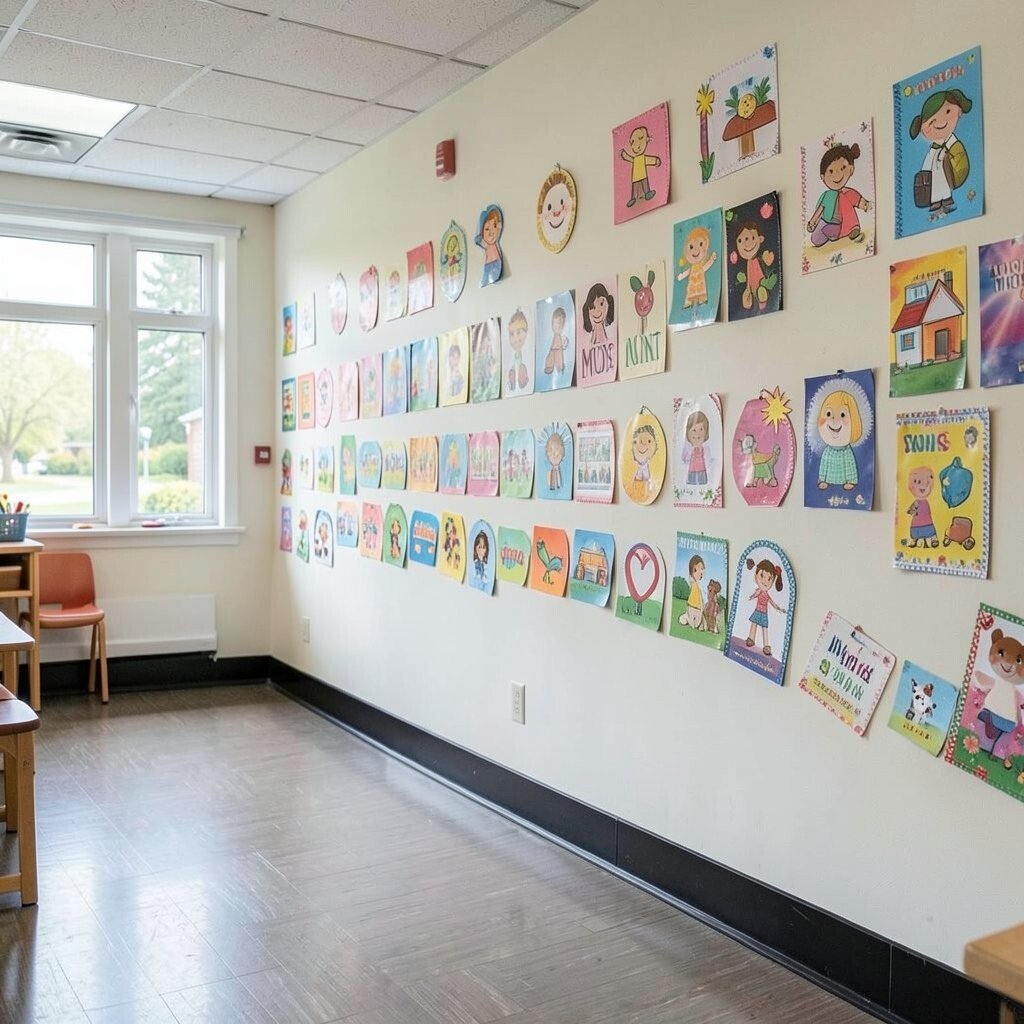
A long stretch of hallway wall can become a month-by-month mural that feels like a real story. Each area can show a different color, picture, and learning word.
Use large paper strips or painter’s tape to divide the hallway into sections, then add a simple scene for each month, like apples for fall or snowflakes for winter. Keep the pictures bold and easy to read from far away so little kids can enjoy the details without getting overwhelmed.
To make it unique, let children create a small “stamp” element for their favorite month, such as a star, leaf, or heart. Swap the newest month in each quarter so the hallway never feels outdated.
Try using washable paint, craft foam, and foam shapes because they stay bright and can be rearranged. A seasonal rotation also helps you reuse supplies instead of buying new decor all at once.
4. Alphabet Train With Car Windows
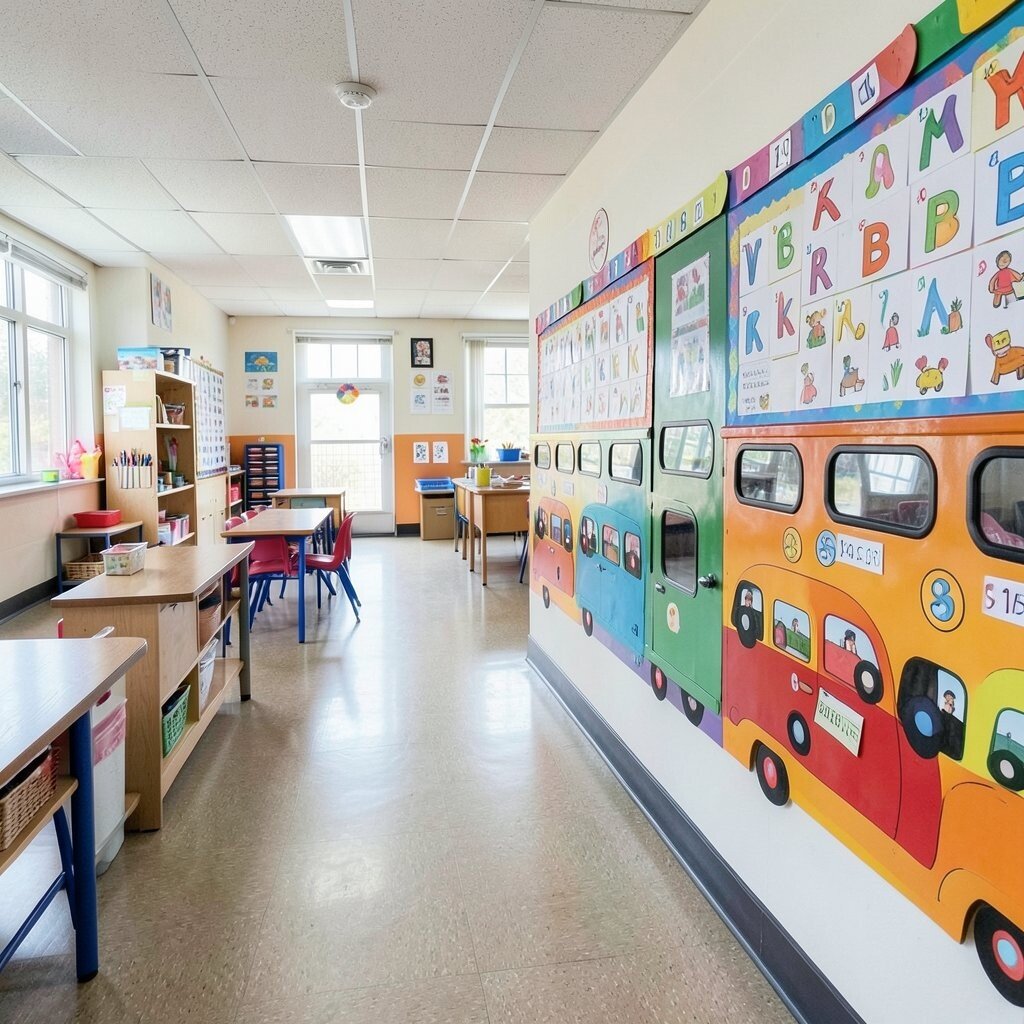
Build an alphabet train that travels along the hallway like a moving classroom promise. Each car window can hold a letter plus a picture that starts with that sound.
Cut out train cars from sturdy paper or cardboard, then attach each car with Velcro so you can swap letters as skills grow. Add a simple track line beneath the train so kids can follow it while walking past.
5. Recycled Crayon Box Gallery
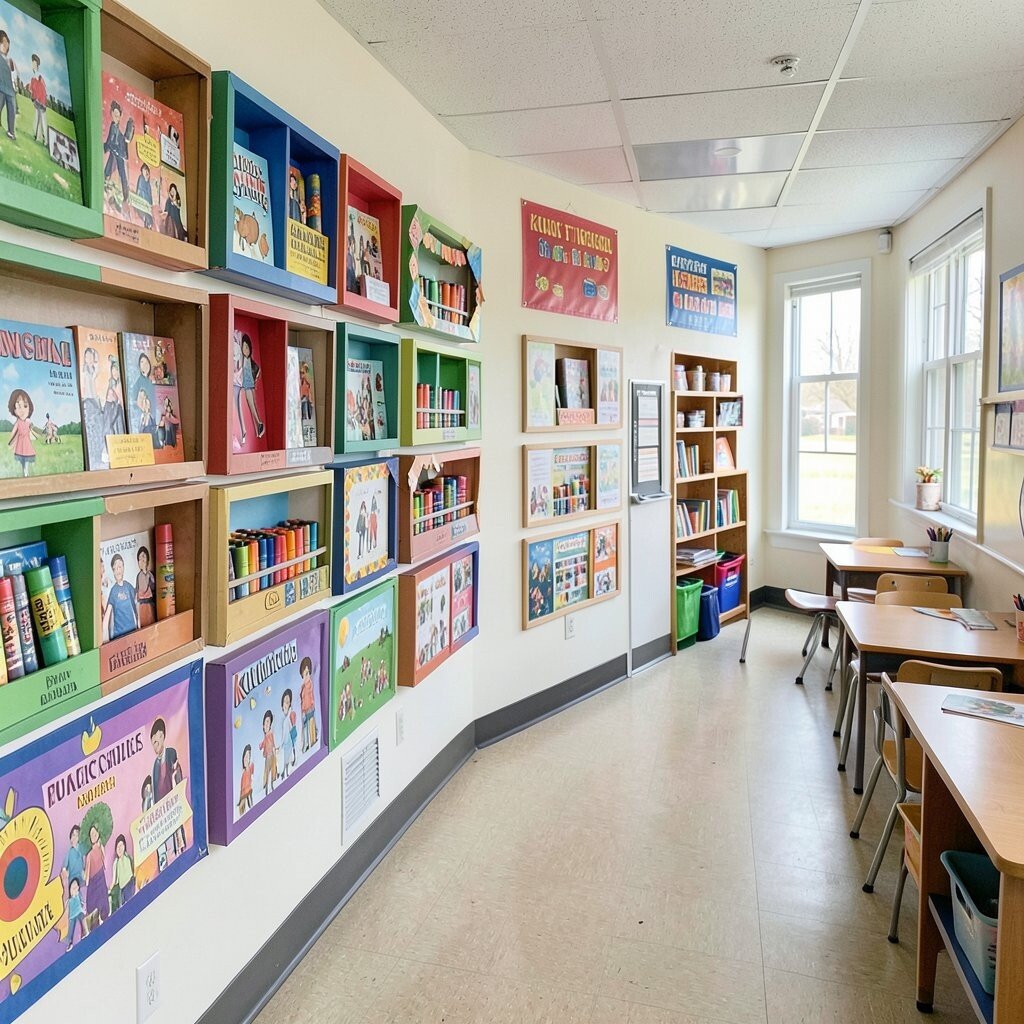
Old packaging can look surprisingly cute when you turn it into a crayon box gallery. The hallway becomes a “creator corner” that reminds kids they can make art from everyday things.
Wrap plain boxes in colorful paper, then use thick marker drawings or stickers to label each box with a kid-friendly theme like shapes or colors. Include a small opening or slot where children can drop in mini drawings on slips of paper.
For personalization, let each child decorate a tiny tag with their name and favorite color. To keep costs down, use what you already have and focus on bright accents rather than buying new supplies.
6. Sensory Shape Hunt Path
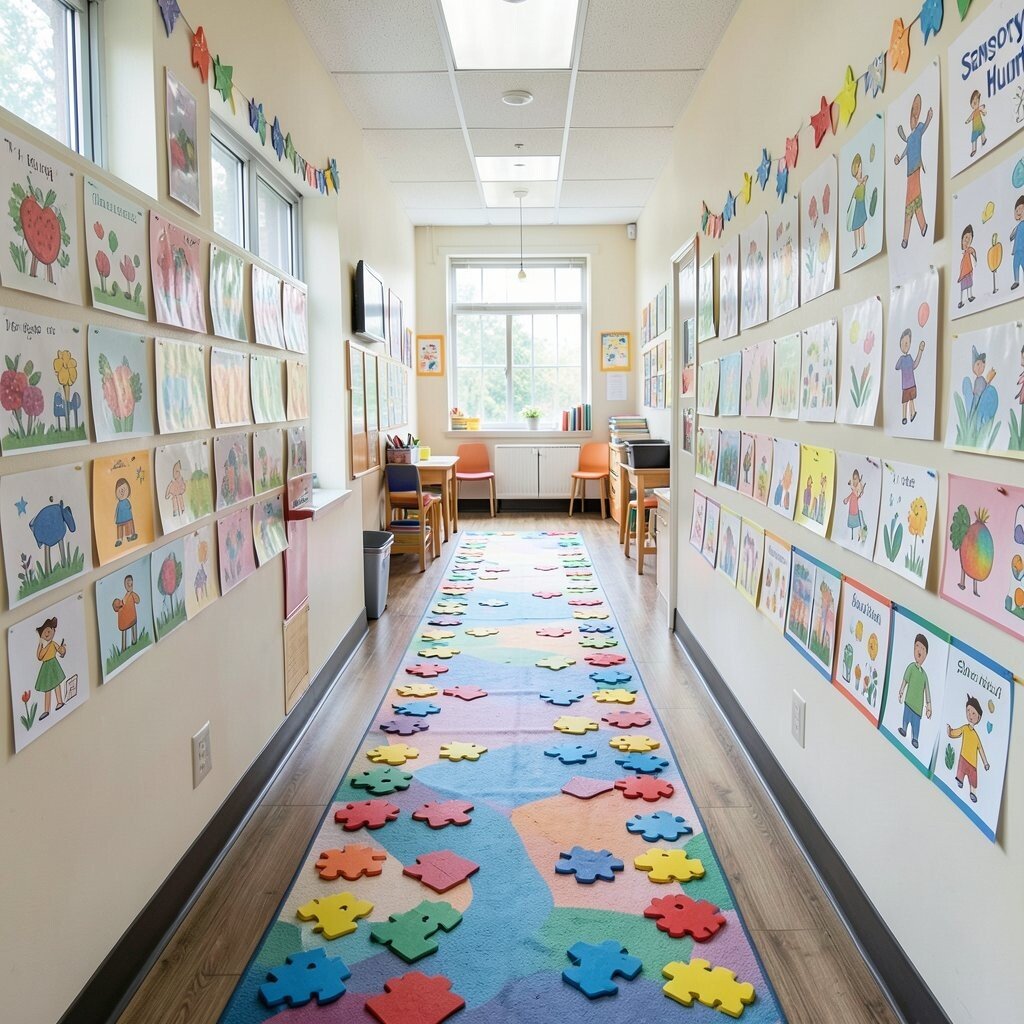
Create a shape hunt path on the floor using painter’s tape and durable placards. Kids love spotting patterns as they move, and it helps the hallway feel playful rather than quiet.
Choose a few shapes for the week, like circle, square, triangle, and star, then place them in a clear sequence along the walkway. Add small texture stickers or craft paper borders that feel different when kids point or trace with their fingers.
Make it practical by keeping shapes large and spaced so kids can see them from a distance. Replace the path weekly to match classroom activities, and photograph the path for families who want to see what their child practiced.
7. Giant Feelings Faces Line
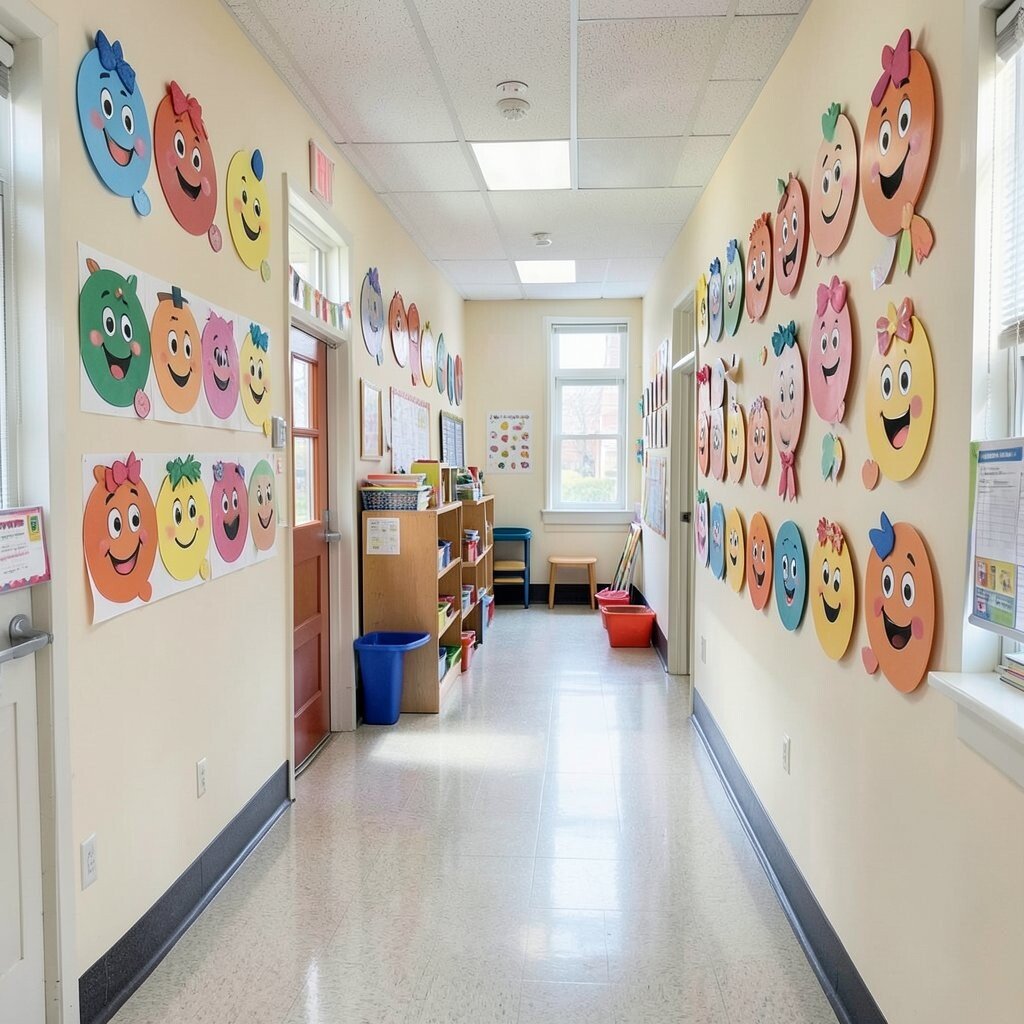
When kids see feelings displayed clearly, they can name what they are experiencing. A hallway line of big faces makes emotional check-ins feel normal and supportive.
Create a row of simple faces with different expressions, then include a matching icon or color for each one. Use Velcro on the back of small emotion pieces so children can choose the one that fits their moment.
8. Book Cover Art That Shows Choices
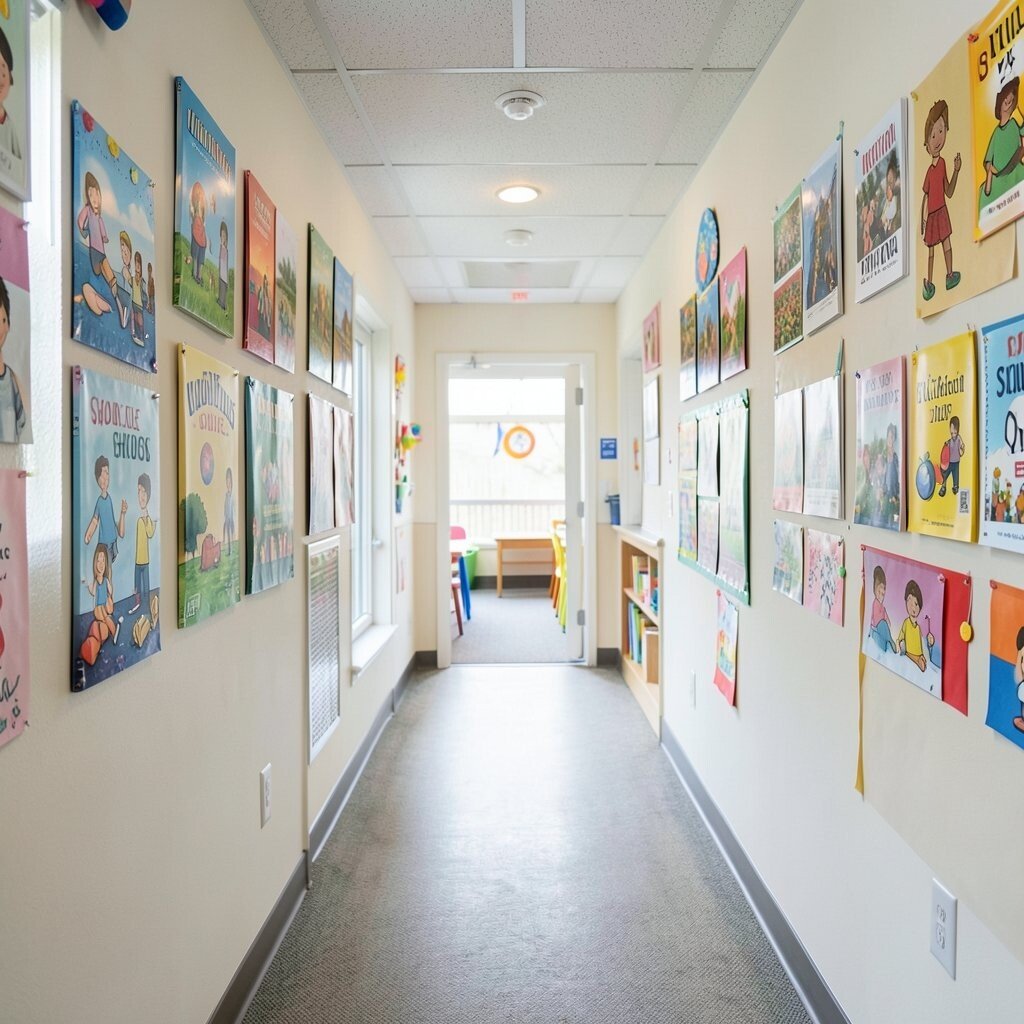
Bring reading energy into the hallway by featuring “book cover art” that shows kids what they can choose. When families walk by, it also shows them the learning happening outside the classroom doors.
Print simple covers for familiar titles or create your own using thick paper and kid-drawn illustrations. Add clear rotating pockets for each cover so you can switch them with the class reading schedule.
To keep it unique, let kids add one small illustration to each cover, like a tiny animal or a favorite fruit. Use affordable sheet protectors so you can update pages without redoing the whole display.
For practical setup, place the display at child height and keep the text minimal. Kids can point to pictures first, then you can add words later when they are ready.
9. Friendship Rainbow With Kind Messages
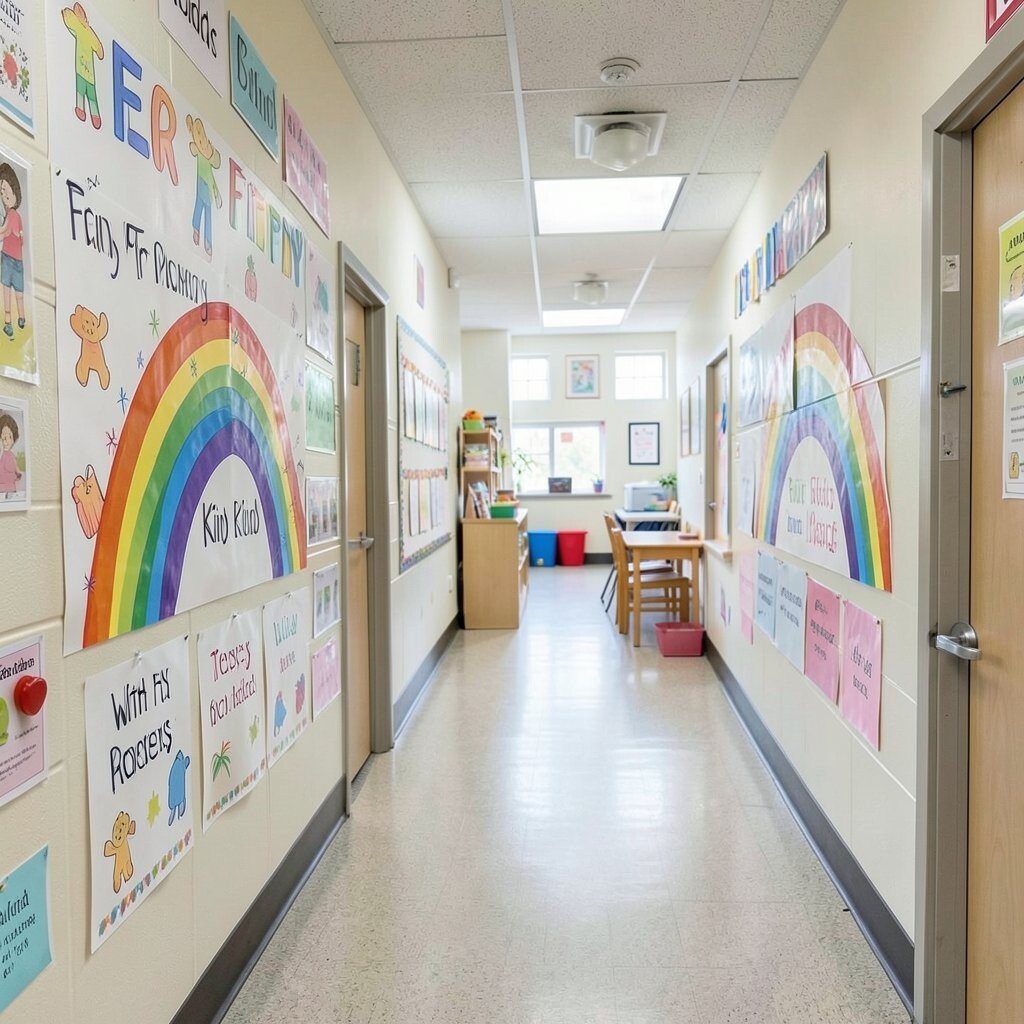
A friendship rainbow makes the hallway feel like a friendly message board. It also gives kids a gentle way to practice kindness in a visual, calming way.
Build a rainbow arch using layered paper strips, then add small clouds where children can attach kindness notes. Keep the notes short so kids and families can handle writing easily.
Personalize each panel by letting each child draw a tiny heart, star, or smiley before placing it on the rainbow. Consider using erasable markers on laminated paper so you can reuse the space for later seasons.
10. Mini Art Frames on a Gallery Rail
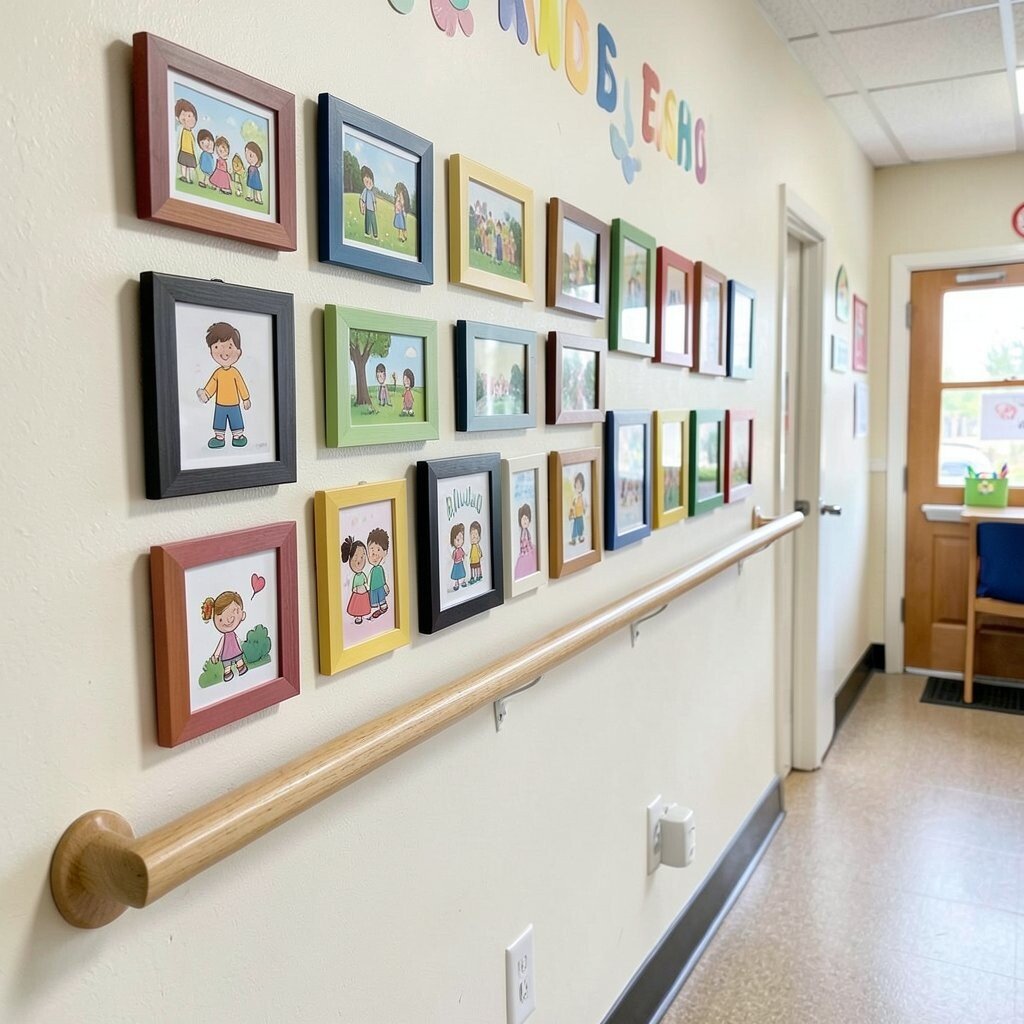
Even a simple hallway can look like a tiny museum when you add mini art frames. Kids feel proud when their work is displayed and families feel invited to celebrate it.
Use craft sticks and cardboard to make lightweight frames, then attach them to a rail or bulletin board with clips. Display one child’s work per frame and rotate it every week so more kids get a turn.
Add a small border pattern behind each frame so the hallway looks cohesive even as artwork changes. Try using matching colors like teal and sunshine yellow to follow current trend styles that pair bold accents with soft backgrounds.
For cost considerations, look for inexpensive frames at discount stores, or build your own from recycled cereal boxes. The biggest win is consistency, so you only need a few materials to keep the rail looking polished.
11. Shaped Paper Leaves That Move With Seasons
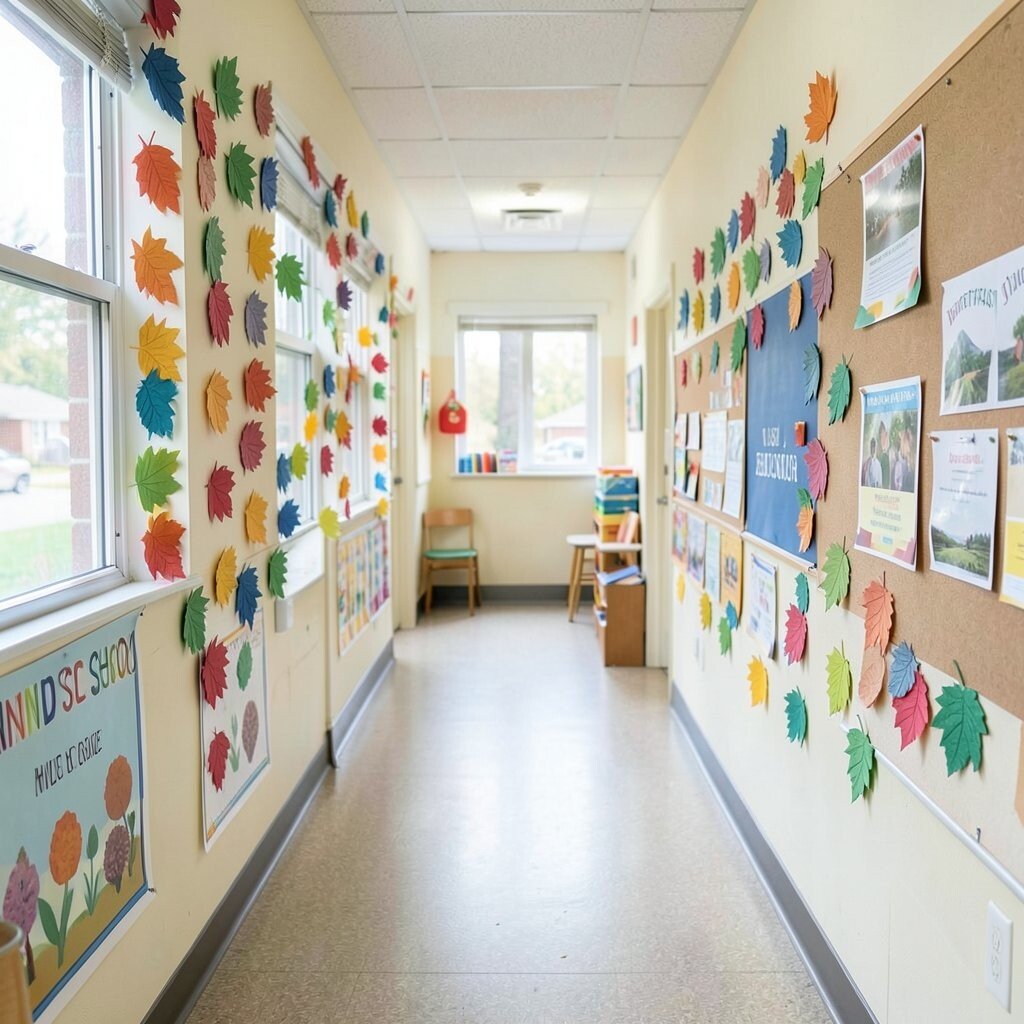
Turn seasonal learning into hallway decoration by hanging shaped paper leaves that follow the year. Kids love seeing how the hallway changes, and it becomes a real visual calendar.
Use cardstock cut into leaves, apples, snowflakes, or flowers, and add a small pocket behind each shape for a matching class photo. Attach everything with string so leaves look like they are drifting gently.
For uniqueness, let children stamp each leaf with paint using sponge shapes. You can also mix in simple student handwriting like “I noticed…” to connect art with observation skills.
12. Classroom Jobs Sign With Velcro Tokens
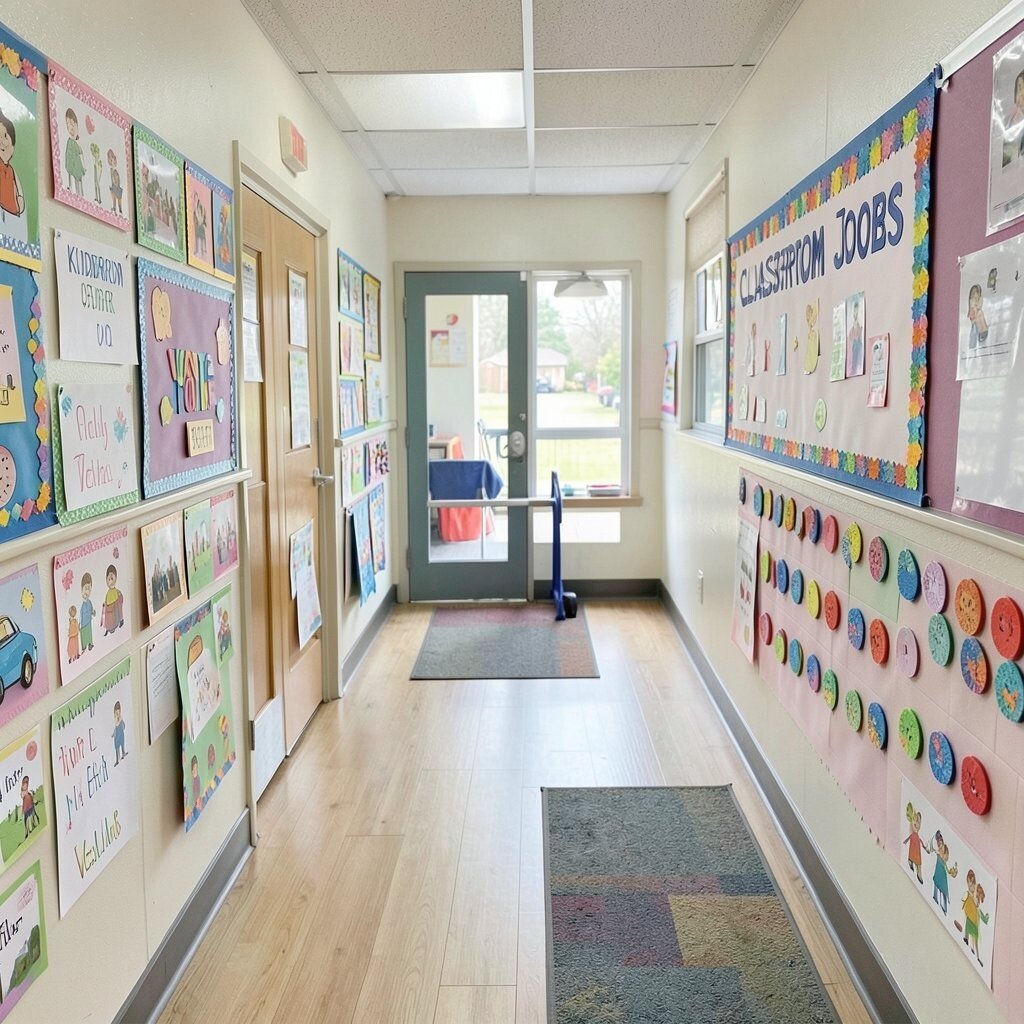
A hallway jobs sign can help children feel included and responsible. It also gives your classroom routine a friendly boost as kids walk past it every day.
Create a simple grid of job cards, like line leader, helper, and art captain, and place them in a clear frame display. Add Velcro tokens with child names so you can assign roles quickly.
For personalization, include a tiny icon next to each job token, like a paintbrush for art captain or a broom for helper. This works well for kids who are still learning to read because icons do the heavy lifting.
Keep it practical by choosing laminated cards and sturdy backing so they handle daily use. Use one color for new kids and a second color for returning kids so teachers can scan quickly.
13. Word Wall of Welcome Phrases
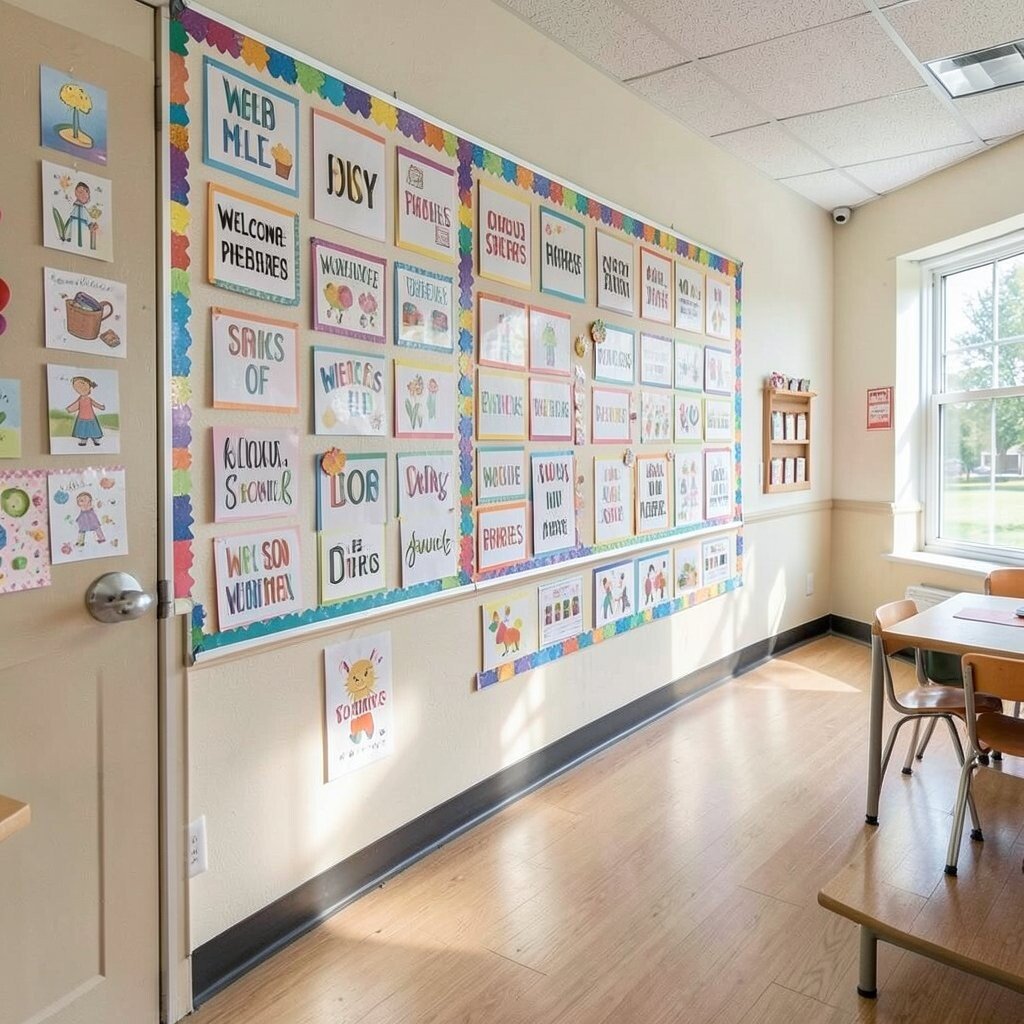
Decorate the hallway with welcoming phrases that kids can “read” using images and simple shapes. It makes the school entrance feel friendly and helps children feel safe and known.
Place large cards across the wall with phrases such as “Good morning” and “You belong here” alongside big picture icons. Use thick handwriting or simple lettering so the display stays easy from a distance.
To make it unique, rotate one phrase each month and add a student-made border. Families will notice the updates, and children will enjoy pointing out what changed.
For cost, use cardstock and print only the icons, then let kids color the rest. This keeps the project affordable while still looking bright and intentional.
14. Color Wheel Art Hanging Line
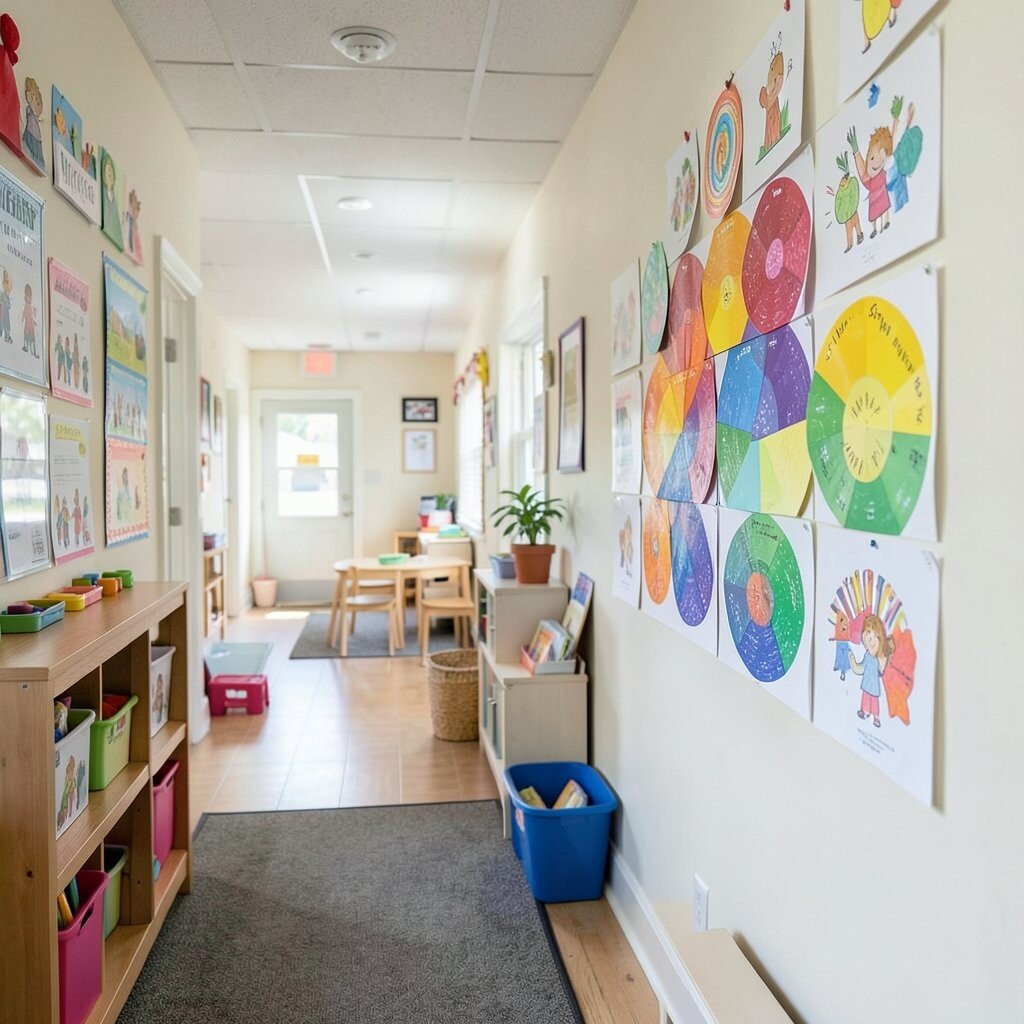
A color wheel hanging line is a fun way to bring art class energy into the hallway. It also supports early color recognition every time children pass by.
Create a circular color wheel using paper plates or foam circles, then add segments with visible labels and simple swatches. Hang the wheel from a sturdy string line, and attach small artwork cards that match each segment.
Personalize by letting each child make a “color sample” using crayons or tissue paper collage. When they place their sample on the correct segment, they practice matching skills naturally.
For practical tips, keep the artwork small and flat, and choose clips that hold firmly. Current trend-style displays often mix clean shapes with bold color blocking, so this hallway look fits right in.
15. Community Map of Favorite Places
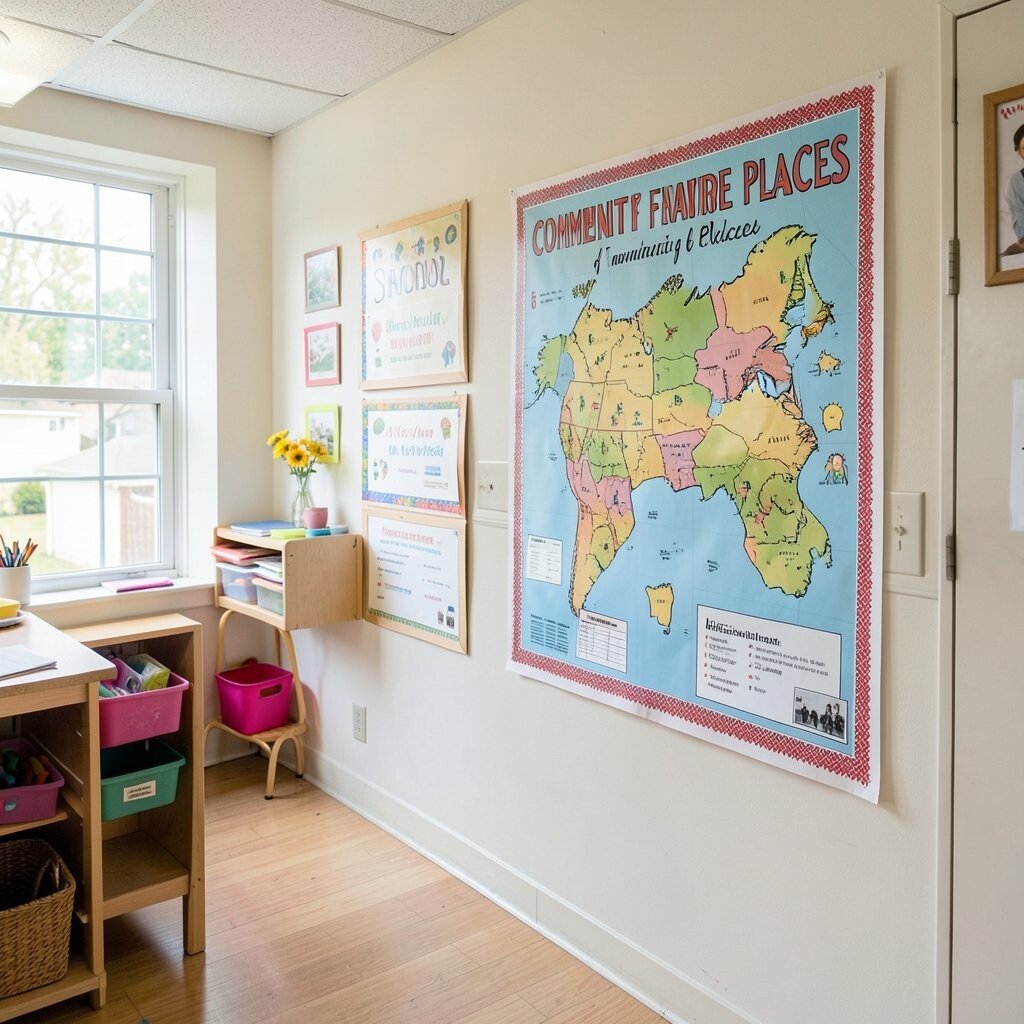
A community map turns hallway decor into a story about where kids feel at home. Even kindergarteners can point to familiar places like parks, homes, or stores.
Draw a simple map shape on a large paper sheet and add icons for common neighborhood spots. Invite families to contribute one icon using a photo copy or sticker, then place it on the map.
Uniqueness comes from the details, like adding a tiny path drawn by each child from home to school. This also gives you a natural conversation starter during pickup and drop-off.
For costs, use free printable icons and focus on a few consistent colors. You will end up with a display that looks thoughtful without needing expensive materials.
16. Paper Lanterns for “Hello” Energy
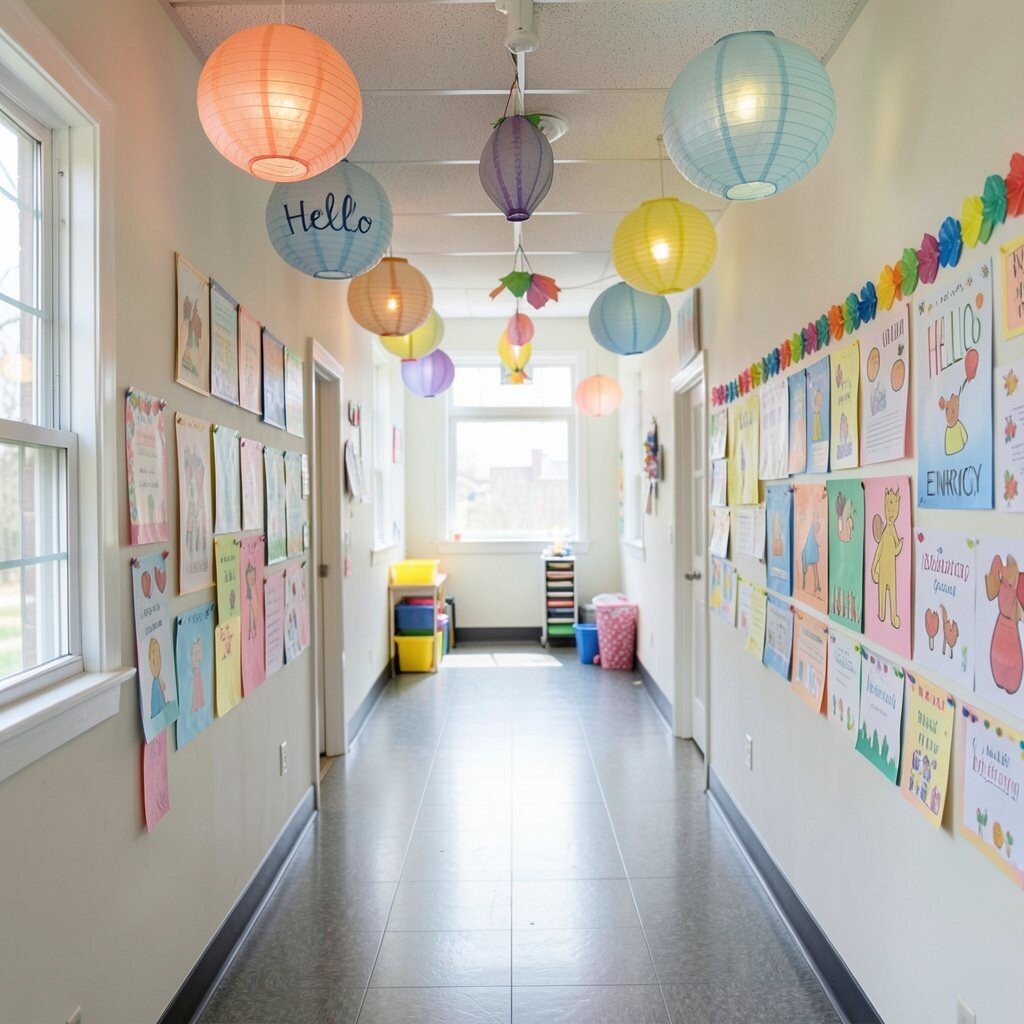
Paper lanterns hanging along the hallway can make the space feel festive and welcoming. They also add movement, which grabs kids’ attention as they walk to class.
Use lightweight tissue paper or craft paper folded into simple lantern shapes, then add small cutouts like stars, hearts, or smiling faces. Hang them at kid eye level so everyone can enjoy them without straining their necks.
To personalize, let children create a mini pattern sheet using one repeating shape, then attach it inside the lantern. This makes each lantern feel special while keeping the overall theme cohesive.
Keep the project practical by using battery LED mini lights or skipping lights entirely for safety. When you rotate lantern colors by season, you can reuse the frames and just swap the paper.
17. Number and Counting Wall With Counters
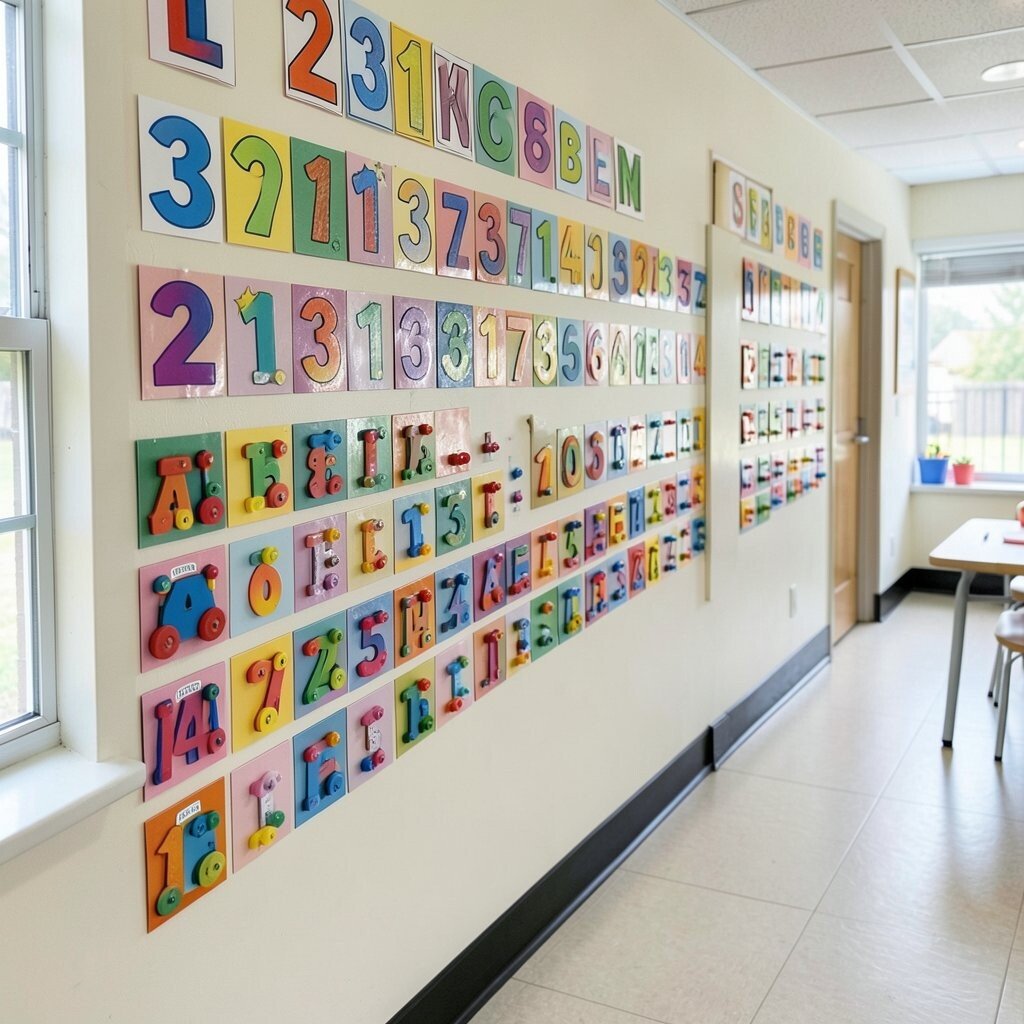
A counting wall can feel playful when it includes real-looking counters kids can pick up. It turns hallway time into a quick math moment without worksheets.
Arrange large numbers in a row and pair each number with a pocket that holds manipulatives like foam dots, pom-poms, or buttons. Children can match the count by placing the right number of items into each pocket.
For personalization, allow each child to decorate one number card with a mini design. Use bright primary colors and chunky markers because they are easy for kids to see and match.
Cost considerations are manageable since you can reuse counters year after year. Mix inexpensive materials, like pom-poms and felt scraps, so the wall stays colorful but not expensive.
18. Nature Texture Tree With Leaf Prints
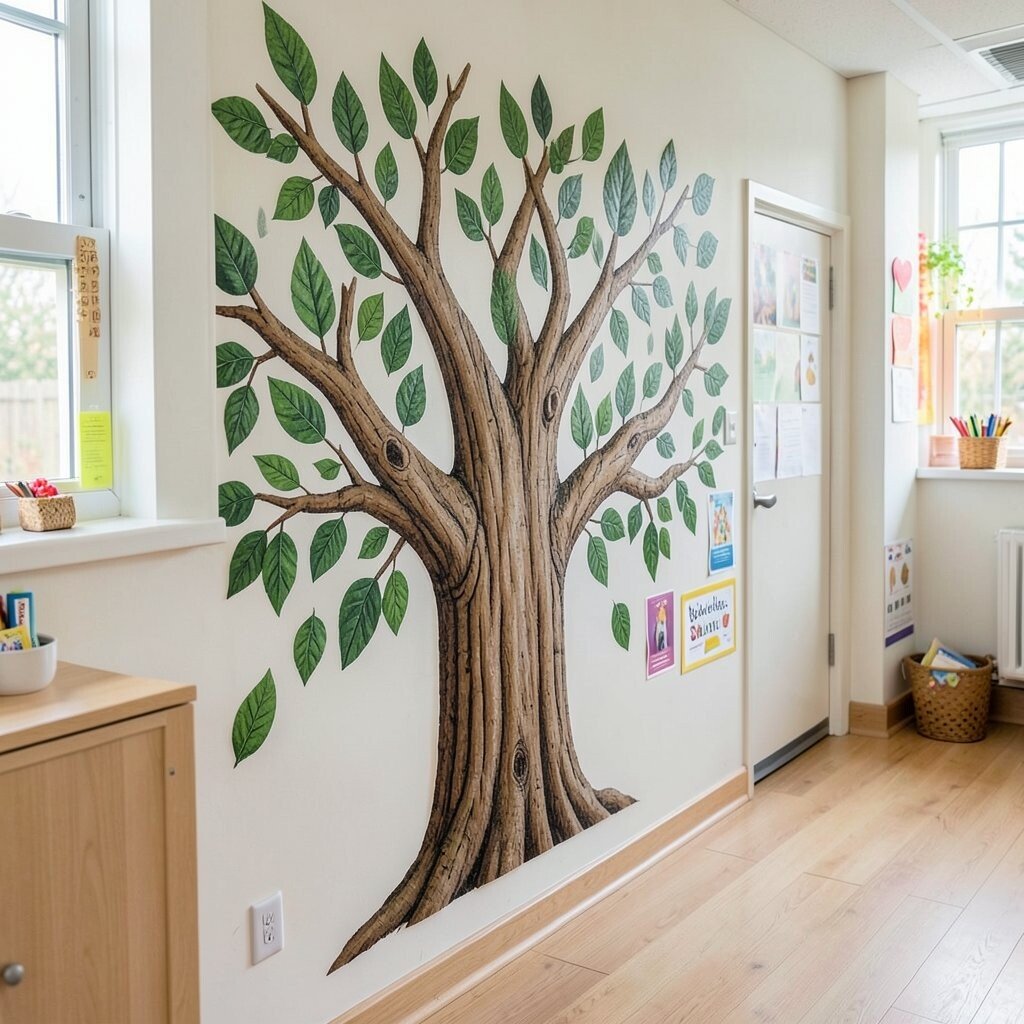
A nature texture tree brings a calm, grounded feel to the hallway. It also makes it easy to connect art with science moments like plants and seasons.
Create a tree trunk on a bulletin board using brown paper, then hang blank branches where leaves can be attached. Offer simple leaf-printing sessions using real leaves, sponges, or textured craft tools.
Uniqueness shines when each leaf print looks different, like a one-of-a-kind fingerprint. Kids can help label their leaf with their name or a short color word so families can recognize their work.
19. Kindness Calendar With Daily Star Sparks
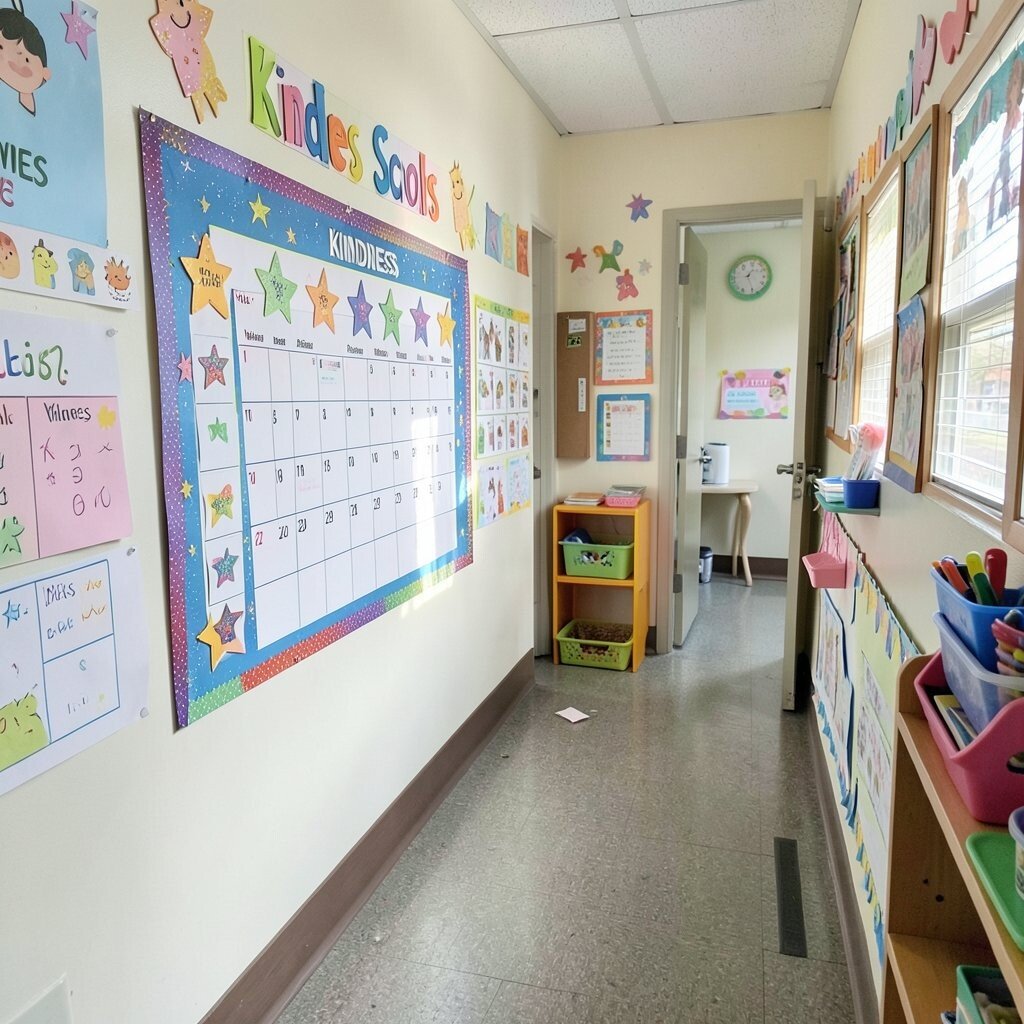
A kindness calendar helps the hallway model positive behavior in a gentle, visible way. It reminds kids that small choices matter every day.
Design a grid with blank boxes, then add a star to each box when someone practices kindness. You can include picture prompts like sharing, helping, or using kind words so kids can participate even before reading.
For practical tips, place the display where kids can reach the bottom rows safely, and use magnetic stars or Velcro stars. Rotate the calendar monthly and keep old pages in a binder for families who want a keepsake.
Cost stays low if you create stars from cardboard or cardstock and store them carefully. This is also a current trend style because it blends positive messaging with interactive, hands-on decor.
20. Student Self-Portrait Mirrors With Colorful Frames
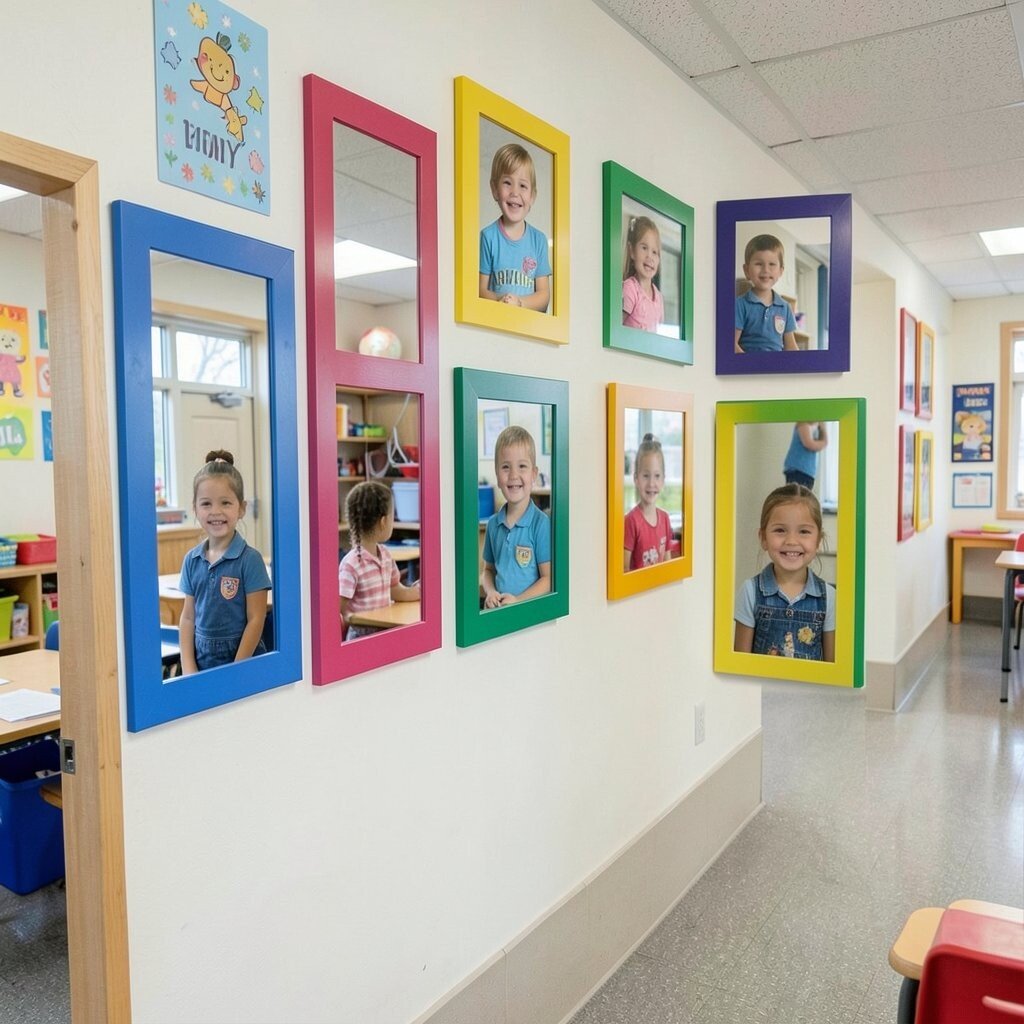
Self-portrait mirror art can make the hallway feel joyful and empowering. It also gives kids a fun way to see themselves in a creative, respectful display.
Use small mirror tiles or glossy plastic sheets framed with bright paper cutouts. Have children create a self-portrait around the reflection using crayons, tissue paper, and yarn hair or cotton ball textures.
To make it unique, add a “favorite thing” circle on each frame, like a book, dinosaur, or soccer ball. This gives families something personal to connect with when they walk by.
For cost considerations, you can use affordable craft mirrors or clear packaging plastic if safety rules require it. Keep the frames sturdy and edge-protect them so the hallway stays safe and durable for daily use.