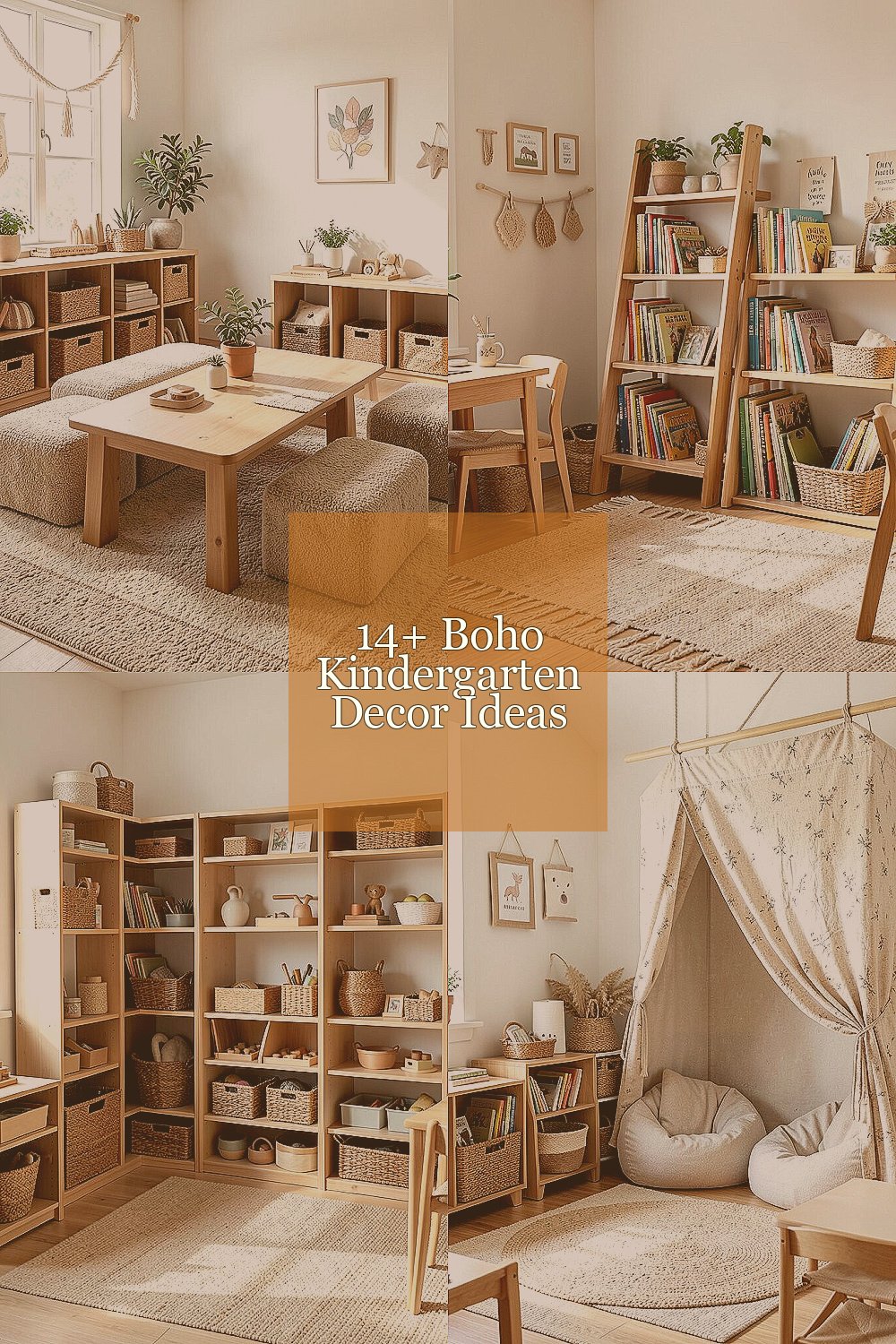
The right boho feel can make a kindergarten room feel warm and welcoming. Small furniture choices can also support big learning moments.
When you pair cozy textures with smart traffic flow, the classroom starts working like a friendly community. Let the kids’ energy guide the layout, and let the decor do the smiling.
1. Low Seating Zones With Cozy Carpets
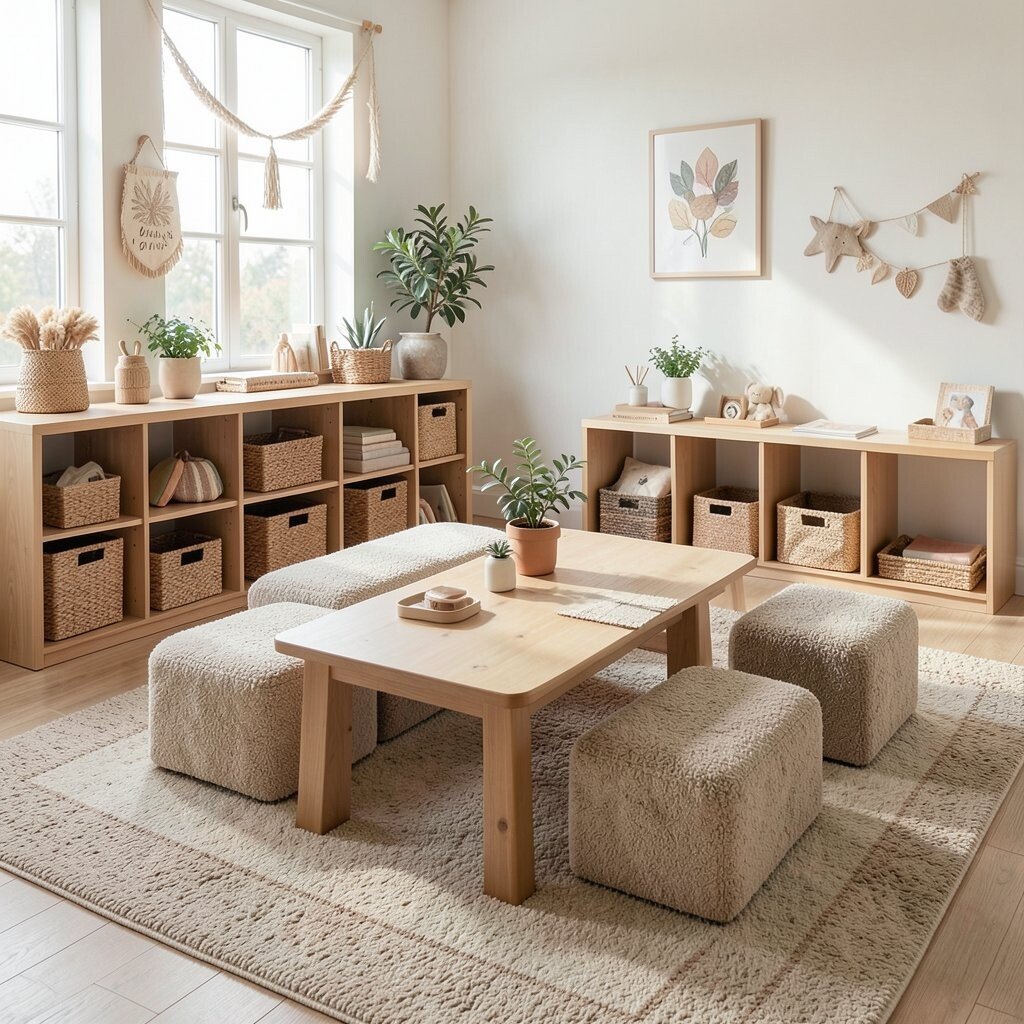
Think about placing a round rug or a soft carpet rectangle near your read-aloud spot. Add floor cushions in earthy tones so children can settle in without climbing on furniture.
This layout creates a calm landing area where kids naturally gather. You can rotate books, puppets, or sensory bins near the seating so movement stays purposeful. Choose washable covers and non-slip rug backing to keep cleanup fast and safe.
2. Ladder Shelving for Easy Book Access
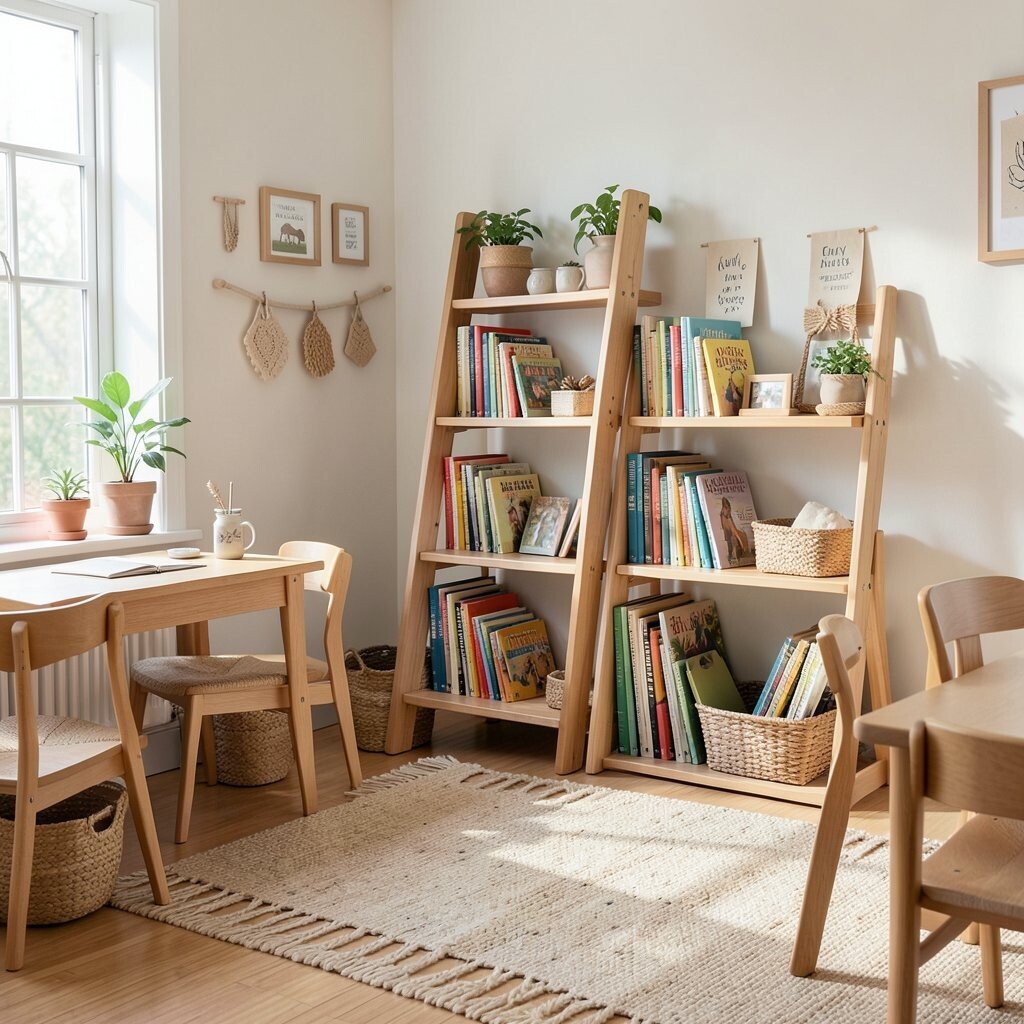
Use a light, ladder-style bookshelf to bring books up at kid height. Style the shelves with book stacks, woven baskets, and a few framed art prints.
This makes choosing books feel more independent. It also keeps the room tidy because children have clear places to return items.
For personalization, mix in classroom names, simple labels, or rotating seasonal cards using neutral colors. If budget is tight, hunt for a secondhand ladder shelf and refresh it with a coat of paint in warm white or soft sand.
3. Montessori-Inspired Storage on Open Shelves
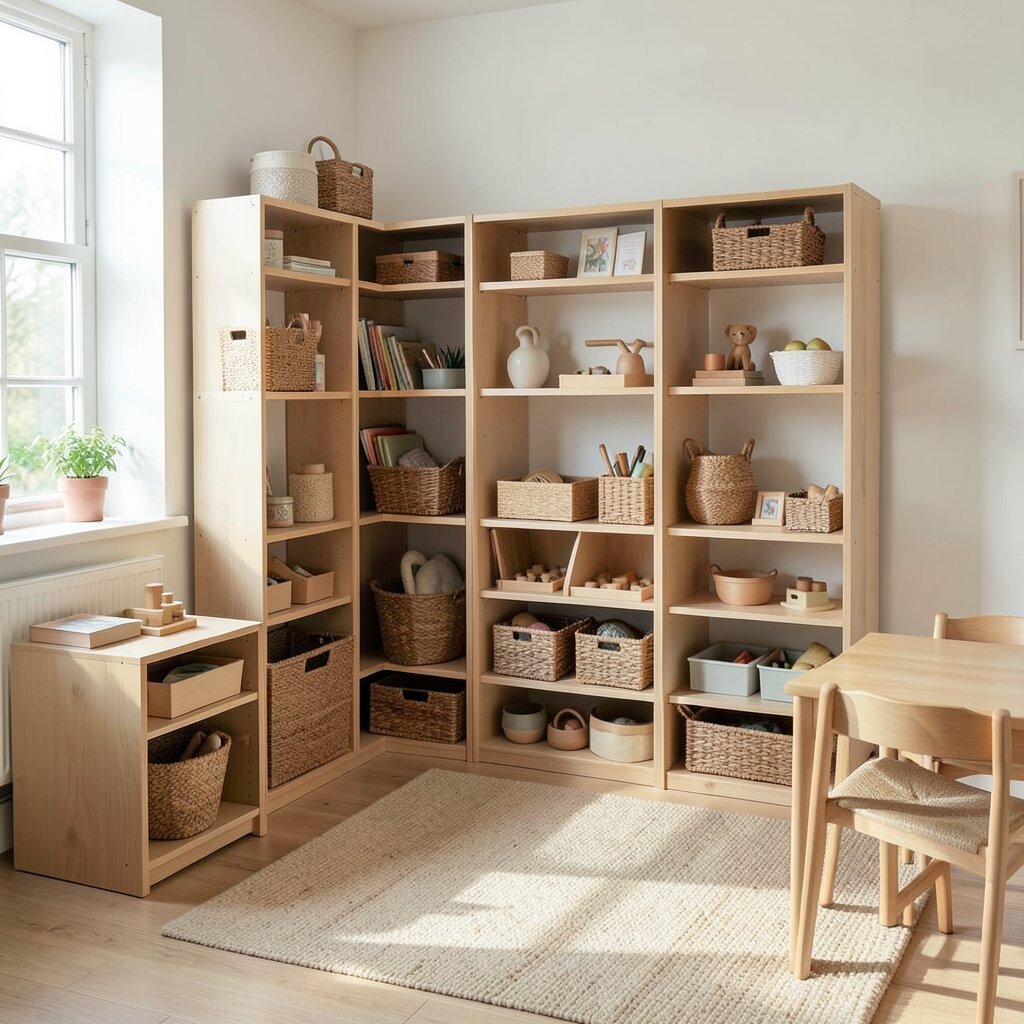
Place open shelves along one wall so materials are visible at a glance. Use shallow trays, woven organizers, and natural wood bins for a boho look that still feels practical.
When supplies are easy to reach, kids spend less time waiting and more time practicing routines. Keep the layout consistent so children can predict where things go.
Try arranging items by activity type, like art, building, or sorting. You can also add small fabric pouches for tiny tools, which keeps everything from spreading out across the floor.
4. Reading Nook With Hanging Fabric and Bean Bags
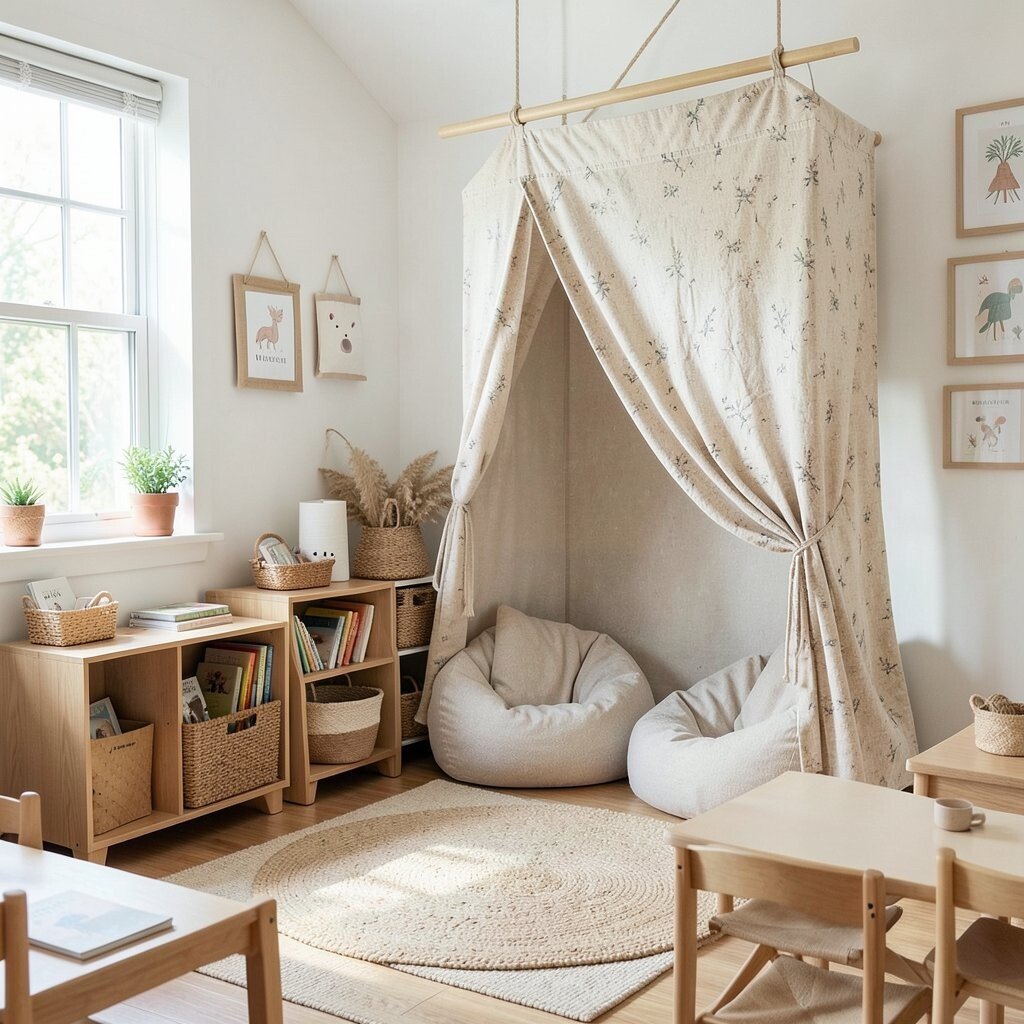
Create a reading nook by hanging a sheer fabric canopy from a sturdy ceiling mount. Pair it with bean bags in muted colors and a small side table for a few favorites.
This nook helps students calm down during transitions. Keep the seating close enough for teacher check-ins, and add a soft rug so movement stays quiet. Choose washable textiles and simple tiebacks so you can refresh the look as the year changes.
5. Gallery Wall of Student Art With Natural Frames
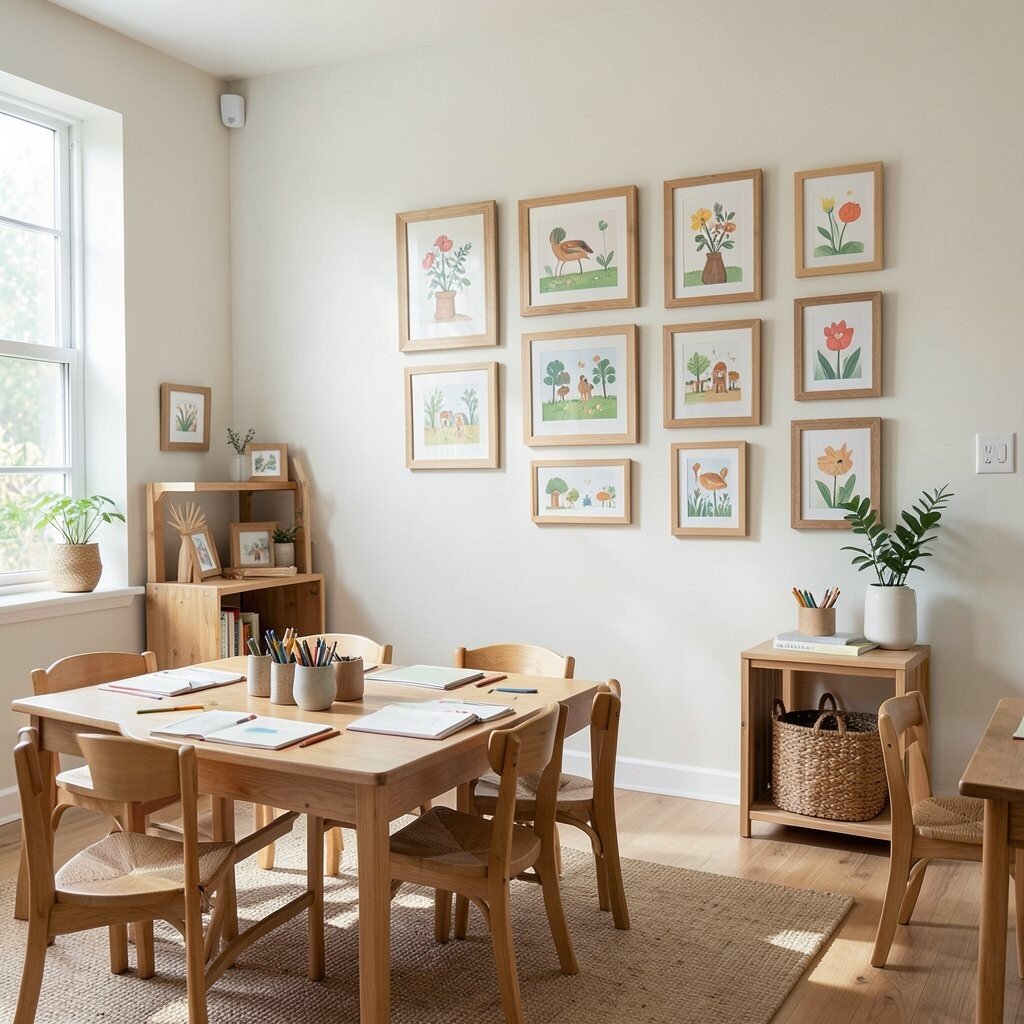
Set up a low gallery wall at child eye level using cork boards or bulletin panels. Frame student work with lightweight natural wood, rattan, or simple paper frames painted in earthy shades.
Seeing their creations displayed motivates kids and builds pride in the room. It also gives you a rotating spot for seasonal crafts, which keeps the classroom feeling fresh.
For practical flow, place the display near a supply station so art time and display time feel connected. If you want a budget-friendly approach, use thrifted frames and replace the backs with cardstock backing for easy swaps.
6. Small Tables for Maker Moments and Quiet Work
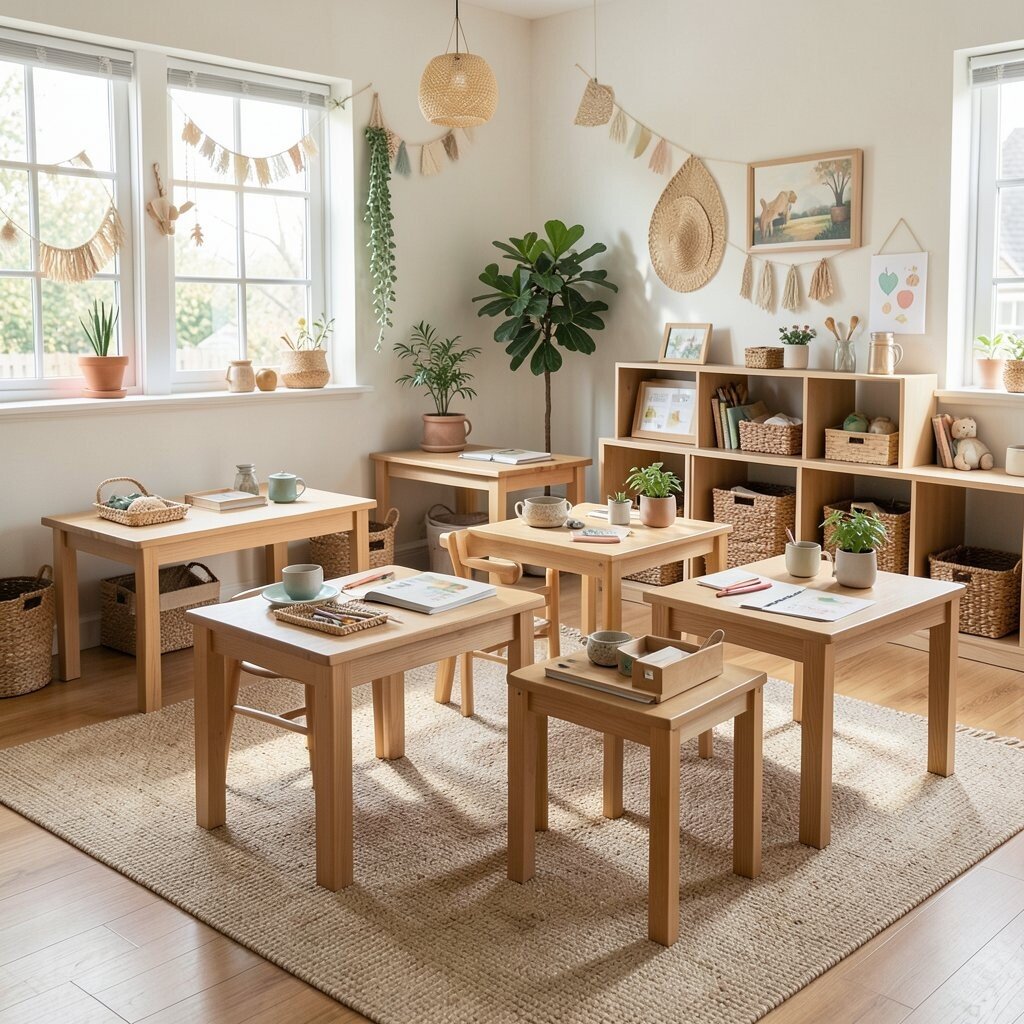
Use one or two small tables instead of one big long table. Round or softly angled tops look boho and help kids feel less crowded during hands-on activities.
Set the tables in a corner with good natural light and keep chair spacing roomy for safe movement. This setup supports art, sensory play, and early writing without turning the room into a traffic jam.
Personalize the work zone with a patterned table runner, a woven placemat set, or a small basket of crayons and markers. If cost is a concern, you can mix secondhand tables with a matching set of thrift chairs and paint them in the same tone.
7. Cozy Wall-Led Learning With Pegboards and Baskets
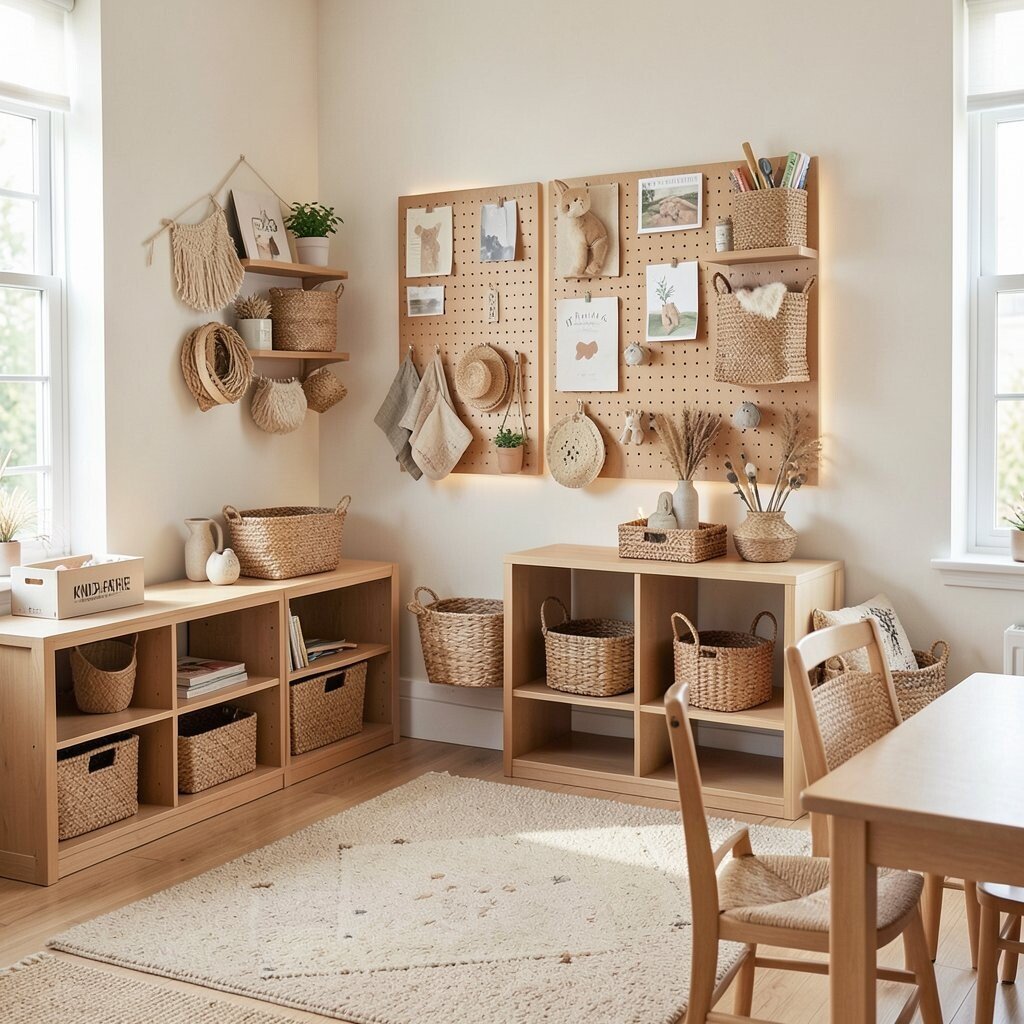
Mount a pegboard or grid board near a learning area and add hooks for bags, aprons, and display items. Pair it with labeled baskets so children can grab what they need quickly.
This wall-led setup keeps small supplies off the floor and makes routines smoother. It also gives your decor a functional character, which is a big deal in kindergarten.
8. Furniture That Creates a Gentle Loop Path
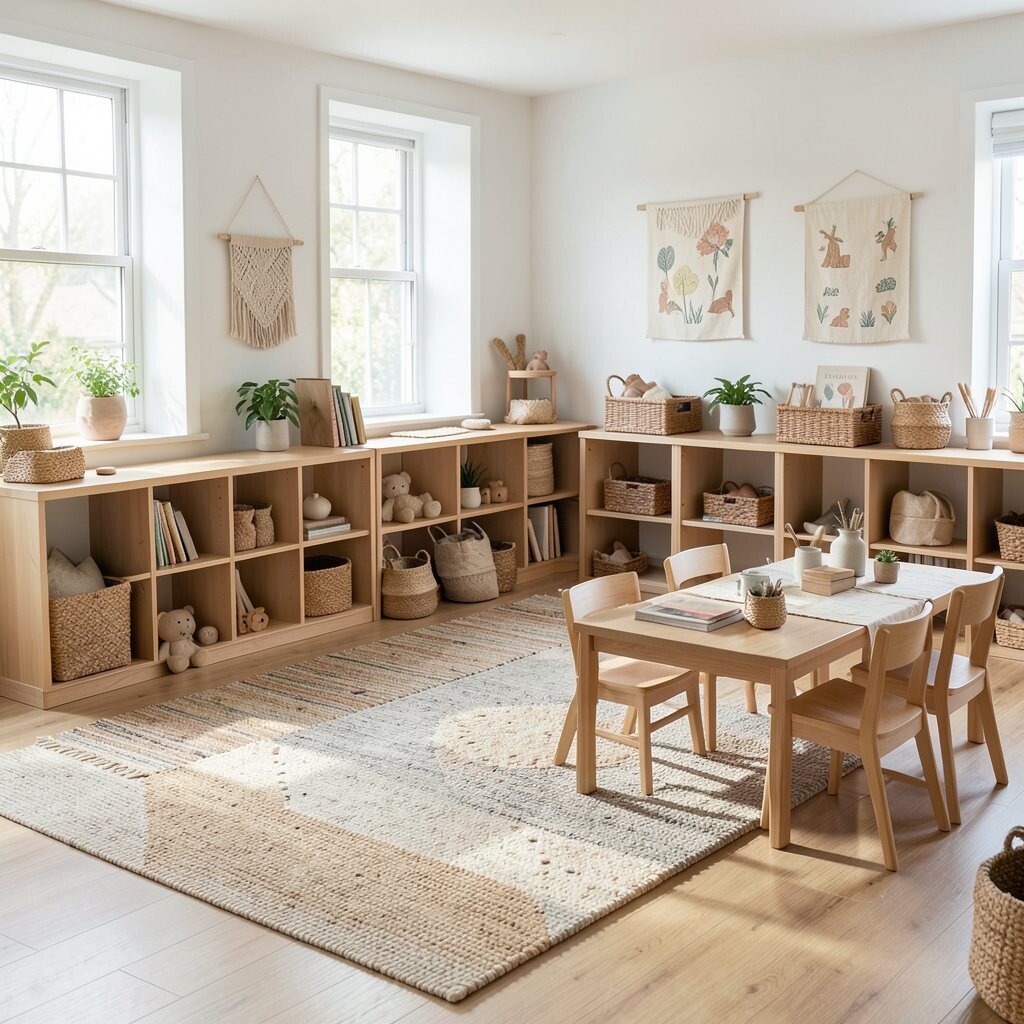
Arrange larger furniture pieces so kids travel along a loop instead of crossing in front of each other. Think of the room like a comfortable track: entry, learning zones, gathering spot, then back to storage.
This reduces bumping and helps the teacher move through the room with less interruption. It also supports center time because kids can find their area without standing in the hallway.
9. Open Toy Storage With Woven Bins and Lids
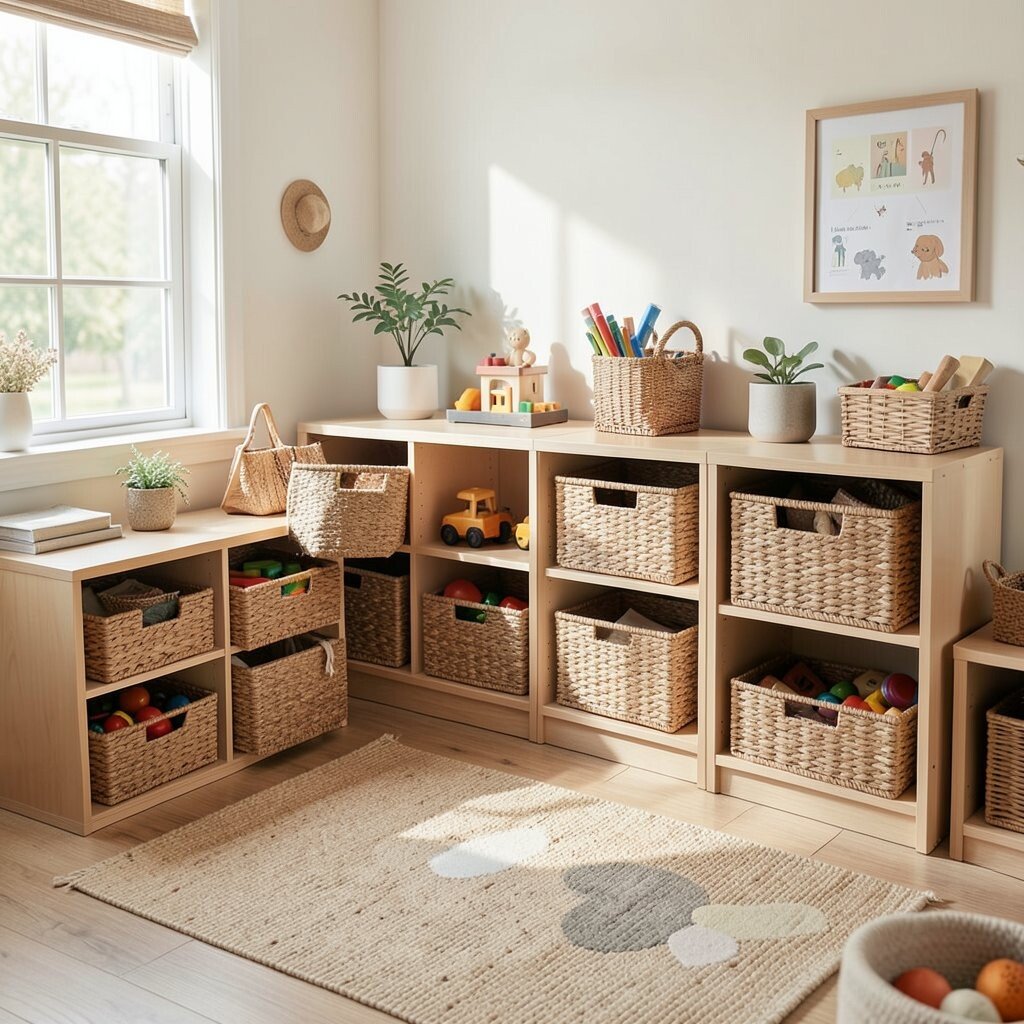
Use woven bins with lids for blocks, puzzles, and manipulatives. Place them at staggered heights so the youngest kids can reach easily while older students can still help with return routines.
This storage style looks warm and boho while keeping items contained. Lidded bins are especially helpful for reducing clutter at clean-up time.
Try grouping bins by color or theme, like animals, numbers, or building. If you’re watching your budget, start with a few best-selling bins and add more as you find them secondhand or on sale.
10. Textured Throw Pillows and Earthy Color Pairings
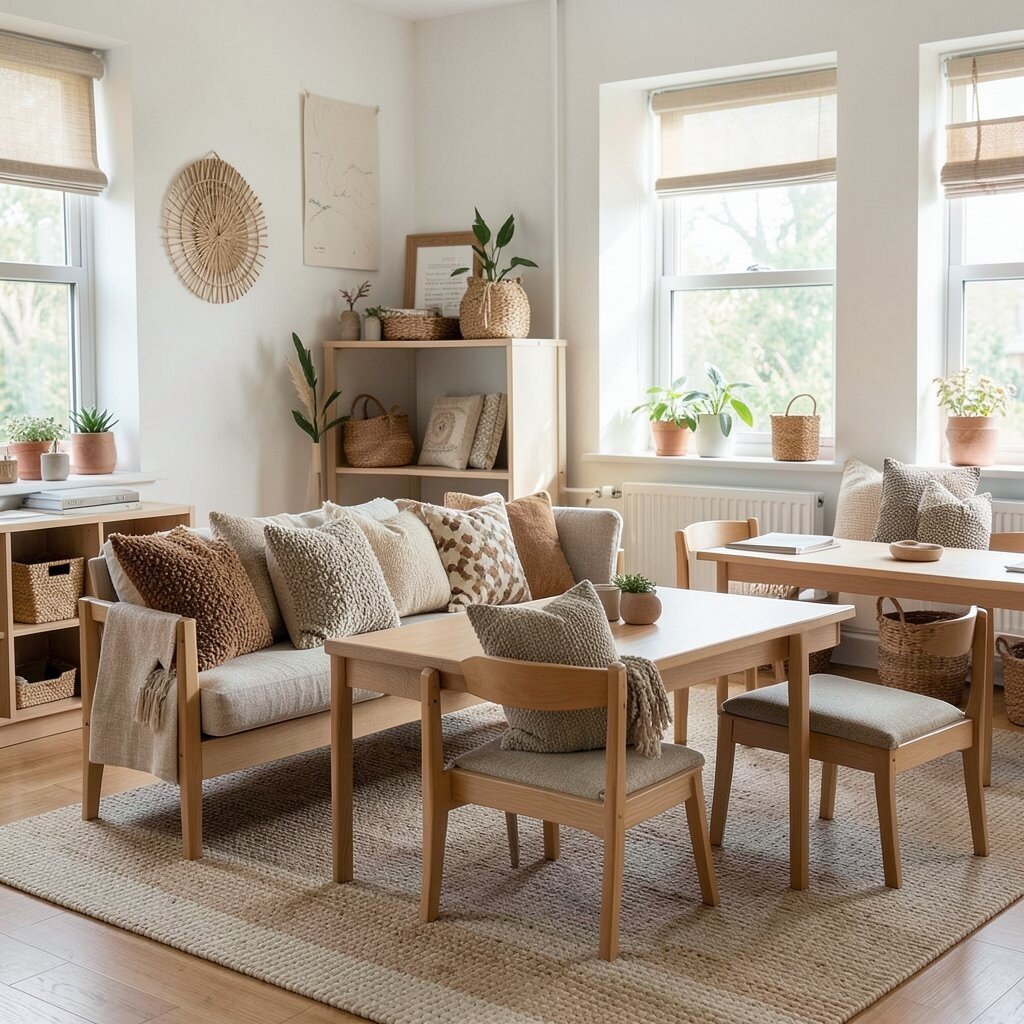
Sprinkle boho textures through throw pillows, knit blankets, and small wall hangings. Choose earthy color pairings like terracotta, sage, mustard, and cream to create a calm vibe.
Texture makes the room feel cozy, and it also supports sensory learning when kids touch fabrics during read time. Keep pillow piles organized and limit them to one or two areas so the space stays tidy.
11. Low Display Trays for Natural Loose Parts
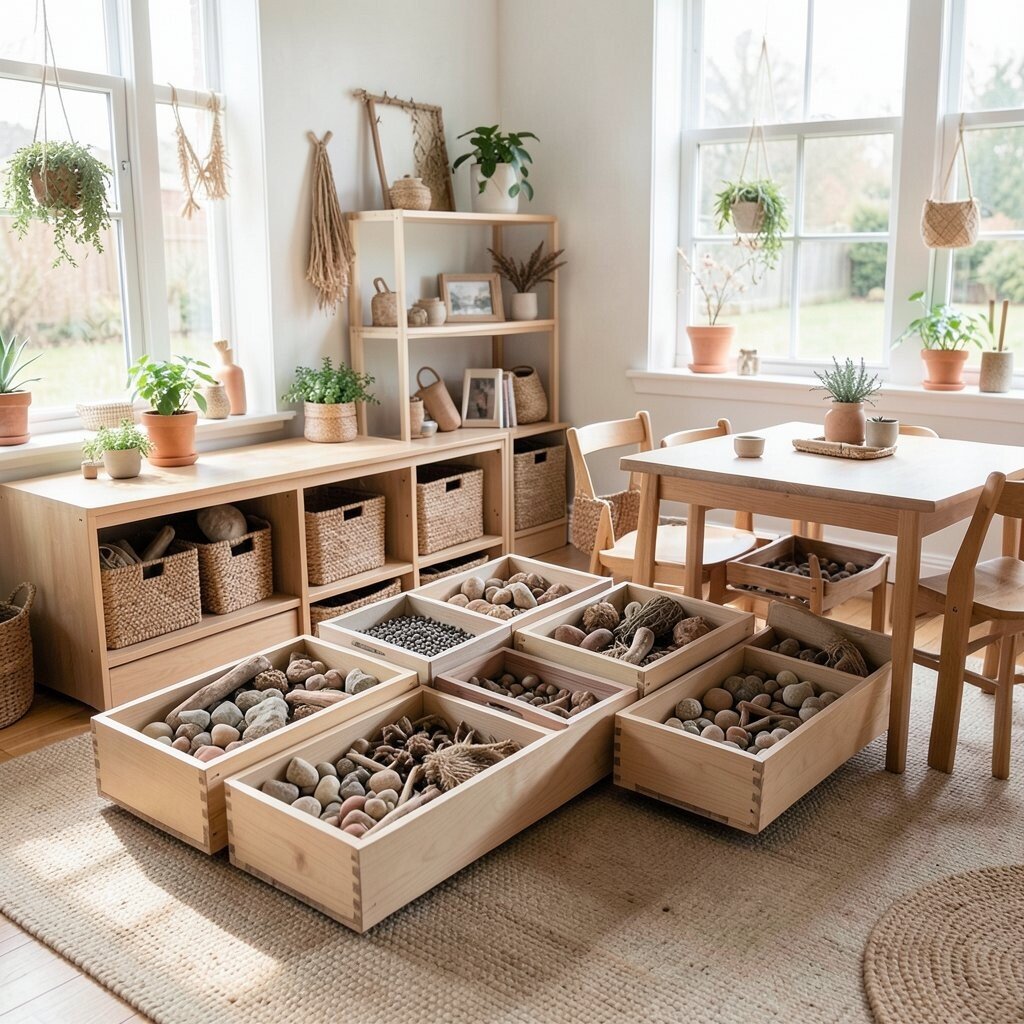
Create a loose parts shelf with shallow trays for shells, pinecones, fabric scraps, and smooth stones. Keep items curated and swapped weekly so the room doesn’t feel messy or chaotic.
This kind of display makes creative play easier to start because kids can see options right away. It also gives you a simple routine for safe storage and quick cleanup.
For personalization, add a small fabric banner above the shelf with the season theme or a child-made artwork border. If cost is an issue, gather safe natural materials during walks and pair them with store-bought trays or recycled containers.
12. Art Easels and Low Tables in the Same Zone
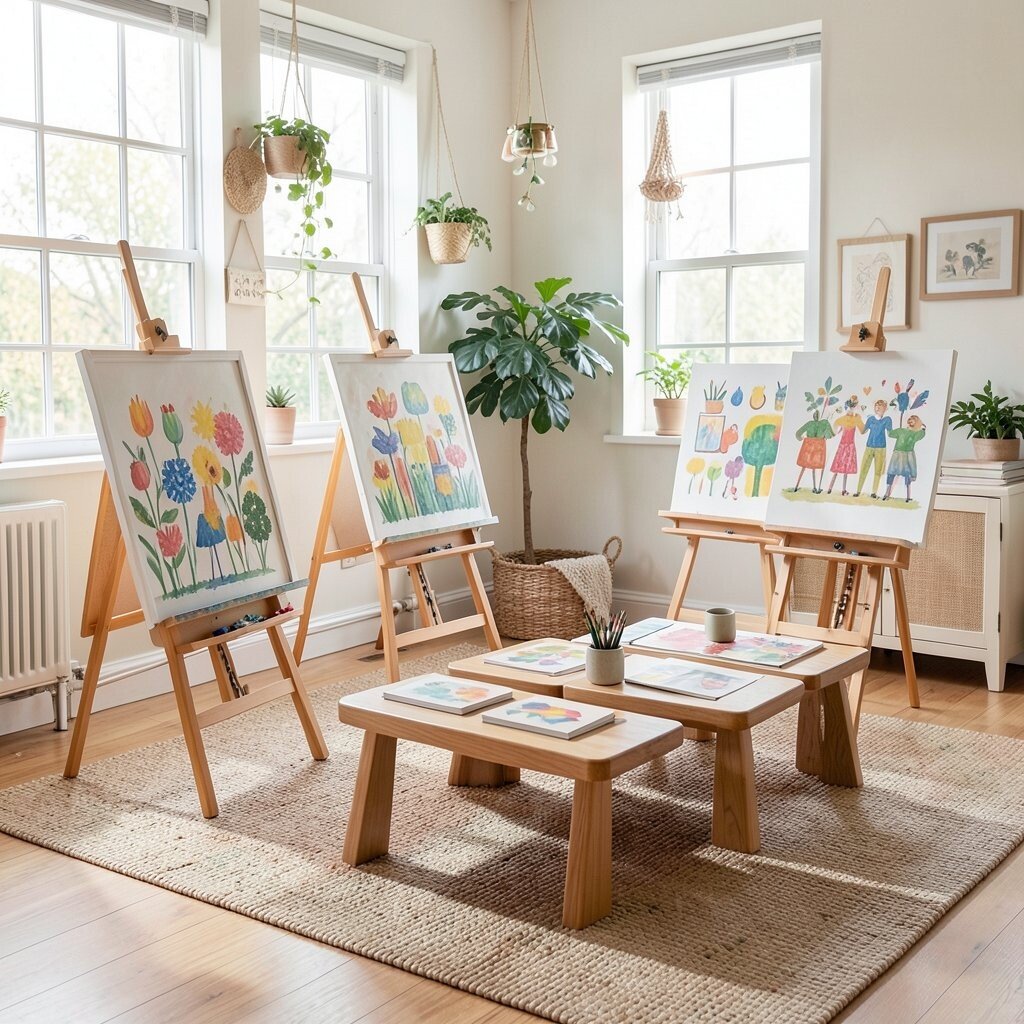
Place an art station near a sink or water-safe wall and keep it close to your main art tables. Choose a boho-inspired easel finish, and add a shelf nearby for paper and supplies.
This layout helps you manage mess while still letting kids move freely. When materials stay within reach, students waste less time waiting and more time creating.
Personalize the art wall with a soft fabric backdrop or simple hanging organizers for brushes and smocks. To manage cost, buy one sturdy easel and add replaceable holders for paper, which are often cheaper than full sets.
13. Bean Bags and Rockers for Choice Time
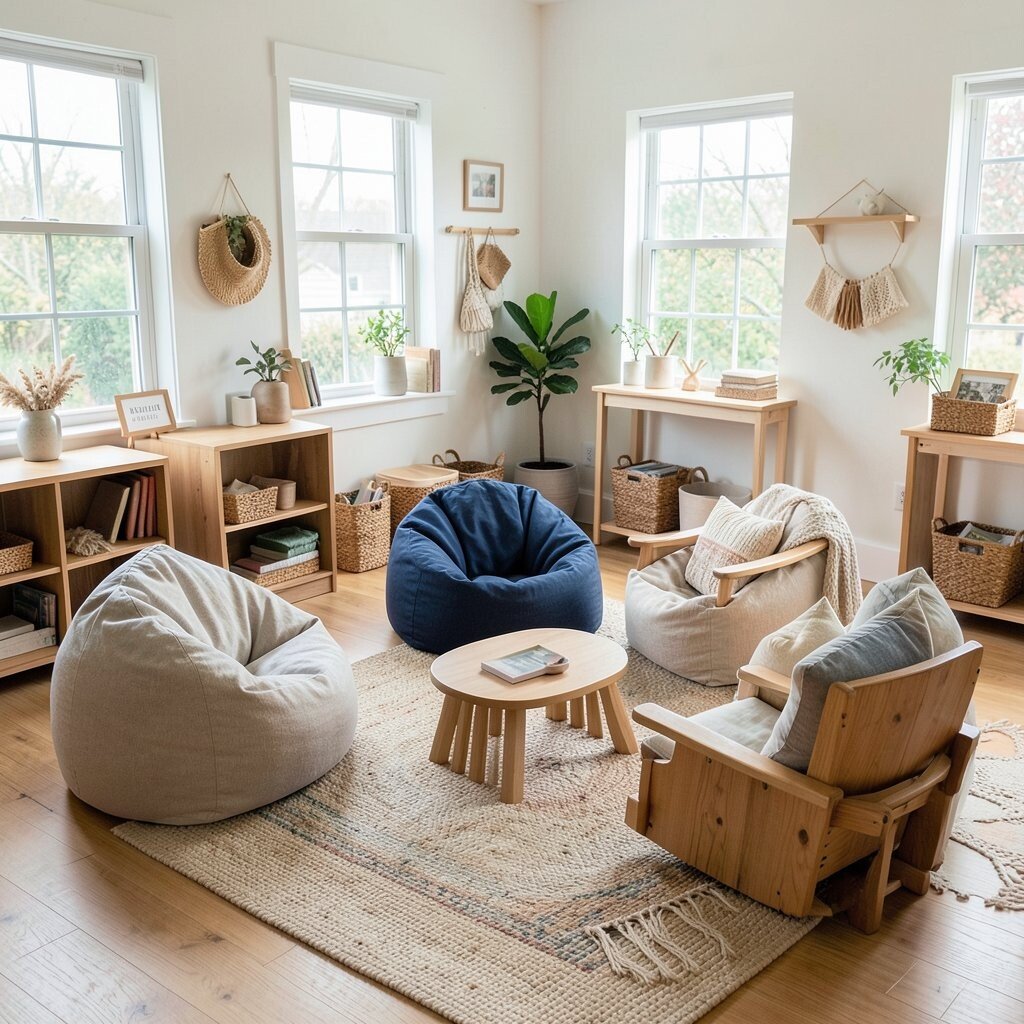
Provide a mix of bean bags and small kid rockers in a designated choice area. Put a side basket nearby with calming storybooks and simple sensory cards.
This gives children a comfortable way to choose how they learn, which supports different moods. It also helps you handle busy moments by giving kids a softer option than sitting at a desk.
14. Dividing Screens With Curtains for Focus
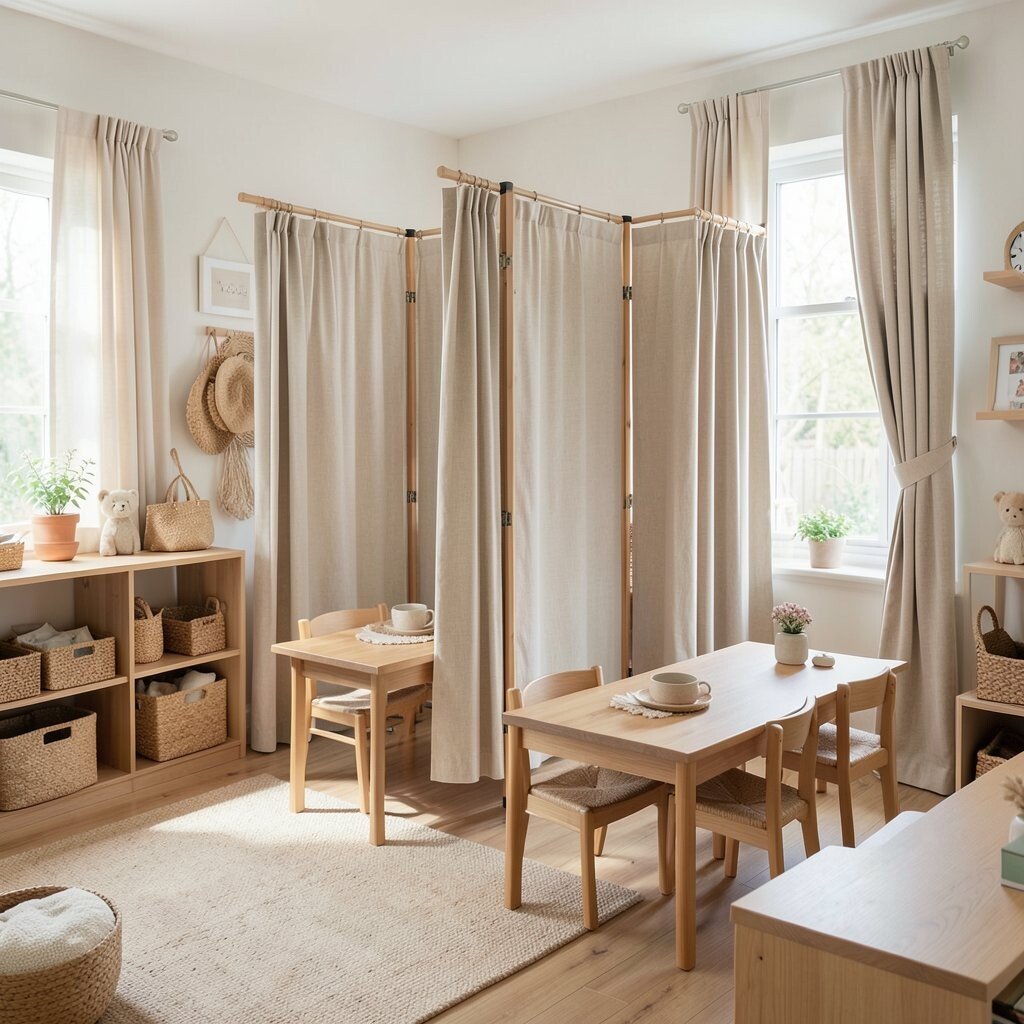
Use a lightweight room divider or a hanging curtain to gently separate high-energy centers from quieter work areas. Natural wood tones and macramé-inspired details can keep the look boho.
This creates privacy during independent tasks and helps reduce distractions. Place the divider so staff can still see students, keeping safety and support in mind.
Try using clear placement boundaries by aligning rugs or floor mats to show where each zone starts. If budget is tight, you can repurpose a curtain panel from a thrift store and hang it with a tension rod system.
15. Color-Managed Rotation With Seasonal Boho Textiles
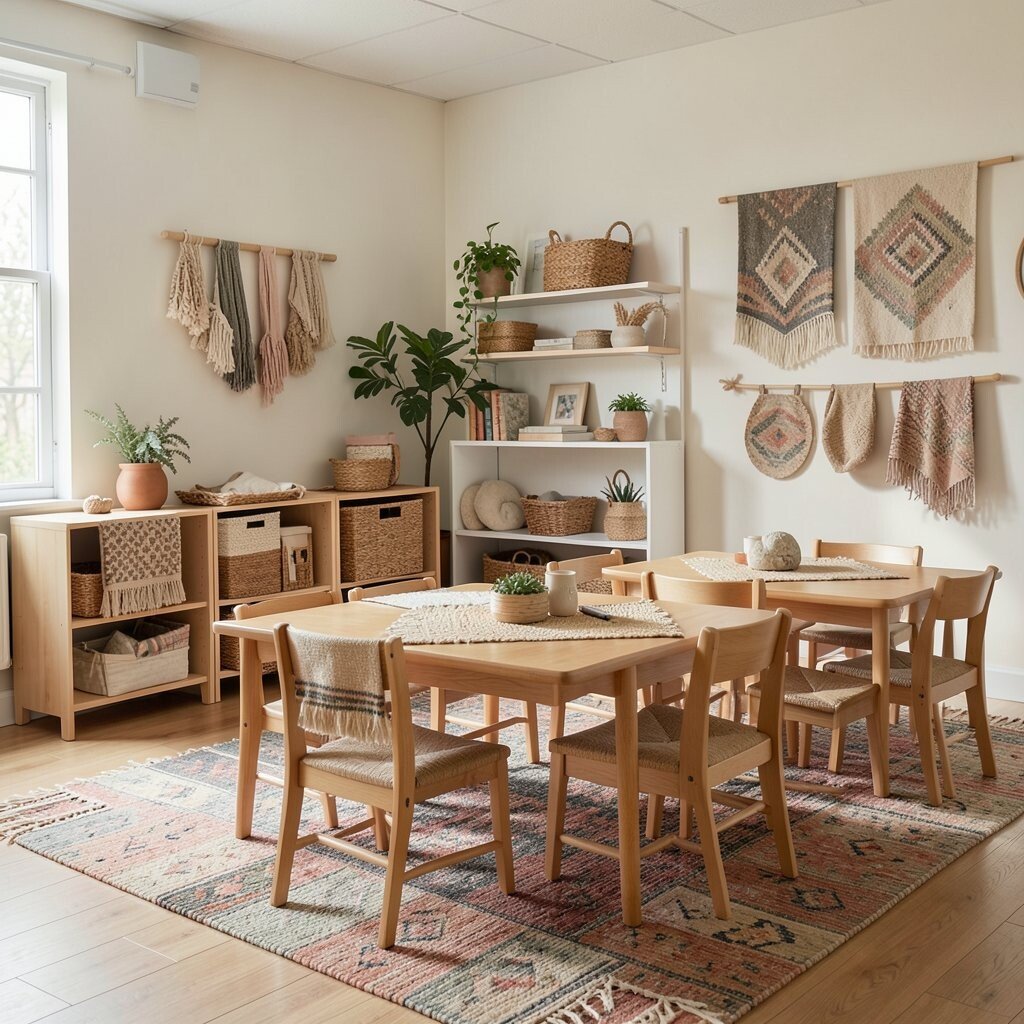
Plan your layout so you can change the room feel with small textile swaps. For example, swap out pillow covers, wall hangings, and table runners while keeping the main furniture in place.
This keeps the classroom feeling new without constantly buying bigger items. It also supports current seasonal themes through visuals that are easy for kids to notice.
Personalize the rotation by letting students help choose between two fabric options for a week. To keep costs friendly, look for remnant fabric, thrifted tablecloths, and washable decor that can be refreshed each month.