Imagine a classroom where every child feels at ease, surrounded by soothing colors and textures that encourage learning and creativity. The following ideas will guide you through creating a serene and inviting environment that both children and teachers will love.
1. Soft Earthy Rugs
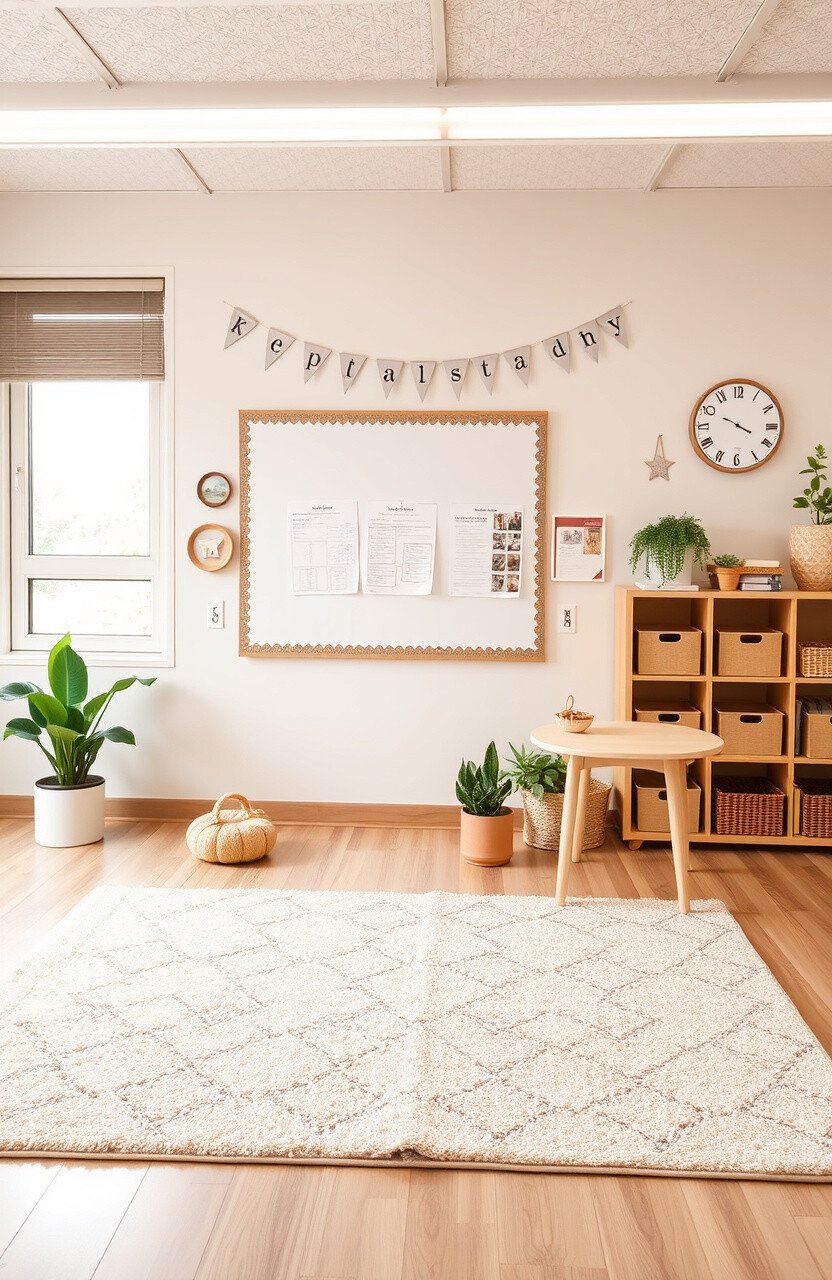
Picture a soft rug on the classroom floor in shades of beige, light brown, or soft green. These colors mimic the earth, bringing a sense of calm and grounding into the room.
Rugs offer a cozy spot for storytime, circle time, or quiet reading. They’re easy on little knees and can be found in washable materials, making them practical too.
Choose rugs with simple patterns or textures to add interest without overwhelming the senses. Prices can vary, but you can find budget-friendly options that are just as beautiful.
2. Natural Wooden Furniture
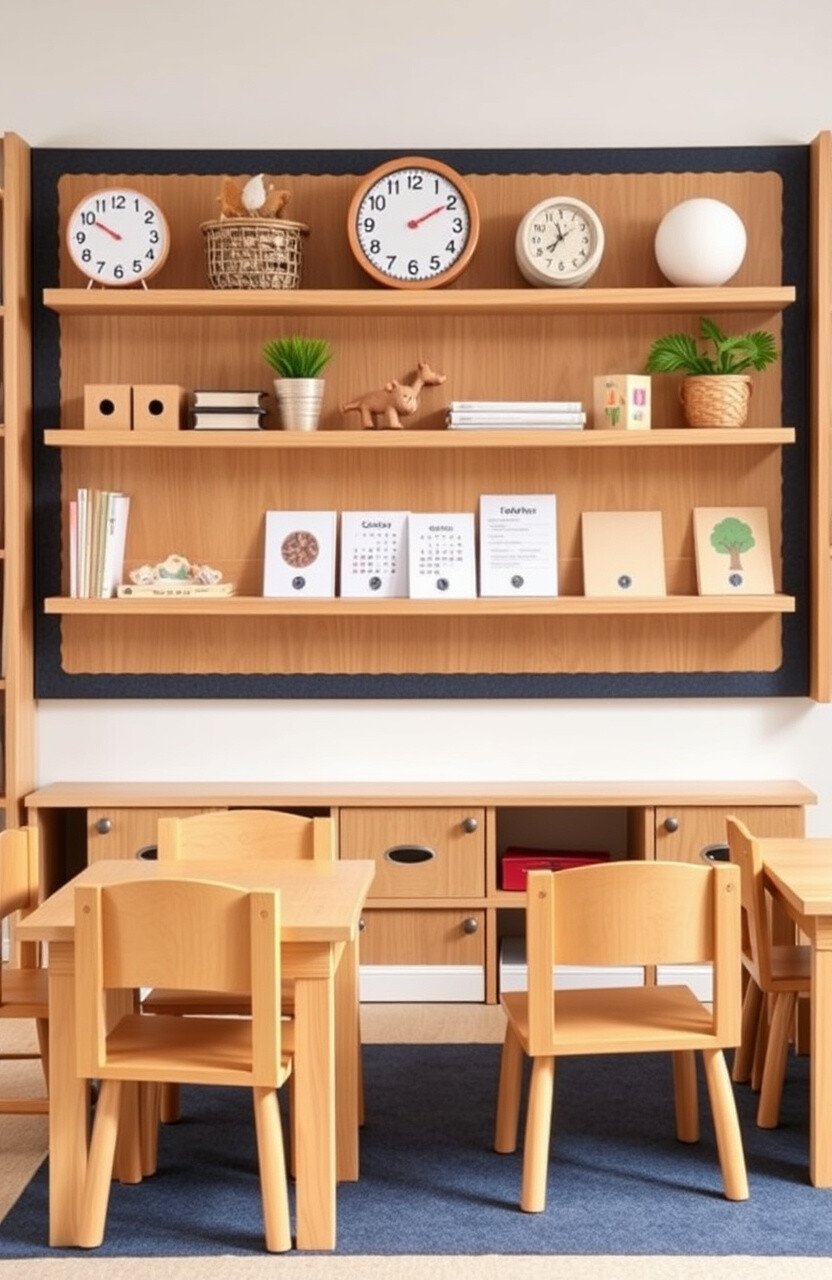
Natural wood has a warm and welcoming look. Think of tables, chairs, and shelves that show off their wood grain in light oak or pine.
Wooden furniture is durable and timeless, offering a sturdy solution that can withstand the daily hustle and bustle of a kindergarten classroom.
Mix and match different wood tones to create depth. Personalize the space by adding name tags or small decorations, making children feel it’s their special place.
3. Calming Wall Colors
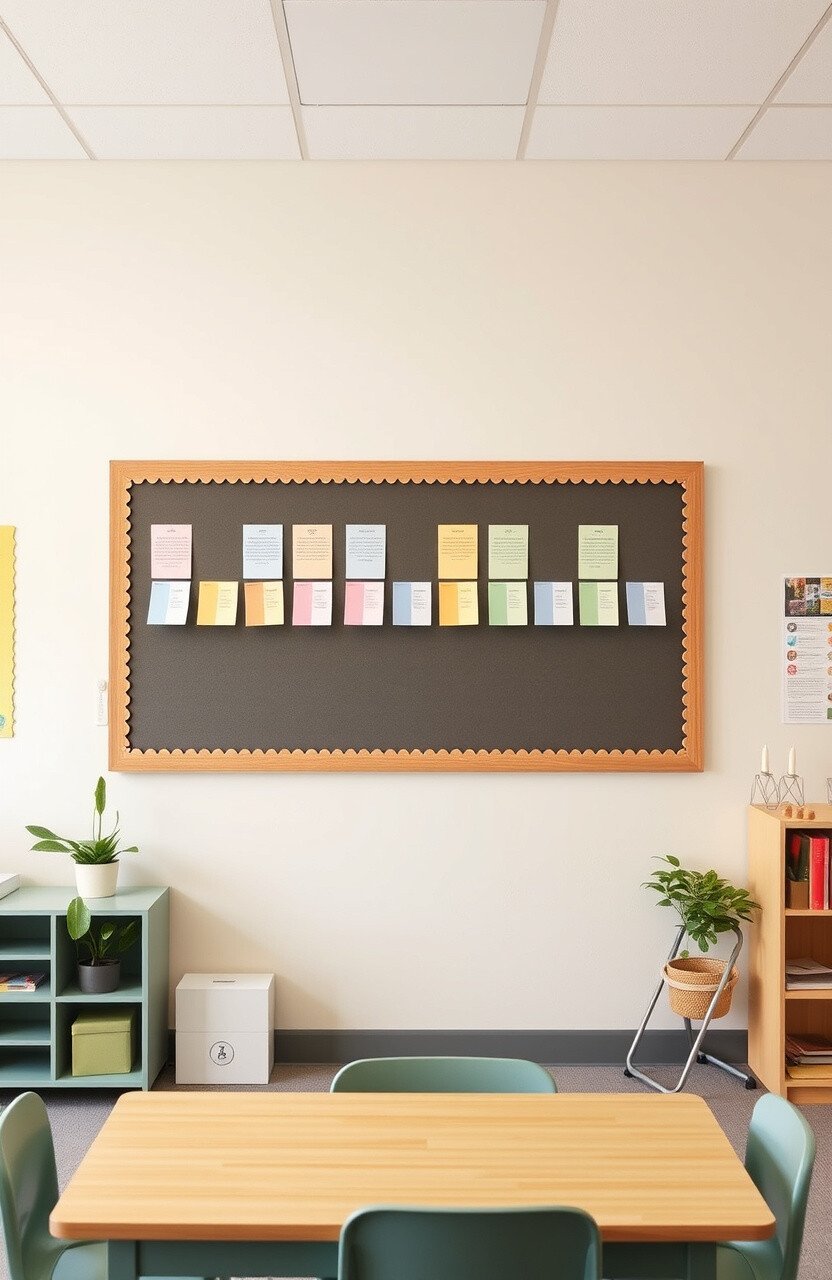
Walls painted in gentle colors like soft beige, pale gray, or muted pastels can transform a room into a tranquil haven. These shades are easy on the eyes and help maintain focus.
Consider using non-toxic, eco-friendly paint for safety and peace of mind. A calming color palette sets a restful tone, encouraging both concentration and creativity.
Accent walls in slightly darker shades can add dimension without being overpowering. Paint samples are a great way to test colors before committing.
4. Whimsical Mobiles
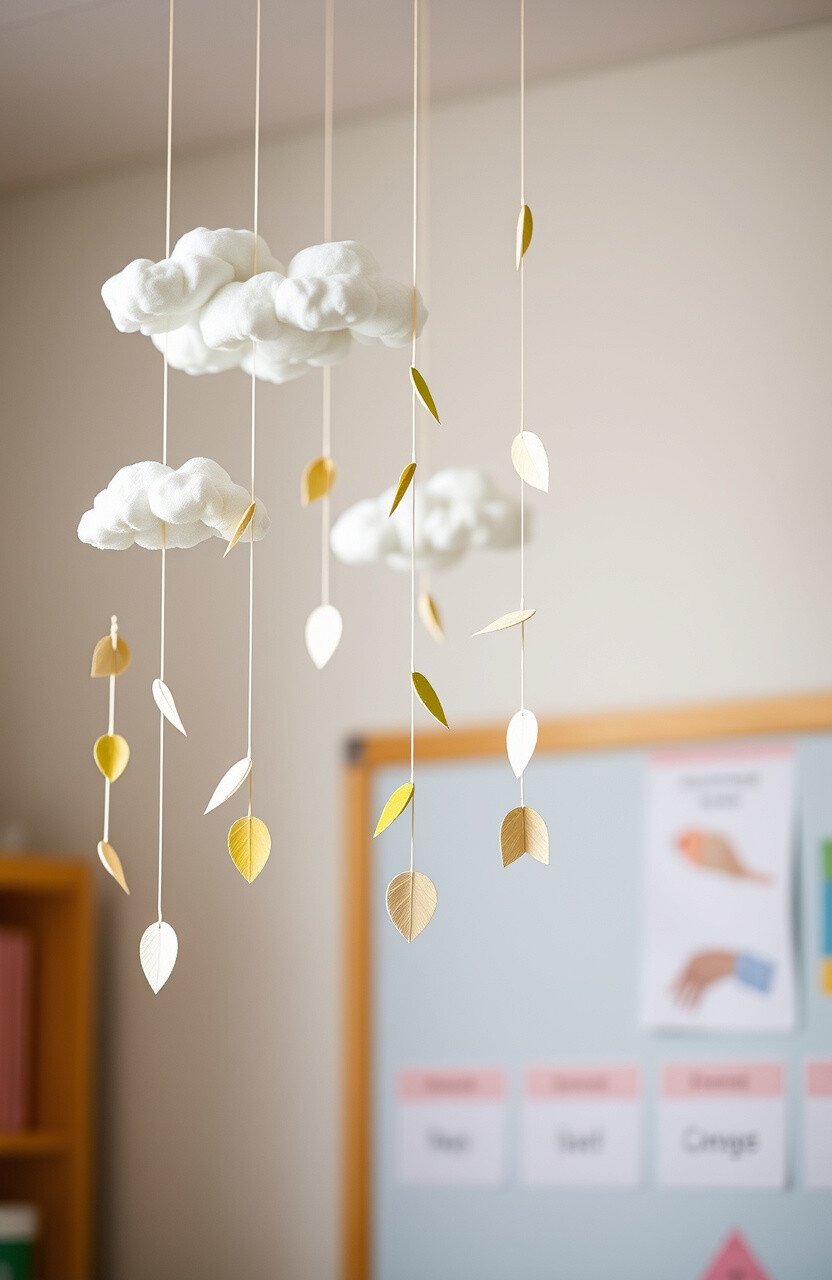
Mobiles hanging from the ceiling can add a touch of magic to any classroom. Imagine delicate leaves or clouds gently swaying in the breeze.
These decorations can be made from lightweight materials, ensuring safety while mesmerizing young minds. They are perfect for sparking imagination and wonder.
DIY mobiles can be a fun project, allowing you to personalize them with the class’s help. It’s a creative and cost-effective way to enhance the decor.
5. Soft Lighting
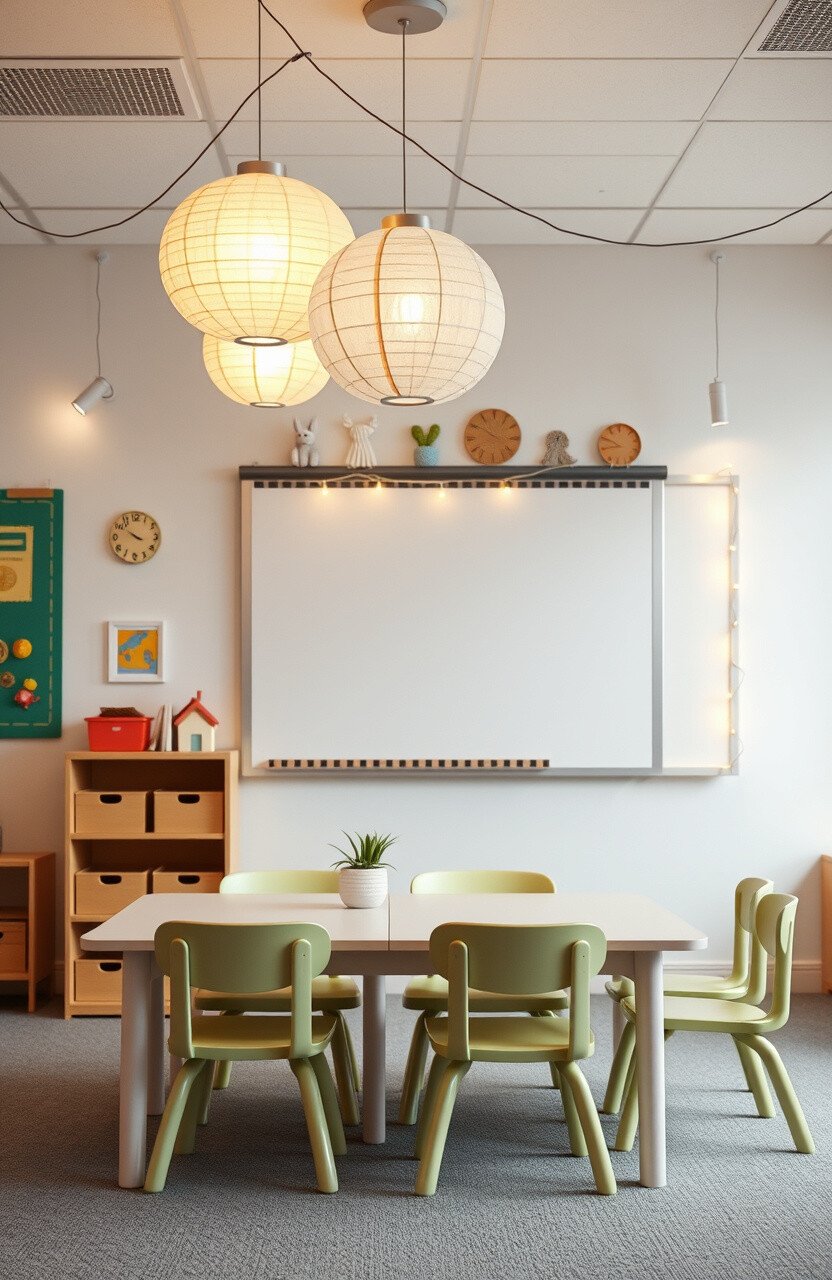
Lighting plays a crucial role in setting the mood. Soft, warm lights can create a welcoming atmosphere, perfect for learning and playing.
Lamps with adjustable brightness or paper lanterns can add a gentle glow, reducing harsh shadows and eye strain. They bring a homey feel to the classroom.
Consider energy-efficient LED bulbs to save on electricity costs. String lights can also add a playful touch, making the space feel festive and cozy.
6. Cozy Reading Nooks
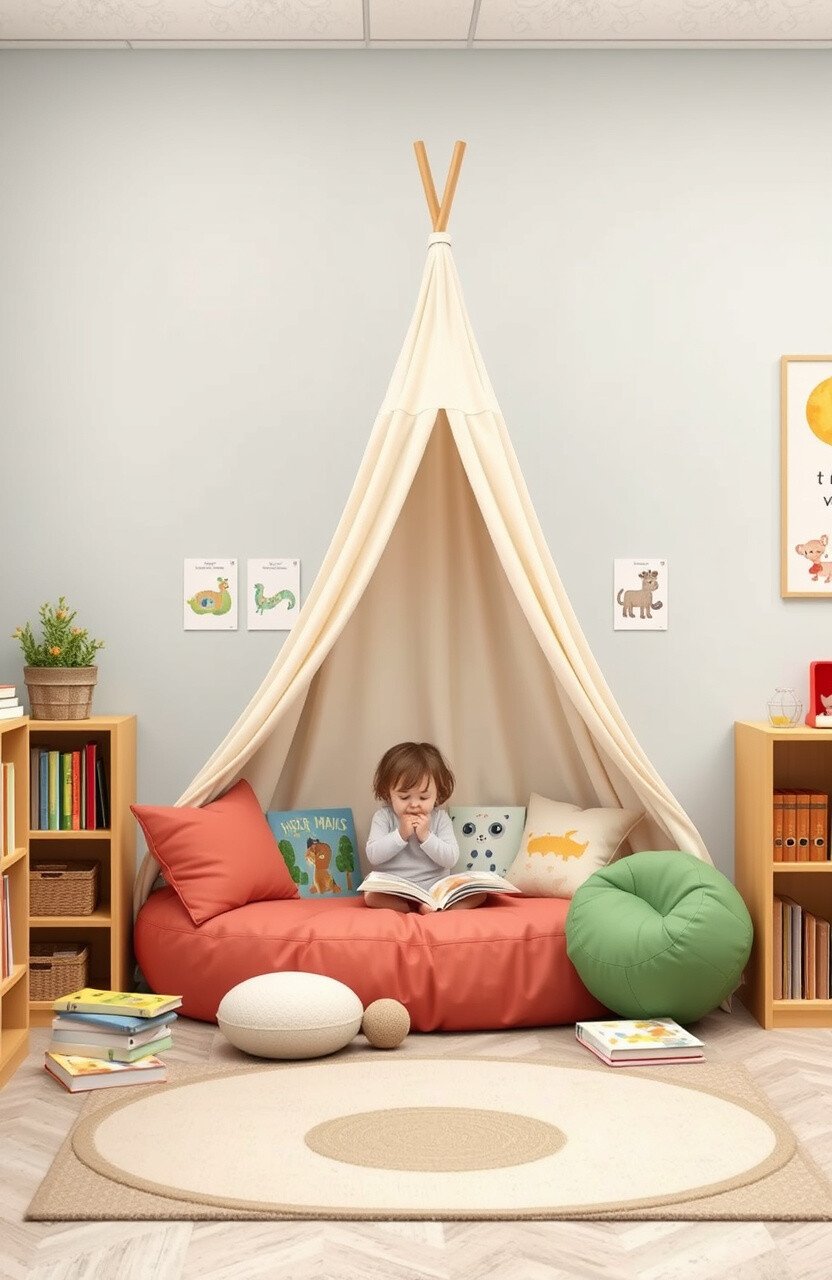
A special space dedicated to reading can foster a love for books. Think of a small corner with cushions, bean bags, or a small tent.
Surround this area with low shelves filled with picture books and fairy tales. It becomes a magical retreat where stories come to life.
Personalize the nook with a small rug or a canopy, making it an inviting spot for children to unwind. Creating this space can be done with a modest budget.
7. Nature-Inspired Art
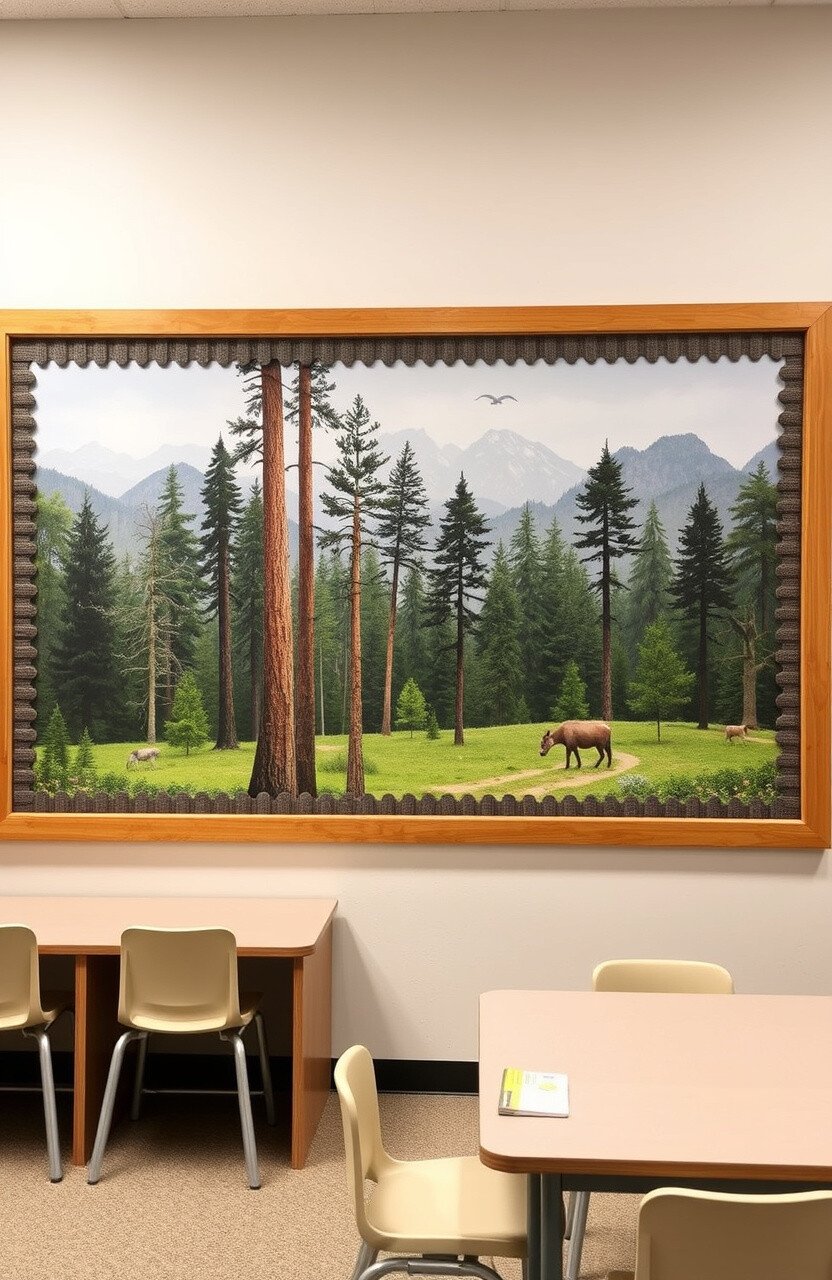
Art pieces depicting forests, animals, or landscapes can bring the beauty of nature indoors. These visuals can soothe and inspire young learners.
Choose art prints or create your own with the class as a fun activity. These art pieces can become conversation starters, sparking curiosity and learning.
Opt for frames in natural wood or neutral colors to maintain the calming theme. Art doesn’t have to be expensive; even simple prints can have a significant impact.
8. Sensory Play Stations
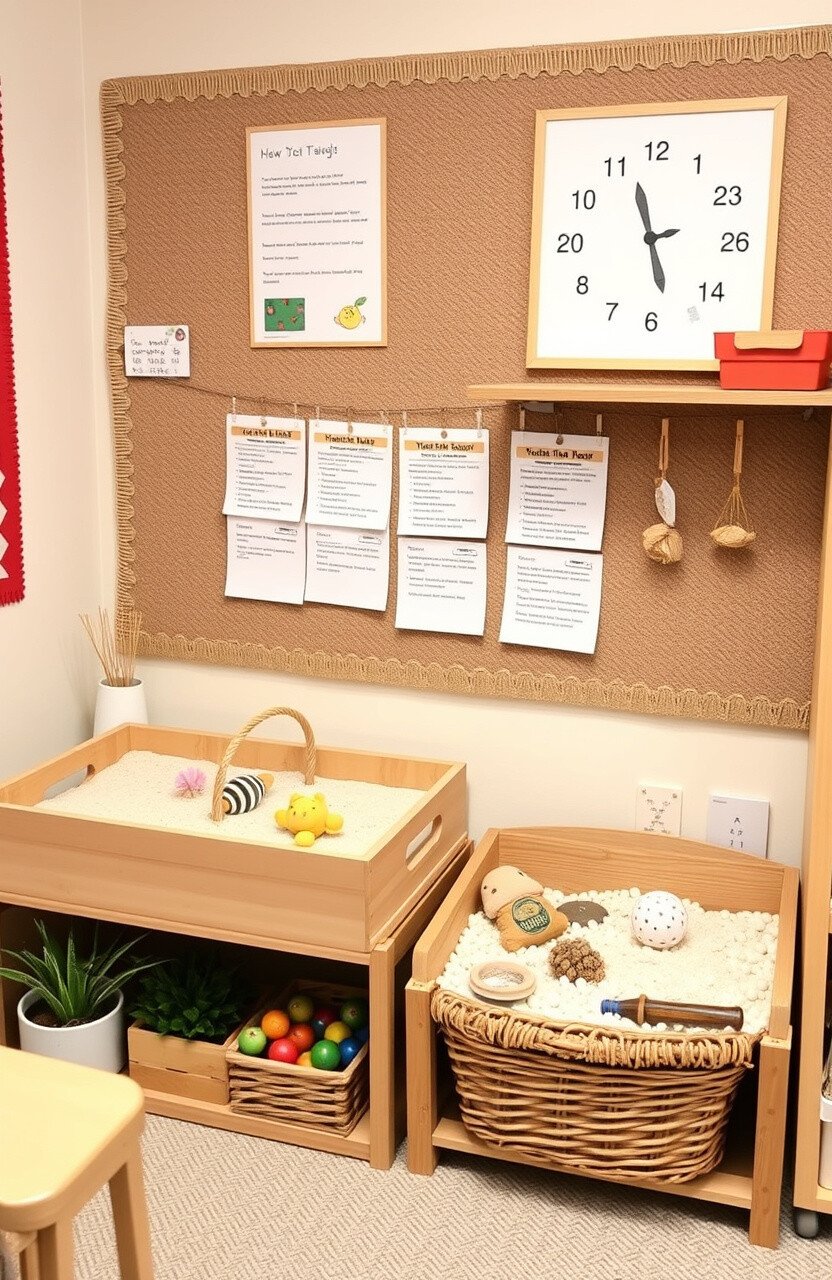
Sensory stations with sand, water, or kinetic materials can be both fun and educational. They allow children to explore textures and develop motor skills.
Keep the stations in neutral tones, using wooden trays or baskets to contain the materials. This keeps the area neat and visually appealing.
Rotate materials regularly to keep things fresh and exciting. DIY sensory materials can help save costs while offering endless possibilities for play.
9. Green Plant Corners
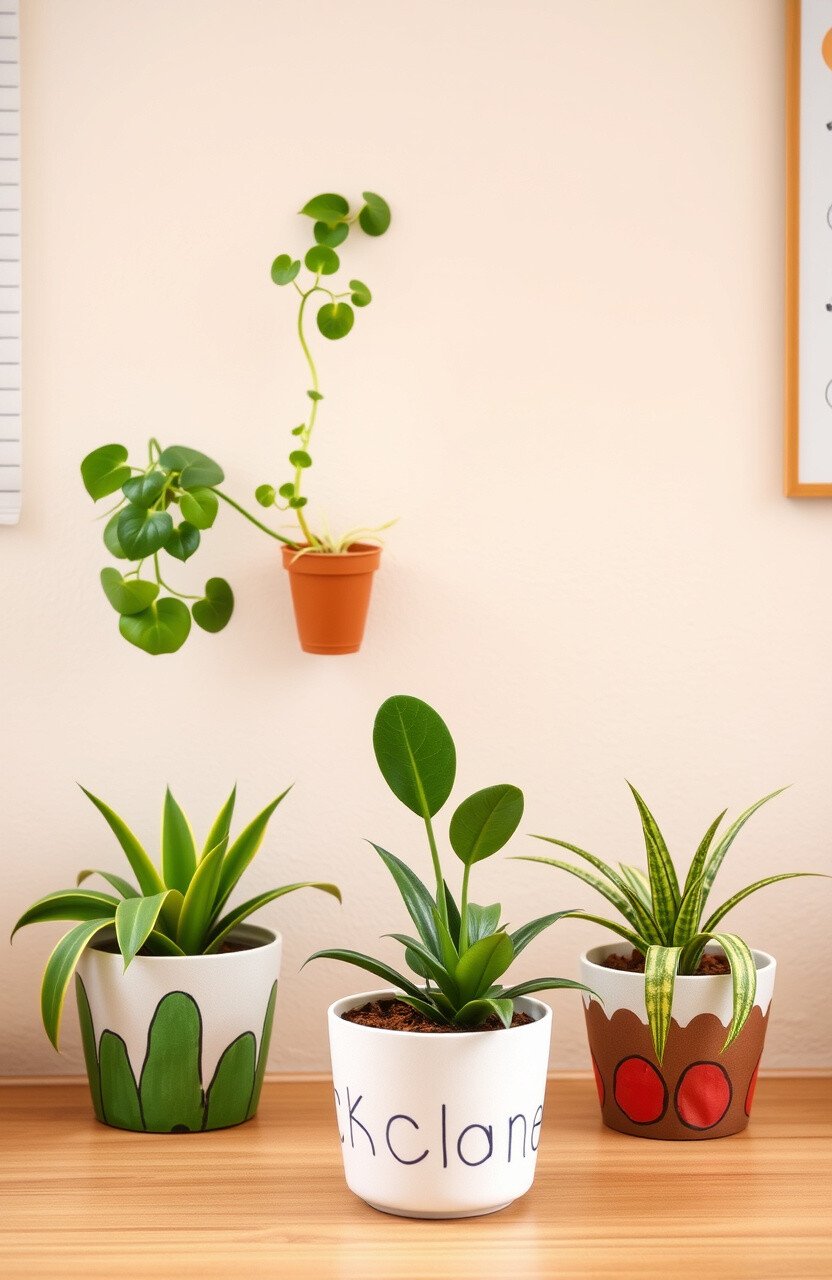
Plants can bring life into a classroom, improving air quality and adding a touch of green. Consider hardy, low-maintenance varieties like succulents or spider plants.
Place plants on windowsills or in corners to create little green havens. Kids can help care for them, learning responsibility and nurturing skills.
Personalize plant pots with painted designs or labels. This activity can be a fun class project, and plants are a cost-effective way to brighten the space.
10. Neutral Themed Bulletin Boards
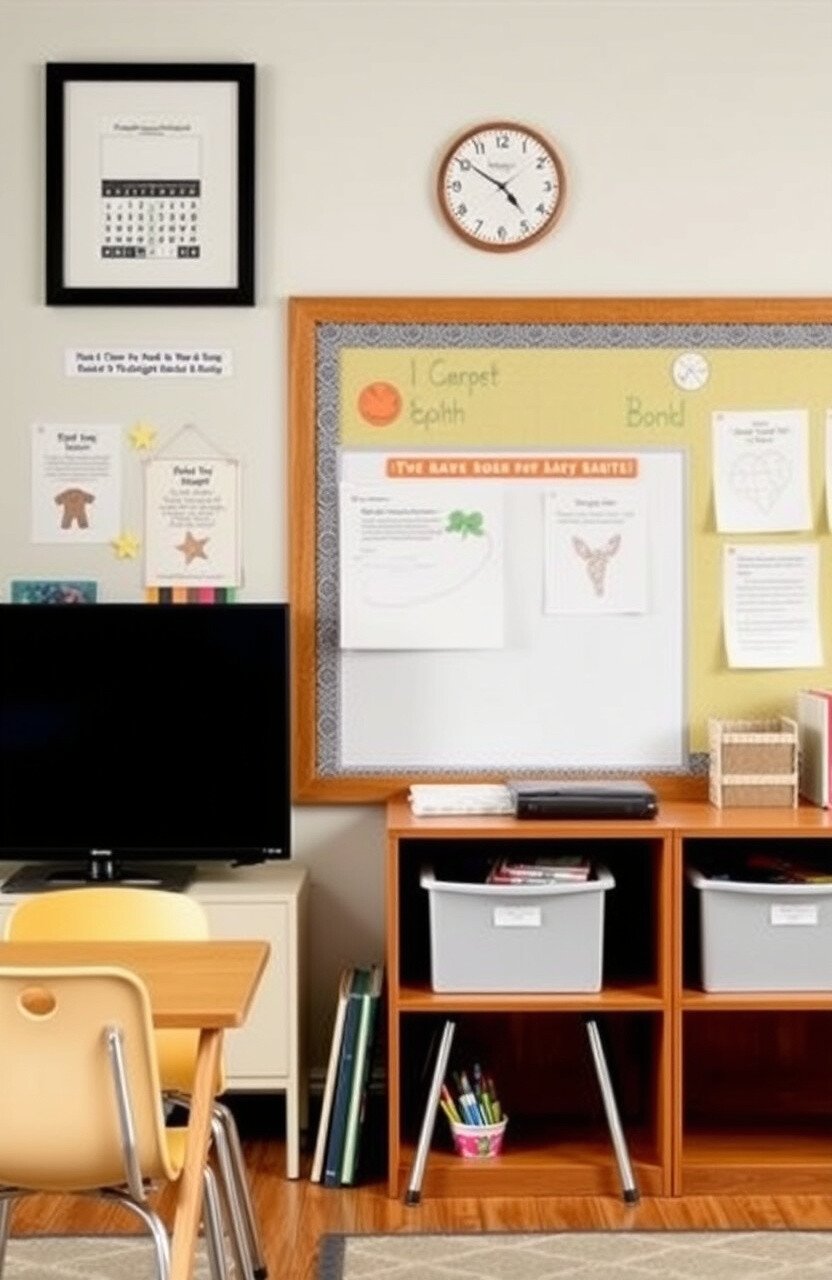
Bulletin boards in calming colors can display student work without overwhelming the senses. Use fabric or paper in soft shades as the background.
These boards can be updated with seasonal themes or special projects, keeping the decor fresh. Add wooden or cork frames for a natural look.
Personalize boards with students’ names or class mottos. Bulletin boards are versatile and can fit any budget with a bit of creativity.
11. Minimalist Storage Solutions
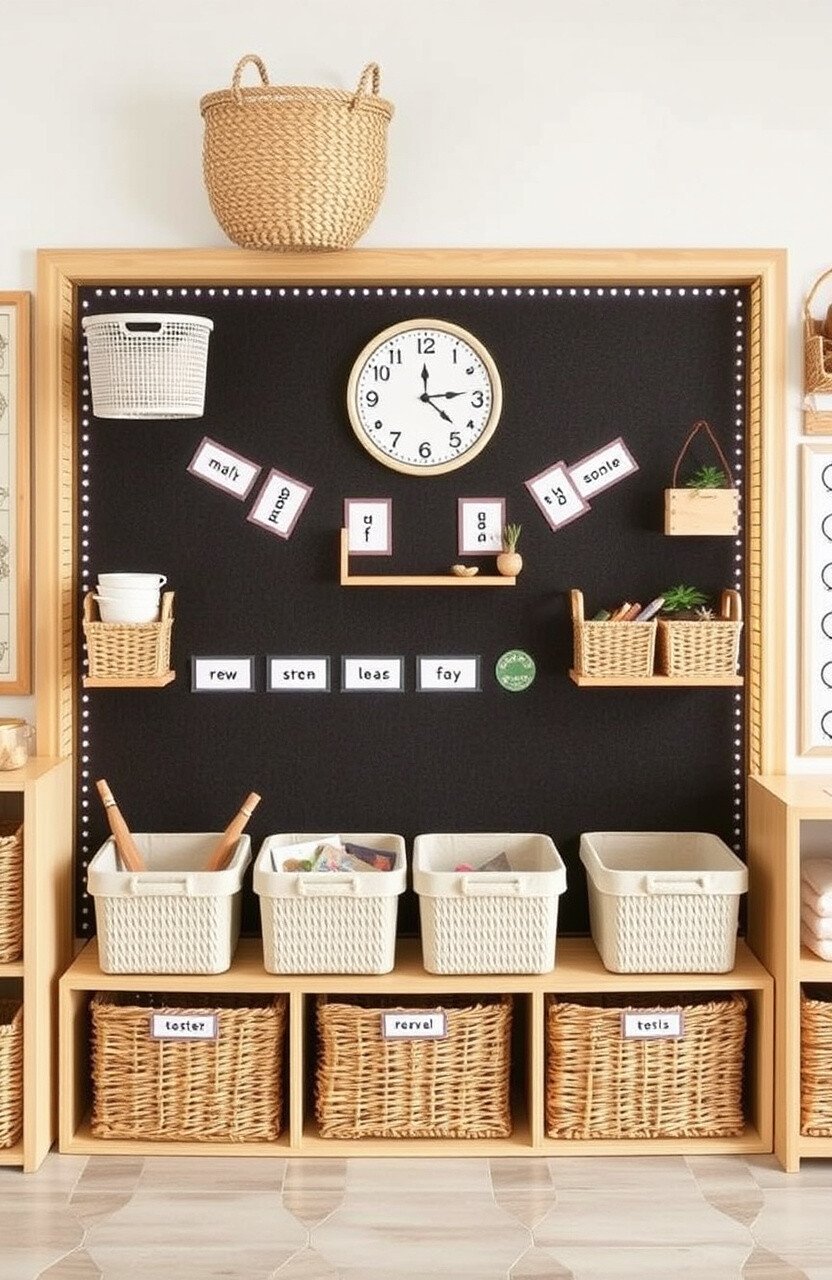
Clutter can be distracting, so minimalist storage solutions in neutral tones can help maintain a calm environment. Use baskets, bins, or shelves in natural materials.
Label storage containers in simple fonts to keep things organized and easy to find. This encourages independence and responsibility in children.
Think outside the box with storage ideas, like repurposing items you already have. It’s a budget-friendly way to keep the classroom tidy and serene.
12. Soft Fabric Curtains
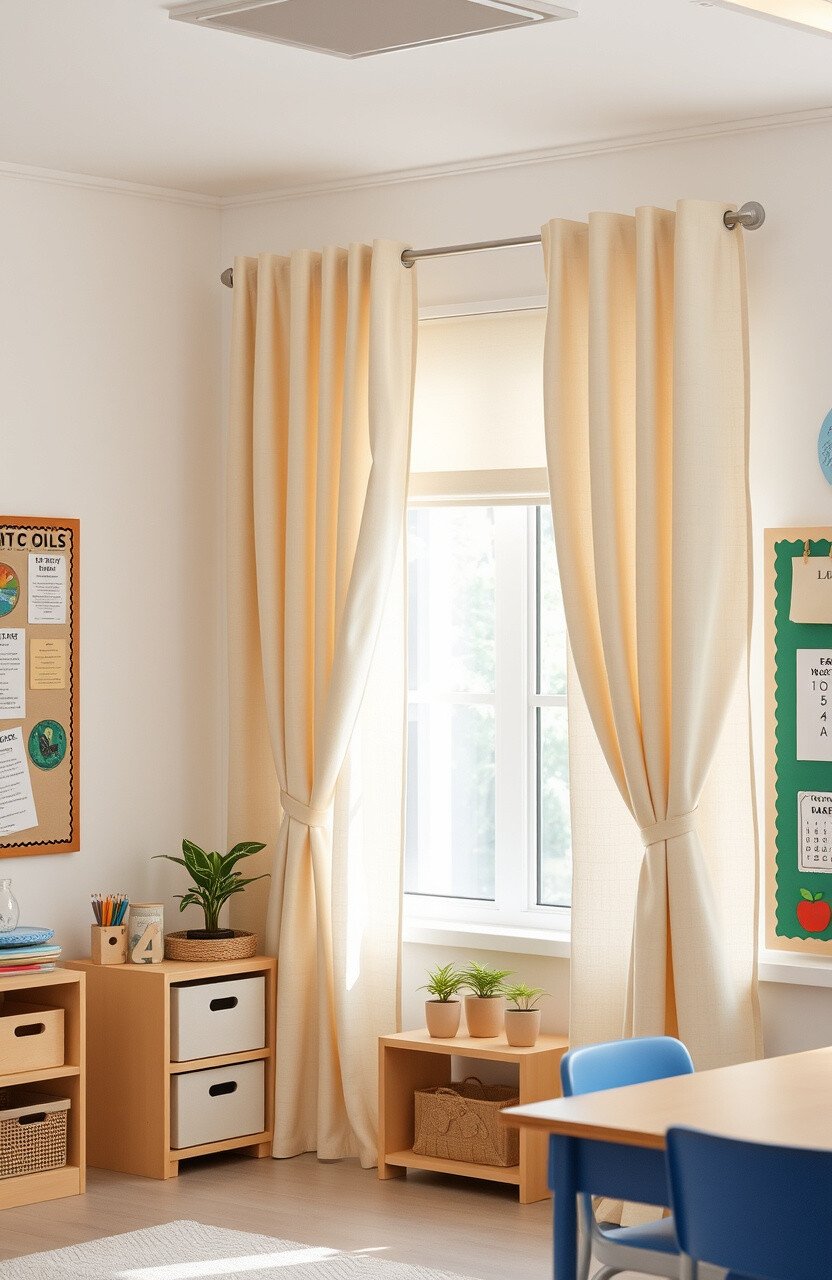
Gentle curtains in soft materials like cotton or linen can filter light beautifully. Choose neutral colors to complement the room’s overall decor.
Curtains can provide privacy and reduce noise, creating a peaceful atmosphere. They add warmth and softness, making the classroom feel more like home.
Personalize with tiebacks or trims in coordinating colors. Curtains are an affordable way to add elegance and function to the space.