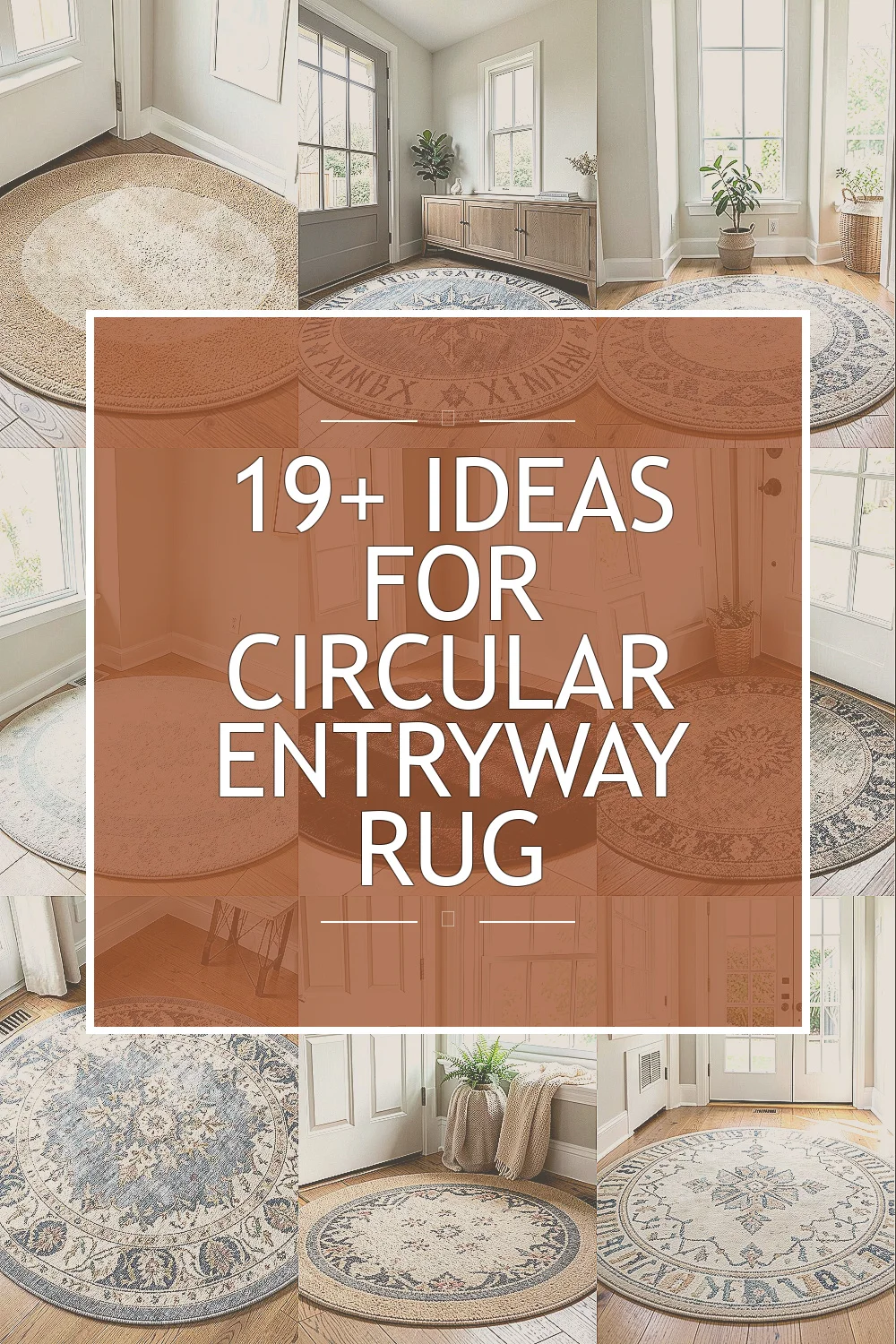
Your entryway is the first mood your home sends out. A circular rug helps that message feel softer, warmer, and more welcoming.
With the right shape, texture, and placement, you can make a simple space look designed and lived-in.
1. Welcome Mat With a Softer Shape
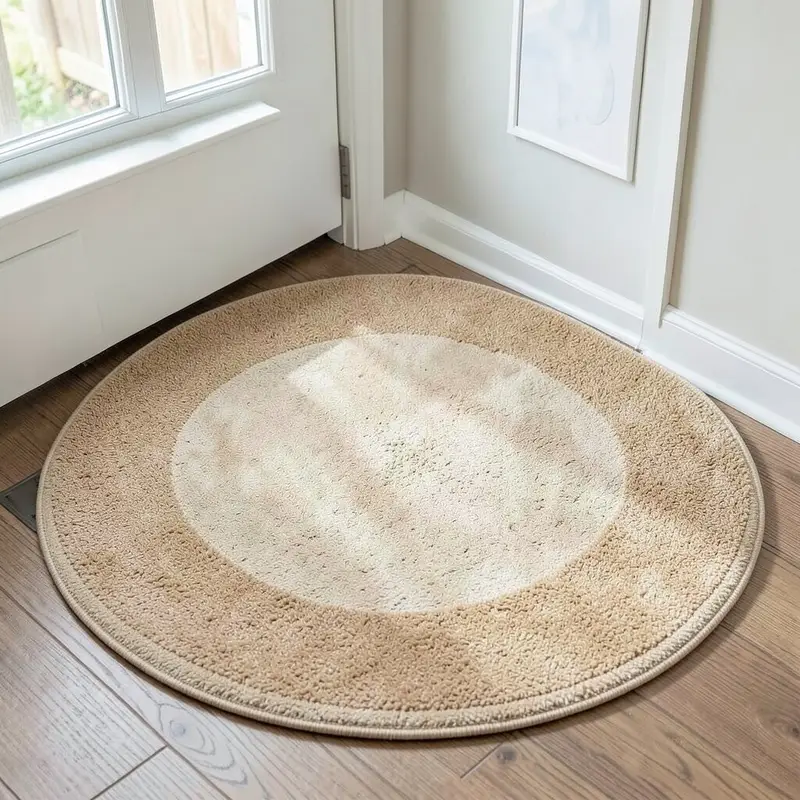
A circular entryway rug turns the usual straight-line welcome into something more gentle. Step onto the center and you immediately feel the floor has a purpose.
Choose a low pile for easy shoe traffic so the rug looks neat even after busy days. Match the color to your front door or nearby wall so it feels coordinated instead of random.
2. Anchor Furniture Without Making It Stiff
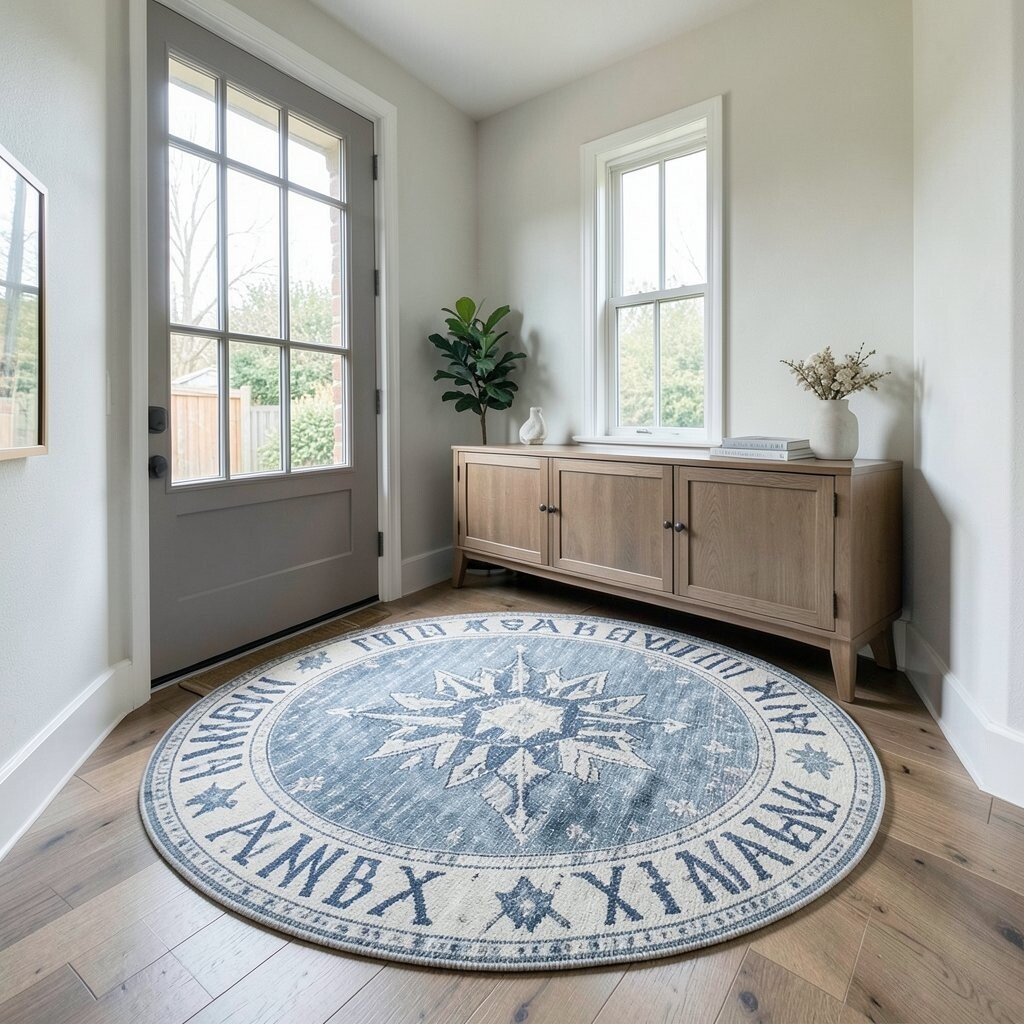
If you have a small bench, console, or chair by the door, a round rug can anchor it without looking boxy. The curve guides the eye and makes the corner feel less tight.
Place the rug so the furniture legs rest fully on the rug whenever possible. A thicker rug can also calm footsteps, which is a big plus on hard floors.
For practicality, pick a stain-resistant fiber and use a rug pad to prevent sliding. That small setup helps the rug stay in place during quick entrances and exits.
3. Create a Clear Landing Zone
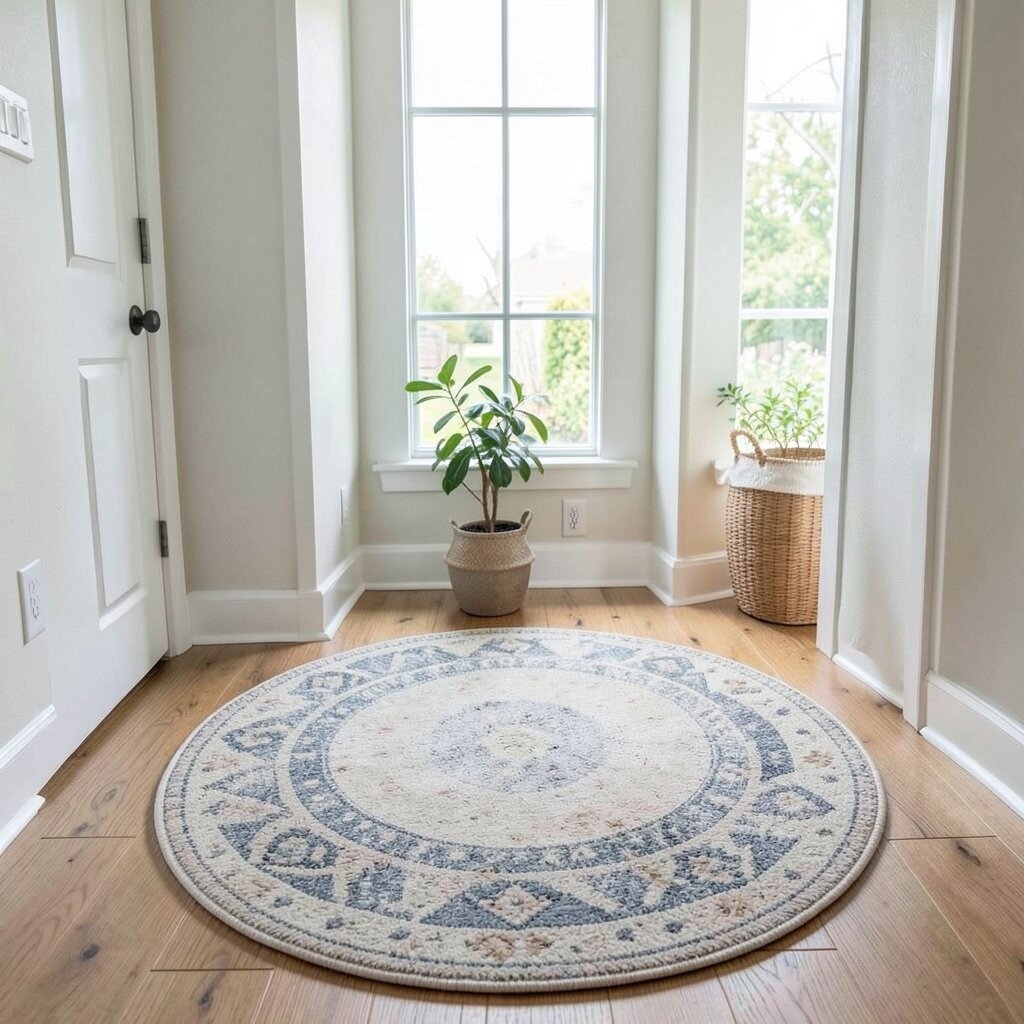
When people walk in, a circular rug gives them a simple spot to set keys, bags, and coats. It’s like a visual cue that says where “the moment” happens.
Try placing the rug far enough inside the doorway that you step onto it before your shoes touch the rest of the hallway. This keeps dirt and moisture closer to the entry and helps the rest of your home stay cleaner.
For personalization, add a small tray on the rug area for daily items. Keeping those essentials in one circle makes the whole routine feel smoother.
Choose a pattern that won’t show tiny dust specks, especially if you live near roads or have pets. Dark speckles and subtle motifs often hide everyday marks well.
4. Use a Light Color to Make Small Spaces Feel Bigger
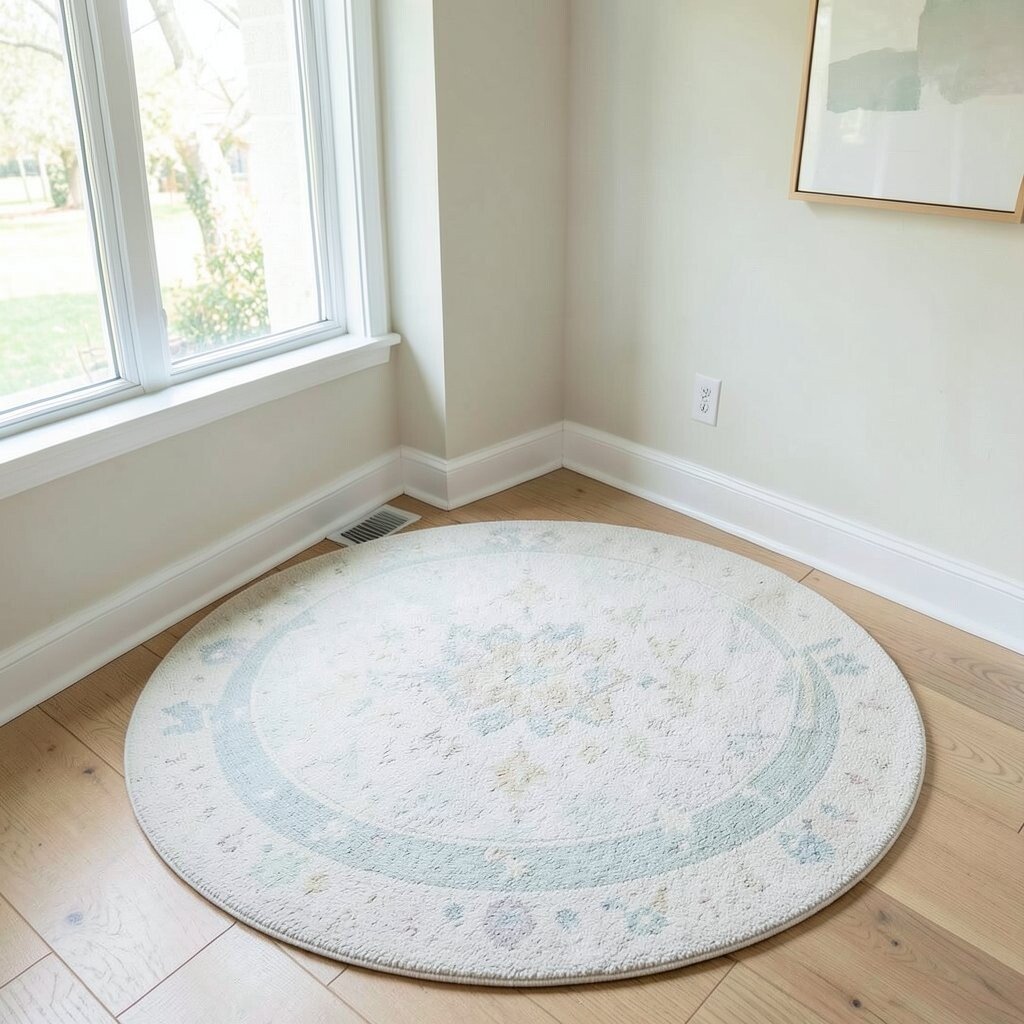
If your entryway feels narrow, a pale circular rug can open the space visually. The soft round outline adds breathing room while still defining the floor area.
Look for creams, warm grays, or light beiges with gentle texture. Texture matters because it adds interest without overwhelming the room.
5. Add Contrast With a Deep, Rich Tone

A deep rug color can bring cozy weight to a bright entryway. Imagine stepping into a space where the floor feels grounded and inviting.
Choose navy, forest green, or charcoal if your walls are white or light wood. That contrast often looks upscale while still feeling homey.
To keep maintenance easy, consider a rug with tight patterning rather than large flat blocks. Busy design helps hide wear in high-traffic spots near the door.
6. Match the Rug to Your Doorway Hardware
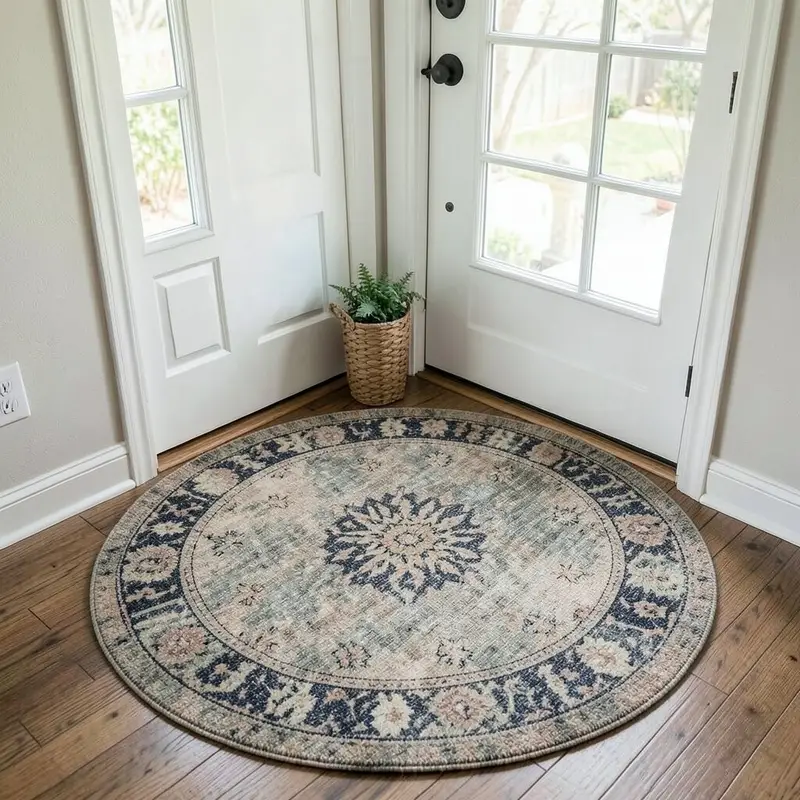
Small details make the biggest difference, and circular rugs are great for linking those details. A color thread that echoes your doorknob, house numbers, or light fixture can make the whole entry feel intentional.
Try coordinating with brushed nickel, black metal, bronze, or warm brass tones through accent colors in the rug. Even a subtle hint can pull everything together.
Keep it practical by choosing a rug that works with your cleaning routine. If you use a handheld vacuum often, pick a pile height that won’t snag or bunch.
7. Pair With a Seasonal Runner for a Layered Look
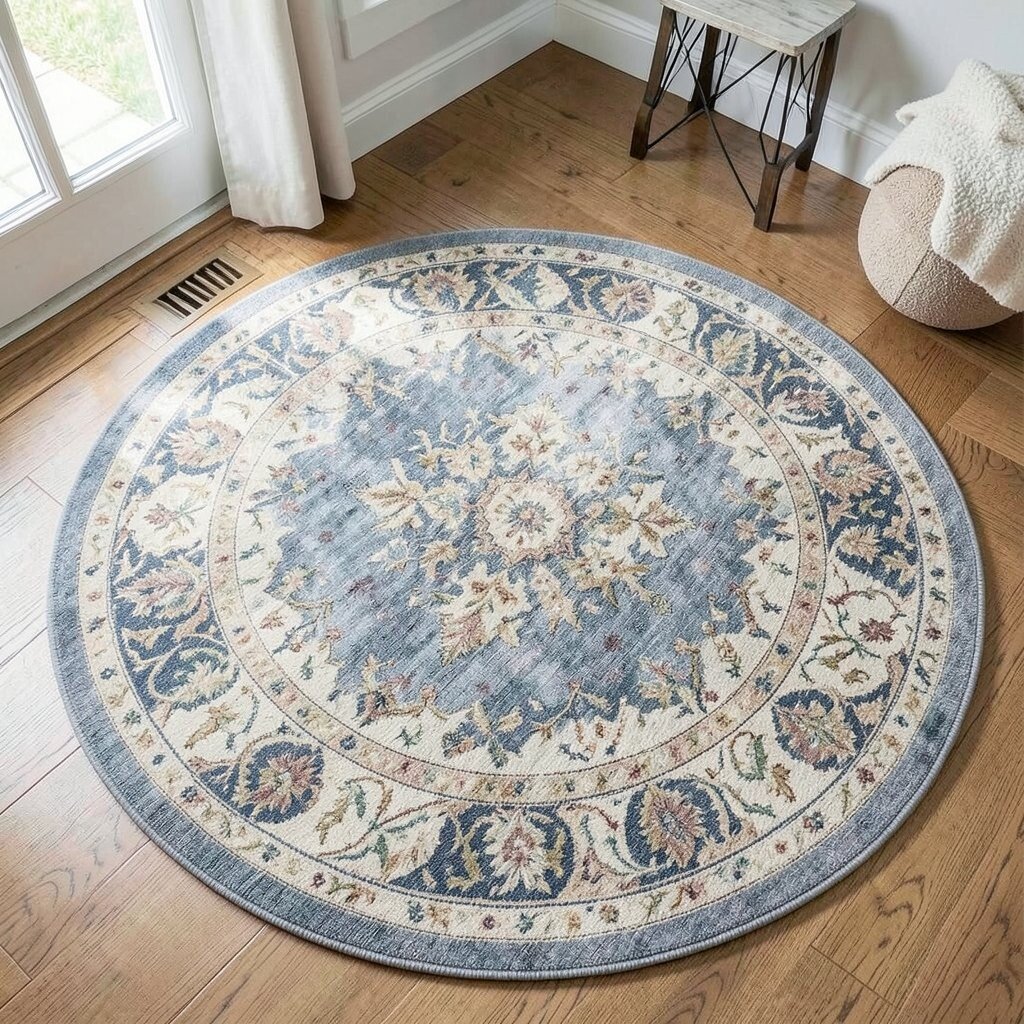
You can mix a circular entry rug with a longer runner to create a playful layered design. The round piece handles the doorway zone, while the runner guides the path deeper into the home.
For best results, let the shapes overlap slightly or align their edges so it looks styled, not accidental. Pick colors that share at least one tone, like cream plus muted blue, to keep the layer cohesive.
In cooler months, you can switch the runner style without replacing everything. This is a budget-friendly way to update your entry look through the year.
8. Build a Cozy Reading Nook Just by the Door
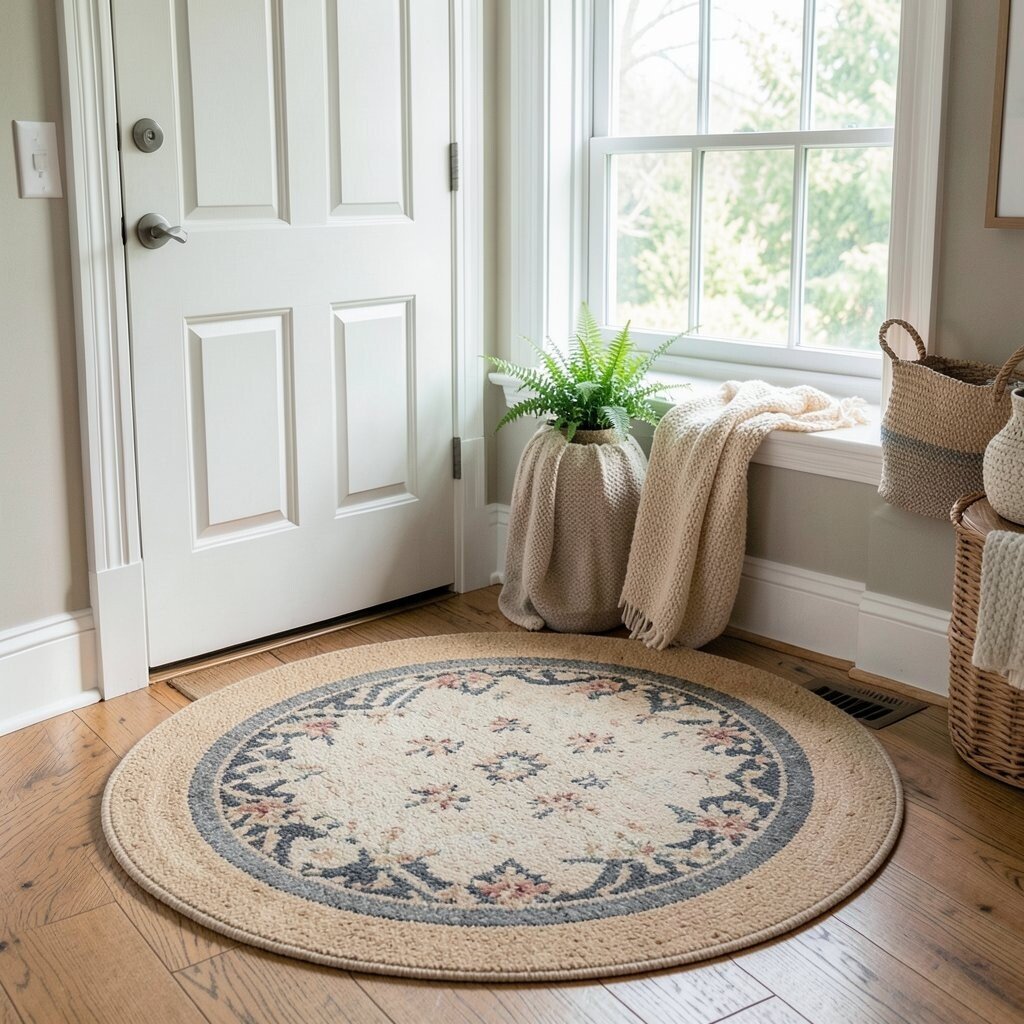
If you add a small chair or a floor lamp nearby, a round rug can make the entry feel like a mini retreat. The curve softens the space and makes it easier to sit, tie shoes, or read a few pages while you wait.
Use a medium pile for comfort when you’re standing around, but keep it manageable for cleaning. A rug pad helps with both comfort and grip on smooth flooring.
Personalize with a woven basket or a small ottoman in matching colors. When the rug’s pattern matches the room’s natural materials, the whole nook feels calm.
For trend-friendly style, look for rugs with subtle vintage-inspired motifs. They blend classic warmth with modern simplicity.
9. Choose a Pattern That Helps Hide Everyday Wear
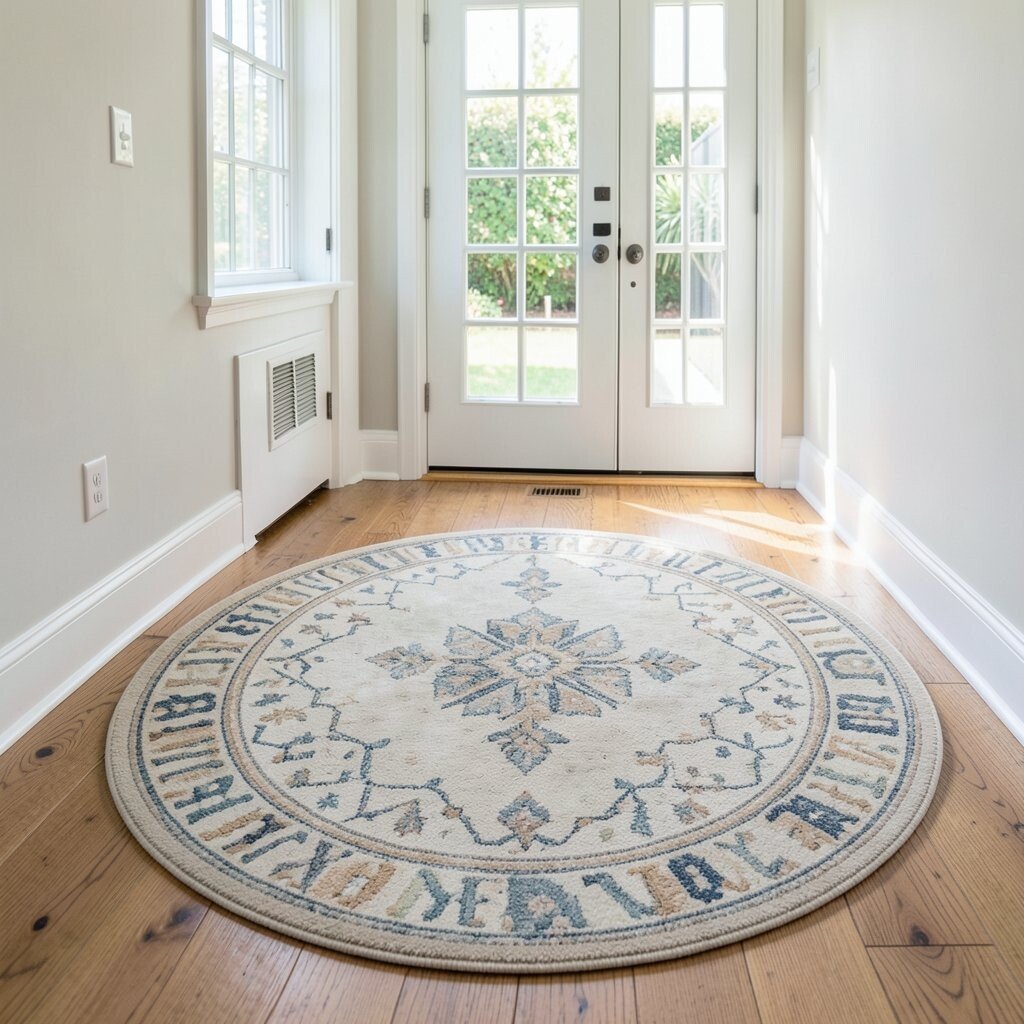
Most entryways take a beating, so your rug pattern should do some of the work. Small repeats, abstract shapes, or tonal stripes can disguise footprints and scuffs better than plain colors.
When the rug pattern is busy enough, you can enjoy it longer without feeling like it must be replaced quickly. That’s a cost win and a visual win at the same time.
To keep the pattern balanced, make sure the rug doesn’t fight your wall art or wallpaper. If the walls are bold, go for a softer motif; if the walls are plain, you can add more detail.
10. Use a Circular Rug for Artful Color Blocking
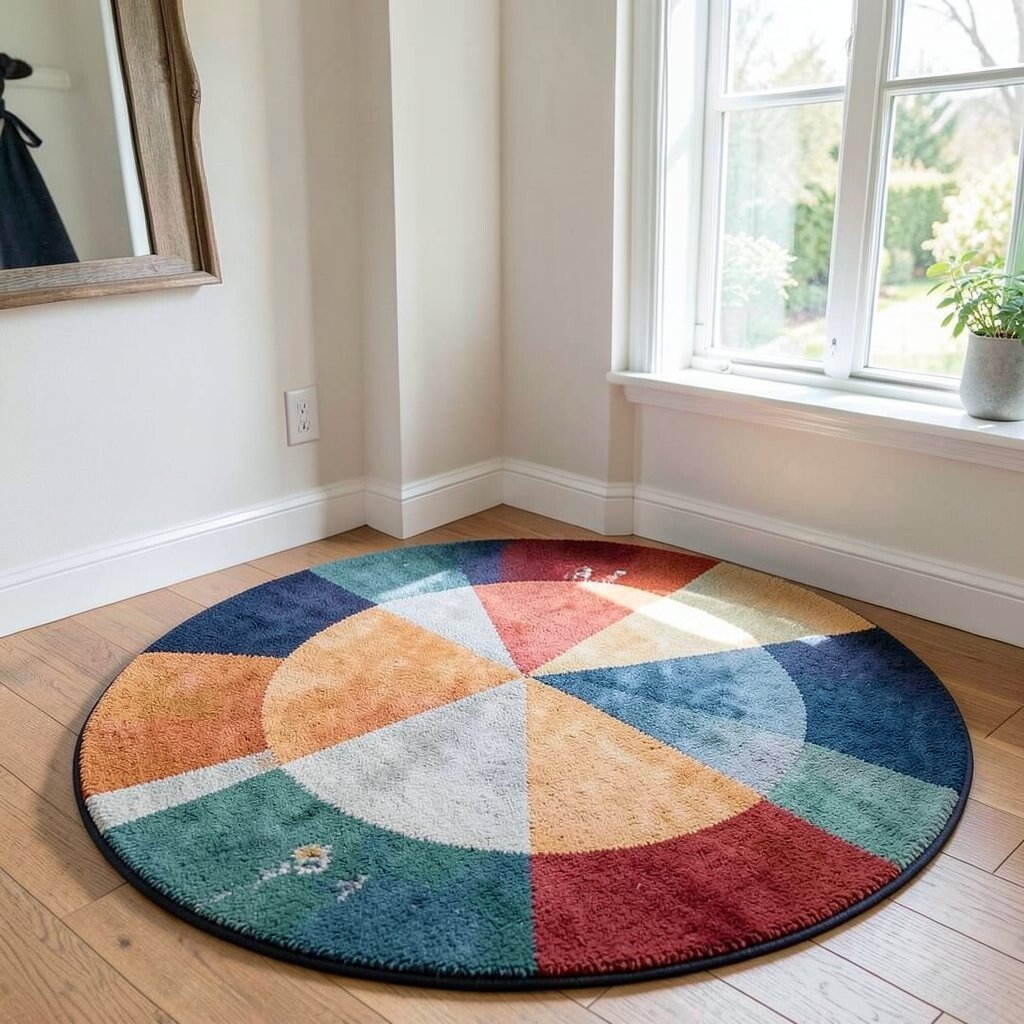
Color blocking doesn’t have to be sharp and modern to look great. A circular rug can introduce a block of color while still keeping the vibe soft and welcoming.
Pick one main color from your decor and let it lead the rug choice. Then repeat it in tiny accents like a vase, a small stool, or a doormat that sits near the threshold.
If you want a playful look, choose a rug with two complementary colors and keep other items calmer. That way the entry feels fresh without turning chaotic.
11. Keep It Practical With a Non-Slip Setup
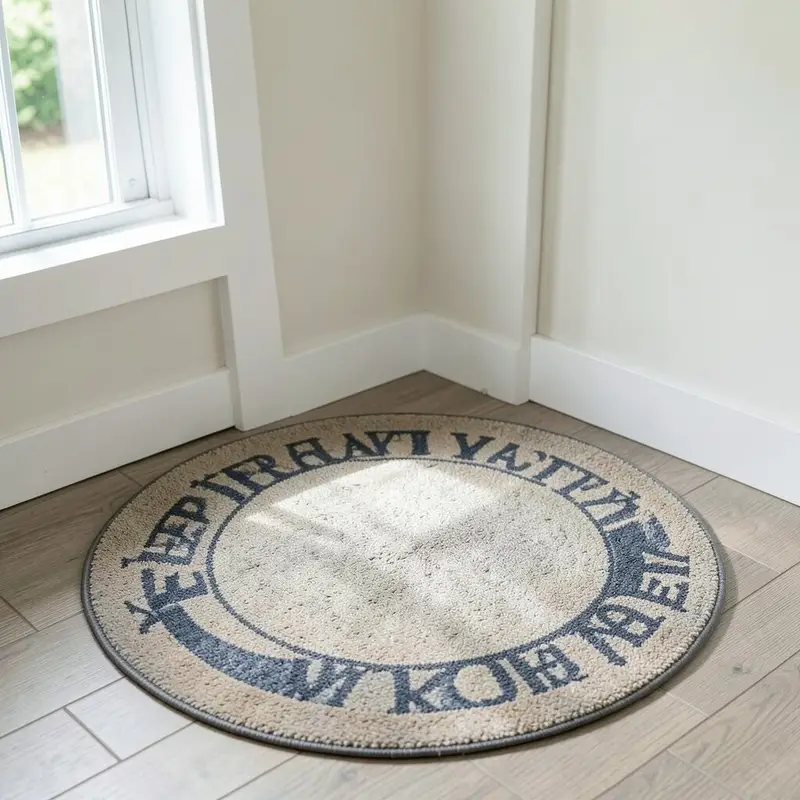
A circular rug only works well if it stays put, especially where shoes and wet umbrellas come in. A rug pad designed for your floor type helps prevent movement and adds comfort underfoot.
Choose a non-slip backing if you plan to skip a separate pad. Also consider a size that fits the entry area so the rug’s edges aren’t constantly catching on door swing habits.
12. Frame a Shoe Bench With Balanced Coverage
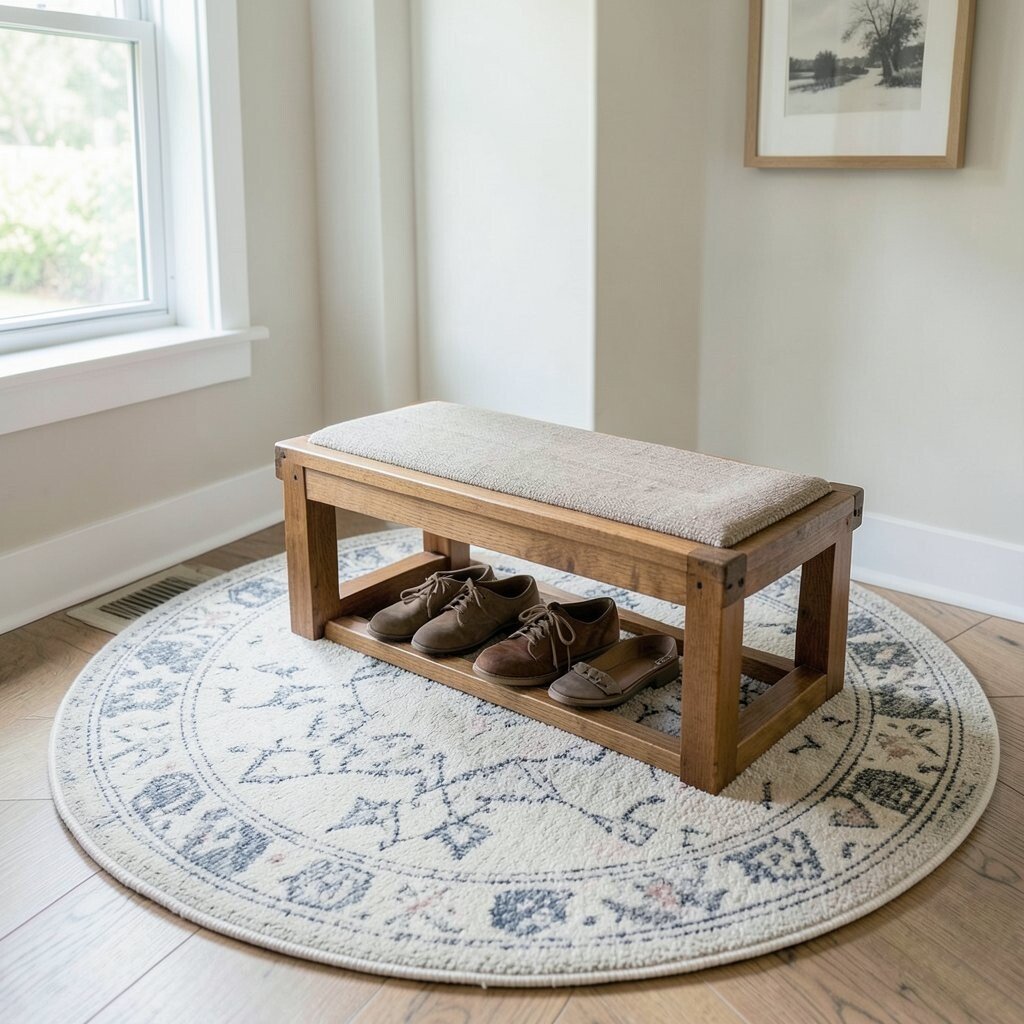
Shoe benches often live right by the door, and a round rug can make that zone look neatly framed. The circle creates a natural “photo frame” effect for the bench and any storage below.
Place the bench centered over the rug, or let the bench sit slightly forward while keeping at least a generous ring visible. That visible ring helps the space feel styled instead of cluttered.
For easy upkeep, choose a rug that feels comfortable to vacuum and spot clean. If you have kids, this choice can save time and stress later.
You can personalize the look by adding a runner-style mat for deeper shoe drying while the rug handles the main entrance. Two layers can keep wet messes away from the rest of your flooring.
13. Add a Textured Option for a Touch of Luxury
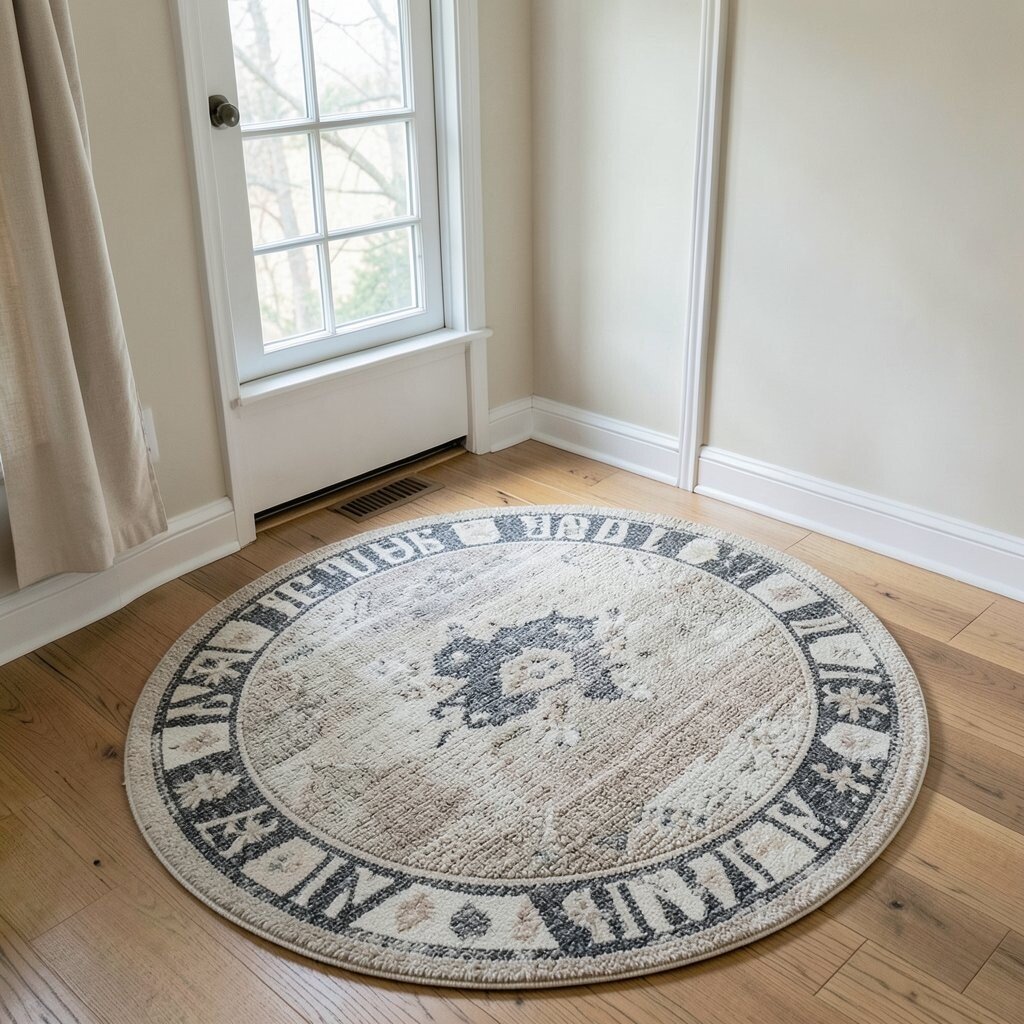
Texture is one of the simplest ways to make an entryway feel special. A circular rug with raised loops, woven detail, or subtle shag can add a spa-like touch right where you need comfort.
Look for fibers that feel good under bare feet, especially if you often remove shoes near the door. Wool blends are popular for their cozy feel, while synthetic blends can be easier for stain resistance.
To keep the texture looking smooth, rotate the rug occasionally if it gets uneven light. That small habit helps it wear evenly and keeps it looking fresh.
14. Go Bold With a Graphic Border
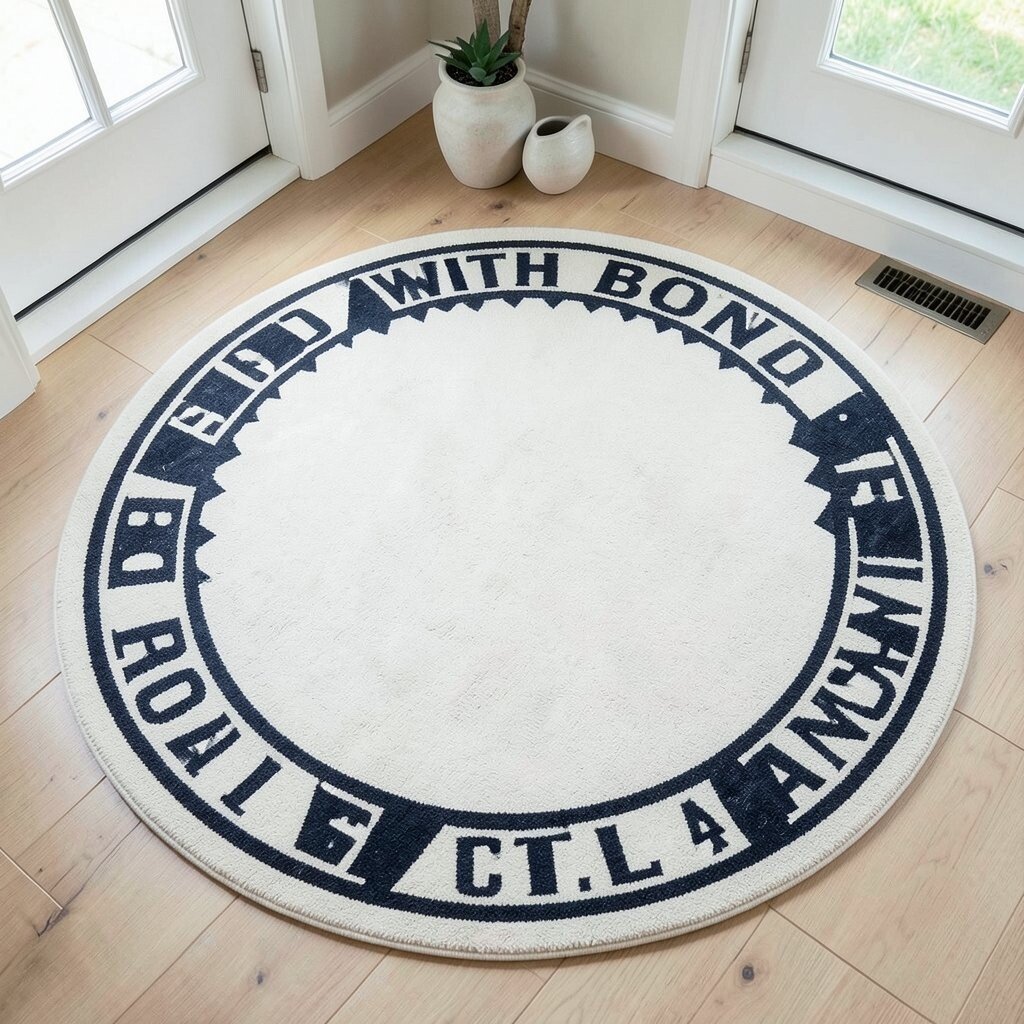
A circular rug with a border can look like decorative framing on your floor. The edge detail catches attention and gives the entryway a finished, designer feel.
Try a border pattern that pulls from your home’s style, like geometric lines for modern homes or soft rosettes for traditional looks. When the border matches the theme, the rug feels like it belongs.
For practical styling, keep the rest of the entry decor simpler so the border can be the star. One statement vase or a clean wall hook often pairs beautifully with a graphic rug.
15. Blend Natural Materials for a Warm First Impression
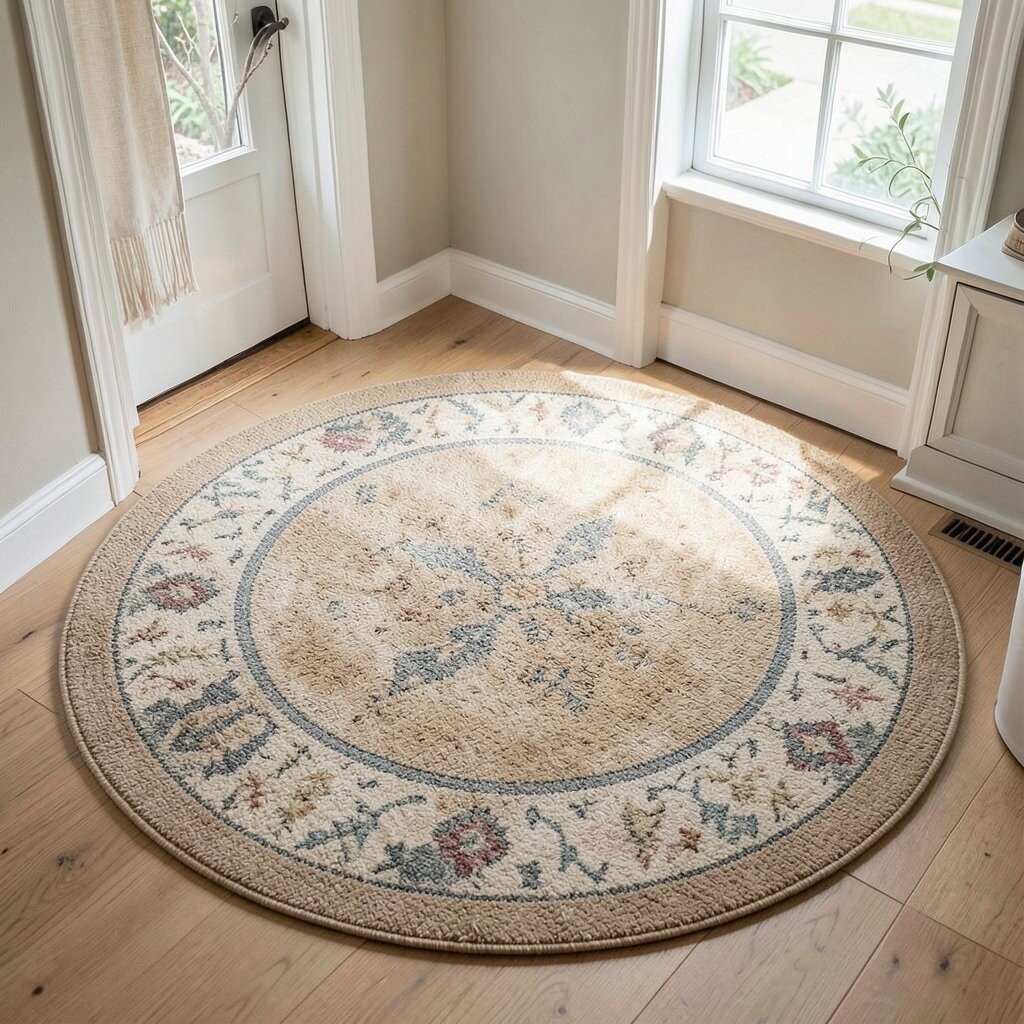
Natural fiber looks instantly comforting, even in homes with modern furniture. A circular rug woven with jute-like textures or earthy tones can make the entryway feel grounded.
Pair it with wood accents, woven baskets, or natural stone trays for a cohesive look. This combo works especially well if you love neutral palettes and organic shapes.
If you’re worried about costs, consider choosing the natural look with a resilient blend that’s easier to maintain. You can still get that warm look without paying for ultra-delicate fibers.
Use a mat near the door if the rug is more absorbent, so moisture stays away from the main floor area.
16. Choose a Rug That Supports Your Lifestyle Needs
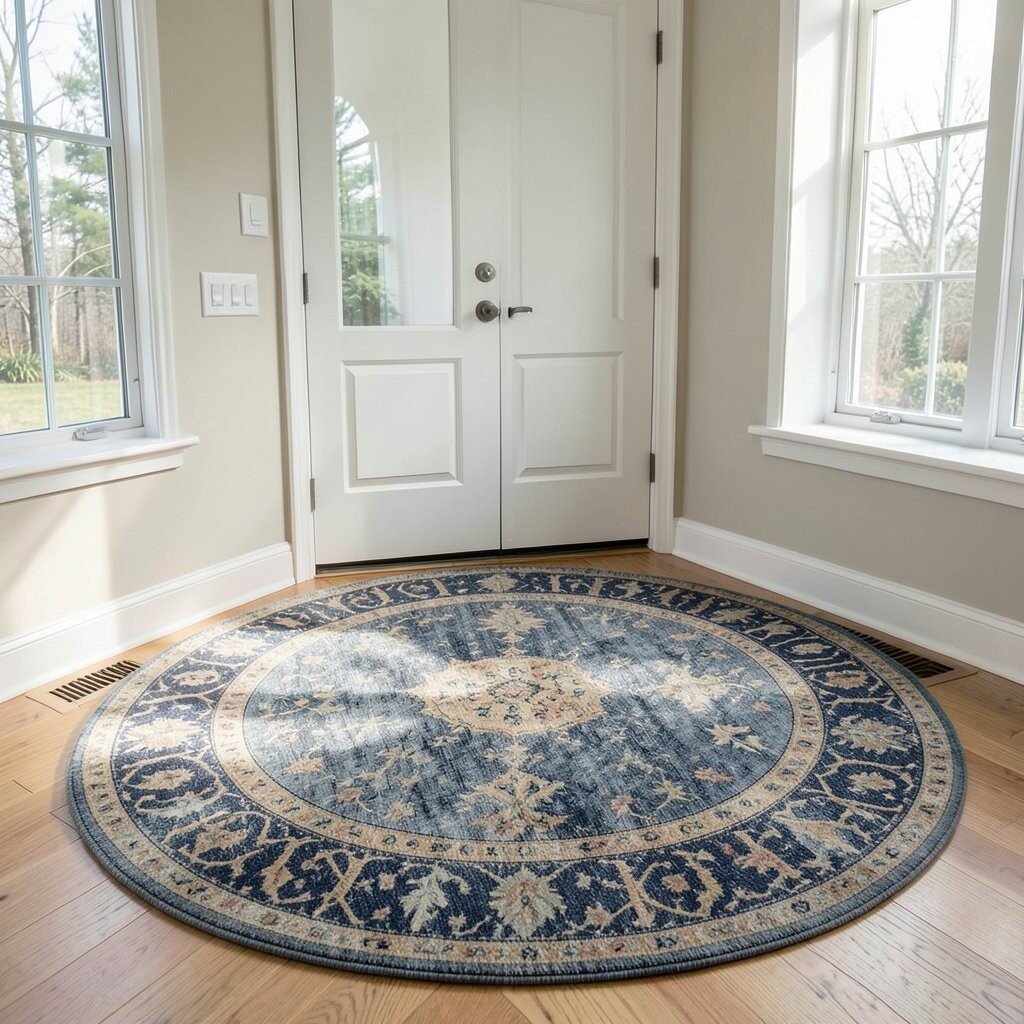
Your entryway should fit your daily rhythm, not the other way around. If you have pets, choose a rug that handles shedding and is easy to vacuum frequently.
If your household uses umbrellas often, pick a rug that dries quickly and doesn’t trap moisture deeply. Faster drying can help prevent musty smells.
For busy families, consider a rug in a mid-tone color where tiny stains won’t stand out right away. That choice reduces the pressure to clean constantly.
17. Make It a Color Match for the Hallway Beyond
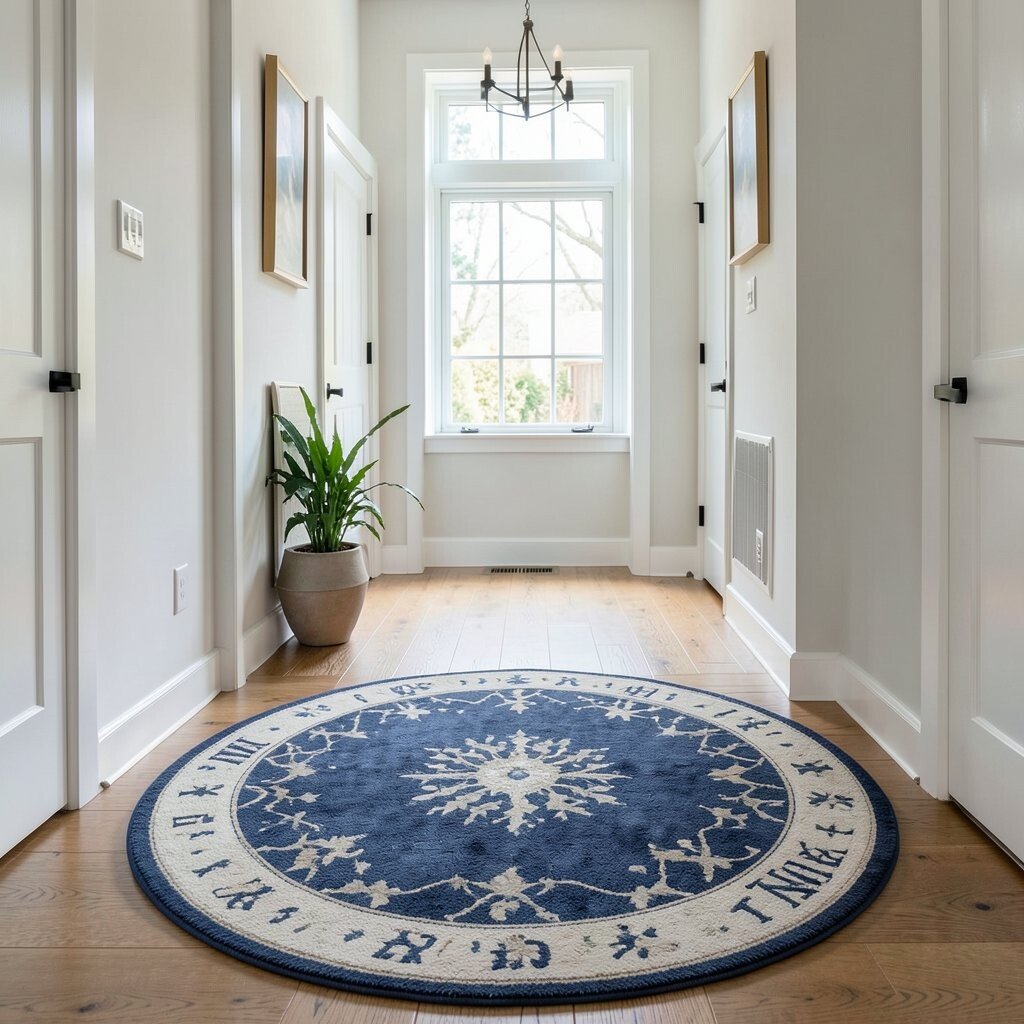
A circular entry rug looks even better when it connects to the hallway colors beyond the doorway. It can act like a visual bridge between spaces that otherwise feel separate.
Pull one hallway color into the rug, such as a muted blue wall or warm oak tones. Then repeat a tiny amount of that color in the entry accessories so everything feels linked.
Keep the scale in mind if your hallway is narrow. A medium-to-large circular rug can work without blocking sight lines, and the round shape helps it feel less intrusive.
18. Use It to Soften a Hard Floor or Bold Flooring
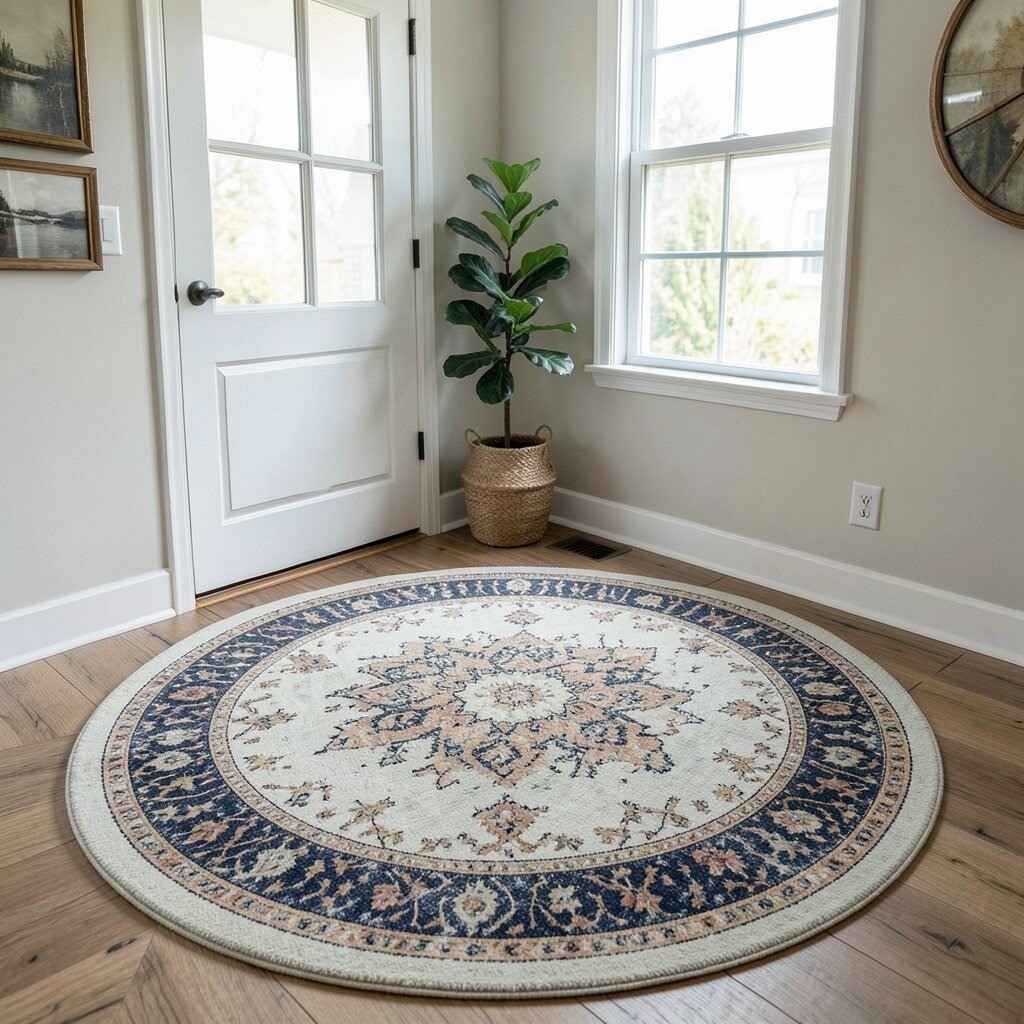
If you have tile, polished concrete, or glossy wood, a round rug can soften the look. It gives your feet a comfortable layer and makes the entry feel less echo-y.
Choose a rug with enough thickness to absorb sound a little. That helps when you come in late at night or move quickly in the morning.
19. Personalize With a DIY Center Accent
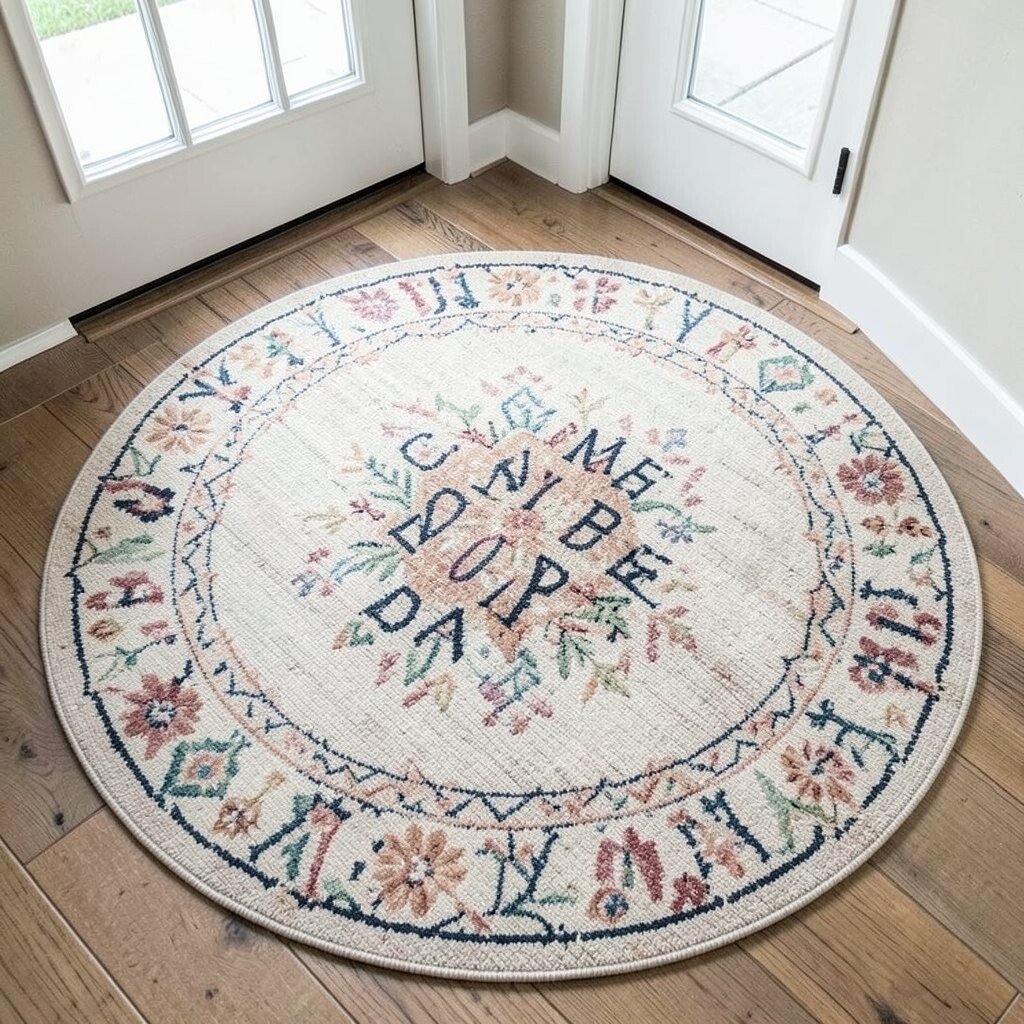
You don’t have to buy a rug that matches every detail to get a custom look. A creative way is to add a small center accent, like a matching tray or a decorative bowl that sits in the middle.
Try seasonal styling, such as a small lantern in winter, fresh greenery in spring, or a simple stack of art books in warmer months. When you change the items, the rug feels new without replacing the rug.
If your rug is more neutral, this is also a chance to introduce a color you love. Keep the decor pieces small enough that the whole circle remains visible and balanced.
For budget sense, choose easy-to-refresh accents rather than investing in a totally new rug every season.
20. Budget Smart With Size, Deals, and Timing
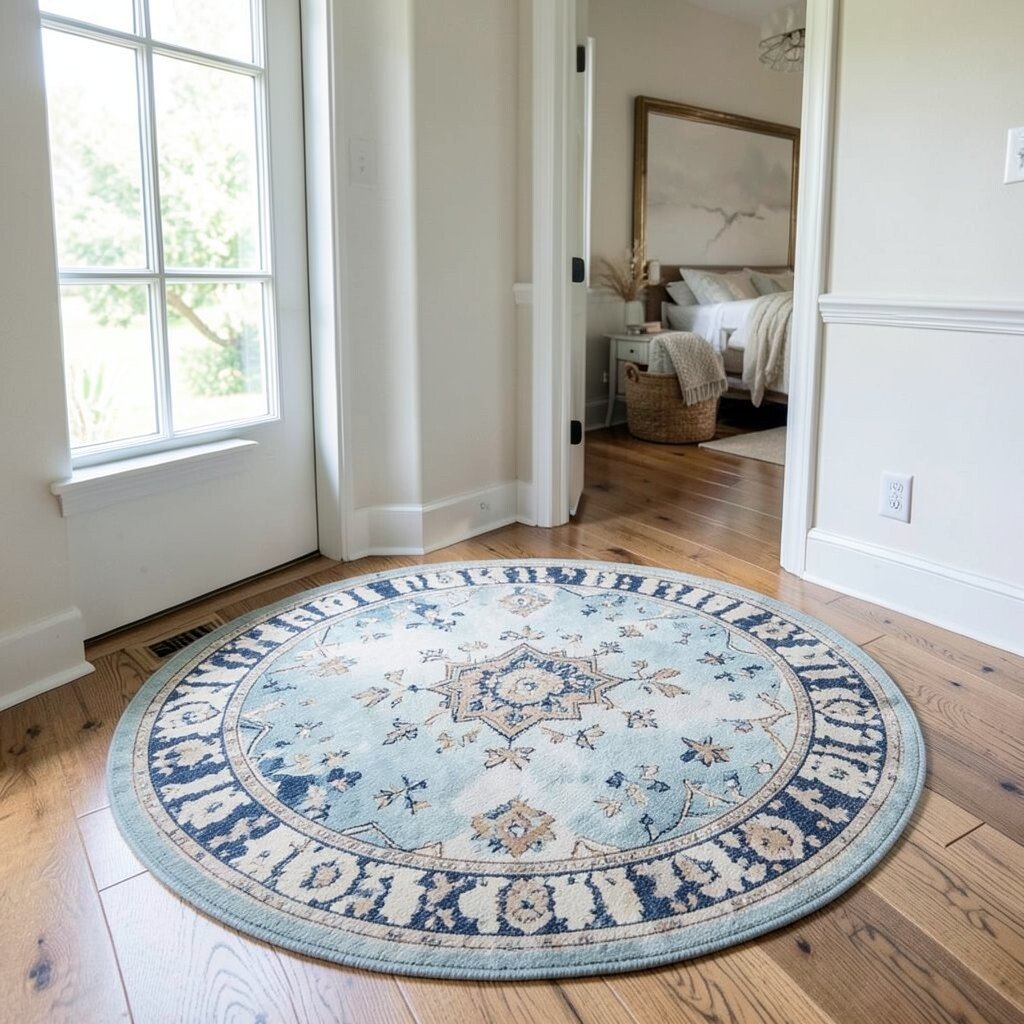
Buying a circular entry rug doesn’t have to break the bank, especially if you plan the size and time the purchase. Measure the space where the rug will sit, then choose a size that allows a visible ring around your entry furniture.
Look for sales around major seasonal shifts, when retailers often clear older inventory. If you’re flexible on pattern details, you can snag a higher quality rug for less.
Consider starting with a practical material that matches your lifestyle, then upgrade later if you fall in love with the look. This approach can spread the cost out while still giving you that welcoming entry feel now.
To stretch value further, invest in a rug pad from the beginning since it helps the rug last longer and stay safer in place.