
A writing desk can feel tiny and still support big dreams. With the right inspiration board, your room can turn into a calm launchpad for words.
Let these small-space ideas spark layouts, materials, and routines that fit real life. You will find practical ways to save space, stay focused, and make the desk truly yours.
1. Compact Wall-Mounted Writing Desk With a Clipboard Mood Board

Picture a narrow desk that folds out from the wall like a secret door. Above it, a clear clipboard holds printed quotes, tiny story prompts, and soft color swatches.
When the day ends, the board stays up and your pages stay tidy, so the area feels ready for tomorrow. Use binder clips to swap cards fast, and keep a small tray for pens so everything has a home.
2. Corner L-Shaped Desk With a Magnetic Inspiration Grid

Set your desk into a corner so the room keeps its open feel. A slim magnetic strip along the side becomes a grid for notes, sketches, and reminder cards.
Choose a peg-friendly wall finish or add a thin metal sheet behind the strip so items can move without damage. Make small clusters with magnets to match seasons, genres, or writing goals, and you will feel organized without clutter.
For cost control, start with a few strong magnets and print a small set of visuals from free templates. Add more pieces only when you know what you will actually use.
3. Rolling Micro-Desk With a Hanging Cloth Inspiration Banner
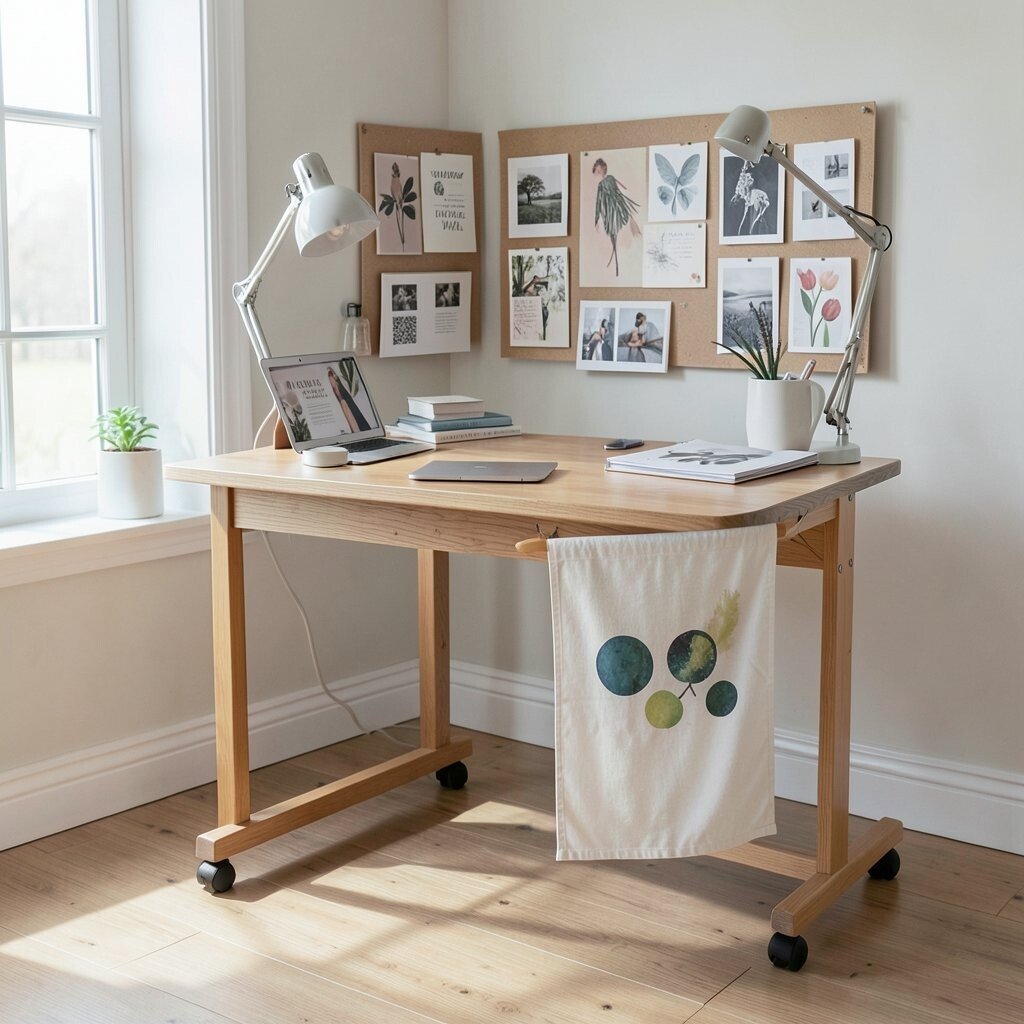
Imagine a tiny rolling desk that glides wherever your focus goes. From a ceiling hook or tension rod, a cloth banner holds fabric pockets with prompts and photos.
Because the desk moves, you can write near windows for natural light or closer to outlets for charging. Stitch or Velcro-label each pocket by theme, like characters, settings, or “today’s scene,” so you grab the right thing quickly.
If you want a budget-friendly start, use an old scarf or thrifted curtain panel as the banner. Keep the pockets light so your setup stays easy to hang and adjust.
Over time, you will love watching your visual story grow, since each pocket becomes a mini memory shelf.
4. Vertical Bookcase Desk Hybrid With Layered Vision Cards
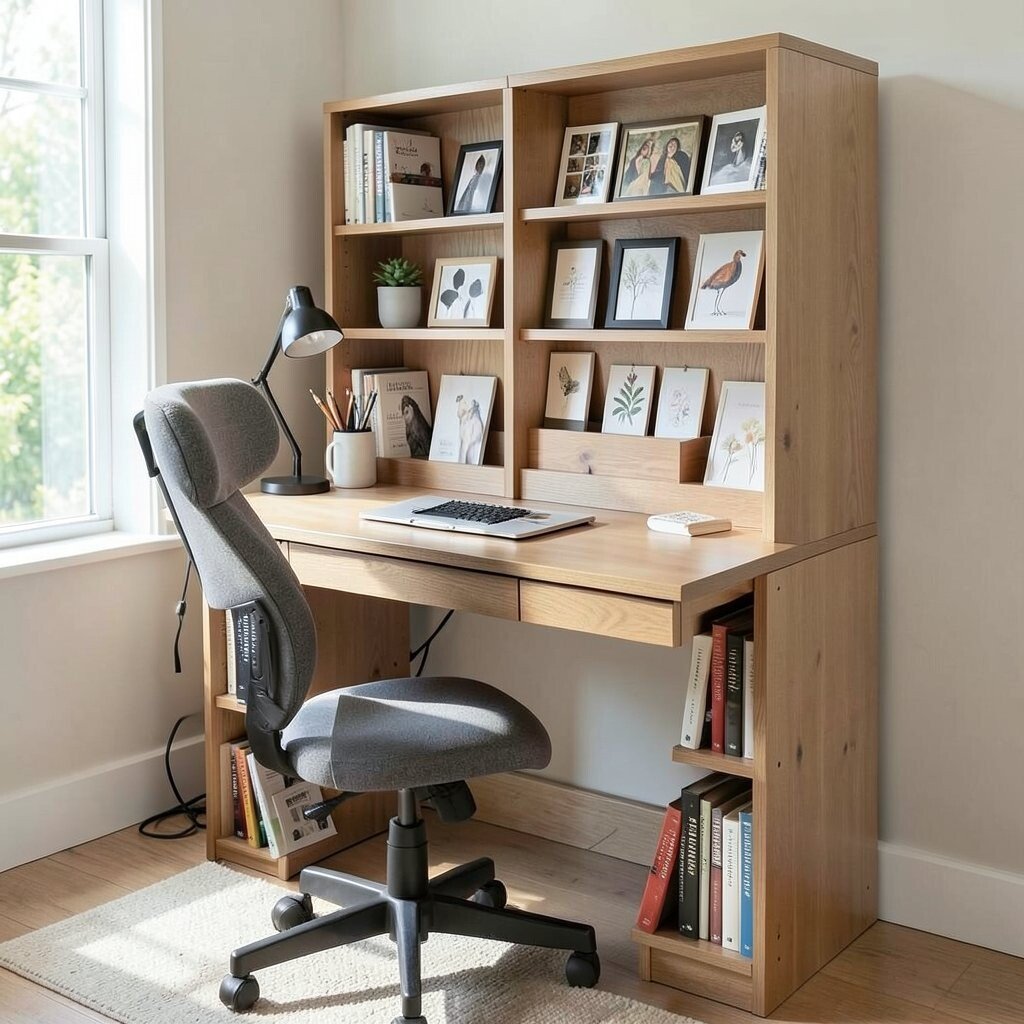
Think of a writing station that uses a small bookcase as the backbone. One side works as a desk surface, while the other holds layered vision cards in slim frames.
The benefit is that your inspiration stays at eye level, so you do not have to search around when you sit down. Try using washi tape to outline card edges, then replace cards whenever your project shifts.
For a unique look, mix frame styles and keep a consistent color palette so the desk still feels calm. If space is tight, store only active notebooks and one spare pen inside the compartments.
5. Under-Window Shelf Desk With a Sun-Friendly Pinboard
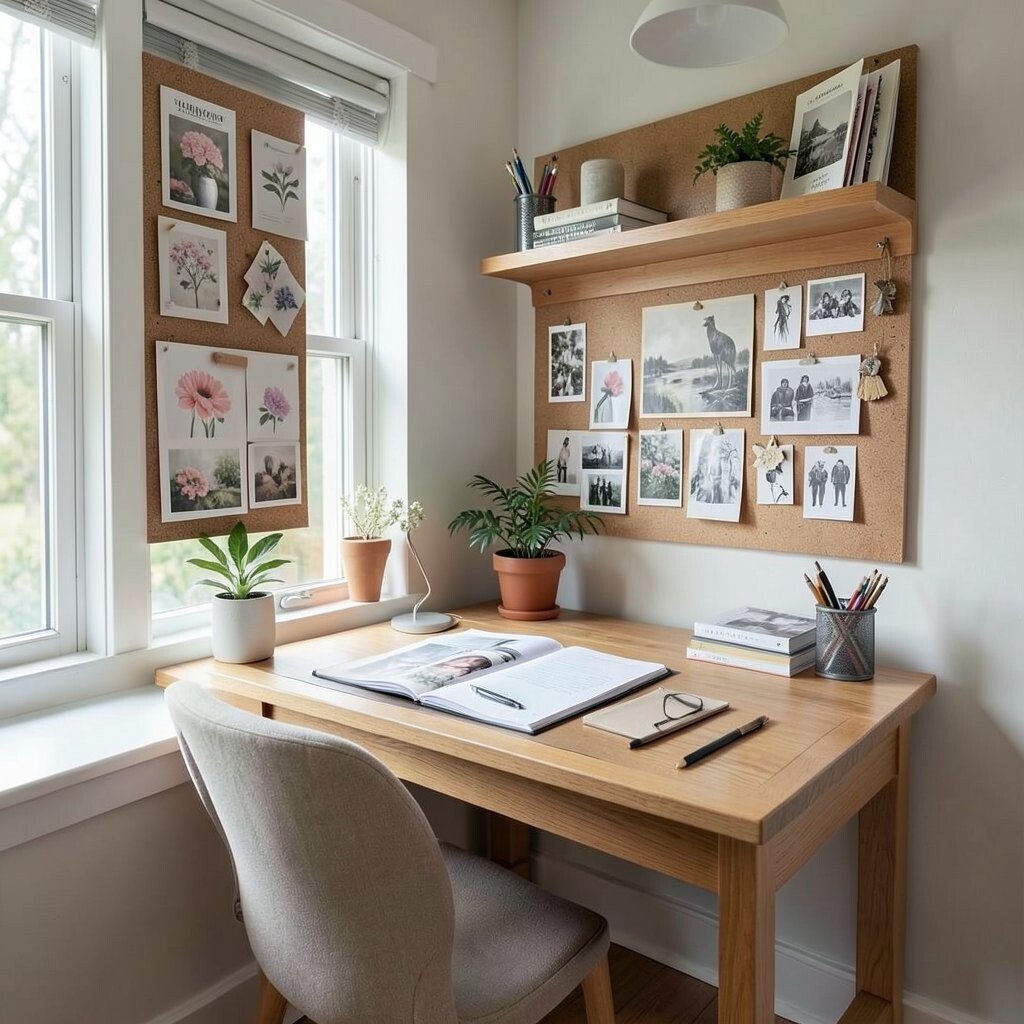
Place a narrow shelf under the window so the desk becomes a bright writing nook. Next to it, mount a small cork or foam pinboard for warm-toned images and gentle reminders.
The sun helps you feel awake, and the pinboard keeps prompts within reach. Use push pins for sturdier photos, and add mini sticky notes for quick updates during drafting.
To keep cost low, use cork sheet scraps or an inexpensive board from a craft store. Personalize with drawings from your own sketchbook so the board feels like you, not a copy.
6. Sliding Tray Desk With a Command-Strip Inspiration Wall

Picture a desk with a sliding tray that pulls out from a cabinet or closet wall. On the adjacent wall, build an inspiration surface using removable hooks and ledges.
That setup saves floor space and keeps the writing area hidden when you need the room for other tasks. Hang small frames with removable strips, then rotate your cards weekly so your board stays fresh.
For practical use, choose one ledge for “now writing” materials like your outline and one folder for reference pages. It is easier to work when your tools never wander.
7. Fold-Out Sewing-Table Style Desk With a Chalkboard Prompt Rail
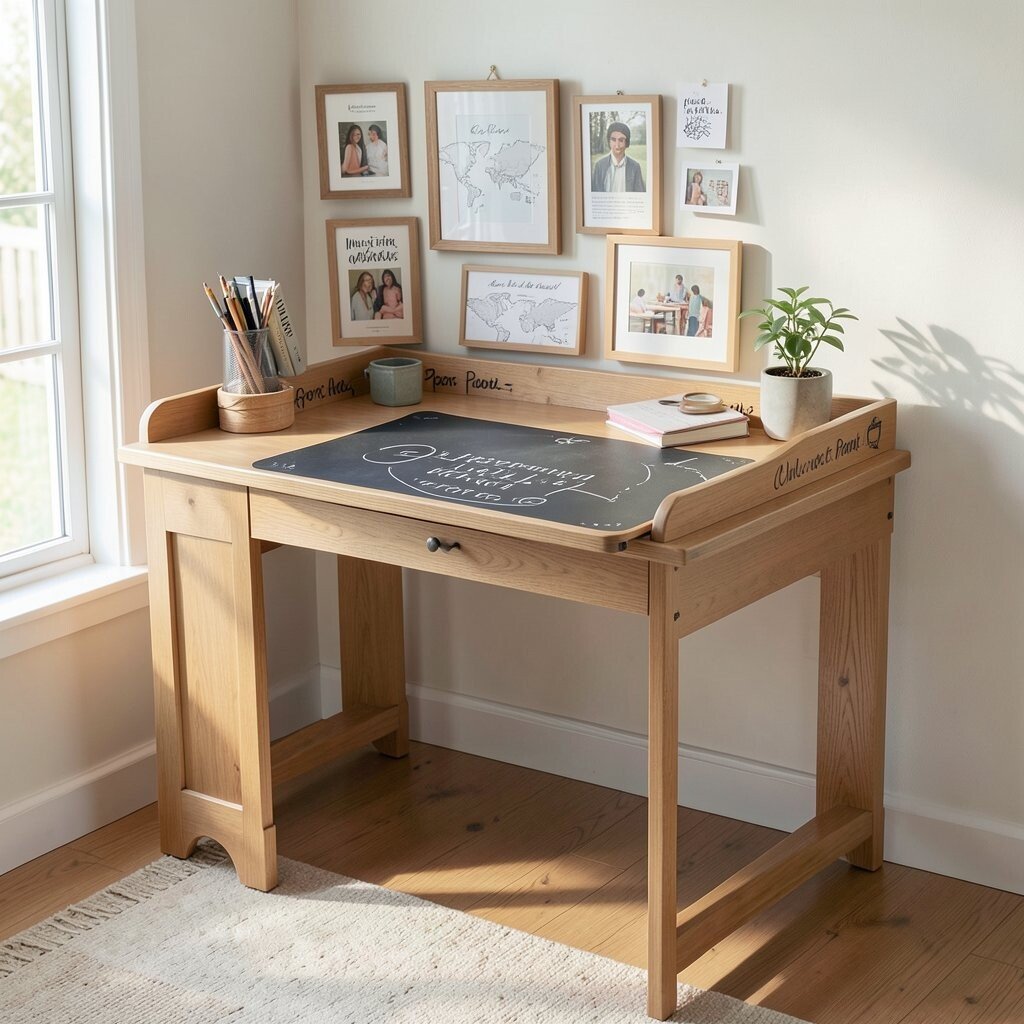
Use a compact fold-out table with a smooth top that feels like a real workstation. Add a chalkboard rail just above the writing surface to list prompts in changing handwriting.
Chalk is great for small spaces because it uses the wall instead of taking up desk space. Write a daily hook, a character question, or a “scene goal,” then erase and refresh without buying anything new.
For personalization, decorate the rail with doodled borders in the corner of your own favorite notebook colors. This idea fits the current trend of hand-lettered workspaces and makes the desk feel alive.
8. Bedside-Adjacent Writing Desk With a Vertical Photo Strip Board

If your room only has a corner near the bed, place a slim desk beside it. A vertical photo strip board holds small snapshots and short lines of dialogue or scene starters.
The benefit is simple access, since you can review notes without walking across the room. Keep the strip at arm height and pin the most useful images in the middle where your eyes land first.
Cost stays friendly if you print images at home and use a mini clothespin set. Unique touches like ticket stubs or postcards make the board feel personal and story-like.
9. Gallery-Style Desk With Floating Shelf and Rotating Inspiration Cards

Imagine a small desk with a floating shelf directly above it like a calm stage. On that shelf, display a stack of inspiration cards in a stand that rotates as you work.
Rotation helps you stay curious because the board never becomes background noise. Set up three piles for ideas, research, and reflections, then swap one pile each writing session.
To save money, make your card stand from a simple bookend or acrylic piece you already own. Personalize with your own headings and hand-cut shapes so the cards match your voice.
Even in tight spaces, this creates a focused atmosphere that feels intentional rather than cramped.
10. Narrow Writing Desk With a Tiered Tray Inspiration Display

Choose a desk that is tall and narrow, with clean lines that fit small walls. On the desk, use a tiered tray to hold inspiration cards, a small timer, and a cup for pens.
The visual benefit is that you can see everything at a glance without digging through drawers. Keep the top tier for active prompts and the lower tier for references, so your workflow stays smooth.
For uniqueness, decorate the tray with a removable cover fabric that matches your room. If cost matters, search for a used tray or repurpose a kitchen organizer that fits the size you need.
11. Pegboard Desk Setup With Color-Coded Writing Boards

Visualize a pegboard behind your desk, painted in a soft neutral or bright creative shade. Peg hooks hold a small clipboard board, while cubbies keep notebooks and sticky notes.
Color coding makes it easier to pick what you need, especially when you juggle drafts, edits, and research. Try assigning one color for story characters, another for settings, and a third for revision steps.
For personalization, add small labels using plain tape and your own handwriting. This setup fits current trends that favor modular organization and flexible display spaces.
12. Minimalist Desk With a Single Large Inspiration Panel

Go for a simple desk with one broad panel above it, like an art board for your writing world. Fill the panel with a handful of images, textures, and one clear prompt that stays visible.
Minimal design helps your eyes rest, which can make writing sessions feel calmer. Keep only the essentials on the panel, and store the rest in a folder you update weekly.
If you want a budget option, use a large poster board covered with contact paper for durability. Personalization comes from your own color story, so choose tones that match your mood.
13. Dining-Table-For-One Desk With a Portable Magnetic Board

Use a small dining table or drop-leaf surface as your desk and make it feel official. Place a portable magnetic board on the tabletop so it moves with you when the table needs to serve other meals.
This helps you enjoy a writing space without dedicating a whole room. Pin photos, sketch ideas, and short lines of dialogue with magnet-backed clips so you can rearrange quickly.
For cost considerations, look for a used magnetic board or create one with a thin metal sheet. Unique flair comes from adding magnets that match your hobbies, like tiny stars or letters cut from cardstock.
14. Sliding Divider Desk With Fabric Pockets for Prompts
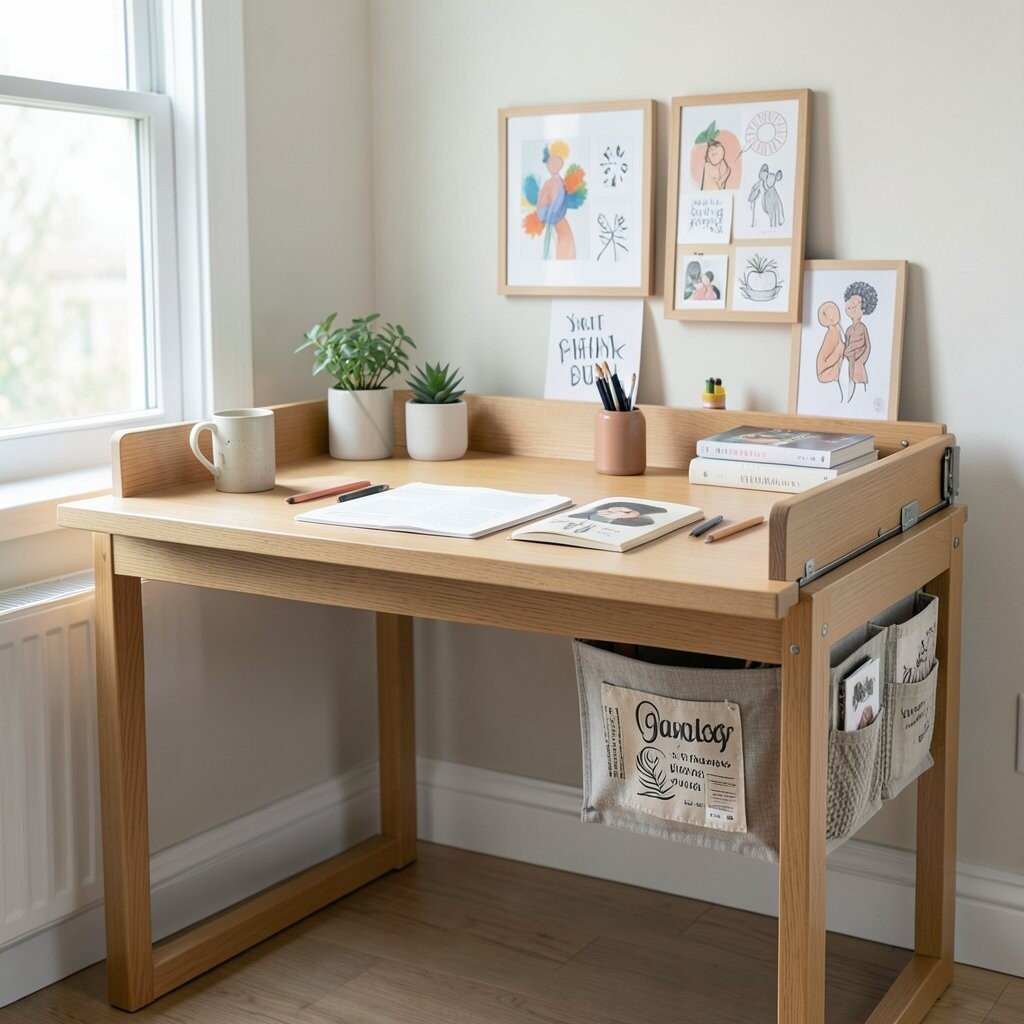
Imagine a desk placed near a living space that needs a little privacy. Use a sliding divider or folding screen behind the desk, then attach fabric pockets to hold prompts and notes.
That divider blocks visual noise, and the pockets keep your inspiration within arm reach. Sort pockets by project stage so your “draft” pieces stay together and your “edit” notes stay separate.
For practical tips, use lightweight cards and keep the fabric pockets roomy enough for a notebook slipcover. Personalize with patterns you love, like polka dots or calm stripes, so the whole scene feels cozy.
15. Stair-Step Shelf Desk With a Mini Board on the Riser
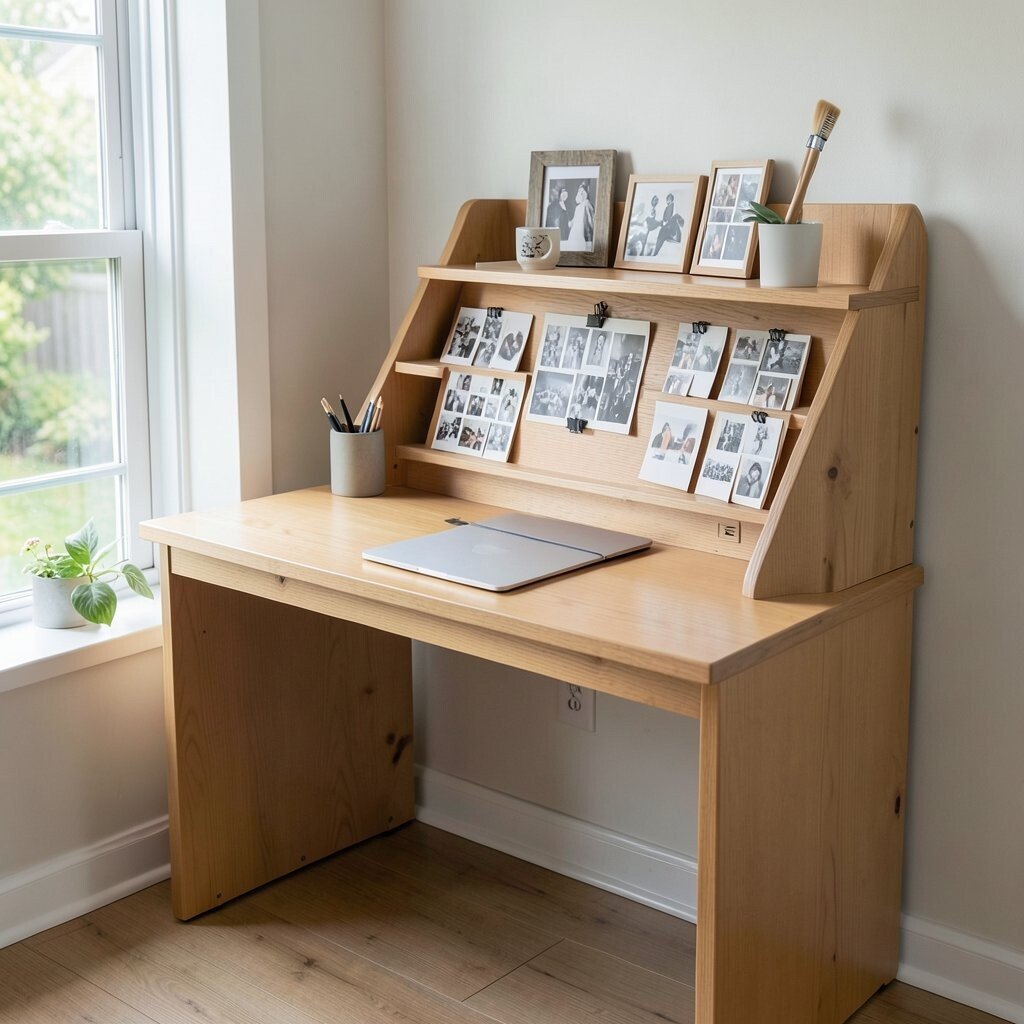
If you have built-ins, use a stair-step shelf as a writing ledge. On the riser above your writing spot, mount a small board where you can pin tiny inspiration squares.
This layout feels unique because it uses vertical levels like a mini mountain of ideas. The benefit is that you can see your prompt and your tools at the same height, reducing distractions.
Use pre-cut paper squares for story starters, and pin them with small binder clips so you can swap without tearing. Keep cost low by using scrap wood and simple board materials from a hardware store.
As your project grows, the squares can become a visible timeline of your writing journey.
16. Compact Desk With a Spin-Rack Inspiration Wheel

Picture a small desk paired with a tabletop spin rack, like a rotating organizer for your inspiration. Each section holds a card with a theme, such as “conflict,” “sensory detail,” or “new scene angle.”
The wheel design is fun, and it nudges you to try fresh prompts instead of repeating the same ones. Spin it at the start of a session, read the card, then write for a set time while it stays in your field of view.
For personalization, print cards with your own doodles or color borders that match your notebook. If you want a lower cost, repurpose a lazy Susan base and replace the compartments with small cardboard dividers.
17. Laptop Writing Desk With a Desktop Pegboard and Pinboard Strip

Make a laptop-focused desk that still feels inspiring, even if you have limited room. Attach a tiny pegboard to the wall behind it, then add a slim pinboard strip for images and notes.
This keeps your workspace flexible, because you can write, sketch, and keep references in view without stacking piles. Use small clothespins to hang page snippets, then store your full documents in a folder beside the keyboard.
Cost stays manageable when you start with one pegboard and a strip board, then add only what you need. Personalize by displaying a few favorite pages of your writing so the board becomes a mirror of your progress.
18. Narrow Desk With Side-Lit Light Panel and Quote Board

Try a slim desk with a soft light panel at the side to reduce eye strain. Above the desk, mount a small quote board that shows one favorite line and one practical reminder.
Good lighting boosts comfort, and that helps you write longer without feeling worn out. Keep the quote fresh by updating it monthly, and rotate a reminder like “keep going” or “write messy” as your mood changes.
For uniqueness, print your quotes in different fonts, then frame them in the same simple color. If cost is a factor, use printable materials and a lightweight frame rather than expensive art supplies.
19. Corner Standing Desk With Magnetic Sheet and Sticky Prompt Loop

Use a standing-height desk or adjustable table if that works for your body. Attach a magnetic sheet to the side, then add a sticky prompt loop using removable tabs.
The benefit is that you can switch posture without losing your setup, which helps many writers stay energized. Keep your best prompts on the magnetic sheet and place fresh sticky notes in the loop so you can grab one mid-thought.
For practical tips, keep only one loop active at a time so the desk does not fill with extra notes. Personalize by adding small magnet charms shaped like your interests, such as books, planets, or pencils.
20. Scrap-Wood Desk With a Reclaimed Frame Inspiration Board
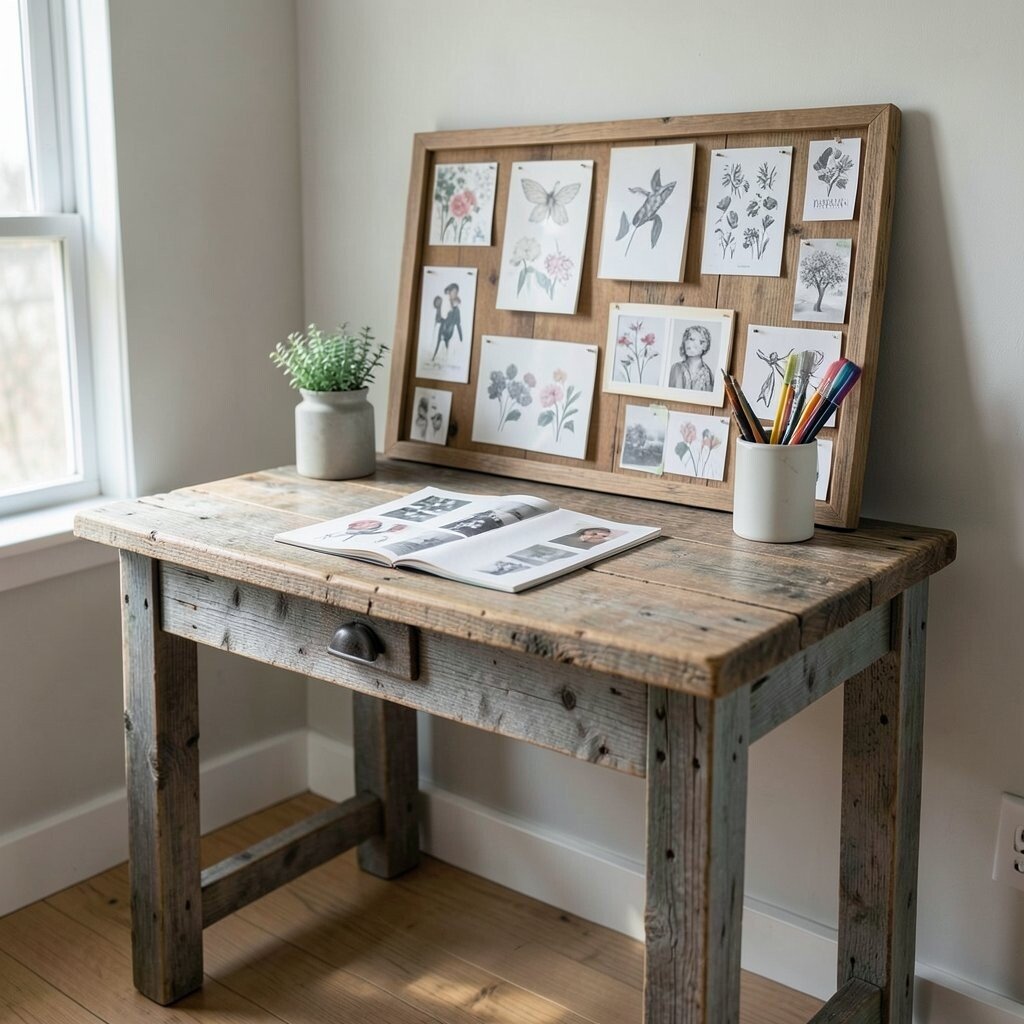
Picture a desk built from scrap wood that has warm texture and character. Above it, hang a reclaimed picture frame filled with inspiration pieces like fabric swatches, typed lines, and small sketches.
The uniqueness is the story in the materials, because every scratch becomes part of your creative space. Reclaimed frames create a gallery vibe, while the desk keeps everything practical for daily writing.
Cost considerations can be gentle since you can source wood and frames from thrift stores or leftovers. Personalize by adding one small note card inside the frame that describes your current project theme in your own words.
This idea feels grounded and makes your desk feel like it has always belonged in your life.
21. Small Office Nook Desk With Floating Drawer and Layered Inspiration Slats

Create a tiny office nook with a desk tucked into the corner and a floating drawer beneath. Add an inspiration board made of layered slats so you can slide photos and notes behind the front layer.
This design is both practical and satisfying because it hides supplies while keeping ideas visible. Slide a new photo or prompt into the slats whenever you finish a chapter, so your board becomes a living progress tracker.
To keep cost low, use affordable slats from a craft store and add the easiest finish you can maintain. Personalize with a signature color for the slat frames, then vary the note sizes based on how urgent the prompt feels.
The result is a small-space setup that looks custom, feels organized, and invites you to write again tomorrow.