Music rooms can get loud fast. Small changes on the walls can make a big difference.
1. Fabric-Wrapped Rock Wool Panels
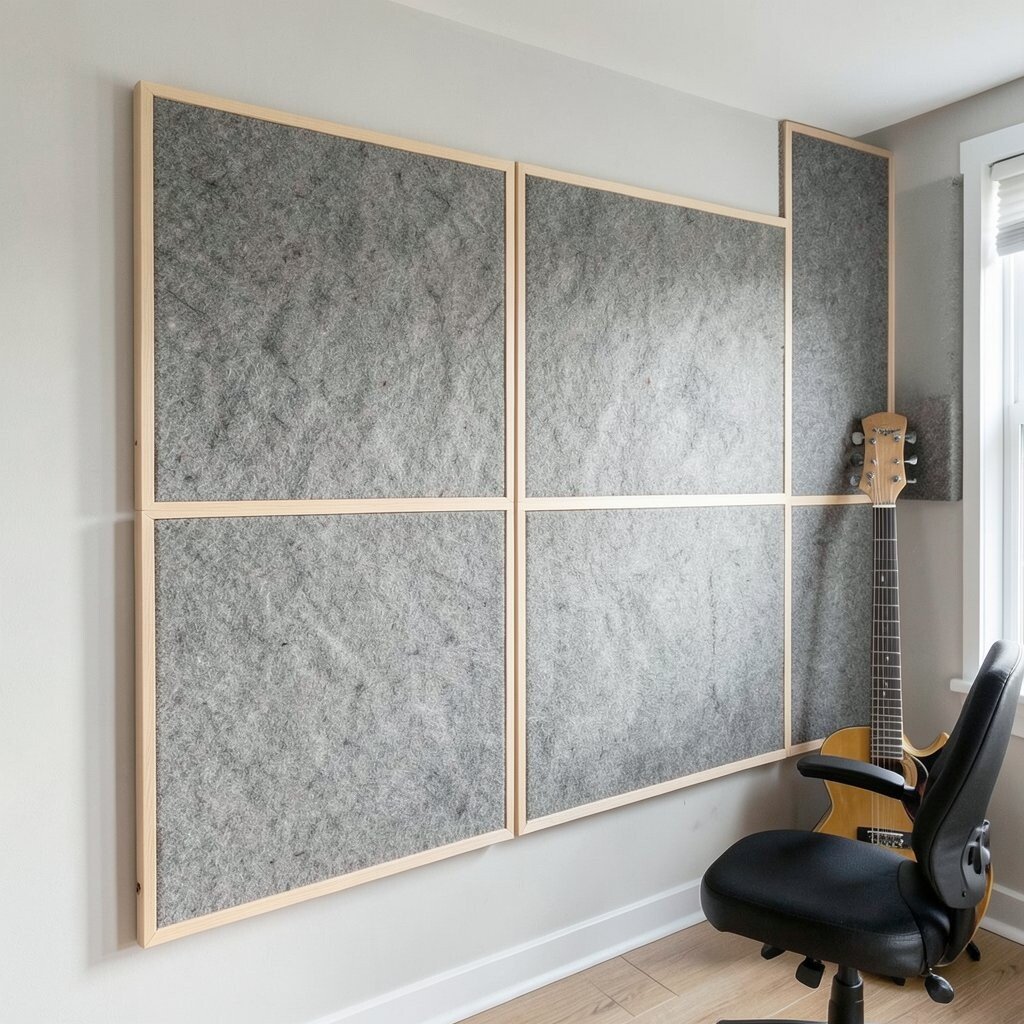
These panels look clean and soft, with smooth fabric stretched over a neat frame. They are a smart pick for cutting echo and making vocals sound clearer.
Rock wool is strong at soaking up sound, and the fabric gives the room a warm, finished look. You can match the cloth to your drum kit, guitar wall, or studio chair, which makes the space feel personal. A simple wood frame keeps the cost fair, and many makers like this style because it feels modern without looking too fancy.
2. Acoustic Panels Made From Old Blankets
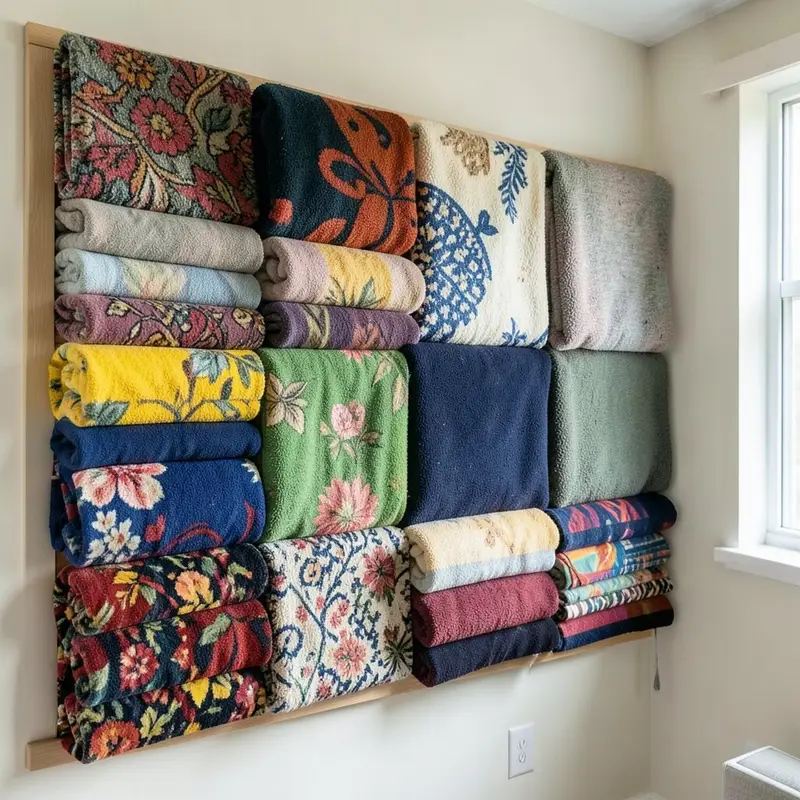
Old blankets can become thick, cozy wall panels that look casual and useful. Their soft, layered look gives a music room a relaxed vibe.
This idea helps lower echo and gives old items a new job, which is great for saving money. You can fold the blankets into neat squares or wrap them in bright fabric for a cleaner finish. If you want a more trendy look, try using bold prints or deep colors that stand out on camera.
These panels are easy to make and easy to move, so they work well in rented spaces. Add a simple border or hanging strap to make them feel more polished and custom.
3. Cork Wall Tiles for Soft Sound Control

Cork tiles bring a natural, warm look that feels calm and tidy. Their light brown color can make a studio wall feel friendly instead of plain.
Cork helps soften sound, especially in smaller rooms where voices bounce around. It is also light, so it is simple to put up with glue or small nails. For a more personal touch, mix cork with painted shapes or framed art to make one wall stand out.
Many music room owners like cork because it is easy to replace and does not cost a lot. It fits well with today’s love for natural materials and simple, clean room design.
4. Egg Crate Foam Panels in Frames
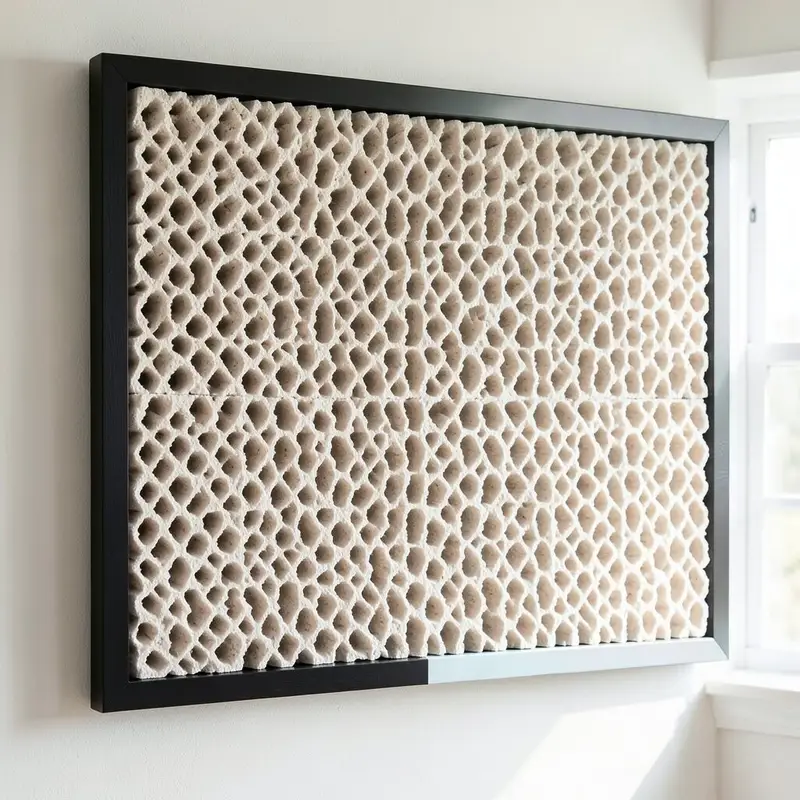
Egg crate foam has a bumpy, spongy look that is easy to spot right away. When placed in a frame, it looks much neater and works better on the wall.
This foam can help reduce sharp echo in practice rooms and small recording corners. It is light and cheap, which makes it a good starter project for beginners. Paint the frame black, white, or a bright color to give the panel more style.
5. Wood Slat Panels With Absorbing Backing
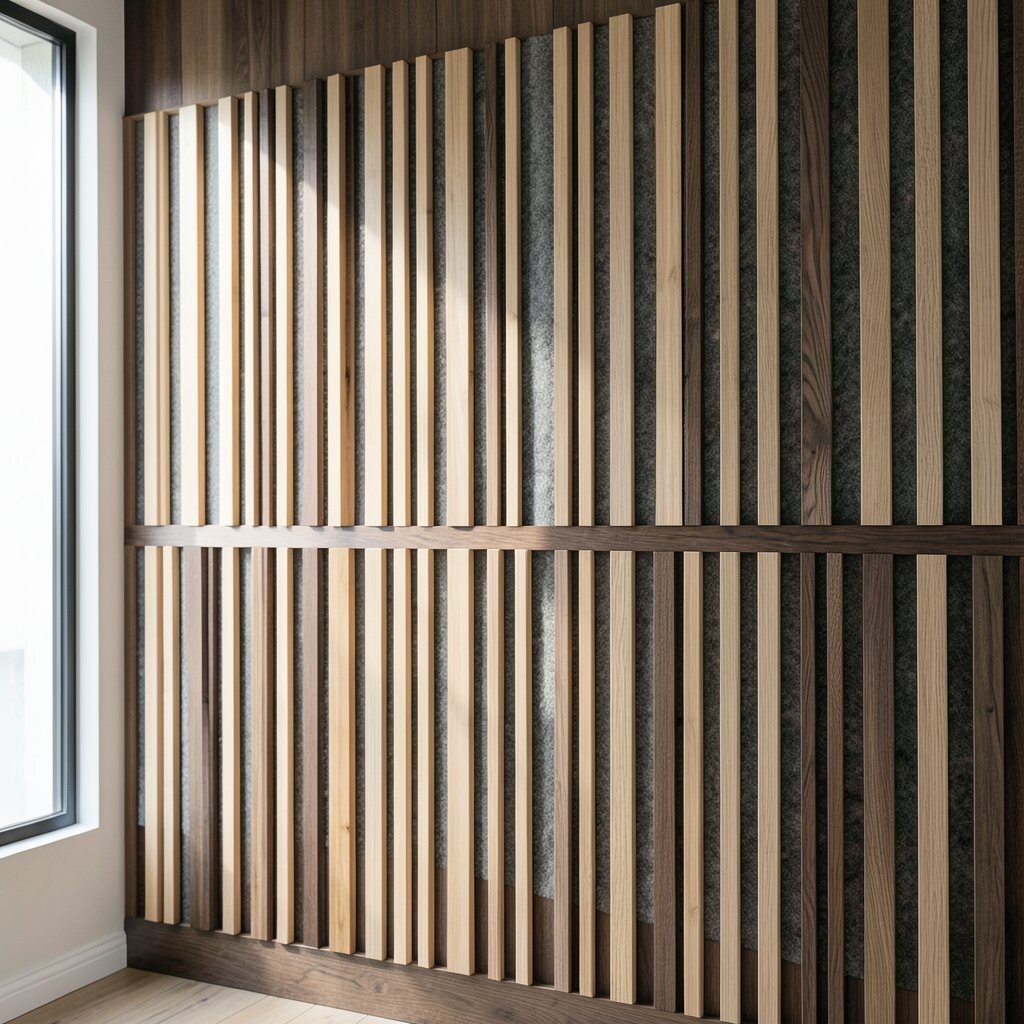
Wood slat panels look rich and modern, with thin lines that give the wall a strong pattern. They can make a music room feel like a fancy studio without losing the DIY feel.
Behind the slats, you can place felt or mineral wool to help catch sound. This mix gives both style and function, which is why it is so popular right now. You can choose light wood for a soft look or dark wood for a bold, moody room.
These panels cost more than basic foam, but they often look more high-end and last longer. Add a few custom slat gaps or color stains to make the design feel one of a kind.
6. Denim Panels for a Cool Recycled Look
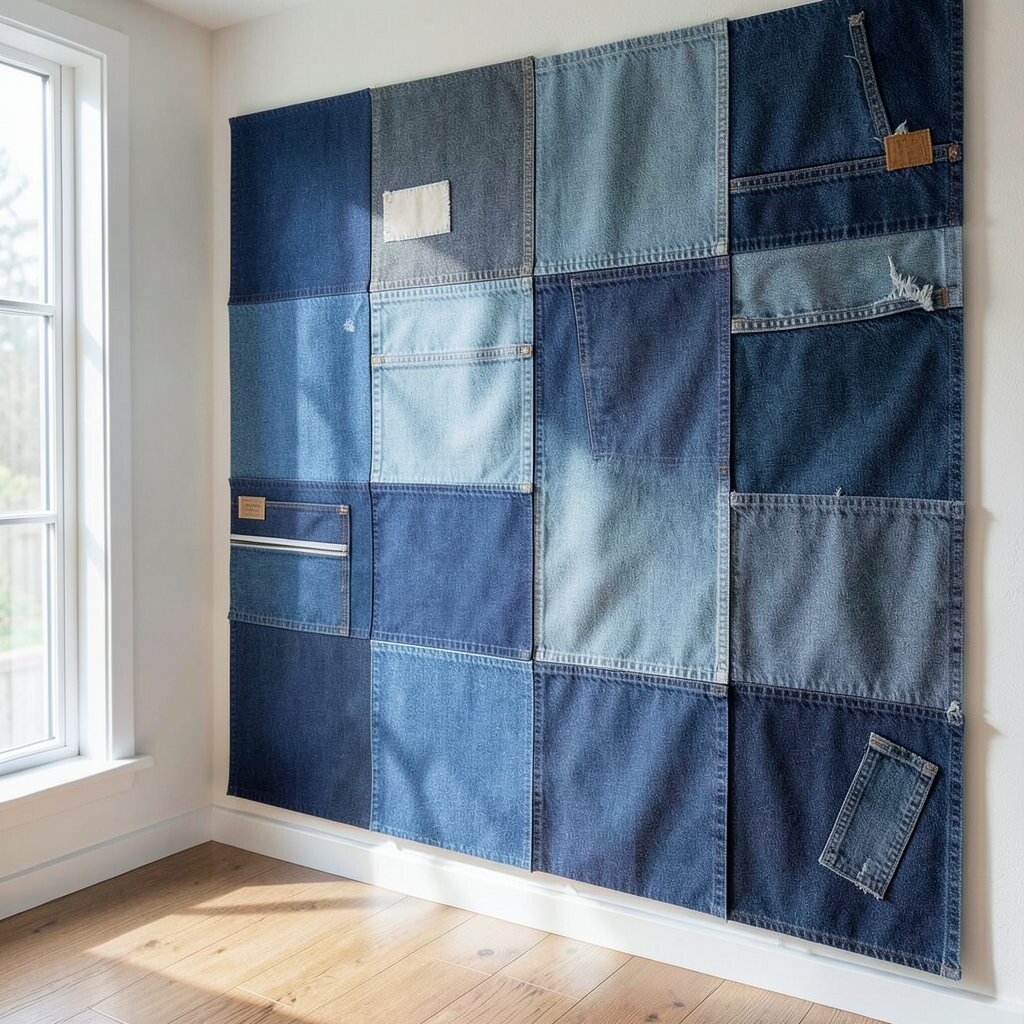
Denim panels have a deep blue look that feels fun and creative. The texture gives walls a handmade style that fits music rooms well.
Old jeans can be cut and packed into frames to make thick sound-absorbing panels. This is a smart way to reuse fabric and keep costs low at the same time. Try mixing light and dark denim pieces for a patchwork look that feels fresh and personal.
Denim works especially well in rooms where you want a casual, artsy mood. If you want extra flair, stitch on labels, stripes, or fabric patches for a custom finish.
7. Felt Panels With Geometric Shapes
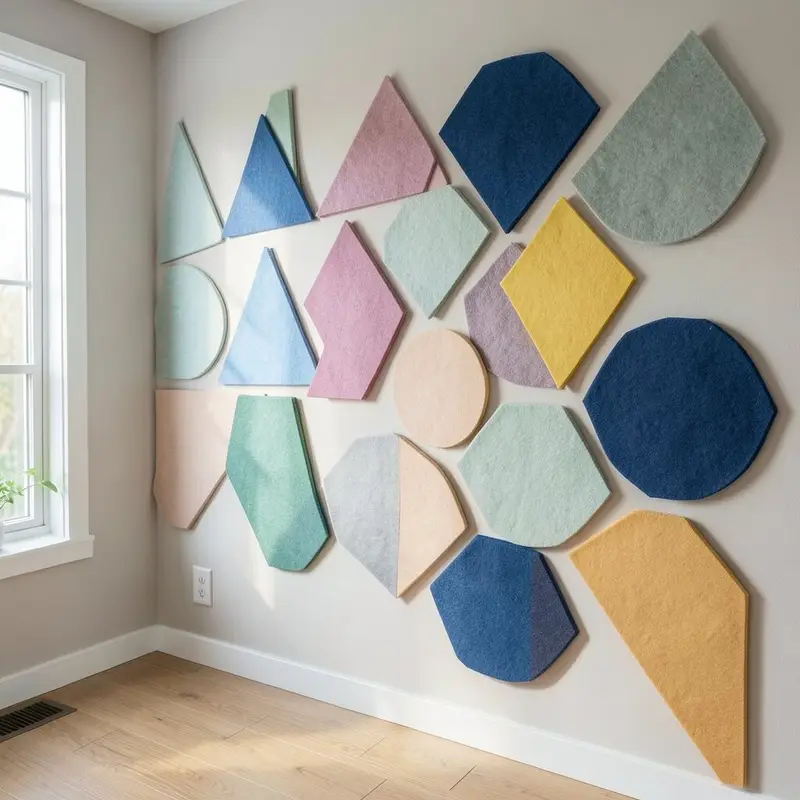
Felt panels can look playful and neat, especially when cut into triangles, circles, or hexagons. The soft surface gives a room a smooth, friendly feel.
Felt helps tame echo and can be arranged in fun wall patterns. It is light, easy to cut, and simple to glue onto a backing board. Many people like this trend because it turns a plain wall into art that also works hard.
You can choose one color for a calm look or mix several shades for a lively studio wall. This option is great when you want sound help and decoration in the same project.
8. Pallet Wood Panels With Hidden Insulation
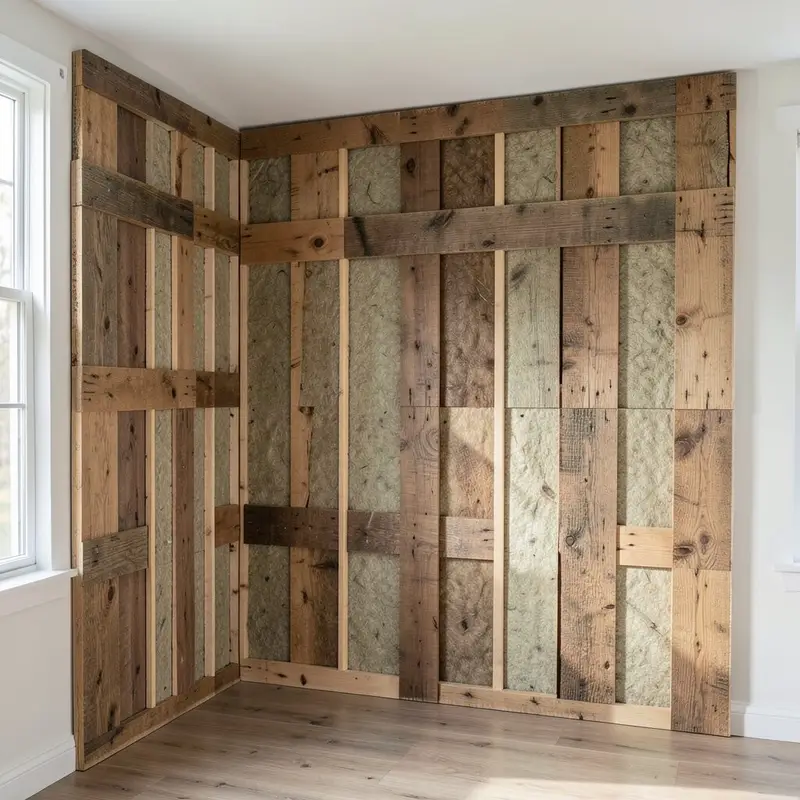
Pallet wood panels have a rustic, rough-edged charm that feels warm and real. The wood grain gives the room a handmade style that stands out.
Inside the frame, add insulation to help stop echo and soften the room sound. Reclaimed pallet wood can keep the price down, but it should be cleaned and checked before use. You can sand the boards lightly for a smooth touch or leave them rough for a more natural look.
These panels are a good fit for guitar rooms, jam spaces, and home studios with an earthy style. Stain them in a rich tone or paint them white for a more modern twist.
9. Upholstered Panels With Bold Prints
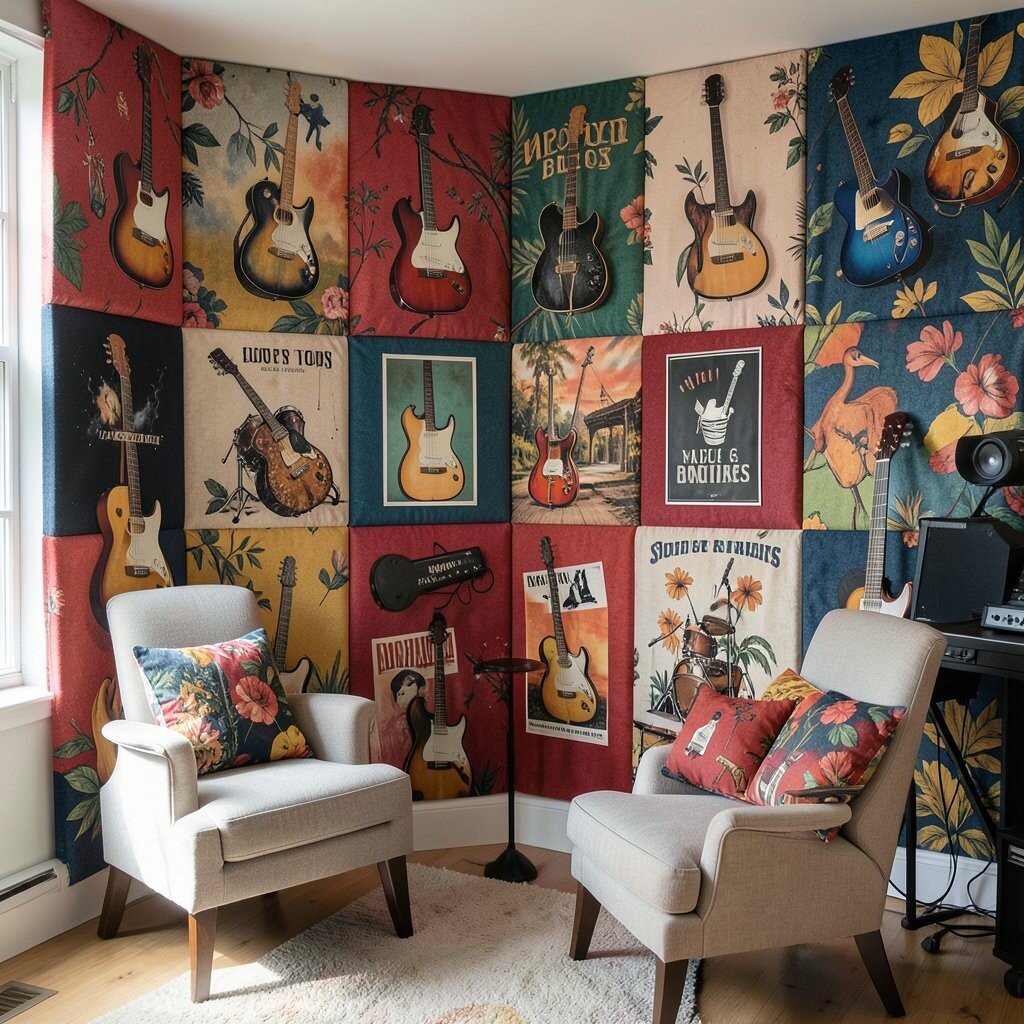
Upholstered panels look soft, rich, and full of color. They can make a music room feel cozy and stylish at the same time.
When wrapped in thick fabric over foam or insulation, they help reduce sound bounce in the room. Bold prints can show off your taste and make the wall feel lively. This is a nice choice if you want the room to feel more like a creative lounge than a plain practice space.
Costs can stay low if you use fabric scraps or sale material from a local shop. Pick prints that match your instruments, posters, or chair cushions for a pulled-together look.
10. Corrugated Cardboard Panels in Layers
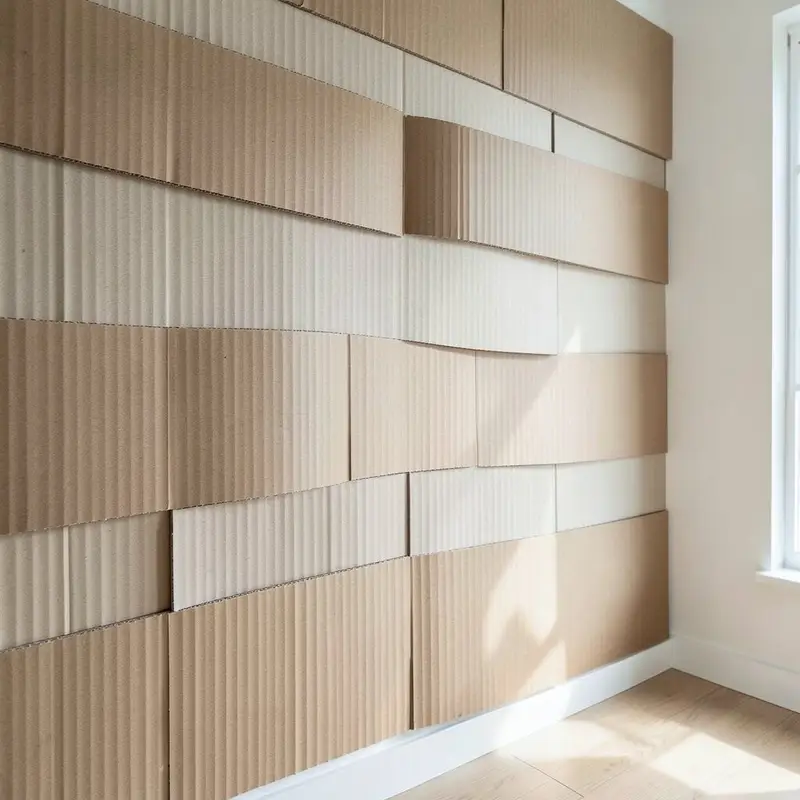
Corrugated cardboard panels have a simple, crafty look that can be surprisingly useful. Layered cardboard creates a textured wall that feels light and modern.
Cardboard is cheap and easy to cut, which makes it a nice project for quick testing. It does not work as well as thicker materials, but it can still help with some echo in a small room. Cover it with fabric or paint it to make it look cleaner and more finished.
This idea is best for temporary setups, student rooms, or practice corners on a tight budget. You can arrange the layers in waves or blocks to give the wall a cool art style.
11. Fabric-Covered Pegboard Panels
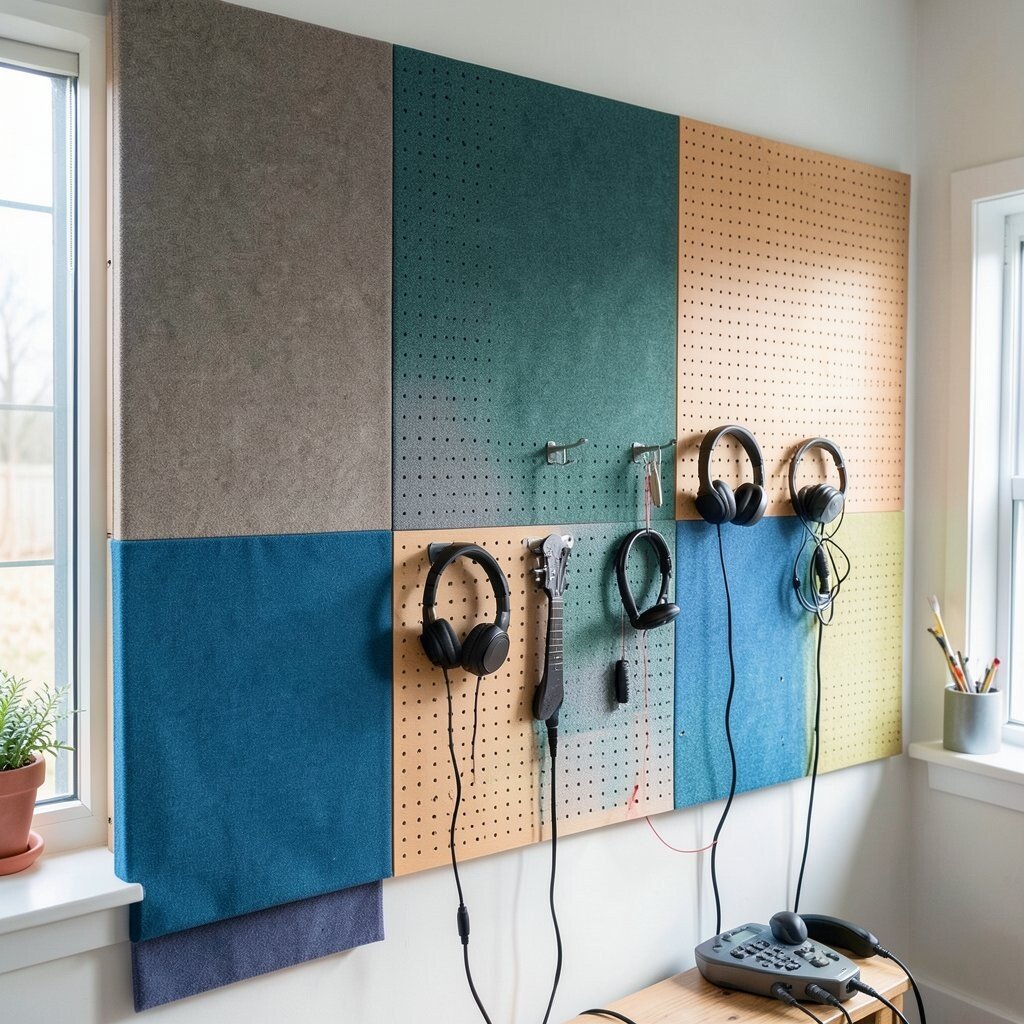
Pegboard panels look neat and useful, with a grid pattern that gives the wall a workshop feel. When covered with fabric, they become softer on the eyes and on the ears.
The holes in pegboard can help with airflow, and the fabric adds a layer that helps reduce sound bounce. You can hang cables, headphones, or small tools on the same wall, which is very handy. This makes the panel feel extra useful in a busy music room.
Choose a fabric color that fits your gear for a clean look, or go bright for more energy. It is a smart choice for people who want storage and sound help in one place.
12. 3D Foam Tile Wall Panels
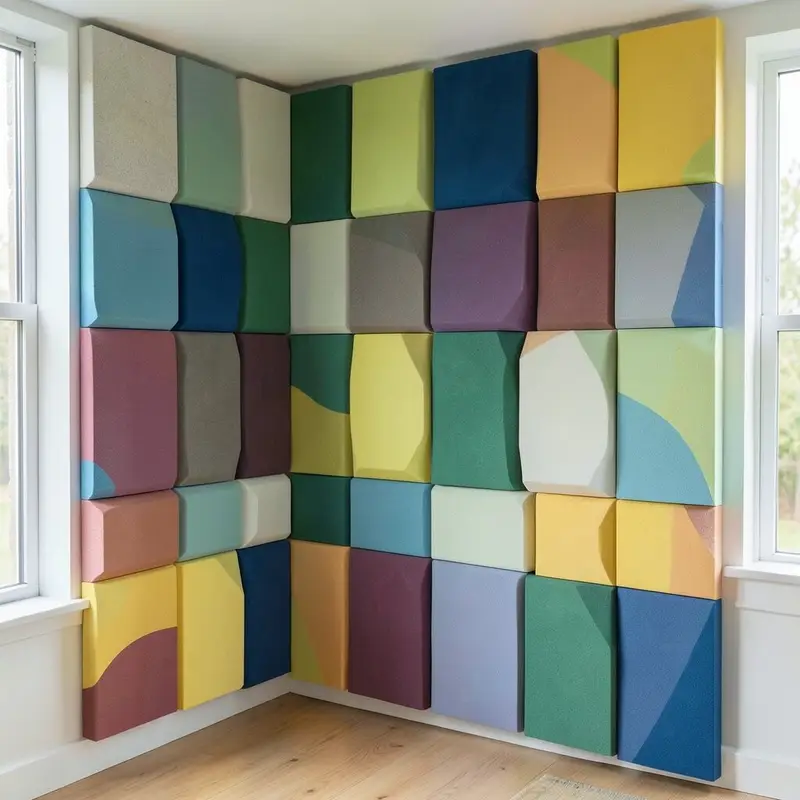
Three-dimensional foam tiles give walls a bold, sculpted look that catches the eye fast. Their raised shapes can make a room feel lively and creative.
These tiles are light and simple to install, and they can help break up sound waves in a small room. They are often used in modern studios because they look stylish on video and in photos. You can paint them in one color for a sleek look or mix shades for a fun pattern.
They are not the thickest sound fix, so they work best as part of a bigger wall plan. Still, their low price and easy setup make them a popular DIY choice.
13. Mineral Wool Panels With Canvas Covers
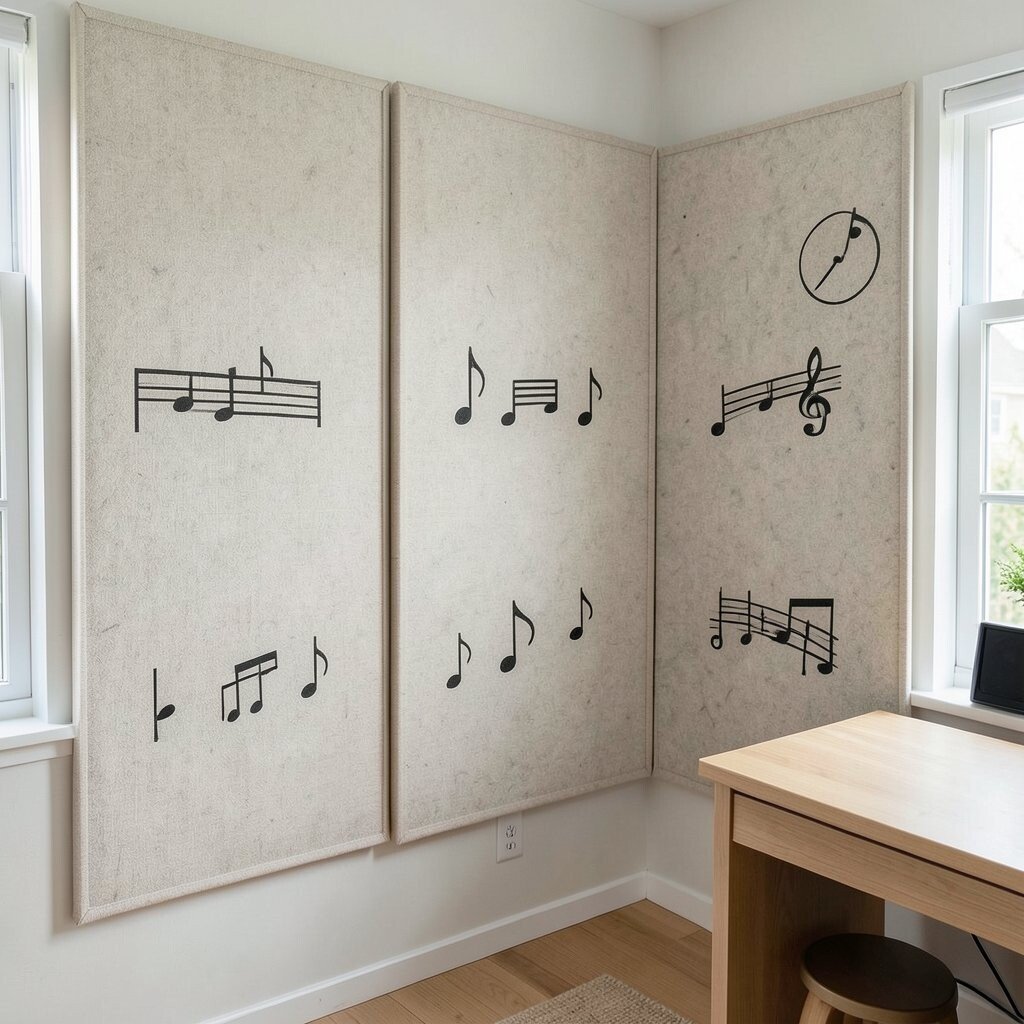
Mineral wool panels have a plain outer look, but they can be made beautiful with the right cover. A canvas wrap gives them a clean, sturdy feel that suits many room styles.
These panels are strong at reducing echo and improving recorded sound. Canvas is easy to paint or print on, so you can add names, music notes, or simple art. That makes the panel feel special instead of just useful.
The materials cost a bit more than basic foam, but the sound results are often better. Many home studio builders like this option because it feels serious without being hard to make.
14. Upholstered Headboard-Style Wall Panels
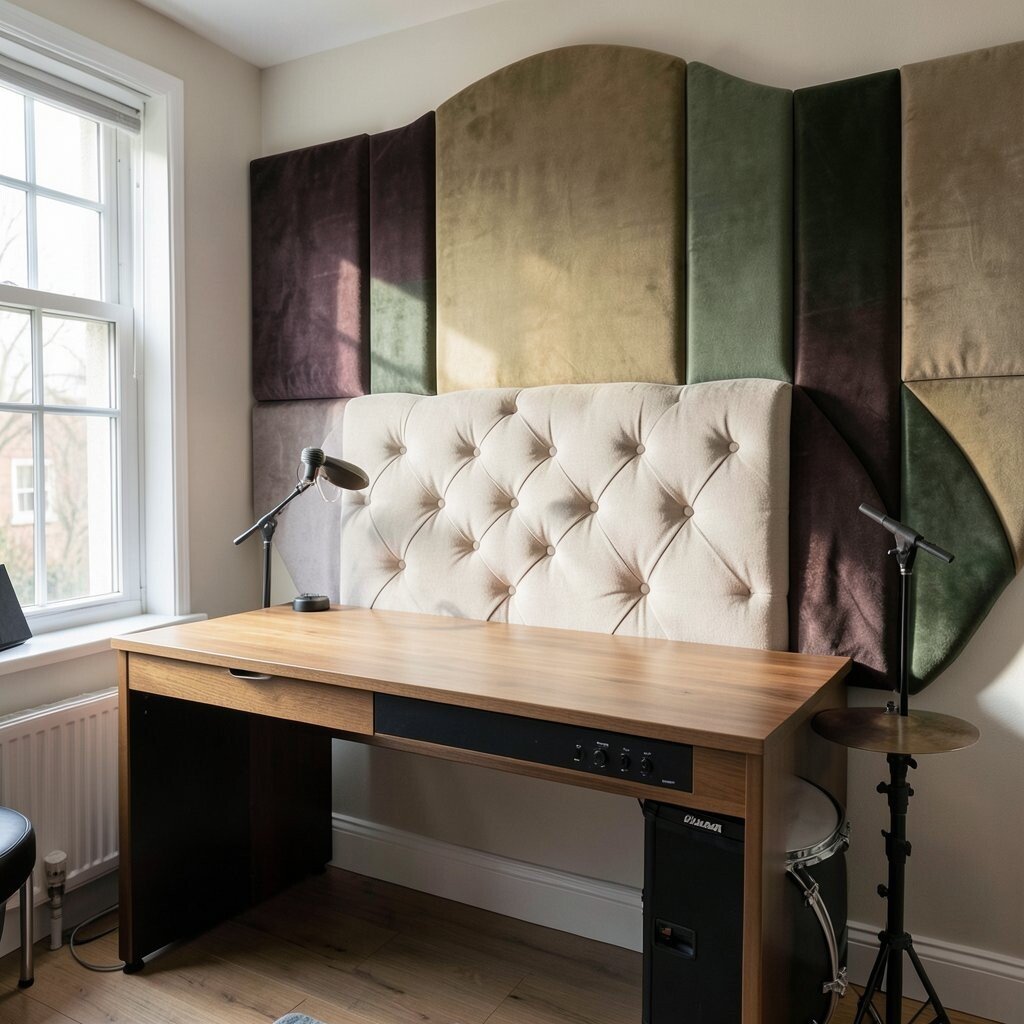
Headboard-style panels look soft and elegant, almost like a bedroom piece brought into a studio. Their padded shape adds a cozy touch that can calm a busy room.
They help soak up sound and can be built with foam, batting, and fabric over a wood base. This style is great if you want the room to feel warm and inviting during long practice sessions. Choose velvet, linen, or faux leather for a different mood and texture.
These panels can be made to fit behind a desk, drum set, or keyboard area. A custom shape or tufted buttons can make the wall feel extra special and unique.
15. Mixed-Material Art Panels
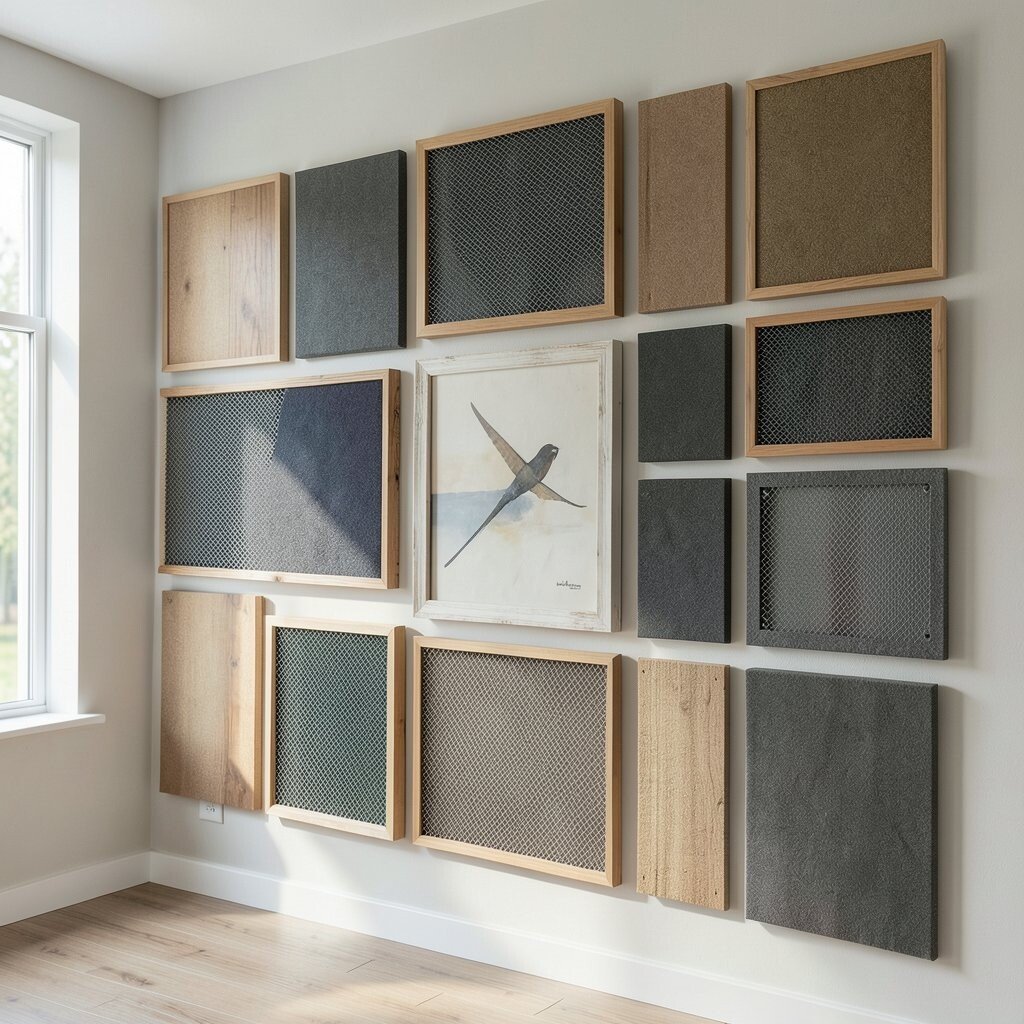
Mixed-material panels blend wood, fabric, foam, and even metal mesh into one cool wall piece. They look like art first and sound control second, which makes them very eye-catching.
This idea is great for people who want a music room that feels creative and current. Each panel can be different, so the wall becomes a personal gallery with a purpose. You can keep costs in check by using scraps from other projects and reusing old frame parts.
Try repeating one color or shape across the panels so the wall still feels balanced. If you want a room that stands out, this is a fun way to show style while helping the sound.