
Mixing plants can make a room feel full of life. A smart blend of shapes, colors, and textures can make even a small corner feel special.
1. Ferns with Bold Croton Leaves
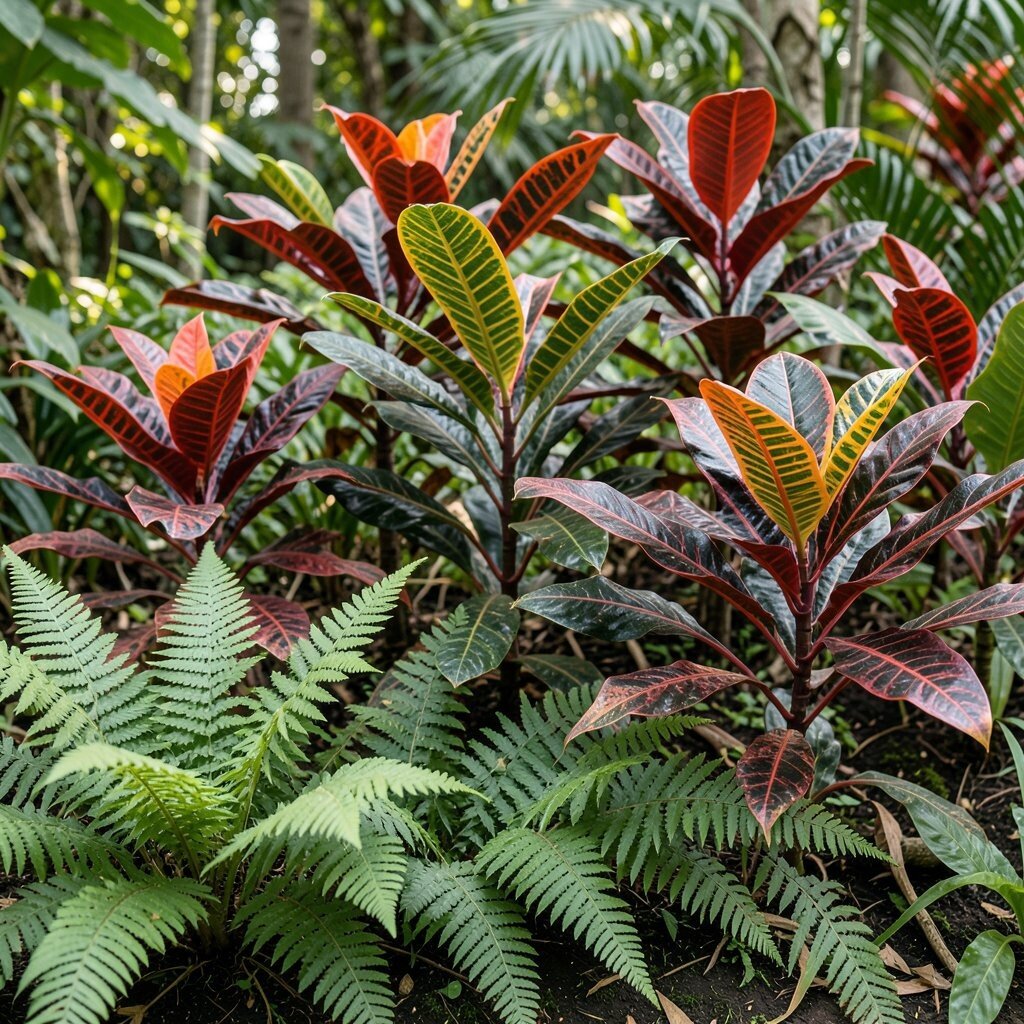
Soft, feathery ferns beside bright croton leaves create a lively look that feels both calm and wild. The dark green lace of the fern helps the red, orange, and yellow croton colors stand out in a way that feels rich without being too loud.
This pairing works well in a living room or bright porch where the eye can enjoy the contrast from across the space. It also gives you a nice balance because the fern adds a cool, airy feel while the croton brings strong color, and that mix can make a plant shelf look more layered and complete. If you want to keep the cost low, start with one healthy fern and one small croton, then place them in simple pots that share the same tone.
2. Snake Plant with Trailing Pothos
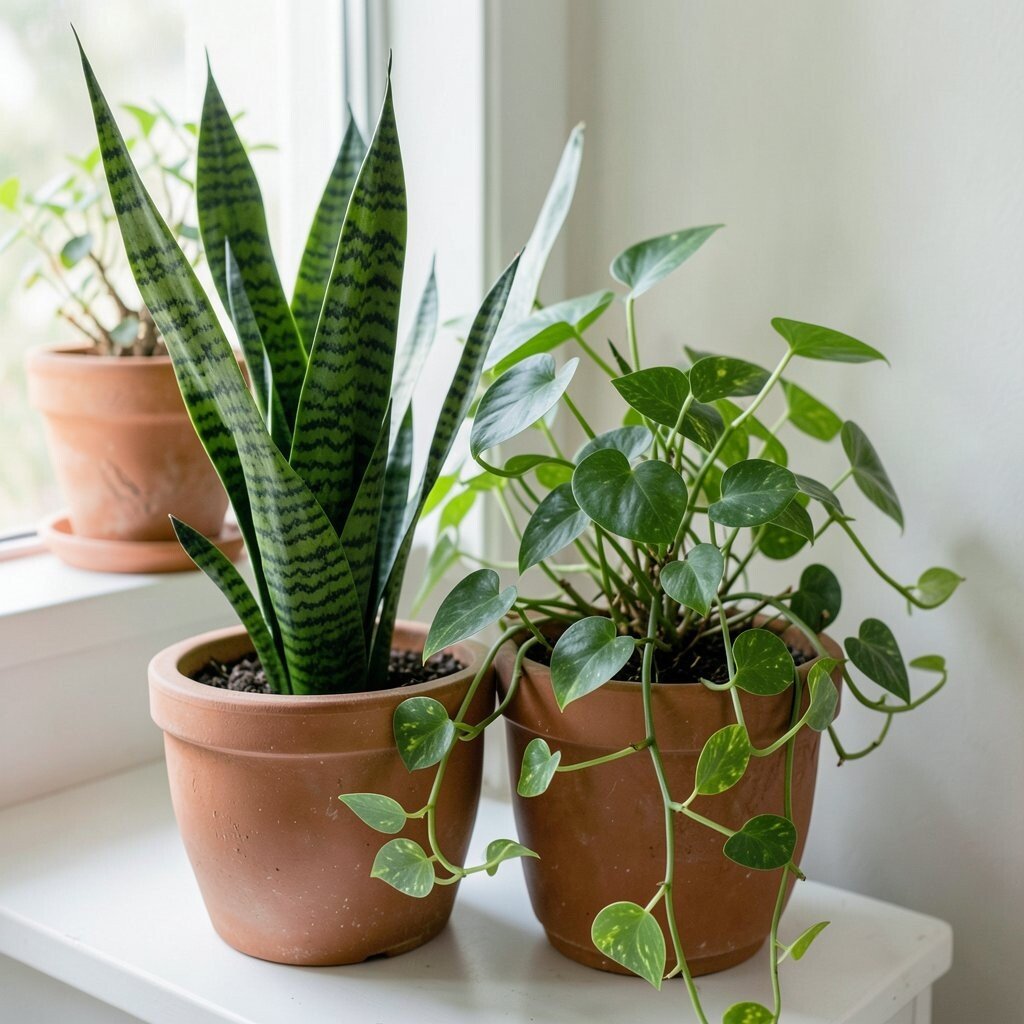
A tall snake plant next to a spilling pothos makes a clean shape next to a soft cascade. The upright leaves give the scene a neat edge, while the pothos brings movement and a relaxed feel that makes the whole combo easy to enjoy.
This mix is a good pick for busy homes because both plants are fairly easy to care for and can handle a little neglect. You can keep it fresh by placing the snake plant in a plain pot and letting the pothos trail from a shelf above, which gives the look more height and charm. Many people like this style now because it feels modern without trying too hard, and it can be done on a small budget with starter plants.
If you want a more personal touch, try a warm clay pot for the snake plant and a hanging basket in a soft woven style for the pothos. The contrast makes the space feel collected over time, which is part of what makes eclectic plant groupings so appealing.
3. Calathea with Mini Succulents

Calathea leaves have patterns that can look painted by hand, so they pair nicely with the simple forms of tiny succulents. Together they create a scene that feels thoughtful, with the big striped leaves making the little plants look even more charming.
This mix is great on a desk, side table, or windowsill where you want a bit of interest without a crowded look. The calathea brings lush movement, while the succulents add clean edges and help the group feel fresh and balanced. For a smart spending plan, use one main calathea as the star and fill in with a few small succulents from affordable nursery trays.
Try using pots in mixed finishes, such as matte white, speckled ceramic, and simple stone, to make the group feel collected rather than matched. That kind of personal mix fits well with current plant styling trends, which favor easy layers and a lived-in look.
Keep the succulents grouped tightly so they do not get lost beside the large leaves, and give the calathea enough moisture so its patterns stay crisp. When the care needs are handled well, the combination can look polished and last a long time.
4. Rubber Plant with String of Pearls
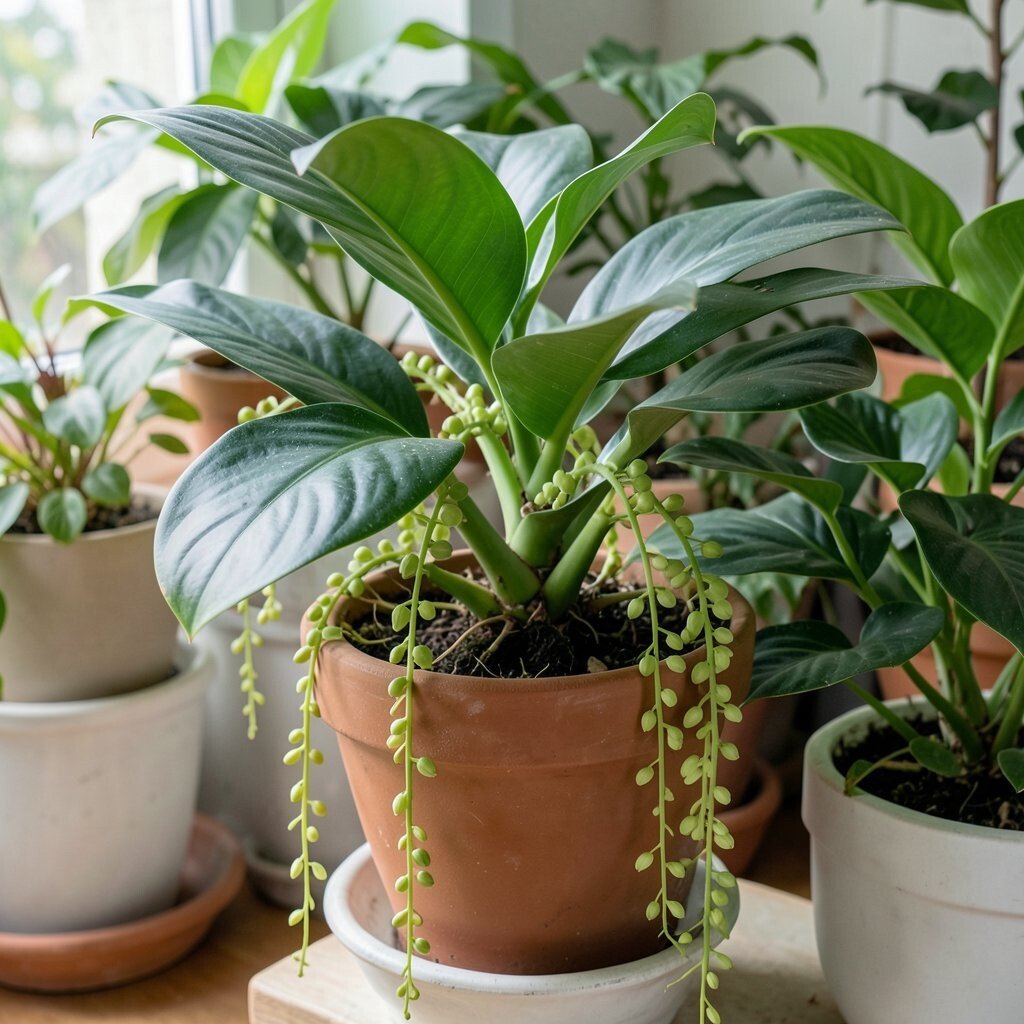
A rubber plant offers a strong, glossy shape that can anchor a room, while string of pearls softens the scene with tiny hanging beads. The result feels playful and neat at the same time, almost like a bold sculpture with a gentle green fringe.
This setup works especially well on plant stands or shelves where the trailing stems can hang down in a neat curtain. It gives height and depth to a corner, and the dark shine of the rubber plant helps the lighter trailing plant pop in a way that feels stylish. If you want to manage cost, choose one medium rubber plant and one small string of pearls cutting, since the trailing plant can grow over time.
A simple black or cream pot can make the rubber plant feel modern, while a basket or hanging pot can give the pearls a softer look. That blend of strong and delicate shapes feels very current and can be customized easily for a bright room or a cozy den.
5. Peace Lily with Red Fittonia
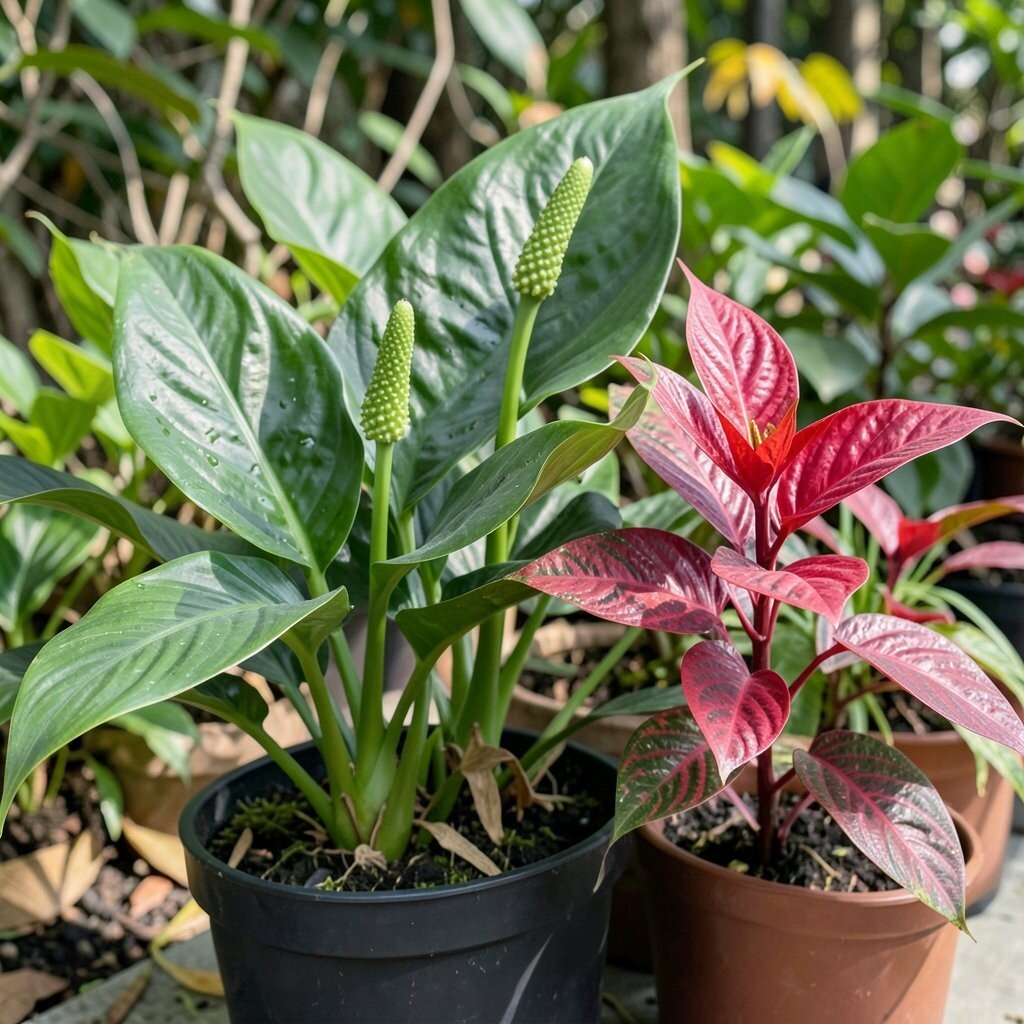
The smooth white blooms and deep green leaves of a peace lily look lovely beside the red veins of fittonia. Their colors work like a quiet conversation, with the peace lily bringing calm and the fittonia adding a spark of energy.
This pairing is a nice fit for a bathroom, bedroom, or reading nook because both plants enjoy a more humid setting. The contrast in leaf shape is what makes it stand out, and that uniqueness can make a simple shelf feel much more alive. A low-cost way to begin is to buy a small fittonia and a young peace lily, then place them in matching pots for a tidy but not boring look.
You can make the display feel more personal by using one pot with a glazed finish and one with a rough texture. Small choices like that help the group feel handpicked rather than arranged from a store display.
Keep the fittonia close so its bright veins are easy to see, and trim any old peace lily leaves to keep the arrangement crisp. The care is simple enough for many homes, and the visual payoff is strong.
6. Monstera with Spider Plant

Monstera leaves bring big, split shapes that feel tropical and bold, while a spider plant adds light, arching lines below. Together they create a layered look that feels full but still open, like a mini indoor jungle with room to breathe.
This mix is useful in a corner that needs height and movement without feeling too packed. The monstera acts like the main focal point, and the spider plant adds a soft edge that can make the whole setup look more finished. If you are watching costs, choose a young monstera and a common spider plant, since both are often easy to find and simple to grow.
Many plant lovers like this style now because it gives a home a relaxed resort feel without needing rare plants. You can personalize it with a woven basket, a white pot, or a simple wooden stand, depending on how cozy or clean you want the look to be.
7. Philodendron with Purple Heart

A philodendron with its lush green leaves looks especially rich next to the deep purple of purple heart. The color contrast feels dramatic but still easy to live with, which makes the pair a strong choice for a shelf or tabletop.
This combo brings both softness and edge, since the philodendron trails or climbs while the purple heart spreads in a low, colorful mat. It can help a room feel more layered and alive, and it works well when you want something different from the usual all-green display. To keep the price down, use cuttings or small starter pots, because both plants can fill out nicely with time.
Try using a pale pot for the philodendron so the green leaves look brighter and a darker pot for the purple heart so the color feels deeper. That kind of simple contrast is easy to copy and gives you a stylish result without much effort.
The pair also fits current plant design trends that mix hanging vines with low ground-like plants to create a mini scene. It is an easy way to make one shelf feel like a whole little world.
8. ZZ Plant with Air Plants
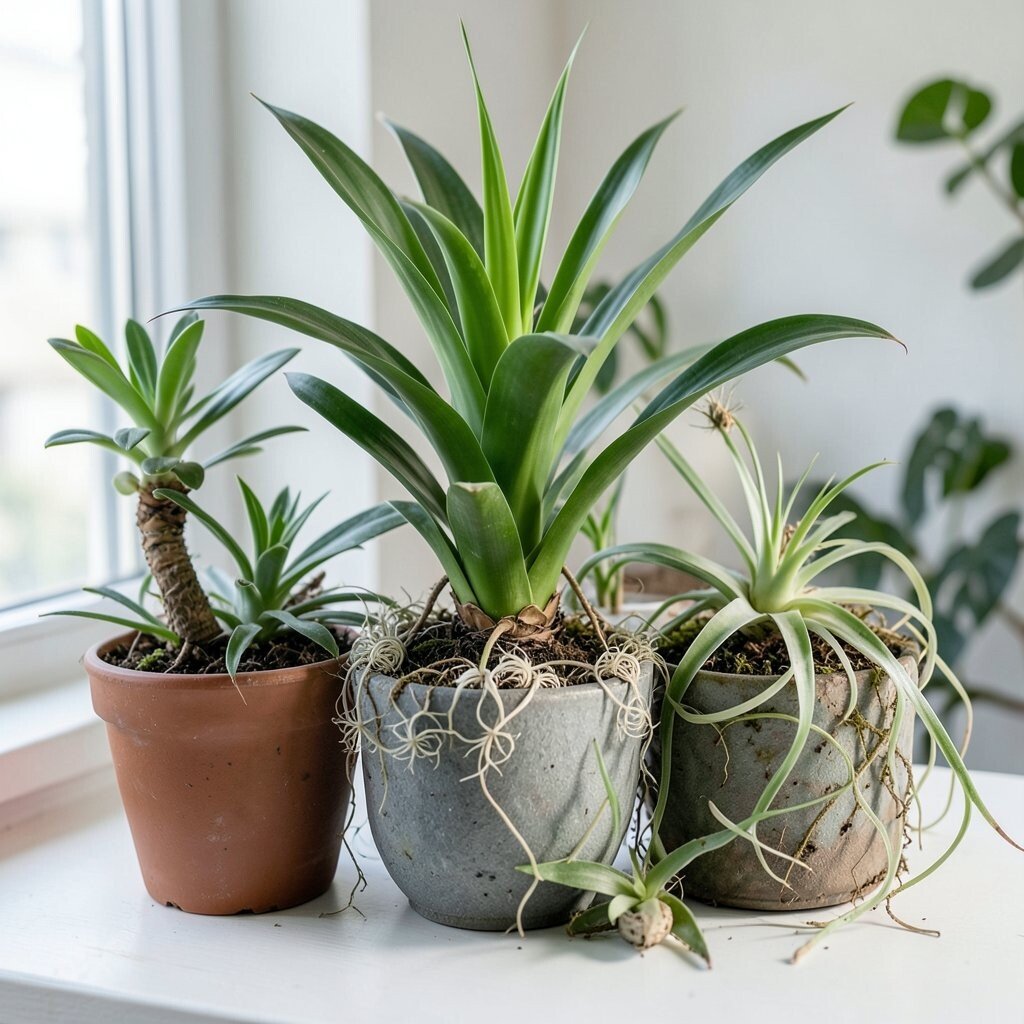
The thick, shiny leaves of a ZZ plant make a strong base for the lighter, airy look of air plants. This combination feels modern and neat, with the ZZ plant giving structure while the air plants add a playful touch.
Because air plants can sit in little holders, this pairing works well on narrow ledges, desks, or bathroom shelves. It offers a low-clutter style that still feels creative, and the unusual mix can make guests look twice. If you want to spend less, buy one healthy ZZ plant and a few small air plants, then display them in simple stands you already have.
You can make the arrangement feel more like your own by using holders made from wood, stone, or wire. Each material changes the mood a little, so the same plants can feel rustic, clean, or artsy depending on what you choose.
Since both plants can look tidy for a long time, they are a practical choice for people who want style without a lot of fuss. That balance is one reason the pairing stays popular in small homes and work spaces.
9. Pilea with Baby Tears
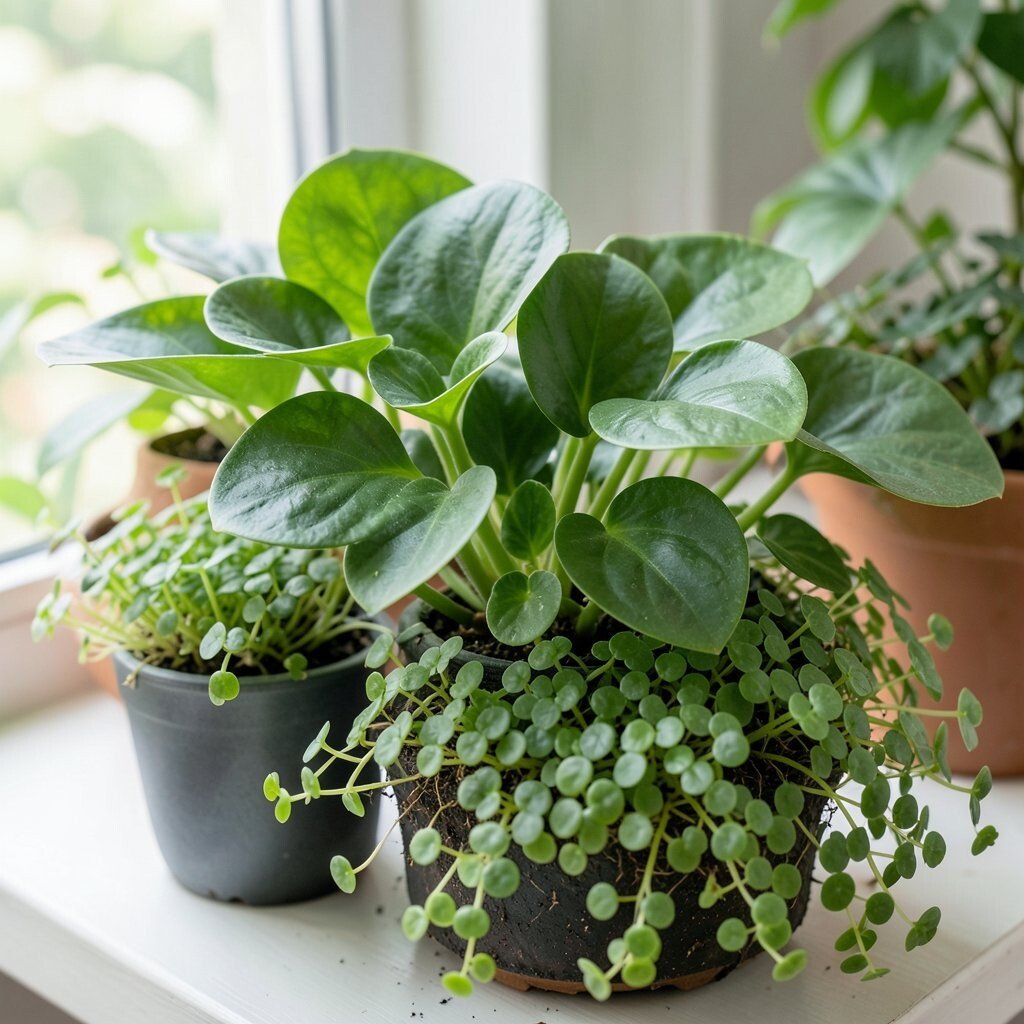
A pilea with its round coin-like leaves looks cheerful beside the tiny, mossy shape of baby tears. The bigger circles and the fine little leaves make a sweet contrast that feels soft and friendly.
This combo is lovely on a kitchen shelf or near a sunny window where the plants can brighten up daily routines. It gives a fresh, almost storybook feel, and the size difference between the two plants makes the setup look carefully chosen. For an easy start, use small nursery pots and move them into matching planters only if you want a cleaner look later.
The pair can be personalized with containers in pastel colors, natural clay, or even recycled tins for a more casual style. That small bit of charm can make the group feel like it truly belongs in your home.
Watering needs should be watched closely because both plants like steady care, but the reward is a lush and cozy display. When kept happy, they create a soft green patch that feels welcoming right away.
10. Dracaena with Hoya
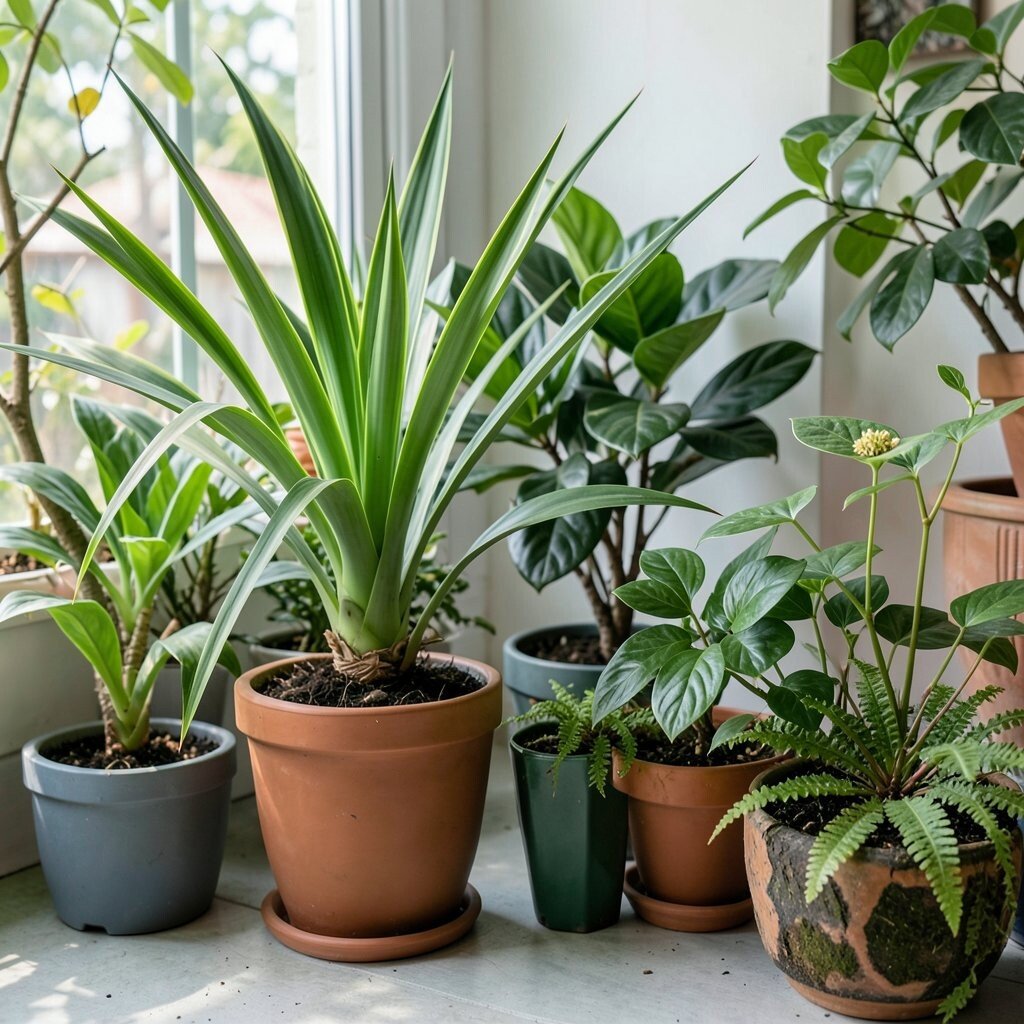
Dracaena gives a tall, upright shape, while hoya brings waxy leaves and often a trailing habit that softens the edges. The mix feels elegant and a little unexpected, which is part of what makes eclectic pairings so fun.
This style works well in an entryway or living room where you want a plant grouping that feels tall but not heavy. The dracaena can act like a clean vertical line, and the hoya can spill gently from the side to break up the shape in a pleasing way. To keep the cost reasonable, choose a smaller dracaena and train a young hoya over time instead of buying a large mature one.
If you want a trend-aware look, place the plants in simple sculptural pots with soft curves or ribbed sides. Those containers feel current and help the plants look more like decor without taking away their natural charm.
11. Anthurium with Maidenhair Fern

Bright anthurium flowers and shiny leaves look striking beside the delicate cloud of a maidenhair fern. The anthurium gives the eye a bold color point, while the fern adds a soft lace-like texture that feels airy and gentle.
This pairing is a strong choice for a room that needs a little polish, since it looks lush and refined without being too formal. The contrast in shape is what makes it shine, and the combination can make a quiet corner feel more alive. If you are thinking about budget, buy one good anthurium in bloom and one small fern, then give them time to settle into the space.
You can make the scene feel more personal by using one glossy pot and one natural basket, which gives the display a nice mix of shine and warmth. That mix keeps the style from feeling too perfect, which is often the heart of eclectic design.
Because the fern likes gentle moisture and the anthurium enjoys steady care, the pair rewards a thoughtful routine. When treated well, the colors and textures stay rich and inviting.
12. Cactus with Tradescantia
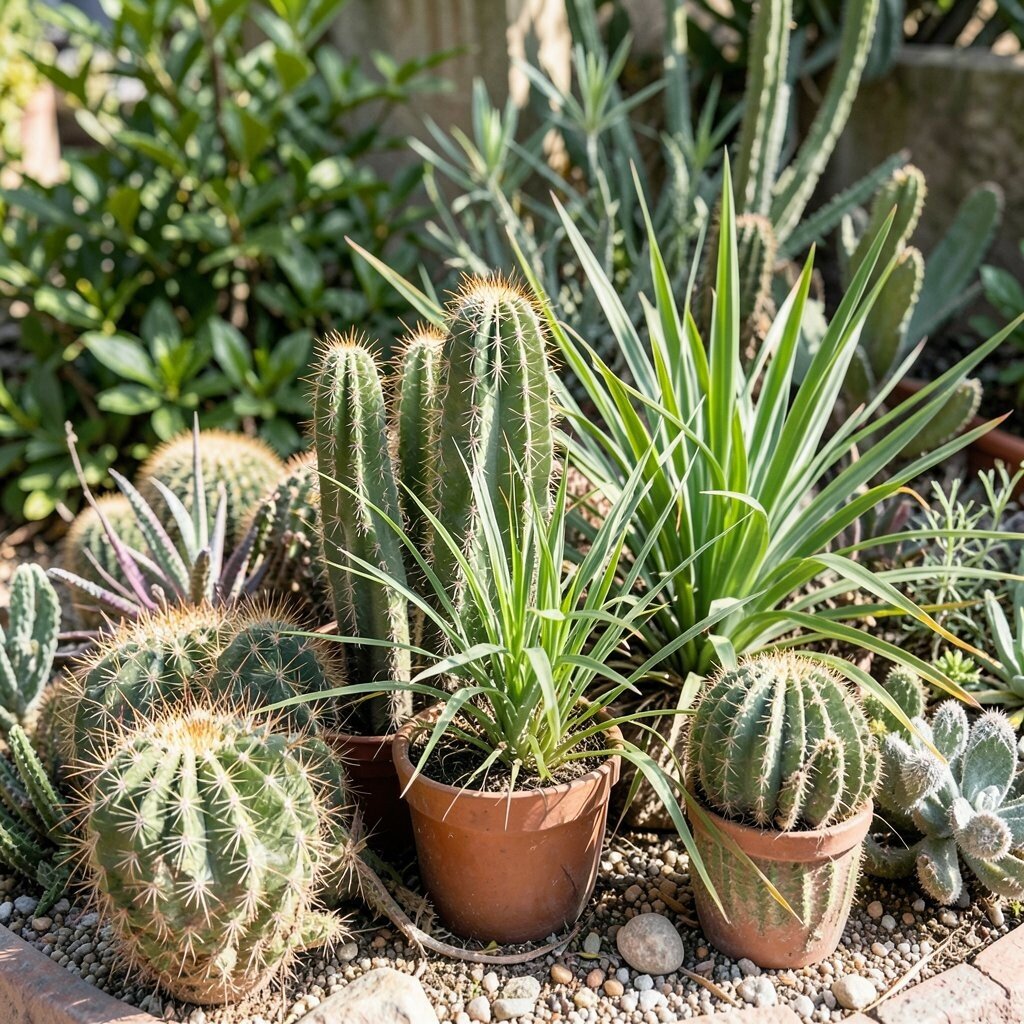
A cactus brings a strong, spiky shape that feels desert-bright, and tradescantia adds loose color and a soft trailing form. The two together create a fun clash of styles that somehow feels balanced and fresh.
This pairing can make a sunny windowsill feel much more interesting because the cactus adds structure while the tradescantia brings motion and color. The uniqueness comes from the contrast, and that is part of why people enjoy mixing plants that seem very different at first. A budget-friendly approach is to use a small cactus and a tradescantia cutting, since the trailing plant grows quickly and can fill out the scene fast.
You can shift the mood by choosing a bold pot for the cactus and a lighter one for the tradescantia, or by keeping both in plain containers for a cleaner look. Since current plant styling often favors mixed textures, this pairing feels right at home in modern spaces.
Be sure to give the cactus the dry soil it likes and keep the tradescantia a bit more evenly watered. That simple care plan helps both plants stay healthy while still looking like they belong together.
13. Bromeliad with Creeping Fig

A bromeliad has a strong, tropical center that looks bright and full, while creeping fig brings a softer, climbing feel around it. The mix can look like a little rainforest scene, with the bromeliad standing out as the star and the fig adding a gentle frame.
This combo works well on a plant cart or shelf where the fig can trail or climb nearby surfaces. It gives a sense of motion and life, and it is unique enough to feel special without needing rare or expensive plants. If you want to keep spending low, choose a small bromeliad and start creeping fig from a small pot, since it can spread with patience.
Personal touches like a ceramic tray, a plant ladder, or a woven mat can help the display feel complete. Those little details make the plants look like part of the room instead of something that was just placed there.
The bright center and the soft spread also fit today’s love for tropical, layered indoor scenes. With the right light and a little care, the pair can bring a cheerful mood to an everyday space.
14. Cast Iron Plant with String of Hearts
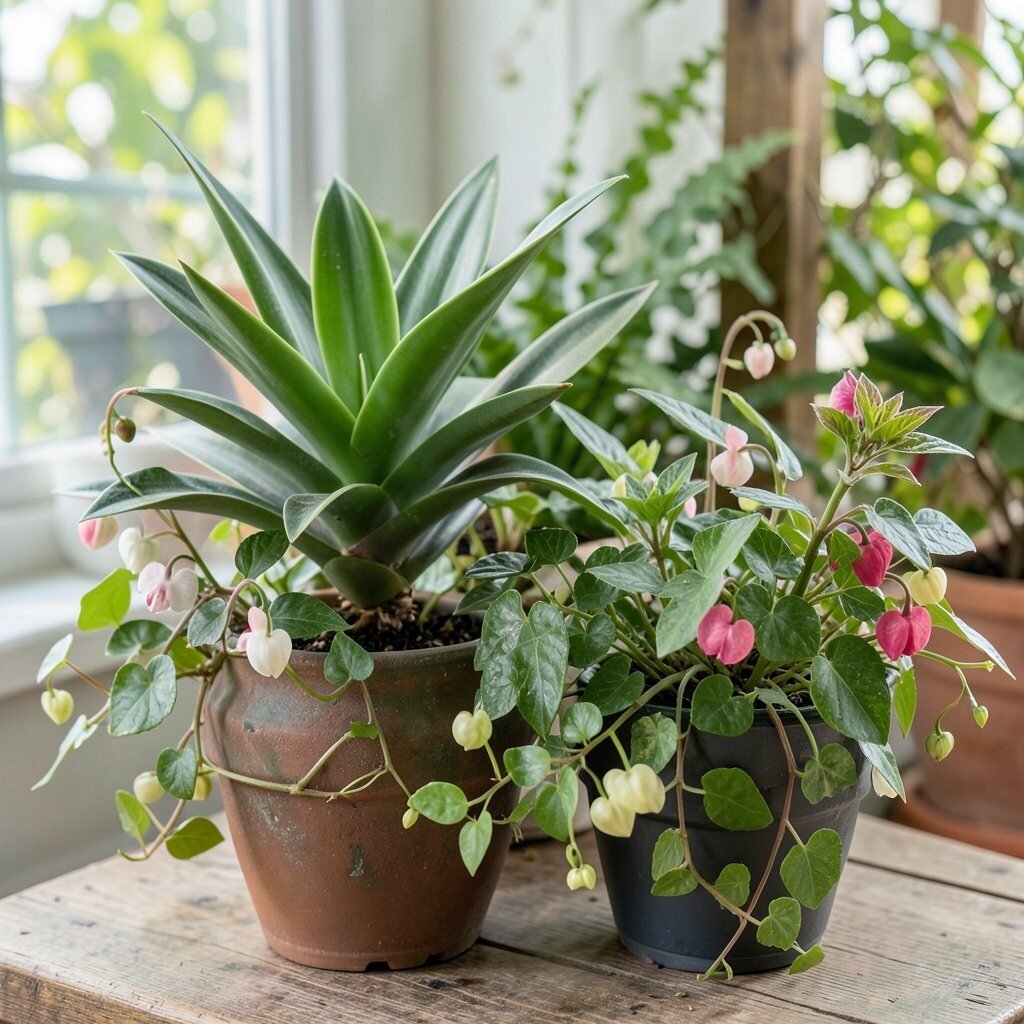
The cast iron plant has broad, deep green leaves that feel steady and calm, while string of hearts adds a fine, romantic trail. The difference in shape gives the mix a nice rhythm, almost like a dark green base with a delicate necklace hanging over it.
This pairing is great for people who want a look that feels both easygoing and stylish. The cast iron plant gives the arrangement a solid foundation, and the string of hearts adds charm without making the display feel crowded. A low-cost version can start with one small cast iron plant and a string of hearts cutting, then grow fuller with time.
If you like a softer home style, use warm-toned pots or natural stone containers to make the greens feel more earthy. For a cleaner style, simple white pots can make the leaves look sharper and more modern.
The group works especially well in a less sunny room where the cast iron plant can stay happy and the trailing plant can still show off its shape. That makes it practical as well as pretty, which is a strong reason to try it.
15. Aloe with Begonia
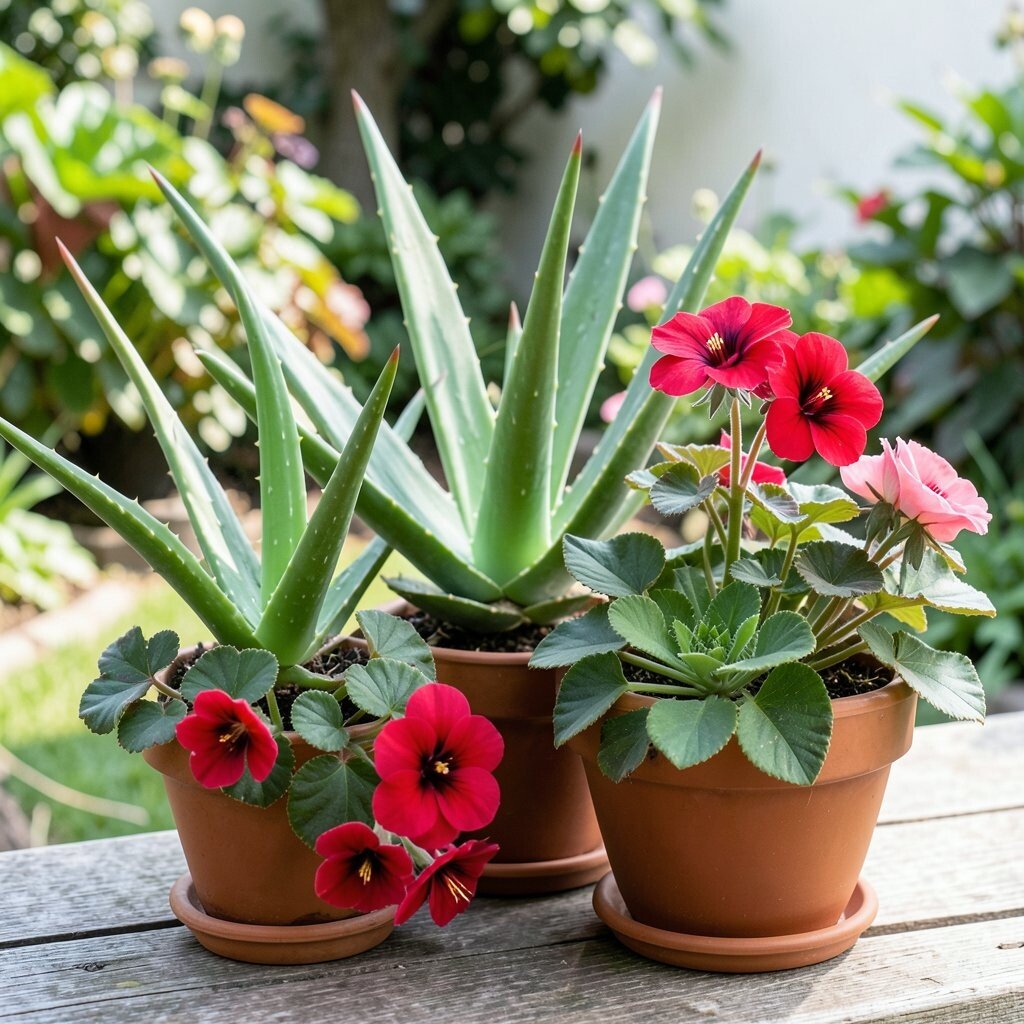
Aloe has clean, sculpted leaves that feel sturdy and fresh, while begonia often brings rich color and textured foliage. Put together, they create a lively contrast that feels a little unexpected but still easy to enjoy.
This mix can brighten a shelf or table because the aloe gives a tidy structure and the begonia adds a softer, more decorative touch. It is a good choice if you want a display that looks unique without needing a full plant wall. Since begonias and aloe can be found in many garden centers, the cost can stay moderate if you choose small plants and simple containers.
Try placing them in pots with different heights to make the display look more layered and less flat. You can also add your own style by using a bright begonia variety or a patterned pot that picks up one of its leaf tones.
The combo fits well with the trend of mixing useful, tough plants with showy ones, which gives home plant displays more character. That balance can make a room feel both practical and playful at the same time.
16. Parlor Palm with Rex Begonia

A parlor palm brings soft fronds that feel calm and airy, while rex begonia adds bold leaf patterns and rich color. The palm gives the scene a gentle backdrop, and the begonia acts like a painted accent that catches the eye.
This pairing works nicely in a cozy corner, near a chair, or on a plant stand where the fronds can spread without crowding the begonia. The contrast in texture makes the display feel full of life, and the combination can give a room a more collected and thoughtful look. If you are planning around cost, start with a small parlor palm and one rex begonia, then use pots you already own for a budget-friendly refresh.
Many plant fans like to mix frilly leaves with bold patterns right now, and this pair fits that mood very well. It feels creative, but it is still easy to live with and easy to arrange in a way that suits your own taste.
17. Bird of Paradise with Nerve Plant
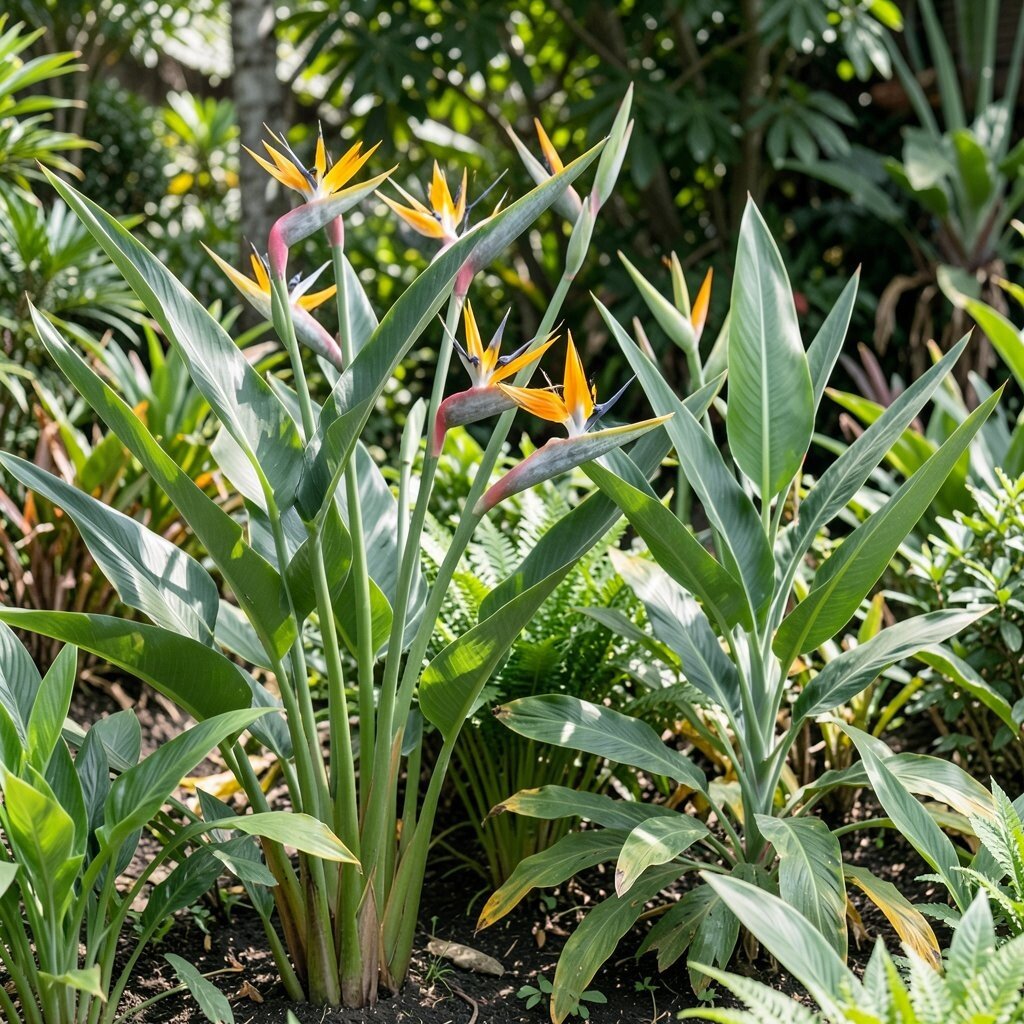
Bird of paradise has large tropical leaves that bring instant drama, and nerve plant adds tiny veined leaves that feel detailed and charming. Together they make a display that is grand and delicate at once, which gives the room a strong sense of contrast.
This final pairing is perfect when you want one plant to make a big statement and the other to add close-up interest. The large leaves draw attention from across the room, while the nerve plant rewards anyone who leans in to look more closely. To manage the price, choose a young bird of paradise and a small nerve plant, then let the group grow into its shape over time.
You can personalize the look with a tall pot for the bird of paradise and a low bowl for the nerve plant, creating a pleasing size difference that feels intentional. That kind of layered styling is very popular now because it makes a home feel full of life without looking too arranged.
Keep the big plant where it has room to stretch and place the smaller one where its leaf pattern can be seen easily. When the spacing is right, the pairing feels bold, fresh, and easy to love.