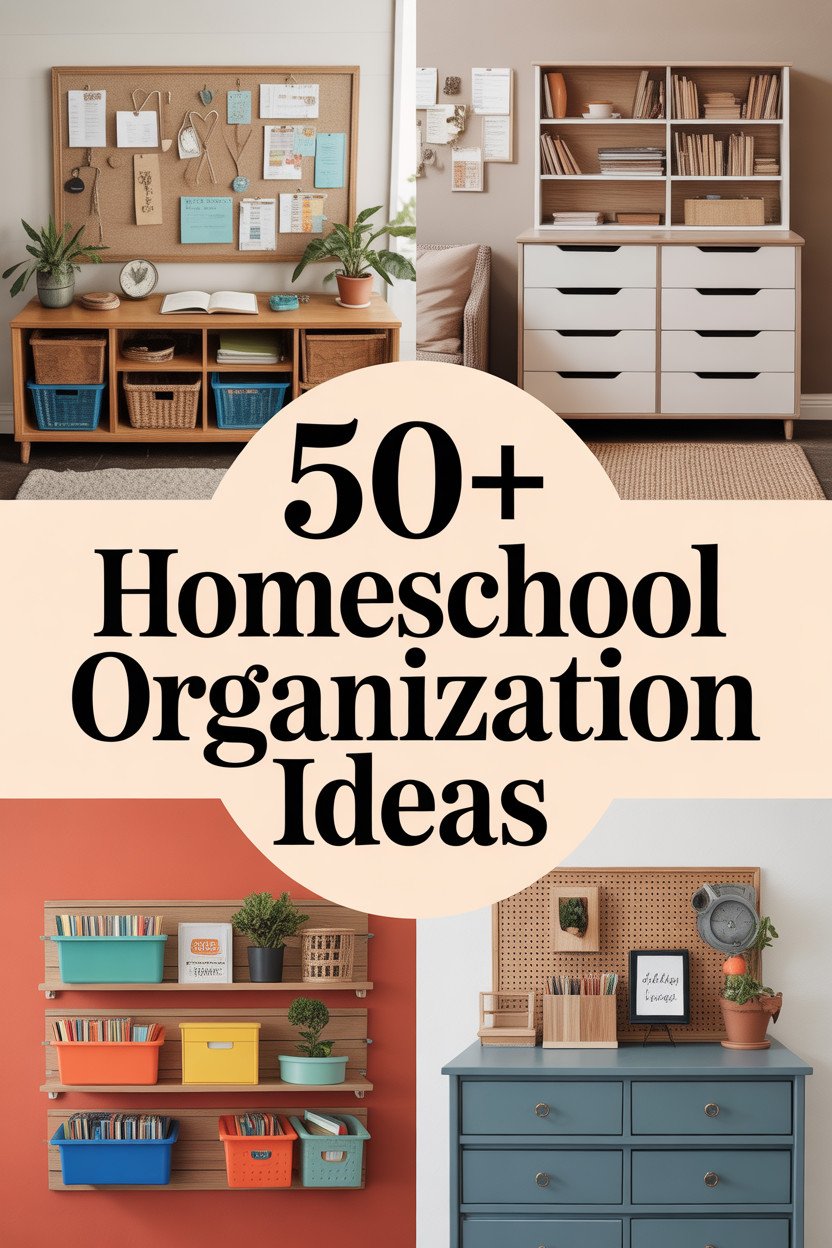
Imagine a homeschool environment where creativity flows effortlessly, and every corner invites exploration. This collection of ideas offers practical solutions that make learning exciting and fun. Get ready to be inspired by setups that not only organize but also ignite passion and curiosity.
1. Color-Coded Bookshelves

Arrange books by color to create a rainbow effect. It’s like a joyful splash of colors that brightens the room.
Kids will love finding books by their favorite colors. This setup makes tidying up a breeze.
Use this method to teach colors and organization simultaneously. It’s a creative way to encourage reading.
You won’t need to spend much, just utilize your existing books. It’s an appealing, cost-effective idea.
2. DIY Hanging Art Gallery

Create a mini art gallery with string and clothespins to hang artwork. Kids will feel like professional artists.
This boosts self-esteem and encourages artistic expression. It’s a personal touch to a learning space.
Switch out art regularly to keep the display fresh. Encourage kids to curate their own collections.
All you need are simple supplies like string and pins. It’s affordable and adds a creative vibe.
3. Nature-Inspired Study Nook

Incorporate plants and natural elements into your study area. It’s like bringing the outdoors inside.
This creates a calming effect and improves air quality. Nature has a way of sparking creativity.
Use easy-to-care-for plants like succulents. Add natural textures with wood or stones.
Plants and accessories can be found cheaply at local stores. It’s a budget-friendly way to refresh a space.
4. Magnetic Wall Map
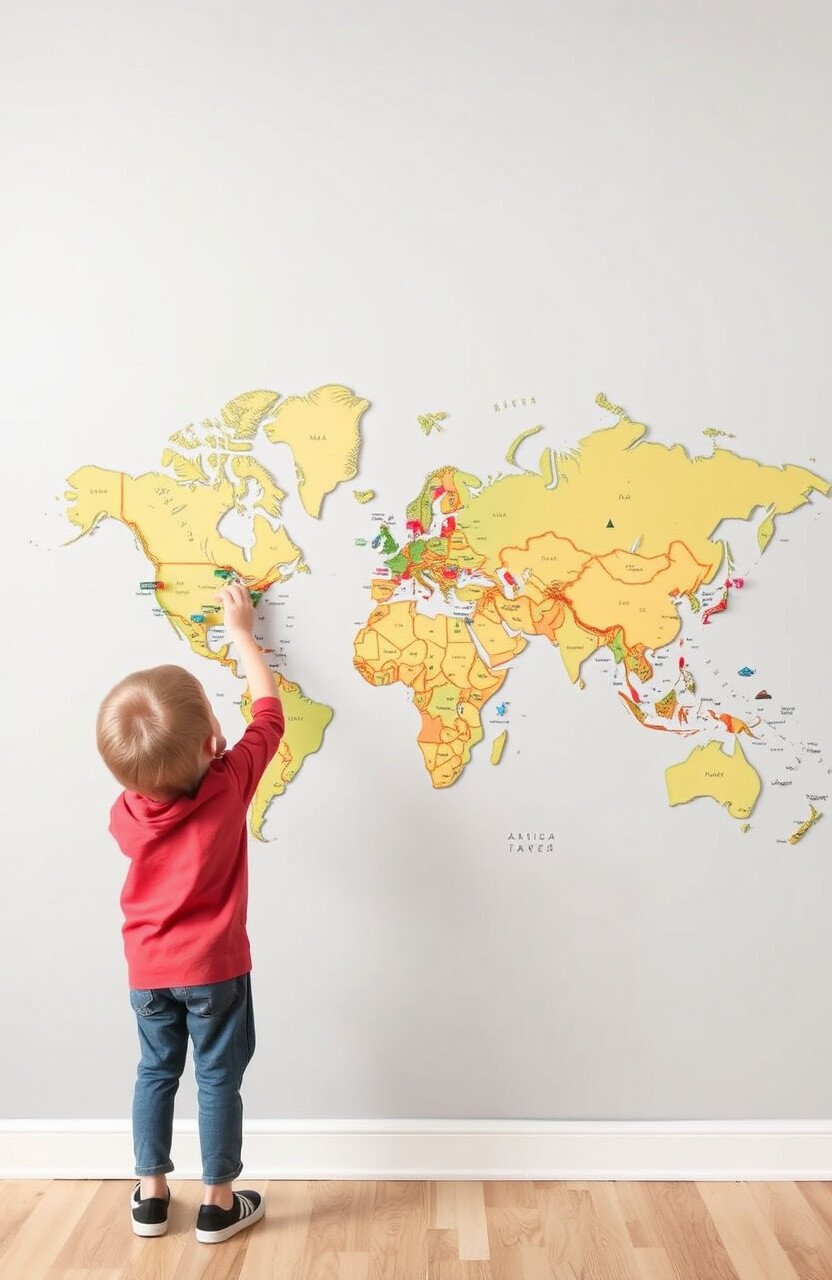
Turn a wall into an interactive map with magnetic paint. Kids can explore geography hands-on.
This is a dynamic way to learn about different places. It makes geography lessons exciting.
Encourage kids to mark places they learn about. It’s a fun way to track travels, real or imaginary.
The investment in magnetic paint is worthwhile. It transforms a plain wall into an educational tool.
5. Rotating Books and Toys

Organize books and toys on a rotating basis to keep things fresh. It’s like a new surprise every week.
This prevents boredom and maintains interest in learning materials. Kids look forward to each rotation.
Label bins for easy swapping. This method teaches responsibility and organization.
Using what you have saves money. It’s a smart way to keep the learning environment dynamic.
6. Chalkboard Wall
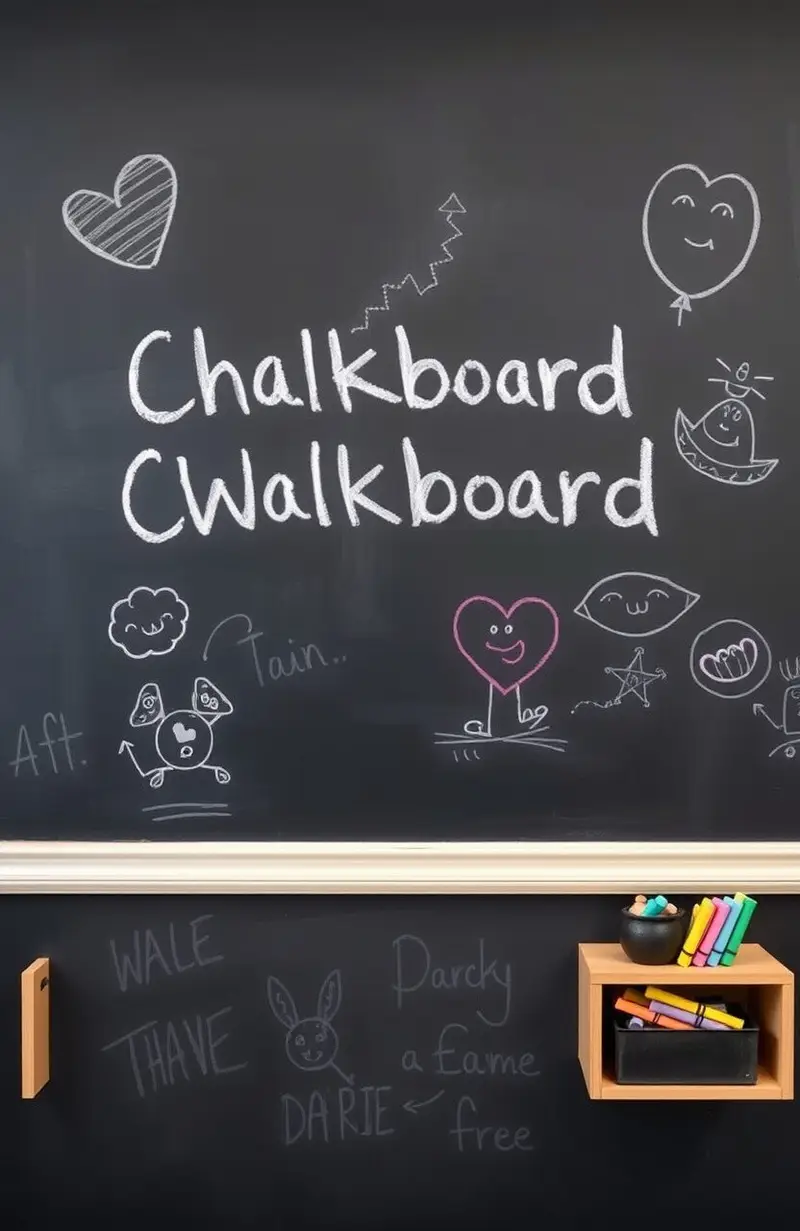
Paint a wall with chalkboard paint for drawing and writing. Kids can express themselves freely.
This encourages creativity and spontaneous learning. It turns any moment into a learning opportunity.
Change up drawings or lessons daily. Keep a jar of colorful chalk handy for artistic flair.
The cost of chalkboard paint pays off in endless creative possibilities. It’s a fun, interactive addition.
7. Cozy Reading Tent

Set up a small tent with pillows and blankets for reading time. It’s like a secret hideaway for book adventures.
This creates a special, inviting space for reading. Kids can escape into their own little world.
Decorate with fairy lights for a magical touch. Rotate books to keep the selection exciting.
Tents and lights are affordable at discount stores. It’s a charming, cost-effective reading nook.
8. Art Supply Cart

Use a rolling cart to organize art supplies. Everything is within reach and ready for creative moments.
This makes it easy to start projects without searching for materials. Kids can see and choose independently.
Label bins for different supplies like paints, brushes, and paper. Keep the cart tidy for easy access.
Find affordable carts at home stores. It’s a practical, portable solution for art enthusiasts.
9. Interactive Learning Wall

Create a wall with interactive learning tools like maps or clocks. It’s a living lesson board.
This engages kids in active learning and exploration. They can physically interact with educational materials.
Change out themes or focus areas regularly. Use it for subjects like math, science, or history.
Many tools can be made or purchased cheaply. It’s a versatile, evolving educational space.
10. Personalized Name Tags

Make personalized name tags for desks or cubbies. It gives kids a sense of ownership and pride.
This personal touch encourages responsibility and organization. Kids love seeing their names on things.
Involve kids in designing their tags. Use colors and themes that reflect their personalities.
Materials are inexpensive and easy to find. It’s a simple, effective way to personalize a space.
11. Crafty Pencil Holders

Create unique pencil holders from recycled materials. It’s a fun craft and organizational tool in one.
This encourages recycling and creativity. Kids can personalize their holders for added flair.
Use cans, jars, or cardboard tubes. Decorate with paint, stickers, or fabric.
Recycling materials makes this project cost-effective. It’s a creative, eco-friendly organization idea.
12. Themed Learning Corners

Set up corners with different themes like space or dinosaurs. It’s like stepping into a new world.
This sparks curiosity and focused learning. Themes make learning visually engaging and fun.
Rotate themes to align with current lessons. Use props, books, and decorations to set the scene.
Many themes can be created with low-cost items. It’s an imaginative way to enrich the learning space.
13. DIY Whiteboard Table

Transform a table into a whiteboard for doodling and problem-solving. Ideas can be shared instantly.
This promotes interactive learning and discussion. Kids can jot down thoughts as they come.
Use whiteboard contact paper for easy application. Encourage kids to write freely.
It’s a cost-effective way to make any table more functional. The possibilities for use are endless.
14. Multi-Use Bins
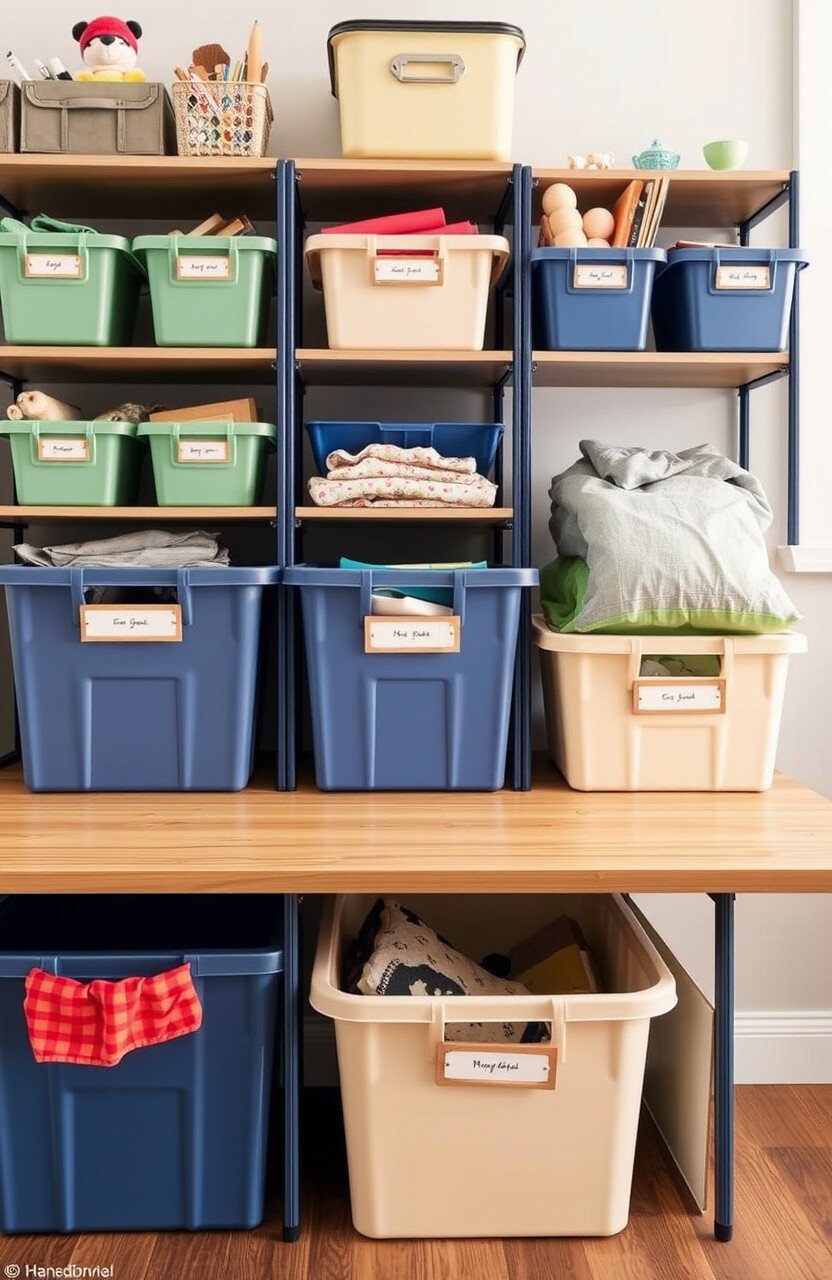
Employ bins that serve multiple purposes for storage and seating. It’s organization and functionality combined.
This maximizes space in smaller areas. Kids can easily access and store their belongings.
Label bins for specific uses. Stack or arrange them as needed.
Bins are widely available at affordable prices. It’s a smart, flexible storage solution.
15. Light-Up Learning Boards
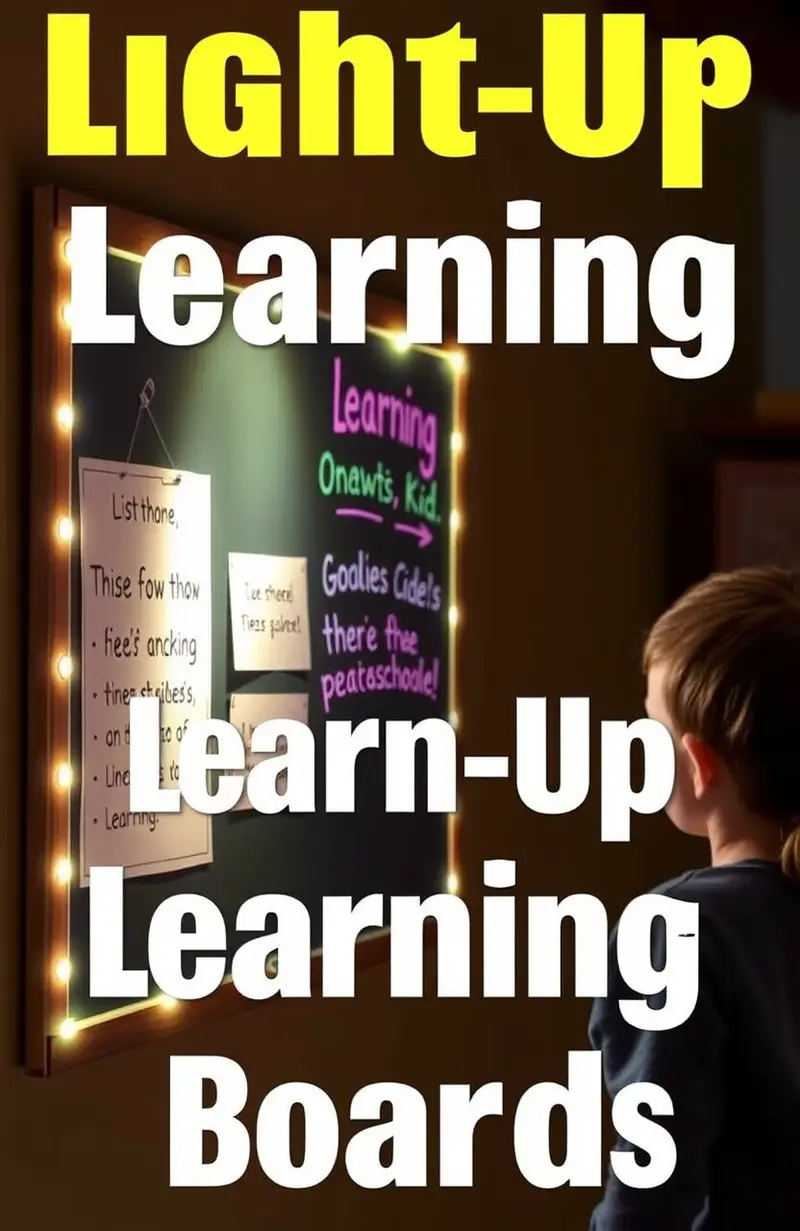
Create boards with LED lights to highlight important information. It’s like a spotlight on learning.
This draws attention to key concepts or words. Kids are intrigued by the glowing effect.
Use battery-operated lights for safety. Change up the content frequently to maintain interest.
LED lights are an inexpensive way to add excitement. It’s a bright idea for engaging lessons.
16. DIY Bulletin Board

Craft a bulletin board from cork or foam for a personal touch. It’s a space for creativity and reminders.
This encourages planning and organization skills. Kids can pin up their favorite things.
Decorate with colorful borders or themes. Use pushpins or clips for easy changes.
Cork boards are affordable and easy to customize. It’s a fun, practical organization tool.
17. Alphabet Wall Art

Decorate a wall with colorful alphabet letters. It’s an artistic way to learn ABCs.
This keeps learning the alphabet fun and accessible. Kids can see and touch letters anytime.
Use foam, wood, or paper letters. Arrange them in creative patterns or sequences.
Materials are budget-friendly and easy to find. It’s a cheerful, educational decor idea.
18. Creative Storage Labels

Design imaginative labels for storage bins. It’s a unique way to organize and personalize.
This helps kids identify and return items properly. Labels can be a fun, artistic project.
Use pictures, colors, or themes to make labels. Let kids help with design ideas.
Labels can be made from inexpensive materials. It’s a simple yet effective organizational tool.
19. Inspirational Quote Wall

Fill a wall with inspirational quotes or affirmations. It’s a daily boost of positivity.
This encourages a growth mindset and positive thinking. Quotes can be changed to suit the mood.
Use printed quotes or write directly on the wall. Involve kids in choosing or creating quotes.
Quotes can be printed cheaply. It’s an uplifting, motivational addition to any space.
20. Puzzle Piece Decor
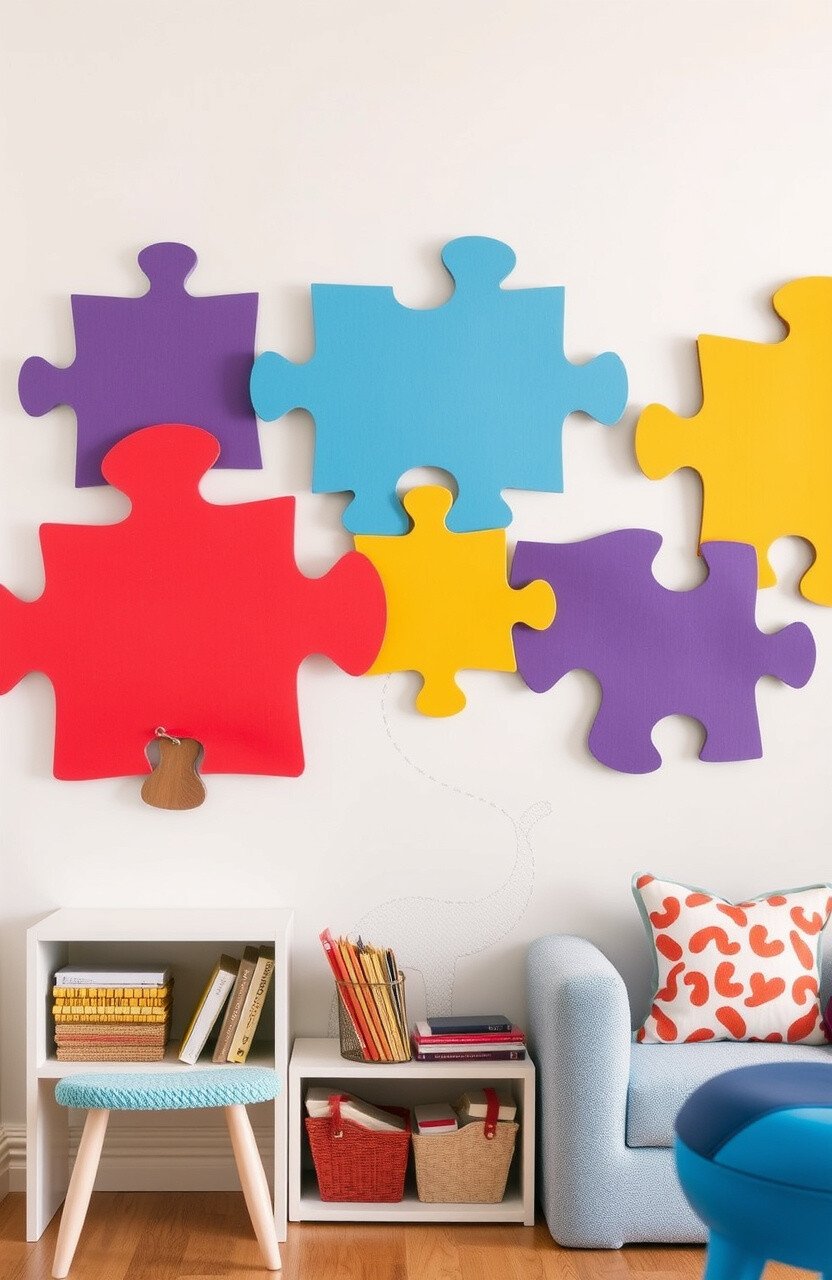
Decorate with large puzzle pieces for an interactive and educational touch. It’s a playful learning tool.
This introduces problem-solving skills and creativity. Kids will enjoy piecing things together.
Create puzzles that fit into current learning topics. Encourage kids to design their own puzzles.
Puzzle pieces can be crafted from cardboard. It’s a cost-effective, engaging decor idea.
21. Upcycled Furniture
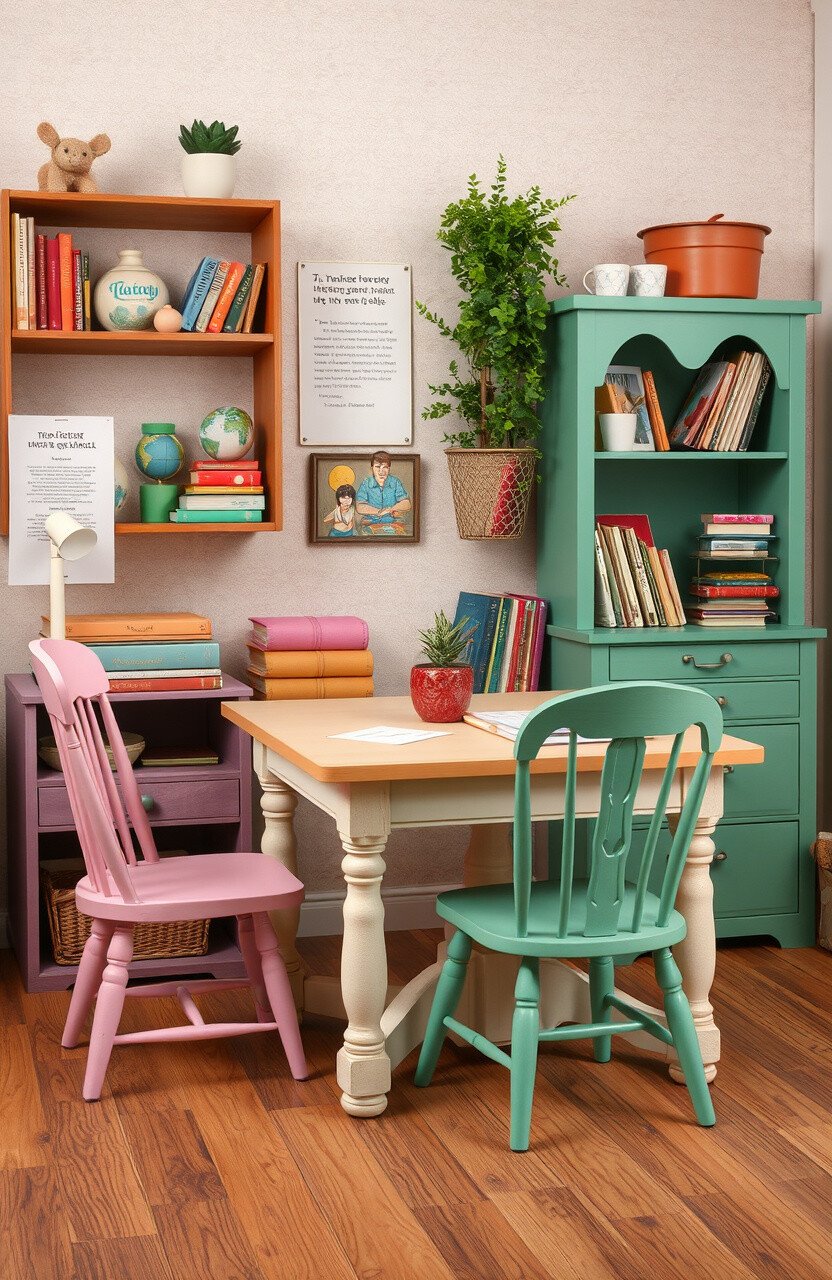
Transform old furniture into functional pieces for your homeschool space. It’s an eco-friendly project.
This encourages creativity and sustainability. Kids can participate in the upcycling process.
Paint or decorate old chairs, tables, or shelves. Give new life to overlooked items.
Using existing furniture saves money. It’s a rewarding way to enhance the learning environment.
22. Window Cling Maps

Use window clings to create maps on glass surfaces. It’s a see-through geography lesson.
This makes learning geography interactive and visible. Light shining through adds an extra effect.
Kids can move clings to explore different areas. Encourage them to label or add details.
Window clings are affordable and reusable. It’s a bright, engaging educational tool.
23. Memory Box Stations
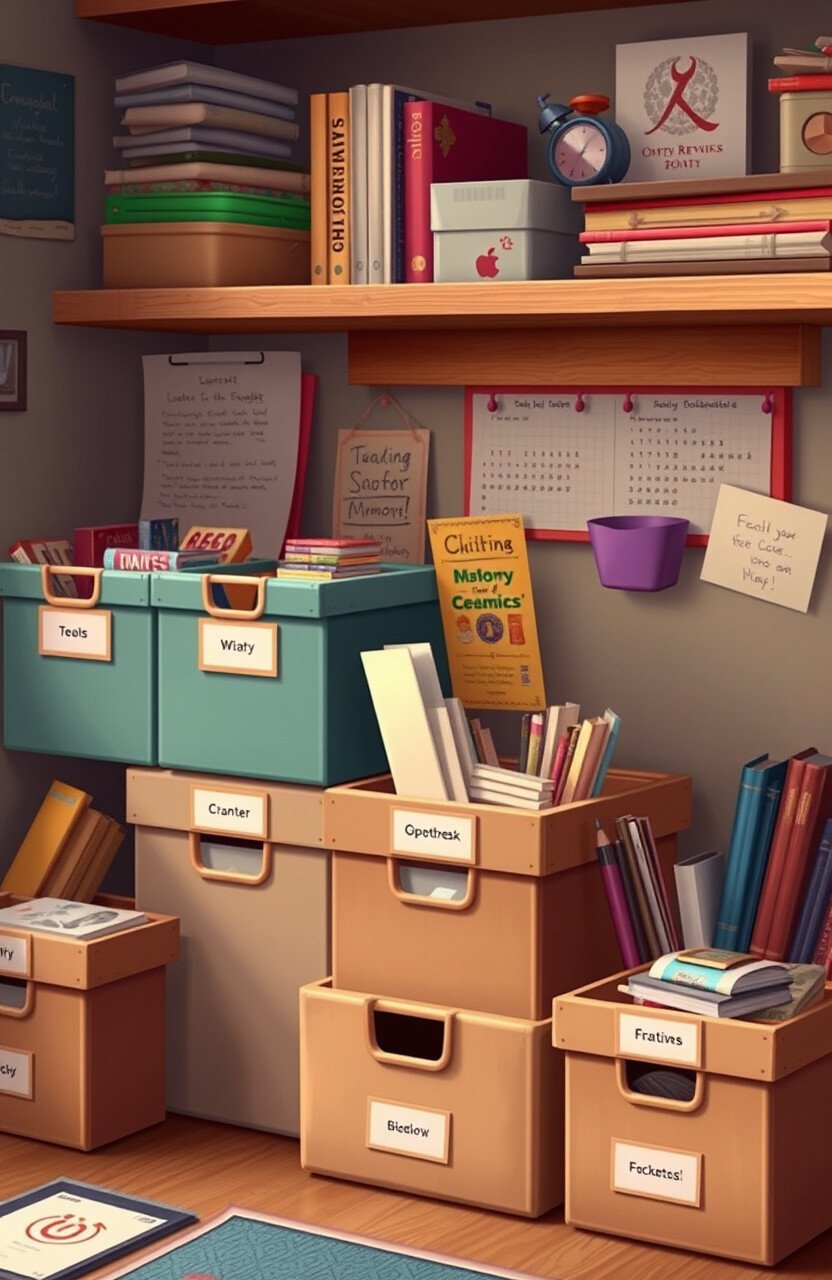
Create stations with boxes for keepsakes and projects. It’s a personal archive of learning.
This teaches organization and value in preserving work. Kids can look back on their achievements.
Decorate boxes with labels and colors. Encourage kids to regularly add to their boxes.
Boxes are easy to find at low costs. It’s a meaningful way to organize and reflect.
24. Learning Ladder

Use a step ladder to display books and learning materials. It’s a vertical library for little hands.
This maximizes space and accessibility. Kids can choose and return items independently.
Paint the ladder for a pop of color. Use each step for different subjects or themes.
Old ladders can be upcycled for this idea. It’s a clever, space-saving book display.
25. Seasonal Decor Swaps
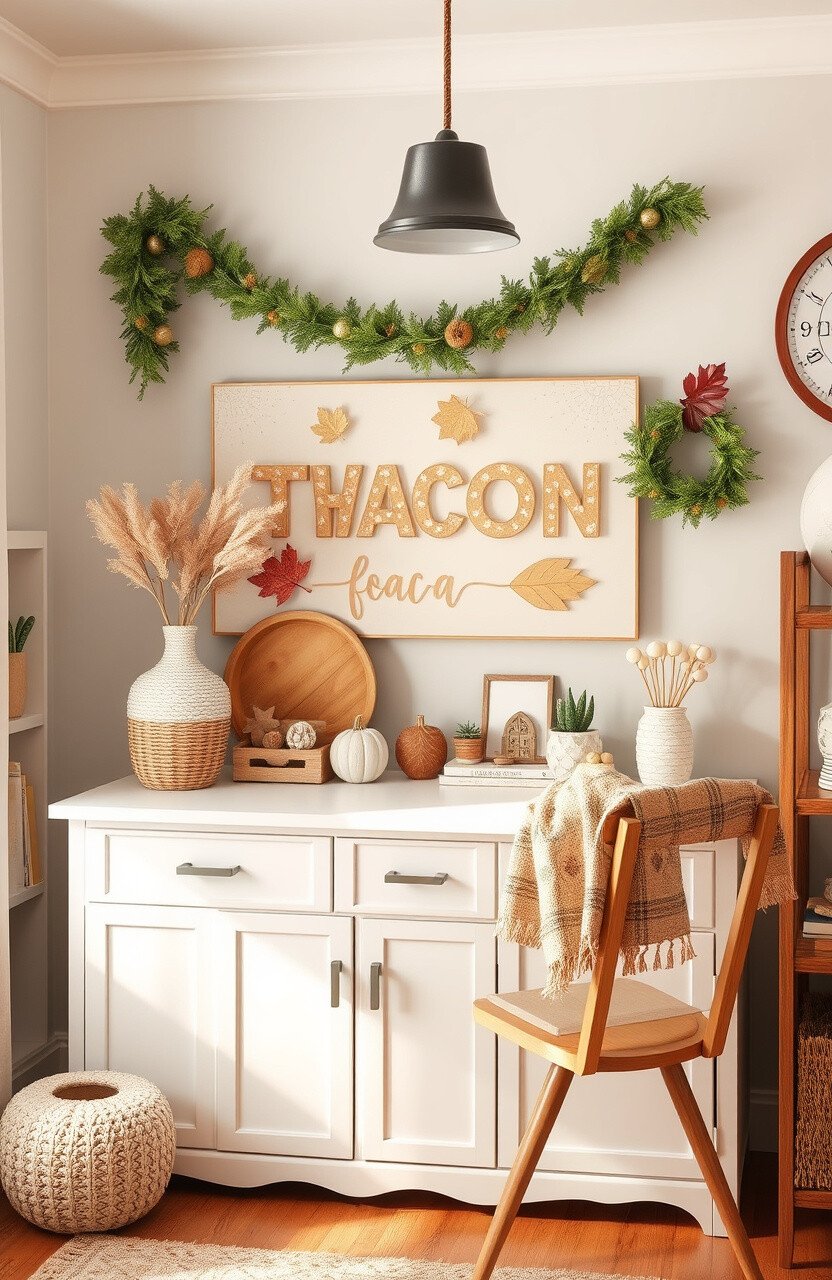
Change decor with the seasons to keep things fresh. It’s like a mini transformation for your space.
This keeps the environment exciting and relevant. Kids learn about seasons and change.
Incorporate seasonal colors, themes, and items. Get kids involved in the decorating process.
Use existing decorations or find new ones on a budget. It’s an easy way to refresh the space regularly.
26. DIY Pegboard Organizers
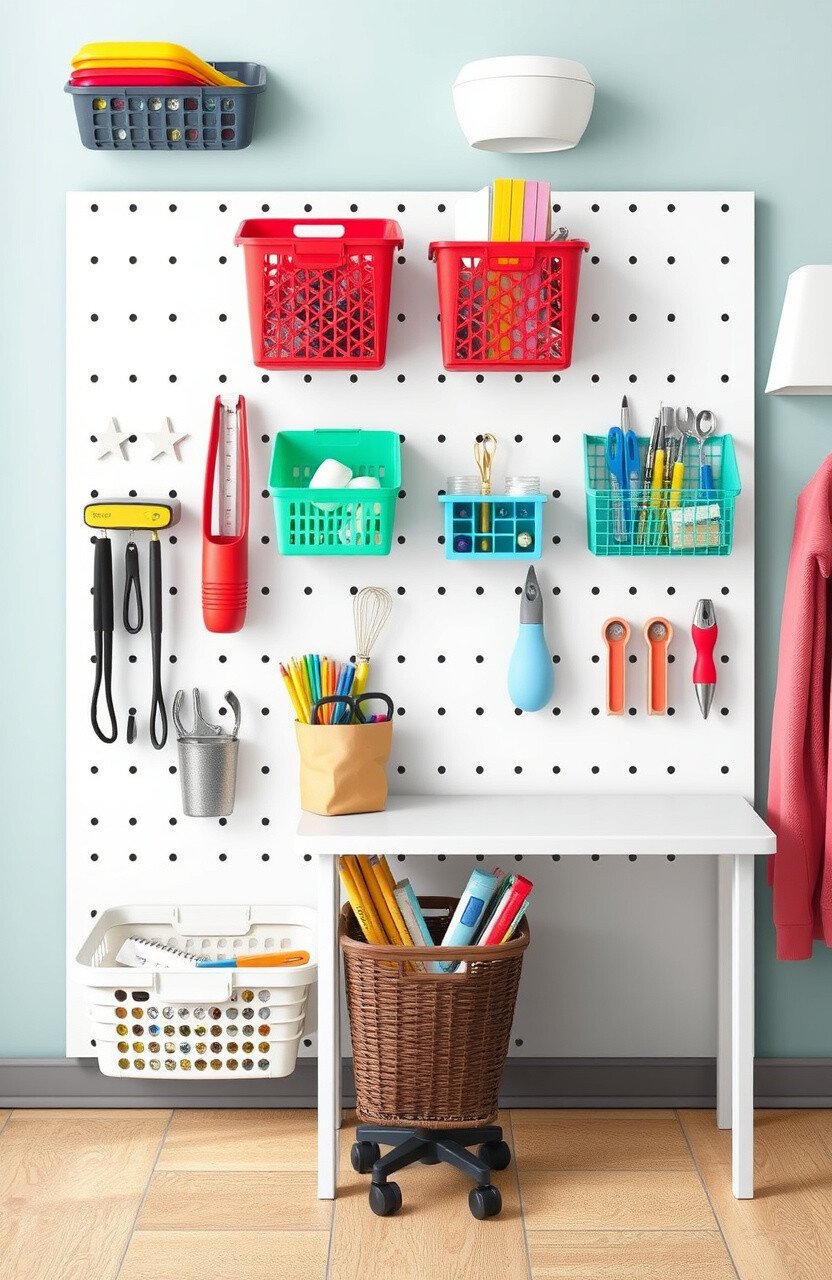
Install pegboards for versatile storage solutions. It’s a customizable organization tool.
This keeps supplies visible and accessible. Kids can rearrange to suit their needs.
Hang baskets, hooks, and shelves on the pegboard. Change configurations as needed.
Pegboards are affordable and adaptable. It’s a flexible, creative storage solution.
27. Imaginative Play Areas
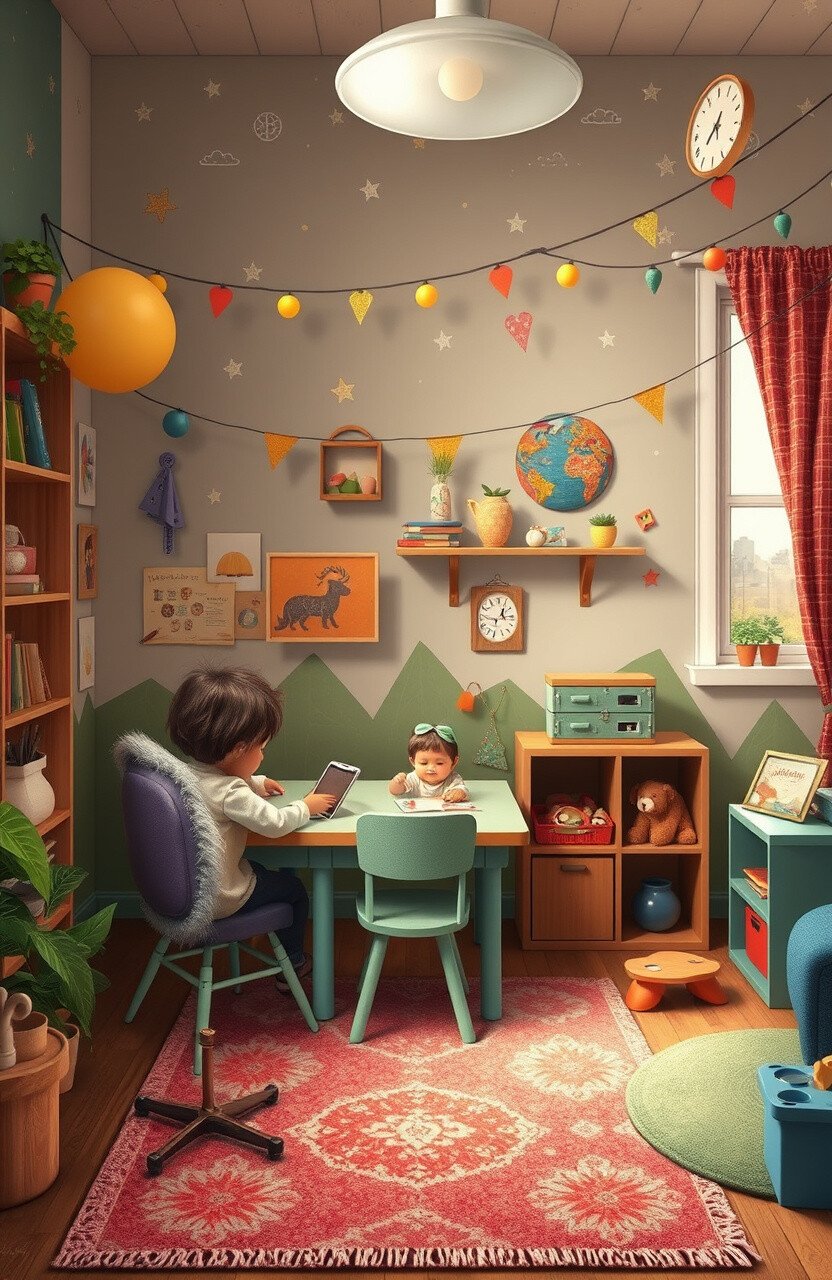
Create spaces dedicated to imaginative play. It’s like a playground for the mind.
This encourages creativity and role-playing. Kids can explore different scenarios and stories.
Use props and costumes related to themes. Rotate themes to keep playtime fresh.
Many props can be made or found cheaply. It’s an engaging way to foster imagination.
28. Homework Caddy
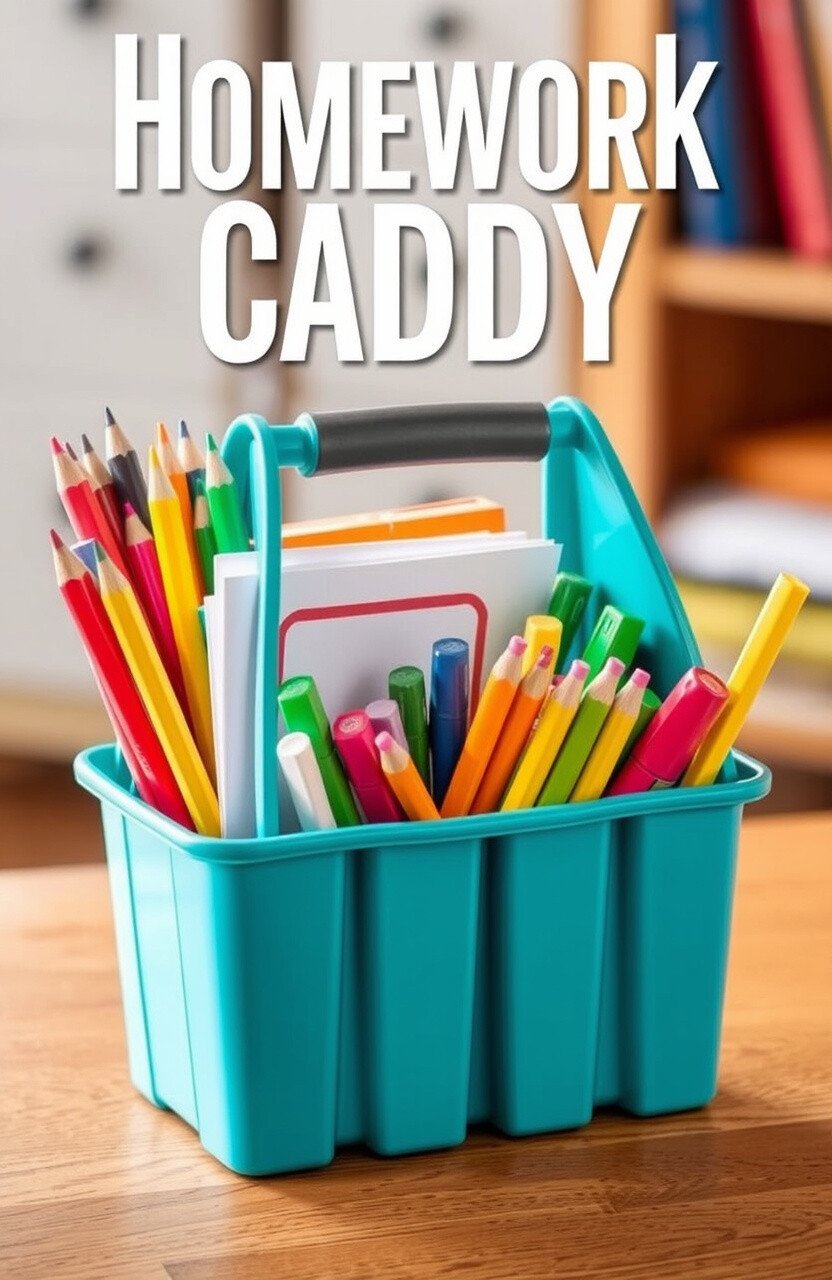
Set up a portable caddy for homework supplies. It’s a mobile study station.
This makes it easy to move between study areas. Kids have all they need in one place.
Include essentials like pencils, erasers, and paper. Personalize it with colors or themes.
Caddies are inexpensive and widely available. It’s a convenient, personalized organization tool.
29. Nature Journals

Encourage kids to keep nature journals. It’s a blend of art and science.
This fosters observation skills and appreciation for nature. Kids can document their discoveries.
Use simple notebooks or create handmade journals. Encourage regular entries and sketches.
Materials are low-cost and easy to find. It’s a creative, educational activity for all ages.
30. Personalized Chalk Labels

Use chalk labels for bins and jars. It’s a customizable organization method.
This allows for easy changes and updates. Kids can personalize their spaces easily.
Write with chalk or markers for different looks. Let kids design their own labels.
Chalk labels are budget-friendly and reusable. It’s a dynamic, personal touch to organization.
31. Interactive Word Walls

Display an interactive word wall for vocabulary building. It’s a living dictionary.
This helps kids see and learn new words daily. Words can be changed or added easily.
Use magnetic letters or sticky notes. Encourage kids to contribute their own words.
Materials are affordable and versatile. It’s an engaging, educational addition to any room.
32. Cozy Reading Hammock

Install a hammock for a unique reading spot. It’s like a floating reading adventure.
This creates a fun, relaxing place for books. Kids will love swinging while they read.
Add pillows or blankets for extra comfort. Rotate books regularly for variety.
Hammocks can be found at reasonable prices. It’s a delightful, inviting reading nook.
33. DIY Magnetic Chalkboard

Make a magnetic chalkboard for notes and magnets. It’s a multifunctional learning space.
This combines writing and interactive play. Kids can draw or use magnets to learn.
Use chalkboard and magnetic paint. Change up lessons or drawings frequently.
It’s a cost-effective way to create a versatile board. The possibilities are endless.
34. Mini Science Lab

Set up a corner as a mini science lab. It’s a place for experiments and discoveries.
This encourages scientific exploration and curiosity. Kids can conduct hands-on experiments.
Include basic tools like magnifying glasses and test tubes. Rotate experiments for new challenges.
Many supplies can be found cheaply. It’s an exciting, educational station for budding scientists.
35. Brightly Painted Desks

Paint desks in bright colors to energize the room. It’s a splash of creativity.
This creates a lively, inviting workspace. Kids will love the colorful, personalized touch.
Choose colors that inspire or calm. Involve kids in the painting process.
Paint is an affordable way to refresh furniture. It’s a vibrant, personal expression of style.
36. DIY Clipboards
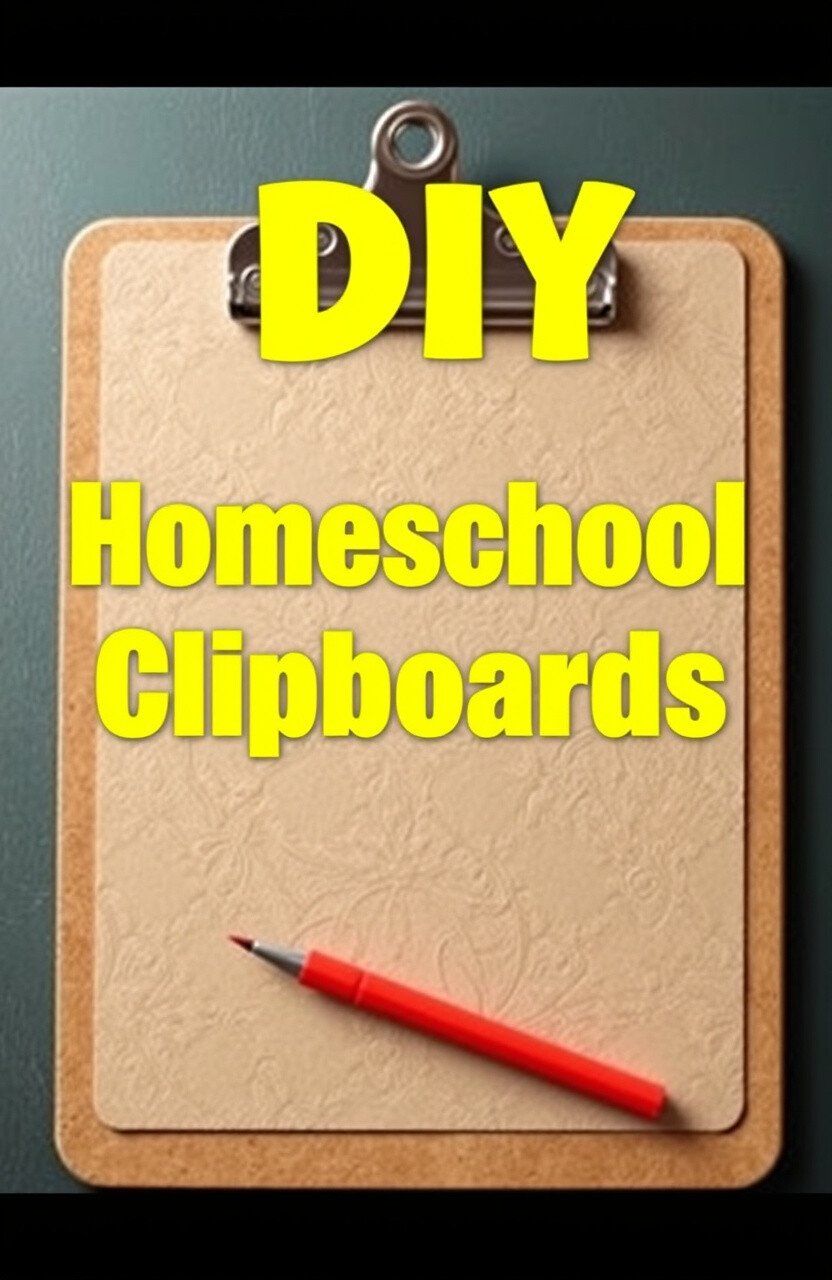
Create personalized clipboards for assignments. It’s a portable, creative workspace.
This keeps papers organized and accessible. Kids can decorate and personalize their boards.
Use paint, stickers, or fabric for decoration. Encourage kids to design their own styles.
Clipboards are inexpensive and easy to customize. It’s a fun, functional organization tool.
37. Quiet Zone Signage

Make signs for a designated quiet zone. It’s a space for focused work and reflection.
This teaches respect for quiet time and concentration. Kids can retreat to this area for study.
Use calming colors and themes for the signs. Encourage kids to use the space when needed.
Signs are simple and cost-effective to create. It’s a thoughtful addition to any learning environment.
38. DIY Treasure Hunt

Create a treasure hunt with educational clues. It’s a learning adventure.
This makes learning exciting and interactive. Kids solve clues to find educational treasures.
Use themes like math or history for the hunt. Change themes to keep it fresh and challenging.
Many clues can be made from paper or cards. It’s a creative, engaging way to learn.
39. Storytelling Corner

Set up a corner dedicated to storytelling. It’s a space for imagination and sharing.
This encourages creative thinking and communication. Kids can tell or listen to stories.
Include props like puppets or costumes. Rotate themes or stories for variety.
Props can be homemade or found inexpensively. It’s a delightful space for storytelling fun.
40. DIY Light Table
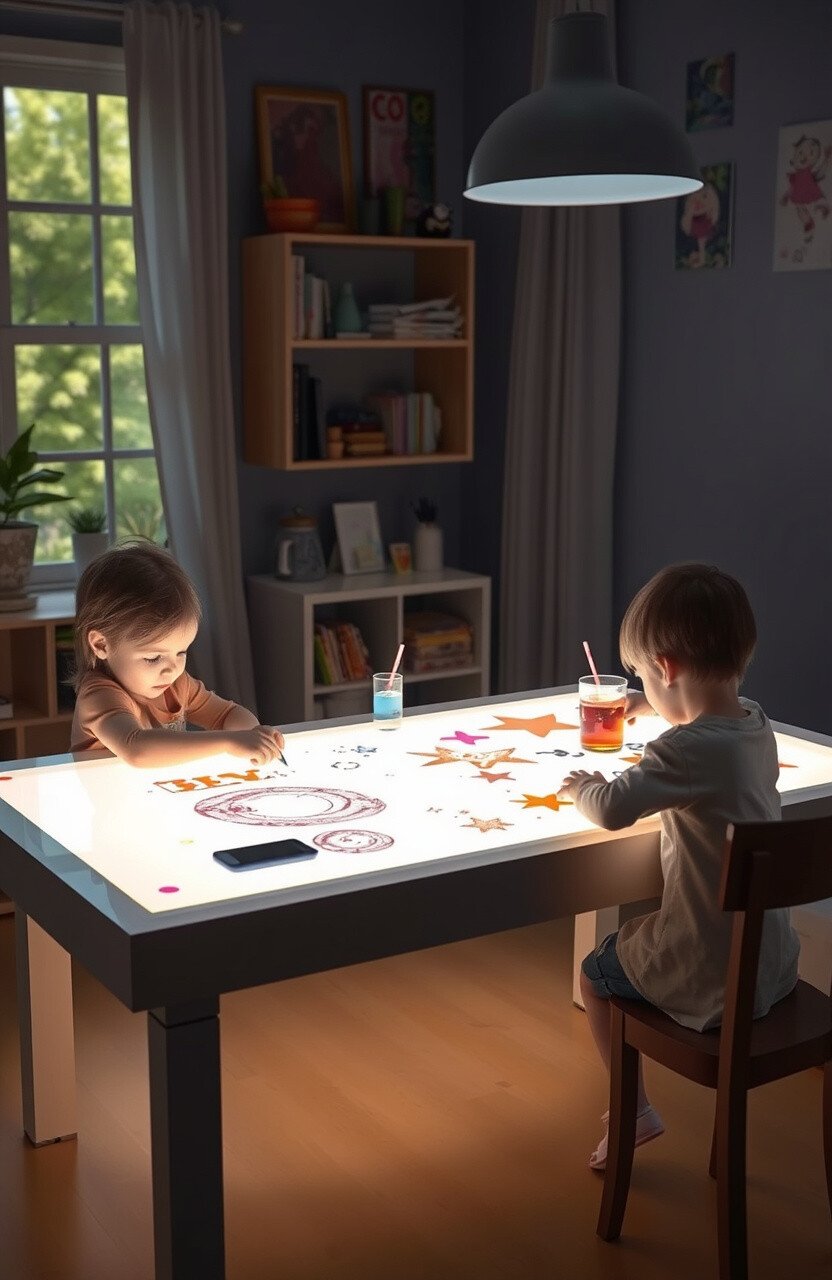
Create a light table for creative projects. It’s an illuminating workspace.
This enhances art and science activities. Kids can use it for tracing or experiments.
Use LED lights and a clear surface. Encourage creative exploration and discovery.
Light tables can be made at a low cost. It’s a bright, versatile addition to any learning space.
41. Themed Book Baskets

Organize books in themed baskets. It’s like a curated library for kids.
This encourages themed reading and exploration. Kids can easily find books by topic.
Rotate themes to match lessons or interests. Label baskets clearly for easy access.
Baskets are affordable and widely available. It’s a charming, organized book display.
42. DIY Interactive Globe

Make a globe with interactive elements. It’s a hands-on geography lesson.
This brings geography to life with touchable features. Kids can explore the world in 3D.
Use materials like foam or paper for continents. Encourage kids to add details or facts.
Materials are inexpensive and easy to find. It’s a creative, educational project for all ages.
43. Personalized Desk Mats

Create desk mats with personal designs. It’s a unique workspace addition.
This makes study time more enjoyable and personal. Kids can express their style on their mats.
Use materials like fabric or paper for decoration. Encourage kids to create their own designs.
Desk mats are easy and cheap to make. It’s a personal, creative touch to any desk.
44. Morning Routine Chart

Create a chart for the morning routine. It’s a visual start to the day.
This helps kids manage their time and tasks. Visuals make routines clear and achievable.
Use pictures or words for different tasks. Change up the chart as needed.
Charts can be made from simple materials. It’s a practical, organized way to start the day.
45. DIY Shadow Box Displays
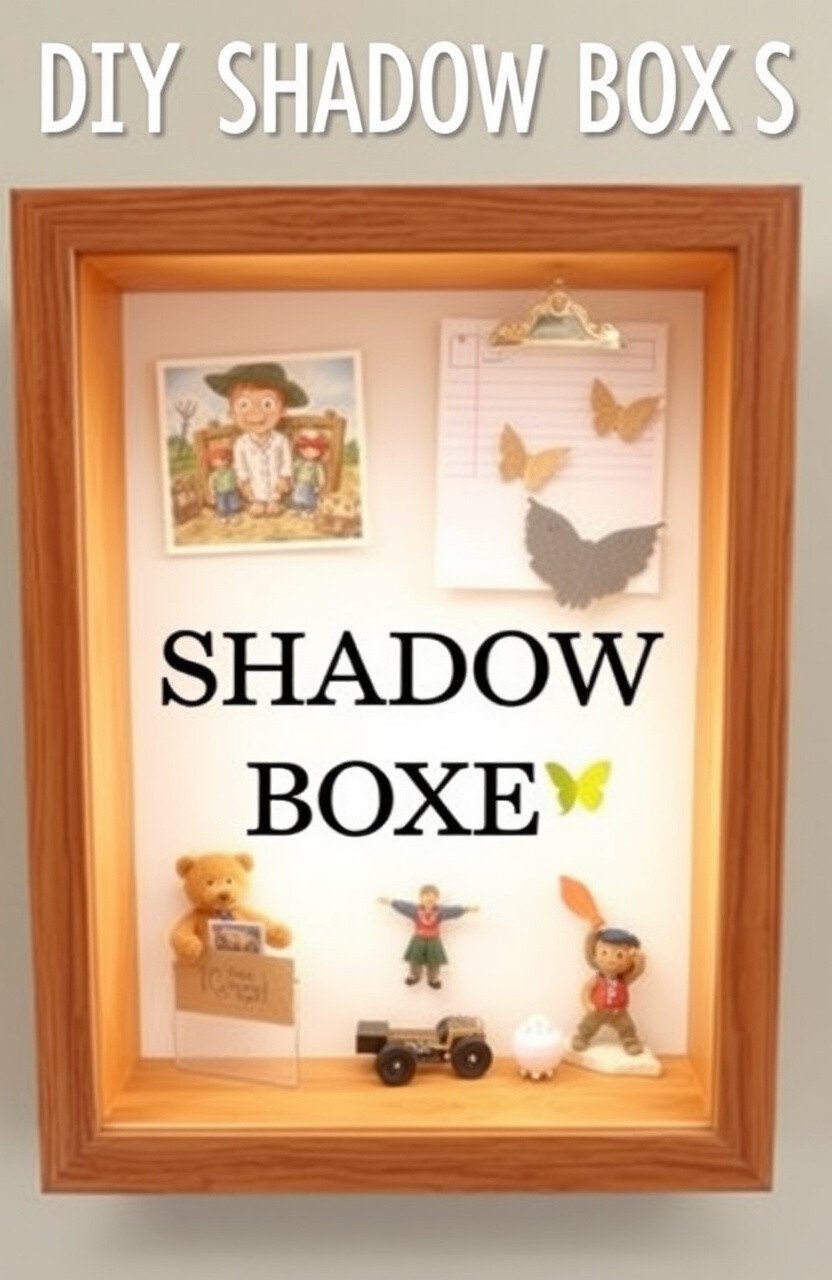
Create shadow boxes for displaying projects. It’s a personal gallery.
This showcases completed work and achievements. Kids will feel proud to see their work displayed.
Use boxes to display 3D projects or crafts. Rotate displays to keep them fresh.
Shadow boxes can be made or bought affordably. It’s a creative, meaningful display idea.
46. DIY Desk Organizer
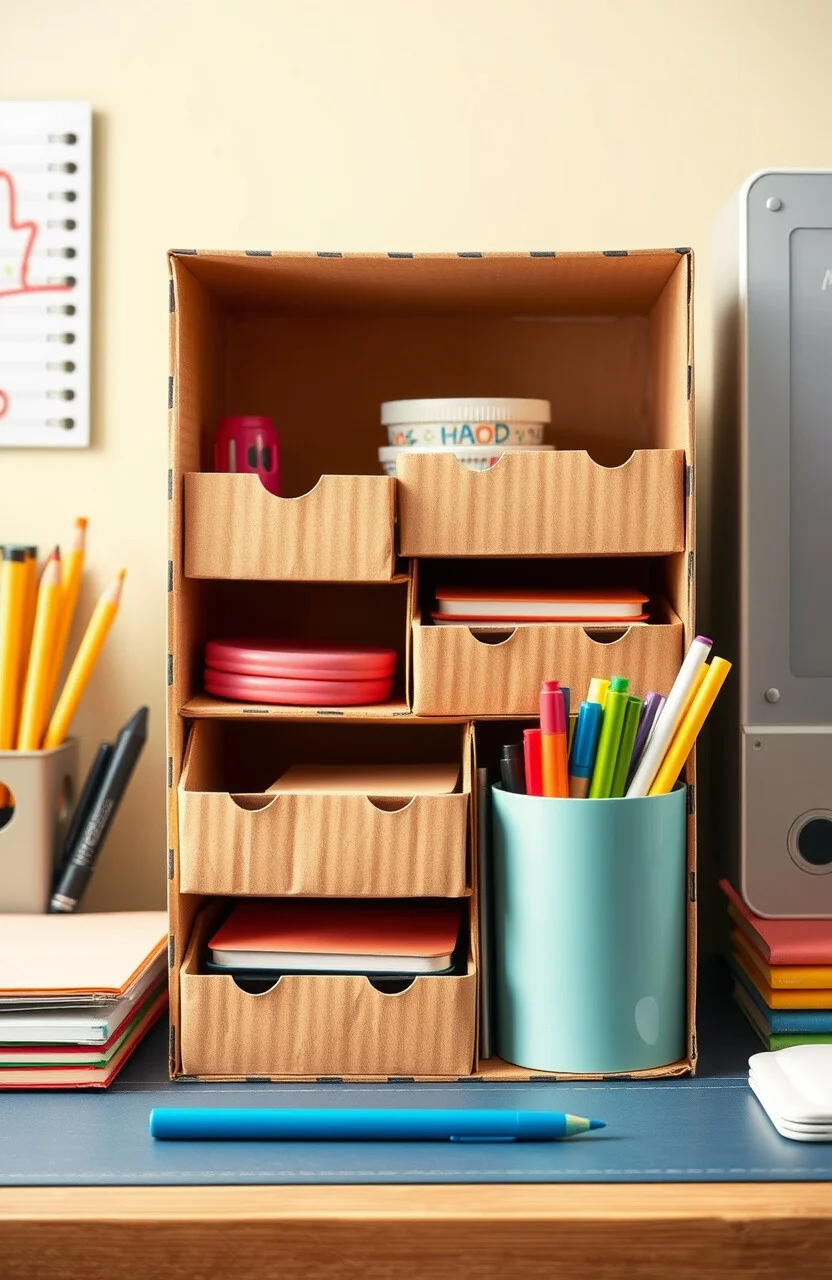
Create a desk organizer from recycled materials. It’s a functional art project.
This keeps desks tidy and supplies accessible. Kids can customize their organizers.
Use materials like cardboard or plastic. Decorate with paints or stickers.
Recycling materials is cost-effective. It’s a practical, personalized organization tool.
47. Motivational Sticker Charts

Use sticker charts for motivation and tracking. It’s a rewarding system.
This encourages goal-setting and achievement. Kids love earning stickers for their charts.
Use stickers that match interests or themes. Update charts regularly to maintain interest.
Stickers and charts are inexpensive. It’s a fun, visual motivation tool.
48. Cozy Learning Mats

Provide mats for floor-based learning. It’s a comfy, flexible learning space.
This makes learning inviting and relaxed. Kids can choose different spots for study.
Use soft materials for comfort. Encourage kids to personalize their mats.
Mats are affordable and easy to find. It’s a cozy, adaptable addition to learning areas.
49. DIY Sensory Bins

Create sensory bins for hands-on exploration. It’s a tactile learning experience.
This engages multiple senses and encourages exploration. Kids can learn through touch and play.
Use themes and materials like sand, rice, or water. Change bins to match lessons or seasons.
Many materials can be found cheaply. It’s an engaging, sensory-rich learning tool.
50. DIY Felt Boards
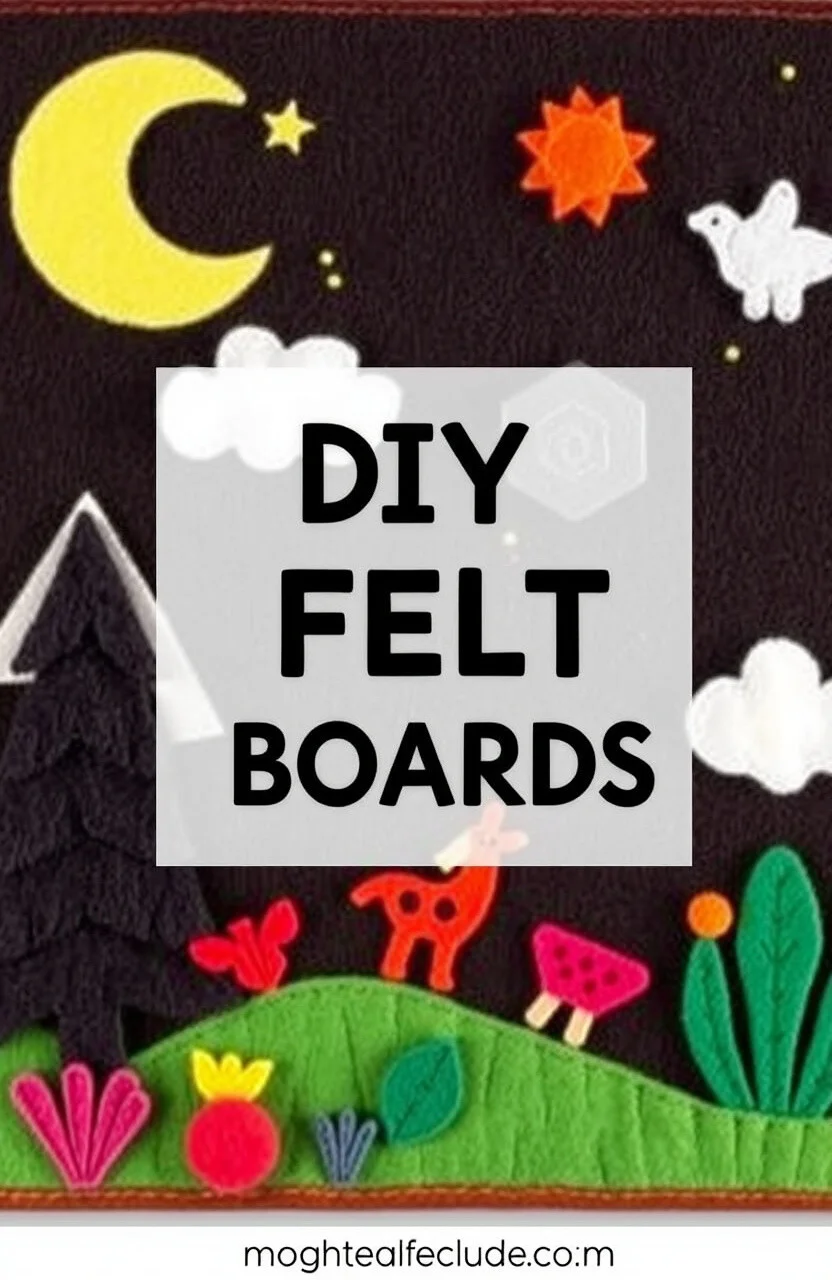
Make felt boards for storytelling and learning. It’s a soft, interactive tool.
This encourages creativity and storytelling skills. Kids can arrange and create stories with felt pieces.
Use felt for characters and scenes. Change themes to match lessons.
Felt is inexpensive and versatile. It’s a soft, engaging learning tool.
51. DIY Learning Cubes

Create cubes with educational prompts. It’s a playful learning tool.
This makes learning interactive and fun. Kids can roll the cubes for new challenges.
Use themes like math, reading, or science. Encourage kids to create their own cubes.
Materials are affordable and easy to find. It’s a playful, educational addition to learning.