
Floating shelves can change a room in a quiet but powerful way. The right ones can make your space feel neat, warm, and full of style.
1. Choose a Shelf Style That Matches Your Room
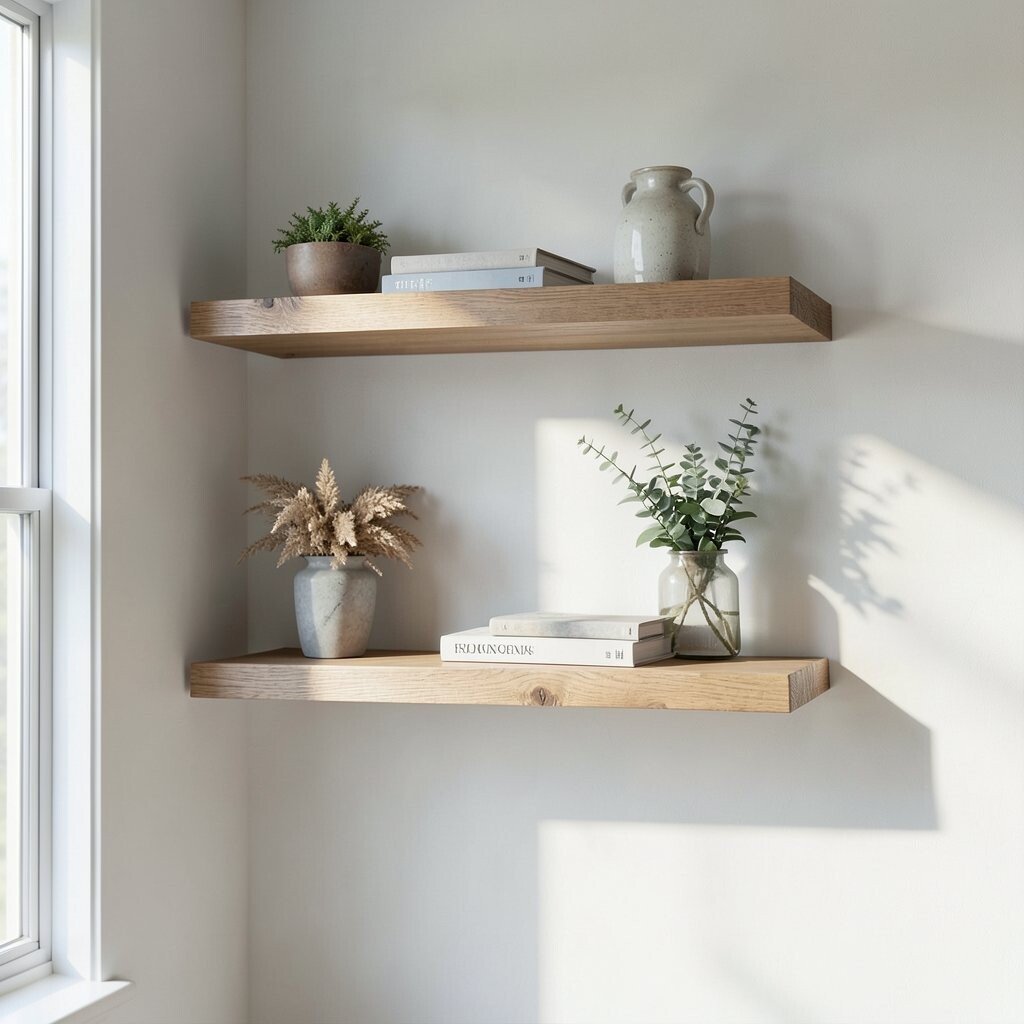
Start by looking at the room you already have, since floating shelves should feel like they belong there. A clean white shelf can look calm in a small bedroom, while a dark wood shelf can add warmth to a living room.
Matching the shelf style to your furniture makes the whole space feel more put together. If your room has soft colors, a light shelf can keep it airy, and if your space feels plain, a shelf with rich wood grain can bring in extra character without much effort or cost.
2. Pick the Right Length for the Wall
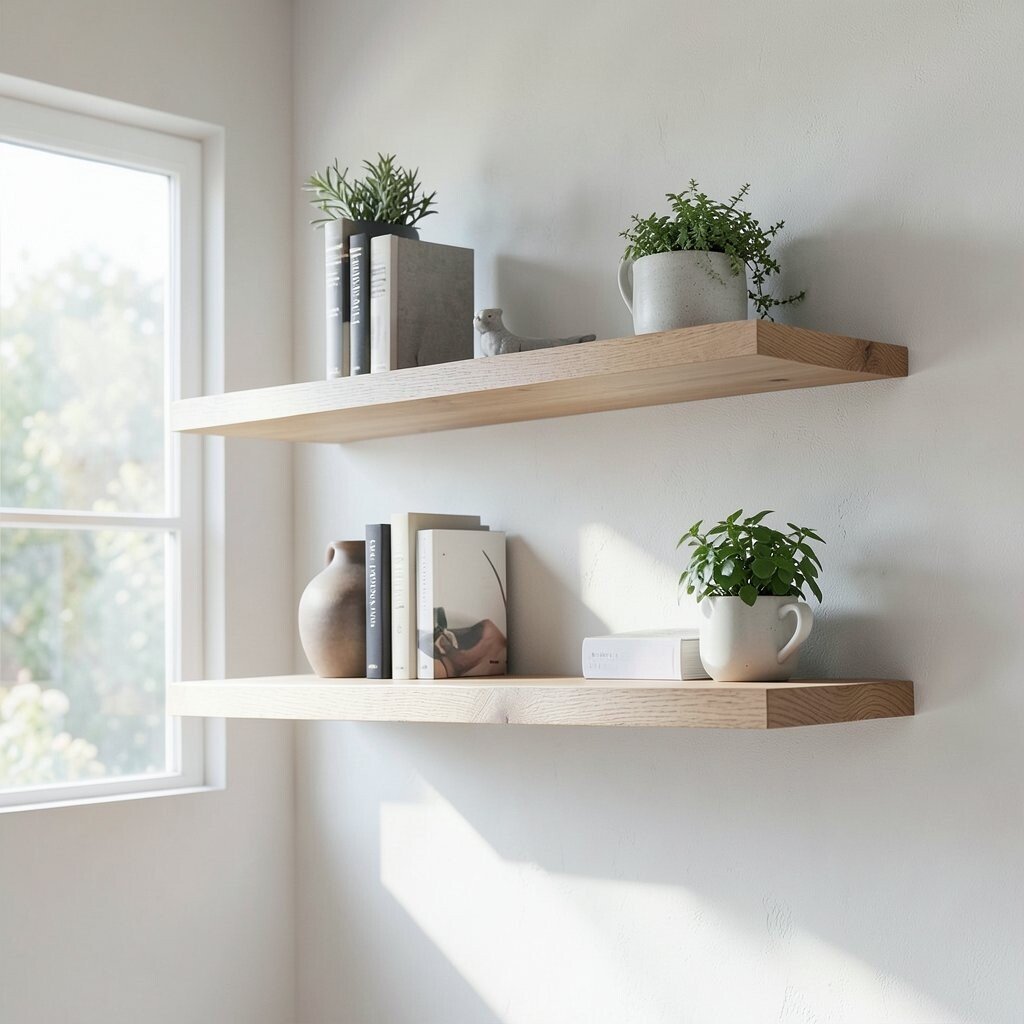
The length of the shelf matters because it changes how balanced the wall looks. A long shelf can make a wide wall feel complete, while a short shelf can work well in a narrow corner or beside a mirror.
It helps to measure first and mark the space with painter’s tape so you can see the shape before you buy anything. That little step can save money and keep you from picking a shelf that feels too large or too tiny for the spot.
Long shelves are popular in modern homes because they create smooth, simple lines that look neat and current. If you want a custom feel, you can mix shelf lengths on one wall so the setup feels personal and less stiff.
3. Think About Shelf Depth Before You Buy
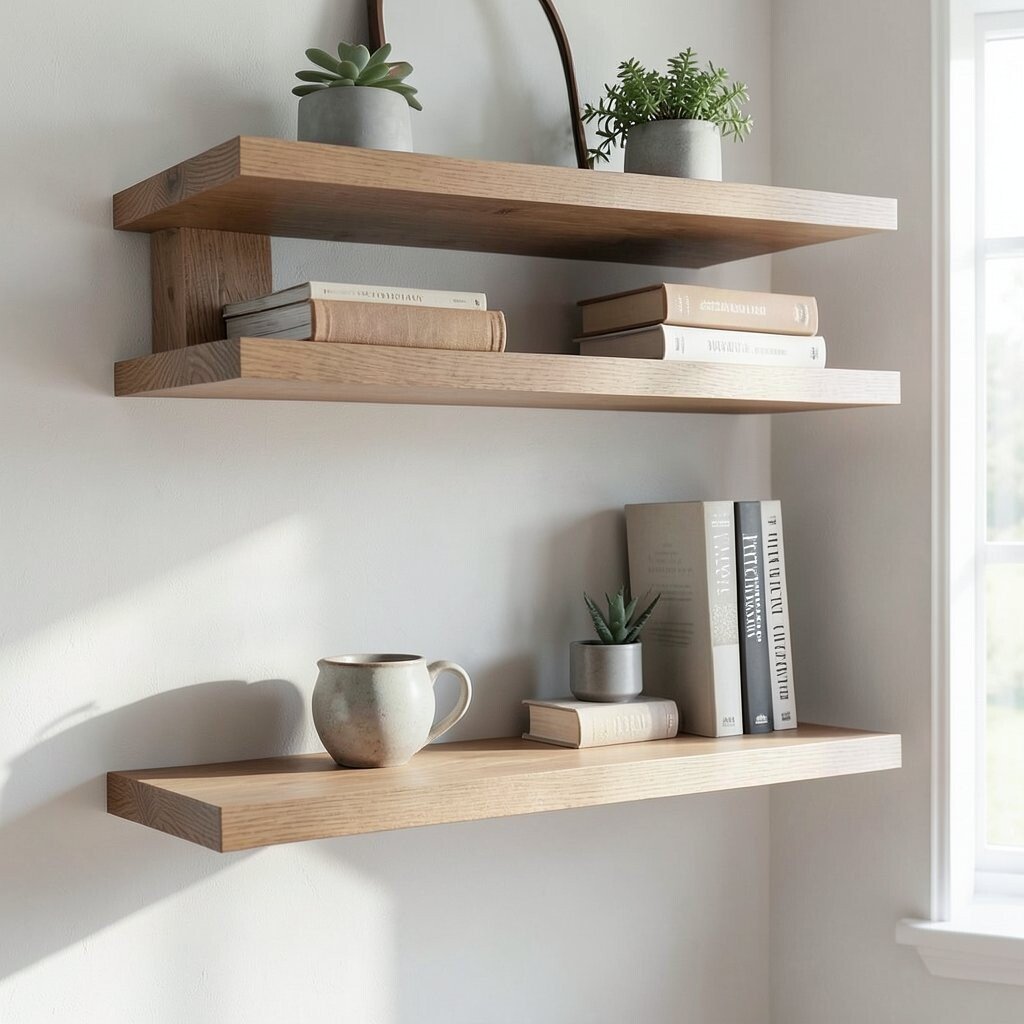
Shallow shelves look light and tidy, which is great for small items like candles, tiny plants, or framed photos. Deeper shelves give you more room, but they can also stick out more and make a wall feel heavier.
If you want a shelf for books or kitchen jars, a deeper shelf can be useful and worth the extra cost. For a softer look, a narrow shelf can keep the wall open and simple while still giving you a place to show off a few favorite pieces.
Depth also affects the mood of the room, since slimmer shelves often feel more modern and sleek. You can personalize the choice by thinking about what you plan to display now and what you may want to store later.
4. Match the Shelf Material to Your Lifestyle
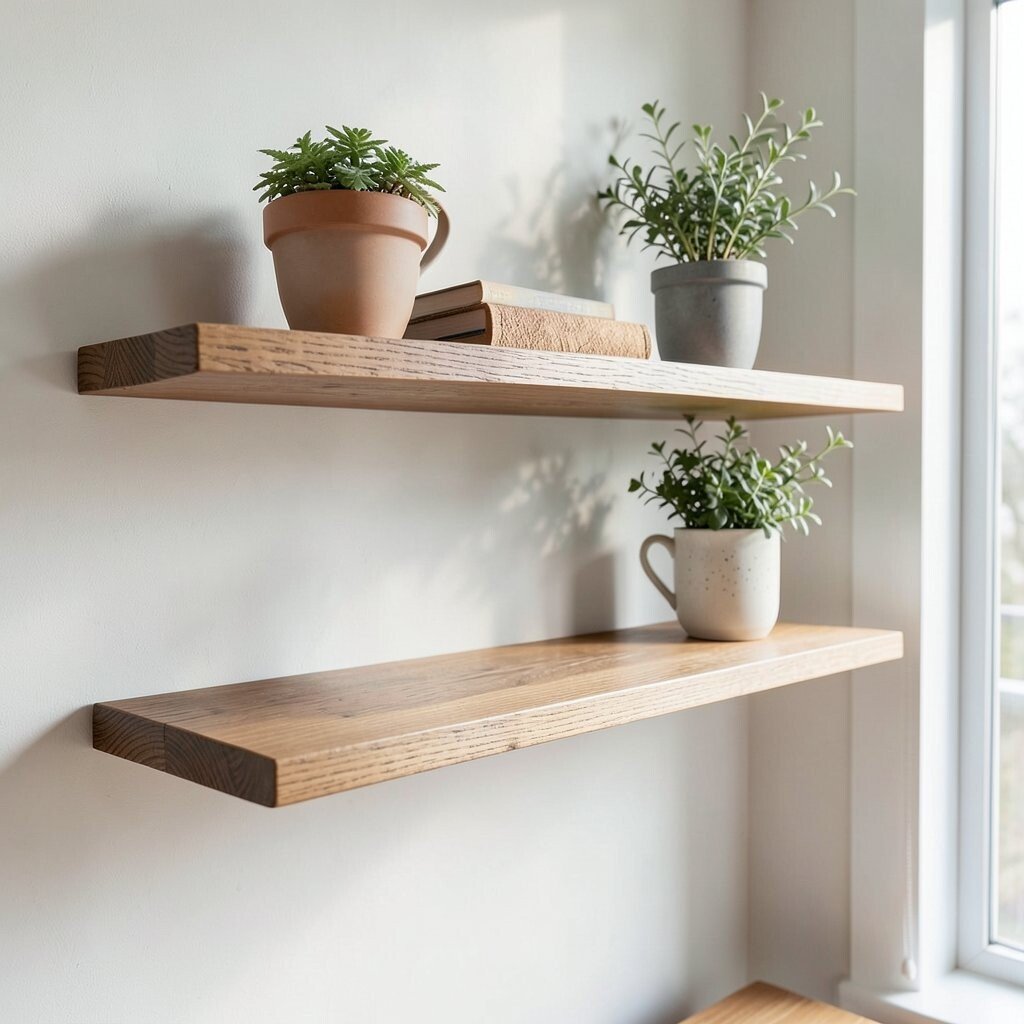
Wood shelves bring in warmth and feel natural, while metal shelves can look sharp and modern. Glass shelves feel light and elegant, but they need more care and can cost more than a basic wood design.
If you have kids, pets, or busy daily routines, a sturdy material can be the smarter pick. The best shelf is not only pretty but also easy to clean and strong enough for the things you want to place on it.
5. Use Floating Shelves to Add Color
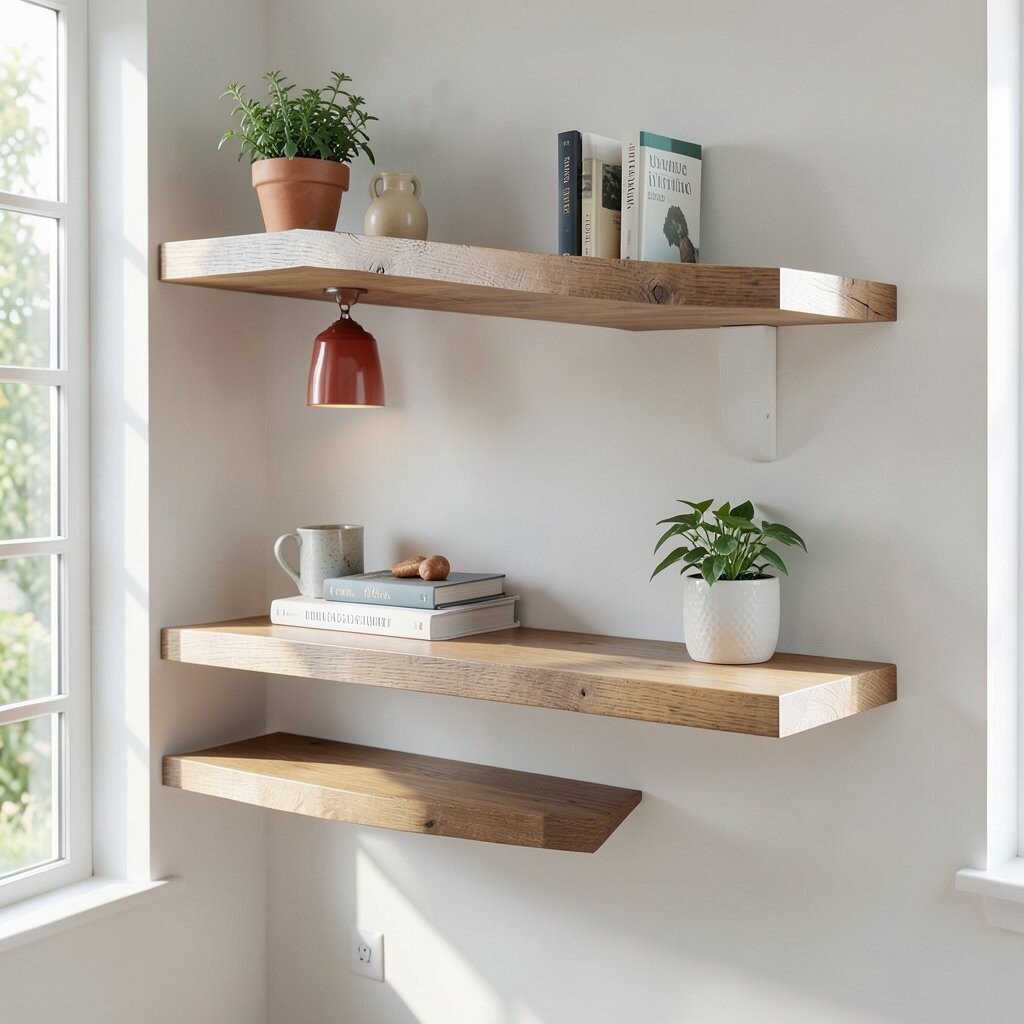
A floating shelf can do more than hold things, because it can also bring color into a room. Painted shelves in green, blue, or soft clay tones can stand out against plain walls and make the whole area feel cheerful.
This is a smart way to add style without buying a lot of new furniture, which keeps the budget friendly. You can also match shelf color to pillows, rugs, or art so the room feels planned in a simple, personal way.
Bright colored shelves are part of a current trend that makes homes feel playful and fresh. If you like a calmer look, soft neutral shades still give a nice custom touch while staying easy to live with.
6. Choose Shelves That Fit the Room’s Mood
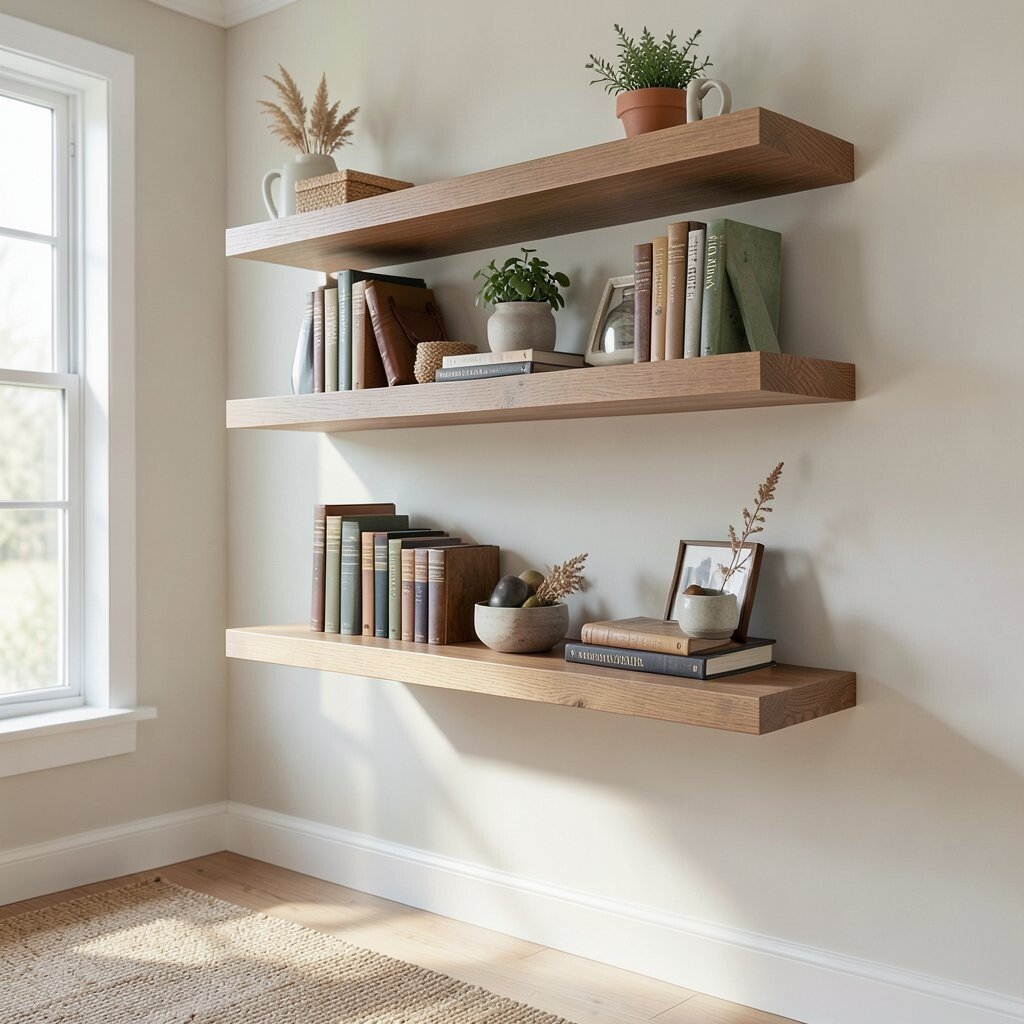
Every room has a mood, and floating shelves should support that feeling instead of fighting it. A spa-like bathroom may need smooth, light shelves, while a cozy den may feel better with darker wood and soft edges.
When the shelf mood fits the room, the whole space feels more peaceful and polished. You can make it more personal by adding objects that tell your story, such as travel souvenirs, family photos, or handmade bowls.
This approach also helps you spend wisely, since you are choosing pieces that truly belong instead of buying extras that do not fit. A shelf with the right mood can make even a small space feel more thoughtful and complete.
7. Look for Hardware That Stays Hidden
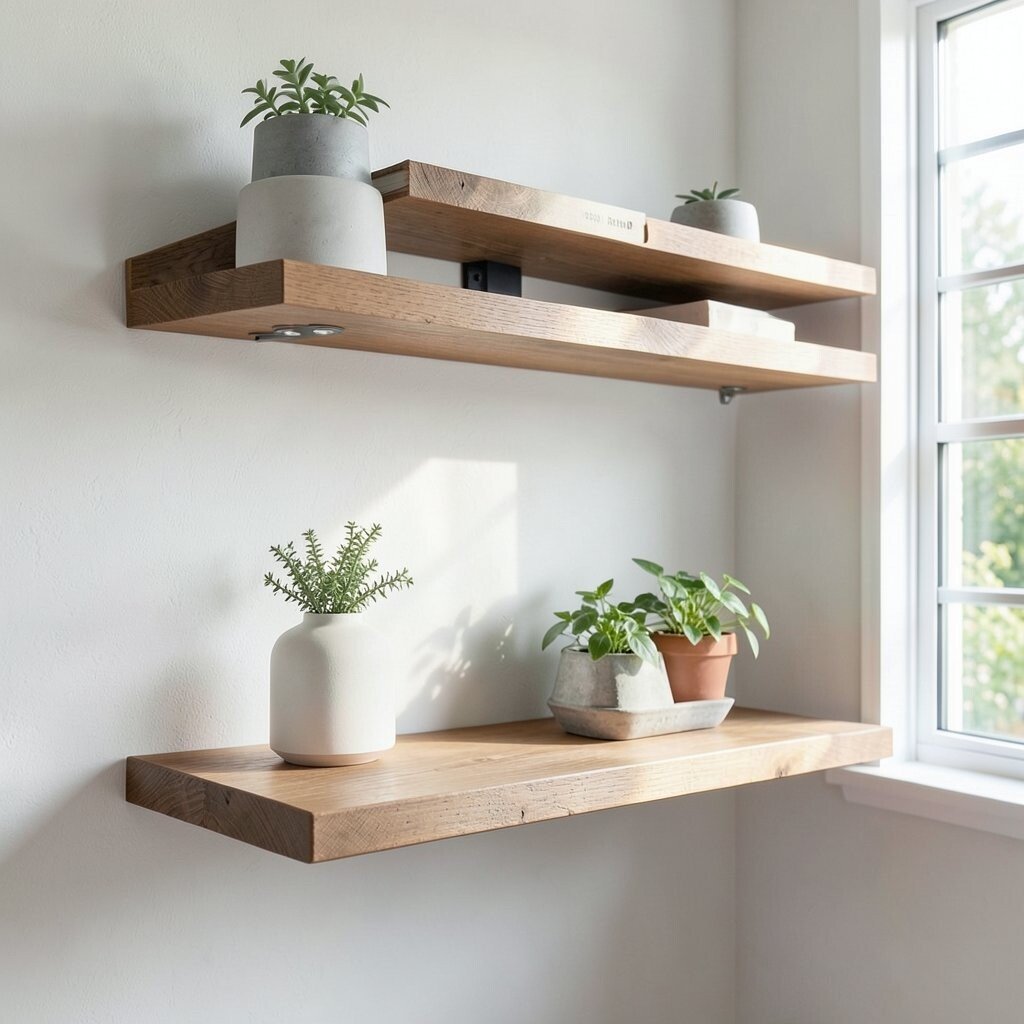
Hidden brackets are part of what makes floating shelves look so neat and special. When the support stays out of sight, the shelf seems to hover on the wall, which gives a clean and modern look.
This style is nice when you want the shelf itself to be the star rather than the support under it. It can cost a little more than basic brackets, but many people think the smooth finish is worth it because it looks custom and high-end.
If you want the room to feel less busy, hidden hardware is a smart choice. It works well with many styles, from simple and plain to bold and artistic, so you can make it fit your taste with ease.
8. Balance Open Display With Practical Storage

Floating shelves are pretty, but they also need to work for your daily life. A good shelf can hold dishes in a kitchen, folded towels in a bathroom, or baskets in a hallway without making the room feel crowded.
Try to leave some open space on each shelf so the items can breathe and look nice. That small bit of empty room makes the shelf feel more stylish, and it keeps the display from becoming messy or hard to clean.
You can mix useful items with a few decorative ones to get the best of both worlds. This balance is a useful trend in home design because it keeps rooms beautiful while still making them easy to use every day.
9. Go for Shelves That Feel Light in Small Rooms
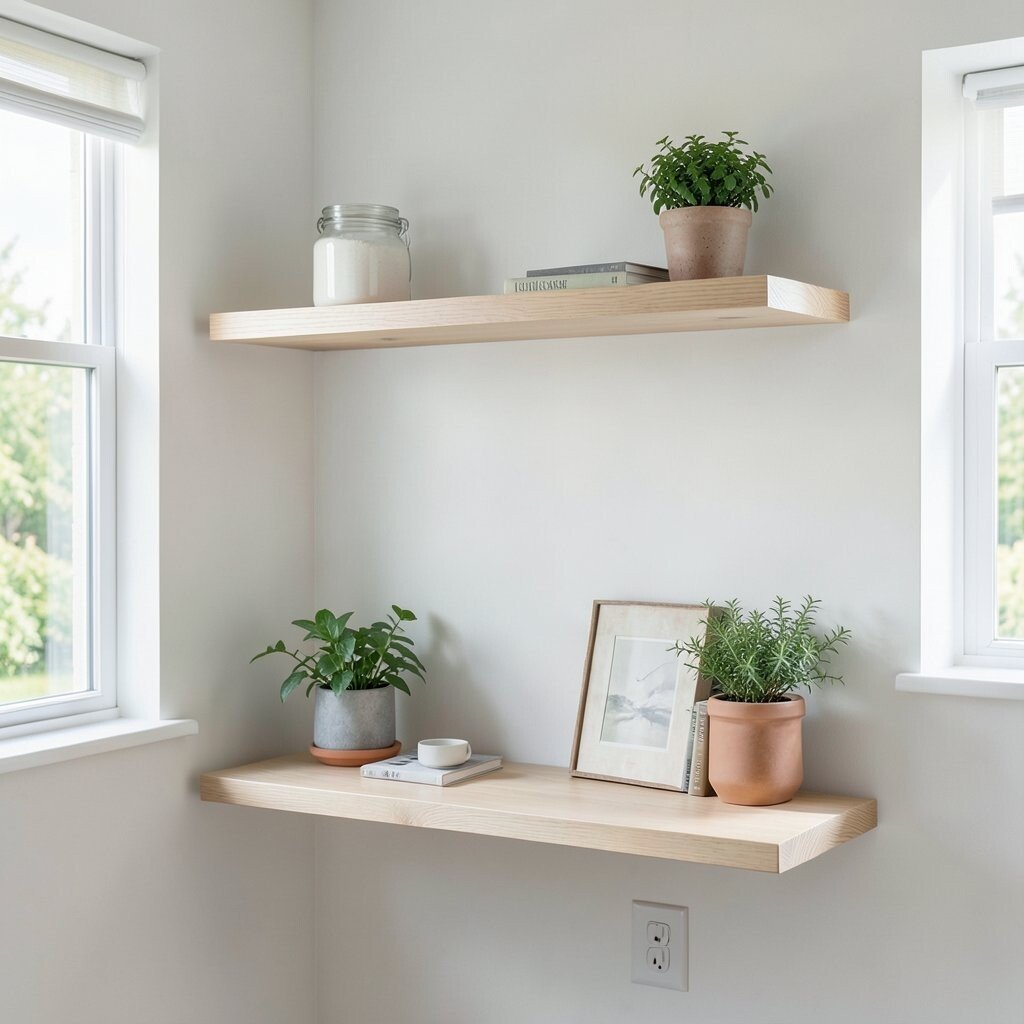
In a small room, floating shelves can help the wall feel open instead of heavy. Slim shelves with soft colors can hold what you need without making the space feel tight or boxed in.
This makes them a smart choice when floor space is limited and every inch counts. They can also cost less than big furniture pieces, which is helpful if you want a fresh look without spending too much.
You can make them feel personal by styling them with just a few items that matter most to you. A small shelf with a framed print, a plant, and a favorite book can have more charm than a crowded set of large pieces.
10. Use Floating Shelves to Show Off Texture
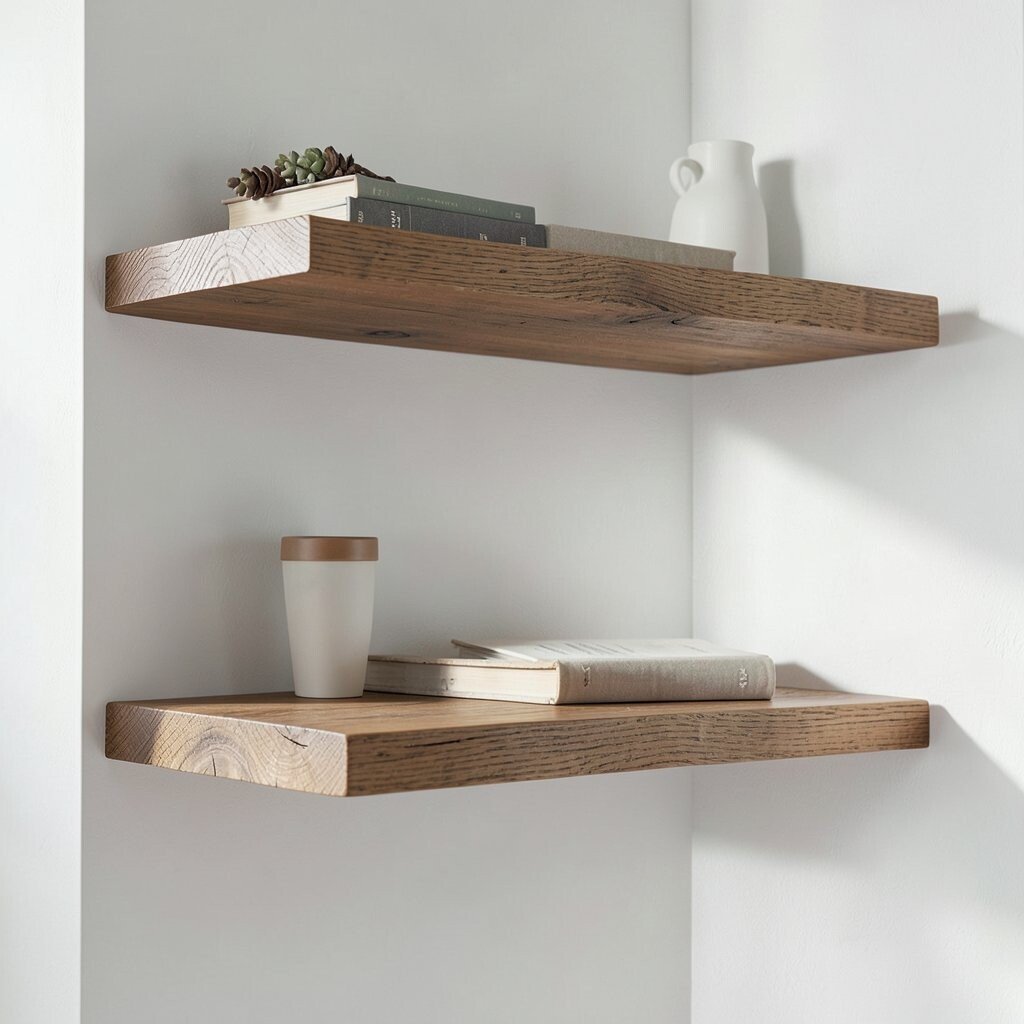
Texture gives floating shelves their own kind of charm, even when the shape is simple. A rough wood grain, smooth matte paint, or brushed metal surface can make the wall feel richer and more interesting.
Texture is a helpful way to add style without using loud colors or too many decorations. It can also hide small scuffs better than shiny finishes, which makes some materials easier to live with and worth the money.
If your room already has soft fabric or plain paint, a textured shelf can bring in a nice layer of contrast. That little detail often feels custom and thoughtful, which is why many people are choosing more natural finishes now.
11. Keep Shelf Shapes Clean for a Modern Look
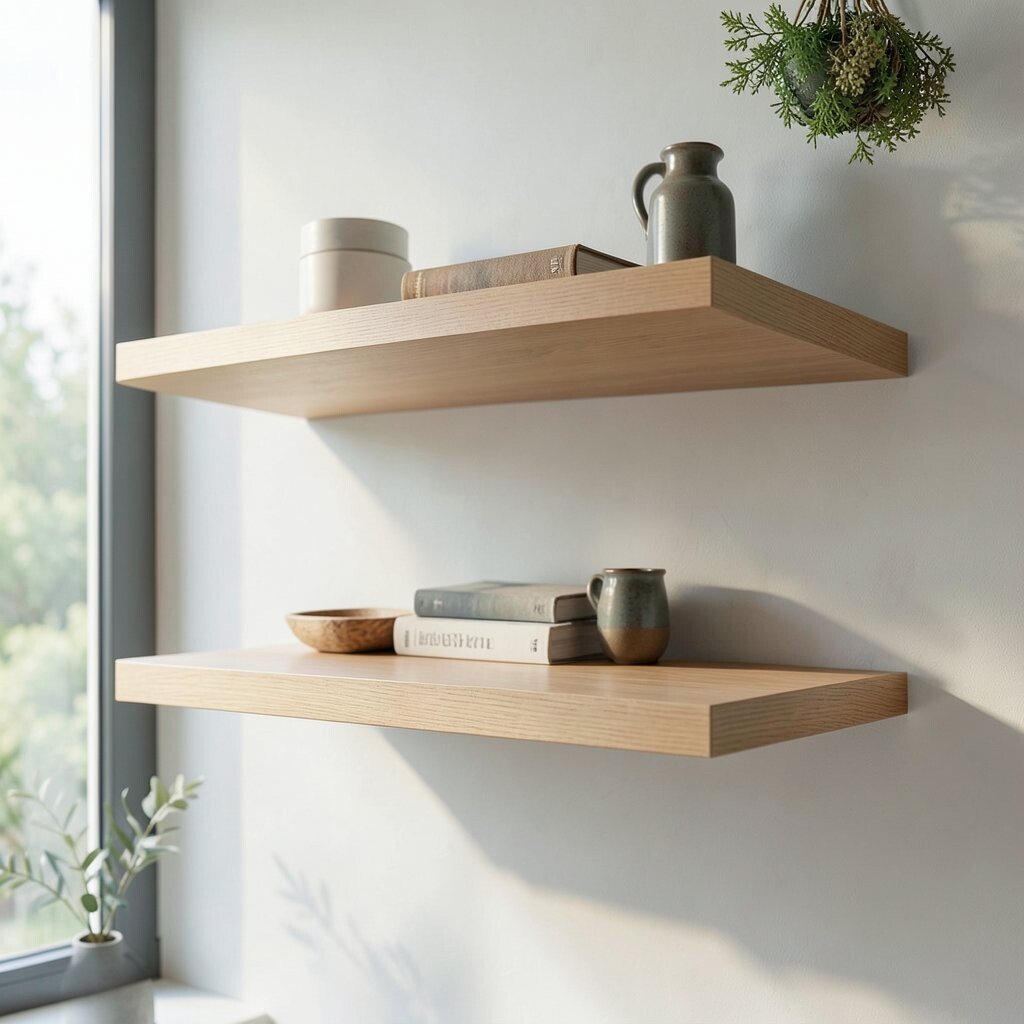
Simple shelf shapes are easy on the eyes and fit many different rooms. Straight lines, smooth corners, and slim edges can make a wall look tidy and fresh without much effort.
This kind of shape is great if you want your shelf to work with changing decor over time. You can switch out the items on it season by season while the shelf itself stays timeless, which is a smart way to save money over the long run.
Clean shapes also make it easier to personalize the display because your objects stand out more clearly. A modern shelf can hold bold art, quiet neutral pieces, or a mix of both and still look balanced.
12. Choose Shelves That Work With the Wall Color
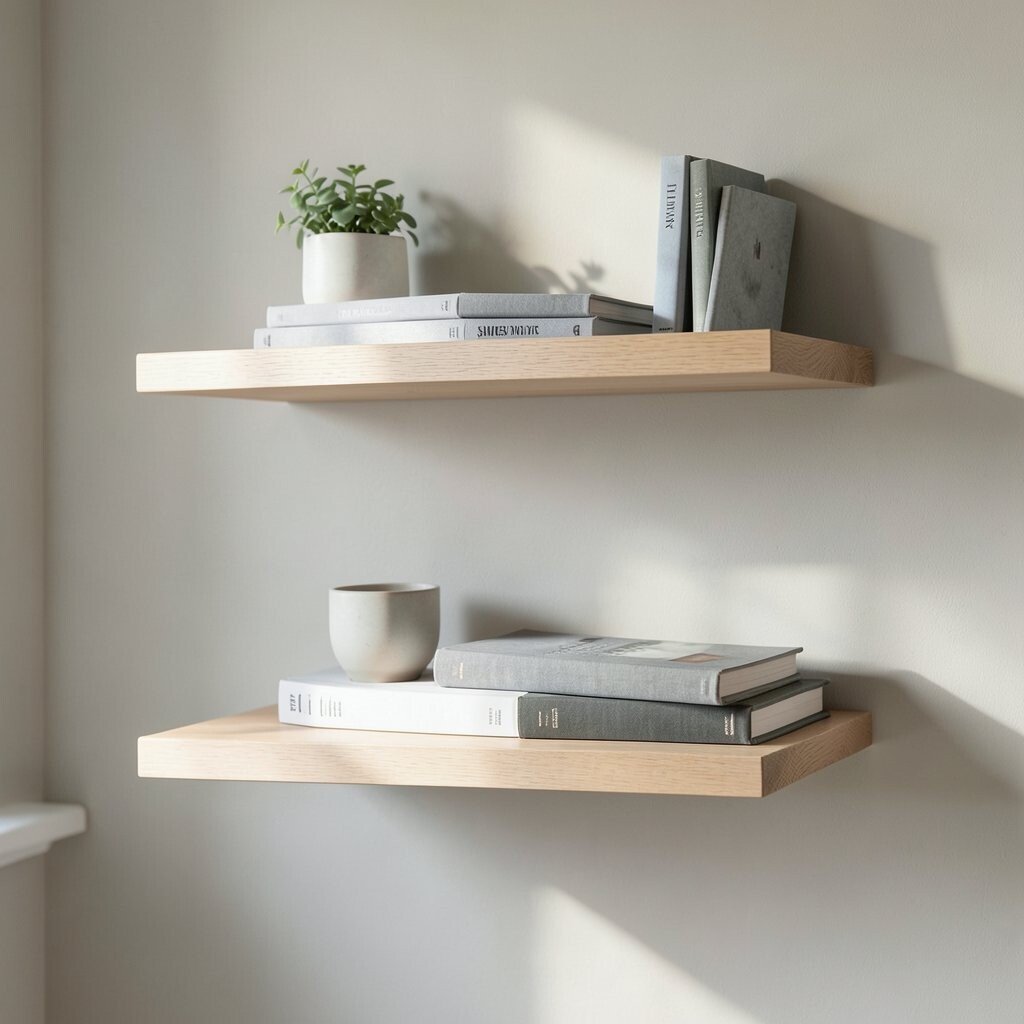
The wall color can change how a floating shelf looks, even when the shelf itself is simple. A shelf that blends in can make the room feel calm, while a shelf that contrasts with the wall can create a lively focal point.
If you want a soft and quiet look, matching tones is a smart path. If you want the shelf to stand out, a strong contrast can give the wall more energy without needing much extra decor or cost.
This is a great place to add your own style, since the same shelf can feel very different on different walls. Light shelves on dark paint and dark shelves on light paint are both popular because they create a bold, clean effect.
13. Make Use of Corners With Floating Shelves
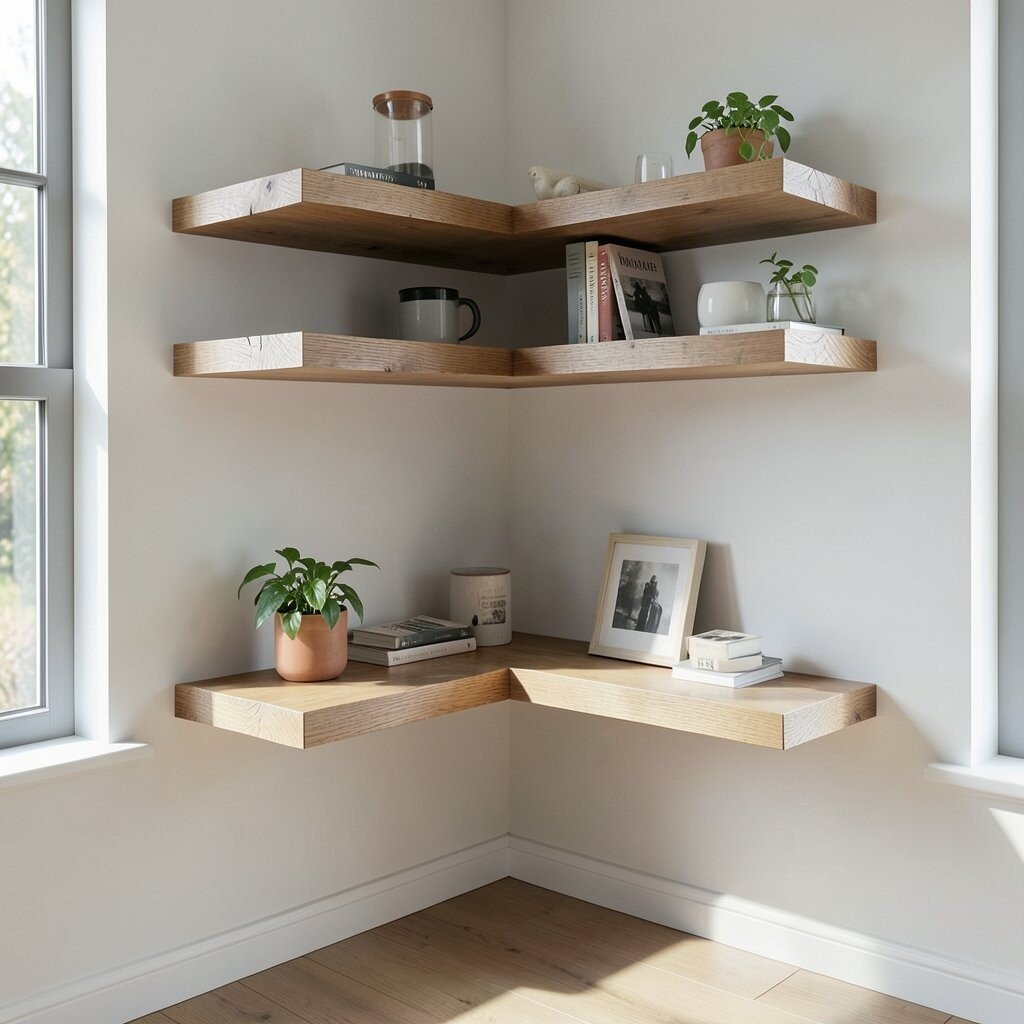
Corners often get ignored, but floating shelves can turn them into useful and pretty spots. A corner shelf can hold plants, books, spices, or small art pieces while making the room feel more complete.
This idea is especially helpful in homes where storage is limited and every wall matters. It can also be a budget-friendly choice because corner shelves are often smaller than full wall units, yet they still make a big visual difference.
You can personalize a corner shelf by making it a tiny display area for items you love. A few simple pieces placed with care can turn an empty corner into one of the most charming parts of the room.
14. Mix Shelves With Other Wall Decor
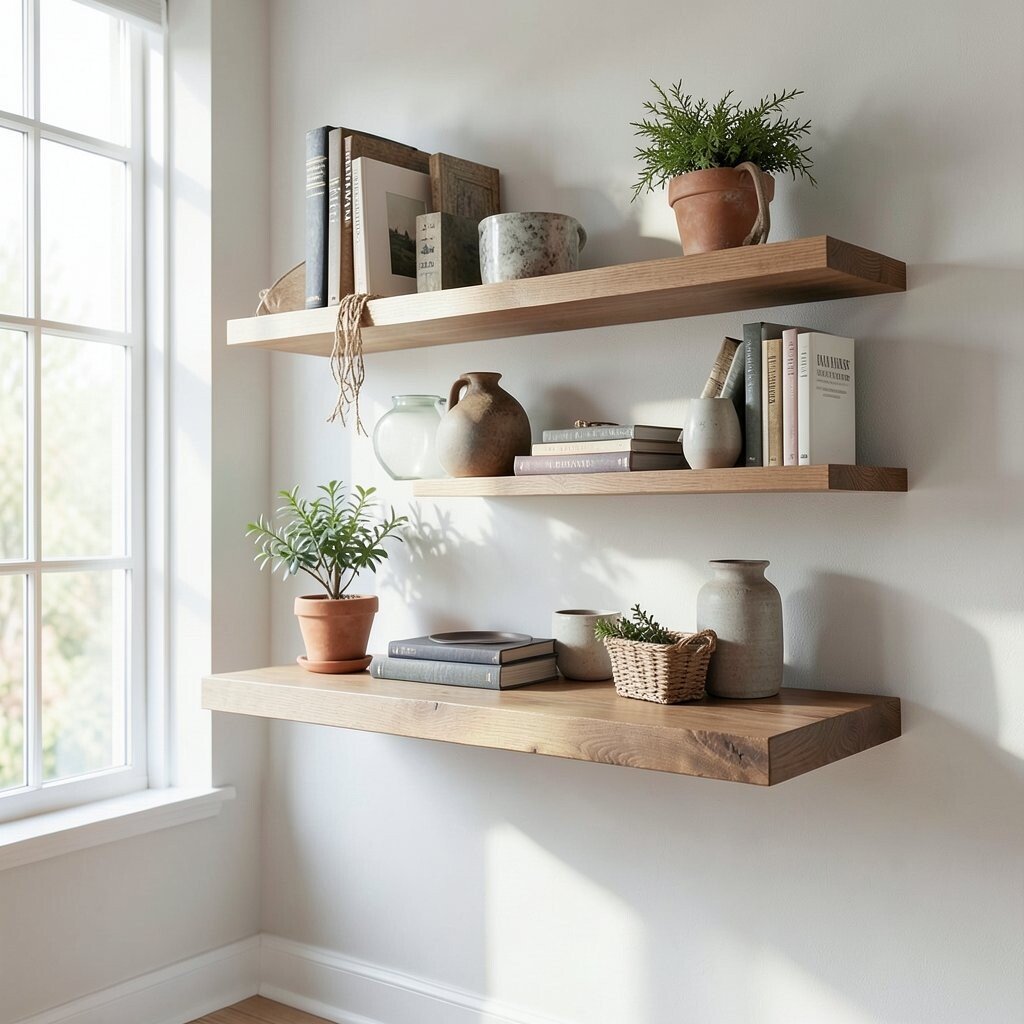
Floating shelves look even better when they work with art, mirrors, or framed photos. The mix gives the wall depth and keeps the room from feeling flat or one-note.
When shelves and wall decor share the space well, the whole area feels more designed and thoughtful. You can keep costs down by using what you already own and arranging it in a fresh way instead of buying a lot of new things.
This style is popular because it feels relaxed and personal rather than stiff or staged. A shelf beside a mirror or under a print can bring balance to the room while still leaving room for your own taste.
15. Choose a Shelf That Can Grow With Your Needs
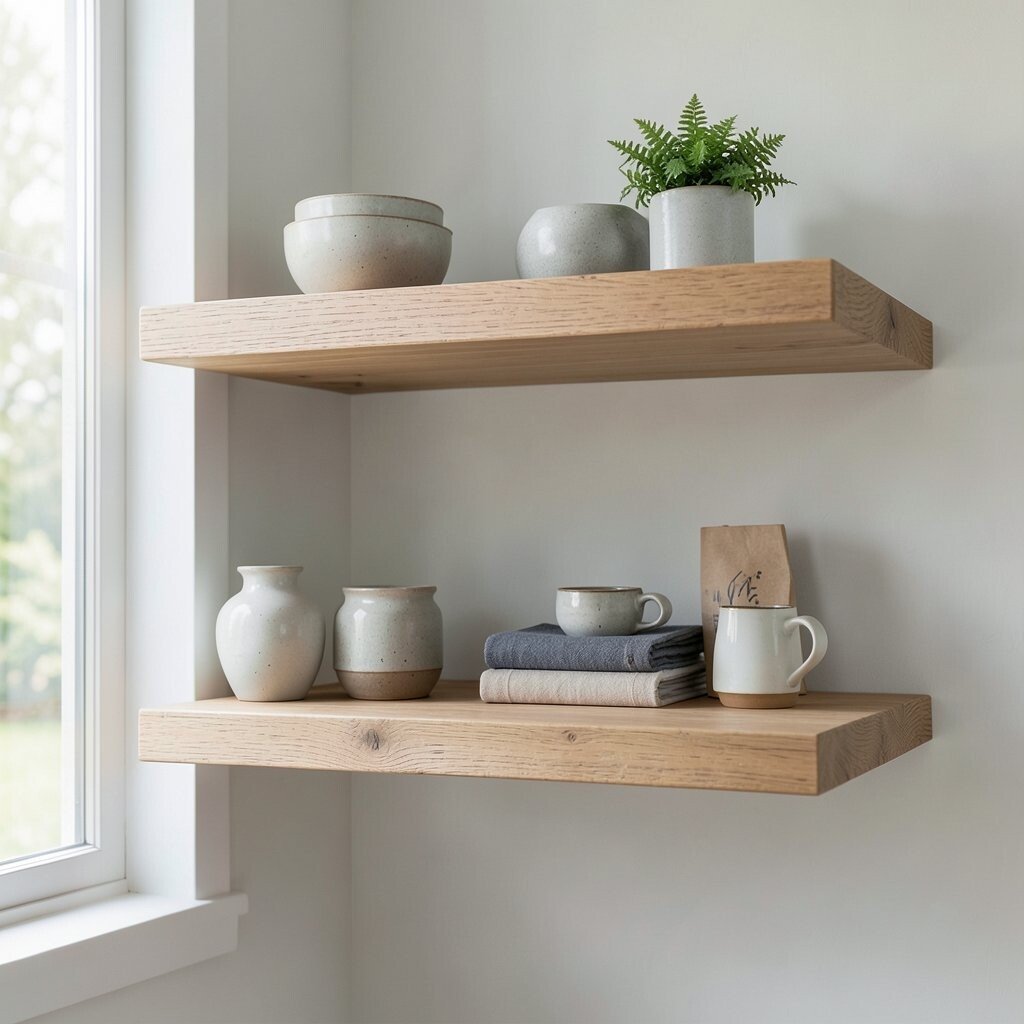
A good floating shelf should not only fit today’s needs but also work later on. If you expect to change rooms, move homes, or switch how you use the space, a flexible shelf can save trouble and money.
Simple shelves are often the easiest to reuse because they match many styles and hold many kinds of items. That makes them a practical buy for people who like to refresh rooms without starting from zero each time.
You can keep it personal by changing the shelf’s purpose over time, from books to plants to keepsakes. That kind of flexibility is one reason floating shelves stay so useful and appealing in modern homes.
16. Pay Attention to Weight Support
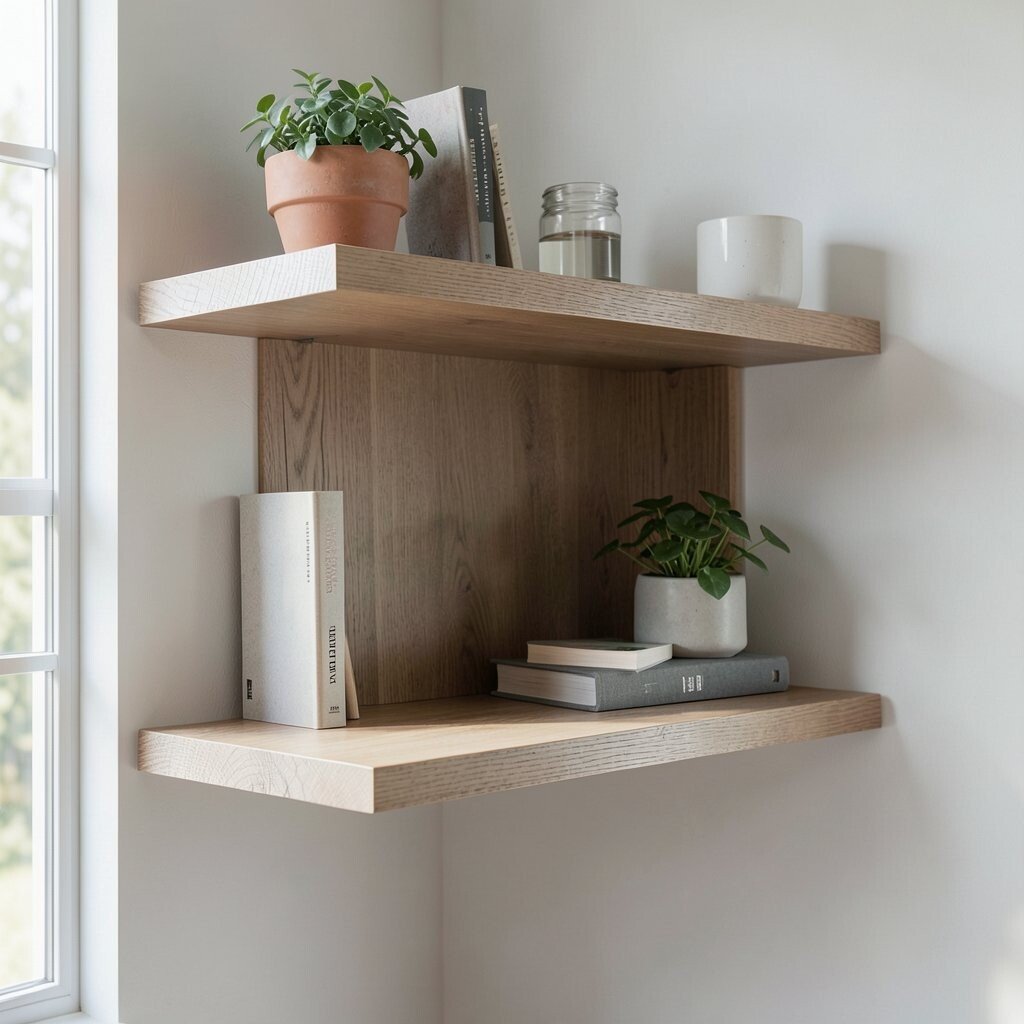
Floating shelves may look delicate, but they still need the right support behind the scenes. A shelf that is strong enough for your items will feel safer and last longer, which matters a lot in busy homes.
Always check what the shelf can hold before you buy, especially if you plan to place heavy books, dishes, or glass items on it. Spending a little more on strong support can be worth it because it helps protect both the shelf and the things on it.
If you want a clean look but need extra strength, many shelves now come with strong hidden systems that do both jobs well. That mix of beauty and function is a key trend, since people want storage that looks good and works hard.
17. Use Shelves to Tell a Small Story
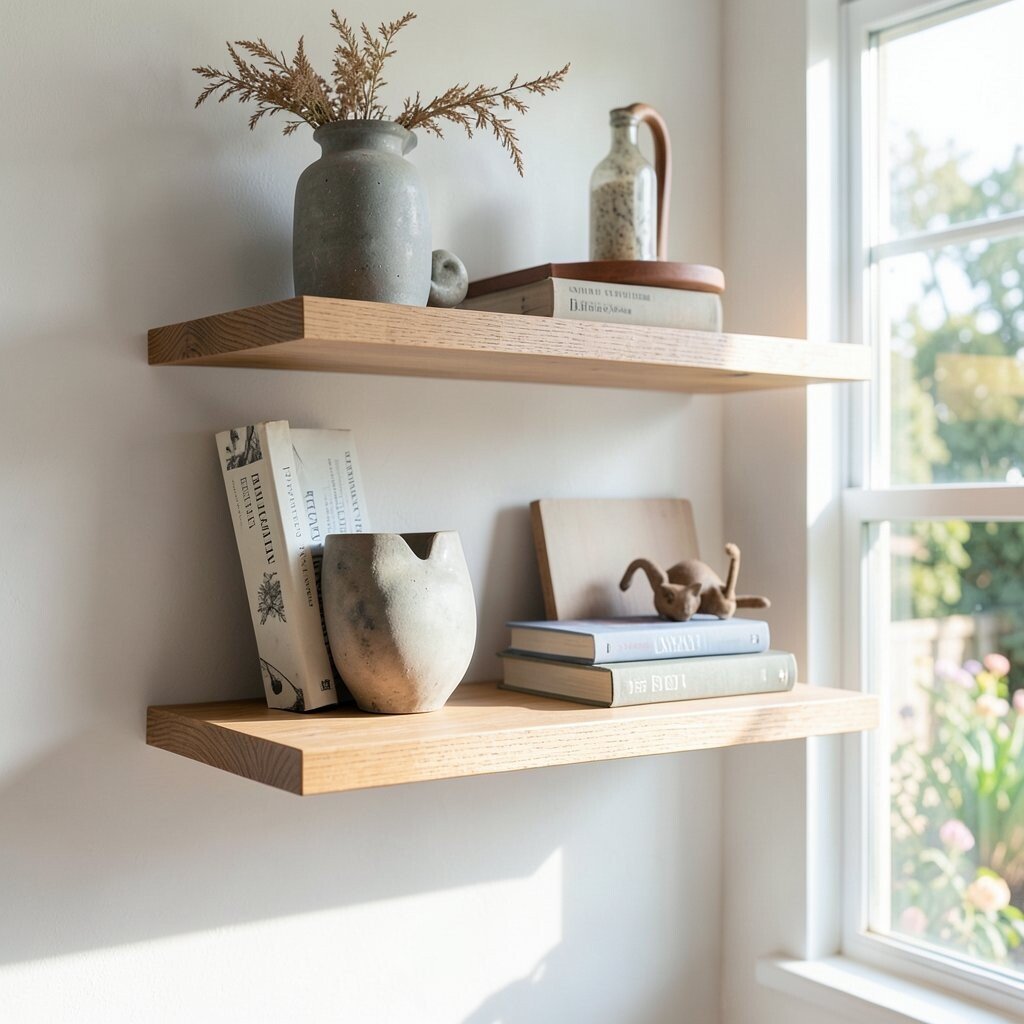
Floating shelves can show off more than objects, because they can show personality too. A shelf with travel pieces, family photos, books, and a tiny plant can tell a quiet story about the people who live there.
This makes the shelf feel unique and meaningful instead of just useful. You do not need to spend a lot to do this well, since even simple objects can look special when they are arranged with care and spaced nicely.
Try to pick items that feel connected in color or shape so the shelf looks calm, not crowded. That little bit of planning can make the shelf feel like a custom part of the room, which adds charm without extra fuss.
18. Think About How the Shelf Will Feel Over Time
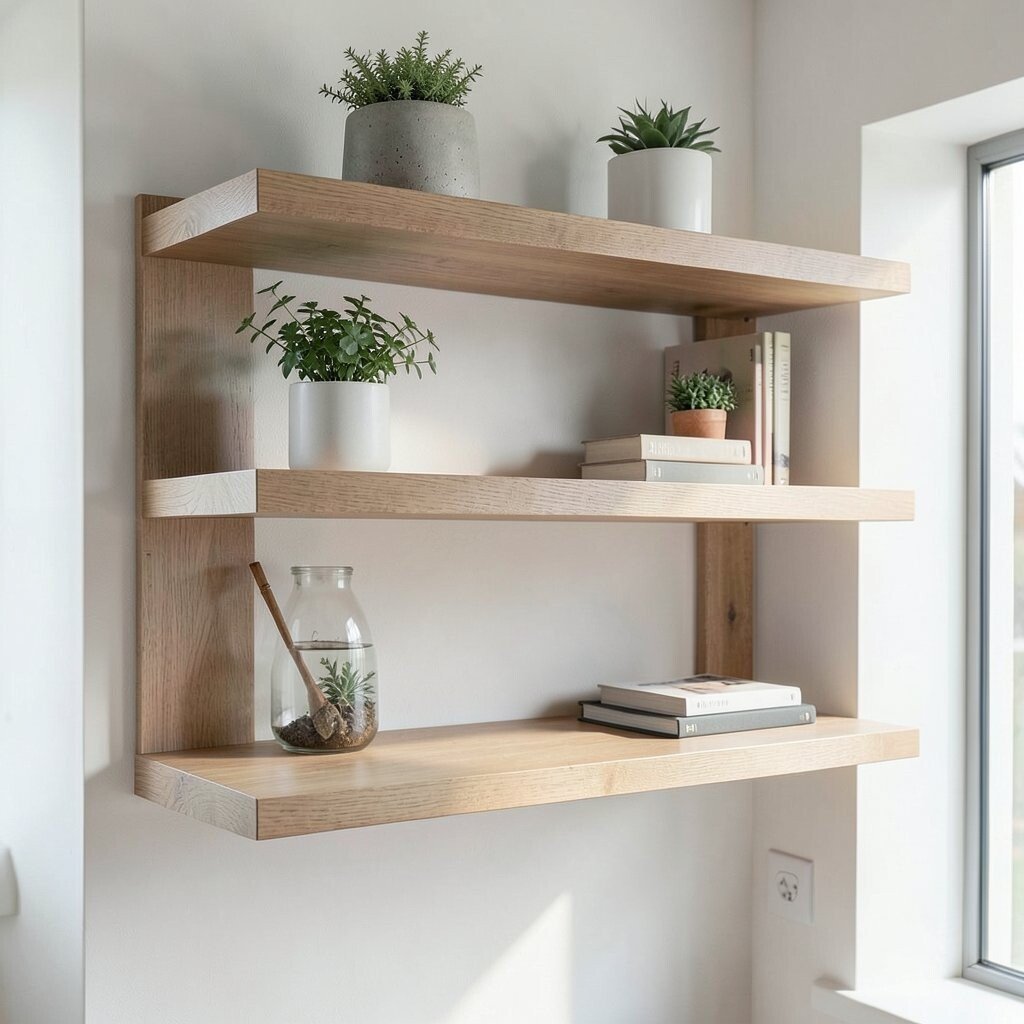
The best floating shelf is one you will still enjoy after the first week. It should look nice in bright daylight, soft evening light, and all the little moments in between when you walk past it every day.
When choosing, imagine how the shelf will feel with real life around it, not just in a perfect photo. A shelf that stays attractive, useful, and easy to care for is usually the one that gives the best value for the cost and keeps the room feeling steady and pleasant.
You can make the choice even more personal by thinking about your habits, your favorite colors, and the objects you love most. A shelf that fits your daily life will feel less like a quick purchase and more like a small part of home that truly belongs.