Marble stairs can look stunning, but they also show every change in light and wear. With a few smart upgrades, the same steps can feel brand new.
You don’t need a full renovation to make a big difference. Small choices in color, lighting, and protection can refresh the whole entryway mood.
1. Refresh the Shine Without Overpolishing
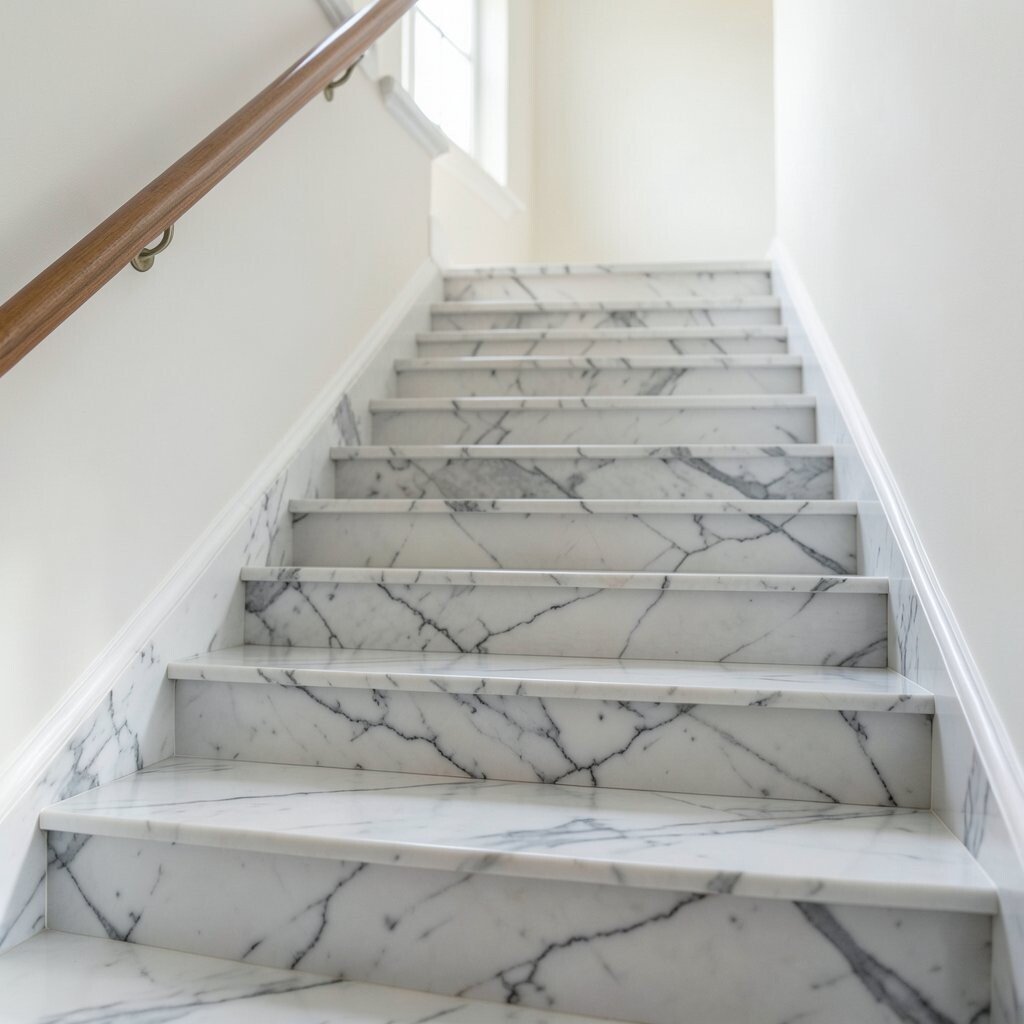
Start by giving your marble stairs a gentle clean and letting them dry fully before you touch anything else. When you see dull spots, it usually means residue, not the stone itself.
Use a pH-neutral cleaner and soft microfiber tools, and work in small sections so the surface stays even. If you use a shine product, choose one made for natural stone and test it in a hidden corner first. Then buff lightly for a consistent glow. The benefit is a smoother, brighter look that makes the whole staircase feel more cared for without wearing the finish down.
2. Add Runner Rugs for Warmth and Grip
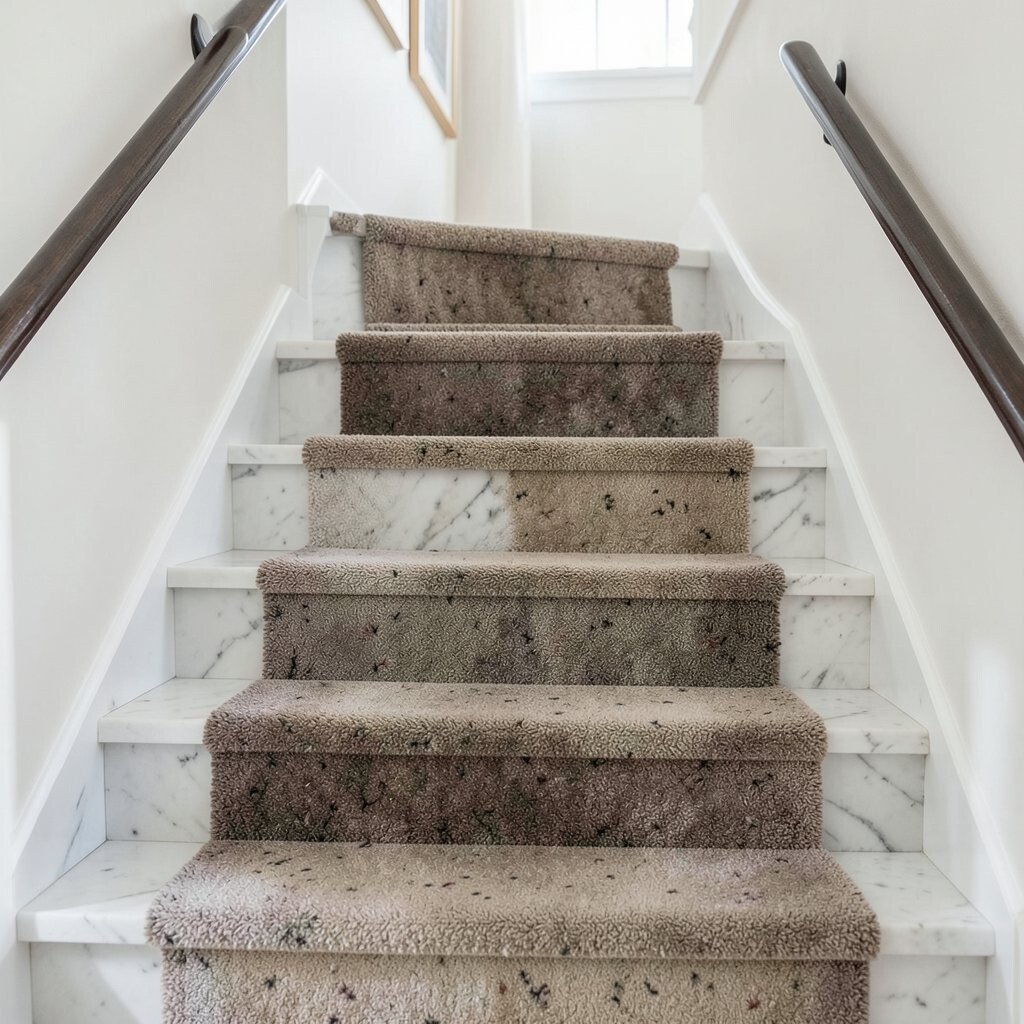
Place a runner that matches your home’s style, and notice how instantly the stairs feel cozier. As your eyes move up the steps, the pattern creates a gentle “path” instead of showing every small scratch.
Look for a runner with a textured backing or grippers so your feet feel secure. Choose fibers that hold their shape, like wool blends or tightly woven synthetic options, and make sure the color doesn’t fight the marble veining. You get added comfort underfoot and a quieter, less slippery ride. Pick a length that covers the most-used treads so wear is protected where it matters most.
If you want personalization, choose a runner with a slight border that frames the stone edges. In current homes, many people mix clean modern lines with classic materials, so a simple geometric runner can look fresh even on ornate marble. Consider cost carefully by measuring your stair width and buying a runner with enough length to reduce seaming. Even a modest runner can feel like a full design makeover.
3. Choose Stair Treads That Match Your Veins
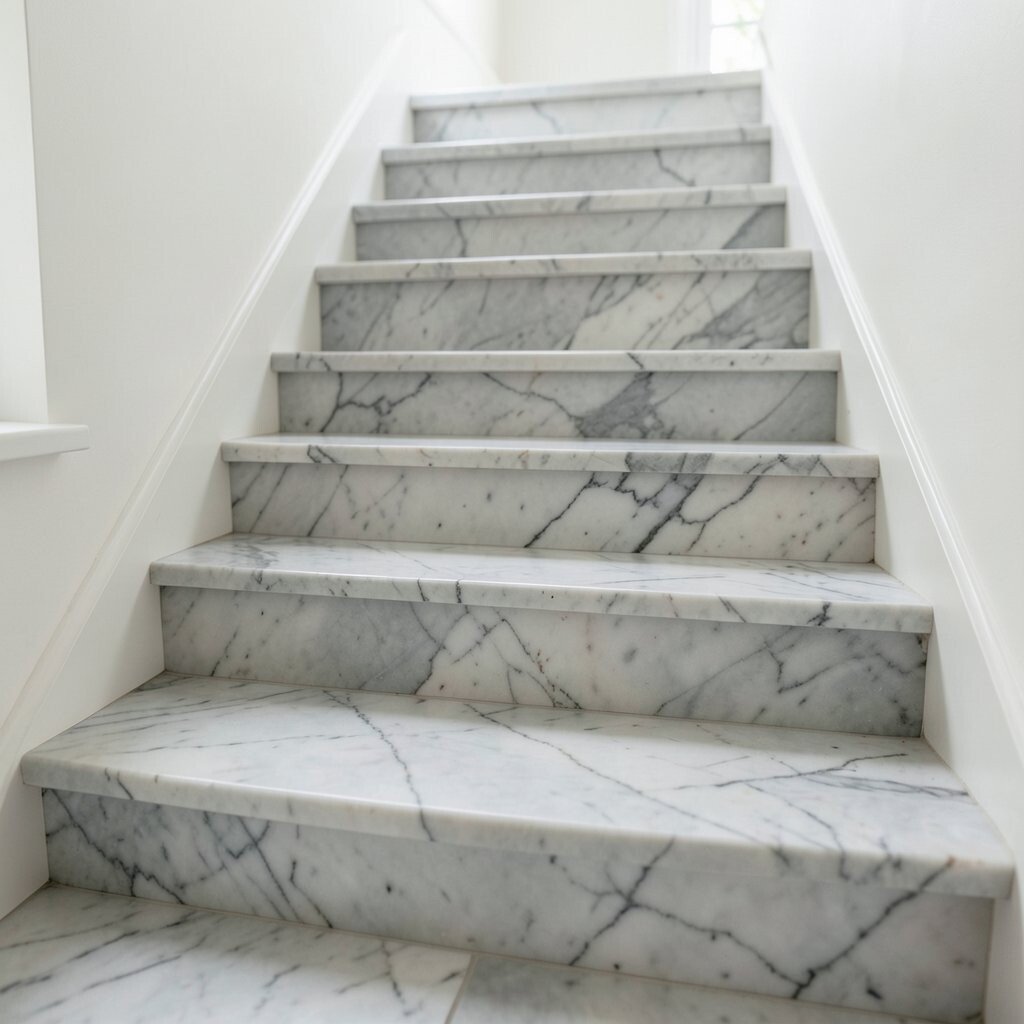
For a truly tailored look, coordinate your tread inserts with the marble’s dominant colors. You can spot the main tones by looking at the risers and the widest vein areas.
Then pick treads in complementary shades, such as soft grays, warm beiges, or subtle creams, so the upgrades feel intentional. This creates a visual rhythm where the stone leads and the finish supports it. Marble stays the star, but the stairs look more “designed,” not patched.
When you shop, think about thickness too, because thicker inserts can hide minor chips while thinner ones keep a more minimal style. You can also mix materials, like pairing marble with wood-look inserts for a modern-natural vibe. Personalize by selecting a finish that echoes nearby surfaces, such as banisters, trim, or flooring tones. Costs vary a lot by material and installation needs, so compare options based on how many steps you’re covering.
4. Upgrade Lighting to Make Veins Pop
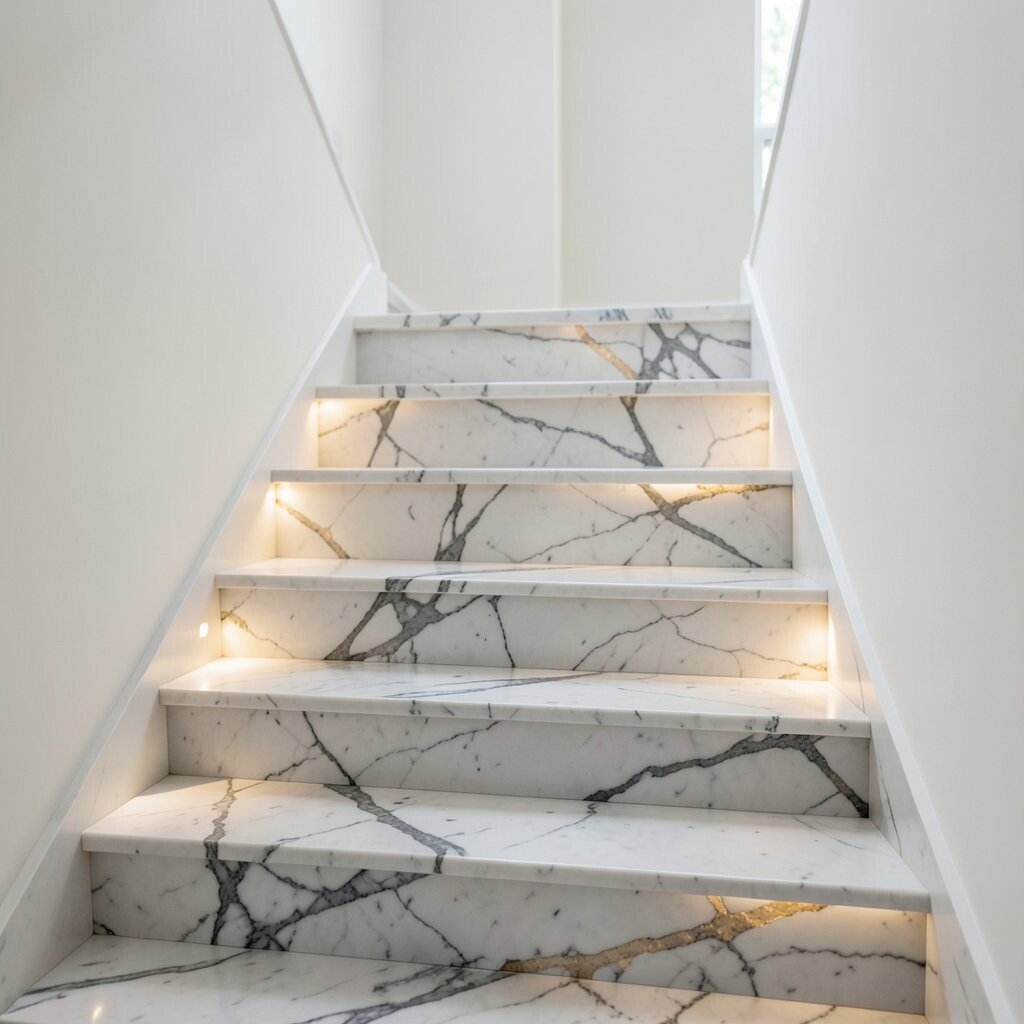
Lighting changes how marble looks more than almost any other tweak. If the current bulbs feel harsh or dim, the veining can look flat instead of glossy and deep.
Try adding a warmer bulb color temperature so whites feel creamy and grays feel calmer. If your stairs have wall space, consider slim sconces or LED strips that wash light along the steps rather than shining straight down. The benefit is a richer look that feels luxurious even without major changes. You also get better visibility at night, which makes the staircase feel safer.
For personalization, use dimmers so the shine feels different at breakfast versus evening. A trend right now is layered lighting, where overhead light is softened by small accents. You can often achieve this with affordable bulbs and a few fixtures, though electrical work may affect cost if wiring needs changes.
5. Protect Edges With Smart Clear Guards
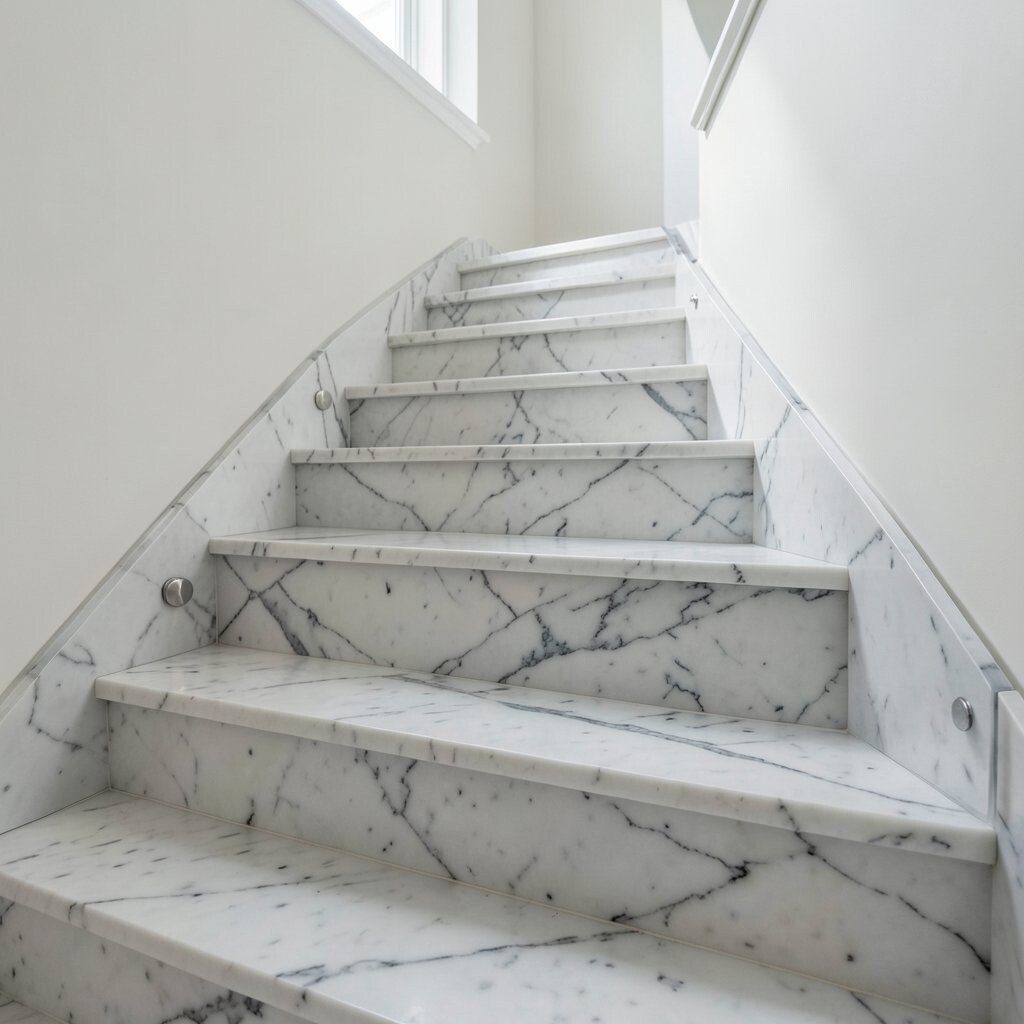
Those sharp front edges on marble steps can take the biggest hits from shoes and daily use. Clear protective edge guards help prevent chips while keeping the original look.
Choose guards designed for natural stone so they don’t yellow or leave a sticky residue. Apply them carefully and press firmly to avoid bubbles, then wipe off any excess. The visual result is crisp edges that stay cleaner for longer. This also saves money because edge repairs are usually expensive compared with preventive protection.
If you want uniqueness, pick nearly invisible guards with a satin finish so they blend with marble sheen. Some homeowners also choose matching guards for the banister posts so the whole staircase looks consistent. Consider how many edge points are most trafficked, and start there if you want to manage cost. Even small coverage can make a noticeable difference in how new the steps look over time.
6. Add a Painted Border for a Modern Frame
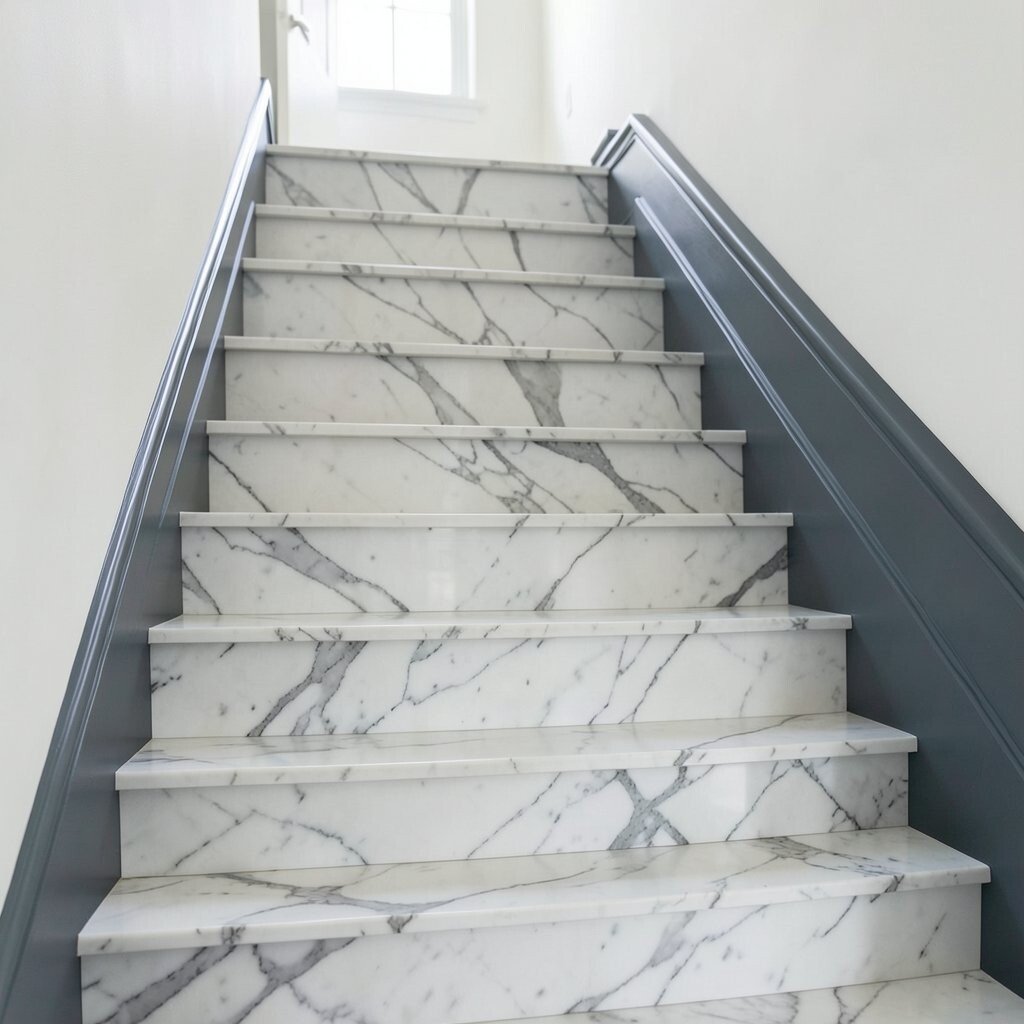
Painting a border along the stair treads can turn plain marble into a designed centerpiece. The trick is to keep the lines neat and subtle so the stone still feels classy.
Use a painter’s tape guide and choose a color that matches your trim or nearby wall tone. Soft black, deep navy, or muted olive can look surprisingly modern against bright marble. You’ll enjoy a framed look that directs attention toward your stairs instead of showing random wear marks. For practical tip, seal the painted area with a stone-safe topcoat so it resists scuffs.
7. Swap Out Handrail Finishes for Instant Style
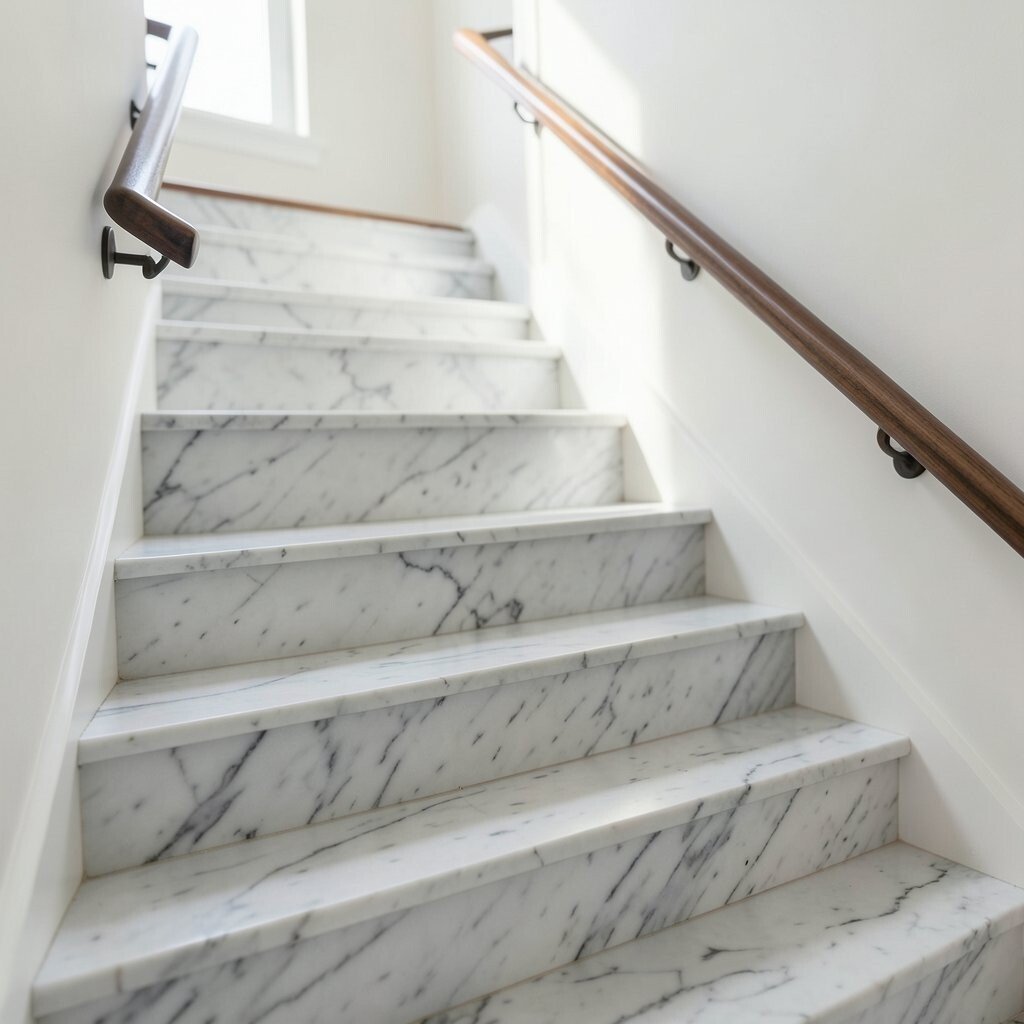
Your handrail sets the tone the moment someone starts using the stairs. When the finish looks dated, even beautiful marble can feel old-fashioned.
Consider refinishing or replacing the handrail hardware with finishes like matte black, warm brass, or natural wood tones. Those updates create a strong contrast that highlights the stone and feels current. You’ll also get better grip feel if you choose a finish with a comfortable texture. If your stairs are already in good shape, this can be a budget-friendly way to upgrade without touching every step.
For personalization, match the rail finish to door handles, light fixtures, or cabinet pulls so the style feels connected. Costs depend on whether you repaint, refinish, or replace parts, so compare options based on your comfort with DIY versus hiring. Current trends often mix metals, but the key is choosing one dominant metal and echoing it lightly.
8. Use Wall-to-Wall Color With Riser Panels
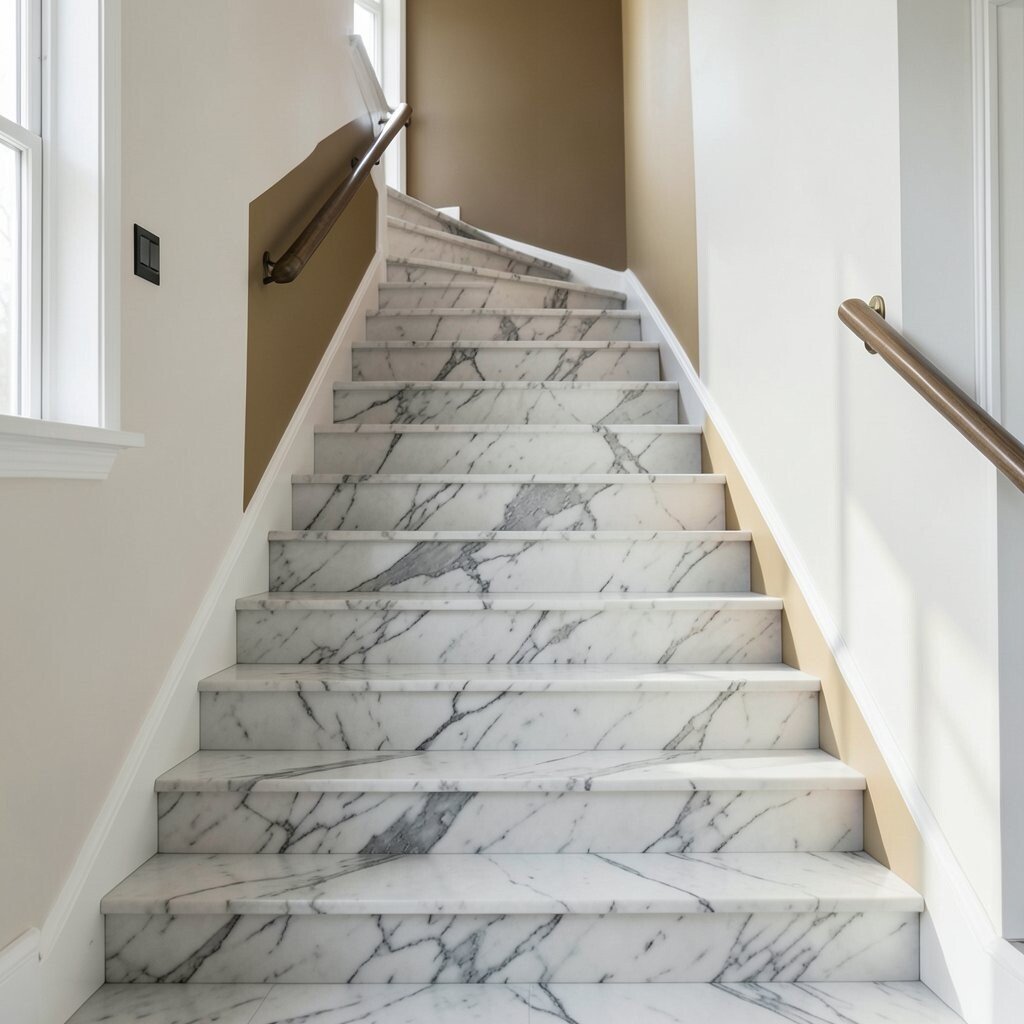
Risers are the vertical faces that most people notice when they walk up the stairs. Painting them or adding thin panel covers can create a bold, fresh look while protecting the marble surface.
Choose a color that complements the marble veining, like a warm greige for cooler stones or a soft ivory for darker veins. Then keep the finish consistent with the rest of your hallway so the staircase feels like part of the same design story. A major benefit is that scuffs and fingerprints become less visible. It also reduces daily cleanup stress because the riser area can be easier to wipe down.
To personalize, you can create a subtle pattern by using a gentle tone-on-tone approach, such as two shades of the same color family. Trends favor simple, clean color blocks rather than busy designs, so a solid riser panel can feel stylish and calm. Costs range widely, and simple paint jobs usually cost less than full panel installations, especially if you keep the layout straightforward.
9. Add Stair Nose Inserts for a Clean Edge Line
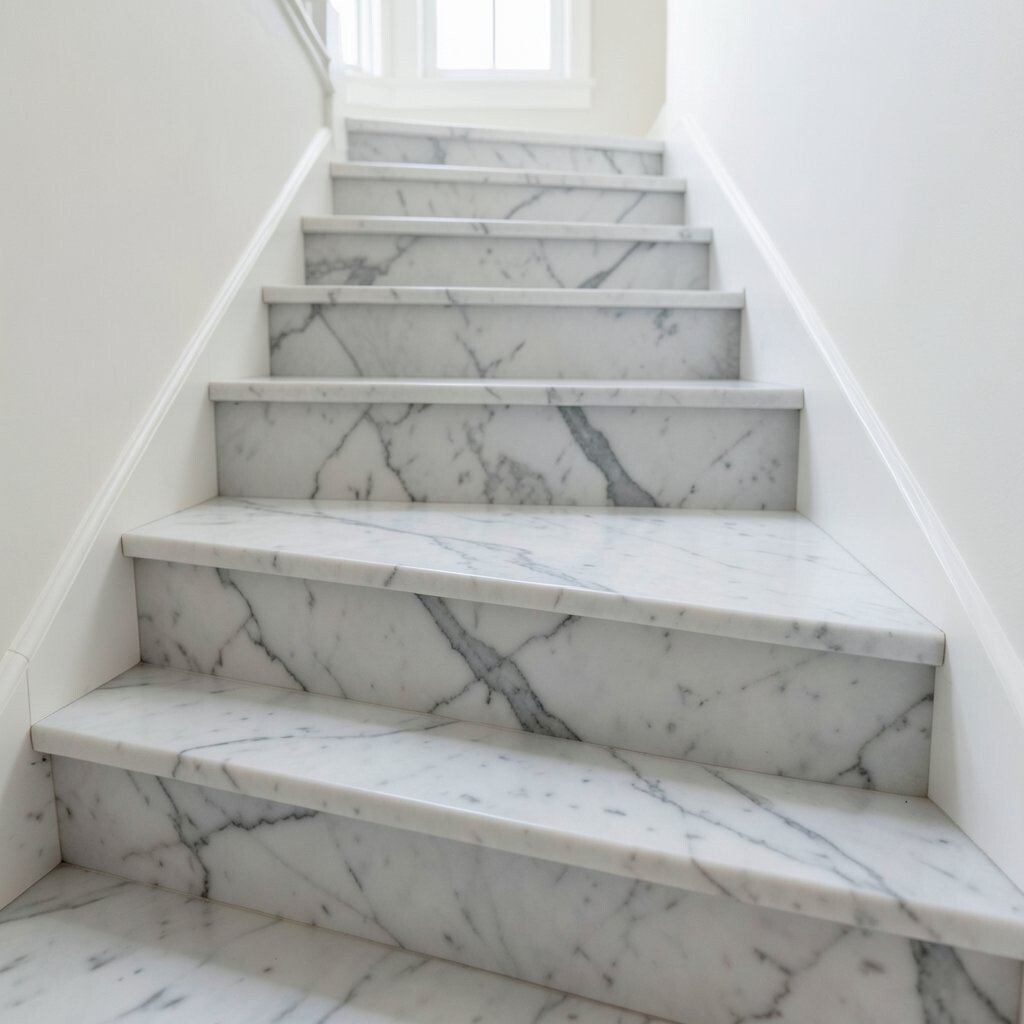
Stair nose inserts create a crisp border where the tread meets the riser, and that visual line makes everything feel more finished. If your marble nosing has small chips or rough edges, inserts can hide those imperfections beautifully.
Pick inserts that blend with the marble, like honed stone-look materials, or choose a contrasting finish for a bolder style. A matte metal insert can look sleek and modern, while a wood-tone insert can soften the look for a cozy home. The benefit is durability plus a smoother feel underfoot, especially on high-traffic steps. For practical tips, measure carefully and ensure inserts align with the existing tread width.
Personalize the style by matching insert color to your baseboards or hallway fixtures. Current trends often lean toward clean, straight lines rather than ornate detailing, so simple inserts feel right. Cost considerations matter here because installation can be labor-intensive, but the payoff is long-lasting protection and a “new build” appearance.
10. Choose Skid-Resistant Finishes for Safety
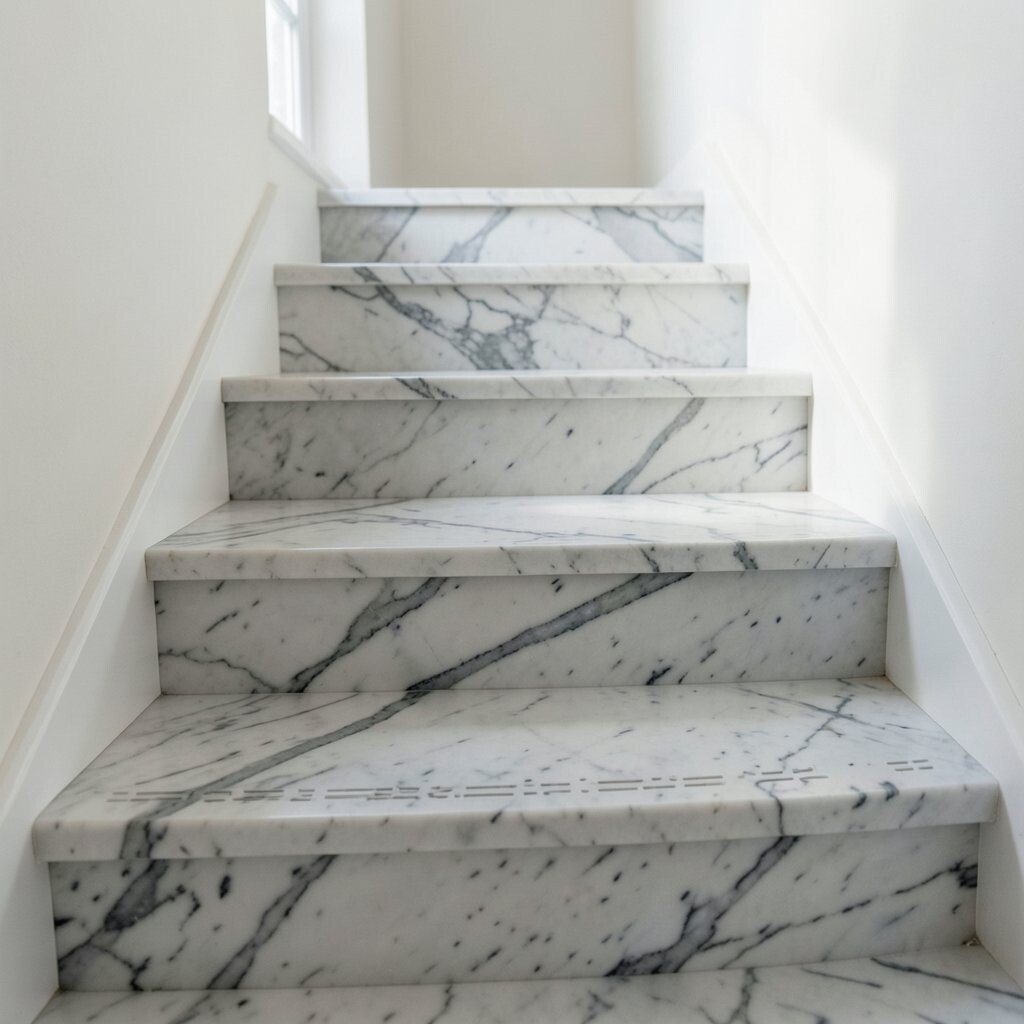
Marble stairs can be gorgeous and still feel risky if the surface gets too smooth. You can improve safety without killing the look by using skid-resistant treatments made for stone.
Look for products specifically labeled for natural stone and follow the recommended drying time closely. The surface can keep a gentle sheen while gaining traction, which makes daily steps feel more confident. People often notice less slipping and less worry during rainy seasons. That comfort is a real benefit, not just a design upgrade.
For personalization, choose a treatment that supports your desired finish level, whether you want a light glow or a more matte feel. Some trends favor “quiet luxury,” where everything looks elegant but still practical. Cost can be manageable since treatments are usually cheaper than hardware replacement, and they can extend the life of your treads by preventing wear.
11. Arrange a Gallery of Art on the Stair Wall
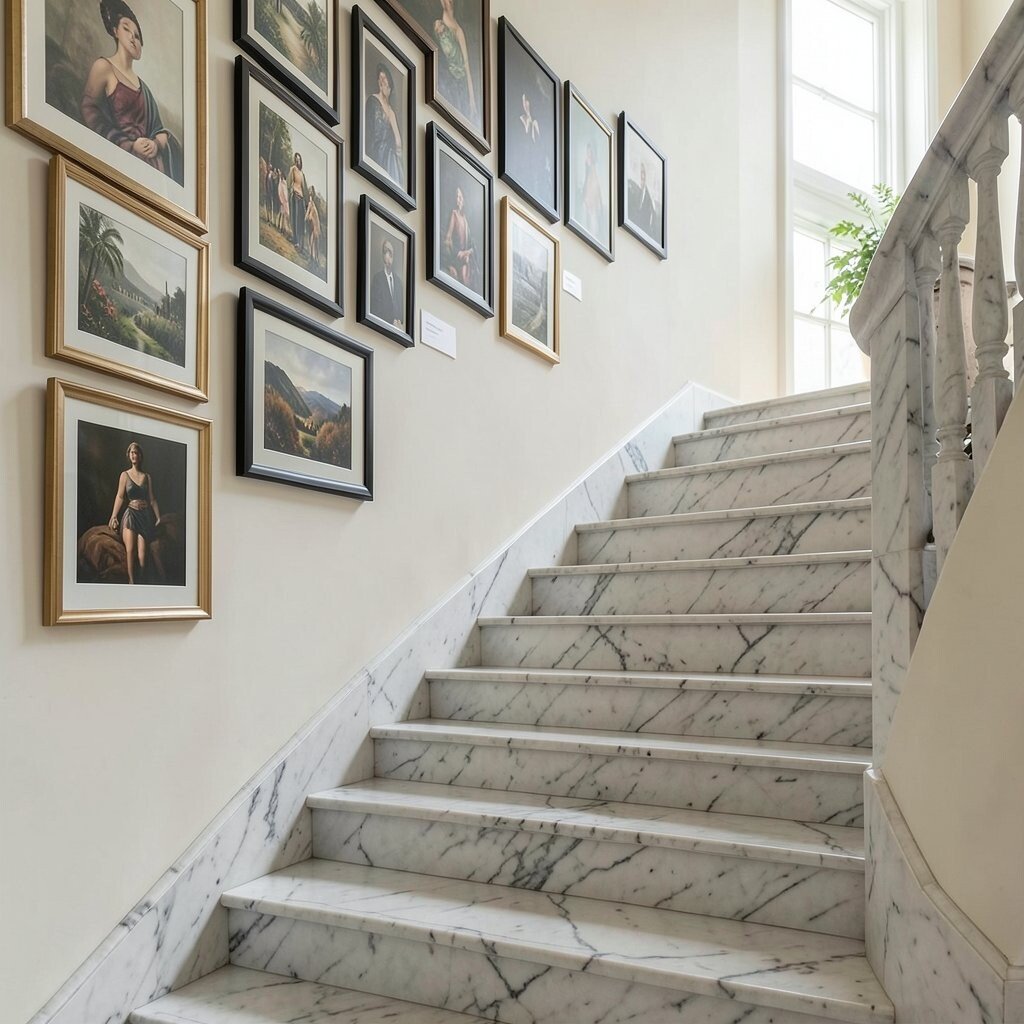
If your staircase has a wall beside it, your marble becomes the stage, not the only star. A small gallery of frames can add personality and draw the eye upward in a welcoming way.
Choose artwork that echoes your palette, such as colors pulled from the marble veins or rugs. Keep frames consistent in finish, like black or natural wood, so the look feels tidy and intentional. The benefit is a layered look where the stairs feel part of the home’s overall style. It can also hide wall scuffs and reduce the need for frequent repainting in high-traffic zones.
For practical tips, measure space carefully and hang frames at a height that matches how you normally look while standing or ascending. Current trends often use mixed sizes but coordinated colors, which creates movement without chaos. Costs vary based on frame quality and art choices, but you can get a polished result with thrifted frames repainted and printed art.
12. Match Your Stair Decor to Seasonal Color
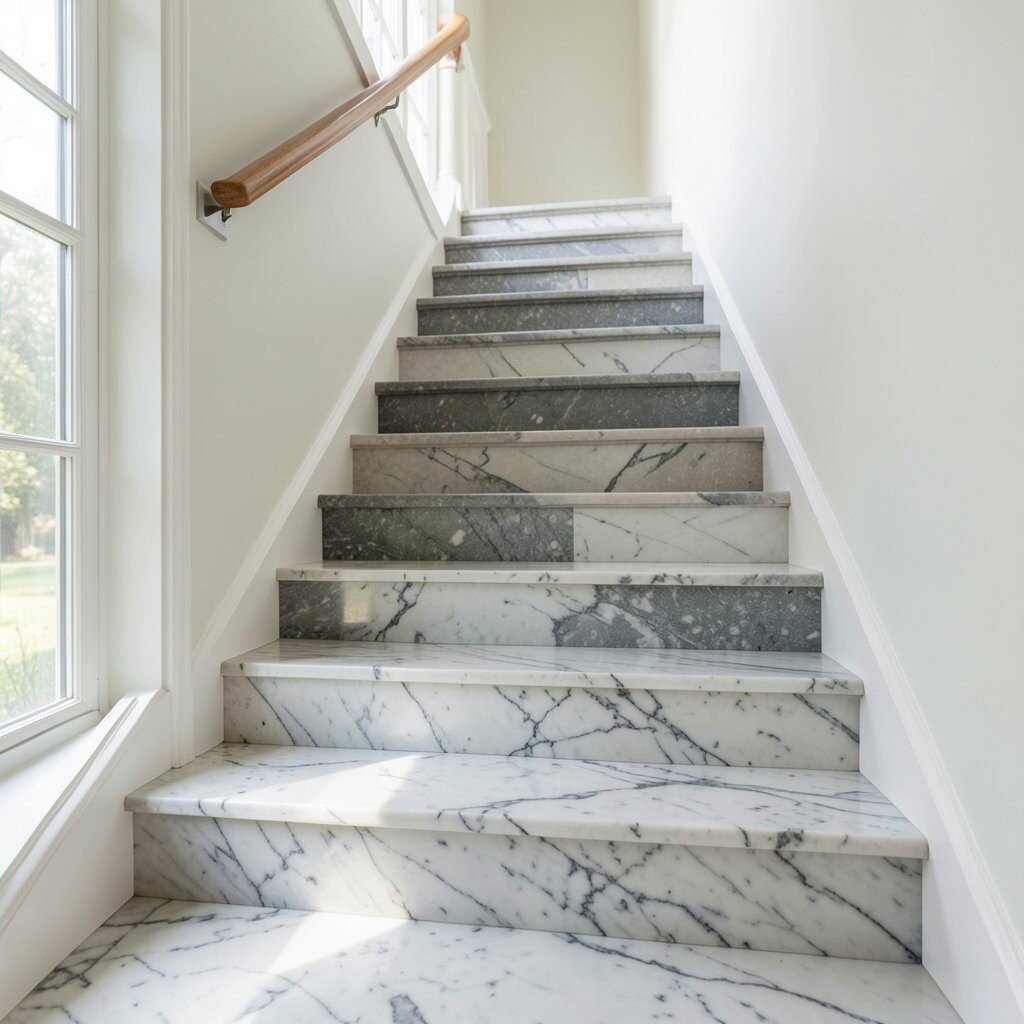
Seasonal styling makes marble stairs feel fresh without permanent changes. Think small swaps that fit the season and play nicely with the stone’s natural pattern.
Add a seasonal runner refresh by switching to a new fabric color or swapping decorative items near the bottom of the stairs. Simple touches like vase colors, lantern styles, or a small tray on a nearby console can shift the mood quickly. You benefit by keeping your staircase interesting while protecting the marble from wear caused by heavier decor. It’s also easy to personalize, since your taste can lead every season.
For cost considerations, choose reversible decor that works across holidays, like neutral tones with a small accent color. A trend right now is flexible styling that adapts, like using one base rug and rotating accent pieces. If you want a cohesive look, tie your decor to the same undertone as your marble, such as cool gray for cool stones or warm cream for warm veining.
13. Hire Targeted Repairs and Choose a Consistent Finish
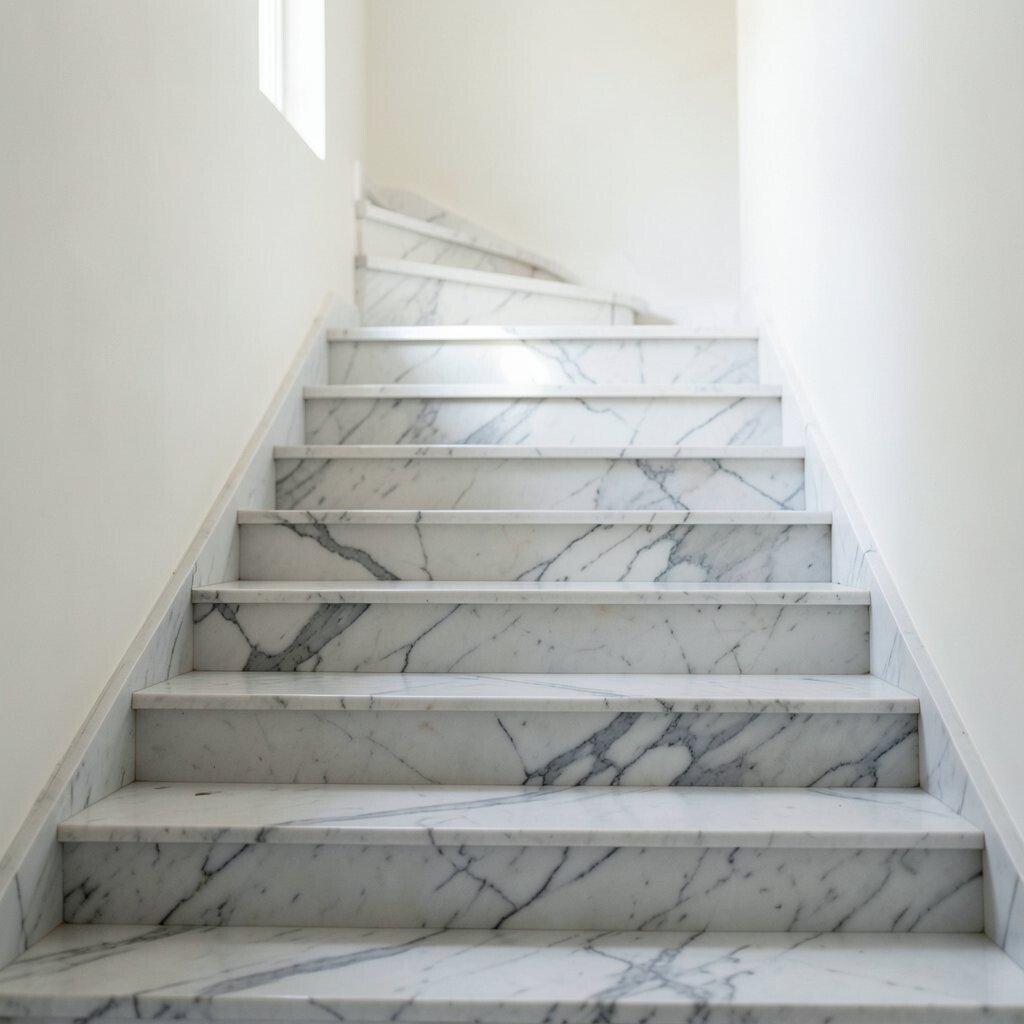
If your marble has chips, dull patches, or hairline wear, targeted repairs can make the biggest “before-and-after” difference. A professional can polish, fill, and level spots so the stairs look uniform again.
Ask for a finish match, like honed versus polished, so repaired sections don’t stand out. The benefit is a clean, consistent look that keeps the marble feeling truly high-end. It also prevents small damage from spreading, which can save money later. For practical tips, request photos of similar work and confirm what product they use so you know the finish will hold up with cleaning and foot traffic.
To keep it personalized, choose the repair finish that matches how you style your home overall. Current trends often favor a slightly softer honed look, which can make busy veining feel calmer and more modern. Cost depends on the number of problem areas and the local labor rates, but fixing key spots first is usually smarter than trying to hide issues with heavy coverings.