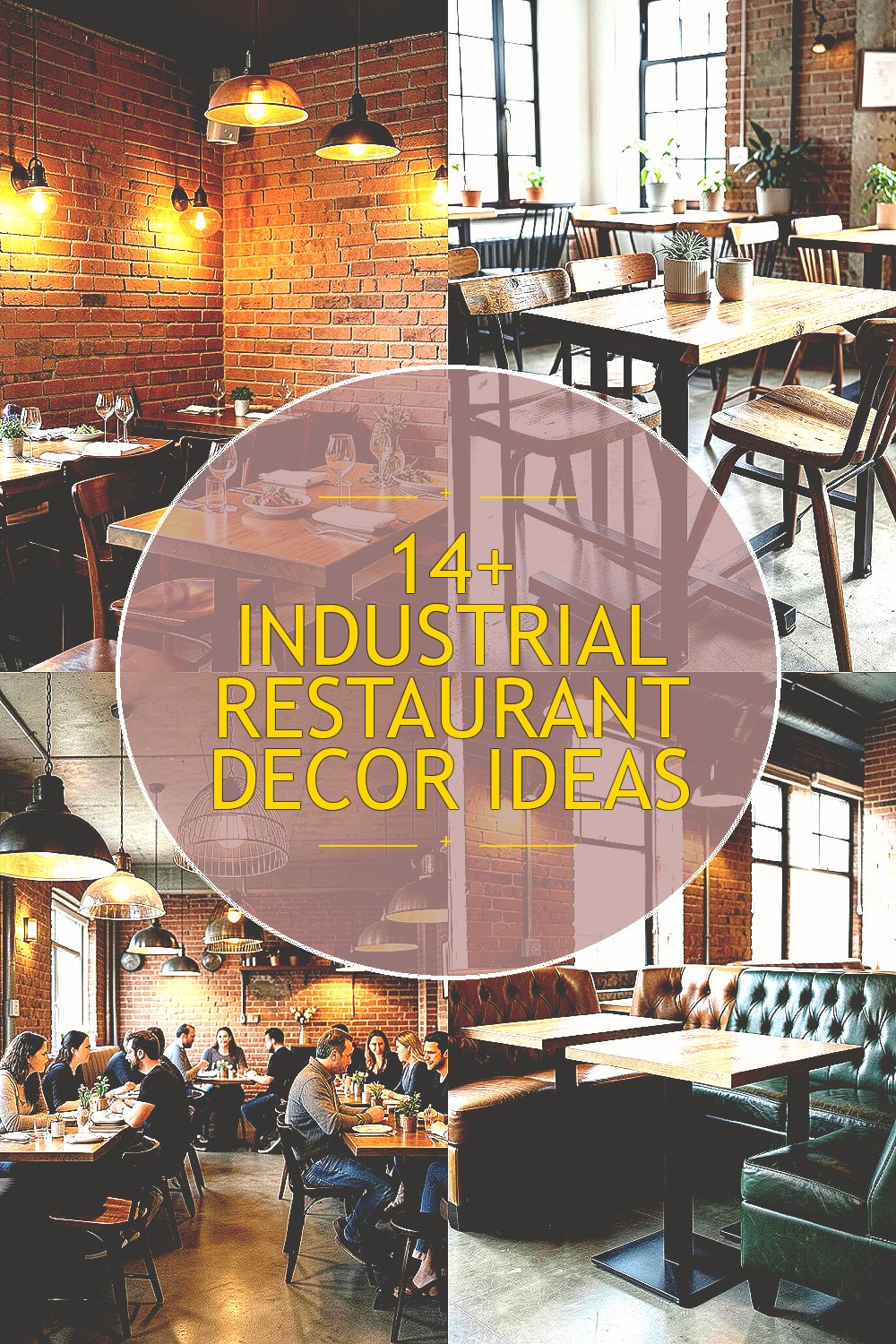
Industrial style can feel bold, warm, and full of character. The right touches make it feel like a hug made of brick, wood, and soft light.
1. Soften Brick Walls With Warm Lighting
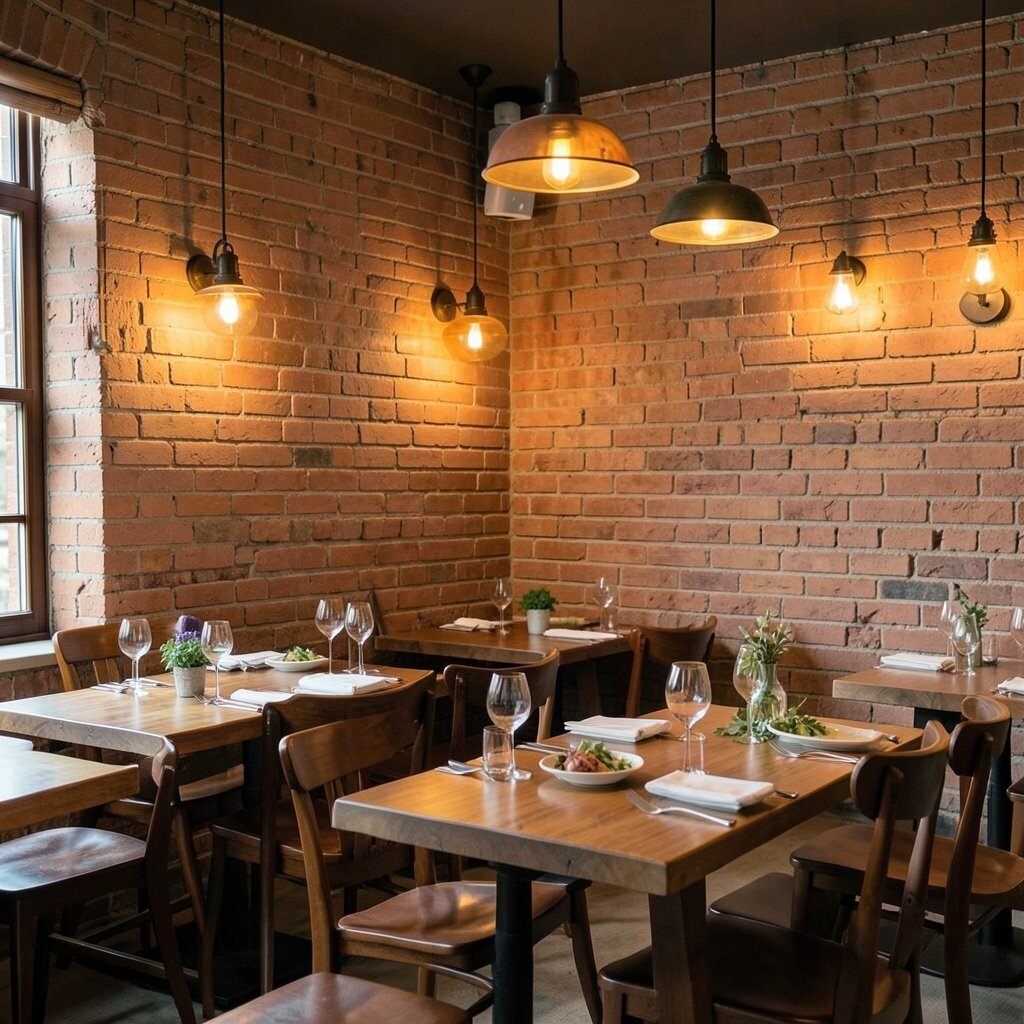
Raw brick gives a restaurant a strong industrial look, but warm lighting keeps it from feeling cold. A soft glow can make the space feel friendly and calm.
Try wall sconces, dimmable bulbs, or hanging lamps with amber shades. This look helps guests relax, and it also makes food look more inviting in photos. If full brick is too costly, faux brick panels or a single accent wall can give the same feel for less.
2. Mix Metal Frames With Wood Tables
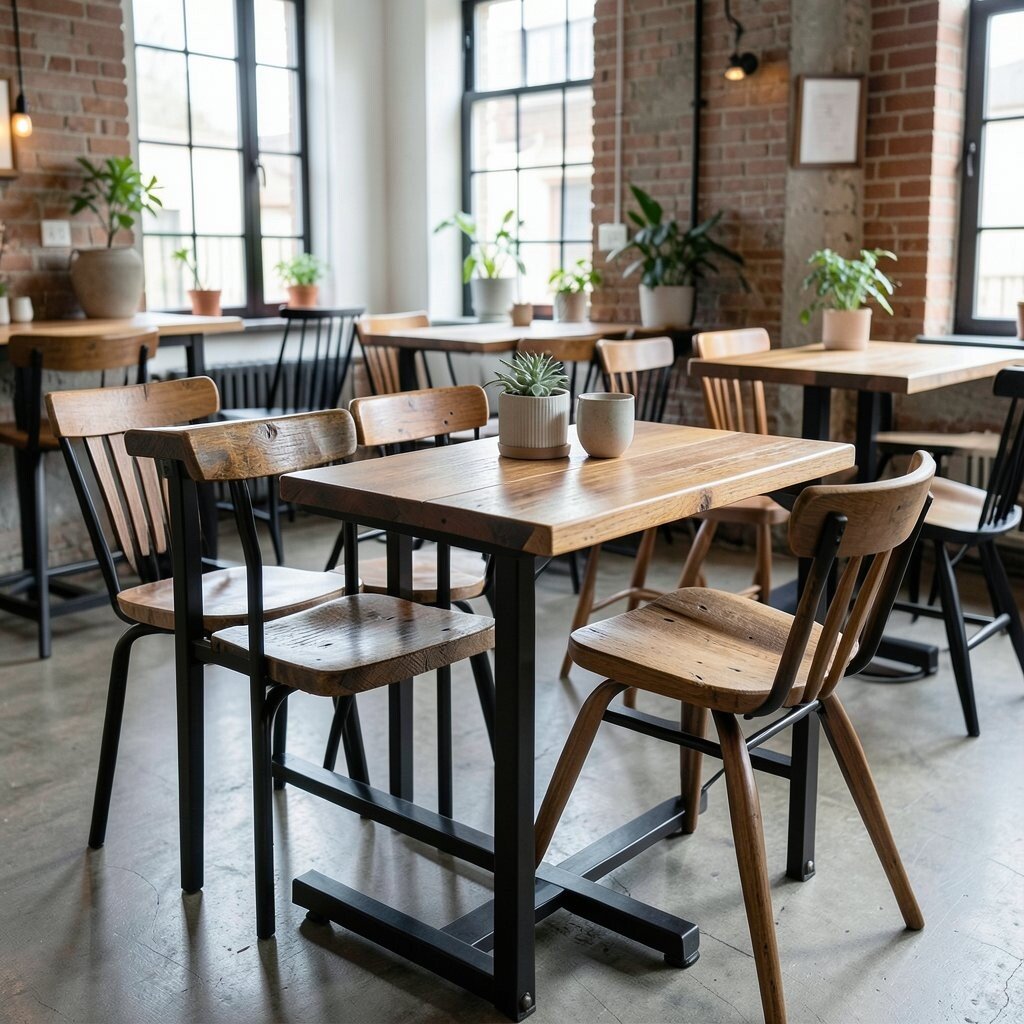
Metal and wood work well together because they balance hard and soft textures. Black steel legs with rich wood tops give the room a clean industrial style that still feels cozy.
This mix is easy to match with many colors, so it works in both small cafes and larger dining rooms. You can personalize the tables with different wood stains, edge shapes, or chair styles. Reclaimed wood is a popular choice because it adds charm and can lower material costs.
For a fresh look, pair matte black frames with lighter wood so the room does not feel heavy. Small details like rounded corners or brushed finishes can make the space feel more welcoming.
3. Hang Oversized Pendant Lights
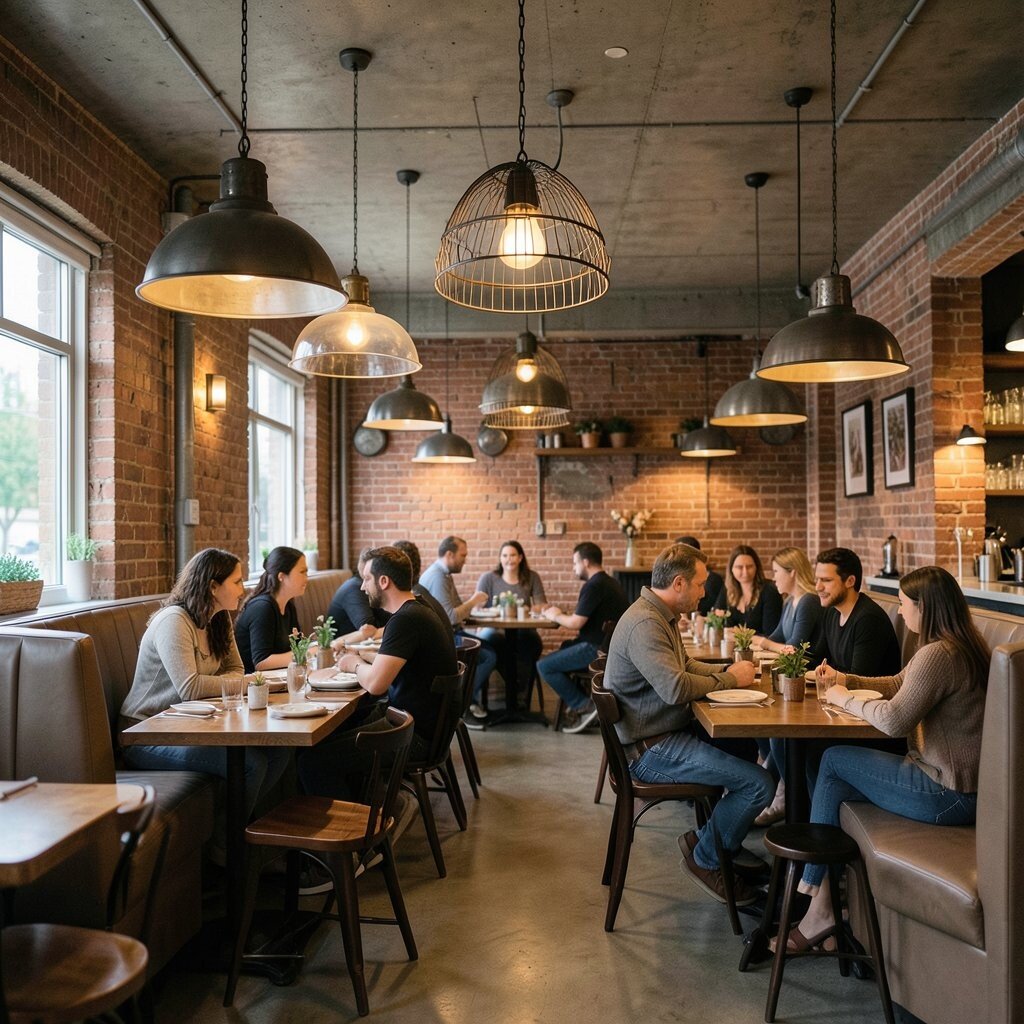
Big pendant lights can become the star of the room. Their shape adds drama, while the soft light below helps the dining area feel cozy.
Choose metal shades, glass domes, or wire cages for a true industrial feel. These lights work well over booths, counters, and shared tables, and they help guide the eye across the room. If you want to save money, use fewer statement lights and place them where guests gather most.
For a personal touch, mix pendant shapes instead of using only one style. This can make the space feel collected over time, which is a trend many guests love.
4. Add Leather Seating for Warmth
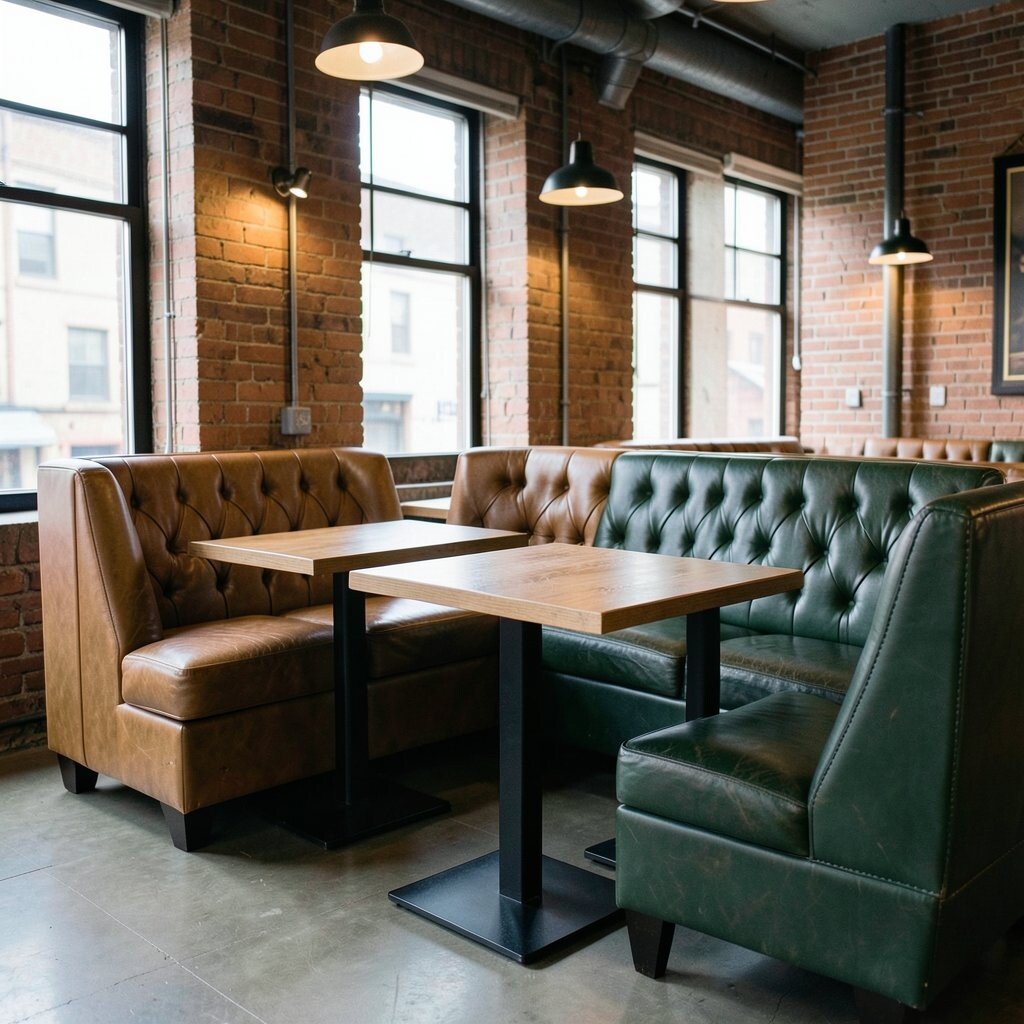
Leather brings softness to an industrial room and helps the space feel lived-in. Brown, tan, or deep green leather can make booths and chairs look rich and inviting.
It also ages well, which is great for busy restaurants that need furniture to last. Faux leather can be a smart budget choice and still give the same cozy mood. Stitching details, tufted backs, or curved seats can make the seating feel more personal.
5. Use Open Shelving With Curated Decor
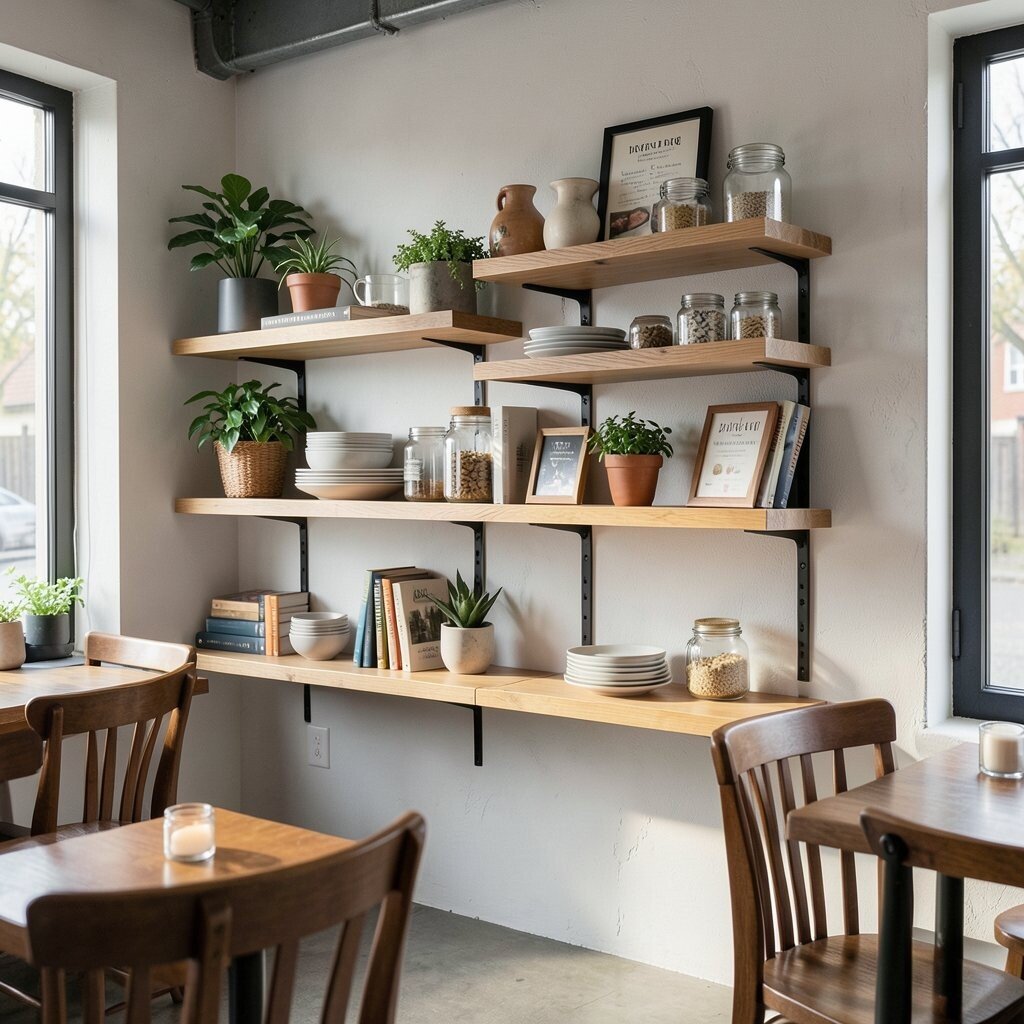
Open shelves can turn plain walls into stylish display areas. They also make the room feel more open, which is helpful in smaller spaces.
Place plants, dishes, cookbooks, or glass jars on the shelves to add life and color. Keep the display neat so it feels warm instead of messy. Floating wood shelves with black brackets are a current favorite because they fit the industrial look without feeling too heavy.
For a lower-cost option, use a few simple shelves and change the decor with the seasons. This gives the restaurant a fresh feel without a full redesign.
Personal touches like local pottery or framed menu notes can make the shelves feel special and unique.
6. Bring in Soft Rugs and Floor Runners
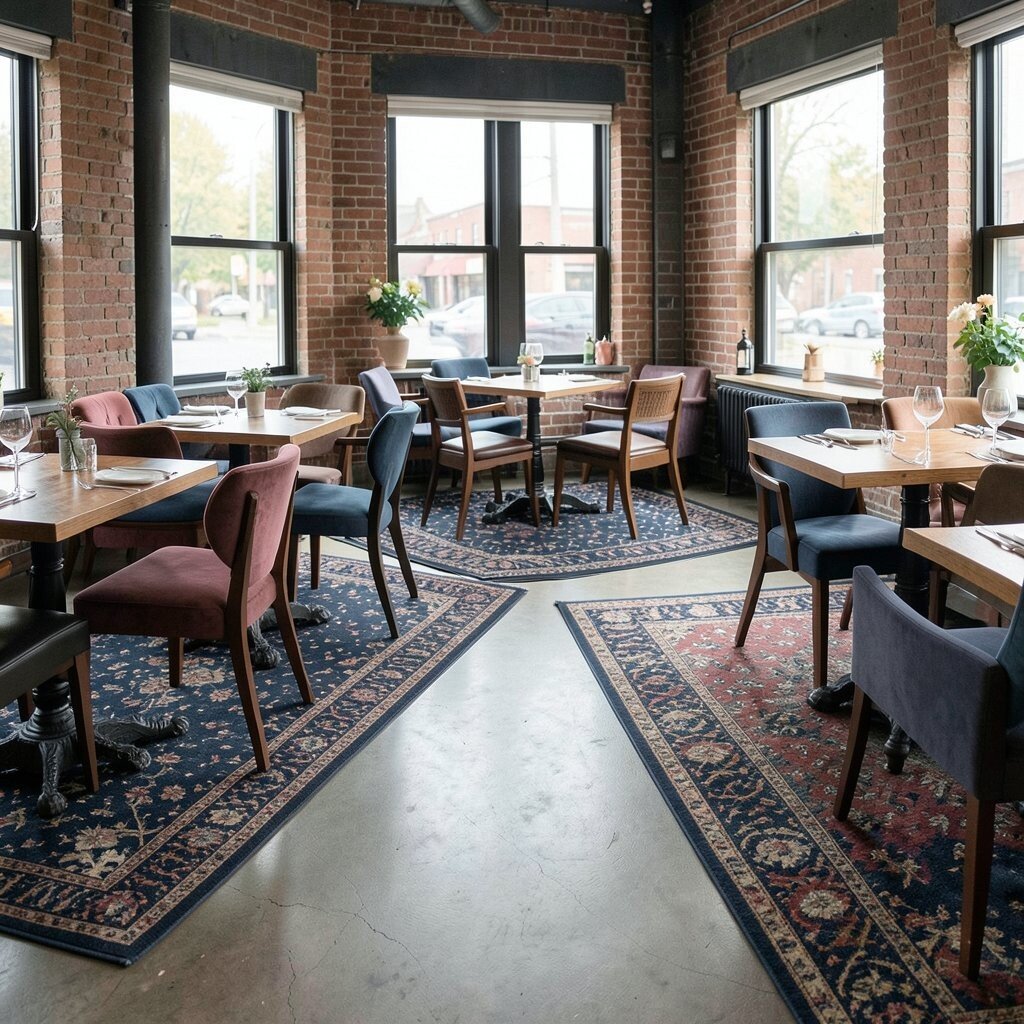
Hard floors can make industrial spaces feel loud and stark, so rugs help soften the room. A well-placed rug can also add color, pattern, and a sense of comfort underfoot.
Use rugs in waiting areas, under communal tables, or near lounge seating. Dark patterns and low-pile textures are best because they hold up better in busy spots. If a full rug is not practical, runners can still add warmth without much cost.
Choose colors that match the walls, chairs, or tabletops so the room feels pulled together. Washable rugs are a smart pick for restaurants that want style and easy care.
7. Frame the Space With Exposed Pipes and Ducts
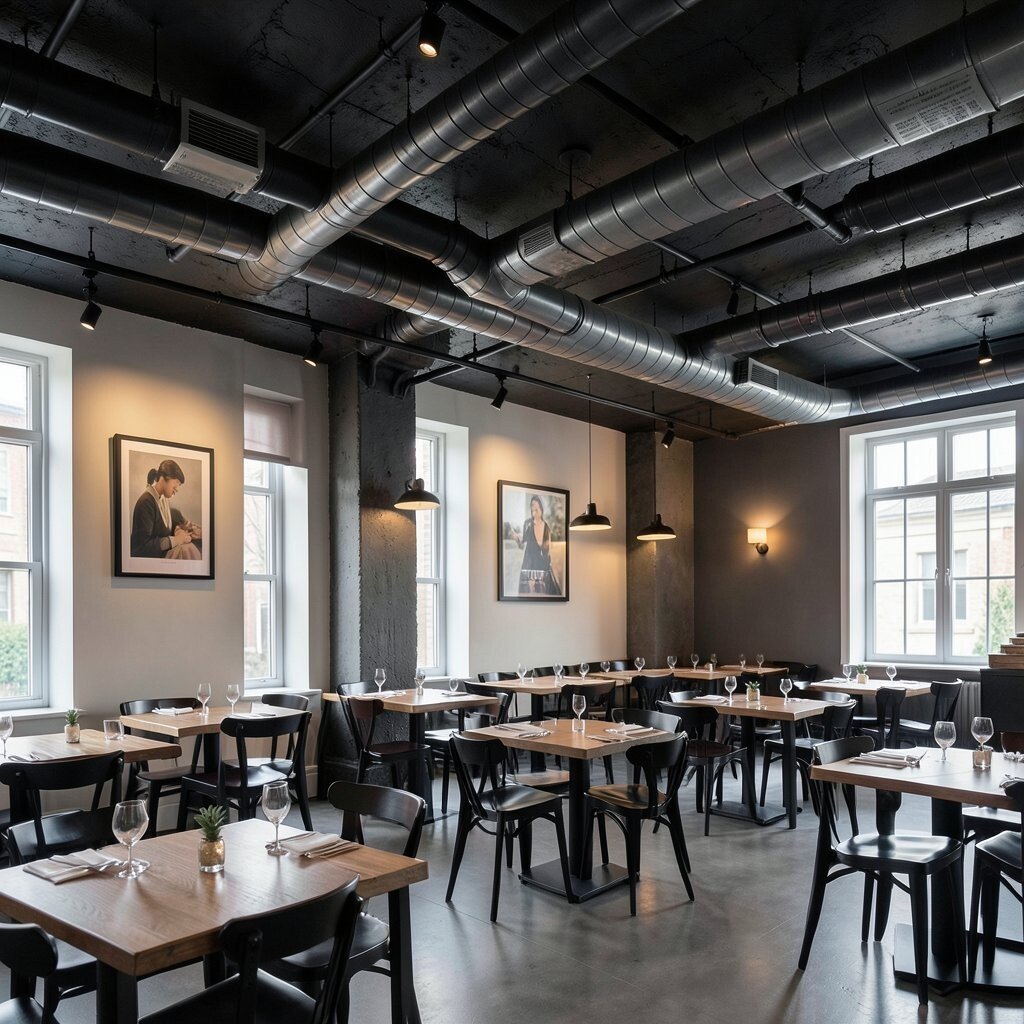
Exposed pipes and ducts are a classic industrial feature, and they can look sleek when kept clean and painted well. Instead of hiding them, use them as part of the design story.
Black, charcoal, or silver finishes can make the ceiling feel intentional and modern. This style gives the restaurant a warehouse feel while keeping the room open and airy. It can also save money because you may not need extra ceiling covers.
To make the look cozier, pair the rough ceiling with warm wall art or soft lighting below. That balance keeps the room from feeling too harsh.
8. Add Booth Seating Along the Walls
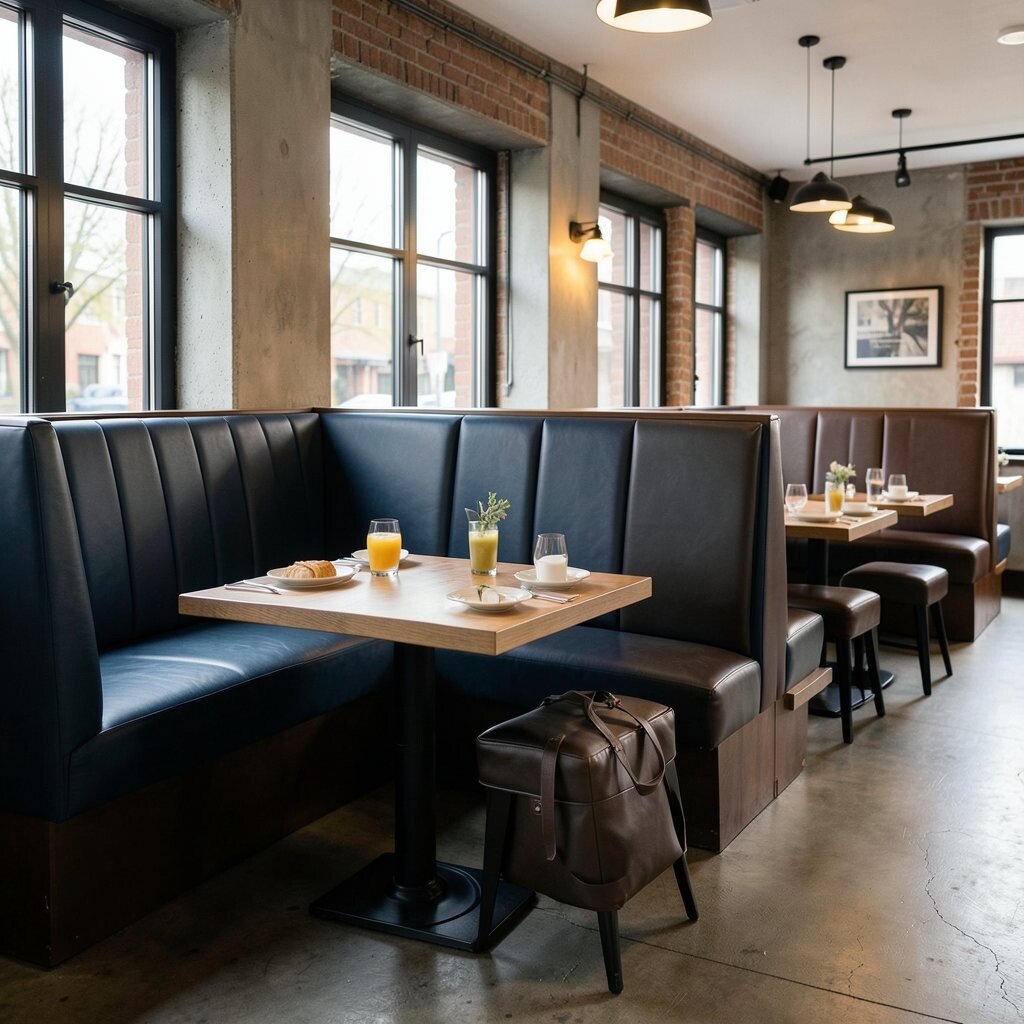
Booths create a snug feeling that guests often love. They also help break up an open dining room and make the space feel more private.
Choose deep cushions, smooth upholstery, or leather backs to make each booth inviting. Built-in seating can be a smart use of space, especially in narrow rooms. Custom booths cost more, but they can improve comfort and help the layout feel polished.
For a unique touch, mix booth heights or add small shelves beside each seat. This gives guests a place for bags, drinks, or shared plates.
9. Use Dark Paint in the Right Spots
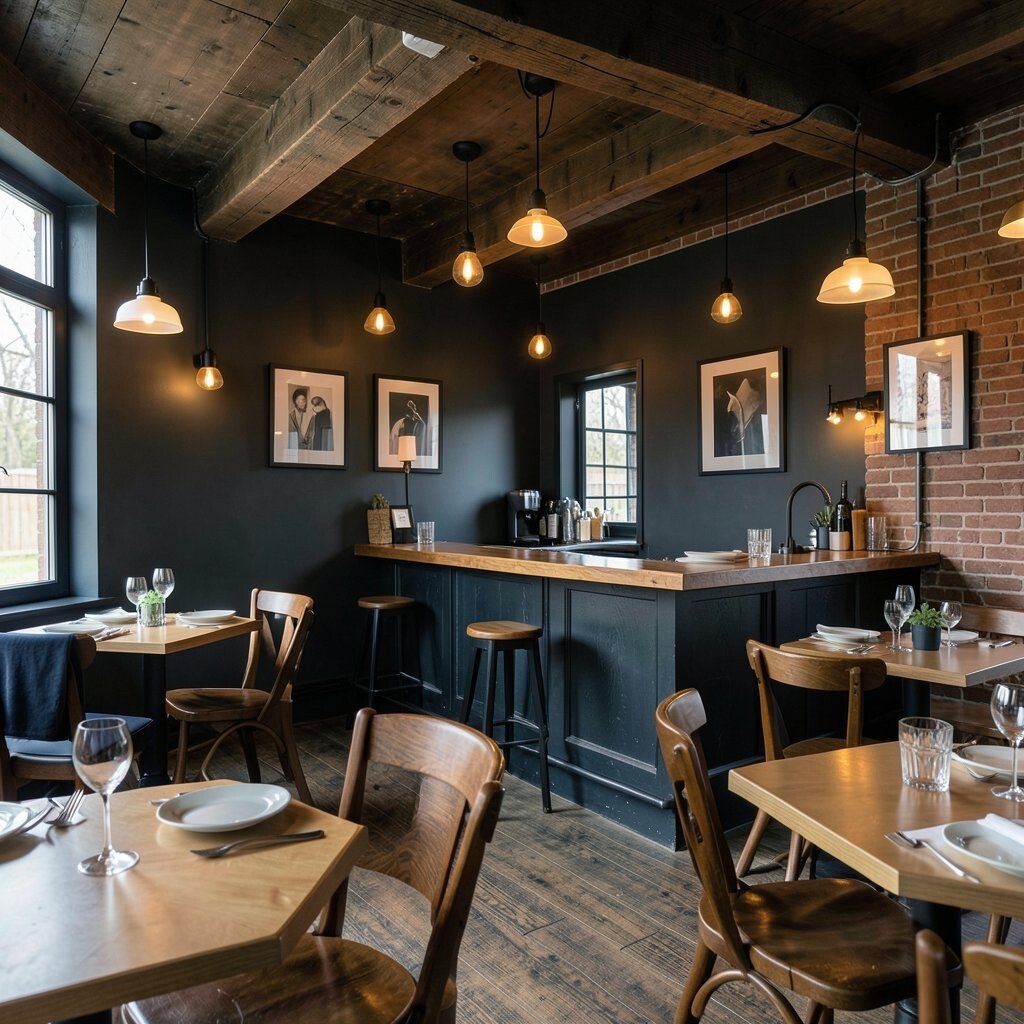
Dark paint can make an industrial restaurant feel rich and cozy instead of cold. Deep gray, navy, or forest green works well with brick, wood, and metal.
Try painting one wall, the bar front, or the ceiling beams instead of the whole room. This keeps the space from feeling too heavy while still adding mood. Paint is one of the most affordable ways to change the feel of a room fast.
Pair dark paint with warm bulbs and light-colored tableware so the room still feels bright enough. A few framed prints or mirrors can also help reflect light.
10. Style the Bar With Honest Materials
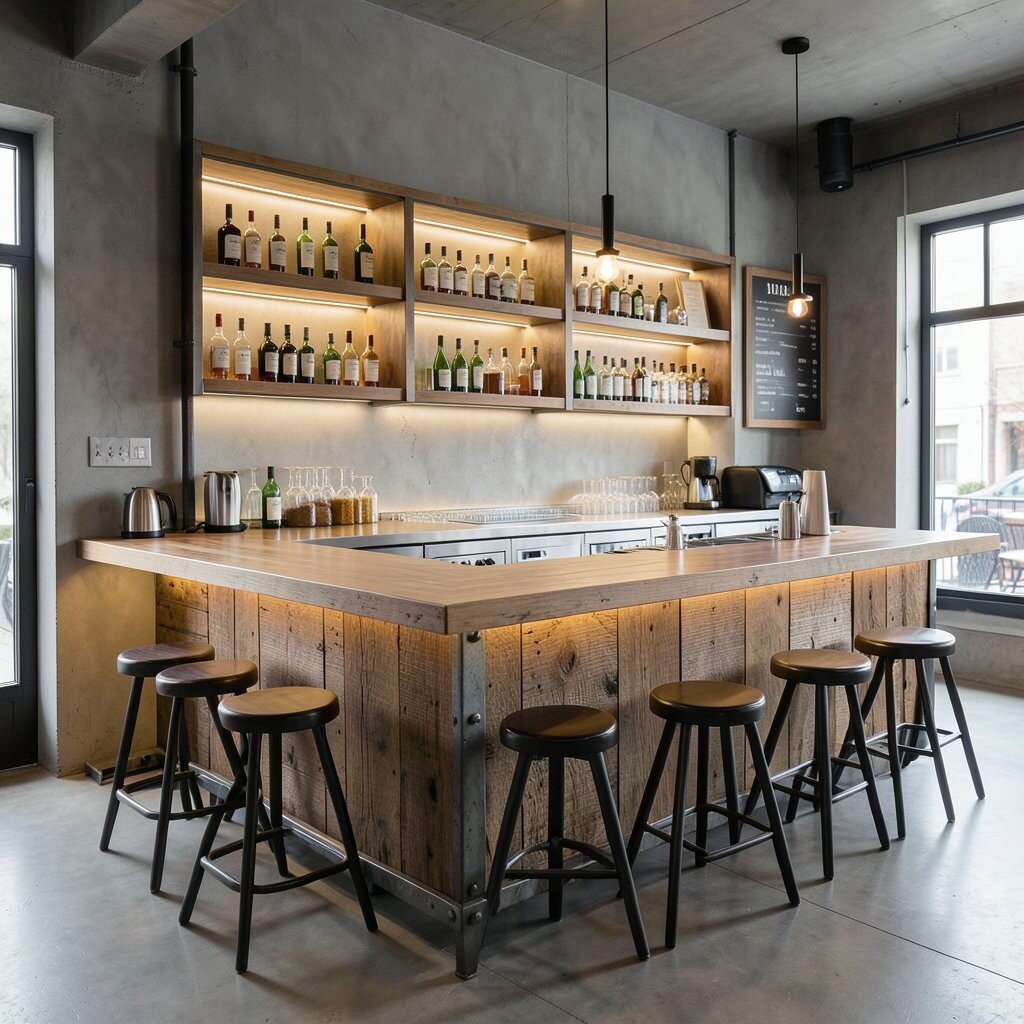
A bar made with raw wood, metal trim, or concrete can become the heart of the restaurant. It gives guests a strong focal point and helps set the industrial tone right away.
Keep the design simple so the texture stands out. Backlit shelves, dark stools, and bottle displays can add depth without making the space feel crowded. Concrete-look finishes are trendy now and can cost less than real concrete in some cases.
To make the bar feel warmer, add under-counter lighting or a wood top with a smooth finish. Small personal details, like custom menu boards, can make the bar feel one of a kind.
11. Bring In Plants for a Softer Edge
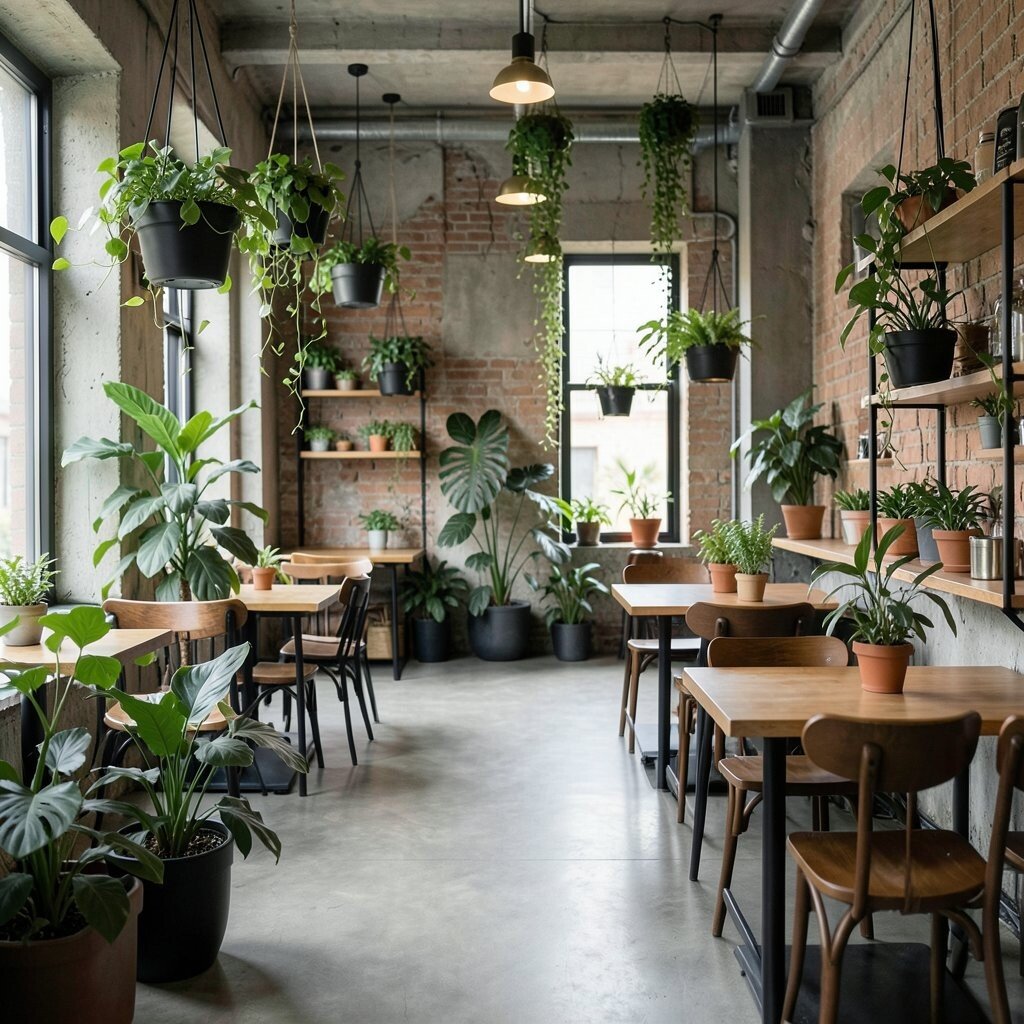
Plants are a simple way to calm down all the metal and stone in an industrial room. Their green color brings life to the space and helps guests feel more at ease.
Use tall floor plants, hanging vines, or small pots on shelves and tables. Plants also help fill empty corners and make the room feel cared for. Low-maintenance choices are best for busy restaurants that want beauty without much work.
Hanging planters in black or brass holders fit the style well. For a more personal look, choose pots that match the restaurant’s colors or brand mood.
12. Install Glass Partitions With Metal Grids
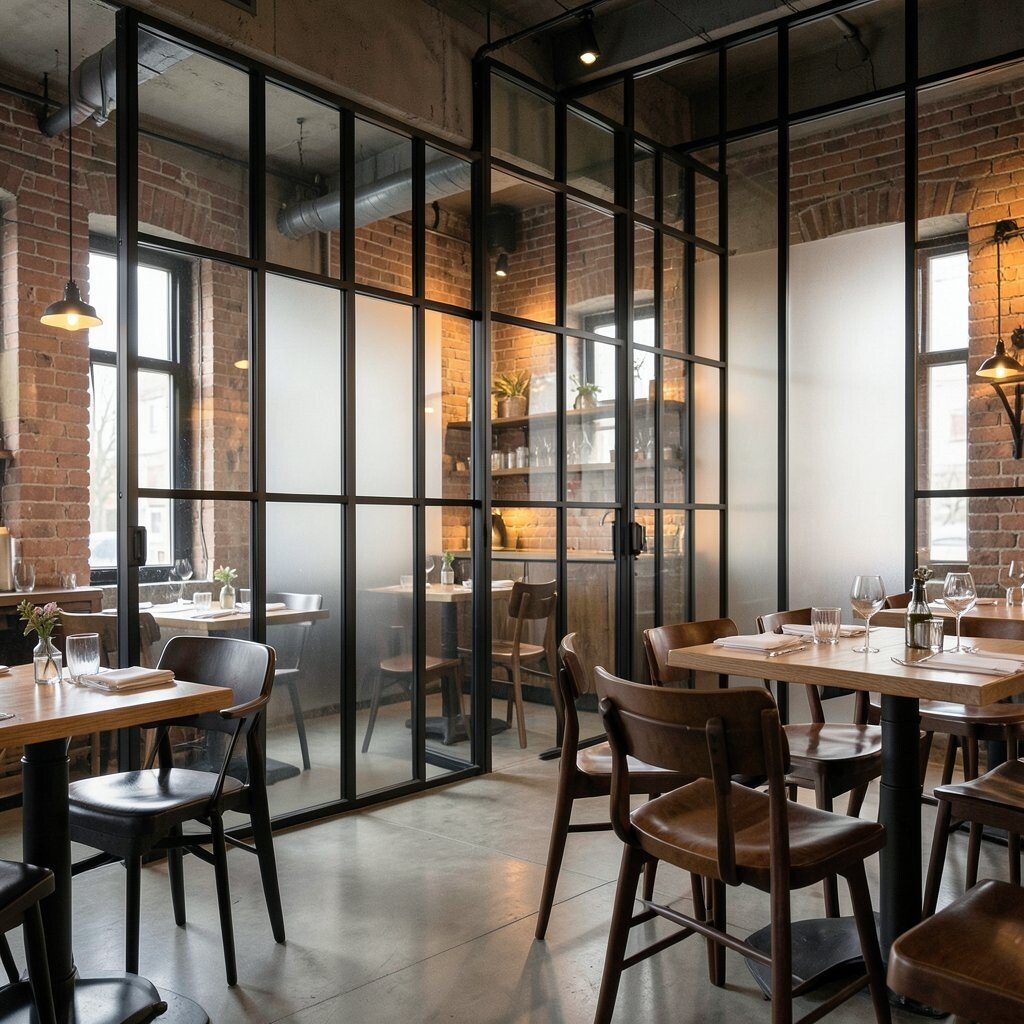
Glass partitions with dark metal frames can divide a space without blocking light. They keep the room open while adding a strong industrial shape.
This idea works well for private dining areas, entryways, or kitchen views. It helps control noise, guide traffic, and make the layout feel more organized. If full glass walls are too pricey, smaller framed panels can still give the same effect.
Clear glass feels modern, while frosted glass adds privacy and a softer look. Both options can be styled to fit a cozy restaurant with ease.
13. Choose Textured Wall Finishes
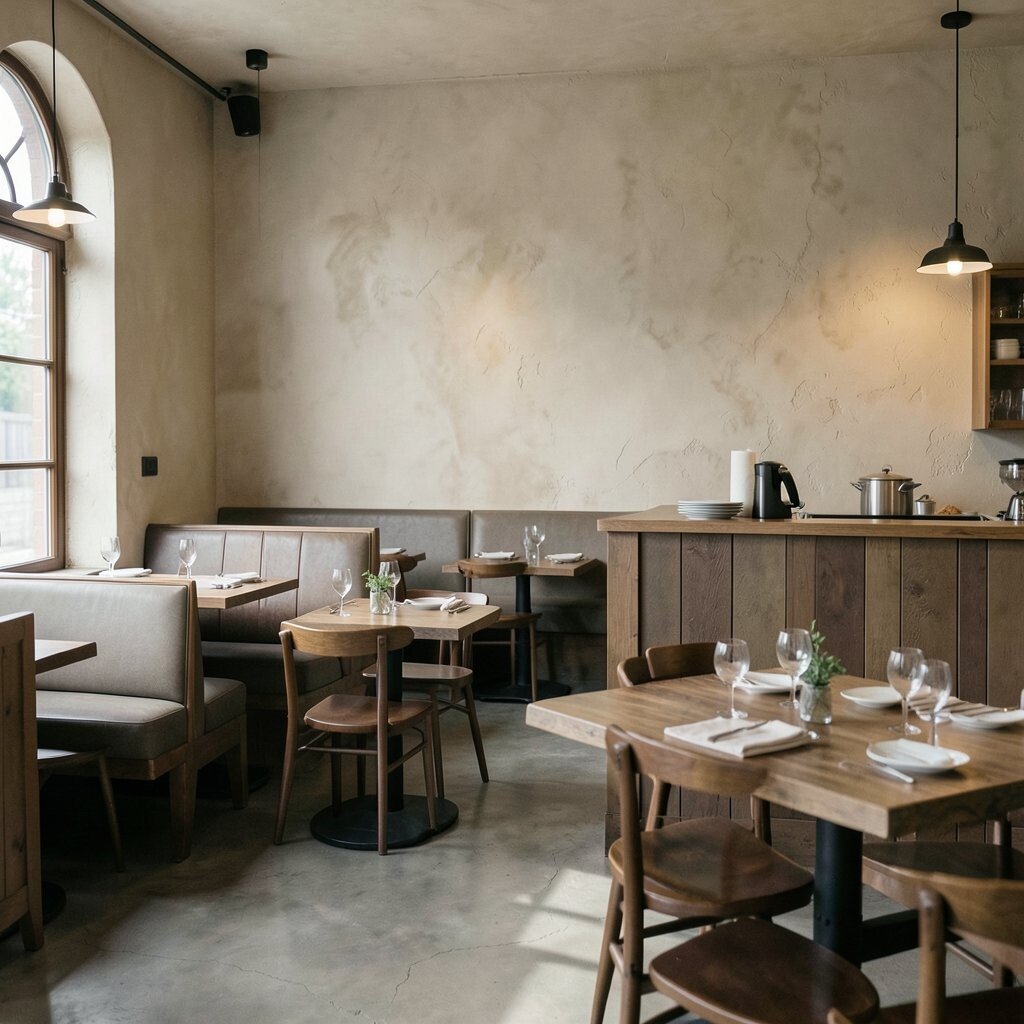
Texture can make a plain wall feel much warmer and more interesting. Limewash, plaster, or weathered paint adds depth that works beautifully in industrial spaces.
These finishes soften the hard edges of metal and concrete. They also catch light in a gentle way, which makes the dining room feel calm. Some textured finishes cost more than simple paint, but they can give the room a custom look that feels worth it.
Pick a muted tone like clay, stone, or smoky beige for a cozy result. A textured wall behind booths or the host stand can make a strong first impression.
14. Use Vintage Finds as Accent Pieces
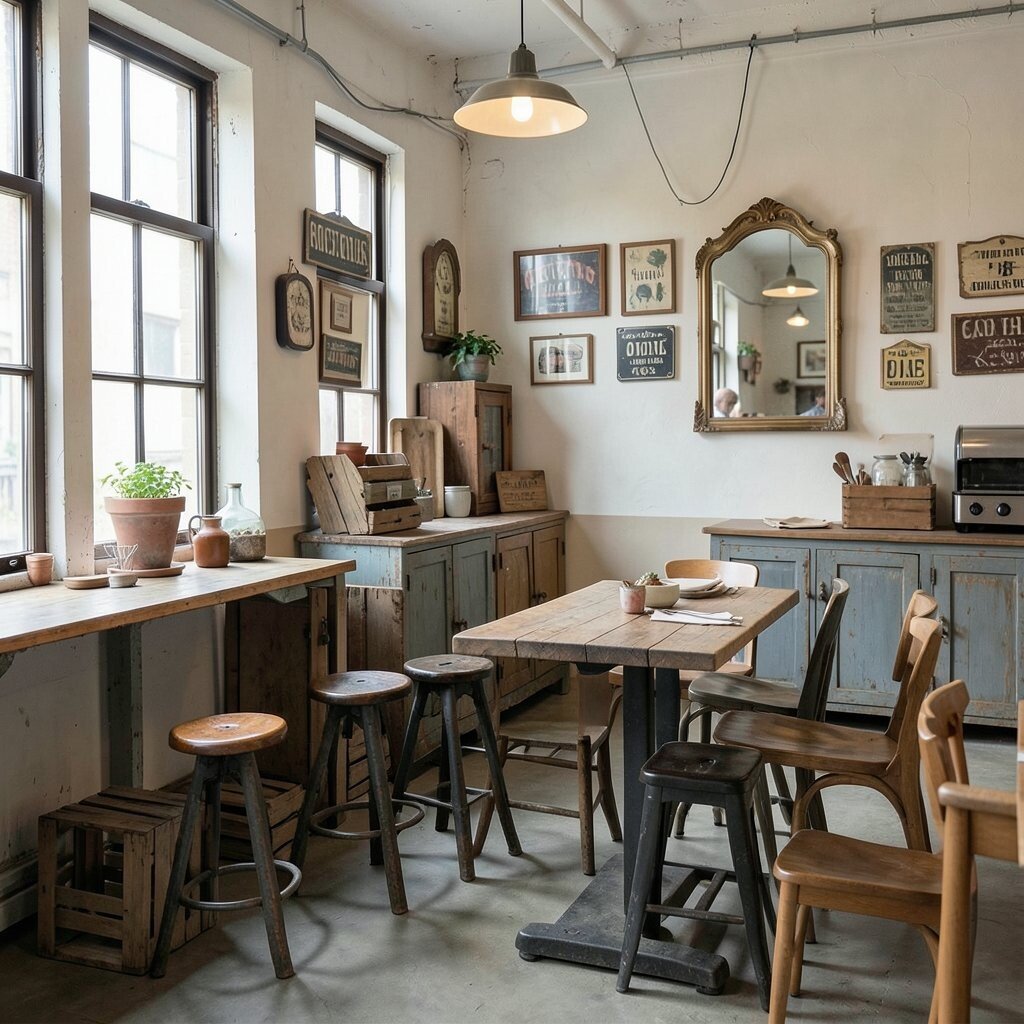
Old factory stools, worn cabinets, or antique mirrors can give the restaurant real soul. These pieces make the room feel collected over time instead of bought all at once.
Mix one or two vintage items with newer furniture so the space feels balanced. Guests often enjoy decor that feels personal and a little unexpected. Thrifted pieces can also help control costs while adding charm.
For a unique touch, use old crates as display stands or vintage signs as wall art. This style works well with current trends that favor character and story over perfection.
15. Create Warm Zones With Layered Seating
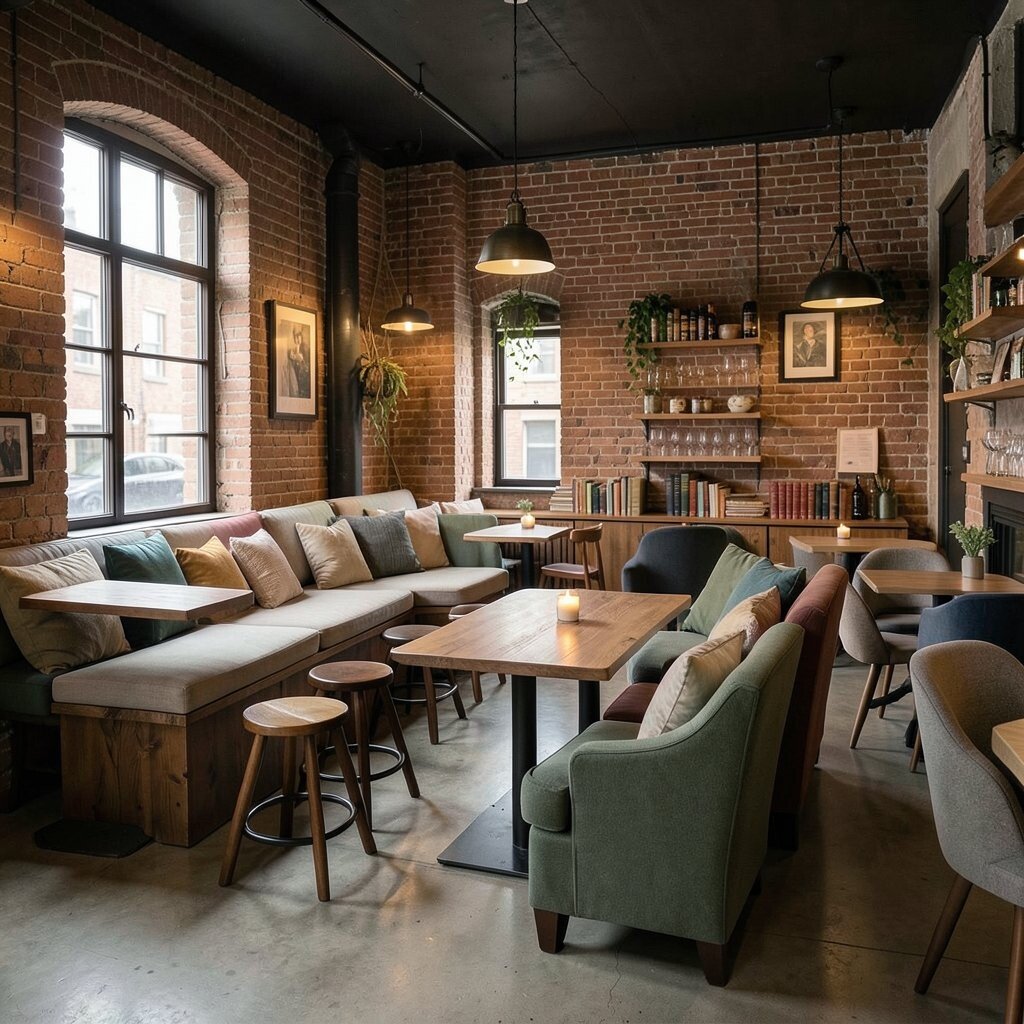
Layered seating gives a restaurant a cozy flow by mixing stools, benches, chairs, and lounge corners. It makes the room feel more flexible and gives guests more ways to settle in.
Use soft cushions, mixed textures, and different seat heights to break up the industrial look. This helps large rooms feel less empty and small rooms feel more useful. It can cost more if every piece is custom, so start with a few key zones and build from there.
Try adding a reading nook, a quiet corner, or a shared table with softer chairs. These little pockets make the restaurant feel thoughtful and welcoming.