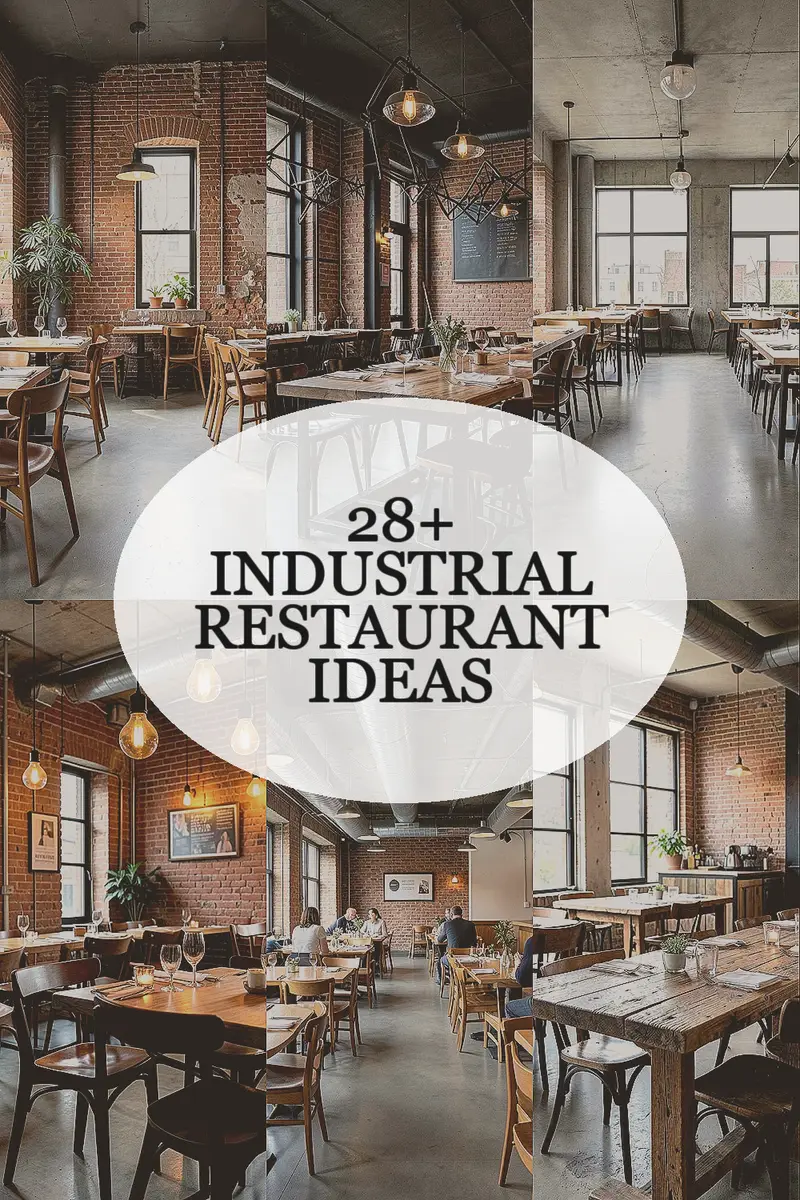
Raw style can feel warm and inviting. The right mix of metal, wood, and light makes a space unforgettable.
1. Exposed Brick Walls
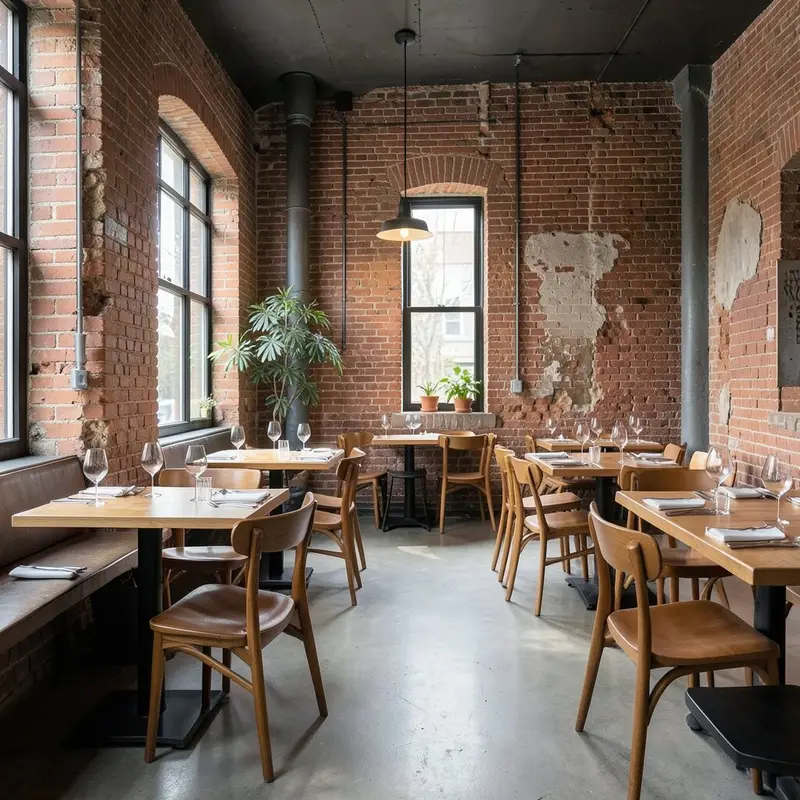
Exposed brick brings instant character to a dining room. It gives the space a rough, honest look that feels rich and timeless.
This style works well because it adds texture without needing much extra decor. If your building already has brick, cleaning and sealing it can save money, while faux brick panels can help when the real thing is not there. Add soft lighting and simple art so the wall stays the star.
2. Black Metal Frames
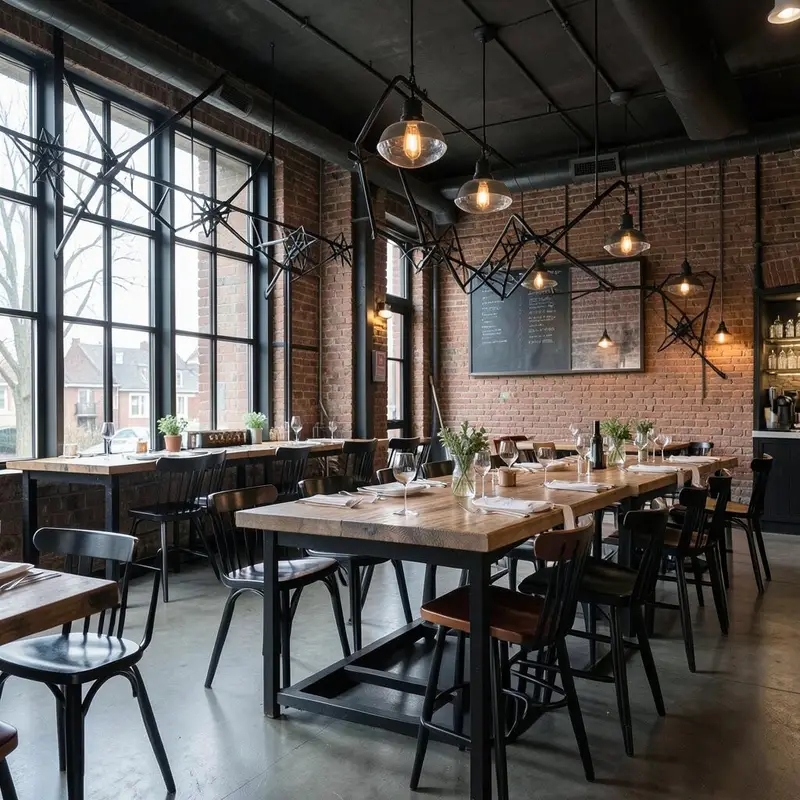
Black metal frames around doors, windows, and shelves create a sharp industrial edge. They make a room feel neat, bold, and modern.
These frames look great with glass and wood, and they help define the space without making it feel heavy. They are also useful for custom shelving, which can hold plants, dishes, or menu boards. For a personal touch, match the frame finish to chair legs, light fixtures, or table bases.
Powder-coated steel is a smart pick because it lasts a long time and handles busy restaurant life well. If you want to keep costs lower, use metal only in key spots and mix it with painted walls or open shelving. This look is popular right now because it feels clean, strong, and easy to pair with many styles.
3. Concrete Floors
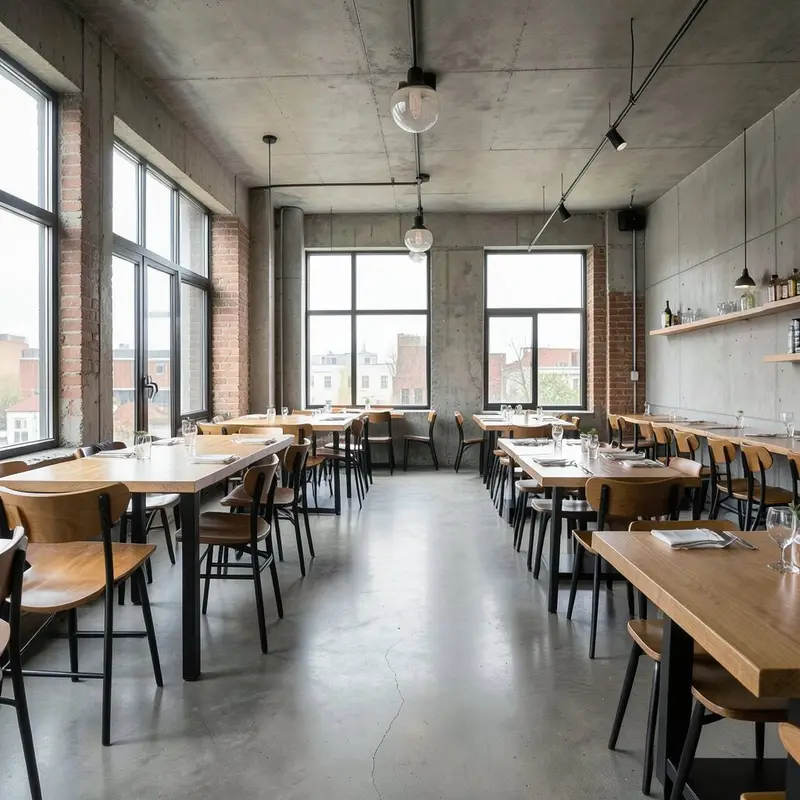
Concrete floors give a restaurant a cool, urban feel. They also make cleaning easier, which is a big win in a busy food space.
Polished concrete can look sleek, while matte concrete feels softer and more relaxed. You can warm it up with rugs in waiting areas or wooden chairs at the tables. If full concrete is too costly, concrete-look tiles can give a similar vibe for less.
Many owners like this choice because it handles heavy foot traffic well. It also pairs nicely with industrial stools, steel counters, and open ceilings. Small colored accents in cushions or artwork can keep the room from feeling too cold.
4. Edison Bulb Lighting
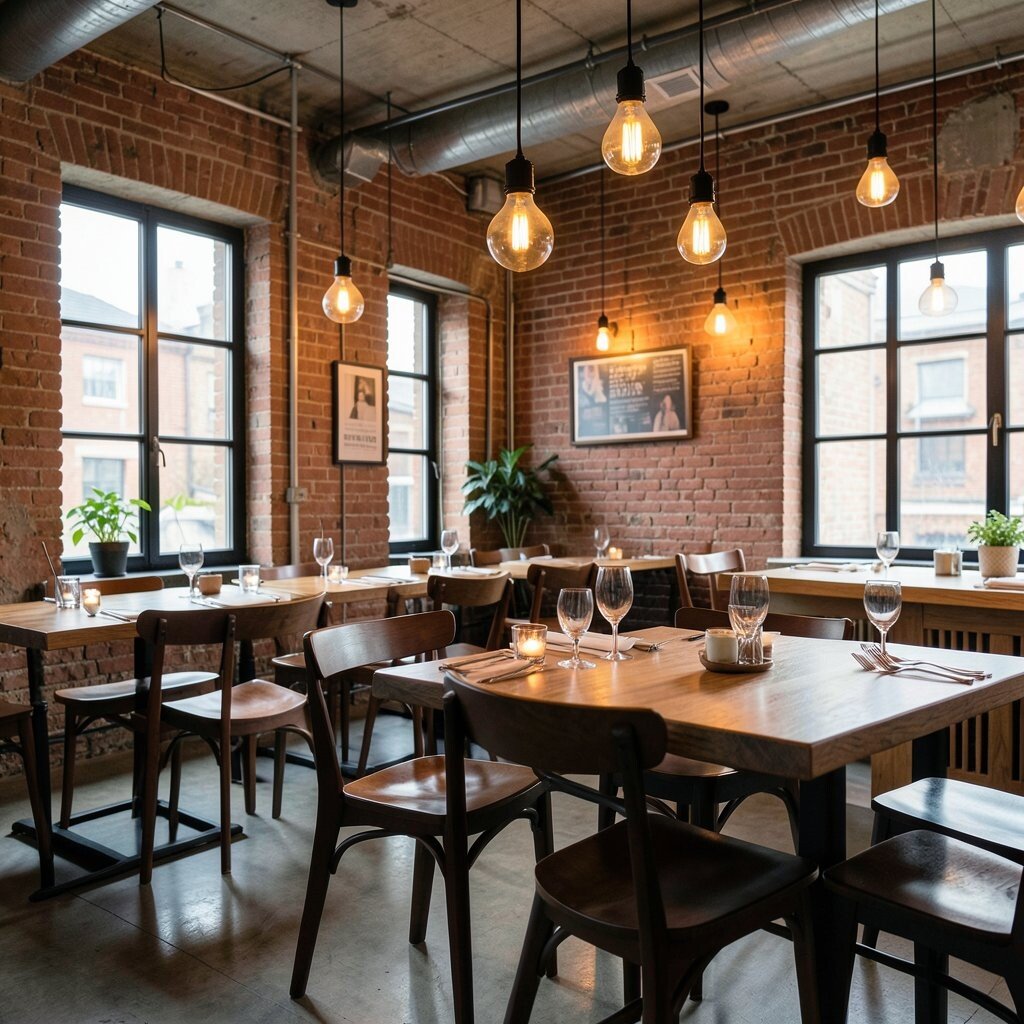
Edison bulbs give off a soft glow that feels cozy and old-school. Their warm light makes food and people look good.
Hanging them in clusters can create a fun focal point above the bar or tables. These lights are easy to style with cages, cords, or simple sockets, which keeps costs flexible. Try dimmers so the mood can shift from lunch bright to dinner calm.
5. Open Ductwork Ceilings
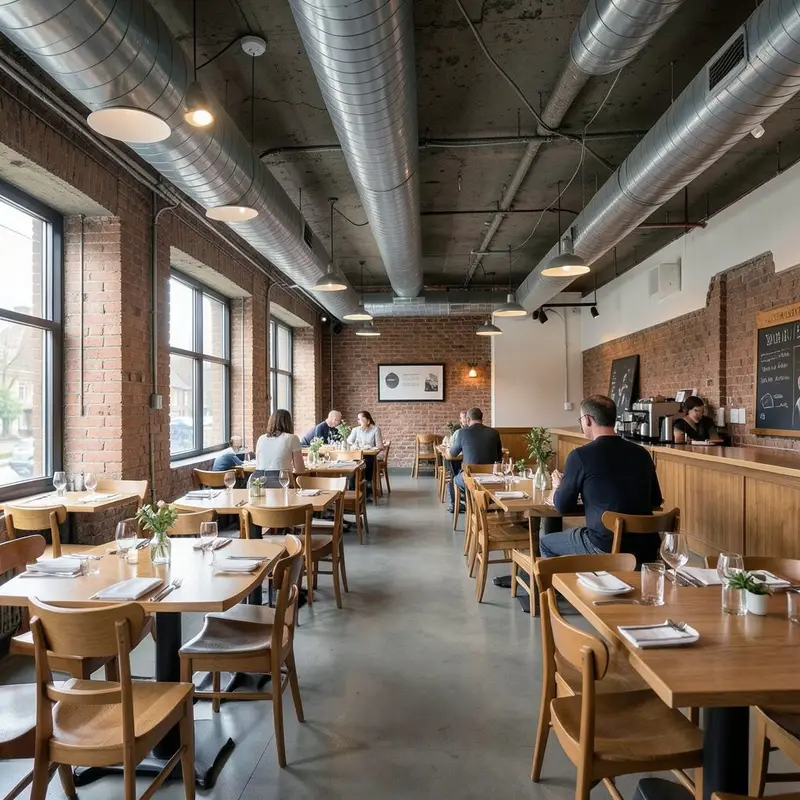
Leaving ducts and pipes visible can make the ceiling part of the design. It gives the room a factory feel that fits the industrial look well.
This choice can also save money because you do not need to hide every line behind a finished ceiling. Paint the ducts a dark color for a polished look, or keep them metallic for a more raw feel. Add hanging lights at different heights to make the ceiling feel lively and layered.
Open ceilings work best when the rest of the room feels balanced and tidy. Wood tables, soft seats, and a few plants can keep the space from feeling too hard. This idea is a favorite in modern restaurants because it feels honest and stylish at the same time.
6. Reclaimed Wood Tables
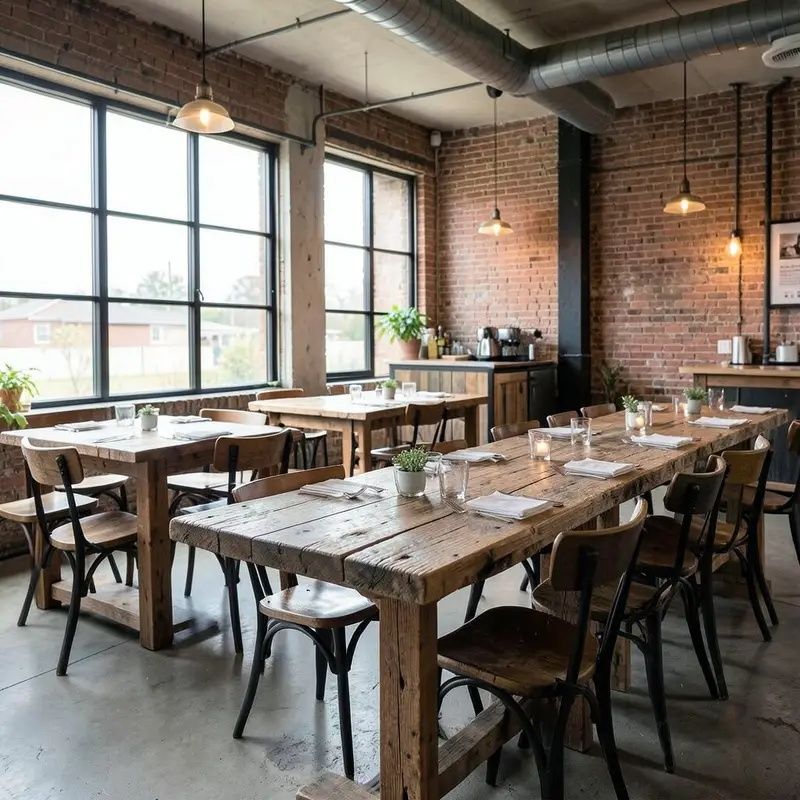
Reclaimed wood brings warmth into an industrial room. Each table can show marks, knots, and color changes that tell a story.
These tables feel unique because no two pieces are the same. They also support eco-friendly design, which many guests notice and appreciate. If full reclaimed wood is out of budget, use it for table tops only and pair them with simple metal bases.
Try mixing long community tables with smaller two-top tables so the room feels flexible. A clear seal helps protect the wood from spills and daily use. This style works well in casual spots, brewpubs, and farm-to-table restaurants.
7. Steel Bar Counters
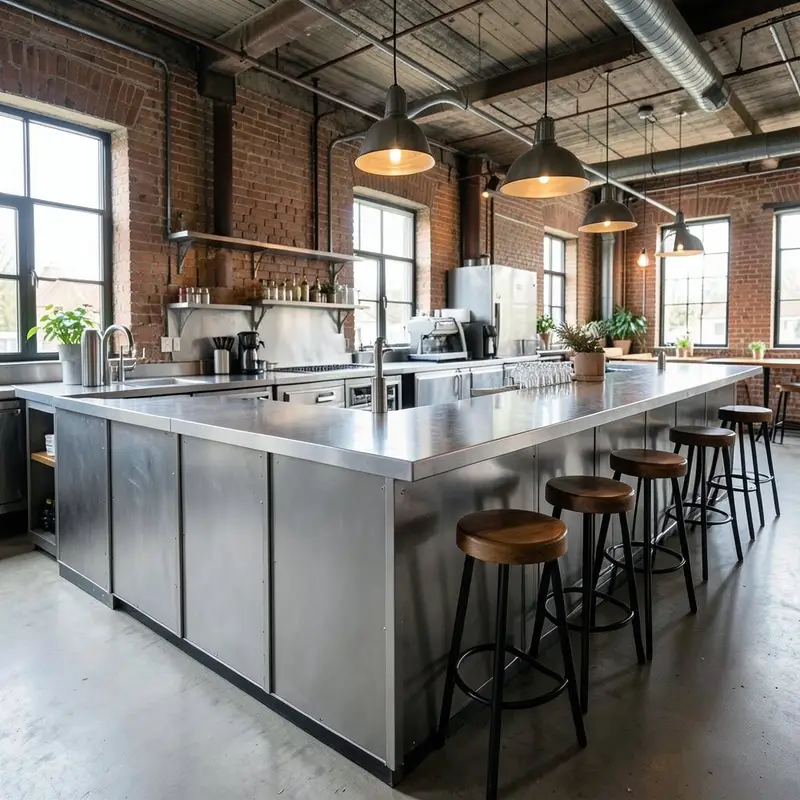
A steel bar counter gives the room a sleek, strong center point. It looks sharp and can stand up to heavy use.
Brushed steel feels a little softer than shiny steel, so it can fit both modern and rustic spaces. It is also easy to wipe down, which helps during busy shifts. Add wood stools or leather seating to keep the look from feeling too cold.
For a custom touch, etch a logo into the front panel or add a wood lip along the edge. Stainless steel can be pricey, so many owners use it where guests can see it most and choose less costly materials behind the bar. This idea feels current because it mixes function with a clean, pro-kitchen look.
8. Vintage Factory Signs
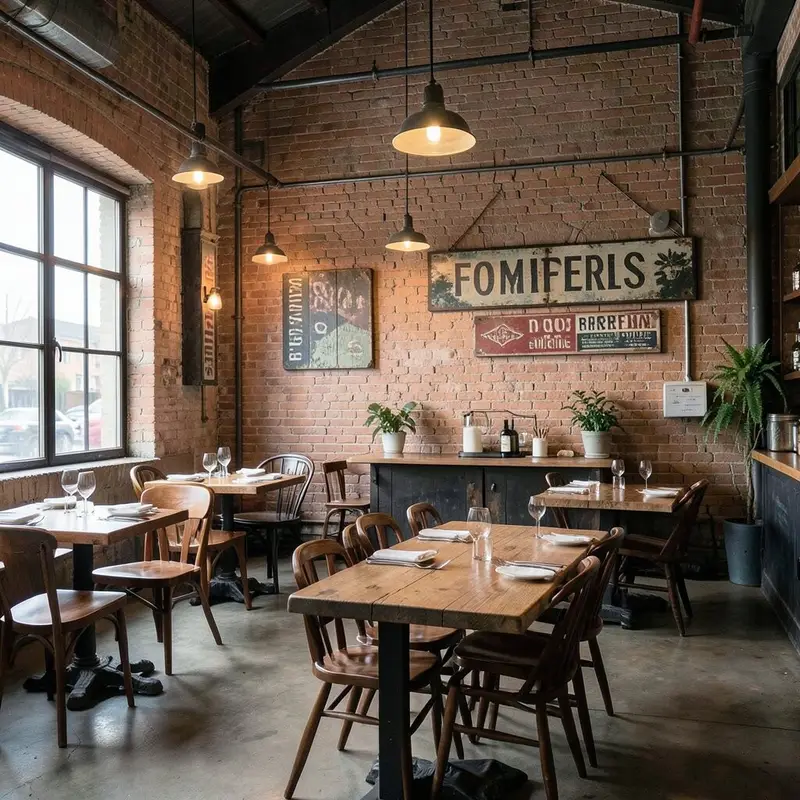
Old factory signs can bring a lot of charm to a wall. They make the room feel collected over time instead of built all at once.
You can hunt for real vintage pieces or use new signs made to look aged. Both options add personality and can help fill empty wall space without much effort. Place them near the entrance, above the host stand, or along a hallway for extra impact.
These signs work best when they tell a story that matches your brand. A coffee shop may use old shipping labels, while a burger spot may lean into warehouse graphics. If the originals cost too much, printed metal signs can still give the same mood for less.
9. Pipe Shelving
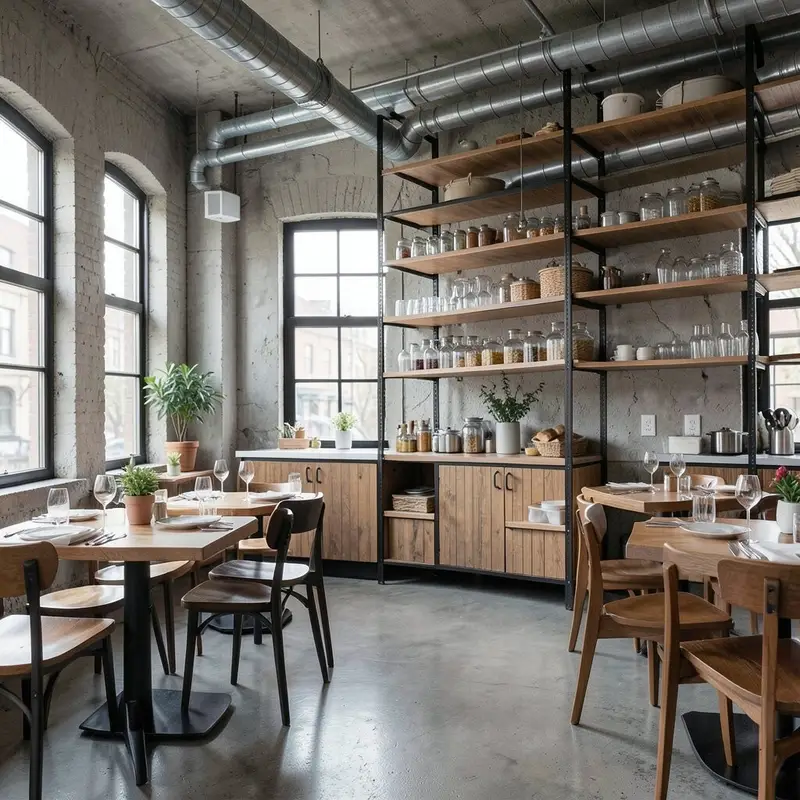
Pipe shelving uses metal pipes and wood planks to create a strong industrial look. It feels open, useful, and a little rugged.
These shelves are great for showing bottles, plates, jars, or decor. They make storage part of the design, which helps the room stay neat and stylish. You can paint the pipes black for a bold look or leave them dark gray for a softer edge.
Pipe shelving is a smart budget choice because it can be built in custom sizes. Use it behind the bar, in the dining room, or near the entrance for retail items. Add a few plants or framed photos to make the shelves feel more personal.
10. Leather Booth Seating
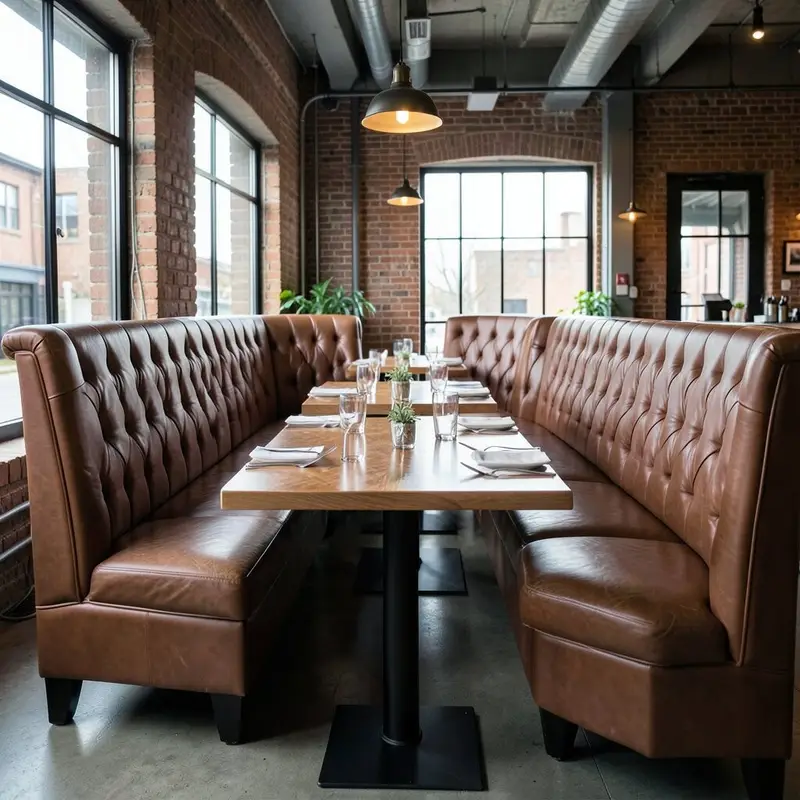
Leather booths add comfort and a rich, classic feel. Their smooth texture gives a nice contrast to rough brick and metal.
Dark brown or black leather works well in industrial spaces because it looks strong and easy to maintain. Booths also help guests feel tucked in, which can make meals feel more relaxed. If real leather is too expensive, high-quality faux leather can still give a polished look.
Try pairing booths with metal trim or wood tables for a balanced style. Stitching details can make the seating feel more custom without adding too much cost. This option is popular in steakhouses, cafes, and upscale casual spots.
11. Rolling Service Carts
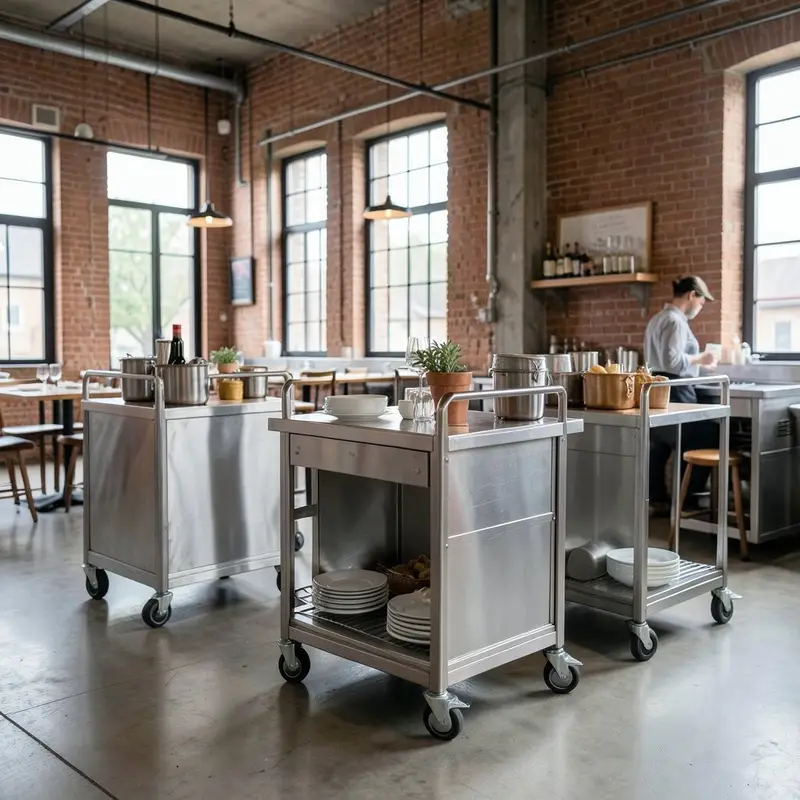
Rolling service carts bring a flexible, lively feel to the dining room. They can hold drinks, desserts, or shared plates with ease.
Metal carts with wood shelves fit the industrial look very well. They also help staff move faster, which is useful in busy spaces. Guests often enjoy seeing food brought to the table in a more hands-on way.
For a personal touch, label the cart with the restaurant name or use a color that matches the brand. Some owners use carts for special drinks or tableside finishing, which feels fun and modern. They are a lower-cost way to add style and service value at the same time.
12. Oversized Pendant Lights
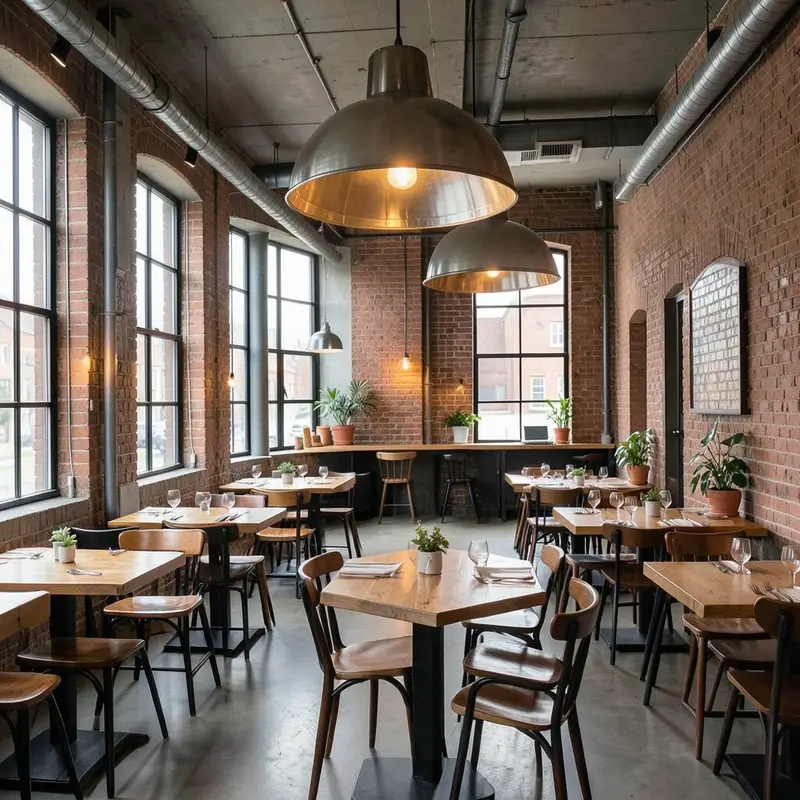
Big pendant lights can act like art in the room. They draw the eye up and make the space feel planned and bold.
Choose shades in metal, glass, or matte black for a strong industrial feel. Hanging them low over tables creates a cozy zone without blocking the view. If you want to save money, use oversized lights in a few key spots and simpler fixtures elsewhere.
Mixing shapes can make the design feel fresh, such as dome lights over the bar and cage lights over booths. Warm bulbs help the room feel inviting instead of harsh. This trend stays popular because it adds drama without needing a lot of extra decor.
13. Mixed Metal Details
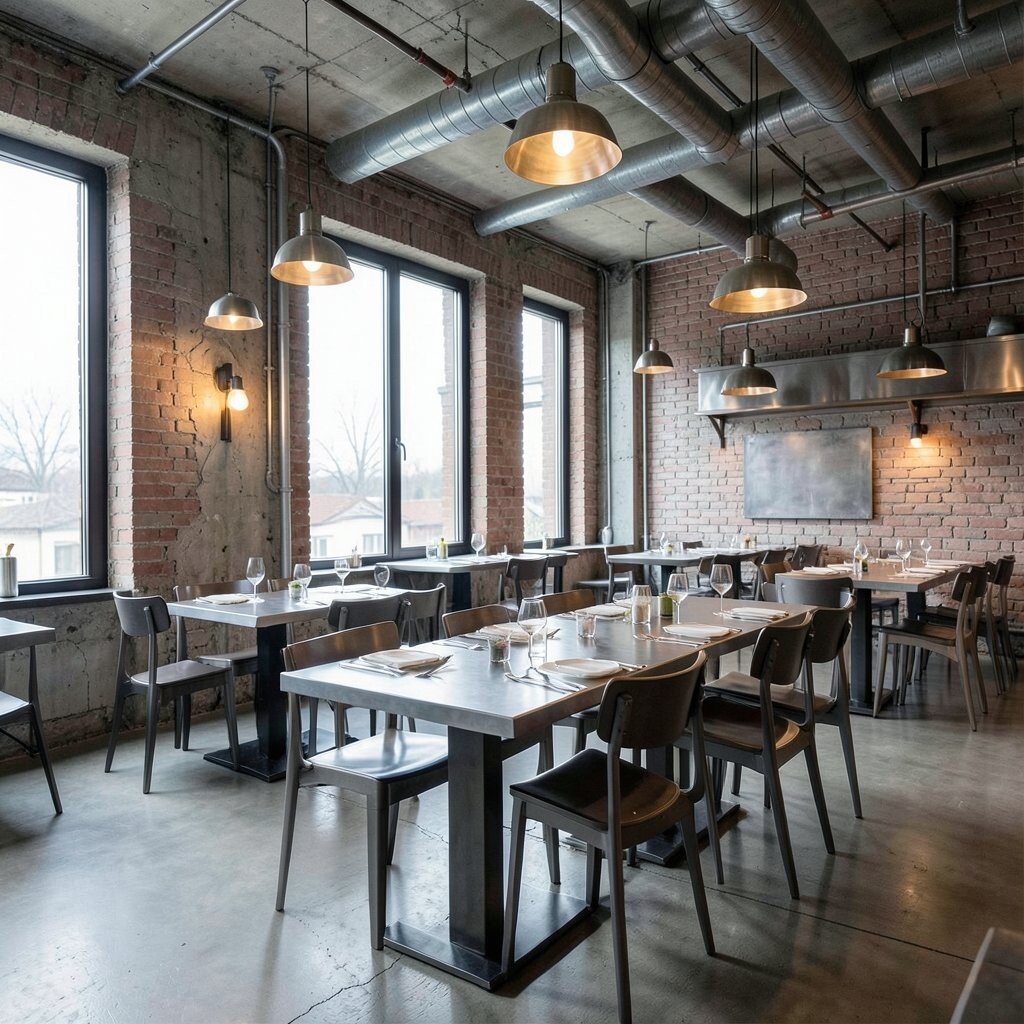
Mixing metals can make an industrial restaurant feel layered and lively. Think black iron, brushed steel, brass, and copper working together.
This mix keeps the space from feeling flat or too matchy. Small touches like drawer pulls, chair legs, and lamp arms can carry the look without a huge budget. To keep it neat, repeat each metal finish more than once in the room.
Warm metals like brass can soften the harder industrial pieces. Cooler metals bring in a clean, modern edge. A thoughtful mix feels custom and gives guests more to notice as they sit and look around.
14. Chalkboard Menus
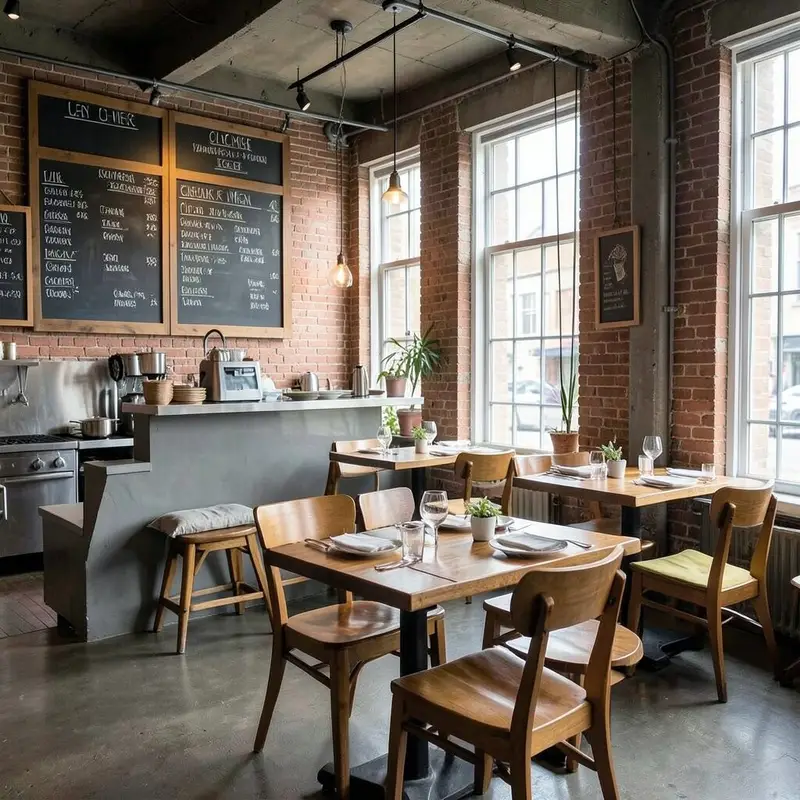
Chalkboard menus add a casual, handmade feel that fits industrial design well. They also make it easy to change specials fast.
A large black board with white writing can stand out against brick or wood walls. Hand lettering feels friendly and personal, even if a designer helps set it up. If real chalk is messy, chalk markers can give a cleaner look.
Use the board for food specials, drinks, or house rules in a fun tone. Framing it in wood or metal can make it feel more finished. This is a low-cost idea that brings both style and real daily use.
15. Warehouse-Style Windows
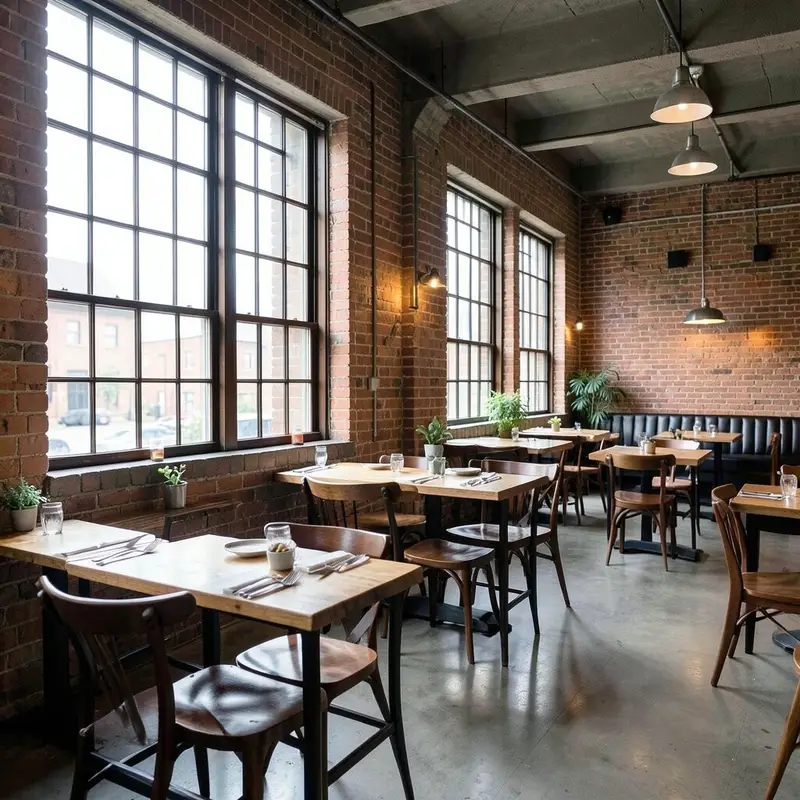
Large warehouse-style windows make a restaurant feel open and bright. They bring in daylight and show off the interior from the street.
Black window grids give a strong industrial frame that looks classic and modern at once. Natural light can also help food look fresher and more inviting. If new windows are too costly, adding grid film or black trim can create a similar effect.
These windows work especially well in corner spaces or buildings with tall fronts. They can make a small room feel bigger and more welcoming. Add sheer shades or simple blinds so you can control glare during busy hours.
16. Raw Wood Barstools
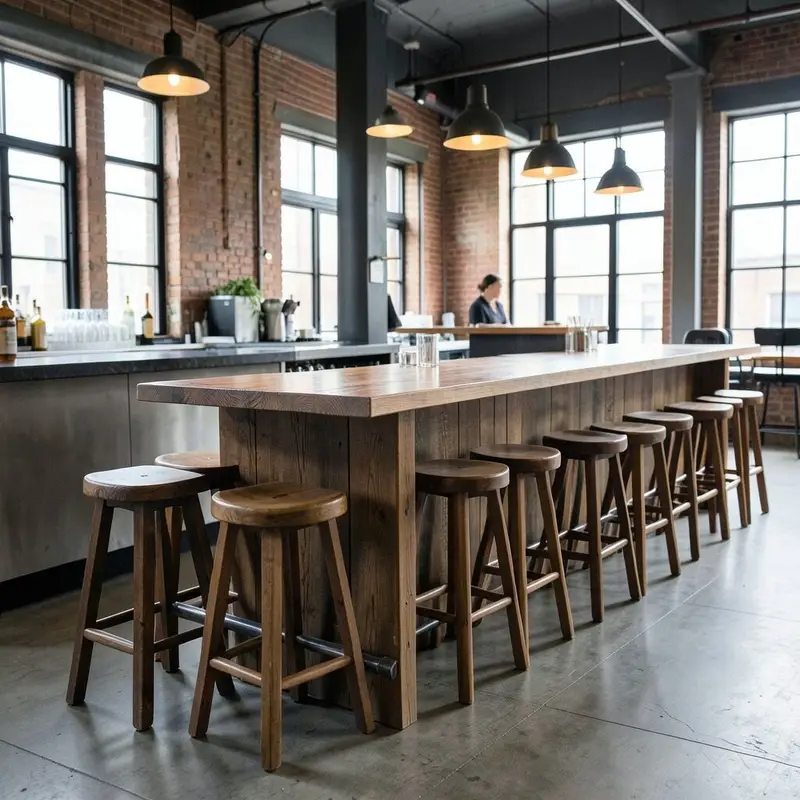
Raw wood barstools bring a handmade feel to the room. Their simple shape keeps the focus on the materials.
They pair nicely with metal bars, concrete floors, and dark counters. You can choose stools with backs for comfort or backless ones for a lighter look. Staining the wood a darker tone can help it blend with other industrial pieces.
For a personal touch, pick a stool shape that matches your brand mood, from rustic to sleek. These stools are often less costly than upholstered seating and easier to move around. A few seat cushions can add comfort without changing the whole design.
17. Exposed Shelved Refrigeration
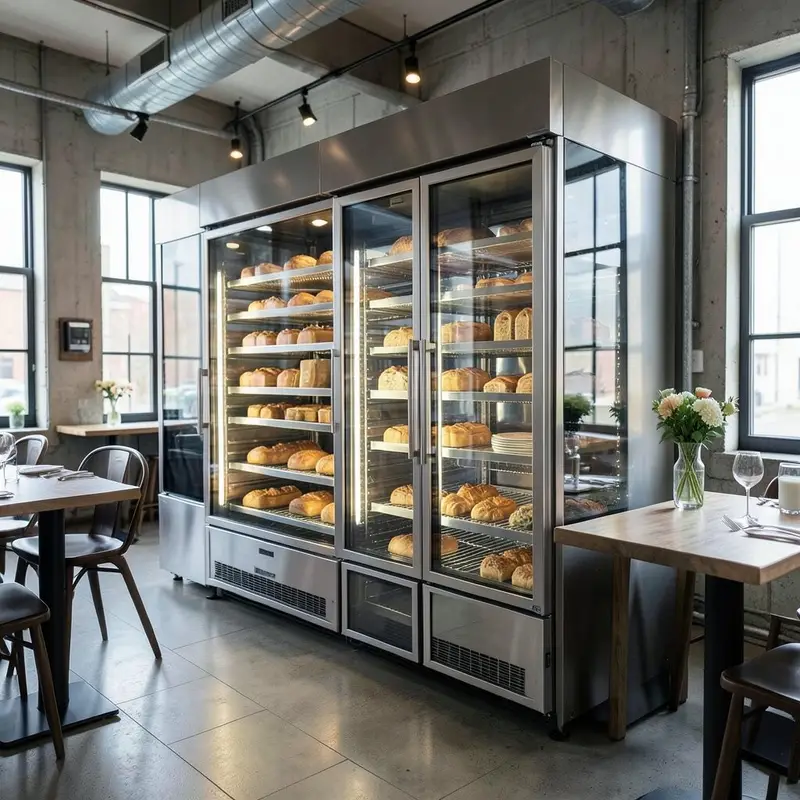
Showing off refrigeration can give a kitchen-adjacent area a real industrial edge. It feels honest, busy, and very functional.
Glass-door coolers can display drinks or desserts while keeping items easy to reach. This setup works well in cafes, bakeries, and fast-casual spots. Clean shelving and neat product rows are key, since the display becomes part of the decor.
Lighting inside the case can make colors pop and help sales. If full display units are too expensive, use one feature case and keep the rest simple. This idea fits current trends that value open service and visible freshness.
18. Painted Brick in Deep Tones
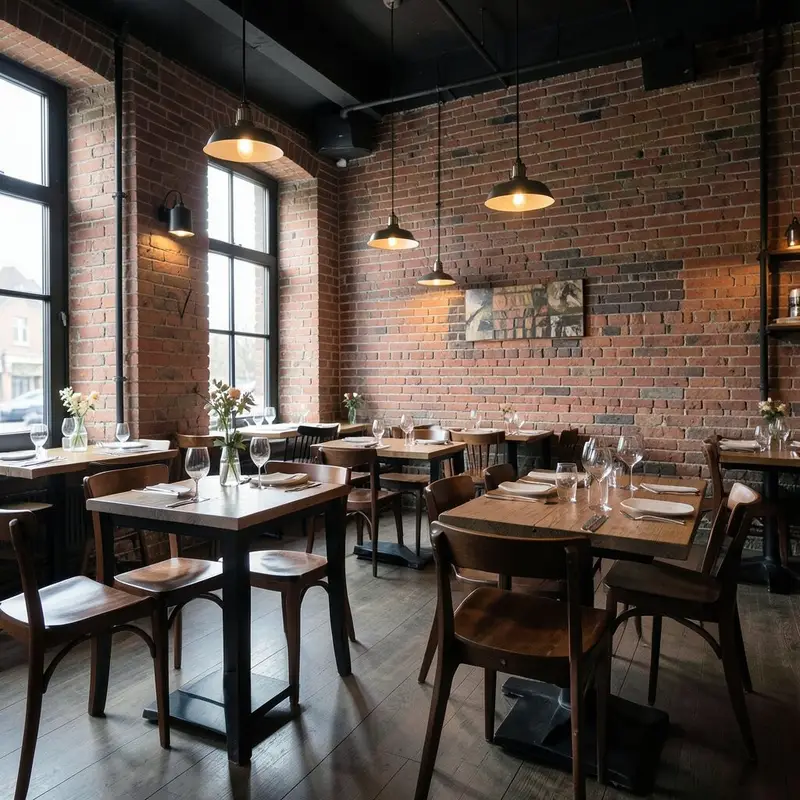
Painting brick in deep tones can make an industrial room feel moody and rich. Dark green, charcoal, or navy can add drama without hiding the brick texture.
This choice keeps the rough look of brick while giving the room a more modern edge. It can also help older walls feel cleaner and more unified. If you want a lower-cost update, paint just one feature wall instead of the whole room.
Pair dark brick with warm wood and bright bulbs so the space does not feel too heavy. Artwork with light frames can stand out nicely against the darker surface. Many designers use this idea to create a cozy, upscale mood.
19. Hanging Greenery
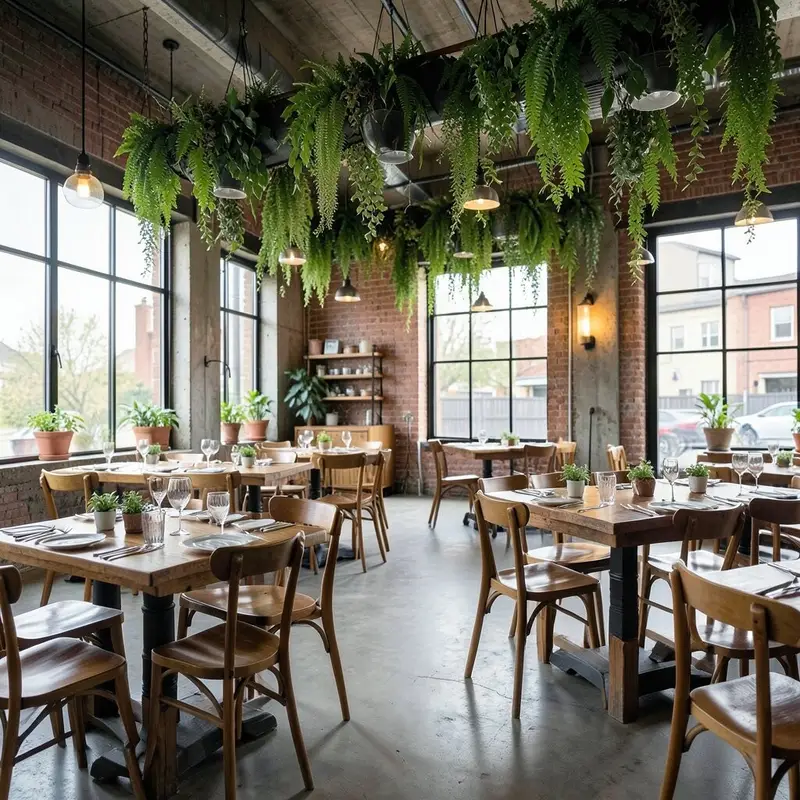
Hanging plants soften the hard edges of an industrial room. They bring life, color, and a fresh feel to the ceiling and walls.
Trailing vines look lovely near windows, shelves, or high beams. Plants also help break up all the metal and concrete so the room feels more balanced. If live plants are hard to care for, high-quality faux greenery can still do the job well.
Choose planters in black, clay, or galvanized metal to keep the style on theme. A few well-placed plants often look better than filling every corner. This trend stays strong because it makes spaces feel more relaxed and photo-friendly.
20. Distressed Leather Chairs
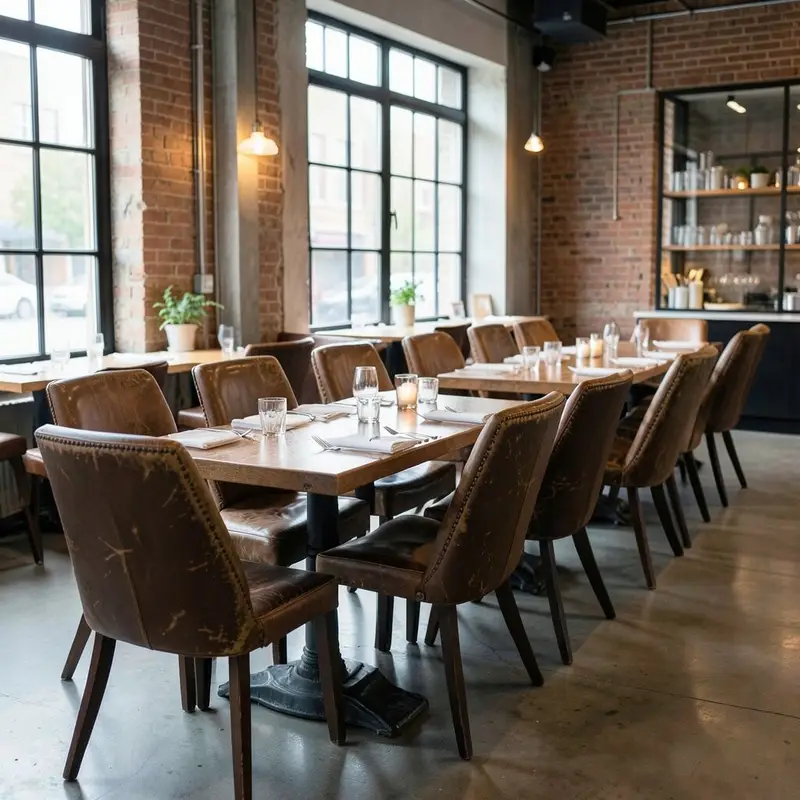
Distressed leather chairs add a lived-in look that feels warm and inviting. Their worn texture fits the industrial style without trying too hard.
These chairs work well in dining rooms that want a mix of comfort and edge. They can hide small marks better than lighter fabrics, which helps in busy restaurants. If the budget is tight, choose distressed-look vinyl for a similar effect at a lower price.
Mix chair styles with booths or benches to keep the room from feeling too uniform. Choose colors that match the rest of the palette, such as deep brown, tan, or black. Guests often notice when seating feels both sturdy and stylish.
21. Metal Grid Partitions
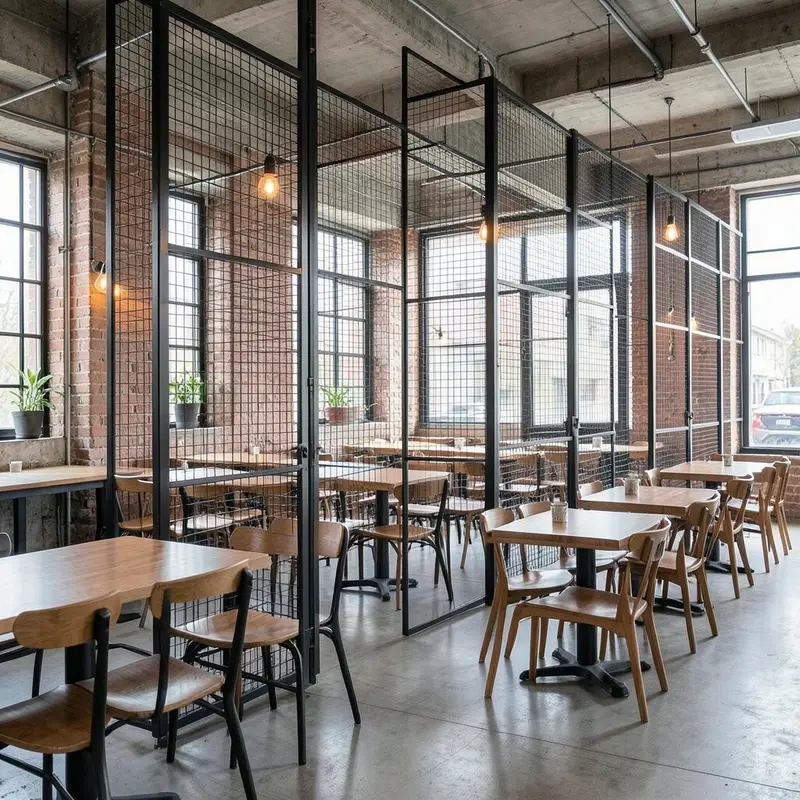
Metal grid partitions can divide a space without closing it off. They keep the room open while still creating clear sections.
This is useful in large dining rooms, shared spaces, or restaurants with private corners. The grid pattern adds a strong visual line that feels modern and industrial. You can leave the metal black, or soften it with wood shelves and small decor pieces.
Partitions can also help with traffic flow and give guests a bit more privacy. If custom metalwork is too costly, ready-made screens or shelving units can do a similar job. This idea is practical, stylish, and easy to adjust later.
22. Recycled Material Decor
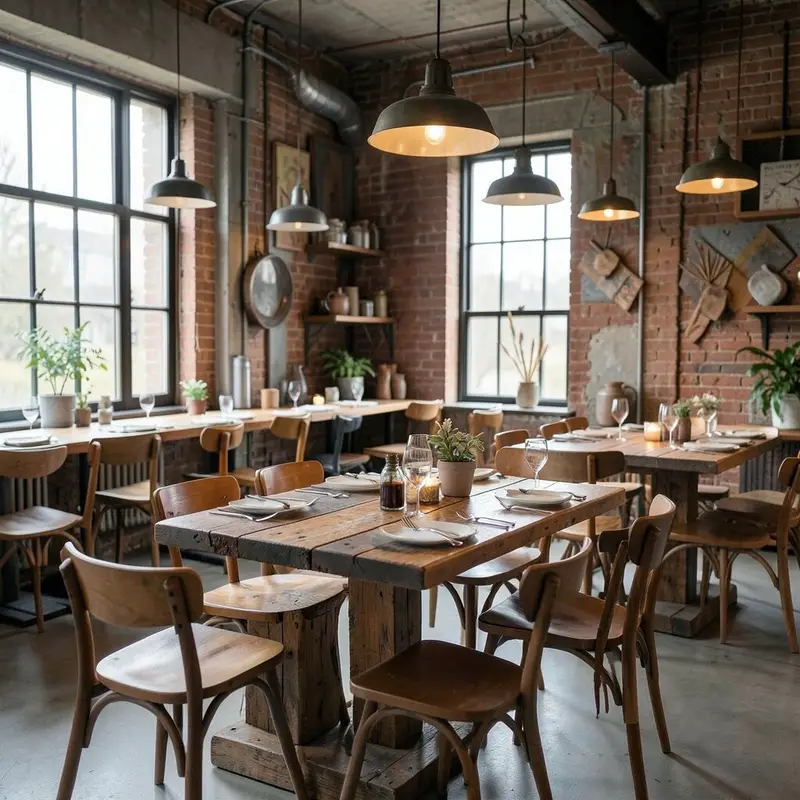
Using recycled materials can make the space feel smart and creative. Old wood, metal scraps, and reused fixtures can all become part of the design.
This approach gives the restaurant a story that guests can feel good about. It also helps keep costs down when you are willing to hunt for unique pieces. Try turning old crates into display stands or using salvaged boards for wall art.
Personal touches matter here, so choose materials that connect to your brand or local area. A menu board made from reclaimed wood can feel special and memorable. This style fits current interest in sustainability and one-of-a-kind interiors.
23. Concrete Bar Tops
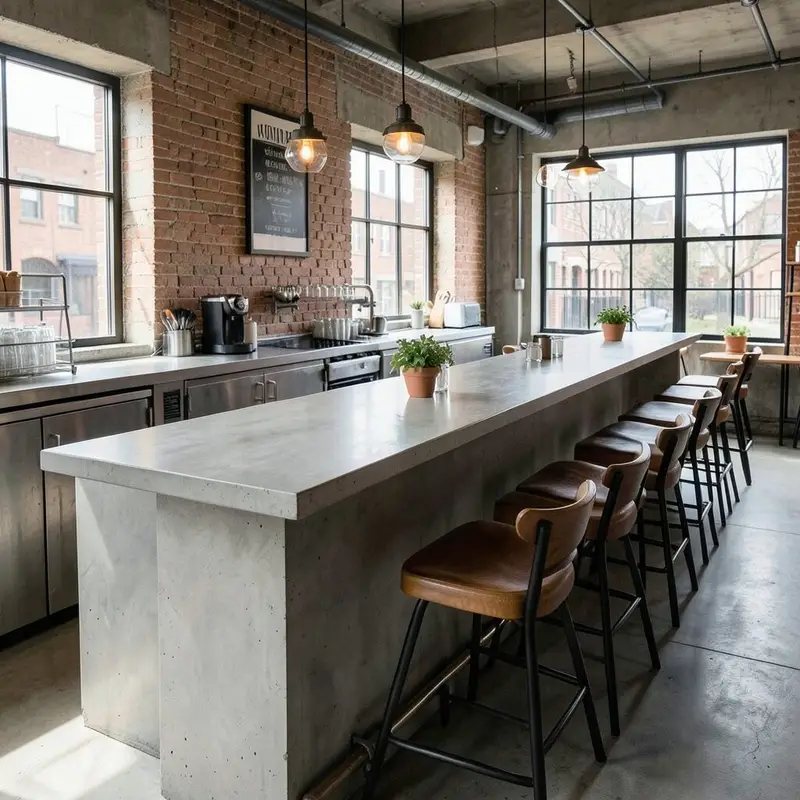
A concrete bar top gives the room a bold, solid centerpiece. It looks cool, smooth, and a little rugged at the same time.
Concrete can be shaped in custom ways, so it works well for curved bars or simple straight counters. It is durable and can stand up to lots of use, which makes it practical for busy service. Seal it well to help protect against stains and moisture.
If a full concrete top is too pricey, consider using it just on the bar while keeping tables in wood. Small details like inlaid bottle openers or a polished edge can make it feel custom. This look is popular because it feels both modern and tough.
24. Industrial Art Murals
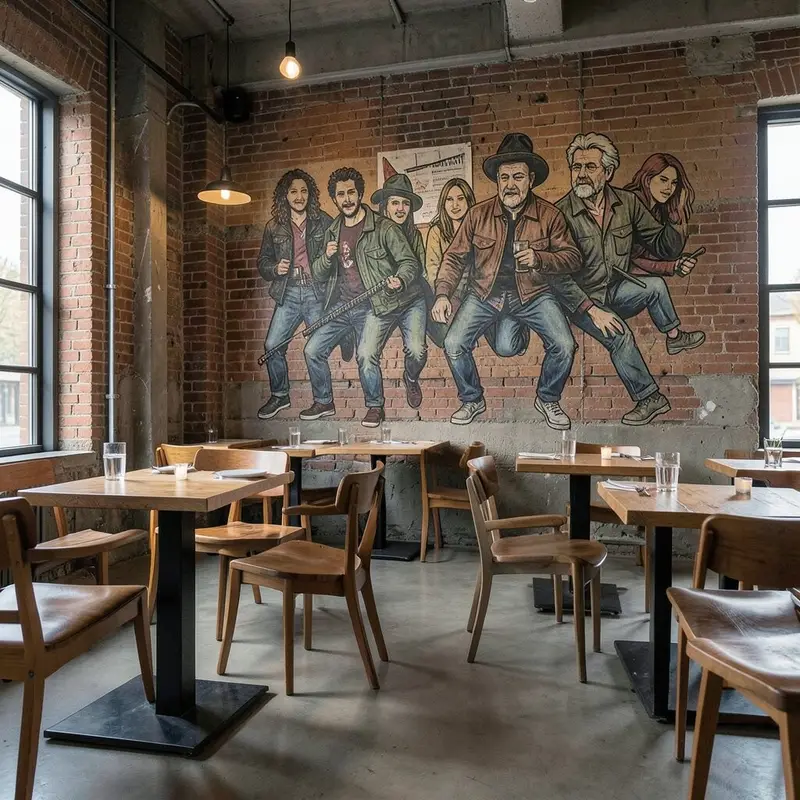
A big mural can give a restaurant a strong point of view. It adds color and energy while still fitting the industrial mood.
Think of city maps, line drawings, factory themes, or abstract shapes in bold tones. A mural can also help guide the eye in a long or plain room. If you want to keep costs manageable, hire a local artist for one feature wall instead of covering every surface.
This is a great place to show off your brand story or local roots. The art can make guests want to take photos, which helps spread the word. Choose a style that feels fresh now but still matches the rest of the room.
25. Galvanized Metal Accents
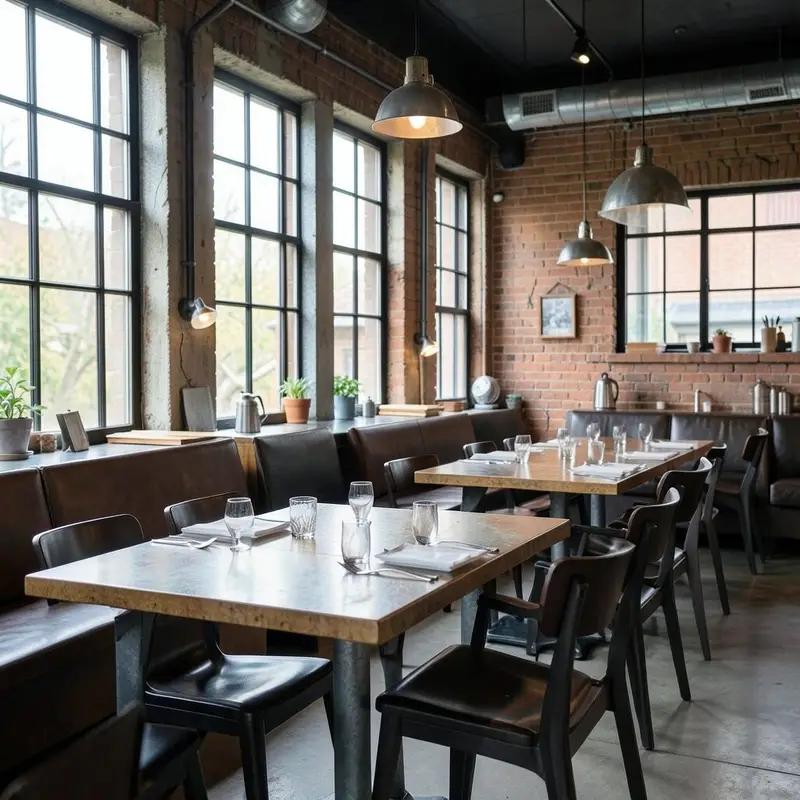
Galvanized metal has a cool, utilitarian look that fits industrial dining rooms well. It feels sturdy and familiar, like it belongs in a working space.
You can use it in planters, pendant shades, trays, or wall trim. The soft silver tone pairs nicely with wood and brick without feeling too shiny. It is also a fairly budget-friendly way to add metal without using expensive custom parts.
Try repeating the finish in a few places so it looks intentional. A galvanized host stand or drink station can be both useful and attractive. This detail works especially well in casual cafes, beer halls, and rustic-modern restaurants.
26. Open Kitchen Pass-Throughs
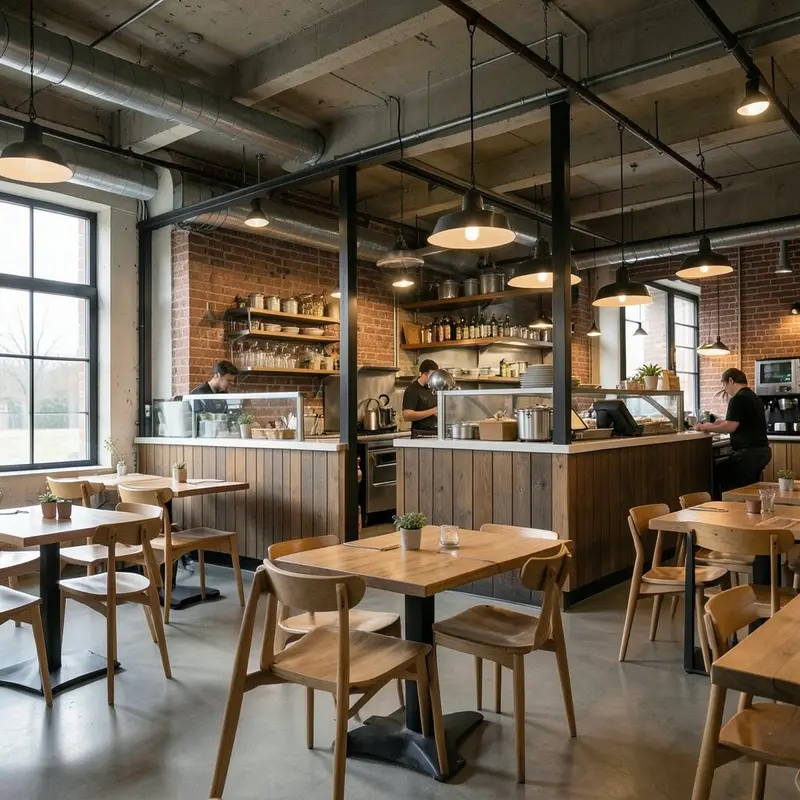
An open pass-through can make the kitchen feel connected to the dining room. Guests get a peek at the action, which adds energy and trust.
Metal shelves, warm lights, and clean tile around the opening can make it feel polished. This setup helps staff move food faster and keeps the service line efficient. It also gives you a chance to show off the care that goes into each plate.
For a personal touch, frame the opening with wood, tile, or painted steel that matches the brand. Keep the area neat, since guests will notice it right away. This idea is modern, practical, and very on trend for open, lively dining spaces.
27. Warm Edison Sconces
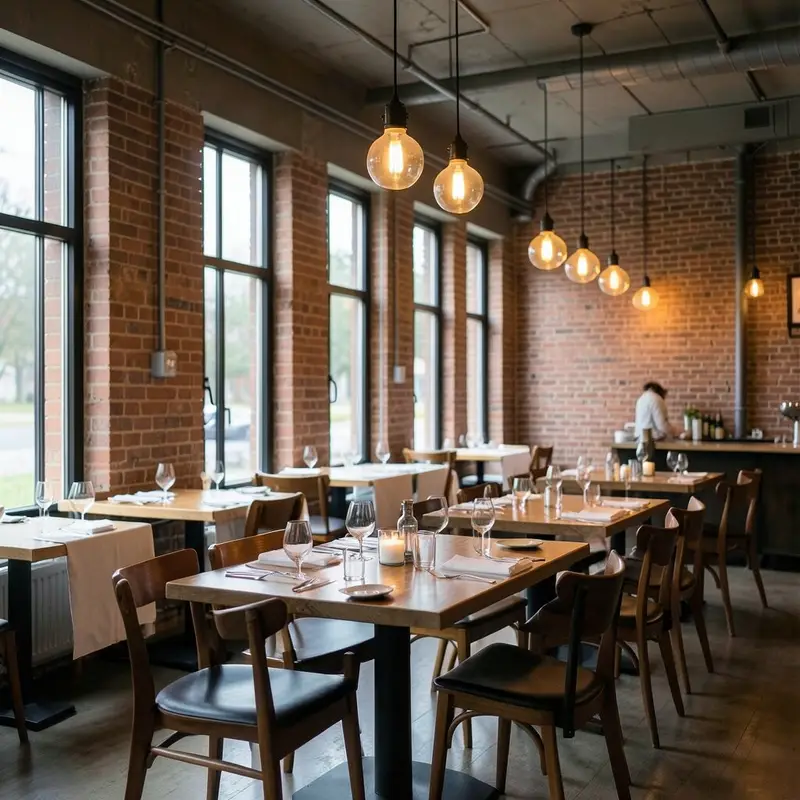
Edison sconces can make walls glow in a soft and welcoming way. They add light without taking up table space.
Mounted in rows along brick or concrete walls, they create a cozy rhythm through the room. Their exposed bulbs and simple metal arms fit the industrial style with ease. If you want to save money, use sconces in hallways or booths and simpler lighting elsewhere.
Choose a finish that matches your other fixtures, like matte black or aged brass. Dimmer switches can help the room feel calm during dinner service. These lights are a small change that can make a big difference in mood.
28. Mixed Seating Zones
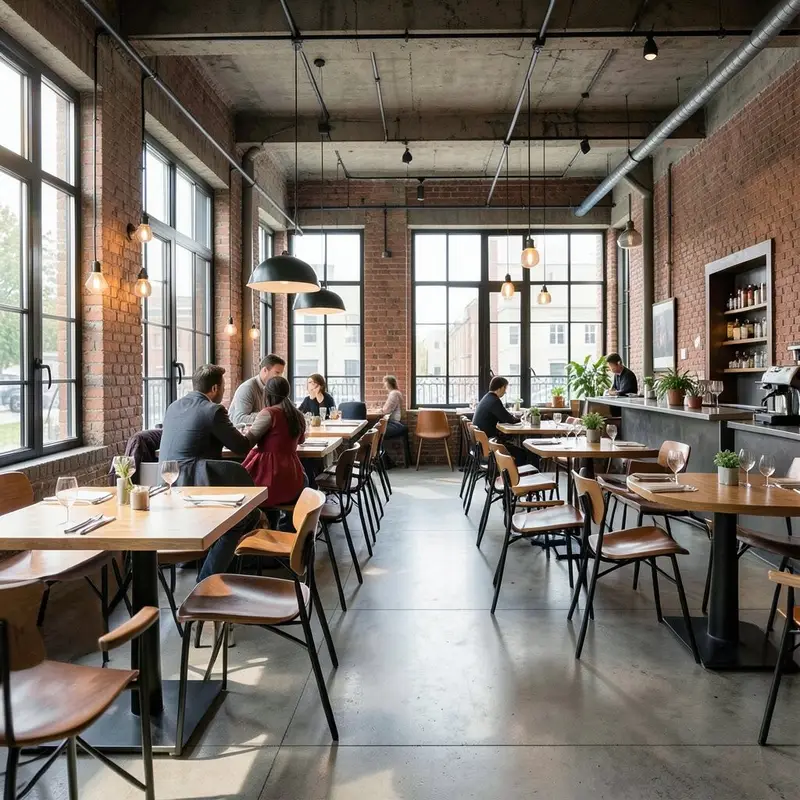
Mixing seating types gives a restaurant a relaxed, collected feel. Booths, stools, benches, and chairs can all work together in one room.
This setup helps you fit different groups and makes the space more useful. It also lets guests choose how they want to sit, which can improve comfort. To keep the look unified, repeat the same colors or materials across the different pieces.
You can personalize each zone with different lighting or wall decor. This is a smart way to manage cost too, since you can spend more on a few key pieces and use simpler options elsewhere. The mix feels modern because it looks natural, not overly staged.
29. Statement Industrial Entryways
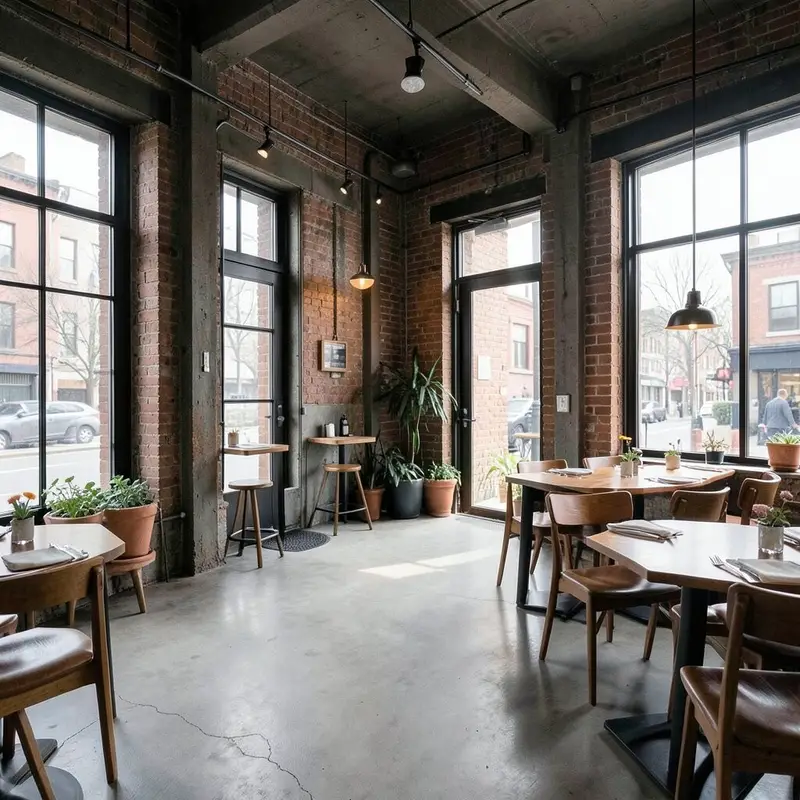
A strong entryway sets the tone before guests even sit down. It can make the whole restaurant feel more special from the first step inside.
Think of a heavy wood door, black steel trim, a bold sign, or a glowing light fixture overhead. The entry can also show your style with a host stand, a plant, or a feature wall. If funds are limited, focus on one striking piece instead of doing everything at once.
Personal touches like a custom logo or a local art piece can make the entrance memorable. This area is a smart place to spend a little more because first impressions matter so much. A well-made entryway feels welcoming, stylish, and ready for guests.