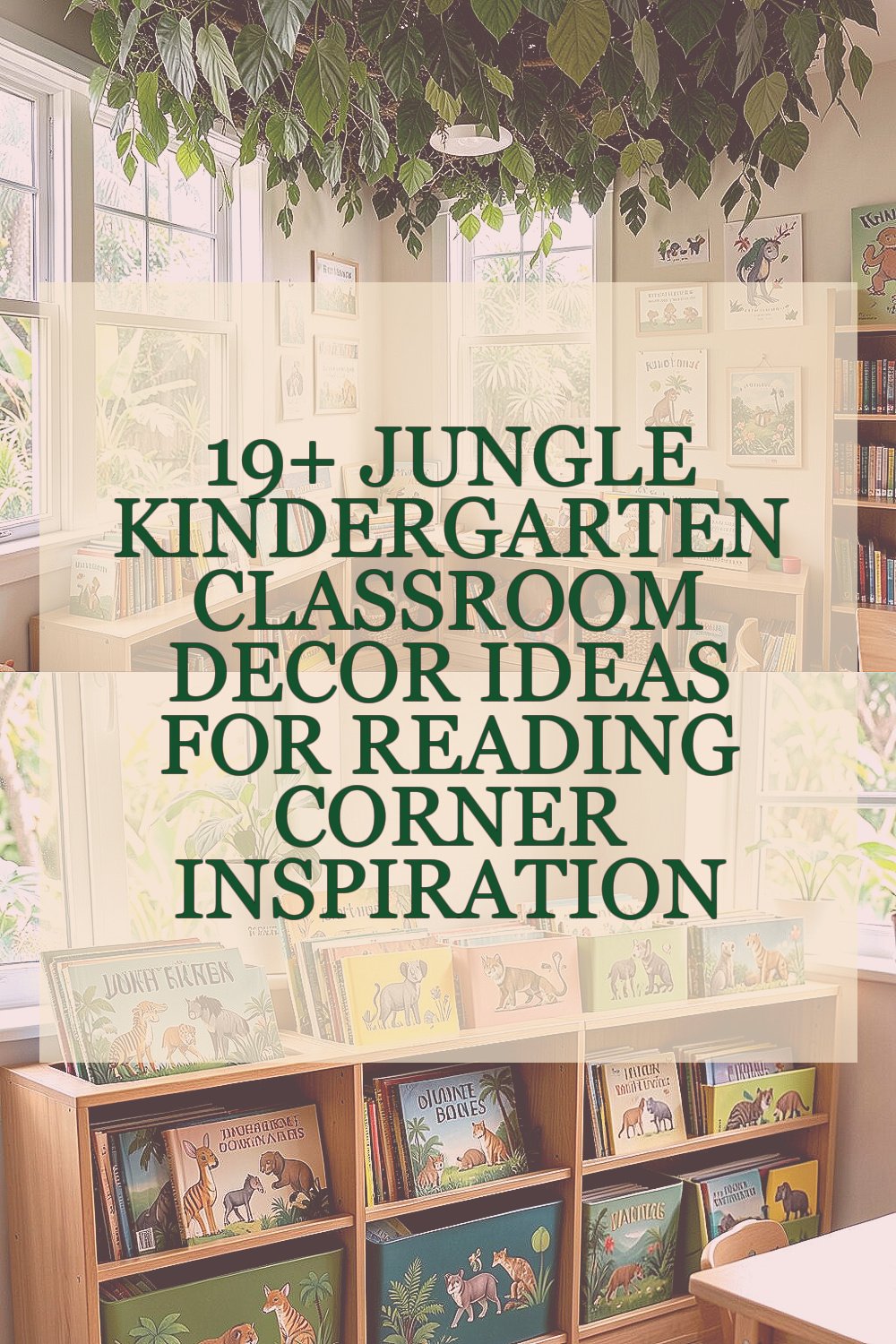
The reading corner can feel like a magical forest without spending a fortune. Soft textures, leafy colors, and cozy seating help little readers settle in fast.
When the space looks playful and safe, kids want to pick up books again and again. With simple changes, you can turn story time into an everyday jungle adventure.
1. Leafy Canopy Overhead Nook
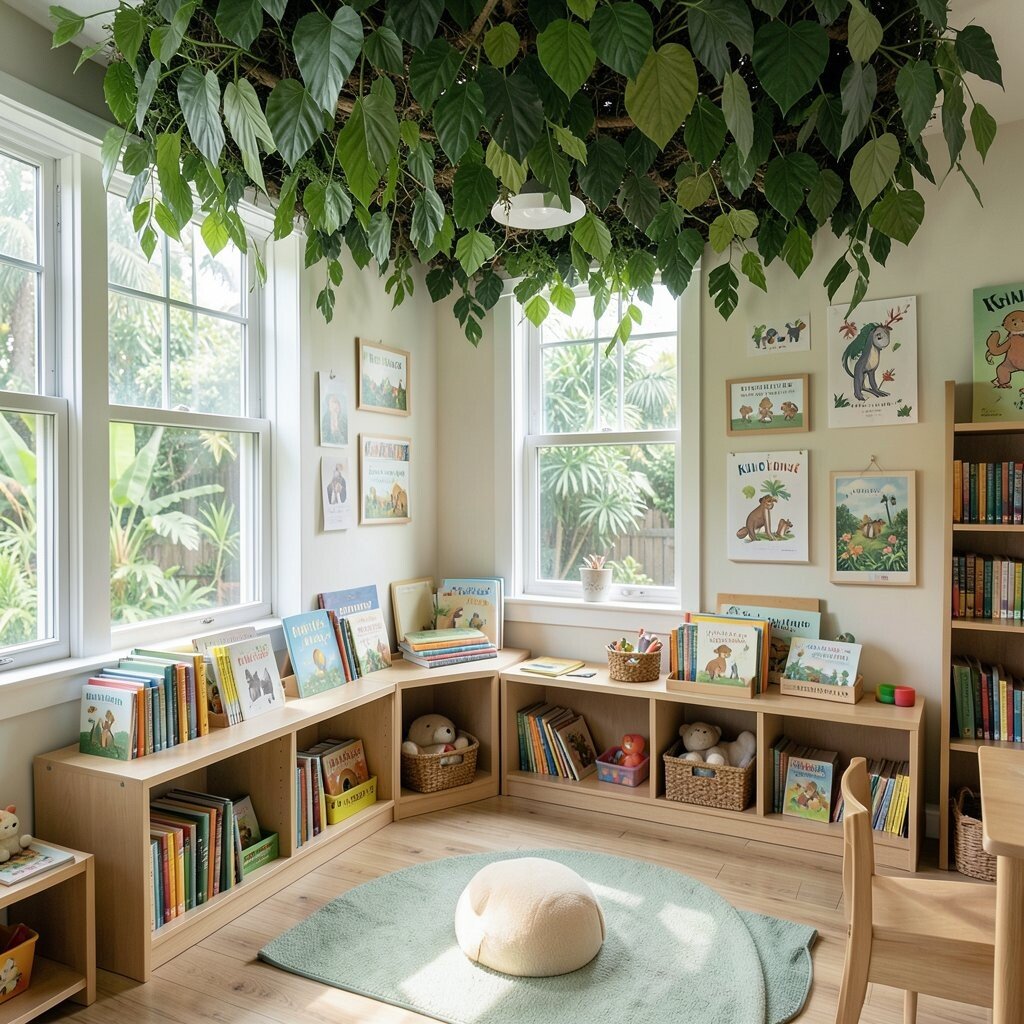
Hang lightweight fabric so it drapes like a jungle canopy above the reading spot. Choose green and warm tan shades to mimic leaves and sunbeams, and let the fabric move gently when students walk by.
Kids feel tucked in when the overhead space creates a cozy frame around books. For a practical setup, use ceiling hooks and fishing line or removable command-style hangers so you can adjust height as your class changes.
2. Animal-Themed Book Bins With Names
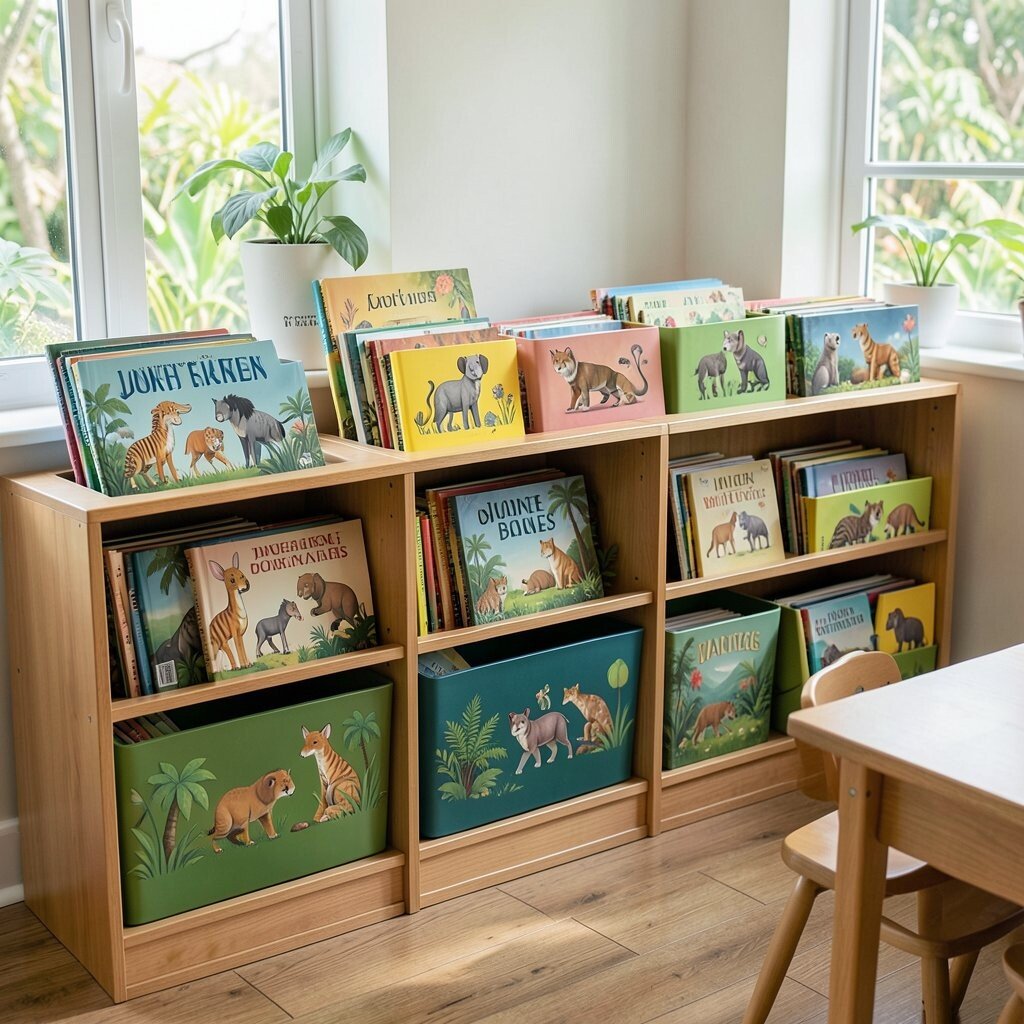
Place labeled book bins in bright colors shaped like jungle friends. You might use an elephant, lion, monkey, or parrot theme so children can visually match titles to baskets.
When books have their own home, kids clean up faster and choose independently. Try adding picture labels in addition to word labels, then swap pictures as new units arrive so it stays current and personal.
For cost control, look for sturdy storage drawers on sale and cover them with contact paper or fabric wraps. It is also easy to reuse bin lids year after year by updating the animal images with fresh printables.
3. Cozy Log Seating With Soft Cushions
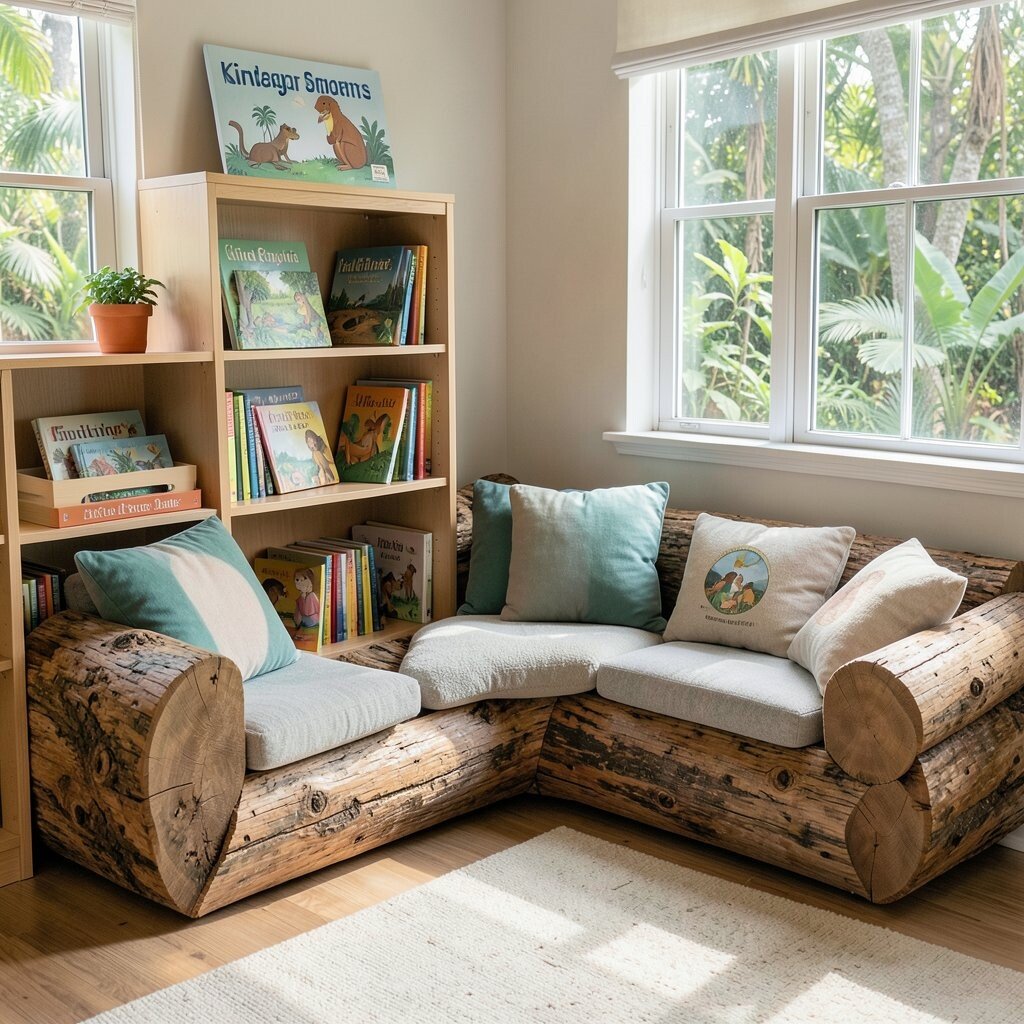
Use foam rounds or faux wood blocks as “logs” for sitting, then top them with washable cushions. Pick cushions in warm browns and muted greens so the area looks natural and calming.
Comfort matters because longer reading moments work better when bodies feel supported. You can also arrange the logs in a gentle curve, which helps the group face toward the main book display.
If you want to personalize, let each child choose a cushion color that matches a jungle “role,” like explorers, caretakers, or nest builders. To keep it practical, choose wipeable covers or add a clear cover over fabric cushions.
Even if you buy fewer logs, you can mix them with floor cushions to build a flexible seating zone. This style keeps the reading corner feeling playful while still being organized and teacher-friendly.
4. Story Time Curtain of Vines
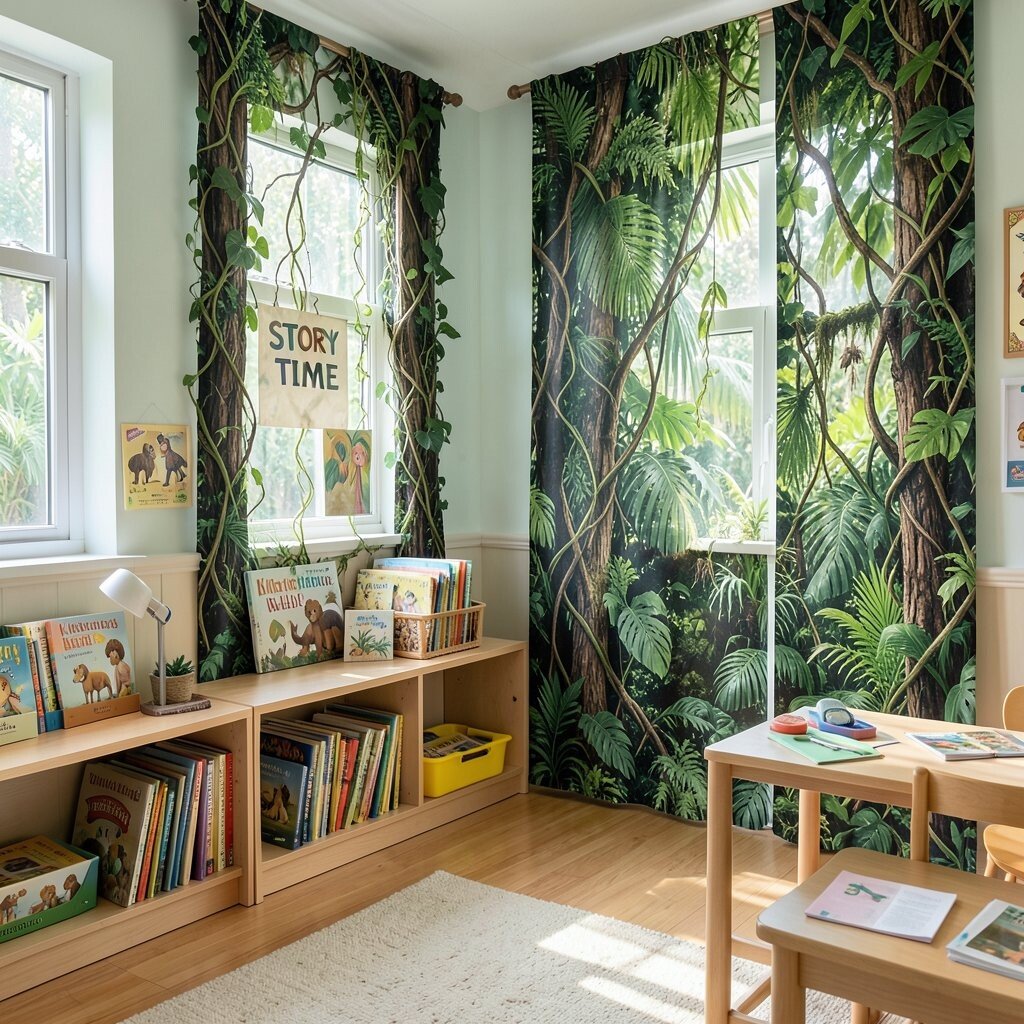
Hang long strips of felt or craft foam to create a vine curtain that frames the reading area. The strips can be different lengths so the space feels like it has depth, even in a small classroom.
Kids love passing through “green vines” when they settle in, and that excitement can boost attention during story time. Use Velcro on the back of the strips so you can remove them easily for cleaning or seasonal changes.
5. Printable “Jungle Safari” Reading Posters
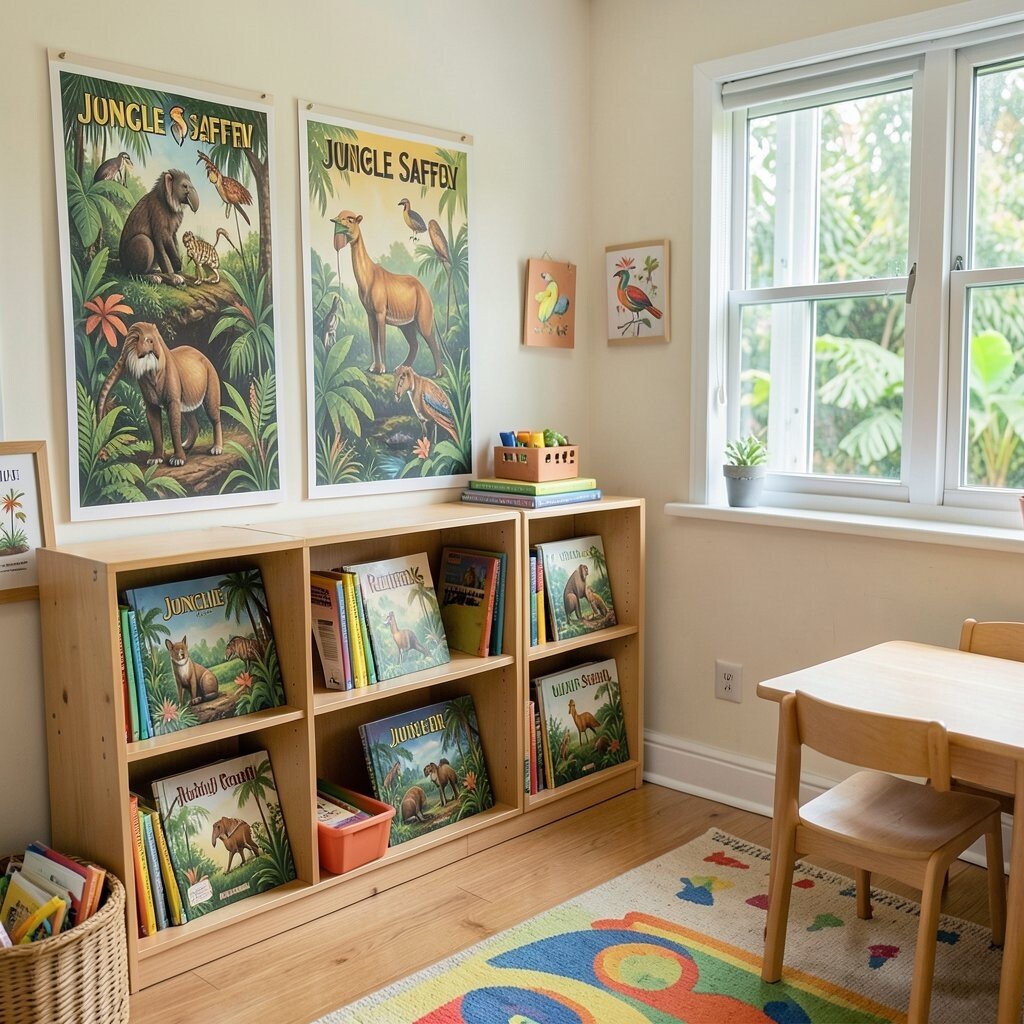
Create simple posters with safari-style animals and friendly reading messages. Use big pictures and short phrases so five-year-olds can understand the mood of the corner at a glance.
Fresh posters also keep the area from feeling the same all year, which helps students stay curious. For a practical budget, use free or low-cost printables and print them in color on cardstock.
Personalize by swapping in student names as “jungle guides,” or feature classroom pets like a class cat or classroom turtle. The more your kids see themselves in the space, the more they will treat it as their own story zone.
6. Faux Moss Wall Backdrop for Depth
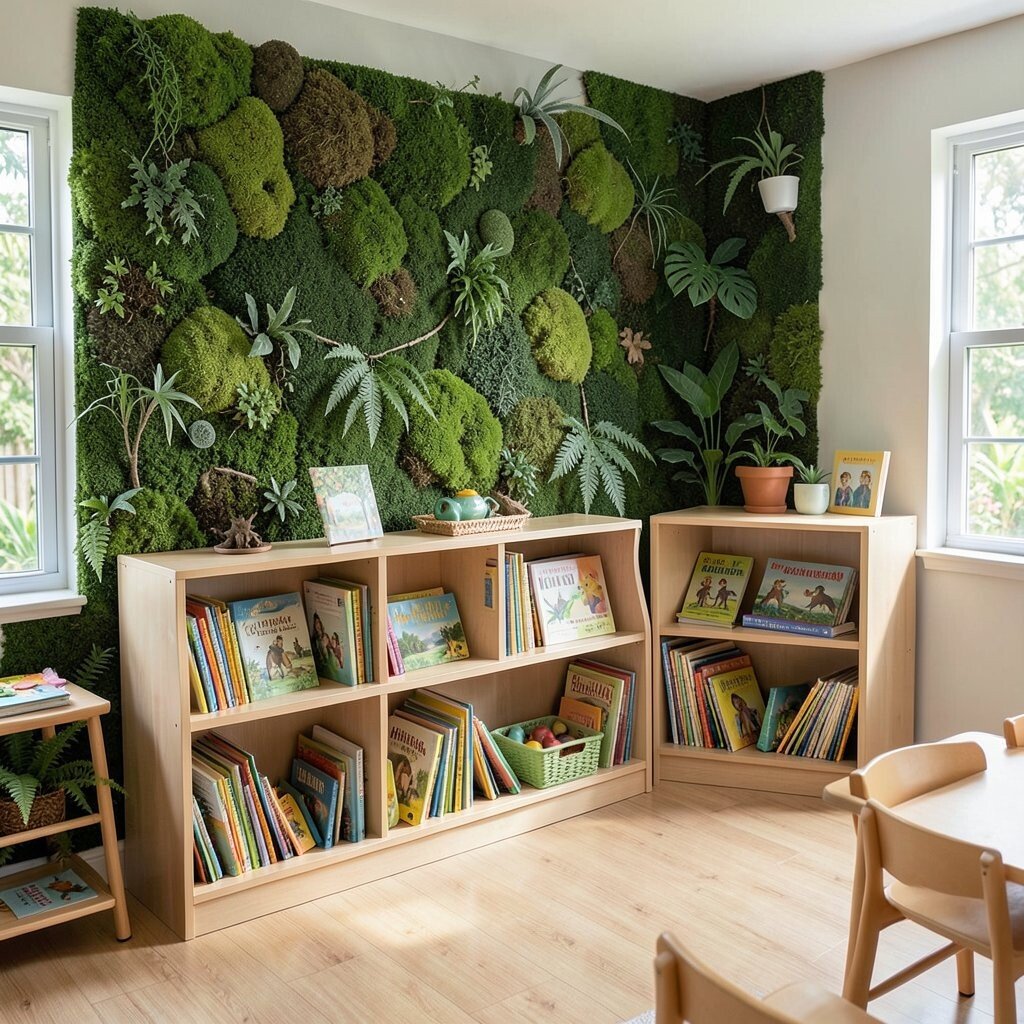
Cover one section of a wall with green textured craft material to mimic moss. You can use felt sheets, foam mats, or a fabric backdrop that looks bumpy and soft under the lights.
This backdrop makes the reading corner feel like a real environment, and it adds visual calm that helps kids focus on pictures. If your classroom rules require simple upkeep, pick materials that can be wiped or gently brushed to remove dust.
For uniqueness, add a few “leaf shadows” using darker green paper cutouts so the moss looks lively. If budget is tight, cover only the lower half of the wall, where kids’ eyes naturally land during sitting time.
7. Floating Paper Leaf Garland Across Shelves
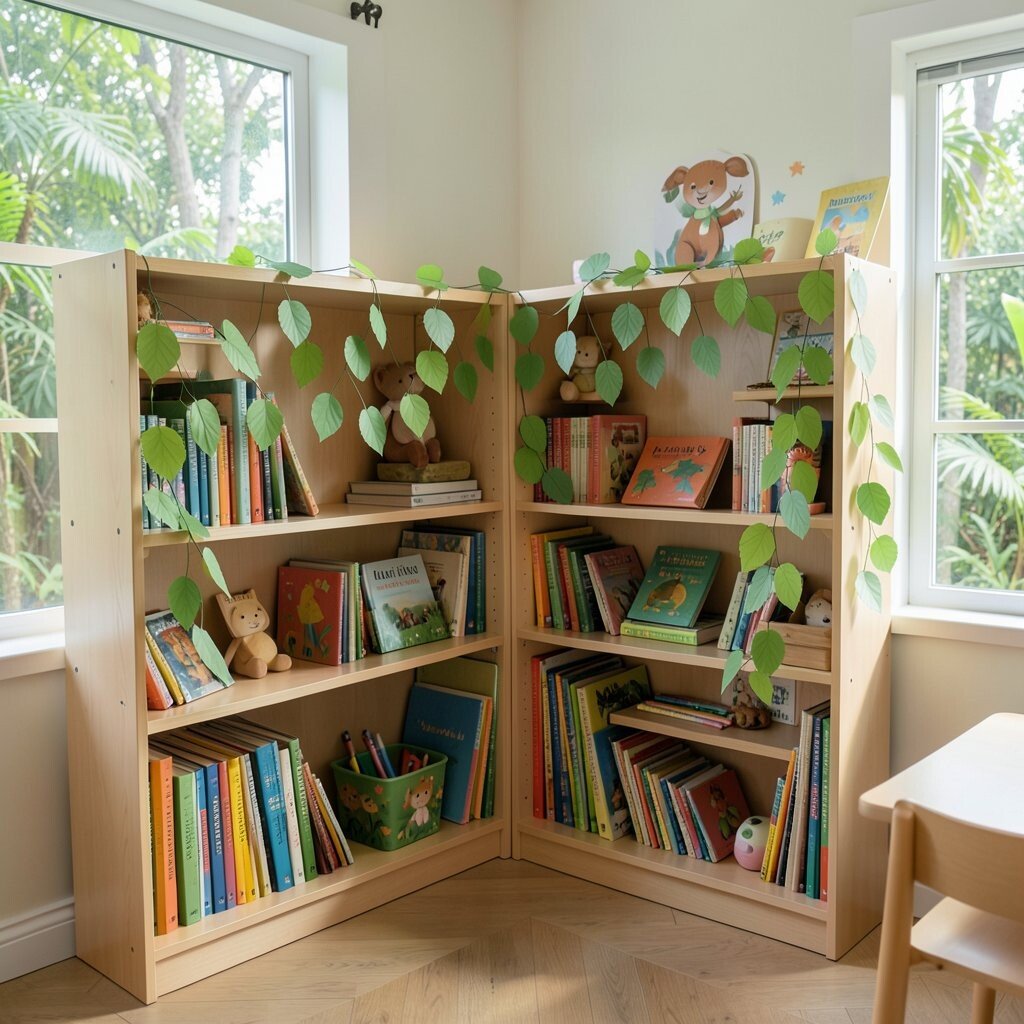
Create a garland made from paper leaves and thread it along a shelf or bookshelf edge. Mix sizes and shades of green, then add a few yellow or orange leaves to suggest sunrise in the jungle.
Garlands add movement and make the shelves feel less like storage and more like a story habitat. Use a hole punch and thin twine, then reinforce knots so it stays sturdy even when kids pass by.
8. DIY Fern Tabletop or Wall Centerpiece
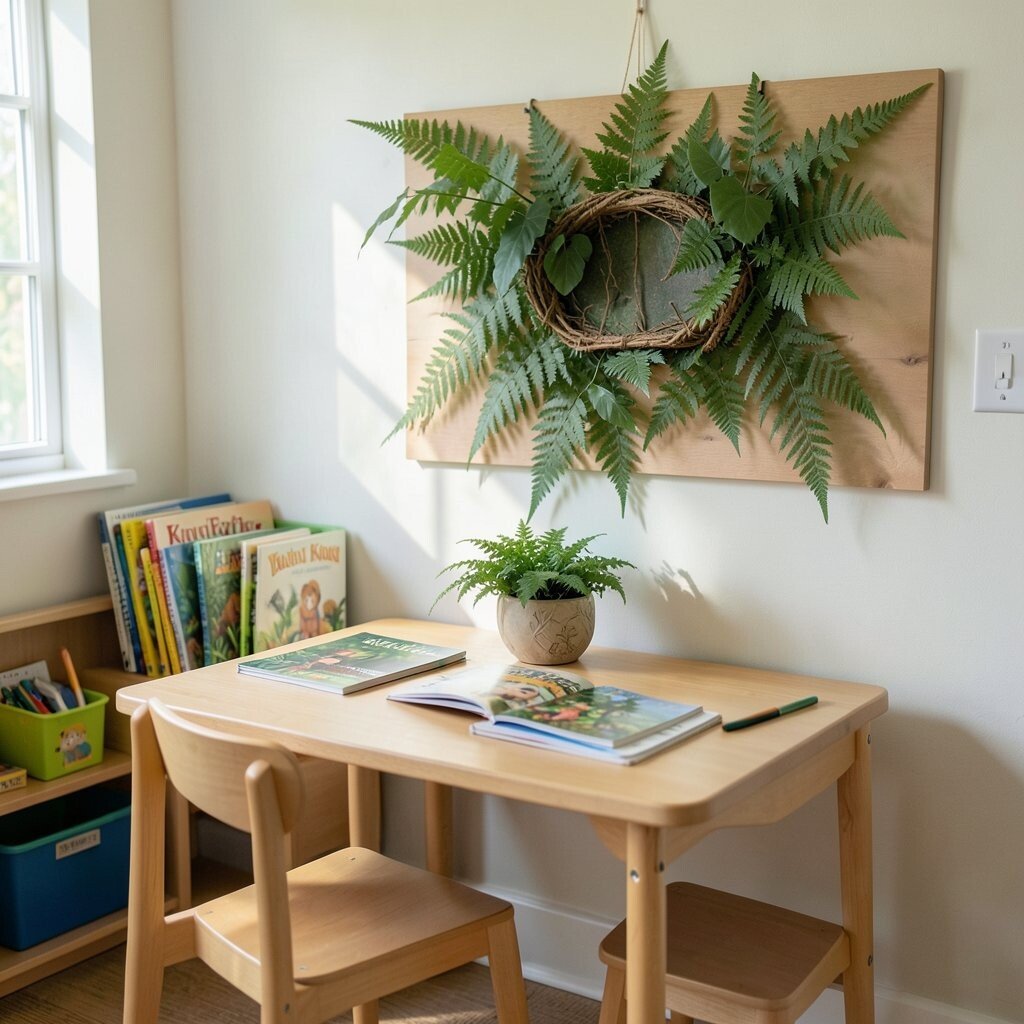
Make a fern centerpiece using paper fans, tissue, or layered craft leaves on a cardboard base. Place it on a small table near the reading area, or mount it low enough for kids to see while sitting.
A centerpiece gives the corner a focal point, and kids often look there before opening books. For practical tips, keep it low and sturdy so it does not tip during busy transitions.
Personalize the centerpiece by using class colors or adding small signs with “Today’s Jungle Word” and kid-friendly definitions. For cost, use recycled cardboard and colorful scrap paper to keep materials budget-friendly.
9. Animal Silhouette Shadow Lamps
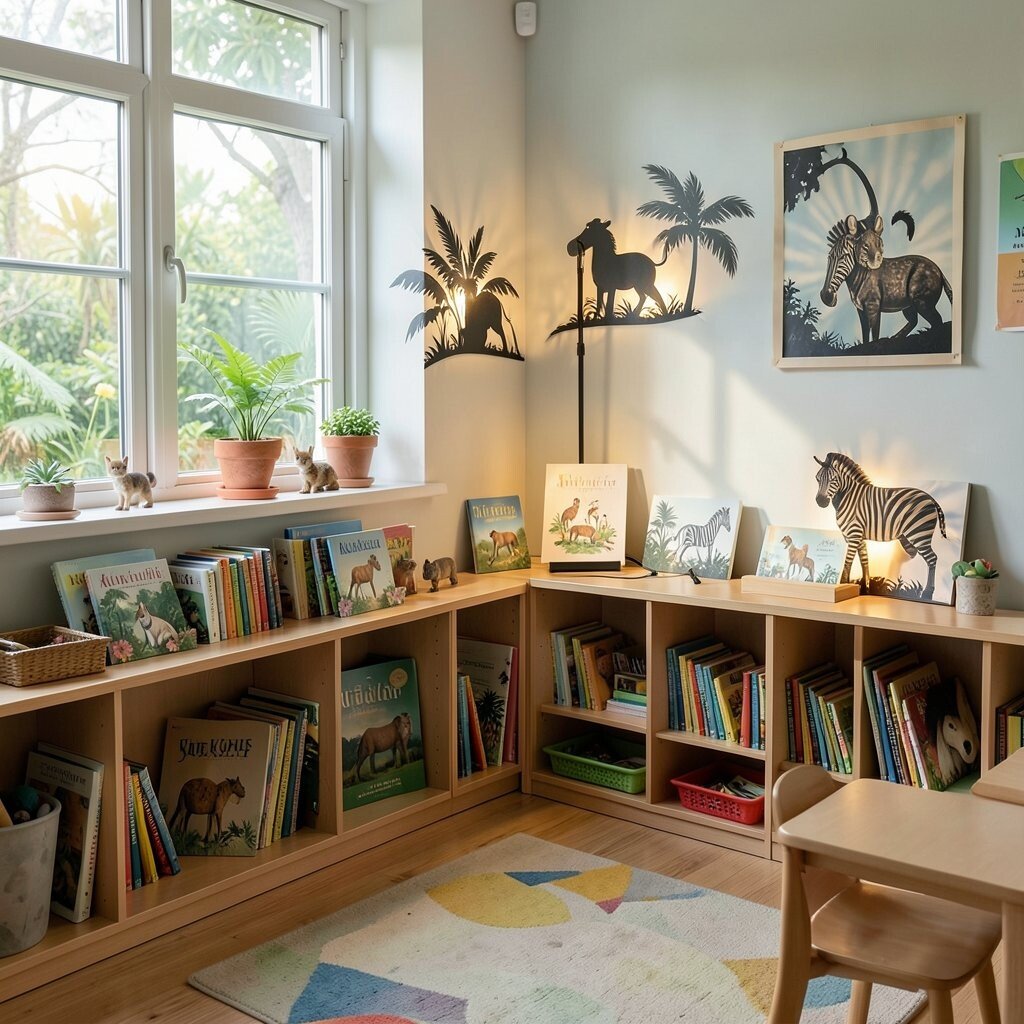
Use paper lanterns or clip-on lamp shades that show animal silhouettes like monkeys or owls. When the light turns on, the shadows make the corner feel warm and magical, especially during dreary days.
Light play boosts mood and helps kids settle, since the area feels special and safe. If you cannot add lamps, you can create a “shadow moment” by using a small flashlight during story time and projecting leaf cutouts on the wall.
To keep things practical, choose LED bulbs or battery lights for safer classroom use. For uniqueness, rotate the silhouette set every few weeks so students notice new shapes without feeling rushed.
10. Jungle-Style Seating Rug With Pathway Lines
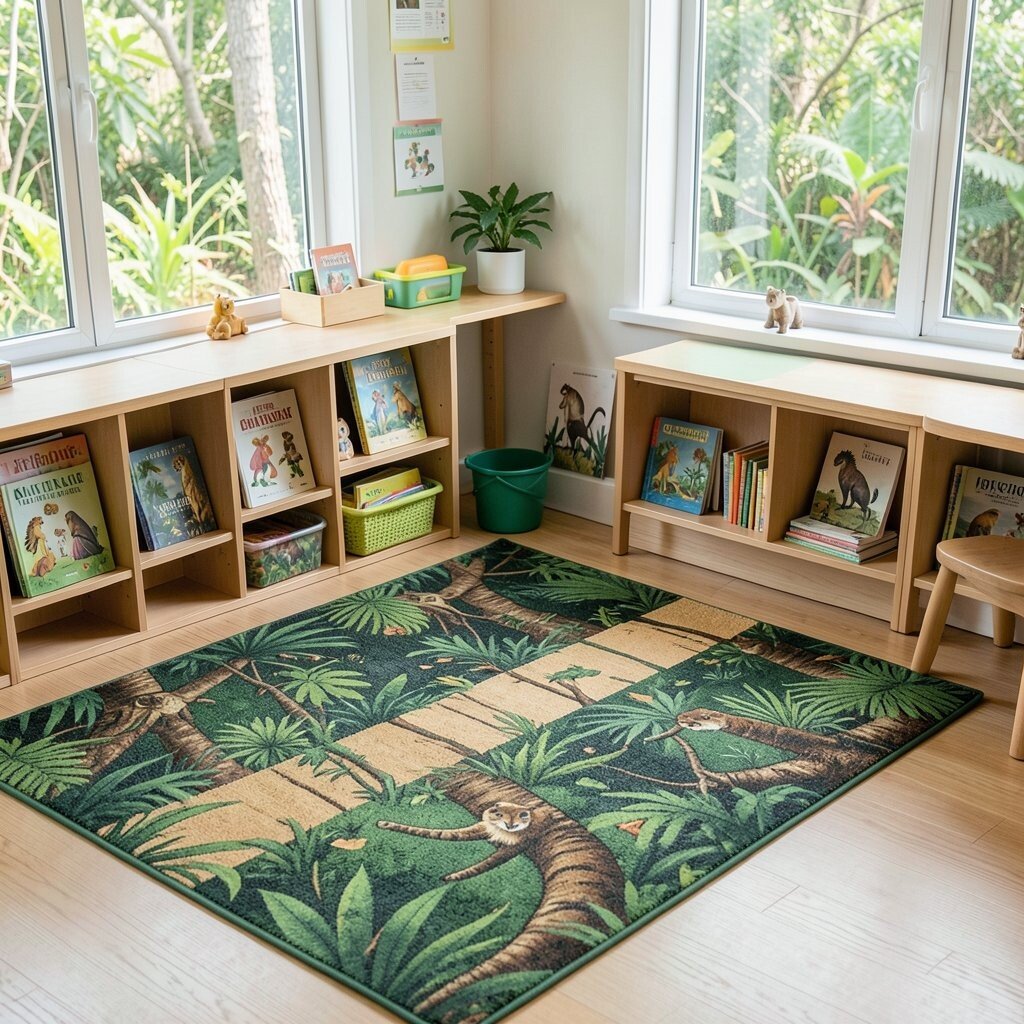
Choose or make a rug that has jungle patterns and a pathway design. A gentle winding “trail” can guide kids’ feet toward the center book spot.
Rugs also help with behavior because children know exactly where to sit. For practical benefits, pick a rug with a non-slip backing and a washable surface, so it stays clean with daily traffic.
If you are personalizing, add a “buddy trail” where pairs sit side by side, or include small picture markers like a leaf, tiger, or parrot. For cost considerations, look for sales on kid-friendly rugs and use fabric markers to add jungle details on top.
11. Book Spine “Leaf Index” Color System
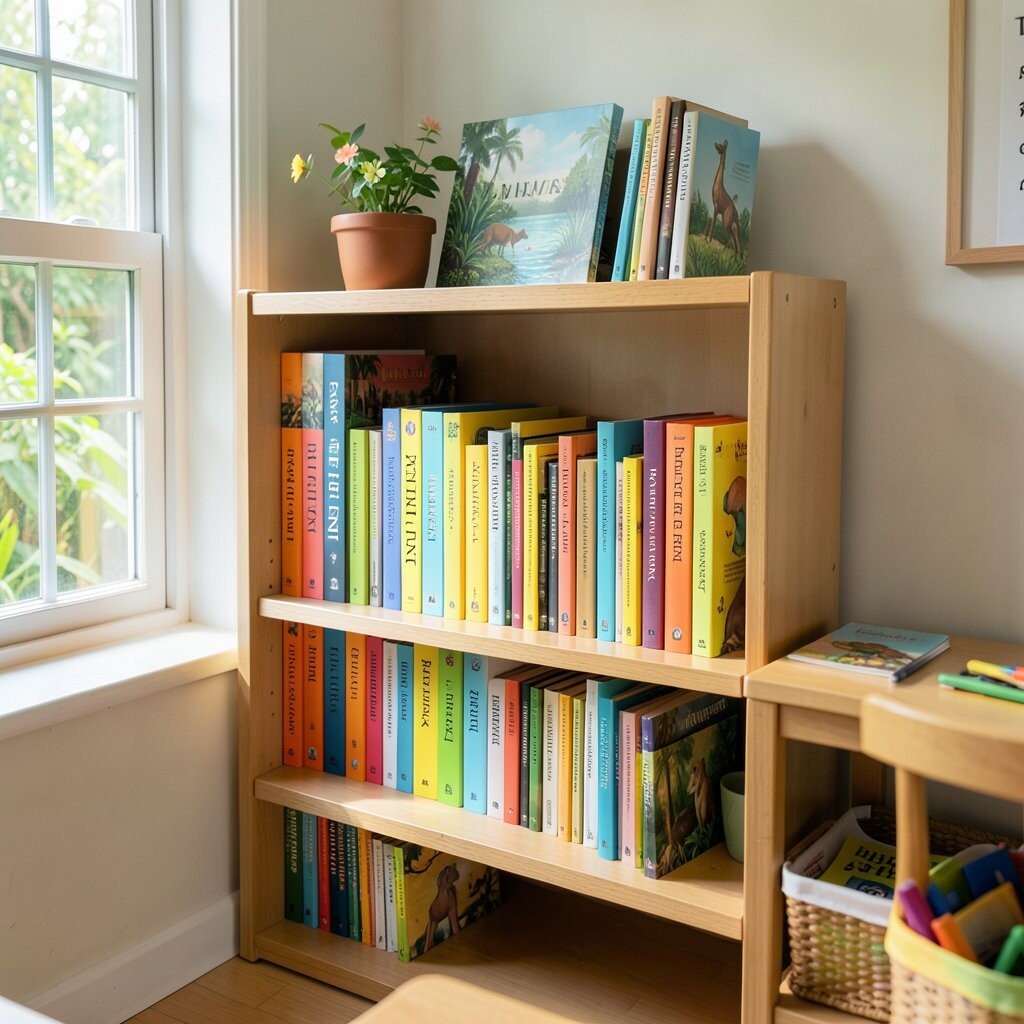
Organize books by color using a leaf index system on a nearby wall or shelf. Attach small leaf shapes above groups of books, like deep green for animal stories and light green for nature rhymes.
This system helps kids choose books with less confusion and builds early sorting skills in a fun way. For practical tips, keep categories simple and use picture cues so students do not need to read long titles.
Personalize by using the classroom schedule as inspiration, such as changing the leaf colors each month to match the current theme. If budget is low, cut leaves from poster board and attach them with reusable adhesive hooks.
12. Safari Map Wall With Kids’ Names on Spots
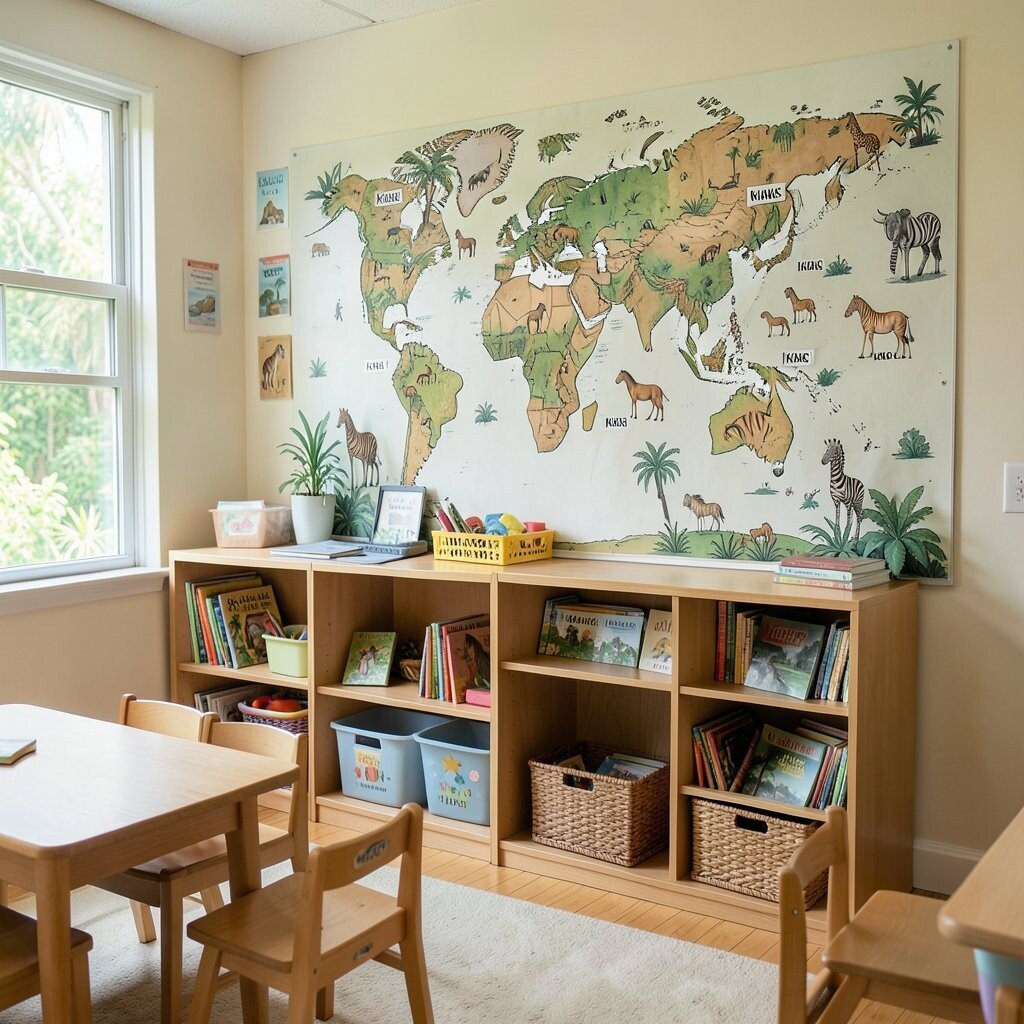
Design a simple jungle map on butcher paper or a corkboard, then mark “reading stations” with sticker dots. Add your students’ names on small animal-shaped tags so each child has a spot to visit.
This kind of map feels like a game, and it motivates kids to return to the reading corner. For practical organization, place the map near the sitting area and keep the tags reachable so kids can move them with help.
Uniqueness comes from your class identity, since you can match animals to student interests like dragons, robots, or sports teams. For cost, use craft foam for tags and inexpensive sticker dots, then reuse them for other learning corners later.
13. Woven Basket Tree for Small Treasures
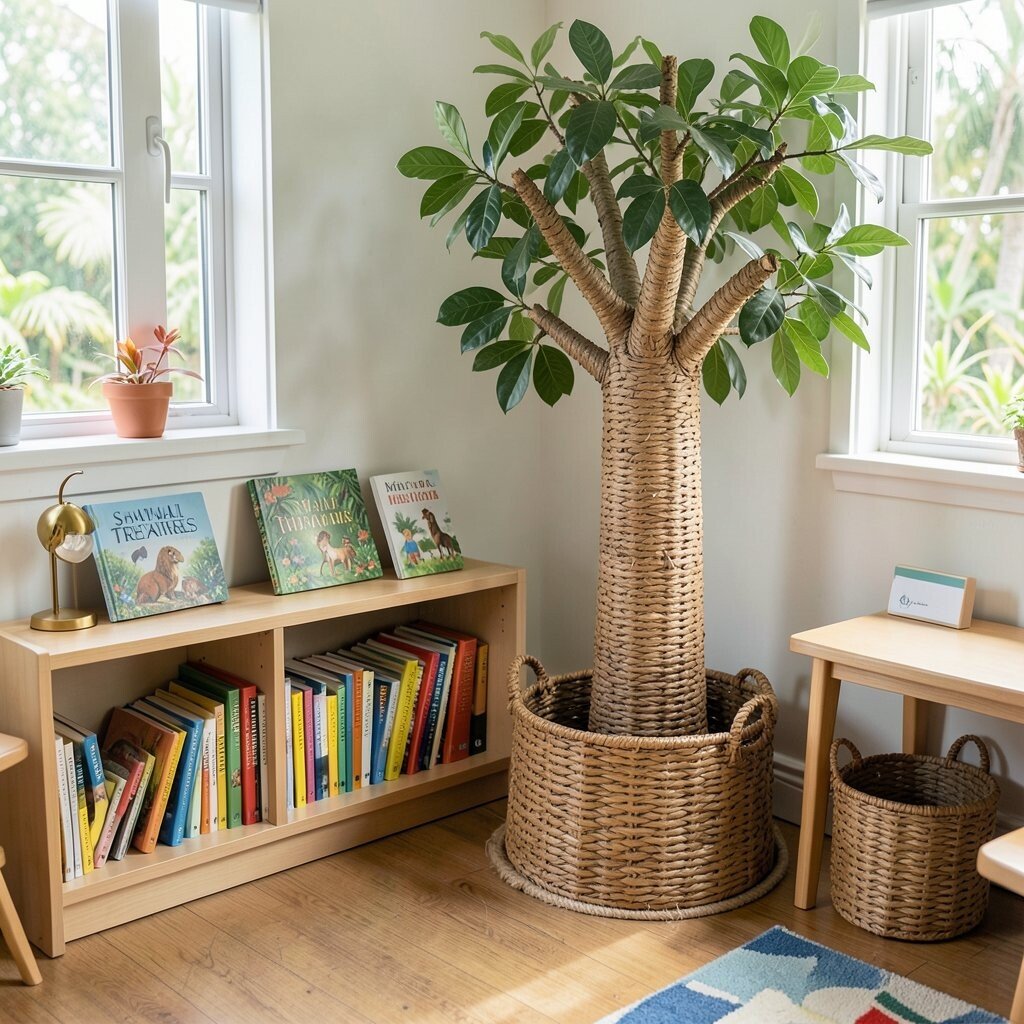
Set up a “tree” display using a sturdy stand with woven baskets attached like fruit. Each basket can hold small story items, such as felt puppets, story props, or picture cards.
Having handy props nearby makes it easy to act out stories, which helps comprehension and keeps engagement high. Keep the baskets at kid height so they can choose materials during center time.
To personalize, let each basket represent a jungle character and label it with a matching photo of the character. For cost, repurpose kitchen baskets or thrifted organizers and paint them with safe craft paint for a cohesive look.
14. Soft Jungle Sound Station With Nature Cards
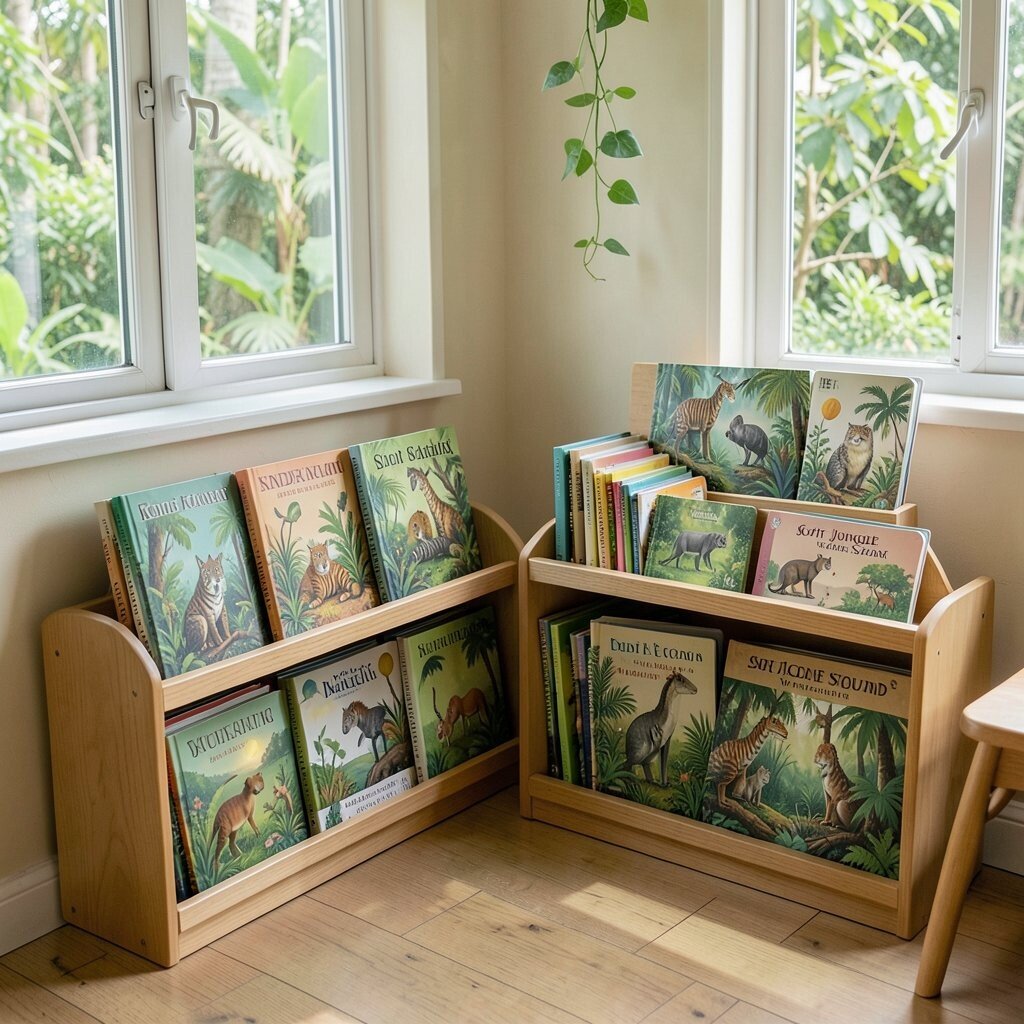
Create a quiet sound station using a small basket of nature-themed cards and gentle audio tools. You can add cards with pictures of birds, rain, frogs, and wind, then play soft sounds during reading.
Calm audio supports focus and helps kids settle into a listening mindset. For practical tips, keep volume moderate and use short listening moments so the sound never overwhelms the group.
Personalize by swapping cards based on the season, like more rain and storm images during spring. For cost, print cards at home or use free downloads, then laminate them for easy cleaning.
15. Leafy Picture Frame Gallery for Rotating Photos
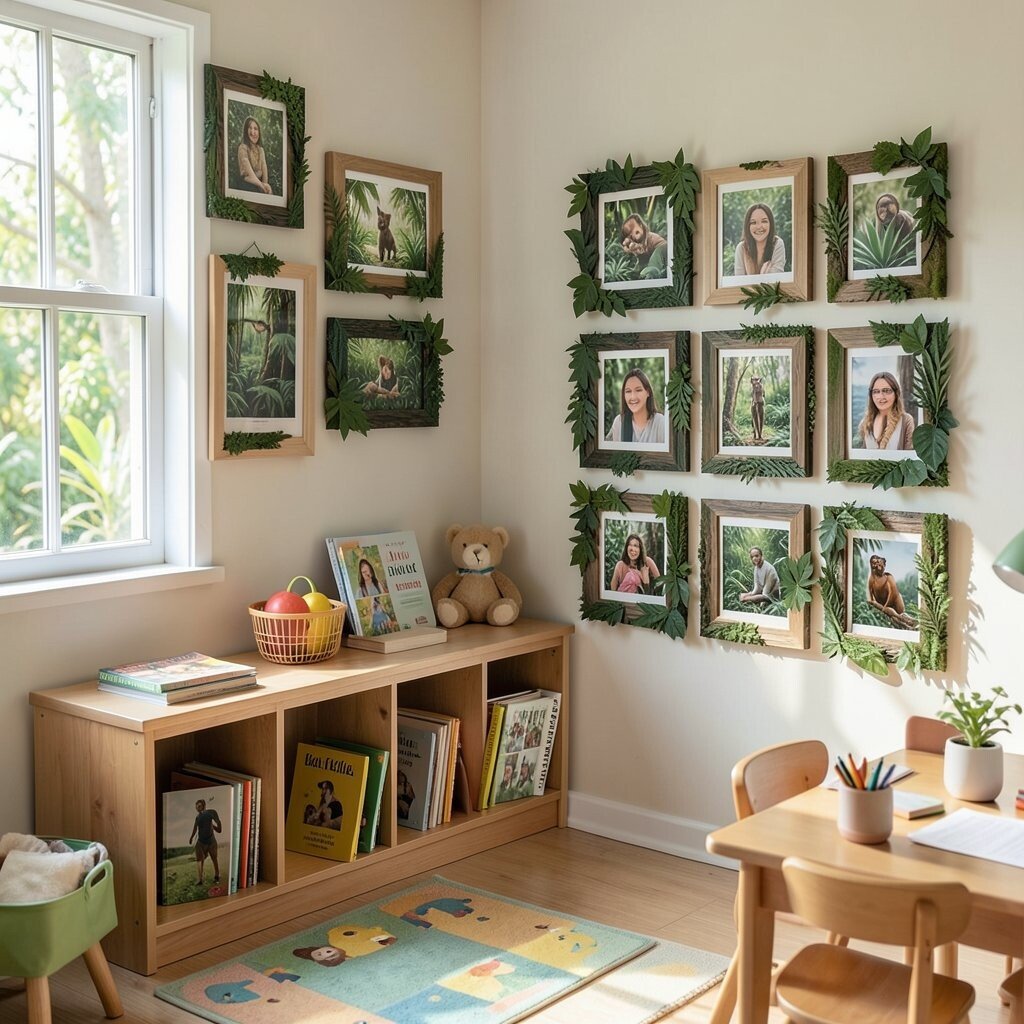
Arrange several picture frames along the reading corner wall, each with a nature-themed background. Swap in photos of students reading, building block “jungles,” or wearing jungle headbands during story events.
Seeing themselves in the space strengthens ownership and encourages kids to spend time there. Use a consistent frame color, like dark green or warm wood, so the gallery looks polished.
If you want a practical rotation plan, keep a simple binder where you store extra photos and replace them every couple of weeks. For budget, thrift frames and update them with paint or contact paper so everything matches your jungle theme.
16. Cloth “Rainstorm” Sensory Corner Near the Books
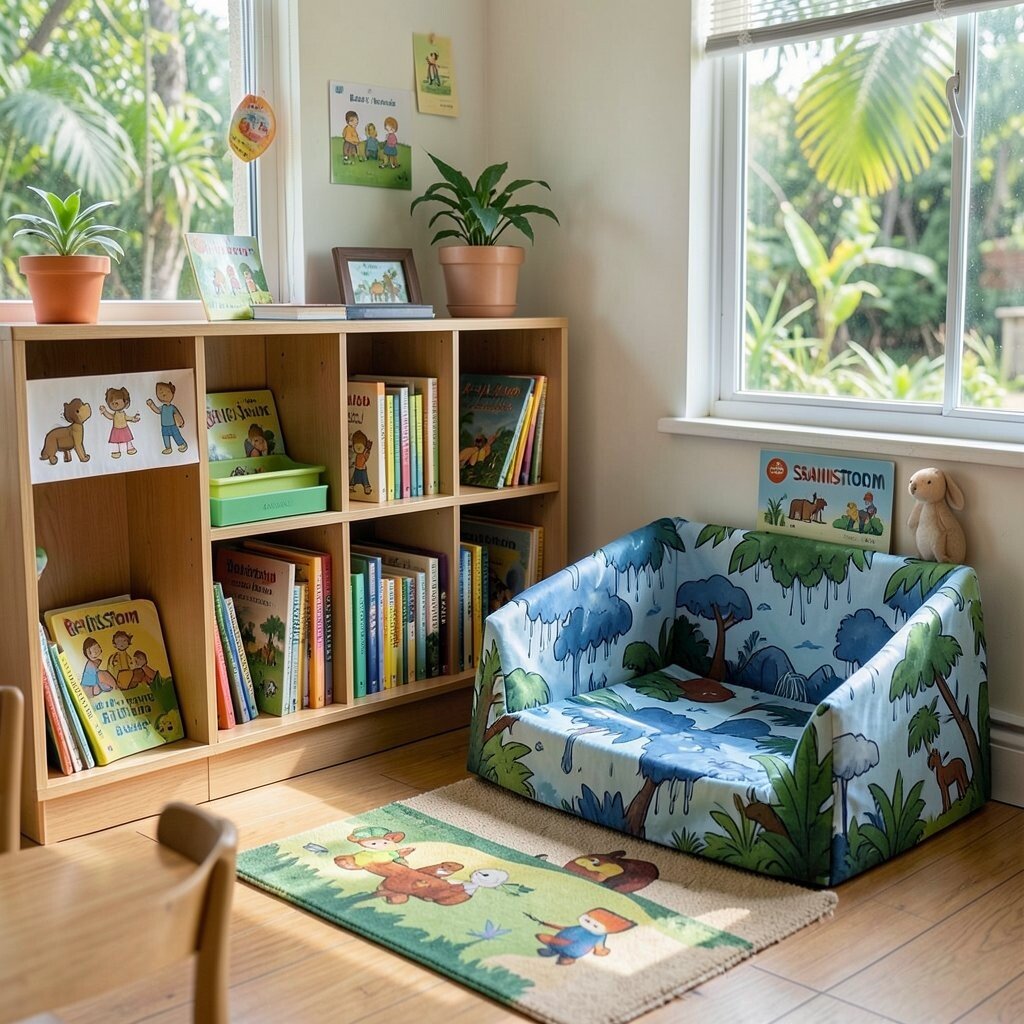
Add a tiny cloth rainstorm sensory piece using hanging strips that rustle when touched. Place it near the reading area so kids can calm down after transitions.
This tactile cue can help kids regulate, which makes read-aloud time smoother. For practical setup, use soft fabric and attach ends firmly so strips do not tangle or pull loose.
Personalize by changing the color theme with the season, like bright spring greens or deep monsoon blues. For cost considerations, reuse fabric scraps and basic curtain rings, then keep assembly simple enough to maintain easily.
17. Monkey Hand Puppet Stand for Story Acting
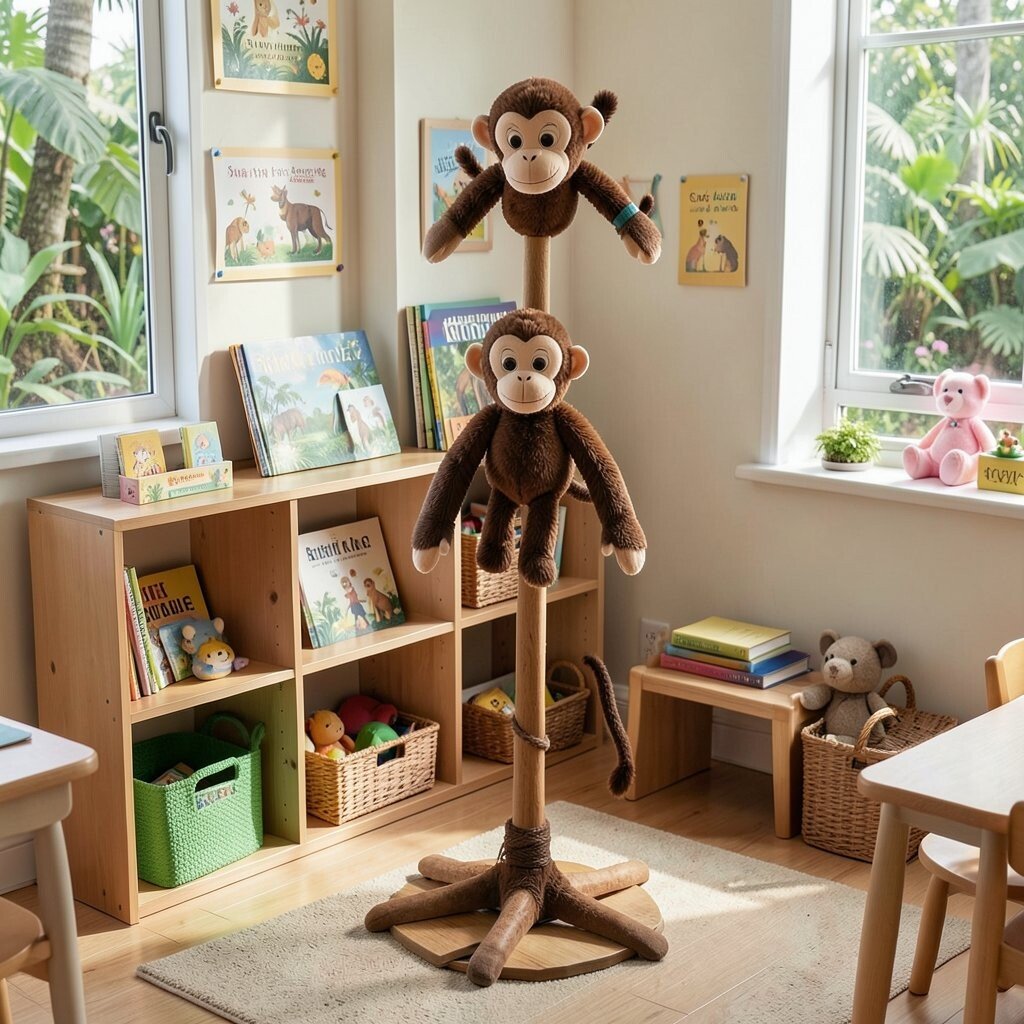
Make a small puppet stand shaped like a tree branch, then keep a few monkey-themed hand puppets inside. During read-alouds, you can pop the puppets up to model emotions and help kids follow the plot.
Acting with puppets supports language growth and keeps attention from drifting. For practical tips, store puppets in a labeled pouch so they do not become scattered distractions.
18. Jungle-Themed Reading Wheel With Choice Spinners
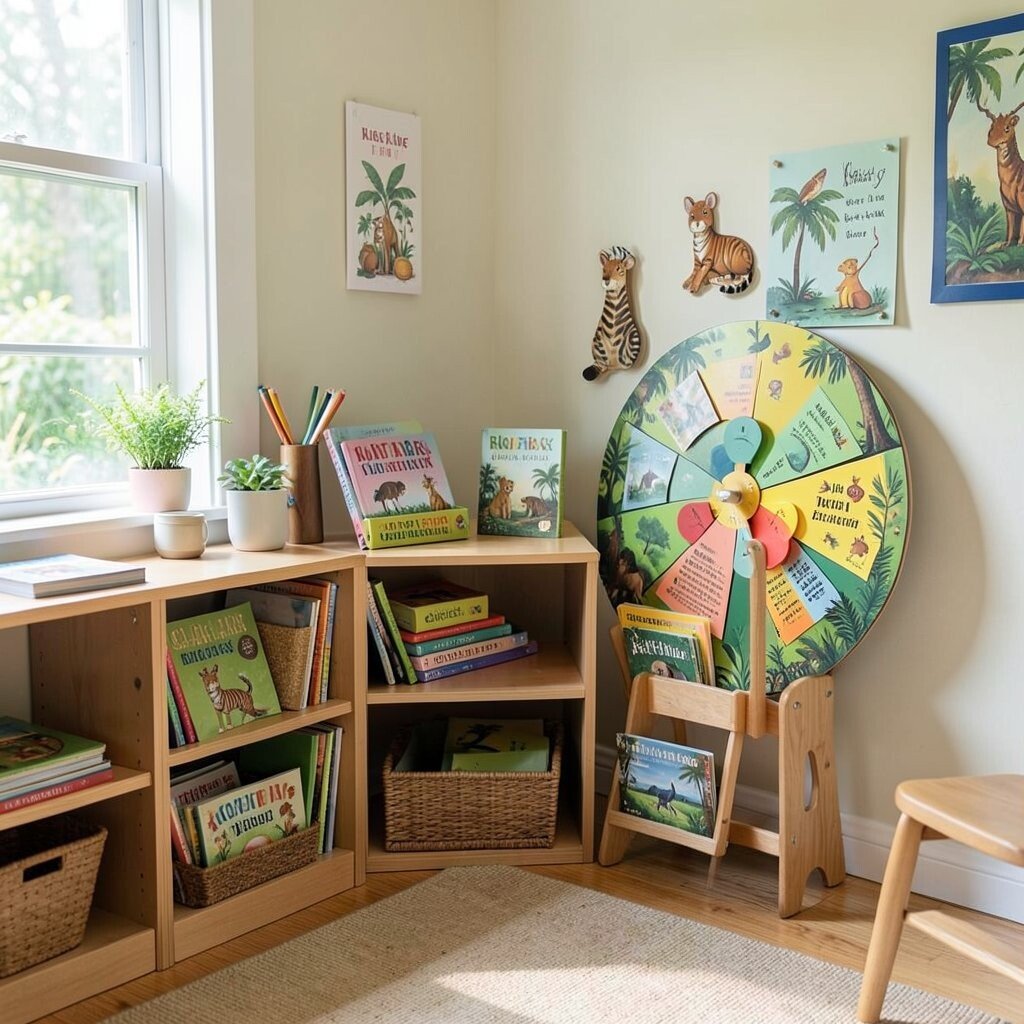
Create a small wheel or spinner with jungle animals that point to reading options. When a child spins, it can match the book category or activity card near the shelf.
Choice makes kids more likely to participate, and it builds confidence during independent reading. For practical setup, keep the spinner touch-safe and use a clear protective cover if it is used often by many hands.
Personalize the wheel with your classroom rules, like “gentle voice” or “kind hands,” shown as tiny jungle icons. For cost, repurpose a thick paper plate, use a brad fastener, and print images so you can update it any time.
19. Recycled Jungle Paper Crafts as Wall Borders
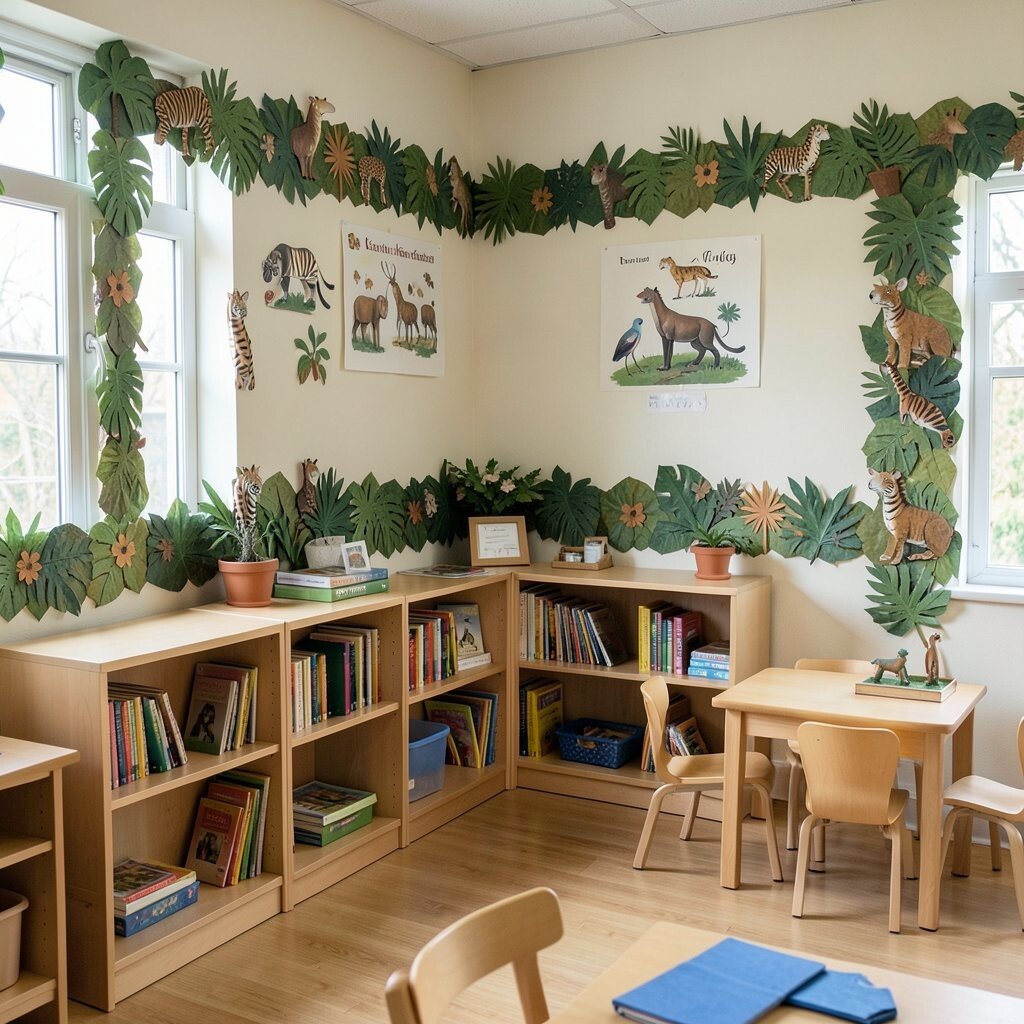
Turn leftover paper into jungle wall borders that run along the baseboard or around shelf edges. Cut leaf shapes, vine loops, and animal footprints from scrap materials, then layer them for a textured look.
Wall borders frame the reading corner and make the theme feel complete, even when your budget is small. For practical benefits, borders can hide scuffs and small wall dents, which saves time on repairs.
To personalize, add a few shapes that match student art projects, like a favorite animal they drew during art time. This keeps the space connected to real classroom work while staying fun and fresh.
20. Night Jungle “Glow Leaves” for Cozy Evenings
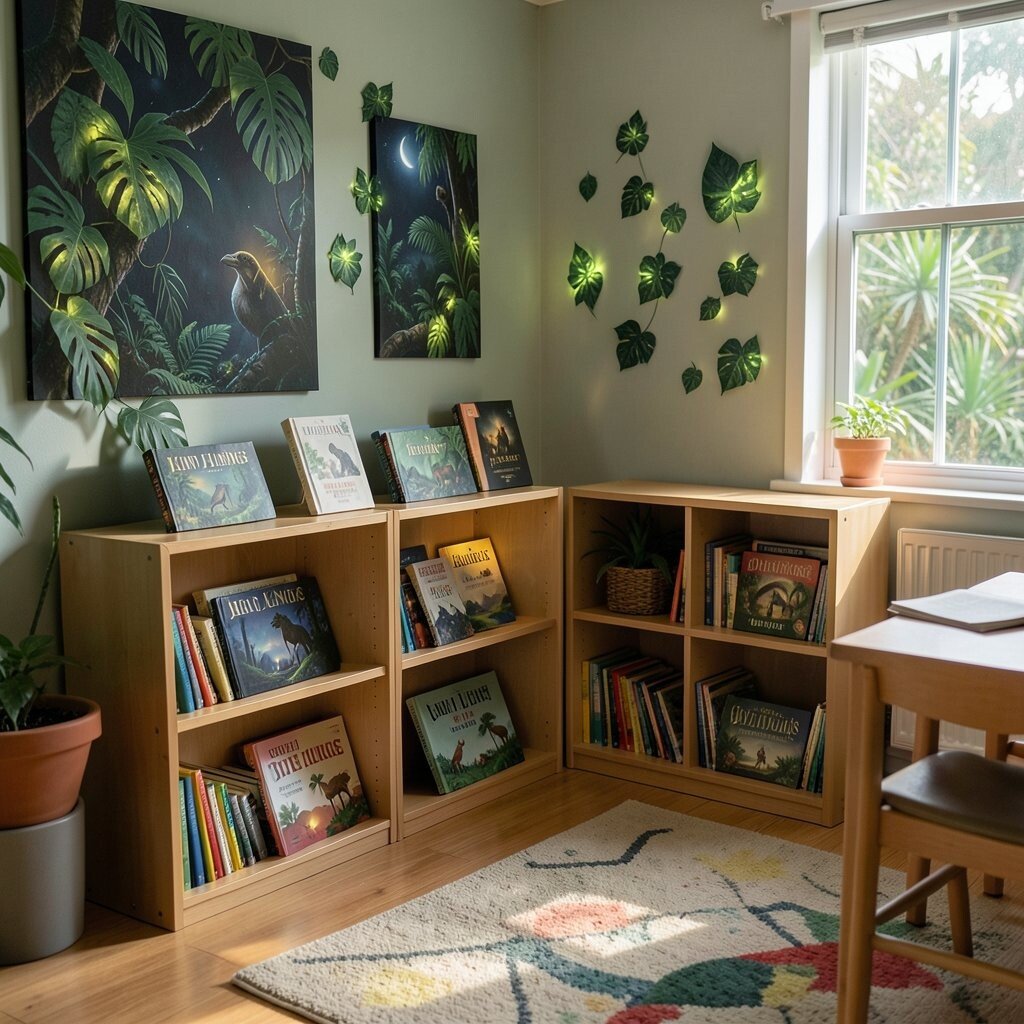
Use glow-in-the-dark leaf stickers on the ceiling or upper wall so the reading corner looks like a nighttime jungle. Pair them with warm lighting to create a soothing atmosphere for quieter stories.
This glowing effect can make bedtime-style books feel extra special and encourage slower, calmer behavior. For practical tips, choose stickers rated for surfaces in classrooms and avoid placing them where they could fall onto rugs or books.
If you want to manage cost, buy one small pack of glow items and spread them across the whole corner so the effect feels larger. Personalize the “night leaves” by using a theme, like “forest animals,” “moon garden,” or “dinosaur stars,” and change the story read-aloud selections to match.
Even a simple glow detail can become a classroom tradition because kids love seeing it every day.