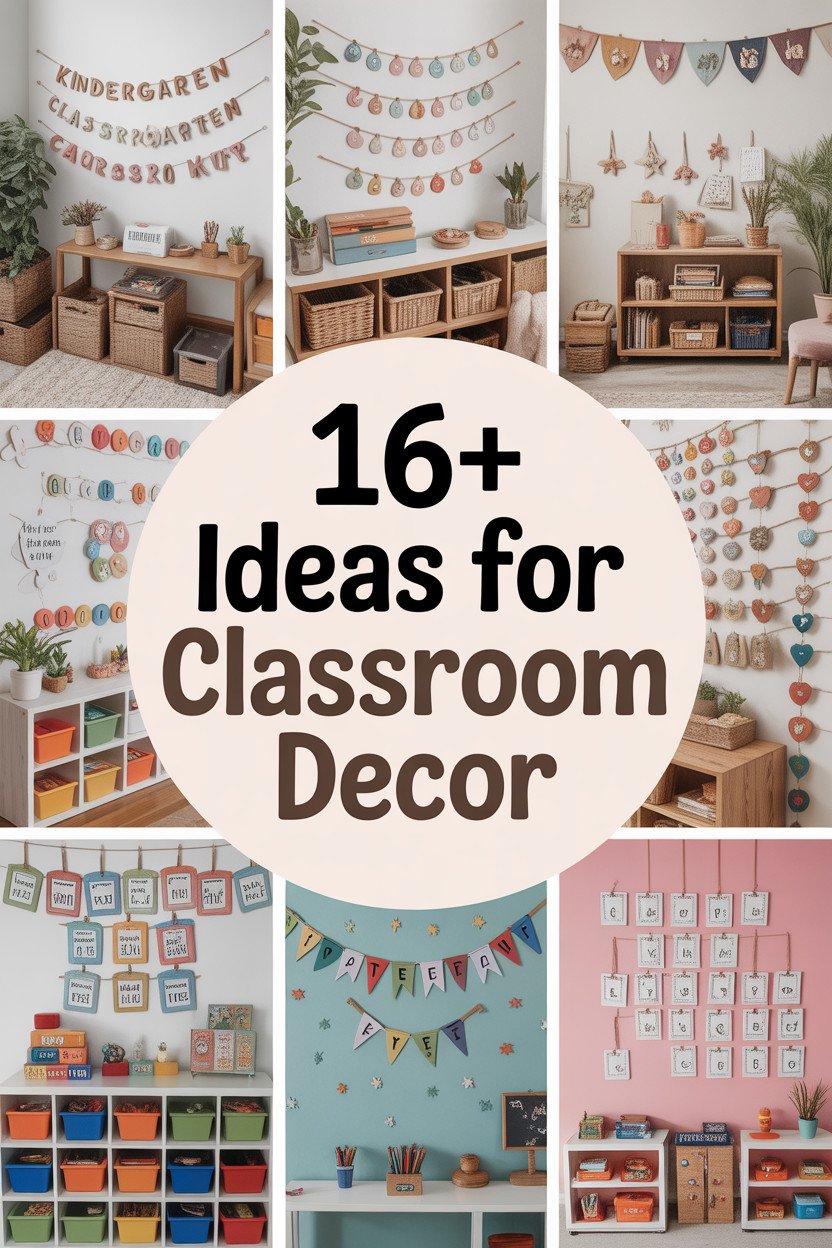
Imagine walking into a classroom that feels like a magical world, where every corner sparks curiosity and excitement. These creative decor ideas will turn any kindergarten space into a wonderland of learning.
1. Colorful Wall Murals
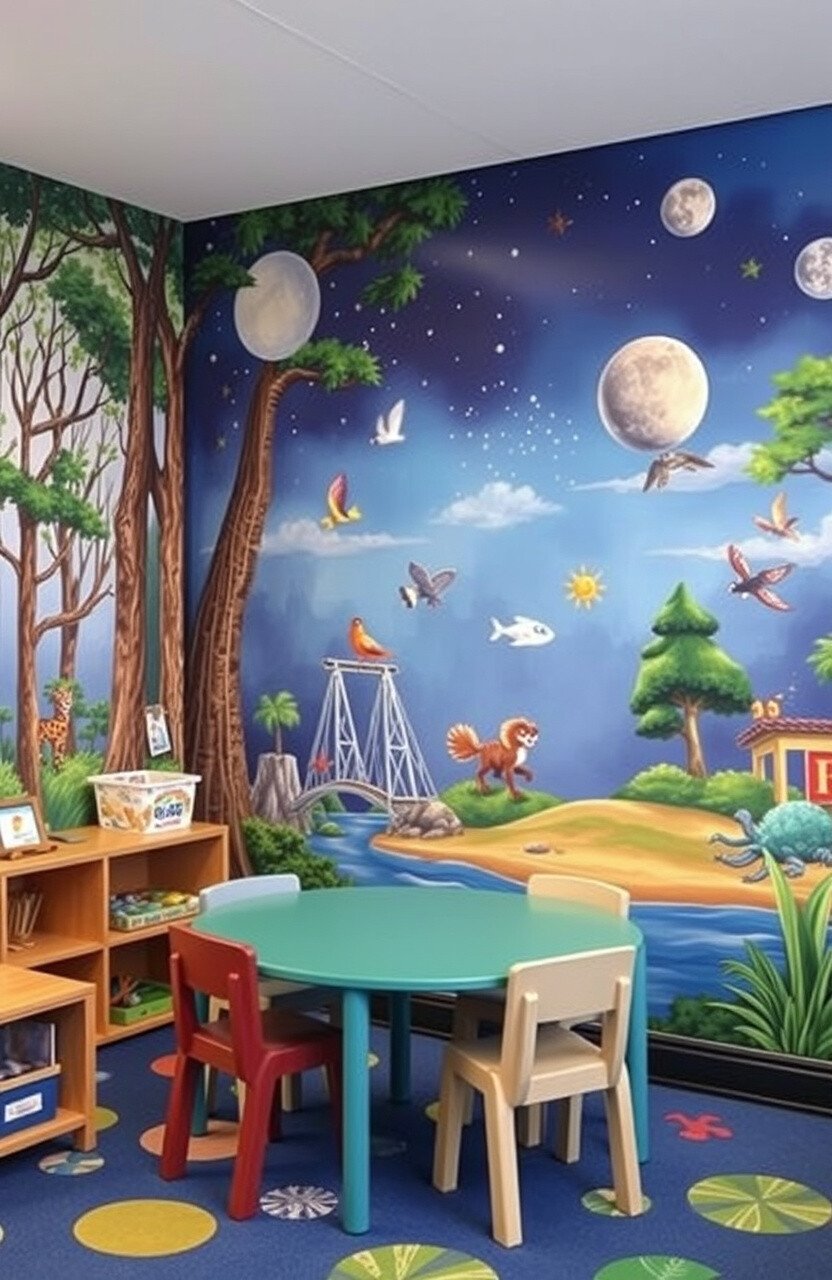
Picture walls covered in vibrant murals of forests, oceans, or outer space. These murals not only captivate young minds but also stimulate their imagination, making learning an adventure.
Wall murals are unique because they provide an immersive environment. You can personalize them with themes that align with your curriculum or the children’s interests.
While custom murals can be pricey, decals and wallpapers offer a budget-friendly alternative. Consider involving local artists to create a community project.
2. Interactive Learning Centers
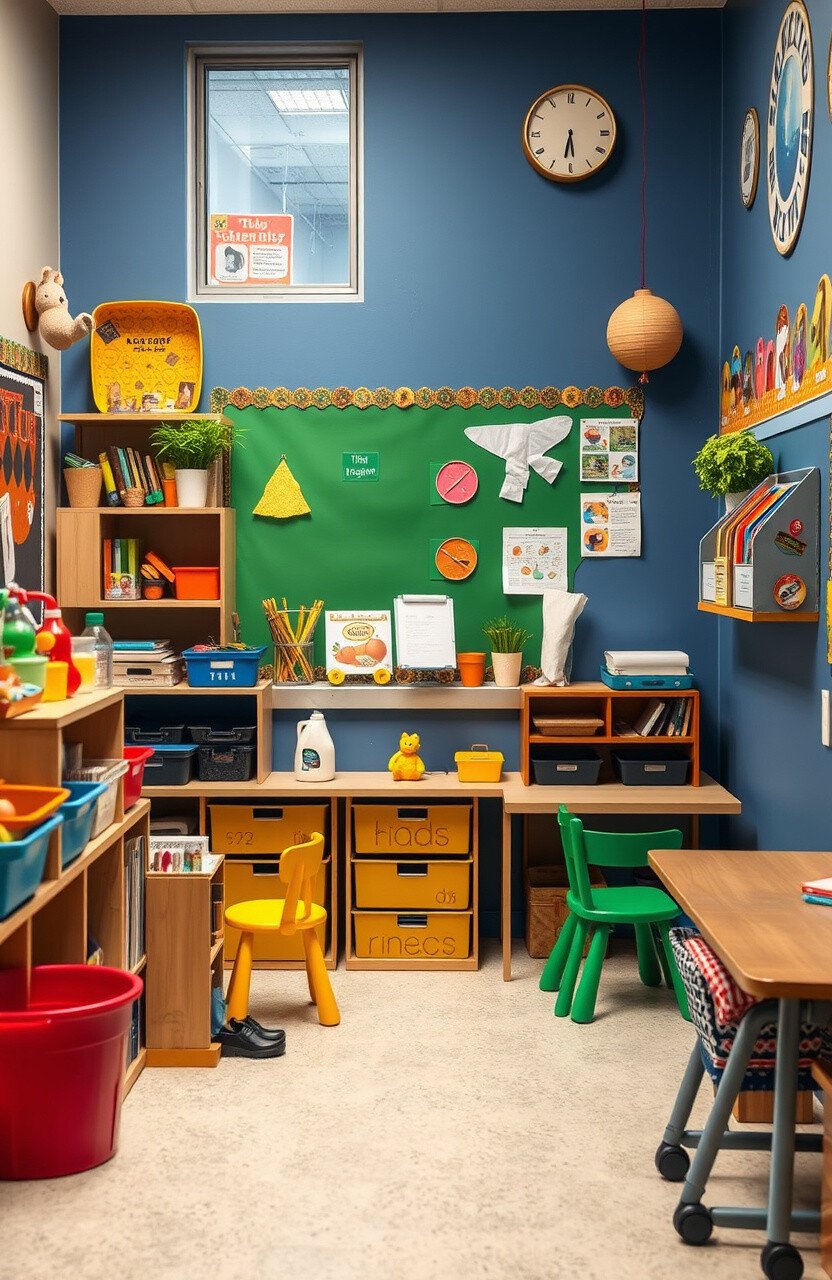
Imagine a corner dedicated to a mini science lab or a cozy reading nook. These centers encourage hands-on learning and exploration.
They are beneficial as they cater to different learning styles and help children discover their interests. You can keep them fresh by rotating themes.
Creating these spaces can be cost-effective by using donated or recycled materials. Keep an eye out for sales or thrift store finds to stock your centers.
3. Nature-Inspired Decor
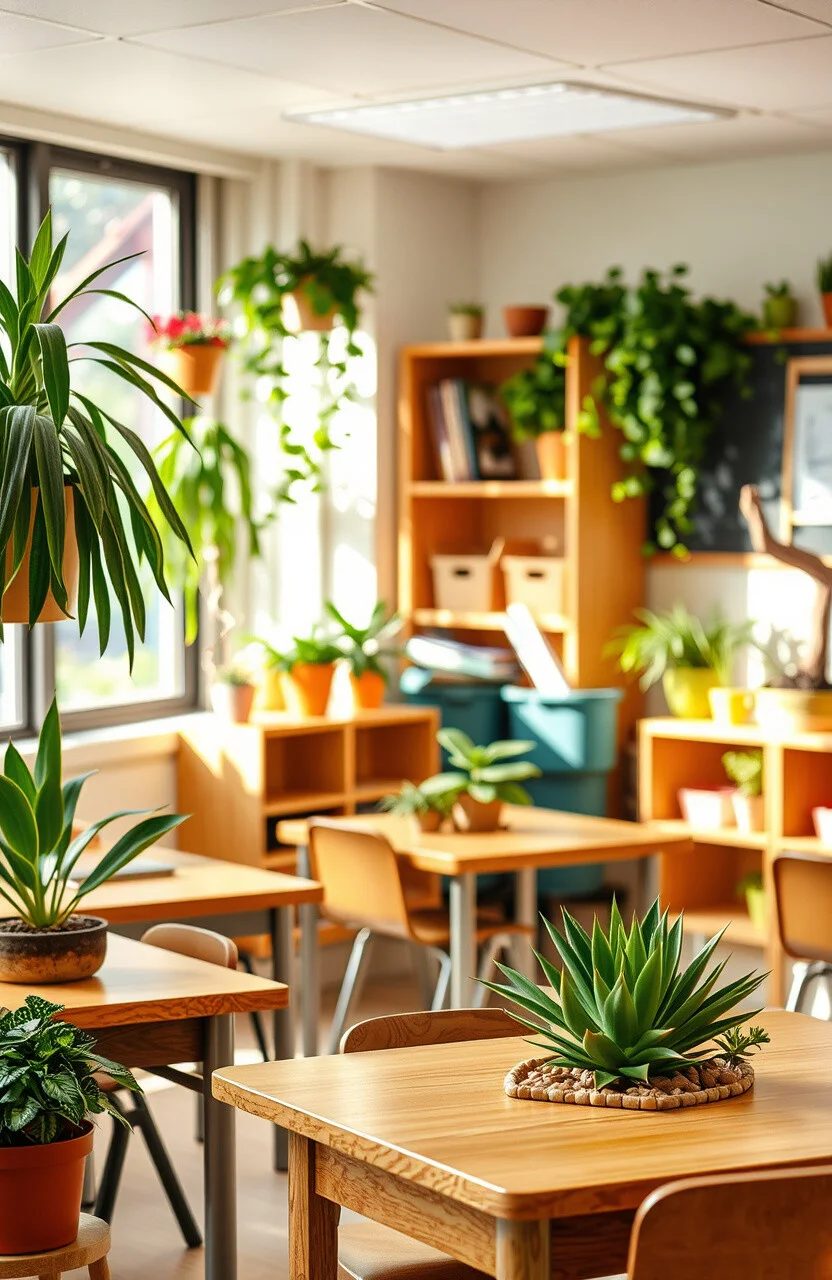
Bring the outside in with plants, wooden furniture, and nature-themed decorations. This decor creates a calming atmosphere that supports focus and well-being.
Nature-inspired classrooms are unique because they connect children to the environment and teach them to care for plants. Succulents or low-maintenance plants are great options.
Use natural materials like stones or pinecones for free or low-cost decor options. Encourage students to bring in items from nature walks.
4. Themed Bulletin Boards
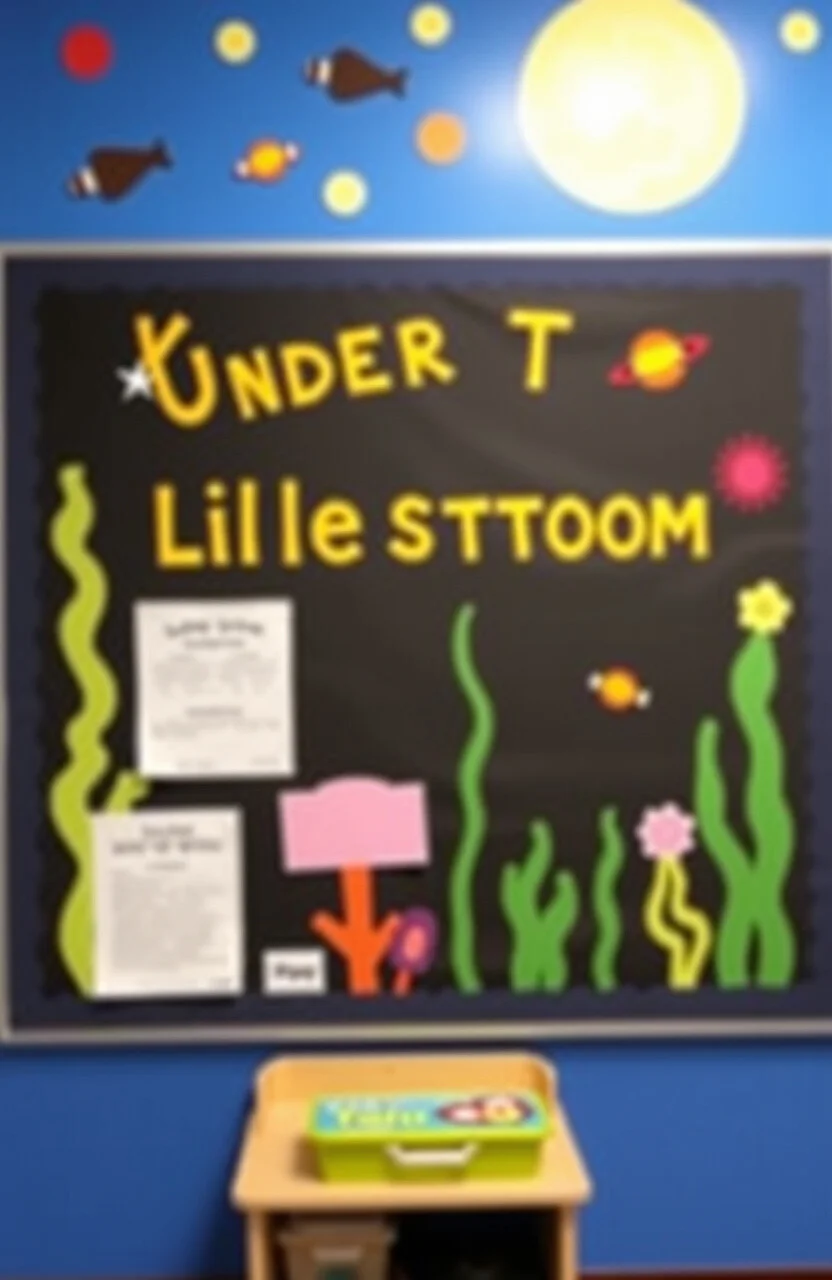
Design bulletin boards with exciting themes like “Under the Sea” or “Space Adventures.” These boards can showcase student work and important information.
They are a fantastic way to create a dynamic learning environment. Change the themes regularly to keep students engaged and excited.
Bulletin board materials are inexpensive, and you can find many resources online. Involve students in the process to make it a collaborative project.
5. Cozy Reading Corners
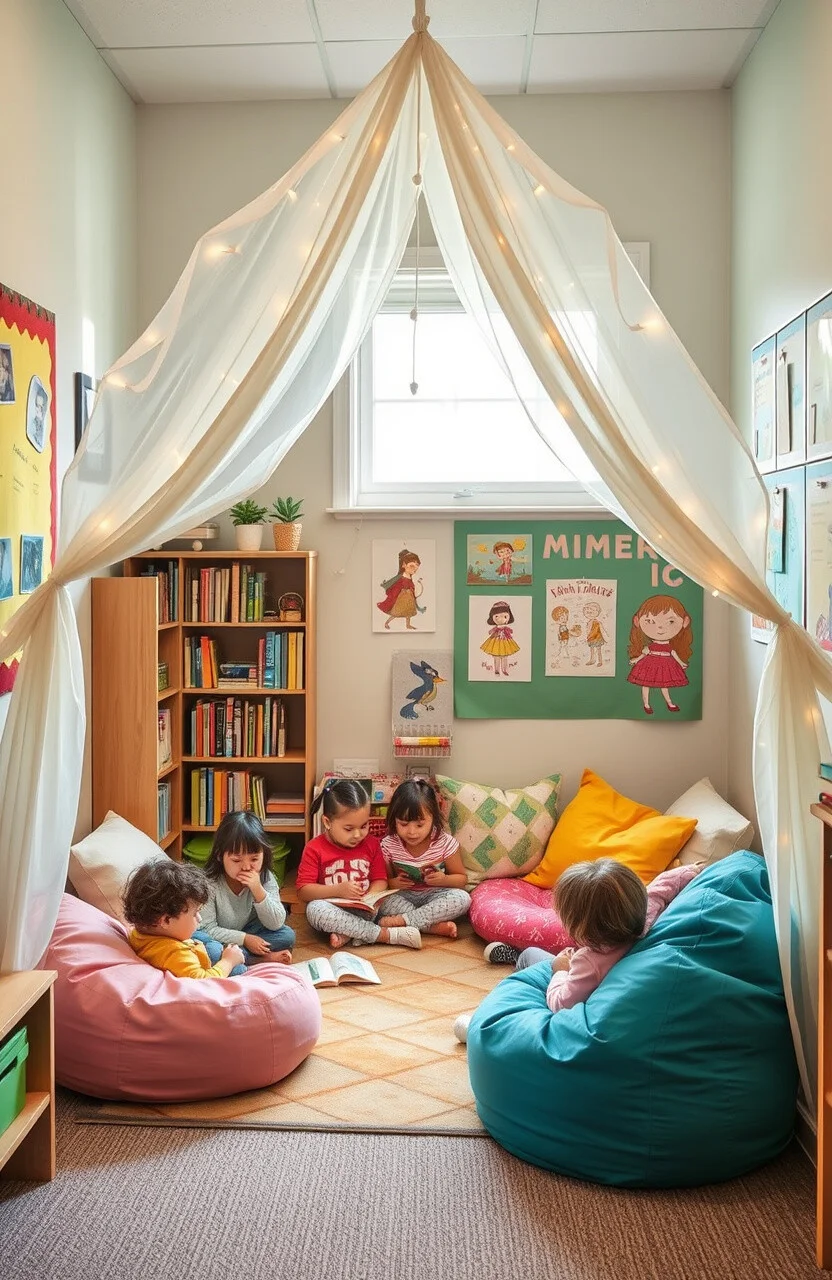
Imagine a corner filled with soft cushions, bean bags, and a canopy, inviting children to lose themselves in a good book. Reading corners make literature irresistible.
A cozy corner can help instill a lifelong love of reading. Personalize it with a variety of books and posters of favorite characters.
Look for sales on seating options or ask for donations. You can create a canopy with inexpensive fabrics or even fairy lights for added charm.
6. DIY Art Displays
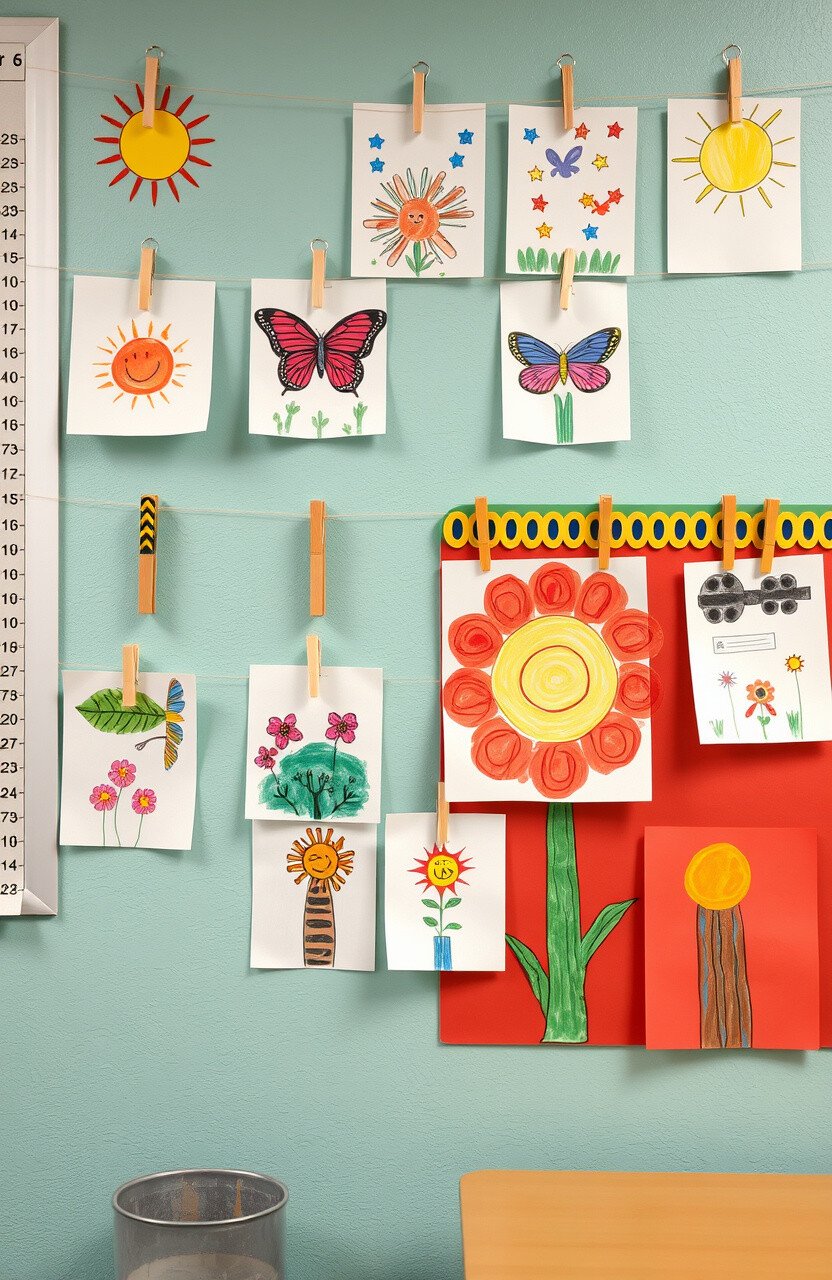
Showcase student artwork on dedicated walls or strings with clips. This not only decorates the classroom but also boosts confidence and creativity.
Art displays are unique as they celebrate individual expression and cultural diversity. Rotate the artwork regularly to give every child a chance to shine.
Clipboards or strings with clothespins are affordable ways to display art. Encourage students to create seasonal or themed art for variety.
7. Sensory Play Areas
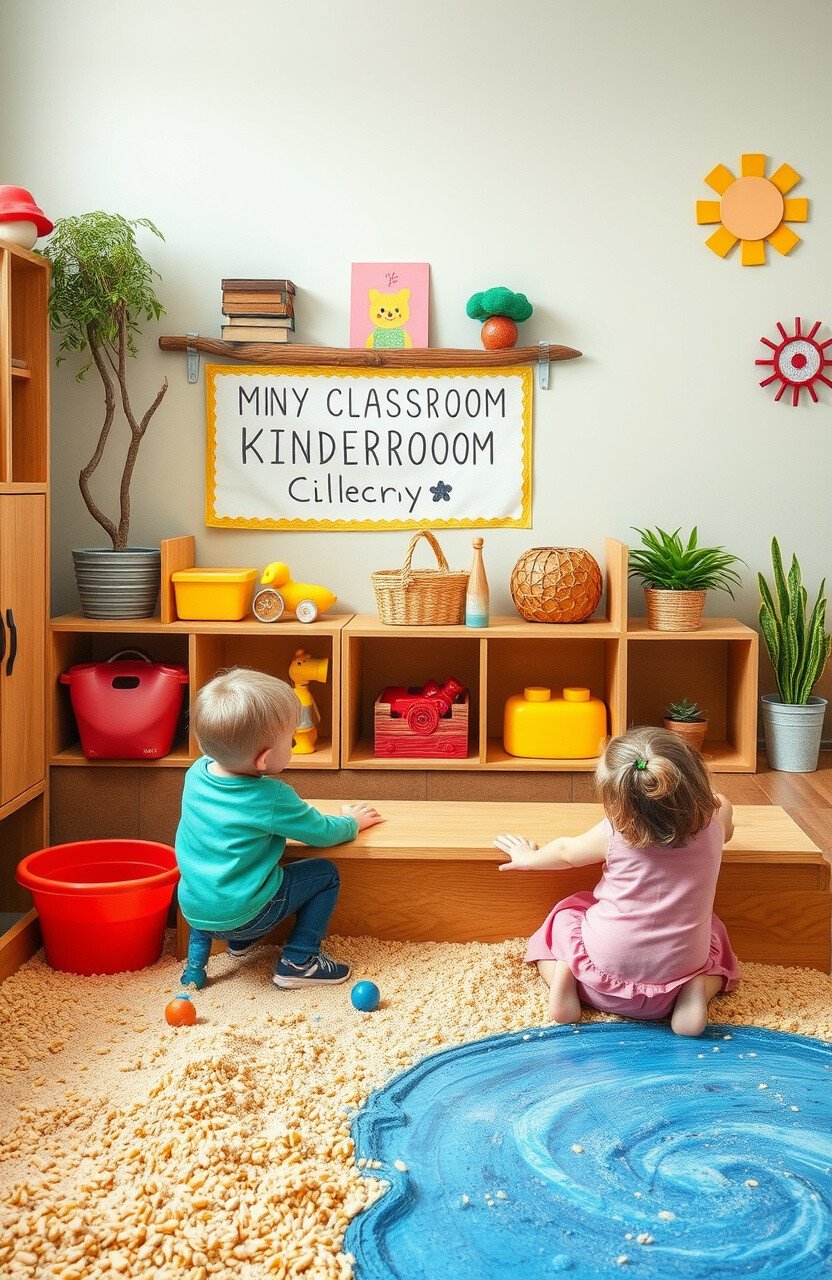
Create areas with sand, water, or textured materials for sensory exploration. These play areas support tactile learning and motor skills development.
Sensory areas are beneficial for children with varying needs and can be customized with different textures and materials. Rotate activities to maintain interest.
Use everyday materials like rice or pasta, and look for DIY recipes for homemade play dough. Many sensory items can be sourced at low cost or made at home.
8. Inspirational Quotes

Decorate the walls with uplifting quotes and sayings. These provide daily motivation and encourage a positive mindset in young learners.
Inspirational quotes are unique as they can be personalized to reflect the values and goals of the classroom. They are easy to change with the seasons or themes.
Print quotes on colorful paper or create them with stencils and paint. This is a low-cost decoration that has a lasting impact on students.
9. Cultural Corners
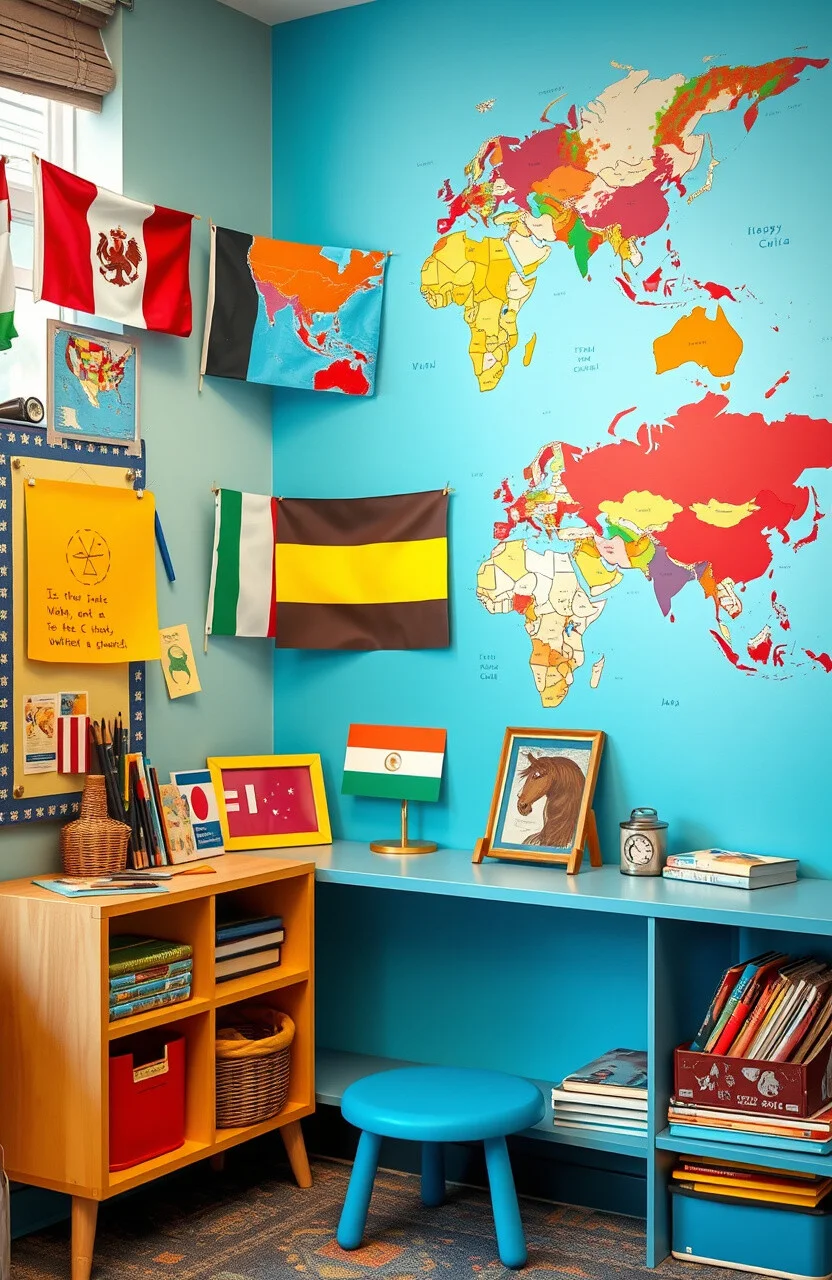
Set up a corner with items and information from different cultures. This fosters inclusivity and teaches children about the world.
Cultural corners are unique as they celebrate diversity and promote global awareness. You can personalize them with items from students’ backgrounds.
Reach out to parents for contributions or search for items at thrift stores. Use maps, flags, and artifacts to create an engaging display.
10. Interactive Whiteboards
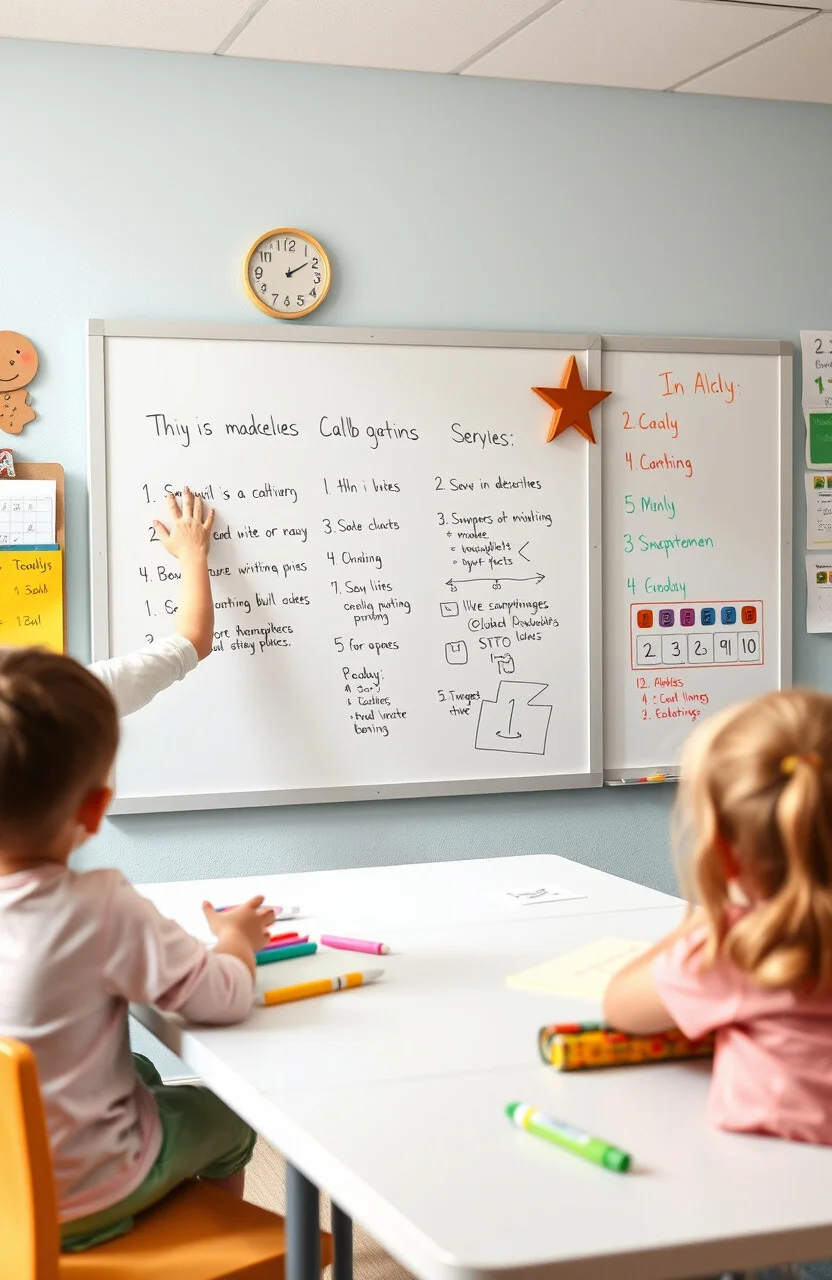
Install whiteboards that allow children to draw, write, and solve problems. These boards make learning interactive and fun.
They are beneficial for collaborative learning and can be used for various subjects. Update them with daily challenges or fun facts.
Whiteboards can be installed at a low cost, especially if you choose smaller boards or DIY options. Use colorful markers to make the boards visually appealing.
11. Alphabet and Number Rugs
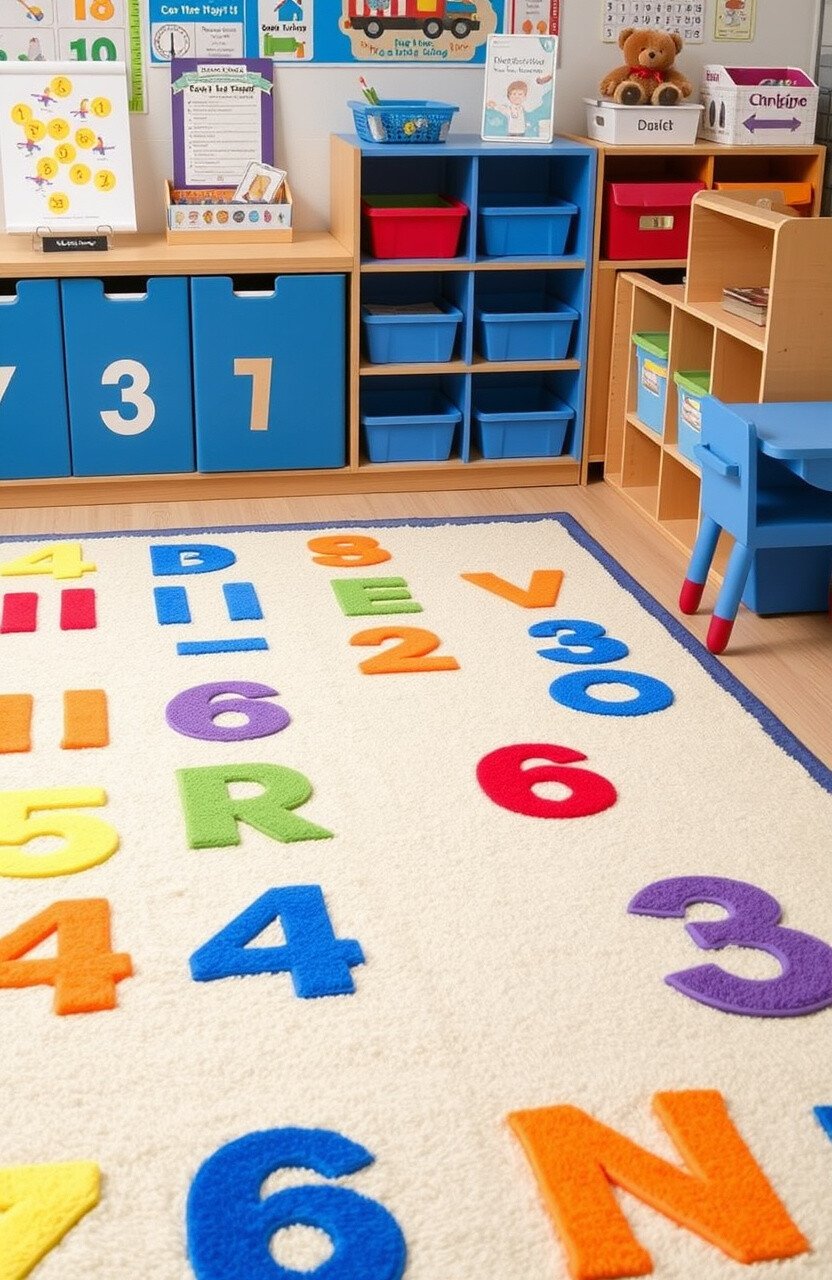
Lay down rugs with bright letters and numbers. These rugs make learning basics fun and interactive during playtime.
Alphabet and number rugs are unique as they integrate learning into everyday activities. They are easy to personalize with different designs and colors.
Look for sales or discounts on educational rugs. They are durable and can be a long-lasting investment for the classroom.
12. DIY Light Fixtures
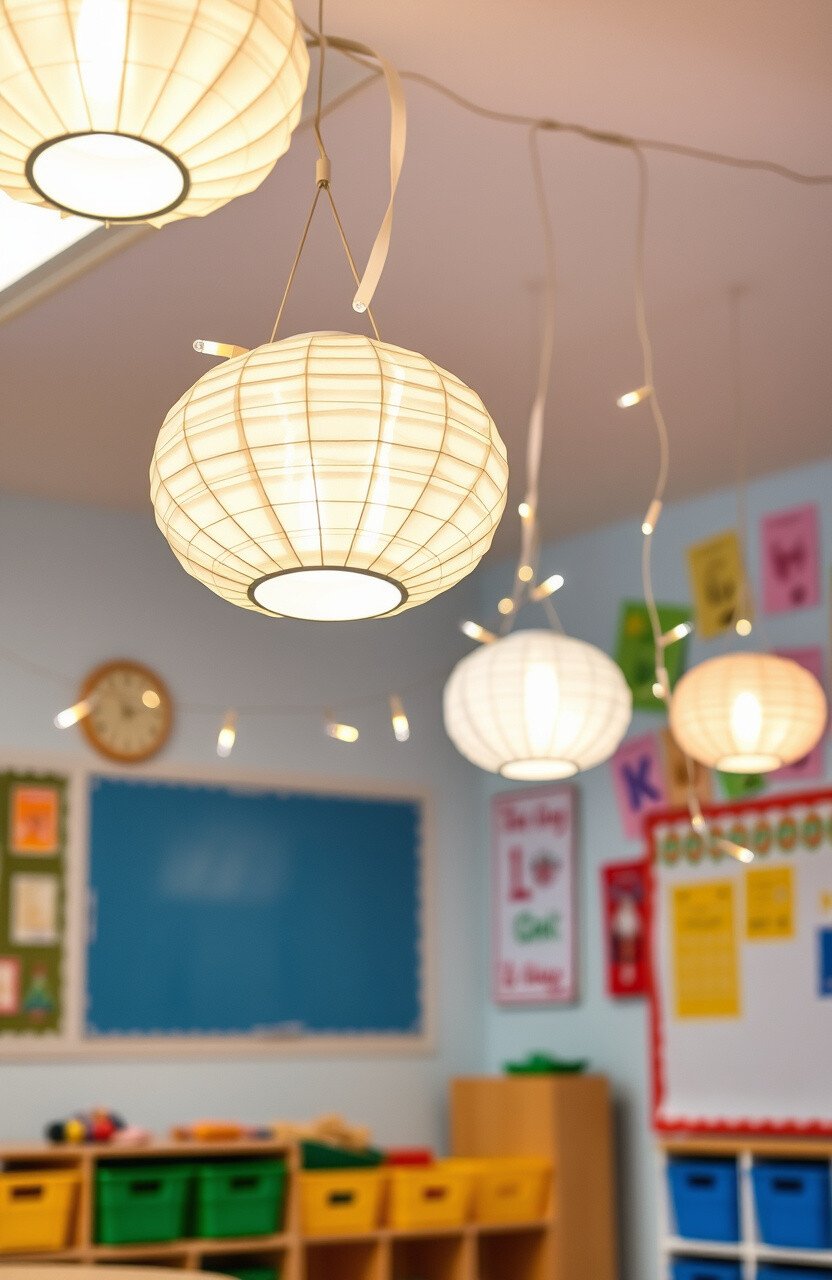
Create unique light fixtures using paper lanterns or fairy lights. Lighting can transform the mood of a classroom and make it feel magical.
DIY light fixtures are unique as they add a personal touch and can be customized to fit different themes. They are also an excellent project for students to participate in.
Materials like paper and string lights are affordable and available at craft stores. Ensure all fixtures are safe and securely installed.
13. Themed Classroom Doors

Decorate classroom doors with creative themes that change with the seasons or lessons. These doors set the tone before students even enter the room.
Themed doors are beneficial as they create excitement and anticipation. Personalize them with student names or artwork for a welcoming touch.
Use craft paper, stickers, and other inexpensive materials. Collaborate with students to design and decorate the doors together.
14. Puzzle and Game Stations

Set up stations with puzzles and educational games. These stations promote problem-solving skills and cooperative play.
Puzzle stations are unique as they provide a break from traditional learning while still being educational. Rotate games to keep the selection fresh and exciting.
Look for second-hand puzzles or games to save on costs. Encourage students to bring in their favorite games to share with the class.
15. Seasonal Decorations

Change decorations with the seasons or holidays. This keeps the classroom environment dynamic and exciting for students.
Seasonal decor is unique as it teaches children about the passage of time and cultural celebrations. Personalize it with student-made crafts.
Use natural materials like leaves or flowers, or create decorations with paper and paint. Involve students in crafting sessions to make it a fun activity.
16. Personal Learning Spaces
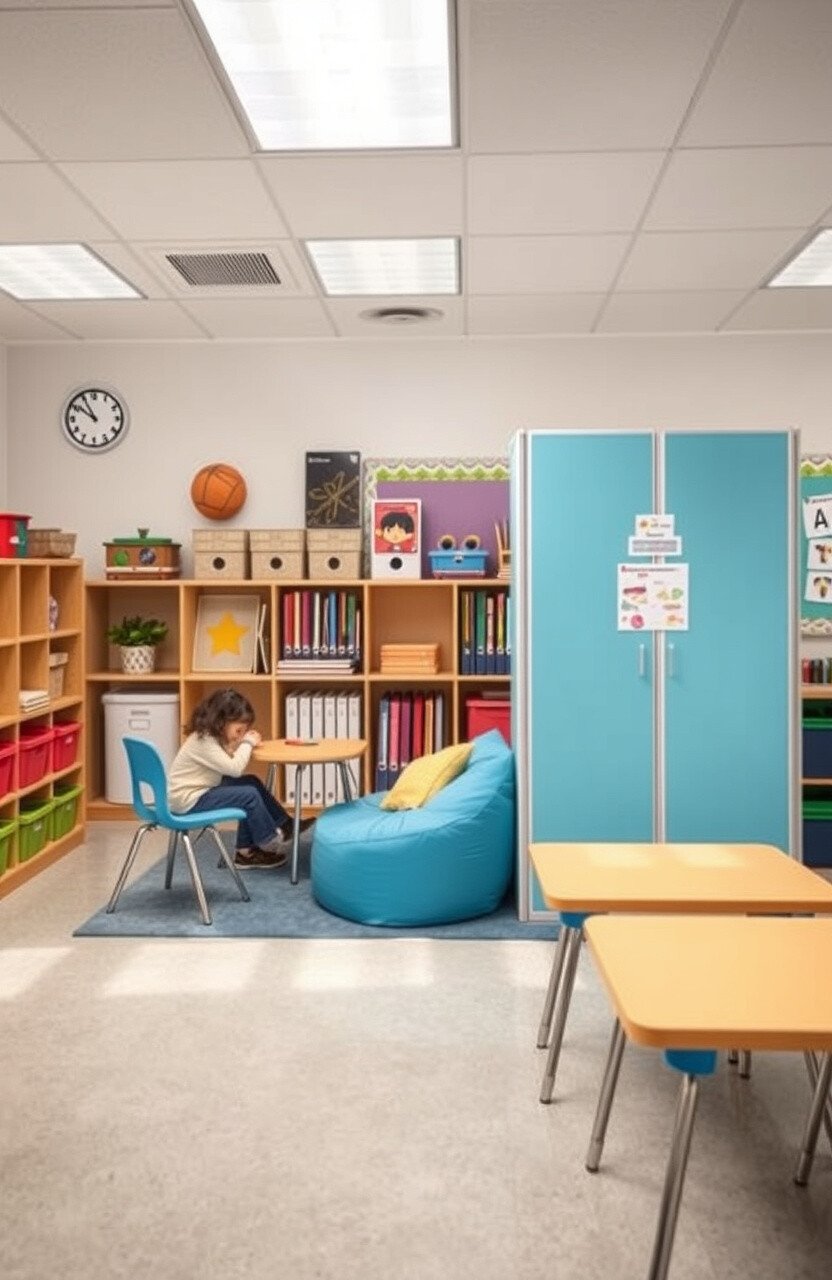
Create small spaces where students can work individually or in pairs. These spaces promote focus and personalized learning.
Personal learning spaces are beneficial for students who need a quiet area to concentrate. They can be personalized with students’ names or favorite colors.
Use partitions, bean bags, or small desks to create these spaces. They are affordable and can be adjusted as needed.
17. Storytelling Walls

Design walls that tell stories with visuals and text. These walls inspire creativity and a love for storytelling.
Storytelling walls are unique as they combine art and literacy. Rotate stories to include different genres and student contributions.
Use illustrations, printed text, and student artwork. This can be a low-cost project with high educational value.