Have you ever walked into a classroom and felt like the walls were secretly cheering for your brain?
Math decor can do that—quietly, brightly, and in a way kids actually want to point at, touch, and talk about.
1) Number Garden with “Grow Me” Pockets
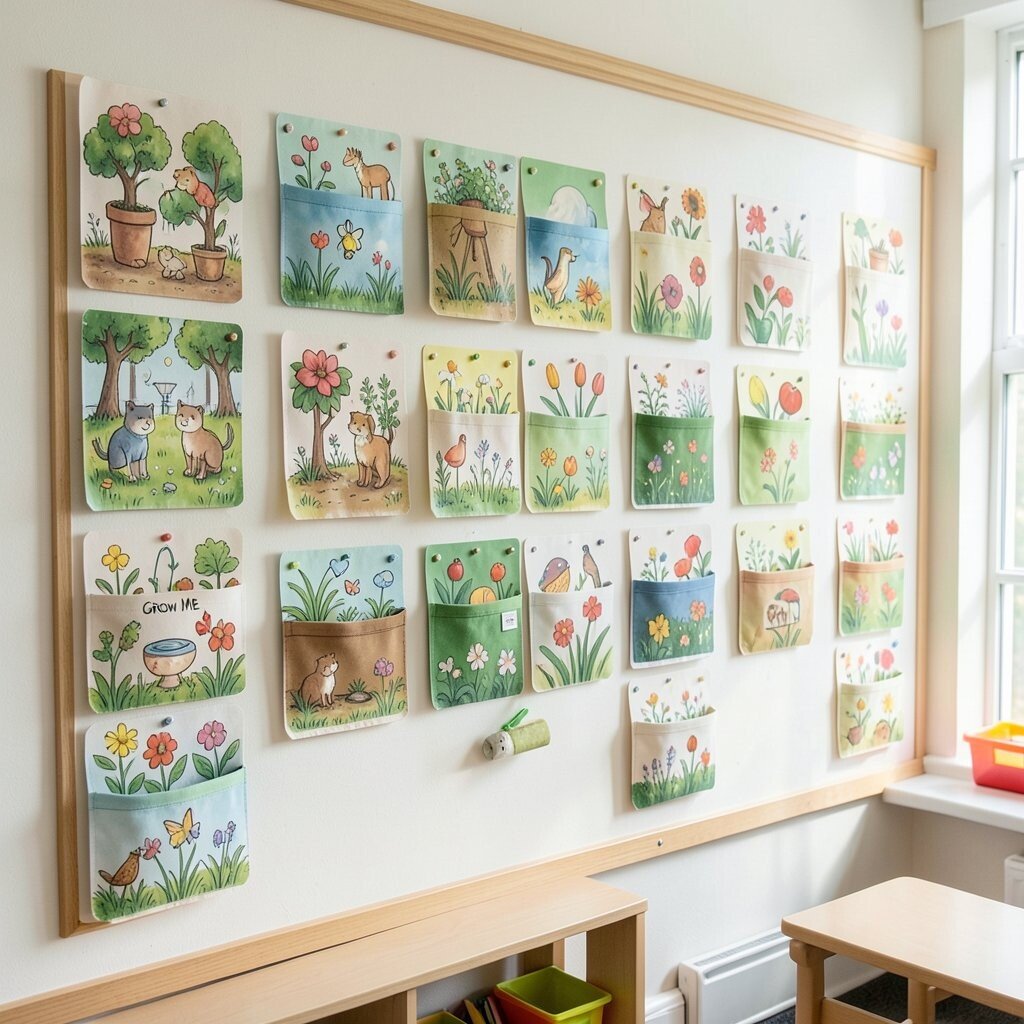
Make a garden patch on the wall using felt or paper grass.
Each “flower” holds a number card in a pocket, and kids can swap cards like they’re watering the math.
Kids benefit because numbers feel alive, not just written.
It’s unique because you can build it to match seasons—spring blossoms, summer suns, fall leaves—without changing the math focus.
Tip: Add tiny prompts in the pockets like “Find two,” “Show one more,” or “Which is bigger?”
For cost, you can keep it low with cardstock, craft felt, and Velcro, then upgrade later with nicer felt flowers.
2) Shape Scavenger Hunt Sidewalk Trail
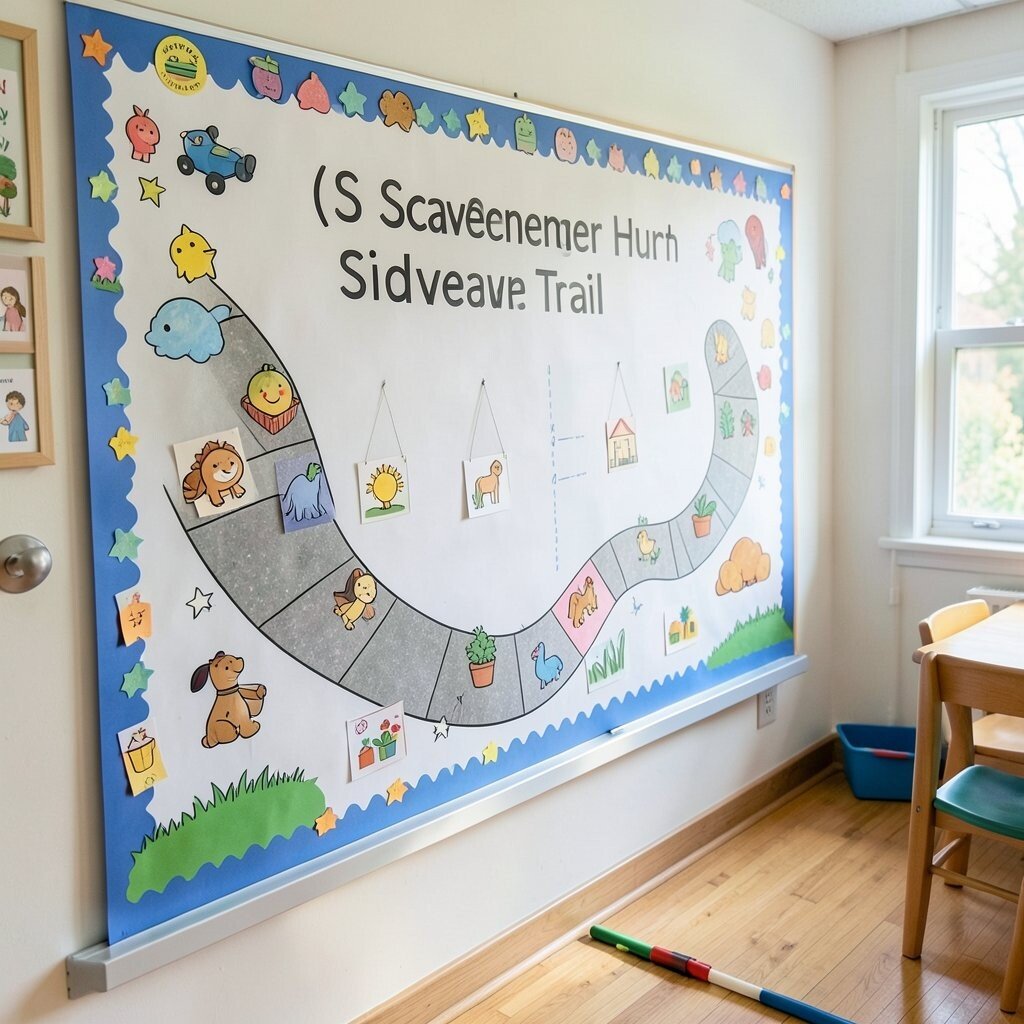
Create a trail of shapes that looks like a sidewalk, with each tile showing a shape name and a matching picture.
Use arrows so kids can “walk” the shapes by sliding a magnetic pointer along the wall.
This benefits recognition of shapes and encourages quick math talk during centers.
The uniqueness comes from turning shape practice into a game that feels like movement, even though it’s on the wall.
Suggestions: Add a small “I found it!” check space for kids to place clothespins after they identify shapes.
Cost stays friendly if you print shape icons, laminate them, and attach them with magnets or removable tape.
3) Number Line with Friendly Jump Characters
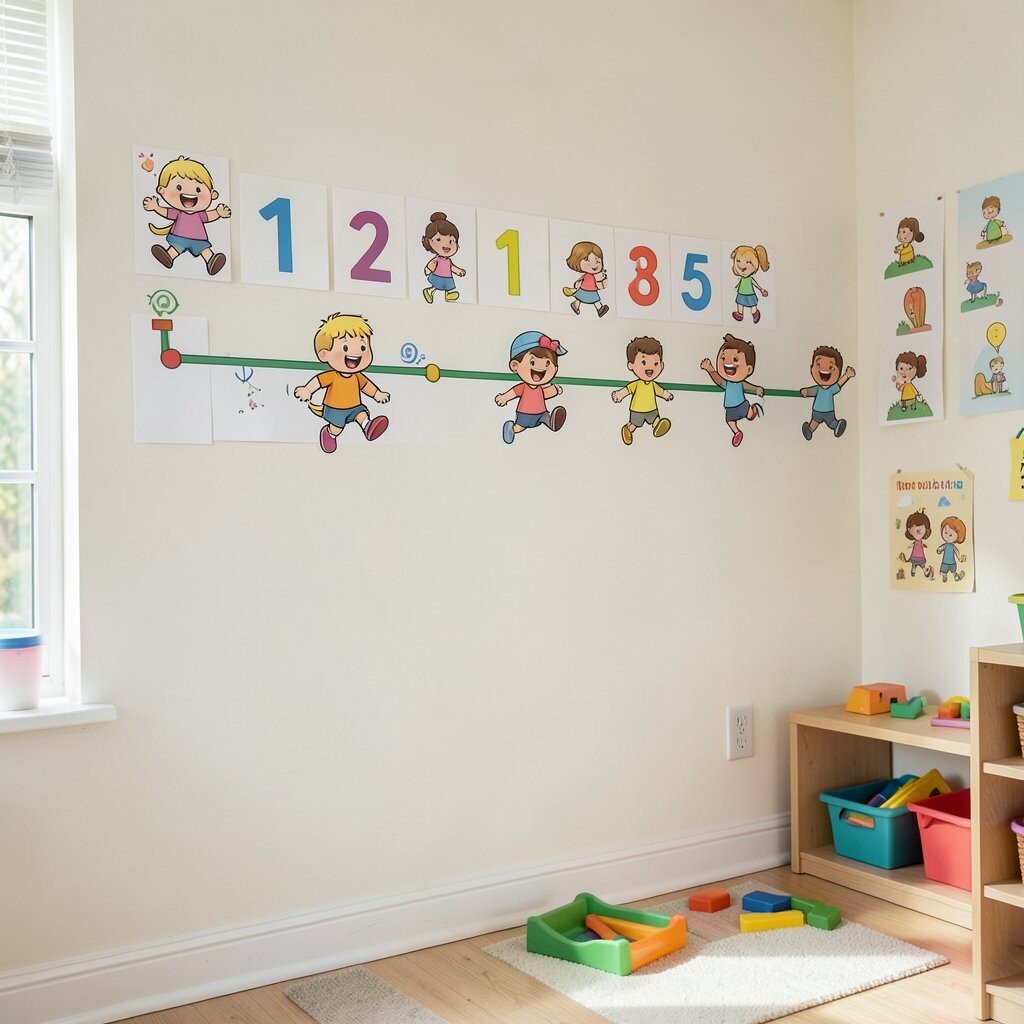
Turn a number line into a comic strip by adding tiny characters—like a rabbit, a robot, or a turtle—that “jump” from number to number.
Kids can move character cutouts using Velcro feet to show hops.
Benefits: It builds counting forward and supports simple addition by modeling “start here, jump there.”
It’s unique because the line becomes a story, not a static strip of numbers.
Tips: Put “jump rules” at eye level, such as “Jump two!” or “Jump back one!” and keep cards color-coded.
For cost, foam numbers and paper characters are cheap, and you can reuse them all year.
4) Ten-Frame “Snack Math” Posters
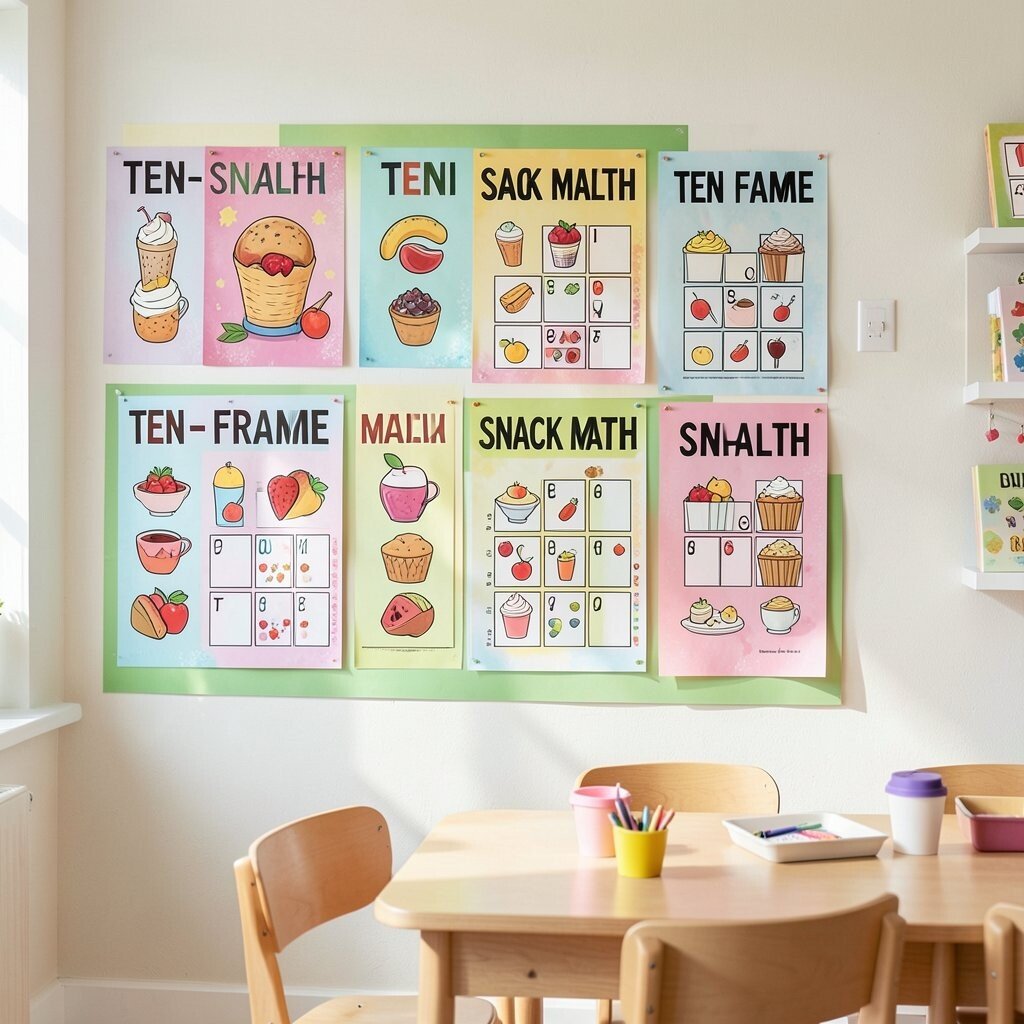
Design ten-frames like cute snack boxes—each row is a “tray” and each dot is a snack chip.
Kids can rearrange sticky dots or magnetic counters to show numbers.
The benefit is super clear: children visualize quantities without getting overwhelmed.
The uniqueness is the theme—when math looks like snacks, kids remember it.
Suggestions: Label with simple phrases such as “How many snacks?” and “How many more to make ten?”
Cost: print-friendly frames on cardstock, then buy a small pack of reusable magnetic dots or laminate and use dry-erase markers.
5) Favorite Things Bar Graph Gallery
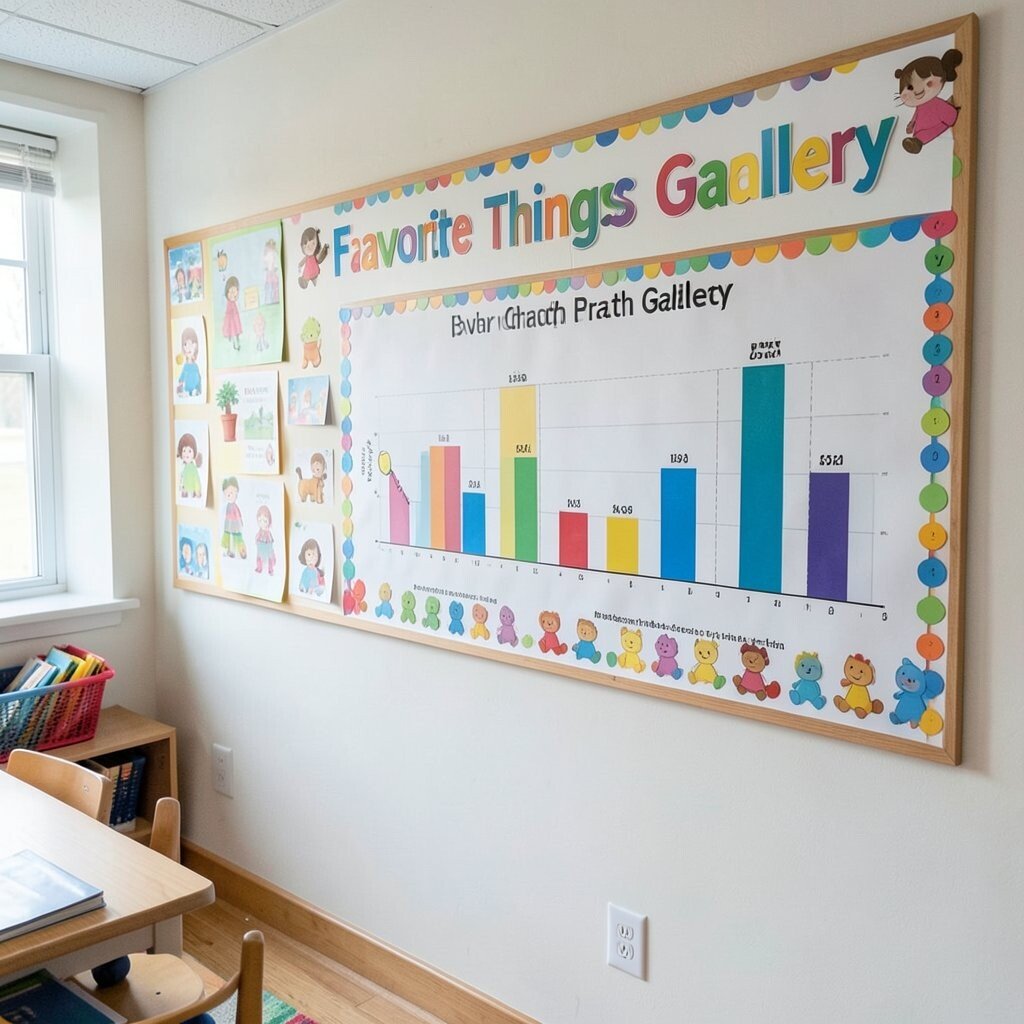
Make a rotating bar graph wall where each bar is a picture of something kids love, like pets, fruits, or school supplies.
Swap the data cards weekly so the wall feels alive and personal.
Benefits: It supports counting, comparing, and early data thinking.
It’s unique because the data comes from the class, so every kid sees their voice on the wall.
Tips: Use Velcro-backed picture bars and add a simple “Most / Least” mini caption under the graph.
Cost is usually low since you can print icons, laminate them, and use craft velcro dots.
6) Pattern Parade: Repeating Color & Shape Clips
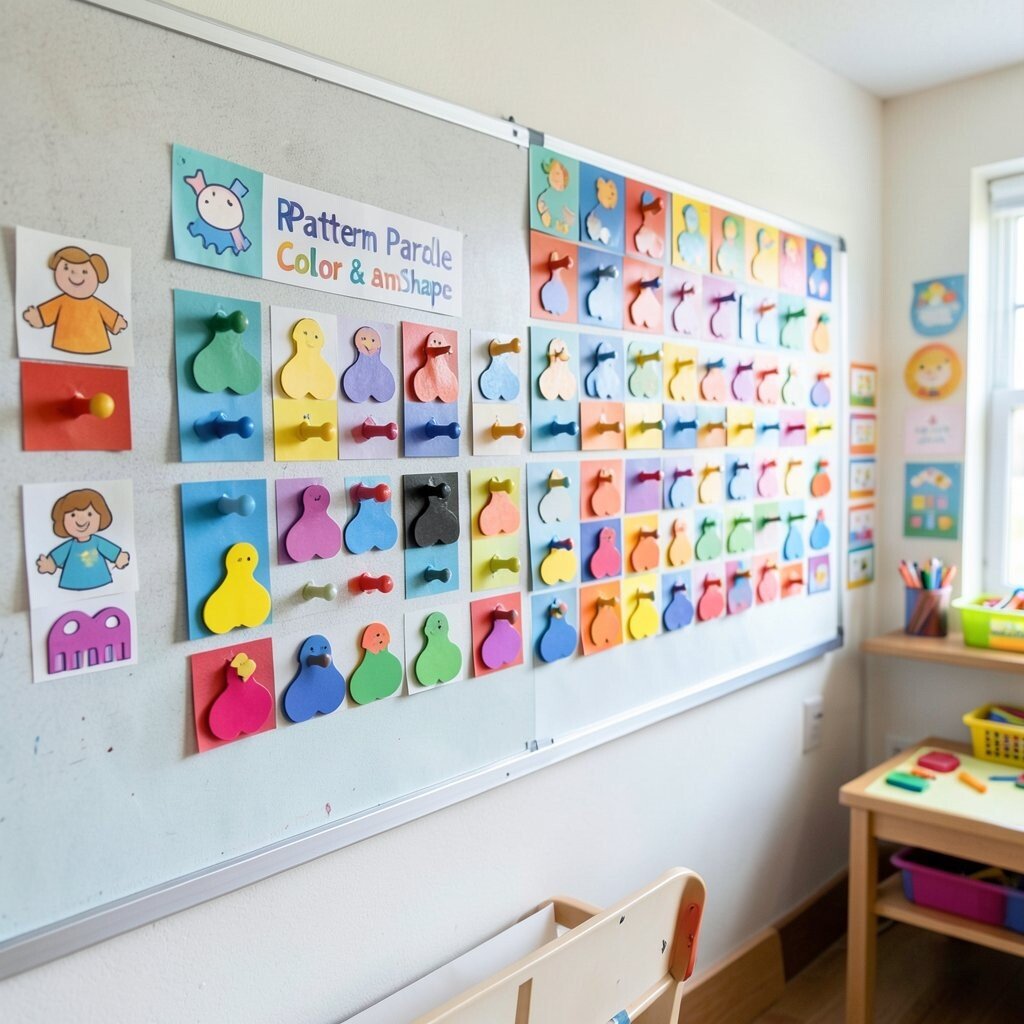
Create a “pattern parade” border with repeating strips—like ABAB, AABB, or ABCABC—using colorful shapes.
Add clip-on pieces so kids can build the next part of the pattern right on the wall.
Benefits: Patterns strengthen noticing skills and early algebra thinking.
It’s unique because it’s interactive and looks like a fashion runway for shapes.
Suggestions: Place a few completed examples and one “mystery gap” for kids to fill with a clip.
Cost can be budget-friendly with paper or foam shapes and clothespins or binder clips plus velcro.
7) Math Weather Station (Sorting by Day and Kind)
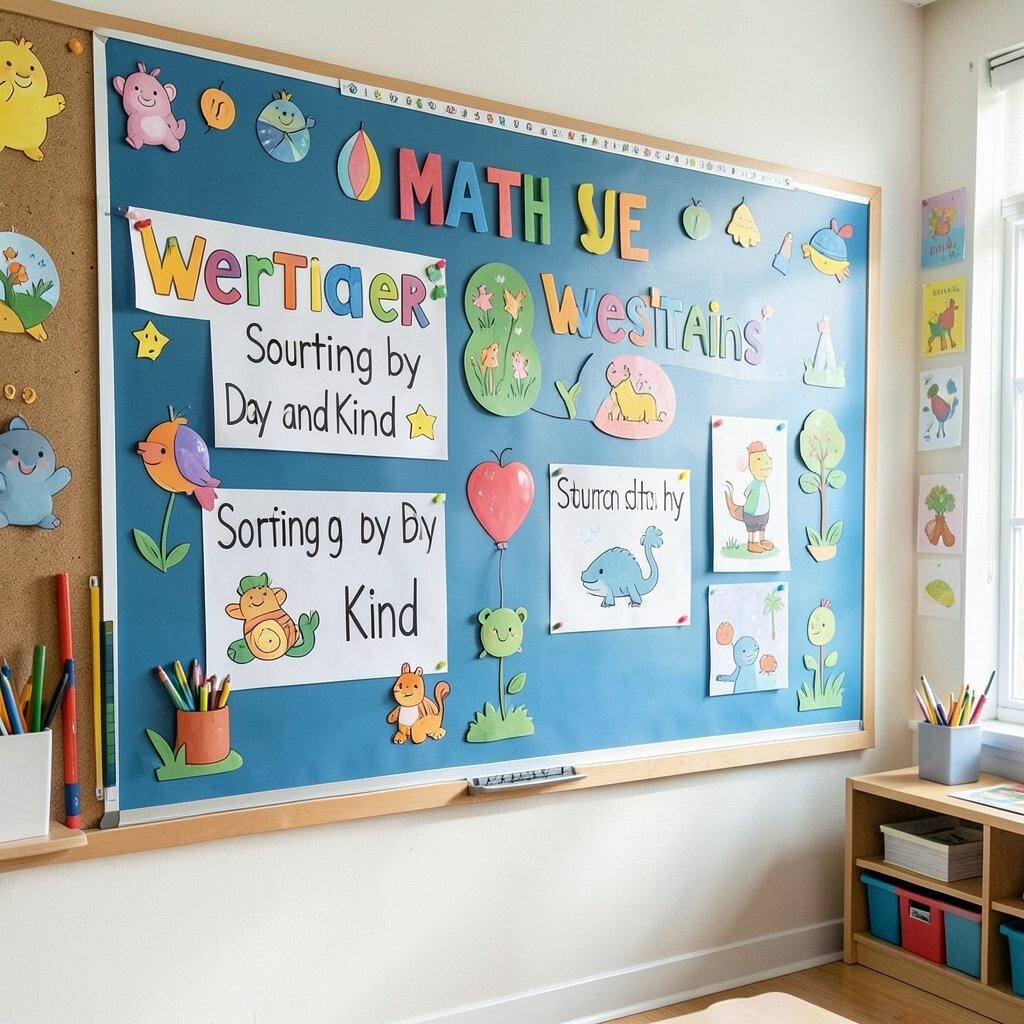
Make a weather-themed wall where kids sort picture cards by categories, like “rainy day numbers,” “sunny shape faces,” or “windy addition signs.”
Use a daily “forecast” pocket chart to display the class focus.
Benefits: Sorting supports classification and thinking about similarities.
The uniqueness is how it connects routines—morning message energy with math practice.
Tips: Keep card sets small and sturdy so they don’t get lost.
Cost: pocket chart inserts are inexpensive, and you can make icons from laminated paper.
8) Ten Buddies Wall with “Friend Power” Cards

Build a wall display called “Ten Buddies,” where each number from one to ten has two friend cards that make it.
Think of it like a buddy movie poster—pairs with matching colors.
Kids benefit because they begin to understand number relationships, not just counting.
It’s unique because it turns early fact building into friendship.
Suggestions: Put a small “show me” box where kids move friend cards to form ten.
Cost stays low with printable cards, colored paper, and Velcro dots.
9) Counting Creatures: Magnetic Story Animals
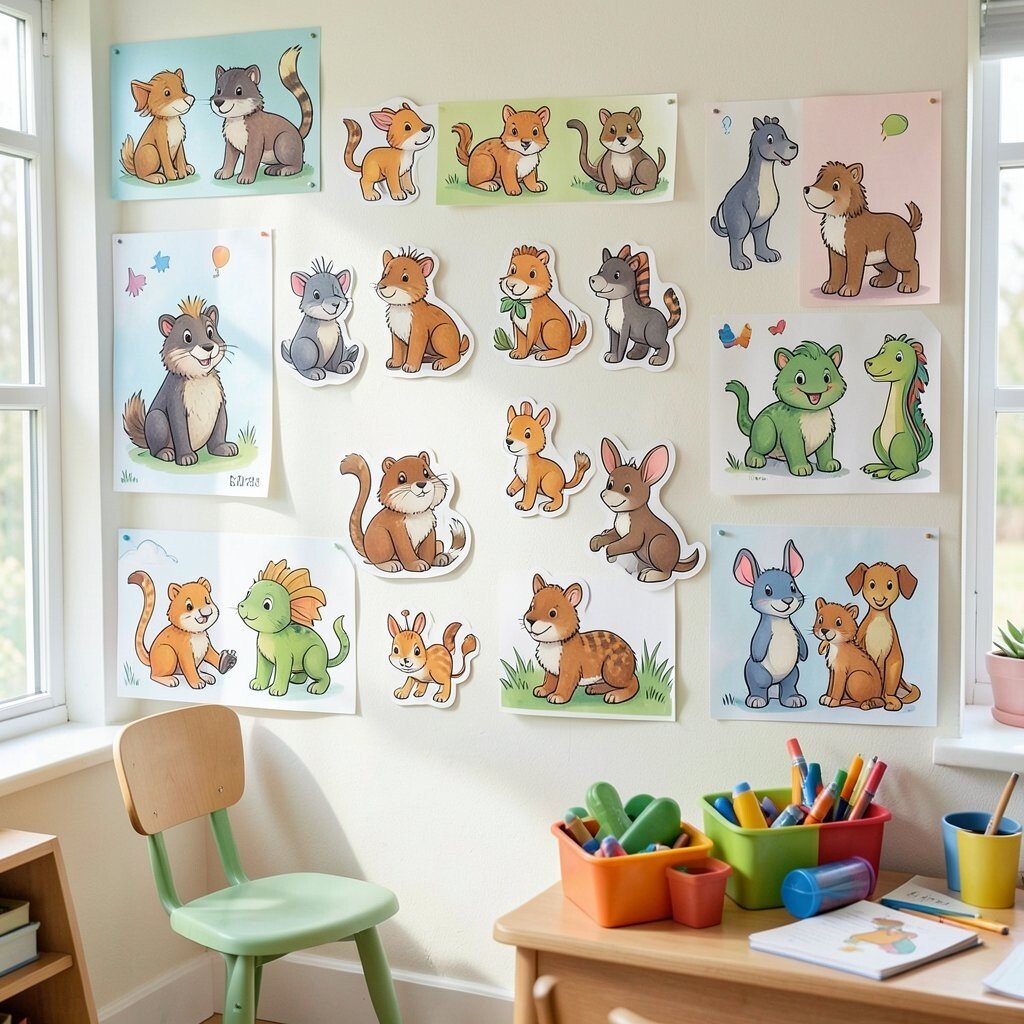
Make animal cutouts that count in groups—like “3 ladybugs” or “5 turtles”—and mount them on a “pond” or “forest” background.
Add magnetic tails, wings, or legs so kids can change the number.
Benefits: It makes counting concrete and supports grouping practice.
The uniqueness is the story setting, which makes kids want to narrate what they see.
Tips: Add number labels near each scene and include a “How many now?” prompt for quick partner talk.
Cost: you can laminate simple paper animals and buy a small magnet sheet for movement.
10) Measure Me! Tall-Short Ribbon Ladder
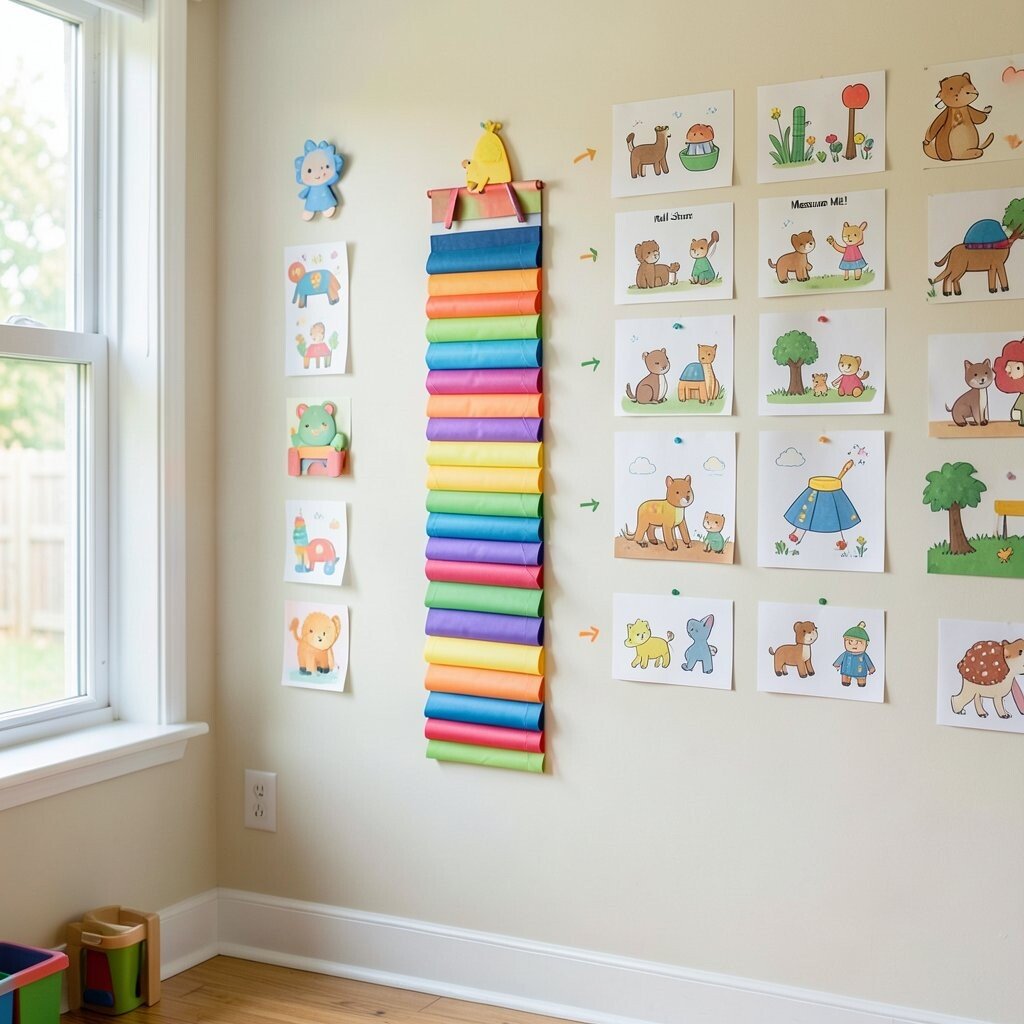
Create a “Measure Me!” ladder using ribbons or paper strips labeled with simple length words.
Hang it near a bookcase so kids can compare objects by placing them next to the ladder.
Benefits: It teaches comparison like taller/shorter and longer/shorter without needing rulers.
The uniqueness comes from using the wall like a runway where objects “strut” into place.
Suggestions: Add a “Pick a snack!” slot where kids choose items to compare, like crayons, sticks, or pencils.
Cost: ribbon is cheap, and you can use wipeable tape and cardstock labels.
11) Math Word Wall in Cute Speech Bubbles
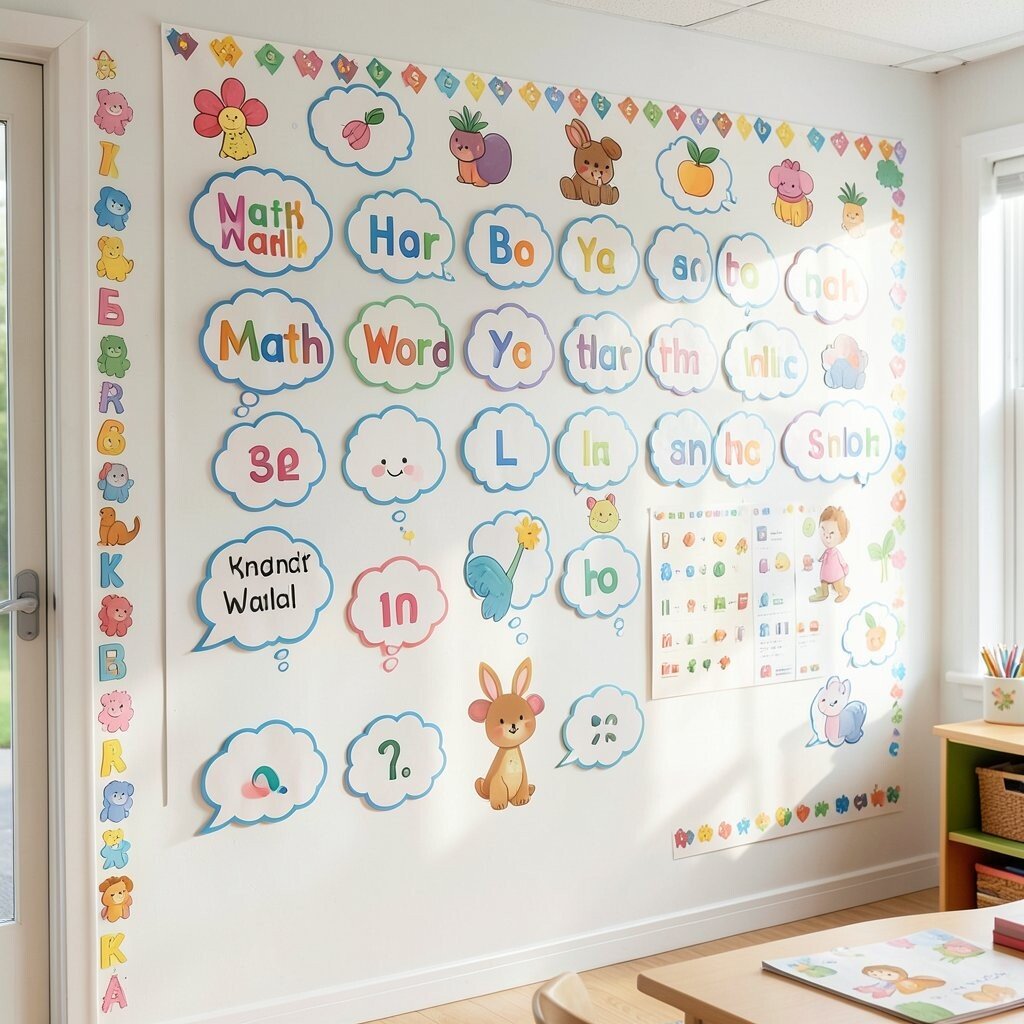
Put key math words inside speech bubbles, like “more,” “less,” “equal,” “count,” and “same.”
Add tiny examples in bubble tails—like two groups of objects—so the meaning is visual.
Benefits: Language helps kids explain their math, which boosts confidence.
It’s unique because it feels playful and kid-friendly instead of like a formal chart.
Tips: Use kid voices by updating bubble captions to match what you teach, like “Today we used ‘equal!’”
Cost is usually small since most word bubbles can be printed and laminated.
12) Calendar of Counting: Days-as-Stickers
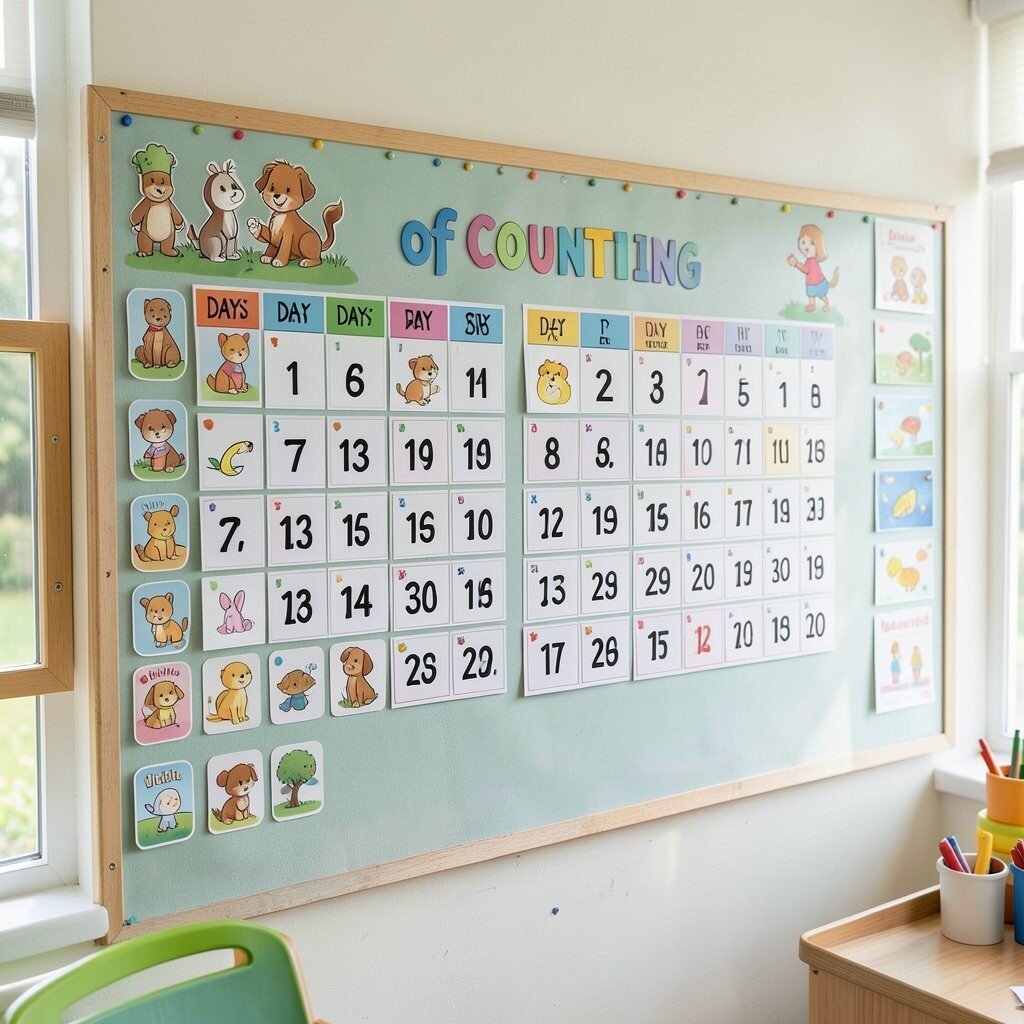
Turn your classroom calendar into a counting wall where each day is a sticker with a number and a picture.
Kids move a “day hand” to show how many days we’ve counted.
Benefits: It builds number sense through routine, which is powerful at kindergarten age.
The uniqueness is the sticker style—like collecting little treasures that happen to teach math.
Suggestions: Add a pocket for “today’s tally” where kids place tally marks for attendance or feelings.
Cost: you can use free calendar printables, then buy a pack of cute stickers for a few dollars.
13) Coin & Coincidence Money Play Wall (Even Without Spending)
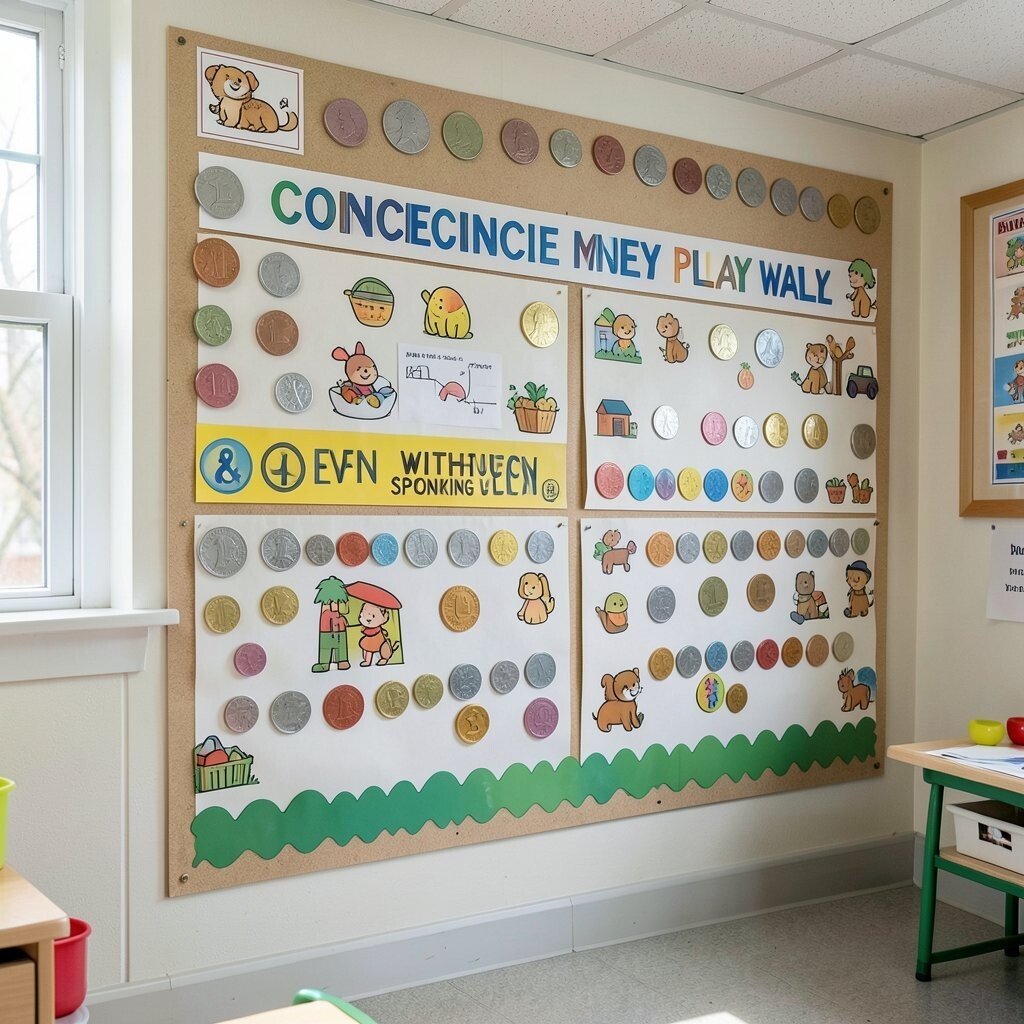
Set up a money-themed station with large, colorful coin circles and a “make it” challenge space.
Kids can place coins on outlines to match numbers or show equal amounts.
Benefits: It strengthens counting by identifying values and grouping.
It’s unique because it supports simple addition and comparison while staying pretend-play fun.
Tips: Use thick foam coins for safety and durability, and add simple prompts like “How many coins?”
Cost: foam or cardboard coins can be made in advance, and you can reuse them for years.
14) My Shape, My Move: Floor-to-Wall Interaction Posters
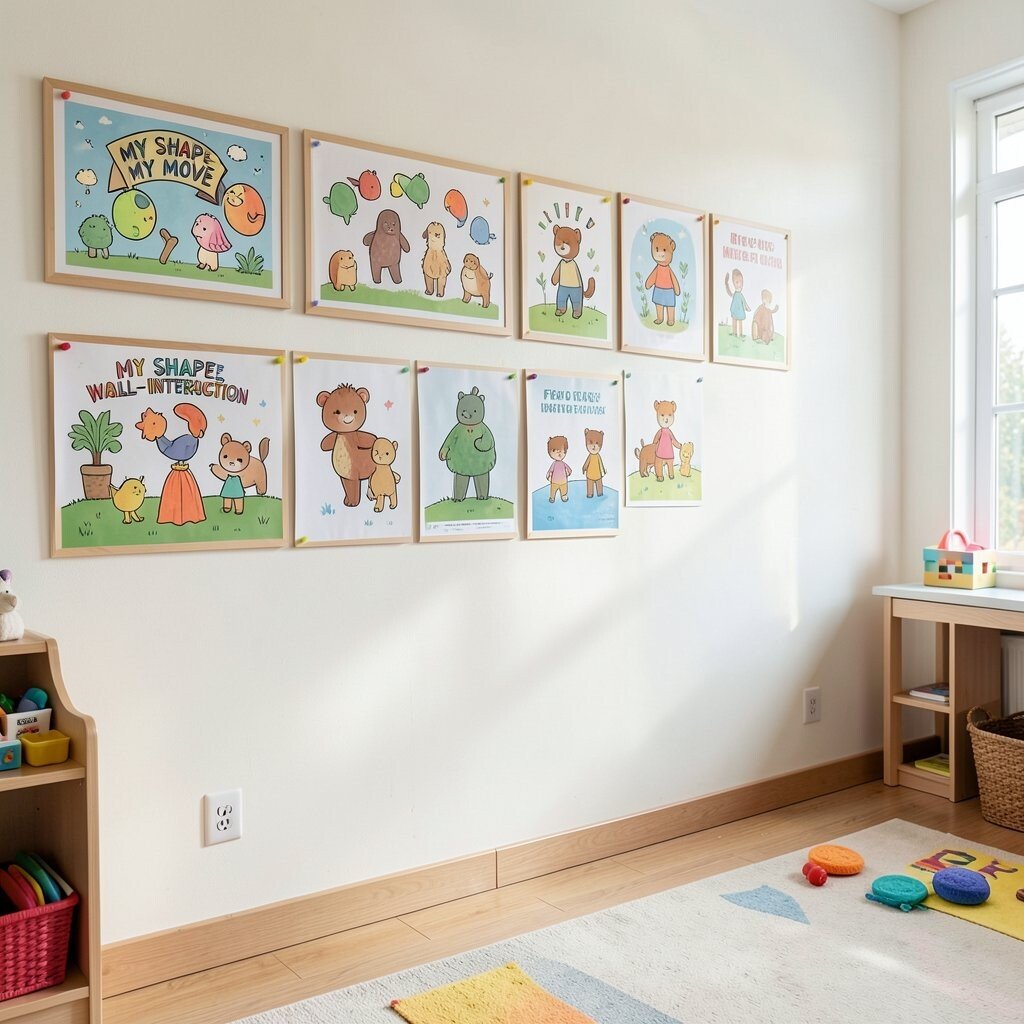
Create “pose posters” that show a shape and a movement, like “Make a triangle pose” or “Stand like a rectangle.”
Then add a wall pocket where kids grab a shape card and match it to the movement.
Benefits: It supports shape recognition and also gets kids energized in a calm way.
The uniqueness is the body connection—math becomes something they can feel.
Suggestions: Add a quick checklist so kids can practice partner matching: one child picks, one child identifies.
Cost: print posters, laminate, and use reusable cards with Velcro to keep it simple.
15) Class Math Museum: Student-Designed Gallery Labels

Dedicate a wall section as a “Math Museum,” where student work becomes the main display.
Each piece gets a label with the child’s name, the math idea, and a kid-drawn picture that shows what it means.
Benefits: Kids feel proud and motivated to explain their thinking, which creates stronger engagement.
It’s unique because the decor is always changing and always personal, like a gallery opening every week.
Tips: Use clear pockets for labels and keep a template for quick printing so it doesn’t take forever.
Cost: frames, pockets, and label templates can be budget-friendly, and student creativity does most of the work.