The ceiling is often the last surface people think about. A fresh coat can change the whole mood of a room.
Even small changes can make your space feel brighter, taller, and more “you.”
1. Soft Color Wash That Feels Like Daylight
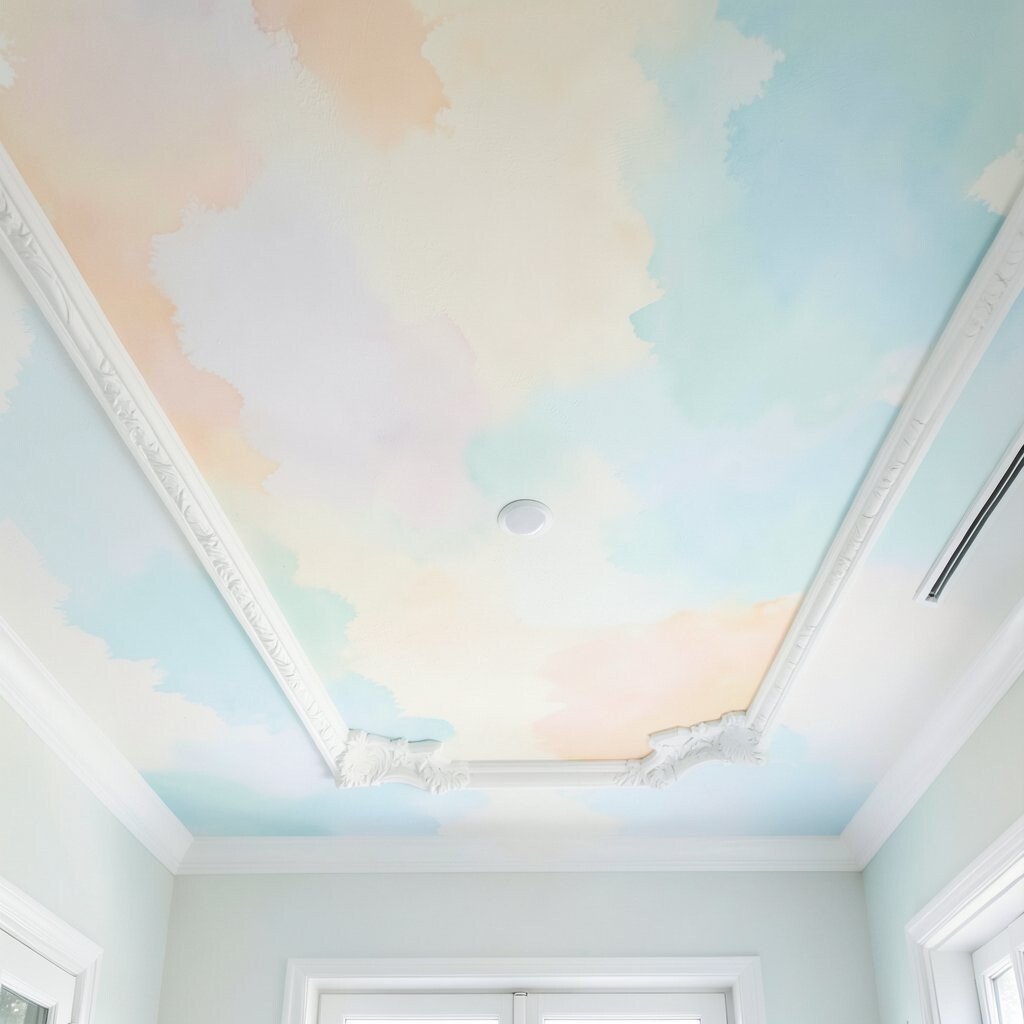
Choose a gentle color wash that mimics morning light, such as warm off-white, pale peach, or airy light blue. When the ceiling catches the glow, the room feels calmer and more open.
Keep the finish a satin or eggshell for easy cleaning and a smooth look. Use a roller with a long nap for even coverage, and cut in carefully with angled trim brushes so edges look crisp.
2. Bold Contrast With Crisp Edges
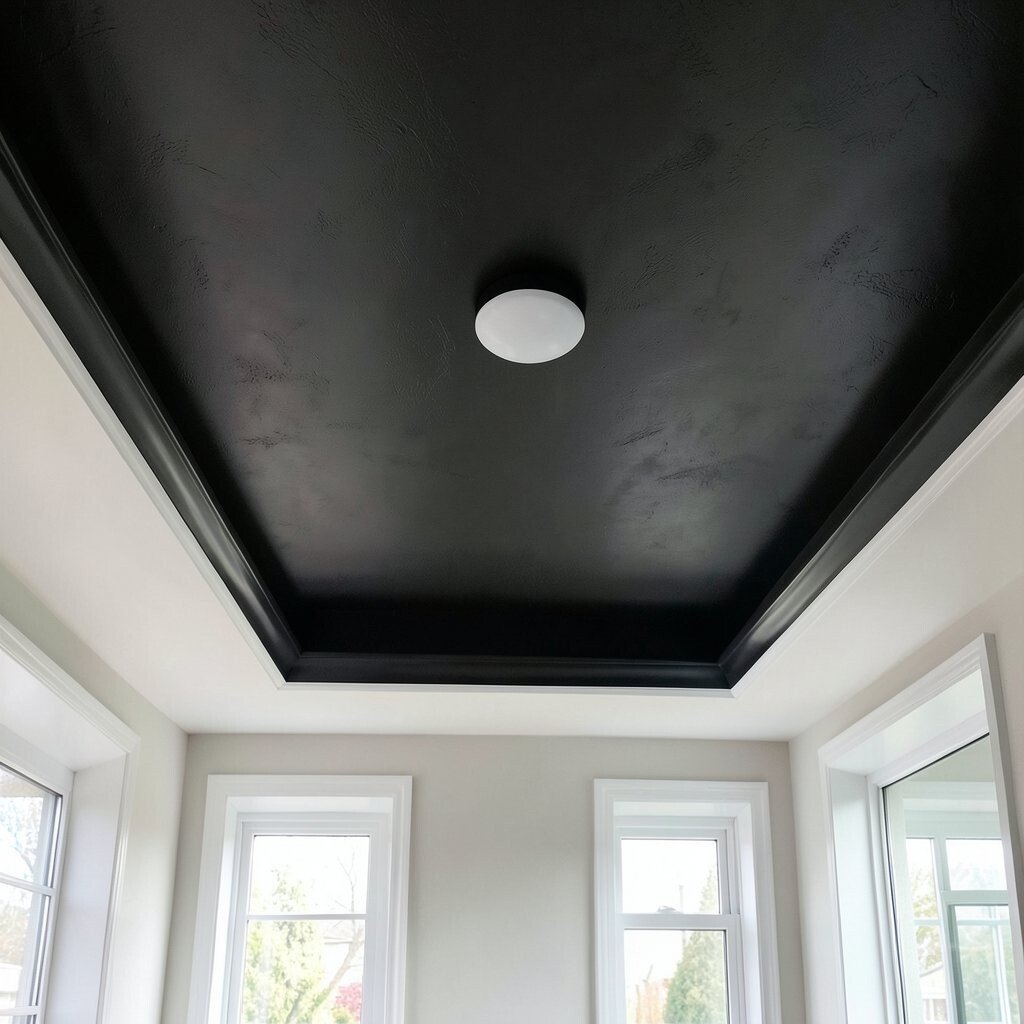
Pick a deep color for the ceiling, like navy, charcoal, or forest green, and contrast it with bright walls. The visual punch draws the eye up and makes the room feel styled instead of basic.
Mask edges with painter’s tape and step back often to check alignment before the paint sets. If you want extra polish, use a clean, white trim band between the walls and the ceiling for a gallery-like effect.
To personalize, match the ceiling tone to a piece you already love, such as a rug color or curtain pattern. For cost, solid paint is usually budget-friendly compared to decorative plaster, and it can be completed in a weekend.
3. Two-Tone Ceiling With a Subtle Border
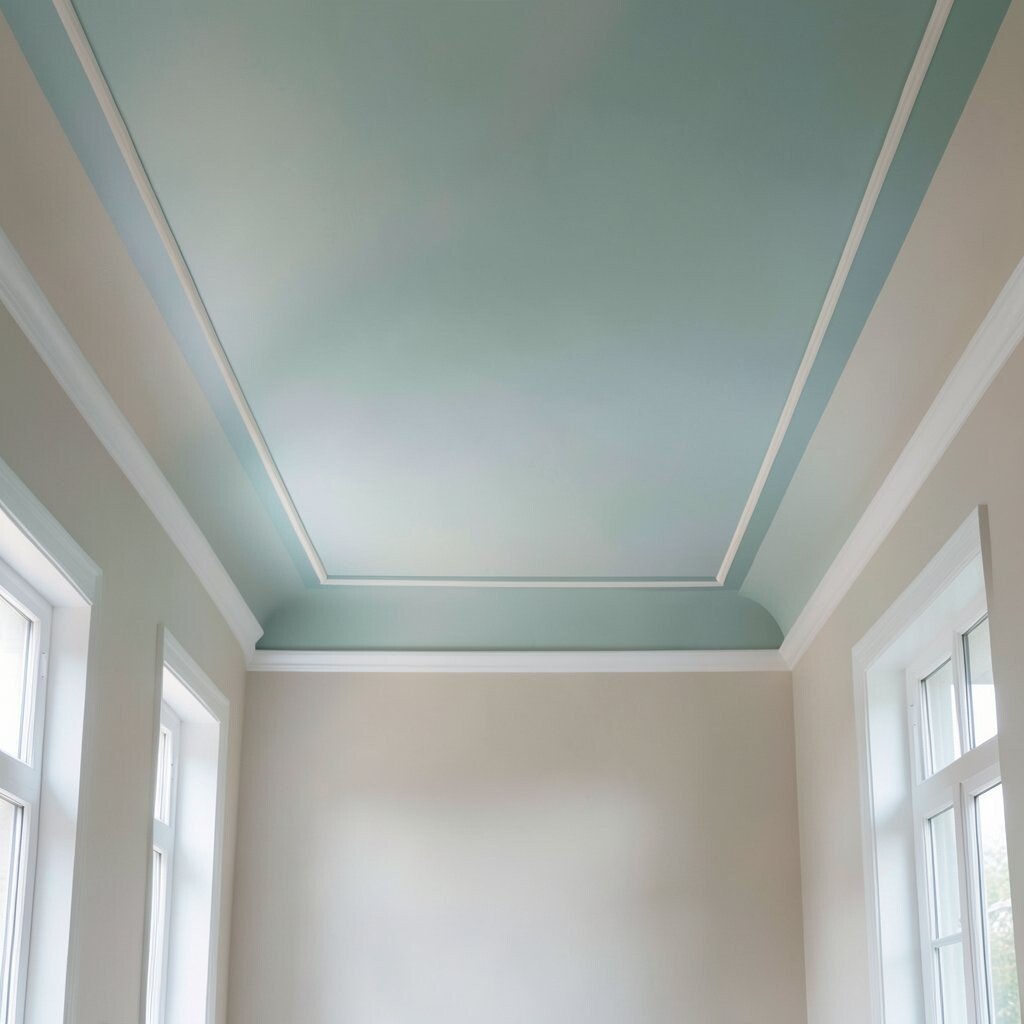
Create depth by painting the main ceiling a light shade and adding a thin border around the perimeter. A simple border can make even a standard ceiling feel intentional and architectural.
Try a half-and-half approach, where the border is a slightly darker version of the ceiling color. Keep the border narrow for a modern look, or widen it a touch for a more classic vibe.
Use a level or measuring tape to mark a straight line before you paint the border. This keeps the design even across the room and helps the final look feel “finished,” not rushed.
4. Stripes That Make Low Ceilings Feel Higher
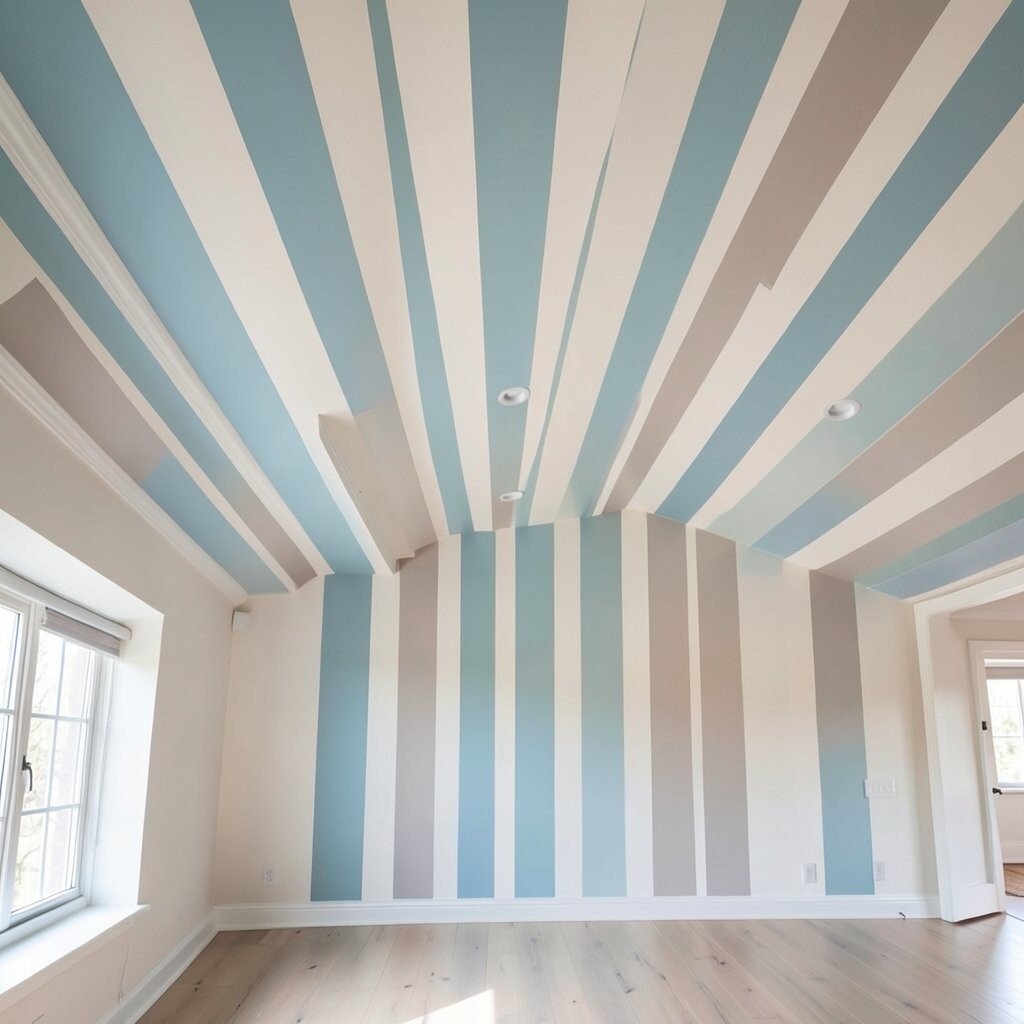
Paint thin or medium stripes from wall to wall to pull the eye upward. Vertical stripes are especially good in rooms that feel a bit short, like hallways or compact dining areas.
Keep stripe colors close in tone, such as cream and light beige, for a soft effect that still feels uplifting. If you like more energy, alternate a neutral with a muted accent color, like sage or dusty blue.
5. Geometric Panels for a Modern Edge
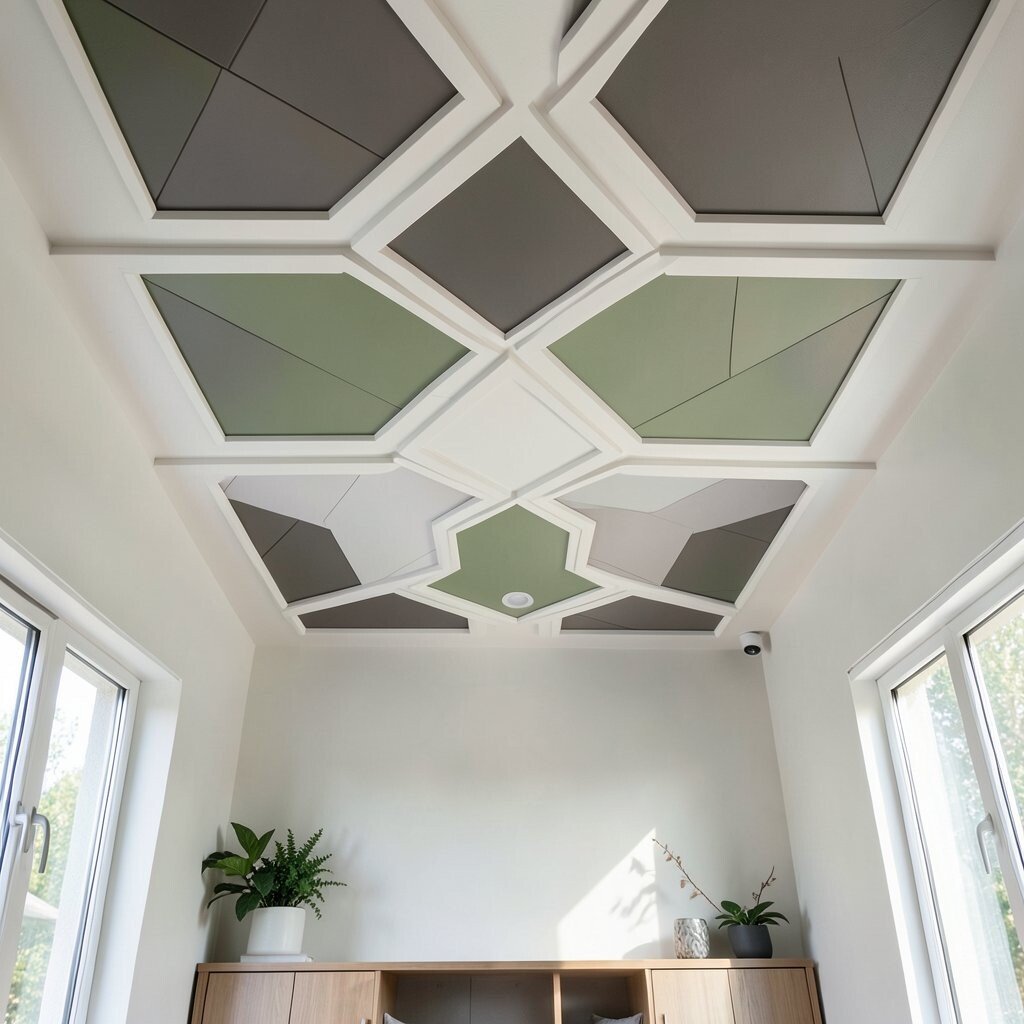
Design a ceiling that looks like overlapping panels using painter’s tape and a few coordinating colors. Clean geometric shapes give a room a contemporary feel without adding heavy decor.
Plan your layout on paper first, then tape lightly and press edges firmly to avoid paint creep. When each color dries, remove tape slowly so the lines stay sharp and crisp.
For personalization, match the geometry style to your furniture lines, such as straight shapes for modern pieces or softer angles for transitional rooms. This method can be done with just paint and tape, which helps keep costs under control.
6. Ombre Fade From Wall to Ceiling
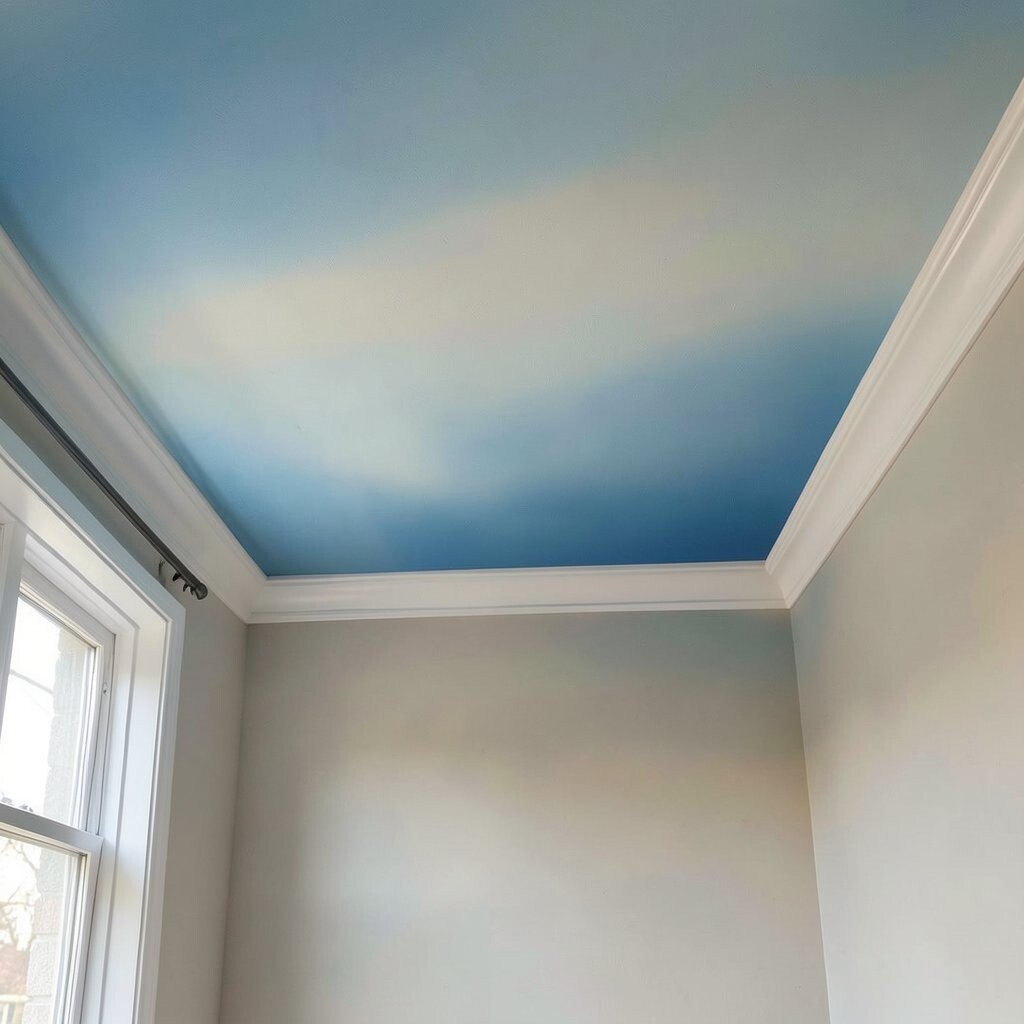
Use an ombre effect to blend one color into another, like ivory walls that gently fade into warm sand on the ceiling. The soft gradient looks dreamy, and it can make a room feel sunlit even on cloudy days.
Start by painting the darker shade near the ceiling center and feather it outward with a damp brush. Work in small sections and keep edges slightly blended so you don’t see harsh transitions.
7. Accent Celestial Center With a Starry Whisper
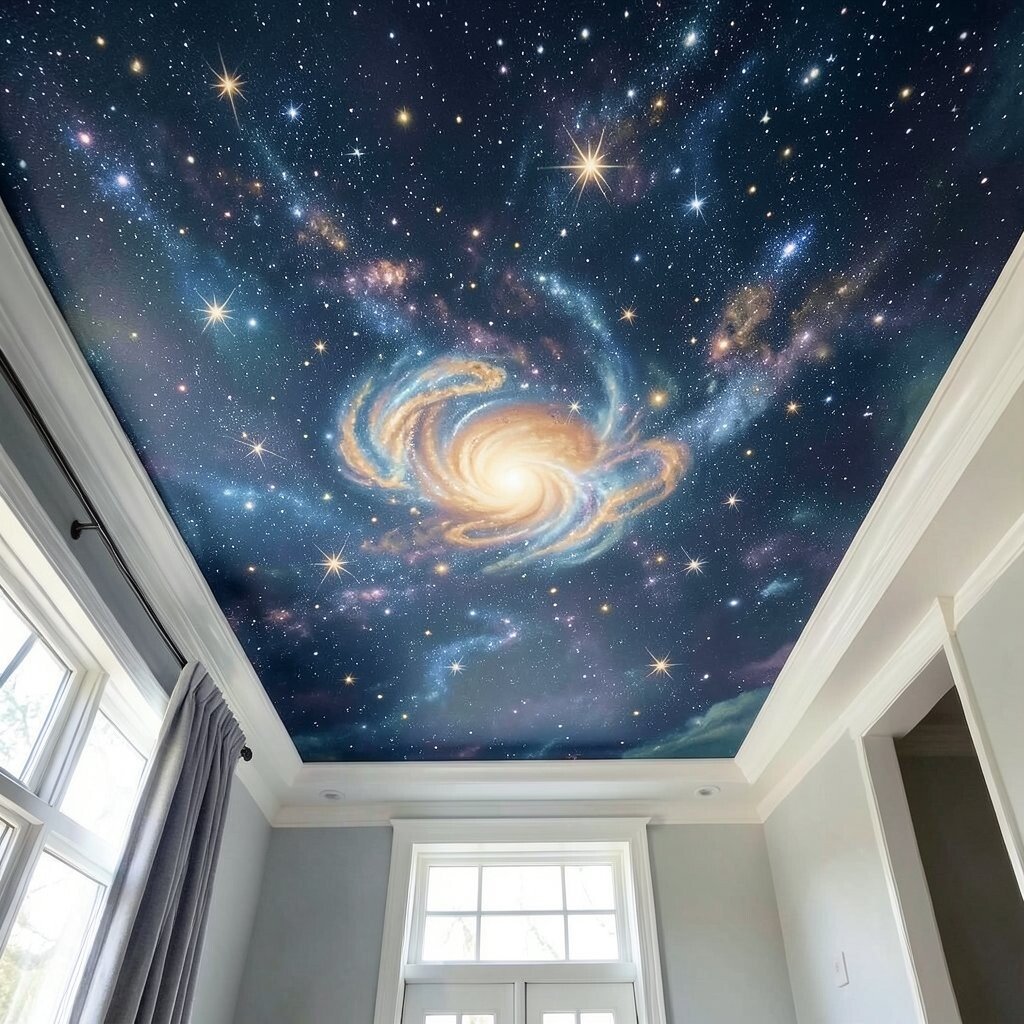
Create a calm “night sky” feel by painting a subtle gradient and adding small star dots near the center. Even a light touch of celestial design makes the ceiling feel special, especially in bedrooms.
Use a stiff brush or a sponge to dab tiny dots, then vary their size so the pattern feels natural. If you want a daytime twist, choose pale gold and soft navy instead of heavy black.
8. Faux Plaster Texture for Old-World Charm
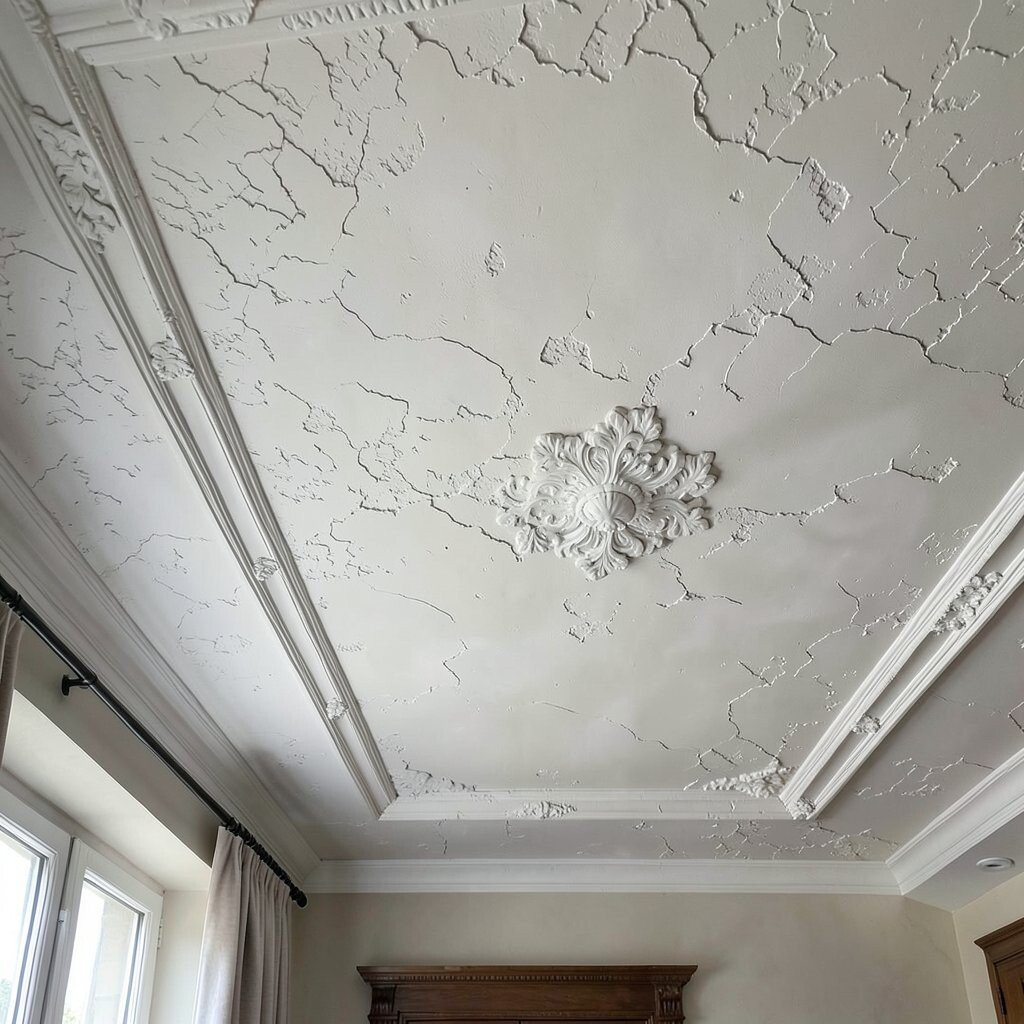
Add charm without major renovations by painting with texture, using techniques like sponging, stippling, or a plaster-style look. The ceiling gains character, and shadows from the texture make the surface feel rich.
Mix paint with a texture medium or use a specialty roller to create gentle ridges. Keep the color slightly lighter than your walls so the texture reads beautifully instead of feeling heavy.
For personalization, swirl in a darker highlight color using a dry brush over the raised areas. This can be surprisingly cost-friendly, because texture tools and mediums can be less expensive than major decorative ceiling work.
9. Ceiling Medallion Inspired by Classic Architecture
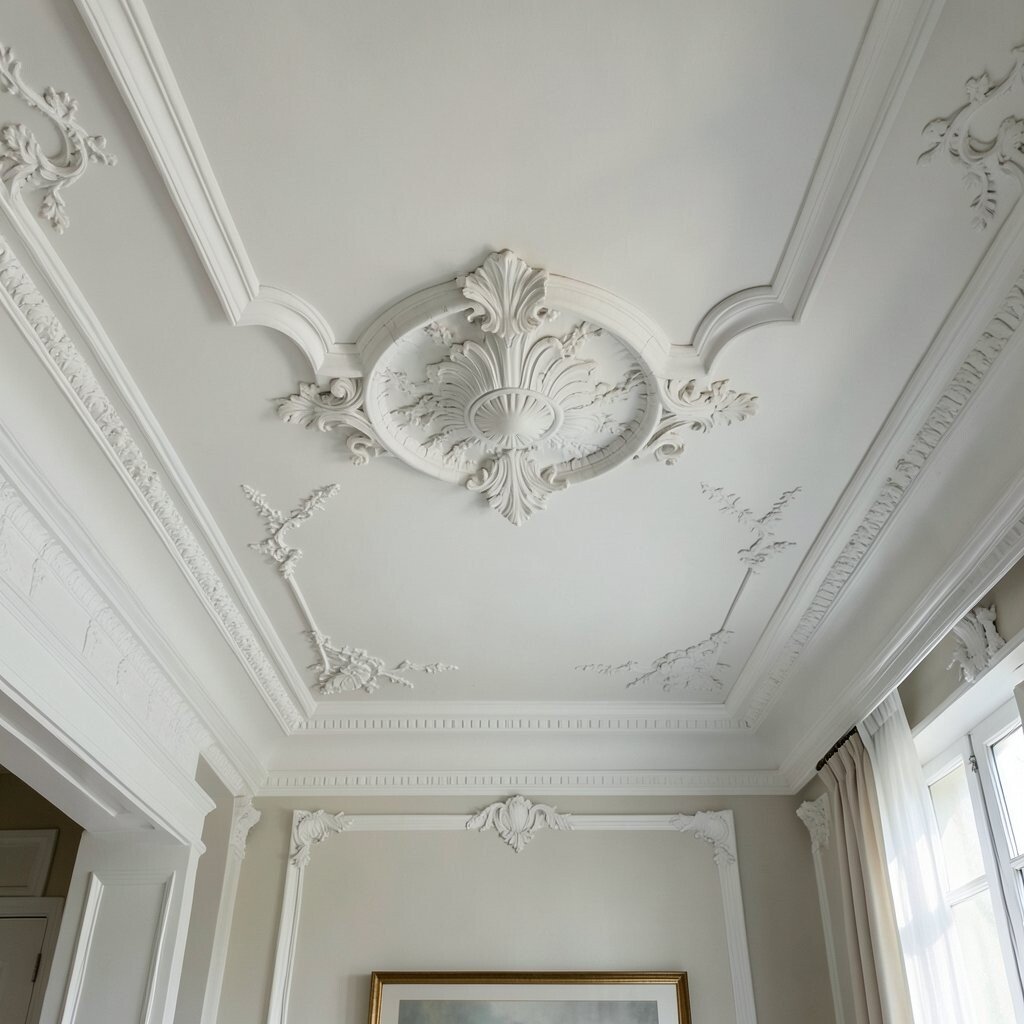
Frame the center of your ceiling with a painted medallion that echoes traditional architecture. A medallion makes lighting fixtures look more dramatic and turns an everyday ceiling into a focal point.
Start by painting a base circle, then add rings or leaf-like shapes using small brushes and stencils. If you already have a ceiling light canopy, center the design around it for a neat, balanced look.
10. Chalky Matte Color for a Soft, Stylish Look
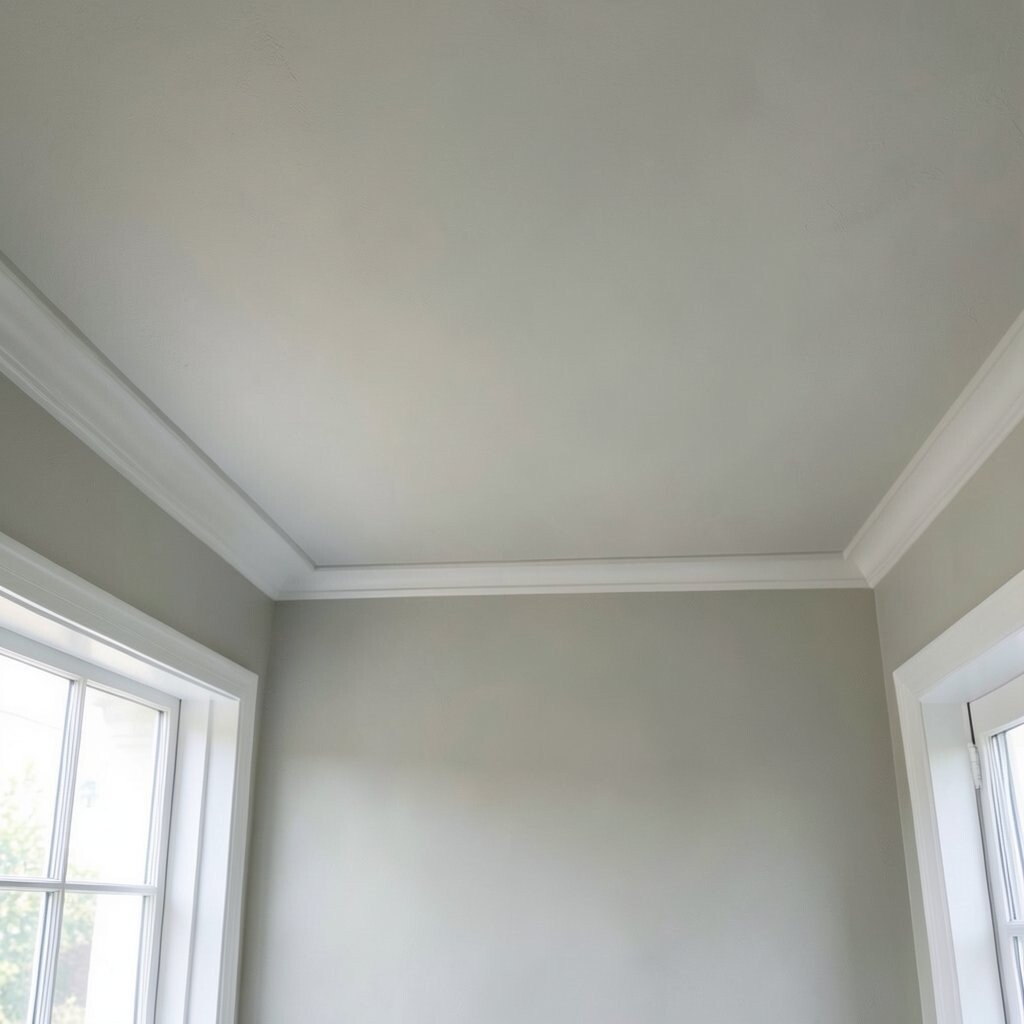
Choose a chalky matte or flat finish to create a velvety, cozy effect. Matte paint absorbs light, which helps hide minor bumps and makes colors feel gentle and calm.
Pick a muted tone that fits your decor, such as warm greige, dusty rose, or soft sage. You can also paint a matching band along the ceiling edge to tie the look together with trim.
For practicality, remember that matte finishes can be harder to clean, so consider using it in low-splash areas like living rooms and bedrooms. If you want easier maintenance, a low-sheen eggshell can still give a soft look while staying more forgiving.
11. Color-Blocked Corners for a Playful Mood
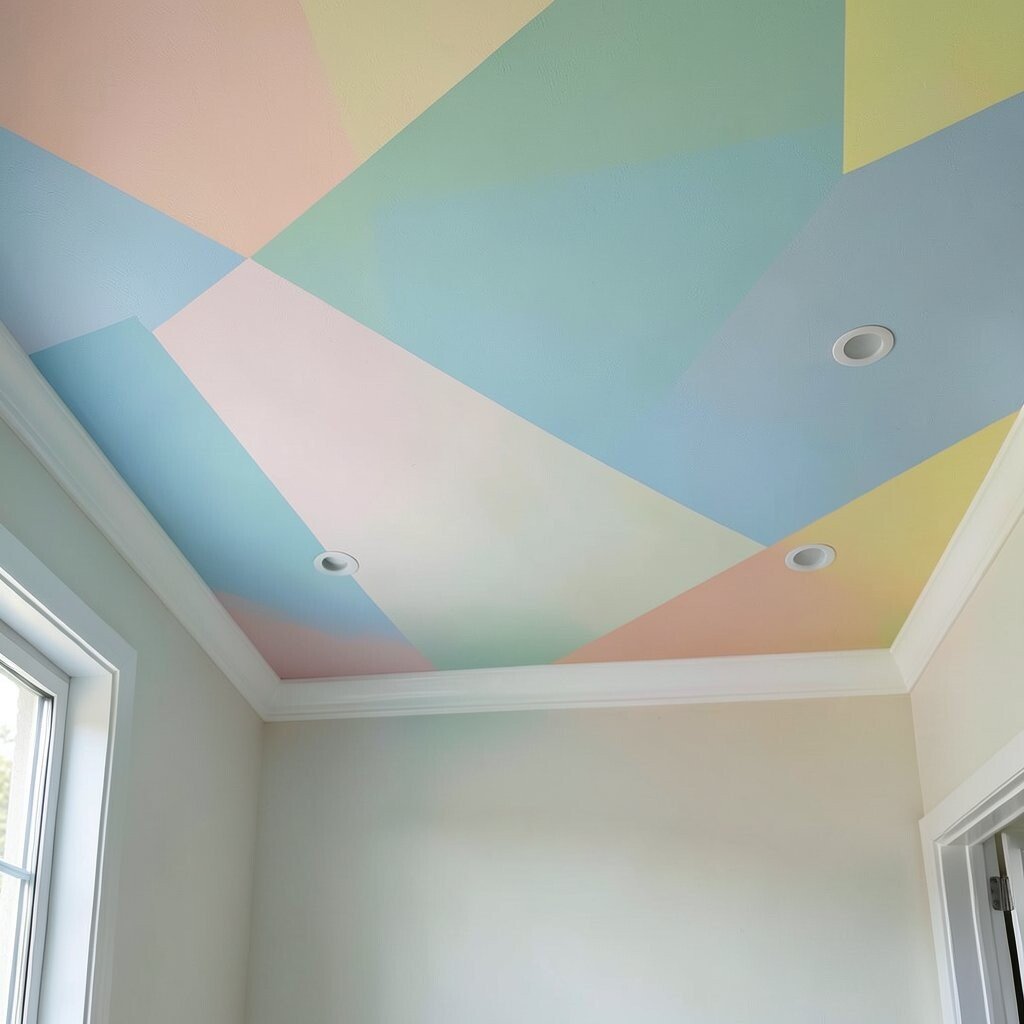
Paint the ceiling corners or small sections near each corner with a contrasting color. This simple color-block idea adds movement, and it works especially well in kids’ rooms, playrooms, and cheerful family spaces.
Use a tape grid so each corner block stays the right width. Keep the rest of the ceiling neutral so the design feels fun without overwhelming the room.
12. Wallpaper-Look Paint Using a Sponged Pattern
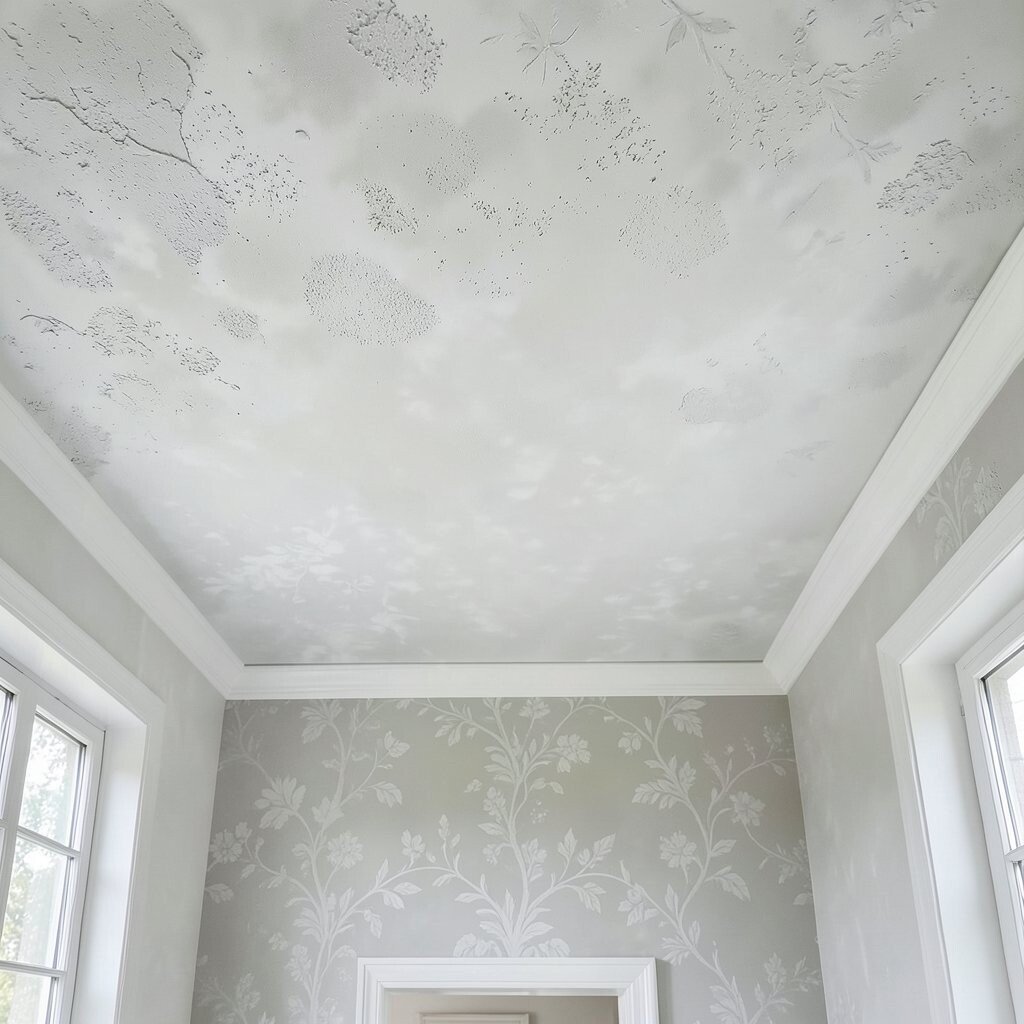
Even without installing actual wallpaper, you can mimic a patterned ceiling with paint. A sponged, repeating pattern can look like classic wallpaper while staying easier to change later.
Choose a base color close to your walls, then layer a slightly darker or lighter shade in a simple dot or damask-like pattern. Practice on a cardboard scrap first, because the sponge pressure changes how bold the design becomes.
This approach feels unique because it gives your ceiling a custom design made just for your room. It also helps with cost, since paint and sponges are usually far less than purchasing specialty ceiling wallpaper.
13. Painted Reveal Lines for a Craftsman Feel
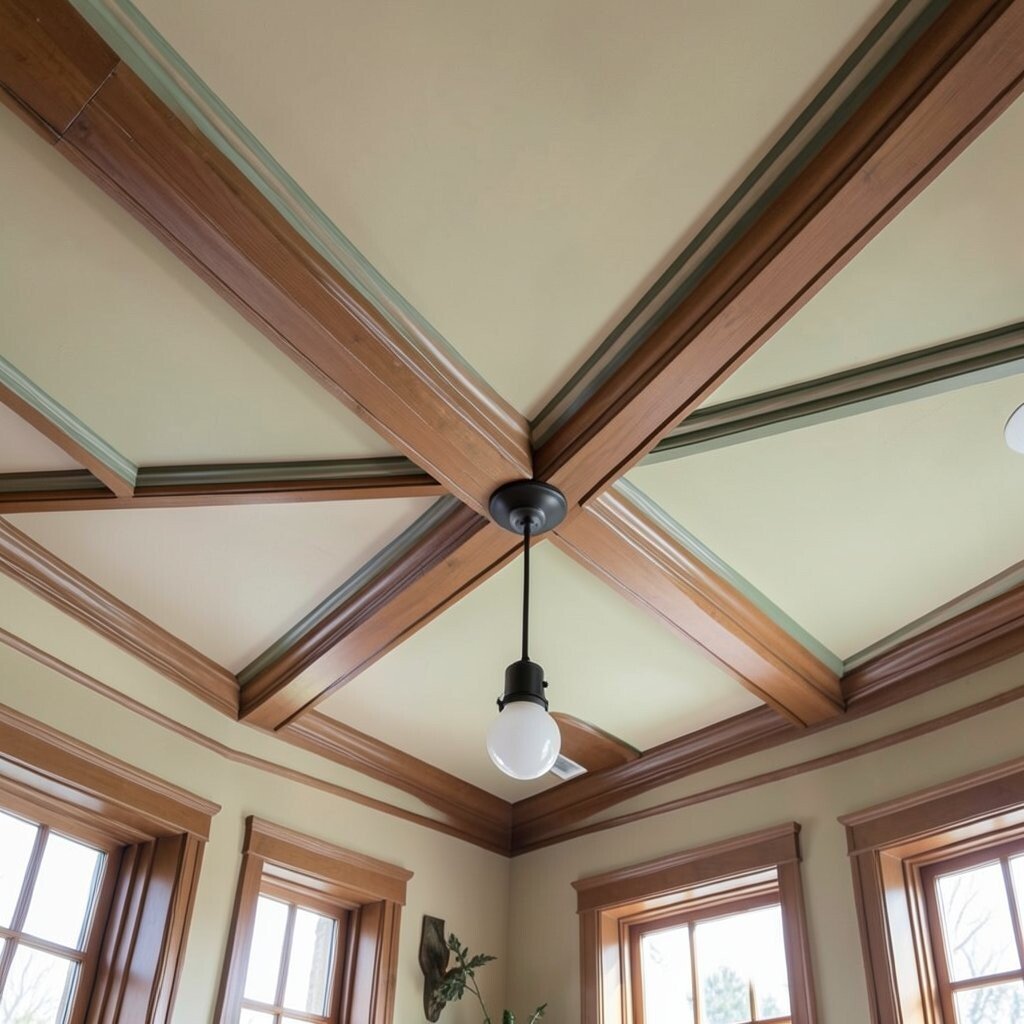
Build a craftsman-style look by painting reveal lines that suggest beams or panels. These lines guide the eye and add structure, especially in rooms with a lot of open space.
Use thin strips of painter’s tape and measure spacing so the lines are even across the ceiling. You can keep the “beam” areas in a warm white while painting the lines in a deeper wood-like taupe.
To personalize, echo the same tone used in your trim or wood furniture. If you’re working on a tight budget, this look is mostly paint and tape, so you get big style with minimal materials.
14. Metallic Accents That Glow Under Light

Add metallic paint accents near molding lines, around a medallion, or in a thin halo around the fixture. Under warm lighting, metallic touches create a soft glow and make the ceiling feel more luxurious.
Use gold, champagne, or brushed nickel tones depending on your hardware finishes. Apply metallic paint carefully with small brushes so it stays neat, and consider sealing it if the finish feels too delicate.
15. Omitting the White: Full-Color Ceiling With Confidence
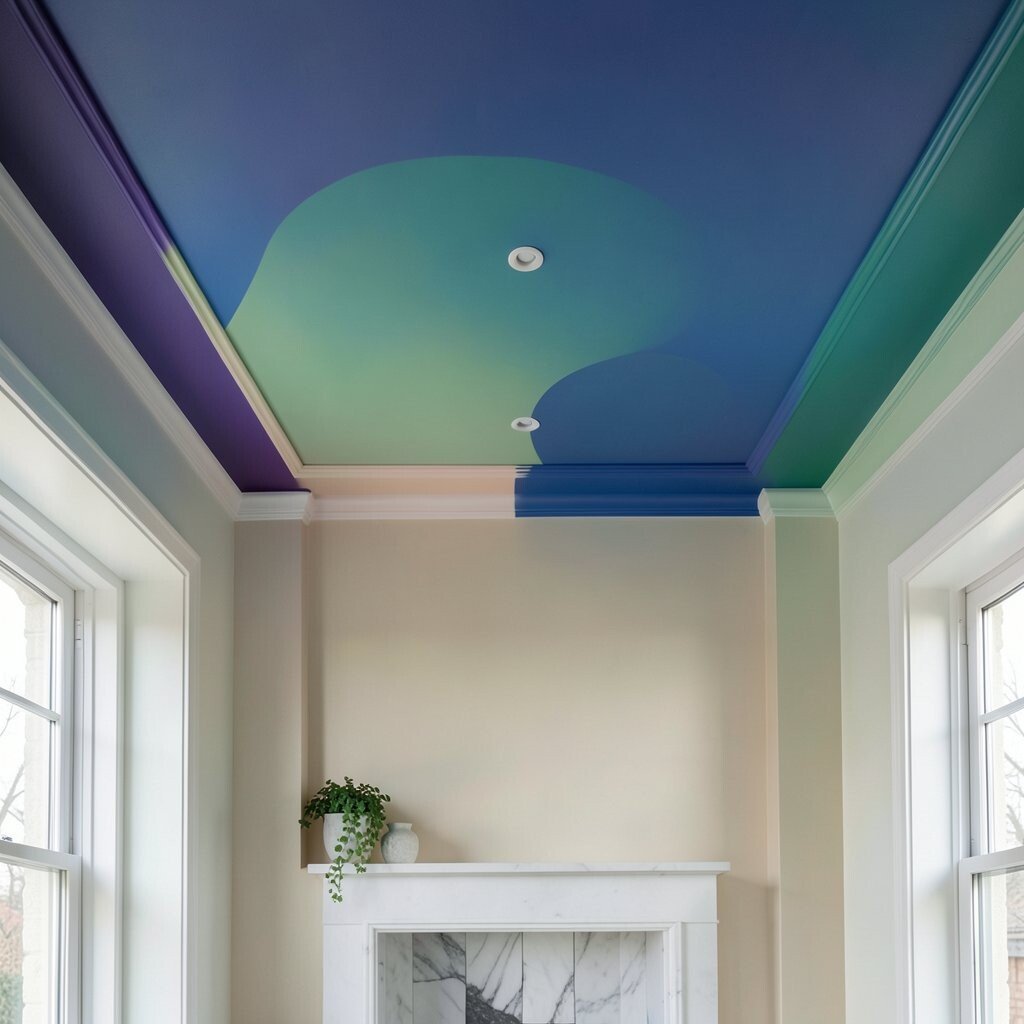
Skip the idea that ceilings must stay white and paint the whole ceiling in your favorite color. A full-color ceiling feels bold, immersive, and surprisingly cozy, especially in intimate rooms.
To keep it balanced, choose a shade that complements your flooring and upholstery rather than competing with them. If your walls are neutral, a full-color ceiling can be the hero while the room stays grounded.
When cost matters, one consistent coat can be simpler than complex multi-color designs. For personalization, bring a hint of the same color into cushions, artwork, or curtain ties so the ceiling feels like part of the overall style.
16. Light-Reflecting High-Contrast With a Ceiling Halo
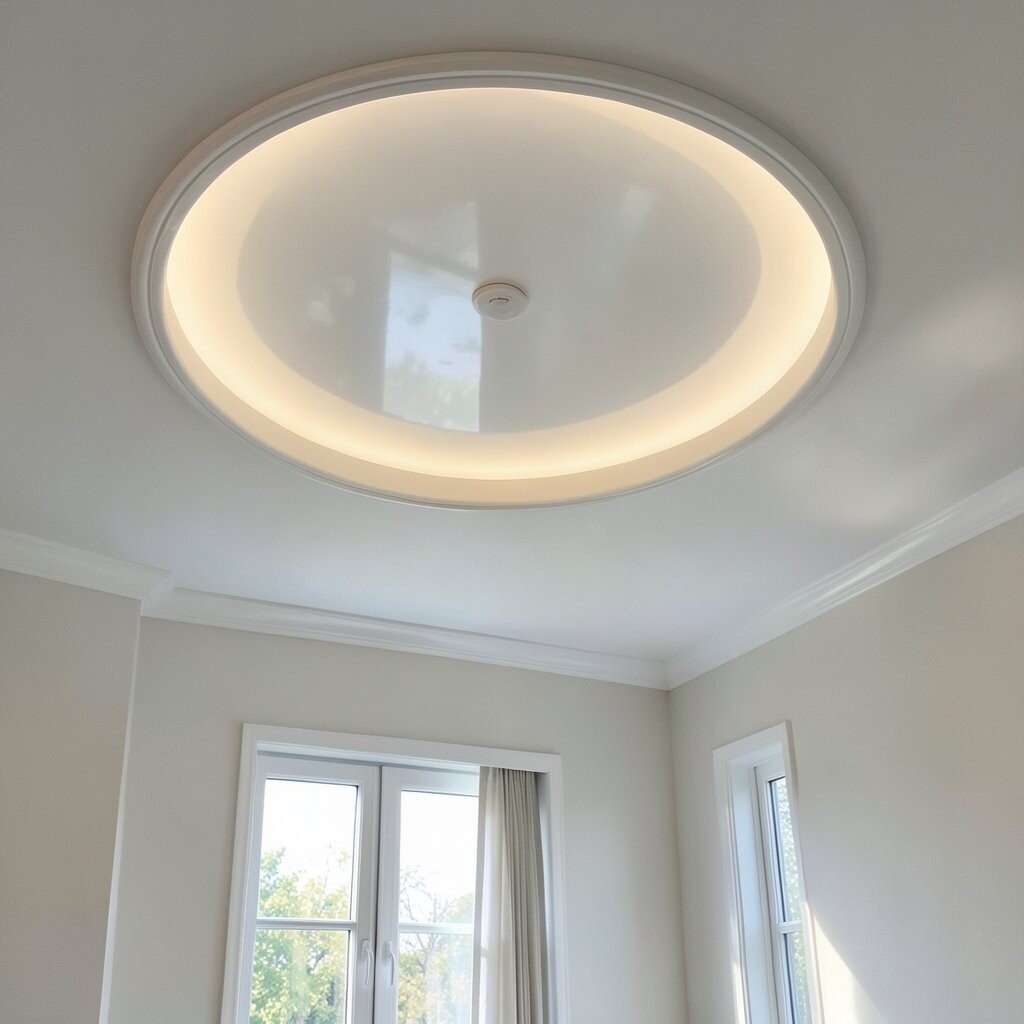
Create a “halo” around the center area by painting a lighter band on the ceiling and a deeper shade around the edges. The effect can make rooms feel taller and makes light bounce around more evenly.
Keep the halo shape gentle, like a rounded rectangle or circular glow, so it feels modern and not too formal. Use a steady hand and tape off the halo boundary, then use a roller for the large areas and a brush for the edges.
For uniqueness, match the outer edge color to your accent decor, such as a throw blanket or framed art. This design is also budget-aware because it relies on paint layering rather than expensive materials.