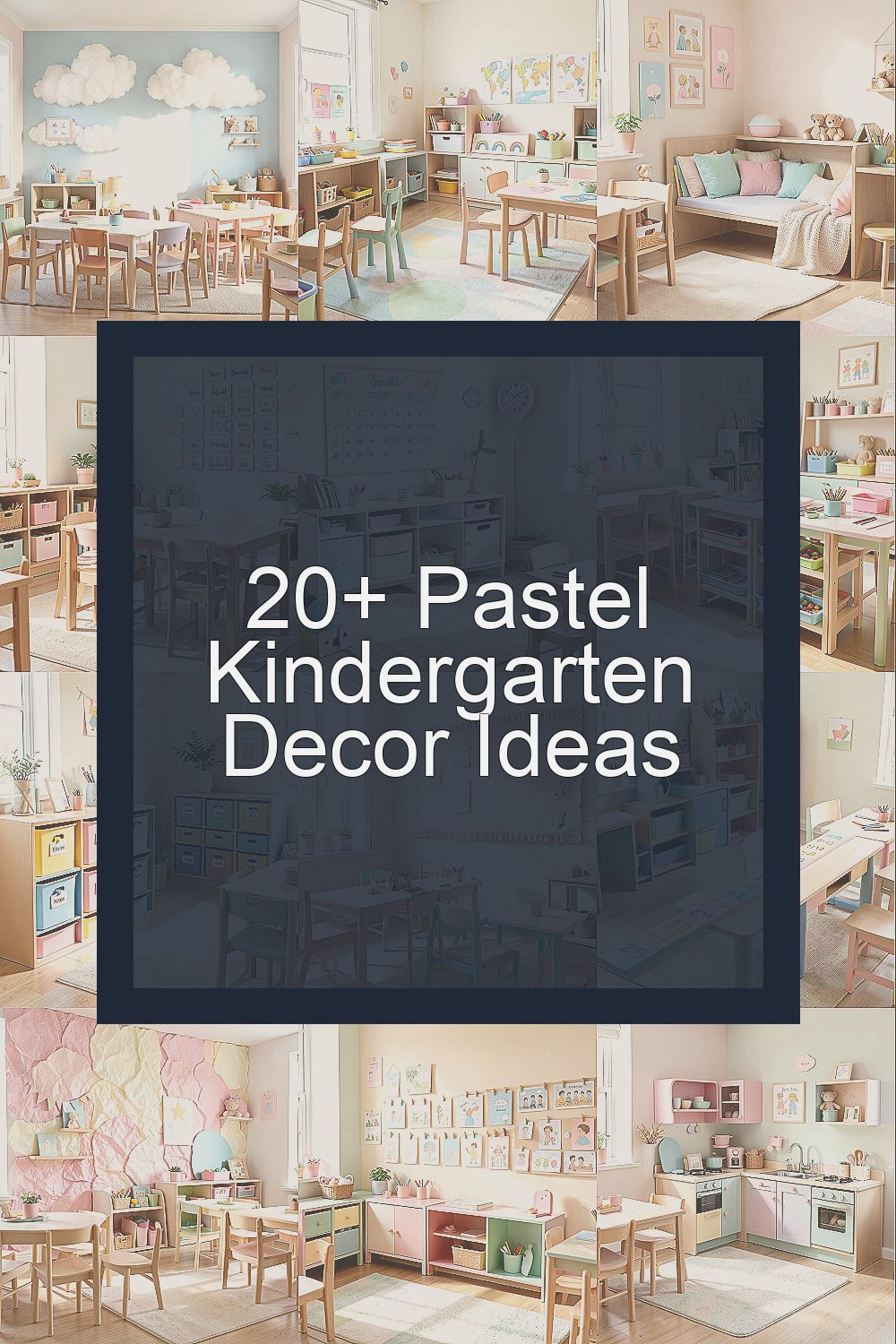
The right pastel classroom can feel like a gentle hug for little learners. Soft colors, smart layout choices, and cozy details help kids feel calm, curious, and ready to play.
Below are practical decor ideas you can use right away, with budget-friendly ways to make everything look special and personal.
1. Cloudlike Wall Accents
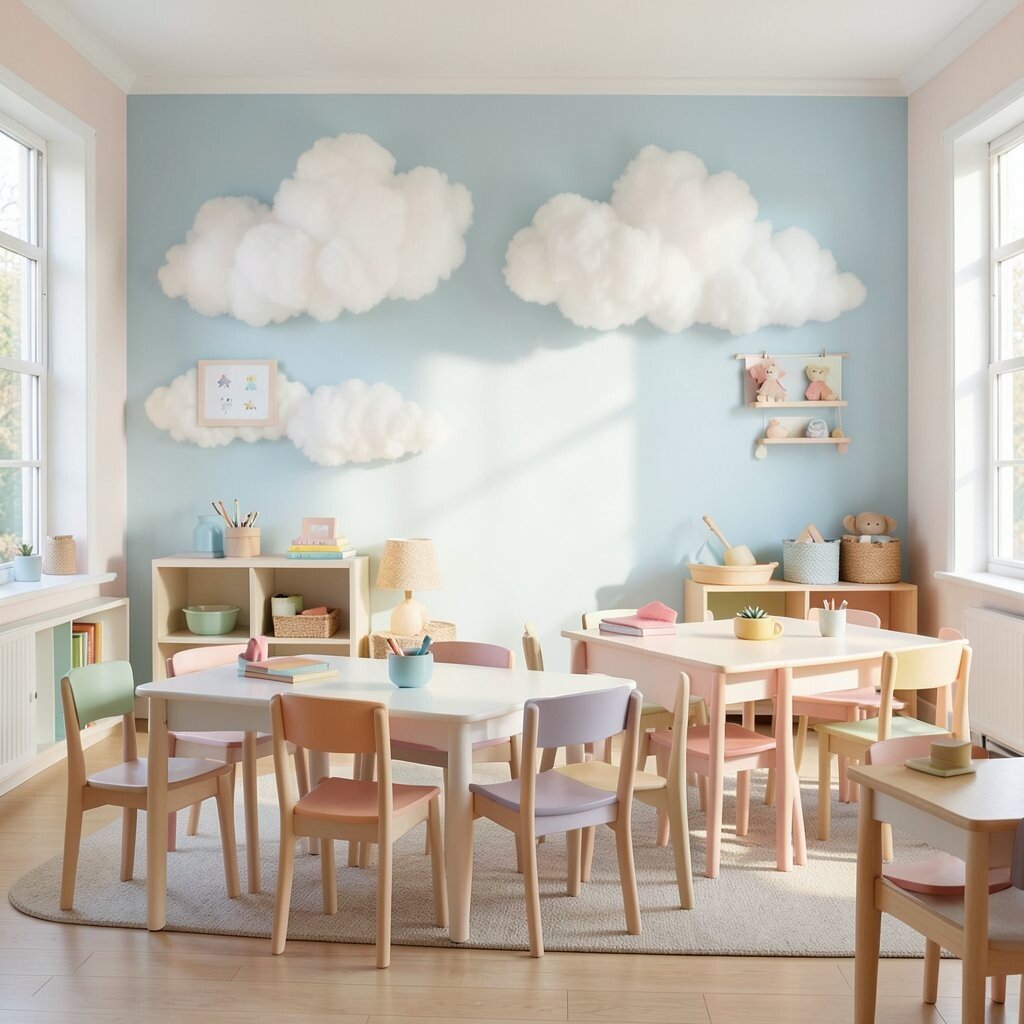
Imagine pale blue walls with fluffy cloud shapes drifting above kid-height sight lines. These airy accents make the room feel lighter and can help reduce the “busy” feeling that some classrooms get.
Use paper cutouts, foam shapes, or fabric banners to create a layered cloud look without heavy installation. Keep the clusters spaced so kids can still see bulletin boards clearly. Choose calm pastel tones like sky blue, mint, and creamy white. If you want it interactive, attach small pockets behind some clouds for picture cards and daily goals.
2. Rainbow-Soft Learning Labels
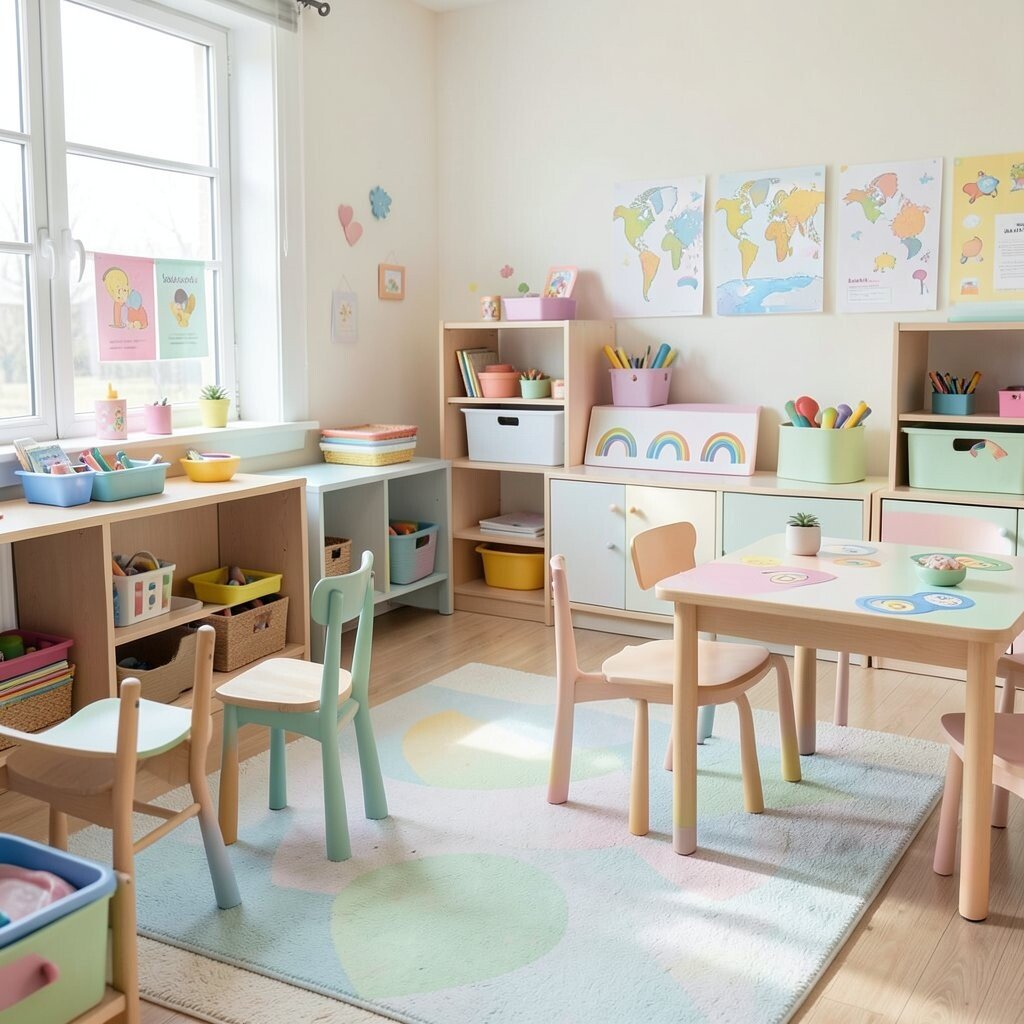
Place pastel labels on shelves, bins, and cubbies so kids know where things belong. When labels use gentle colors instead of bright neon, the whole room stays soothing.
Try organizing labels by learning areas with soft rainbow shades, like peaches for art supplies and light greens for science tools. Use simple words and matching icons so early readers can join in. Laminate or cover labels with clear tape to keep them durable through daily handling.
For personalization, print each label set with your class theme, such as “Garden Helpers” or “Ocean Explorers.” If you’re budgeting, make labels at home with cardstock and adhesive vinyl. Keep the fonts large and rounded so they look friendly from across the room. Replace only parts of the label set each term to avoid starting over.
3. Cozy Reading Nook with Pastel Pillows
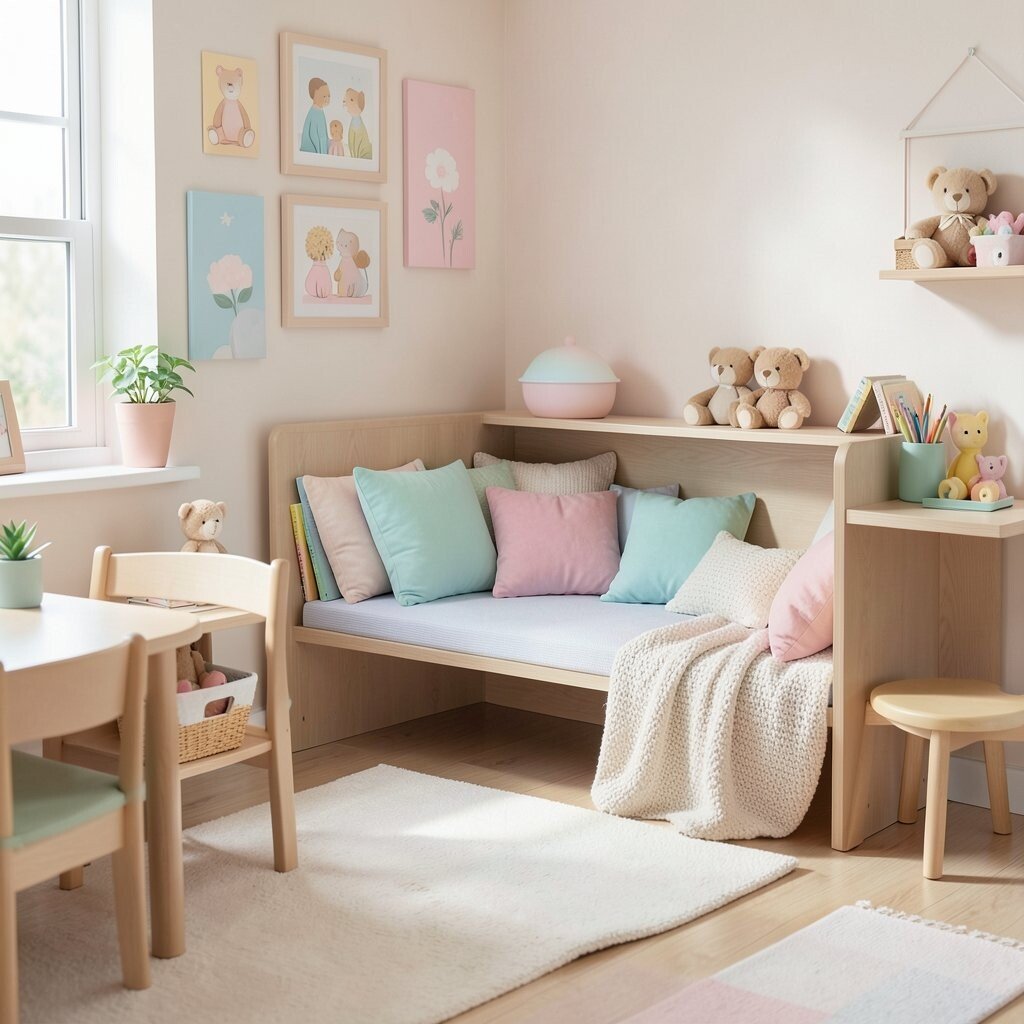
Create a small reading corner using a comfy rug, a low bookshelf, and pastel pillows in different textures. When kids curl up in a soft spot, they naturally slow down and focus on stories.
Use a neutral base like light beige or warm gray, then add pastel accents to keep it kindergarten-cute. Arrange pillows so a few kids can sit together comfortably, not all in a line. Add a small lamp or warm LED string lights to create a calm glow during read-aloud time.
To make it unique, rotate “story pillows” with different covers, such as one for fairy tales and one for counting books. In the classroom, consider using washable covers so spills are easier to handle. Pick colors that match your other decor so the nook feels like part of the room, not a random corner. If storage is tight, choose foldable cushions or pillows that can be stacked in a bin.
4. Pastel Sight-Word Display Cards
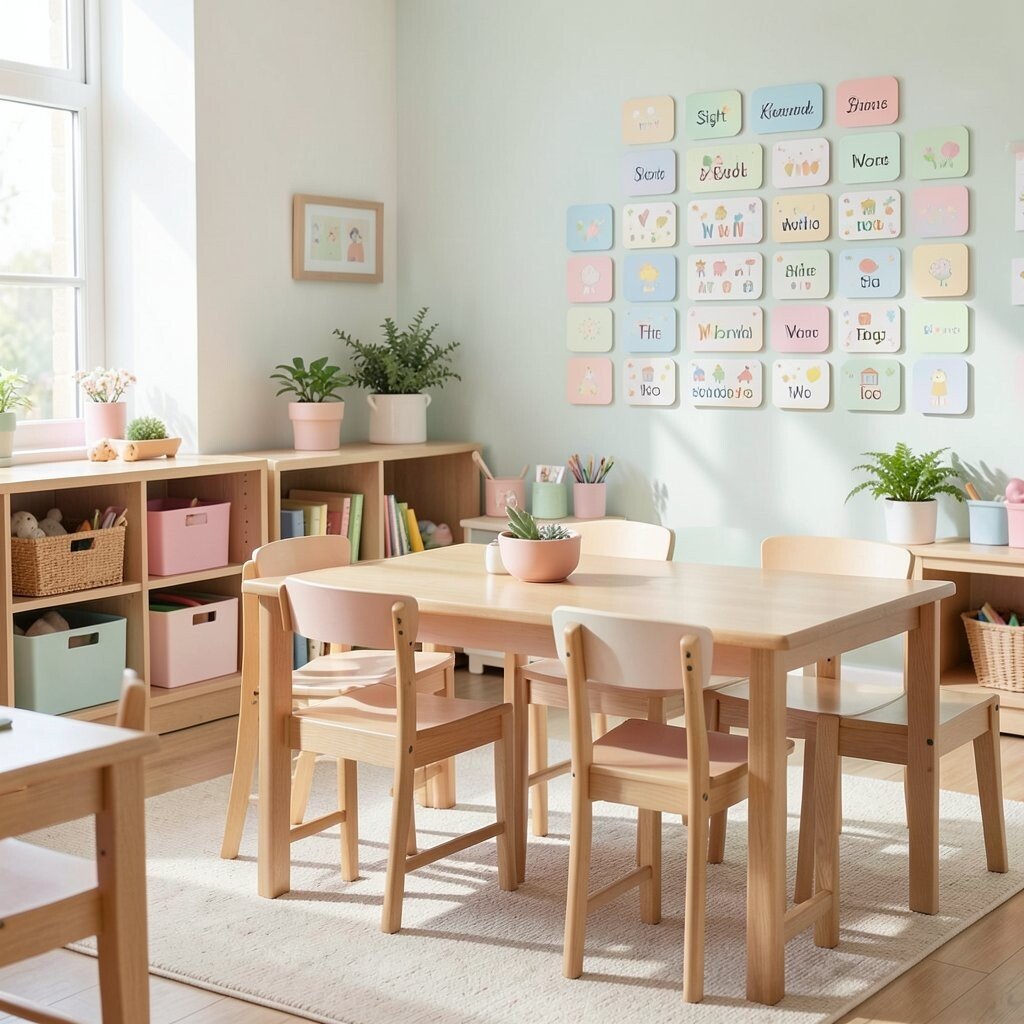
Set up sight-word cards on a wall rail or bulletin board using soft pastel backgrounds. Kids see familiar words often, which supports confidence as they practice reading.
Write each word in dark, readable lettering and pair it with a simple picture. Place the display at a height kids can reach without climbing. Update the cards gradually so the board stays fresh and not overwhelming.
5. Gentle Calendar and Weather Station
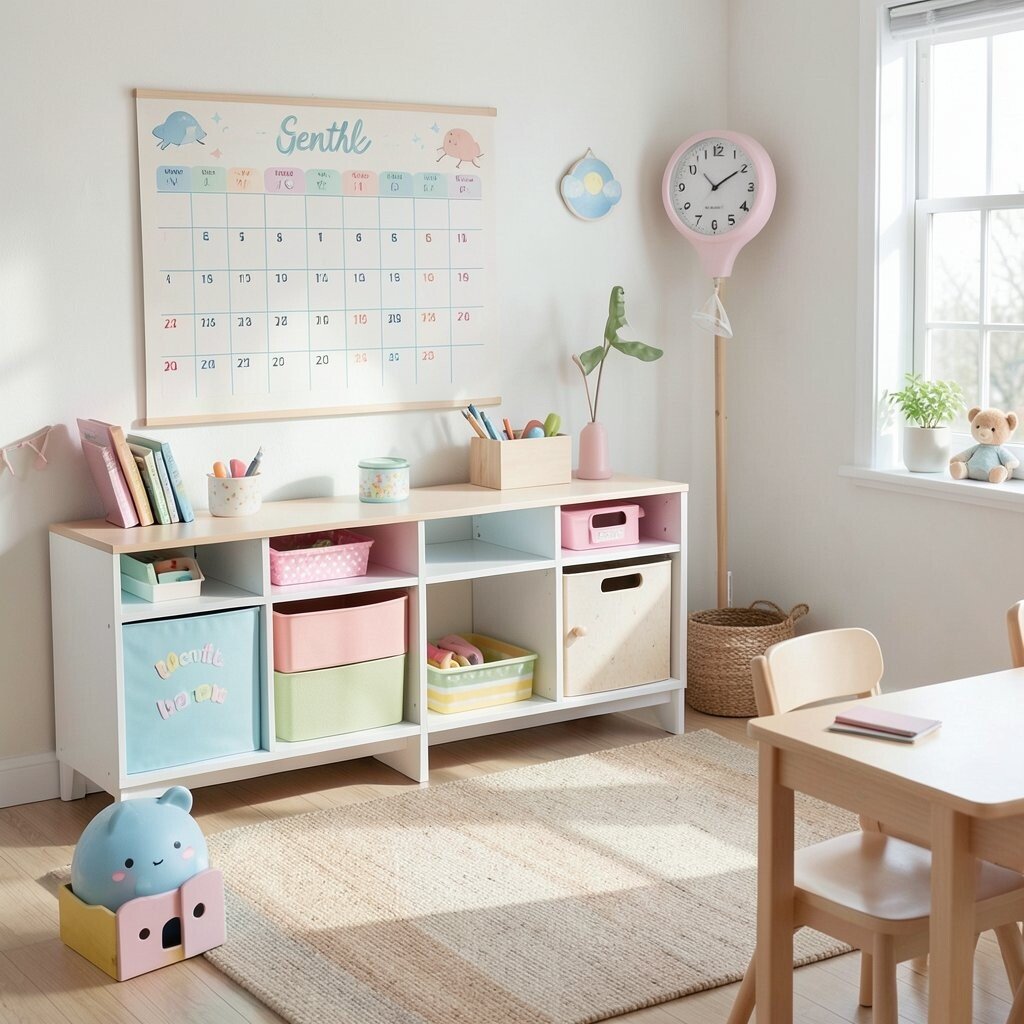
Use pastel elements for your calendar and weather area so the daily routine feels calm. A tidy station helps kids transition faster because they know what comes next.
Choose a background in light lavender or pale mint and keep the pieces matching. Use magnets or Velcro for the date and weather symbols so kids can move them with confidence. Add a small pocket for “today’s helper” cards and a separate spot for attendance.
If you want it current with classroom trends, consider adding a simple “feelings” section using soft icons like happy clouds and cozy hearts. For cost control, reuse a bulletin board backing you already own and print only the movable icons. Personalize with your students’ first names or family-friendly themes. Keep the station consistent all year so kids rely on it as a trusted routine.
6. Tiered Tray Art Supply Organization

Pastel decor looks even better when supplies are neatly organized in labeled trays. A tiered organizer keeps paint, markers, and paper from turning into a clutter pile.
Pick bins in light colors, like blush pink, buttery yellow, and powder blue, so everything blends into the room. Place the most-used items at kid reach height and store overflow behind. Use dividers to keep small items from mixing, which also saves cleanup time.
7. Color-Matched Cubbies and Name Tags

Design cubbies with soft colors and clear name tags so kids feel ownership from the moment they arrive. When their spot is easy to find, routines get smoother and mornings feel less rushed.
Use one pastel shade per cubby group, or match the tag color to the label colors on shelves. Print name tags with big letters and a fun little border, like tiny hearts or stars. Make tags sturdy by using cardstock and a clear cover.
For personalization, add a small icon that matches each child’s interests, such as a cat, rocket, or flower. This makes the hallway feel warm and welcoming without needing expensive artwork. If you’re watching costs, reuse plain tag holders and just swap the printable inserts each term.
8. Blush Bulletin Board with Fabric Trim
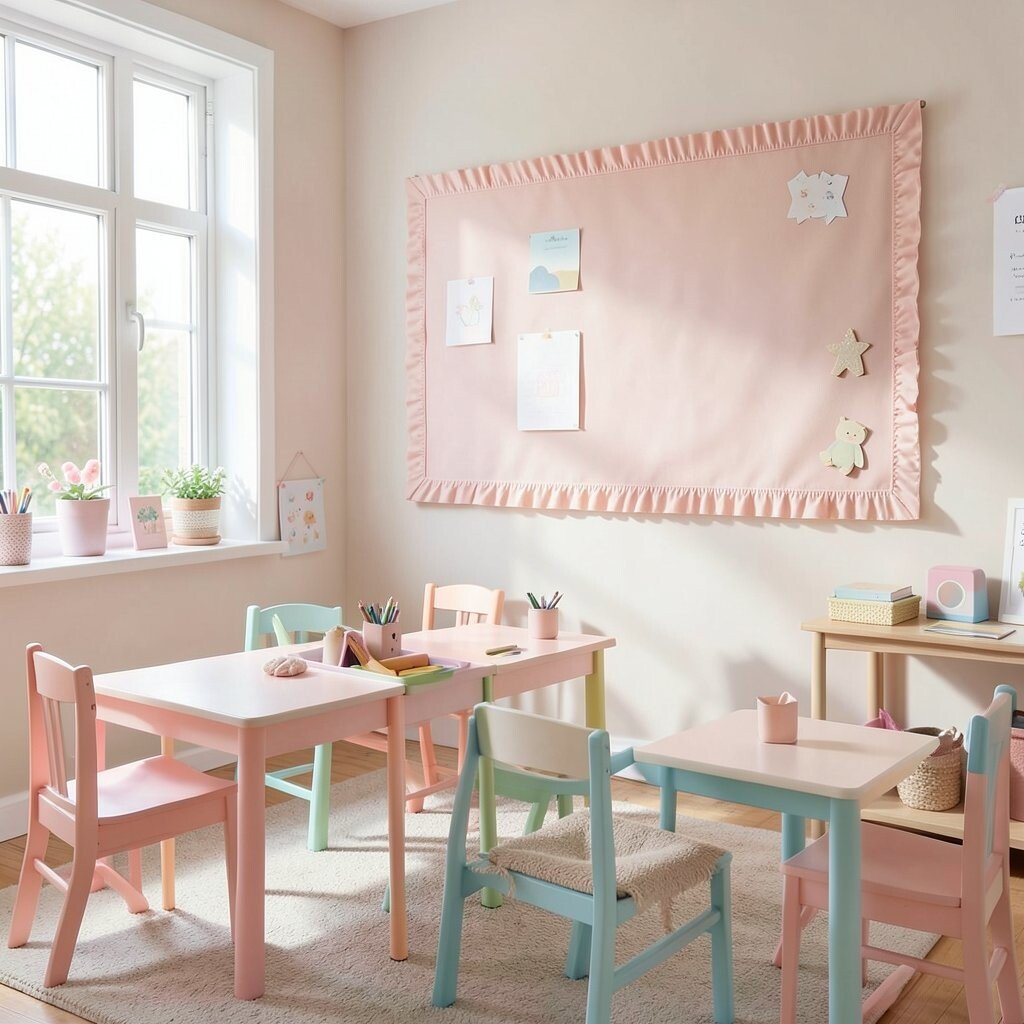
Bulletin boards can look soft and polished when you frame them with fabric trim. A blush or pastel-colored border makes the display feel like part of the classroom design, not an afterthought.
Choose a fabric you can easily wipe, or use felt for a gentler look. Keep the center clean and readable by limiting how many layers you add. Pin seasonal items with pushpins so swapping work is quick and neat.
9. Pastel Number Line That Kids Can Touch
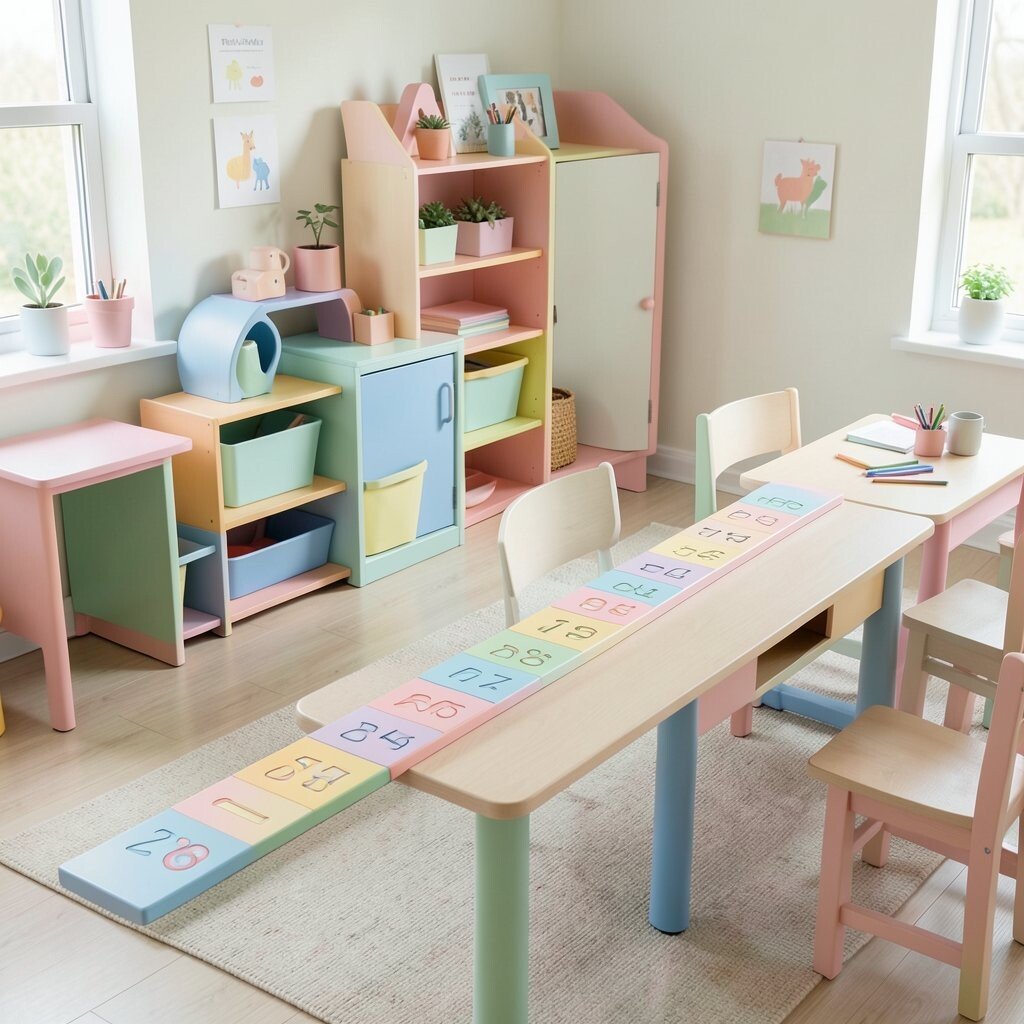
Create a number line across a low wall or along a shelf front so kids can practice counting. A tactile number line helps many learners because it connects movement with math.
Use pastel colors for each section, like peach for counting and mint for simple addition signs. Add magnetic number pieces for quick games and center time. Make sure the numbers are large and bold so kids can see them from their seats.
To personalize, include a few removable markers tied to your classroom theme, like seashells for ocean units. For budget-friendly materials, you can laminate printed numbers and use Velcro dots to attach them. Keep the number line at kid height so kids can check answers independently. This also supports classroom flow when the teacher is busy with a small group.
10. Cozy Tissue-Paper Wall Texture
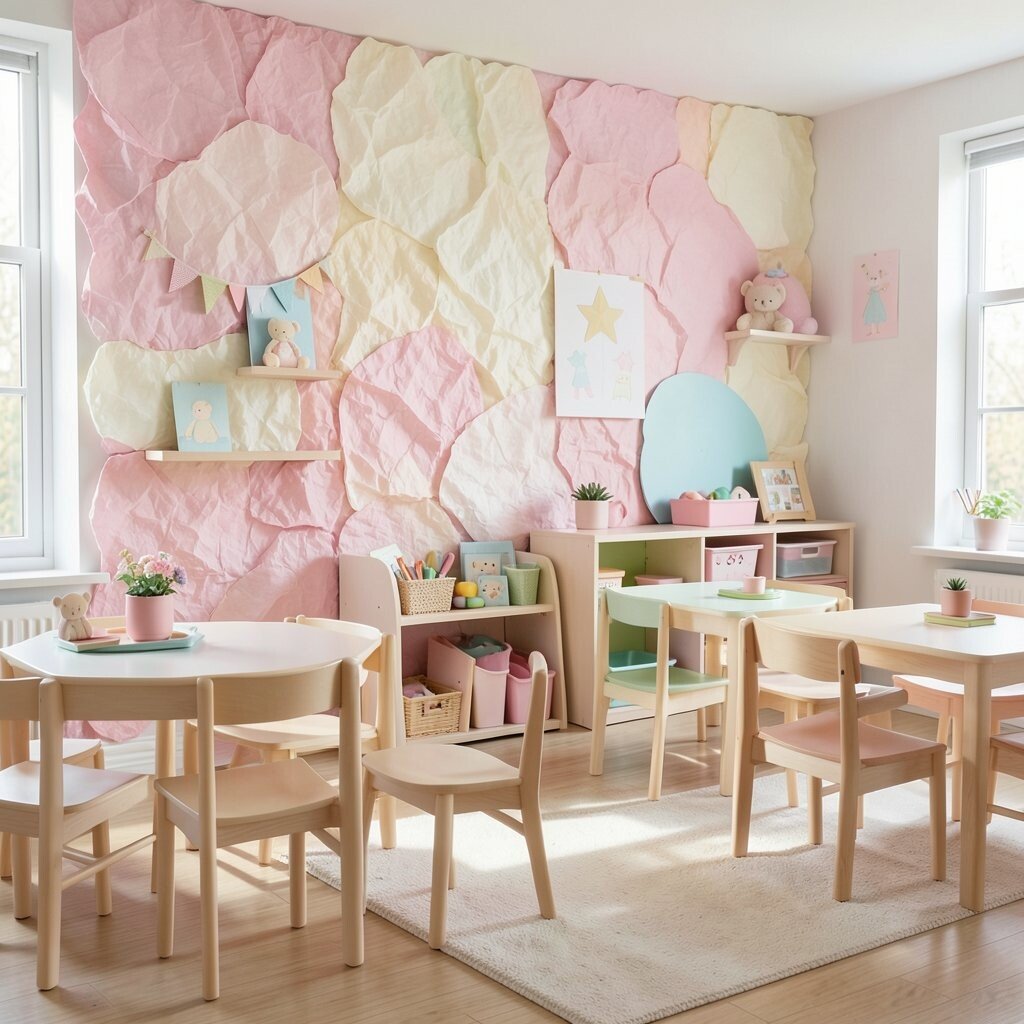
Add light tissue-paper garlands or paper rosettes in pastel shades for instant softness. These textures make walls feel lively while still staying gentle and calming.
Hang them in clusters near art areas or above the carpet so the room has visual interest. Use a mix of sizes so the layout looks intentional rather than scattered. Keep colors coordinated so it doesn’t compete with posters and student work.
11. Pastel Student Work Gallery with Clothespins
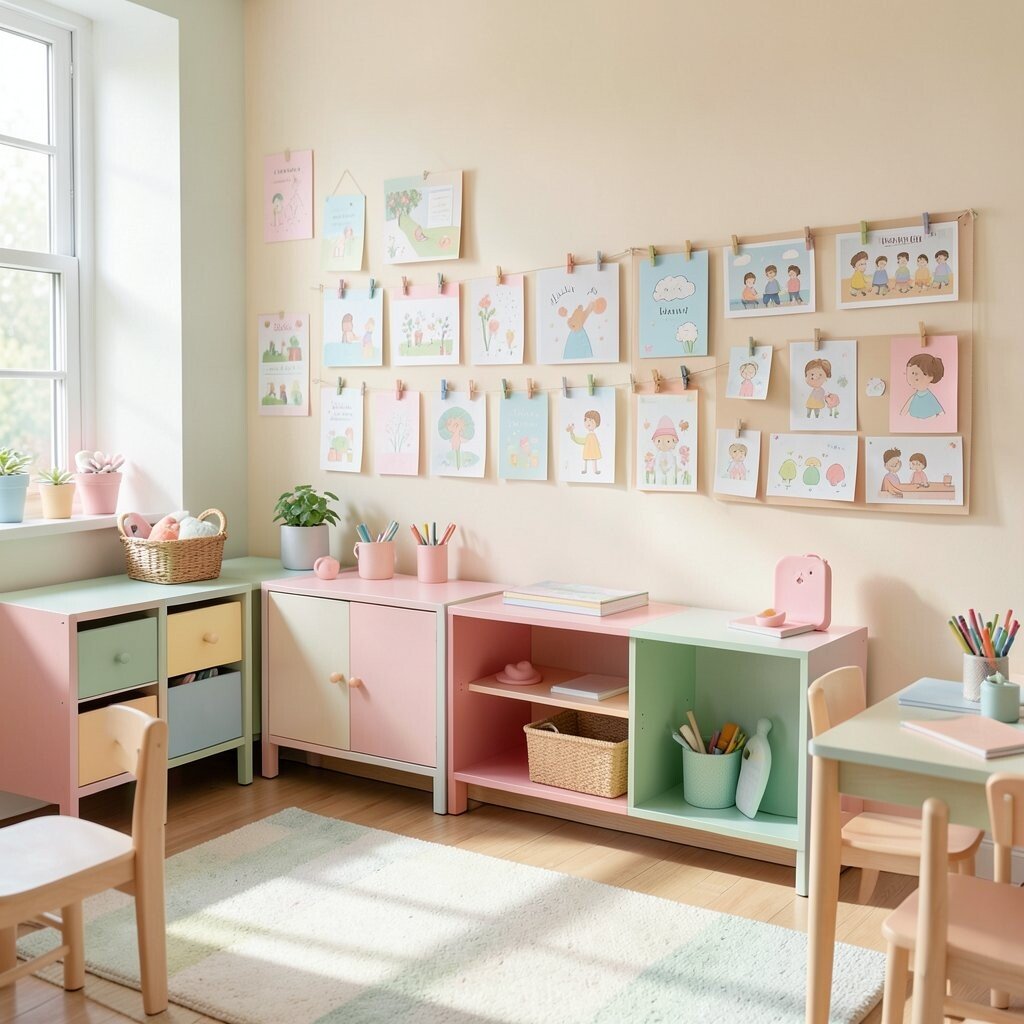
Turn student masterpieces into a rotating gallery using pastel clothespins on a line or wire. It’s a fun way for kids to see their progress and feel proud of their creativity.
Use soft backing paper in light pink, cream, or sky blue so the art pops. Add a label space for date and class name so families can spot their child’s work. Clothespins are inexpensive and easy to swap when new pieces arrive.
For personalization, give kids a choice of small pastel frames or card stock borders to match their own style. Try using clothespins on string for a gentle look, and keep the line at a height that kids can help with. This supports independence during cleanup because kids can take their work down. If you’re mindful about costs, reuse the same clothespins and just replace the backing and border inserts.
12. Play Kitchen Corner with Soft Colors
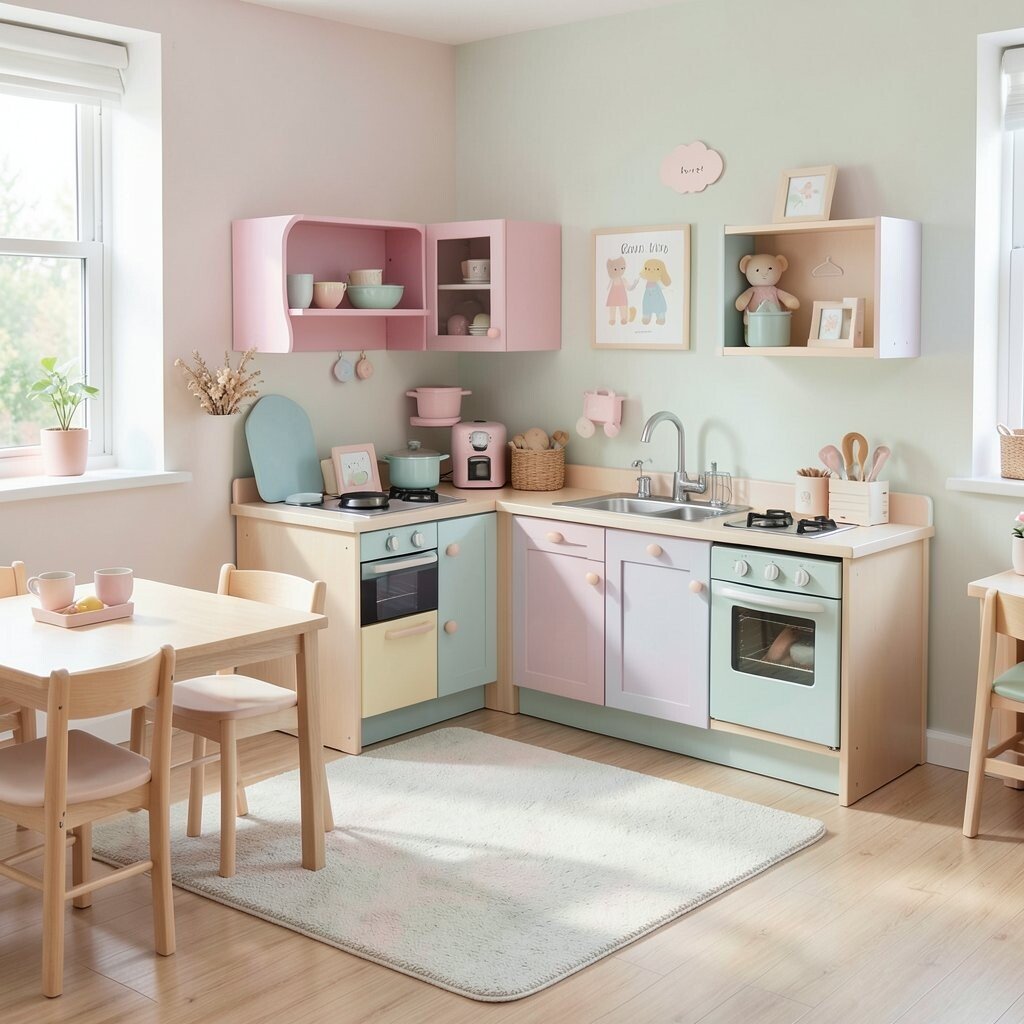
Design a play kitchen corner using pastel dishware, cups, and pretend food in light colors. A gentle theme helps pretend play feel calm, and kids often stay engaged longer.
Use shelves with pastel baskets so pretend ingredients look neat and easy to grab. Add a small menu board made with washable markers for role-play storytelling. Position the kitchen near a soft rug so it feels like a dedicated zone, not just scattered toys.
13. Soft Seating Area with Color-Blocked Rugs
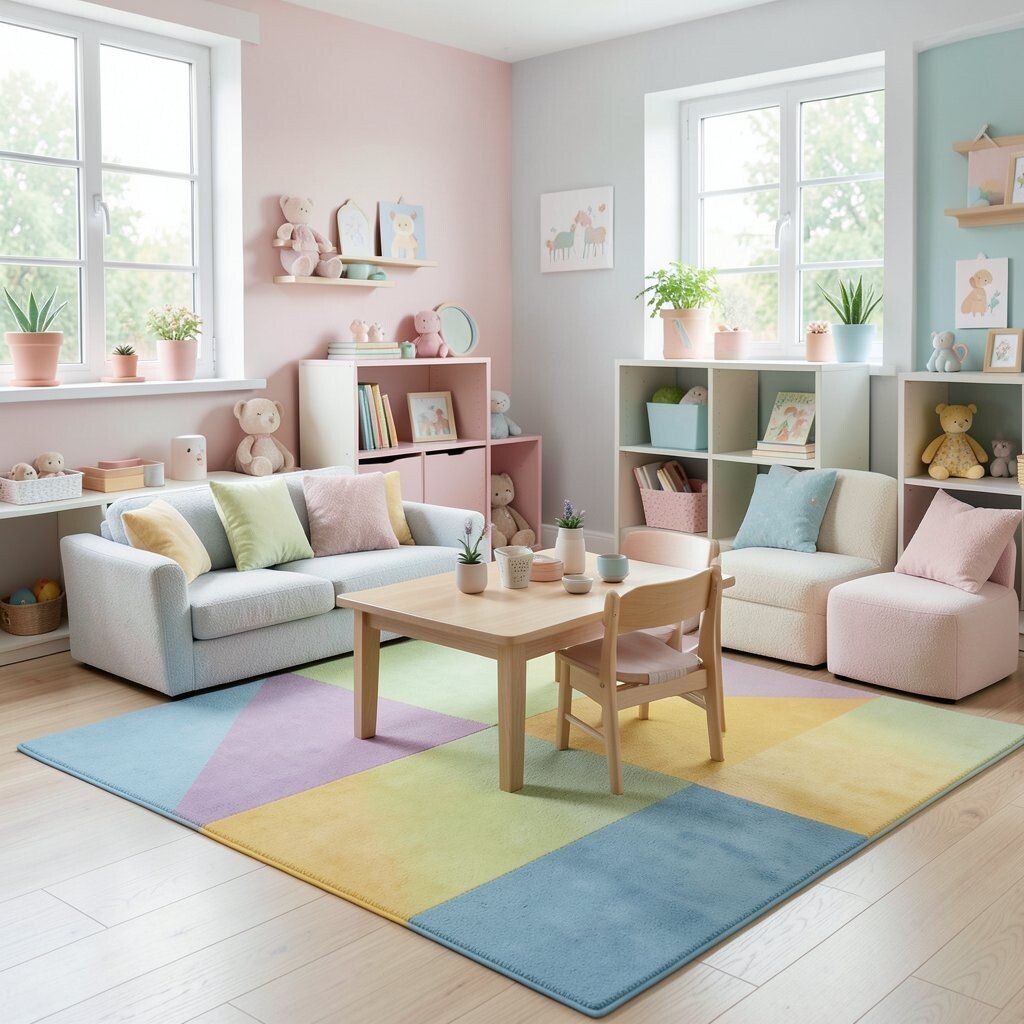
Choose a pastel rug with subtle color blocks to define the main seating area. When kids can “see” where to sit, the classroom feels organized even during busy transitions.
Keep the seating area large enough for the circle time group plus a few extra spots for wigglers. Use rugs that are easy to clean because spills happen, and you deserve less stress. For uniqueness, pick a rug with friendly shapes instead of loud patterns.
To personalize, place a small set of removable markers on the rug that match each child’s seat color. If you want a trend that many classrooms like, add a sensory-friendly “quiet spot” mat nearby using a muted pastel. This helps kids cool down without leaving the learning space. Budget-wise, you can use a large inexpensive rug and layer it with a smaller, nicer mat for visual interest.
14. Pastel Storage Tower with Photo Fronts

Build a simple storage tower and add pastel labels plus small photos of what belongs inside. Photos help kids who are still learning words because they can match pictures quickly.
Choose a tower with drawers or bins so items stay separated and easy to clean. Keep the top layers for less-used supplies and the bottom for daily materials. Use soft colors on the label cards so the tower looks friendly.
15. Calm Corner with Feelings Posters
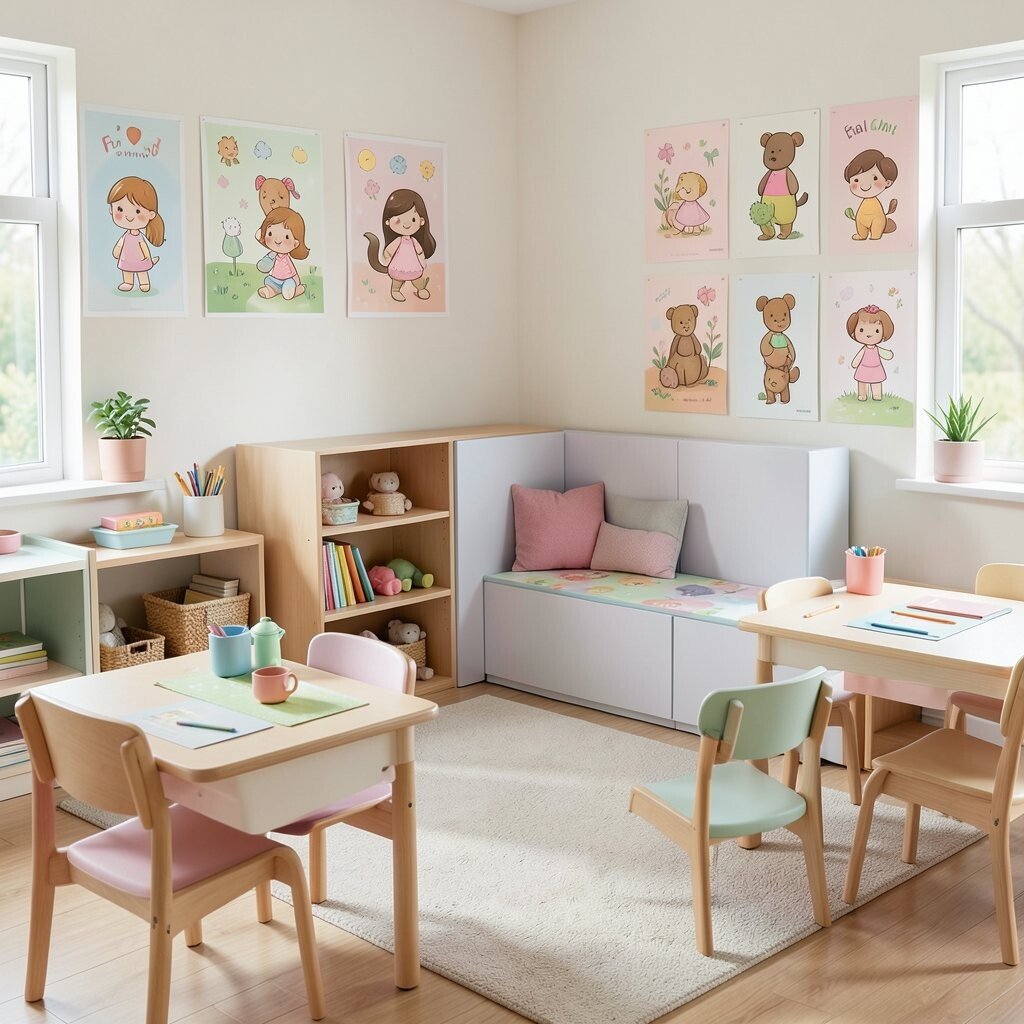
Create a calm corner using pastel posters and a soft bin of fidgets. When children can identify feelings and choose a soothing tool, behavior support becomes more natural.
Use pictures of expressions in light colors so the corner feels gentle rather than clinical. Add choices like breathing cards, a comfort book stack, and a small basket of sensory items. Keep the space stocked so kids don’t have to ask every time they need help.
For personalization, include your class’s names on a “support team” sign so kids know who can help. Try using Velcro to attach feeling cards so the set can change as moods shift. Keep the calm corner in view but set back slightly so it feels like a safe pause. When cost matters, print feeling cards at home and use a thrifted chair or cushion as the base.
16. Pastel Classroom Door Décor Theme

Give your classroom door a pastel makeover with a theme that sets the mood from the hallway. A welcoming door helps families and kids feel proud before they even step inside.
Use a simple arch of pastel cutouts or a wreath made from felt circles. Add a sign with your class name in large, friendly letters. Keep the door display readable from a distance so it works during busy drop-off times.
17. Classroom Word Wall with Color-Gradients
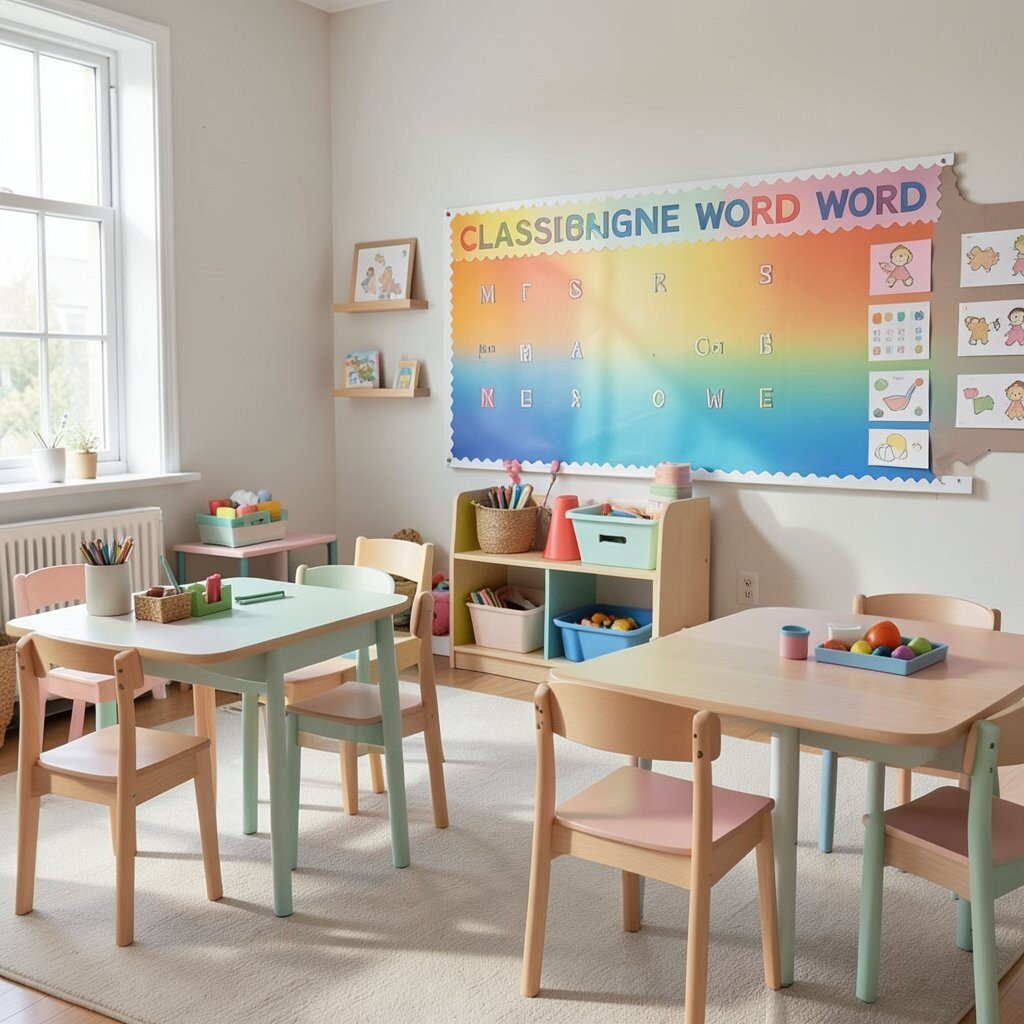
Build a word wall where each category uses a pastel gradient. A gradient can feel playful while still keeping letters organized and easy to scan.
Write key vocabulary in dark ink and set each set on a colored background like pale peach to soft orange. Use pockets or individual cards so you can swap words as topics change. Keep word headers consistent so kids learn the layout over time.
To keep things unique, include a few “kid-chosen words” each week that students add to the wall. Use stickers or small icons so kids can find new terms faster. If you’re saving money, print category cards and use a cheap binder ring system or foam board. Make sure the word wall isn’t too tall so younger kids can reach and point without stretching.
18. Pastel Science Table with Sorting Trays
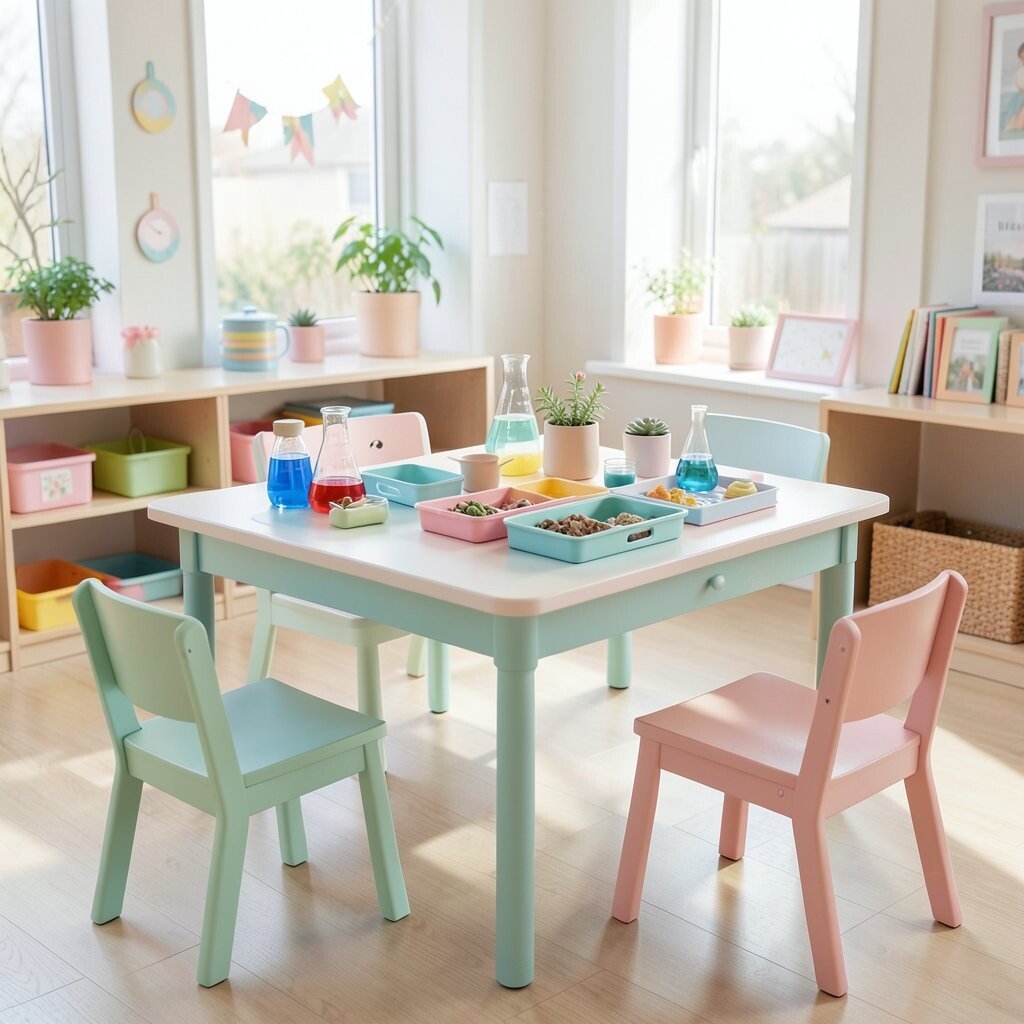
Set up a science table where kids can sort shells, leaves, or safe magnifying tools in pastel trays. Hands-on sorting builds curiosity and language, and it looks adorable with a soft color plan.
Use shallow bins in mint, blush, and pale yellow so contents are visible. Label the trays with pictures so kids can reset the area correctly after exploring. Choose a table cover that feels neutral, then let the pastel trays bring the charm.
Personalize the table by rotating themes, like “moon rocks” using dyed rice and glow stickers during certain units. For current trends, many classrooms now favor open-ended learning stations, so keep the materials varied and reusable. Budget-wise, look for inexpensive craft trays and add washable labels. Make cleanup easier by using small bin handles that kids can carry as a group.
19. Pastel Curtain Panels for Soft Light Control
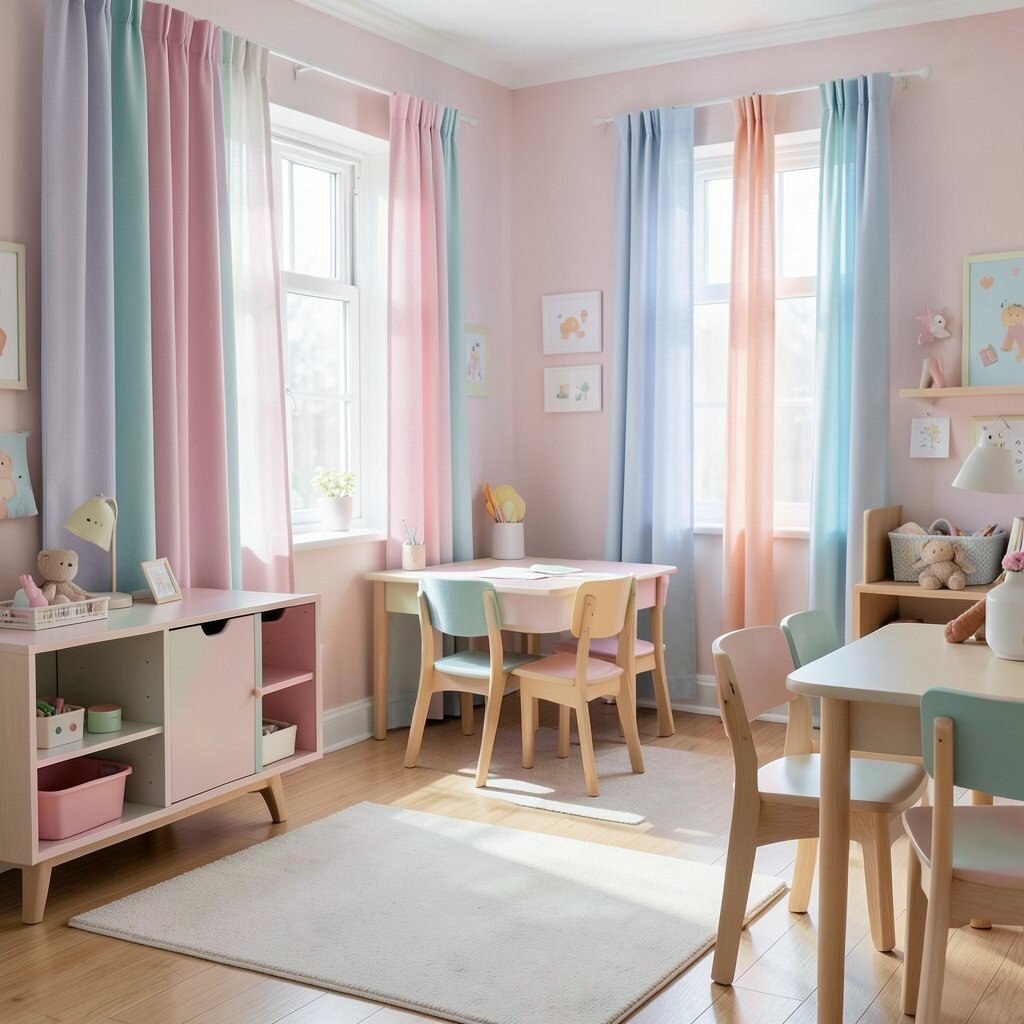
Use pastel curtain panels to soften daylight and create a calmer visual background. Gentle light can make the whole room feel cozy, especially during story time.
Pick sheer or thin curtains in pale tones like cloud white or butter cream. This helps keep the room bright while still reducing glare on posters. Tie the curtains back with simple pastel ribbons so kids can’t pull them down easily.
20. Outdoor-Inspired Corner with Faux Garden Elements
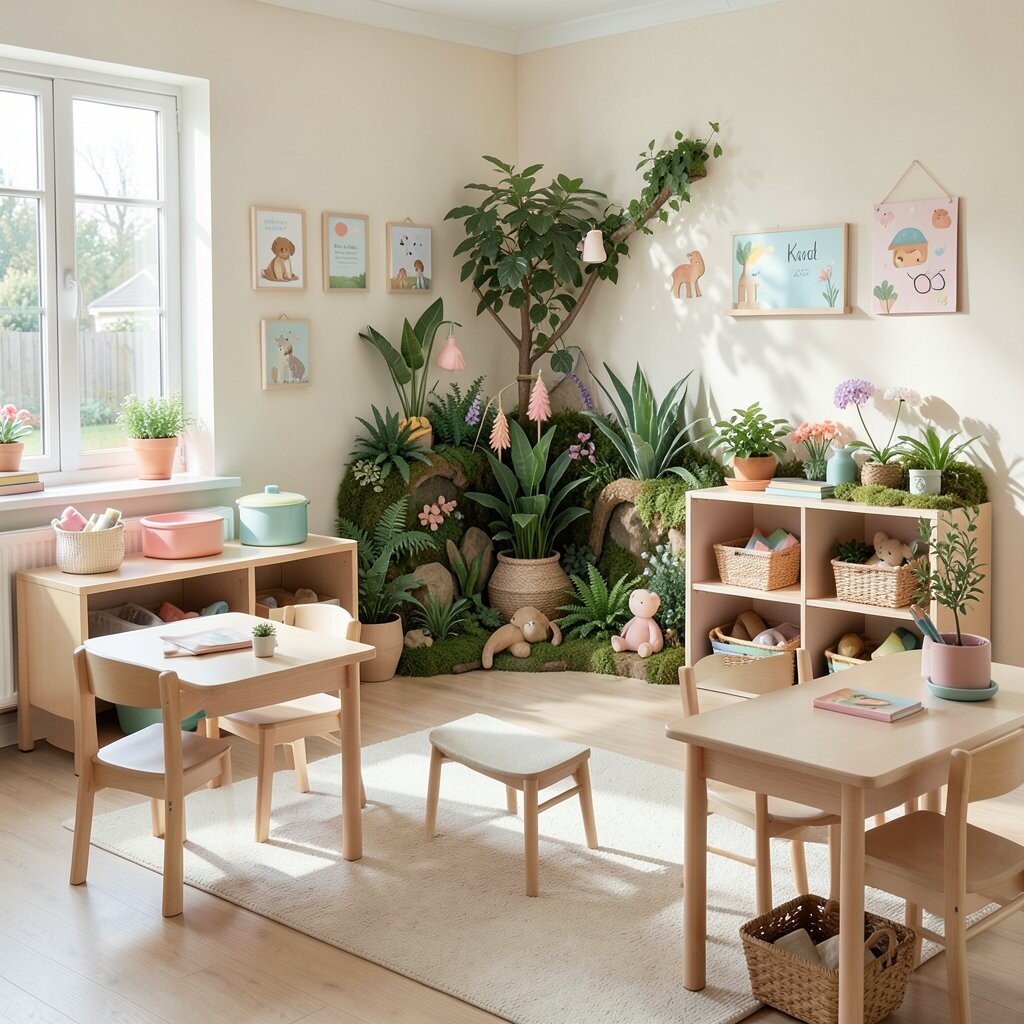
Bring a little outdoor magic inside with faux garden decor in pastel colors. Think light green leaves, soft pastel flowers, and a small “bug hotel” shelf for nature talk.
Create a mini garden display on a low shelf where kids can touch and move safe items. Use baskets labeled with pictures so tools and pretend seeds return to their places. Keep the garden corner near the art area so you can tie it into drawing, writing, and pretend play quickly.
For personalization, let kids add their own leaf prints or flower shapes to the display using washable paint. If costs matter, use thrifted frames and paint them mint or blush instead of buying brand-new pieces. A trend many classrooms like is nature-based sensory play, so consider adding a small tray with colored sand or rice for “gardening.” Just keep materials safe and easy to clean.
21. Pastel Theme Banners for Key Transitions

Hang pastel banners that signal transitions, like getting ready for music, cleanup time, or story time. When cues are visual and gentle, kids follow along with less scrambling.
Use soft colors and simple icons, such as a small book for reading and a cupcake for share time. Place banners at eye level so kids can notice them without calling across the room. Keep the wording short and friendly so it’s easy for early learners to understand.
To personalize, add kid-made symbols to the banner set, like painted stars or cut-paper shapes. Consider using Velcro so you can swap icons quickly each month. For cost considerations, start with one banner and reuse it by changing only the icon cards. This keeps the decor feeling fresh without buying new supplies constantly.