
The right tile pattern can make a room feel calm and lively at the same time. Sage green herringbone brings a fresh look that feels both modern and warm.
1. Kitchen Backsplash With Soft Sage Rhythm
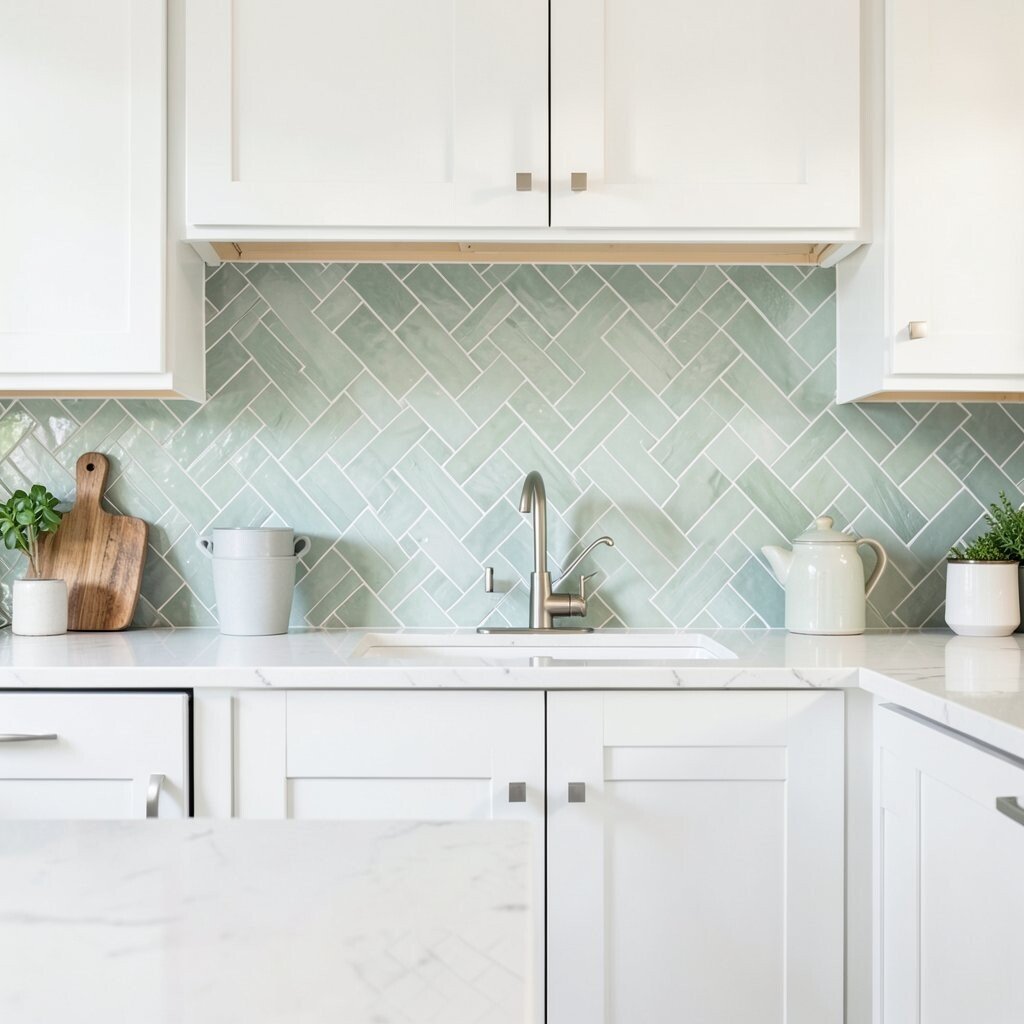
A sage green herringbone backsplash makes your kitchen look neat and full of life. The zigzag lines catch light as you move, so the wall never feels flat.
Pair the tiles with warm white grout for a lighter, brighter finish. Keep the counter simple with light wood or solid white to let the pattern stay the star. For a practical touch, use a sealing product made for your tile so spills wipe up easily.
2. Entryway Accent That Welcomes Light
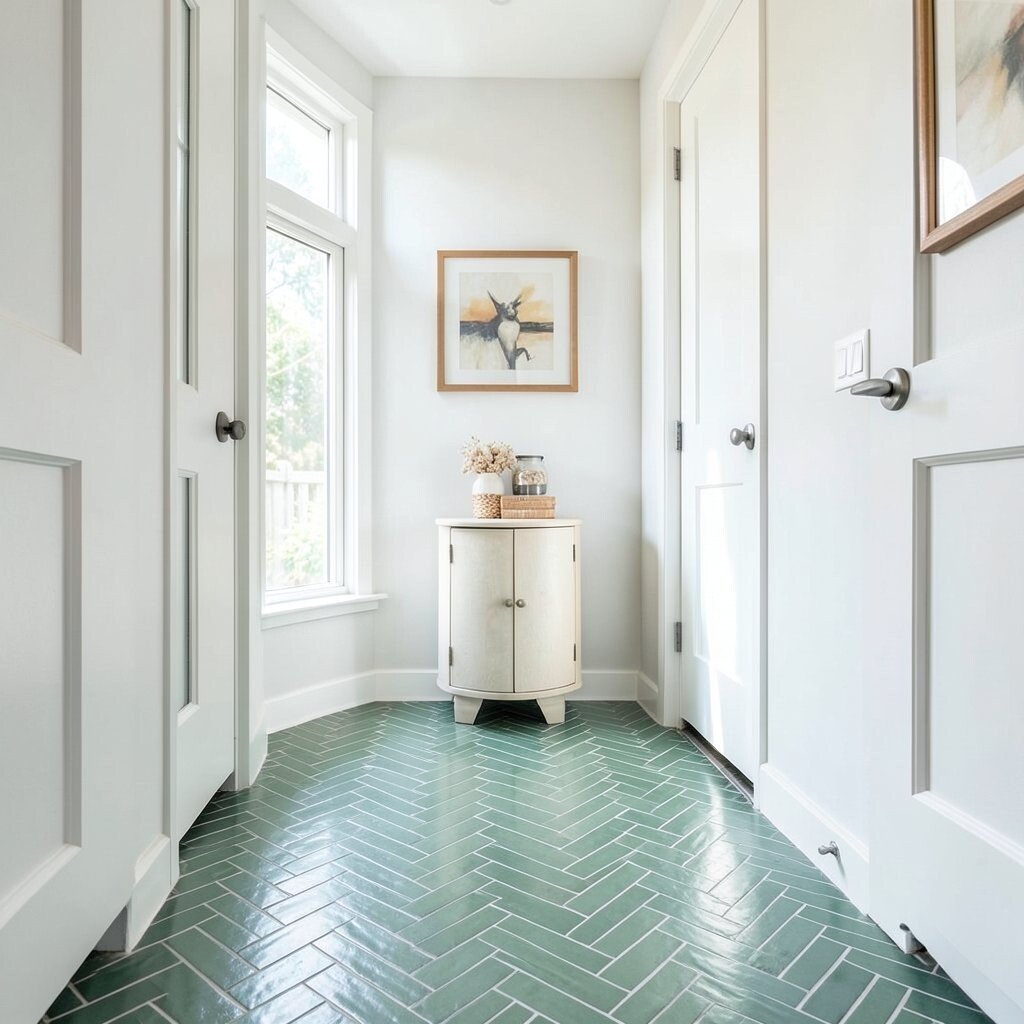
In an entryway, sage herringbone tiles can turn a small space into something that feels inviting. The angled pattern helps the floor look more dynamic even when the hallway is narrow.
Choose slightly larger tiles for easier sweeping and fewer grout lines. Add a bench with a light cushion and a mirror to bounce daylight toward the pattern. If you live in a wet climate, go for a slip-resistant finish so the look stays safe.
Consider matching the tile undertone to your paint, especially if your walls lean warm. A thin border of the same tile can frame the doorway without making the entry feel busy. Budget-wise, entry floors often use fewer tiles than full rooms, which can help keep costs in check.
3. Bathroom Floor That Feels Like a Spa
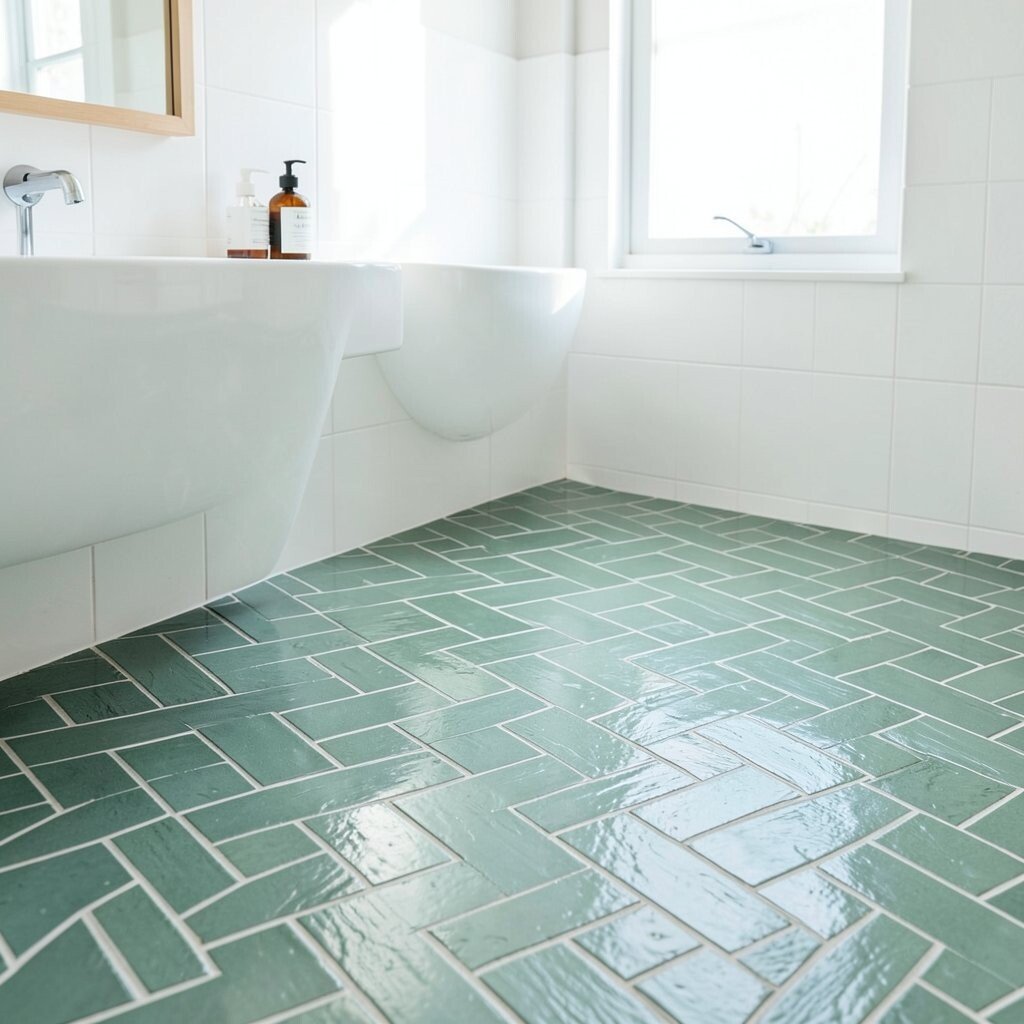
A bathroom floor in sage green herringbone gives a gentle spa mood. The herringbone shape makes the room feel taller, even when space is limited.
Use a matte or satin glaze to reduce glare from overhead lights. Keep the vanity hardware in brushed nickel or warm brass so the green feels balanced. For practical upkeep, pick grout that resists stains and choose a runner mat near the shower area.
Personalize it by adding a small niche shelf in matching tile for shampoo bottles. If you want extra brightness, choose light wall paint with a soft cream tone. This idea can be cost-friendly because bathroom floors are a contained area, so you can focus your spending on quality grout and finish.
Try laying a small test section first to see how your lighting changes the green from morning to evening. When the tone shifts naturally, the pattern stays flattering all day.
4. Fireplace Surround With Modern Calm
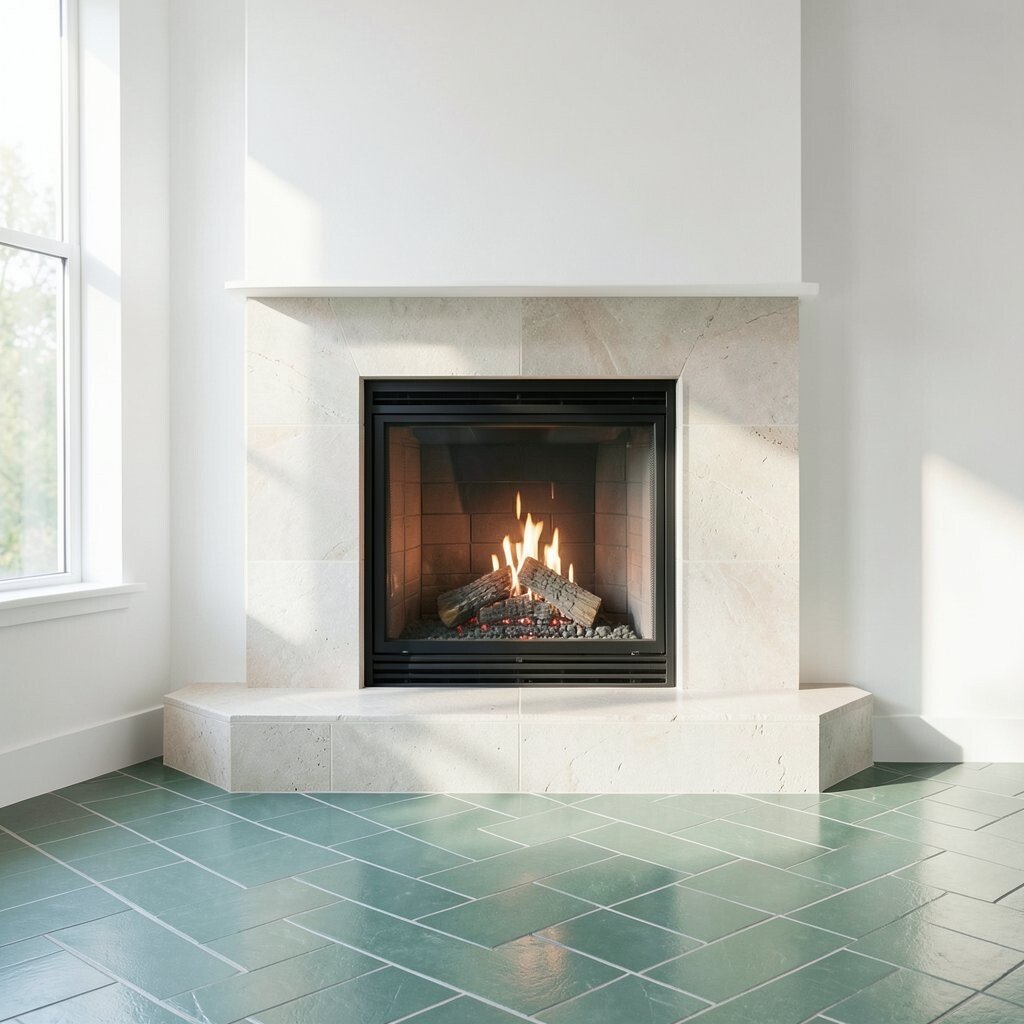
Putting sage herringbone tiles around a fireplace brings a cozy, clean look. The diagonal pattern adds energy without feeling flashy.
Keep the mortar and grout color bright to help the surround look airy. Pair the tile with a simple mantel in light oak or painted white. For easy cleaning, seal the tiles and choose a fan-rated, heat-safe installation approach.
If you love contrast, add a darker hearth stone so the sage stands out. This setup also hides minor wall imperfections better than perfectly flat finishes. Because fireplace surrounds cover a limited height, you can sometimes choose premium tile without blowing your budget.
5. Laundry Room Walls That Make Chores Feel Lighter
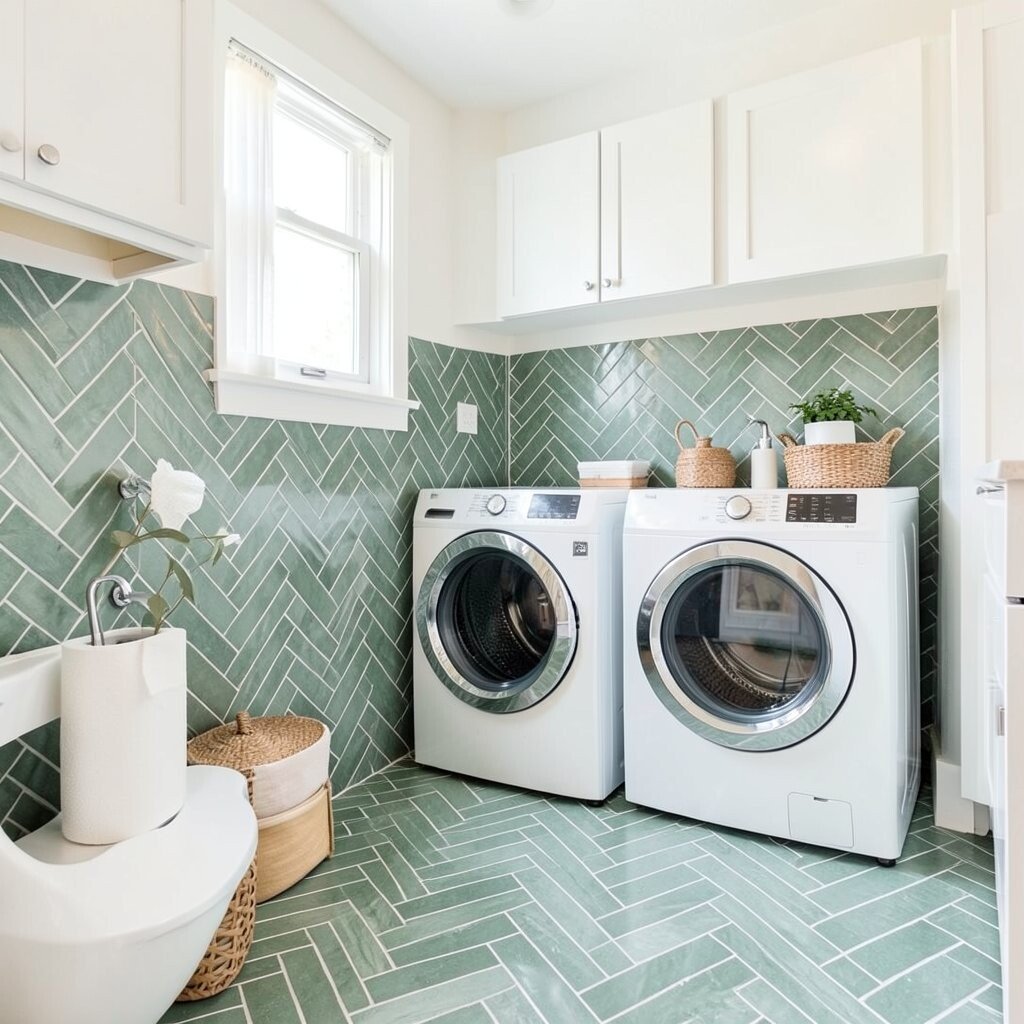
Laundry rooms can feel heavy, but sage herringbone tiles bring a brighter mood fast. The pattern makes the walls look more textured and interesting, even with minimal decor.
Go with smaller tile pieces for a softer, homey effect and a tighter pattern. Add a fold-down countertop in white or pale wood to keep the space feeling fresh. For practicality, choose water-resistant tile adhesive and seal where needed to handle splashes and steam.
Personalize with color-matched bins that echo the green in small ways. If you want a budget-friendly plan, cover only the most splashed area behind the washer and dryer. That way, you get the visual impact while controlling material costs.
6. Shower Niche With a Fresh Green Accent
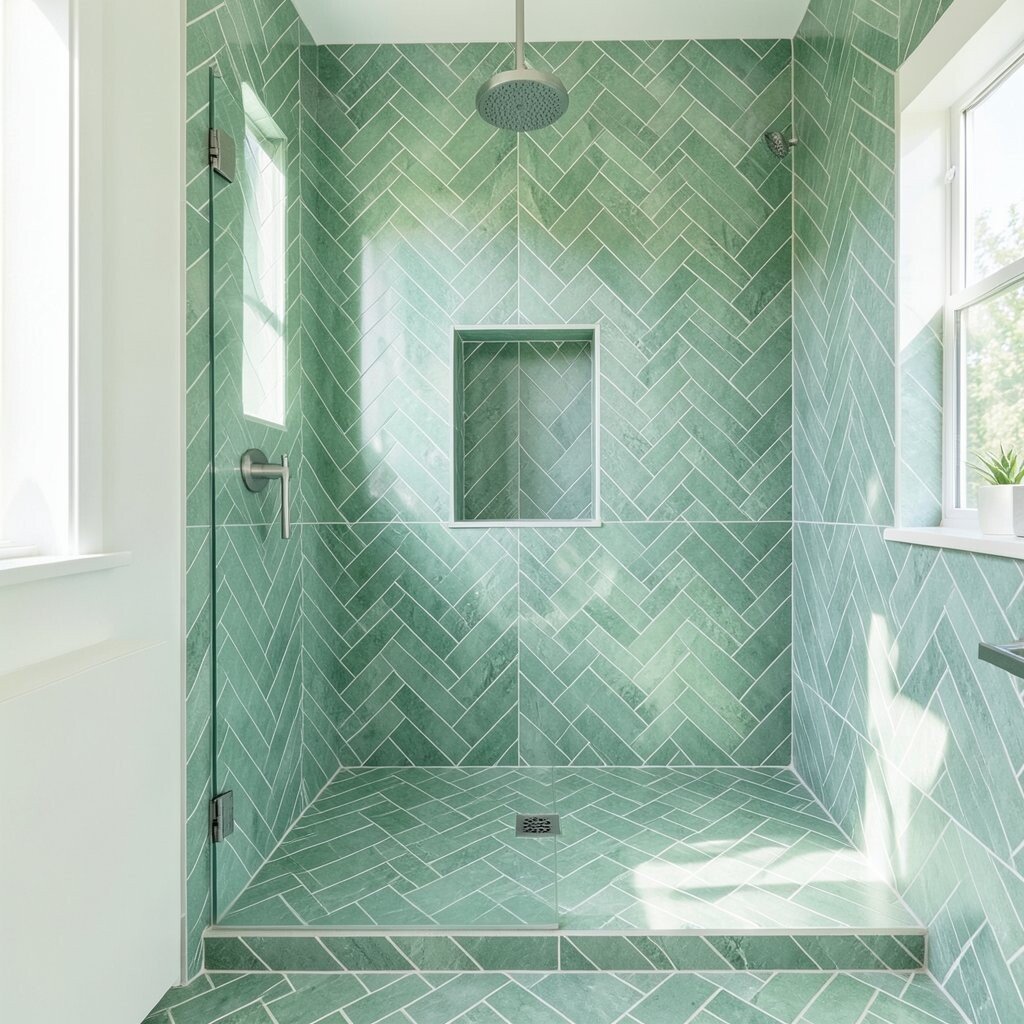
A shower niche tiled in sage green herringbone feels like a little upgrade every day. The lines guide the eye inward, making the shower feel more designed and less plain.
Use the herringbone only on the niche back or the inner sides for a cost-smart focal point. Keep the main shower walls in a neutral white or soft beige so the niche stays bright. Seal the tile and grout well since niches get constant water contact.
Personalize it by adding matching shelves and a soap dish that match the tile glaze. A warm lighting bulb in the shower can make the sage look smoother and more flattering. If you’re concerned about budget, compare tile costs per square foot and focus on only the niche area.
7. Powder Room Floor With a Bold Yet Soft Look
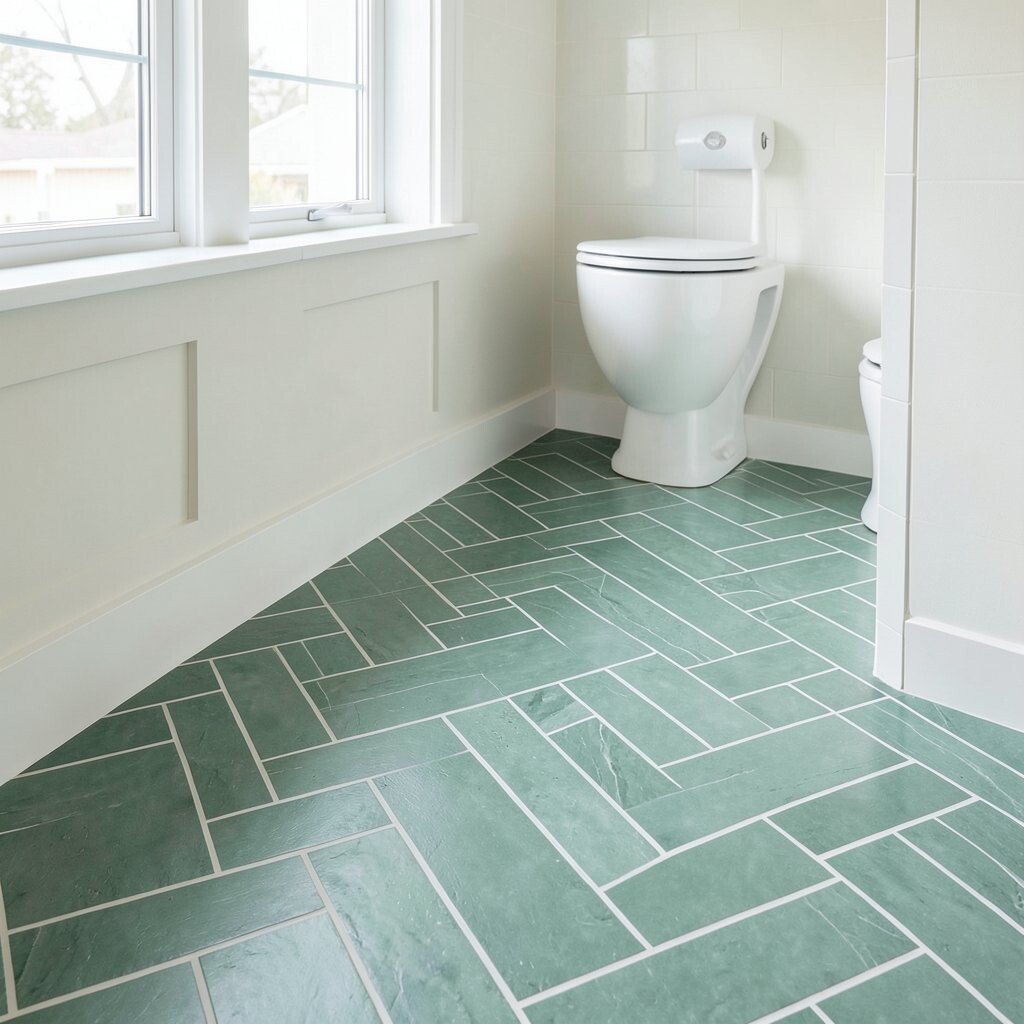
A powder room is the perfect place to go slightly bolder. Sage green herringbone tiles can look stylish while still feeling gentle and welcoming.
Choose a grout color that feels close to white for a bright, airy look. Pair with simple wall paint and minimal art so the floor pattern stays easy to notice. For practicality, prioritize a tile finish that stands up to frequent cleaning.
To personalize, add a vanity with curved edges or a soft matte finish. You can also match your towel color to the undertone of the green. Powder rooms are smaller, so you may be able to invest in a higher-quality tile that looks crisp longer.
If you install underlayment, you’ll also get a more comfortable step underfoot. That comfort makes the space feel extra cared for.
8. Kitchen Island Surround for a Photo-Ready Centerpiece
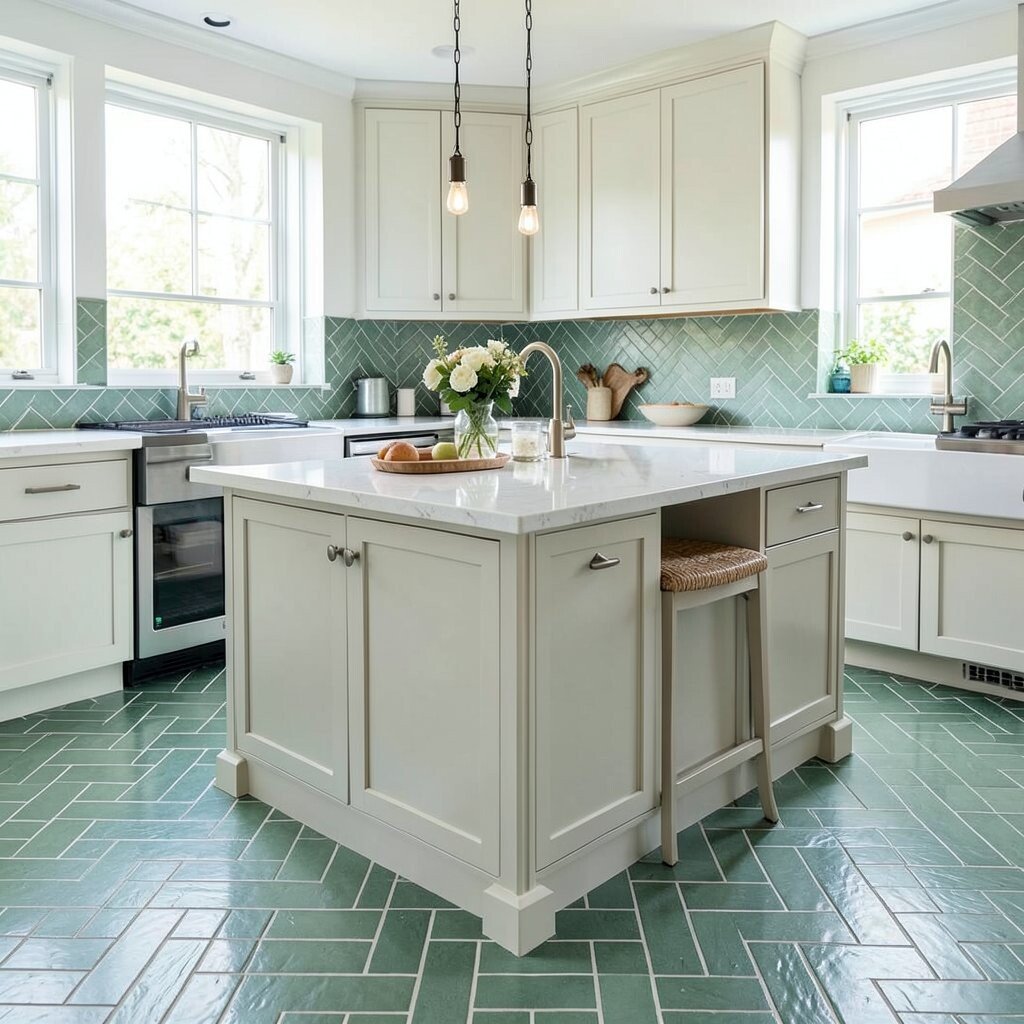
Sage herringbone tiles around a kitchen island instantly make it feel intentional. Even when the rest of the kitchen is simple, the island becomes a focal point.
Consider tiling only the sides of the island or the area behind the bar seating. This keeps the look bright while avoiding the cost of covering too much surface. Use a consistent grout width so the herringbone lines stay sharp and even.
Personalize with bar stools in natural cane, cream fabric, or light leather. Add pendant lights that cast warm light, which helps the green feel inviting. If you’re cost-conscious, keep the backs and edges clean and use tile strategically where people naturally look.
9. Dining Nook Wall That Glows in Daylight

A dining nook wall with sage herringbone tiles can make everyday meals feel special. The pattern adds movement, while the soft green keeps the mood relaxed.
Pair the tiles with light curtains and a warm ceiling lamp to make the room feel brighter in the evening. Use a thin trim or simple frame to keep the installation looking neat. For practical care, wipe with a mild cleaner so the glaze stays smooth.
Personalize it with a gallery wall of framed art in off-white and muted wood tones. You can even match the tile color to a chair fabric so everything feels pulled together. If you’re working on a tight budget, cover just the back wall behind the table and leave the side walls plain.
10. Bedroom Headboard Backdrop for Calm Evenings
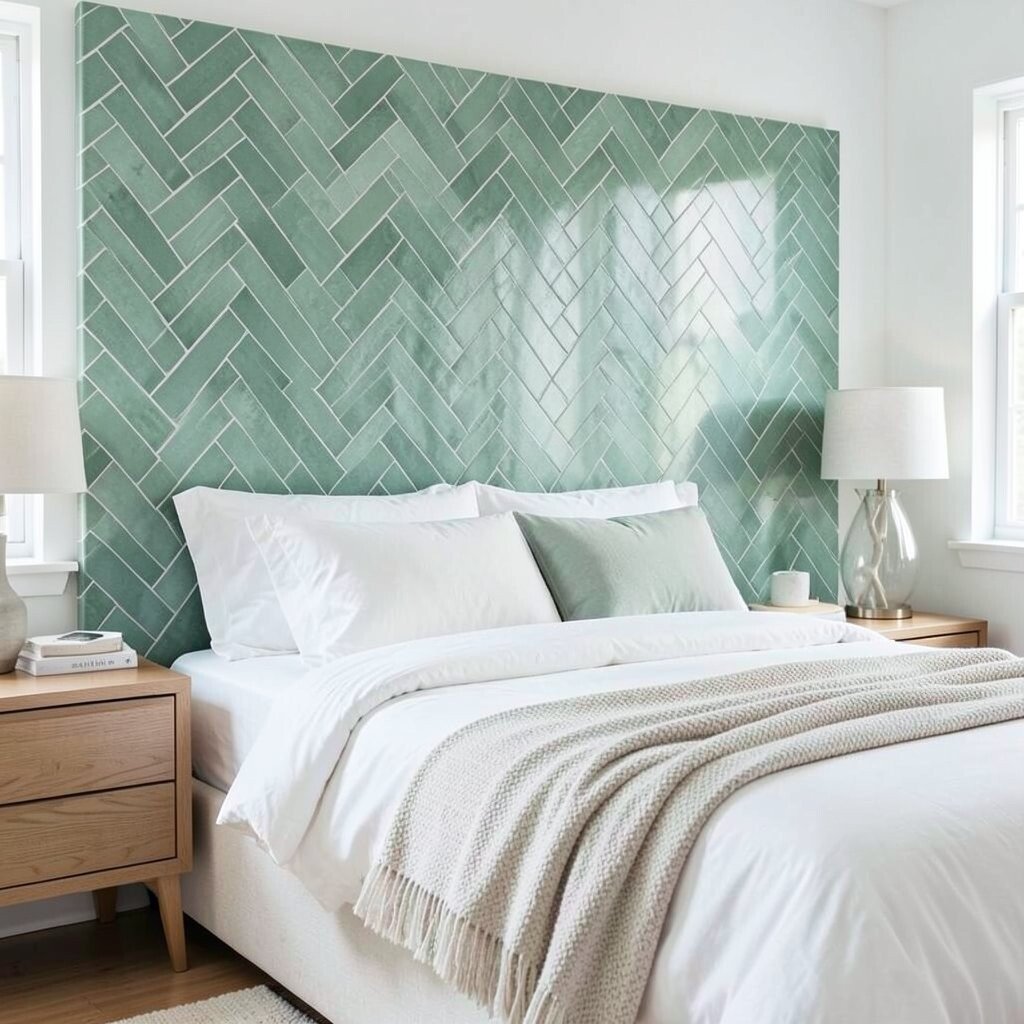
Sage green herringbone tiles behind a bed headboard create a soothing, layered look. The diagonal pattern adds shape without overwhelming the room.
Keep the rest of the bedroom in soft neutrals so the tile feels calm, not loud. Choose warmer lighting like amber-toned bulbs so the green looks cozy at night. For practical comfort, consider installing a board backing so the tile area feels stable and safe.
Personalize with a textured throw blanket and bedding in sand, cream, or pale gray. A headboard tile backdrop also pairs well with wood bed frames and simple wall sconces. This can be cost-smart because headboards cover a smaller section than full walls.
When you plan the layout, measure your bed width first and center the pattern so it looks balanced from the doorway.
11. Hallway Runner Look With Stair-Style Impact
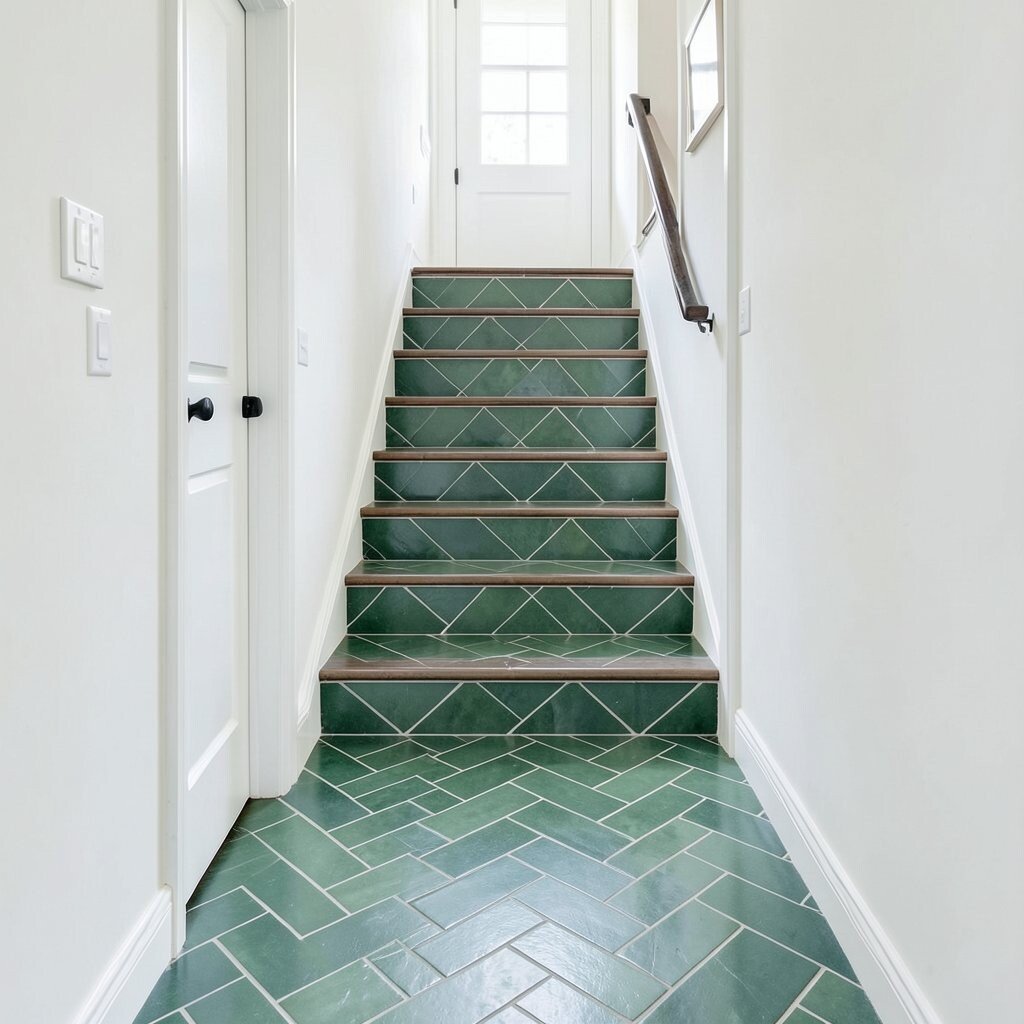
In a hallway, sage herringbone tiles can create a runner effect that feels bold. The pattern draws the eye forward and makes the space feel longer.
Use tiles in a centered strip so the look feels intentional and not too busy. Add matching transitions at doorways for a clean, professional feel. For practicality, keep the rest of the hallway flooring in easy-to-clean materials that blend with the tile tone.
Personalize the runner by adding a thin border strip in a slightly darker green for contrast. If you want a budget-friendly version, consider using a smaller tile section at the busiest walking spots. That way you get the visual lift without covering the whole floor.
12. Mudroom Wall Storage Area With Easy Clean Surfaces
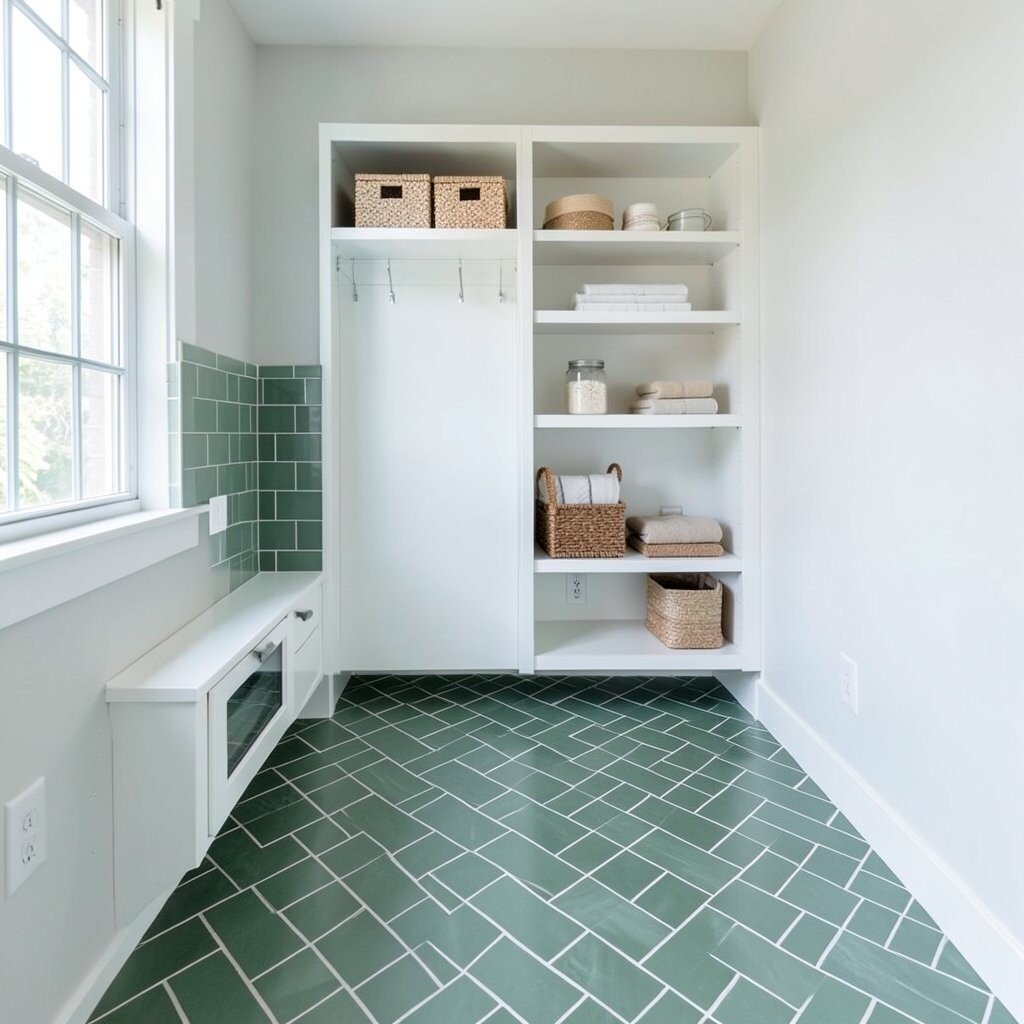
A mudroom can take daily mess, so sage herringbone tiles are a smart style choice. The pattern looks lively, while the glazed surface handles mud splashes better than paint.
Tile behind hooks, benches, or cubbies where jackets brush the wall. Keep the grout sealed so cleaning doesn’t become a chore. For personalization, pick hooks in a finish that matches your doorknobs so everything looks coordinated.
If the mudroom is tight, install a mirror to reflect light back into the tile pattern. This also makes the space feel bigger. Cost can be controlled by tiling only the lower splash zones and using durable wall paint above.
Choose a slip-friendly floor finish if the mudroom includes landing areas or entry doors. Comfort and safety keep the look great for longer.
13. Sunroom Nook for a Brighter, Airy Feel
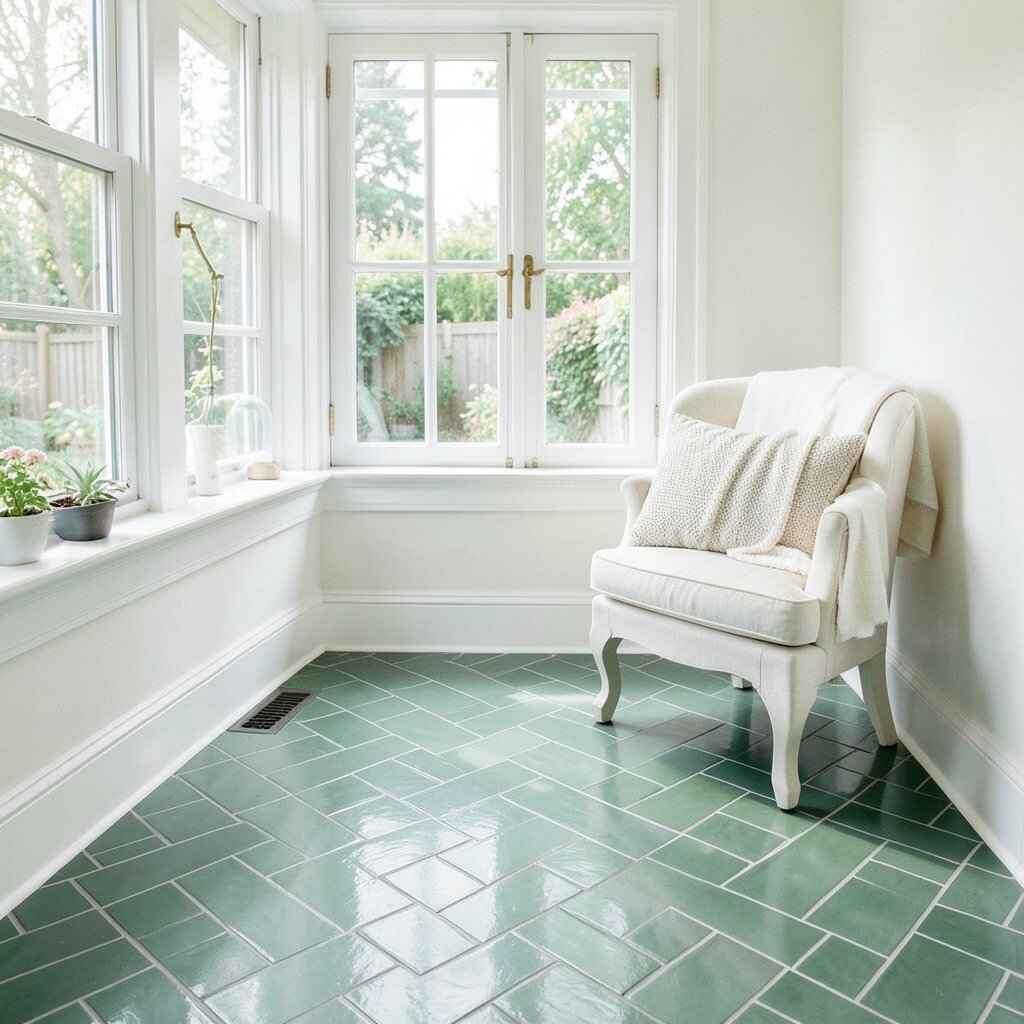
Sunrooms naturally get lots of light, and sage herringbone tiles make that light look richer. The angled lines can make the whole room feel warmer and more inviting.
Pair the tiles with rattan, pale linen, and light wood furniture for a fresh style blend. Use grout that resists staining since sunrooms can still see spills from plants or snacks. If you’re planning a DIY-friendly approach, pick tile with consistent thickness to simplify leveling.
Personalize with seasonal styling like a soft sage wreath or artwork in muted greens and creams. If you’re watching your budget, choose a partial wall treatment or only tile the floor section near seating. That keeps the room bright without overspending.
14. Kitchen Wall Behind Open Shelves With Gentle Contrast

Open shelves look extra curated when they sit against sage herringbone tiles. The pattern gives your dishes and jars a clean backdrop with a soft pop of color.
Use the tiles only behind the shelves, not the whole kitchen wall. This helps keep costs down and reduces time spent on cutting tile around outlets. Choose a lighter grout to keep the wall bright and to make the green feel airy.
Personalize with shelf styling in warm whites, honey wood, and subtle ceramics that echo the tile’s tone. If you want more brightness, choose slightly reflective glaze so light bounces around. This is a practical choice because splash zones behind shelves often need durable surfaces.
When measuring, leave small gaps near trim and then finish with caulk for a smooth edge.
15. Office Corner That Feels Focused and Fresh

An office corner with sage herringbone tiles helps the space feel calm but not boring. The pattern adds detail, and the green can feel easier on the eyes than harsh neutrals.
Tile a small wall behind a desk, bookshelf, or pinboard area where you want visual focus. Keep the rest of the room light with neutral paint and simple curtains. For practicality, seal grout and clean gently so the finish stays smooth.
Personalize with a corkboard frame in wood tones that match the tile undertone. Add a desk lamp with warm light to keep the sage looking soft. A small tiled area is often easier to fit into a budget compared to tiling an entire room.
If you want a trend-forward look, combine the sage tile with minimal lines and modern black accents in decor and hardware.
16. Bedroom or Nursery Wall Around a Dresser
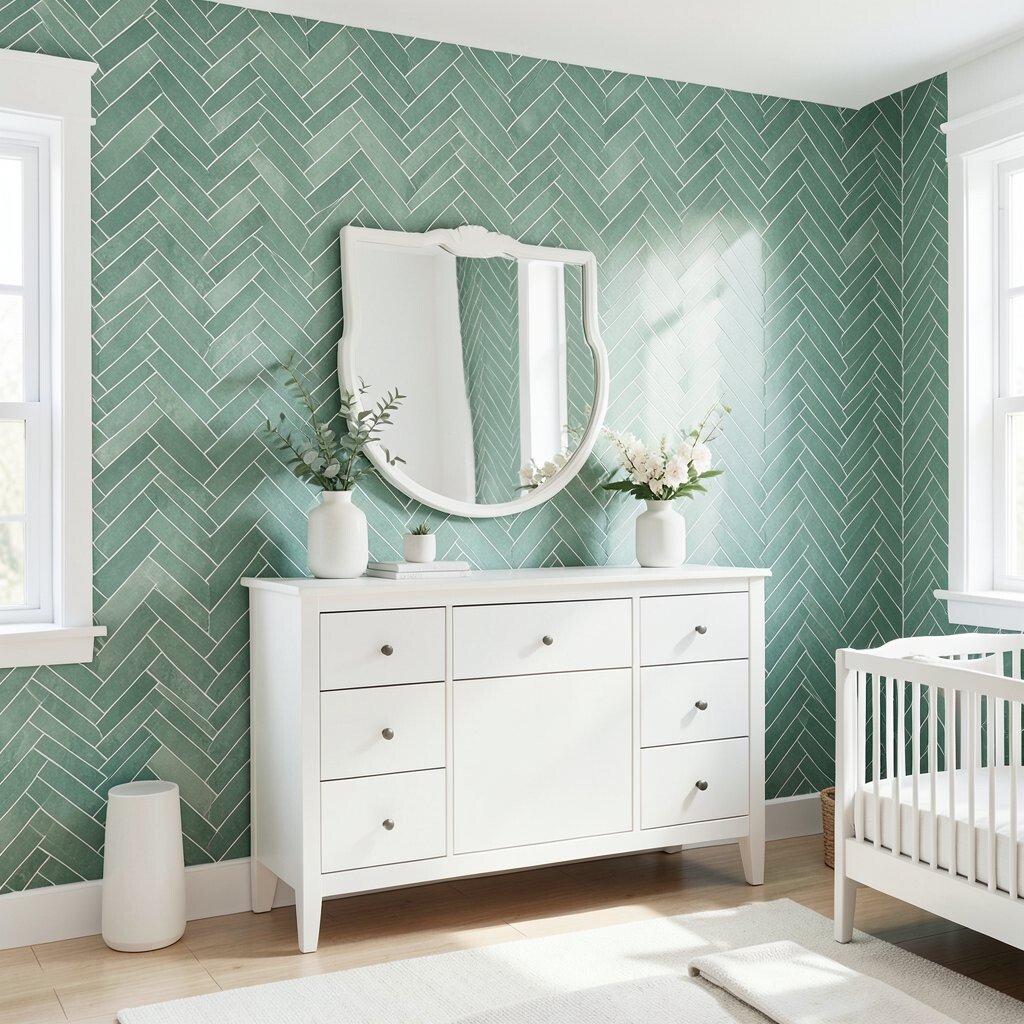
Sage green herringbone tiles around a dresser area can look sweet and grown-up at the same time. The texture gives the wall depth without needing heavy patterns in fabric.
Use tiles behind the dresser mirror area or the lower portion of the wall. This keeps cleaning easy during daily life and helps wipe away accidental messes. Choose a grout color that stays bright and doesn’t show tiny marks too easily.
Personalize with wall art in soft shapes and add bedding or curtains that echo the green in a subtle way. If you want cost control, tile a smaller “frame” zone instead of covering full wall height. This approach still gives the wow effect when you walk into the room.
17. Outdoor Patio Bar With Shade-Friendly Style
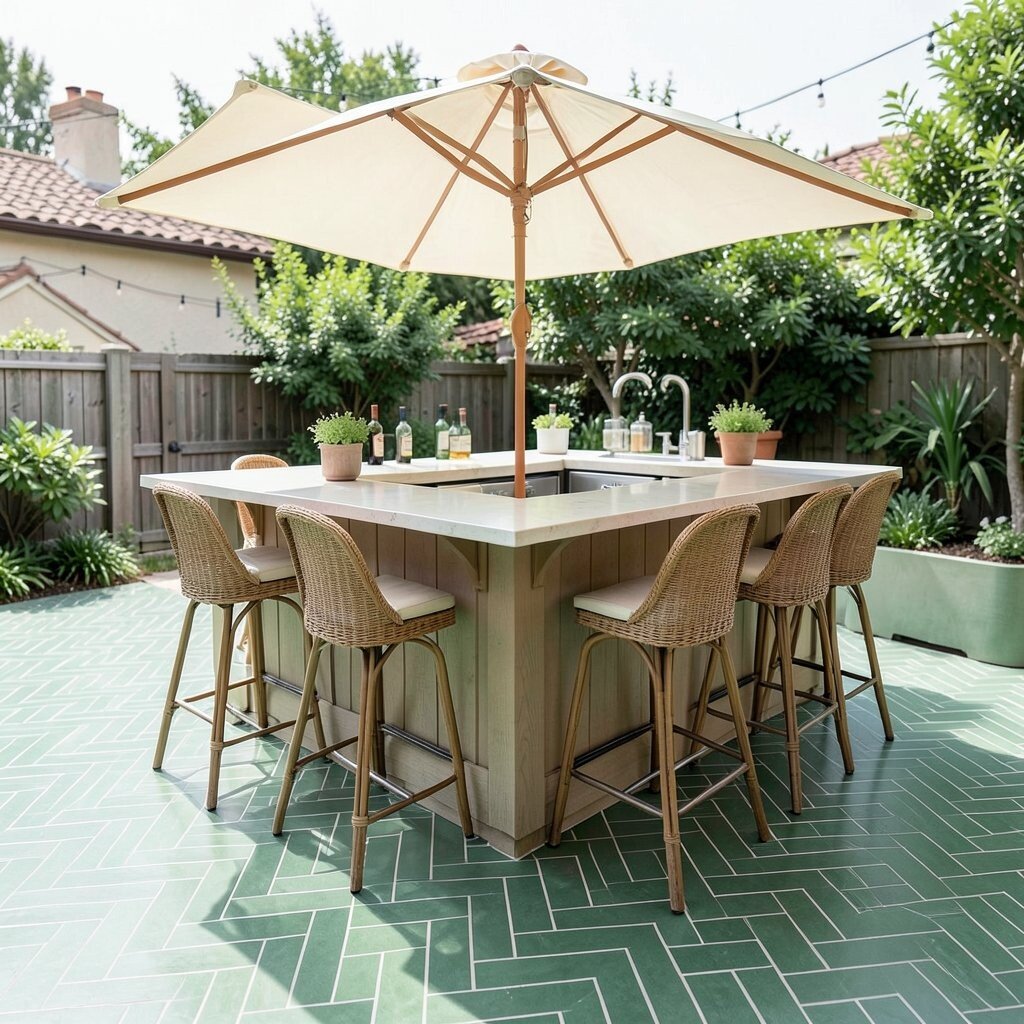
For covered outdoor spaces, sage herringbone tile can bring a fresh style to a patio bar or counter. The diagonal pattern looks lively even when your outdoor furniture is simple.
Pick weather-rated tile and grout meant for outdoor use so it holds up in changing temps. Keep the surface sealed if your tile needs it and choose a finish that resists moisture. Practical placement matters too, so focus on areas that you can keep covered from direct rain.
Personalize with outdoor cushions in cream, sand, or muted green and add a simple railing plant box. Cost considerations are important outdoors because installation must be durable, so compare tile quality and installation requirements. If you want to stretch your budget, tile only the bar face and edges.
When you plan layouts, leave expansion gaps as recommended so the outdoor surface can move safely.
18. Laundry Sink Wall for a Clean, Custom Finish
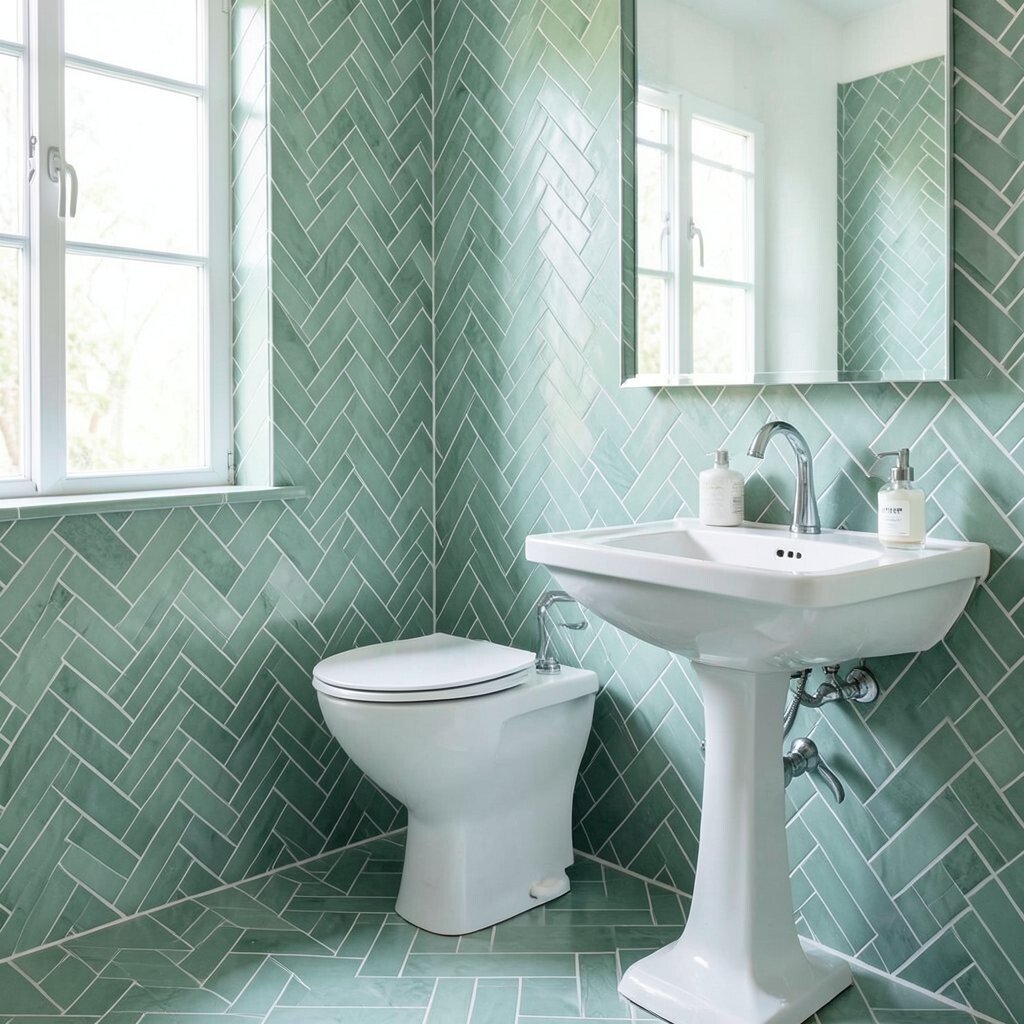
The wall behind a laundry sink is a perfect spot for sage herringbone tile. It turns a practical area into something that feels designed and neat.
Choose tiles that match your cabinet finish so the green blends smoothly into the room. Seal grout well since sinks create constant splashes and moisture. For practical cleaning, wipe with a gentle cleaner that won’t dull the glaze.
Personalize by adding a small ledge for a brush or soap so everyday items look tidy. If you want a brighter look, pair with light upper cabinets and a reflective backsplash light. Budget-wise, you may be able to choose premium tile for just this small wall zone.
Before installing, measure how the pattern will land around the sink plumbing so it feels centered and calm.
19. Wainscoting-Like Wall Paneling Without the Bulk
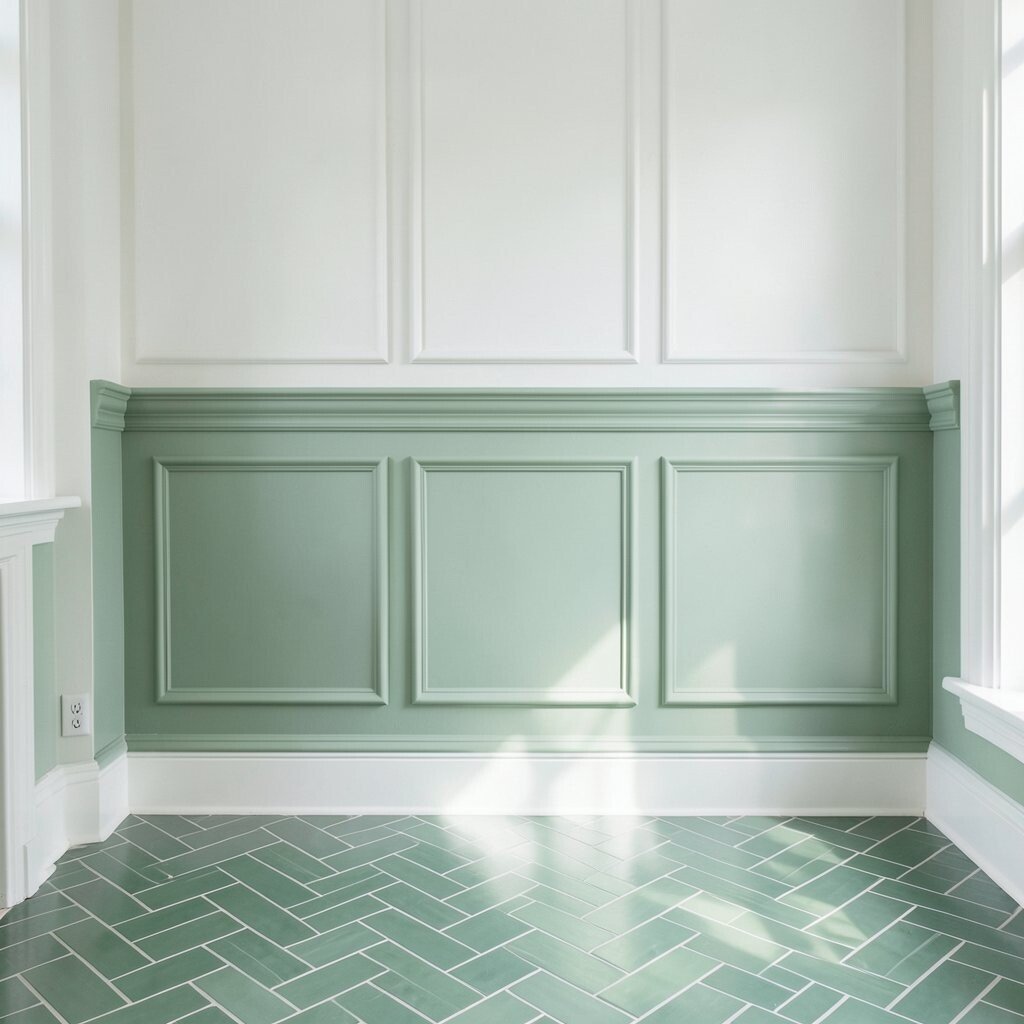
Sage herringbone tiles can mimic the look of classic wainscoting but feel more modern. You get that tidy, structured look while still enjoying the lively herringbone lines.
Install the tile on the lower wall section and keep the upper wall in a soft, bright paint. This helps your space feel higher and brighter while controlling tile quantity. Use a trim piece at the top edge so the transition feels crisp and clean.
Personalize with chair rail style lines in the same finish as your baseboards. This approach works well in dining rooms, hallways, and even small living rooms. Cost considerations are easier because you only cover part of the wall, not everything at once.
To keep the look cohesive, repeat a small hint of sage in pillows, a vase, or framed art.
20. Staircase Accent Step Treads With a Fresh Spin
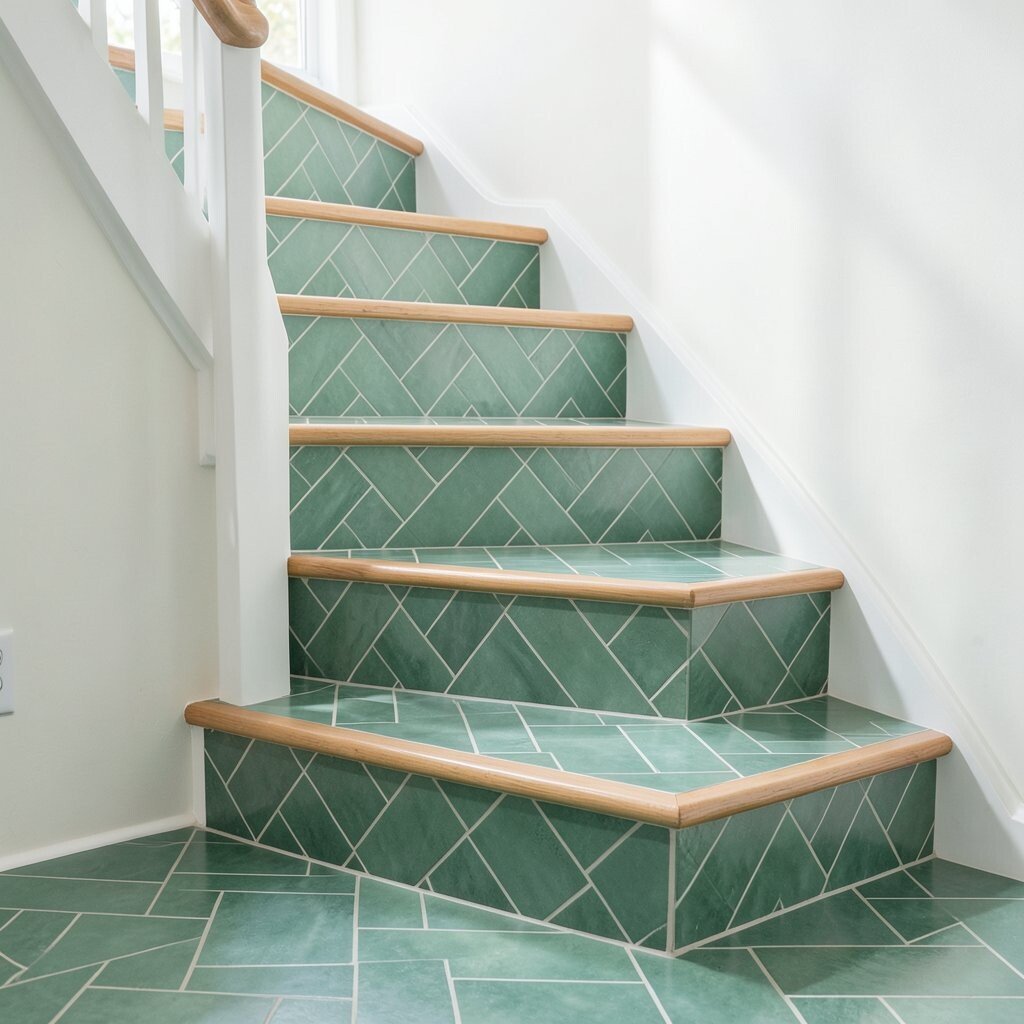
A staircase can feel dark, but sage green herringbone tile brings brightness to each step. Even a small section can make the landing look more stylish and welcoming.
Tile the risers or use a herringbone accent on select tread faces for a bold yet manageable approach. Choose slip-resistant materials and ensure proper sealing for long-term durability. This is a practical way to get maximum visual impact while keeping the project focused.
Personalize by matching the tile undertone to your handrail wood and your wall paint. If you want a more trending look, pair the sage tile with clean lines and modern lighting along the stair wall. Cost can vary with stairs, so compare installation difficulty and labor before committing to full coverage.
Measure carefully and plan the pattern so the herringbone lines stay consistent across steps.