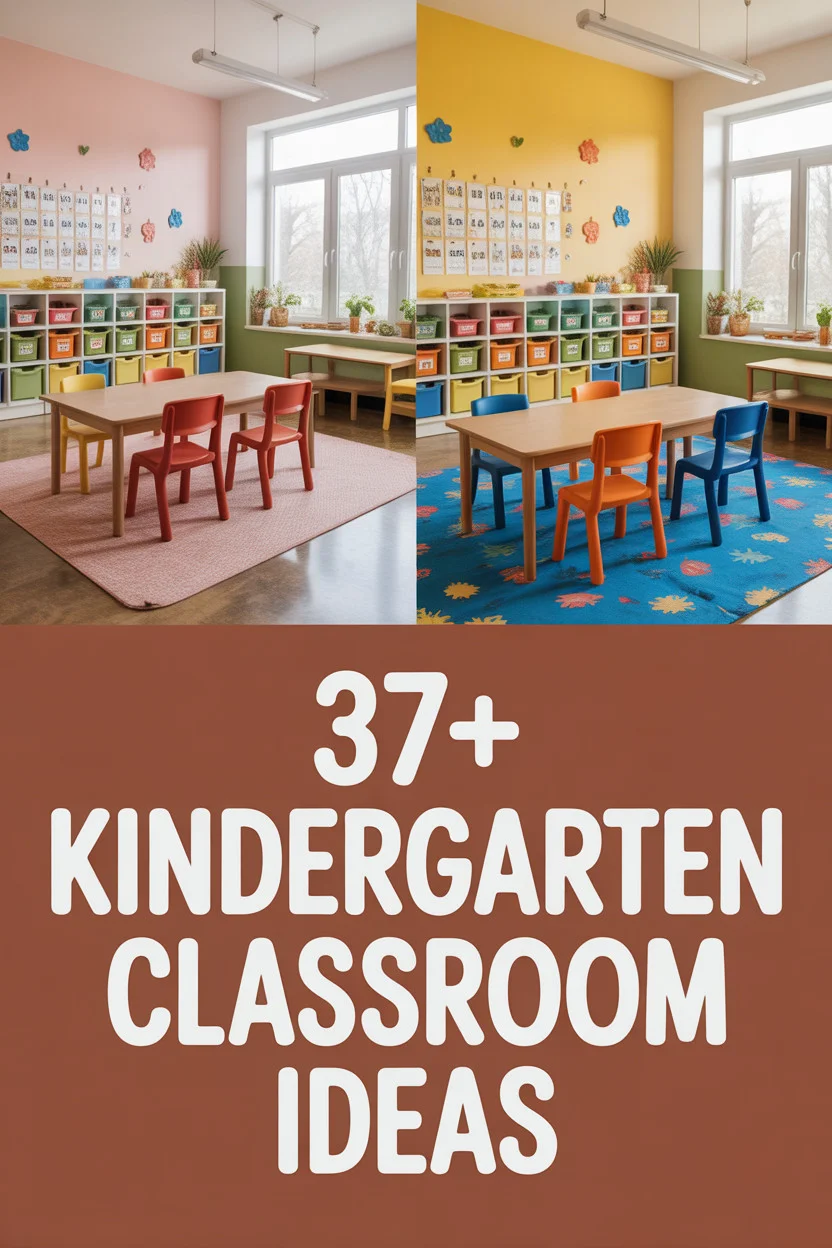
Picture a place where imagination knows no bounds, where every corner inspires a young mind to ponder and create. A kindergarten classroom can be more than just a room; it can be a magical world that encourages learning through play. Embark on this enchanting journey to find ideas that will captivate and motivate the little ones in your life.
1. Cozy Reading Nook
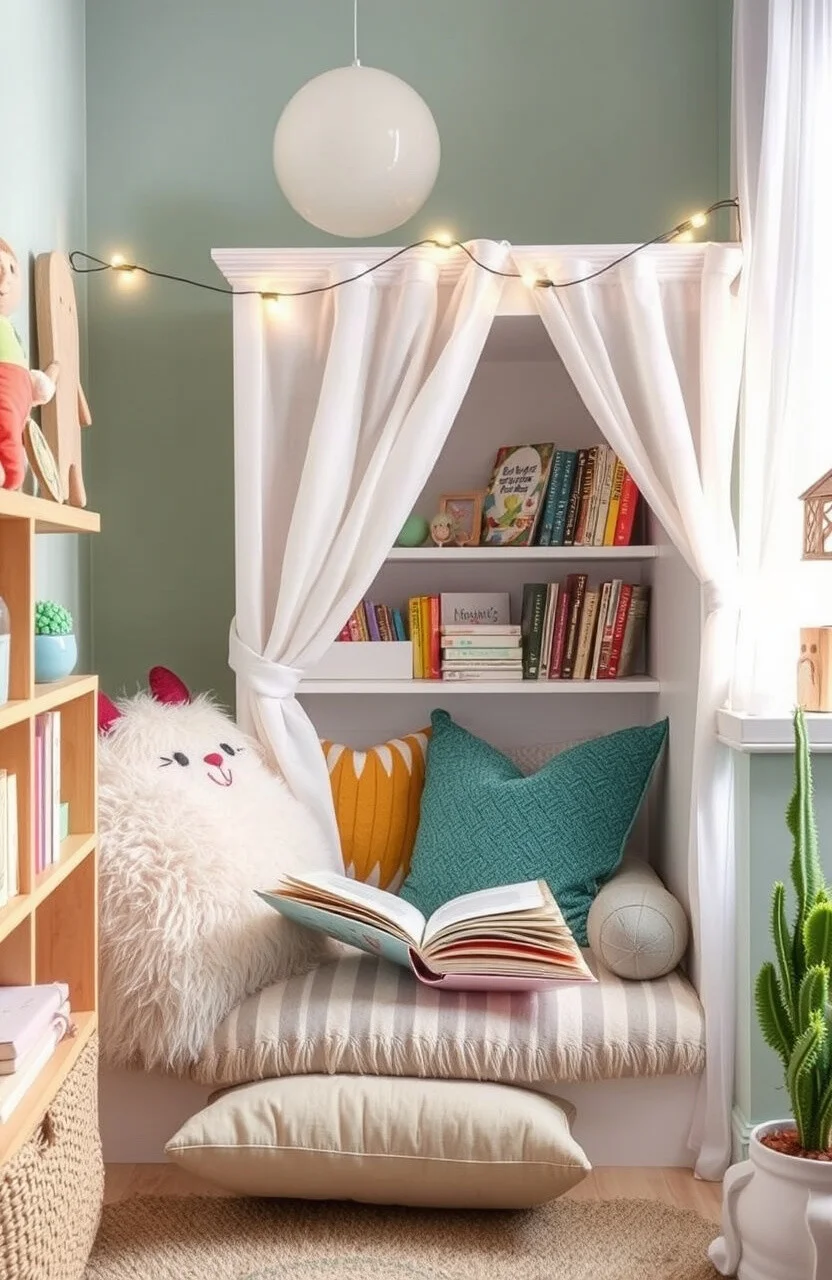
A cozy reading nook can become a child’s favorite corner. Imagine a space filled with fluffy pillows and a tiny bookshelf.
Reading nooks benefit kids by encouraging quiet time and imagination. They become safe havens for exploring new stories.
Designing one is unique because it can reflect a child’s favorite themes. Consider adding fairy lights to make it magical.
Creating a reading nook doesn’t have to be expensive. Look for budget-friendly cushions and use books you already have.
2. Interactive Wall Art
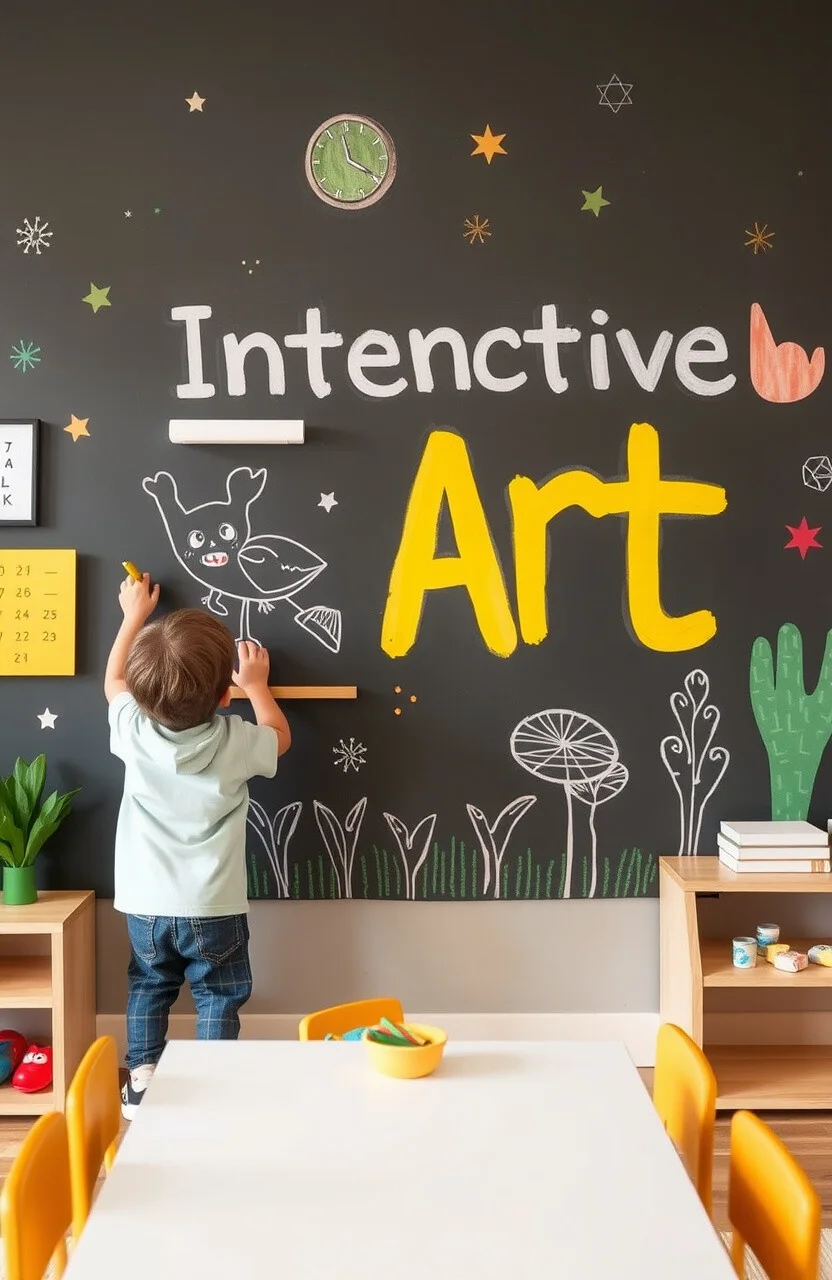
Interactive wall art brings walls to life, allowing kids to engage with them. Think of chalkboards or magnetic walls.
These walls benefit learning by promoting creativity and hands-on interaction. Children can draw, write, or play games.
Uniquely, it transforms static spaces into dynamic learning environments. Encourage kids to personalize their wall with their art.
It can be cost-effective by using removable wallpaper or chalkboard paint. Creativity can thrive with just a few supplies.
3. Nature-Inspired Decor
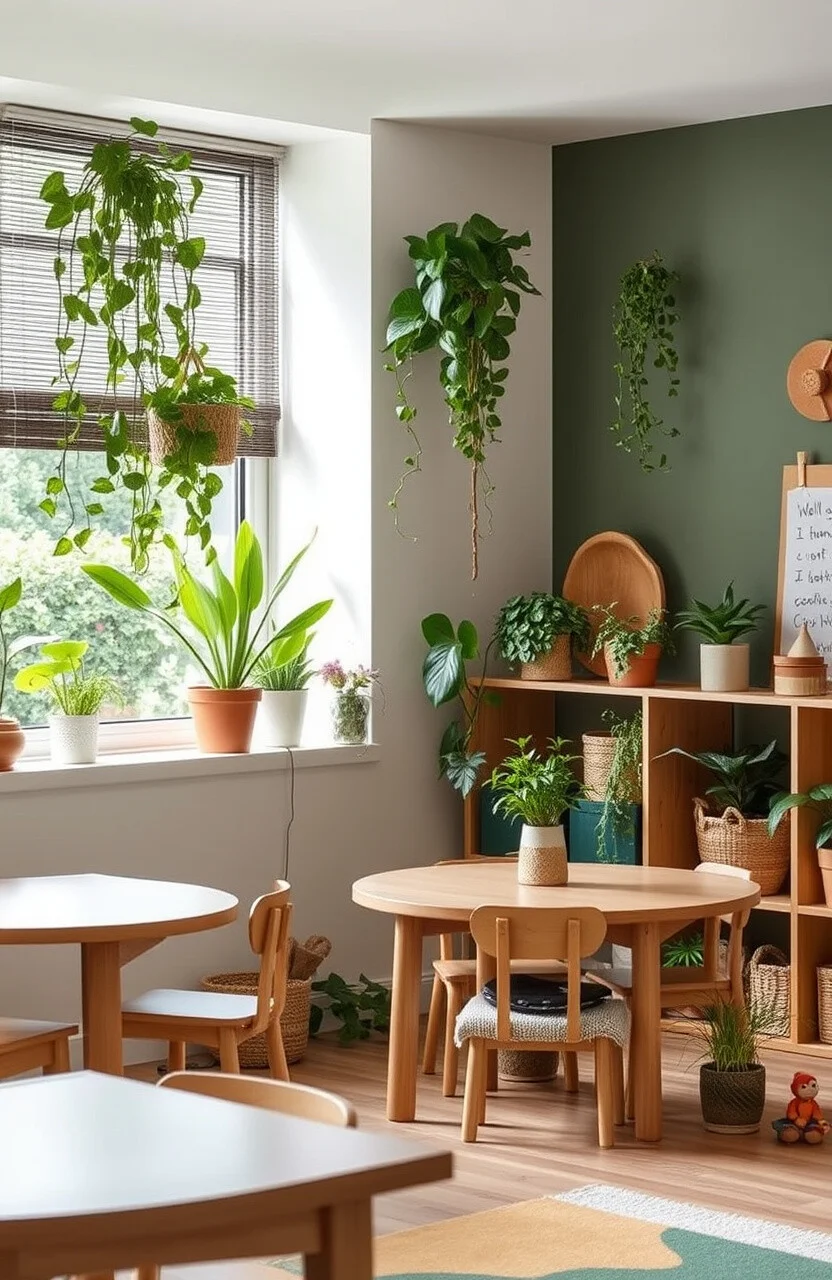
Nature-inspired decor brings the outdoors in, creating a refreshing and calming atmosphere. Think of plants and wooden elements.
These elements benefit children by connecting them with nature and promoting tranquility. They learn to appreciate the environment.
The uniqueness lies in its ability to make a space feel alive. Consider adding small potted plants or nature-themed posters.
Cost can be managed by using artificial plants or DIY projects. Use recycled wood for a budget-friendly touch.
4. Colorful Rugs
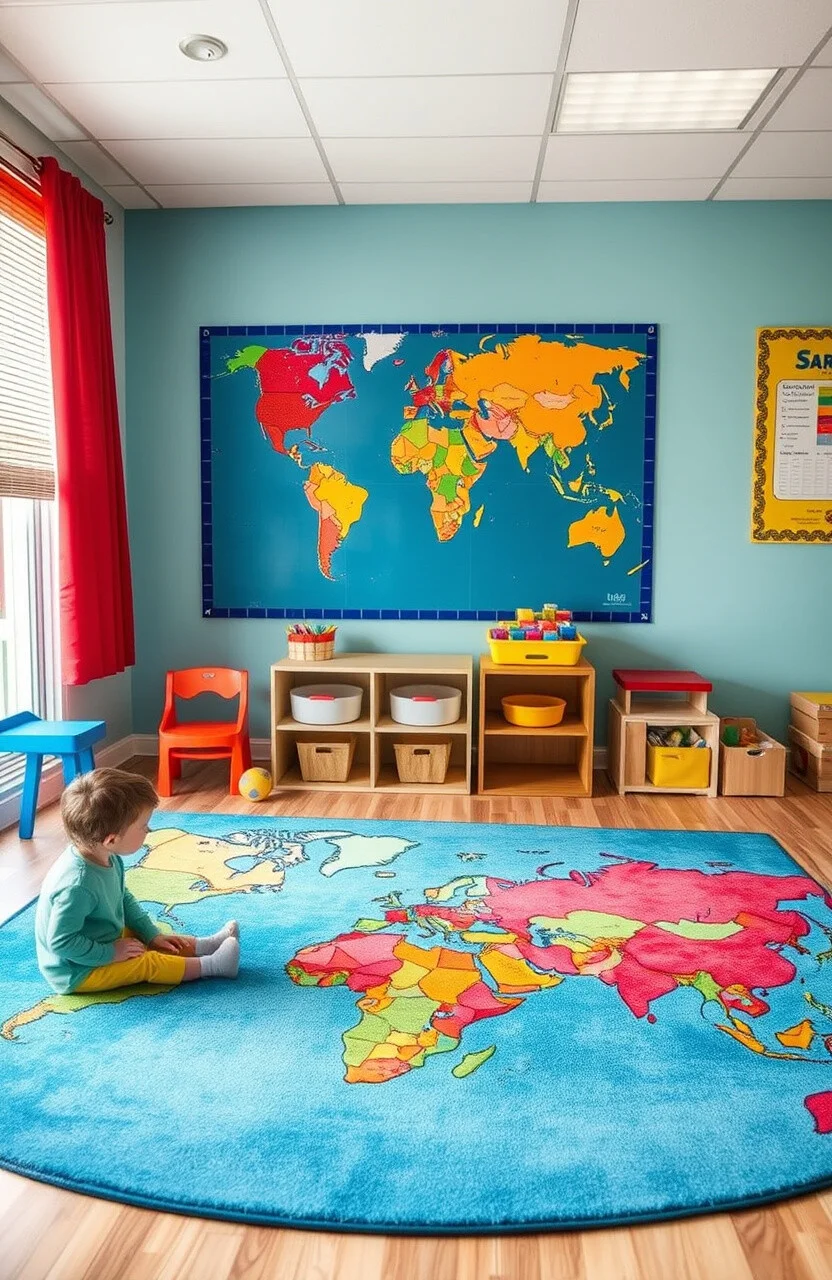
Colorful rugs can instantly brighten up a classroom. They provide a comfy place for kids to sit and play.
Rugs benefit children by defining spaces and adding warmth. They’re perfect for circle time or story sessions.
Uniquely, they can be chosen in different patterns to suit any theme. Consider a world map rug for a geography lesson.
Affordable rugs can be found at local stores or online. Look for washable options to make cleaning easy.
5. Artistic Display Boards
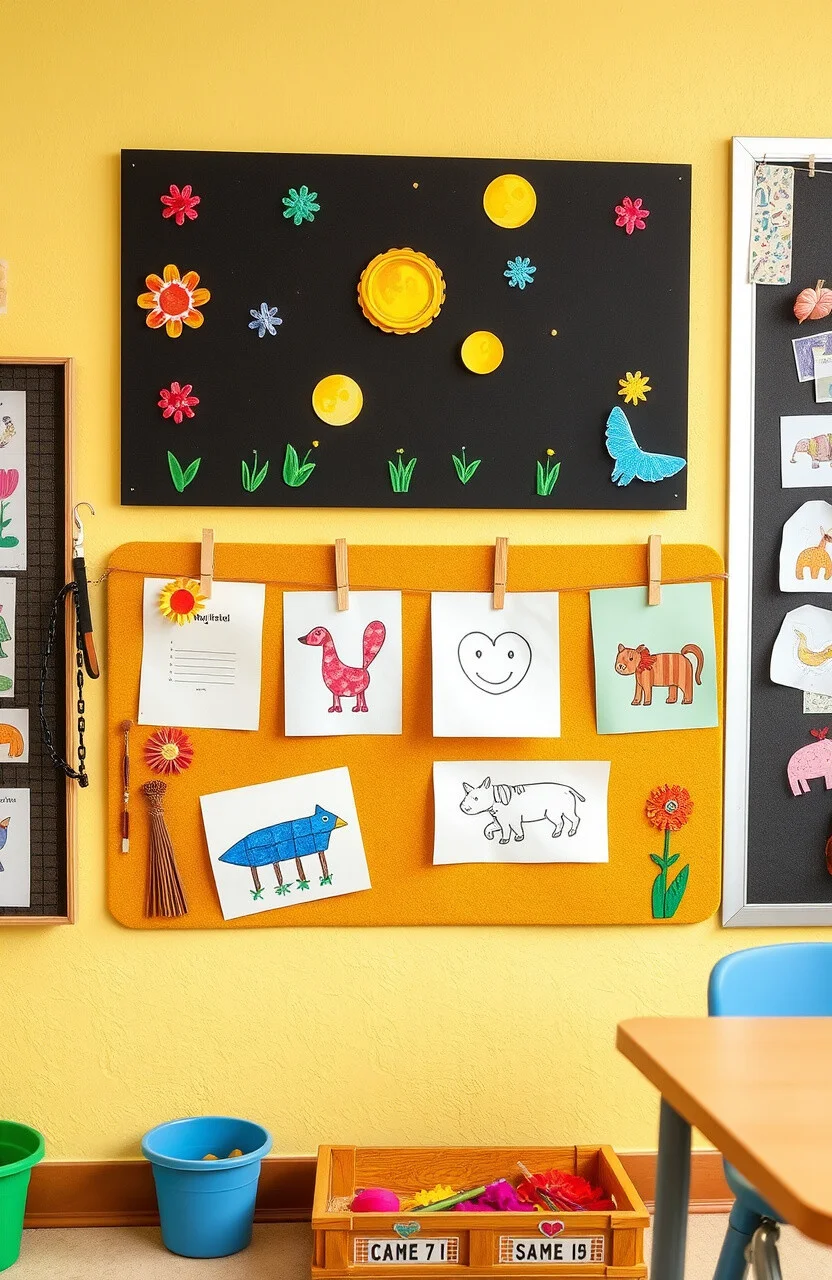
Artistic display boards allow kids to showcase their creations. They’re like mini galleries for budding artists.
These boards benefit children by boosting confidence and creativity. Kids love seeing their work celebrated.
Uniquely, they can be themed around current lessons. Encourage children to change the displays often for variety.
Use cork boards or wire grids for a budget-friendly approach. Clothespins can add a charming touch to hang art.
6. Themed Learning Centers
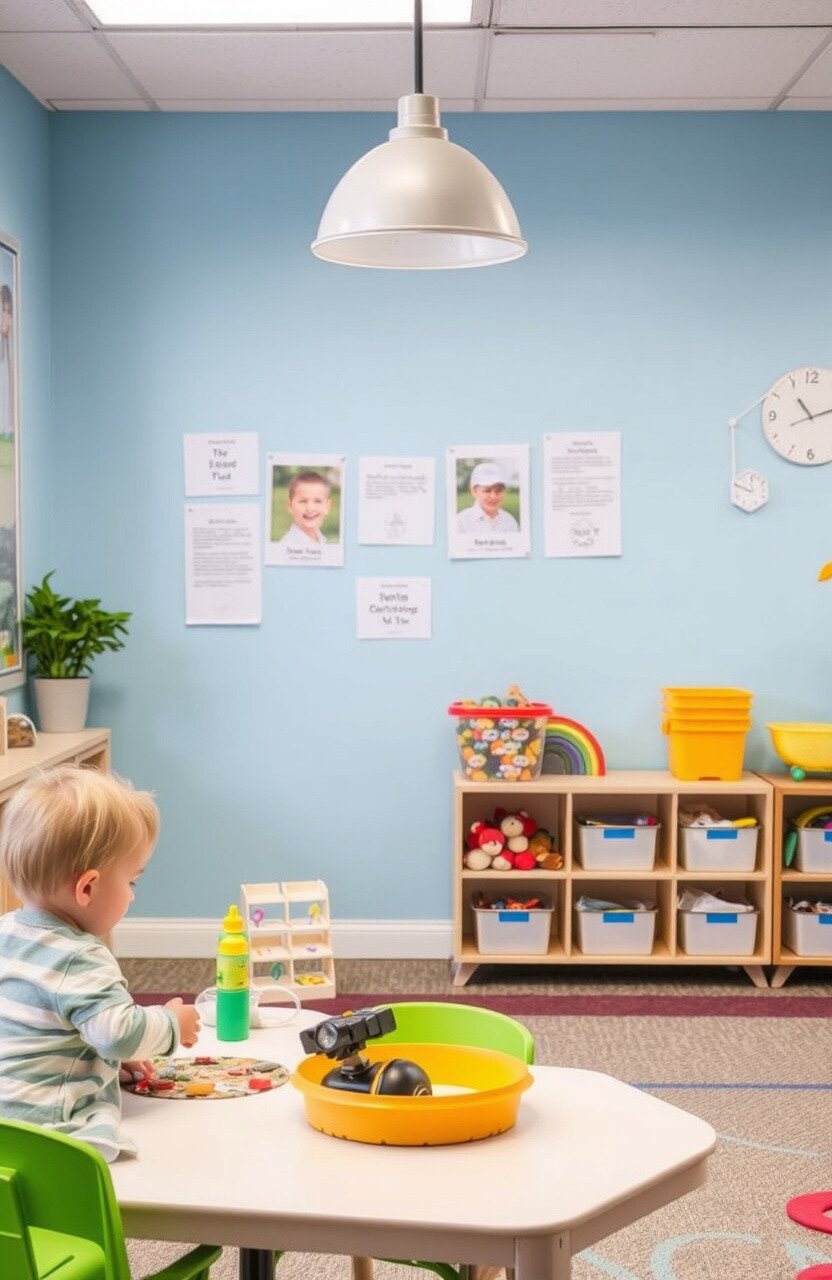
Themed learning centers focus on specific subjects or skills. Think of a science corner with magnifying glasses and rocks.
They benefit children by providing focused learning opportunities. Kids can explore interests at their own pace.
Uniquely, they can be easily changed to match new themes. Keep it fresh with seasonal or holiday-themed centers.
You don’t need to spend much to set these up. Use everyday items and thrift finds to create engaging centers.
7. Sensory Play Stations
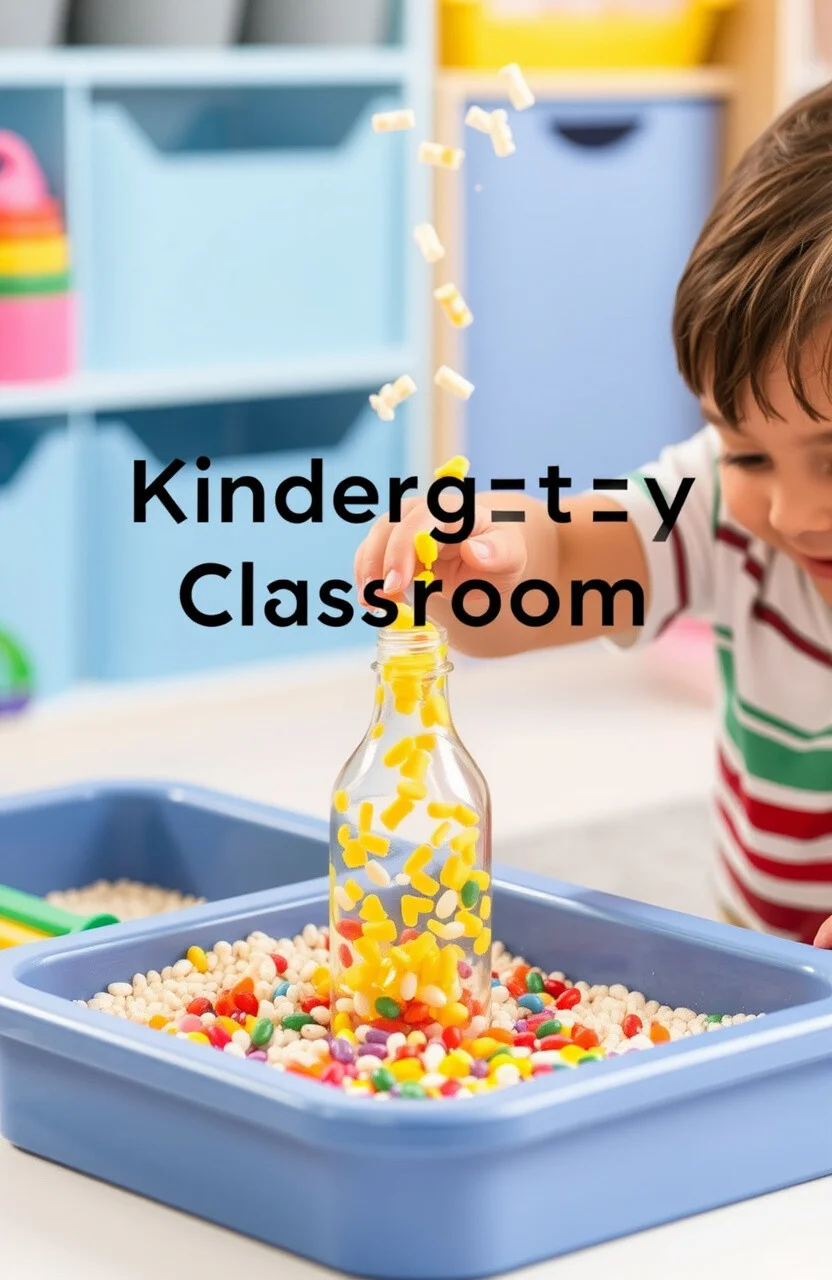
Sensory play stations engage a child’s senses with textures, sounds, and smells. Think of sand tables or water play.
These stations benefit kids by enhancing sensory development and motor skills. They’re fun and educational.
Uniqueness lies in the variety of materials you can use. Consider rotating different sensory bins to keep interest high.
Cost can be minimal using household items like rice or beans. DIY sensory bottles can be a creative addition.
8. Flexible Seating Options
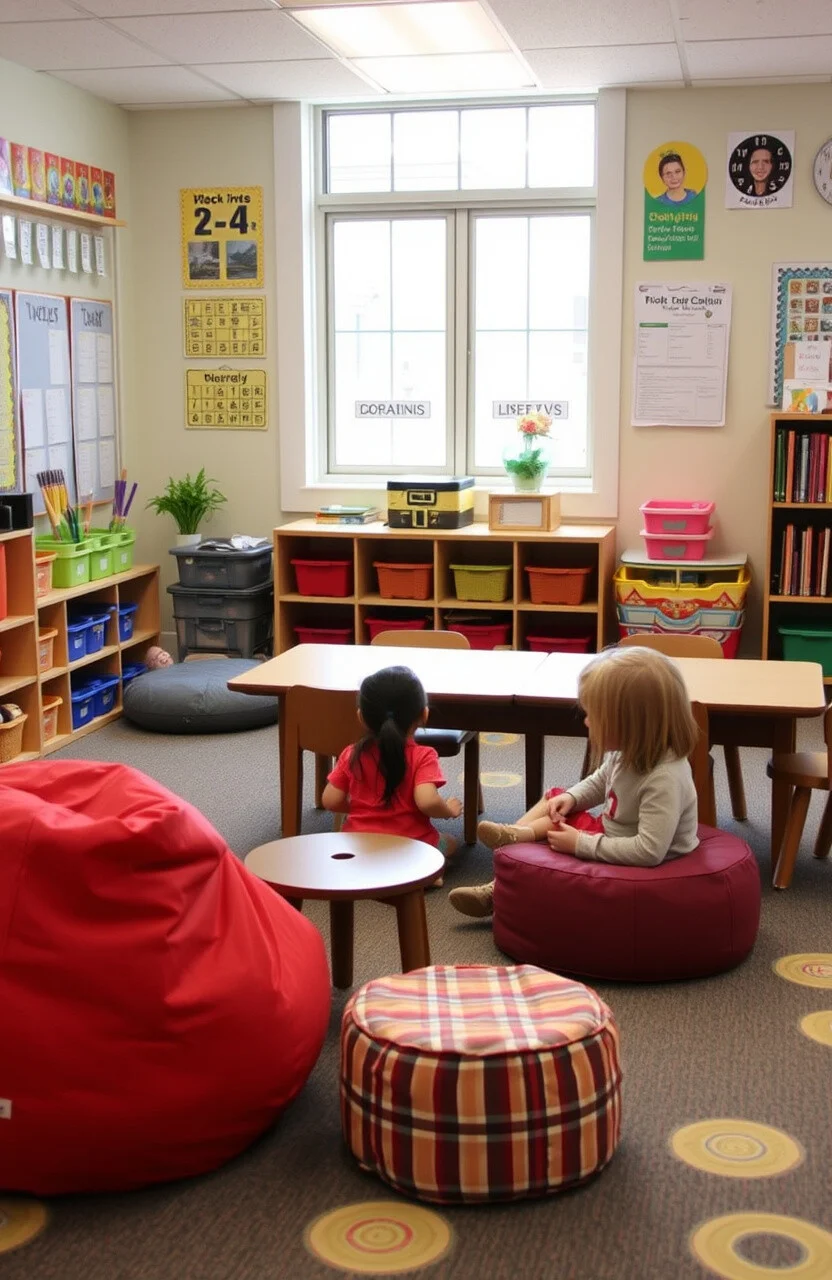
Flexible seating allows kids to choose how they sit for learning. Think of bean bags, stools, or cushions.
This benefits children by giving them control over their learning environment. It fosters independence and comfort.
Uniquely, it can cater to different learning styles and needs. Encourage kids to try different seating each day.
Affordable options can be made by repurposing old furniture. Thrift stores often have great finds for flexible seating.
9. DIY Craft Corner
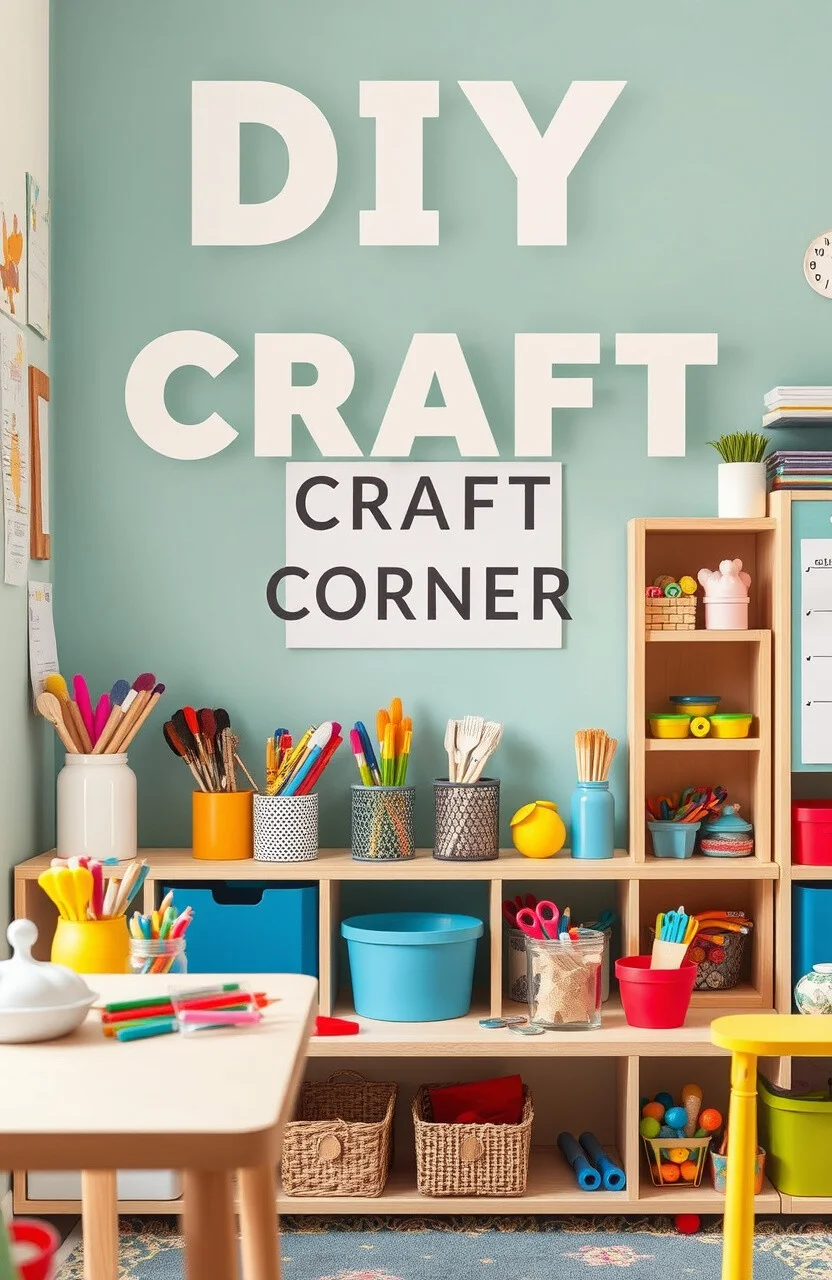
A DIY craft corner is a dedicated space for art and crafting. It’s a place where creativity knows no bounds.
Craft corners benefit children by providing opportunities for self-expression. They can create, build, and explore new ideas.
Uniquely, each child’s corner can be personalized with their supplies. Encourage the use of recycled materials for projects.
Setting up a craft corner doesn’t need to be costly. Use old jars for organizing supplies and look for sales on craft items.
10. Inspirational Quote Wall
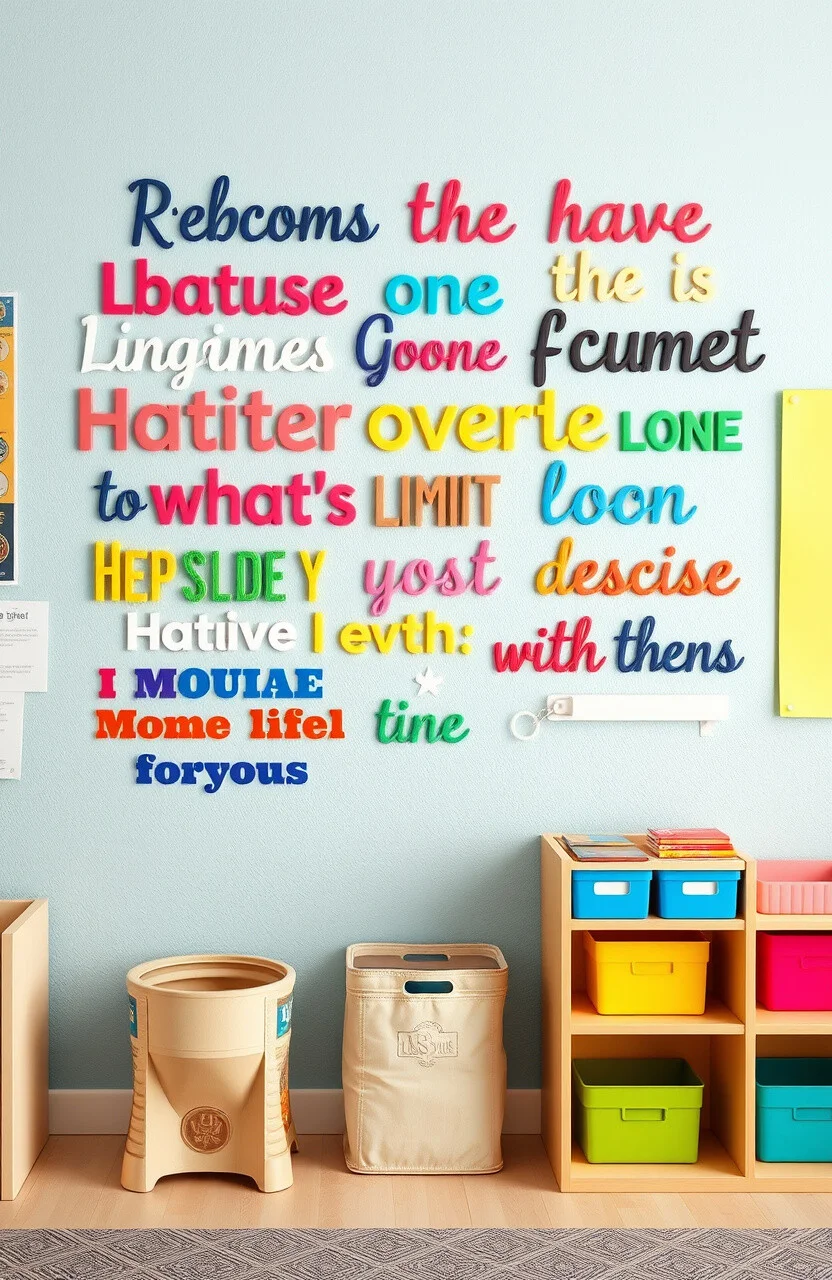
An inspirational quote wall can inspire and motivate young minds. Think of colorful letters and positive messages.
This wall benefits kids by encouraging positivity and a love for words. Quotes can spark discussions and reflections.
The uniqueness lies in the ability to change quotes regularly. Encourage kids to contribute their favorite sayings.
Creating this wall can be simple with printable quotes or hand-painted letters. It’s a budget-friendly way to inspire.
11. Storytelling Stage
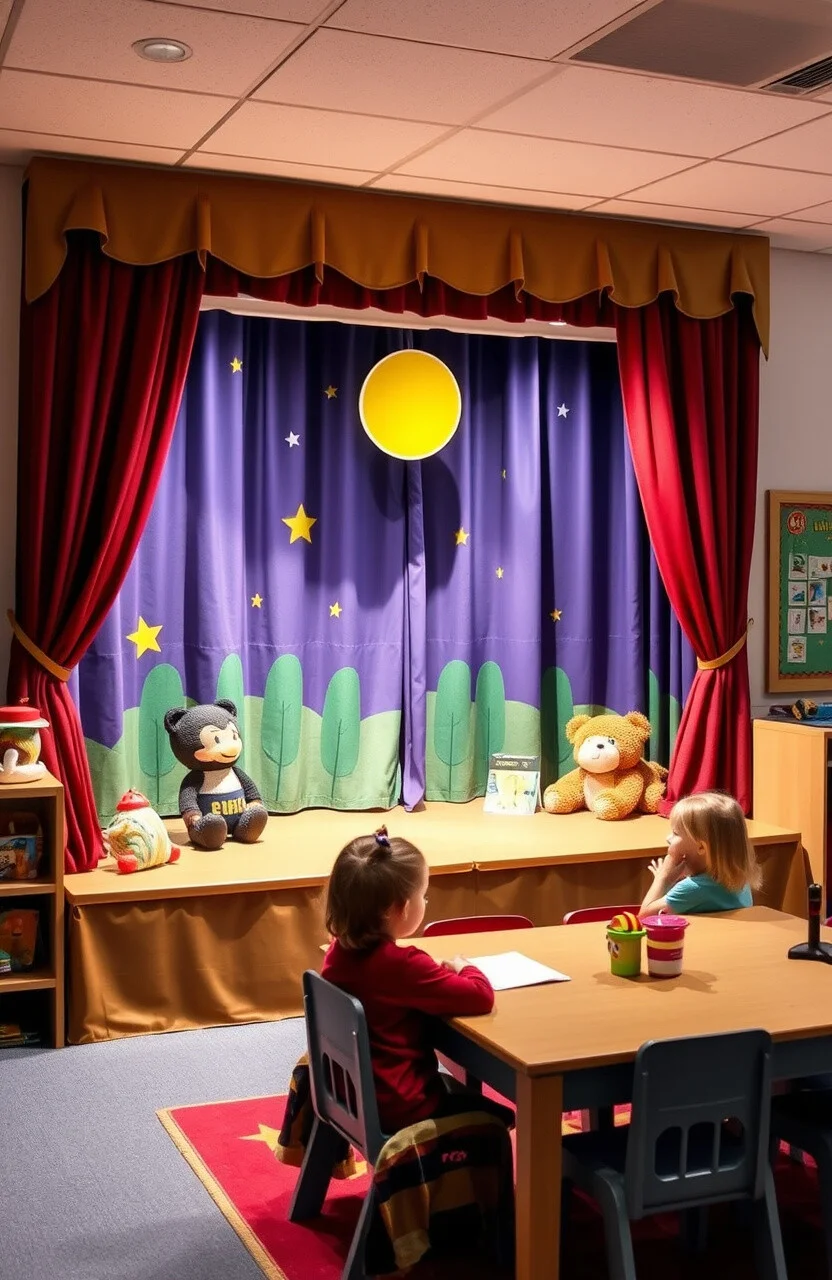
A storytelling stage invites kids to perform and share tales. Think of a small platform with curtains and props.
This benefits children by enhancing confidence and public speaking skills. It’s a space where imaginations can soar.
Uniquely, it can be used for puppet shows or skits. Encourage kids to write their stories to perform.
Set up a stage without breaking the bank by using old sheets for curtains. Props can be simple and handmade.
12. Mini Science Lab
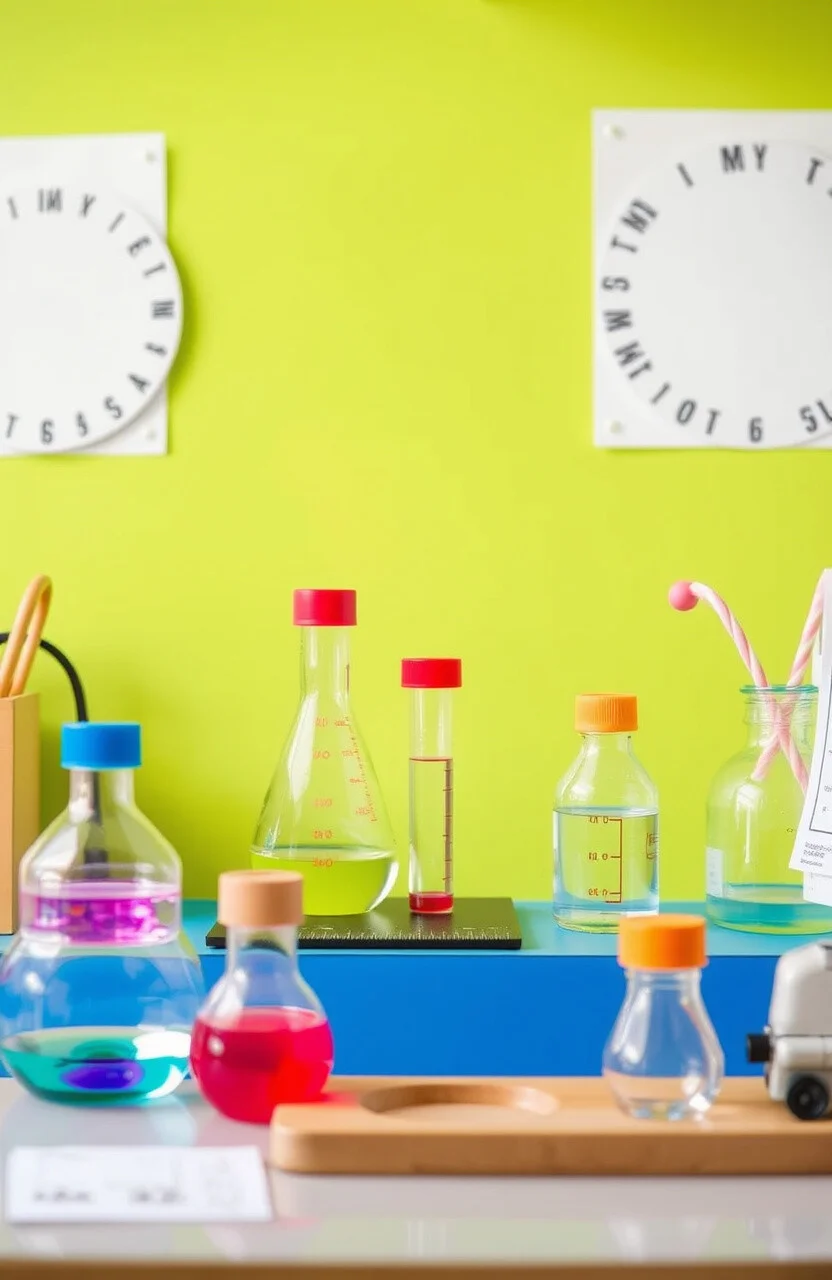
A mini science lab brings experiments to life. Think of test tubes, magnifying glasses, and fun science kits.
This lab benefits kids by sparking curiosity and a love for discovery. It’s a place where questions lead to learning.
Uniquely, it can introduce simple experiments with household items. Encourage kids to hypothesize and observe results.
A science lab can be affordable with DIY science kits. Use everyday kitchen items for fun, educational activities.
13. Cultural Diversity Corner
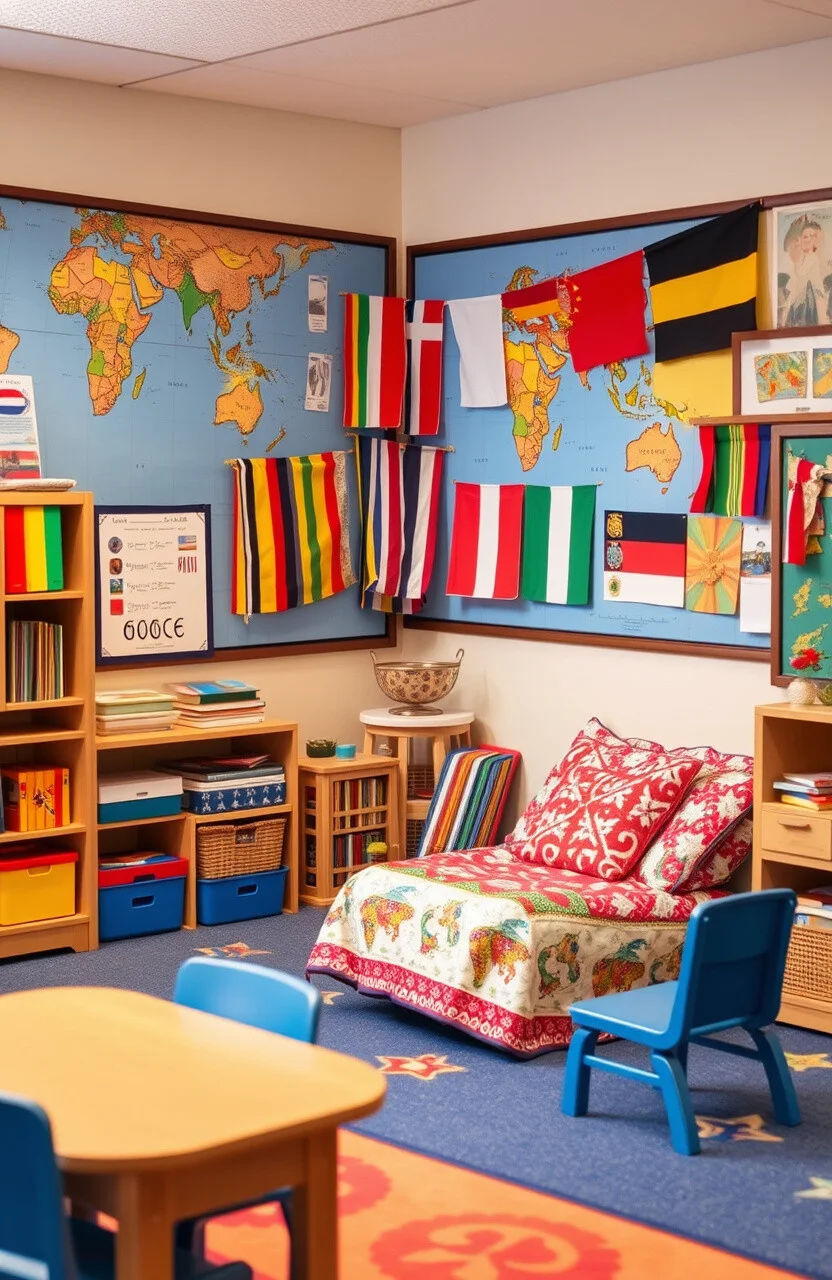
A cultural diversity corner celebrates the world’s cultures. Think of maps, flags, and traditional costumes.
This corner benefits children by promoting inclusivity and global awareness. Kids learn to appreciate differences.
Uniquely, it can feature items from different countries each month. Encourage kids to share their heritage and stories.
Set up this corner with budget-friendly items like postcards. Borrow books from the library to expand cultural knowledge.
14. Music and Rhythm Zone
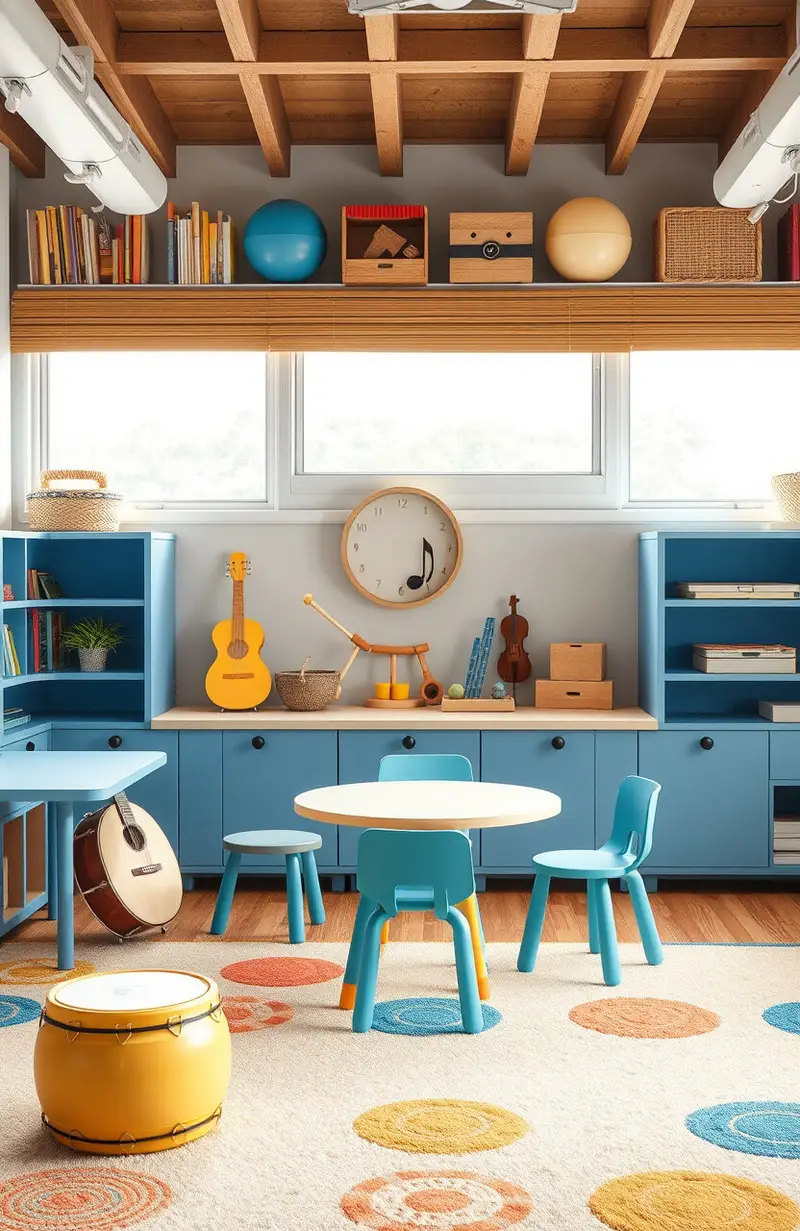
The music and rhythm zone is a place for musical exploration. Think of small instruments and rhythm games.
This zone benefits kids by enhancing musical skills and creativity. It’s a fun way to learn about sounds and beats.
Uniquely, it can include homemade instruments like shakers. Encourage kids to create their songs and rhythms.
Setting up this zone can be affordable with DIY instruments. Use recycled materials to make simple drums or maracas.
15. Puzzle and Game Area
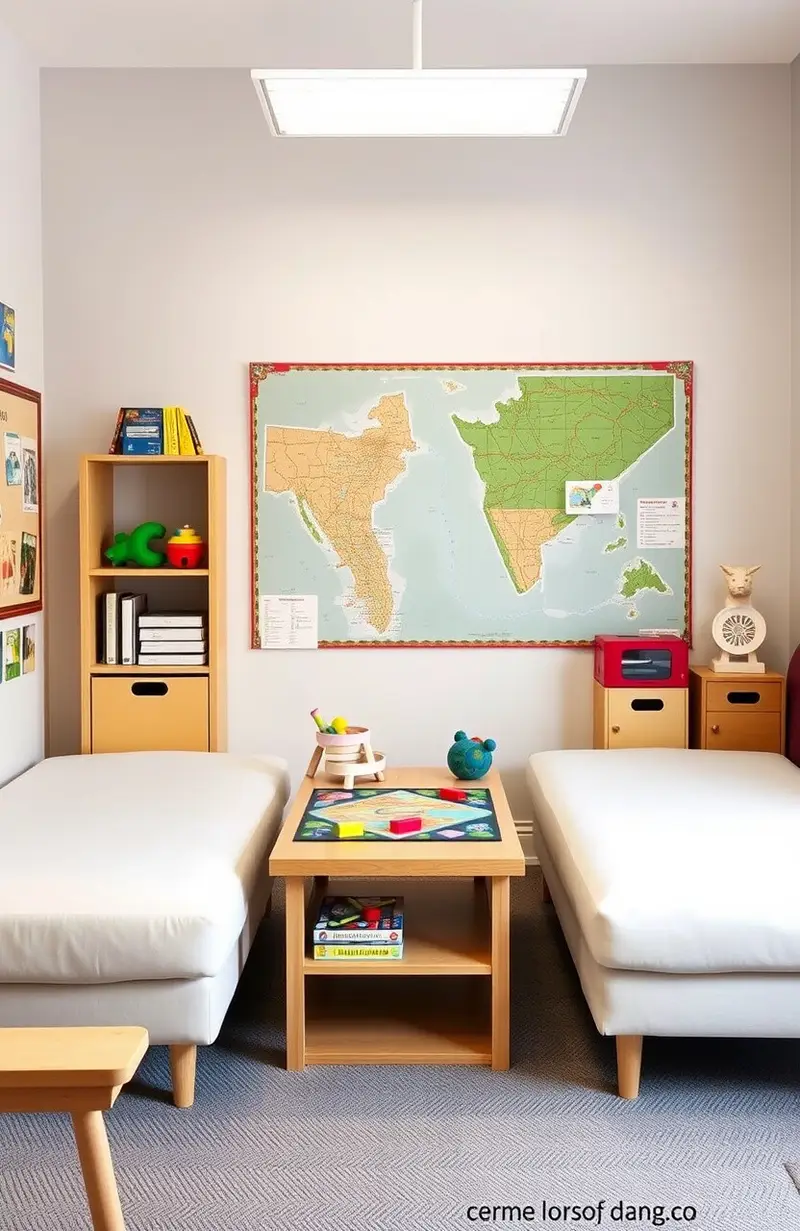
A puzzle and game area offers endless fun and learning. Think of board games and challenging puzzles.
This area benefits children by developing problem-solving skills and teamwork. It’s a space for friendly competition.
Uniquely, it can feature games that change with themes. Encourage kids to design their own games to share.
Affordable games can be found at thrift stores or garage sales. Look for puzzles that suit various age groups.
16. Imaginative Play Kitchen
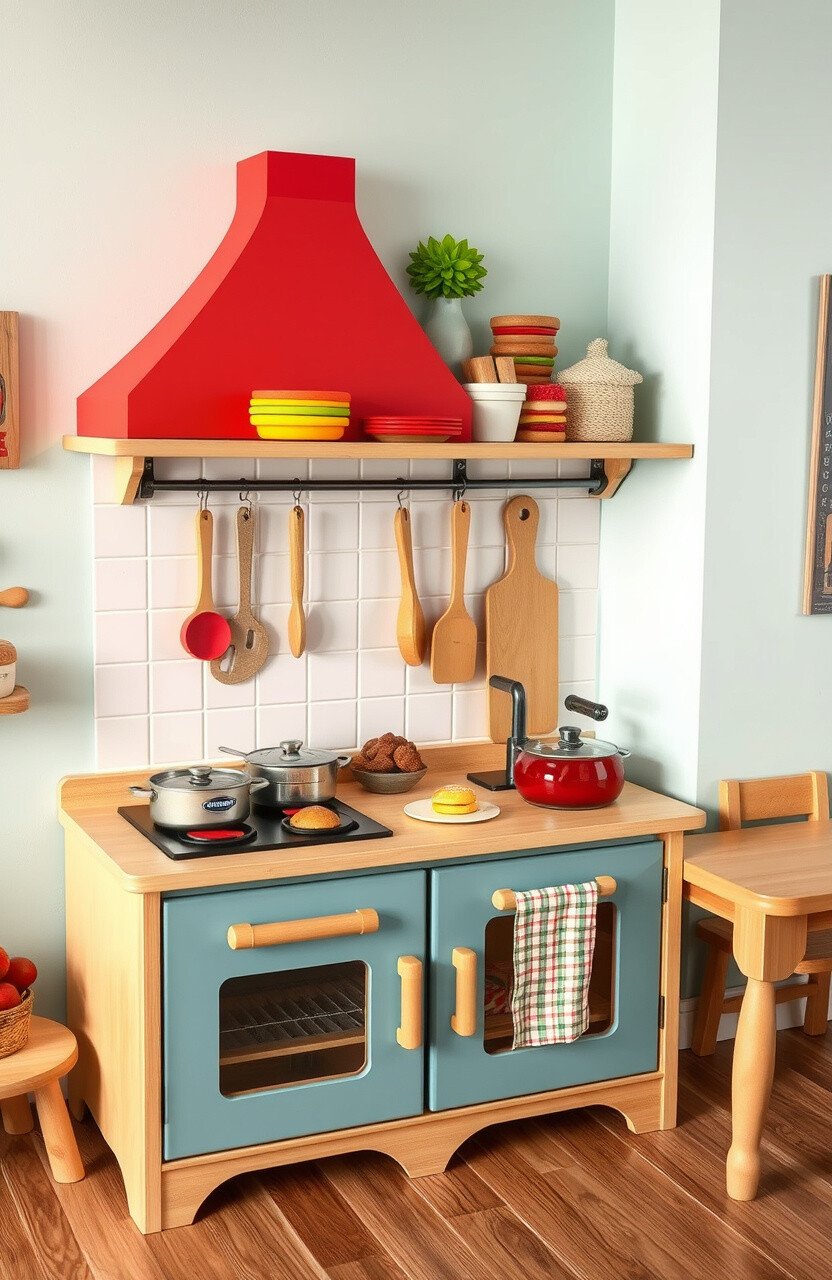
An imaginative play kitchen is a mini world of culinary fun. Think of toy stoves, pots, and pretend food items.
This kitchen benefits kids by encouraging role play and social skills. It’s where creativity and cooperation meet.
Uniquely, it can be themed like a restaurant or bakery. Encourage kids to “cook” and serve their favorite dishes.
Set up a kitchen on a budget with homemade play food. Use recycled cardboard to make appliances and utensils.
17. Outdoor Exploration Zone
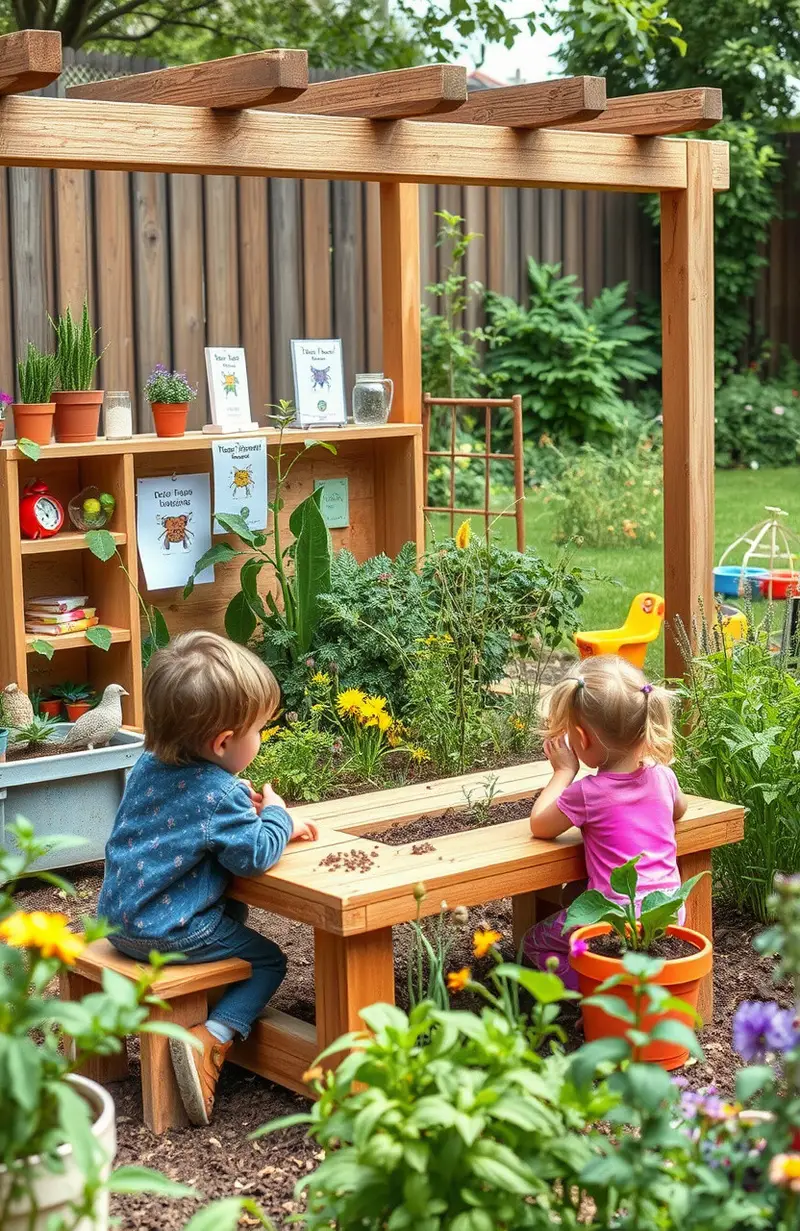
The outdoor exploration zone brings learning outside. Think of a small garden or a bug observation station.
This zone benefits children by encouraging a love for nature and exploration. It’s an open-air classroom full of discoveries.
Uniquely, it can include seasonal activities like planting flowers. Encourage kids to keep a nature journal of their findings.
Creating this zone can be affordable by using recycled containers for planting. Incorporate outdoor games for added fun.
18. Alphabet and Number Walkway
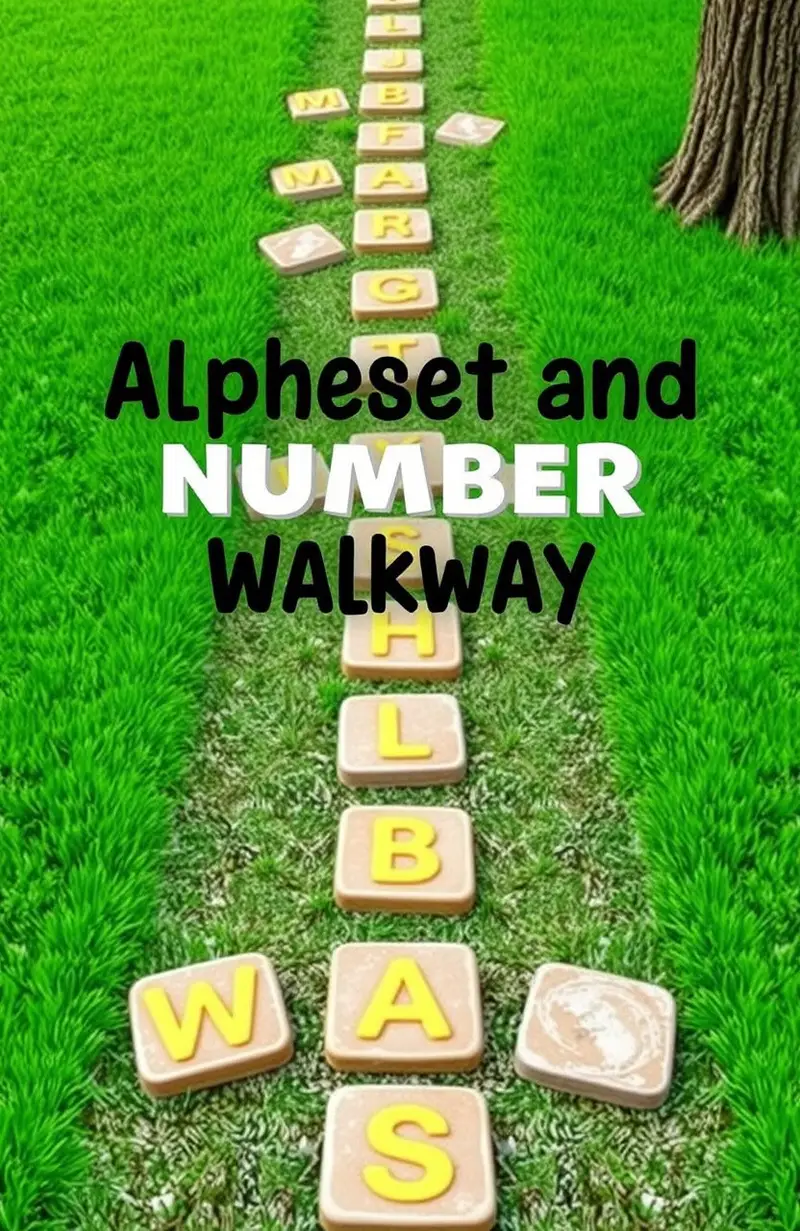
An alphabet and number walkway turns learning into a physical activity. Think of stepping stones with letters and numbers.
This walkway benefits kids by combining movement with learning. It’s a playful way to practice letters and counting.
Uniquely, it can be set up in patterns to create different challenges. Encourage kids to hop, skip, and jump on each letter.
Set it up on a budget with painted stones or chalk on the ground. Change the patterns regularly to keep it exciting.
19. Creative Writing Corner
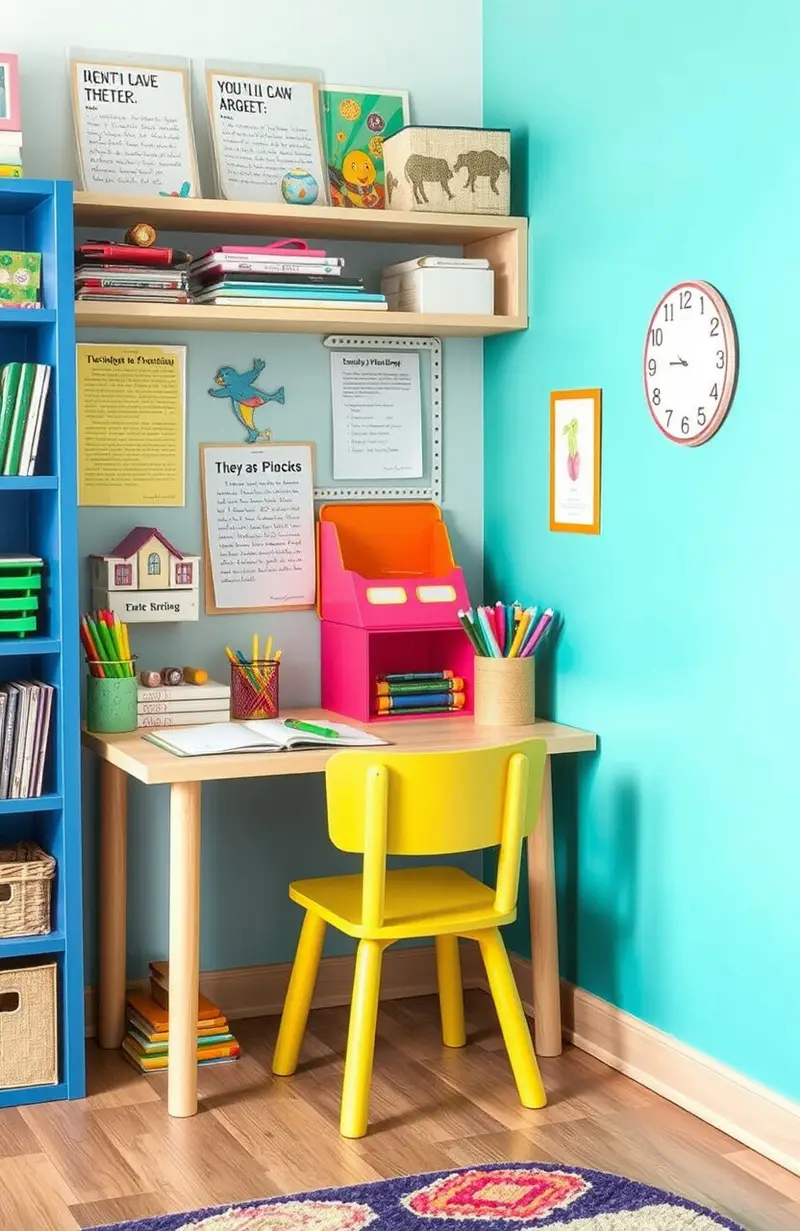
A creative writing corner inspires young authors. Think of a small desk, paper, and colorful pens.
This corner benefits children by encouraging storytelling and language skills. It’s a space where imagination becomes words.
Uniquely, it can feature writing prompts or story starters. Encourage kids to write about their adventures and dreams.
Set up this corner affordably with recycled paper and thrifted notebooks. Use colorful stickers to decorate writing tools.
20. Quiet Reflection Area
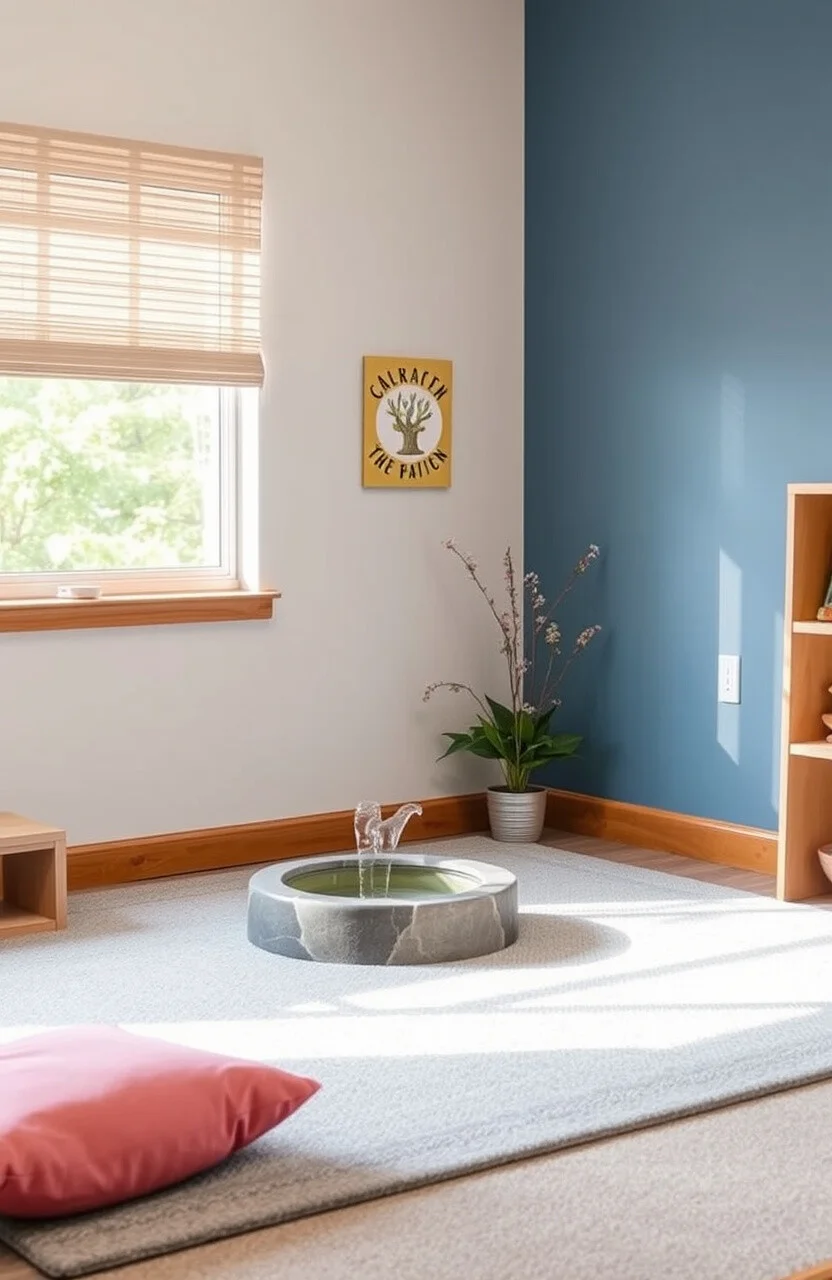
A quiet reflection area provides a peaceful retreat. Think of a soft mat, calming colors, and a small fountain.
This area benefits kids by offering a space for relaxation and mindfulness. It’s a place for quiet thoughts and calm breaths.
Uniquely, it can include elements like a sand garden. Encourage kids to spend a few minutes here each day to unwind.
Creating this area can be done on a budget with soft fabrics and soothing sounds. Use nature sounds apps for added ambiance.
21. Art Supply Station
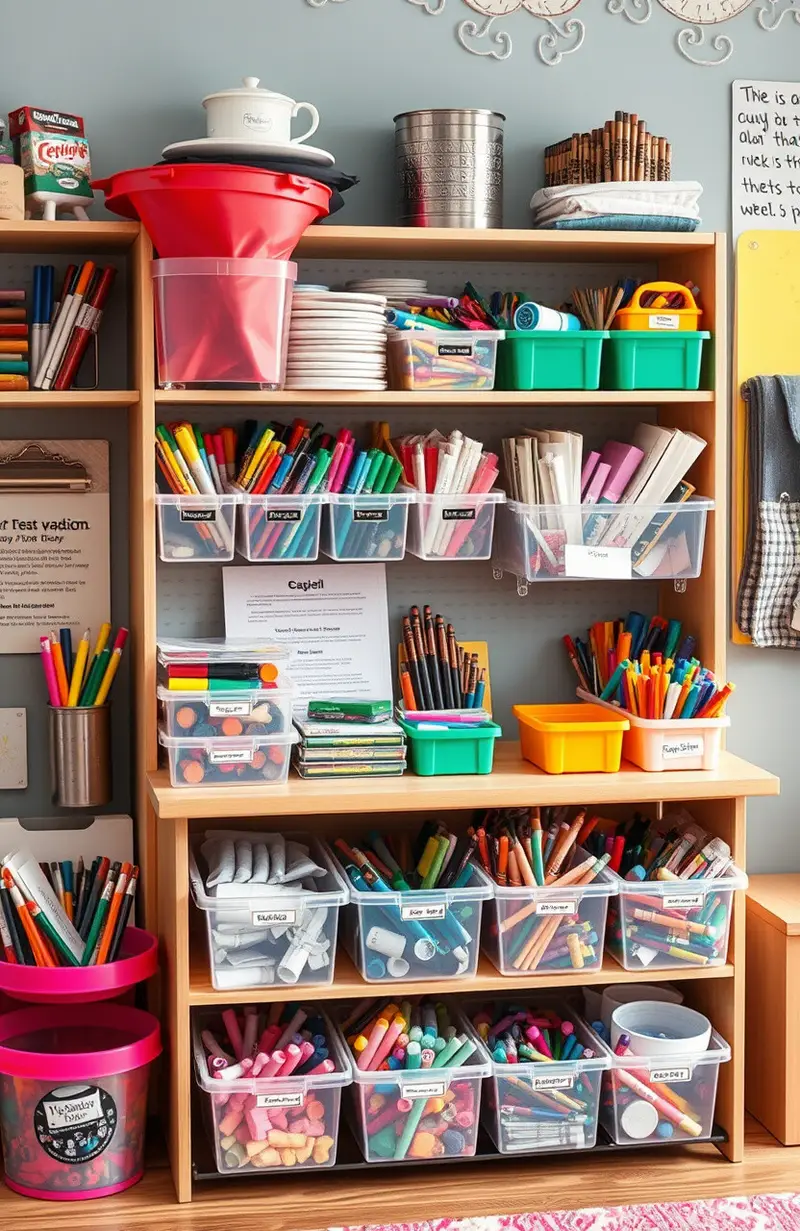
An art supply station is a treasure trove for creative minds. Think of markers, paints, and colorful paper.
This station benefits children by providing easy access to materials for art projects. It’s an invitation to create anytime.
Uniquely, it can be organized by colors or projects. Encourage kids to keep it tidy and replenish supplies as needed.
Create this station affordably with thrift store finds and bulk purchases. Use clear containers to easily see supplies.
22. Dramatic Play Area
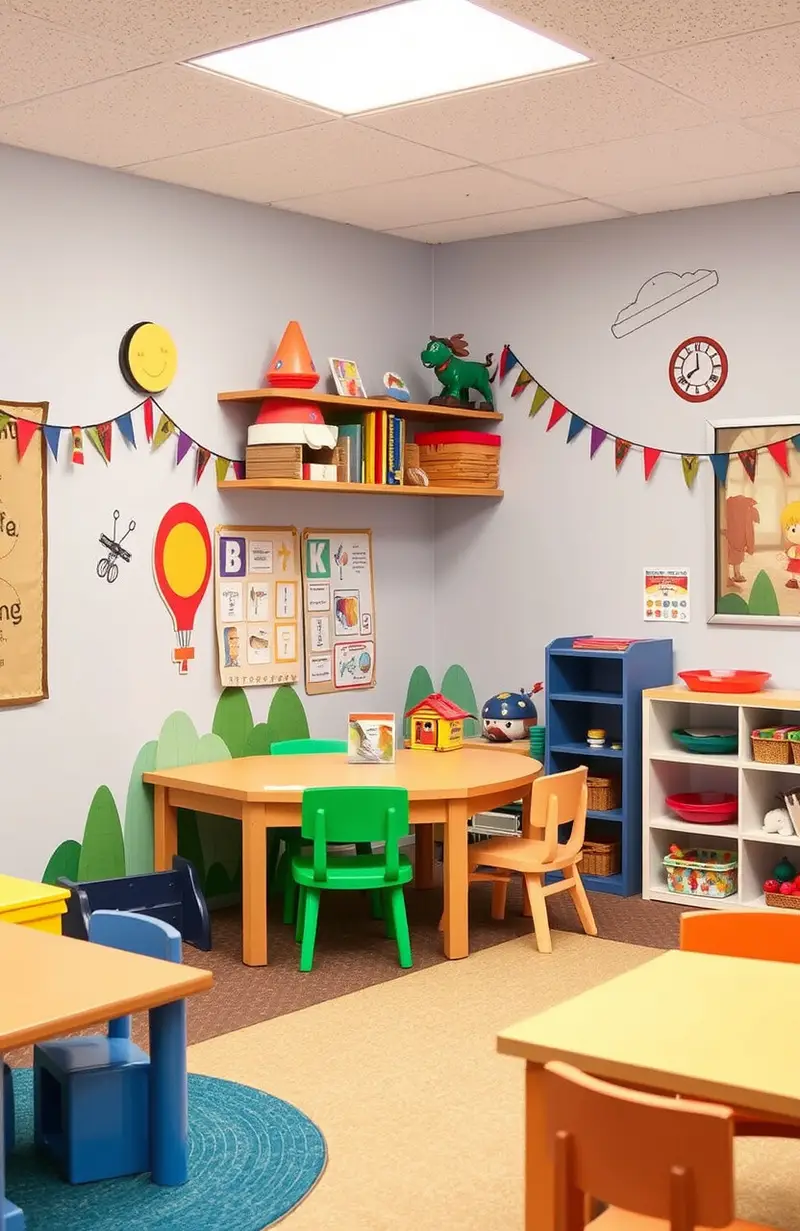
The dramatic play area is a stage for imagination. Think of costumes, props, and themed backdrops.
This area benefits kids by encouraging role play and social skills. It’s a world where kids can be anything they dream.
Uniquely, it can change themes, from a pirate ship to a space station. Encourage kids to create their own play scenarios.
Set up this area on a budget with donated costumes and homemade props. Use fabric and cardboard for backdrops.
23. Light and Shadow Play Zone

A light and shadow play zone is a magical space for exploration. Think of flashlights, shadow puppets, and translucent shapes.
This zone benefits kids by inspiring curiosity and scientific inquiry. It’s a space to explore light, shadows, and reflections.
Uniquely, it can include storytelling with shadow puppets. Encourage kids to experiment with light angles and object placement.
Create this zone affordably with household items like sheets and lamps. Use colored transparencies for added fun.
24. STEM Exploration Area
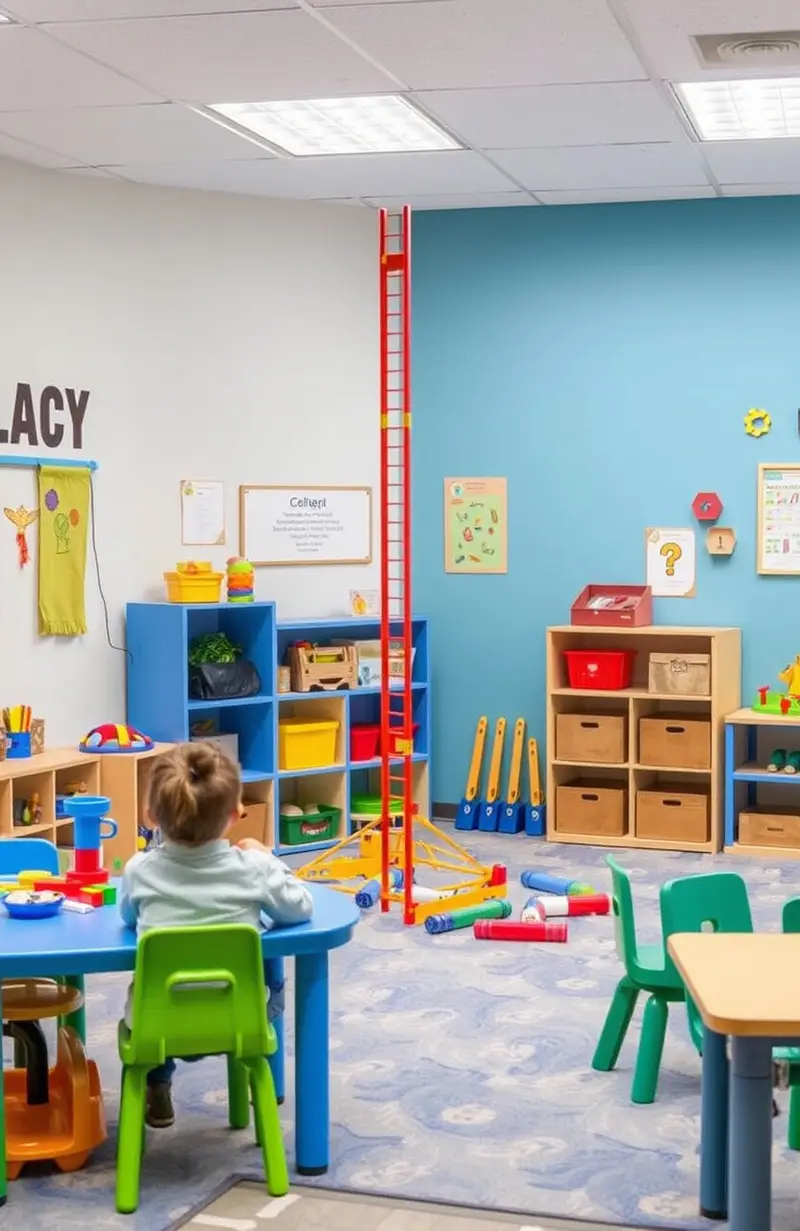
The STEM exploration area is a hub for budding scientists and engineers. Think of building blocks, gears, and simple machines.
This area benefits kids by developing problem-solving and critical thinking skills. It’s where innovation takes shape.
Uniquely, it can feature challenges like building the tallest tower. Encourage kids to think creatively and collaboratively.
Set up this area on a budget with thrifted building sets. Use recycled materials to create engineering challenges.
25. Mindfulness and Yoga Zone
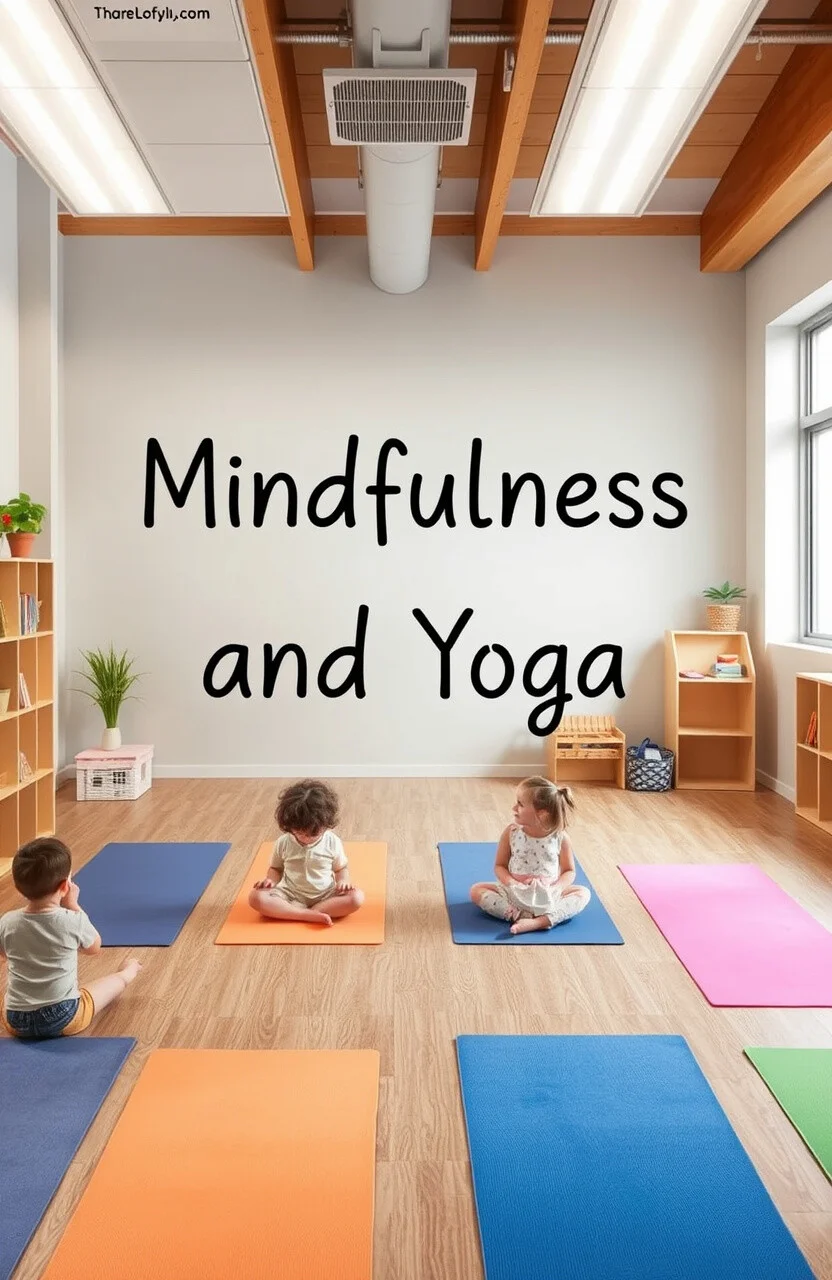
A mindfulness and yoga zone is a peaceful place for movement and reflection. Think of yoga mats and calming music.
This zone benefits children by promoting physical health and mental well-being. It’s a space for stretching and quieting the mind.
Uniquely, it can include guided breathing exercises or simple poses. Encourage kids to practice mindfulness regularly.
Set up this zone affordably with yoga mats and online resources. Use nature sounds or soft music for a calming atmosphere.
26. Weather Observation Station
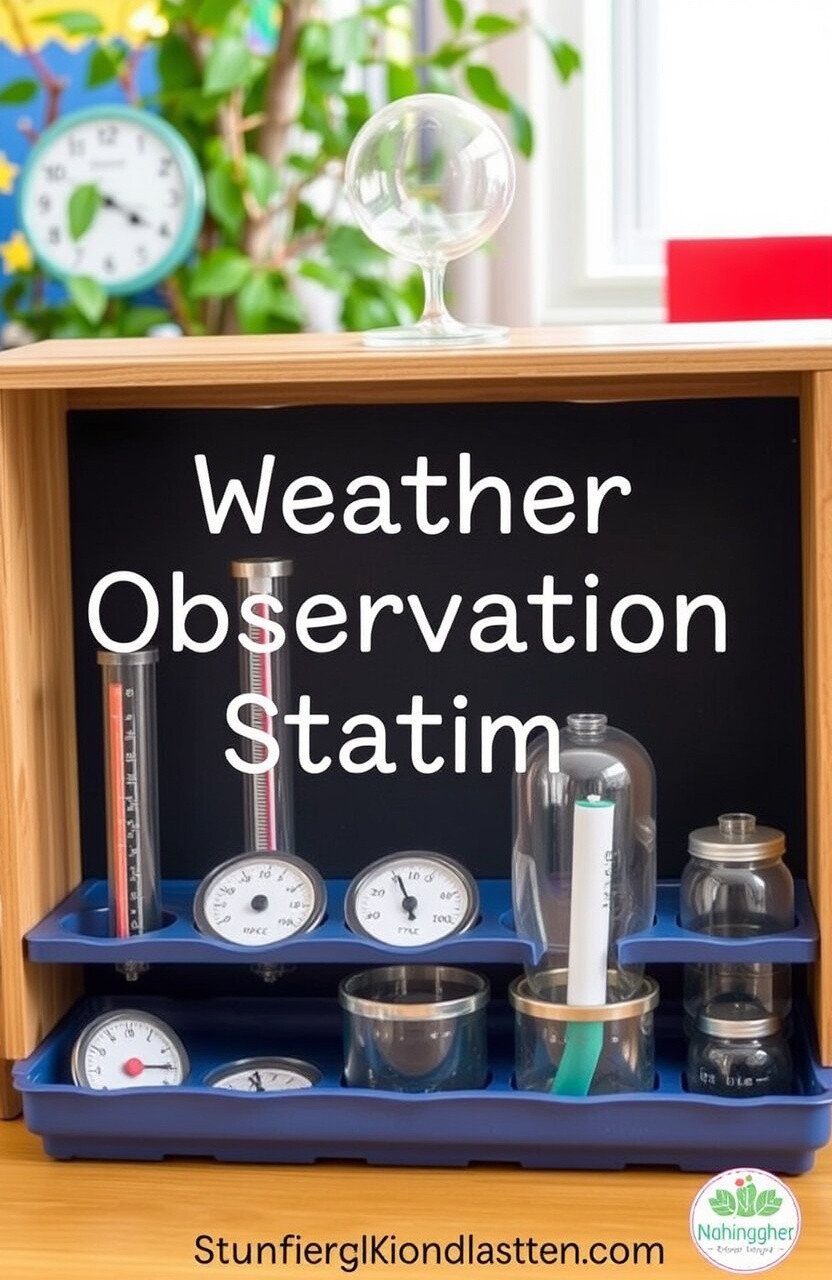
A weather observation station teaches kids about the natural world. Think of thermometers, wind socks, and rain gauges.
This station benefits kids by encouraging scientific observation and inquiry. It’s where curiosity meets real-world learning.
Uniquely, it can include daily weather charts. Encourage kids to predict weather changes and track patterns.
Create this station affordably with DIY weather tools. Use recycled materials to make instruments like barometers.
27. Friendship and Kindness Corner
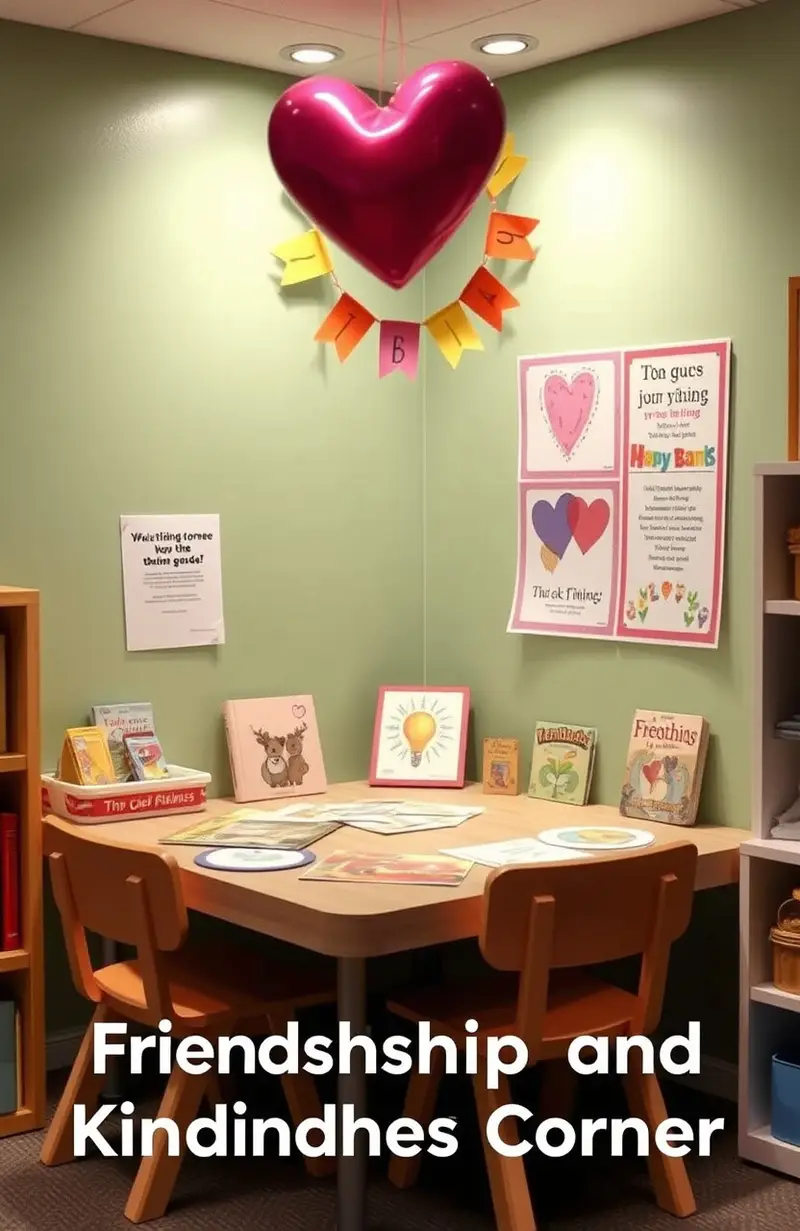
The friendship and kindness corner fosters social-emotional learning. Think of heartwarming books and positive affirmations.
This corner benefits kids by encouraging empathy and kindness. It’s a space for building strong, positive relationships.
Uniquely, it can include activities like creating friendship bracelets. Encourage kids to practice acts of kindness daily.
Create this corner affordably with library books and homemade affirmation cards. Use simple materials for craft activities.
28. Technology Exploration Hub
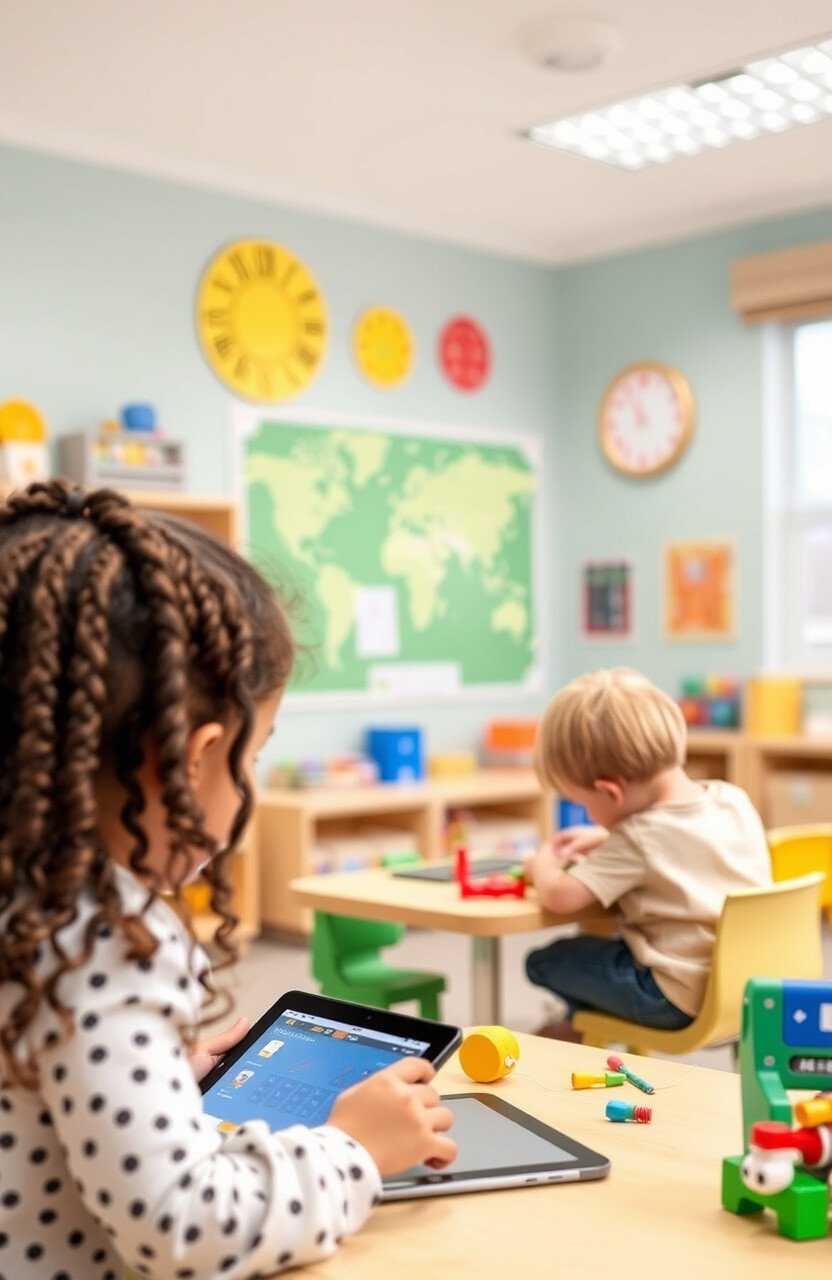
The technology exploration hub is a gateway to digital learning. Think of tablets, coding toys, and educational apps.
This hub benefits kids by introducing technology in a safe, educational way. It’s a space where learning meets innovation.
Uniquely, it can include projects like simple coding challenges. Encourage kids to explore digital creativity responsibly.
Set up this hub affordably with shared devices and free apps. Use online resources for guided technology activities.
29. Building and Construction Zone
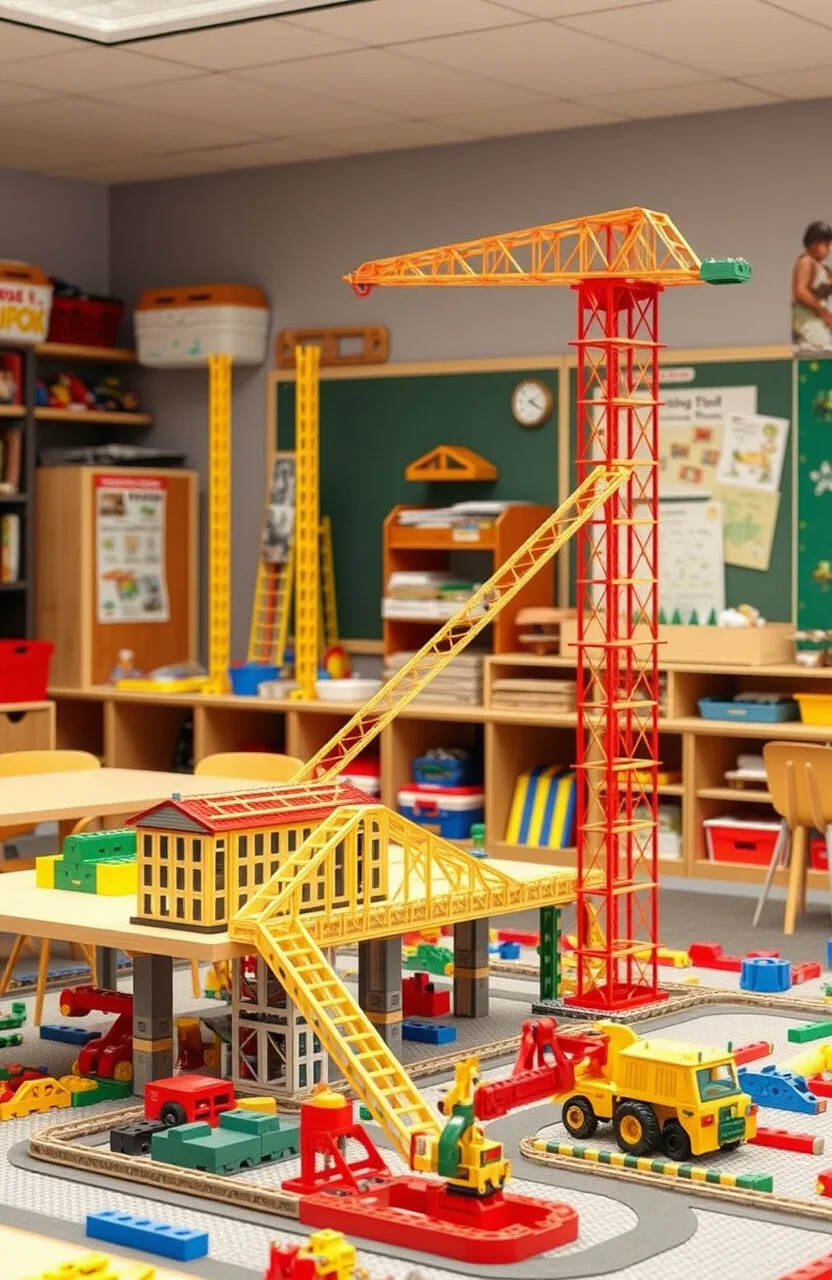
The building and construction zone is a place for hands-on engineering. Think of blocks, connectors, and creative building kits.
This zone benefits kids by promoting spatial awareness and problem-solving. It’s where imagination becomes structure.
Uniquely, it can feature themed construction challenges. Encourage kids to build cities, bridges, or vehicles.
Set up this zone on a budget with thrifted building sets. Use recyclable materials for eco-friendly construction projects.
30. Garden and Planting Project
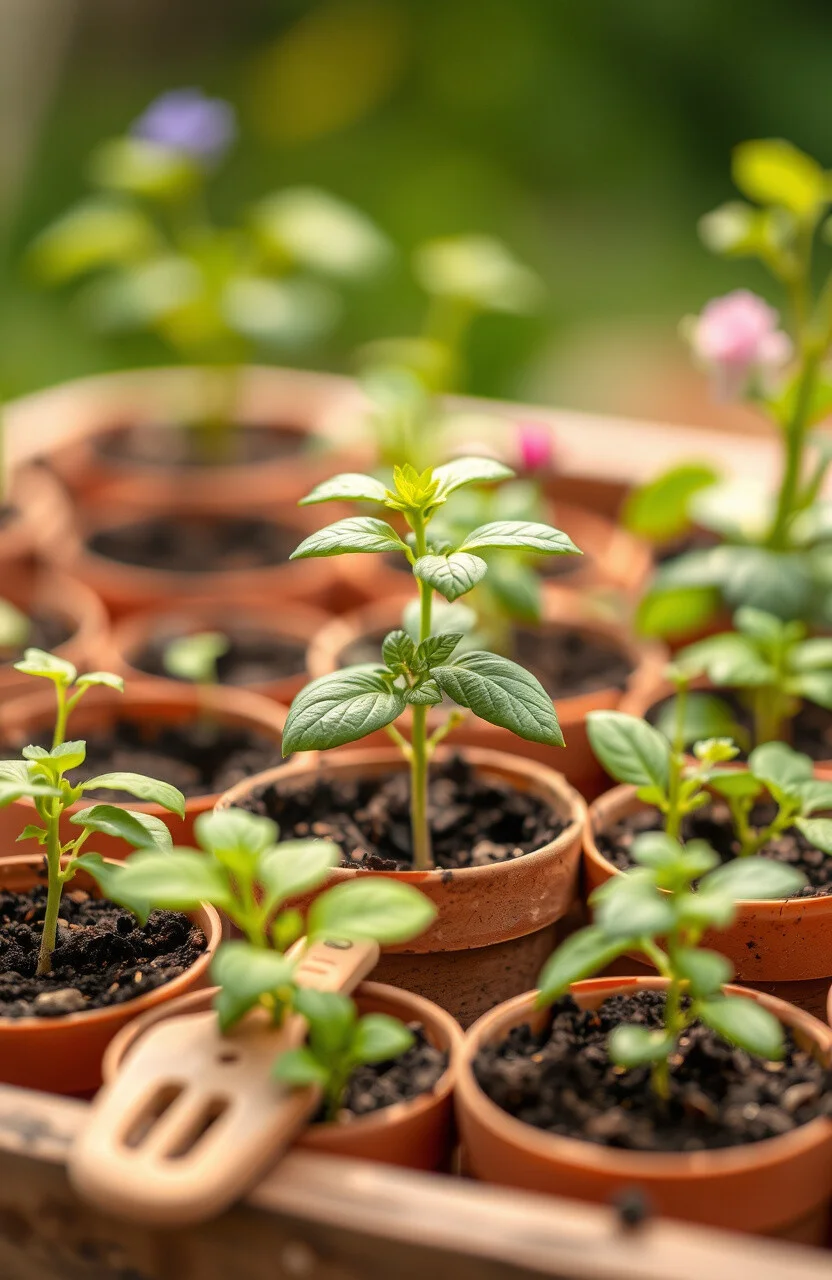
A garden and planting project connects kids with nature. Think of small pots, seeds, and gardening tools.
This project benefits children by teaching responsibility and patience. It’s a hands-on way to learn about growth and life cycles.
Uniquely, it can include planting herbs or flowers. Encourage kids to care for their plants and observe changes over time.
Create this project affordably with recycled containers and seed packets. Use compost or soil from local gardens.
31. Animal and Wildlife Corner
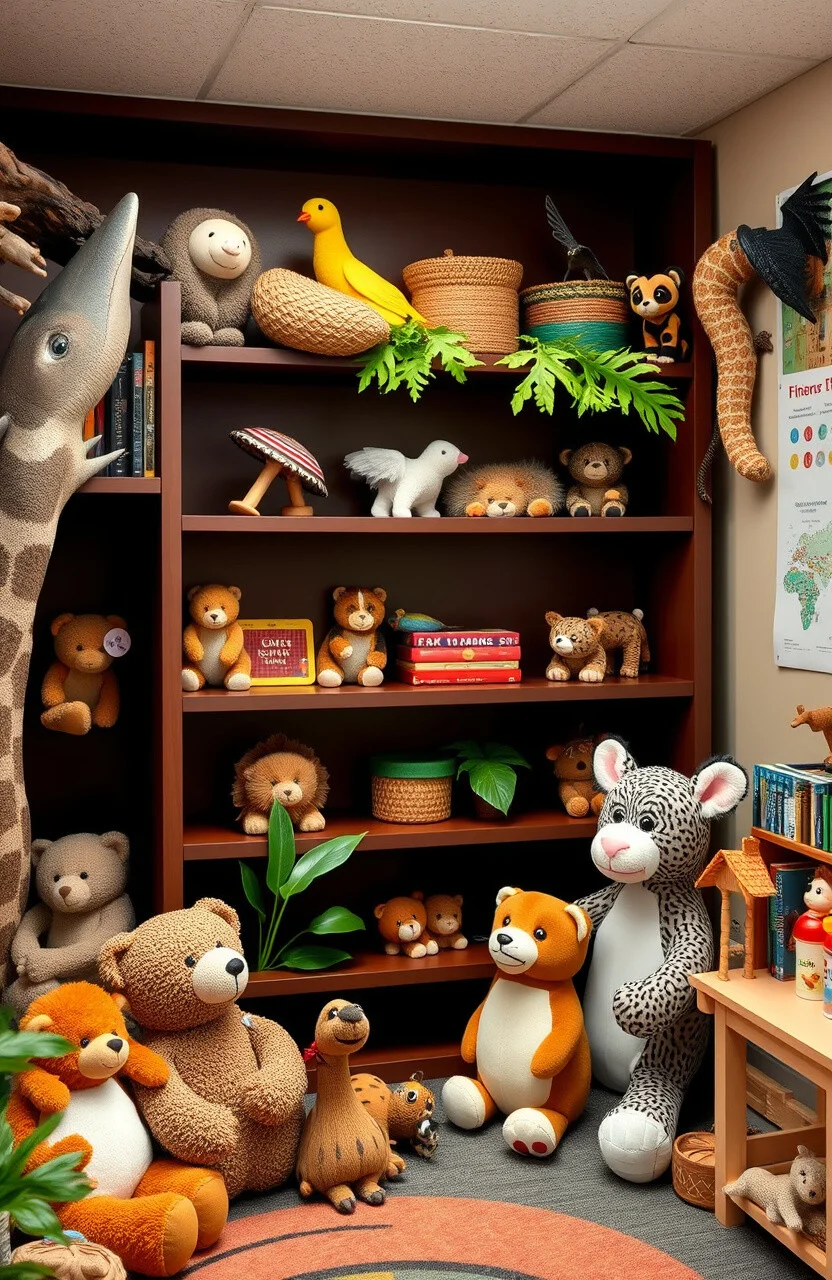
An animal and wildlife corner brings the animal kingdom into the classroom. Think of plush animals, books, and nature videos.
This corner benefits kids by fostering a love for animals and biodiversity. It’s a space for discovery and learning.
Uniquely, it can include animal-themed activities and crafts. Encourage kids to learn about different habitats and species.
Create this corner affordably with library books and donated plush toys. Use free online videos for wildlife documentaries.
32. Community Helpers Role Play

The community helpers role play area teaches about different jobs. Think of costumes, tools, and themed props.
This area benefits kids by promoting understanding of community roles. It’s a space for imaginative play and learning.
Uniquely, it can include activities like a pretend grocery store or post office. Encourage kids to role play different professions.
Set up this area on a budget with homemade costumes and props. Use cardboard and fabric for creative play setups.
33. Language and Literacy Lounge
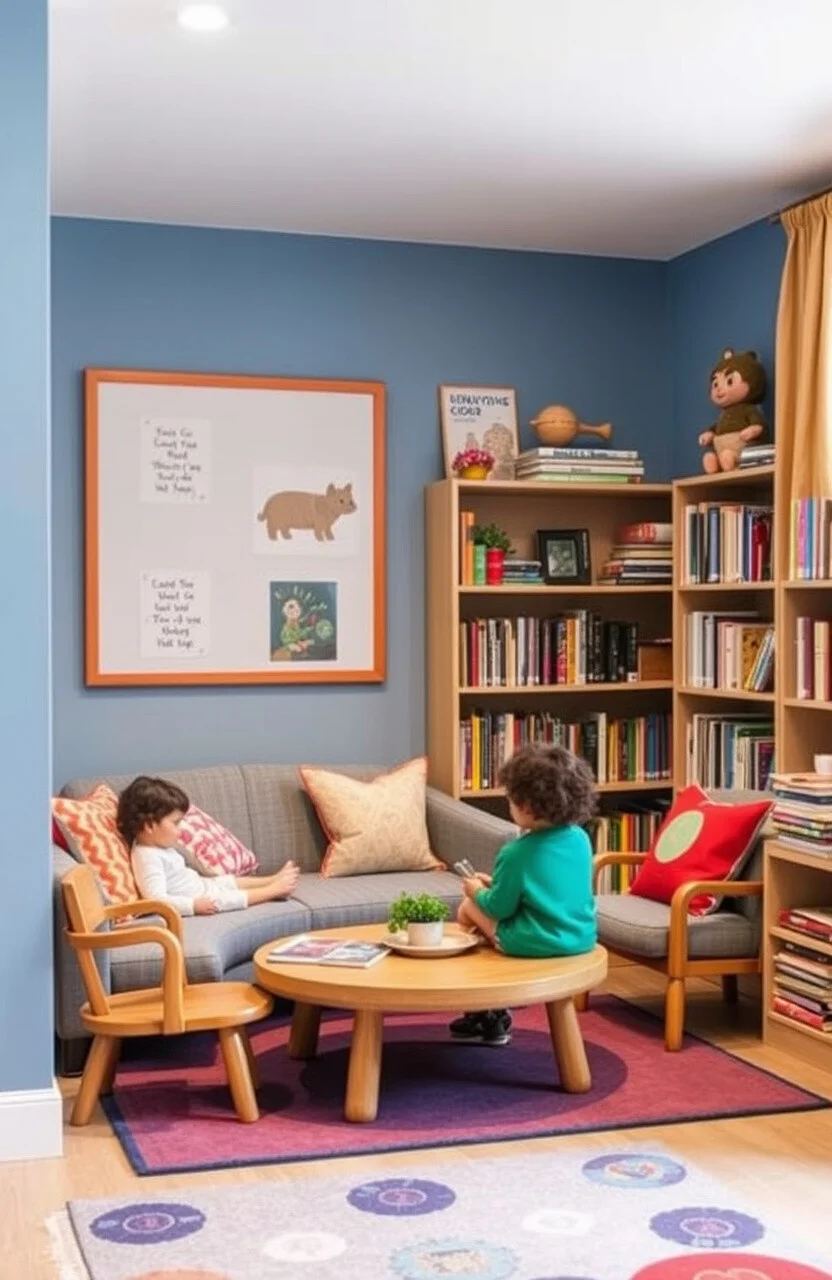
The language and literacy lounge is a haven for word lovers. Think of cozy seating, books, and language games.
This lounge benefits kids by promoting a love for reading and language skills. It’s a cozy spot for quiet exploration.
Uniquely, it can include activities like storytelling circles. Encourage kids to share their favorite books and authors.
Create this lounge affordably with thrifted books and cushions. Use library resources for language games and activities.
34. Math and Logic Puzzles Area
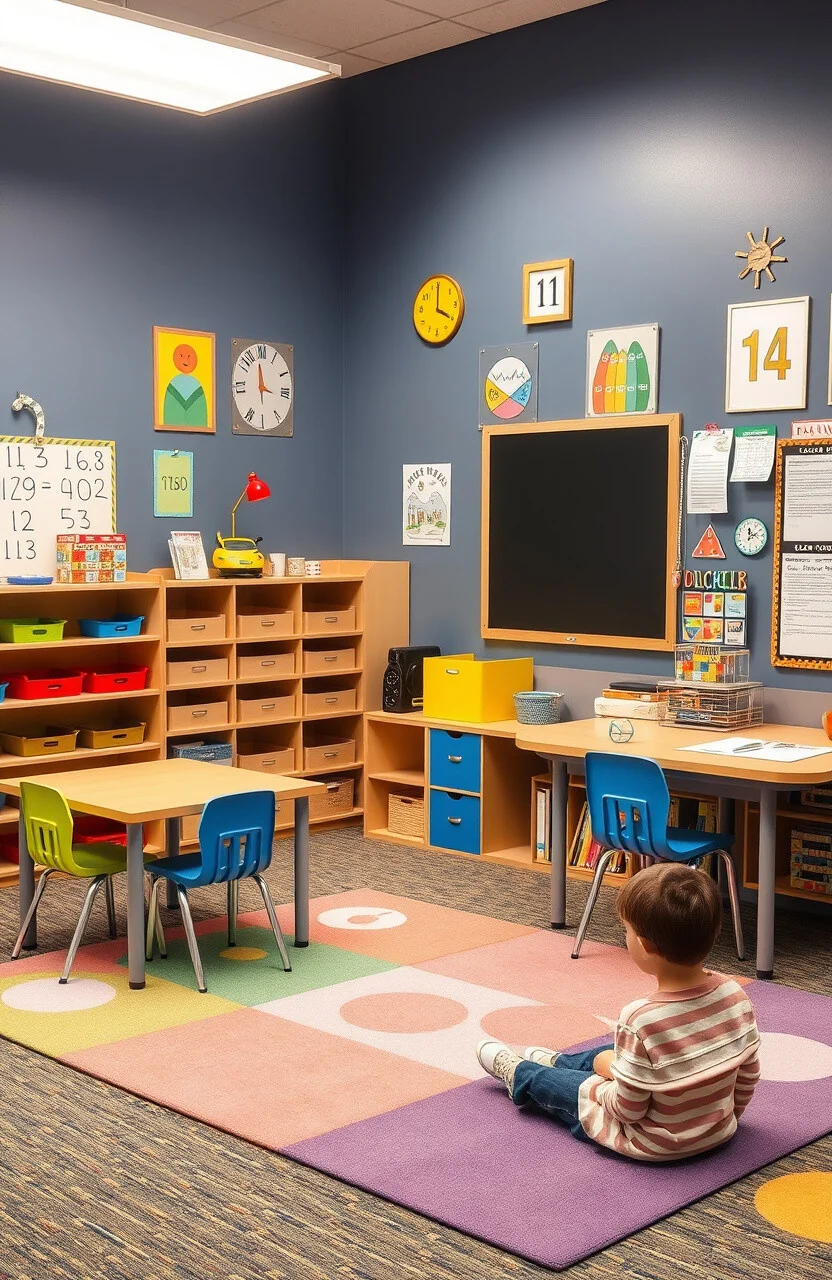
The math and logic puzzles area is a place for brain teasers. Think of math games, puzzles, and logic challenges.
This area benefits kids by developing critical thinking and math skills. It’s a space where numbers and logic come alive.
Uniquely, it can feature themed math challenges or escape rooms. Encourage kids to solve problems collaboratively.
Set up this area affordably with printable puzzles and games. Use online resources for free math activities.
35. Creative Expression Wall
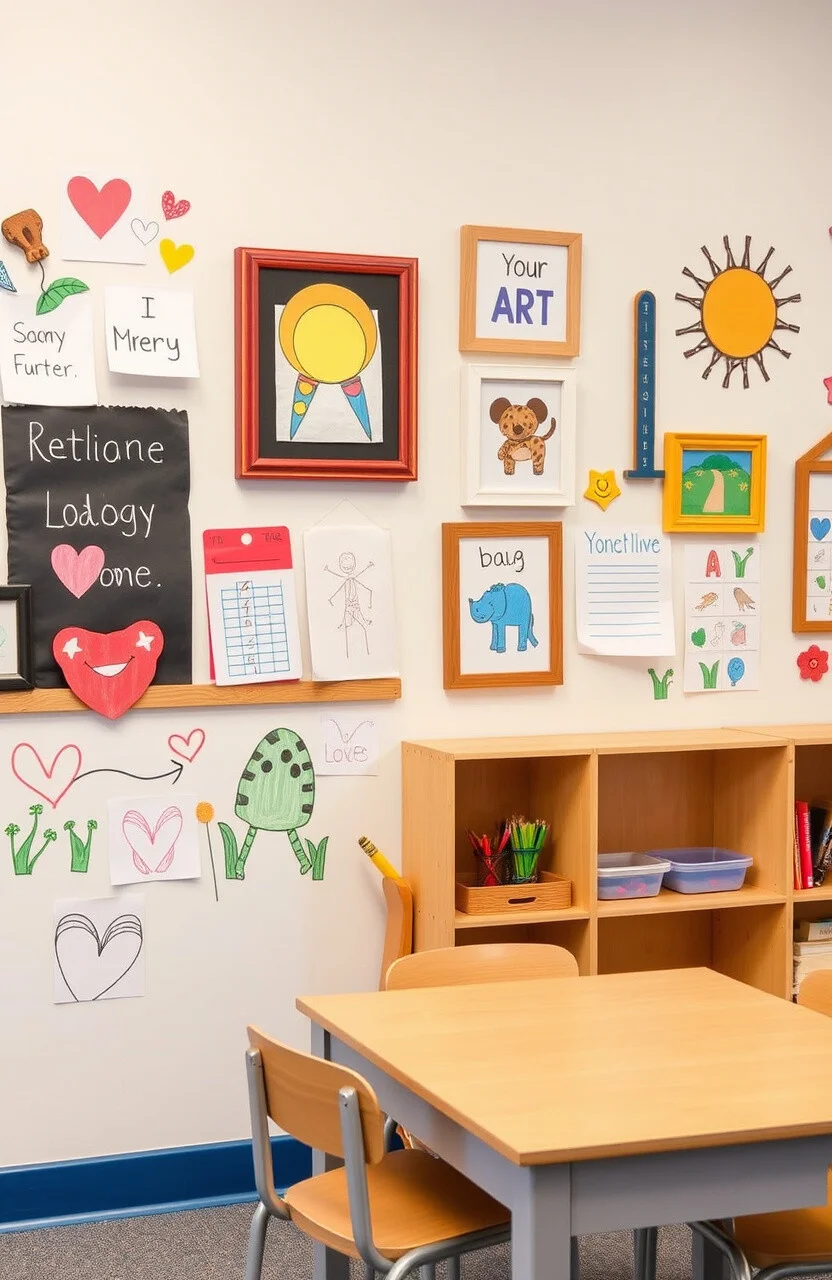
A creative expression wall invites kids to share their thoughts and art. Think of a mural space or a graffiti corner.
This wall benefits children by encouraging creativity and self-expression. It’s a canvas for imagination and ideas.
Uniquely, it can include chalk or dry-erase surfaces for easy changes. Encourage kids to add their art and messages.
Create this wall affordably with removable wallpaper or paint. Use thrifted frames to display rotating artworks.
36. History and Time Travel Corner
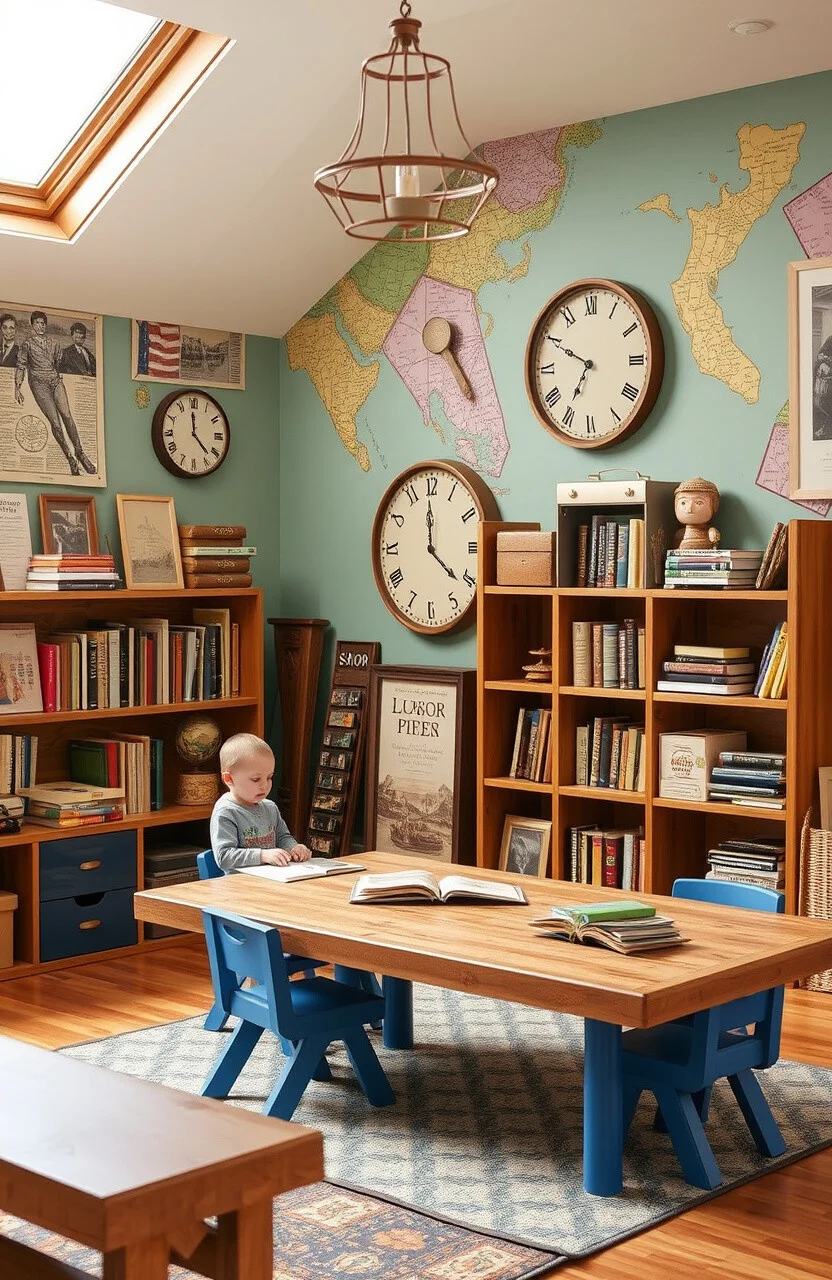
The history and time travel corner transports kids through time. Think of historical artifacts, costumes, and time-themed books.
This corner benefits kids by sparking an interest in history and cultures. It’s a journey through the past and future.
Uniquely, it can include role plays of historical events. Encourage kids to create timelines or history-themed crafts.
Set up this corner affordably with donated books and props. Use online resources for historical videos and stories.
37. Recycled Art Studio
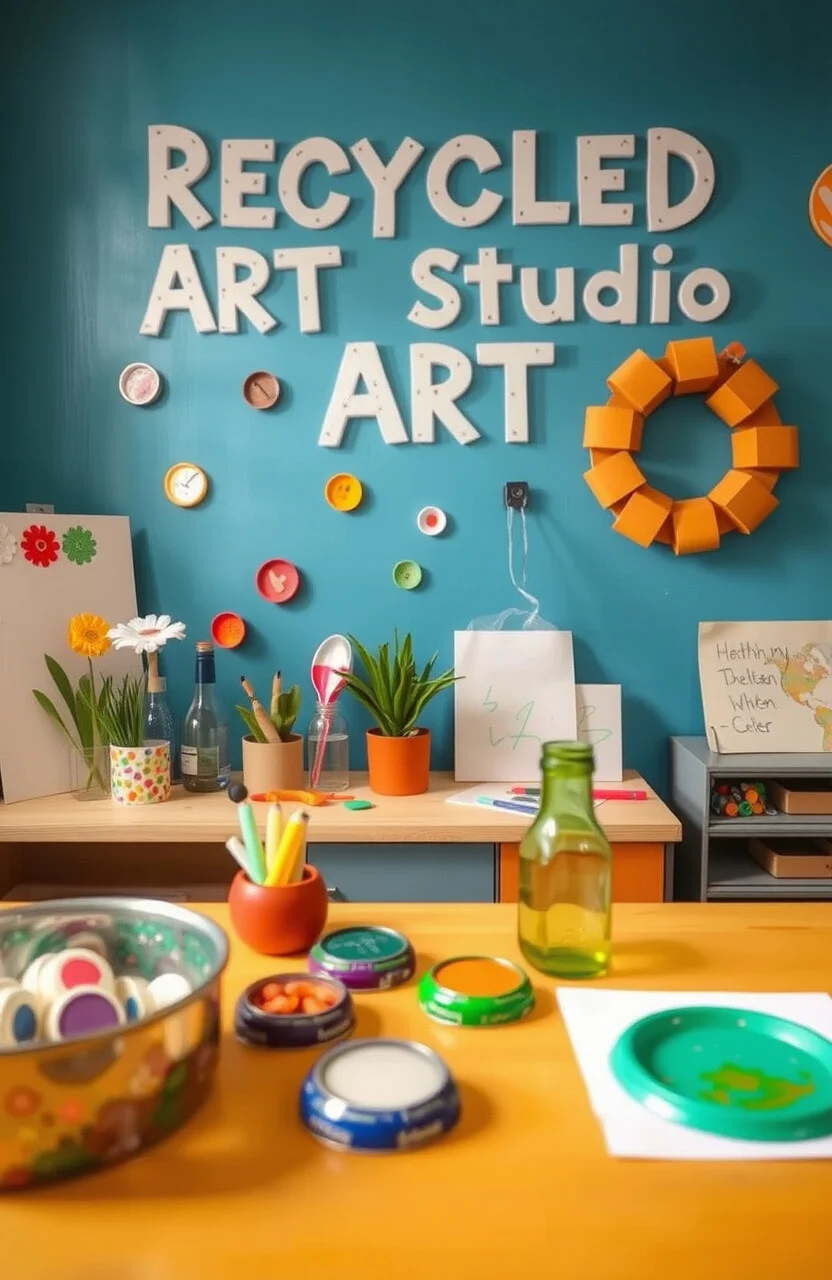
The recycled art studio inspires eco-friendly creativity. Think of materials like cardboard, plastic, and fabric scraps.
This studio benefits kids by teaching sustainability and innovation. It’s a space for turning “trash” into treasures.
Uniquely, it can include challenges like creating art from bottle caps. Encourage kids to see the beauty in everyday items.
Create this studio affordably with collected materials from home. Use community resources for recycling education.
38. Seasonal Celebration Station
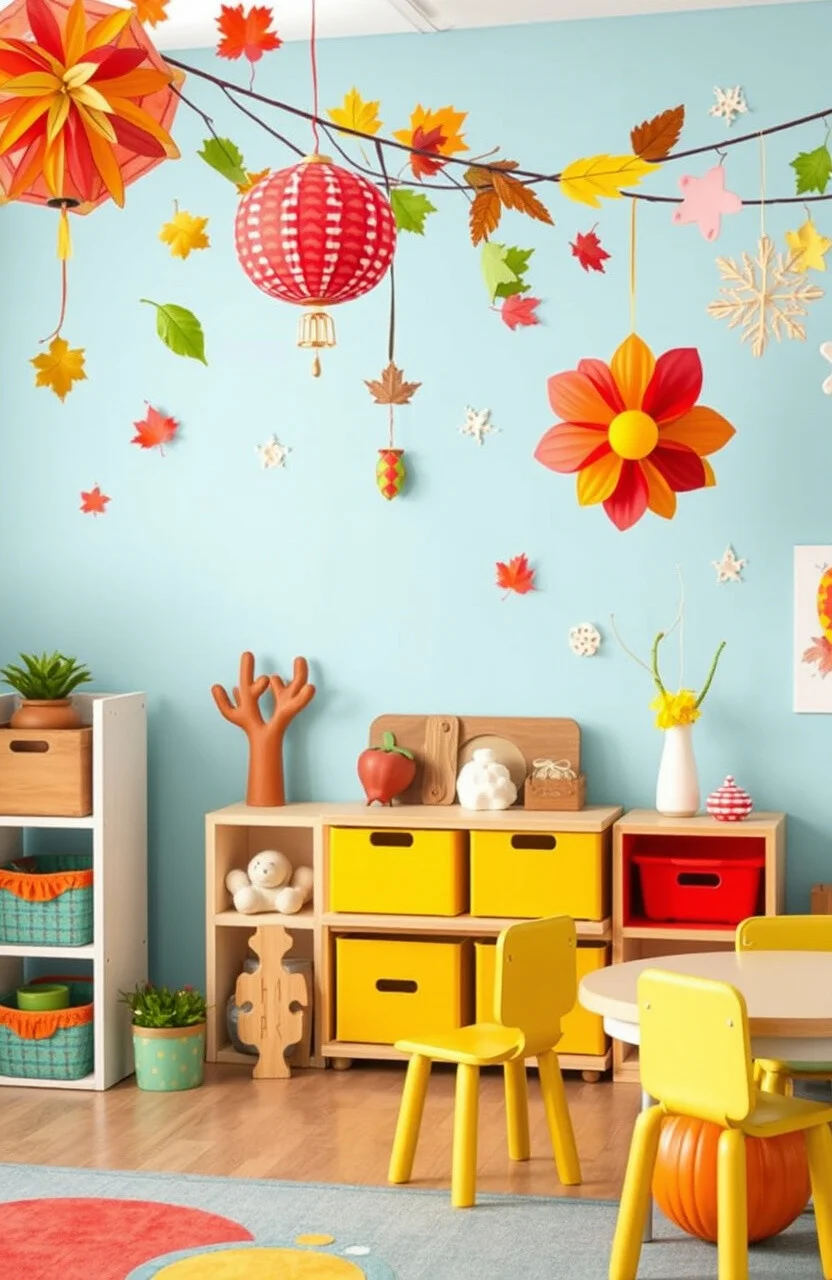
The seasonal celebration station brings the magic of seasons into the classroom. Think of decorations, crafts, and themed activities.
This station benefits kids by connecting them with the changing seasons and traditions. It’s a way to celebrate throughout the year.
Uniquely, it can include crafts for each season or holiday. Encourage kids to explore cultural traditions and seasonal changes.
Set up this station affordably with homemade decorations and crafts. Use natural materials for a seasonal, eco-friendly touch.