Food courts can feel bright, bold, and full of life.
With the right style, they can also feel calm and easy to enjoy.
1. Open-Air Market Style Food Court
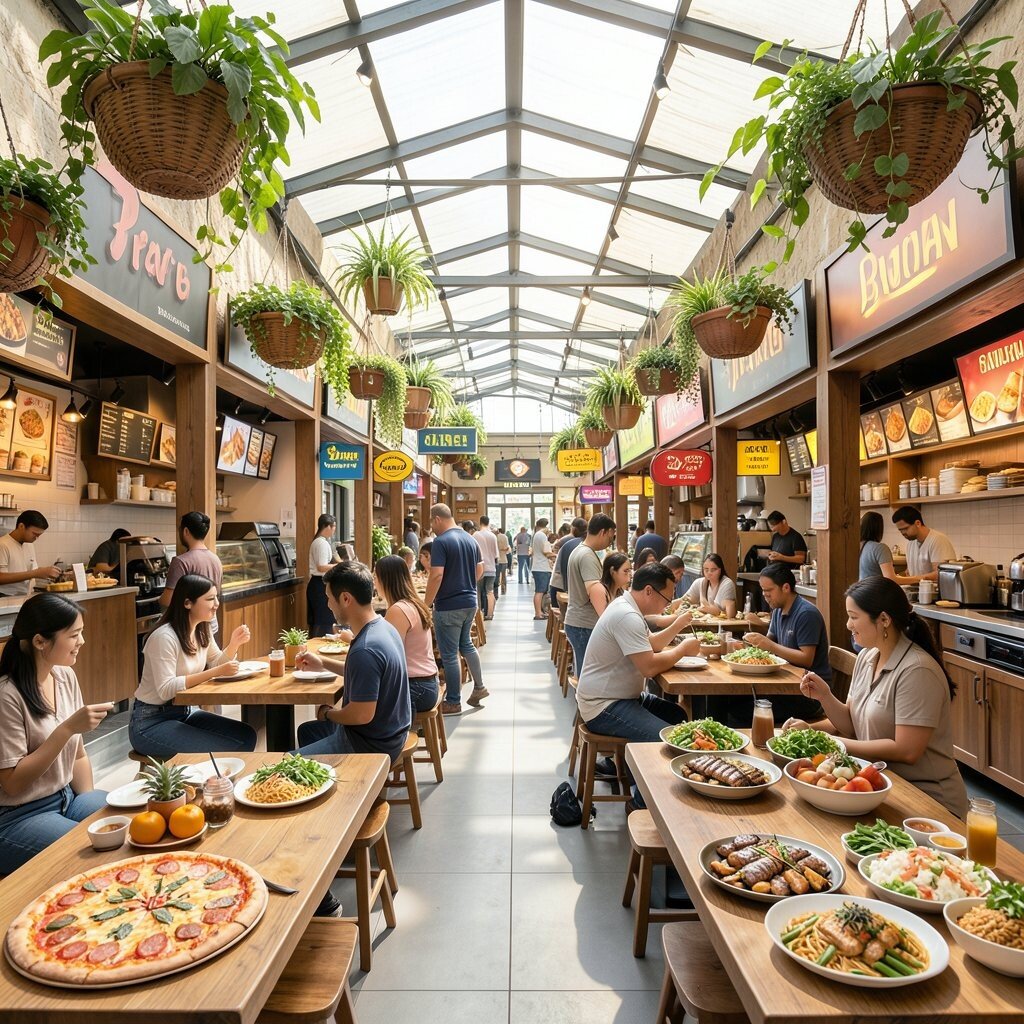
An open-air market style food court brings fresh air, warm light, and a lively mood. Picture wood tables, hanging plants, and colorful signs guiding people to many kinds of food.
This setup works well because it feels relaxed and social, so guests like to stay longer. It also gives room for pizza, noodles, salads, grilled food, and sweet treats in one bright space.
2. Modern Minimal Food Court
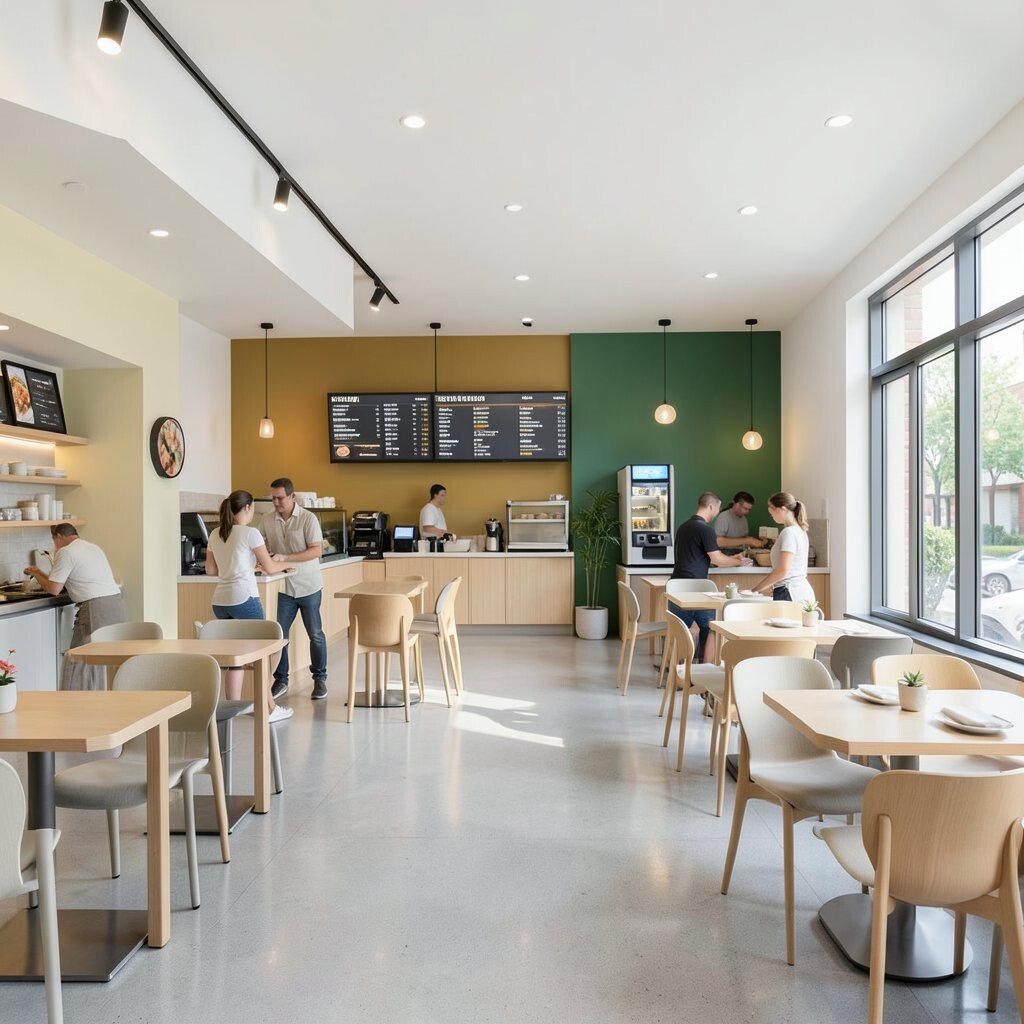
A modern minimal food court uses clean lines, soft colors, and simple furniture. The look feels neat and calm, which helps the food stand out more.
This style is great for busy places because it makes walking and ordering easy. You can add small touches like one bold wall color, sleek menu boards, or matching chairs to keep costs under control.
Many owners like this style because it can fit almost any cuisine mix without feeling crowded. It also pairs well with current trends like digital menus, self-order kiosks, and easy wipe-clean surfaces.
3. Rustic Global Eats Court
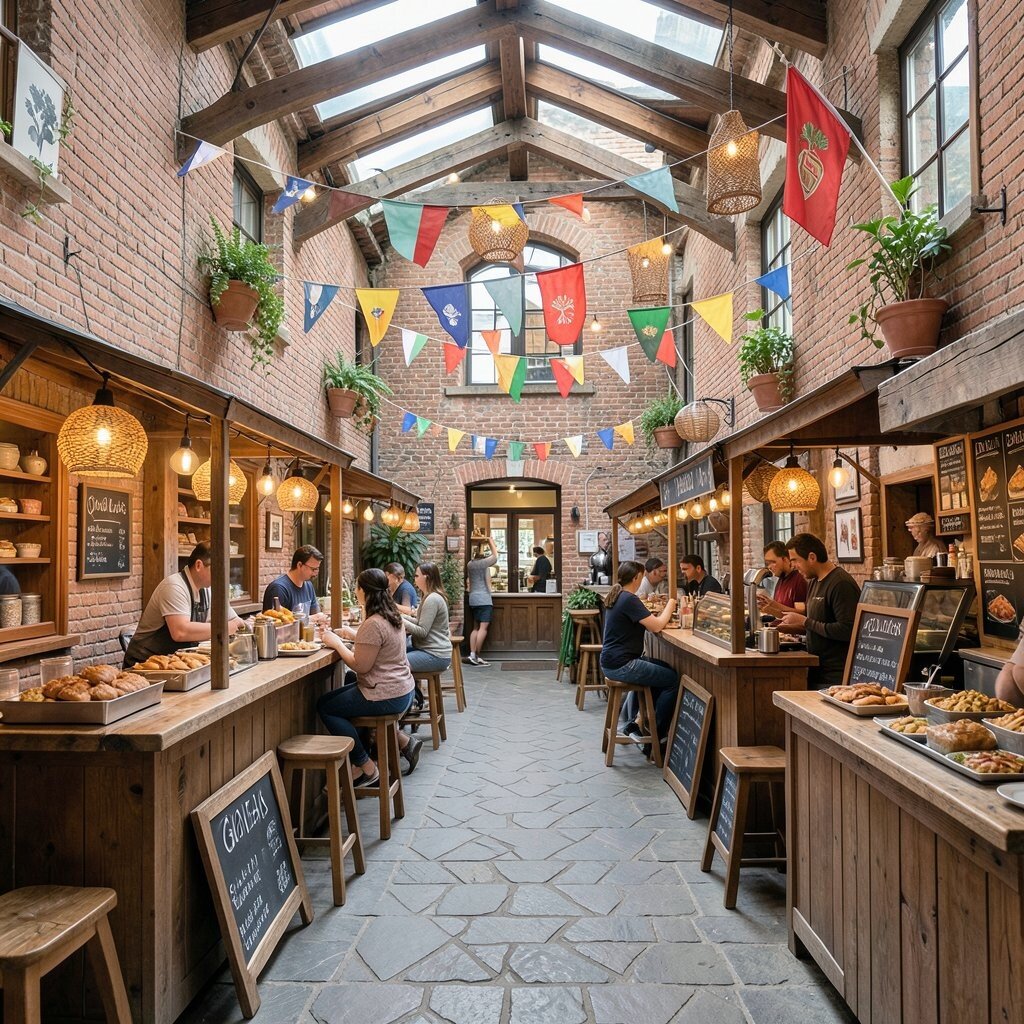
A rustic global eats court mixes warm wood, brick, and handmade details for a cozy feel. It can look like a fun village square with food stalls from many places.
This style makes each stall feel special, which helps guests remember where their favorite meals come from. You can use flags, woven lamps, and chalkboard signs to give each cuisine its own charm.
It is a smart choice for owners who want a friendly look without spending too much on fancy decor. Small personal touches like local art or family recipes on the wall can make the space feel even more welcoming.
4. Bright Family-Friendly Food Court
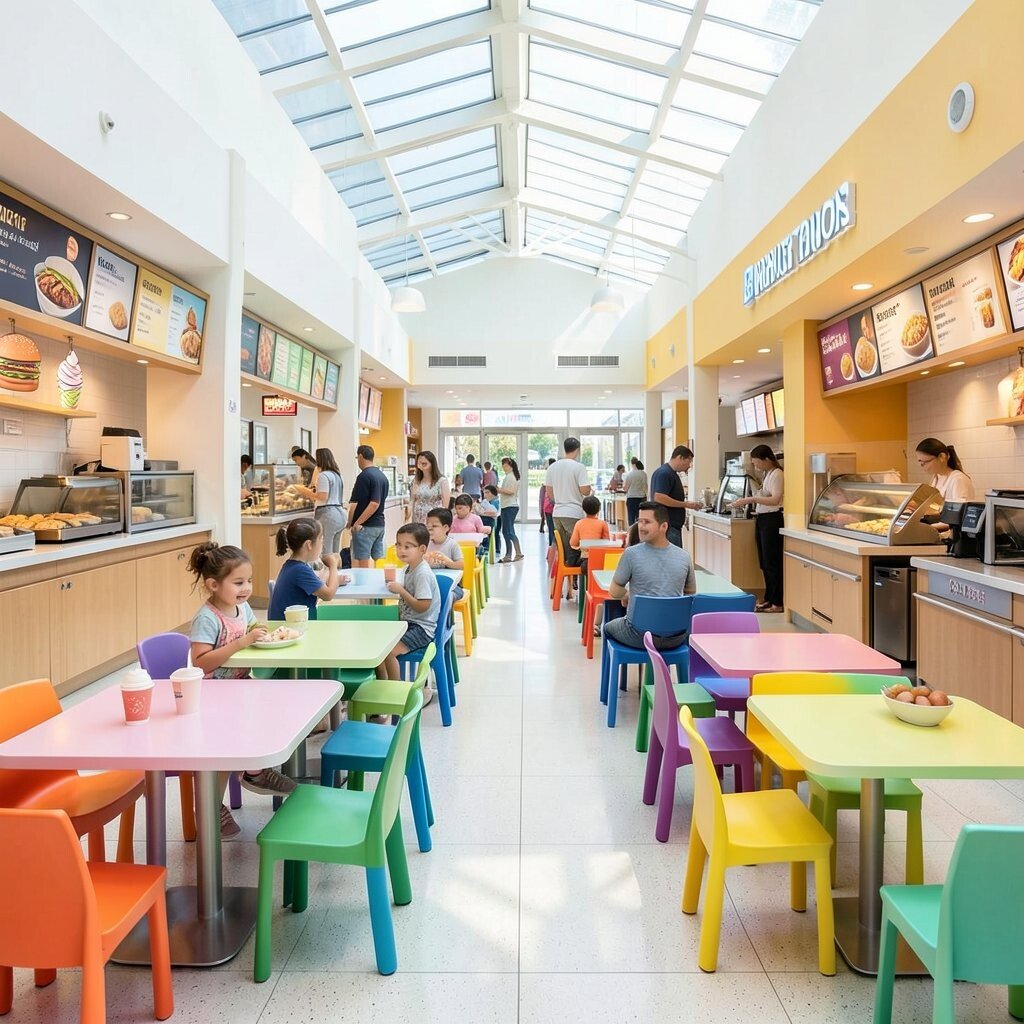
A bright family-friendly food court uses happy colors, wide paths, and easy-to-clean tables. The space feels cheerful and safe, which is great for kids and parents alike.
You can make it special with cartoon-style icons, playful seat colors, and simple menus that are easy to read. This kind of setup supports many food choices, from burgers and rice bowls to wraps and ice cream.
5. Urban Street Food Court
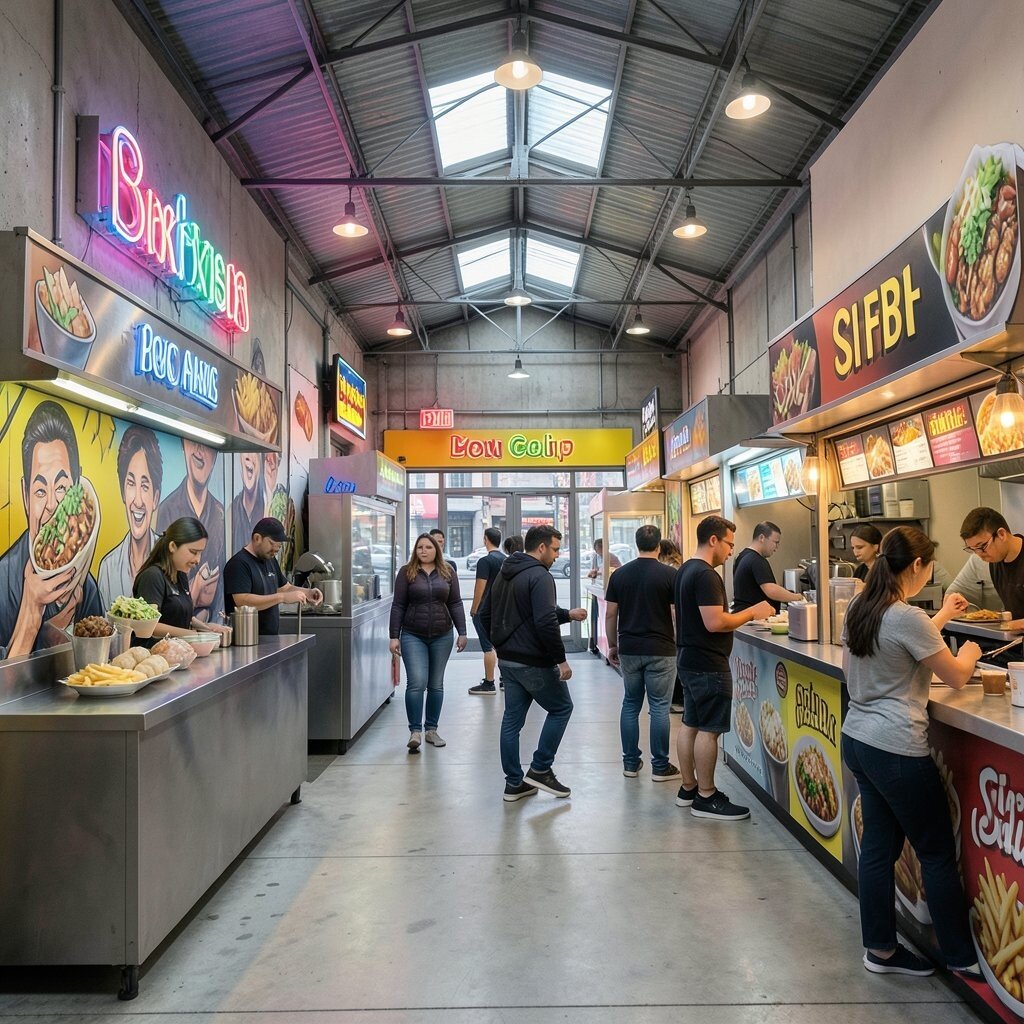
An urban street food court brings the fun of city food stalls indoors or into a covered space. Think metal signs, neon lights, and bold graphics that make every corner feel alive.
This style is perfect for fast bites and trendy foods like tacos, ramen, dumplings, and loaded fries. It also helps each vendor stand out, which can boost sales and create a more exciting visit.
Owners can keep costs balanced by using simple materials like concrete, steel, and painted walls. Personal details such as mural art or local neighborhood themes can make the court feel unique and full of energy.
6. Garden-Inspired Food Court
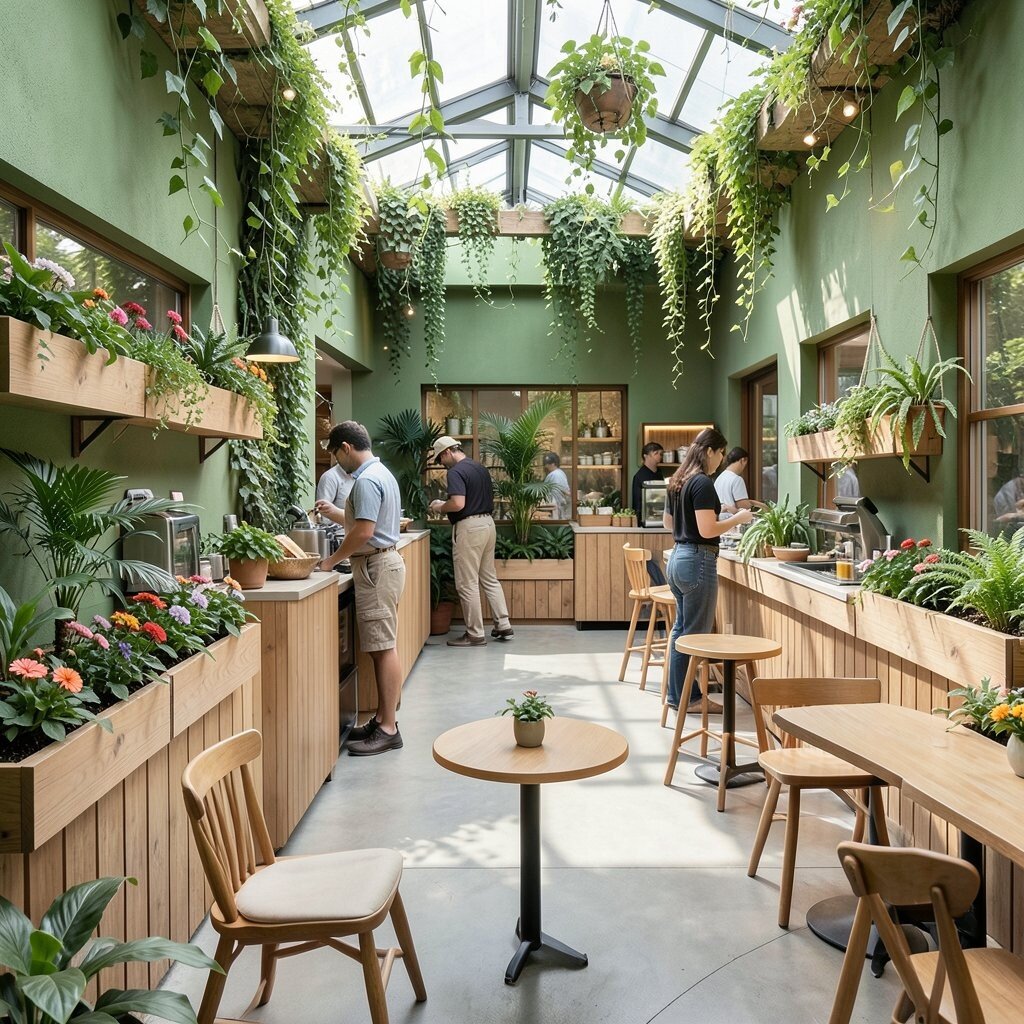
A garden-inspired food court feels fresh, soft, and peaceful with plants all around. Green walls, flower boxes, and natural wood can make the whole area feel like a small indoor park.
This look is lovely for healthy food choices such as grain bowls, fresh juices, sushi, and veggie plates. It also gives people a nice break from noisy malls or crowded streets.
Adding hanging vines or small table plants can make the space feel more personal without a big price tag. This style fits a current trend toward wellness and calm dining spaces.
7. Industrial Chic Food Court
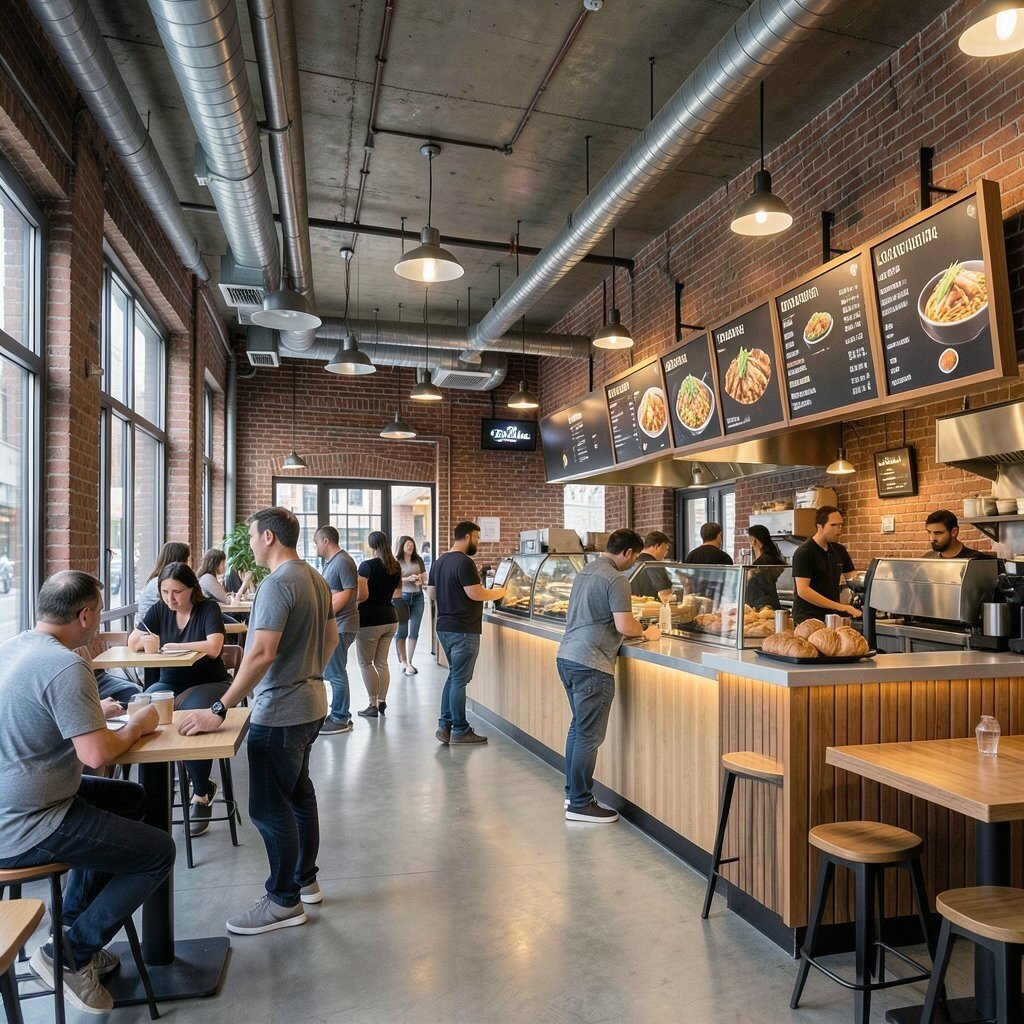
An industrial chic food court uses exposed pipes, brick walls, and metal lights for a cool city feel. The style looks bold but still stylish, which makes it popular in modern shopping spots.
It works well for many cuisines because the simple background lets the food colors shine. Guests can move from ramen to barbecue to pastries without the decor feeling out of place.
This idea can be budget-friendly if you keep the base design simple and add only a few standout pieces. Custom menu boards, shared seating, and strong lighting can give it a polished feel without too much cost.
It also matches current trends like open kitchens and visible cooking stations, which make food feel fresh and exciting. Small signs, local music, and a few warm wood accents can soften the look and make it more inviting.
8. Cultural Fusion Food Court
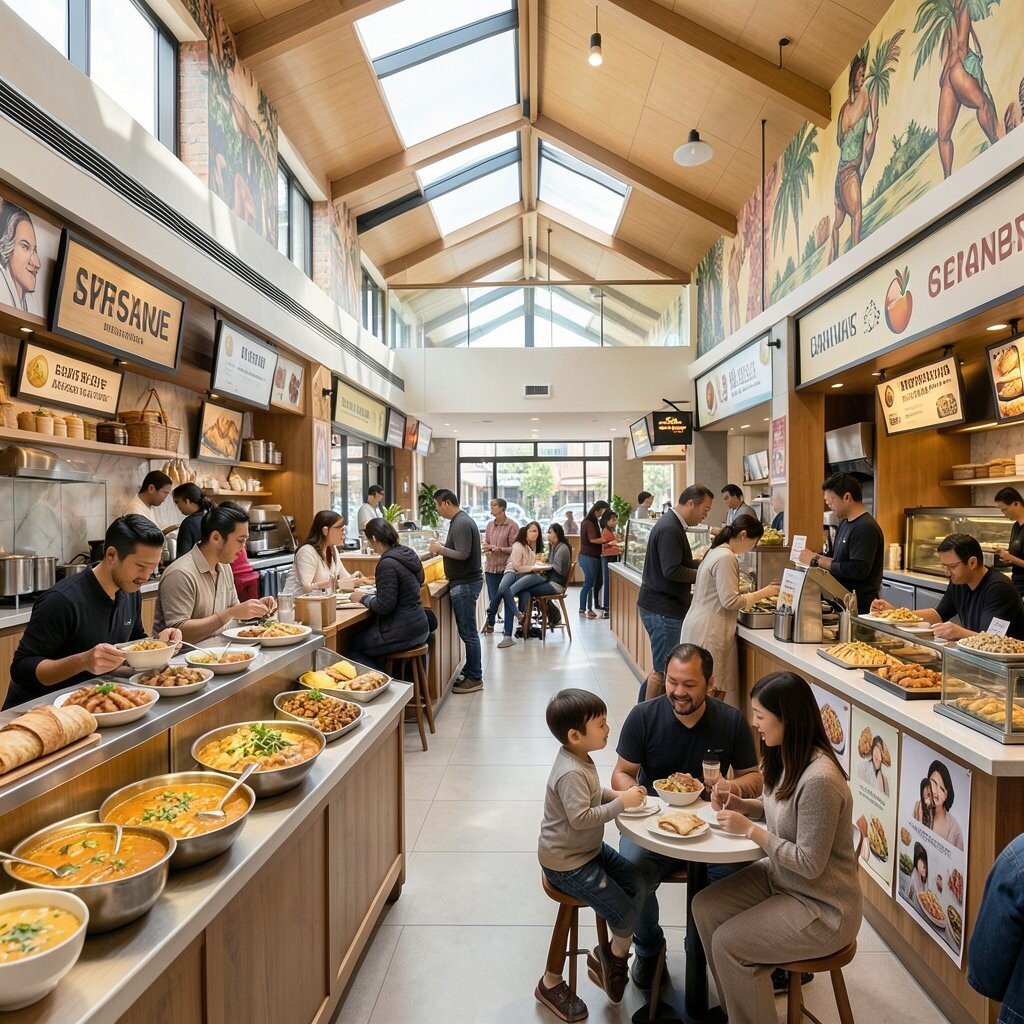
A cultural fusion food court celebrates many food traditions in one stylish place. The space can mix patterns, colors, and textures from different regions in a way that feels joyful and respectful.
This style is great for guests who like trying new tastes and sharing meals with friends. It can include Indian curries, Korean bowls, Italian slices, Middle Eastern wraps, and desserts from around the world.
To keep it from feeling messy, use a shared color theme and clear stall signs. Personal touches like origin stories, family photos, or recipe notes can help each vendor feel authentic.
9. Compact High-End Food Court
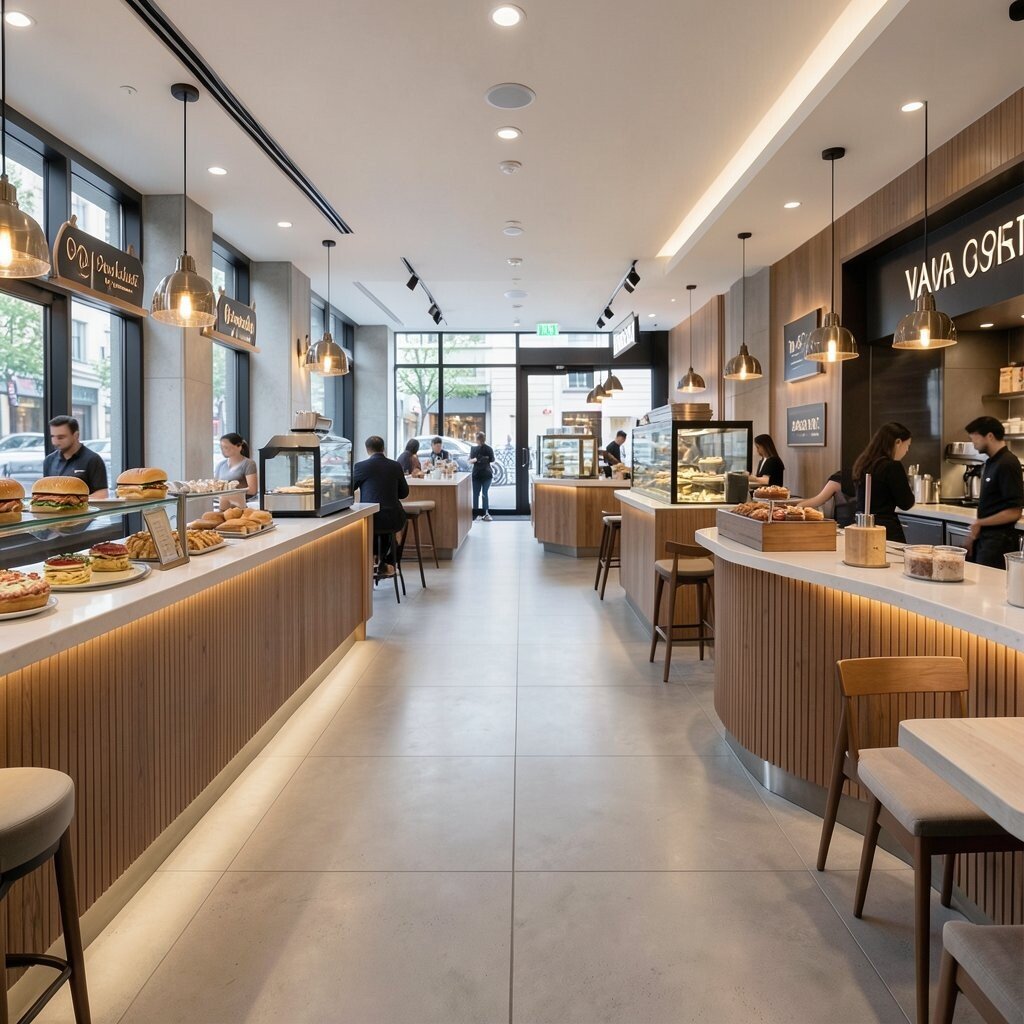
A compact high-end food court shows that small spaces can still feel elegant. Soft lighting, smooth counters, and neat seating can make the area look polished and welcoming.
This setup is useful when every square foot matters, because it keeps traffic moving while still feeling special. It can feature premium options like gourmet sandwiches, fresh pasta, seafood bites, and artisan sweets.
Owners can save money by choosing a few rich-looking details instead of filling the room with expensive decor. A signature color, matching trays, and tidy signs can make the whole place feel more upscale.
10. Retro Diner Food Court
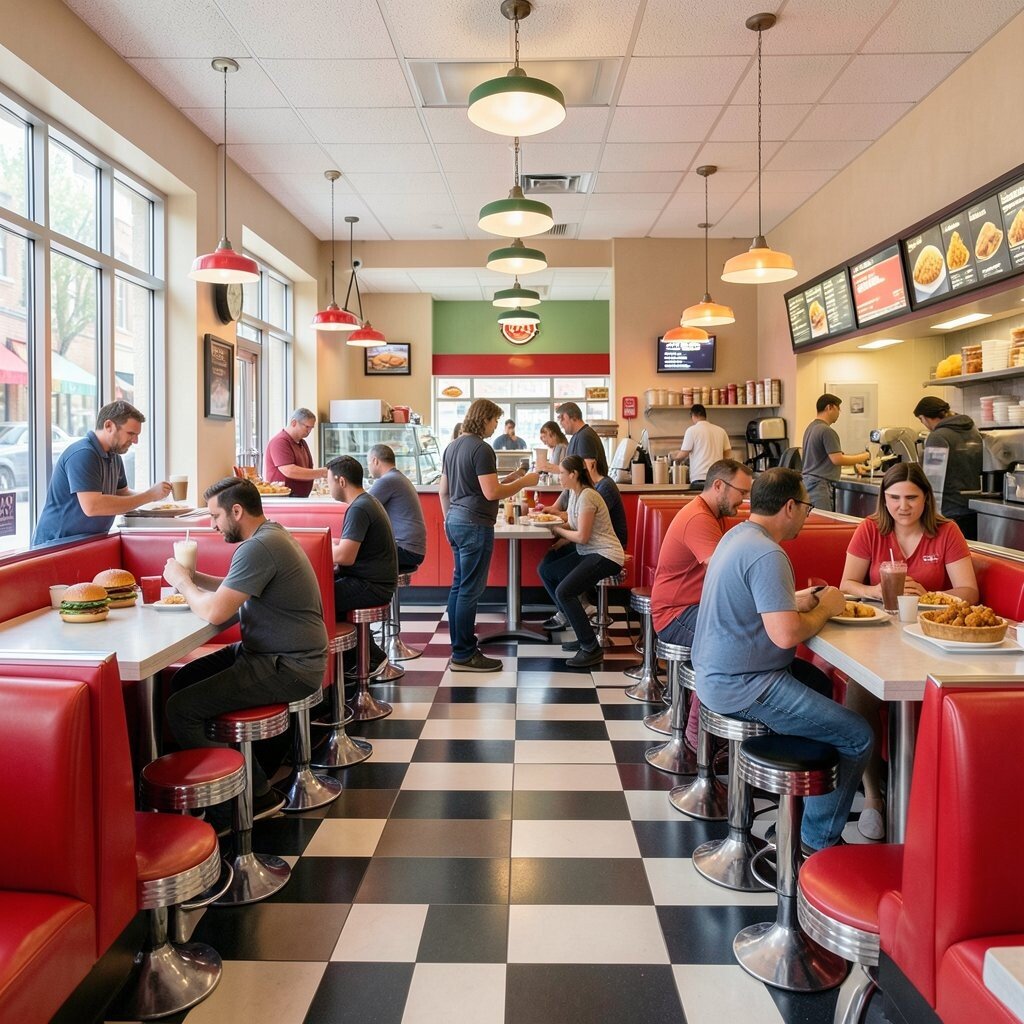
A retro diner food court brings back fun old-school charm with checkered floors, shiny stools, and bright booths. The style feels playful and easy to love.
It is a great match for classic foods like burgers, milkshakes, fried chicken, and pies, but it can also hold modern dishes with a vintage twist. Guests enjoy the nostalgic feel, which can make the food court a favorite hangout spot.
11. Tech-Smart Food Court
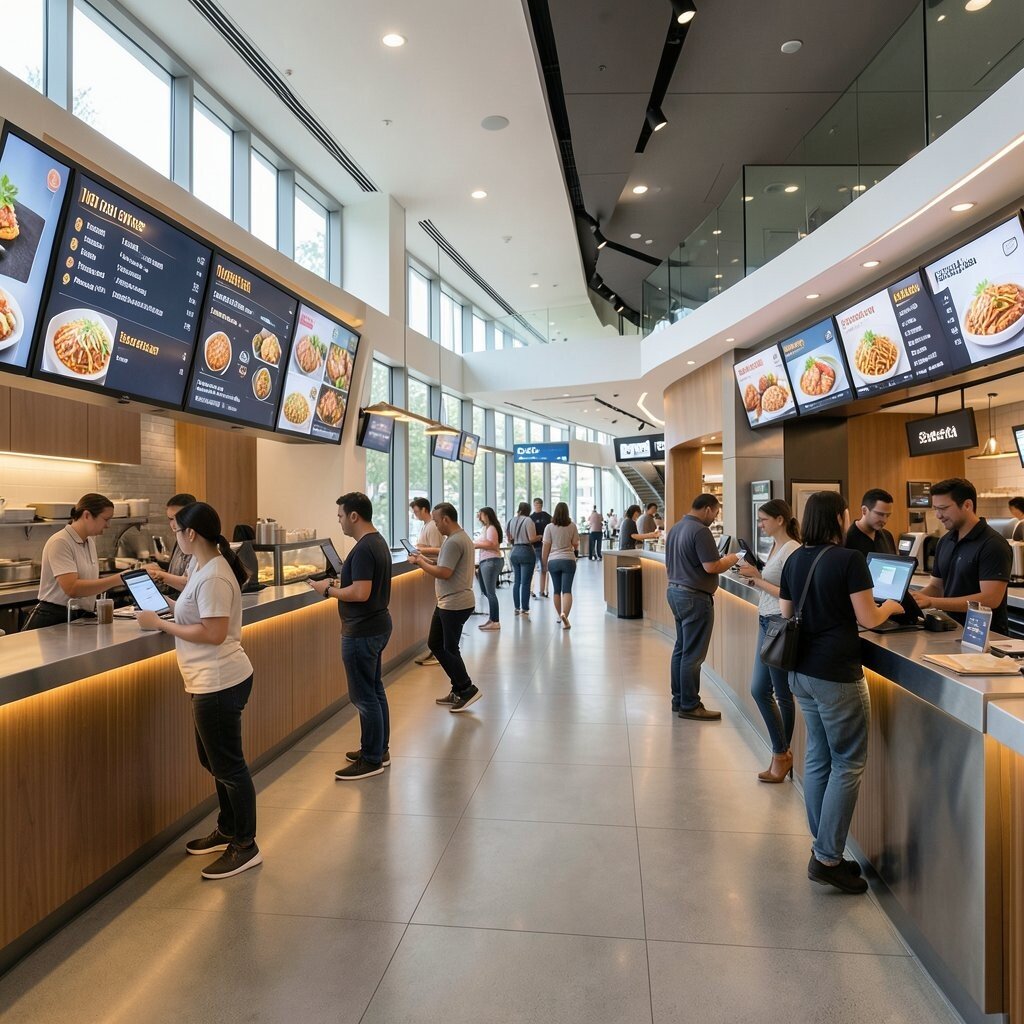
A tech-smart food court uses screens, smart ordering, and clean modern design to make dining simple. The look can feel sleek with glowing menu boards and easy-to-use pickup spots.
This style helps reduce wait time and keeps lines moving, which is a big plus during busy lunch hours. It also works well for many cuisines because guests can order from several stalls in just a few taps.
Personalization can be built into the system with meal choices, spice levels, and add-ons. While the tech may cost more at first, it can save labor and create a smooth guest experience that feels current and efficient.
Many places use this trend to offer mobile payment, order tracking, and special deals on screens. Even with all the tech, warm lighting and friendly staff can keep the space from feeling cold.
12. Coastal Breeze Food Court
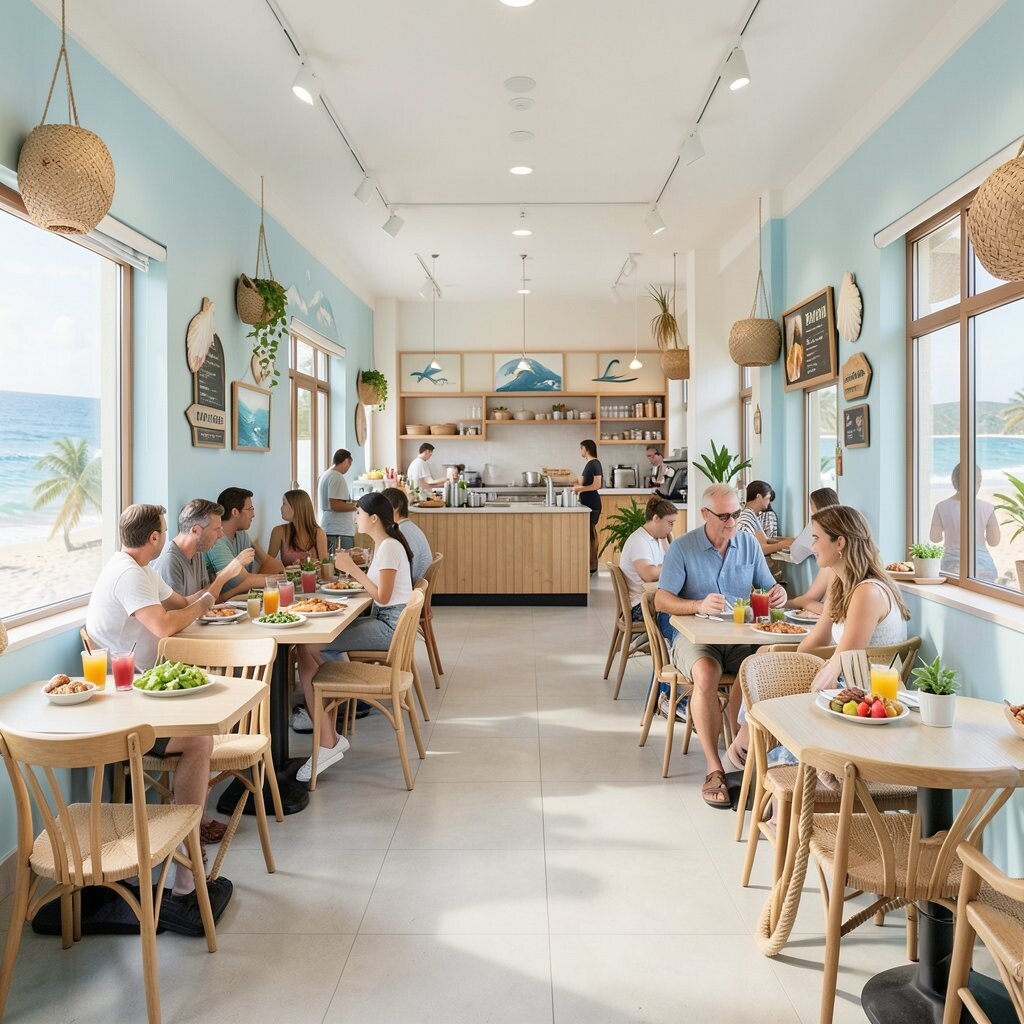
A coastal breeze food court feels light, airy, and relaxed with pale blues, sand tones, and natural textures. The design can remind guests of a beach cafe even if they are far from the water.
This style is perfect for seafood, fresh salads, fruit drinks, and grilled dishes, but it also works for many other foods. The calm setting can make a busy meal feel like a small break.
Simple chairs, rope details, and shell-inspired decor can add charm without raising the budget too much. Guests may enjoy custom touches like ocean-themed murals or menu boards shaped like surf signs.
It also fits a current love for bright, easygoing spaces that feel good in photos. If you want the court to stand out, add soft music and plenty of natural light for a breezy finish.
13. Eco-Friendly Food Court
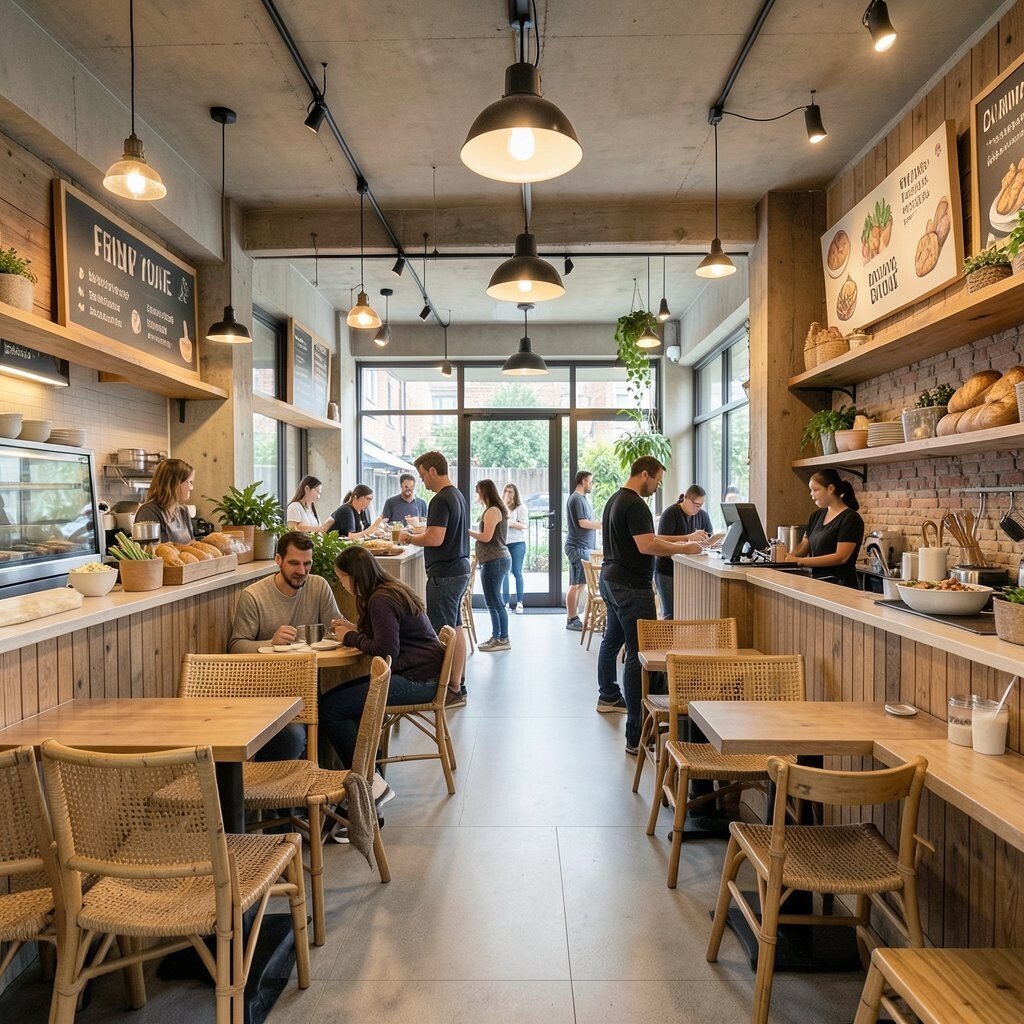
An eco-friendly food court uses recycled materials, energy-saving lights, and earth-toned decor. It feels thoughtful and modern while also showing care for the planet.
This style is a strong match for healthy bowls, plant-based dishes, fresh bakery items, and local specialties. Guests often like spaces that feel clean, responsible, and simple to understand.
Wood from reused sources, bamboo chairs, and washable signs can keep the design both stylish and practical. Costs can stay reasonable when you choose durable pieces that last a long time.
Personal touches like local vendor stories or a wall about food waste reduction can make the space feel meaningful. Green living is a strong trend, and this kind of food court fits it very well.
14. Luxury Lounge Food Court
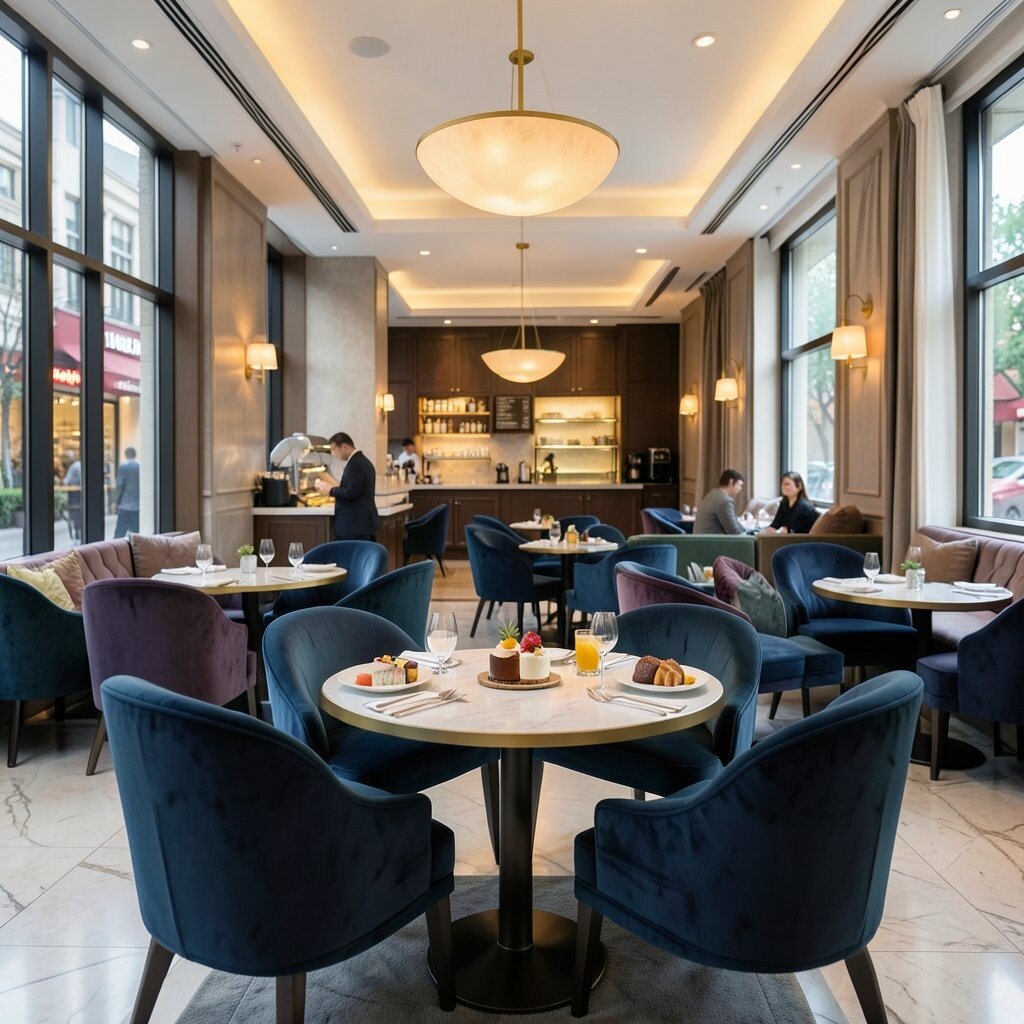
A luxury lounge food court feels plush, soft, and a little fancy with deep chairs and warm lighting. The space can look more like a stylish hotel lounge than a busy snack area.
This idea works well for premium cuisines such as sushi, steak bites, artisan desserts, and craft drinks. It gives guests a chance to enjoy food in a calm place that feels special.
To keep costs in check, focus on a few rich-looking items like velvet seats, gold trim, or statement lamps. Personalization can come from table service touches, custom playlists, or a small VIP seating zone.
Current trends in comfort dining make this style very appealing, especially for shoppers who want a break from loud crowds. A luxury lounge food court can feel unique while still serving many kinds of food.
15. Student Hangout Food Court
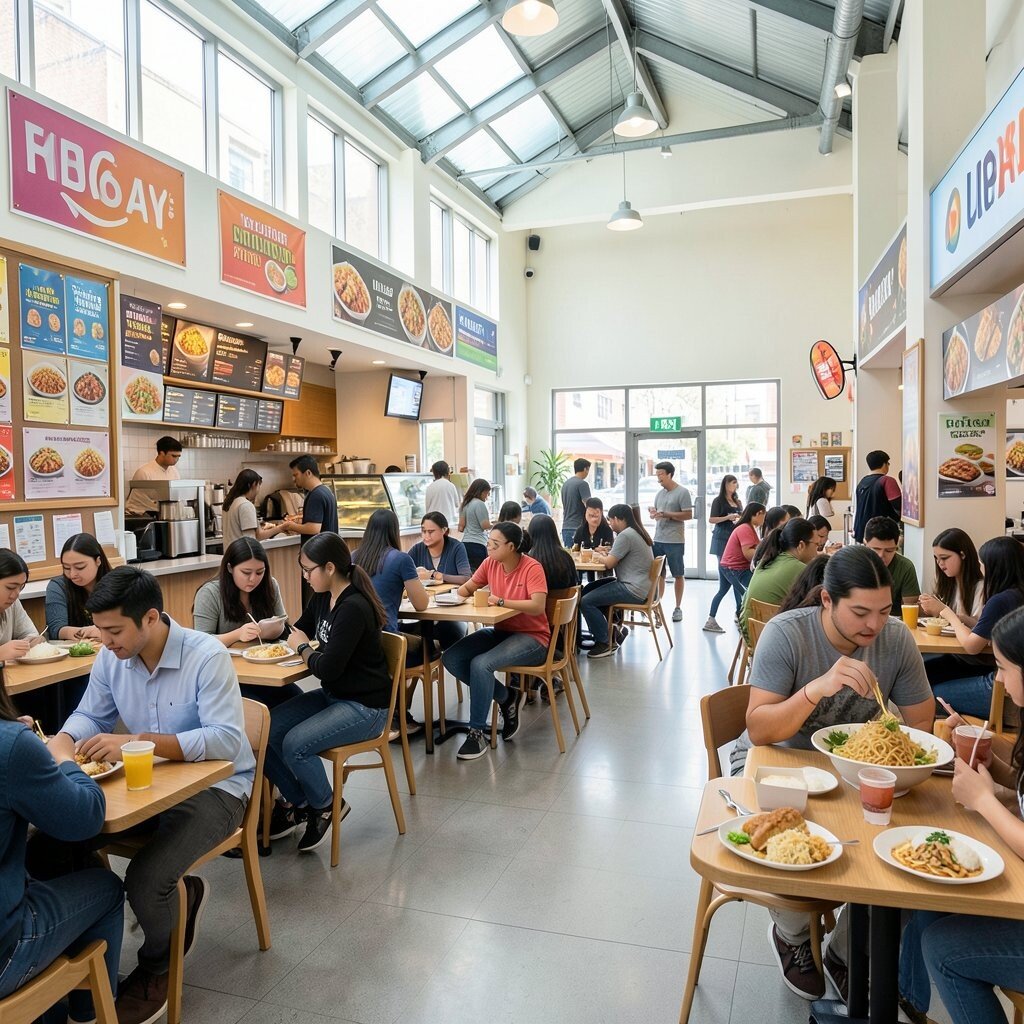
A student hangout food court is lively, affordable, and full of energy. Bright posters, mixed seating, and casual decor help it feel friendly and easy to use.
This style is ideal for budget meals like noodle boxes, sandwiches, rice plates, and snacks that can be shared. It also gives students a place to study, chat, and grab food in one spot.
Owners can keep prices attractive by using simple furniture and flexible layouts that serve many people at once. Personal touches like bulletin boards, local event flyers, or custom table art can make the space feel community-focused.
16. Artisan Food Hall Court
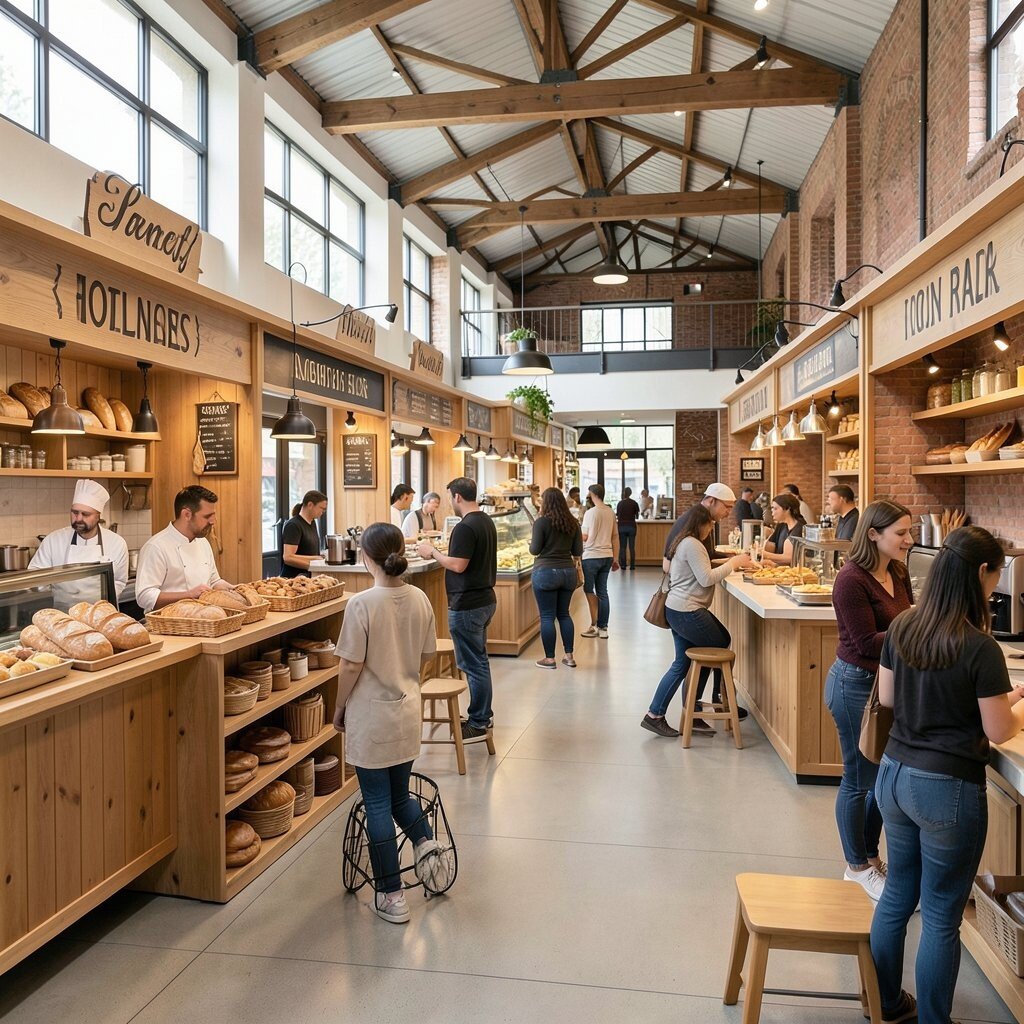
An artisan food hall court feels crafted, warm, and full of personality with handmade signs and thoughtful details. Each stall can look like a small shop with its own style, while the whole area still feels connected.
This setup is great for special foods such as fresh bread, handmade pasta, gourmet coffee, small-batch ice cream, and chef-made meals. Guests enjoy the sense that each item was made with care.
Using local wood, simple shelves, and custom lettering can create a rich look without going over budget. Personal details like chef portraits, ingredient stories, and seasonal menu changes can make the space feel alive and fresh.
Artisan food halls are popular because people love unique food and a human touch. If you want the court to feel memorable, focus on quality materials, warm colors, and a layout that lets every stall shine.