Water can make a garden feel alive in an instant.
In a farmhouse backyard, every drop can work harder and look better.
1. Rain Barrel Drip Feeding
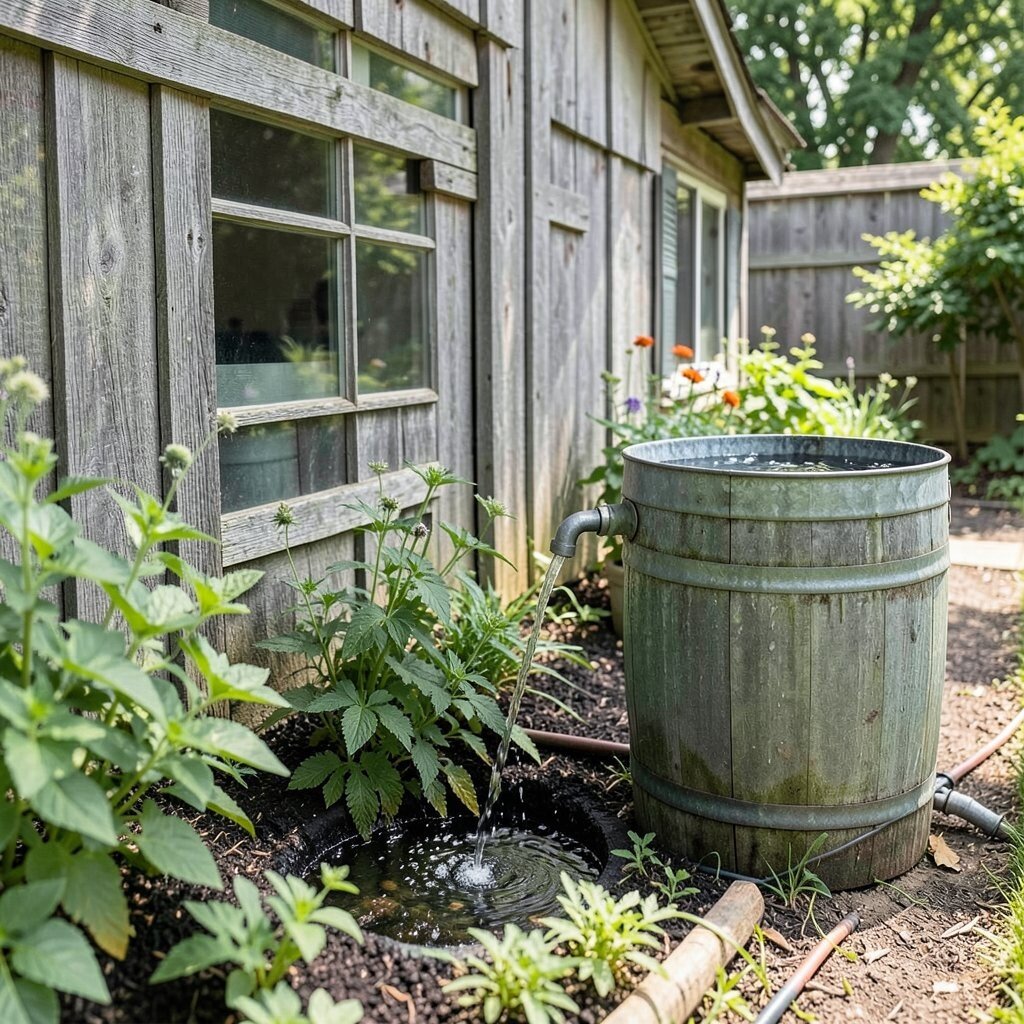
A rain barrel beside a weathered shed looks charming and useful at the same time. It catches roof water and sends it slowly to thirsty plants through a simple drip line.
This method helps cut water bills and keeps garden beds moist without waste. Many gardeners like the soft, steady flow because roots get a gentle drink instead of a hard soak.
2. Mulch Basin Watering
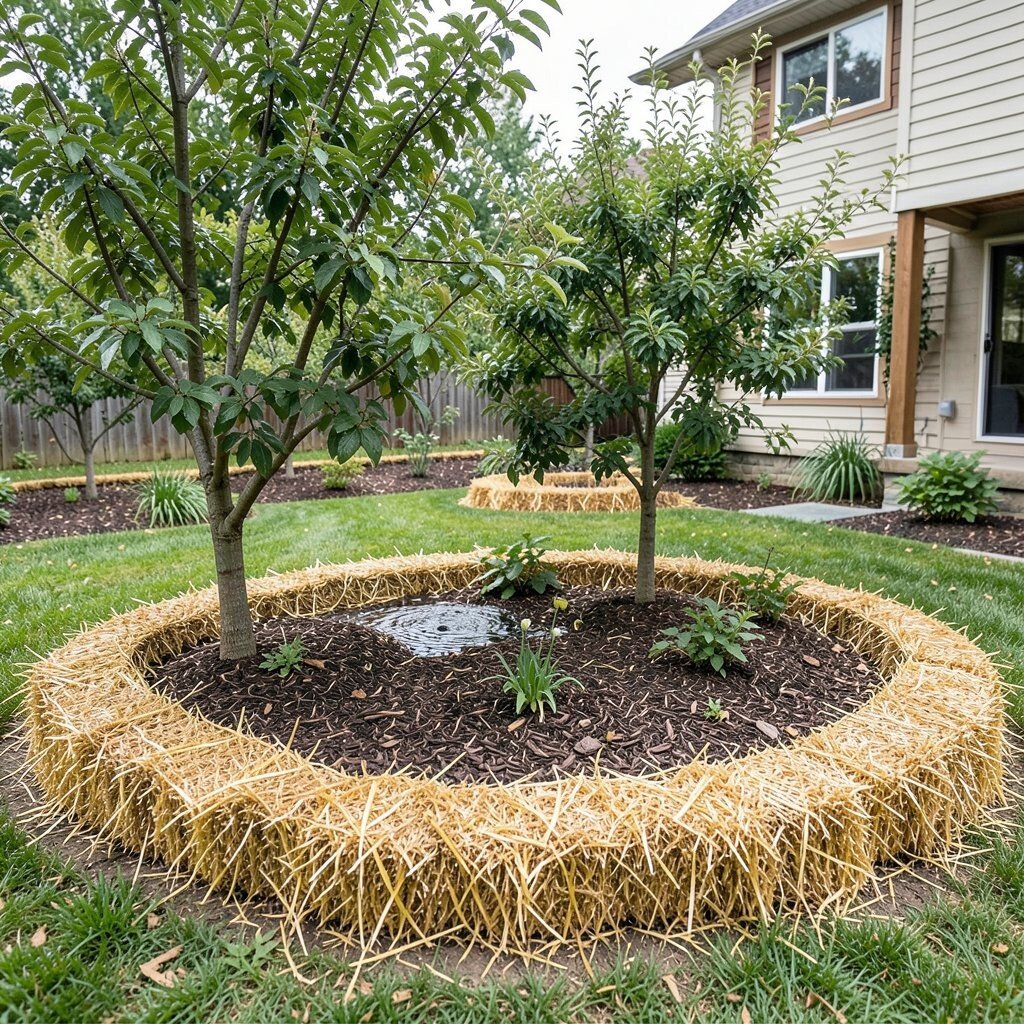
Wide mulch rings around trees and shrubs give a neat, earthy farmhouse look. The basin shape holds water close to the roots so less runs off into paths.
This style works well for orchards, berry rows, and kitchen gardens. It is low cost, easy to adjust, and great for people who want a simple setup with a natural feel.
Use straw, wood chips, or leaf mold to build the basin edge and keep the soil cool. You can make each ring larger for big plants or smaller for young ones, which gives the garden a personal touch.
3. Soaker Hose Pathways
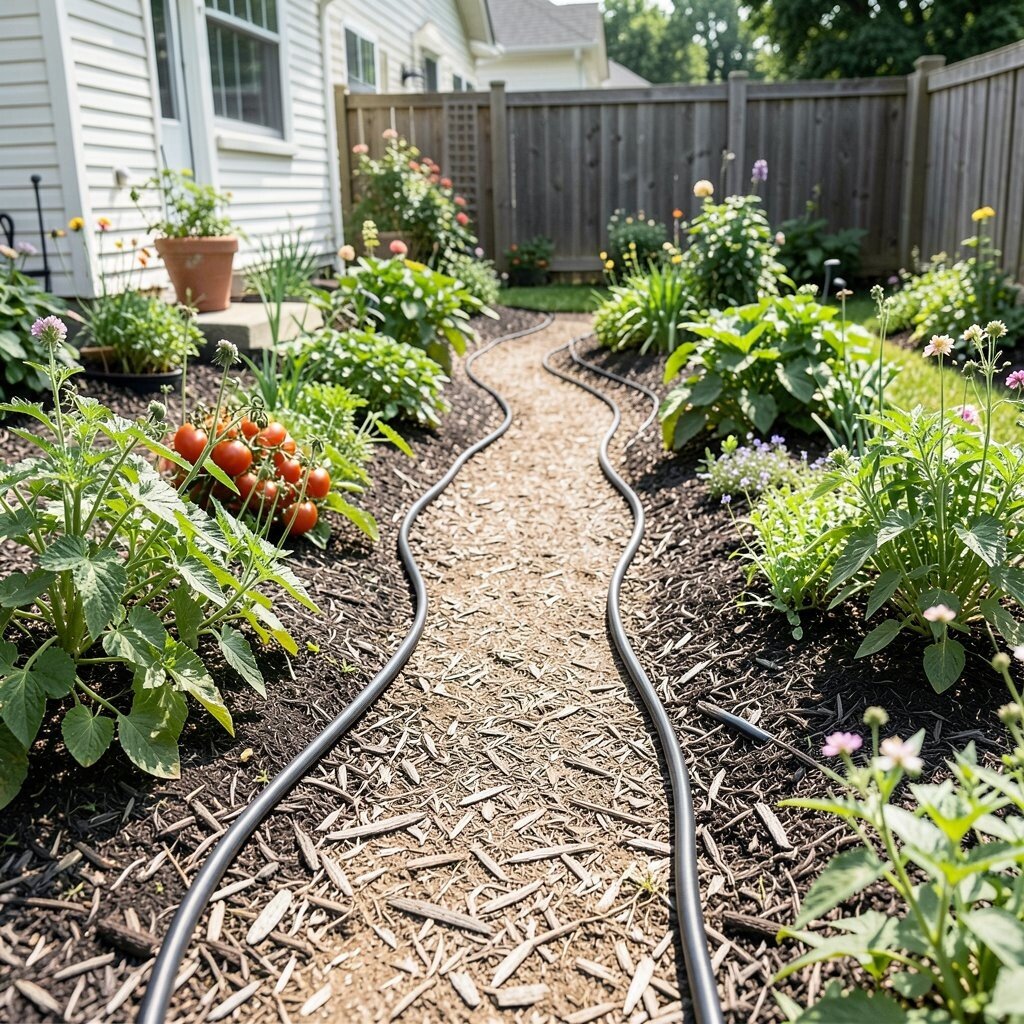
Soaker hoses can snake through beds like quiet black ribbons. They blend into the garden while sending water straight into the soil where plants need it most.
They save time because you can water a whole row at once. Many gardeners like them for tomatoes, beans, and flower borders since they help leaves stay dry and healthy.
Try laying them under a thin layer of mulch to hide the hose and slow evaporation. A timer can make the system even easier, and the cost stays fairly friendly for most backyards.
For a farmhouse style, place hoses in straight lines or soft curves that match the bed shape. You can also split zones by plant needs, which makes the setup feel custom and smart.
4. Clay Pot Olla Irrigation
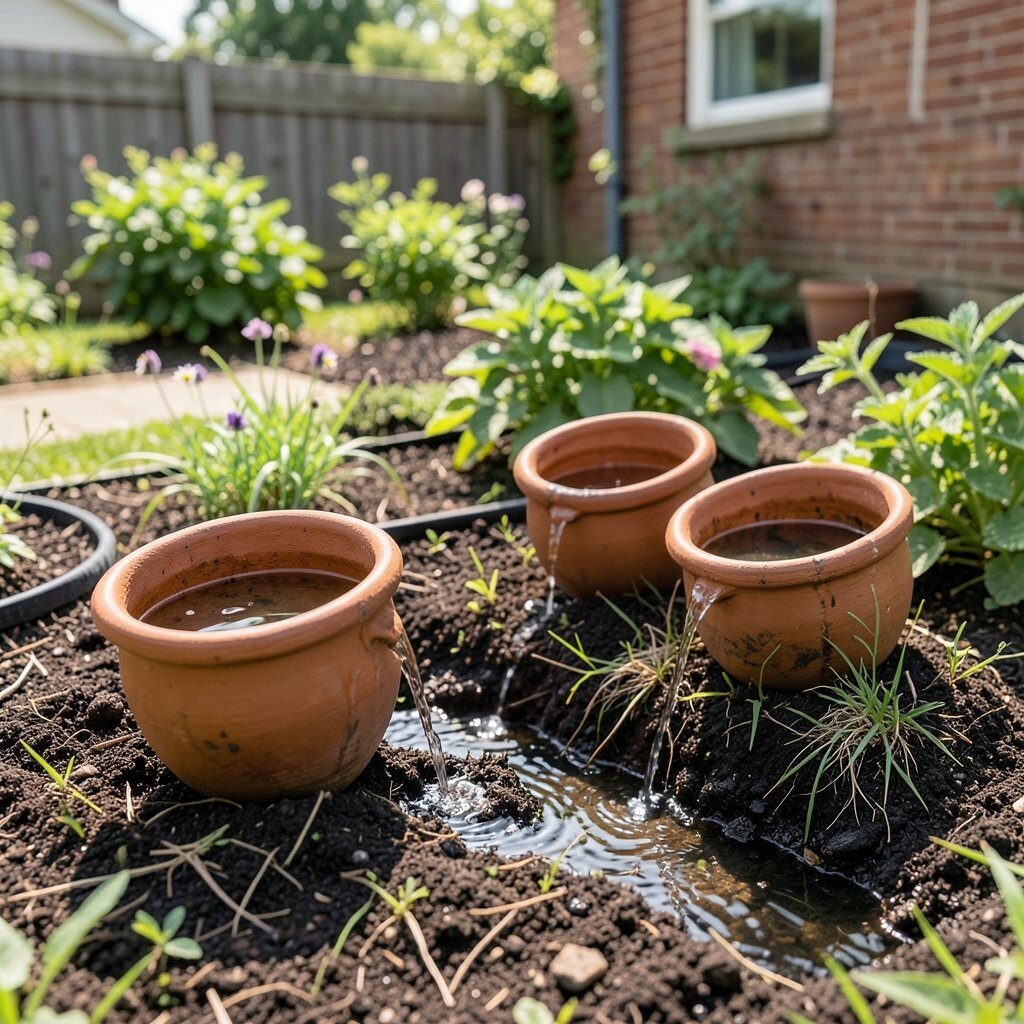
Unglazed clay pots tucked into soil look rustic and old-world. Filled with water, they seep moisture through the clay walls and feed nearby roots with very little waste.
This method is wonderful for dry days and small beds because the water goes deep and slow. It also reduces surface weeds since the top soil stays less wet.
5. Greywater Garden Routing
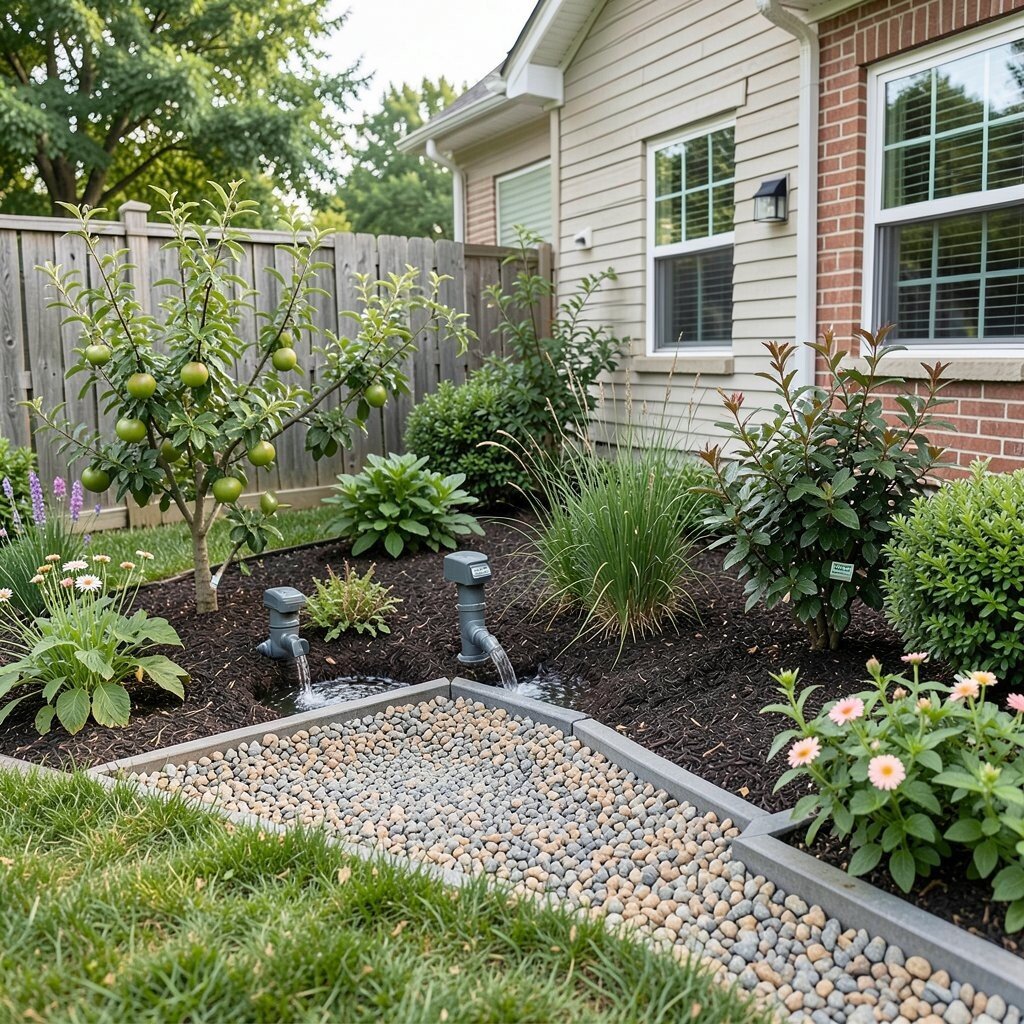
Greywater systems can give a farmhouse backyard a practical, modern edge. Water from sinks, laundry, or showers can be directed to non-edible plants when local rules allow it.
This can lower water use in a big way and make a yard feel more self-reliant. Gardeners often use it for fruit trees, ornamentals, and windbreak shrubs that can handle gentle household water.
Keep the system simple with safe soaps and clear labels so everyone in the home knows what goes where. A pro can help with permits or design, and that may cost more at first, but it can pay off over time.
Personalize the setup by sending greywater to the driest corner of the yard or to plants that need the most help. A tidy gravel bed or a hidden basin can make the whole area look neat instead of messy.
6. Swale and Berm Water Catching
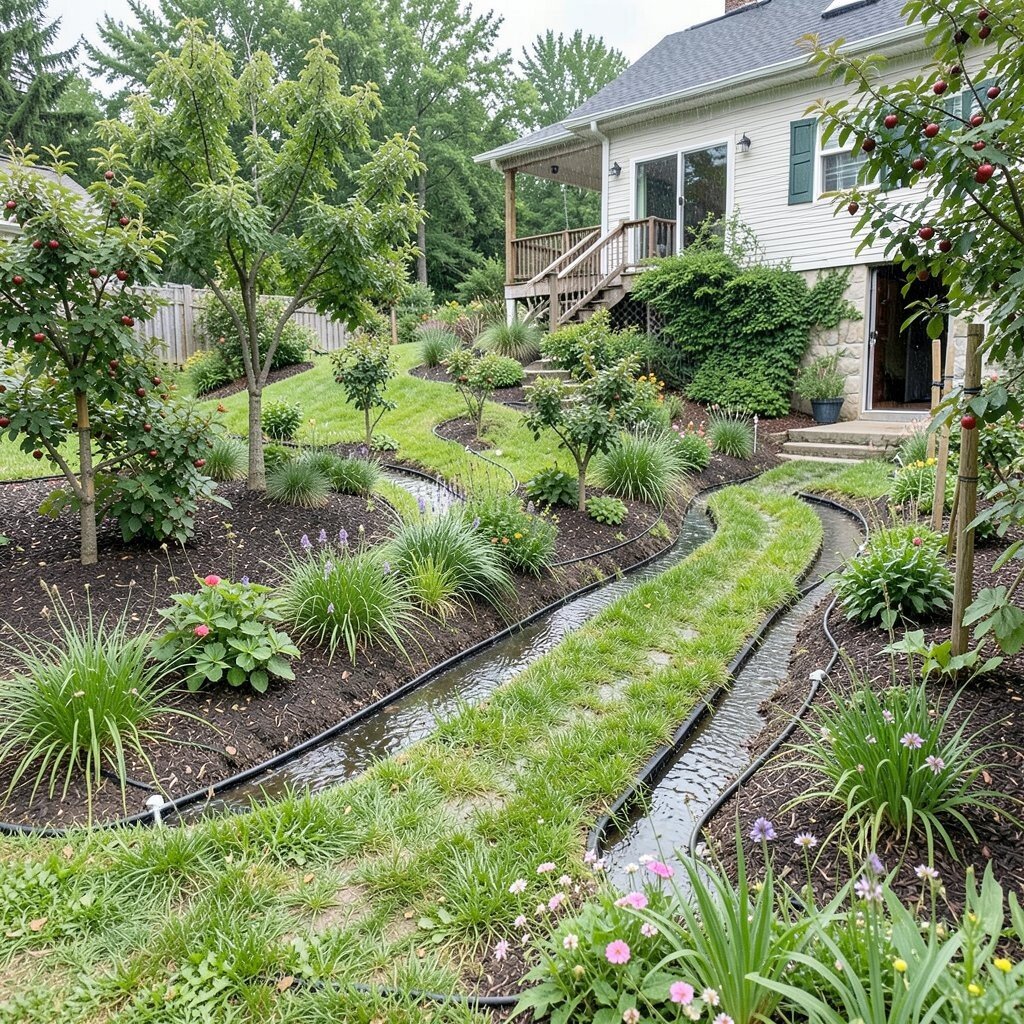
Shallow swales can look like soft green lines across a sloped yard. They slow rainwater, guide it into the soil, and help plants drink more evenly.
This is a smart choice for farm-style backyards with hills or uneven ground. It can reduce erosion and support trees, berry patches, and pollinator strips all at once.
You can shape the berm with native grasses or low flowers for a pretty, living edge. The cost can stay low if you use hand tools and work with the land instead of fighting it.
Many gardeners now pair swales with mulch and drip lines for a layered water plan. That mix gives the yard a natural look while making every storm count.
7. Solar Pump Water Lifting
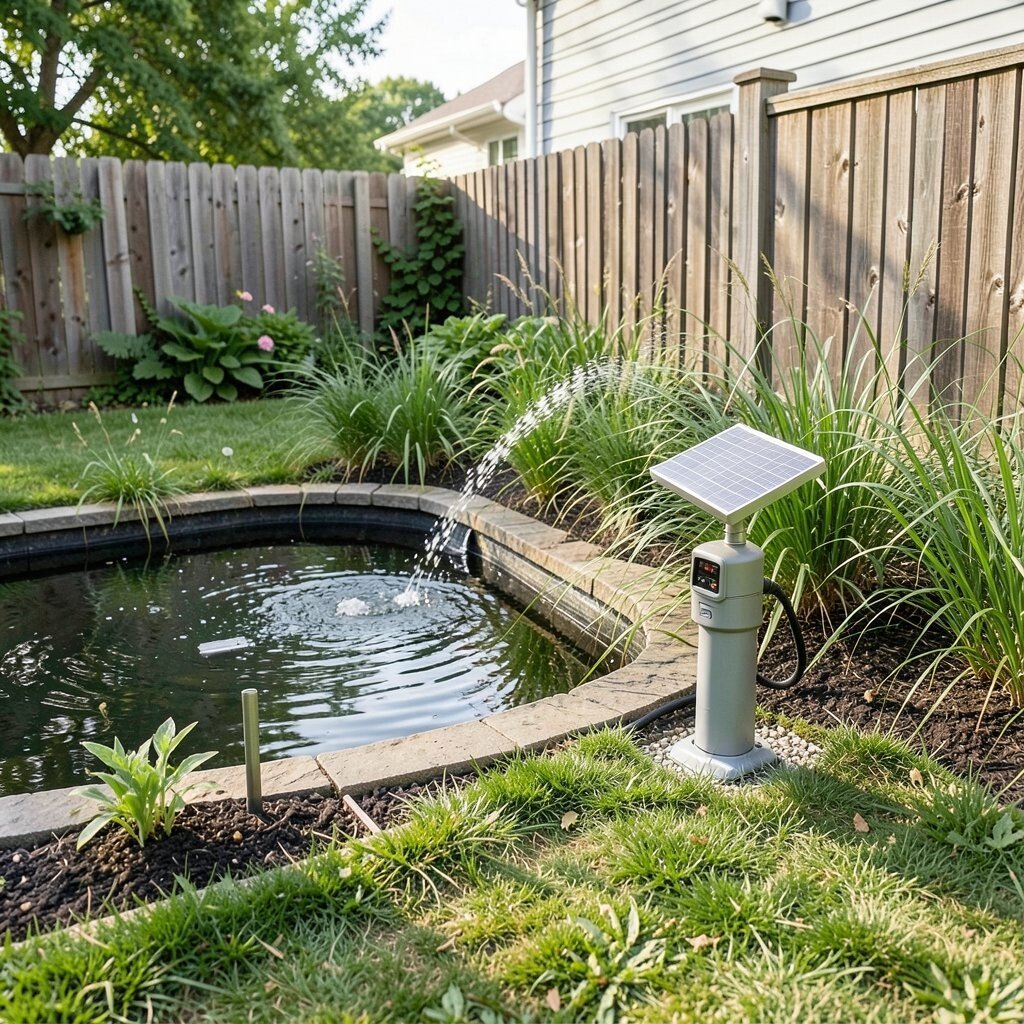
A small solar pump can sit quietly near a pond, tank, or rain cistern. It brings water uphill without using grid power, which fits the farmhouse spirit very well.
This choice is handy for remote beds or far corners of a large yard. It can also lower energy costs and make the garden feel more independent.
Some gardeners use solar pumps with timers so the watering happens in the cool morning hours. If you want a cleaner look, hide the lines behind tall grasses or along a fence.
The upfront cost can be higher than a hose, but the long-term savings can be strong. It is a popular trend for homes that want green living with a simple, modern tool.
8. Recycled Bucket Ring Watering
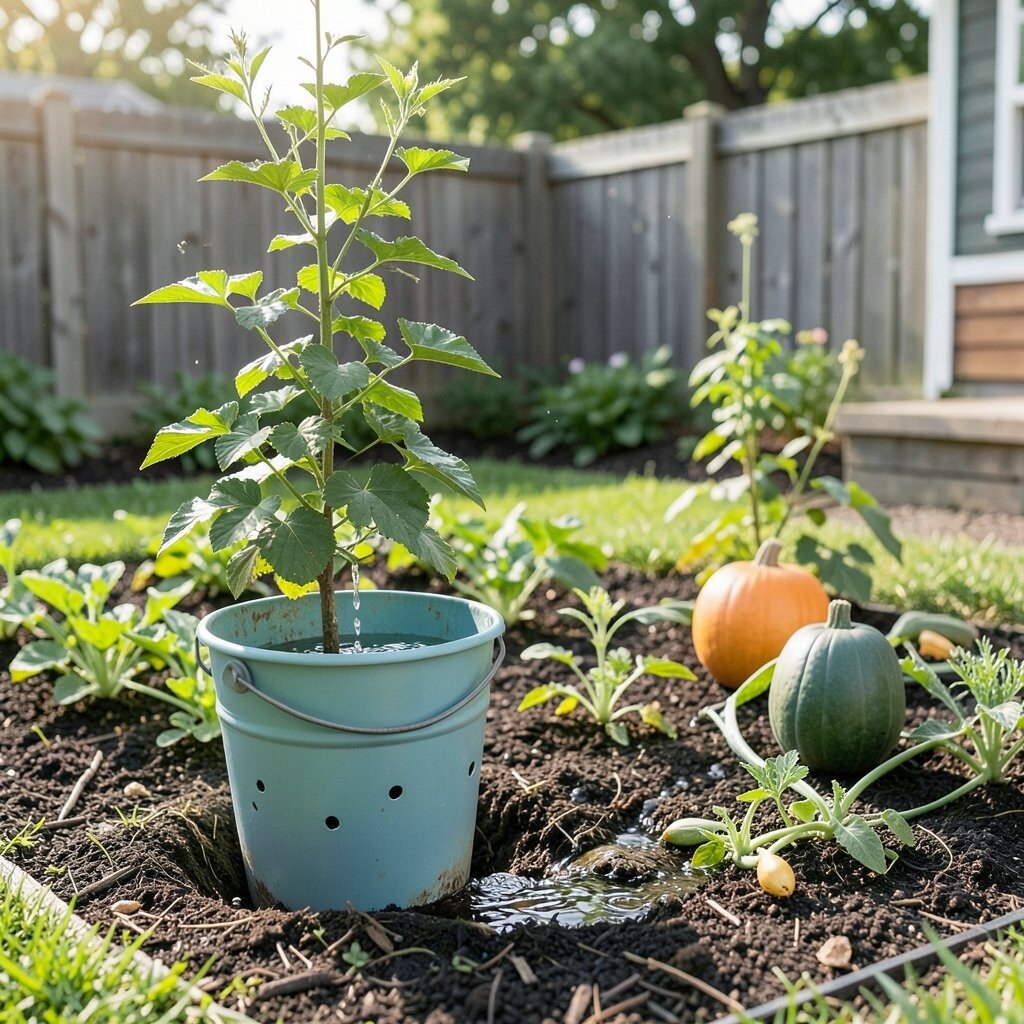
Old buckets can become useful watering tools with a few holes and a little care. Set one near a plant, fill it, and let the water seep slowly into the root zone.
This is a budget-friendly idea that gives new life to items many people already own. It works well for young trees, squash hills, and garden starts that need extra attention.
Paint the buckets to match your farmhouse colors if you want a prettier look. You can also move them around as the seasons change, which makes the method flexible and personal.
For a cleaner garden bed, bury the bucket partly in the soil so it looks less bulky. This small trick helps the space feel tidy while still keeping the watering simple and effective.
9. Smart Timer Drip Zones
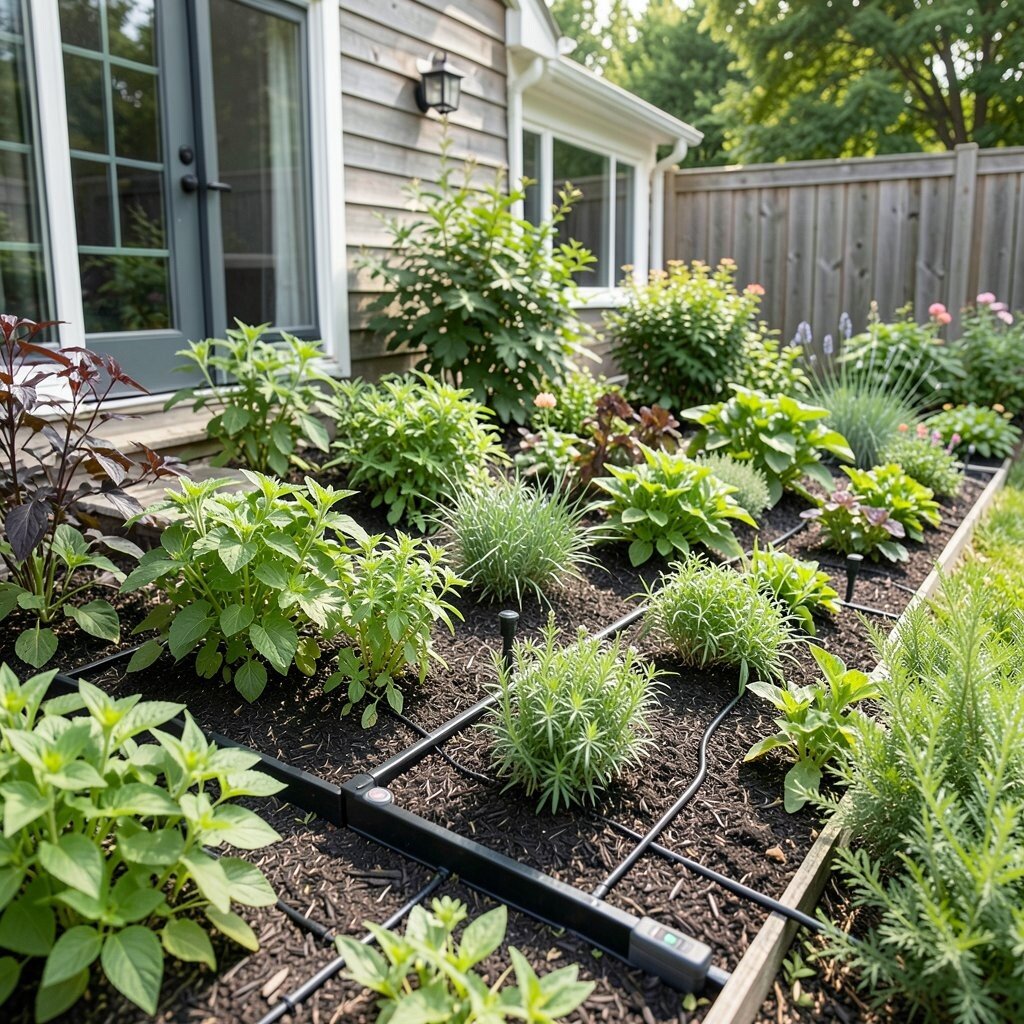
Smart timers can make a backyard irrigation plan feel calm and easy. They can turn water on and off by schedule, so plants get care even on busy days.
Drip zones are great for mixed gardens because each section can get its own amount of water. That means herbs, vegetables, and shrubs can all be treated in the way they prefer.
Many people like the current trend of app control, but simple timers still work well and often cost less. A good setup can save water, reduce stress, and keep the garden looking fresh with less effort.
Group plants with similar needs together before setting the zones, and the whole system will run more smoothly. This also gives you room to add new beds later without starting from scratch.
10. Earthen Swirl Beds
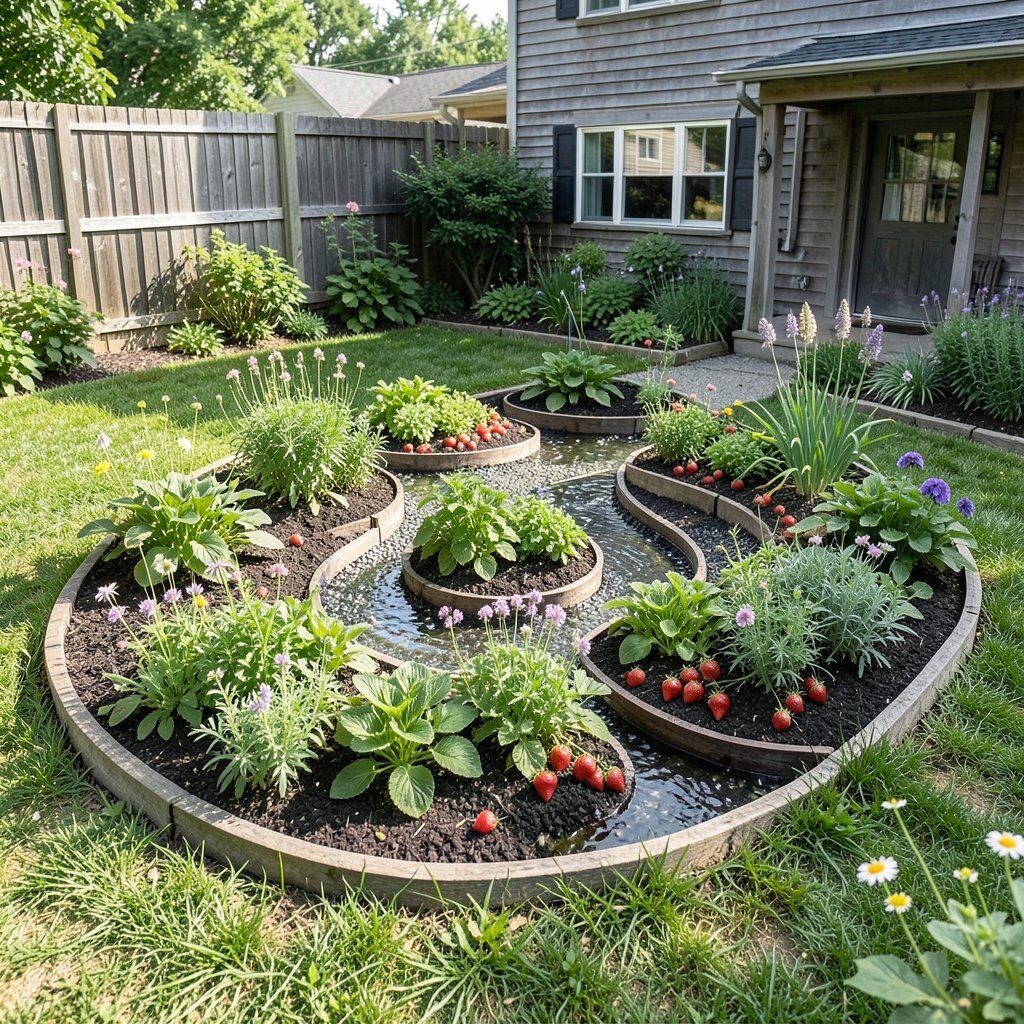
Spiral-shaped beds can be both pretty and practical in a farmhouse yard. Their curves help water move slowly through the soil instead of rushing away.
This design is unique and eye-catching, especially when planted with herbs, strawberries, or native flowers. It can also make a small space feel larger because the path and bed twist together in a lively way.
11. Shade Cloth and Micro-Spray Cooling
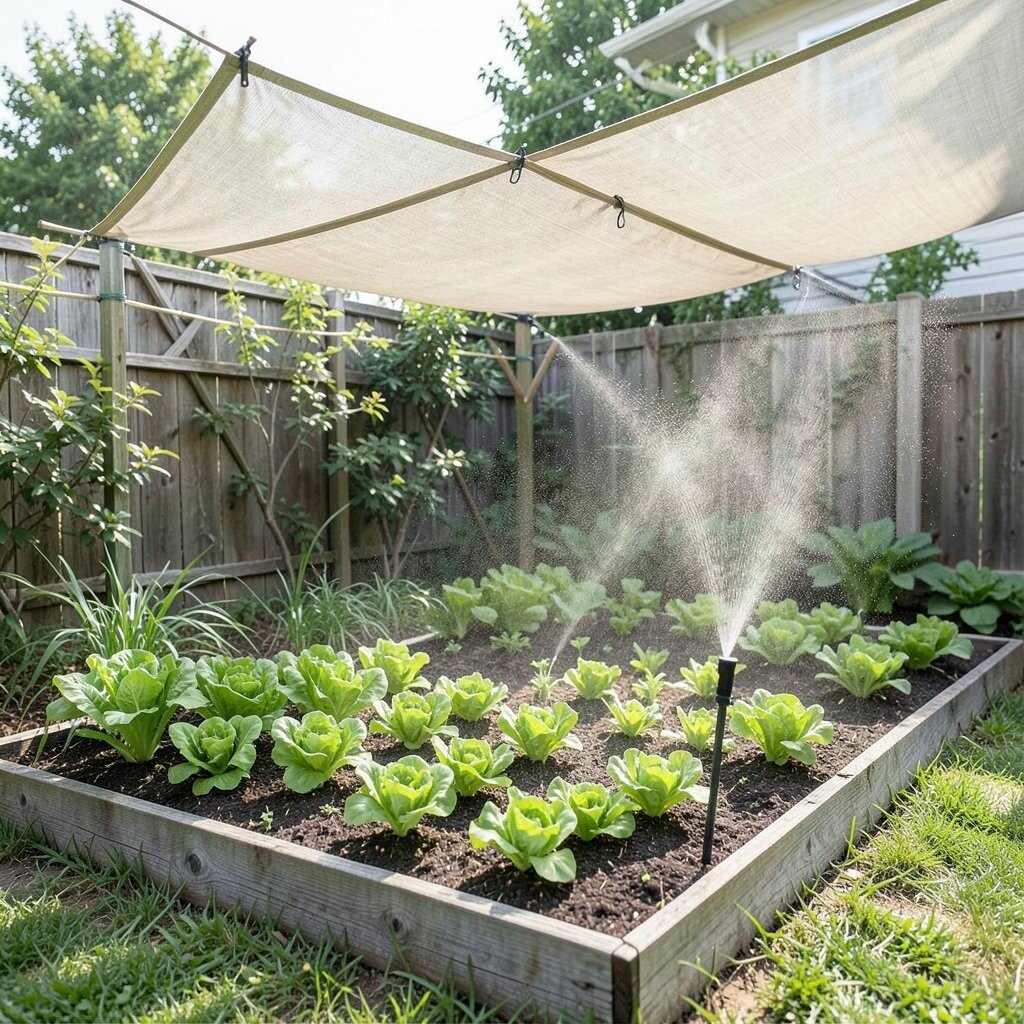
Light shade cloth can soften the harsh sun and protect delicate plants. Pair it with fine micro-sprays, and the garden gets a cool, misty look on hot afternoons.
This works well for lettuce, seedlings, and young transplants that need extra help in summer. It can also save water by keeping moisture where it is needed and reducing plant stress.
Use adjustable clips or simple hoops so you can raise or lower the cloth as the season changes. The cost is usually moderate, and the setup can be personalized for each bed size.
Some gardeners choose neutral cloth colors so the yard still feels like a farmhouse garden, not a greenhouse. If you want a softer look, place the spray lines under trellises or along a fence edge.
12. Terraced Bed Irrigation
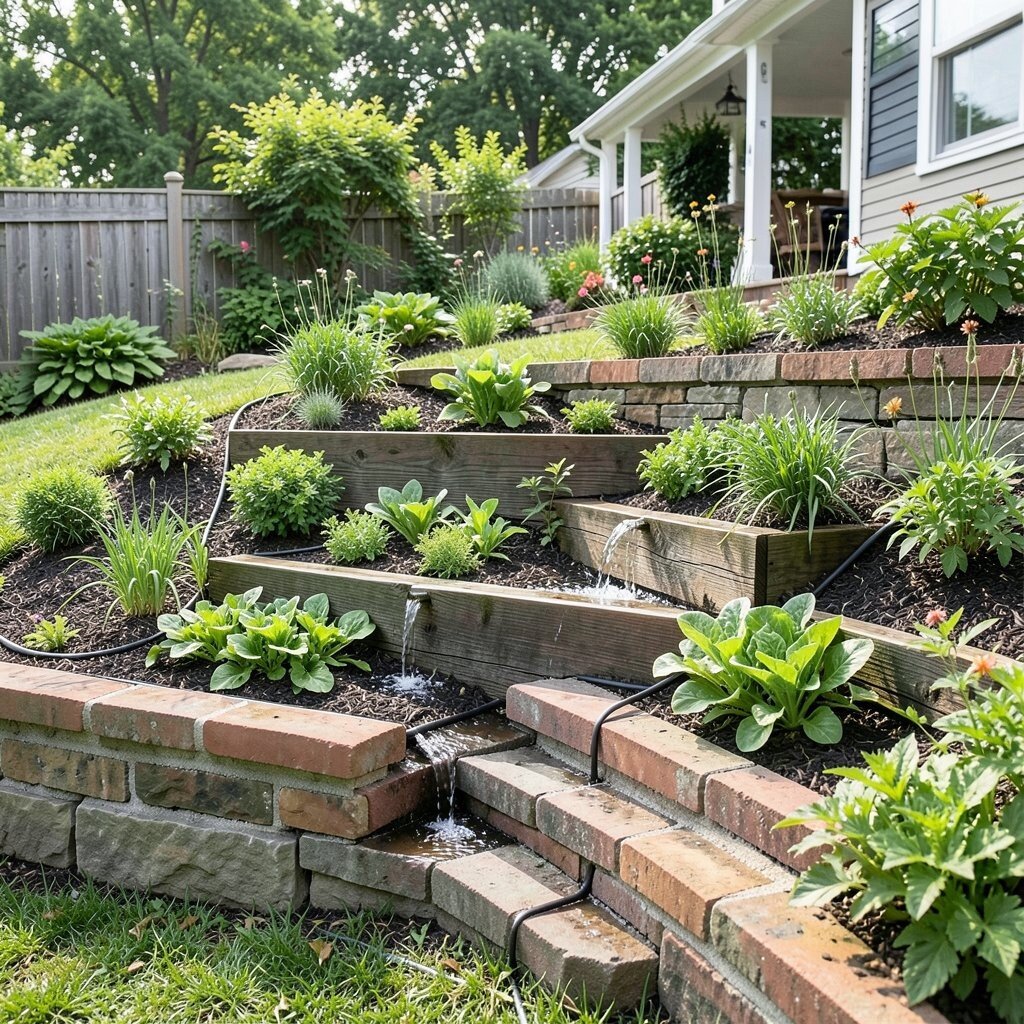
Terraced beds can turn a sloped backyard into a neat series of planted steps. Water moves from one level to the next in a controlled way, which helps avoid runoff and dry spots.
This method is useful for herbs, salad greens, and small fruit plants. It can make a hillside feel organized while also giving the eye a lovely layered view.
Wood, stone, or reclaimed brick can form the terrace edges, and each choice gives a different farmhouse feel. The cost depends on materials, but even a small terrace can make a big difference in water use.
For a personal touch, place the thirstiest plants on the lowest level where moisture tends to stay longer. Add a narrow drip line or a short soaker hose to each step so watering stays even and easy.
13. Living Fence Water Channels
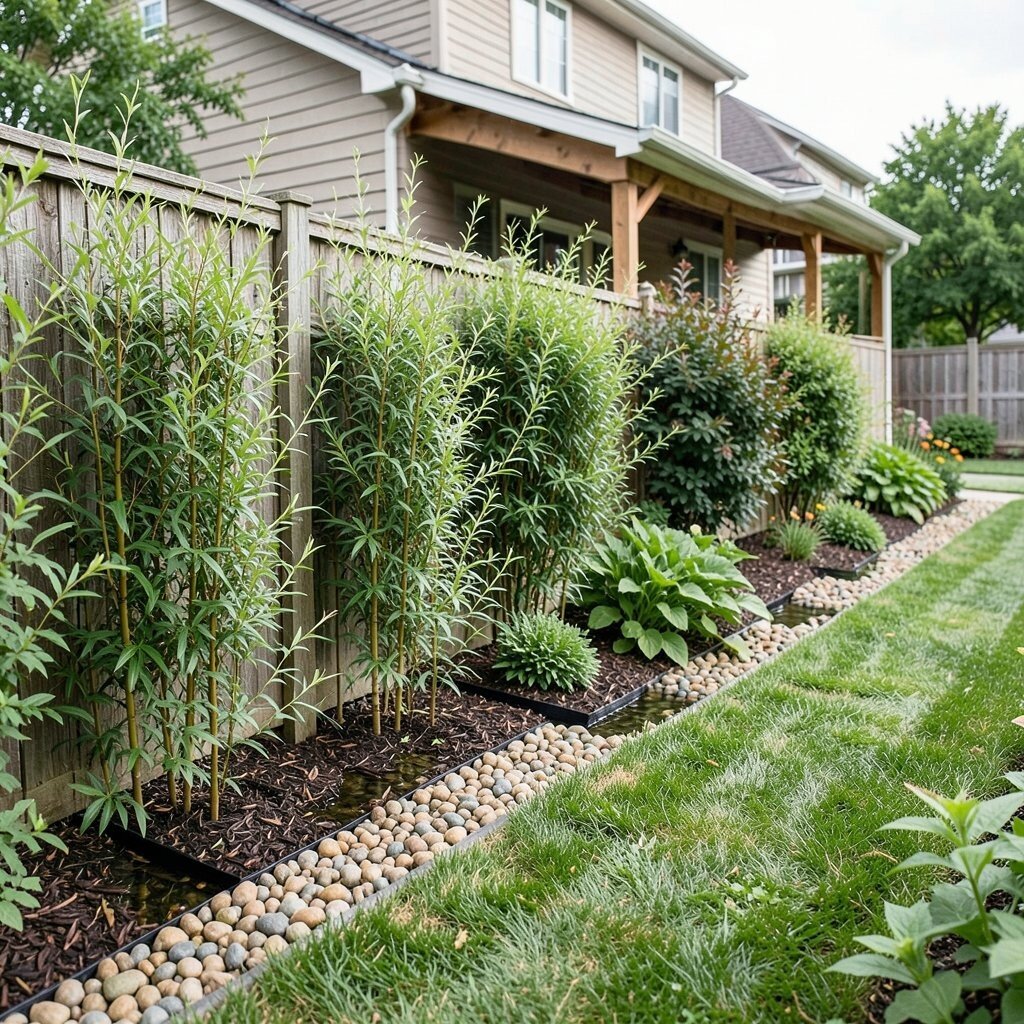
Living fences made from willow, berry canes, or native shrubs can do more than mark a boundary. Small water channels at their base can guide moisture right to the roots while keeping the edge green and full.
This idea blends beauty and function in a very farmhouse way. It supports privacy, wildlife, and soil health at the same time, which makes the whole backyard feel rich and welcoming.
You can line the channel with pebbles, mulch, or small stones for a tidy finish. Many gardeners like this method because it feels handcrafted, and it can be built in stages to fit the budget.
Choose plants that suit your climate, and the fence will need less extra care over time. A living edge with water support can become one of the most charming parts of the yard.