The slope in your yard can become a beautiful feature, not a problem. With terracing, you gain structure, comfort, and extra chances to grow.
1. Plant a Stair-Step Herb Garden
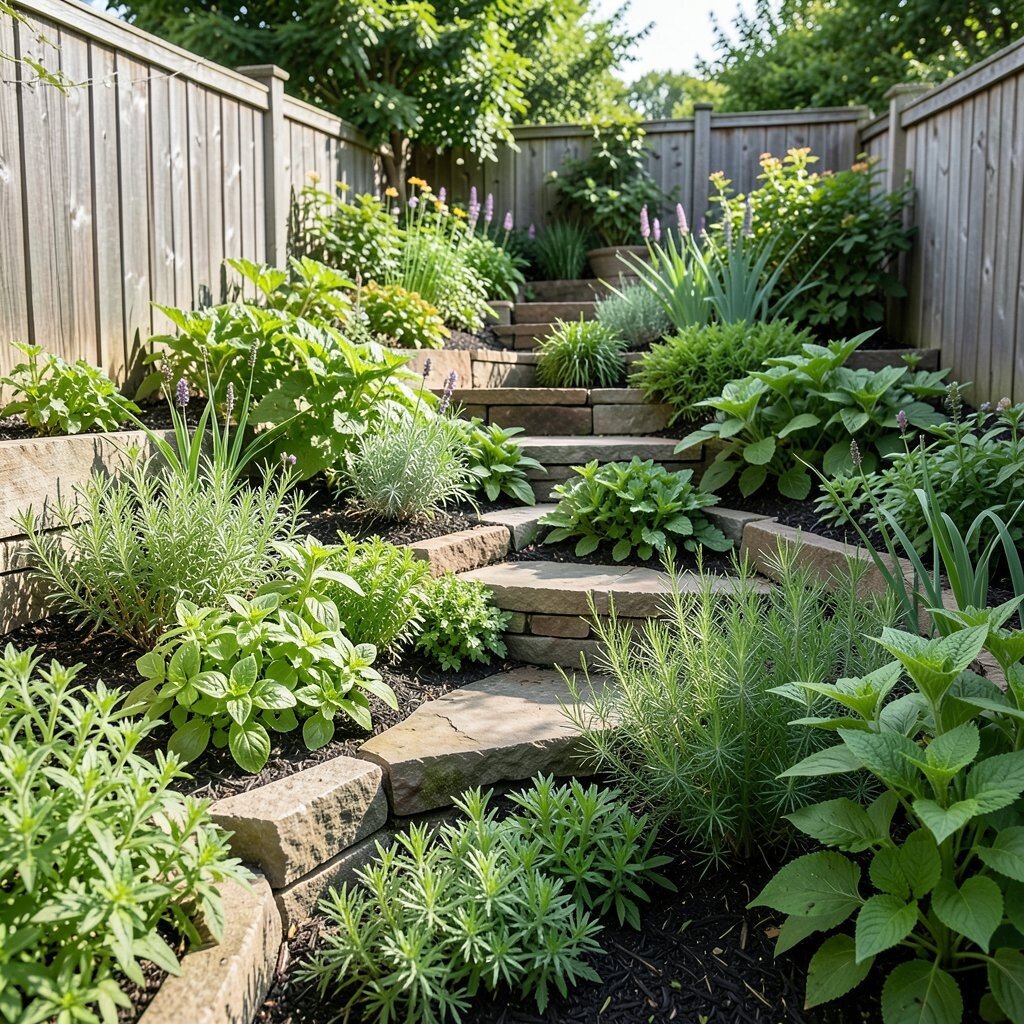
Imagine stepping outside and seeing little islands of green stacked up the hillside. Chives, thyme, and basil spill softly over the edges and make every visit feel special.
Keep each terrace shallow enough that you can reach plants without standing on a stool. Use a mix of bright herbs and low flowers so the layers look full even when harvest time slows down. Add a simple drip line or soaker hose along the back wall to keep moisture steady on slanted ground.
2. Build Terraces With Natural Stone Borders
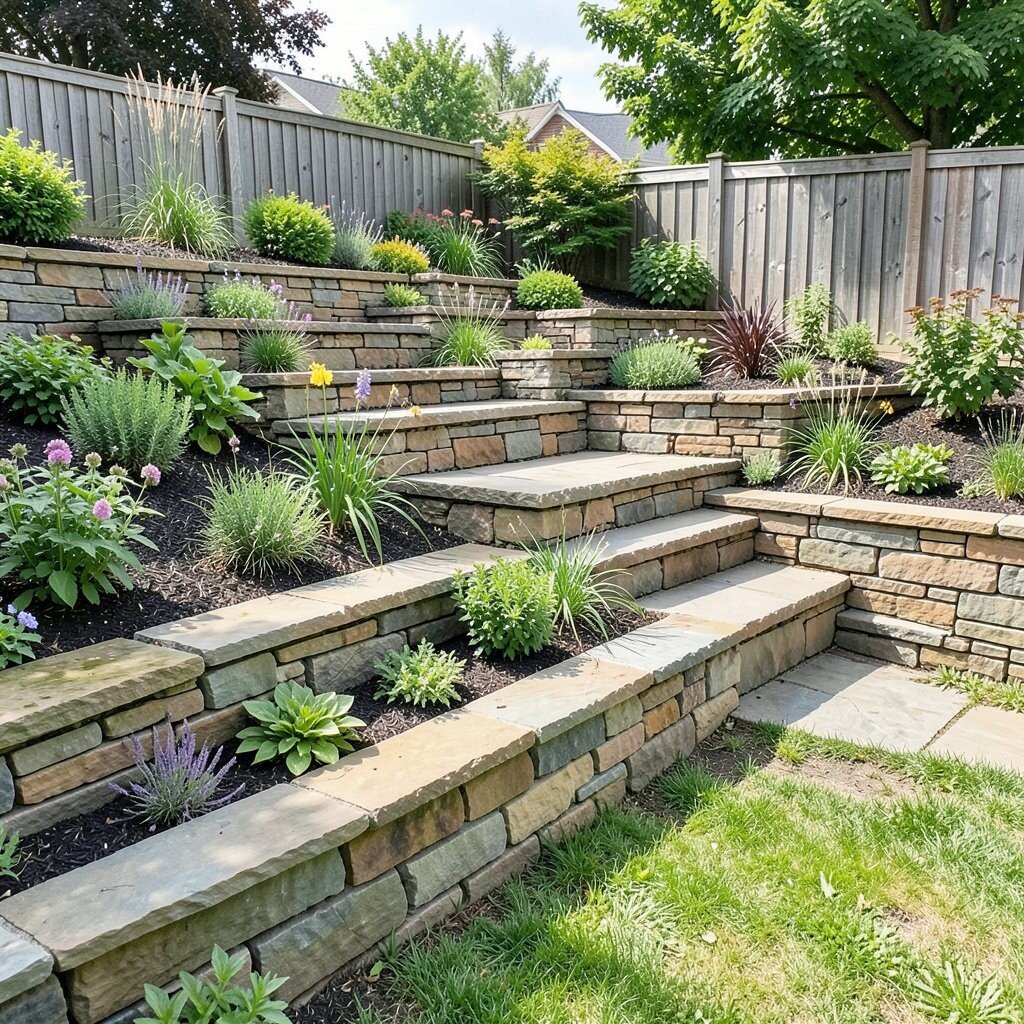
Rough fieldstone or reclaimed paving stones can hug your slope like they were always meant to be there. The warm colors and uneven texture look great next to soil and plants.
Choose stones that feel sturdy and size them so they sit level across each tier. Backfill carefully and compact the soil so the terraces stay firm after rain. For a clean look, tuck small gravel lines along the edges where water likes to run.
3. Add a Water-Saving Rain Garden in the Lower Tier
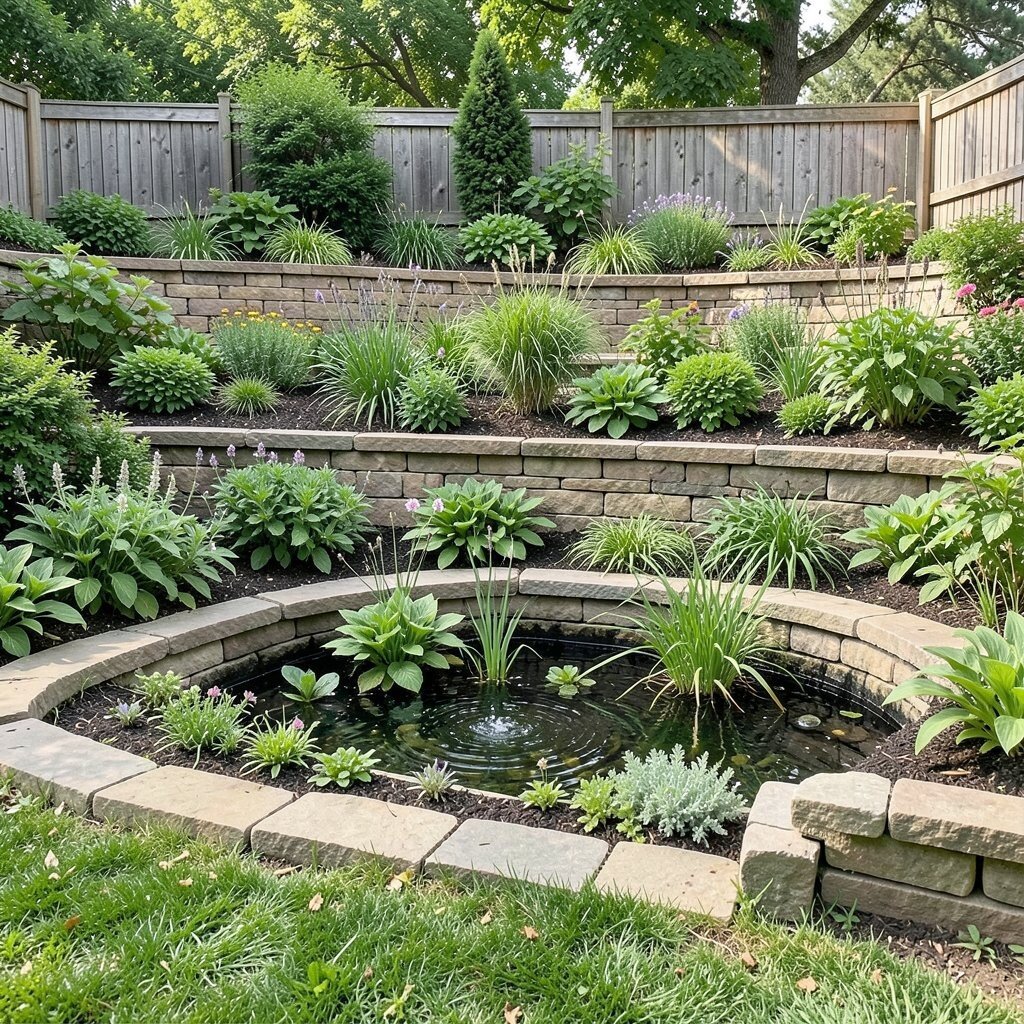
A lower terrace can catch runoff and turn it into a mini wetland that looks alive. When stormy days come, the plants drink what they need and the yard stays calmer.
Pick moisture-loving plants like sedges and coneflowers, and mix in a few drought-tolerant varieties for balance. Create gentle swales and cover soil with mulch so the ground doesn’t wash out. A clear benefit is less pooling and fewer muddy patches on the bottom of your property.
To keep it practical, check the area after heavy rain and adjust mulch thickness if you notice erosion. Pair the rain garden with a simple overflow route so extra water moves safely away. This approach fits current garden trends that favor native and low-care planting.
4. Create a Cozy Seating Nook Between Levels
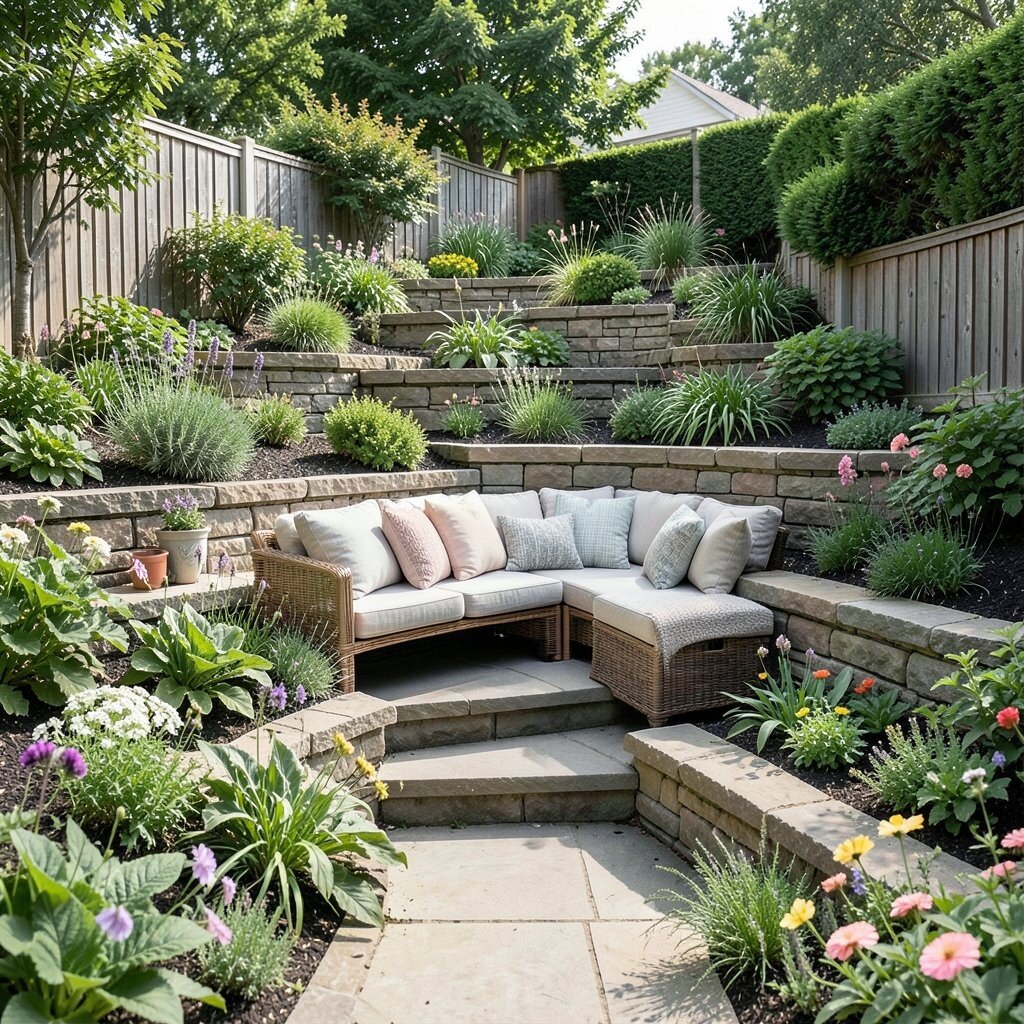
Picture a small bench placed where two terraces meet, catching breeze and shade at different times of day. Stones beneath your feet and climbing greens around you can make the whole yard feel like an outdoor room.
Use a compact bistro set or a weatherproof bench and set it on a stable base like pavers or compacted gravel. Add hanging planters or trellis panels so you get privacy without tall walls. You will likely spend more time out there because the space feels inviting, not like you are walking through a chore zone.
5. Use Raised Planters to Protect Soil on Steeper Slopes
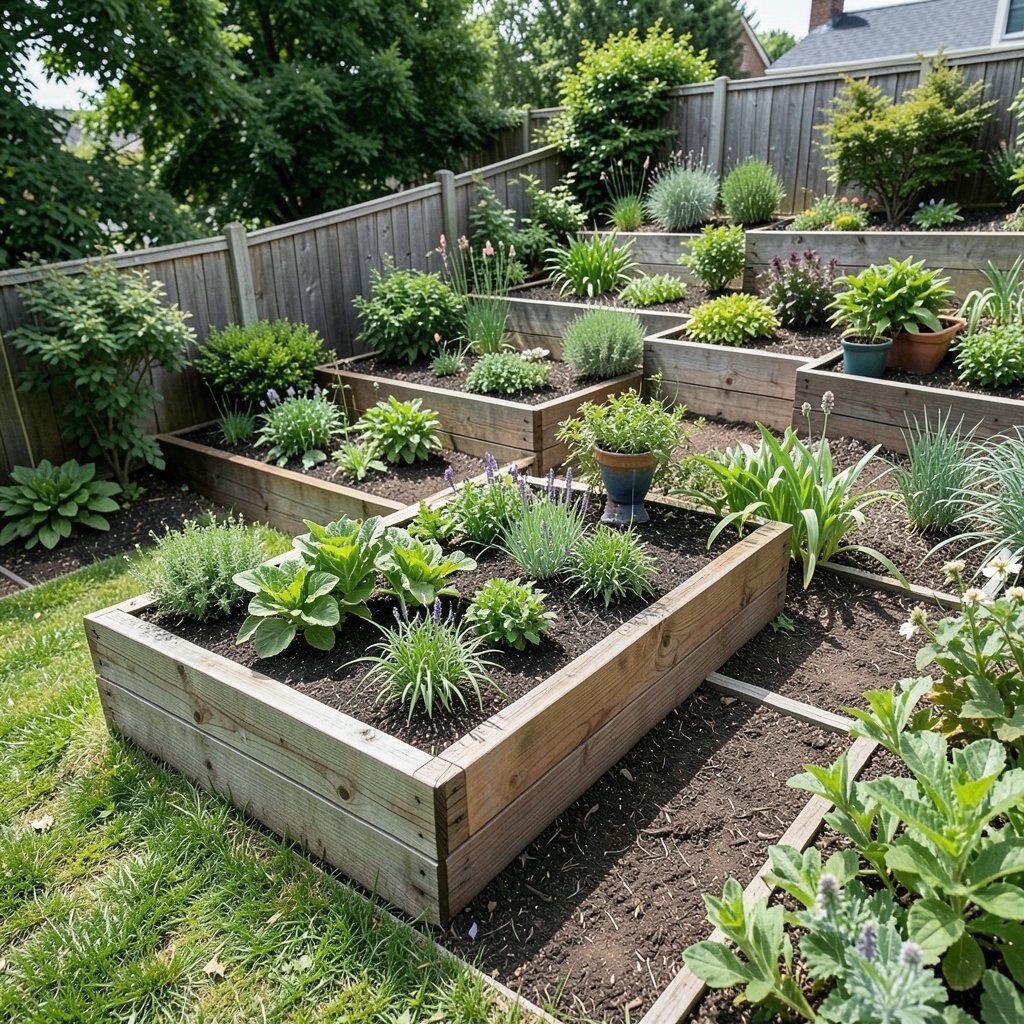
When the grade is steep, raised beds help you keep good soil where plants can actually thrive. The layers also look neat and intentional, especially when you group planters by height.
Make the beds proportionate to the terrace width so water can drain evenly instead of running off too fast. Fill with a quality growing mix and add compost for steady nutrition over the season. For cost control, you can start with a few beds and expand one terrace at a time.
Try growing strawberries, lettuce, and ornamental kale in bright blocks so each tier looks tidy and productive. This also makes watering simpler because you can aim at the beds instead of the whole hillside.
6. Plant a Pollinator Corridor Along the Terrace Edge
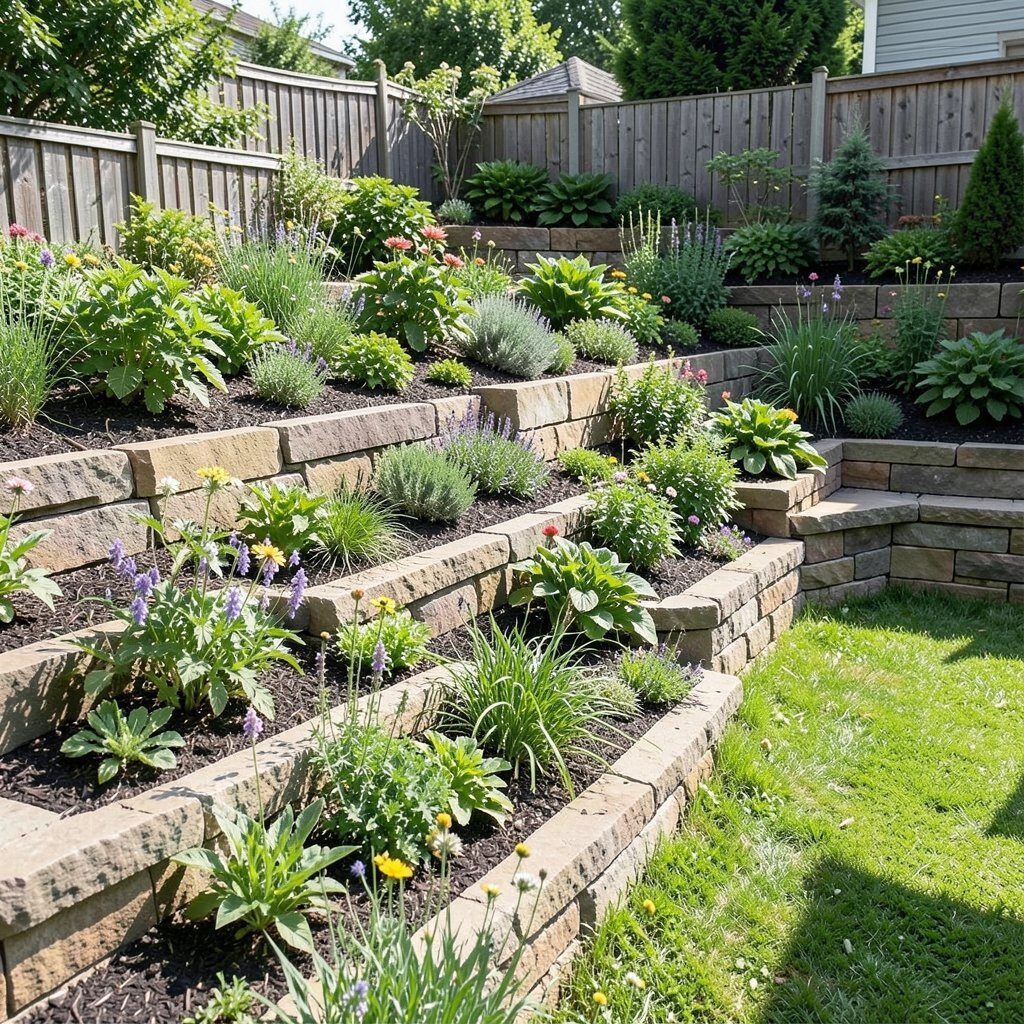
Long border strips can guide butterflies and bees while also making your yard feel organized. Think of waves of color wrapping the steps, each terrace acting like a different “room” of blooms.
Choose flowers that bloom across seasons, such as bee balm, salvia, and zinnias, so pollinators always have something to visit. Let some plants stay taller on the back edge and keep the front lower so sightlines stay open. You will notice better plant success too, because more pollinators means more fruit and stronger blooms elsewhere.
7. Frame Views With a Trellis on the Upper Tier
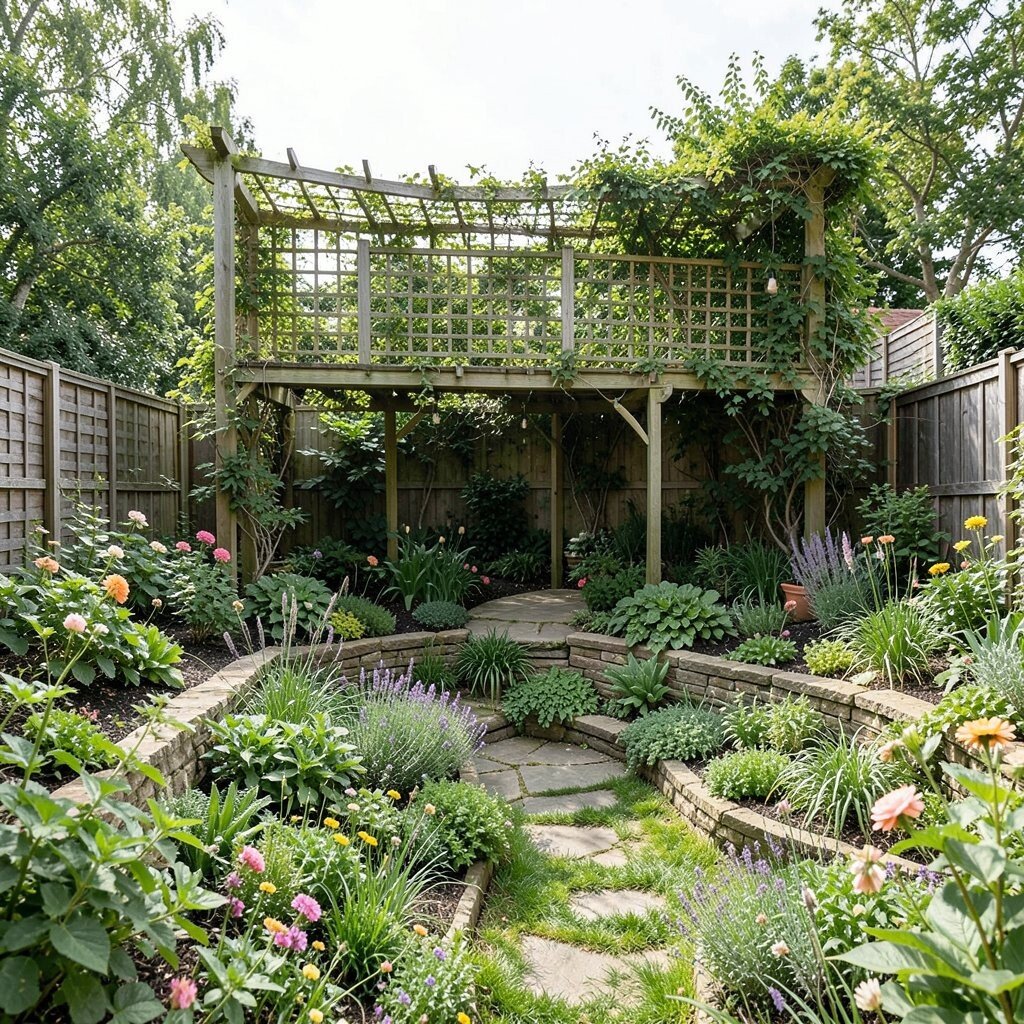
A trellis gives your top terrace a focal point and makes the space feel designed from the moment you arrive. You can train vines upward while keeping the ground below clear for planting.
For a practical setup, anchor the trellis into solid structure behind the soil line, then use twine or plant clips to guide growth. Add flowering climbers like clematis or honeysuckle where permitted, and use leafy vines like climbing roses if you want scent. This helps your yard feel more layered and cozy, even on wide slopes.
If you want a lower-cost option, consider using weatherproof lattice or repurposed wood with proper sealing. The uniqueness comes from choosing a vine palette that matches your home style and color preferences.
8. Turn Each Terrace Into a Different “Zone” for Your Needs
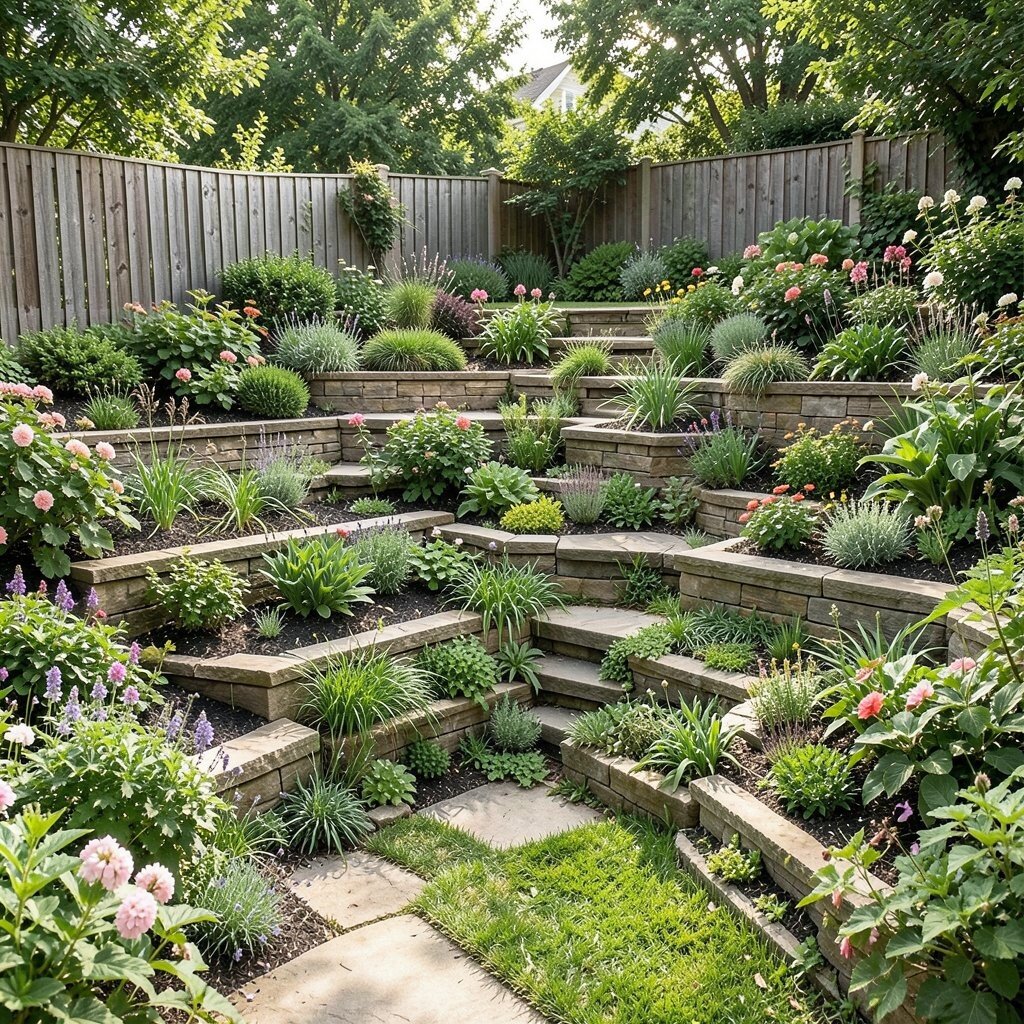
Terracing naturally divides your yard into zones, and that makes planning easier. You can separate play space, dining space, and growing space without building complicated structures.
Put ornamental plants and flowers on one tier, while dedicating another tier to vegetables or herbs. This gives you clear personal boundaries and helps you maintain everything without feeling overwhelmed. When you tailor each terrace to how you live, the garden becomes more than pretty scenery.
9. Add a Small Water Feature With a Sloped Spillway
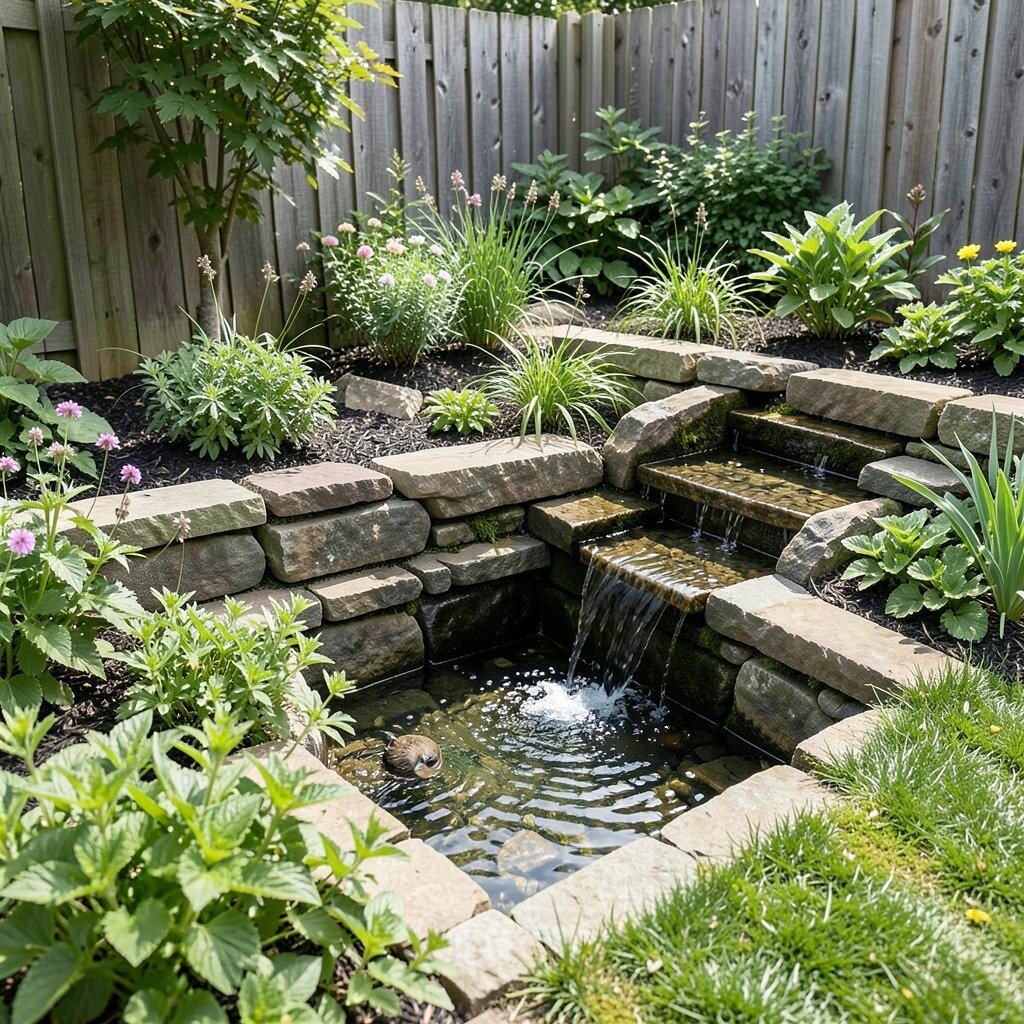
The sound of moving water can make your backyard feel calm and peaceful. On a terraced slope, a narrow spillway can create a gentle trickle that looks like it belongs.
Use a small recirculating pump and build the feature into the lower or middle terrace so it catches light. Cover edges with stones and plant moisture-friendly greenery nearby for a natural look. This also supports wildlife, and it can help you enjoy the outdoors longer because the space feels soothing.
Keep it realistic by choosing a pump size that matches the height difference between tiers. Add a simple access panel or removable stone so you can clean the pump without hassle.
10. Grow Shade-Tolerant Plants on the North-Facing Steps
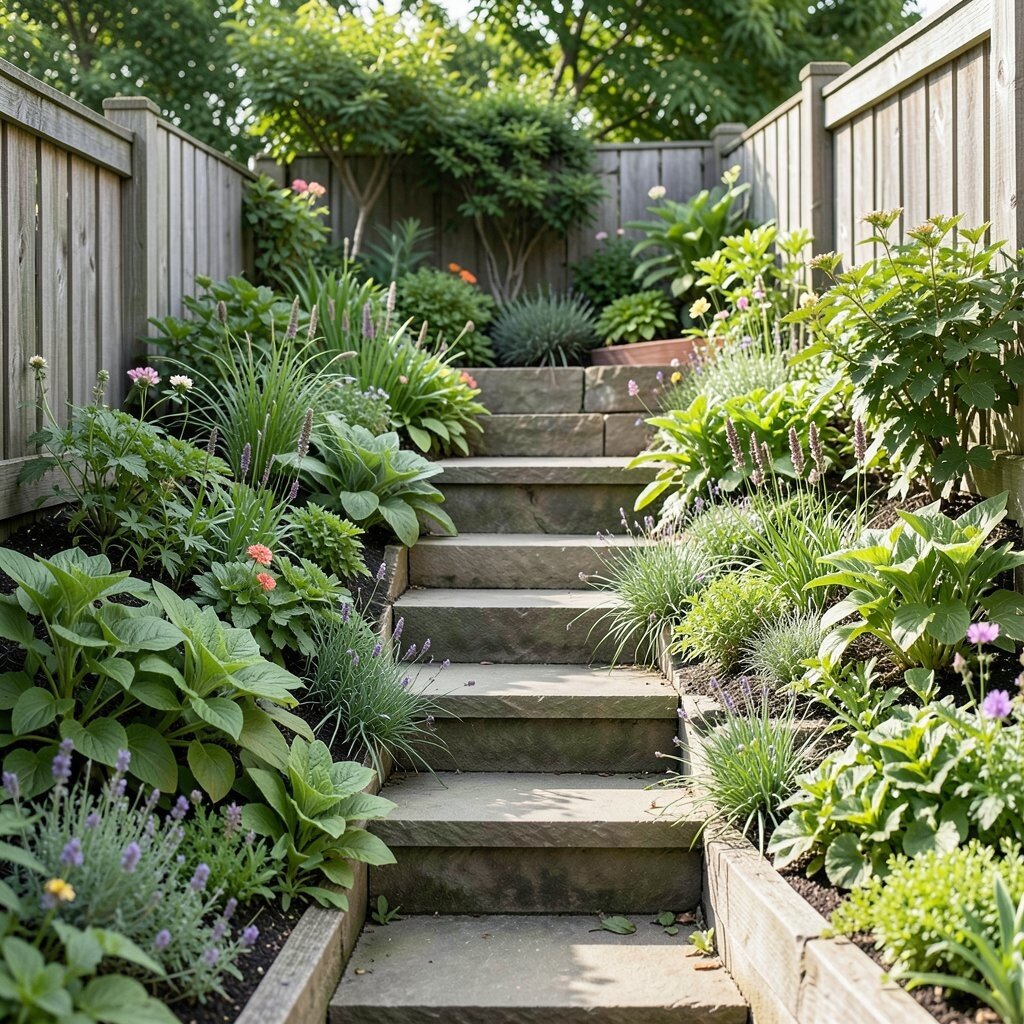
Not all terraces get the same sun, and that is actually an advantage. The shadier levels can become lush with plants that would struggle elsewhere.
Use ferns, hostas, and foamflower on the cooler side, and pair them with groundcovers like sweet woodruff for a soft carpet effect. Add a few bright leaf plants to keep the space lively even when flowers take a break. The practical benefit is less watering and fewer plant failures because the planting matches the light you already have.
11. Create a Living Edge With Trailing Vines
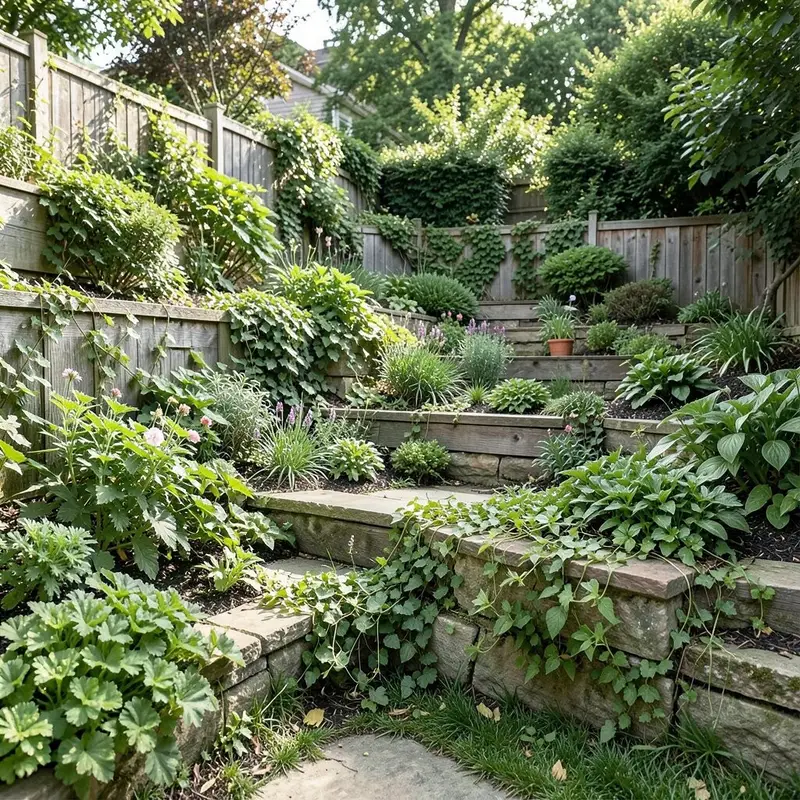
Trailing vines make terrace borders look softer and more natural, like your garden is flowing down a hillside. They also cover bare soil that might otherwise look empty between seasons.
Let vines spill over stone edges or along shallow raised walls where they can drape without smothering everything. Choose hardy varieties that fit your climate and maintain them by pruning in small, regular sessions. You will enjoy a tidy look with minimal weeding because the groundcover shades the soil.
If you want a unique twist, match vine colors to your plant palette, such as deep green with a pop of purple or warm yellow blooms. It is an easy way to add personality without buying lots of new materials.
12. Install Handrails or Path Borders for Safer Footing
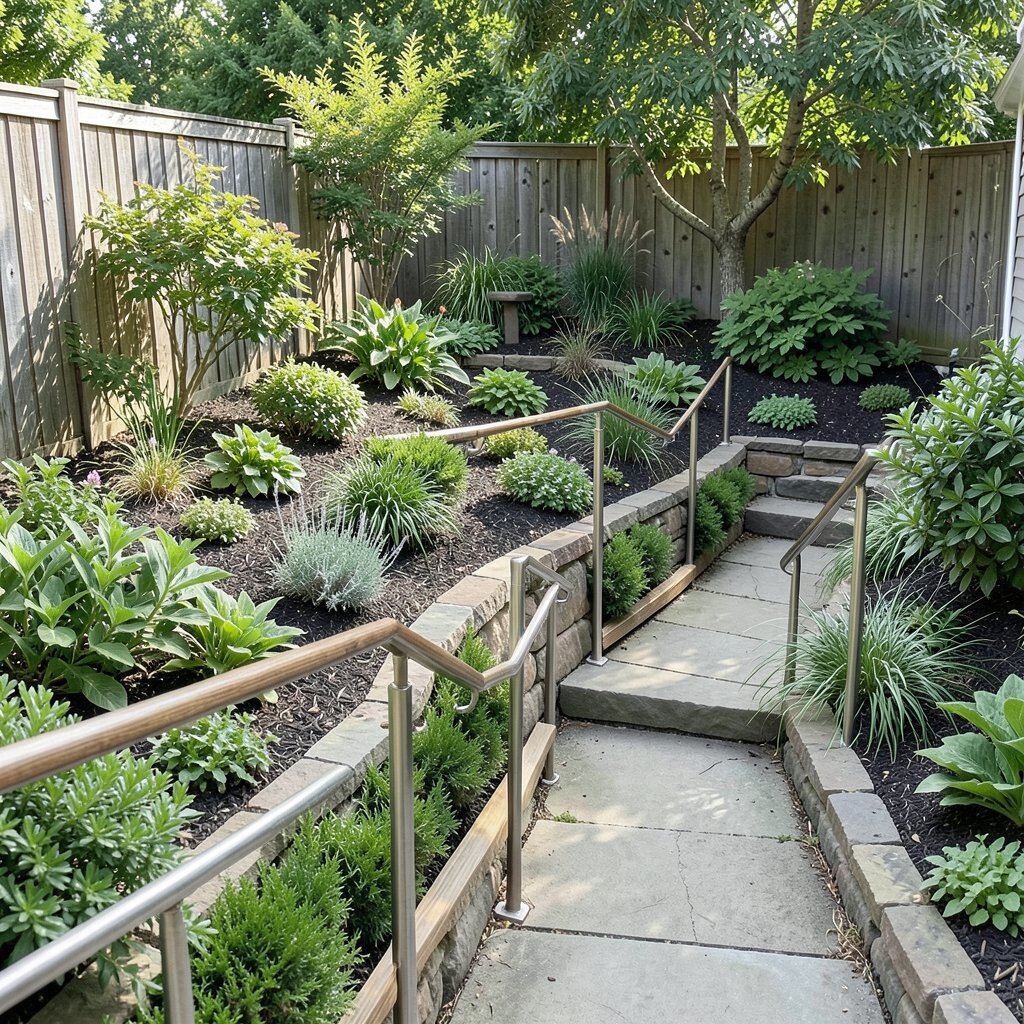
Terraced yards can be stunning, but safety matters when levels are steep. A well-placed rail or border helps you move around with confidence.
Use metal or wood handrails near steps and pair them with low edging stones to guide your feet. For a practical touch, ensure pathways are wide enough for comfortable walking and add non-slip surfacing like textured pavers. This is also a great accessibility upgrade if you host family, kids, or anyone with mobility needs.
13. Make a Pattern Path Using Small-Scale Pavers
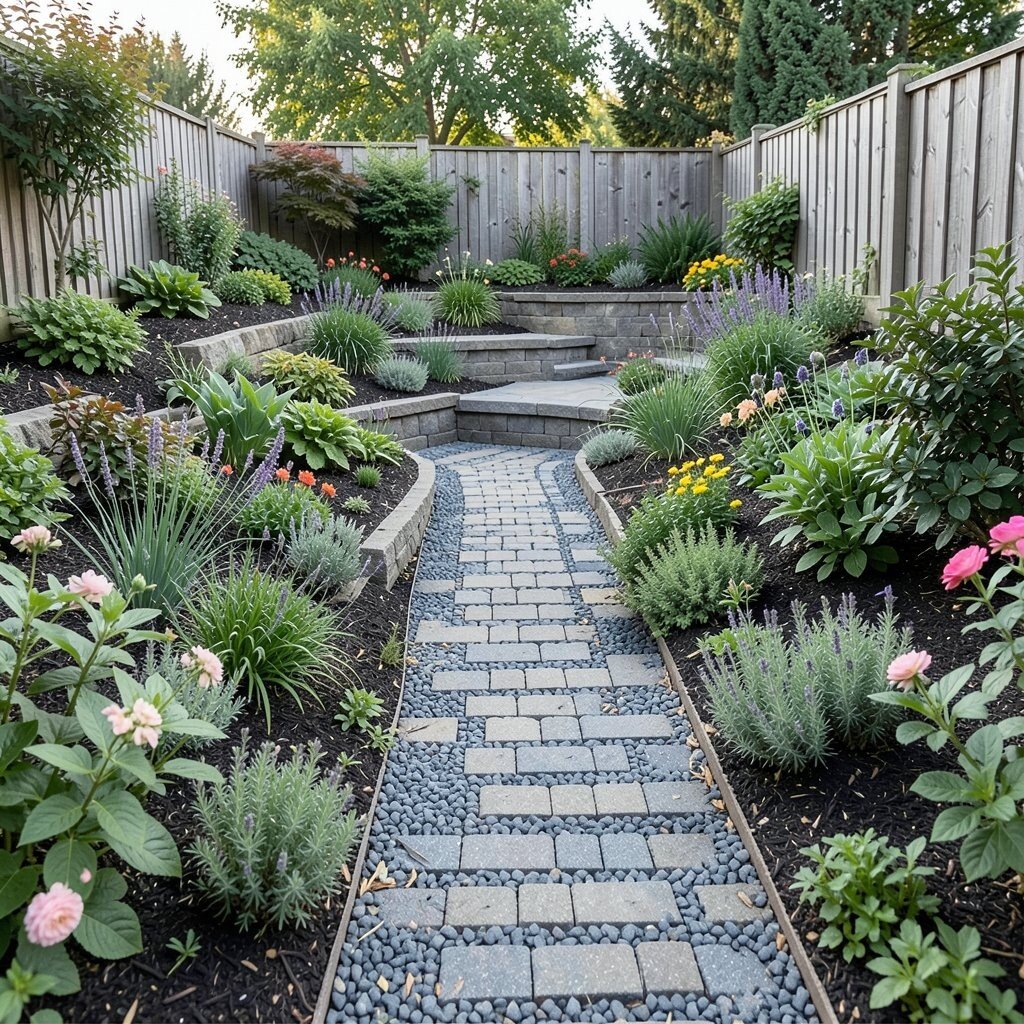
A patterned walkway can tie the whole garden together like a ribbon. Even a simple grid or gentle curve makes the terraces feel intentional and neat.
Choose pavers sized for easy handling and set them on compacted gravel or mortar mix depending on your budget and stability needs. Keep the path aligned with your viewing direction so you feel pulled through the yard instead of stuck at one spot. You will likely find maintenance easier too, because clear lanes make it simpler to mow or weed around planted areas.
For personalization, match paver color to your home stone or create a contrasting border line. A trend right now is mixing textures, so combining pavers with gravel or turf can look fresh and modern.
14. Add Drought-Tolerant Plant Blocks for Low-Maintenance Charm
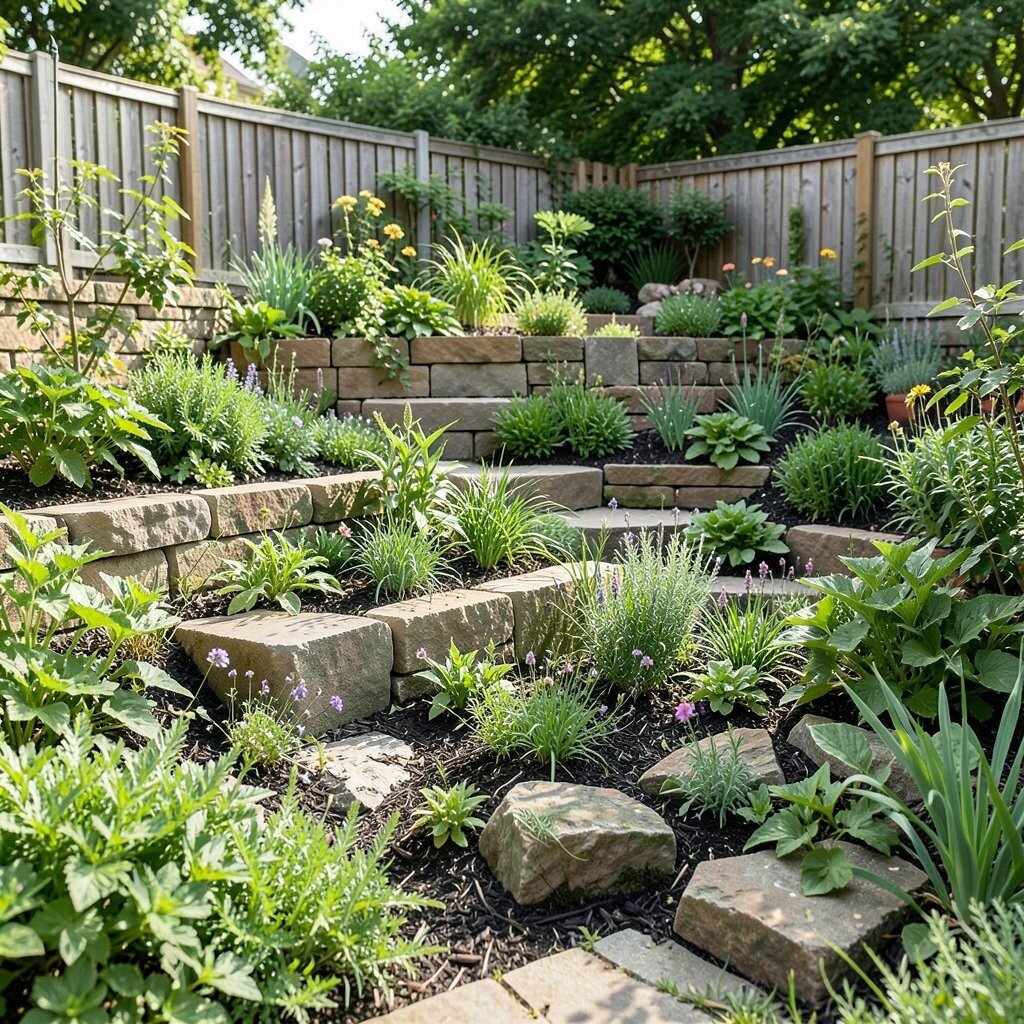
If you want less watering, terraced planting blocks are a perfect fit. Grouping tough plants by tier creates a bold look while reducing daily care.
Use drought-tolerant favorites like ornamental grasses, lavender, and sedums, and place them where sun is strongest. Keep soil health in mind by adding compost and using mulch to slow evaporation. The benefit is that your terraces stay attractive even during hot stretches.
15. Grow Fruit Trees or Dwarf Espaliers on Sunny Steps
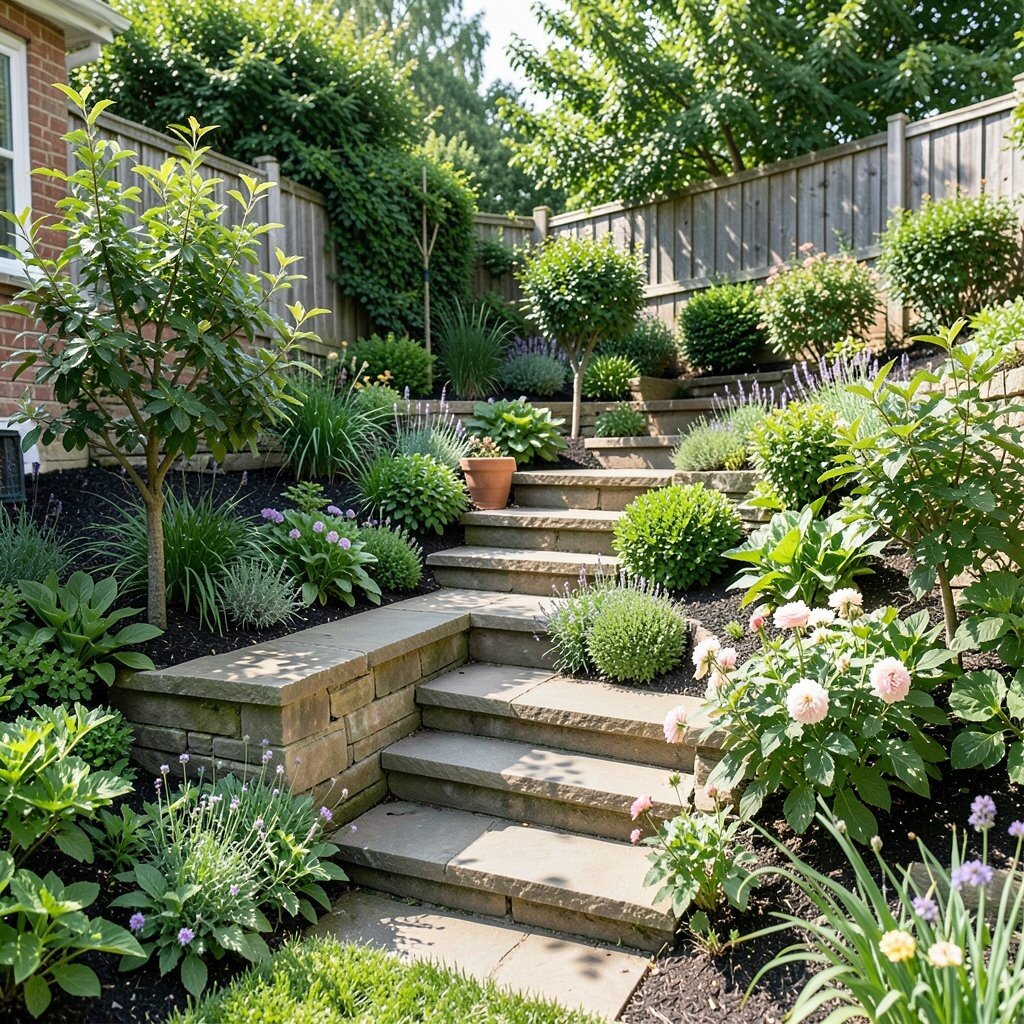
Terraces can support small fruit trees when you give them stable rooting space and good sun. An espalier on a wall or sturdy trellis can look sleek and also produce tasty harvests.
Pick dwarf varieties and train them carefully so branches stay within your space and airflow stays good. Plan for real sunlight by observing the day for a full cycle, then place trees on the brightest terrace. This makes your garden more personal because it adds a seasonal ritual to your routine.
To keep costs reasonable, buy young plants and build gradually instead of planting full-size trees all at once. Add a drip irrigation line at the base so watering stays consistent through fruiting months.
16. Include a Terrace-Top Container Stage for Seasonal Color
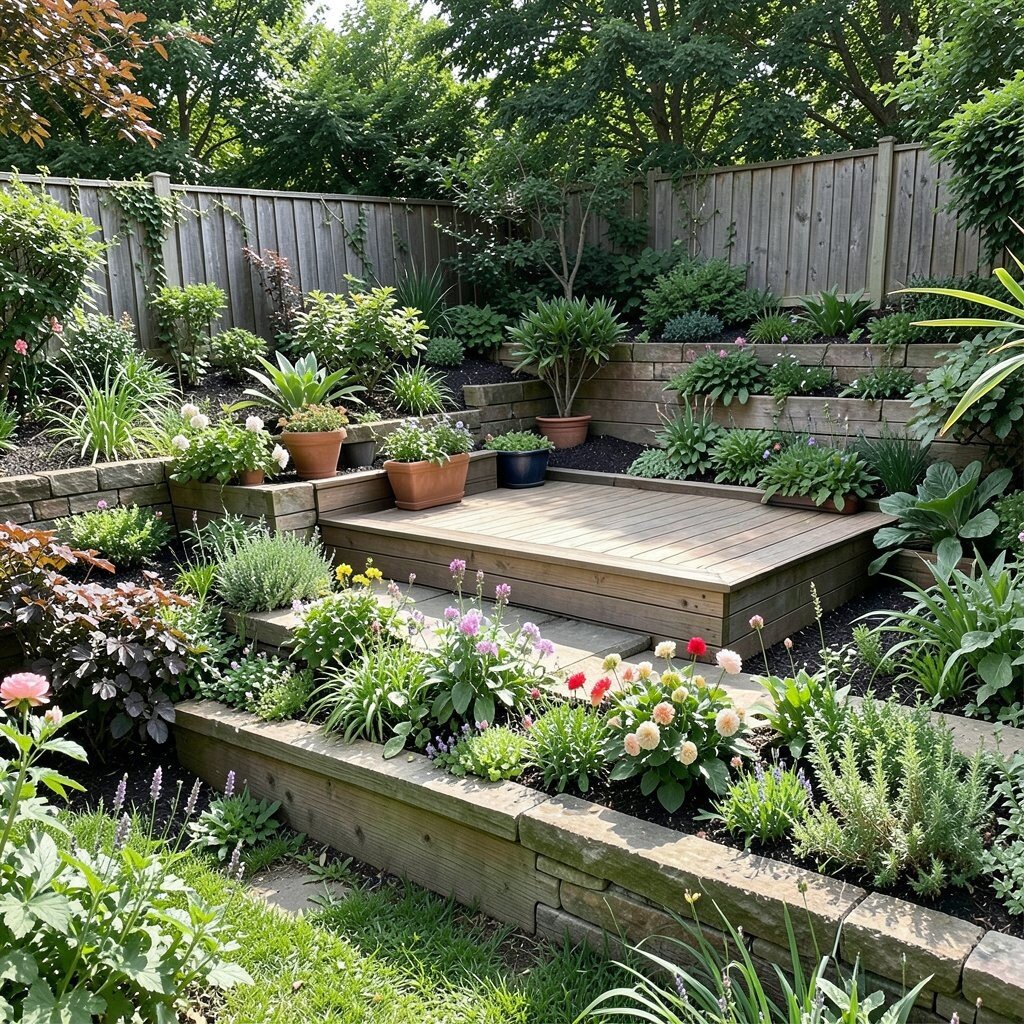
Sometimes you want change without doing major construction. Containers on the top terrace let you switch colors, try new plants, and keep the hillside looking fresh.
Choose sturdy pots with good drainage and group them by height so the arrangement feels balanced. Use potting mix with slow-release fertilizer to reduce the amount of feeding you have to do. This is a fun way to test trends like bold foliage plants or compact flowering varieties before committing to ground planting.
17. Use Mulch Types That Match Each Terrace’s Purpose
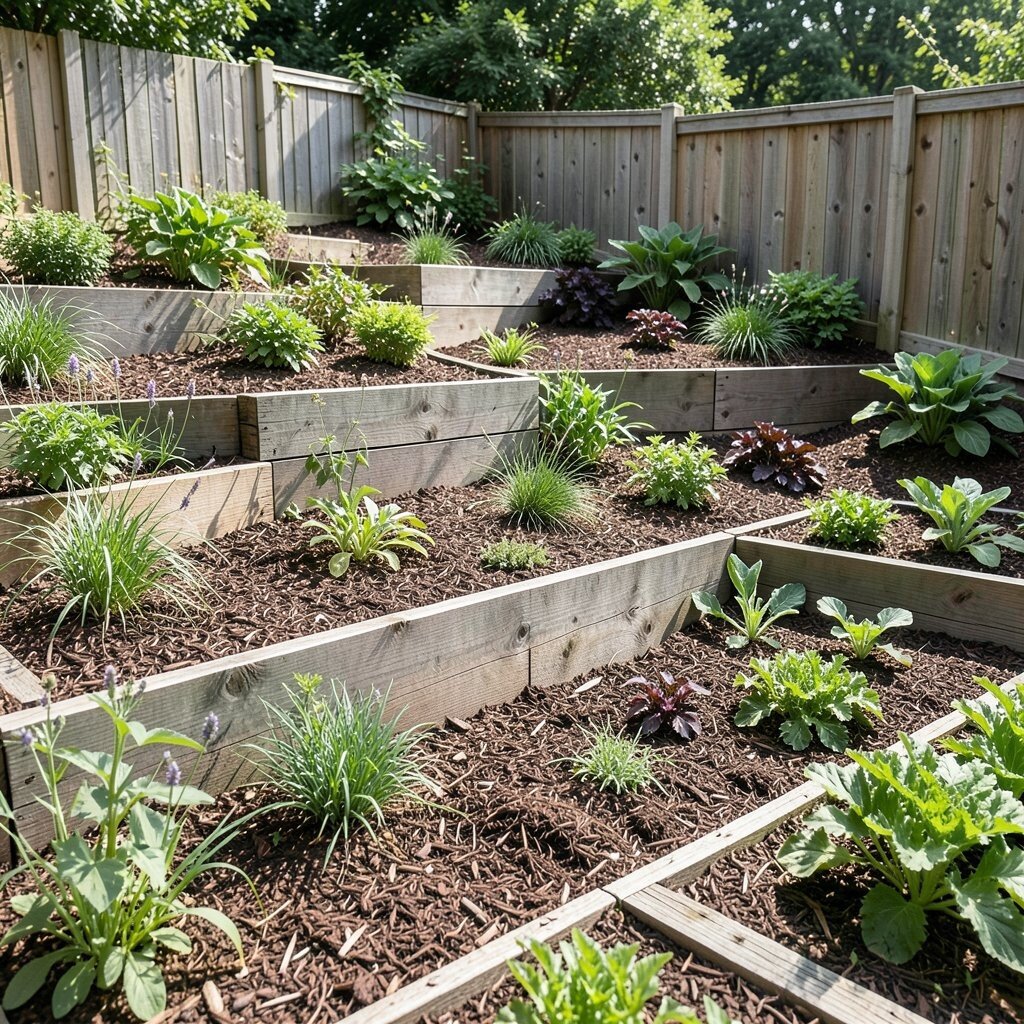
Mulch can make the whole slope look cleaner while also helping plants handle weather. Different terrace zones can benefit from different mulch choices.
Use bark mulch in ornamental areas for a classic look, and choose finer mulch or compost blends where you need quick moisture retention. If you have edible plants, consider using compost-rich options that support soil life. A practical tip is to keep mulch a couple inches away from plant stems so you reduce rot risks.
This small change improves water control, lowers weeds, and makes your terraces feel cared for. As a personalization touch, you can vary colors slightly so each tier has its own personality.
18. Build a Compost Corner on the Upper Terrace
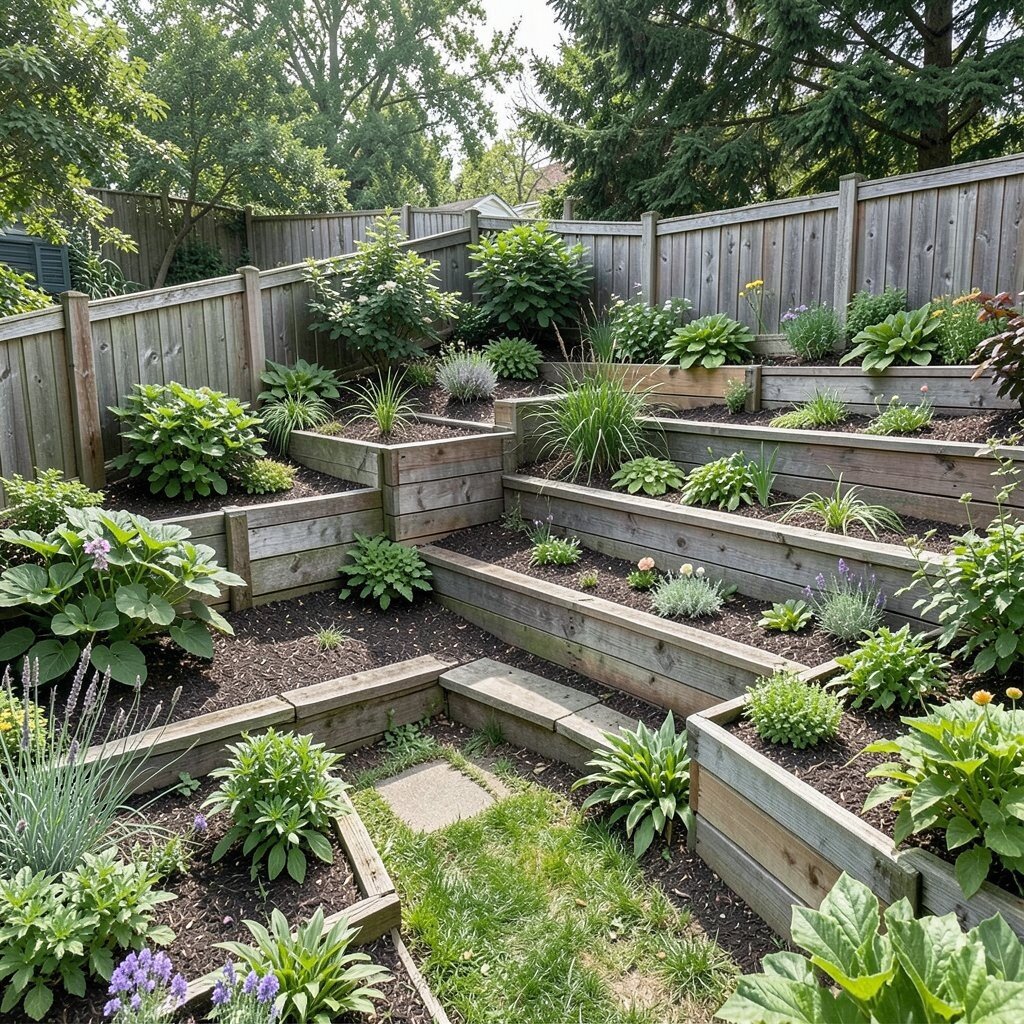
A compost corner keeps waste from piling up and gives your terraces a steady source of nutrients. When it is placed at the top, it is easy to collect materials and helps you stay organized.
Use a simple bin or tumbler and set it near a convenient pathway, but screen it with tall planters or trellis panels so it does not steal the view. Add browns like leaves and shredded paper, then balance with greens for steady breakdown. The benefit is healthier soil and fewer store-bought amendments over time.
19. Add a Decorative Ladder Shelf for Small Pots
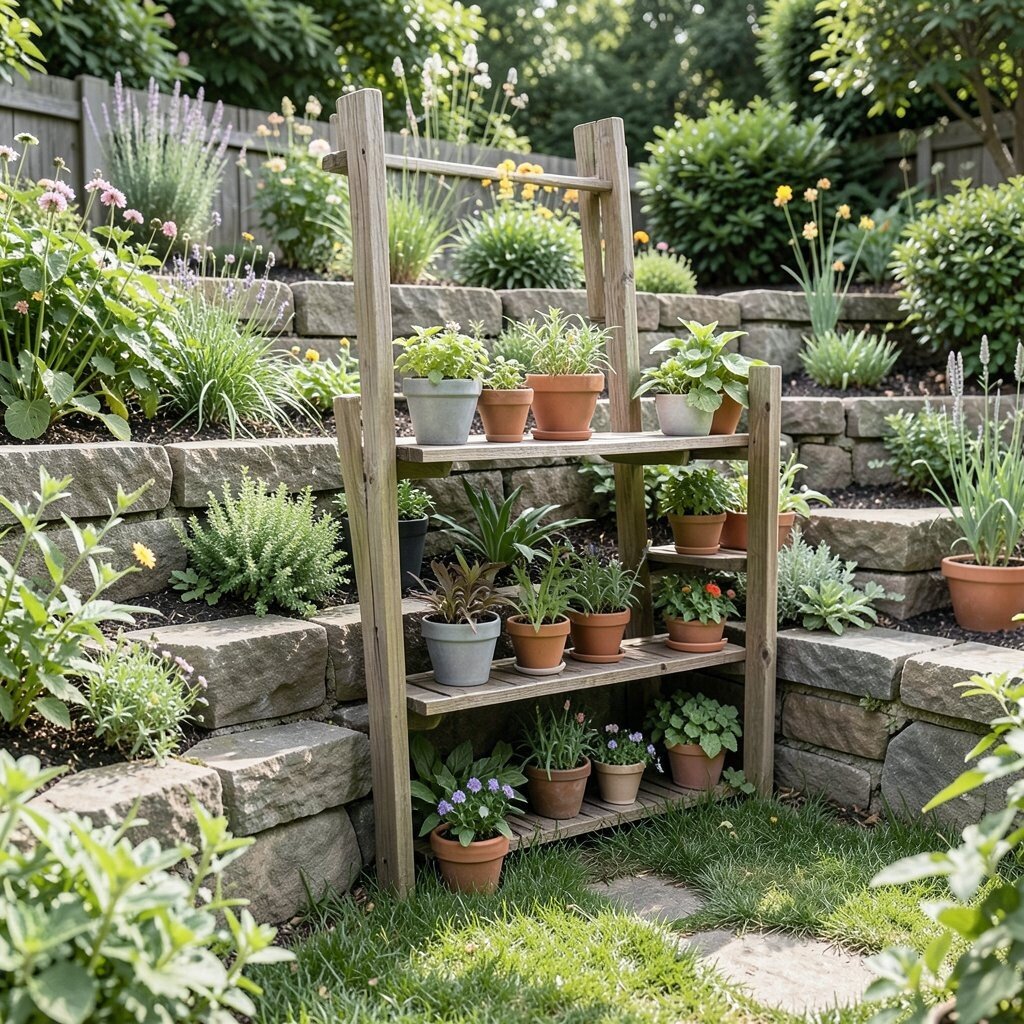
A ladder shelf turned garden display can add charm without taking up terrace space. It also gives you a way to keep small pots, tools, and starter plants close at hand.
Mount a sturdy outdoor shelf on a stable wall section or fence line, then place small planters on each rung. Choose weather-resistant materials and secure everything so wind does not tip it. This is a unique feature that feels personal, especially when you style it with a color theme that matches your garden.
For cost considerations, start with a basic shelf and refresh it later with paint or sealant. You will find it encourages more container gardening because it makes your efforts visible and easy to manage.
20. Make a Terrace With Ornamental Grass Swirls
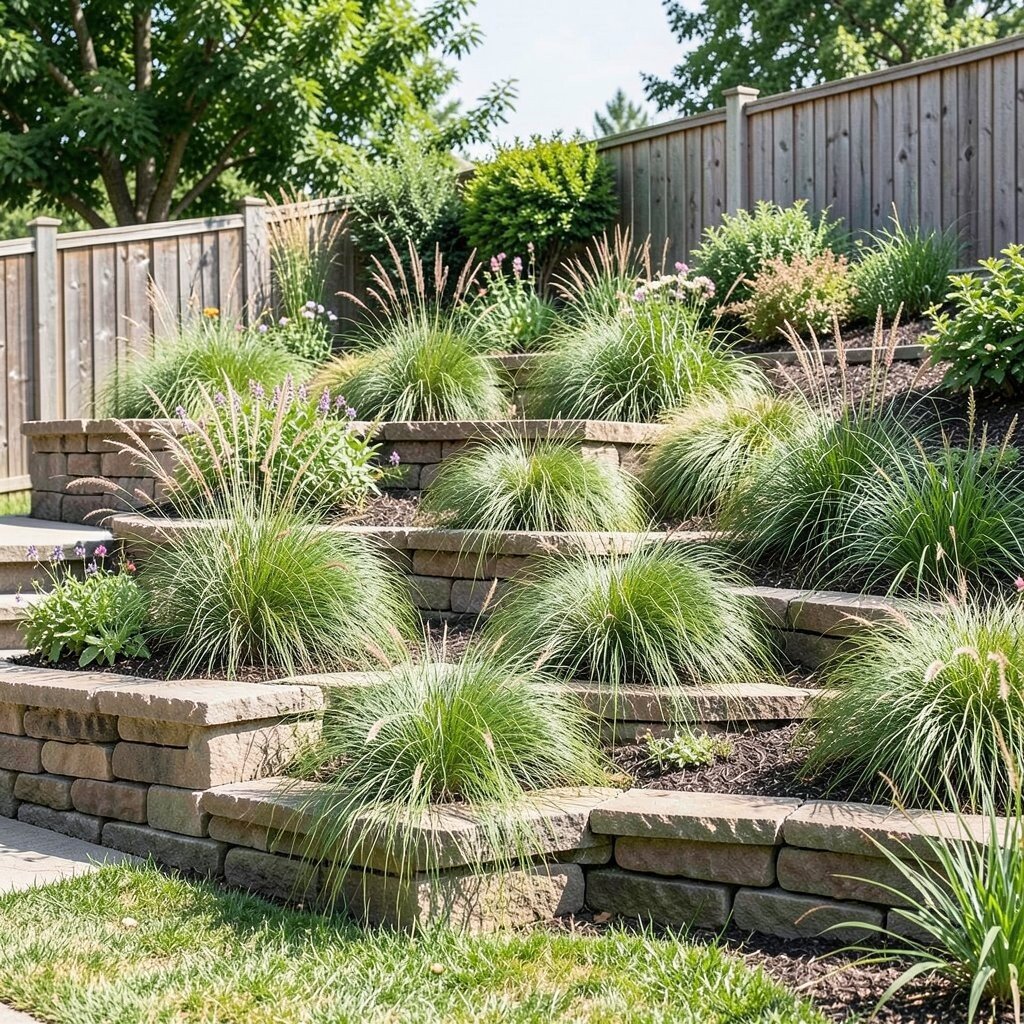
Ornamental grasses can look like soft waves across a hillside. When planted in curved lines, they help terracing feel artistic instead of merely structural.
Choose grasses that fit your climate and keep taller varieties toward the back of each terrace for a layered silhouette. Allow some grasses to sway naturally, then trim in late winter or early spring so they look neat again. The benefit is long-lasting visual interest, because many grasses look good even when flowers fade.
To keep it practical, group grass types so you can water and prune them together. This also supports a current trend toward naturalistic, movement-focused landscapes.
21. Add a Night Glow Path With Solar Lights
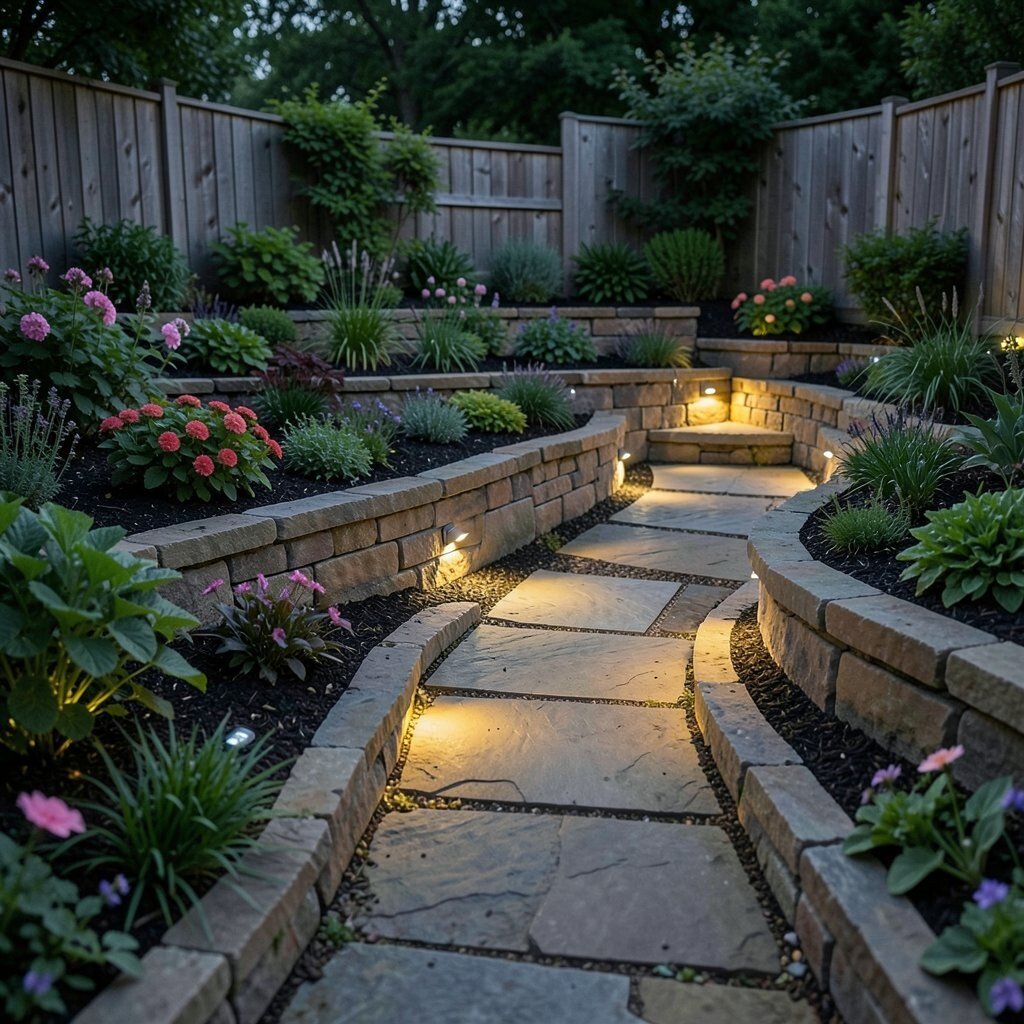
After sunset, terraces can feel magical when you guide your steps with gentle light. Small solar lights placed along edges make the whole slope safer and more inviting.
Set lights where shadows would otherwise hide the path, like between pavers or along retaining walls. Choose warm white bulbs for a cozy glow instead of harsh brightness. You will likely enjoy evening garden time more because walking feels easy and the plants look dramatic in low light.
For personalization, use different light spacing on each terrace to create rhythm, and keep the look tidy by removing lights that clash with your style. Solar lights also tend to be lower-cost to maintain since you avoid wiring, though battery quality matters.
22. Personalize With a Favorite Color Theme and Repeat It
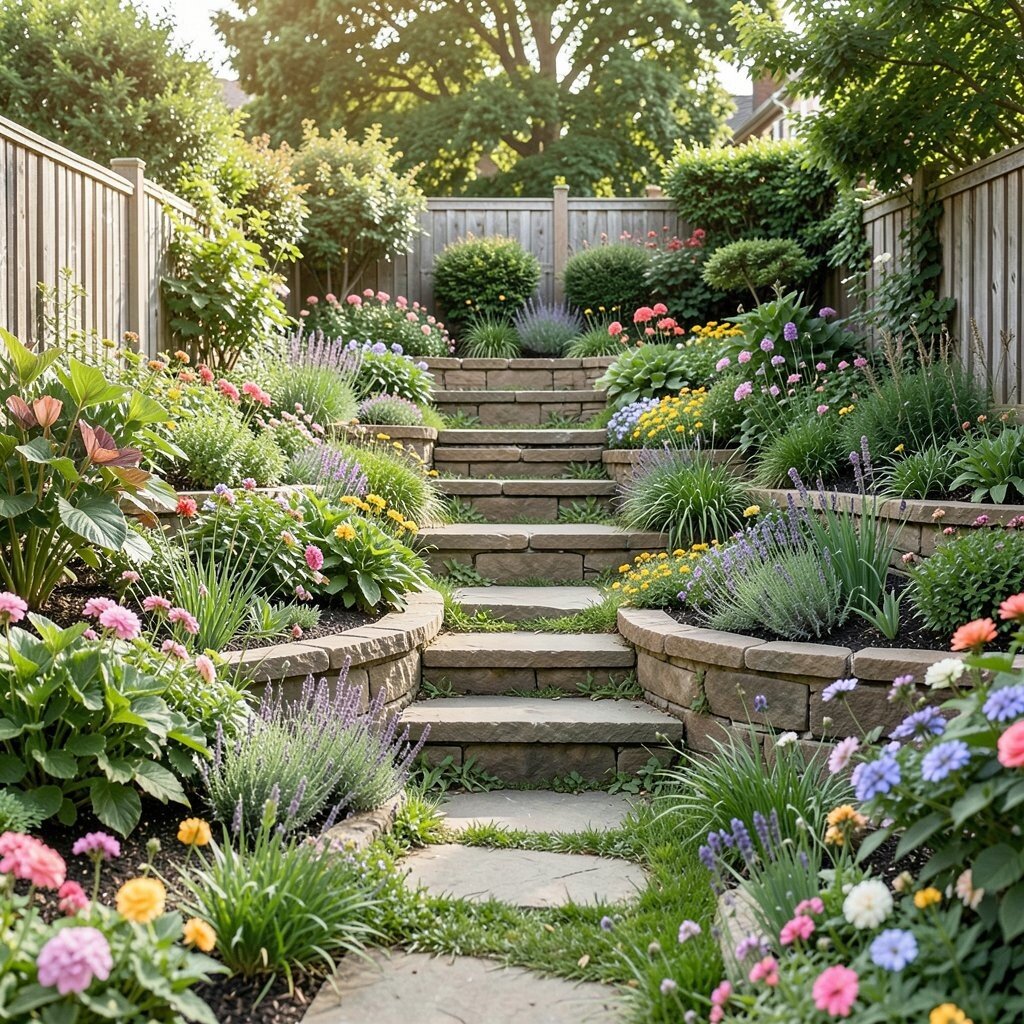
A terrace garden feels most “yours” when you repeat a color theme across levels. Even a simple palette, like blush pink and soft green, can make the yard feel like it has a plan.
Pick two or three main colors and include them in flowers, foliage, and even planters so the layers connect visually. Use that same theme when you choose stepping-stone colors or gravel tones, because small choices add up. This is an easy way to get uniqueness without extra construction.
If cost is a concern, start with plants and containers in the theme you like most, then add hardscape details gradually. Over time, you will build a backyard that feels calm, coordinated, and full of meaning every time you look out the window.