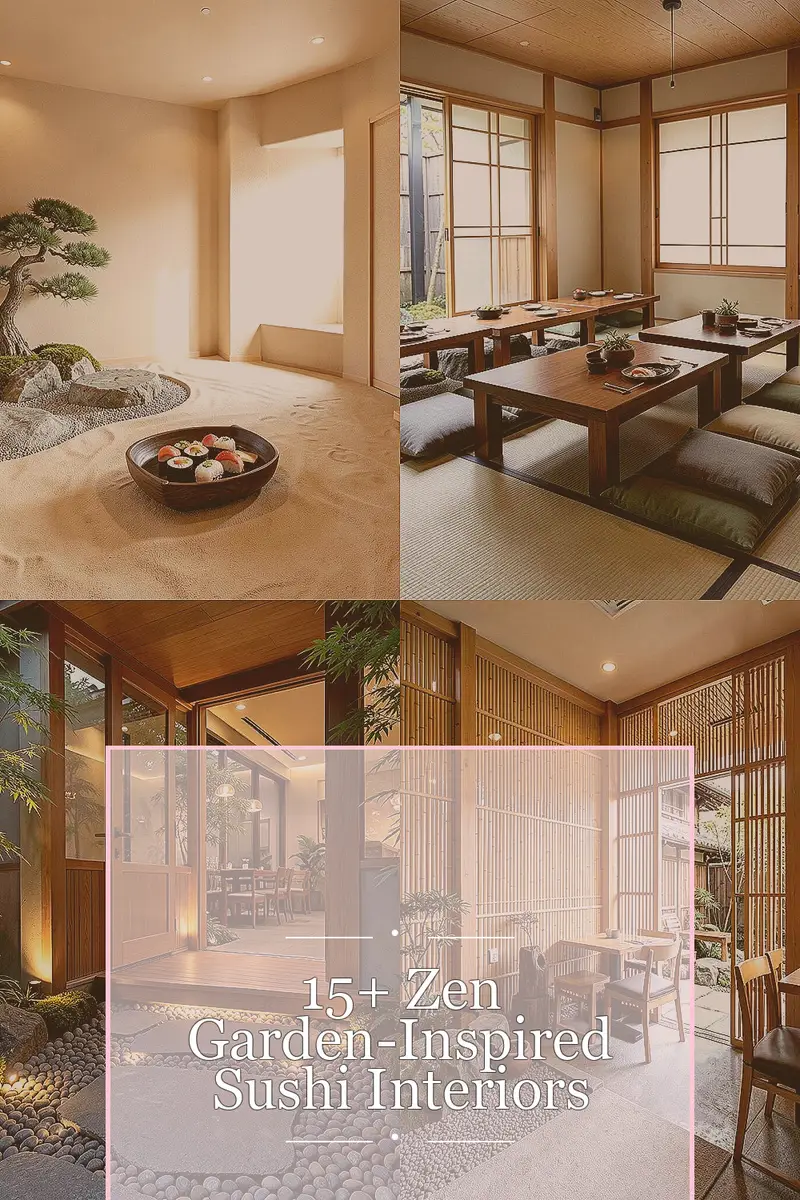
Some dining rooms feel calm before the first bite arrives. A sushi space can do that with the right design choices.
1. Soft Sand-Tone Floors and Walls
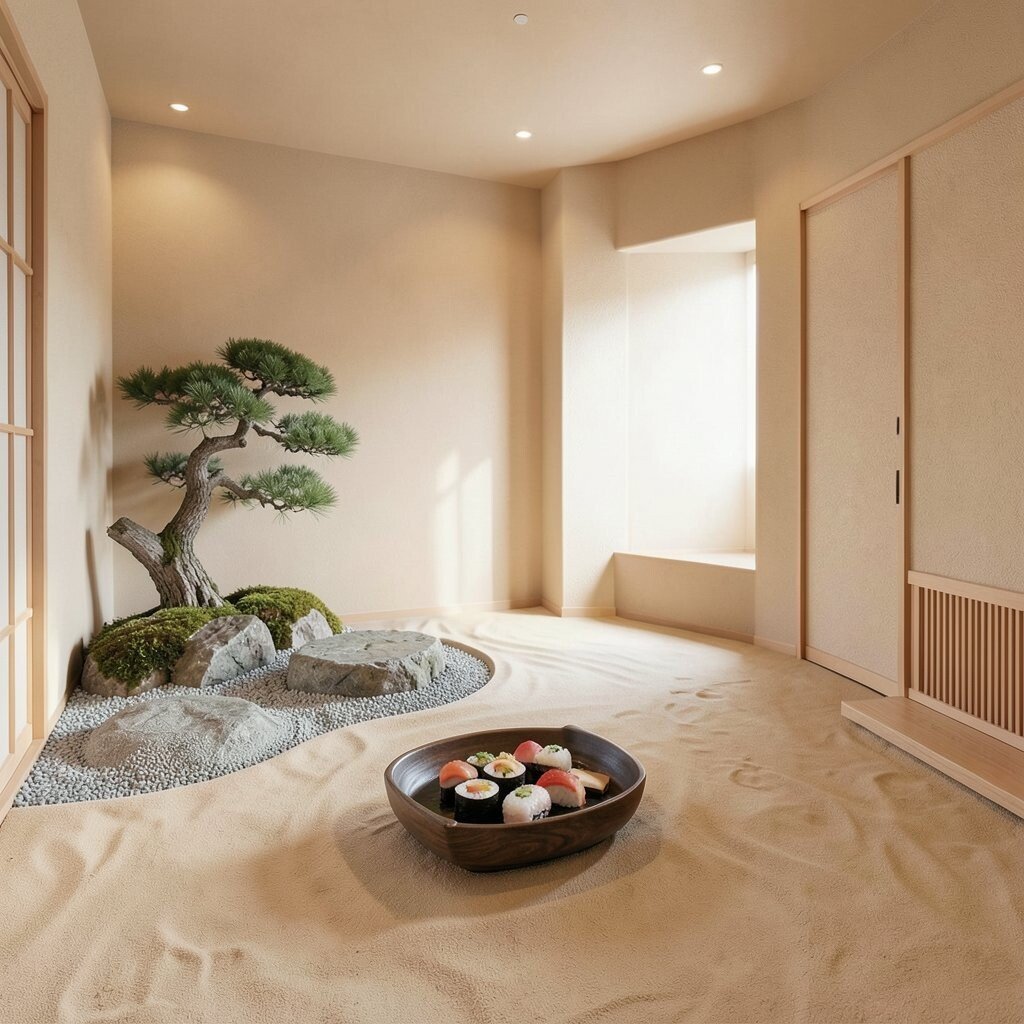
Warm beige floors and gentle sand-colored walls can make a sushi restaurant feel peaceful right away. The look feels clean, open, and easy on the eyes.
This style works well because it lets the food stand out while the room stays quiet and soothing. It can also help small spaces feel larger, which is a big win for busy dining rooms. To keep costs in check, use paint, vinyl flooring, or textured wall panels that give a natural feel without a huge price tag.
2. Low Seating with Tatami-Inspired Zones
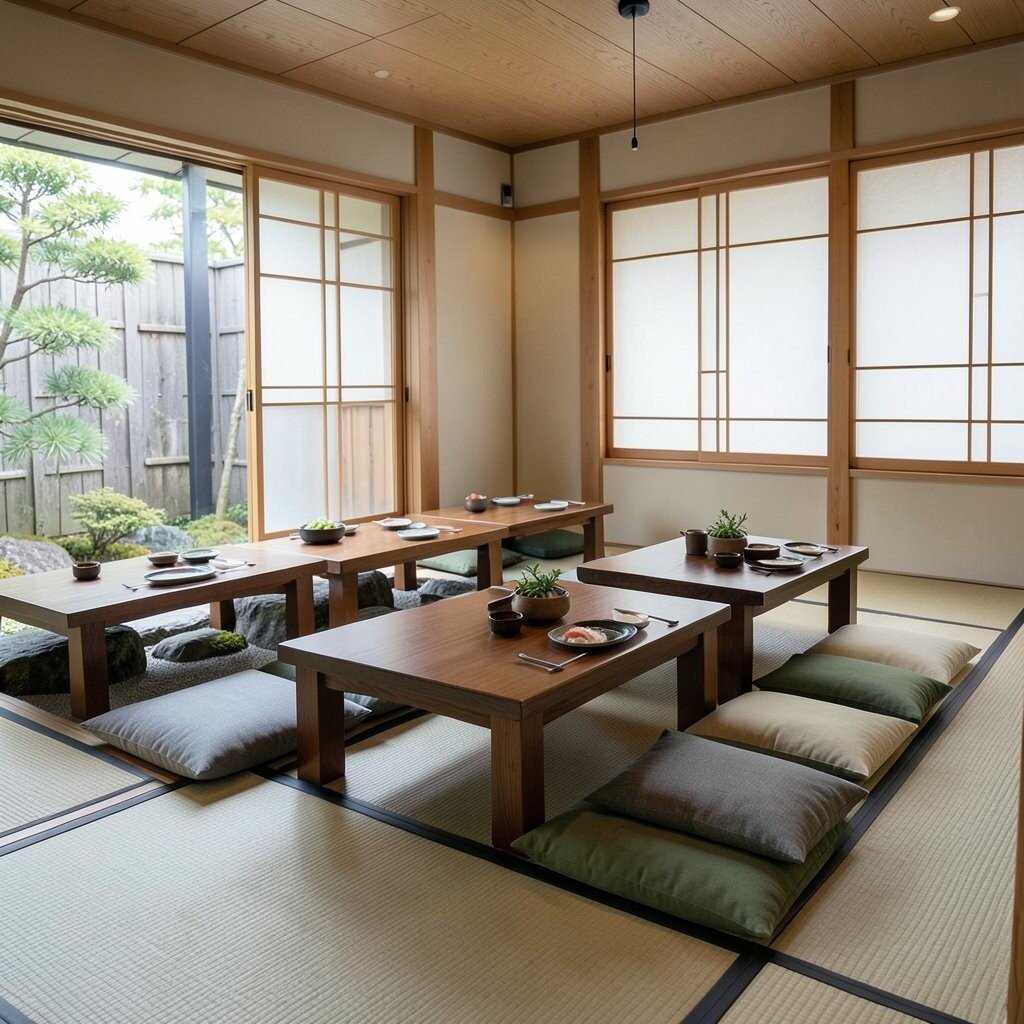
Low tables and floor-level seating bring a calm, slow dining mood to the room. Guests often feel more relaxed when the space invites them to sit in a simple, grounded way.
This idea feels special because it gives the restaurant a clear identity. Add soft cushions, easy-to-clean mats, and a few raised seats for comfort and flexibility. If you want a modern twist, mix low seating with regular tables so more guests can choose what feels best.
For a personal touch, use cushion covers in muted greens, grays, or warm cream tones. These small details can make the room feel thoughtful without adding much to the budget. A mix of comfort and style helps the space feel both memorable and practical.
3. Pebble Pathway Entry
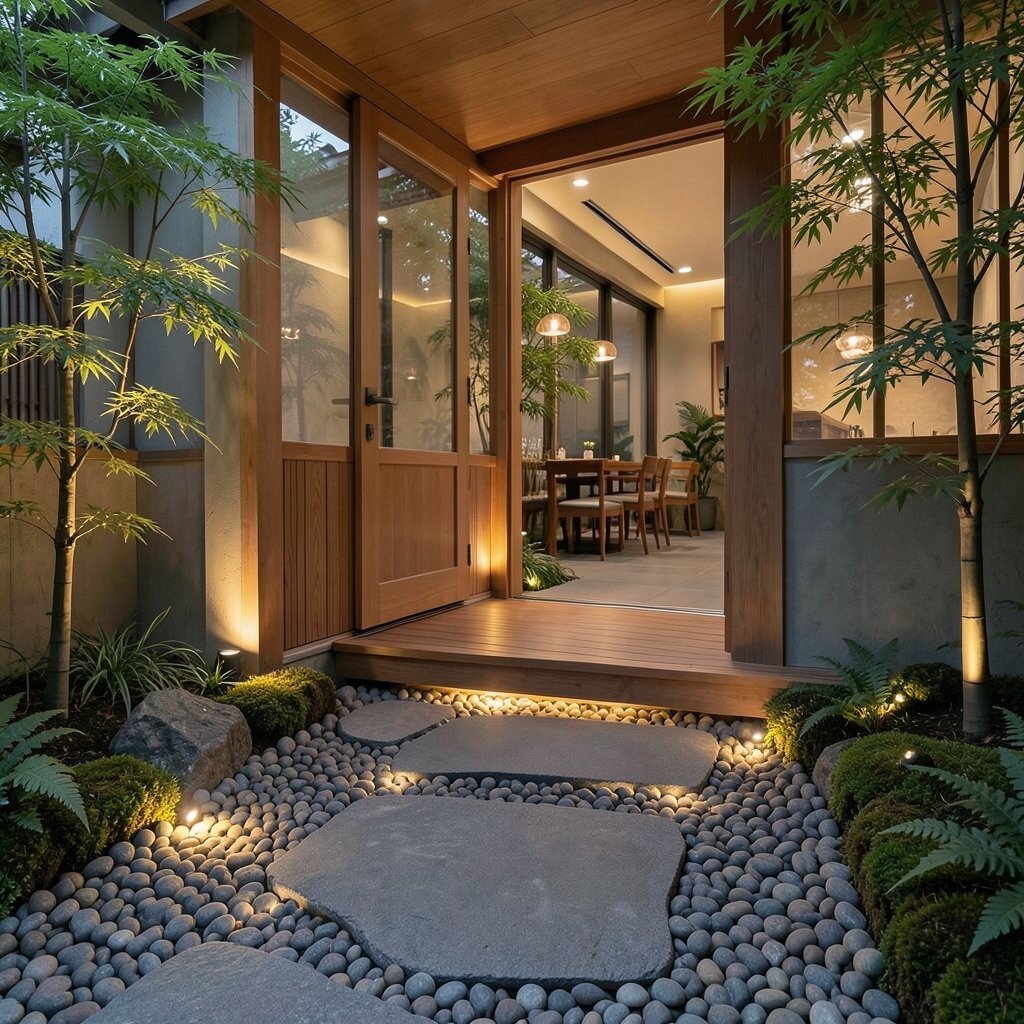
A path of smooth pebbles near the entrance can set a Zen mood before guests even sit down. It gives the place a gentle garden feeling that feels calm and a little magical.
This feature is unique because it creates a small moment of surprise. You can pair it with wooden steps, stone tiles, or a simple runner to guide people inside. For lower costs, use pebble-look mats or resin flooring that mimics the same effect.
Try adding soft lighting along the path so it glows in the evening. That small touch can make the entry feel special and help guests remember the restaurant. It also works well for social media photos, which is great for marketing.
4. Bamboo Wall Screens
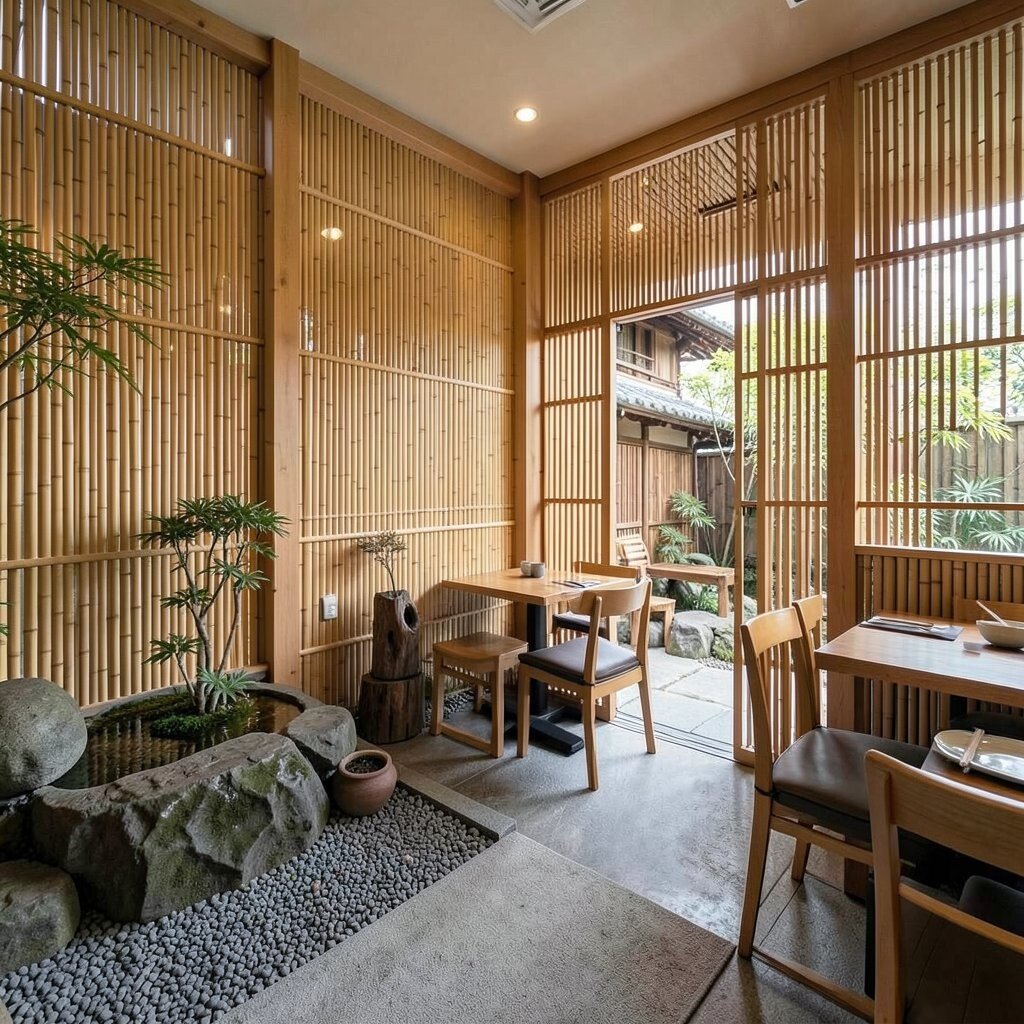
Bamboo screens can divide the room in a gentle, natural way. They add texture and warmth without making the space feel heavy.
This choice is useful for creating private dining corners or hiding busy service areas. Bamboo also fits many styles, from traditional to modern, so it stays flexible as trends change. If real bamboo is too costly, bamboo-look panels can give the same visual feel for less.
5. Indoor Rock Garden Centerpiece
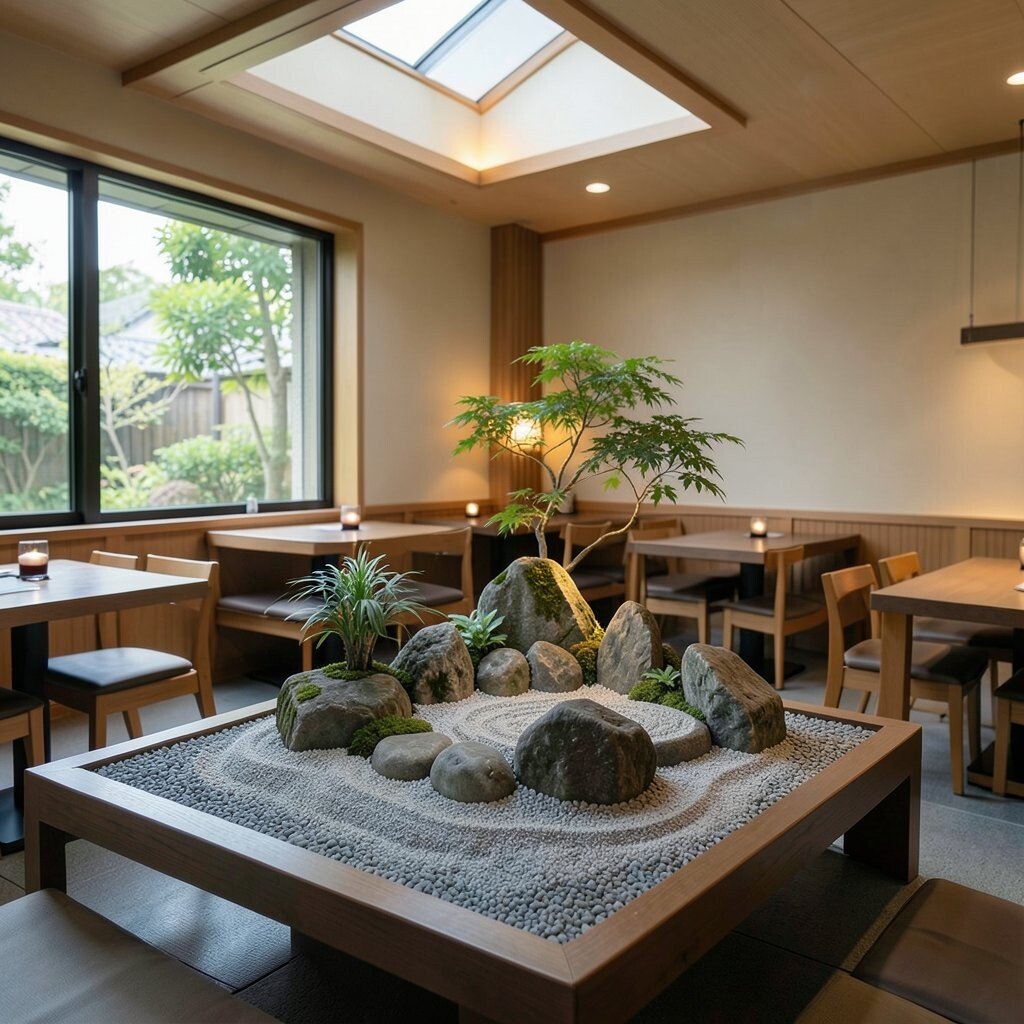
A small rock garden in the middle of the restaurant can become a quiet focal point. It brings the Zen garden idea indoors in a way that feels calm and artistic.
This kind of centerpiece adds uniqueness because it gives guests something beautiful to look at while they wait. Keep the design simple with stones, sand, and one or two plants so it does not feel crowded. A low-maintenance setup is smart for restaurant owners because it saves time and care costs.
To make it feel personal, choose stones with different shapes and soft lighting that changes through the day. You can even place the garden near a window or under a skylight for a natural effect. The result is a peaceful feature that makes the whole room feel more thoughtful.
6. Shoji-Inspired Sliding Panels
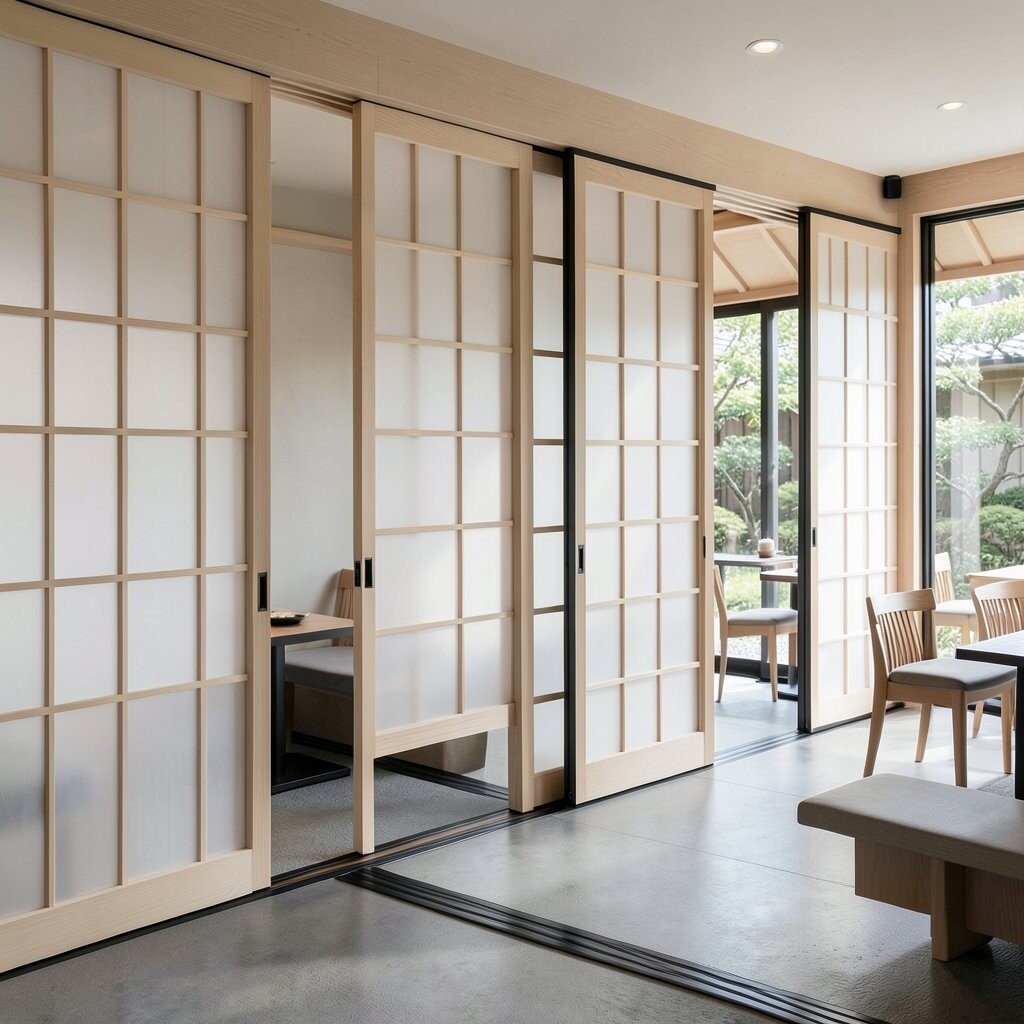
Light sliding panels can make a sushi restaurant feel airy and refined. Their soft lines bring a gentle Japanese influence without making the space look old-fashioned.
These panels are helpful because they can hide storage, create private booths, or separate the bar from the dining area. They also make the room feel neat and organized, which guests often notice right away. For a budget-friendly version, use frosted acrylic or printed panel inserts instead of costly traditional materials.
Choose frames in pale wood for a warm, natural look or black trim for a sharper modern style. That little choice can change the whole mood of the room. With the right finish, the panels can feel classic, fresh, or somewhere in between.
7. Moss Wall Accents
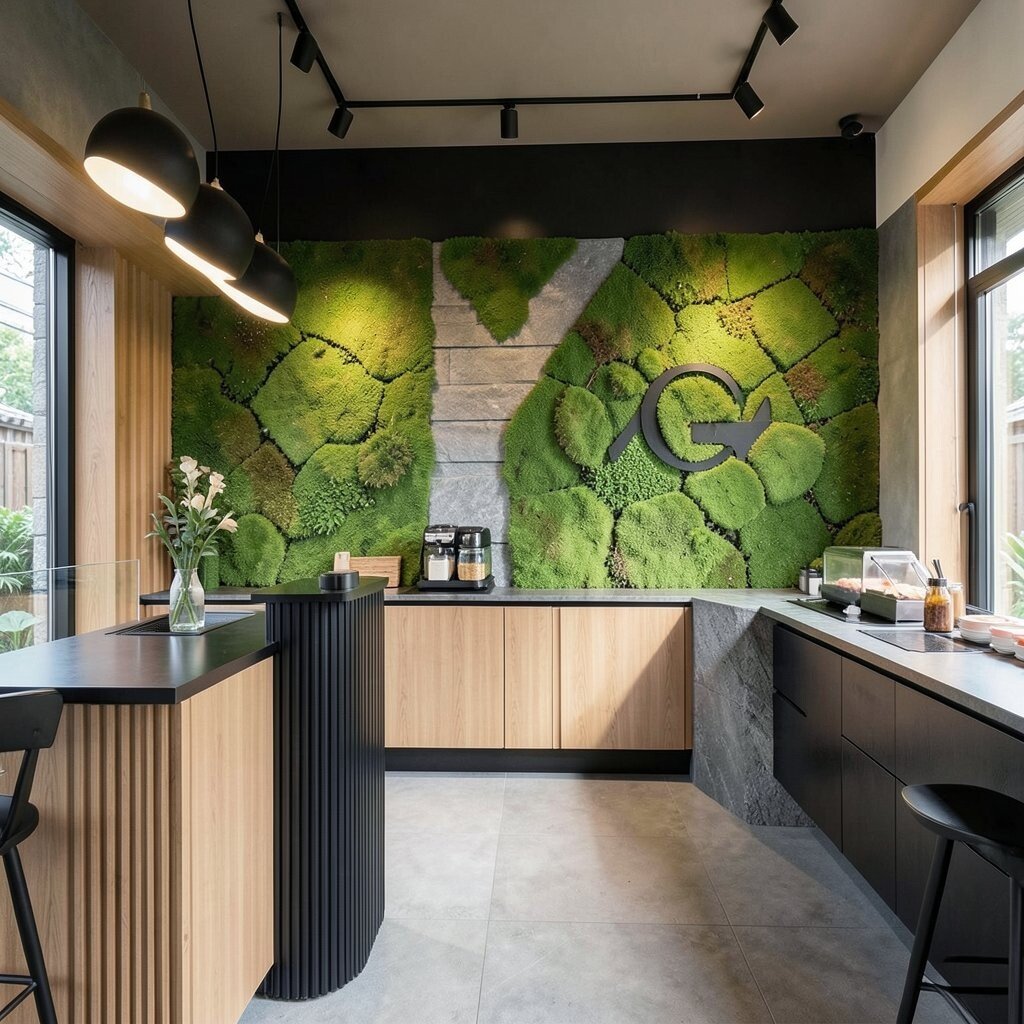
A moss wall can bring a soft green touch that feels fresh and restful. It adds life to the room without needing the care of real plants in every corner.
This design idea stands out because it is both pretty and practical. Moss panels can help with sound, which is useful in lively restaurants where voices and music mix together. If the full wall feels too expensive, use a smaller moss feature behind the host stand or near the sushi bar.
Pair the moss with wood, stone, or matte black details for a clean modern look. You can also shape the green area into a logo wall for a stronger brand feel. That makes the design useful for both style and identity.
8. Curved Counter with Natural Wood Grain
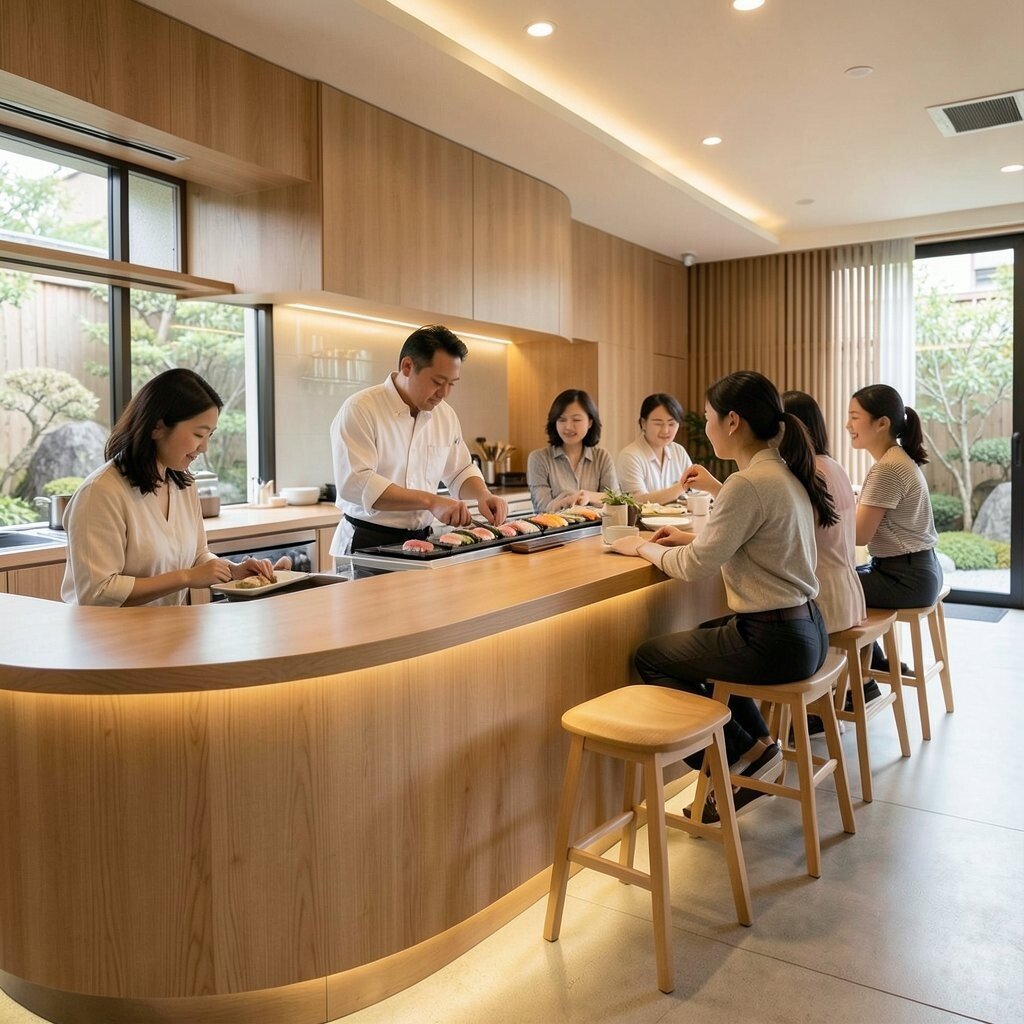
A curved sushi counter can make the room feel smooth and welcoming. The shape encourages flow, which fits the calm spirit of a Zen garden.
Natural wood grain adds warmth and makes the chef area feel honest and grounded. Guests often enjoy watching sushi being made at a counter like this because it feels personal and lively. To manage costs, use wood veneer or laminate with a real-wood look instead of solid hardwood.
Soft under-counter lighting can make the curve stand out in a gentle way. Add simple stools with comfortable backs so guests stay relaxed during longer meals. This setup feels stylish and useful at the same time.
9. Lantern Lighting with a Soft Glow
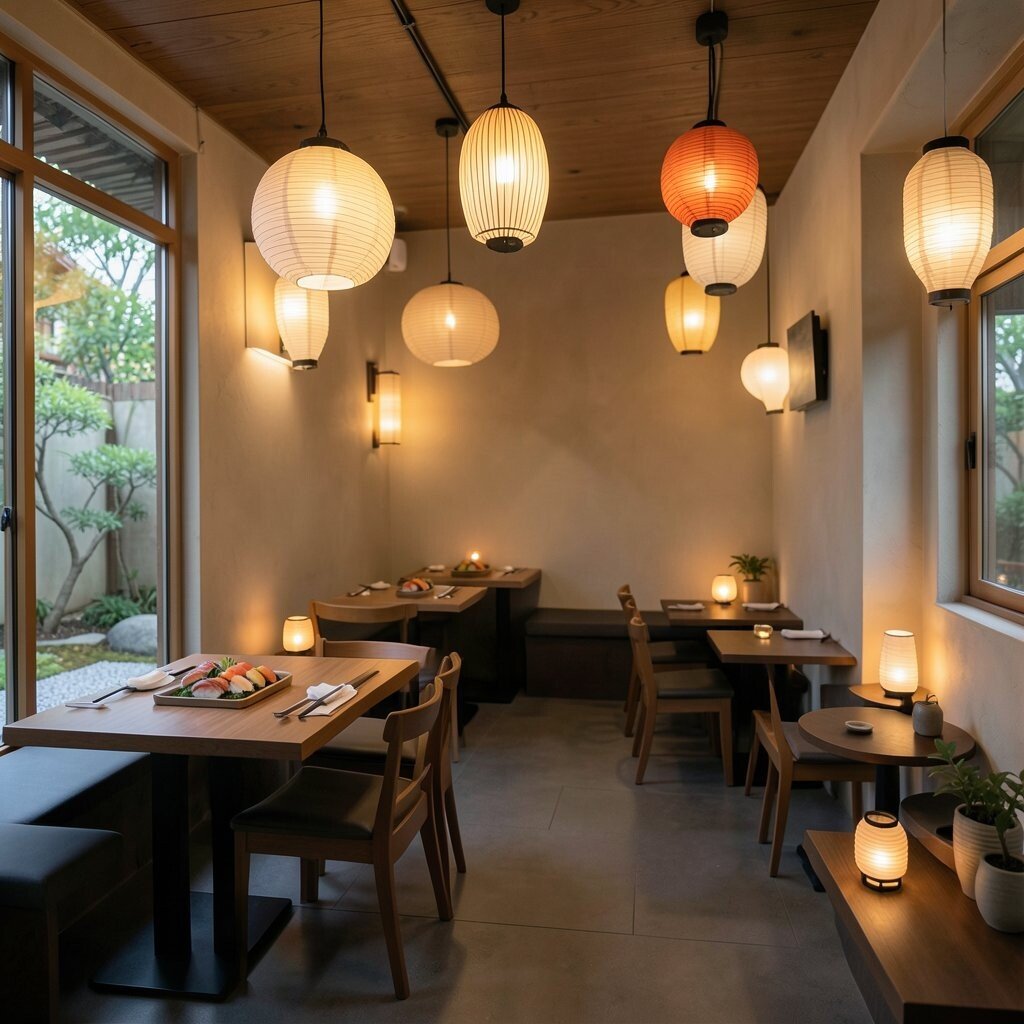
Gentle lantern lights can make the whole restaurant feel calm at once. Their warm glow creates a cozy mood that works well for sushi dinners.
This lighting style feels unique because it is both decorative and useful. Lanterns can hang over tables, line the walls, or sit in small clusters near seating areas. If you need a lower-cost option, use LED lantern-style fixtures that look beautiful but use less power.
Mix lanterns with dimmers so the light can shift from lunch brightness to evening softness. That flexibility helps the room feel right at different times of day. It also gives owners more control over the mood and energy of the space.
10. Water Feature Near the Dining Space
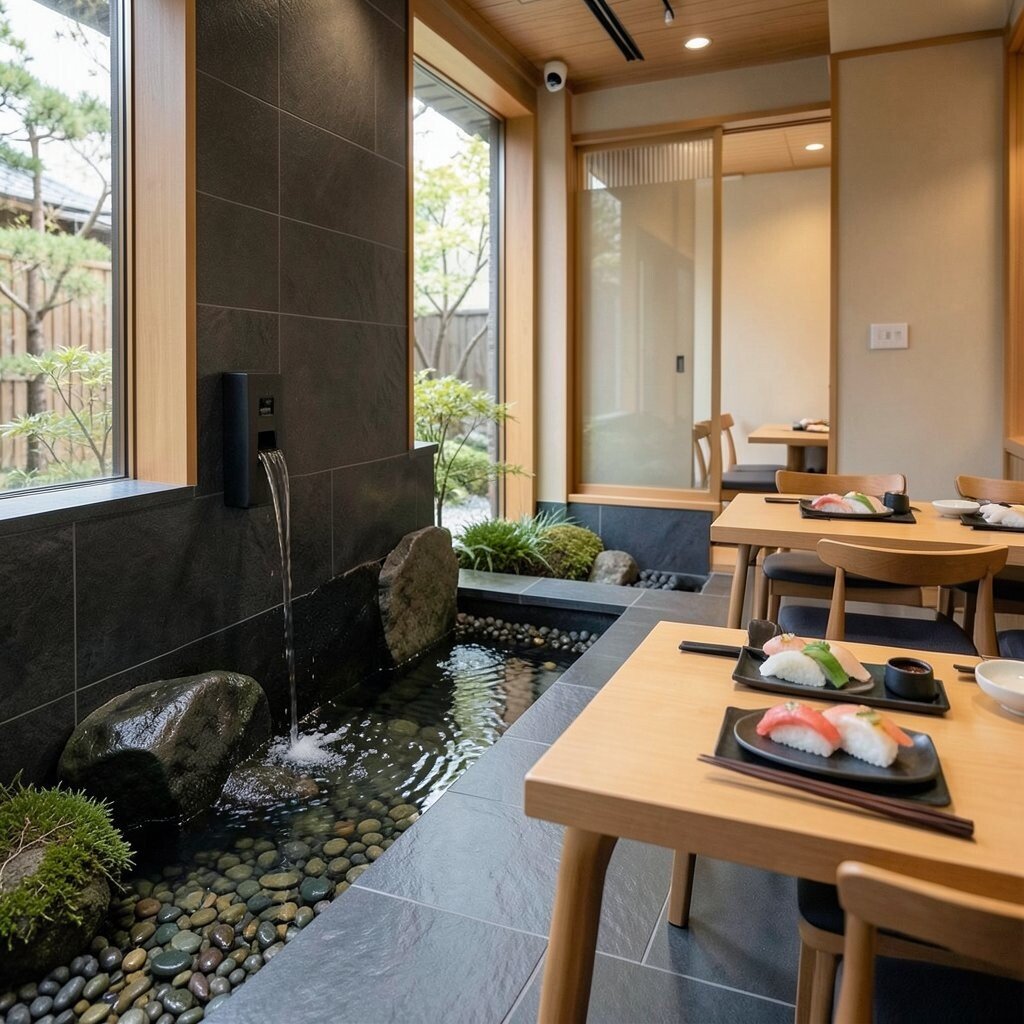
A tiny indoor water feature can add a quiet sense of movement to the restaurant. The sound of water helps many people feel calm and focused on the meal.
This idea feels special because it brings a garden-like experience inside. A narrow wall fountain or a small basin can work well without taking too much room. For cost savings, choose a compact electric unit that is easy to install and maintain.
Keep the design simple so it does not compete with the sushi presentation. Stones, dark tile, and soft light can make the water feature feel elegant. It can also become a strong brand detail that guests talk about after they leave.
11. Minimal Table Settings with Organic Textures
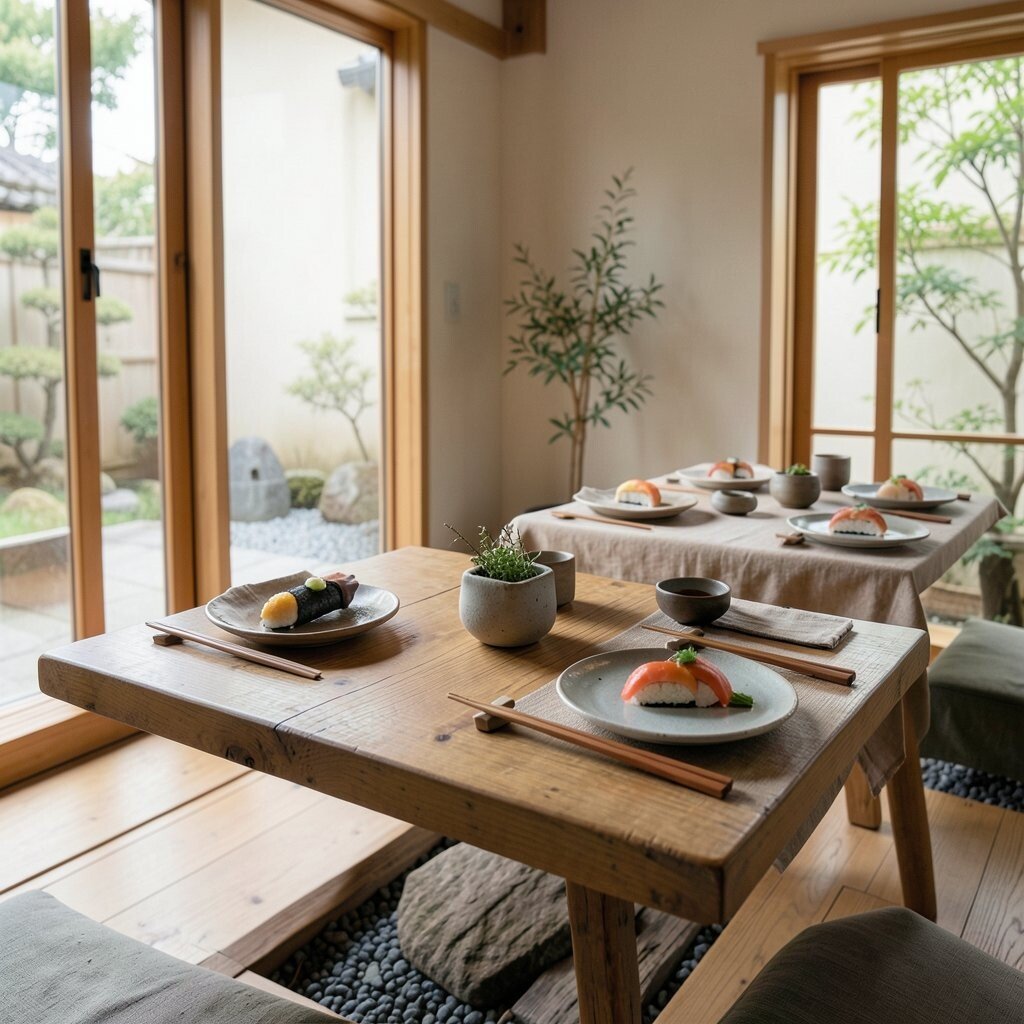
Simple table settings can make the whole room feel more peaceful. Linen napkins, ceramic plates, and wooden chopsticks all add to the Zen mood.
This style is useful because it keeps the focus on the food while still feeling thoughtful. It also makes tables easier to reset, which helps staff during busy hours. To keep costs balanced, mix a few special pieces with everyday items that still look high quality.
Choose textures that feel natural in the hand, like clay, bamboo, or stoneware. These details make meals feel more special without needing a lot of decoration. Guests often notice the care in small things, even if they cannot name them.
12. Branch and Stone Art Installations
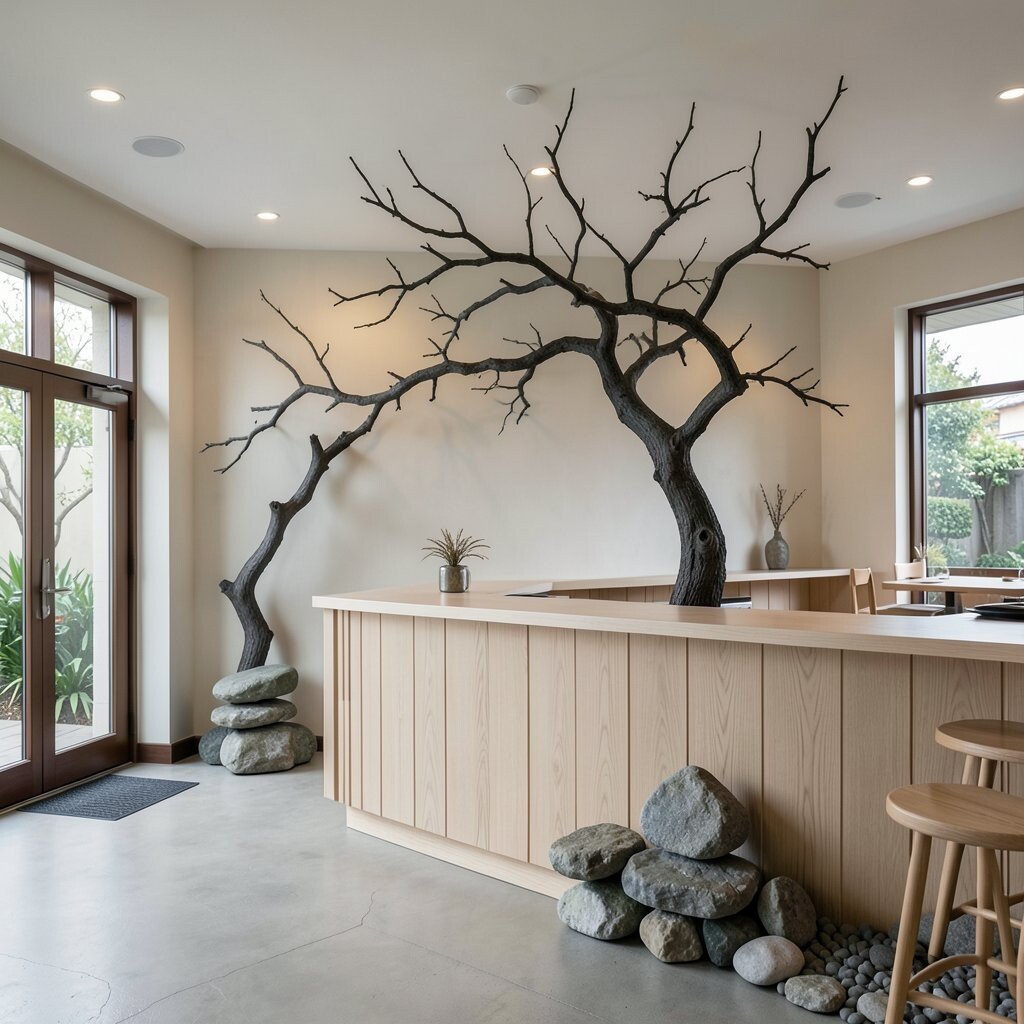
Large branch shapes or stone art pieces can give a sushi restaurant a strong visual story. They bring the feeling of a garden into the room in a bold but calm way.
This idea works well for restaurants that want a memorable centerpiece without adding clutter. A single sculptural branch above the bar or a stone arrangement near the entrance can make the space feel artistic. If the budget is tight, use lightweight resin or metal pieces that still look natural from afar.
Try matching the art with the restaurant’s color palette so it feels part of the design. Dark branches against pale walls can look dramatic, while pale wood pieces feel softer. Either way, the room gains a unique feature that helps guests remember it.
13. Hidden Storage for a Clean Look
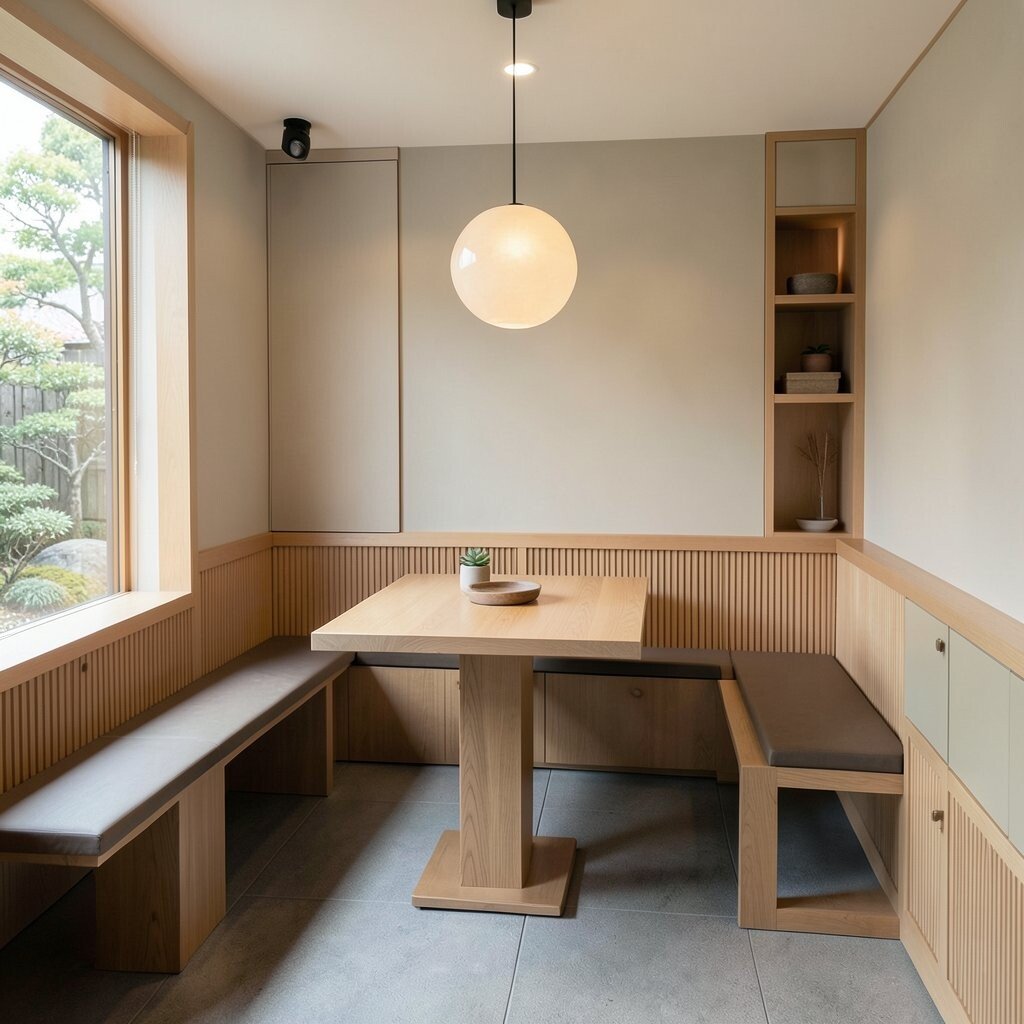
A Zen-inspired room feels best when clutter stays out of sight. Hidden storage helps the restaurant stay calm, neat, and easy to enjoy.
This idea is practical because it keeps menus, extra dishes, and supplies from crowding the dining area. Built-in benches, under-counter drawers, and closed shelving all help the room look polished. If full custom carpentry is too costly, use modular storage pieces that blend with the wall color.
Personalize the storage fronts with wood slats, soft paint, or simple handles that match the rest of the room. The goal is to make the storage disappear into the design. A tidy space often feels more expensive than it really is.
14. Garden-Inspired Ceiling Details
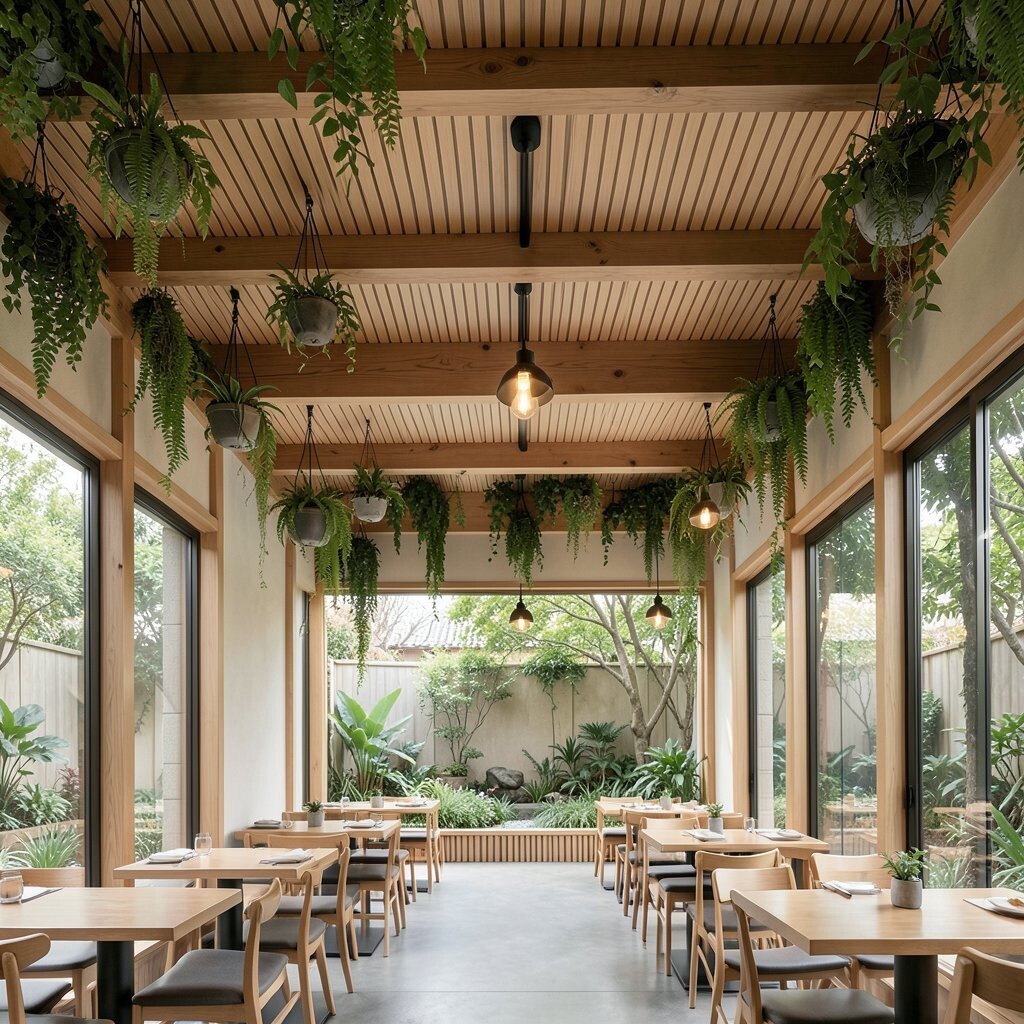
The ceiling can carry the Zen theme in a quiet but powerful way. Wood beams, hanging greenery, or soft slatted panels can make guests look up and smile.
This approach is unique because many restaurants focus only on walls and tables. A well-designed ceiling can make the room feel complete and more immersive. For a lower-cost version, use light wood strips or painted panels that suggest the same feeling without heavy construction.
Keep the design balanced so the ceiling adds interest without making the room feel busy. A few hanging lights or simple plant accents can be enough. This kind of detail can make the whole space feel more finished and memorable.
15. Quiet Color Layers in Green, Gray, and Wood
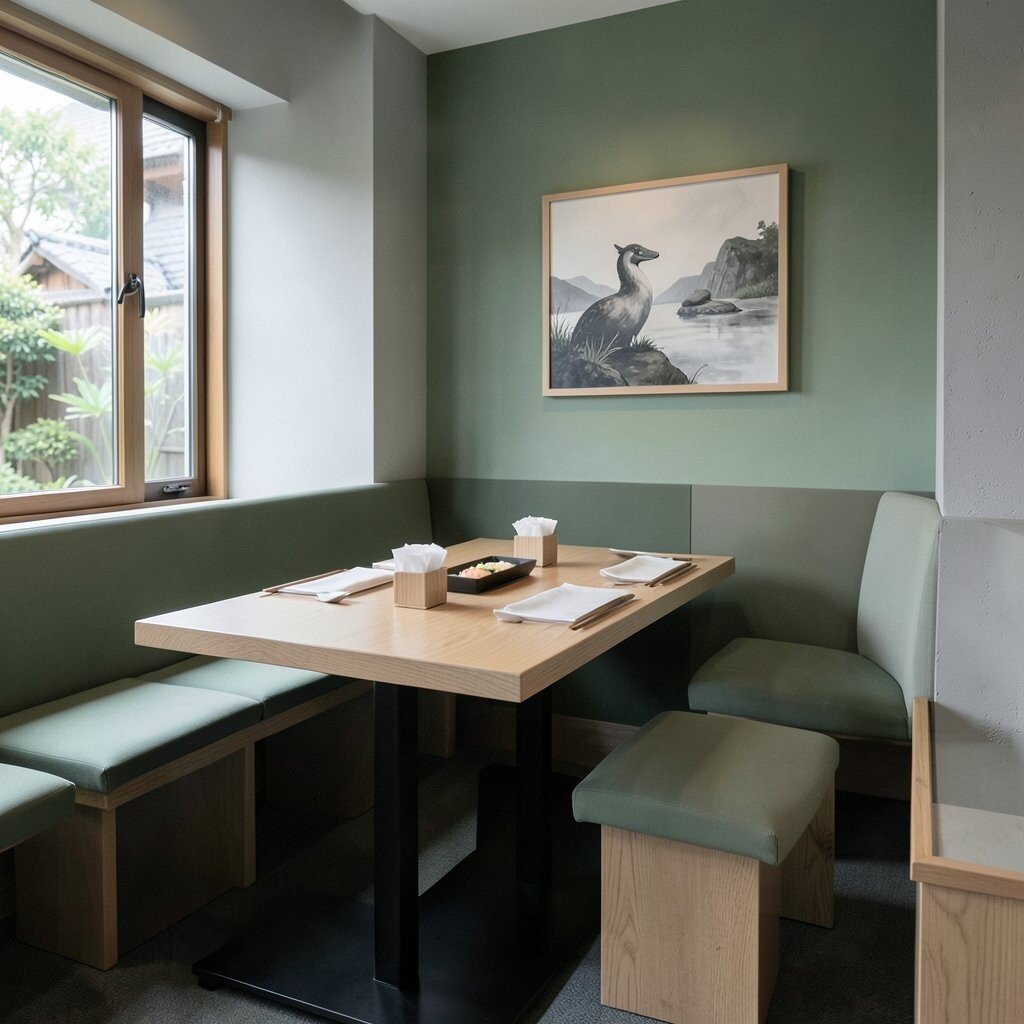
A soft color palette can set the mood before anyone notices the furniture. Gentle greens, warm grays, and natural wood tones work beautifully in a sushi restaurant.
This style feels calming because the colors echo a garden without being too loud. It also gives designers a lot of freedom to mix materials and shapes while keeping the room unified. To stay within budget, use paint and fabrics to create the look, then add a few key wood pieces for warmth.
You can personalize the palette by choosing cooler greens for a fresh feel or warmer tones for a cozy one. Accent pieces like napkin holders, art, and menu covers can carry the same colors. That makes the whole room feel planned and polished.
16. Open Views to a Small Courtyard or Green Nook
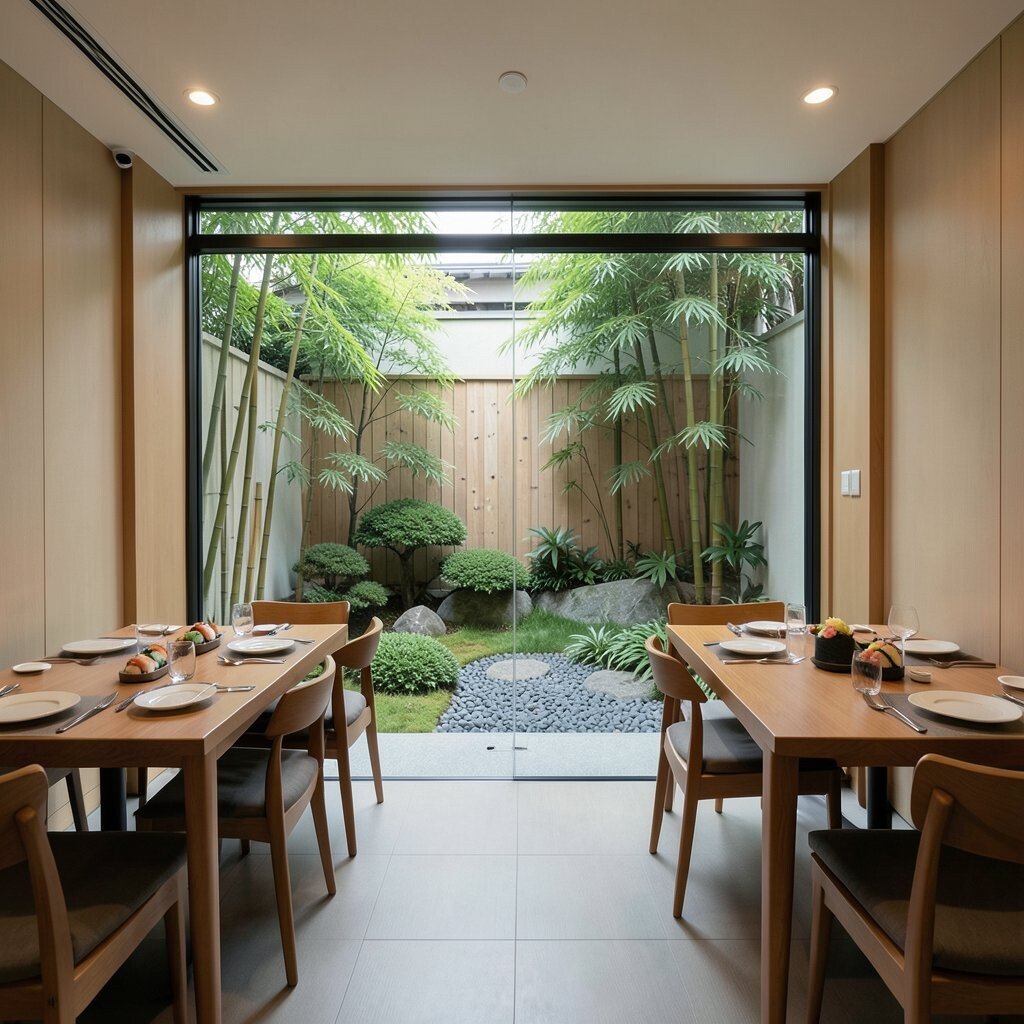
If the building allows it, a view into a tiny courtyard or green nook can make the restaurant feel peaceful and alive. Guests love having a little natural scene to rest their eyes on during a meal.
This idea is powerful because it brings real daylight and real plants into the dining experience. Even a narrow outdoor strip with stones, bamboo, and a few shaped shrubs can make a big impact. If outdoor space is limited, a glass wall with a planted display behind it can create a similar effect at a lower cost.
Keep the view simple so it feels restful instead of crowded. Add seating that faces the greenery for the best experience. A calm outlook like this can make the restaurant feel more premium without needing a large renovation.