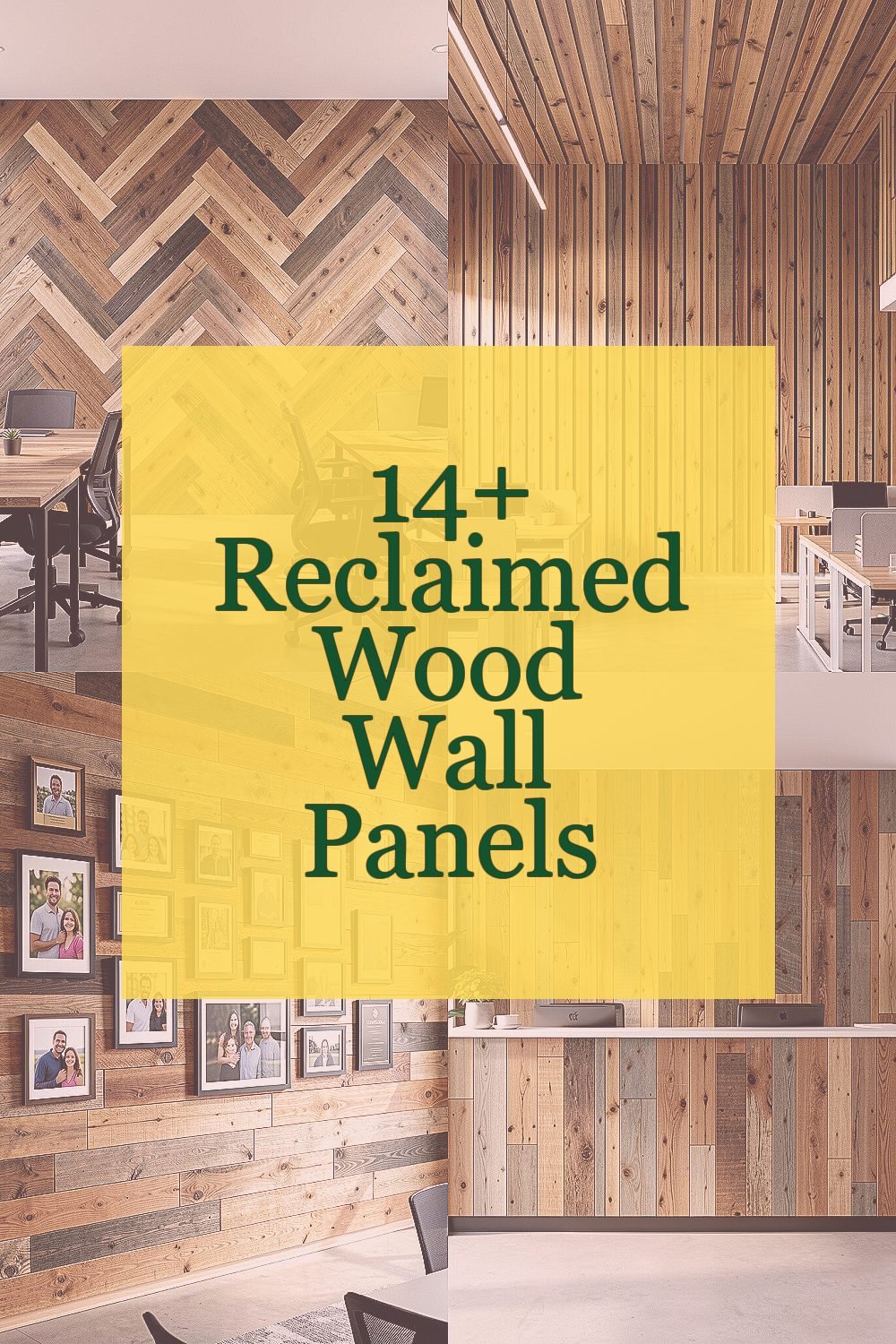
The right wall panel can change how an office feels the moment you walk in. Reclaimed wood brings warmth, character, and a sense of calm that people notice right away.
Below are modern, office-friendly ideas that use reclaimed wood in smart ways. Each one includes practical steps and styling notes you can actually use.
1. Herringbone Accent Wall With Mixed Board Widths
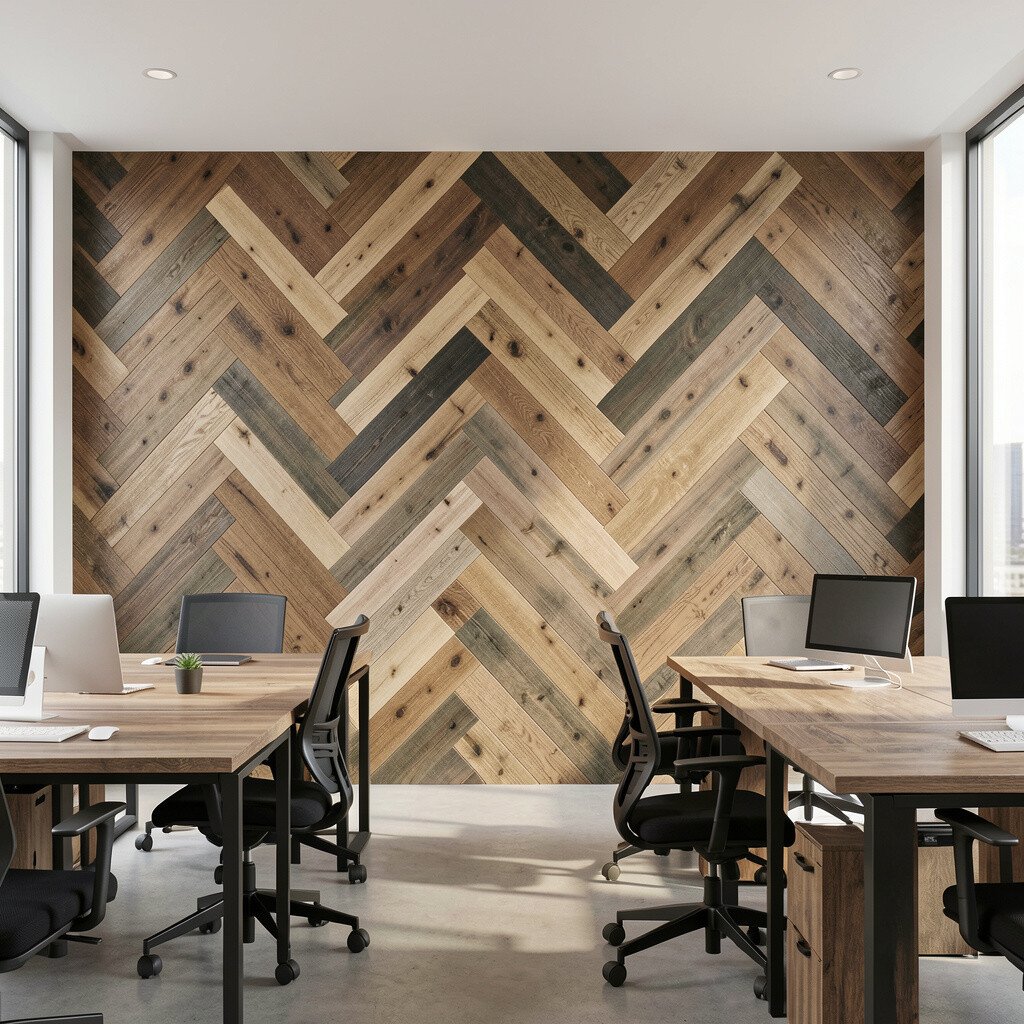
Picture a hallway wall where reclaimed planks meet in a sharp herringbone pattern. Warm brown tones catch daylight and make the space feel designed, not plain.
Choose boards with mixed widths for extra texture and movement, since reclaimed wood rarely looks identical from piece to piece. Keep the stain in the mid-range so the grain stays visible without getting too dark. If your office gets harsh overhead glare, add a satin finish so the wall stays soft to look at.
2. Vertical Slat Panels That Make Ceilings Feel Higher
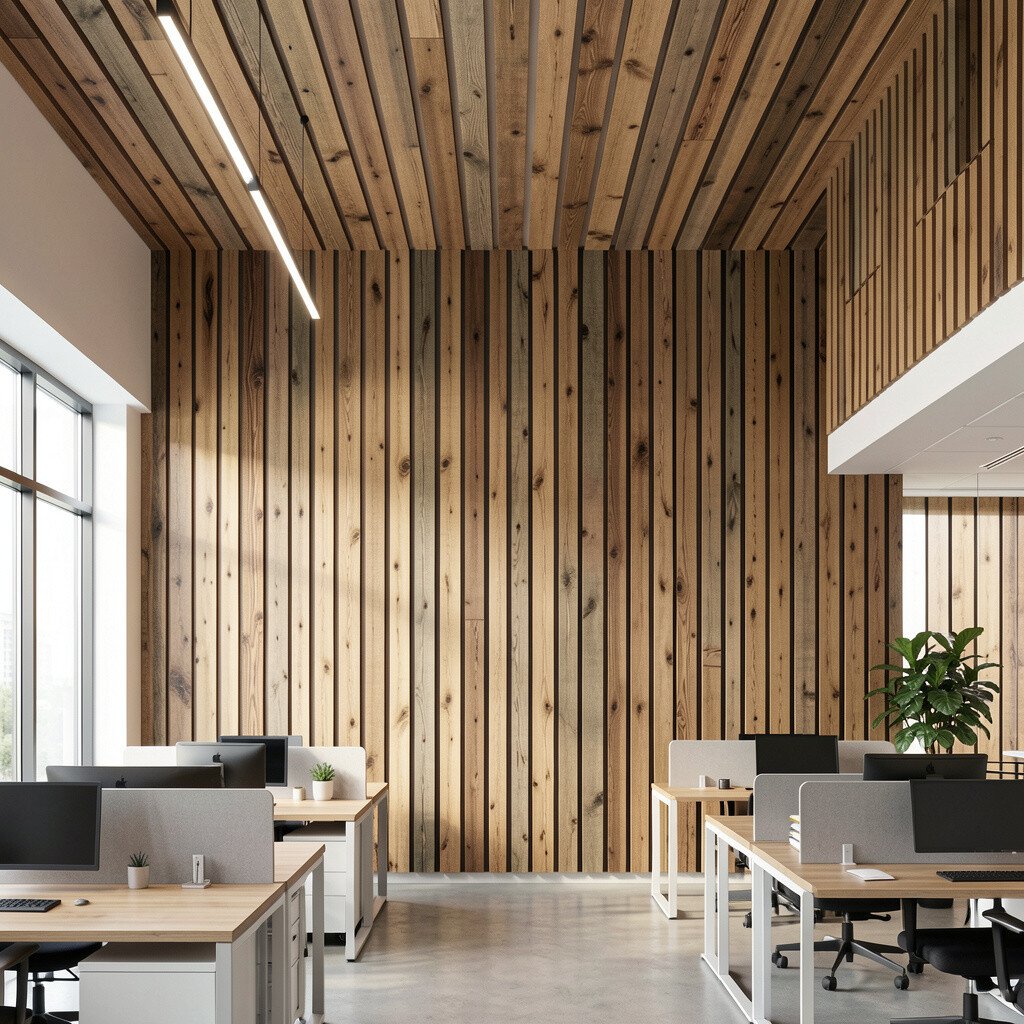
Vertical reclaimed wood slats can turn a flat wall into a clean, modern backdrop. The lines draw the eye upward, and suddenly the room feels taller.
Use consistent spacing between slats for a crisp look, then vary the wood tones slightly for that lived-in character. For practical comfort, install panels over sound-dampening backing so conversations feel less echoey. Pair the wall with light-colored desks and neutral chairs to keep the vibe fresh.
For personalization, add a narrow darker strip at eye level to frame artwork or a company logo. If you want a subtle brand touch, keep it only one section wide so the whole wall still feels airy.
3. Wide Plank Gallery Wall For Team Photos And Awards
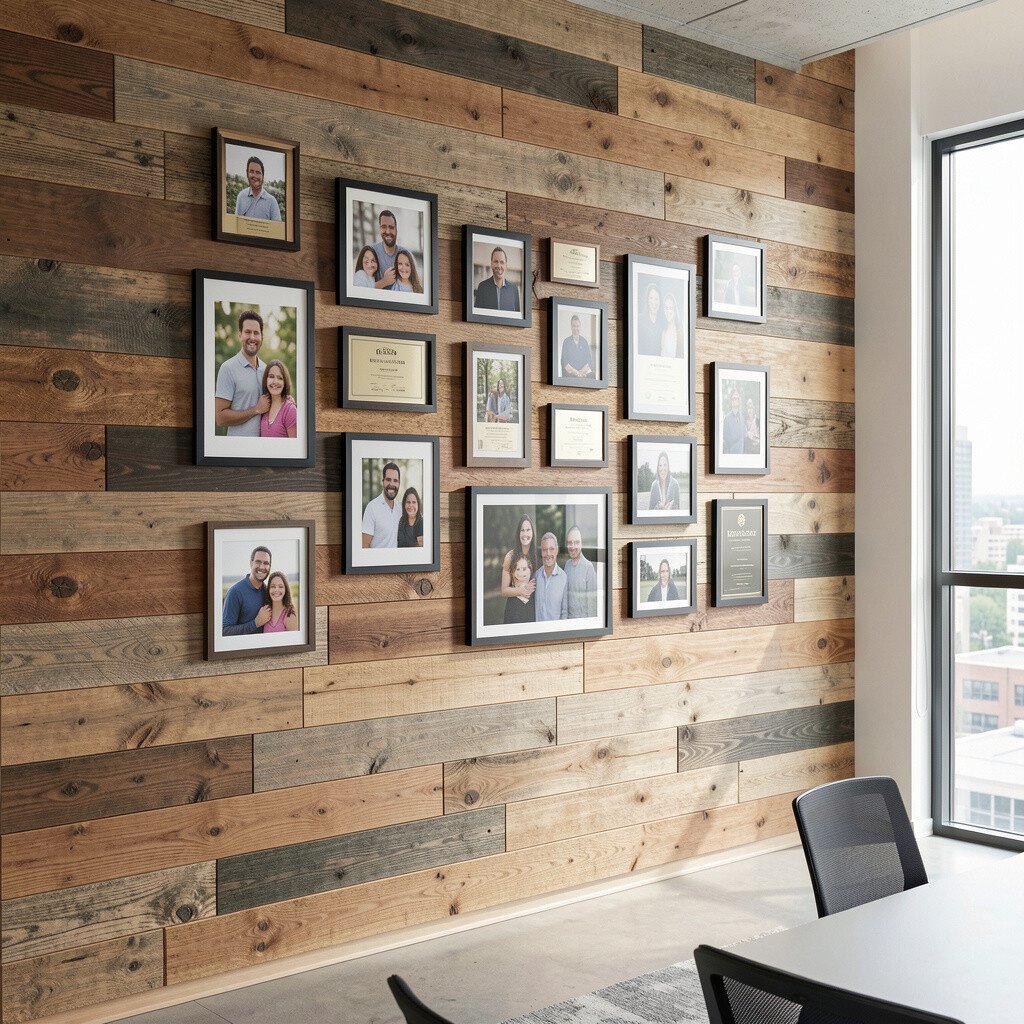
Wide reclaimed planks make a gallery wall feel grounded and warm. You get a big visual surface while still leaving room for photos, frames, and awards.
Mount the reclaimed panels first, then attach rails for frames so you can swap pieces as teams change. This is especially helpful in offices with new hires or seasonal campaigns. Keep hardware in brushed steel or matte black so the wood and metal look like they belong together.
To personalize without clutter, pick a single frame color and match mat tones across all displays. If you’re watching budget, start with a smaller section above a lounge chair, then expand later when you know the space plan.
In current office design, people want walls that feel personal but not busy, and reclaimed wood delivers that balance. With the right lighting, your photos look warmer and more inviting.
4. Reclaimed Wood Behind Reception For A Softer First Impression

A reception wall is the first thing clients notice, so it deserves something memorable. Reclaimed wood behind the desk creates a welcoming glow and adds depth right where people wait.
Go for a clean layout with evenly sized panels, and leave space for the desk signage. Seal the wood well so daily cleaning is easy, especially if your reception area gets fingerprints and dust. Add slim LED strip lighting at the top edge for a modern glow without harsh shadows.
If you’re cost-conscious, use reclaimed wood only on the main feature wall and pair the rest with paint or simple acoustic panels. That way you get the wow factor while keeping the overall spend under control.
5. Corner Wrap Panels For Modern Depth And Flow
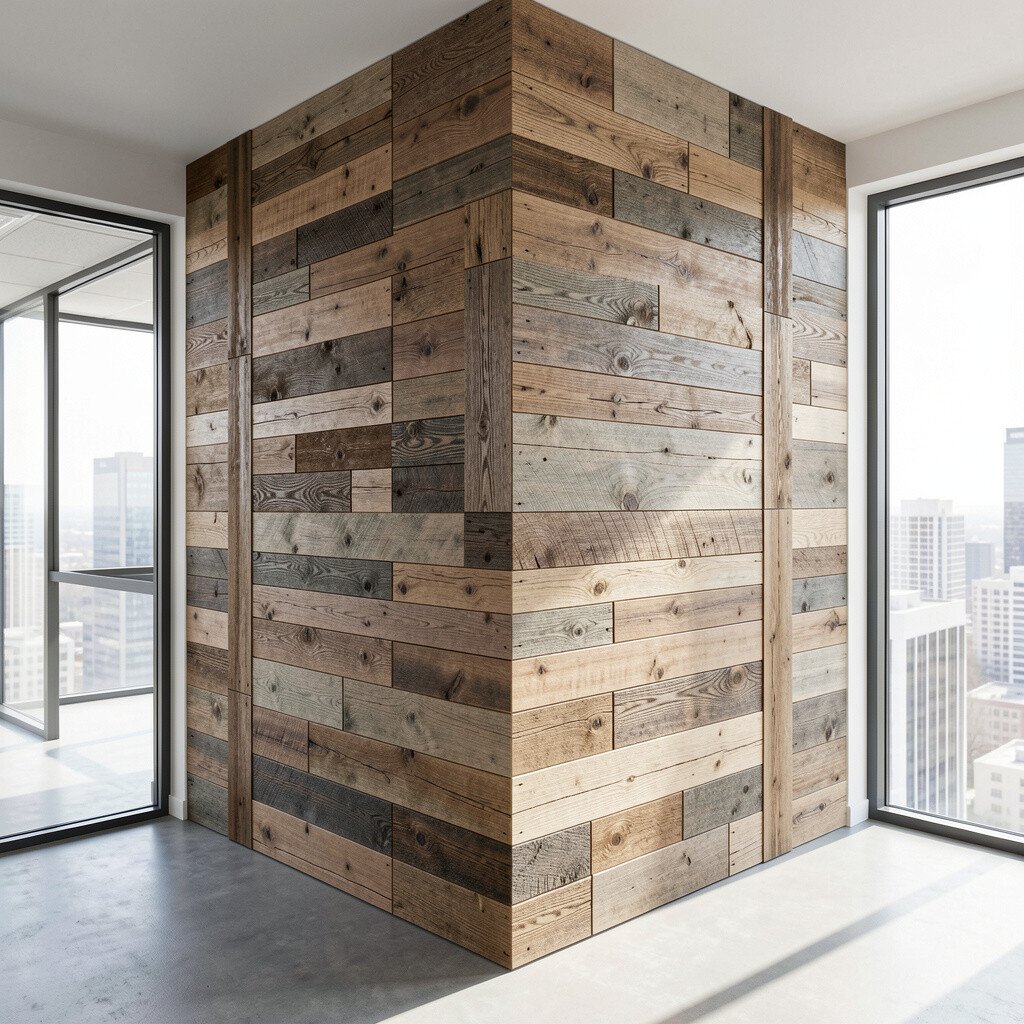
Corner wrap reclaimed wood panels can make an office feel bigger and more intentional. When the wood continues around the edge, light bounces and the space gains depth.
Use panels long enough to wrap from one wall to the next, or plan for tight seams at the corner. Pre-check your straight edges with a level so the transition looks crisp rather than accidental. This idea works especially well in open-plan offices where people pass by the same visual anchor all day.
For personalization, keep the panel finish slightly lighter than your furniture so the wood doesn’t compete with seating tones. Add a matching wood ledge for plants or a small rotating display of company milestones.
6. Reclaimed Wood And Whiteboard Combo Wall
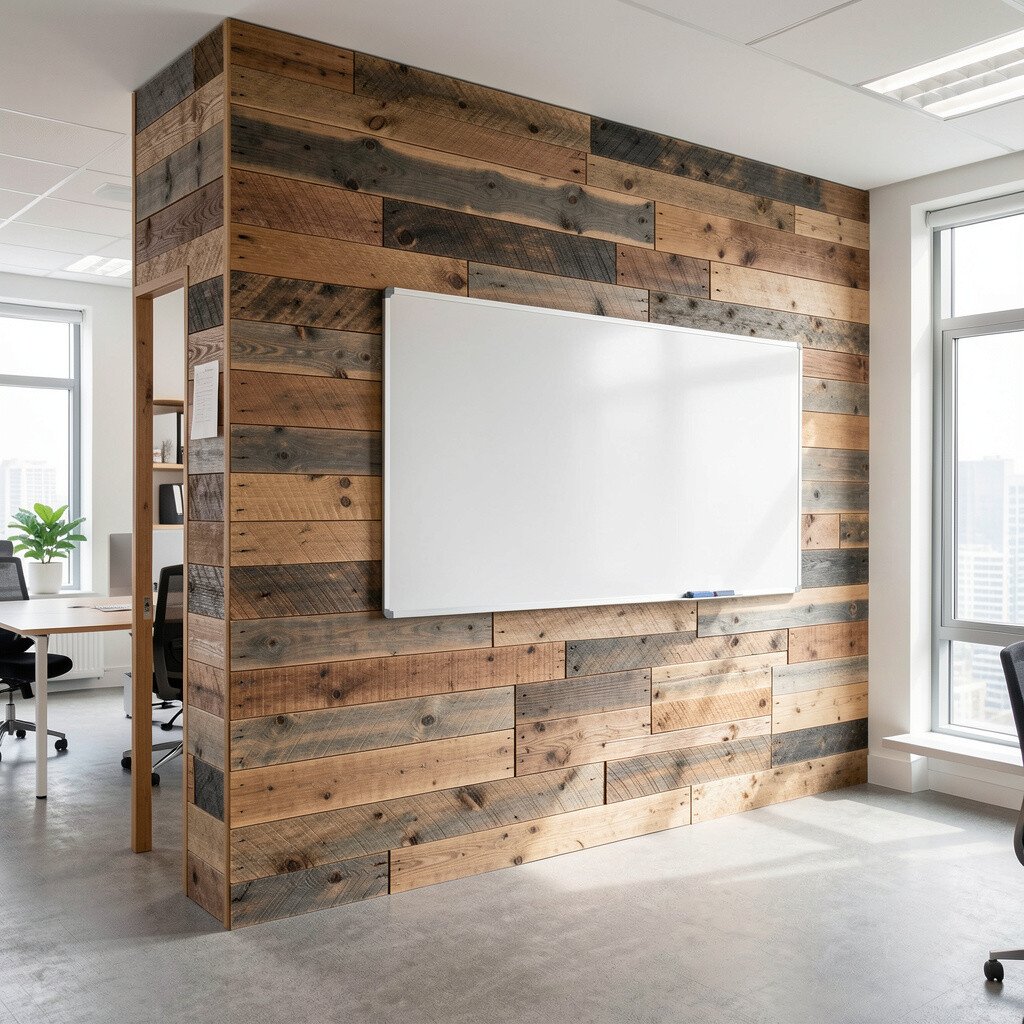
Think of a functional wall where brainstorming meets beautiful texture. Reclaimed wood panels can form the frame around whiteboards so planning stays organized and the room still looks stylish.
Choose a reclaimed wood color that contrasts gently with the marker surface, like honey brown next to clean white boards. Use durable backing behind the panels so you can mount accessories securely without loosening over time. This setup is popular in modern offices because it blends creativity with structure.
If you like a tidy look, hide cable routing inside the wall backing for any wall-mounted screens. For cost, compare buying reclaimed panels versus using reclaimed boards and assembling your own frame system for a similar look.
7. Weathered Driftwood Finish For A Calm Creative Lounge
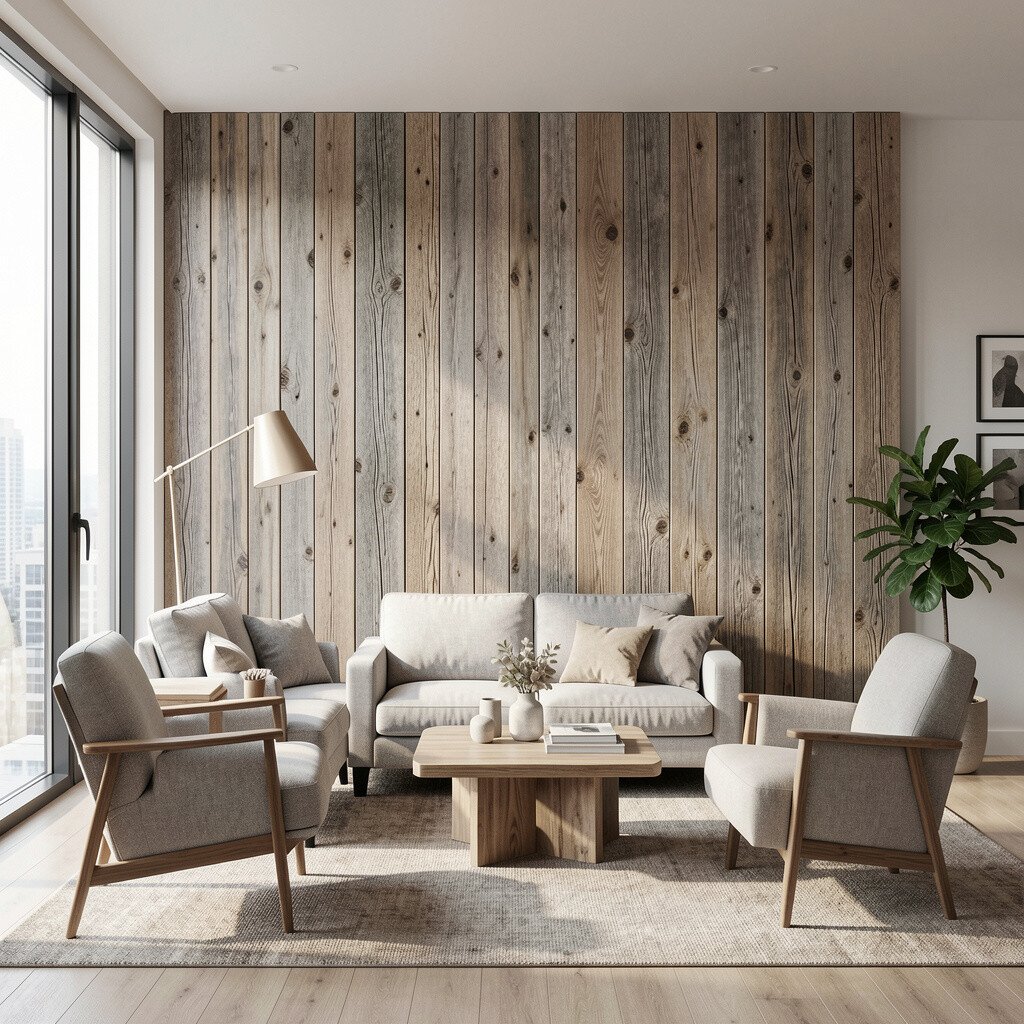
Some reclaimed wood already carries a salty, driftwood vibe that feels instantly relaxing. When you match it with soft textiles, the lounge area feels like a quiet retreat.
Look for pieces with gentle gray tones and uneven edges, then lightly sand only what you need for safety and comfort. Use a clear matte sealer so the wood stays airy instead of shiny. Pair the wall with warm lamps, light rugs, and seating in beige or muted blue for a friendly feel.
For personalization, add a row of small hooks or narrow shelves for books, notebooks, or a shared sketch kit. This is a practical way to make the space usable, not just pretty.
8. Paneling Over Acoustic Backing For Lower Office Noise
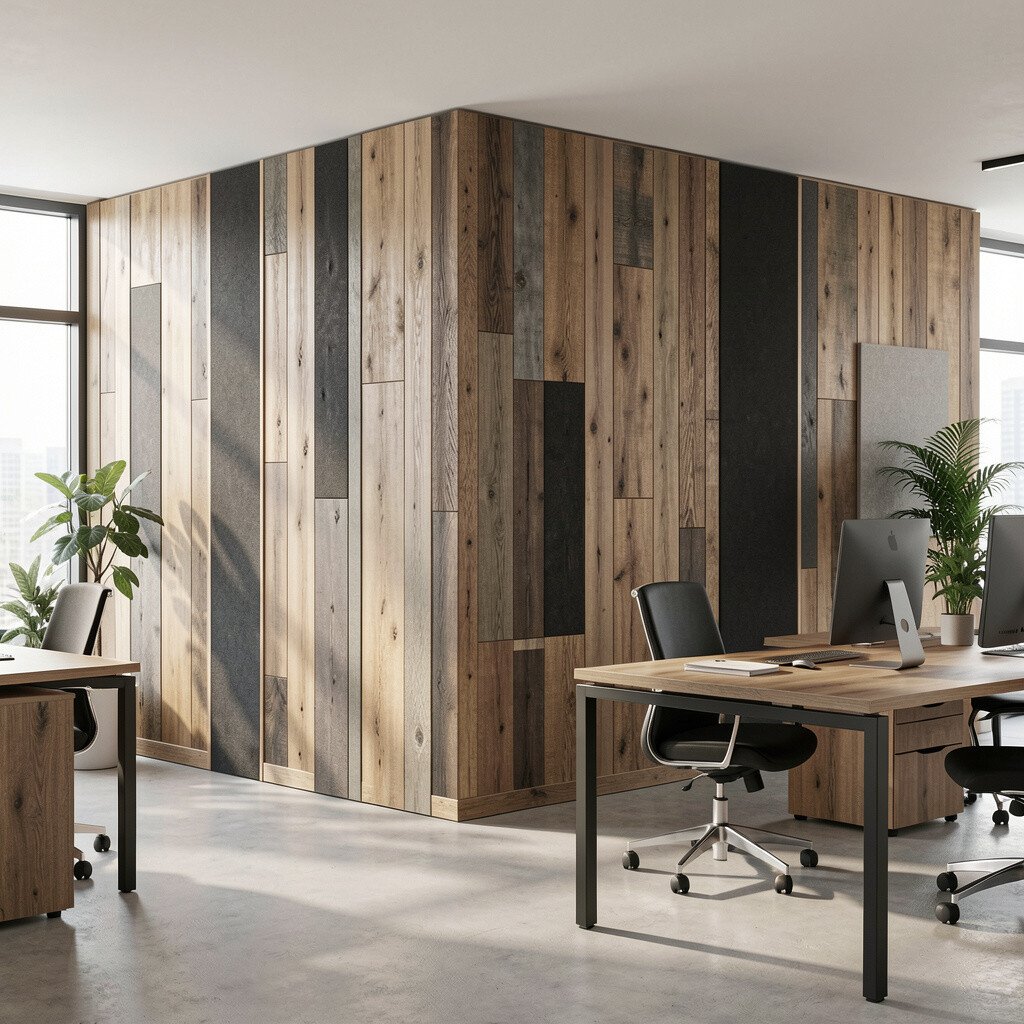
Reclaimed wood can do more than look good, especially when paired with acoustic panels behind it. The result feels cozy and helps conversations stay private.
Use sound-dampening backing, then mount the reclaimed wood on top so the wall still has a natural texture. This is a great choice for meeting rooms, focus corners, or busy touchdown spaces near the printer. Finish the wood with a durable topcoat so it can handle daily wear.
To keep the design modern, use straight-lined panel layouts and avoid overly ornate patterns. Add simple metal frames for wall art so the overall look stays clean.
If you’re estimating costs, consider that acoustic backing may be an extra purchase, but it can reduce the need for separate noise-control products. That mix often ends up being a smart long-term value.
9. Scandinavian-Style Light Wood Panels With Black Accents
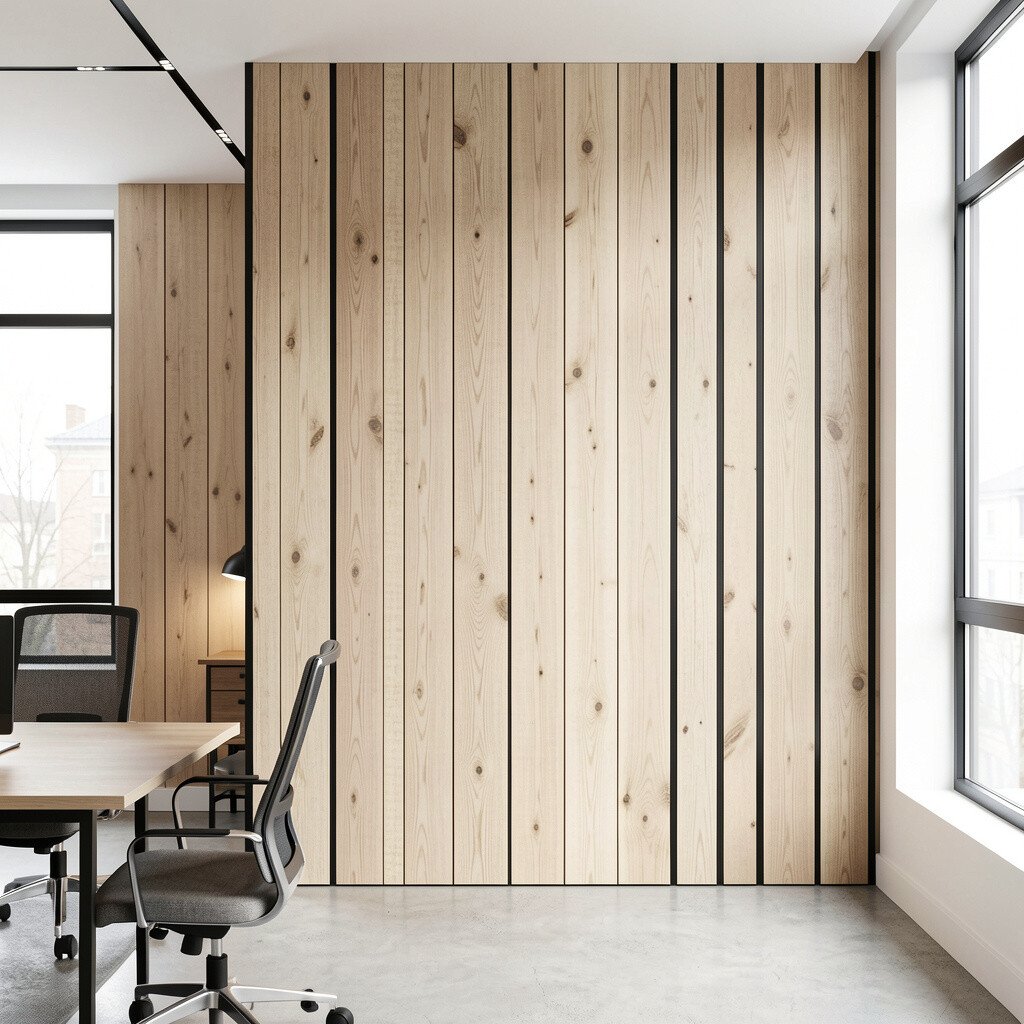
Light reclaimed wood panels create a crisp, Scandinavian feel that suits modern offices. You get visible grain without the heaviness that darker finishes can bring.
Choose a reclaimed source that has naturally pale tones or use a gentle whitewash effect to even out color differences. Pair the panels with black accents like slim shelves, light fixtures, and cable covers for a clean contrast. This style stays on-trend because it looks bright and organized while still feeling human.
For practical installation, keep seams tight but don’t force perfect matching since reclaimed wood is supposed to look real. Seal the surface so it cleans easily when hands and bags brush the wall.
10. Wood Panel Slabs Framing A Large Window Or Door
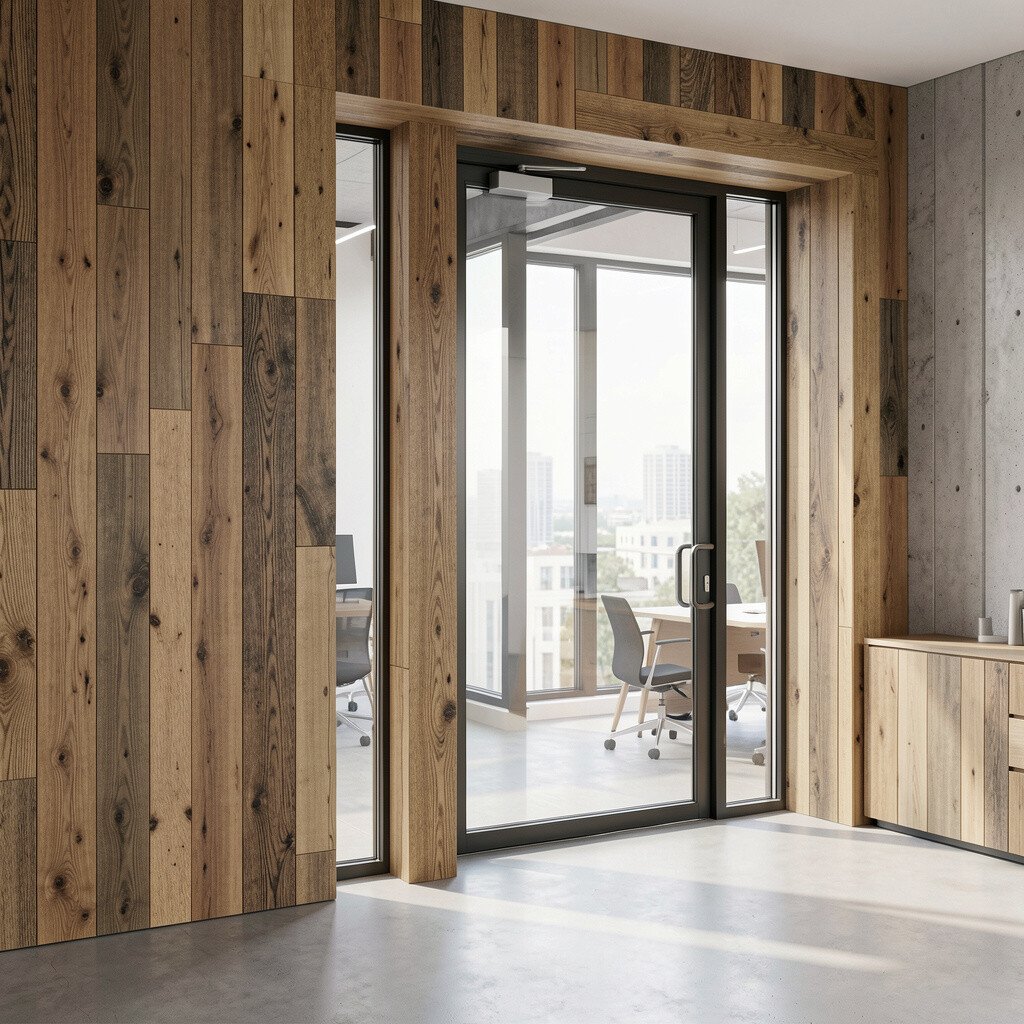
A reclaimed wood frame around a window or door can make that architectural feature feel intentional. The wood adds warmth where a room might otherwise feel cold or too open.
Use thicker reclaimed slabs as a border and keep the interior area bright with paint or glass. This keeps the space feeling modern while letting the wood be the star. For personalization, add a small ledge beneath the window frame for plants or a decorative tray.
When you think about cost, border frames are often more budget-friendly than covering a full wall. You still get a high-impact look, and you can spend more on sealing and hardware where it matters most.
11. Ombré Color Panels For A Gradual Visual Fade
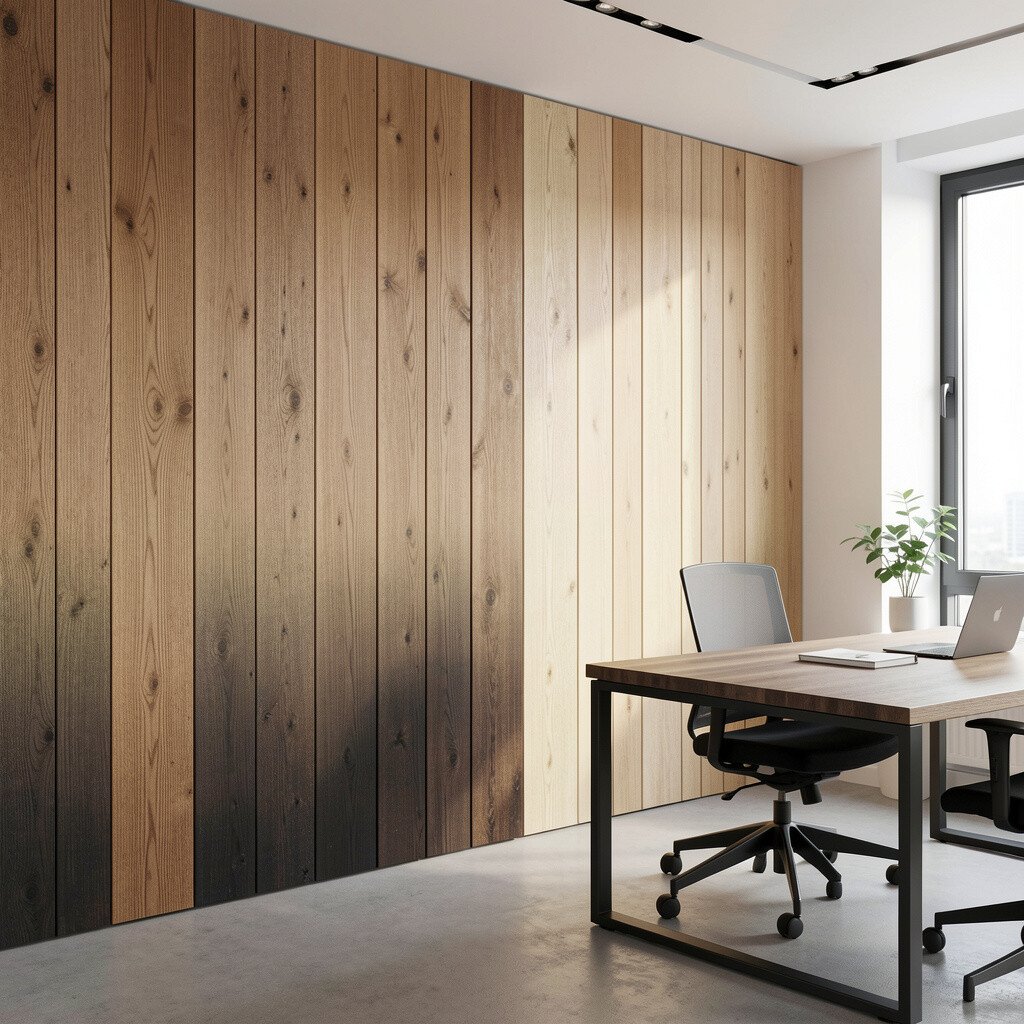
Ombré reclaimed wood panels can create a soft visual fade that feels stylish and calm. Instead of a harsh block of color, the tones shift slowly across the wall.
Start with lighter wood at one end and use deeper stained pieces at the other, then blend gradually by selecting boards from different ages or finishes. Keep your hardware minimal so the gradient stays the focus. This kind of effect fits today’s trend toward gentle, artistic interior accents.
To make it practical, apply the same topcoat to every piece so the sheen matches. If the office receives strong sunlight, choose a UV-resistant sealer to protect the variation over time.
Personalize the idea by aligning the light end with a key work zone like a desk wall so the room feels energizing where people focus.
12. Reclaimed Wood Panel Tread Texture For A Statement Wall
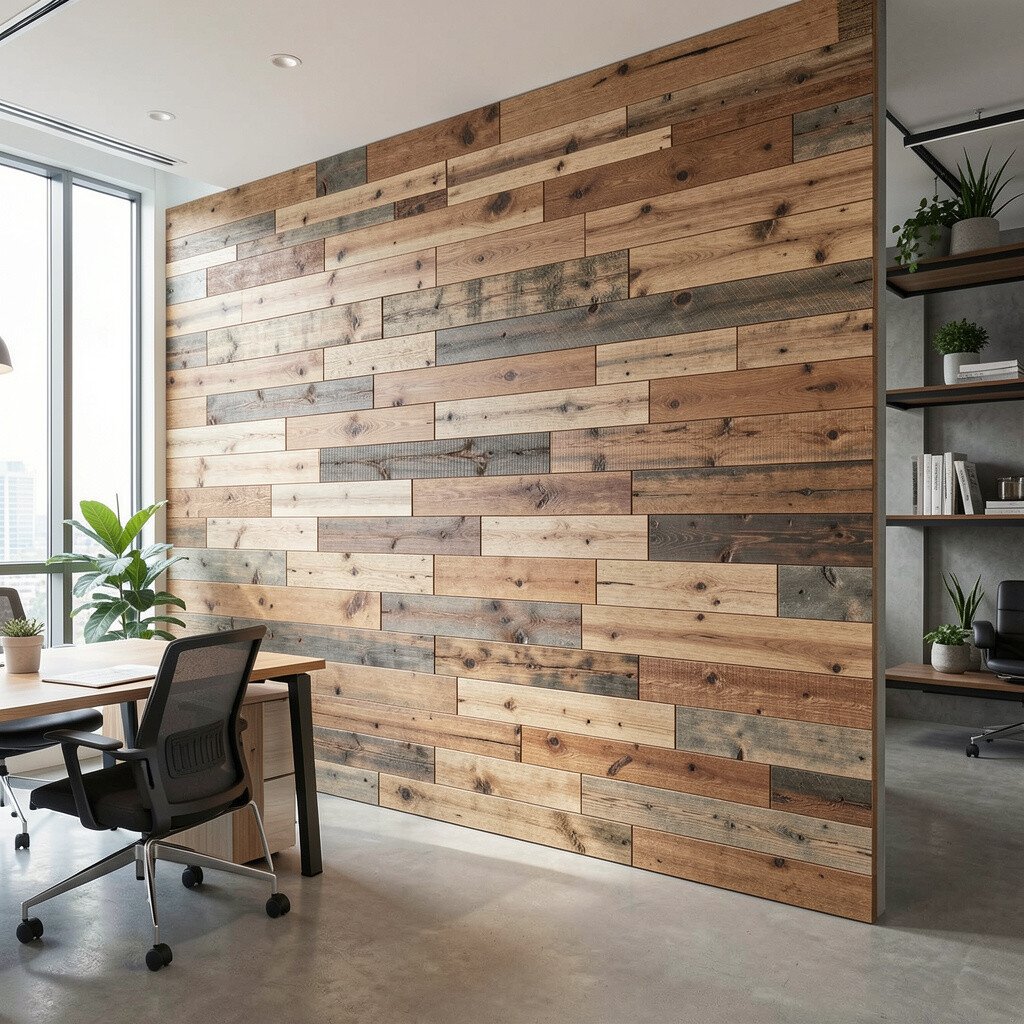
Some reclaimed boards have natural texture that looks almost sculpted, and that can become a statement wall. When you keep the surface slightly rough, the room gains a tactile, artistic feel.
Rather than sanding everything flat, soften sharp corners and remove only loose debris so the texture stays bold. Seal it with a matte finish to make the wall look modern, not rustic. This approach is unique because it lets the wood’s original character lead the design.
For a modern office look, pair the wall with smooth surfaces like glass, metal, and polished concrete. If you worry about upkeep, test a small section first with your preferred cleaner so you know how the finish handles daily use.
13. Minimal Panel Grid With One Reclaimed Feature Stripe
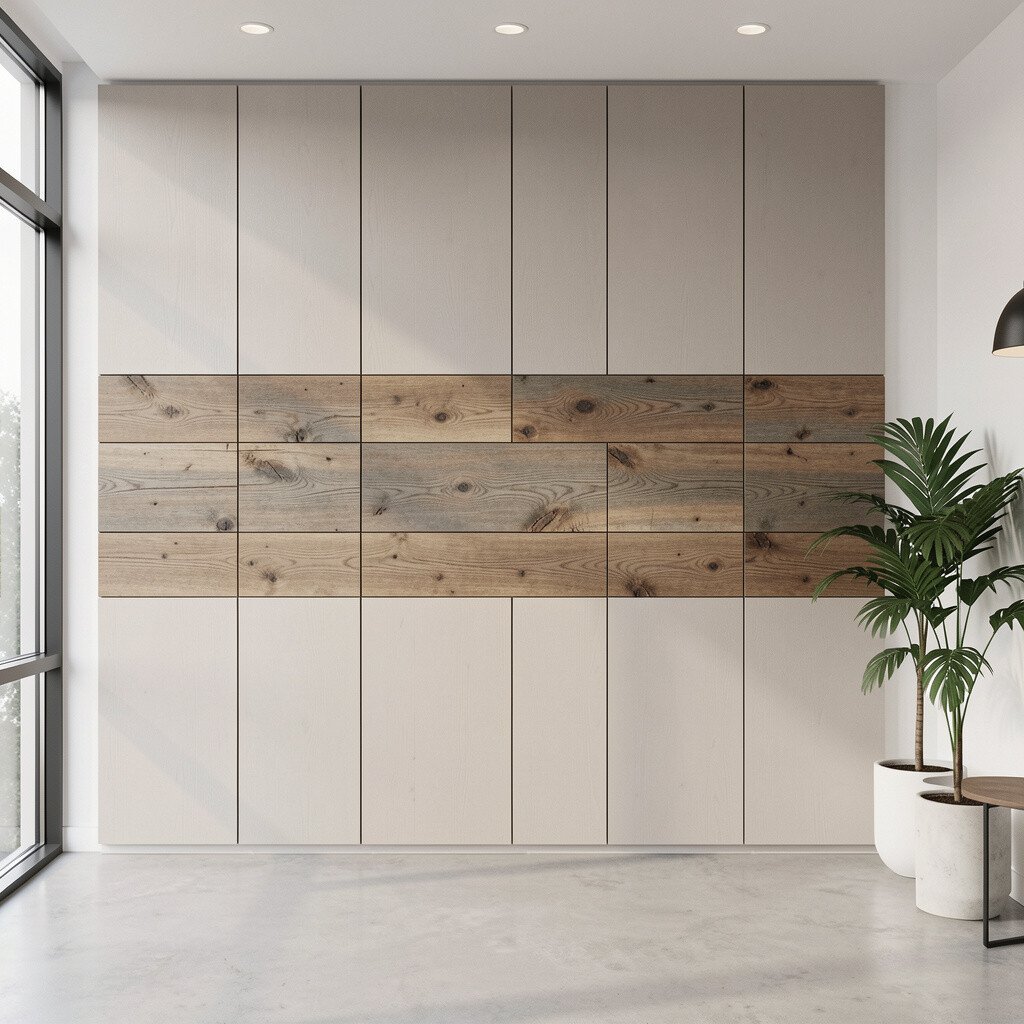
If your office needs a clean, calm look, a minimal grid style can do the job. Add reclaimed wood only as a single feature stripe, then keep the rest simple.
Use painted wall panels or acoustic boards in a light neutral, and install reclaimed wood in a horizontal or vertical band. This setup keeps the design modern and reduces materials, which helps with cost. It also makes it easy to personalize by changing the art, shelves, or lighting along that one strip over time.
Choose reclaimed wood with consistent grain direction so the stripe feels orderly. Add slim LED spotlights aimed at the wood so the texture stands out even on cloudy days.
14. Reclaimed Wood Moody Wall For A Focus Room

A focus room with reclaimed wood can feel like a quiet studio where ideas settle in. The deeper tones create privacy, and people tend to speak more gently inside.
Pick darker reclaimed boards or apply a stain that keeps the grain visible while leaning toward rich espresso shades. Pair the wall with light flooring and warm lighting so the room doesn’t feel too heavy. This is a current trend in many offices, where quiet zones are treated like important spaces.
To keep it actionable, plan for airflow and ventilation so the room feels comfortable during long meetings. Add a clear, durable topcoat because focus rooms often get more touching from people taking notes, moving chairs, and adjusting devices.
15. Mix Reclaimed Wood With Concrete And Steel For Industrial Modern
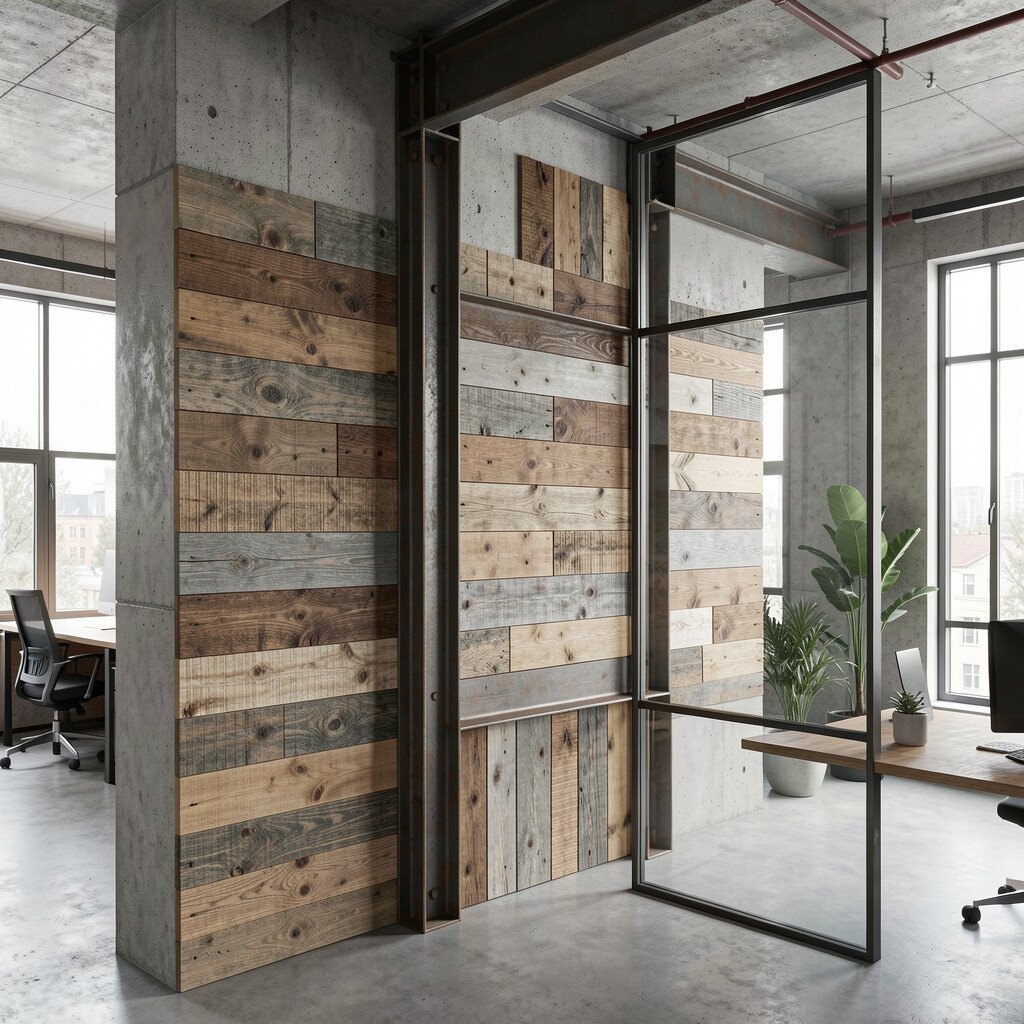
Industrial modern offices look especially good with reclaimed wood panels because the materials balance each other. The wood warms up concrete and steel, making the room feel less cold and more welcoming.
Try a design where reclaimed wood panels sit behind lounge seating or form a backdrop for a project board. Keep concrete-like finishes on the floor and choose steel accents in lighting and shelving for cohesion. This style remains popular because it blends authenticity with clean lines.
For uniqueness, mix reclaimed wood finishes in two tones rather than trying to match everything. You can also personalize by adding a metal rail system for tools, sample boards, or rotating product displays.
When thinking about costs, compare reclaimed wood panel pricing with buying smaller salvaged pieces and building a framed wall section. Either way, focus your budget on proper sealing and secure mounting so the result stays beautiful for years.