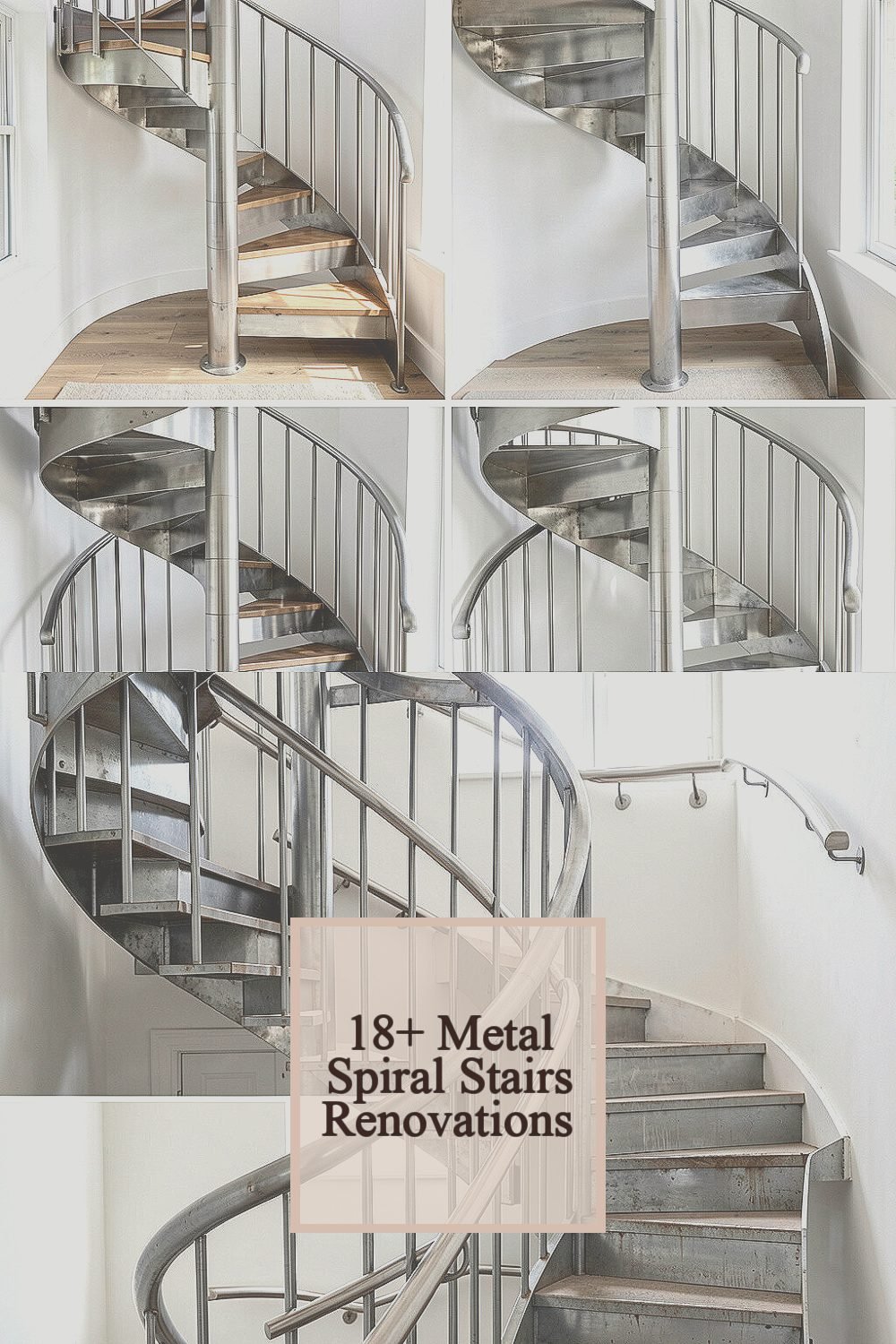
The first time you notice a spiral stair in a home, it feels like a quiet centerpiece. After a renovation, it can feel like it was custom-made just for you.
Metal spiral stairs can be stylish, practical, and surprisingly personal when you upgrade the details. These ideas focus on what people change, what it looks like after, and what you can do to make it fit your space.
1. Swap Worn Finishes for a Fresh Metal Look
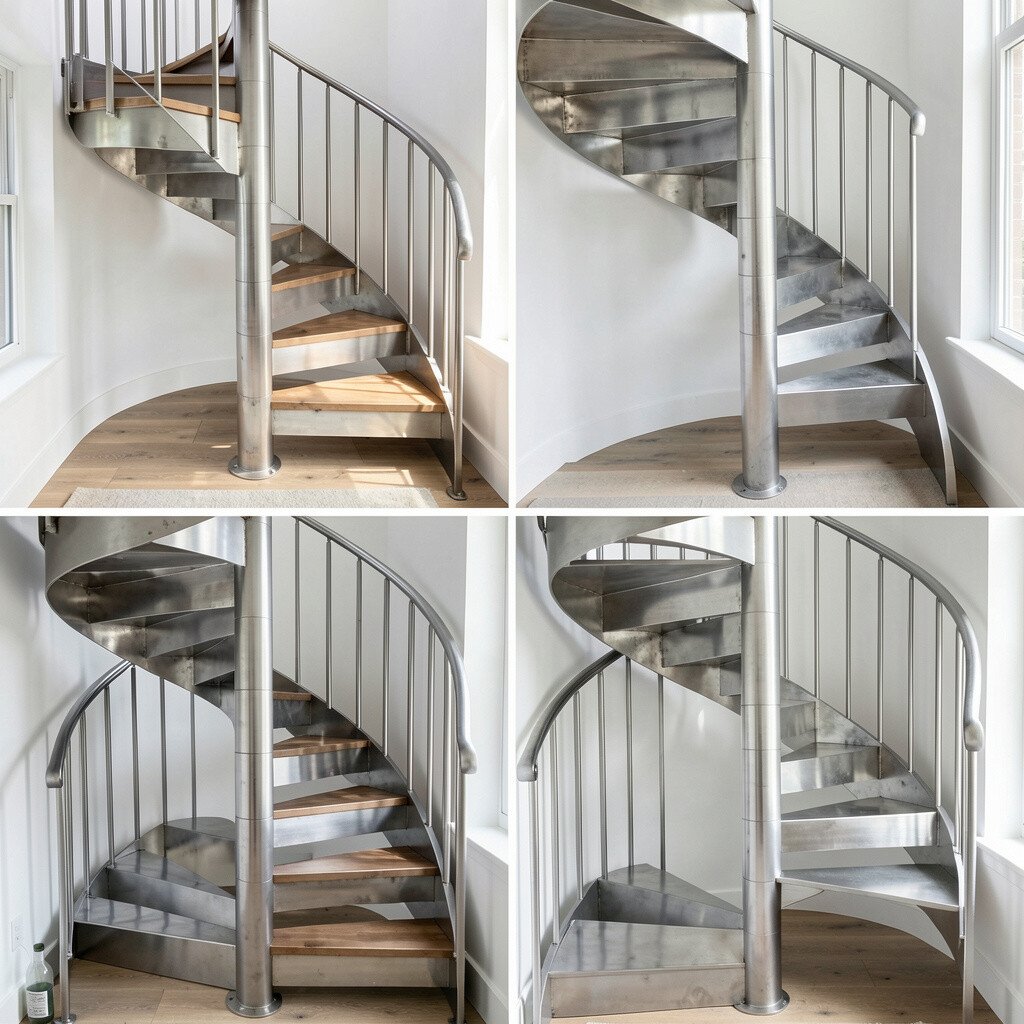
Before, a metal spiral stair can look dull, scratched, or uneven in color. After, a clean finish makes the whole stair feel sharper and more cared for.
You can choose powder coating for a smooth, even layer that resists chips and fading. A matte black finish often looks modern, while satin steel tones can feel warmer and less harsh. When you pick a color, think about how it matches the nearby wall color, railings, and light fixtures so the stair blends in nicely instead of looking random.
2. Add a New Handrail for a Safer, More Comfortable Grip
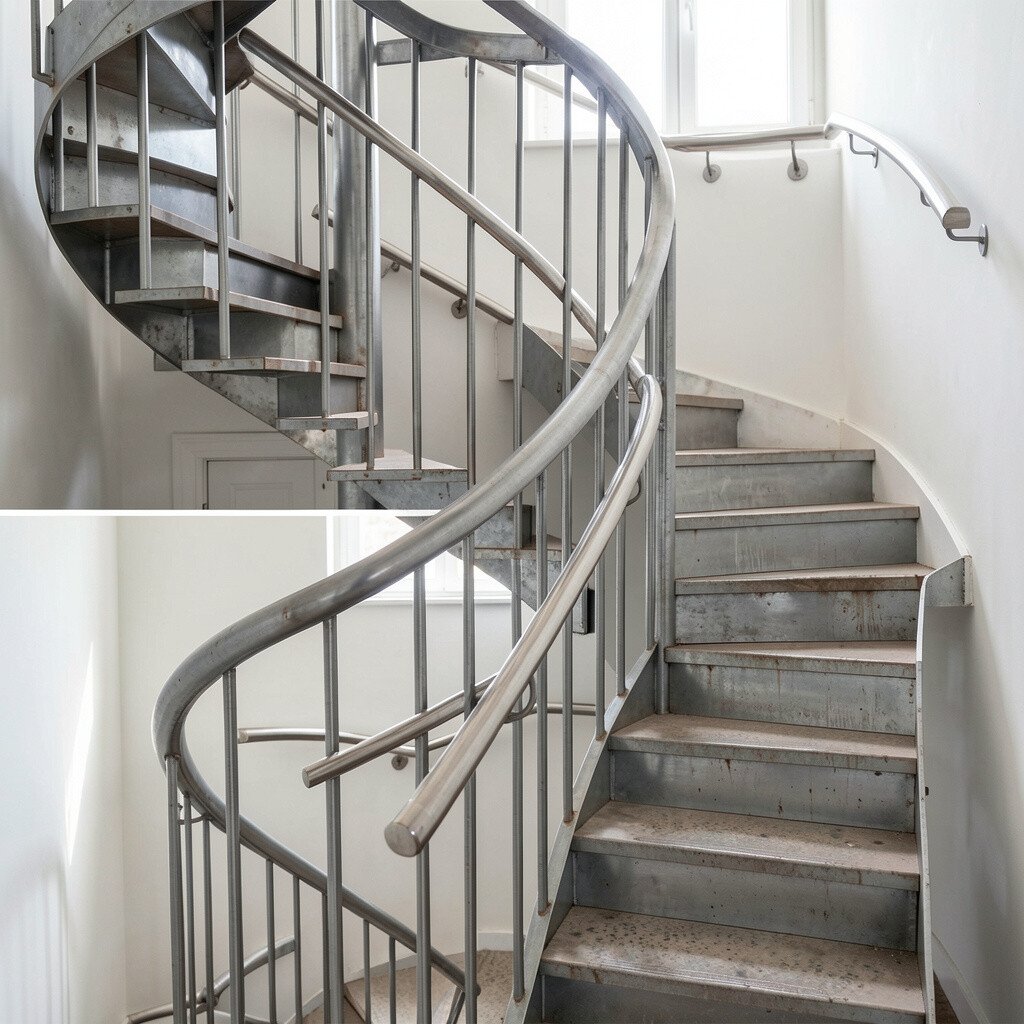
Before renovations, the handrail may feel too small, slick, or uncomfortable in real use. After upgrades, it can feel steady and easier to hold, especially when carrying items.
Consider upgrading the handrail to a comfortable diameter and adding a texture that doesn’t feel slippery. You can wrap it with durable grip material or choose a rail with an inviting finish. Many homeowners also like slightly rounded edges, because they reduce snagging on clothing and look softer than sharp metal lines.
For a practical plan, measure the current grip space and test what feels good in your hand. If you have kids or frequent visitors, prioritize smooth edges and consistent height. This kind of change can be a major comfort boost without changing the stair’s footprint.
3. Upgrade Steps with Anti-Slip Treads and Better Traction
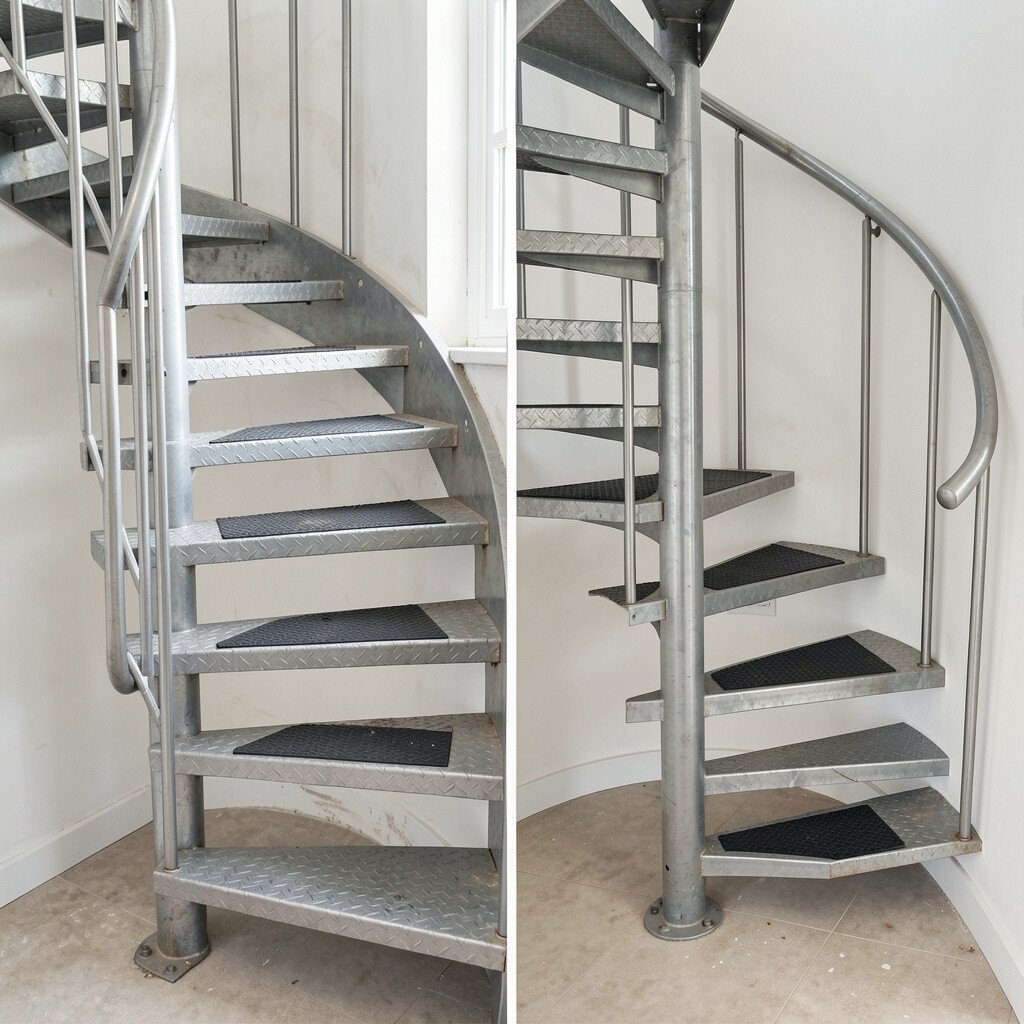
Some metal stair steps look sleek, but they can become slick with dust, shoe scuffs, or light spills. Renovating the treads helps the stair feel secure every day.
You can add anti-slip strips, grip coating, or replacement treads that create more friction underfoot. People often love how the stair still looks clean while feeling more dependable. If you choose a clear anti-slip finish, the metal color remains visible and the stair keeps its original vibe.
When you decide on materials, think about foot traffic and how often the stair gets wet near entryways. A stair used daily may need stronger traction, while a decorative stair can use a lighter approach. Pick a solution that won’t peel easily and that matches your cleaning habits.
4. Replace Damaged Spindles for a Cleaner, Custom Pattern
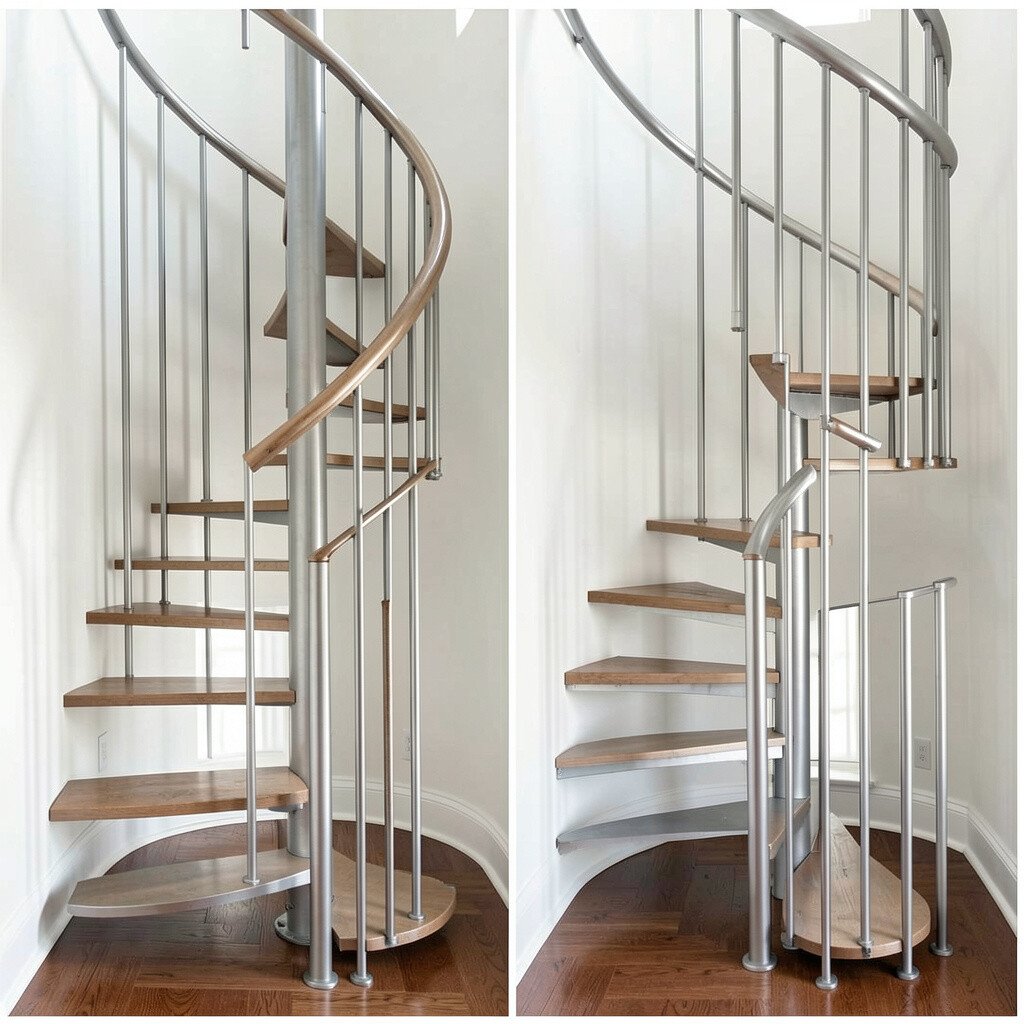
Before, bent spindles or mismatched sections can make a spiral stair look unfinished. After replacing the damaged parts, the stair immediately looks more balanced and intentional.
You can swap to spindles with a more consistent spacing and a pattern that suits your home’s style. Some designs feel airy and light, while others look bold and graphic. If you want personality, choose a spindle finish that contrasts gently with the main rail, like warm bronze against cool steel.
5. Match the Stair to Your Lighting for a Stronger “After” Glow
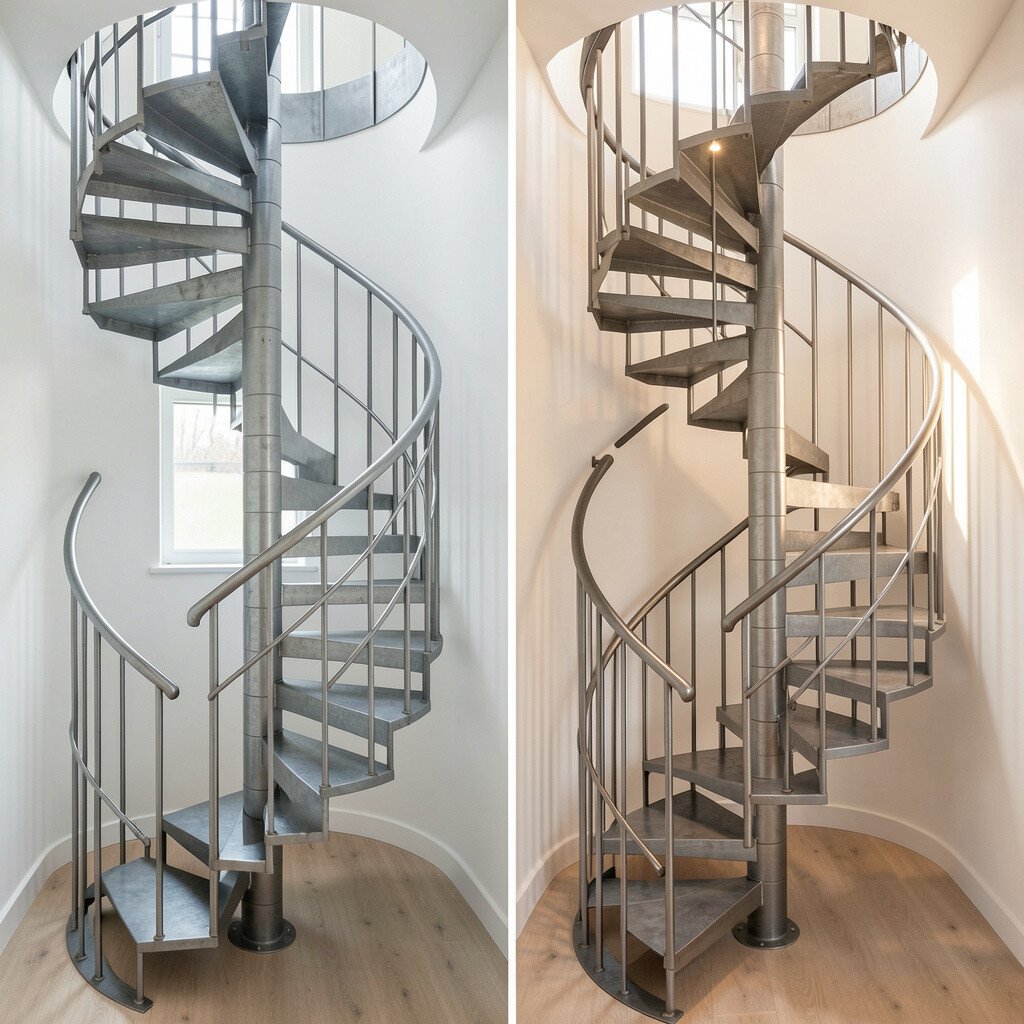
Before renovation, the stair might look good in daylight but fade under dim lighting. After you adjust lighting, the metal details can shine in a way that feels cozy and intentional.
Try adding step lights, wall-wash fixtures, or small uplights aimed at the center pole. Soft lighting reduces shadows on steps and makes the spiral shape look like a design feature. You can also use smart bulbs so you can change brightness for evenings, parties, or calm nights.
To keep the look tidy, place lights so wires stay hidden or run along existing channels. If you already have recessed lighting, aligning the beam with the stair can make a big difference. This improvement often costs less than replacing the stair itself, yet it changes the whole mood.
6. Install a Rail Extension That Brings the Stairline to Life
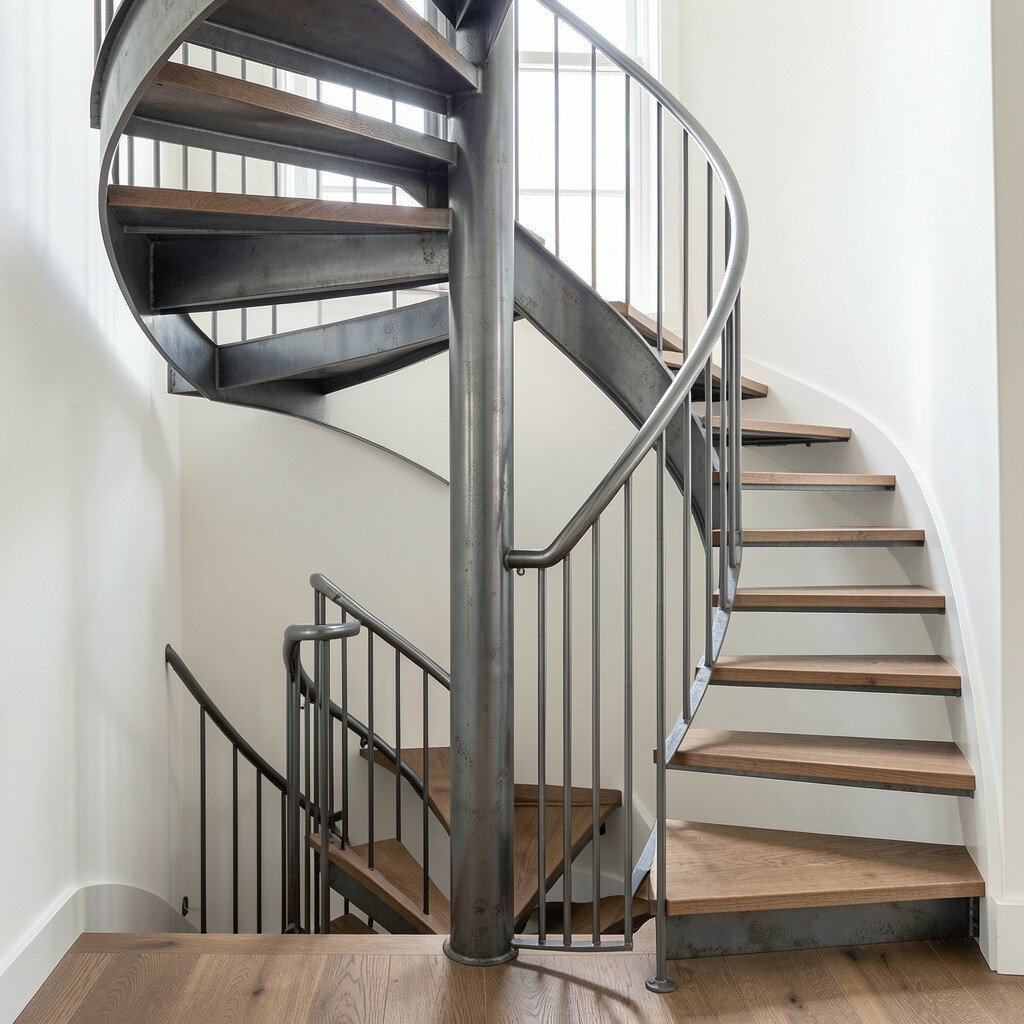
Some stair systems stop abruptly, so the rail ends feel awkward or unfinished. Extending the handrail creates a smoother path up and down.
When you extend the rail slightly at the top and bottom landings, it helps people steady themselves before stepping fully onto the next level. You can also style the end caps to match your hardware, like door handles and cabinet pulls. This is a practical fix that also makes the stair look more “finished” from every angle.
7. Change the Center Column Finish for a High-Impact Upgrade
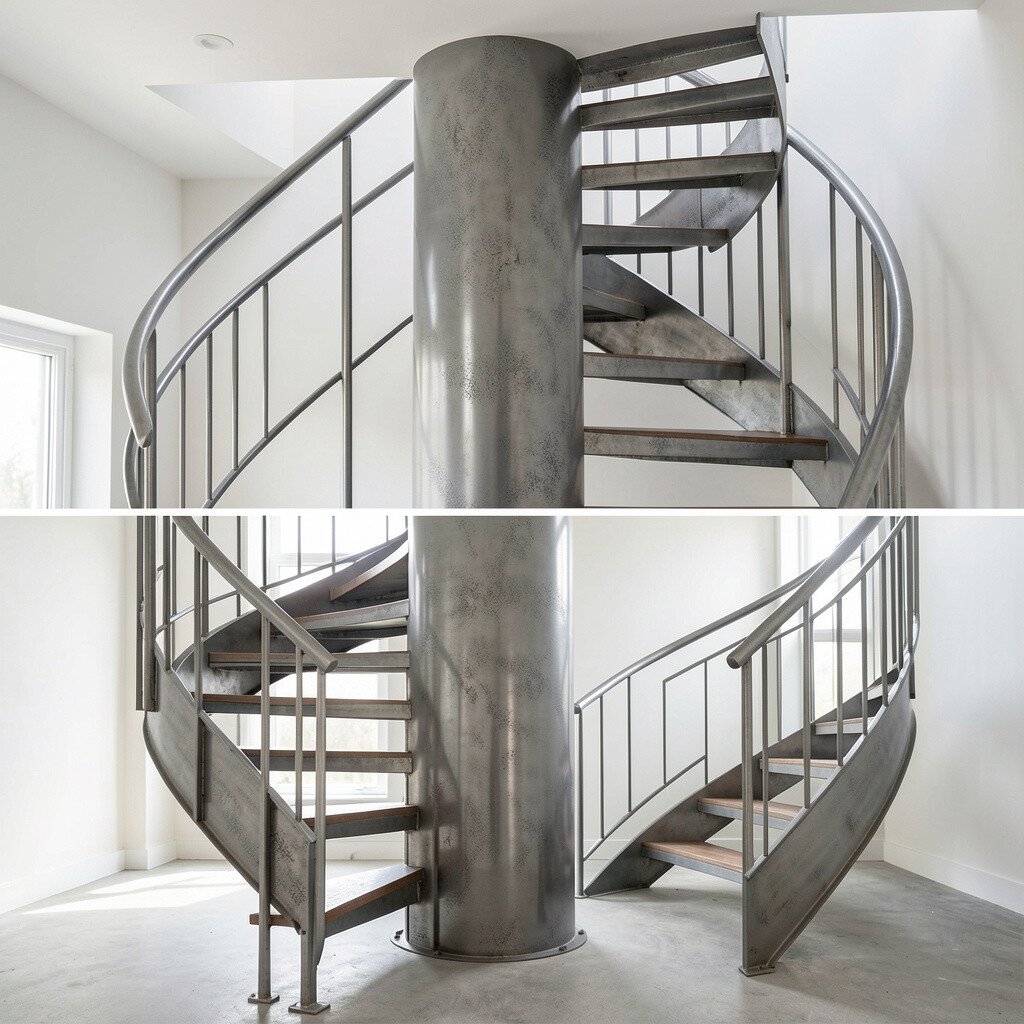
Before, the center column may match everything else, which can make the spiral pattern blend together. After, a contrasting column finish can make the spiral feel more dramatic.
A brushed bronze column with a darker rail, or a lighter column with deep matte steps, can create visual depth. Many people find this upgrade makes the stair look custom even when the overall design stays the same. If your room has warm wood tones, matching the column finish to those woods can help the stair feel like part of the interior, not an add-on.
For planning, check how the stair looks at different times of day. Metal reflects light, so the “after” color can shift from morning to evening. Bringing home small finish samples can save you from surprises later.
8. Add a Protective Clear Coat to Prevent Future Wear
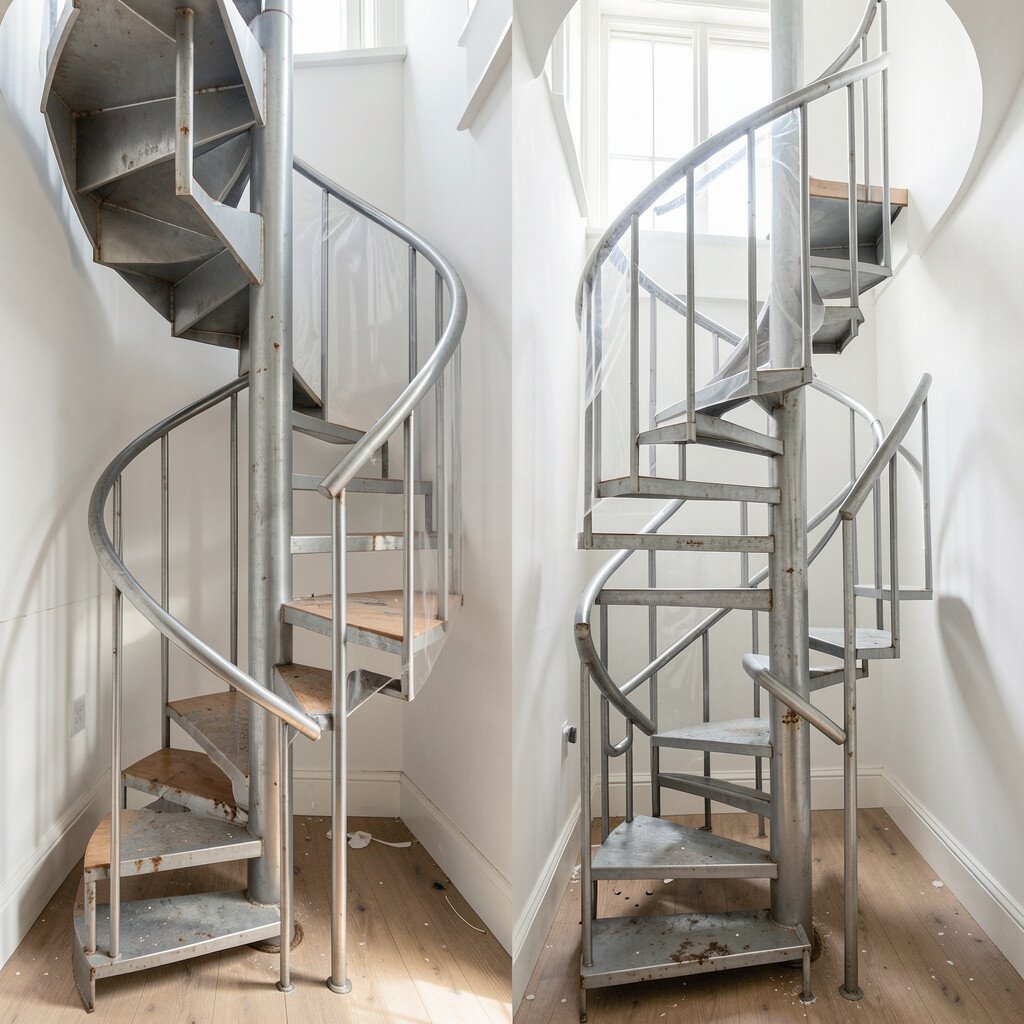
Before, the metal may show tiny spots where fingerprints, water, and everyday friction leave marks. After a protective clear coat, the stair can look cleaner for longer.
A quality clear coat can help resist scuffs and make cleaning easier. Choose a finish that works with your existing coating or metal type so it bonds well. Many homeowners like satin or semi-gloss clear coats because they keep the stair looking modern while hiding minor imperfections.
9. Upgrade Landing Edges so Transitions Feel Smooth

Before renovations, the landing edges may feel sharp or uneven, and people may hesitate at the turn. After you refine those edges, the stair feels safer and more comfortable to use.
Consider adding metal edge trims, adjusting landing surfaces, or adding a subtle contrast strip so the step boundary is easy to see. A clear transition line also helps with navigation at night. This is especially useful for homes with older family members or guests who may move carefully.
If you’re redoing floors nearby, time the stair edge work with the flooring schedule. That coordination can cut down on rework and keep everything aligned. You’ll get an “after” that feels smooth from room to room, not like patchwork.
10. Style the Stair with a Doorway-Compatible Color Scheme
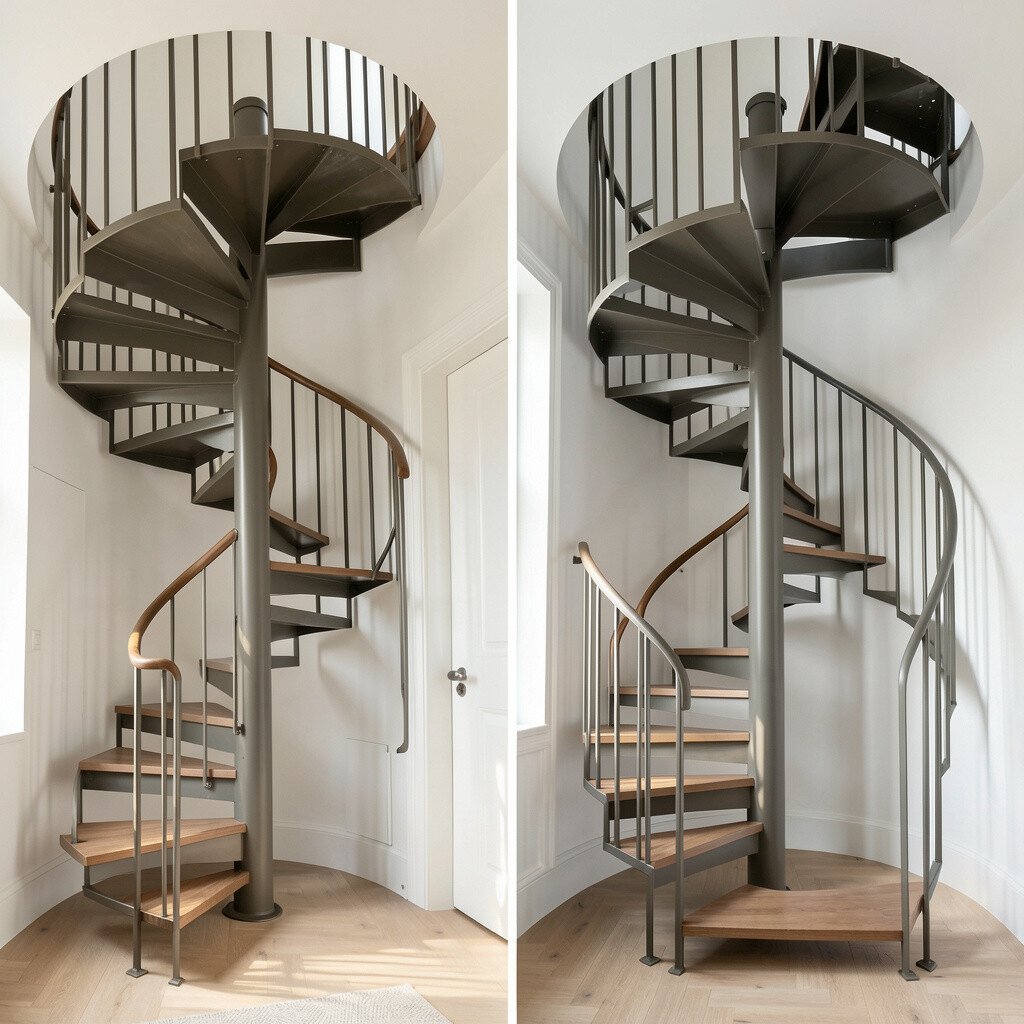
Before, the stair might fight with the hallway color, entry door finish, or nearby trim. After, a coordinated color scheme makes the stair feel like it belongs.
Pick a color that echoes your existing hardware tones, like bronze faucets, brushed nickel light fixtures, or black door frames. Even small adjustments, like aligning the rail and spindles to match, can pull the whole area together. If you want personality, keep the main metal neutral and add a small accent through lighting or a runner.
11. Install a Tight-Fit Stair Runner for Warmth and Quiet Steps
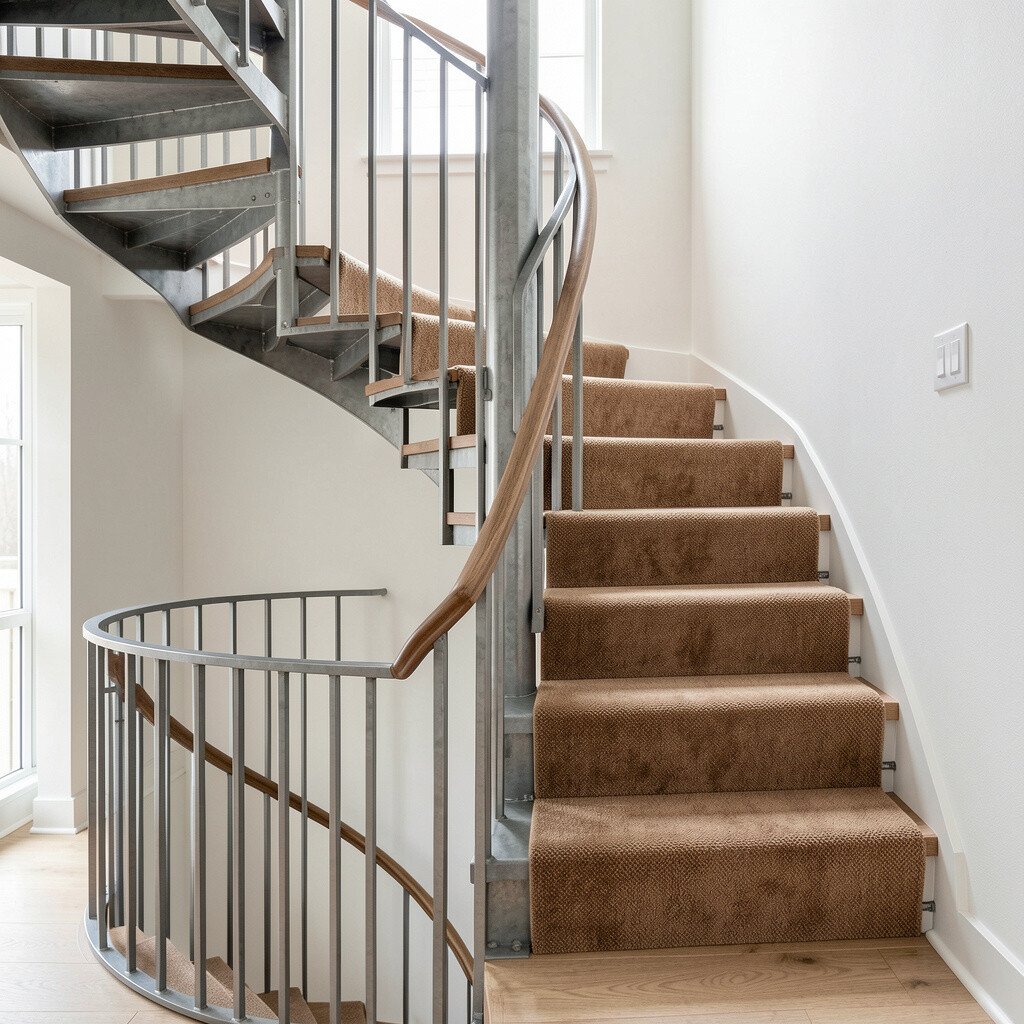
Before, metal steps can make noise, and cold feet feel more noticeable in cooler months. After, a runner adds comfort and reduces sound as you walk.
A narrow runner wrapped carefully around the curve can look stylish and keep traction high. Choose materials that stay in place, like non-slip backing or stair runner systems made for curved steps. Many people love how fabric softens the hard lines of metal and makes the spiral feel more inviting.
For practicality, pick a runner you can vacuum or spot-clean easily. If you have pets, prioritize easy-to-clean materials. This upgrade often feels affordable compared to fully changing the stair components.
12. Create a Gallery Look with Wall Styling near the Stair

Before, the wall space beside the stair might feel empty or awkward. After, a styled display helps the stair area feel like an intentional gallery wall.
You can add framed art, mirrors, or simple shelves that align with the spiral’s height curve. When the wall decor echoes the stair’s finish, the whole corner looks like one cohesive design. A mirror can also reflect light, making the stair feel brighter and more open.
To keep it neat, space frames so they don’t crowd the rail or block sightlines. Use a cohesive frame color, like black or bronze, that matches the rail. This is a renovation idea that adds beauty without changing the stair itself.
13. Upgrade to a More Modern Spiral Profile with Sleek Lines
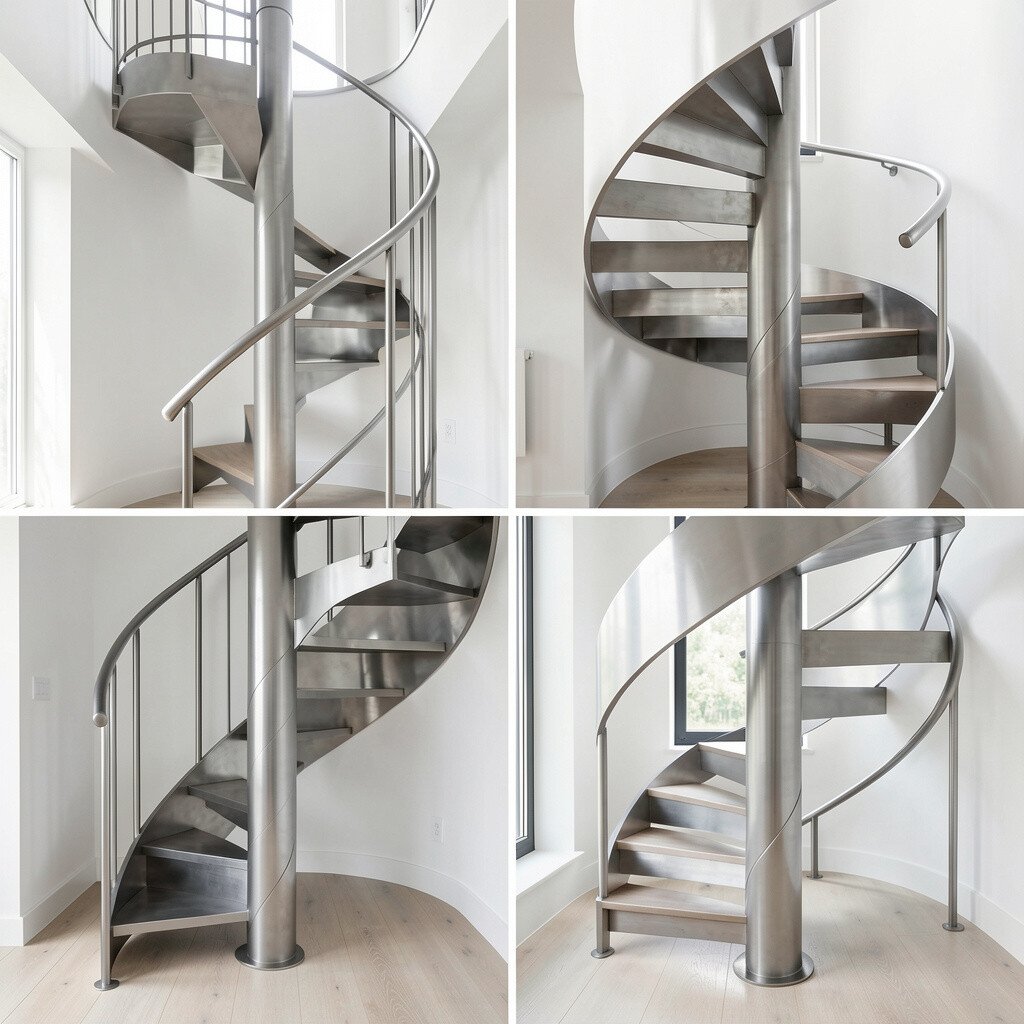
Before, some spiral stairs feel heavy or outdated, with thick sections that hide the spiral pattern. After a profile update, the stair can look lighter, cleaner, and more current.
You can replace parts or refit the rail and steps to match a sleeker spiral design. A slimmer look often makes rooms feel less cramped, especially in smaller spaces. Even when the stair dimensions stay the same, updating the visual thickness can change how people perceive the space.
14. Add Decorative Finials That Make the Top Feel Grand
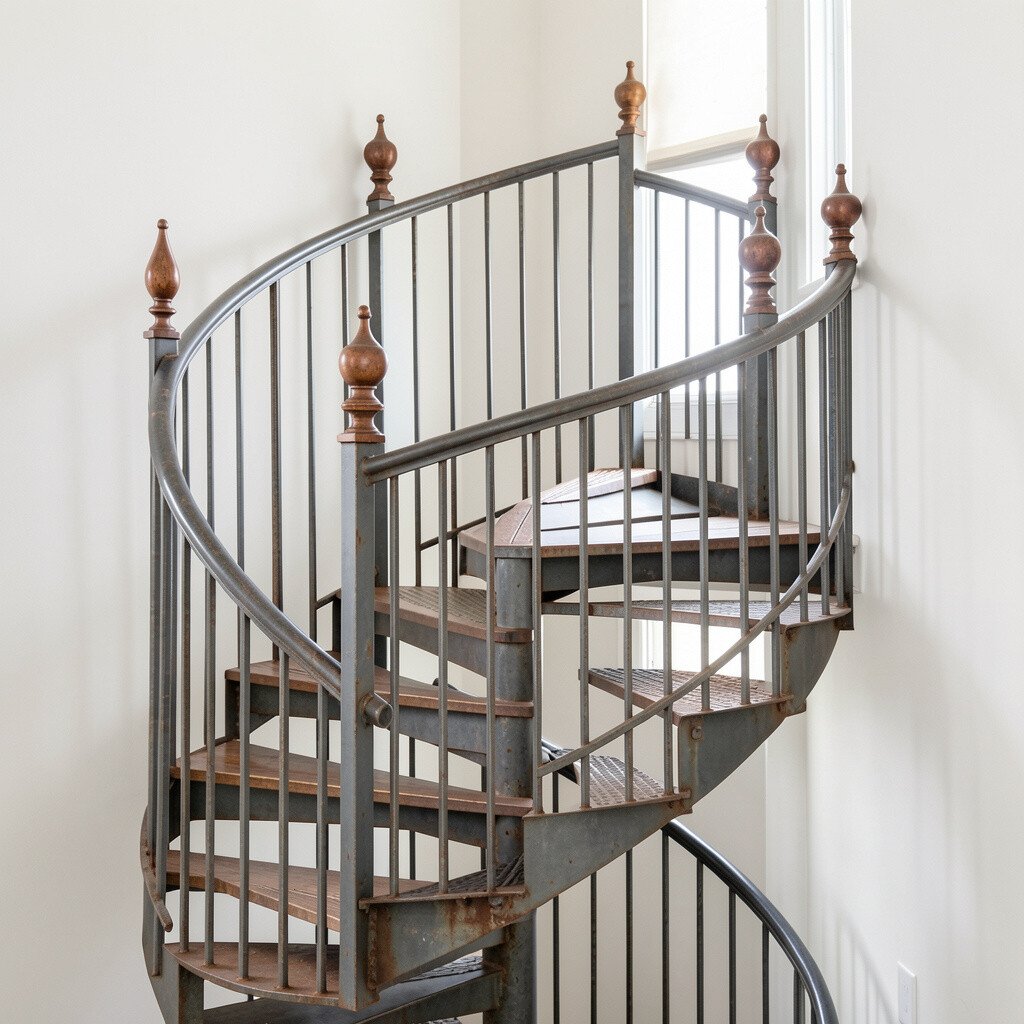
Before, the top of the stair can look plain, which makes the “reveal” feel less special. After adding decorative finials, the stair feels like it has a finishing touch.
Finials can be small, elegant pieces that cap the rail ends or decorate the center column. They create a focal point when you reach the upper level and look great in photos. If your home style is traditional, choose classic shapes; if it’s modern, choose geometric or minimal designs.
To keep the look balanced, use finials that match the metal finish family and don’t overwhelm the spiral lines. This upgrade is often a cost-friendly way to create a “wow” moment without full reconstruction. It’s also easy to swap later if you change your decor.
15. Personalize with Engraved Details or Custom Panel Accents
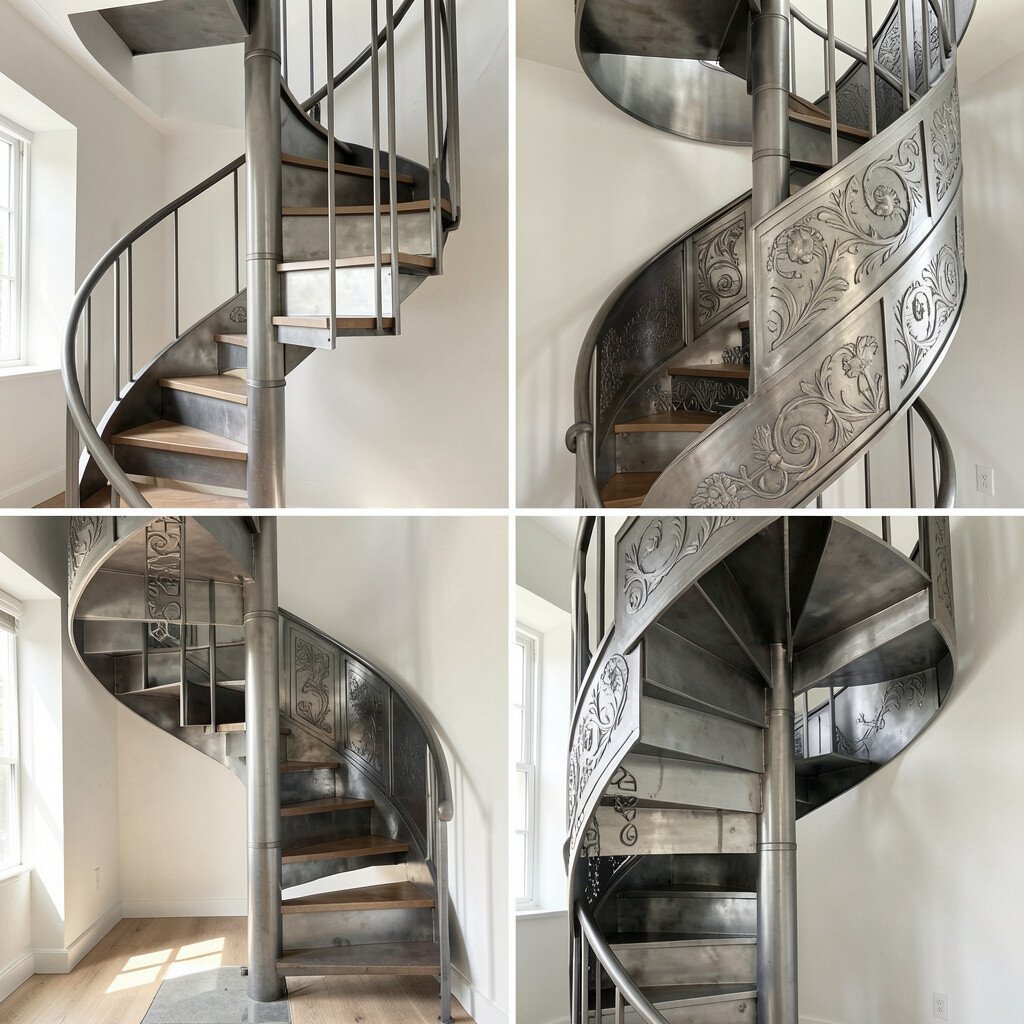
Before, a metal stair can feel generic, like it came straight from a standard kit. After adding engraved or custom panel accents, it feels personal and meaningful.
You can engrave dates, initials, or small motifs on certain components where the design is still practical. Another option is adding small decorative panels near the base or at a landing, using a pattern that matches your style. People love that these details let the stair tell a story without needing loud colors.
When you plan engraving, consider how it will hold up to everyday cleaning. Deeper engraving can hide grime, so pick layouts that look good and stay easy to maintain. If you want a subtle effect, shallow engraving with a contrasting finish can feel classy and modern.
16. Consider Color-Blocking with Steps and Rails for a Bold Look
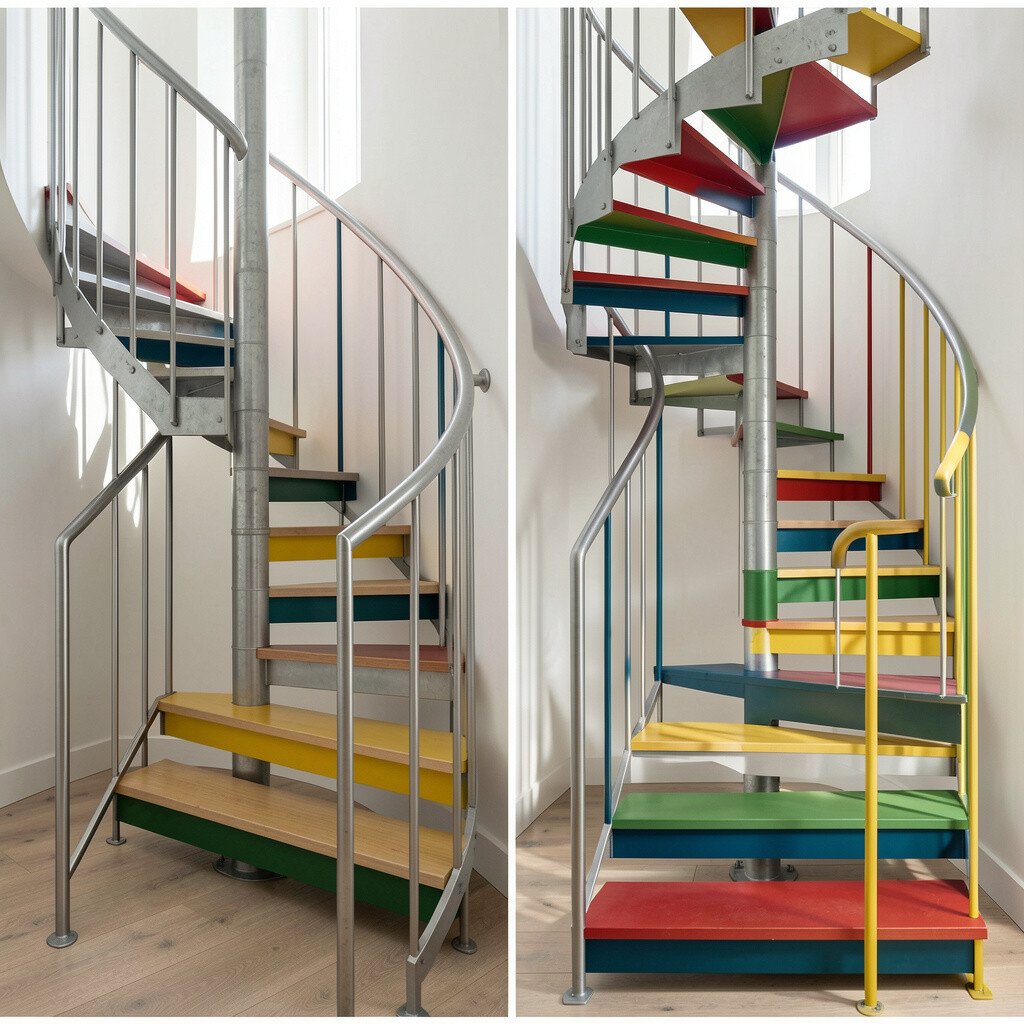
Before, a single-color spiral stair can blend into the background and feel less lively. After, color-blocking adds structure and makes the spiral pattern easier to see.
You can paint or coat the steps in one tone and keep the rails in another, creating a design rhythm that feels intentional. This can look stunning in homes that already use strong accents like navy, emerald, or warm terracotta. If you worry about matching, stick to two colors drawn from your existing decor.
Think about how the stair looks under warm bulbs and daylight, because colors shift with lighting. Testing samples on the actual stair surface is the safest way to choose. While this may cost more than a single finish change, the visual payoff is often dramatic.
17. Upgrade Structural Hardware for Stability and a Better Feel
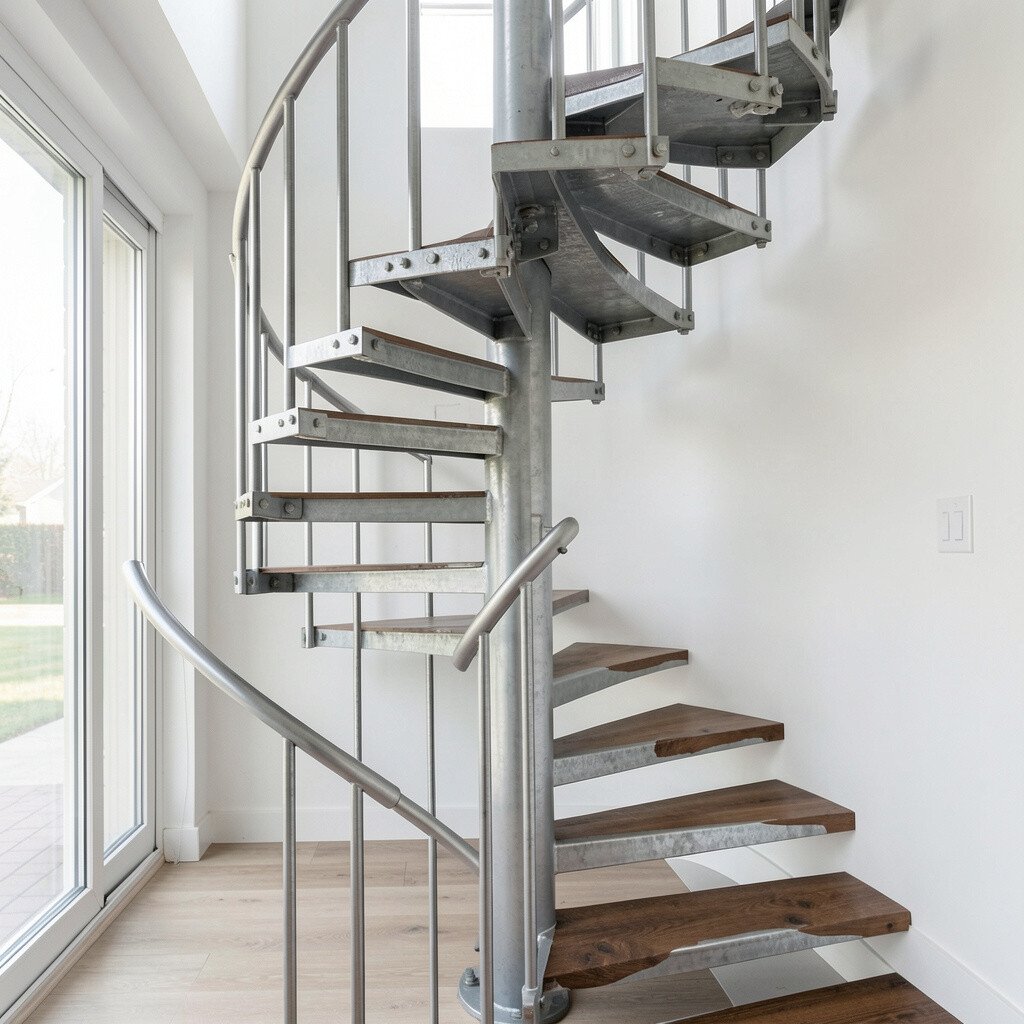
Before, a stair might wobble a little, creak, or feel less solid than it should. After tightening or replacing structural hardware, it can feel firm and dependable.
Replacing worn bolts, connectors, or mounting plates can stop annoying movement and improve the overall ride. A stable spiral stair not only feels safer but also feels nicer every time you use it. This is one of those renovations that people notice immediately, even if they can’t point to the exact change.
For practical planning, have measurements verified and confirm the stair alignment before finishing the metal surfaces. If you’re already doing coatings or treads, coordinate hardware work so everything sets properly. It may take more scheduling, but it helps protect your investment and keeps daily use comfortable.
18. Add a Decorative Powder-Coated Accent on the Spindle Areas

Before, the spindle sections might have the same finish throughout, which can look flat or repetitive. After, powder-coated accents can bring the spiral pattern into sharper focus.
For example, you can keep the main rail dark while adding a lighter accent tone to select spindles or edges. This approach highlights the stair’s curve without changing the entire design. It also works well in open-concept homes, where the stair is visible from multiple rooms.
If you want it to feel cohesive, match the accent color to another element like a nearby art frame, backsplash tile, or cabinet hardware. Keep the accent limited so the stair still feels elegant rather than busy. This style often looks high-end, even when the changes are targeted.
19. Improve the Surrounding Wall and Floor to Complete the Makeover
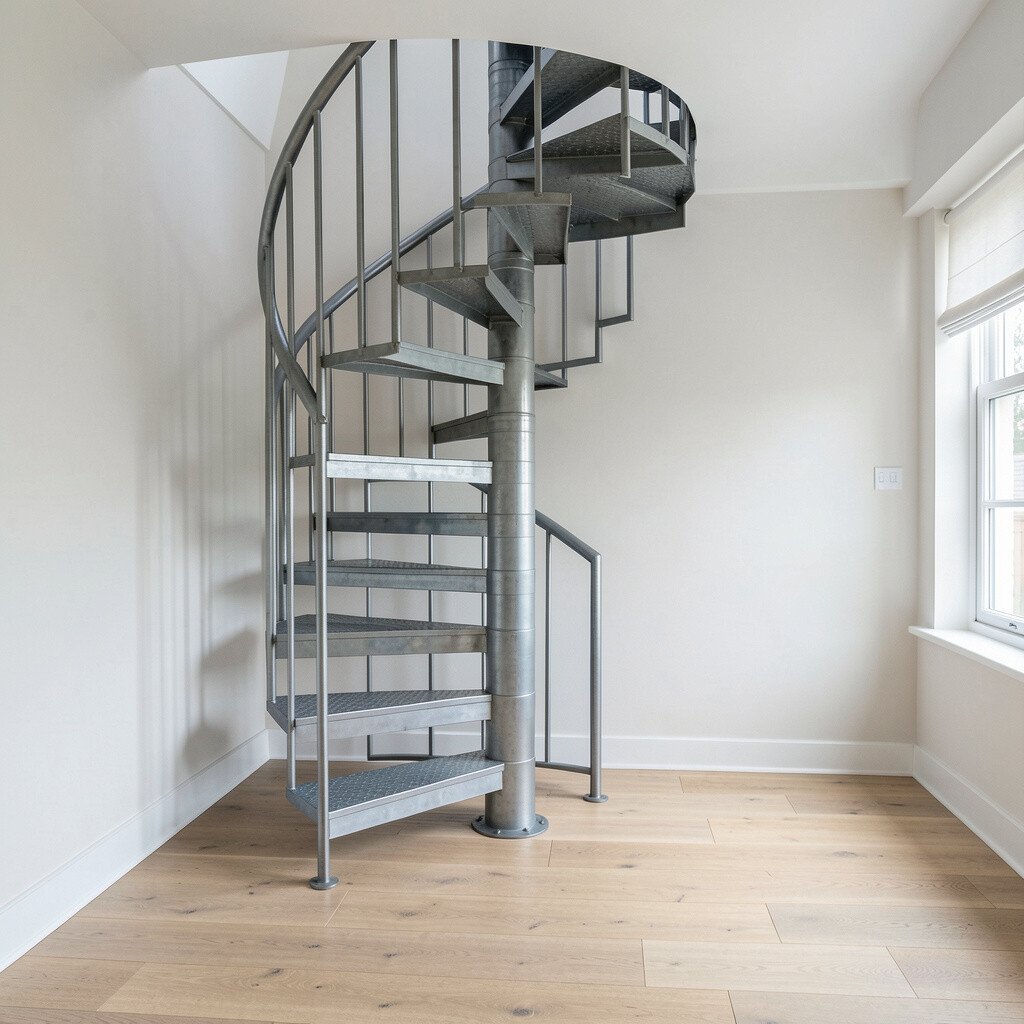
Before, the stair can look good by itself, but surrounding walls and floors may make the area feel incomplete. After you refresh the nearby surfaces, the stair becomes part of a coordinated scene.
Consider painting the wall in a color that supports the stair finish, updating baseboards, or adding a new floor transition strip where the stair begins. When the wall paint matches the lighting tone, the metal looks cleaner and more intentional. You can also add a small trim detail along the stair curve so the base looks crisp and professional.
Plan this renovation step with your timeline, because floor and wall work can affect how parts are mounted and finished. Budget for patching and prep, since metal stair areas often need careful smoothing. This is a finishing step that makes the whole “after” feel polished and ready for everyday life.