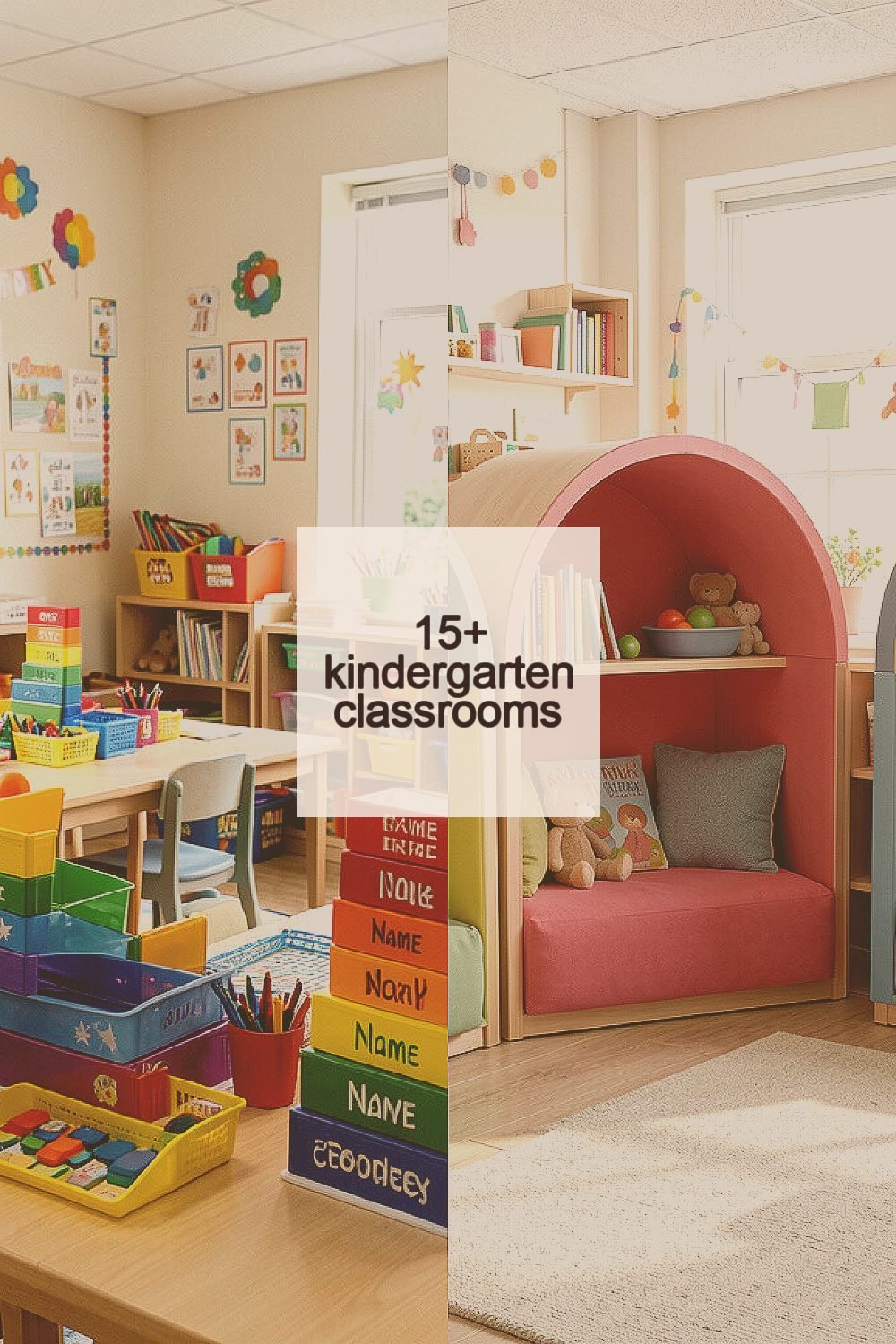
The best classrooms feel like a friendly place to play and learn at the same time. Bright decorations can turn every corner into a helpful invitation for little minds.
When you add color in thoughtful ways, children stay interested longer and practice new skills without even noticing.
1. Rainbow Name Towers for Daily Confidence
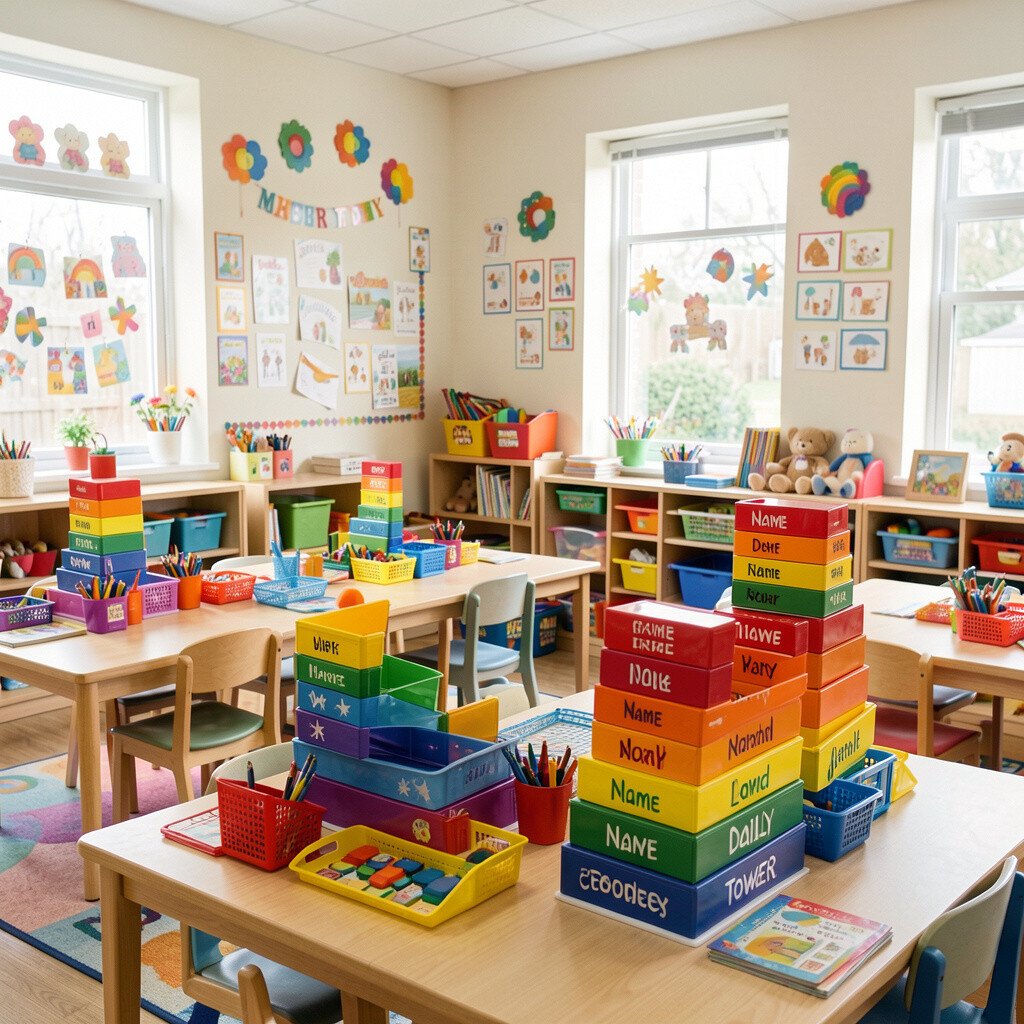
Picture a bright tower made from stacked name cards, each one in a different color like a rainbow staircase. Kids can find their name quickly, even on busy mornings, and they feel proud when the tower “knows” them too.
Teachers can set the cards in pockets or on clipboards so children can gently place and remove their own name. This simple routine builds independence, supports early reading, and helps with focus when transitions feel smoother.
2. Cozy Reading Nooks With Soft Color Layers
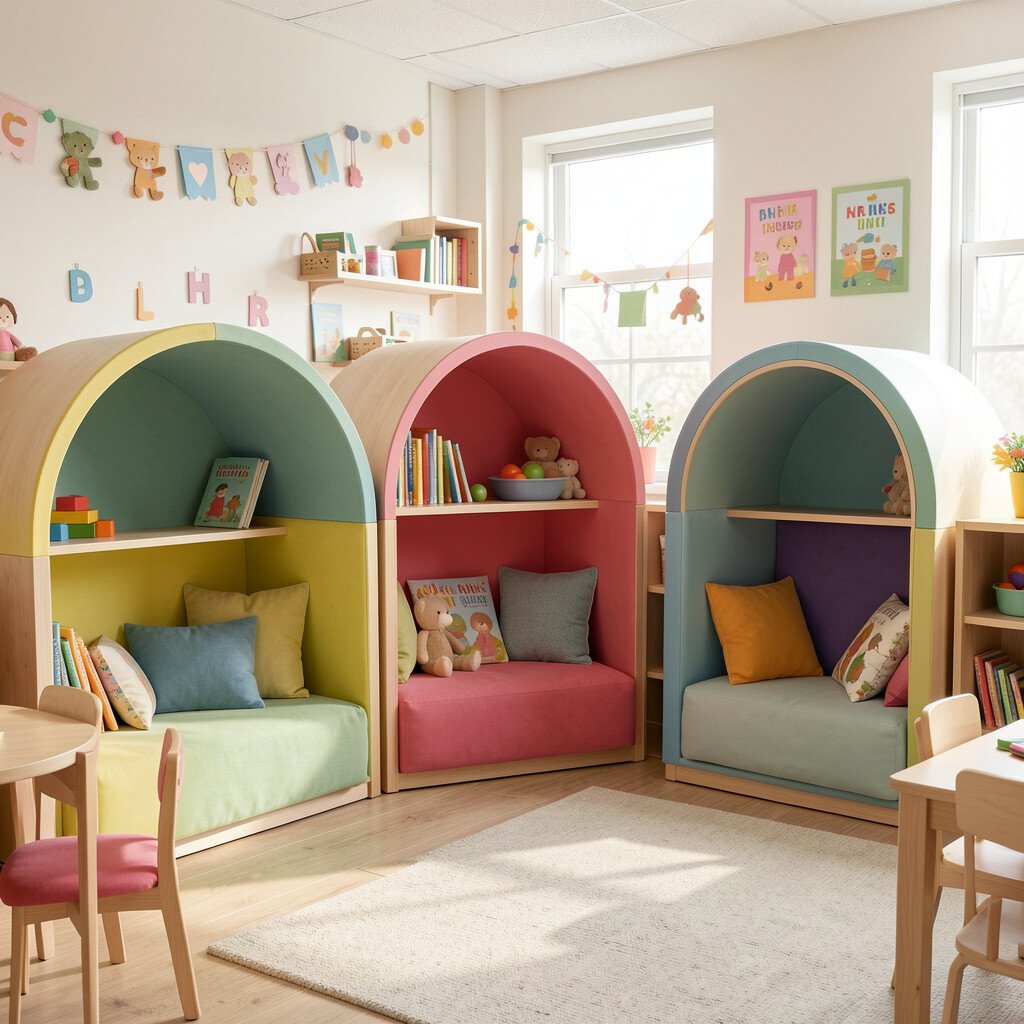
A reading nook can look like a tiny campground, with layered rugs and cushions in calm colors that still feel cheerful. Add a small shelf for board books and let a string of paper stars frame the area like a night sky.
When children sit in a cozy spot, they learn that reading is a safe, comfy activity. That sense of comfort can improve listening during story time, because kids stay relaxed and ready to follow along.
To keep it practical, choose washable covers and store extra cushions in labeled bins. You can personalize the nook by letting each class theme change the star colors, such as ocean blues for sea stories or warm oranges for autumn books.
3. Color-Coded Classroom Jobs With Clip-On Badges
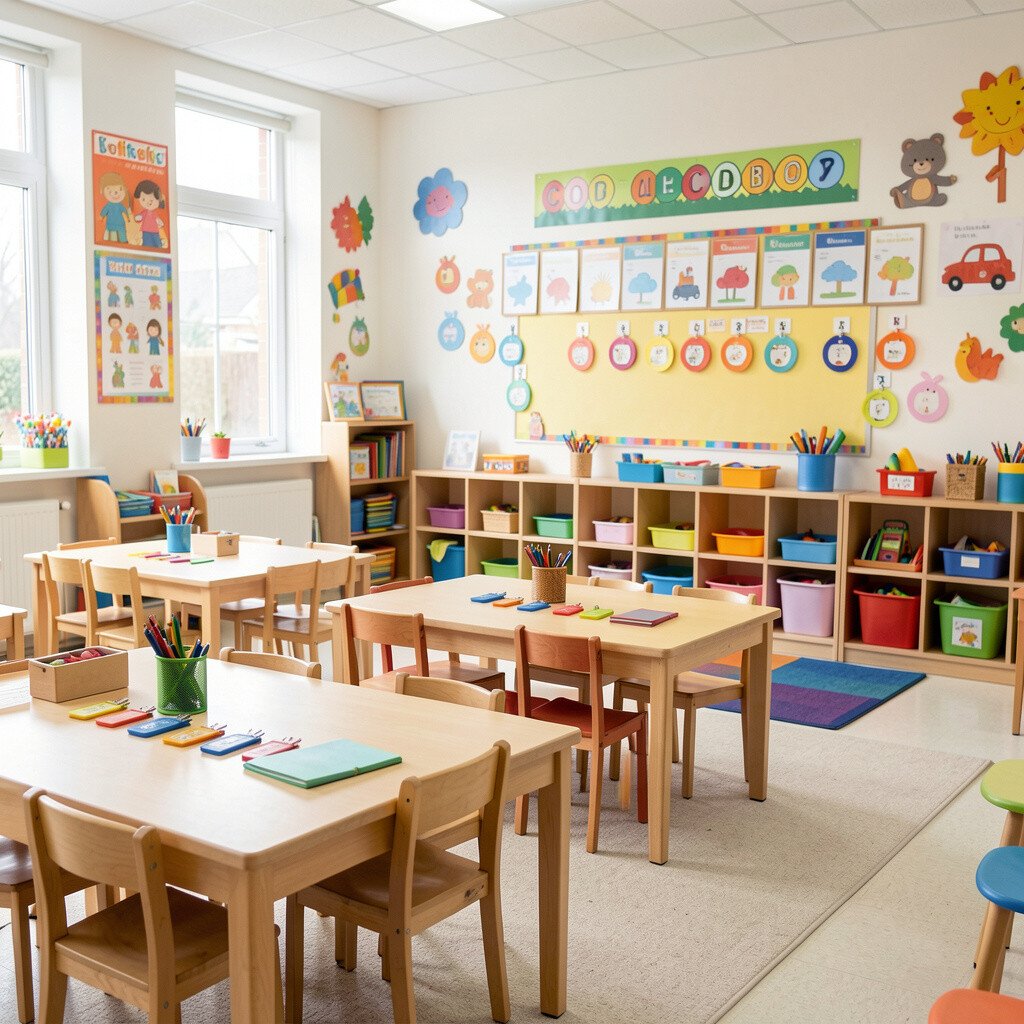
Imagine a wall of job stations where each task has its own color and a friendly icon, like a smiling cloud for the helper who waters plants. Children wear clip-on badges that match their job color, so everyone can see what’s happening at a glance.
This decoration helps children understand routines without long explanations, and it gives them a meaningful role each day. You also get smoother classroom management because expectations become visual and consistent.
For a cost-smart setup, use cardstock circles and laminated badge holders, then swap job icons as the year changes. Personalize by writing each child’s name on the badge so students feel included and responsible right away.
4. Giant Classroom Calendar With Movement Windows
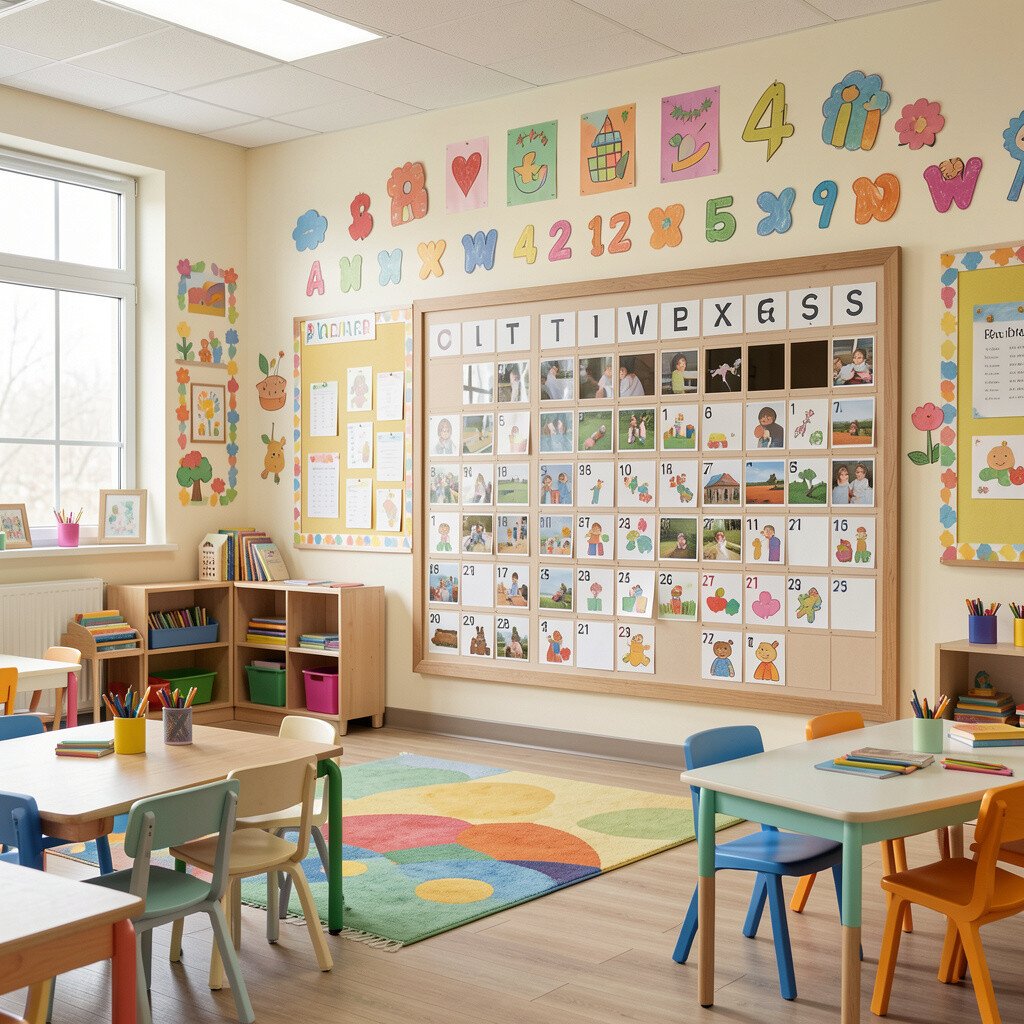
A bright calendar can be more than dates on a wall. Think of a large grid with colorful “movement windows” where children can slide cards for weather, feelings, or special days.
When the calendar includes hands-on pieces, children practice counting, pattern noticing, and language skills during everyday moments. Visual schedules also reduce stress, because kids know what comes next and what to expect.
5. Weather Wall With Sunny, Cloudy, and Rainy Pockets
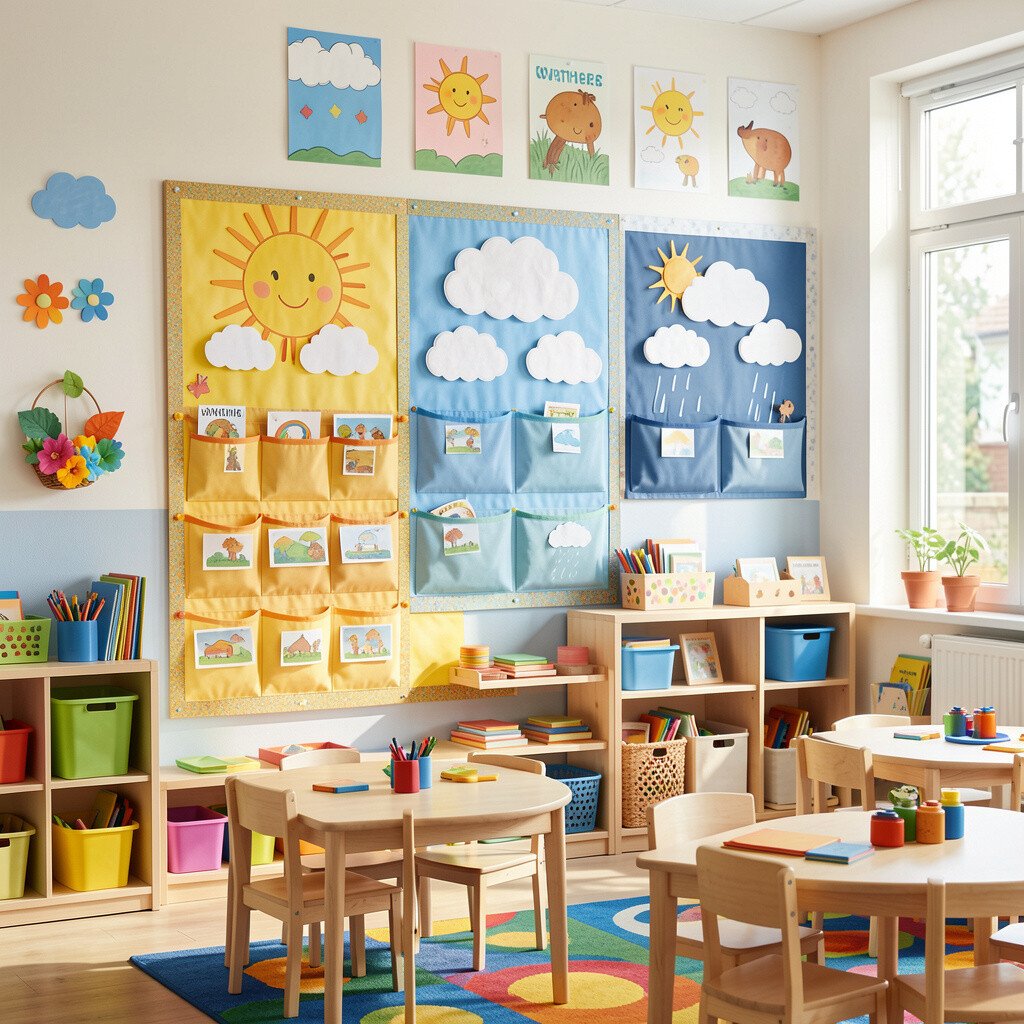
Build a weather wall using fabric or paper pockets, each one shaped like a sun, cloud, or rain drop in bold colors. Kids can choose the matching pocket at morning meeting, and the wall instantly shows the day’s “story.”
This kind of visual system supports science learning and helps children connect words to real-life changes outside. It also strengthens vocabulary for feelings and descriptions as children talk about what they notice.
Keep it practical by using Velcro-backed cards so they can stick and reposition easily. Personalize the wall with local weather icons or seasonal colors, such as icy blues for winter or bright greens for spring.
6. Alphabet Garden With Leaf-Shaped Letter Tags

Picture an “alphabet garden” made from a green bulletin board, dotted with leaf-shaped tags that each hold a letter. Some leaves can be shiny foil for the letters kids love most, while others can be matte for variety.
As children match letters to sounds, they learn that learning is playful and ongoing. The garden theme also makes it easier to review during center time because kids can choose their own letter hunts.
For a low-cost version, cut leaves from construction paper and laminate them for durability. You can personalize the garden by adding kid-made drawings on a few leaves so the board becomes a shared classroom memory.
7. Number Line Pathway With Sidewalk-Style Footprints
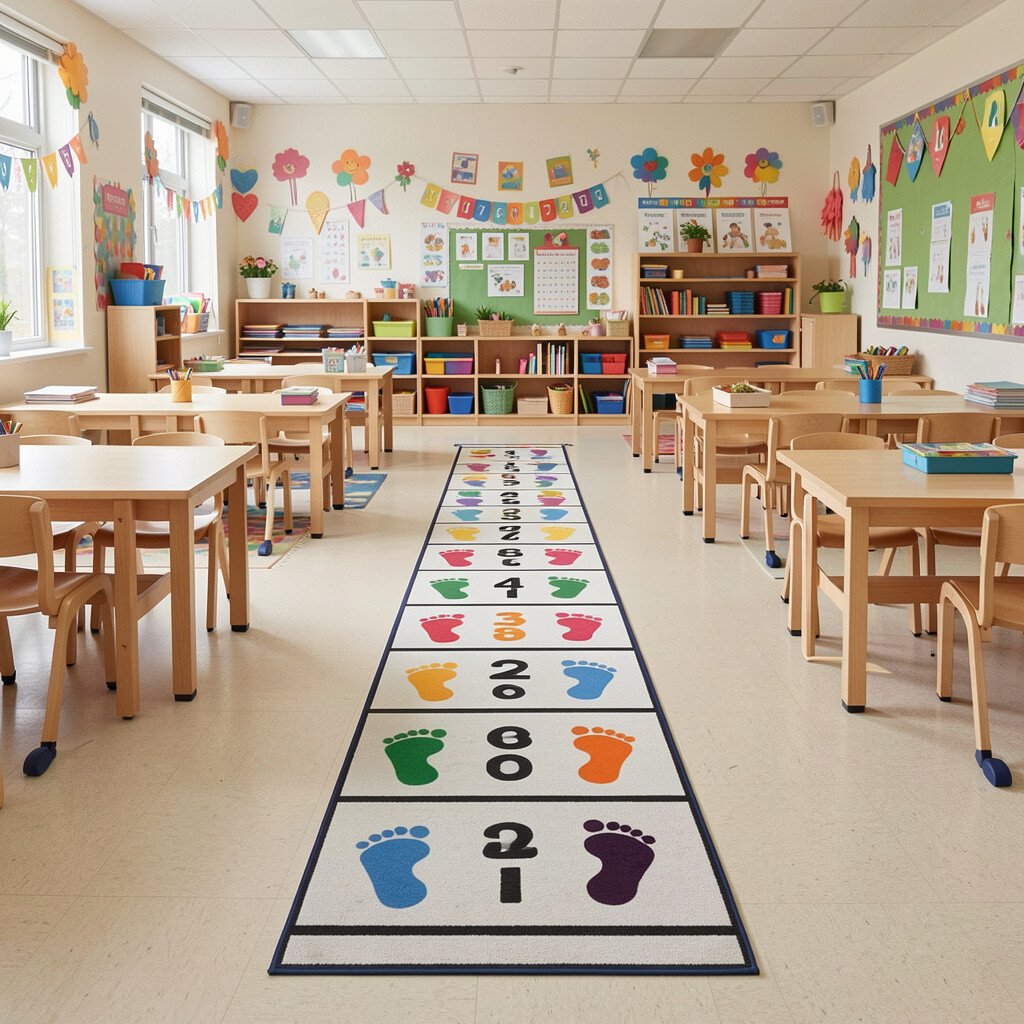
A number line can look like a mini sidewalk path that runs along the floor or wraps part of a hallway. Colorful footprints can guide children from one number card to the next, making practice feel like a game.
Movement-based visuals support early counting and number sense because children learn with their bodies, not just their eyes. It also helps with transitions since kids can “walk the math” while teachers get ready.
8. Story Map Backdrops With Themed Color Zones
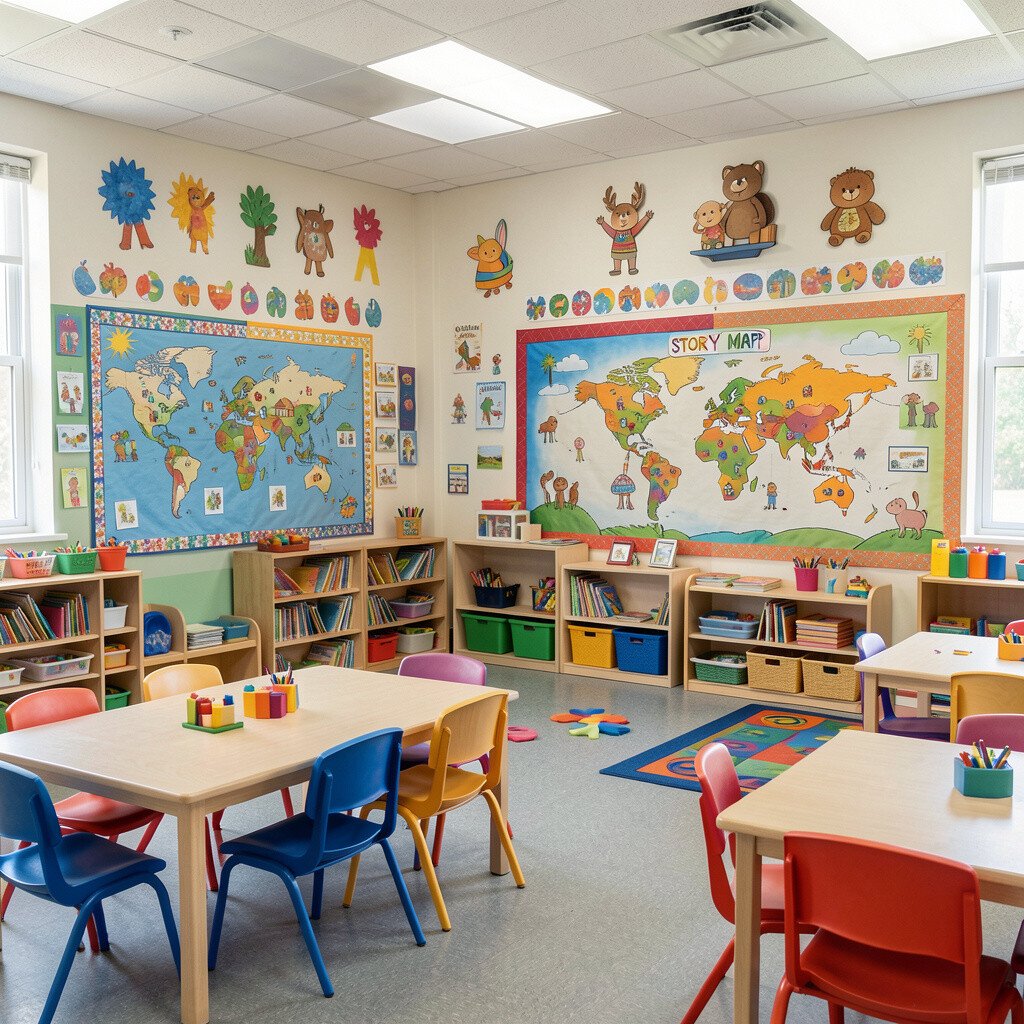
Set up a story map wall that changes with each book, using bright color zones for beginning, middle, and end. Use background materials like painted paper hills, sky colors, and a path made of scalloped shapes.
Children can place character cutouts on the map as the story unfolds, which strengthens sequencing skills. This also encourages confident retelling because kids can point to visual clues instead of trying to remember everything at once.
To keep it manageable, store character pieces in a clear organizer box and add velcro to the back of cutouts. Personalize each zone with kid-made illustrations, so students feel like co-creators of every story.
9. Art Center With Paint-Splatter Labels and Clear Storage
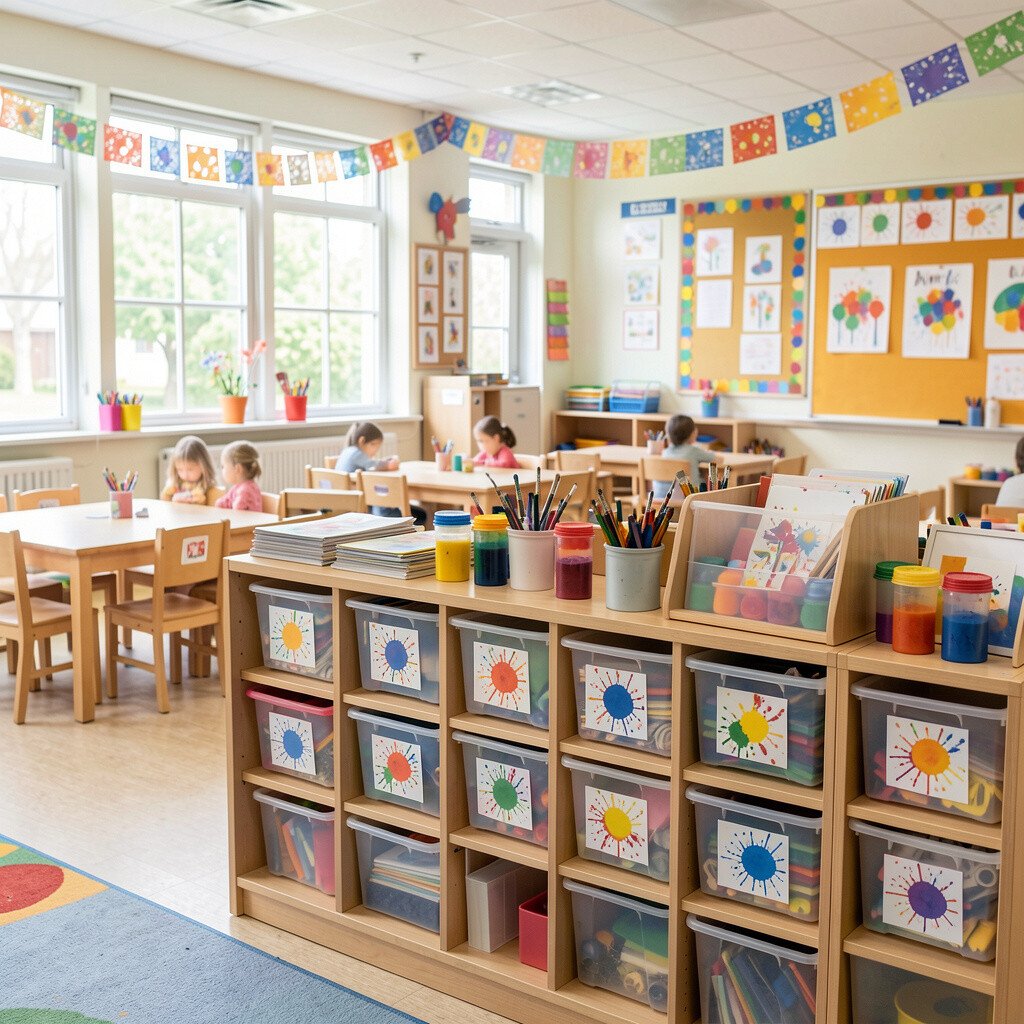
An art center can be bright without being chaotic, especially when you label everything with colorful, paint-splatter designs. Jars and bins can be arranged by color family, like warm reds and oranges on one side and cool blues and greens on the other.
Organized art tools support independence because children can find supplies quickly and return them neatly. Clear storage also helps teachers keep materials visible, which supports faster cleanup and more time for creating.
Try using printable labels on waterproof paper or laminate hand-cut signs for cost-effective durability. You can personalize the center by letting children choose a “signature” color for each art project that week.
10. Friendship Wall With Heart Messages and Kindness Tokens
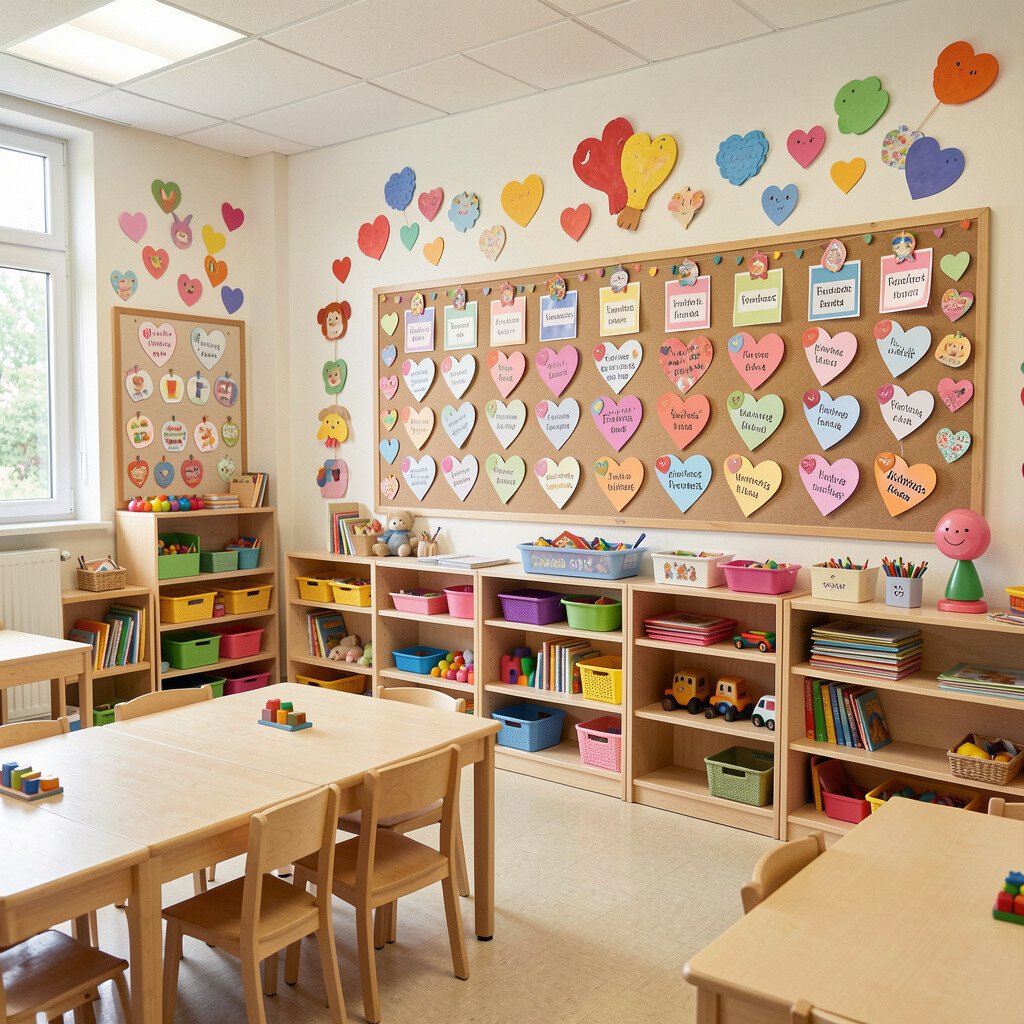
A friendship wall can glow with big hearts in cheerful colors, each heart holding a prompt or a small message. Add a token basket where children can place a kindness token when they show helpful behavior.
This creates a warm classroom culture where children learn empathy in a visible, daily way. When students see kind acts honored, they’re more likely to repeat those behaviors with classmates.
For practical setup, use sturdy foam hearts or laminated cards that can handle daily use. Personalize the tokens by including simple class phrases created together, like “using gentle words” or “taking turns,” written in kid-friendly language.
11. Dramatic Play Town With Realistic Color-Coded Props
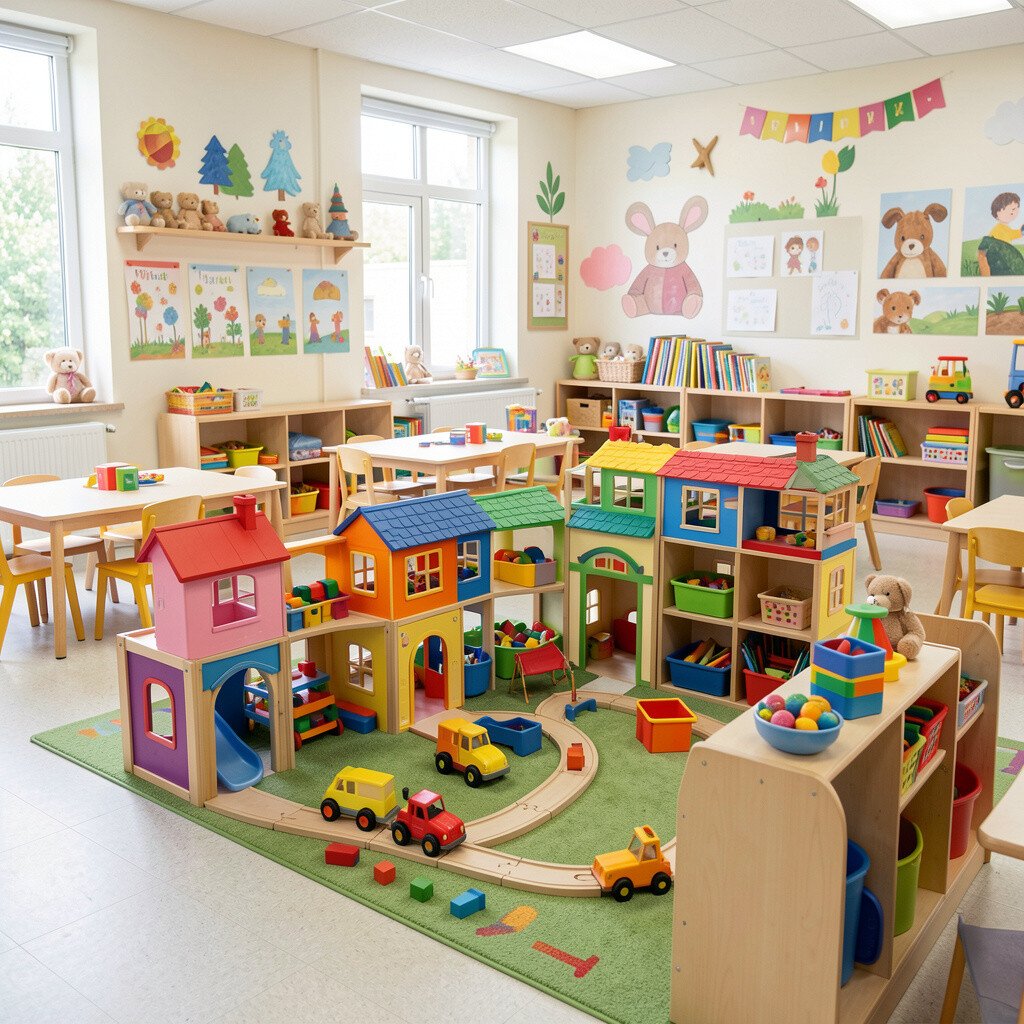
Turn dramatic play into a colorful town with themed corners such as a market, a post office, and a “construction” area. Color-code props so children can quickly match items, like a blue label for mail bundles and a red label for grocery items.
When kids act out real roles, they build language, social problem-solving, and confidence in speaking. Color cues make props easier to sort, so children spend more time playing and less time searching.
Keep costs down by using clean containers, fabric scraps, and cardboard boxes painted with washable paint. Personalize the town by adding seasonal details, such as a pumpkin-colored “fall market” shelf or a holiday-warm “cocoa café” corner.
12. Light-Up Learning Corner With Glow Star Phases
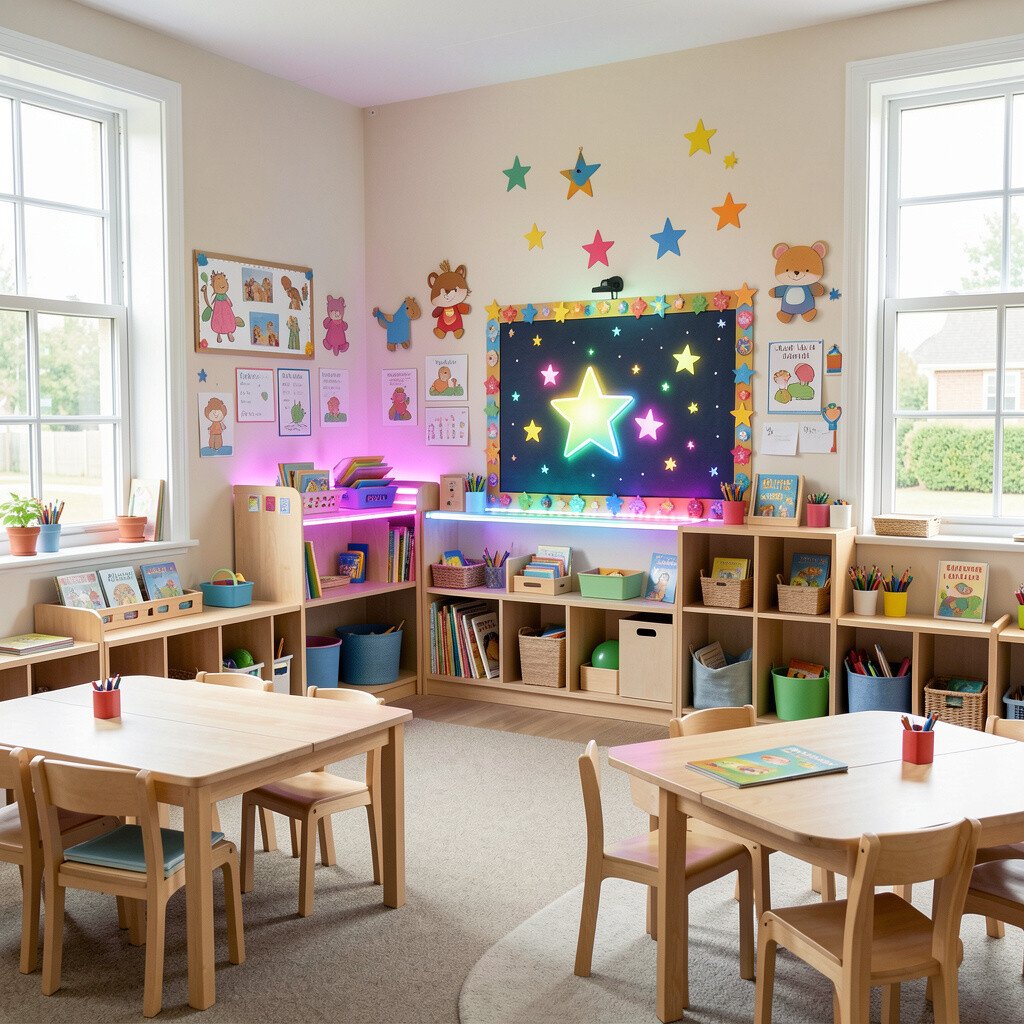
A learning corner with a soft glow can feel magical, especially when children study under star-shaped lights. You can hang small paper stars or use battery fairy lights wrapped safely along a low shelf line.
When the lighting is gentle, children often focus better during quiet activities like letter matching or fine motor games. The mood supports calm transitions, which can be helpful after active play or before nap time.
For safety and practicality, use LED lights and keep wiring hidden behind trim. Personalize the star themes by changing colors and patterns with the unit, such as galaxy purples for space stories or ocean teals for marine life.
13. Build-a-Boat Water Table With Color Channels
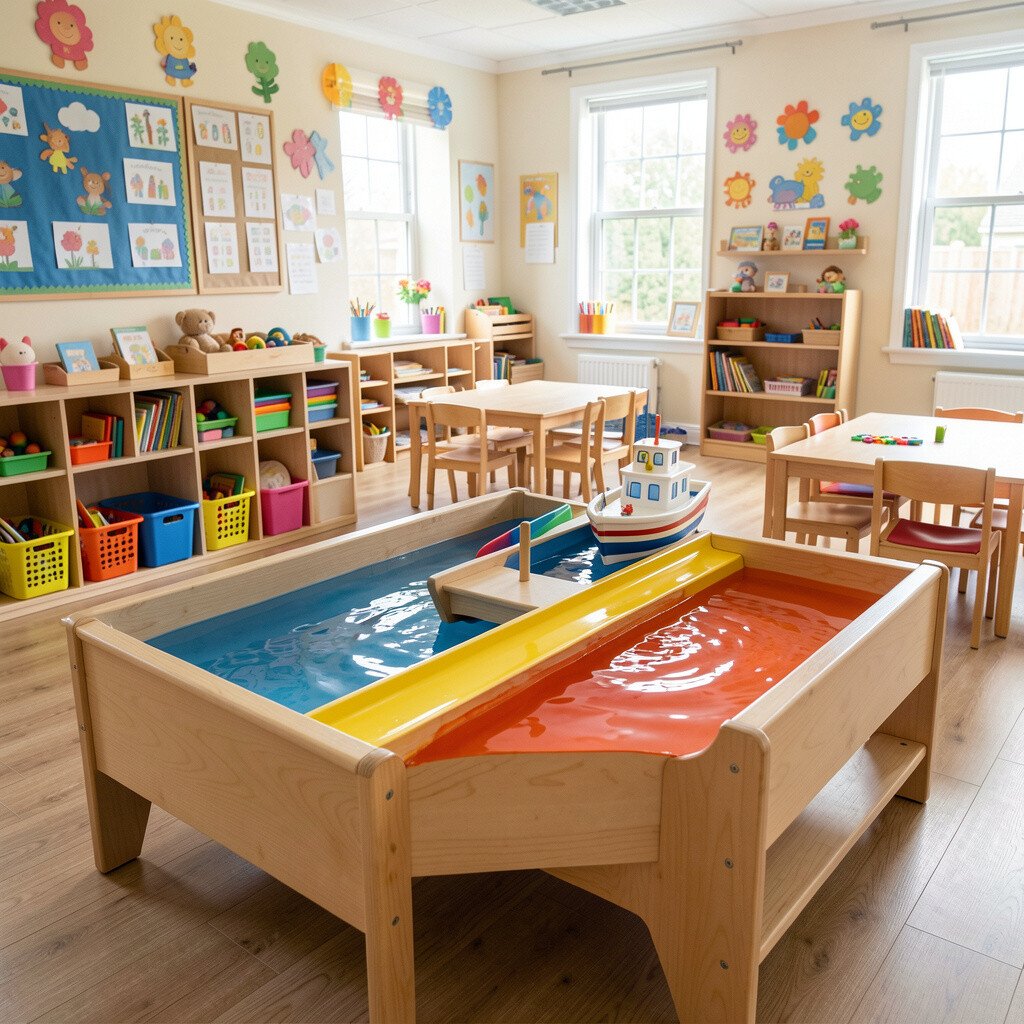
Set a water table up like a playful harbor, with bright color channels that guide water into different “destinations.” Add foam blocks, small boats, and cups that match the channel colors so children can try new ways to pour and scoop.
Water play supports early physics thinking, hand strength, and vocabulary for describing actions. Kids naturally practice patience as they wait for water to settle, and they learn to follow simple cause-and-effect patterns.
To manage mess, use a mat under the table and store towels nearby in an easy reach spot. Personalize by adding seasonal boat themes, like jungle explorers or fairy tale castles floating on safe, chunky props.
14. Music Wall With Ribbons, Bells, and Rhythm Cards
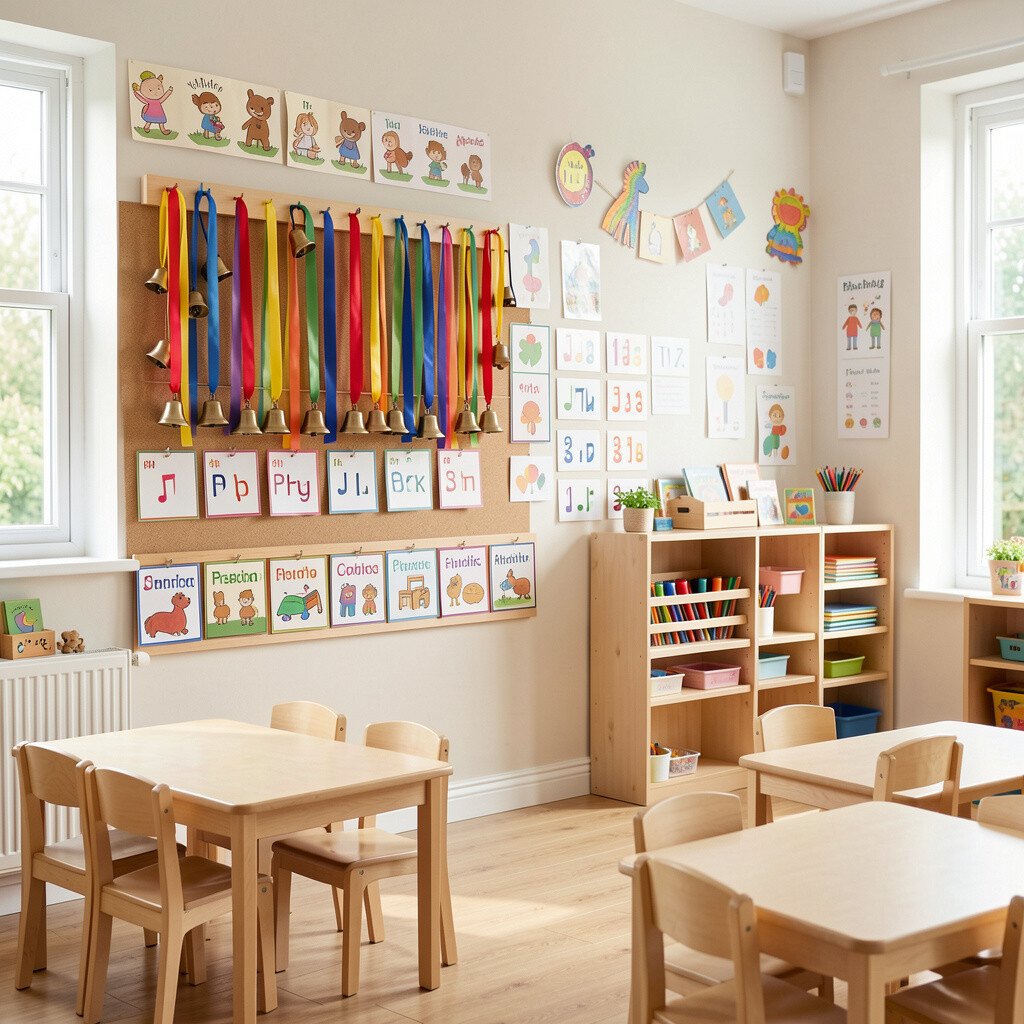
A music wall can feel like a colorful instrument garden, with ribbons hanging from hooks and small bell accents for sound-making. Rhythm cards can be attached to the wall so children match patterns by clapping or tapping.
Music helps children practice counting, timing, and listening skills while also building emotional expression. Visual rhythm cues make it easier for kids to join in, even if they are new to singing or movement.
Keep the setup practical by using durable hooks and storing extra ribbons in a labeled bag. Personalize by letting the class vote on the next “sound theme,” such as rain sounds for a weather week or animal beats for a wildlife unit.
15. Kindergarten Science Wall With Colorful Inquiry Clips
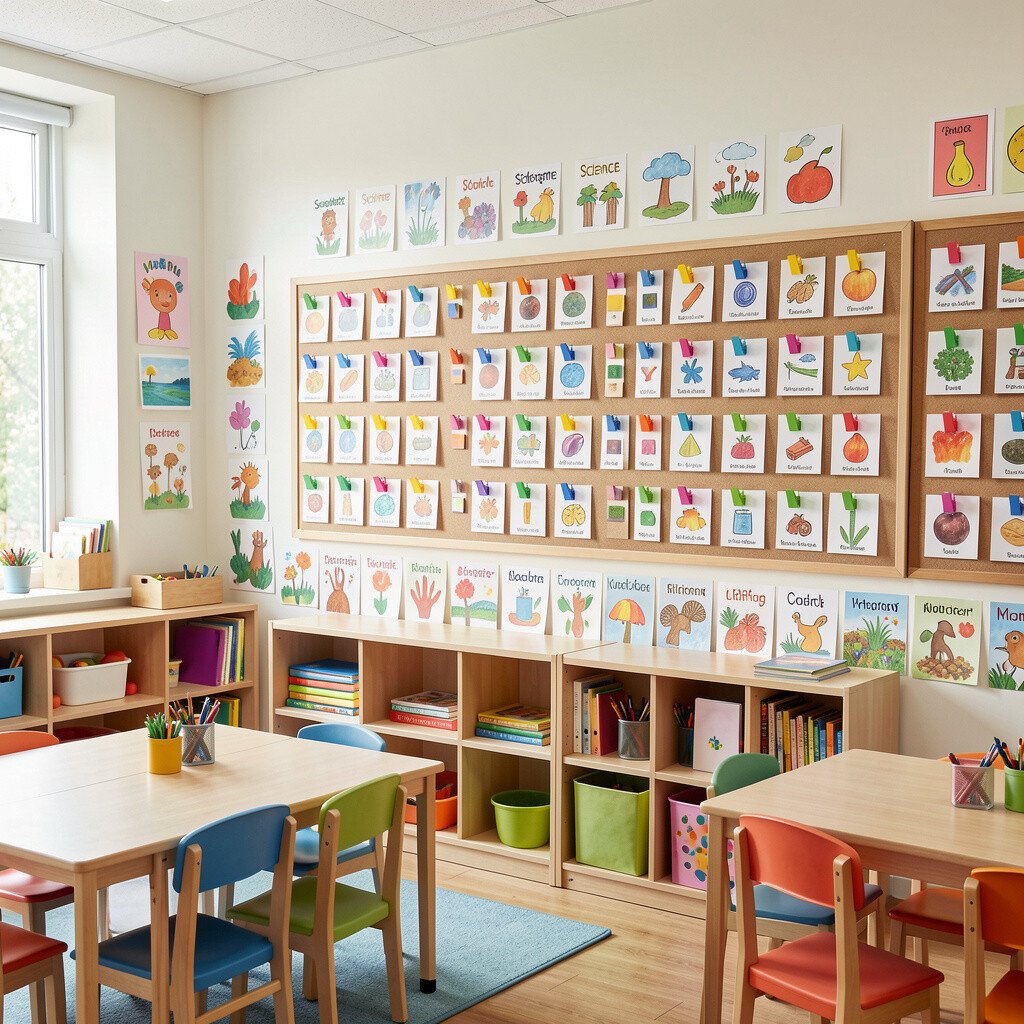
Create a science wall that looks like a bright question board, with clothespins holding “I noticed” cards in different colors. Back it with a fun background like a pretend lab bench, using bold stripes or speckled patterns.
Children can add short observations after simple experiments, which builds early science habits and language. The visuals also help teachers capture ideas quickly, making science time feel organized and meaningful.
For cost considerations, use inexpensive folders for card holders and reuse clipboards from storage. Personalize by adding photos of student experiments on the wall so the board becomes a living record of learning.
16. Classroom Hallway Trail With Kid-Made Banner Panels
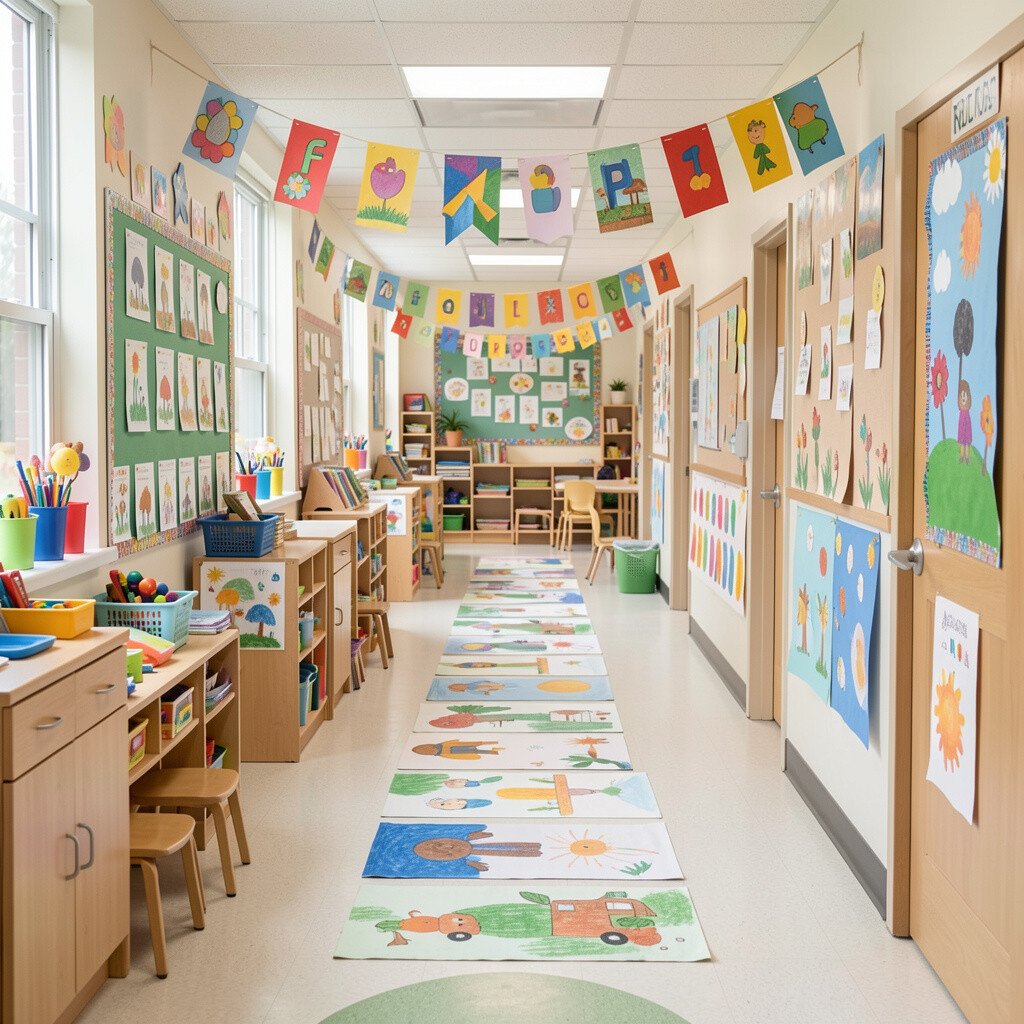
Extend the fun beyond the classroom with a hallway trail of kid-made banner panels. Each panel can feature a mini drawing, a painted shape, or a learning word, all arranged in a bright color sequence.
This kind of decoration motivates families and supports student pride, because children love seeing their work on display. It also offers natural chances for quick practice when kids read labels while walking and waiting.
To keep it practical, use lightweight materials and attach banners with removable clips so you can update them easily. Personalize the trail by letting each class theme choose the banner colors and by rotating panels to keep the hallway feeling fresh.