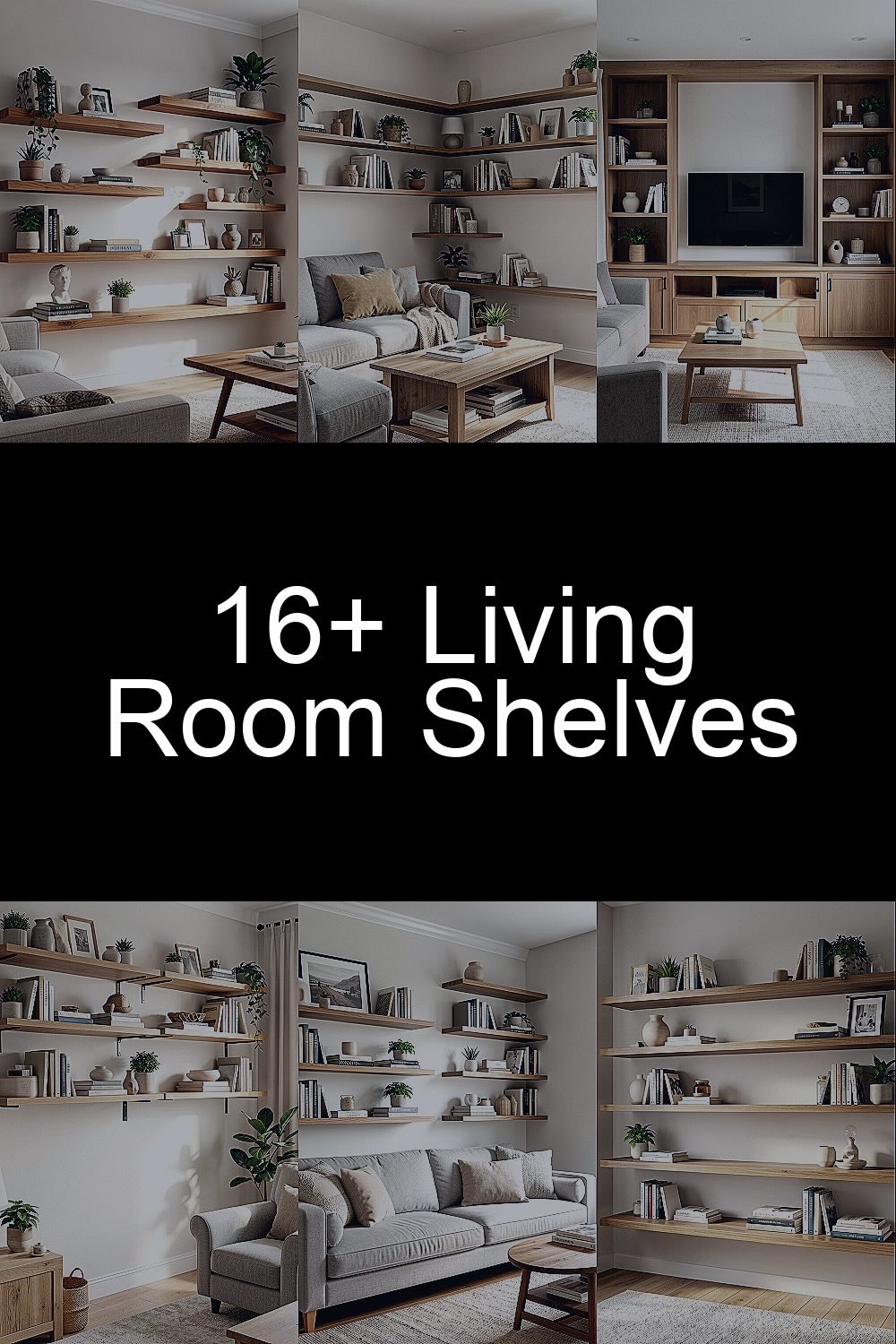
A good shelf can make a small living room feel calm and organized. With the right layout, every item looks like it belongs.
You just need shelves that fit your space and match your style.
1. Floating Shelves With Warm Wood

Floating shelves look light, even when they hold a lot. In a small living room, that visual airiness helps the room feel less crowded.
Choose warm wood tones to add comfort, especially if your walls are cool colors. Use narrow planks and keep the shelf depth modest so you get storage without blocking sightlines. For a clean look, group books by color and add a small plant or framed photo as a soft anchor.
2. Corner Shelves That Use Dead Space

Corners are often ignored, but they are perfect for shelves. When you place shelving in that corner, the room instantly feels smarter.
Try a set of slim corner shelves that wrap slightly around the wall. Keep the styling simple by mixing a few books with a couple of small baskets for odds and ends. A practical trick is to measure the corner first, because baseboards and outlets can steal space.
For cost, consider basic brackets and pre-made boards if you like a DIY approach. Current trends favor mixed materials, so pairing wood with black metal brackets can look modern without feeling expensive.
3. Built-In Style Shelves Around the TV
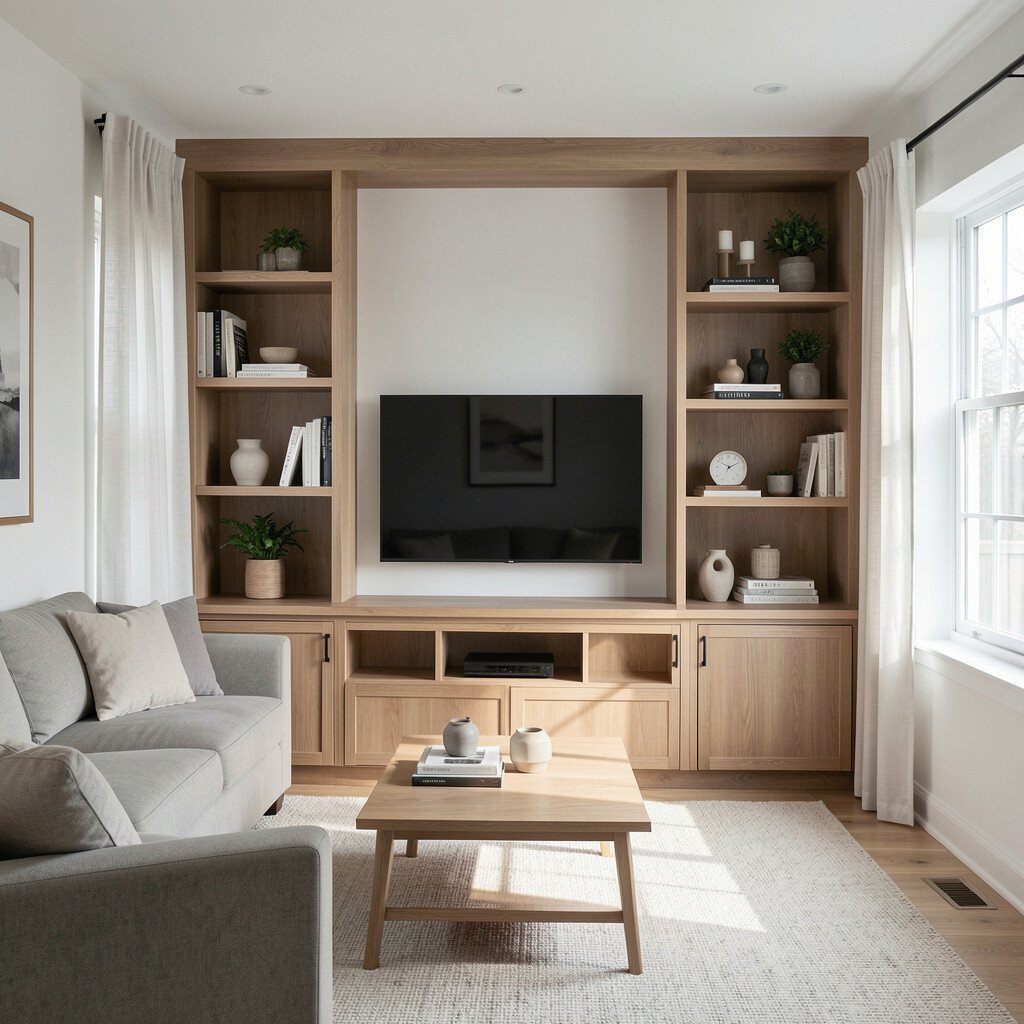
If your TV takes up most of the wall, shelves nearby can make it feel like part of the design. A built-in style setup helps small living rooms look intentional instead of busy.
Use two vertical columns and connect them with a few shelves at different heights. Put taller items at the ends and keep the middle area lighter so you can still enjoy the view of the TV. Consider hiding small remotes and media accessories in bins so clutter stays behind closed lines.
For personalization, add a thin strip of molding or a contrasting wood edge. Depending on your budget, you can buy a ready-made media console with shelving or hire a carpenter for a custom feel. Either way, aim for storage that matches the wall tone so everything blends smoothly.
4. Ladder Shelving for Storage and Display

A ladder shelf adds vertical charm while keeping the footprint small. It feels playful and stylish, which is great when you want function without a heavy look.
Pick a narrow model that fits your wall space and place it beside a sofa or near a reading chair. Style the top shelves with decor you love, and keep everyday items on the lower levels for easy reach. If you have kids or pets, use shelf liners or add non-slip pads to prevent small things from sliding.
5. Vertical Bookcases That Don’t Overwhelm
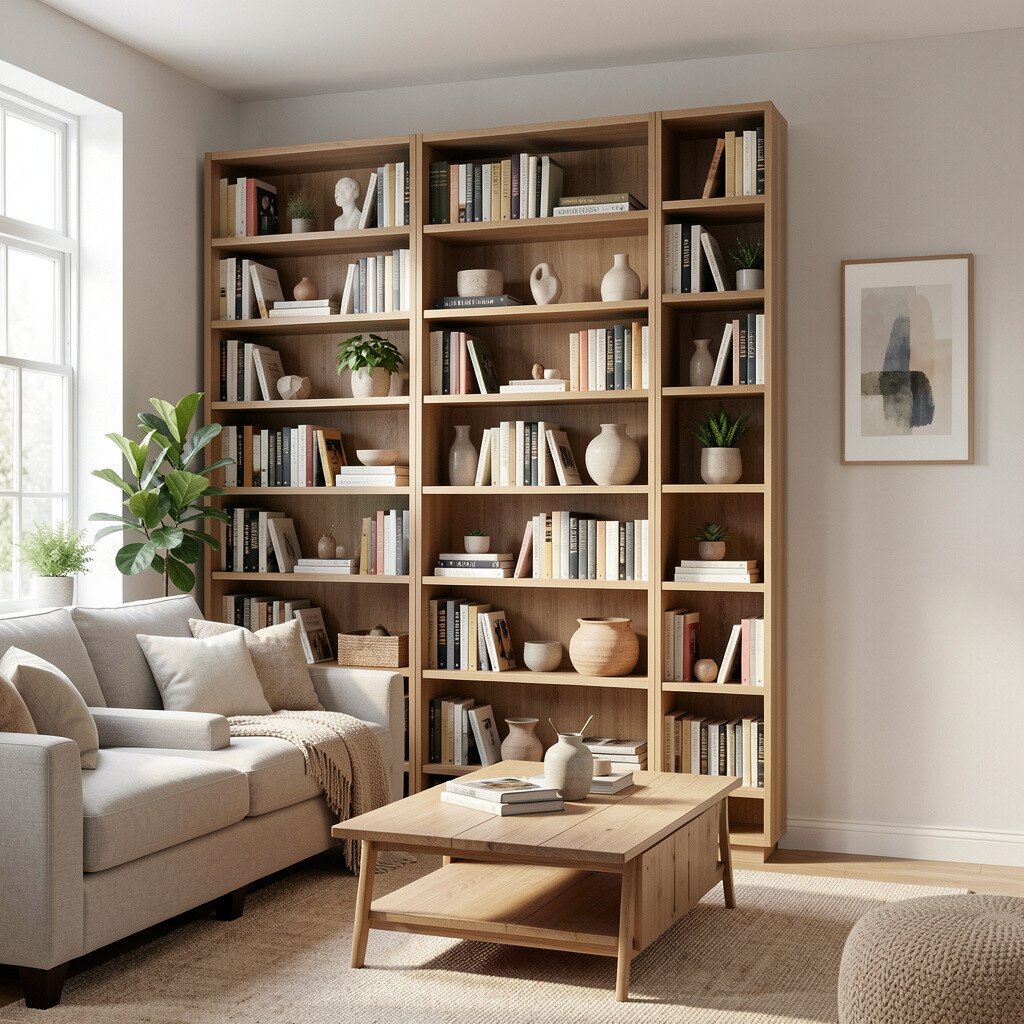
Some bookcases are wide, but you can choose slim, tall ones that fit tight rooms. A vertical shape draws the eye upward, which makes the space feel taller.
Look for shelves with adjustable spacing so you can fit books, storage boxes, and board games. Add a closed cabinet section for items you want out of sight, like extra blankets or chargers. For a trending look, mix leaning book stacks with a few clean, upright titles.
If you are keeping costs low, search for secondhand pieces and repaint them in a color that matches your room. Warm off-white, soft gray, or deep espresso can make a slim bookcase look custom. Finish by adding a small lamp on the bottom shelf area to create a cozy display glow.
6. Slim Shelves Above a Window Seat
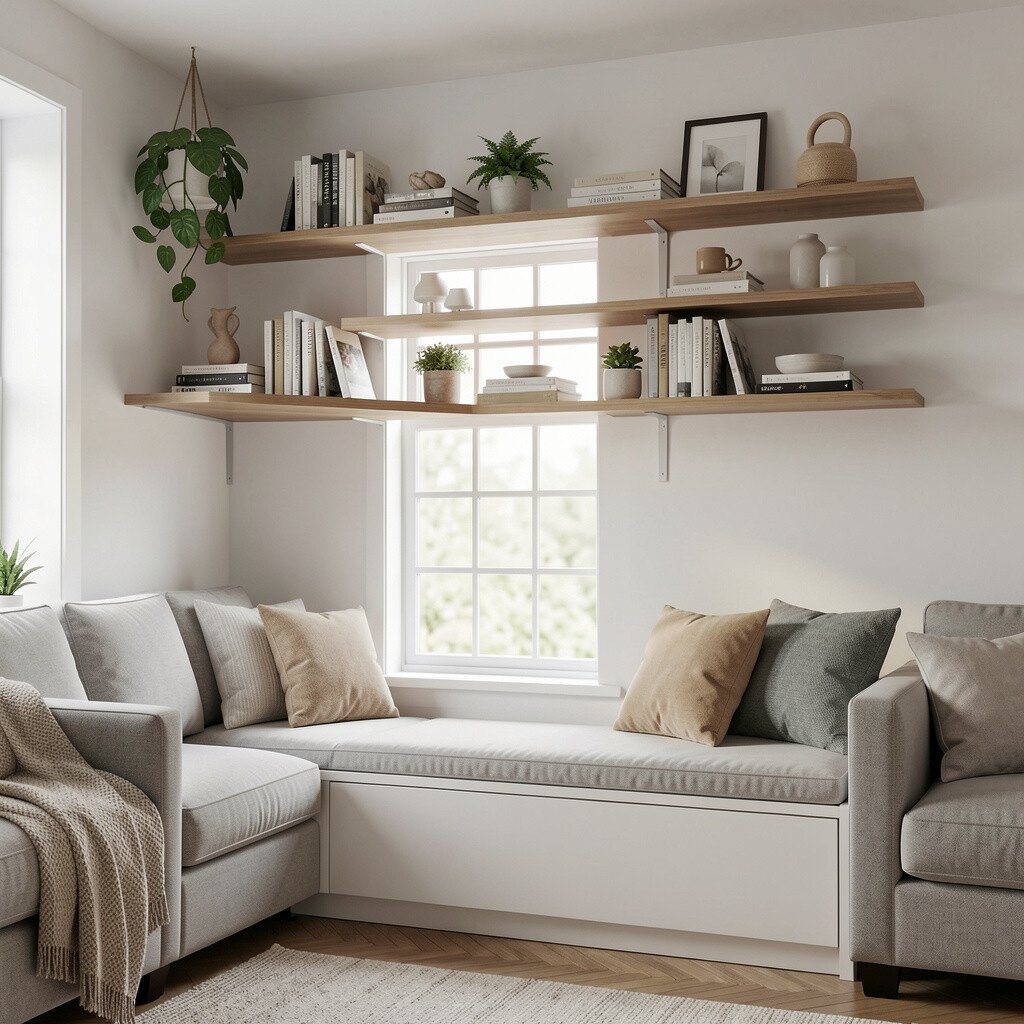
A window seat is already a cozy feature, so shelves above it can make the area more useful. This setup turns a restful corner into a place for books, puzzles, and calm decor.
Choose flat shelves with minimal brackets so the view stays clear. Place heavier items like books closer to the wall and lighter decor toward the outer edge. A practical tip is to keep the shelf height high enough for comfort, so you can sit without your hands bumping the display.
Personalize with a small tray that holds remotes, lotion, or tea accessories. If your budget is tight, paint existing shelves and use inexpensive brackets that match your hardware. This arrangement is especially popular because it blends seating comfort with storage in one neat zone.
7. Wall-Mounted Shelf Rails for Flexible Storage
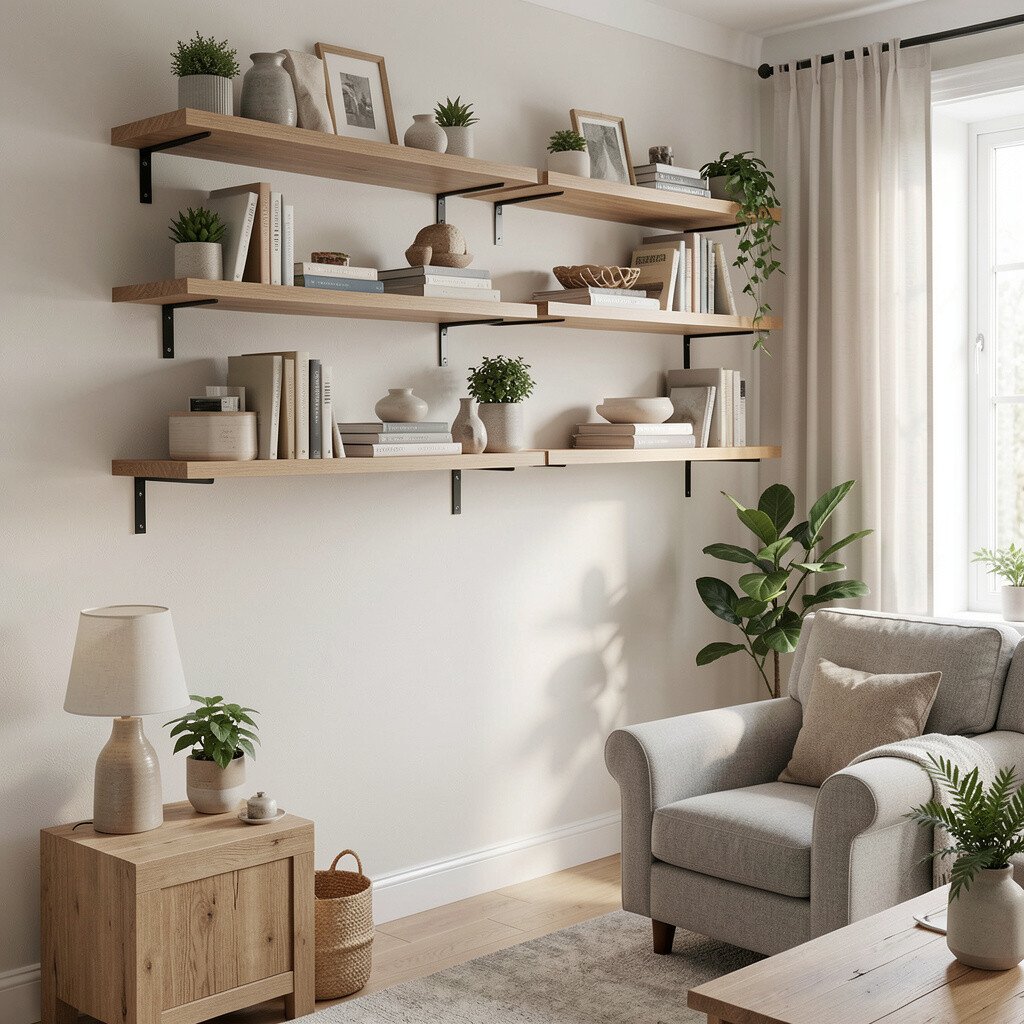
Shelf rails are a smart way to make storage that can change as your needs change. Instead of fixed shelves, you can adjust the spacing as your book collection grows.
This style often uses a sleek metal system that looks tidy in small rooms. Mount the rails on a wall near your sofa or entry area, and install a few boards at different heights. Keep the bottom area for baskets, because it hides clutter and makes cleaning faster.
For cost considerations, rails can be more affordable than custom carpentry, especially when you start with a small section. Choose a finish that matches your room hardware, like black, brushed nickel, or matte brass for a current style. If you like personalization, hang a small hook bar under one shelf for keys, scarves, or a lightweight bag.
8. Shelves on a Narrow Side Wall
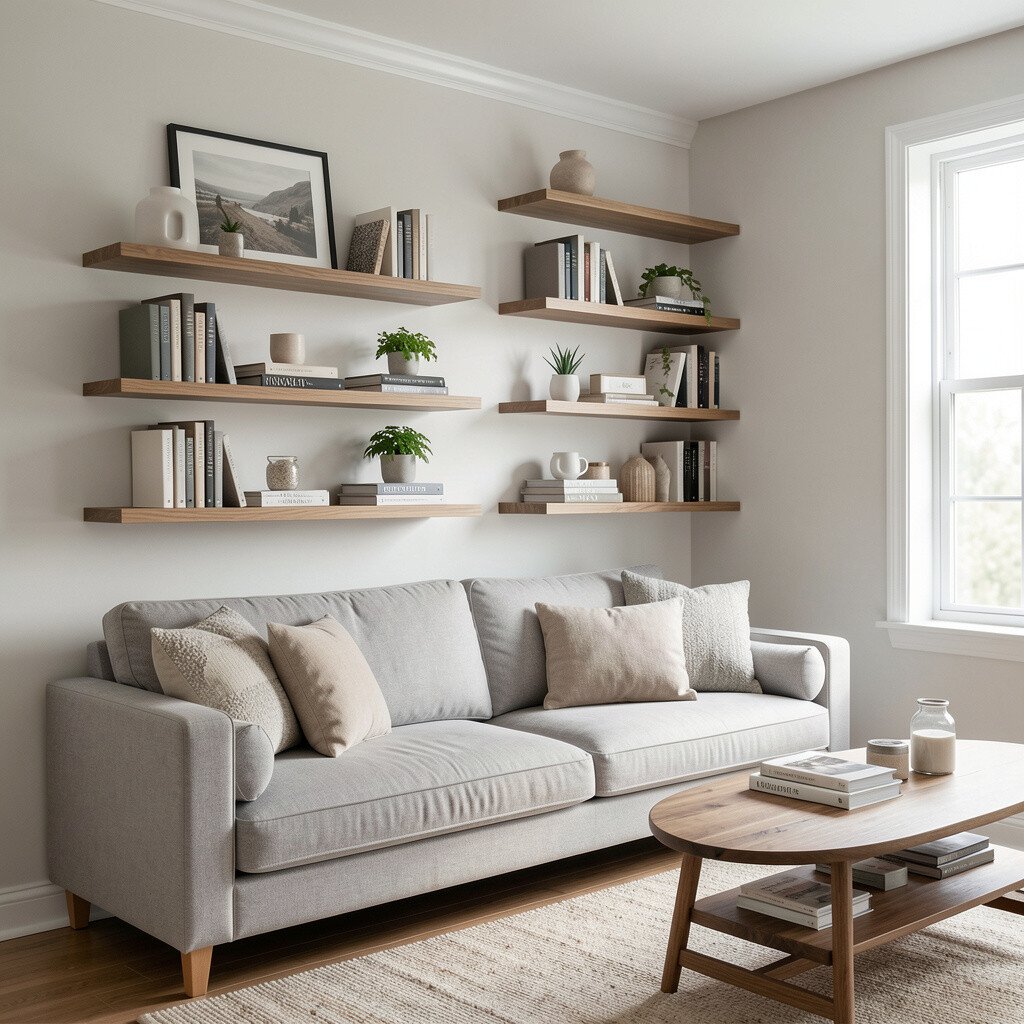
A narrow side wall can feel like it has nothing to offer, but it can become a storage wall. When shelves line up along that thin stretch, the room uses space that would otherwise go unused.
Use a series of small shelves rather than one long shelf, so the wall feels dynamic. Keep the shelves close enough together that your decor stays balanced, but leave breaks for visual breathing room. Try a mix of book spines and small framed prints so it looks curated, not random.
If you want to control cost, shop for standard shelf lengths and cut boards if needed. A trending idea is to use a consistent finish across all shelves, so the whole setup looks like one design. Personalize by rotating decor seasonally, like adding a holiday book stack or a summer ceramic bowl.
9. Storage Shelves Under Floating Ledges
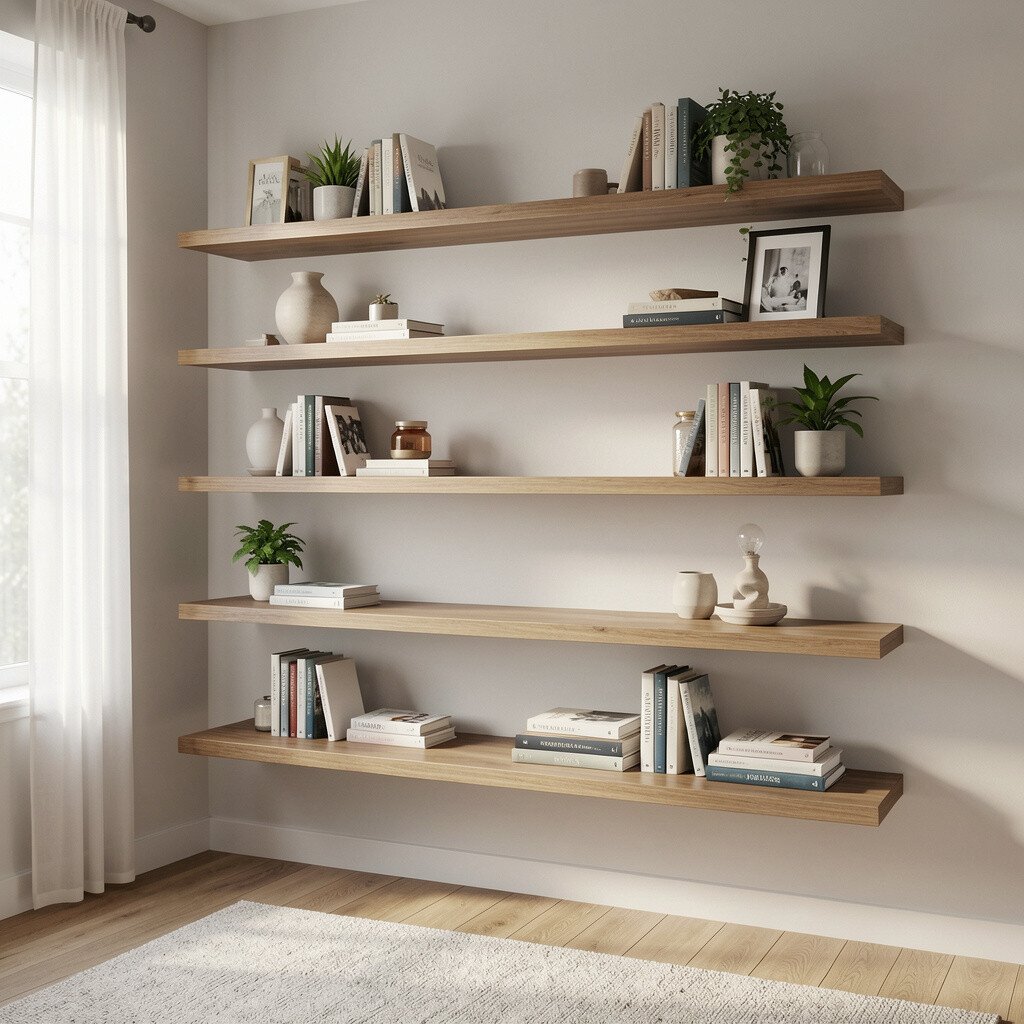
Floating ledges can feel simple, but you can make them do more. A design where ledges hold light decor while lower shelves store items keeps the room tidy.
Place lightweight decor on the top ledge, such as small vases, while using the lower shelves for games or media accessories. This creates a clear visual rhythm: pretty items up high, functional storage below. For practical tips, keep tall objects away from doorways and aim for stable shelving anchored to studs.
If you are working with a smaller budget, consider buying two shelf systems and adjusting the layout. The uniqueness comes from layering function and style in one wall, which makes even tiny rooms feel designed. Choose a color that complements your walls so the shelves look like they belong.
10. Glass-Front Shelves for a Clean Look
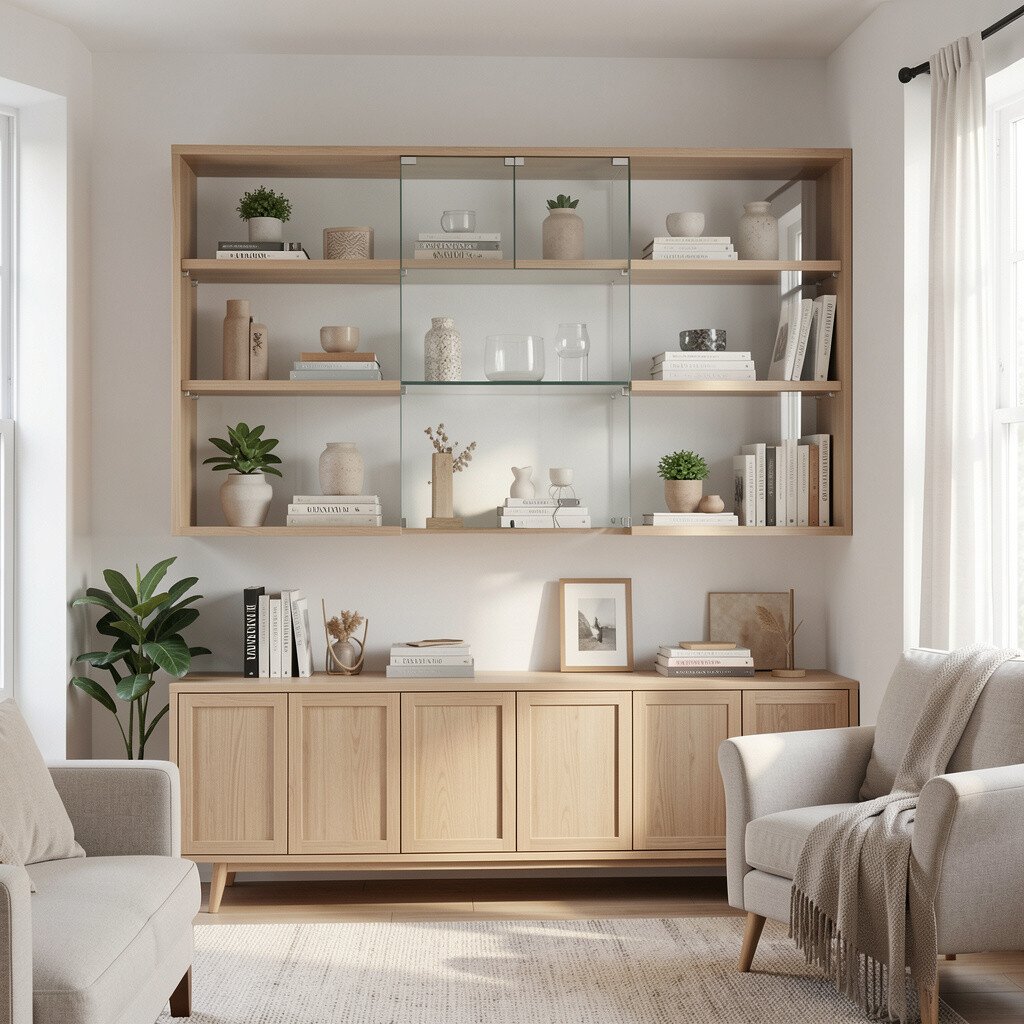
Glass-front shelves can make a room feel polished, because they show items without cluttering the wall. They are especially nice when you want a small living room to feel bright.
Use glass shelves to display matching sets, like mugs, clean book stacks, or simple bowls. Keep the inside neat, since glass shows details clearly. A practical trick is to group items by size and color, so the shelf looks styled even when you swap a few pieces.
Cost varies a lot, so if glass is pricey, look for partial glass fronts or open shelves with a protective finish. Current trends favor clean, minimal displays, and glass fits that style well. Personalize with one standout item, such as a favorite pottery piece, centered between books.
11. Bookshelves With Built-In Seating Storage
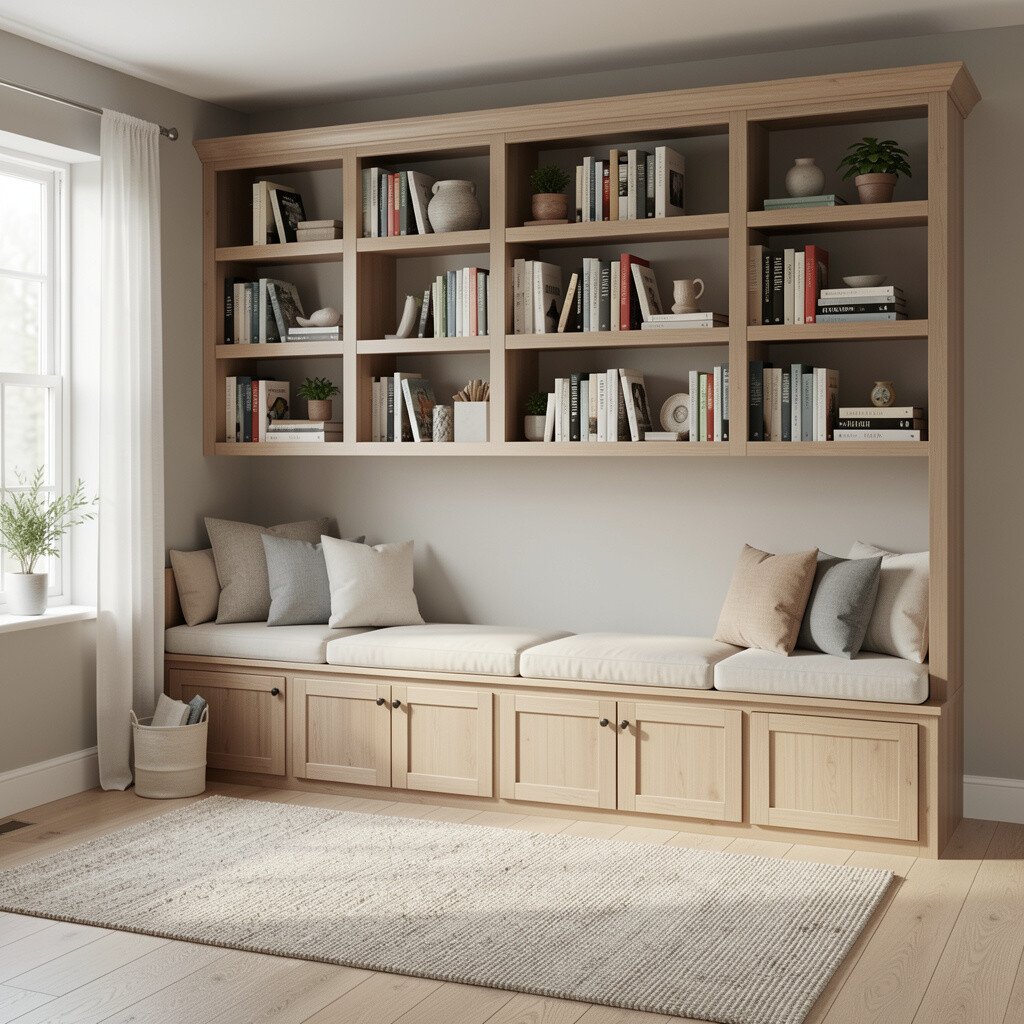
When you add shelves near or behind seating, you can store more while keeping the room cozy. This is a great move for small spaces where every inch counts.
Consider a sofa table with shelves behind it, or a narrow bookcase that lines up with seating. Use the higher shelves for decor and the lower shelves for things you grab often, like coasters and remote controls. For practical tips, keep frequently used items at arm height so you do not have to reach every time.
To manage cost, check for furniture that already includes shelving so you skip extra mounting work. Personalize by choosing shelf colors that match your cushion tones, which makes the whole setup feel cohesive. This idea feels unique because it blends storage with comfort instead of turning the room into a storage zone.
12. Picture Ledge Shelves for Artful Layers

Picture ledge shelves are thin and flexible, so they work well in small living rooms. They let you layer art and decor without taking much room on the wall.
Set books vertically on one side and stack them horizontally on the other to create a balanced look. Add a framed print or two, plus a small sculptural object, so the shelf looks like a mini gallery. A practical tip is to use museum putty or small non-marking mounts if you have rented space or sensitive walls.
For personalization, rotate your shelf styling every few weeks to match your mood. Cost can be low if you pick simple wood ledges and basic brackets. This is a current trend because it feels curated and relaxed at the same time.
13. Floating Shelves With Hidden Cable Storage
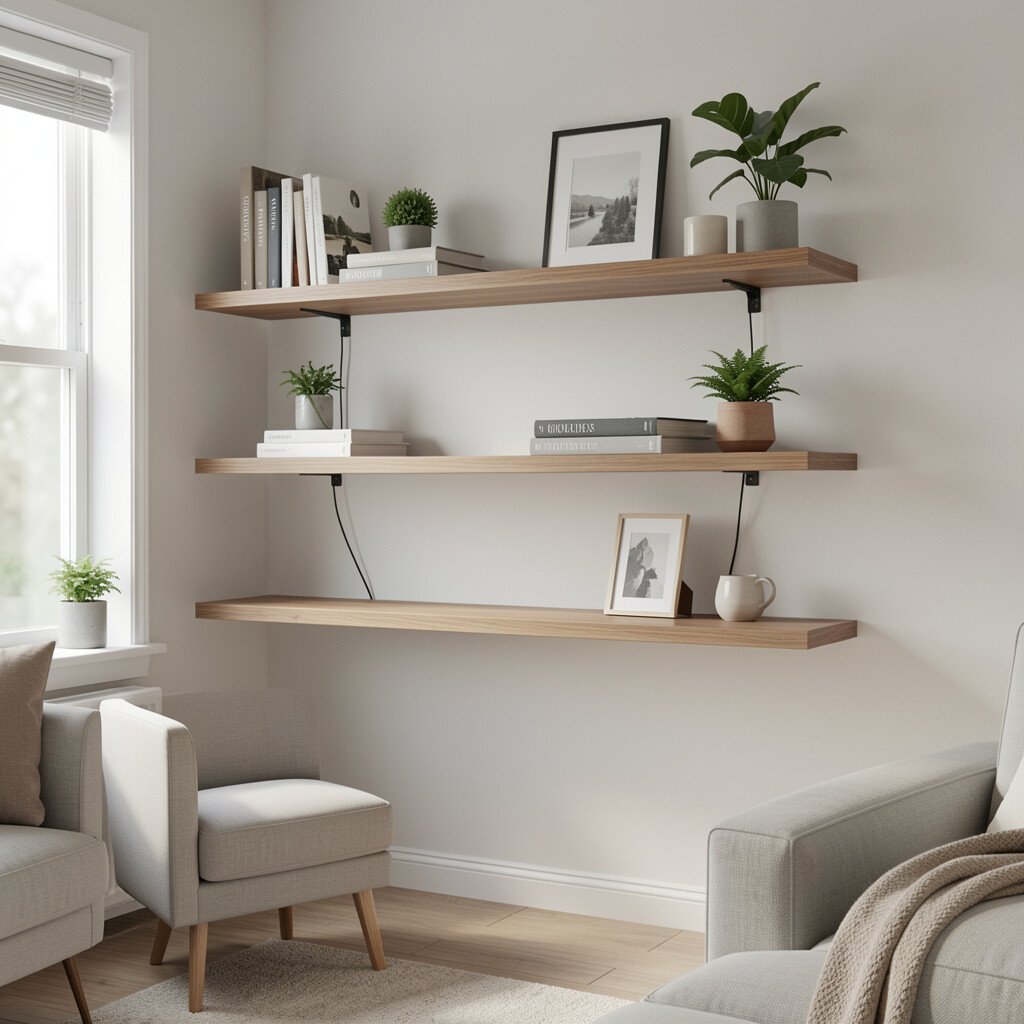
In many small living rooms, cables can make shelves look messy. When shelves include hidden cable channels, everything stays neat and calm.
Place shelves near your entertainment area and plan a route for cords through the wall or along the shelf back. Use cord ties and keep the visible part of cables behind decorative items like baskets or book stacks. This gives you a clean look that feels thoughtful rather than accidental.
To keep cost reasonable, use low-cost cable sleeves and combine them with a standard floating shelf. Personalize by placing a small decorative box that matches your decor, so the cord area looks intentional. The uniqueness here is the combination of visual style and behind-the-scenes order.
14. L-Shape Shelving for Books and Decor Zones
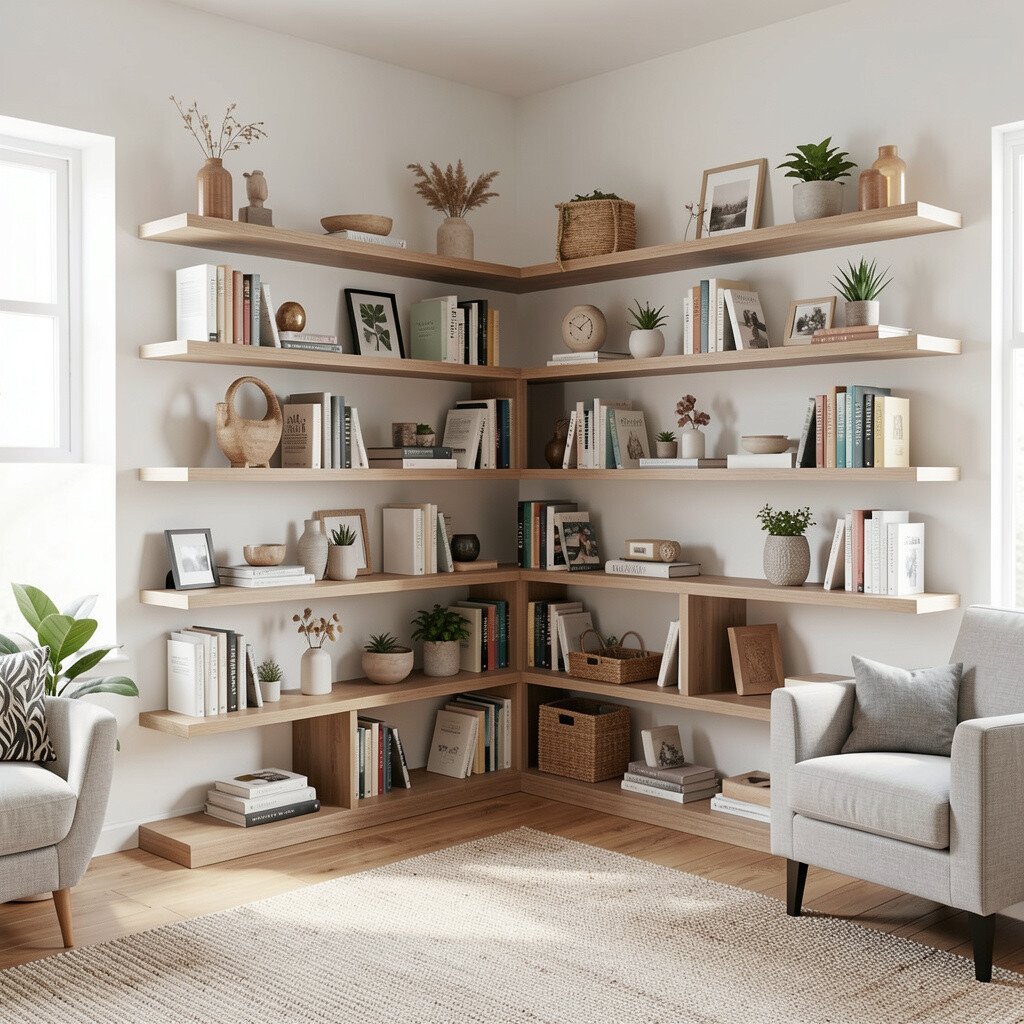
L-shape shelving is a clever way to create two storage zones in one setup. It works well when your living room has an awkward corner or a partial wall section.
Use the long part of the L for books and the shorter part for decor. Keep the top levels for items you want to show off, like framed photos, and store extras on lower shelves. A practical tip is to leave a small empty space for airflow so your shelves do not look too packed.
For cost, you can build an L-shape by combining two shelf runs with matching brackets. Many people like this idea because it feels architectural even in a small room. Personalize with a consistent color finish and add one accent piece to make the layout feel like your style.
15. Modular Cubes With Fabric Bins
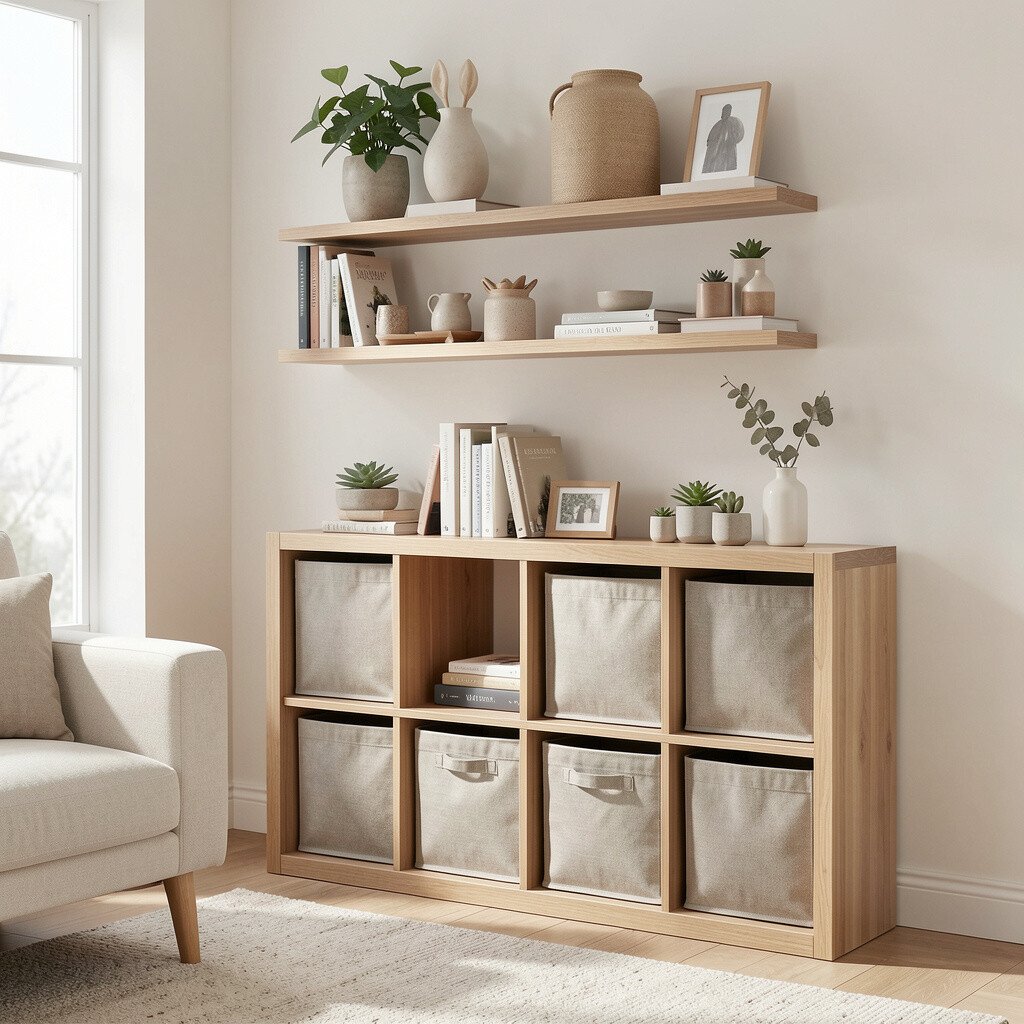
Modular cube shelves are flexible and perfect for changing needs. You can start with a few cubes and expand later without redoing everything.
Mix open cubes with closed cubes, then add fabric bins to keep small items hidden. This makes it easy to store toys, throws, and games while keeping the living room visually calm. A practical tip is to choose bin colors that match your sofa or rug for a more polished look.
Cost considerations are often great with modular systems, because you can buy only what you need. Current trends include earthy tones and soft textures, so fabric bins in warm neutrals look especially modern. Personalize by adding a label tag only if you enjoy it, or by using a small icon print on the bin for a fun feel.
16. Over-Sofa Shelves for Maximum Wall Use
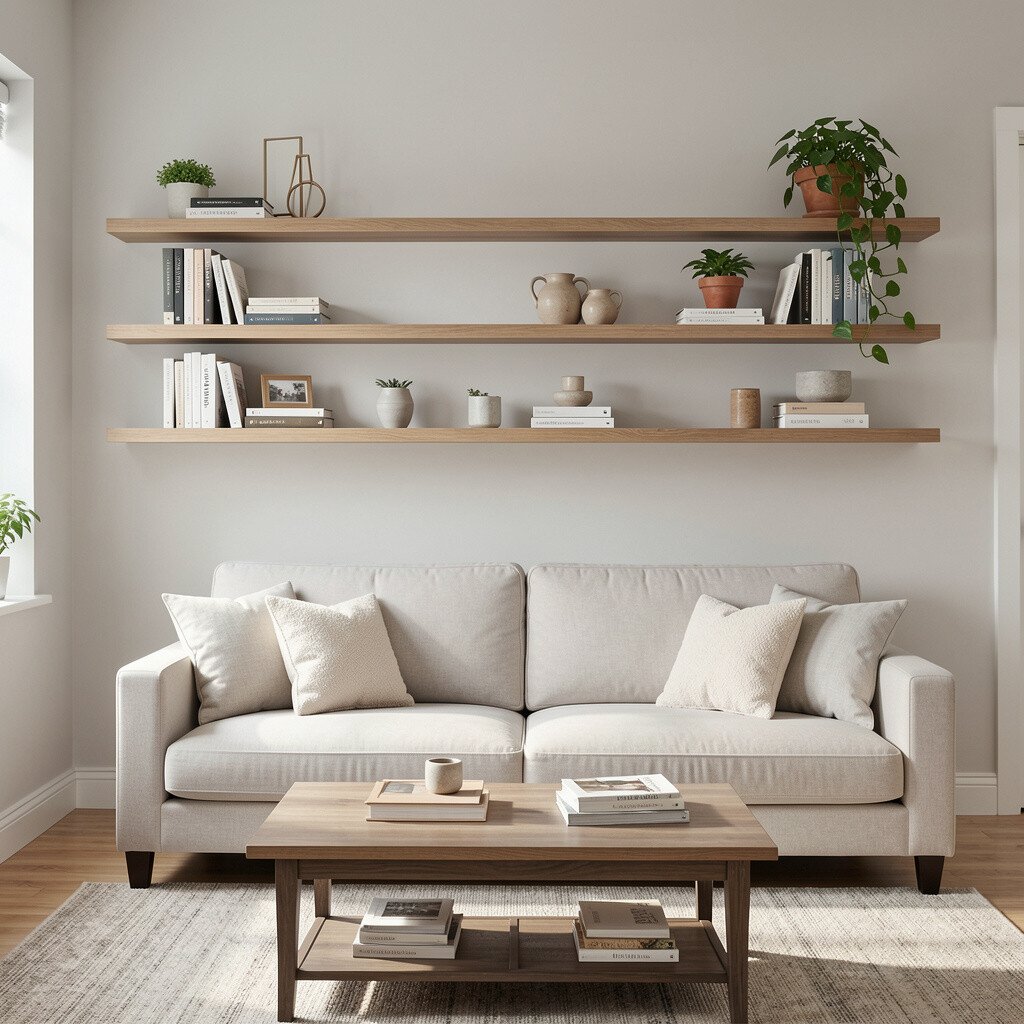
An over-sofa shelf turns the wall above your couch into a display that does not steal floor space. This is one of the best moves for small living rooms where you want more storage but cannot add bulky furniture.
Choose shelves that span the sofa width and keep the height comfortable so items are easy to reach. Style with a mix of books, small plants, and framed photos, using visual balance from left to right. For practical tips, mount shelves into studs and use level marks so the setup stays straight.
Cost can be moderate depending on shelf length, but you can save by using a simple shelf system and adding your own decor. Personalize with themed styling like travel snapshots or a set of matching vases. This idea feels unique because it uses the most common wall area in the room in a way that looks intentional.
17. Repurposed Vintage Shelves With New Purpose
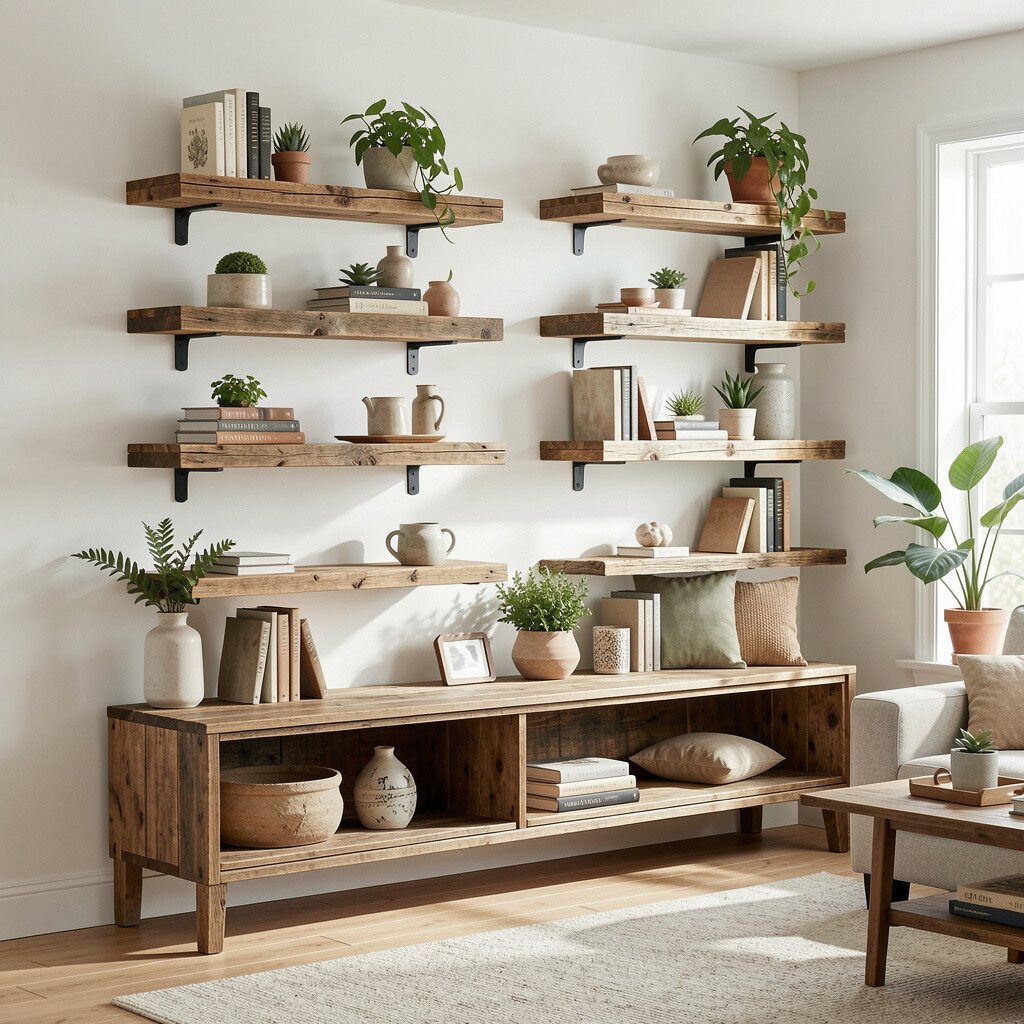
Vintage shelves bring character to a small living room instantly. Even if the room is compact, the old-world details make it feel warm and full of personality.
Look for thrifted crates, wooden ladders, or mismatched shelf pieces and arrange them into a cohesive display. Sand and refinish the wood to match your current color palette, and add brackets for safety. A practical tip is to test stability before loading heavier items, especially if you are using older wood.
Cost is often lower when you repurpose instead of buying new, and that makes this idea budget-friendly. Current trends love vintage-inspired decor, especially when paired with simple modern styling. Personalize by adding your own artwork, a favorite candle, or a small collection that tells a story.