There’s something magical about stepping into a beach house that feels light, calm, and beautifully finished. The right floor can make that feeling start the moment you open the door.
Airy luxury flooring isn’t only about looks. It’s also about comfort, easy care, and smart choices that fit coastal life.
1. Weathered Oak Planks With a Soft White Wash
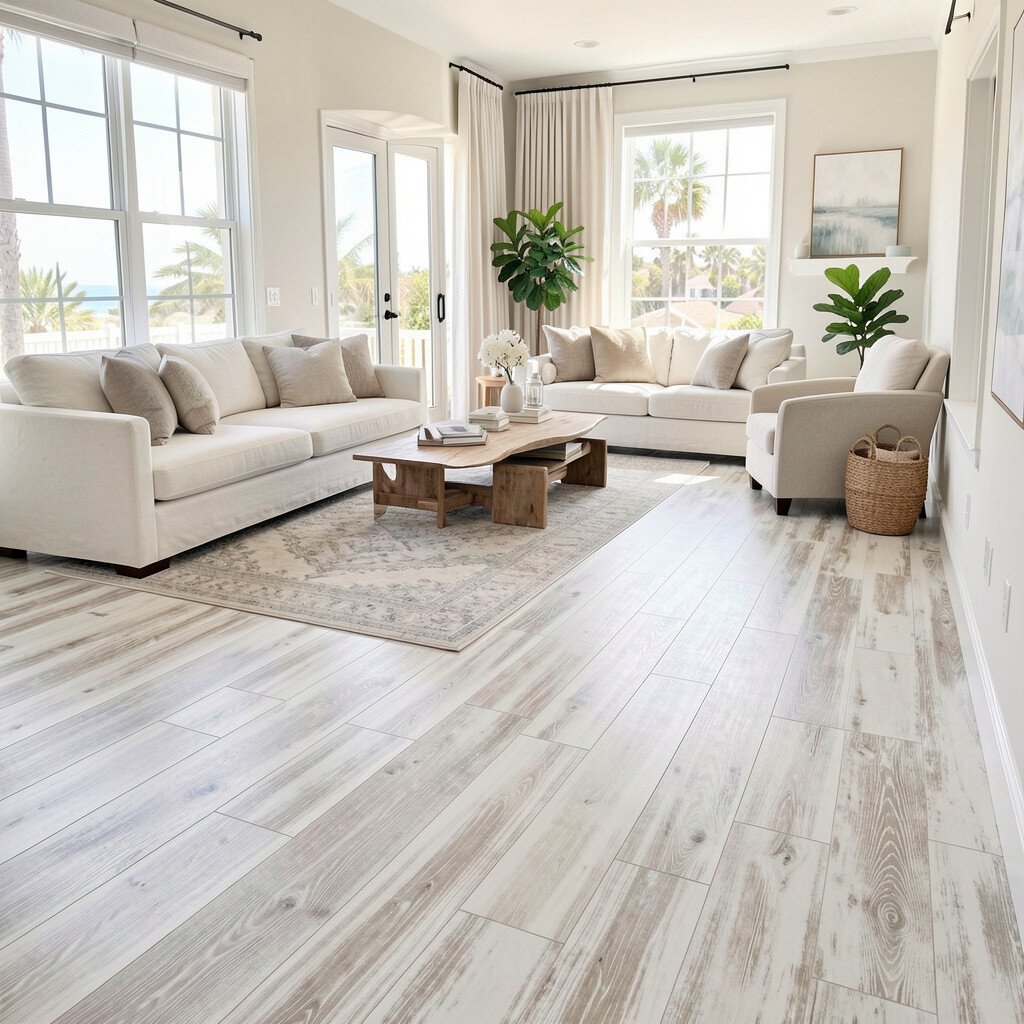
Picture wide oak boards with gentle grain lines and a barely-there white wash. Under natural light, they look airy and relaxed, like sunlit driftwood.
Choose a finish that resists moisture and wipe-clean dust so day-to-day life stays simple. You’ll get warmth underfoot, which matters when you’re walking barefoot from the patio. For personalization, pick a plank width that matches your room size, then pair it with light rugs in natural fibers. Consider cost by comparing vinyl or engineered options to solid hardwood, and keep in mind that engineered oak often handles humidity swings better.
2. Coastal-Look Engineered Wood With Herringbone Rhythm
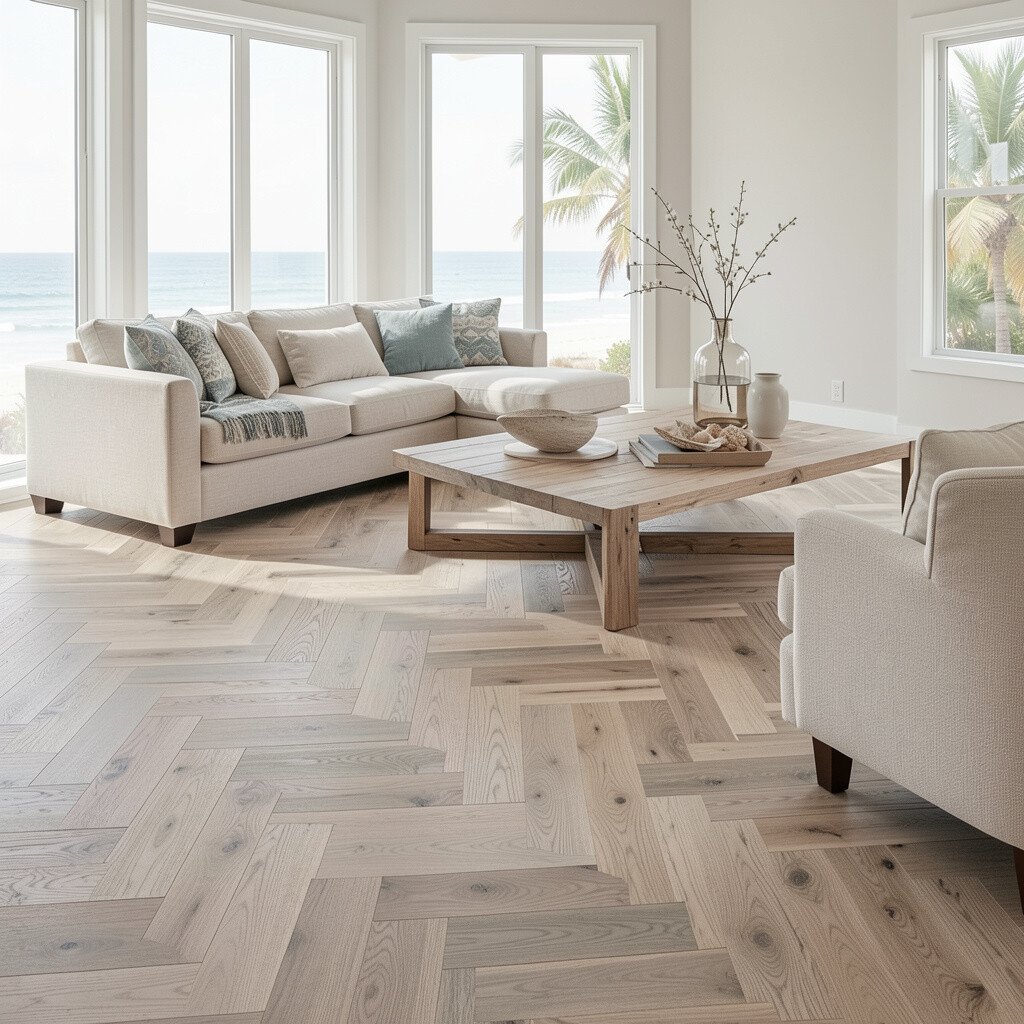
Imagine an engineered wood floor laid in a herringbone pattern that catches light at every angle. The look feels tailored, but still beachy and easygoing.
This pattern helps hide small subfloor imperfections and adds visual movement without needing bold color. It also brings that “boutique hotel” vibe, especially in hallways or entry zones. To personalize, choose warm sand tones or slightly cool greige planks so your walls and furnishings stay balanced. If you’re budgeting, engineered wood can give you the high-end look with less expense than full solid wood, and it’s often more stable in coastal climates.
For practical care, use a soft cleaner and avoid soaking during mopping. Keep felt pads under chairs so the pattern stays crisp over time. When guests arrive, the floor’s texture and directionality make the space feel styled from the start.
3. Large-Format Porcelain Tiles in Sea-Glass Tones
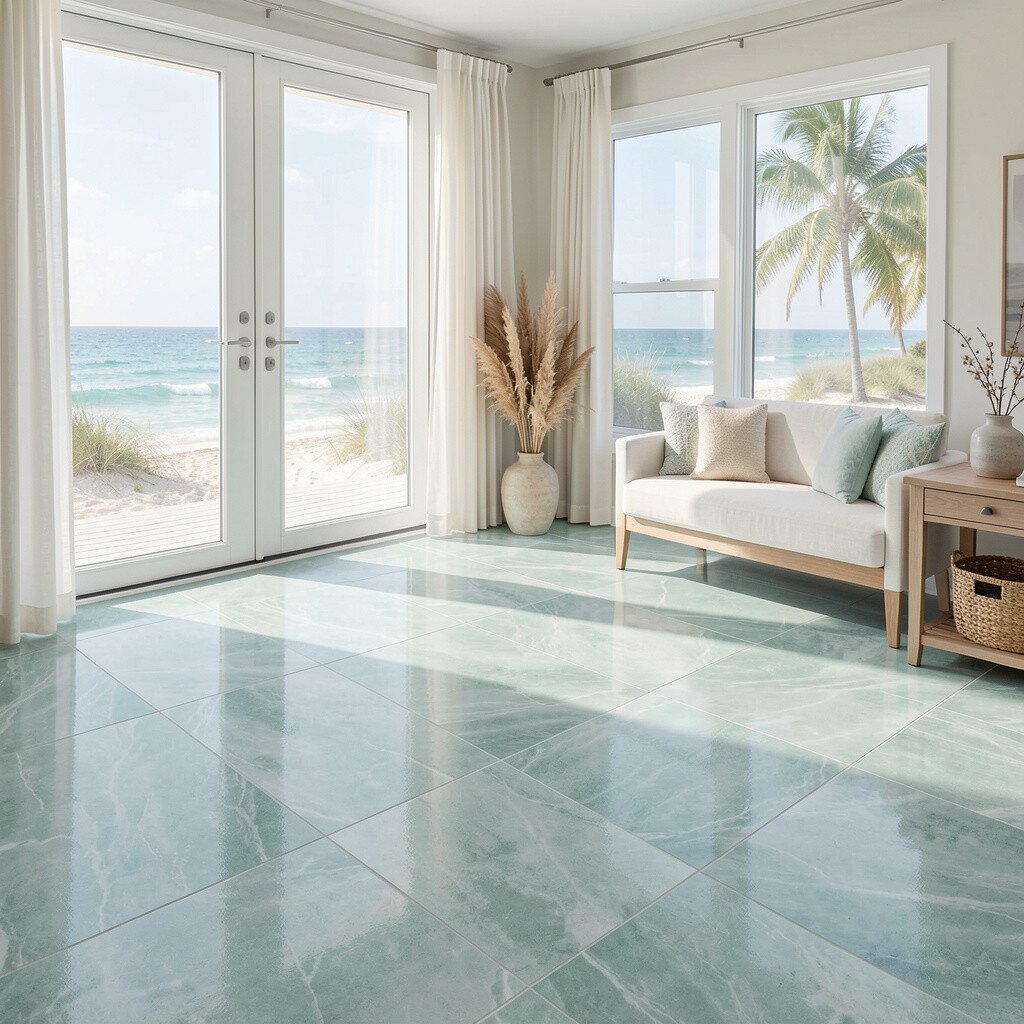
Think of glossy sea-glass tiles with subtle flecks that mimic ocean shimmer. The larger the format, the fewer grout lines you see, so the room feels cleaner and calmer.
Porcelain is a strong choice for beach houses because it handles humidity and is resistant to scratches. It also stands up well to wet shoes, beach gear, and everyday spills. For uniqueness, look for tiles with gentle tonal variation so each tile feels like part of a wave pattern. Personalize by matching grout color to the tile shade, which creates a smooth, high-end look.
If cost is a concern, balance tile price with installation effort. Larger tiles can sometimes reduce labor time because fewer pieces are needed, but make sure your subfloor is ready for a crisp finish. For current trends, many homeowners are leaning toward calmer, spa-like colors instead of heavy contrast, so sea-glass greens and soft aquas feel fresh.
4. Linen-Color LVP With a Real-Wood Feel
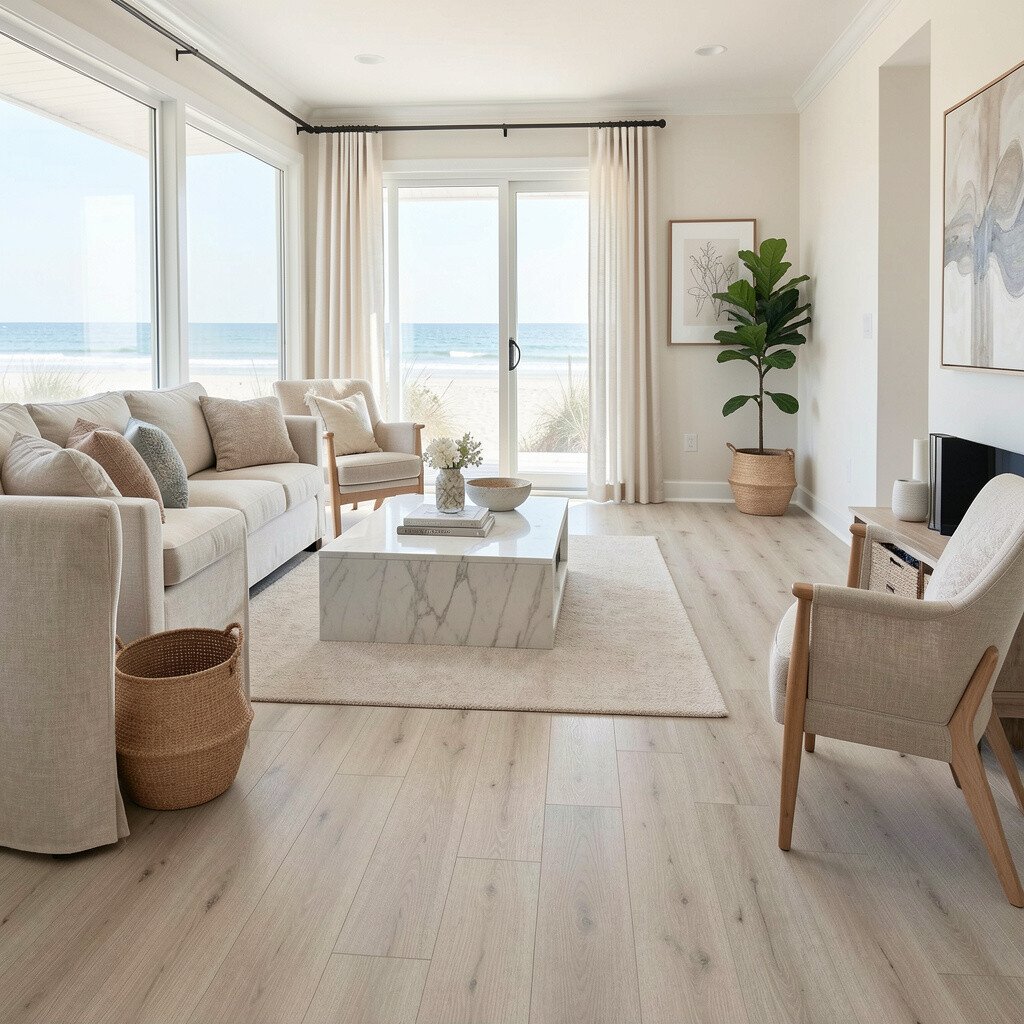
Picture luxury vinyl plank that looks like pale driftwood, with a quiet texture that won’t feel slippery. In bright rooms, it reads airy and soft, like linen fabric catching sunshine.
Modern LVP is a practical luxury for coastal homes because it’s water-friendly and easy to maintain. It also helps with comfort, since many options have built-in underlayment for quieter steps. To personalize, pick a plank tone that matches your trim so the whole space feels coordinated. If you want to manage cost, measure carefully and compare installation packages, because LVP often offers better value than tile or hardwood.
5. Soft-White Marble-Look Porcelain for a Polished Resort Feel
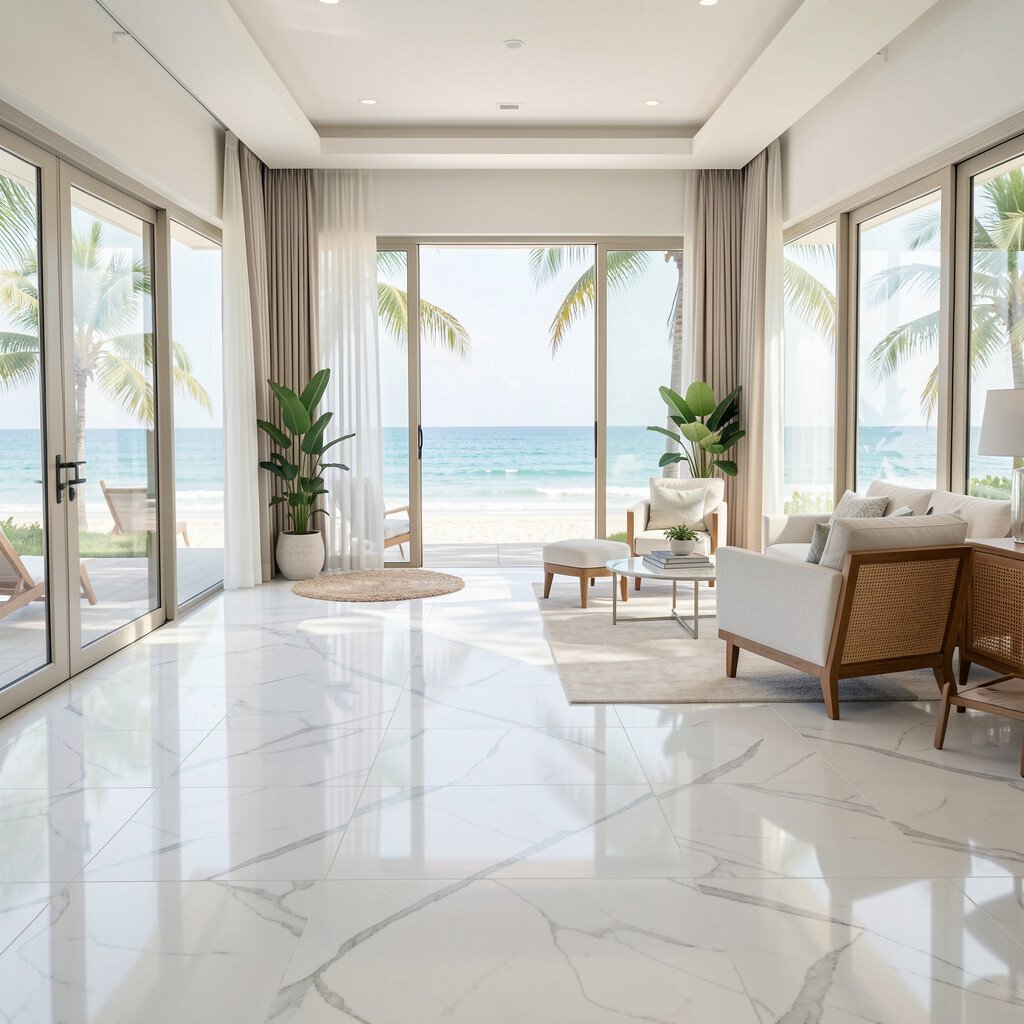
Imagine marble-look porcelain with airy movement, like thin clouds drifting across the sky. When the light hits, it looks luxurious without needing the worry of real stone care.
This option brings a clean, elegant feel that still works with beach furniture. It’s great for high-traffic areas because porcelain resists stains and scratches. For uniqueness, choose a subtle pattern with gentle veining rather than bold drama, so the floor stays calming. Personalize with warm accessories like woven baskets and light wood accents to keep it from feeling too cold.
Cost considerations matter here, since premium marble-look styles can be pricier. A smart approach is to focus on key rooms like the living area, then use a coordinated material in bedrooms. A current trend is pairing cool-toned floors with warm textiles, which makes the contrast feel intentional and stylish.
6. Beachy Engineered Bamboo in Honeyed Neutral Tones
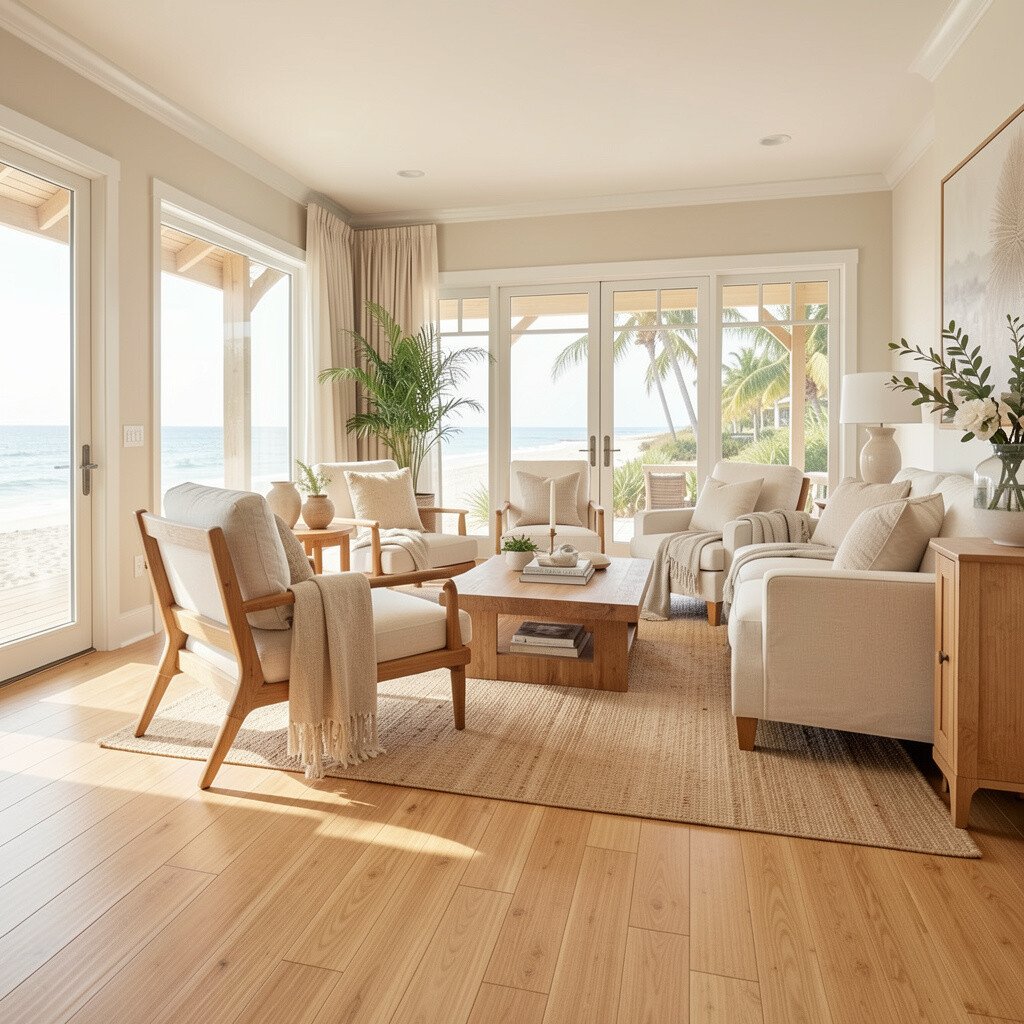
Bamboo can feel surprisingly elegant when it’s finished in warm, honeyed neutrals. The look is smooth and clean, and it brings a light, modern energy to a beach house.
Bamboo is naturally resilient, and many engineered bamboo floors handle moisture better than you’d expect. You get a springy, comfortable feel that’s nice for standing in the kitchen while cooking for family. For personalization, choose a satin finish instead of high gloss, then add a large jute rug to soften the whole space. On the cost side, bamboo sits in a mid-range zone depending on thickness and brand, so compare warranties and installation requirements.
To keep it looking airy, use a microfiber mop and avoid harsh cleaners. It’s an easy win if you want something renewable and bright, especially in rooms that don’t get heavy rain exposure.
7. Light-Ceruse Oak With a Matte Finish
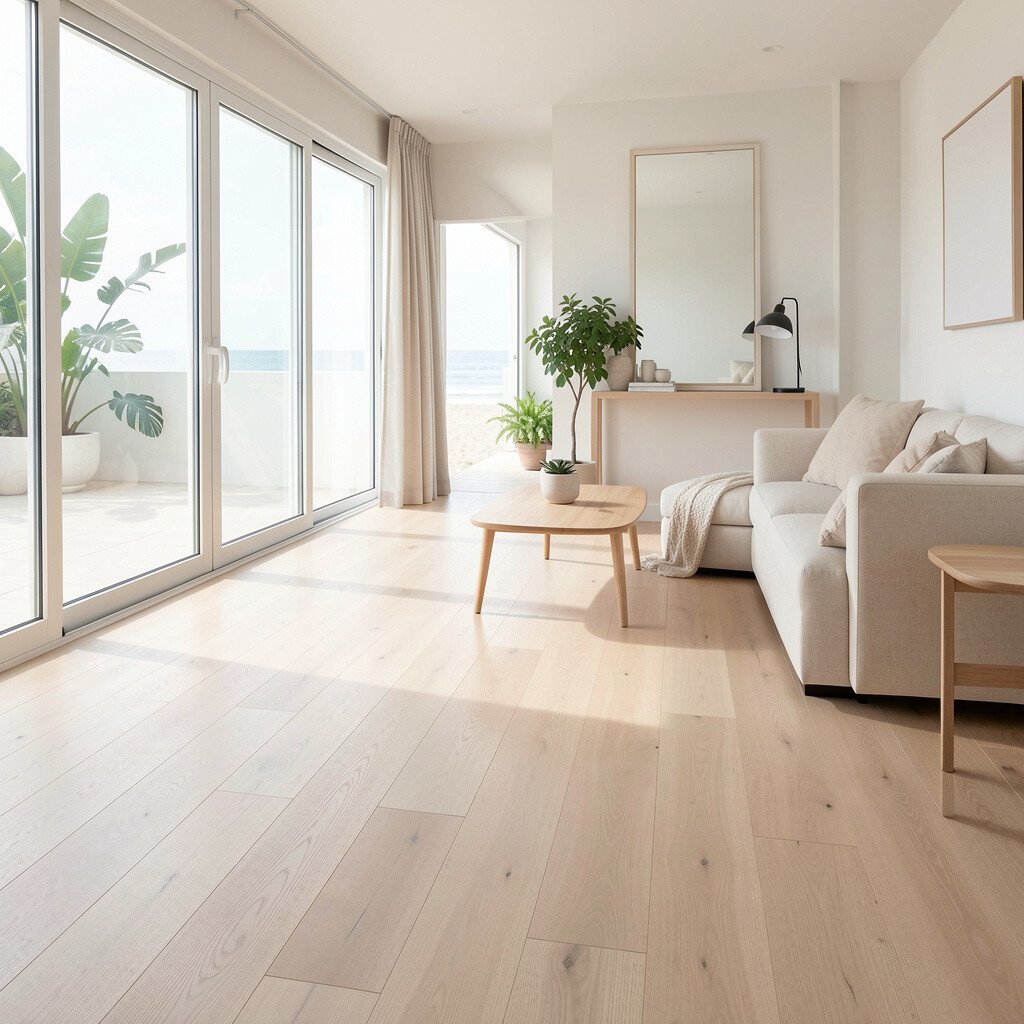
Picture oak with carved-in grain that’s delicately highlighted, creating depth without looking heavy. A matte finish keeps the floor from feeling shiny, so it blends beautifully with soft coastal color palettes.
This style adds uniqueness through its texture, which can make plain rooms feel designed. Matte finishes also hide smudges better, helping your home stay picture-ready without constant cleaning. For practical tips, pick a topcoat that’s made for residential traffic, and use area mats at entry points for wet season protection. You can personalize the overall vibe by using lighter cabinet colors or pairing the floor with warm, natural linens.
Cost can vary based on whether you choose solid or engineered oak. If you’re trying to stay within budget, engineered planks with a strong wear layer often deliver the same visual impact. As a current trend, many people are choosing matte, airy neutrals rather than glossy, high-contrast floors.
8. Driftwood-Style Ceramic Planks With Gentle Aging
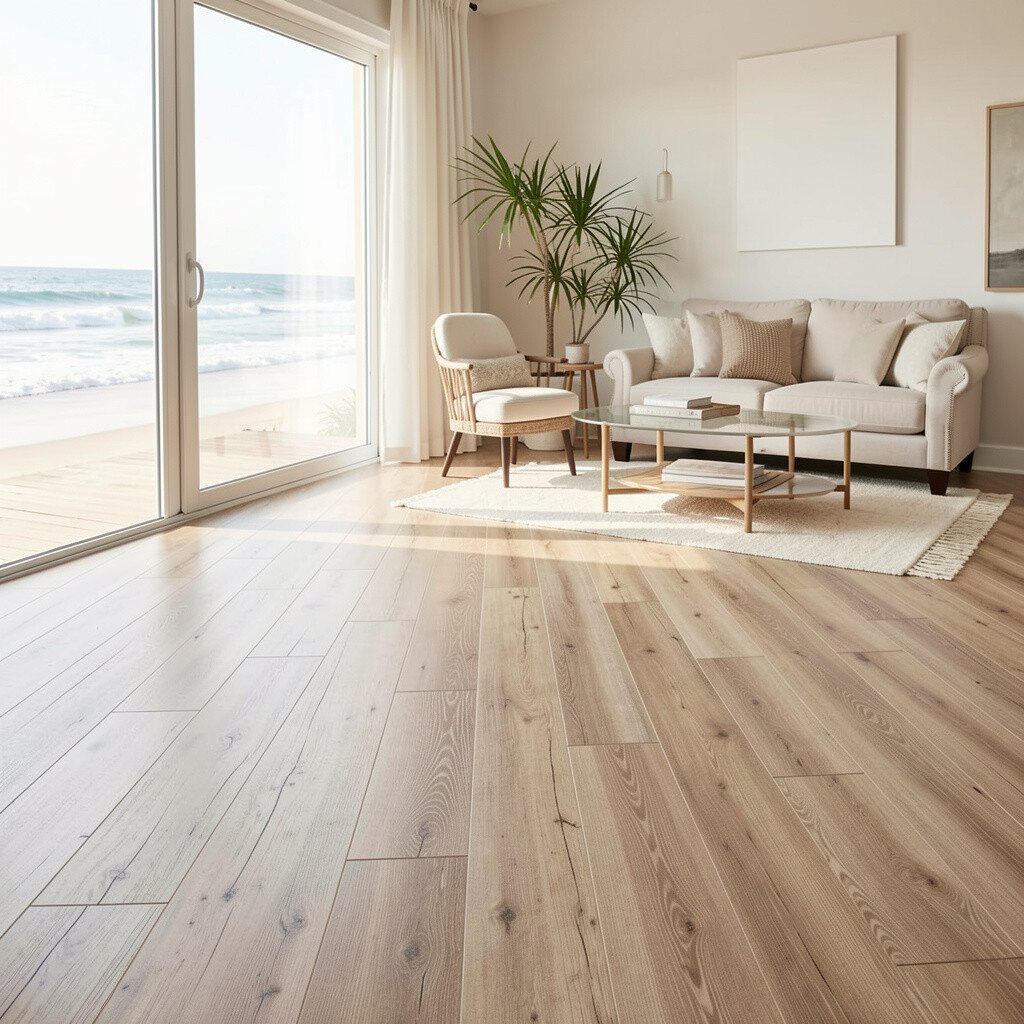
Think of ceramic planks that mimic driftwood, complete with soft streaks and rounded edges. They look like they’ve lived by the shore, but they’re still easy to clean and maintain.
Ceramic is ideal for beach climates because it handles temperature changes and resists water damage. It also works well with underfloor heating if you want extra comfort on breezy mornings. To personalize, choose plank lengths that complement your room shape, and use grout colors that match the lightest streaks for a seamless feel. When budgeting, weigh the cost of tile plus installation against the longevity you’ll get from a hardwearing surface.
For practical care, sweep often and use a mild cleaner that won’t dull the finish. This flooring is a great choice if your home gets lots of sand, since tile usually cleans up faster than porous materials.
9. Hushed Greige Large Tiles With a Sanded Look

Imagine large tiles in a muted greige that feel like soft sand under your fingertips. The surface has a gentle, sanded texture, so it doesn’t look overly glossy.
This look creates a calm, airy backdrop for beach house décor, from white slipcovered furniture to pale blue throws. It also pairs well with matte hardware and light wood details. For uniqueness, pick tiles with micro-variation so the floor looks naturally crafted rather than flat. Personalize by adding a patterned runner in a salt-wash palette for subtle visual interest.
Cost considerations are easier to manage if you choose a tile that’s available in multiple sizes, since that can reduce waste during cutting. Keep in mind that larger tile sizes may require skilled installation for straight lines. A current trend is choosing textured, low-sheen surfaces that feel spa-like, and greige sand tones fit right in.
To maintain the look, clean with a pH-neutral product and avoid abrasive pads that could change the texture.
10. Salted-Cork Flooring With a Soft, Cushioned Step
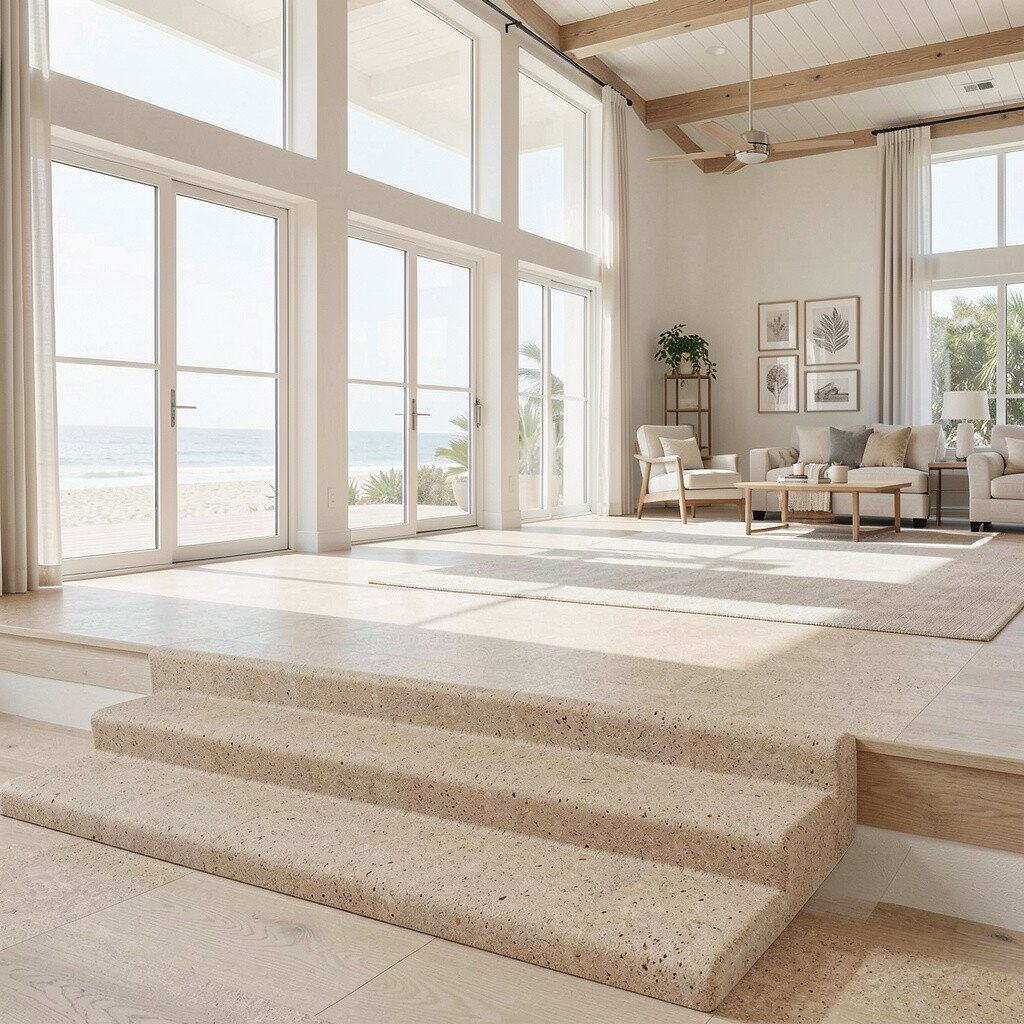
Cork can feel like walking on a gentle cloud, and salted cork tones look naturally beachy. The texture is warm and inviting, even when the sun isn’t blazing.
Cork brings comfort and quiet, which is wonderful if your beach house doubles as a family gathering spot. It also has natural insulating properties, helping floors feel warmer in cooler months. For practical tips, seal the surface with a quality cork sealer and keep a simple cleaning routine using a damp mop. You’ll also want to protect it from standing water, so wipe spills right away after beach days.
Uniqueness shows up in the subtle speckle and organic pattern that you can’t copy with standard laminate. For personalization, match the cork tone to your wall color and choose natural fibers like jute or sisal rugs to keep the look cohesive. Cost can be higher than basic vinyl, but cork’s comfort and quiet feel often make it worth it for many homeowners.
11. Light Oak Laminate With an Ultra-Matte Surface
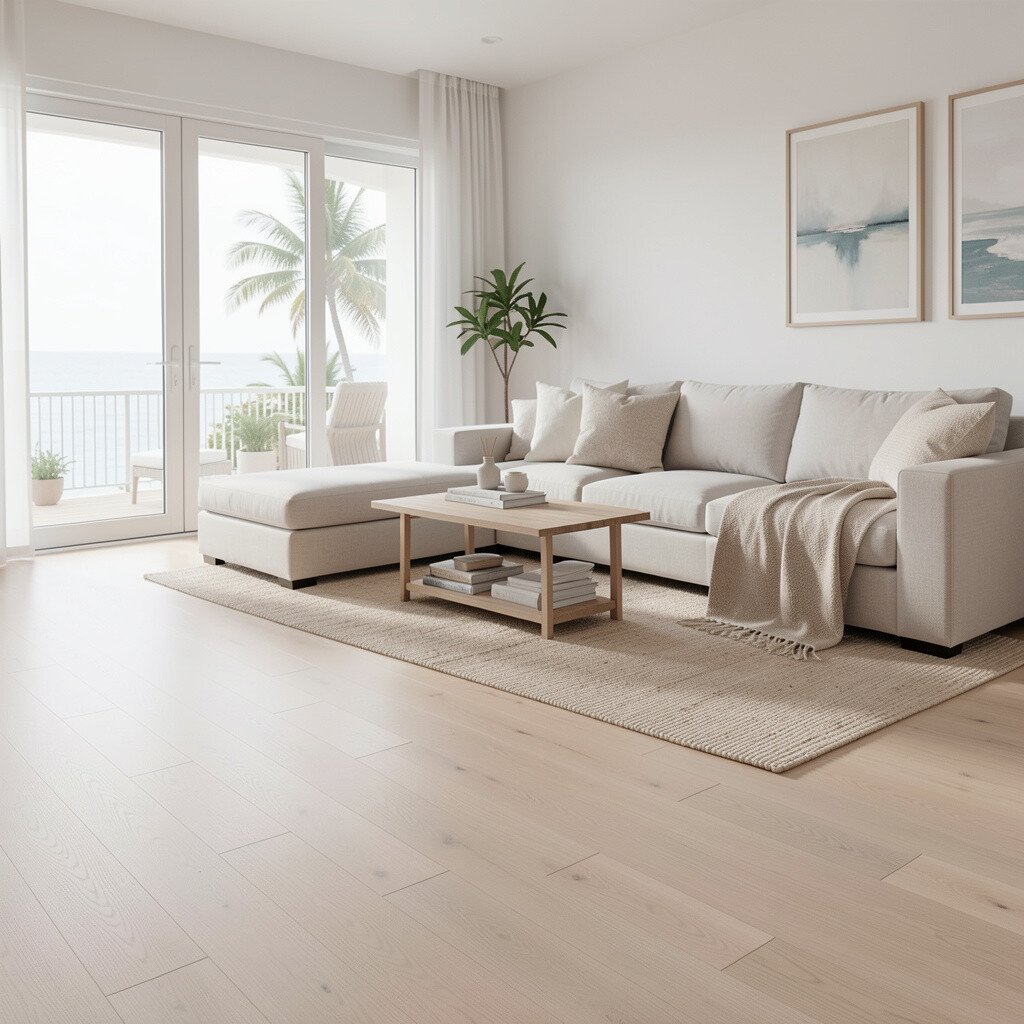
Laminate may not sound as luxurious at first, but the right version can look surprisingly real. Picture light oak planks with an ultra-matte surface that reduces glare and keeps rooms calm.
This choice can be budget-friendly while still giving you that airy, high-end wood look. Laminate also helps with scratches when you choose a wear layer rated for residential traffic. To personalize, select plank widths that feel balanced, then style with furniture that has light legs and simple silhouettes. That combination makes the flooring feel brighter and more open.
For practical care, use a microfiber mop and avoid soaking, since moisture can shorten laminate life. If you’re worried about beach humidity, choose water-resistant laminate and install with proper underlayment. A current trend is moving toward softer, glare-free finishes, and ultra-matte flooring fits the look perfectly.
12. Whitewashed Parquet Flooring for a Custom, Crafted Feel
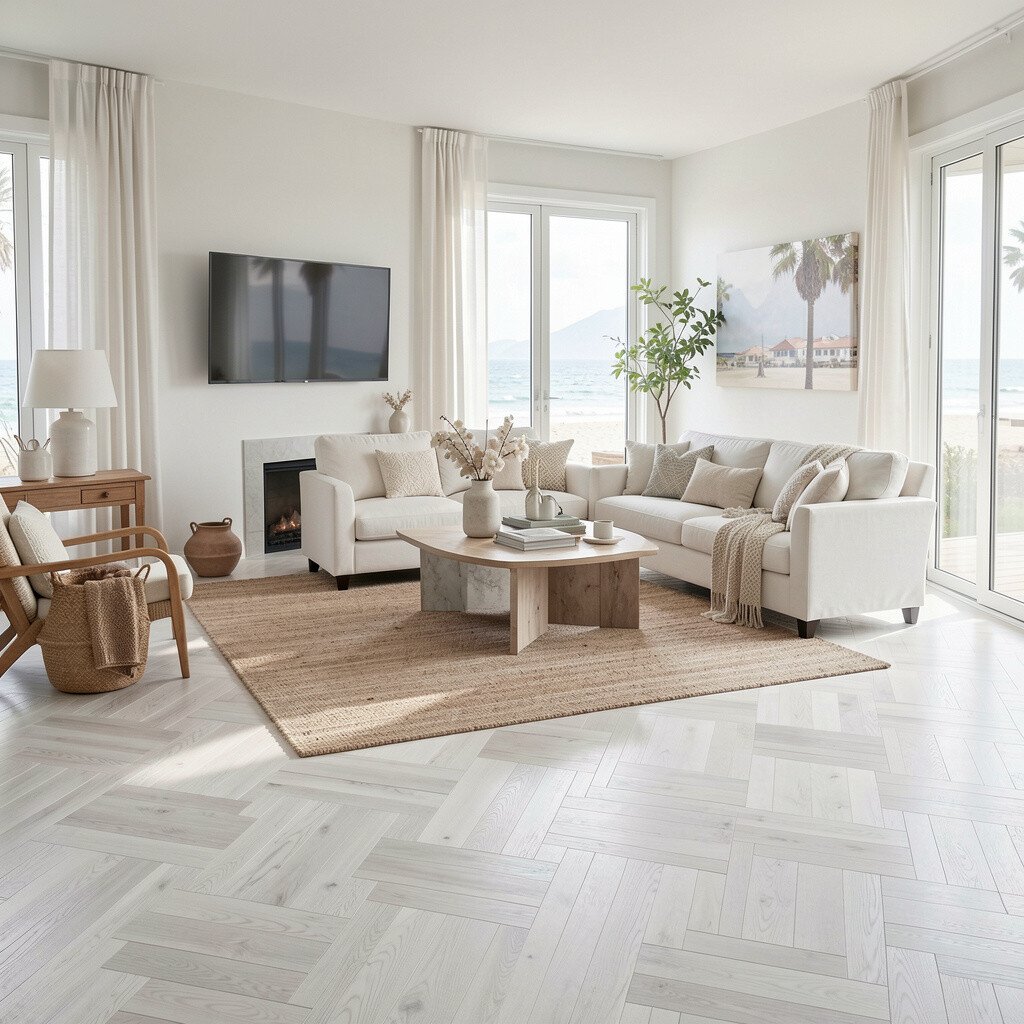
Parquet flooring in a whitewashed finish can look like a handmade craft project. The pattern adds movement, and the pale color keeps it feeling fresh and airy.
This style stands out because parquet layouts create geometry that looks tailored, even in smaller rooms. It can also help define zones in open-concept spaces, like separating the dining area from the living room. For personalization, pick a parquet pattern size that matches your space, then coordinate rugs to soften the angles. If you’re mindful of cost, consider engineered parquet so you get the detailed look without the full expense of solid wood.
Keep maintenance simple by choosing a durable topcoat and using gentle cleaning products. If your beach house has sandy foot traffic, place a mat near entry doors so grit doesn’t grind into the finish. This is a great option when you want uniqueness that still feels timeless.
13. Sand-Tone Microcement Flooring With Coastal Calm

Microcement flooring has a smooth, seamless look that feels modern and airy. In sand tones, it reflects light in a soft way that reminds you of beach paths after the tide moves out.
This flooring is unique because it can create a wall-to-floor vibe, especially if you extend the finish into wet areas. It also works well with minimal décor, letting your furniture and natural textures take center stage. Practical tips matter here, so plan for professional installation and a protective topcoat that suits your lifestyle. Personalize by adding subtle color variation or a slightly darker edging where it meets built-ins.
Cost considerations depend heavily on installation and surface prep, since microcement needs a solid base. However, many people find it worth it because it’s visually striking and easier to clean once sealed properly. For current trends, seamless, modern finishes are popular in coastal homes that aim for spa-level simplicity.
To maintain the look, clean with non-abrasive products and wipe spills quickly, especially after beach days.
14. Premium Carpet Tiles With a Breezy Coastal Palette
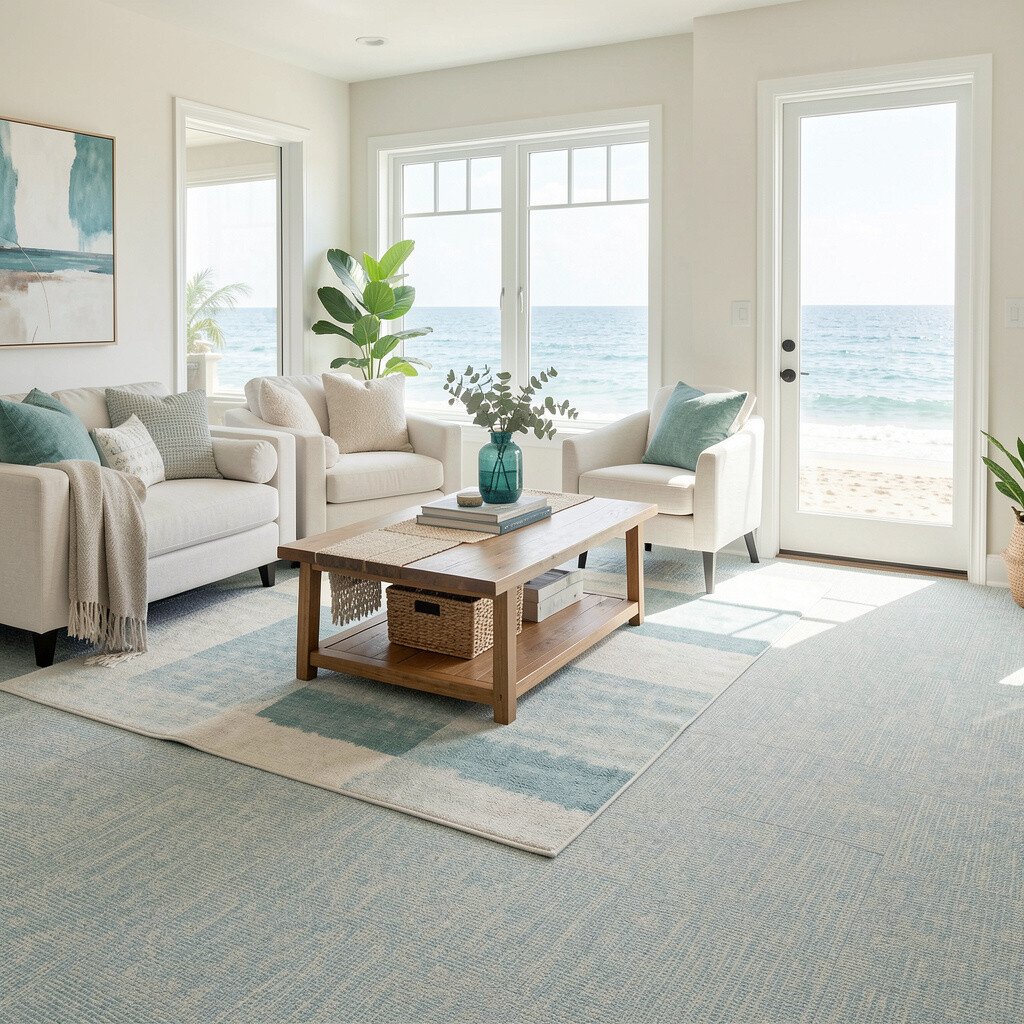
Carpet tiles might not be the first thing you think of for a beach house, but the right style feels soft and luxurious. Imagine light, airy tones with subtle texture that makes the room feel cozy even on cool mornings.
Carpet tiles are practical because you can replace individual sections if spills happen during vacation mode. They also help with sound, which is a big deal in open spaces where everyone talks at once. For personalization, choose a palette that matches your décor, like pale sand, soft blue, or warm ivory, then mix patterns in a controlled way. If you want to manage cost, carpet tiles are often easier to install and repair than wall-to-wall carpet.
To keep them beach-ready, use doormats and a regular vacuum routine that focuses on edges. For uniqueness, select tiles with a low-pile texture that looks elegant and resists flattening. This can also follow current trends, since many homeowners now choose modular flooring that balances comfort with easy maintenance.
When you want that airy luxury feeling, soft underfoot comfort can do more than you expect.