
A fresh door can change the mood of an entire home. The right color can make a plain entry feel lively, warm, and full of character.
1. Soft White To Deep Navy

A tired white door can look calm but a little flat, while deep navy adds a rich and classic feel. The before and after is clean and bold, and the darker shade gives the entry more presence without feeling loud.
This look works well on homes with brick, pale siding, or brass hardware because the color pops in a quiet way. Navy paint is often easy to find in many price ranges, and one small can may be enough for a single door, which keeps the project friendly for a weekend budget.
2. Faded Beige To Bright Red
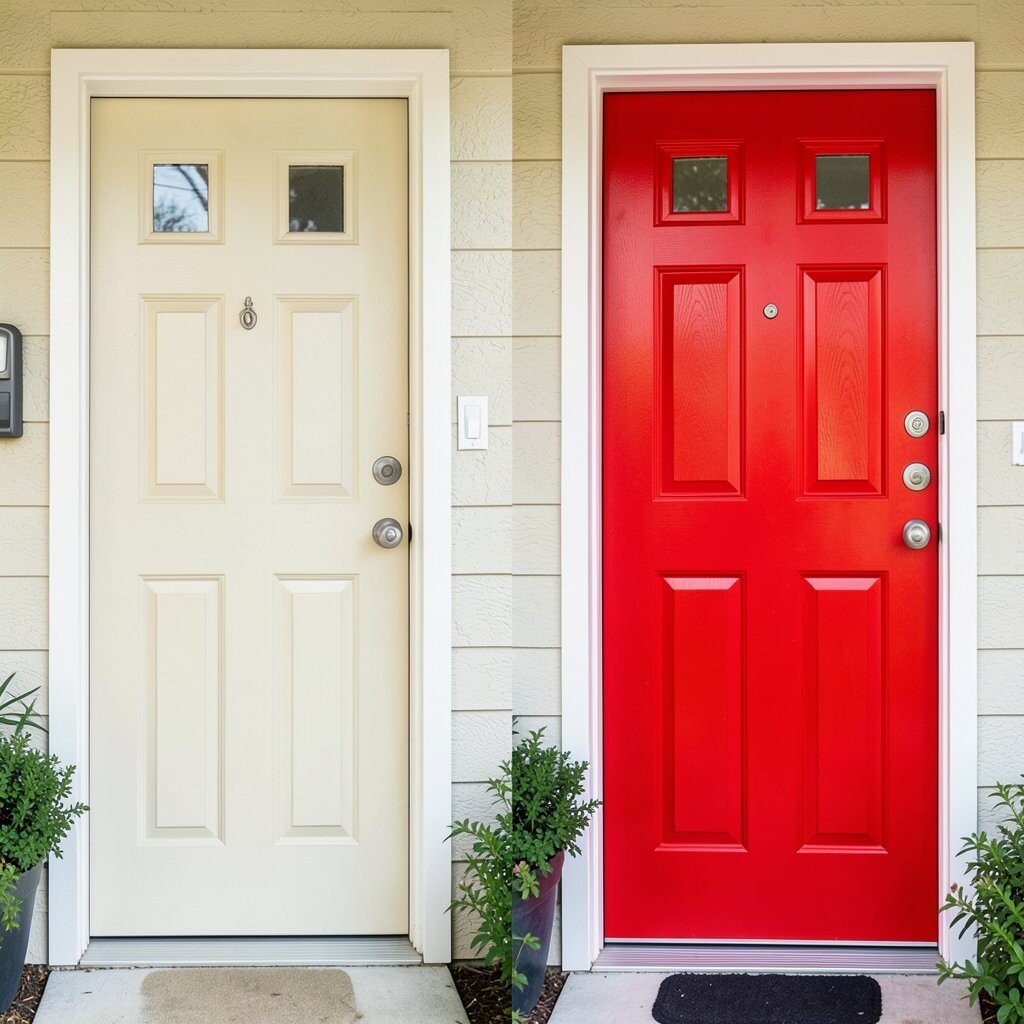
A faded beige door may blend into the wall, but bright red turns it into a happy focal point. The change feels cheerful and brave, and it can make guests notice the entrance right away.
This is a good choice for anyone who wants a lively front porch without adding lots of decor. Red pairs well with black lanterns, green plants, and simple wreaths, and it can feel especially current when the finish is smooth and bold rather than overly glossy.
It helps to test the red in daylight before painting the whole door because the shade can shift outside. A quality primer may cost a little more at first, yet it can help the red look even and save time later.
3. Dark Brown To Sage Green
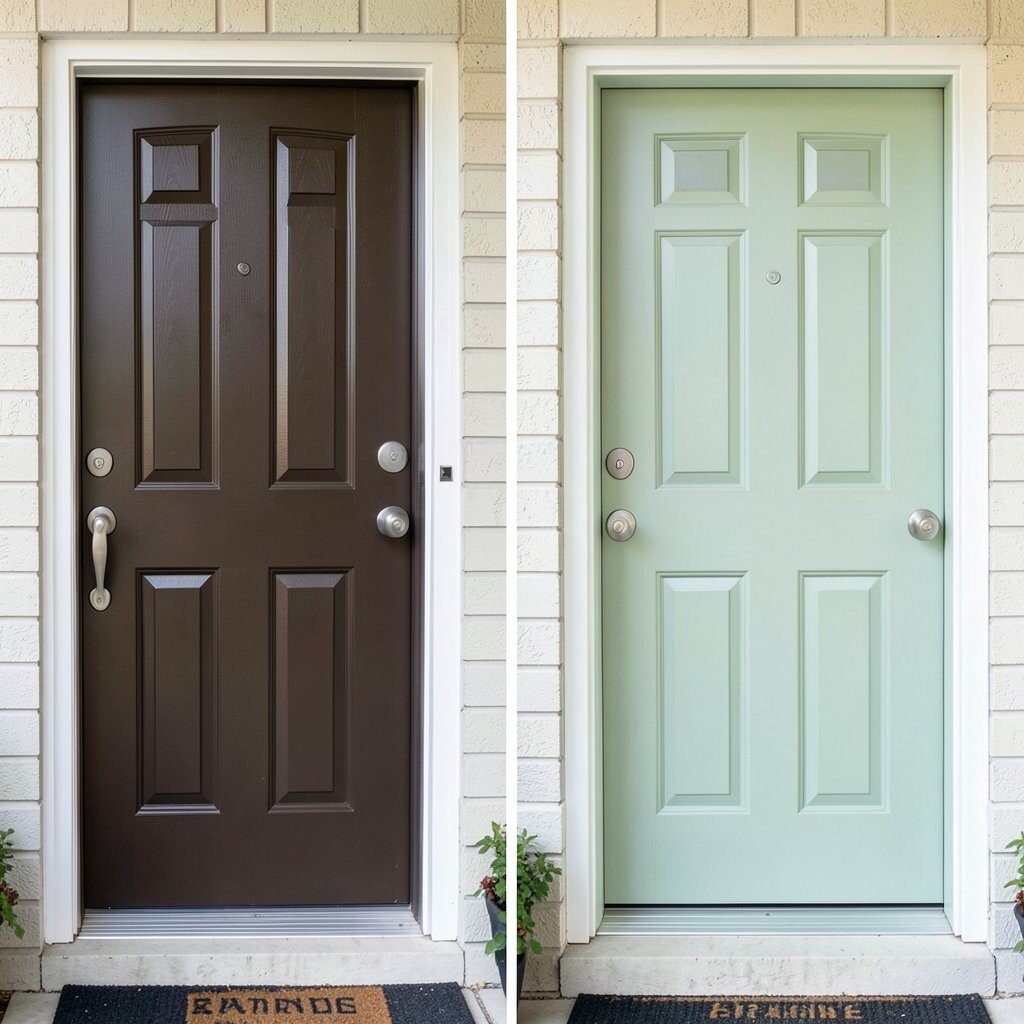
Dark brown can feel heavy on some homes, while sage green softens the look and brings in a fresh natural note. The before and after gives the door a gentle charm that feels calm and easy to enjoy.
Sage has become a favorite in modern home design because it feels peaceful and friendly at the same time. It works well with wood planters, cream trim, and matte black handles, and the paint itself is often a midrange buy that fits many budgets.
For the best result, clean the door well before painting so the green stays smooth and even. Homeowners can also make the color more personal by using a satin finish for a soft shine or by adding a brass knocker for a warm touch.
4. Plain Gray To Sunny Yellow

Gray doors can look neat, but sunny yellow brings a burst of energy that feels joyful from the street. The shift is bright and playful, and it can make the whole porch look more inviting in a simple way.
This color choice is a nice match for homes that need a little warmth, especially in shady spots where light can feel limited. Yellow can be a smart low-cost update because even a modest paint job can change the mood without replacing any hardware or furniture.
5. Chipped Black To Crisp Teal
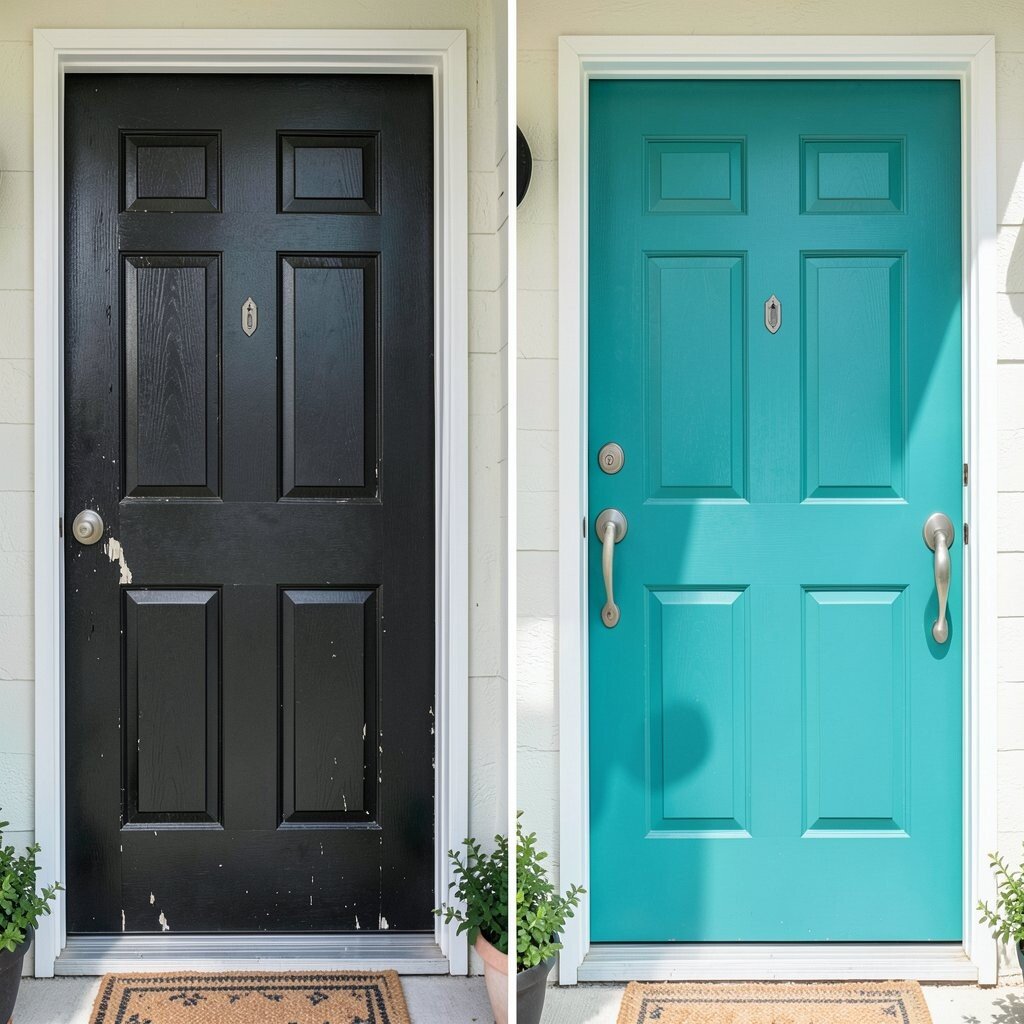
A chipped black door can seem dull, yet crisp teal gives the entrance a fresh and artistic feel. The color stands out in a cool way and can make an older door feel younger and more cared for.
Teal works nicely with white trim, gold knobs, and stone steps, and it has a modern look that still feels welcoming. It is also a fun pick for people who want something different but not too wild, and it often looks best with a smooth semi-gloss finish that is easy to wipe clean.
Before painting, sand away loose bits so the new color goes on well and lasts longer. If the budget is tight, a small can of paint and a simple roller can still make a strong visual change without much spending.
6. Pale Blue To Forest Green

Pale blue can feel sweet and airy, while forest green gives the door a deeper, richer presence. The before and after adds a sense of nature and calm, almost like bringing a garden right to the front step.
This kind of shade is becoming more popular because earthy colors feel relaxed and timeless. It looks especially nice with house numbers in metal, woven doormats, and potted ferns, and the darker color can also hide small marks better than a very light one.
Using a sample card outdoors is a smart move since the shade may look different in sun and shade. A little extra paint may cost more for a deep color, but the payoff is a door that feels full of life and easy to personalize.
7. Warm Oak Stain To Matte Charcoal

Warm oak stain can feel traditional, yet matte charcoal gives the door a sleek and current look. The change is simple but strong, and it adds a modern edge without needing a complete entry makeover.
Charcoal works well with both wood and metal details, so it can fit many home styles from cottage to city. The matte finish is a current trend because it looks soft and stylish, and it can also help keep fingerprints less noticeable than a shiny surface.
Before painting, use the right primer so the dark coat covers evenly and does not show old grain or color. For a personal touch, homeowners can pair the door with a bold mat or a plant in a bright pot to make the new look stand out even more.
8. Dull Maroon To Creamy Peach
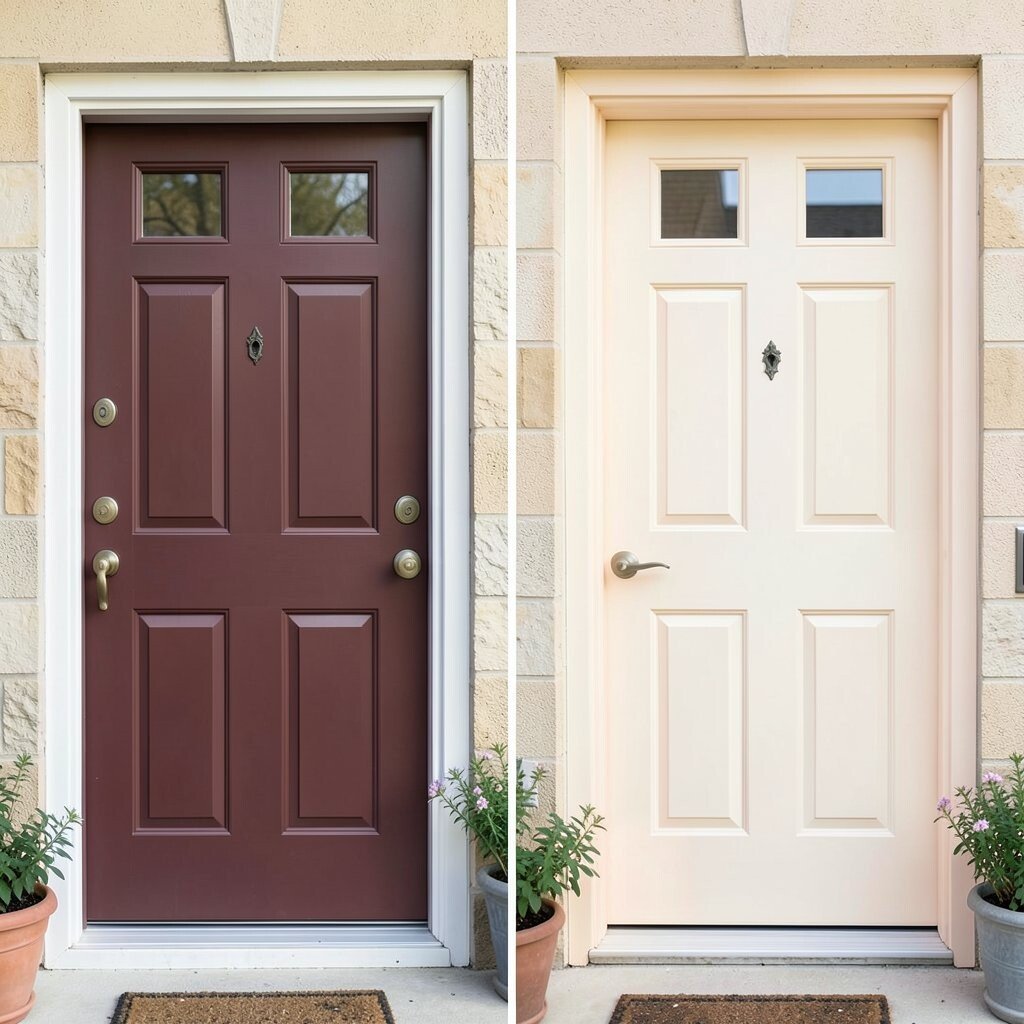
A dull maroon door can feel heavy, while creamy peach brings warmth and a gentle glow. The before and after feels light, sweet, and a little unexpected, which makes the entry memorable.
This shade can look lovely on homes with tan siding, white trim, or soft stone, and it gives off a friendly welcome. Peach is a nice choice for people who want something soft but not plain, and it can be a fairly affordable update because one painted door uses very little material.
To keep the color from looking too sugary, choose a muted peach rather than a neon one. A brushed metal handle or a simple wreath can add personality without adding much to the total cost.
9. Weathered Green To Glossy Black
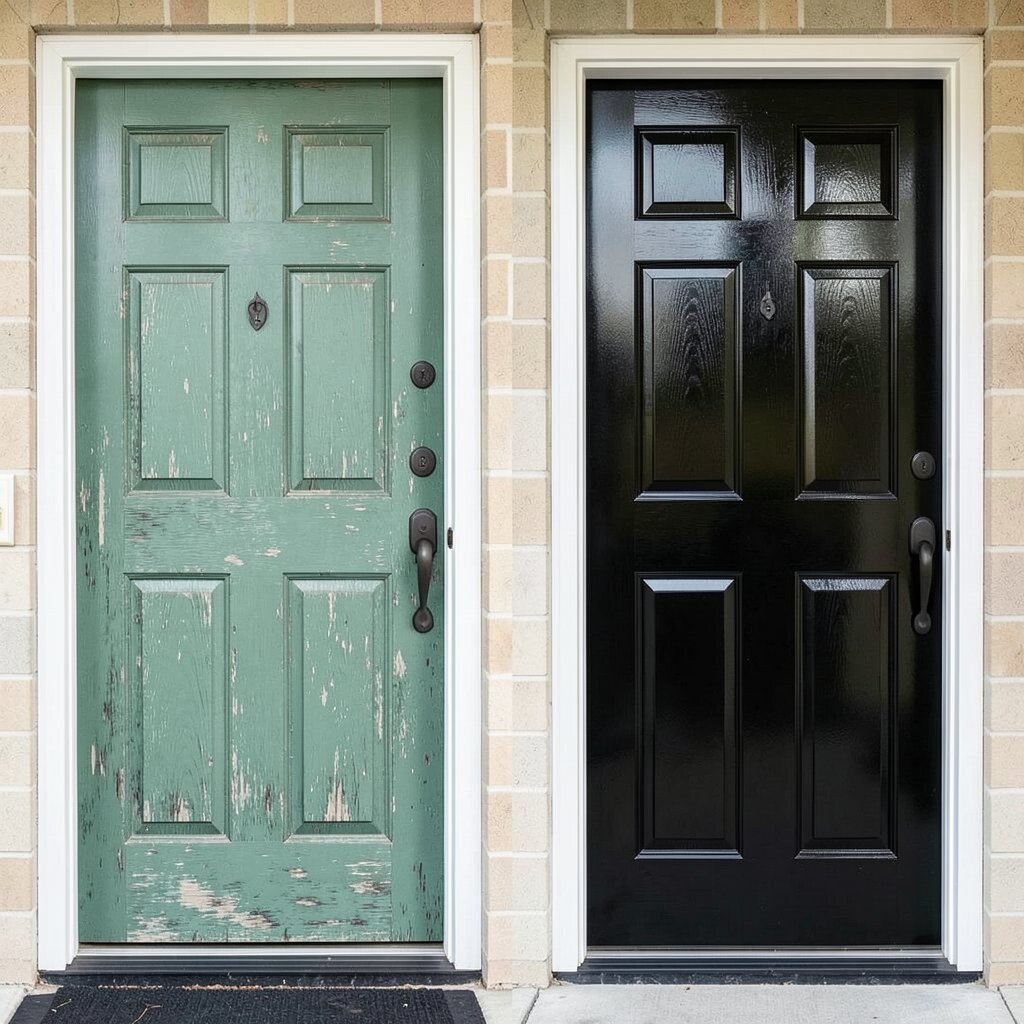
Weathered green can look tired, but glossy black makes a door feel polished and dramatic. The difference is striking, and the shiny finish can give an older entry a neat, dressed-up look.
Black is a classic that never feels out of place, and it works with nearly any trim color or porch style. The glossy surface is especially good when a homeowner wants a more formal feel, though it may show dust more easily than satin, so it helps to choose a finish that fits daily life.
This project can be done on a modest budget because the color is common and usually easy to match. Adding a polished knocker or sleek house numbers can make the door feel custom without much extra spending.
10. Cream To Dusty Plum
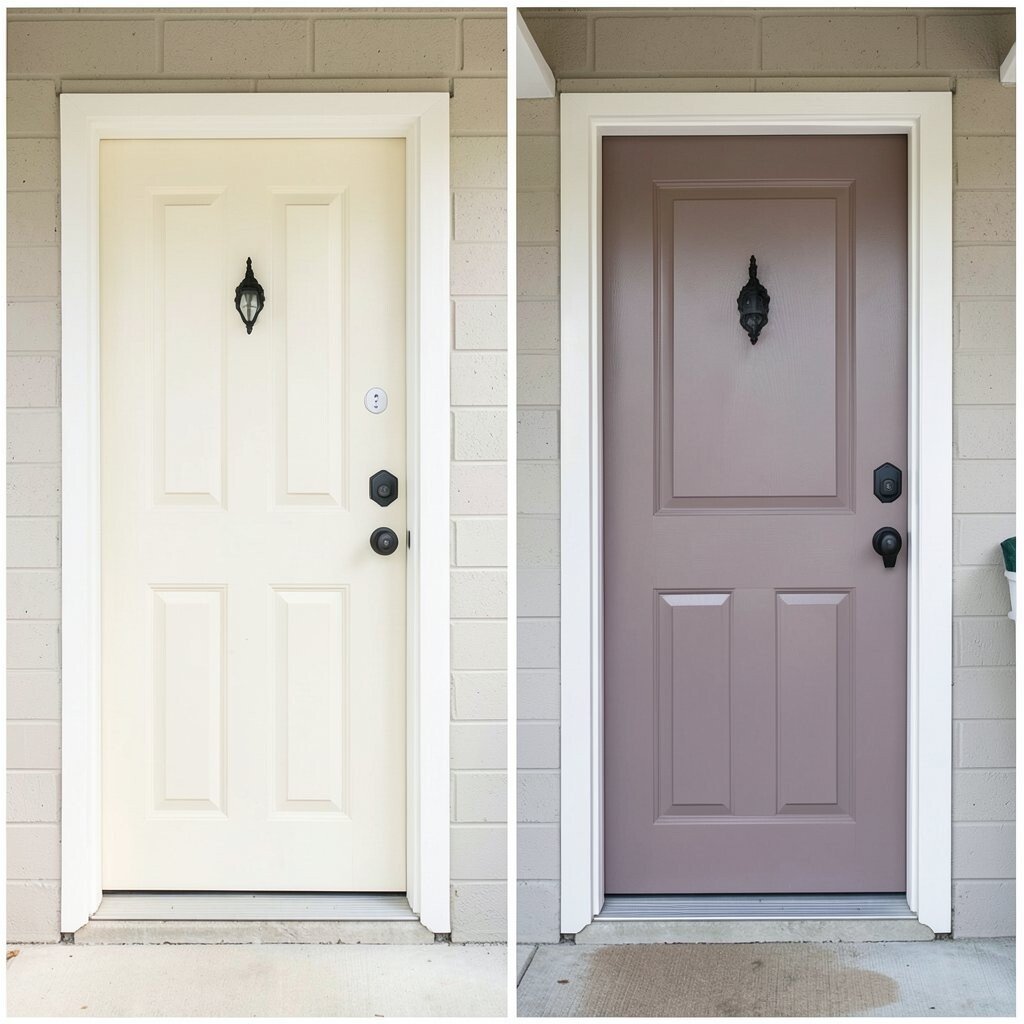
Cream doors are soft and familiar, but dusty plum adds depth and a little surprise. The before and after gives the entrance a cozy mood that feels rich without being too bright.
Plum works especially well in homes that already have warm wood, soft gold accents, or lots of plants near the entry. It is a unique choice that still feels grown-up, and it can be a good way to add color while keeping the look calm and tasteful.
A satin finish can help the shade catch light in a pretty way, while a flat finish can make it feel more mellow. Since darker colors can sometimes need more coats, it is wise to plan for a bit more paint in the budget than a pale shade would need.
11. Rusty Orange To Clean White
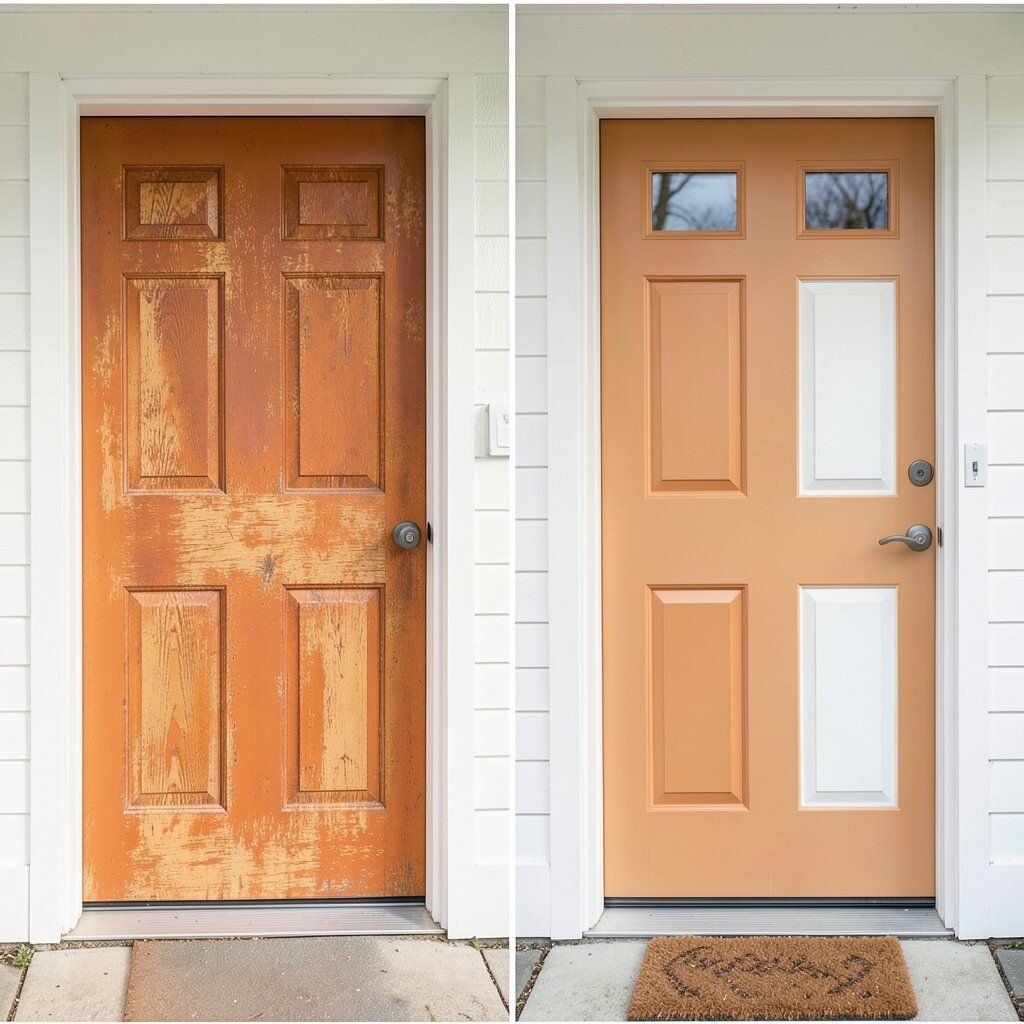
Rusty orange can feel stuck in the past, while clean white brings a fresh and airy look. The before and after is simple, but it can make a front door seem bigger, brighter, and more cared for.
White is still a favorite for homes that want a crisp and timeless entry, especially when the rest of the house has strong color or texture. It gives a neat backdrop for colorful plants, seasonal decor, and bold hardware, which makes the door easy to style through the year.
Because white can show dirt more quickly, it helps to choose a paint made for exterior use and easy cleaning. The project can stay affordable if the old color is already close to white, since fewer coats may be needed to get a smooth finish.
12. Dark Teak To Powder Pink
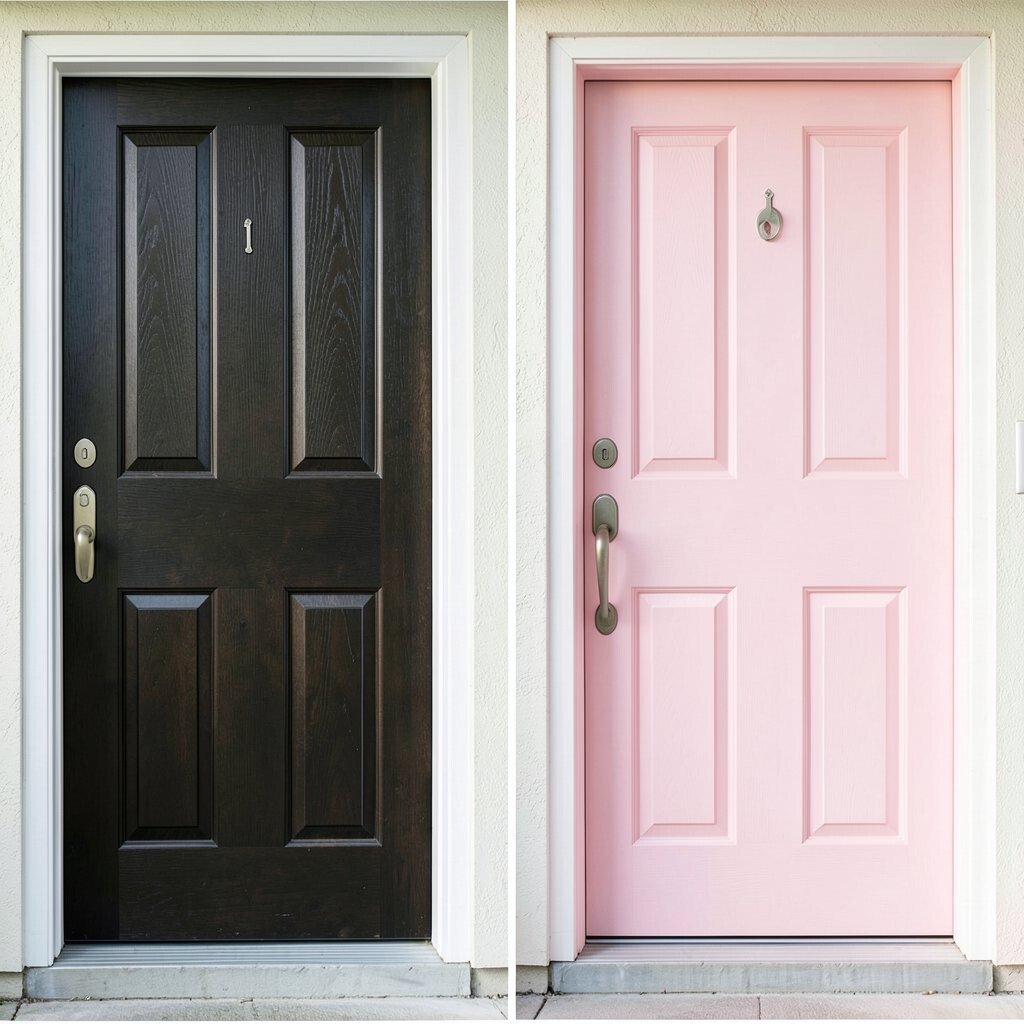
Dark teak can feel serious, but powder pink makes the entry soft, fresh, and a little playful. The before and after is cheerful without being loud, and it can give a home a sweet, welcoming face.
This color has become more popular in modern and vintage-inspired homes because it feels gentle and stylish at the same time. Powder pink looks pretty with gray stone, white trim, and gold accents, and it can help a small porch feel more charming and open.
A light pink shade can go wrong if it is too bright, so testing samples outside is worth the effort. For a personal touch, some homeowners add a matching planter or a simple welcome sign, and both can be low-cost ways to make the look feel complete.
13. Flat Brown To Bright Coral

A flat brown door may fade into the background, while bright coral adds energy and fun. The change feels lively and friendly, and it can make a front entrance look full of personality right away.
Coral is a smart choice for people who like color but do not want something too dark or heavy. It fits nicely with white trim, black rails, or sandy stone, and it often feels on-trend because warm, happy shades are showing up more often in painted exteriors.
Before painting, wipe away grime so the coral color stays clear and cheerful. A homeowner can keep the budget in check by painting only the door and leaving the trim alone, which still gives a big visual lift for less money.
14. Scratched White To Deep Olive
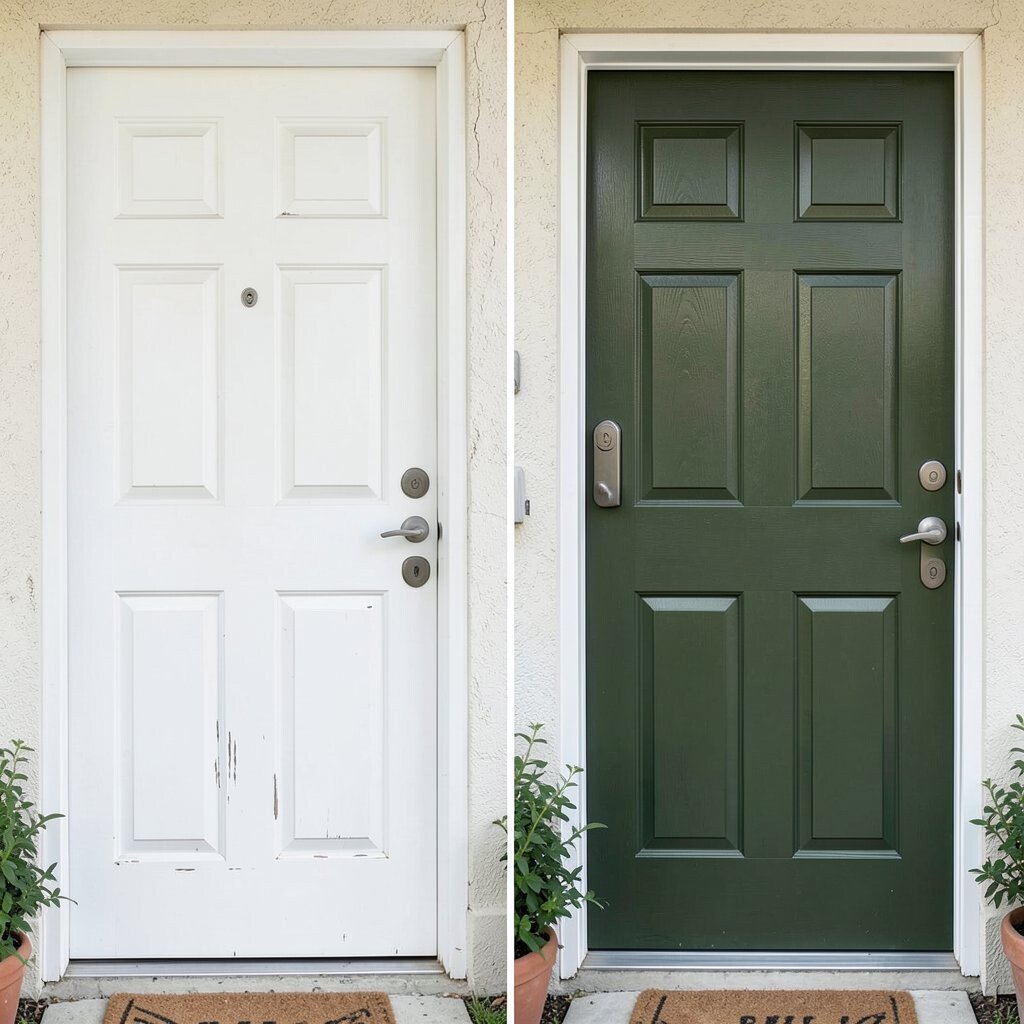
Scratched white can look worn, but deep olive gives the door a grounded and stylish mood. The before and after feels earthy and calm, and it brings a natural richness to the whole entry.
Olive is a great pick for anyone who wants something unique but still easy to live with. It pairs well with stone paths, wood planters, and dark hardware, and the tone is popular right now because it feels both classic and fresh.
Using painter’s tape around the edges helps keep the lines neat, which matters a lot with darker colors. The paint itself may cost a bit more if you choose a high-end exterior formula, yet the color can make the door feel much more custom than the price suggests.
15. Basic Tan To Jewel-Tone Purple
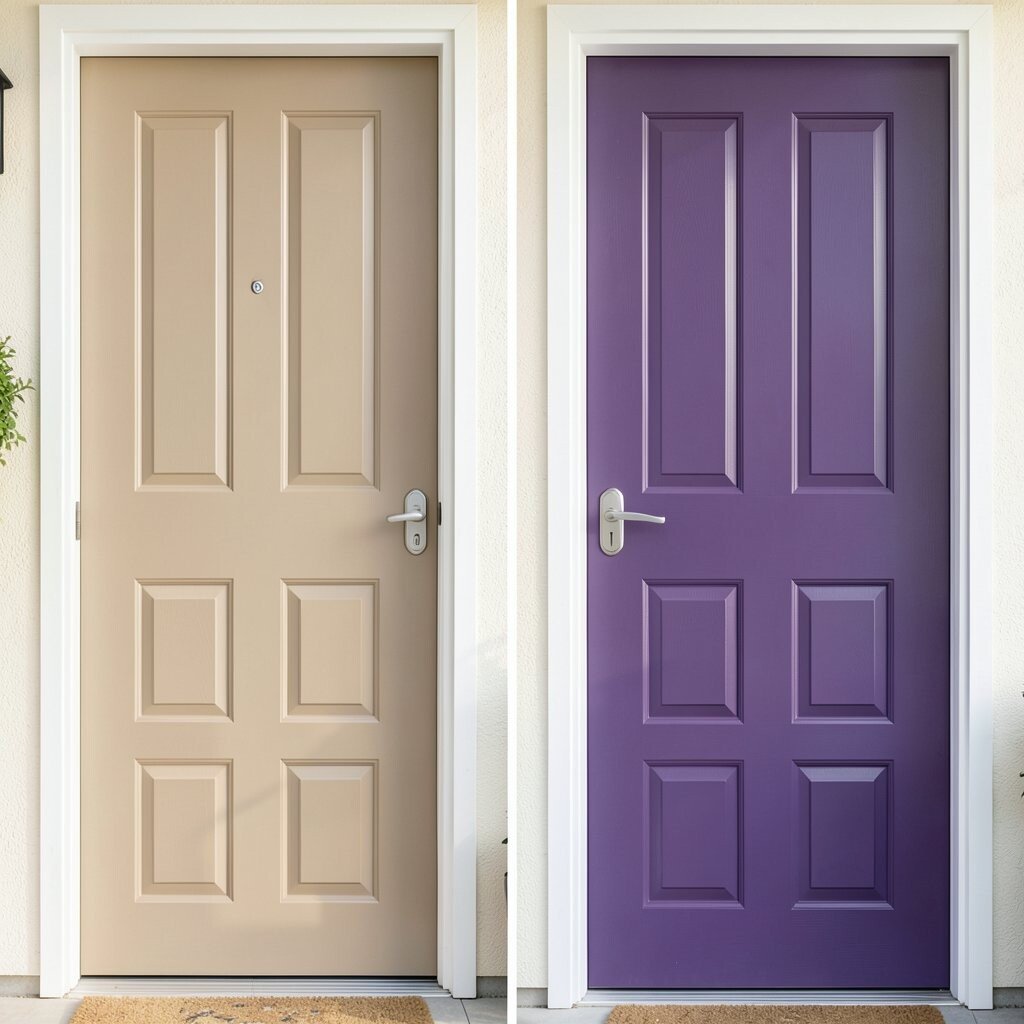
Basic tan can be safe, but jewel-tone purple brings a rich and bold finish that feels full of life. The before and after is dramatic in a good way, and it can turn an ordinary door into the star of the front yard.
This color suits people who want a home that feels artistic and a little unexpected. Purple works well with silver hardware, dark planters, and simple greenery, and it can feel very current when used in a smooth finish with clean lines.
Because purple is strong, it helps to balance it with simple decor so the entry does not feel crowded. A sample can of paint is a smart first spend, since it lets the homeowner check the color in real light before making a bigger purchase.