Gallery walls can feel intimidating until you see how many choices you truly have. When you plan with intention, the whole room starts to look more “yours.”
1. Set a Clear Mood Before You Buy
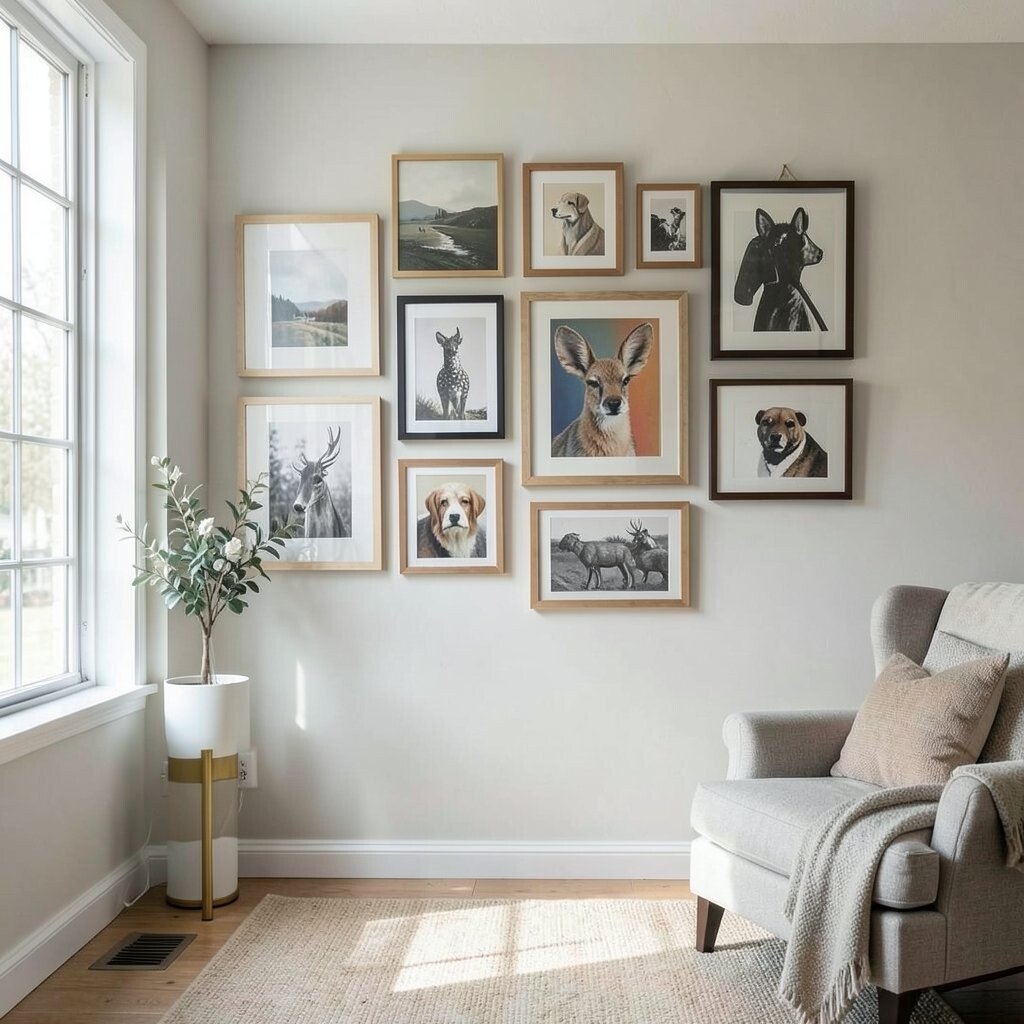
Start by thinking about the feeling you want when someone walks into the room. Do you want calm and airy, bold and energetic, or warm and cozy?
Once you pick a mood, every piece starts making sense together. Look at your wall color, your sofa or bed fabric, and even the rug tones so the art looks like it belongs.
2. Measure the Wall Like a Pro
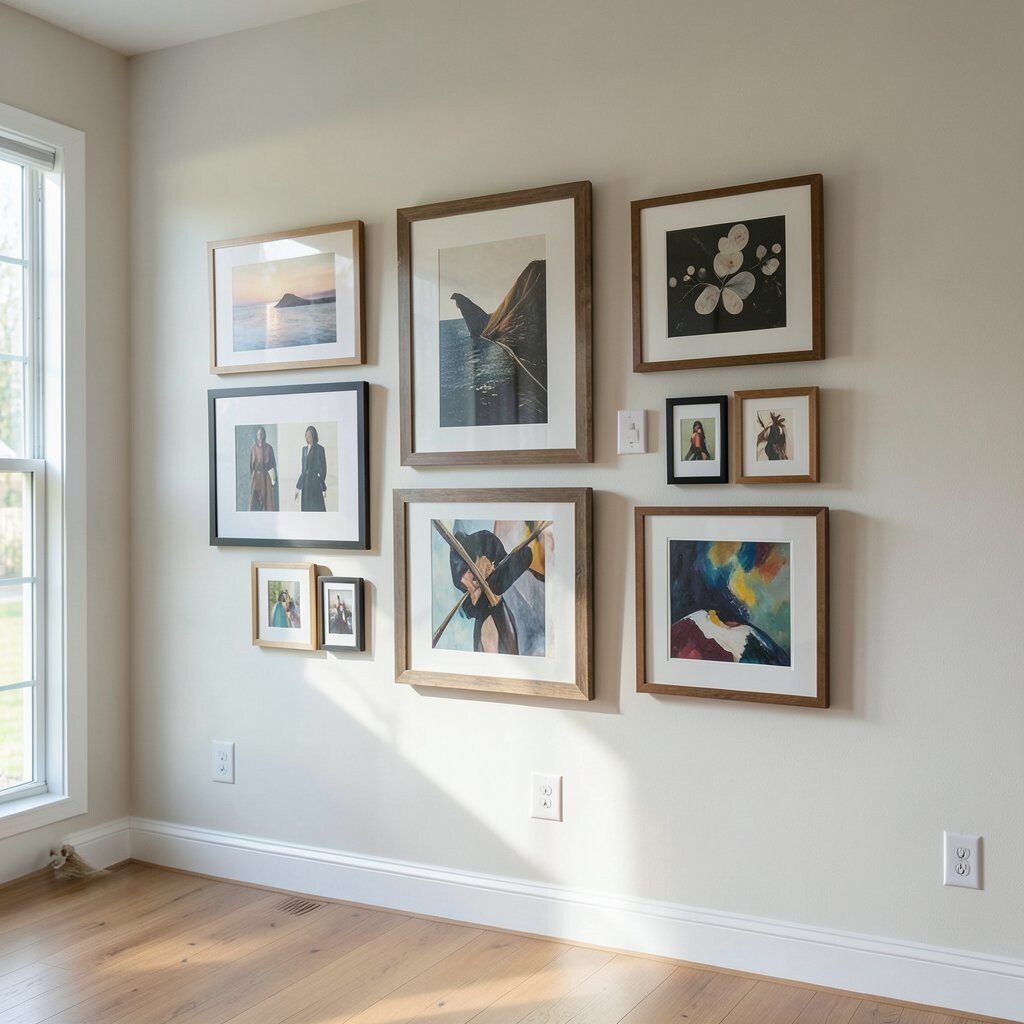
Grab a tape measure and record the width and height of the space where the gallery will live. Even a quick sketch on paper helps you avoid hanging art too high or too low.
Think about where furniture ends and where eye level sits. A gallery wall looks best when it centers comfortably and leaves room for breathing.
Measure twice and remember that frames need space between them. When you know your total area, you can plan spacing for a tidy, designed look.
3. Choose One Style Anchor and Build Around It
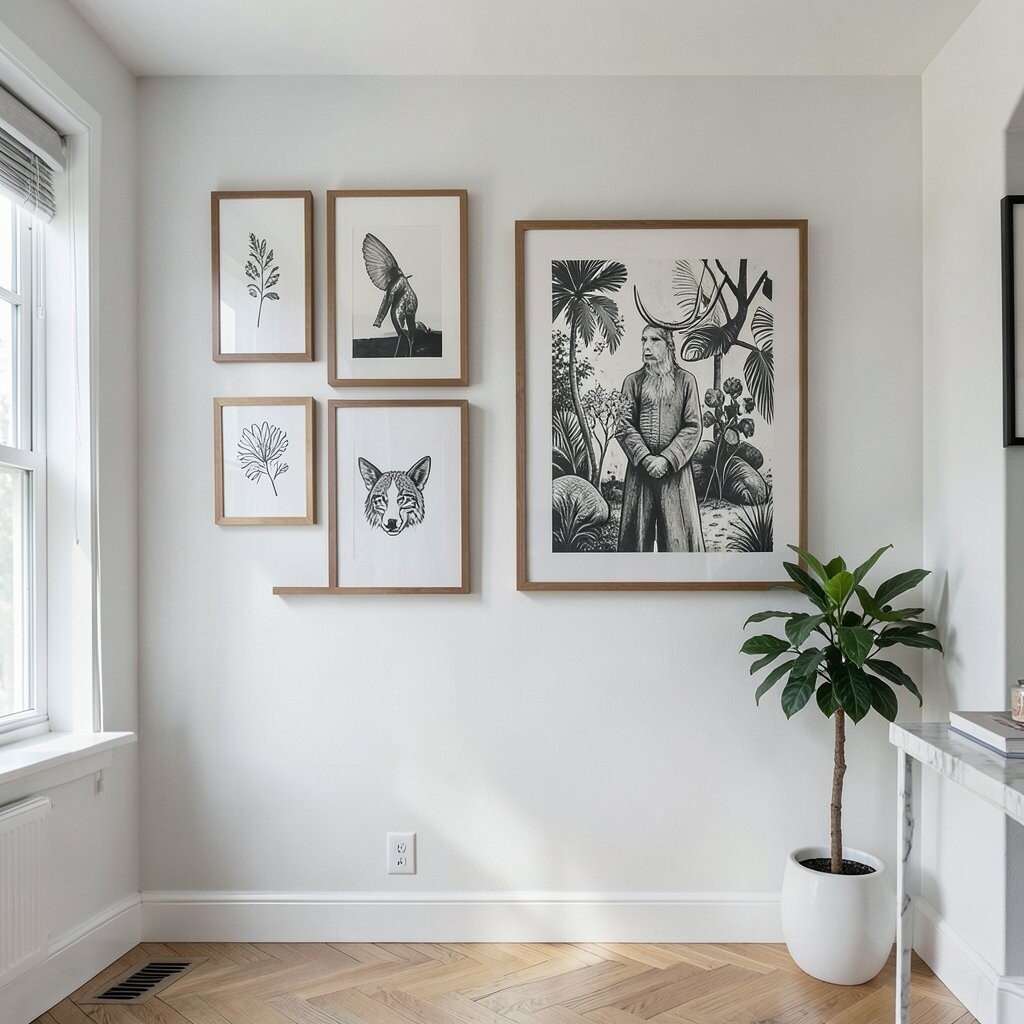
Pick a style anchor so your gallery wall feels unified instead of random. This could be a theme like botanical prints, black-and-white photos, or modern line drawings.
When you choose an anchor, you can vary frame shapes without losing the overall look. A consistent element like color palette or subject matter helps everything connect.
Try mixing textures too, like pairing smooth photo prints with a subtle canvas. That small variety keeps the wall interesting while still feeling intentional.
4. Pick Your Frame Strategy Early
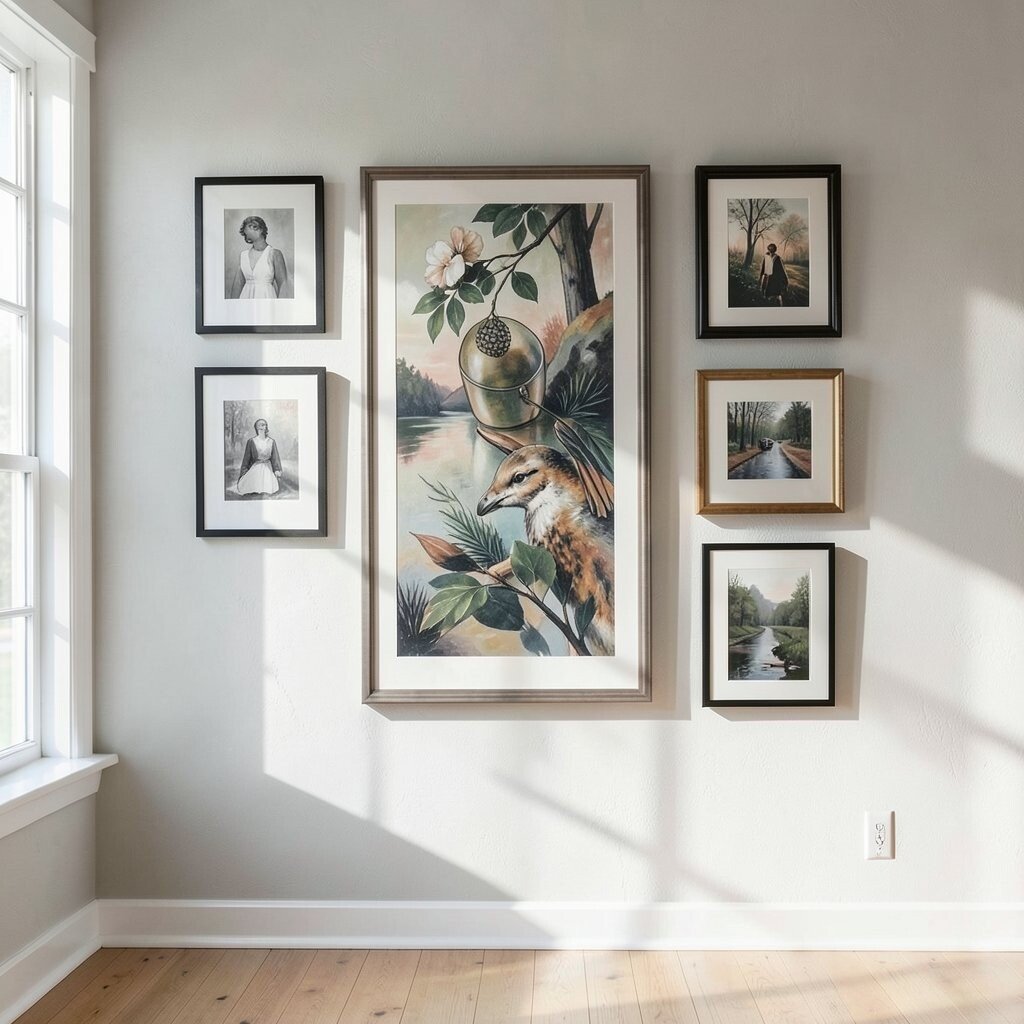
Frames can make a gallery wall look polished or chaotic, so decide how you want them to work together. Choose matching frames for a neat, tailored vibe, or mix finishes for a relaxed, curated feel.
If you love collected-looking art, keep a shared color family across frames. For example, brushed wood, warm oak, and similar tones can sit together beautifully.
5. Plan Spacing so Every Piece Can Breathe
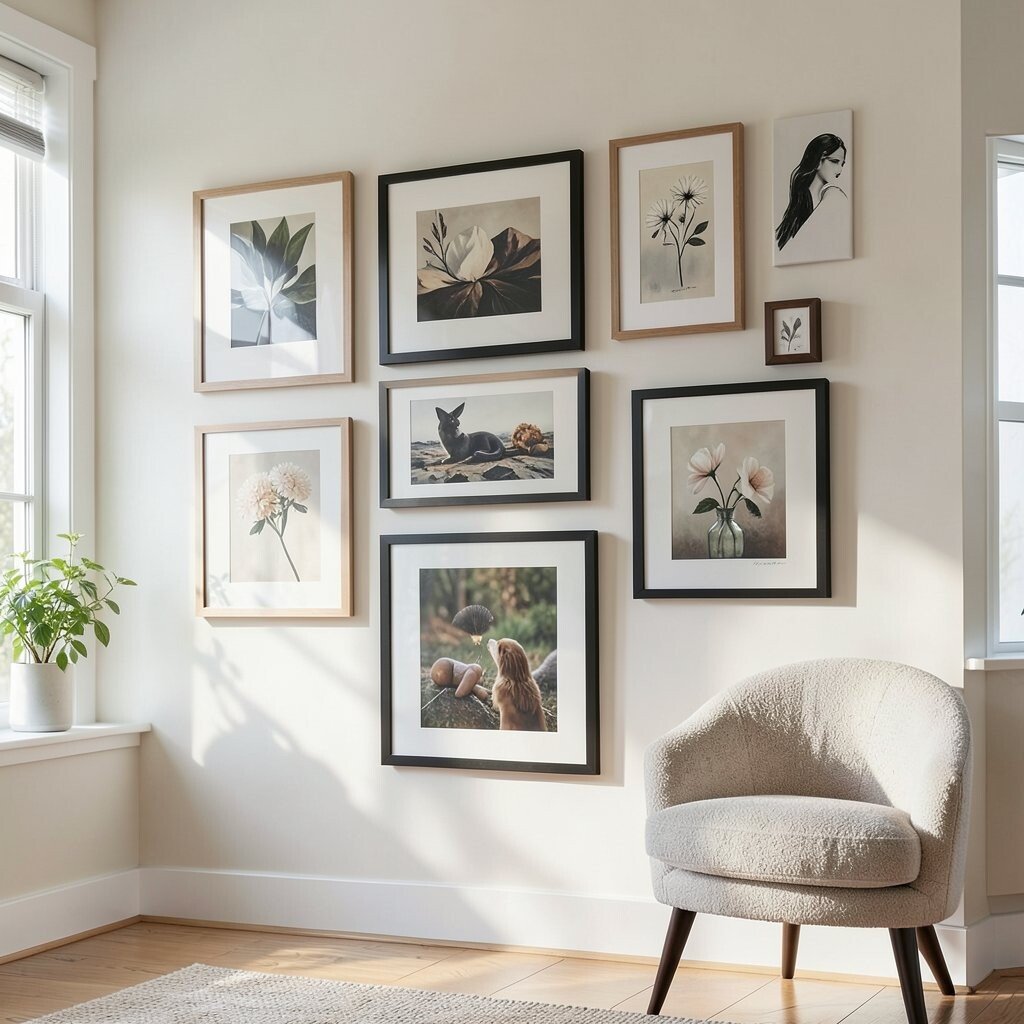
Give each artwork enough breathing room so smaller pieces don’t vanish. A gallery wall looks more balanced when the gaps stay consistent or follow a clear rhythm.
As you test your layout, step back and squint a little. If everything feels too tight, widen the spacing and it will instantly feel calmer.
Use paper templates to preview the spacing before you drill. That practical step saves time and keeps your layout from getting messy.
6. Decide the Layout Shape First
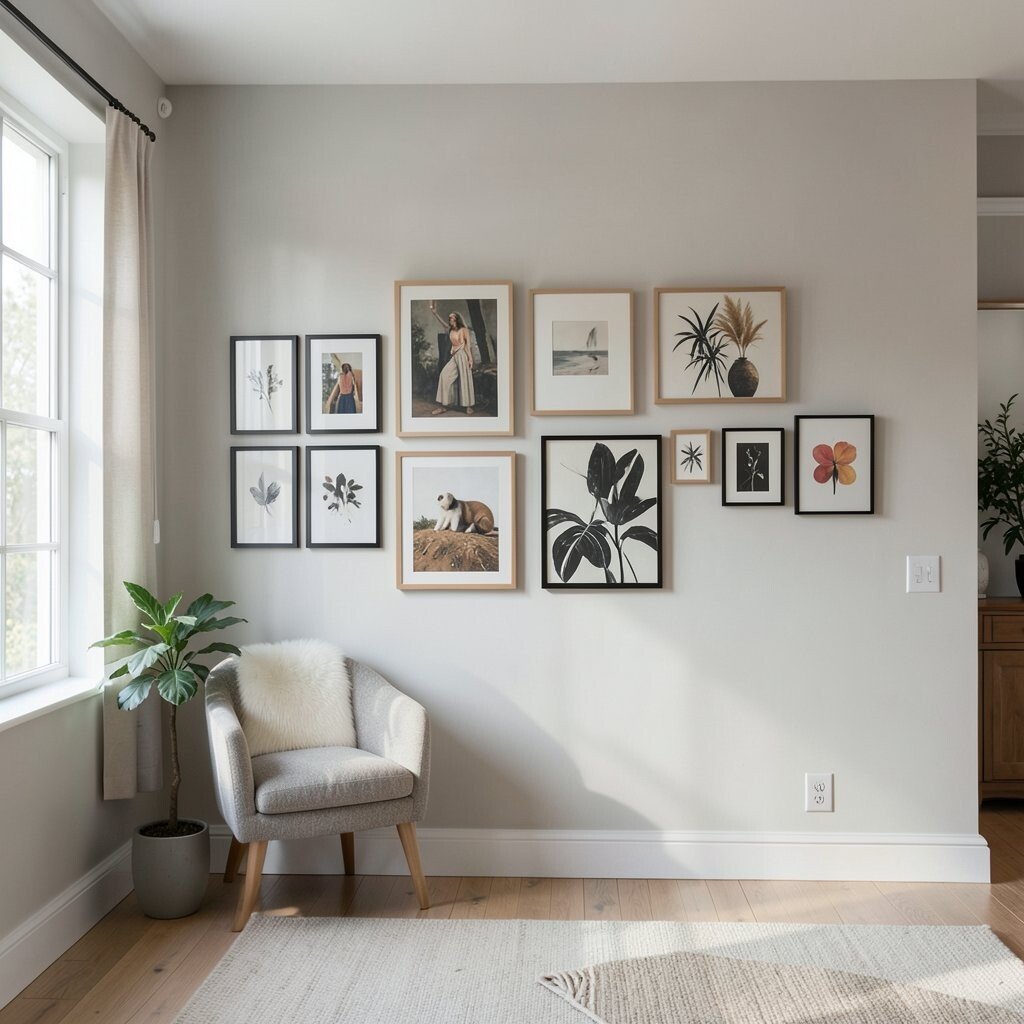
Choose a layout shape that matches the wall. A tight grid feels modern, while an offset cluster feels playful and creative.
Centering a larger piece with smaller neighbors can create an eye-catching focal point. It also helps your wall look styled, even if you use different art sizes.
7. Use a Tape-and-Paper Mockup Before Hanging
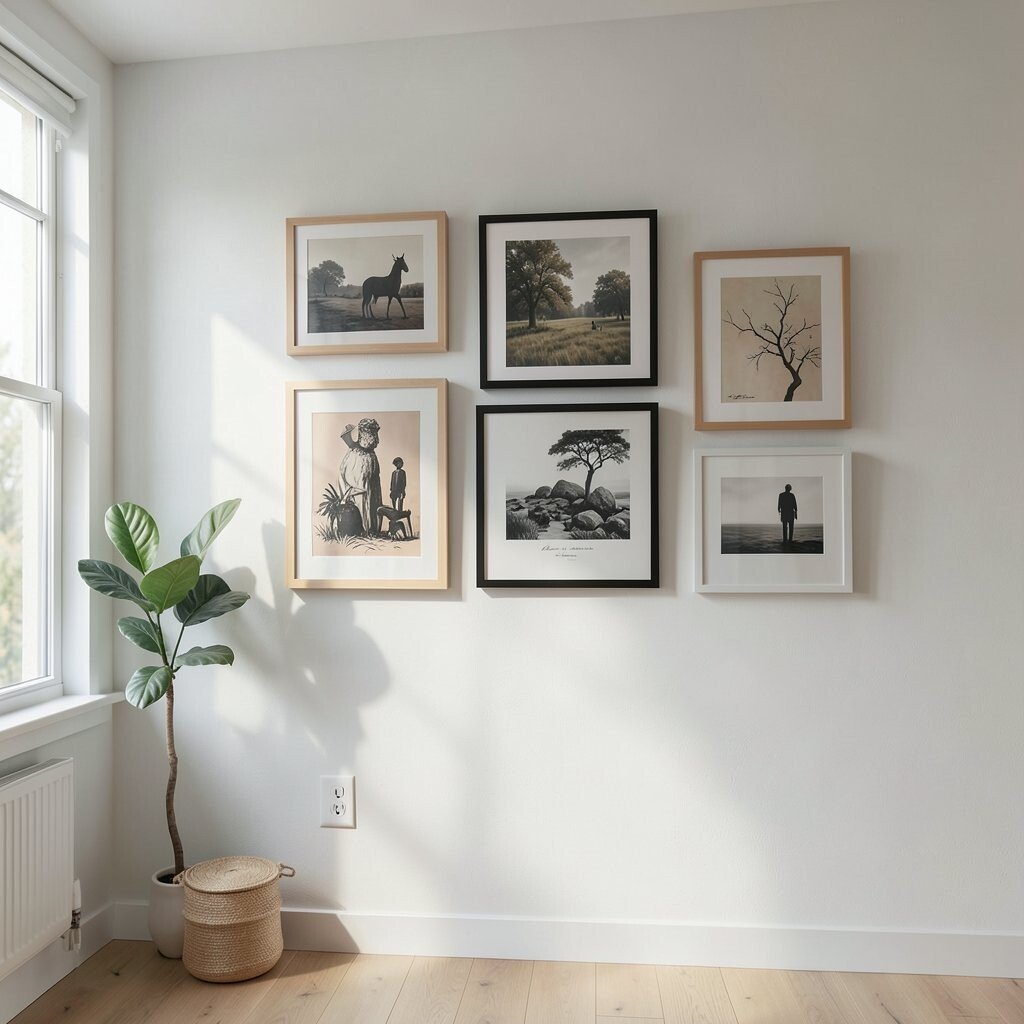
Tape paper cutouts to the wall to simulate each frame and artwork. This gives you a live view of how things will look at eye level.
Move the papers around until the arrangement feels right. You will notice patterns, awkward gaps, and balance issues much faster this way.
8. Include One Larger Statement Piece
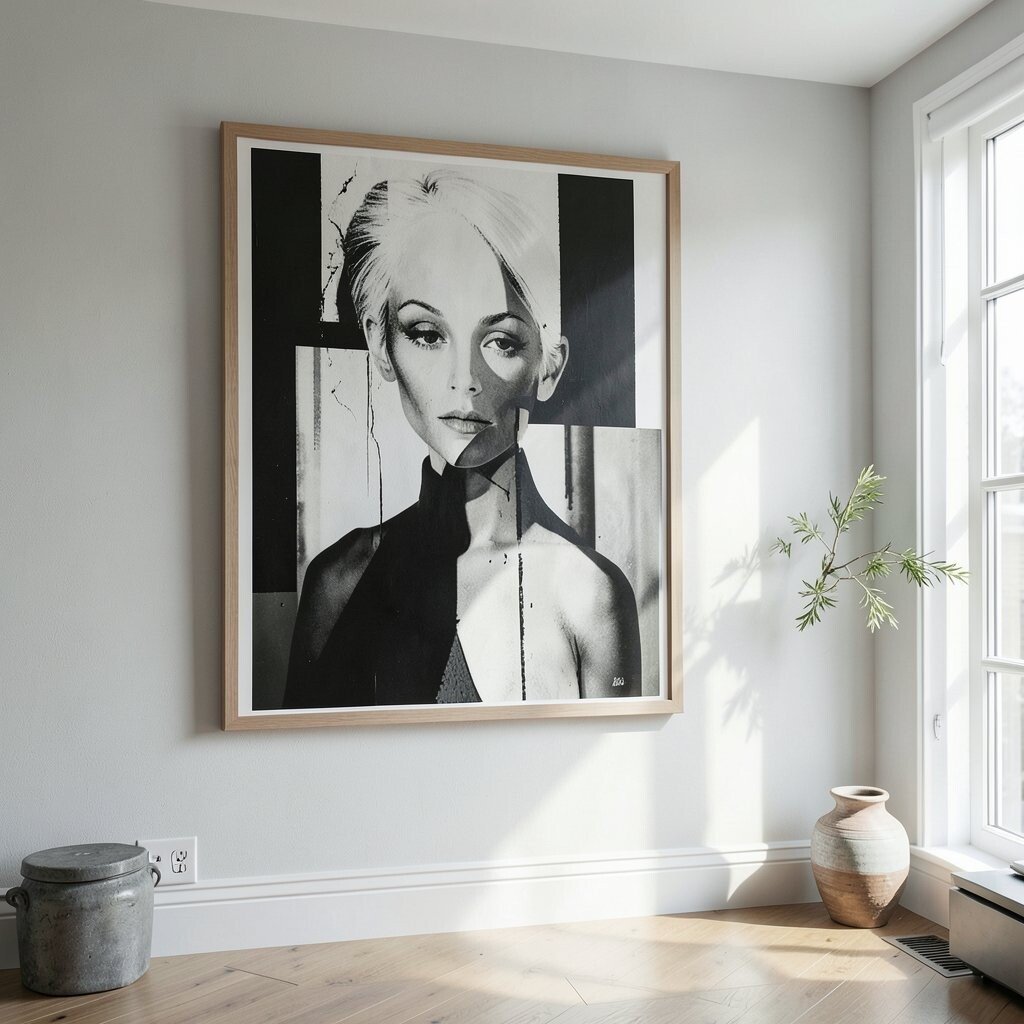
One bold artwork can tie the rest of the gallery together. A larger print, a wide photo, or a bold illustration becomes the visual anchor that guides the eye.
When you add a statement piece, smaller artworks naturally become supporting characters. This balance helps the wall look designed instead of crowded.
9. Match Your Palette to the Room’s Real Colors
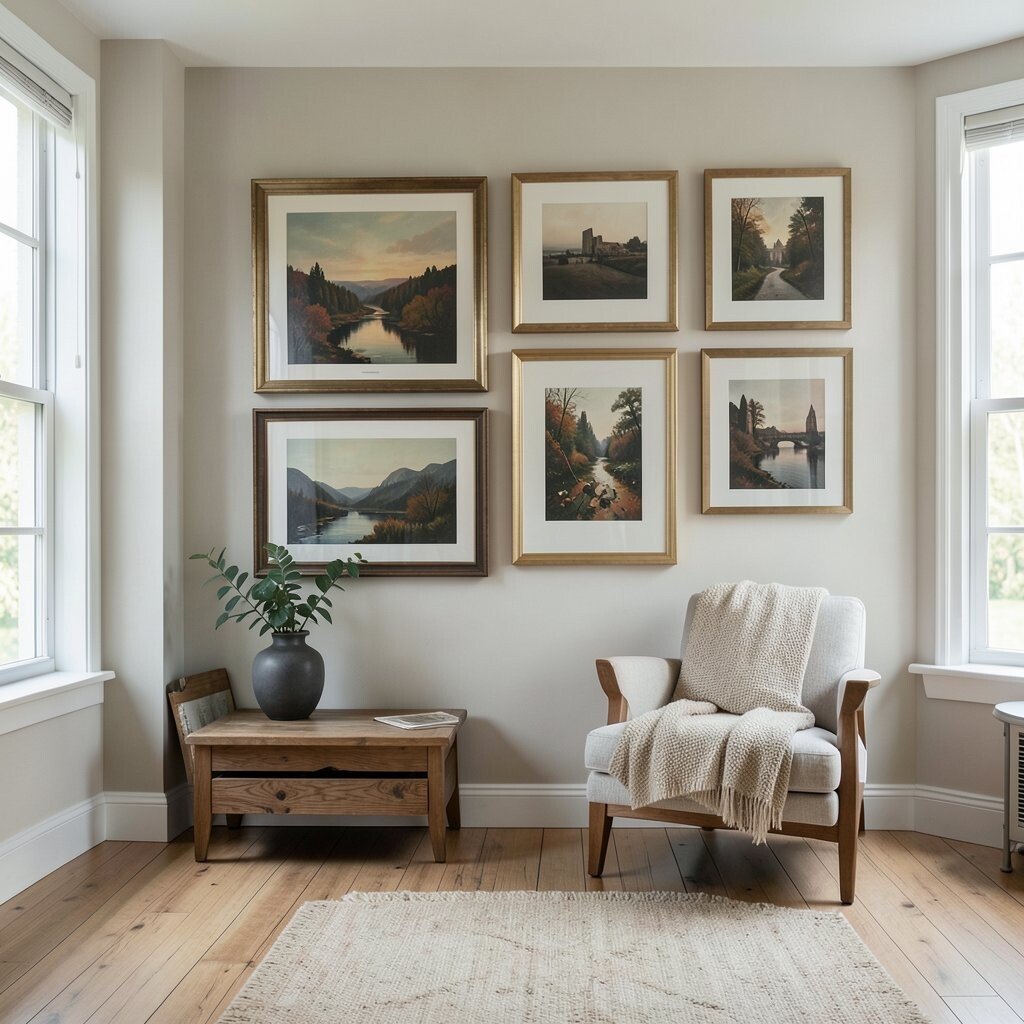
Your gallery should echo colors already in the room, not fight them. Pull tones from curtains, pillows, or the wood in your furniture to keep the look cohesive.
Try limiting your palette to a few main colors plus neutrals for a clean effect. This makes it easier to mix different artists and print styles.
If your room has lots of warm tones, choose frames and prints that reflect that warmth. If the room is cooler, lean into crisp grays, blues, and clean whites.
10. Mix Photography with Illustrations for Rich Contrast
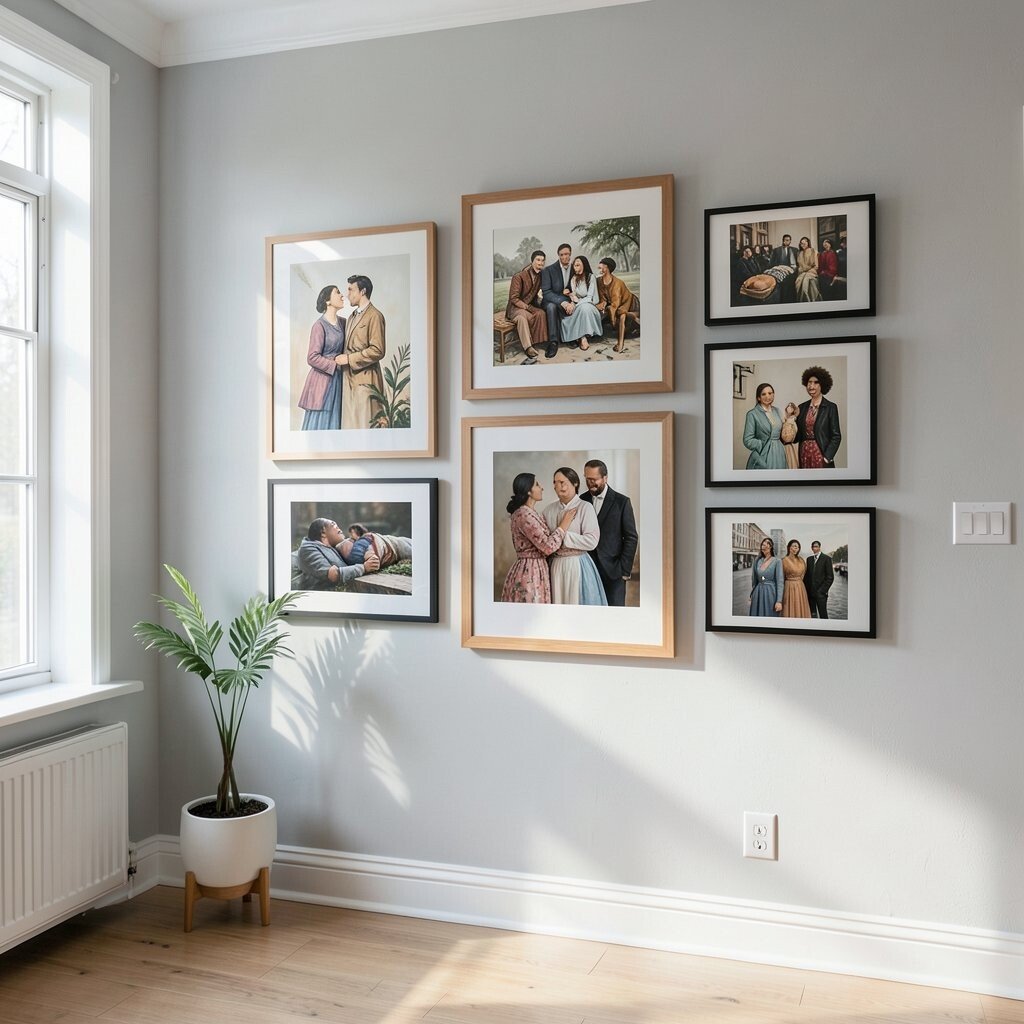
Combining photographs and illustrations adds texture to your wall without needing complicated design rules. A family photo can feel personal, while an illustration brings a creative edge.
To keep the mix from looking random, repeat one theme like nature, city scenes, or simple line work. When subjects connect, different mediums feel like they belong together.
11. Balance Light and Dark for a Smooth Visual Flow
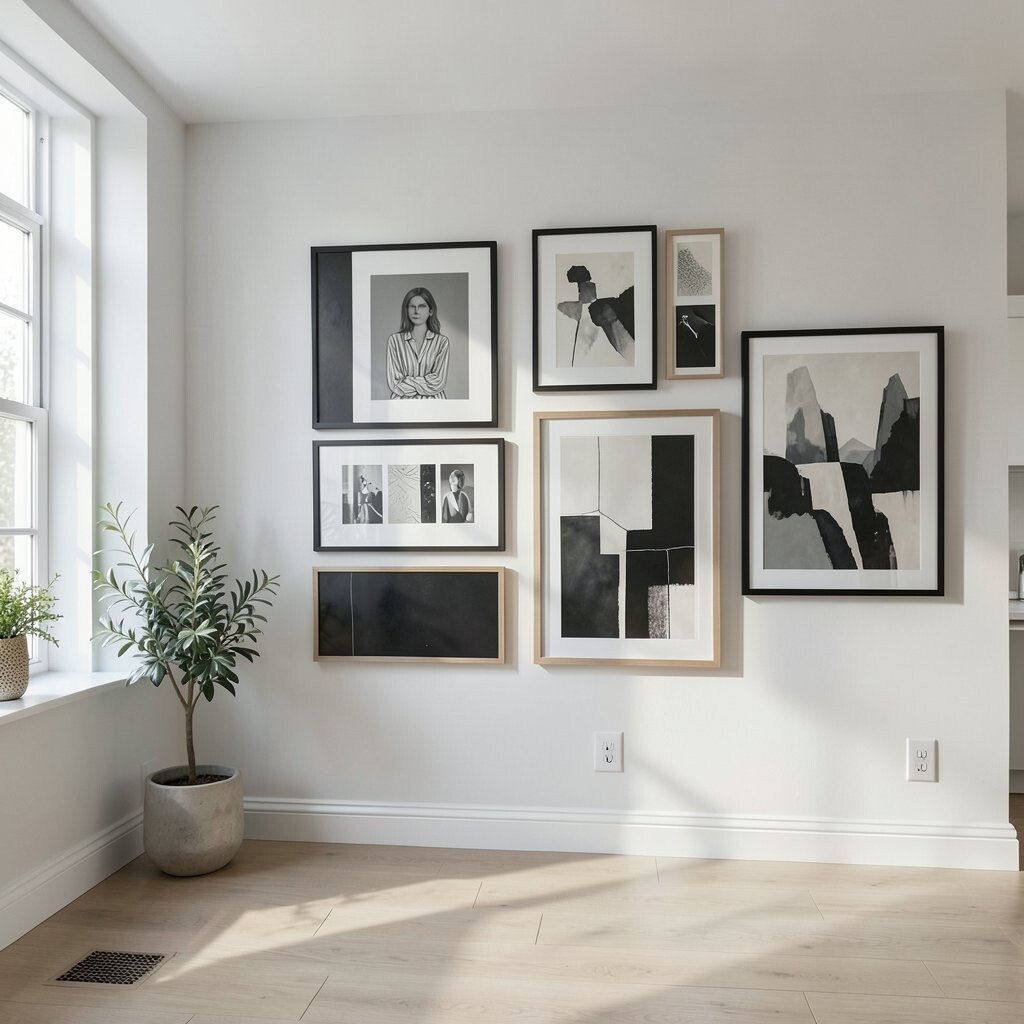
If you only hang dark pieces, the wall can feel heavy. If you only hang light pieces, it might feel flat.
Distribute dark and light artwork so your eye moves comfortably across the wall. Place a darker frame near a lighter one to create a steady rhythm.
This balance works especially well with mixed frame finishes. A dark artwork can ground a shiny metal frame, while a bright piece can soften a darker wood frame.
12. Work With the Wall’s Texture and Lighting
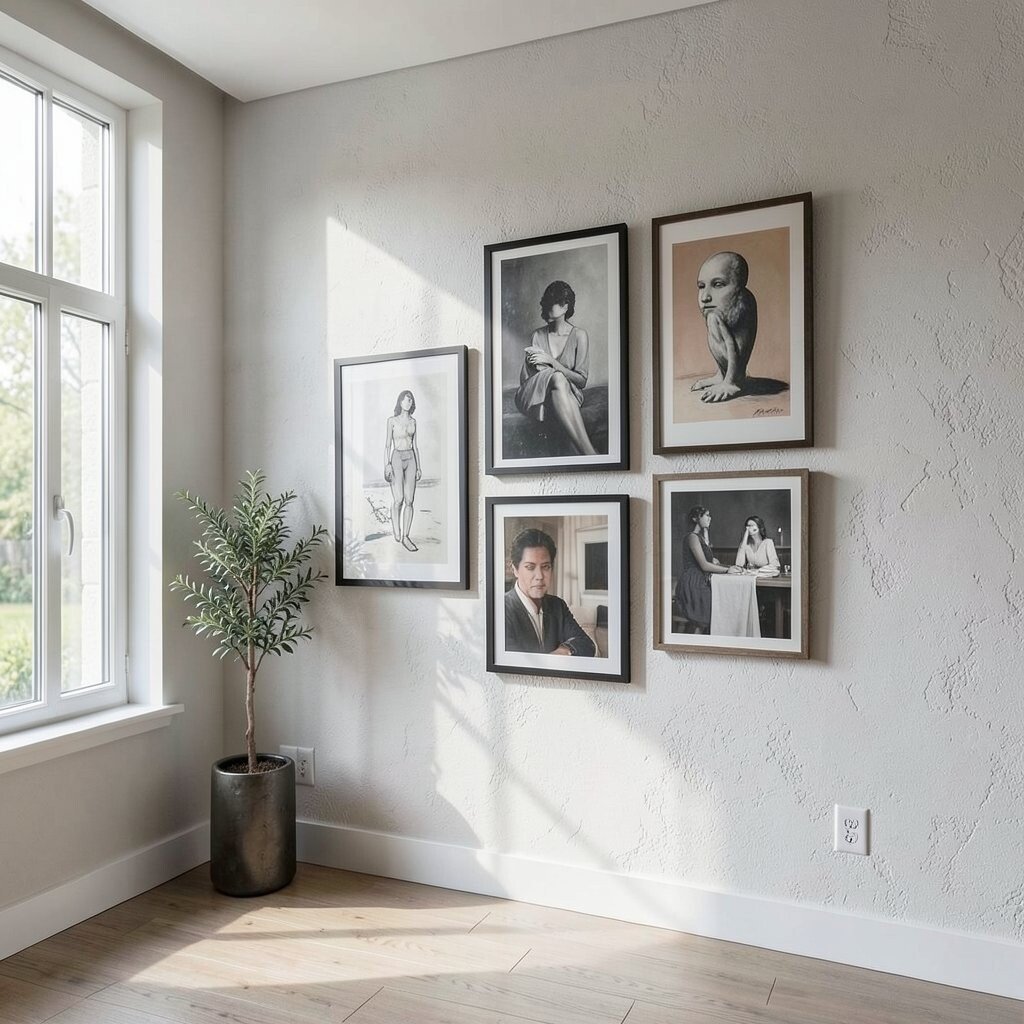
Consider how your wall reflects light, because matte paint and glossy paint change how art looks. Smooth walls often make prints look crisp, while textured walls add depth and shadow.
Check your lighting too, including lamps and overhead fixtures. If light hits a piece directly, choose finishes that won’t glare and ruin the image.
13. Choose Subject Matter that Feels Personal
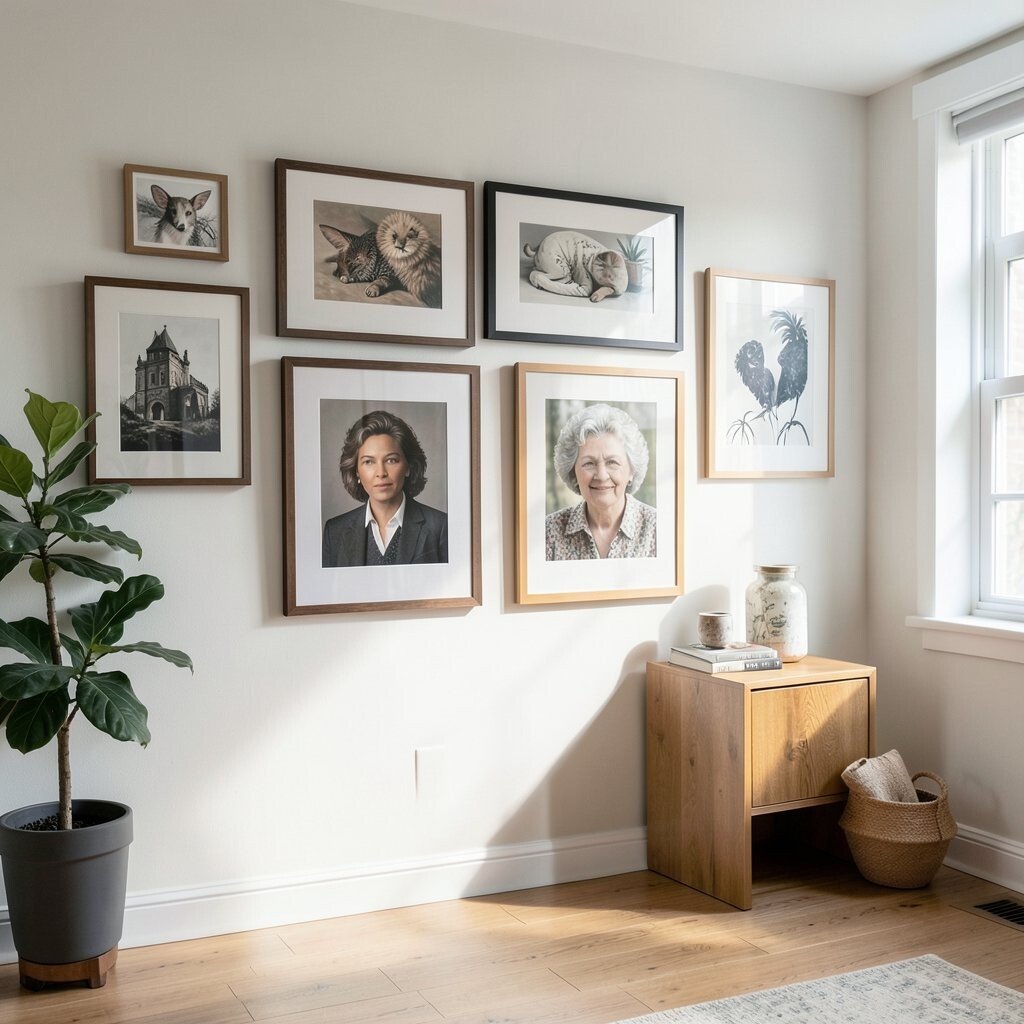
Personal art brings comfort because it tells a story. Family photos, travel memories, meaningful quotes, and heirloom-style images can all be part of the same gallery wall.
Your uniqueness grows when you choose subjects that match your life, not what looks trendy only. Even one slightly imperfect piece can make the whole wall feel real.
14. Budget in Layers Instead of One Big Purchase
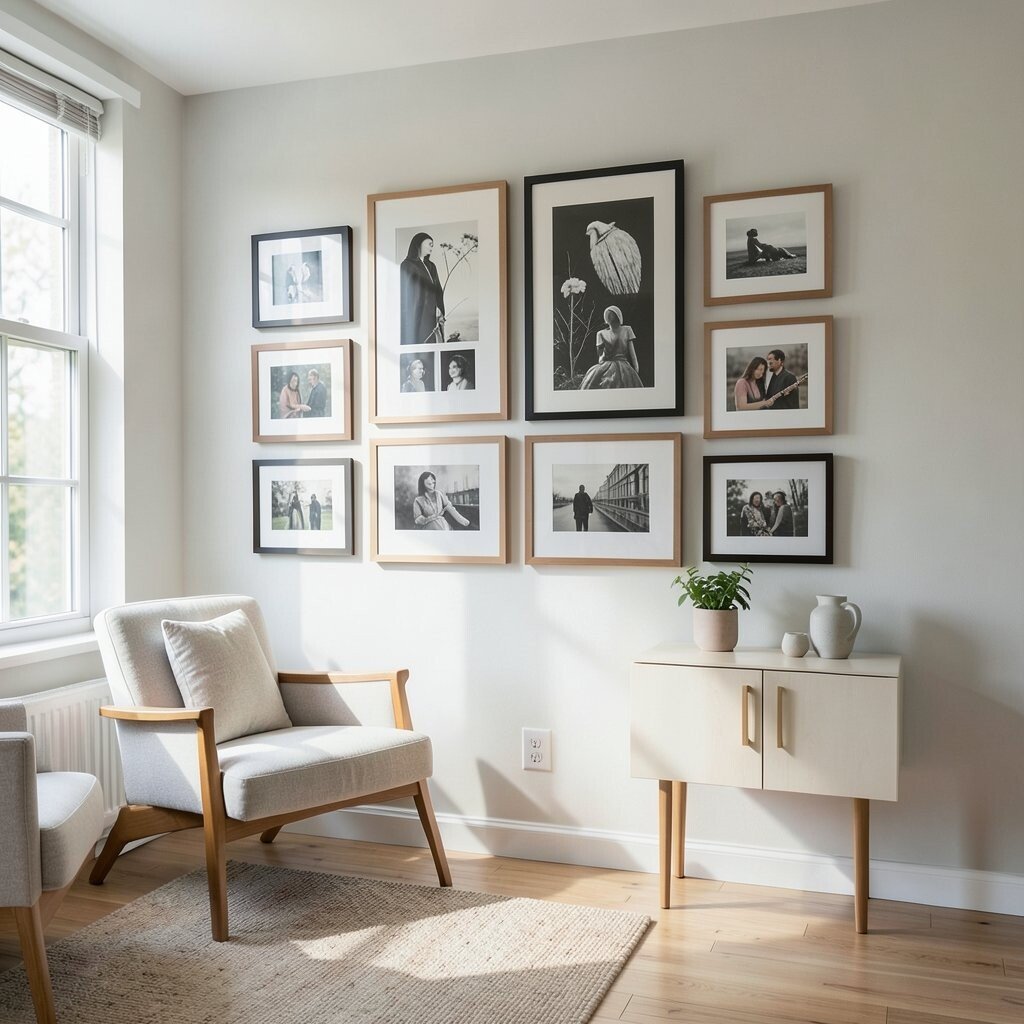
Setting a budget matters because gallery walls can add up fast. Buying everything at once often makes people compromise later.
Consider starting with a few key pieces and frames you love most. Then fill in the rest over time, including smaller affordable prints that still match your style anchor.
Thrift stores and local markets can bring surprising finds, especially for frames. Just keep an eye on sizes so later additions fit your layout.
15. Keep an Eye on Current Trends Without Copying Them
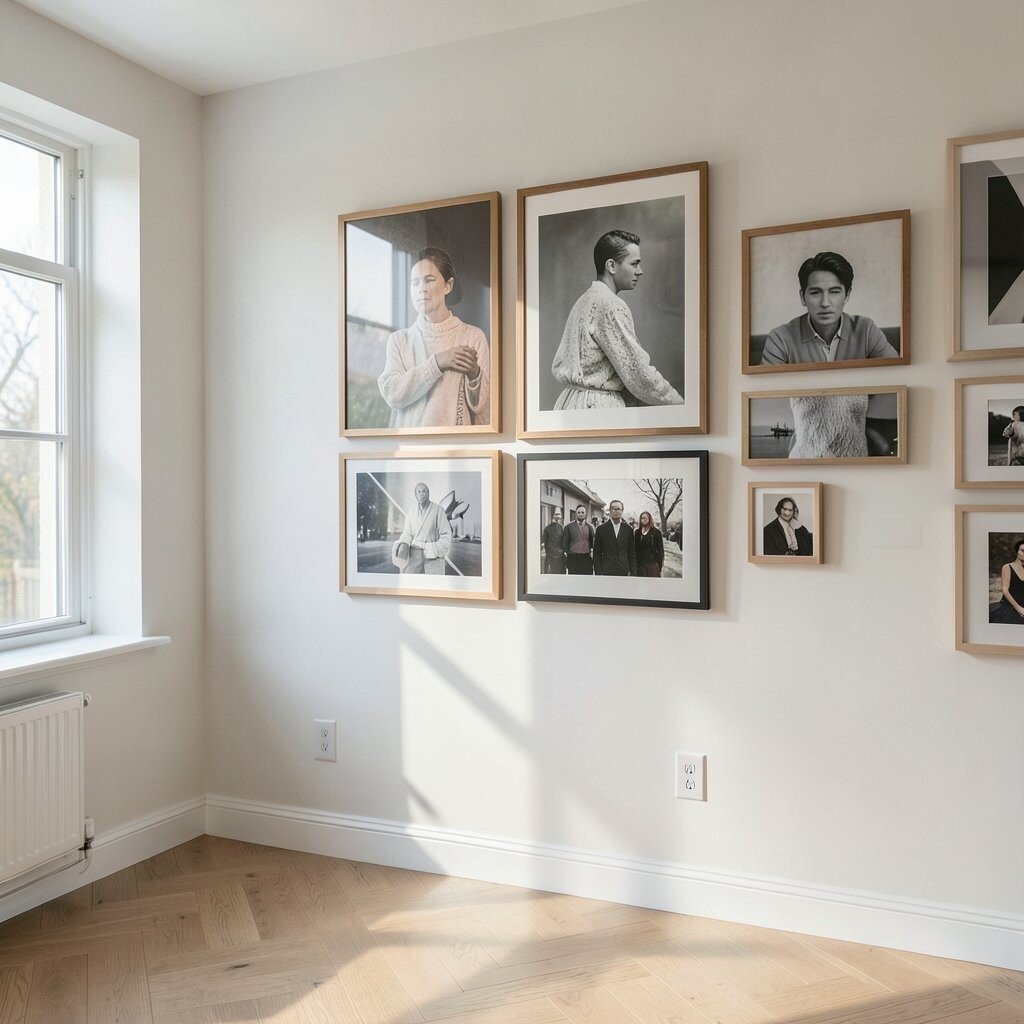
Right now, many gallery walls feel more layered and less uniform. People love mixed sizes, varied frame colors, and art that includes both modern and vintage vibes.
Trending styles are helpful, but you should still choose pieces you genuinely enjoy. If a trend doesn’t match your room’s mood, it will stand out in a bad way.
16. Plan for Updates so Your Wall Can Grow
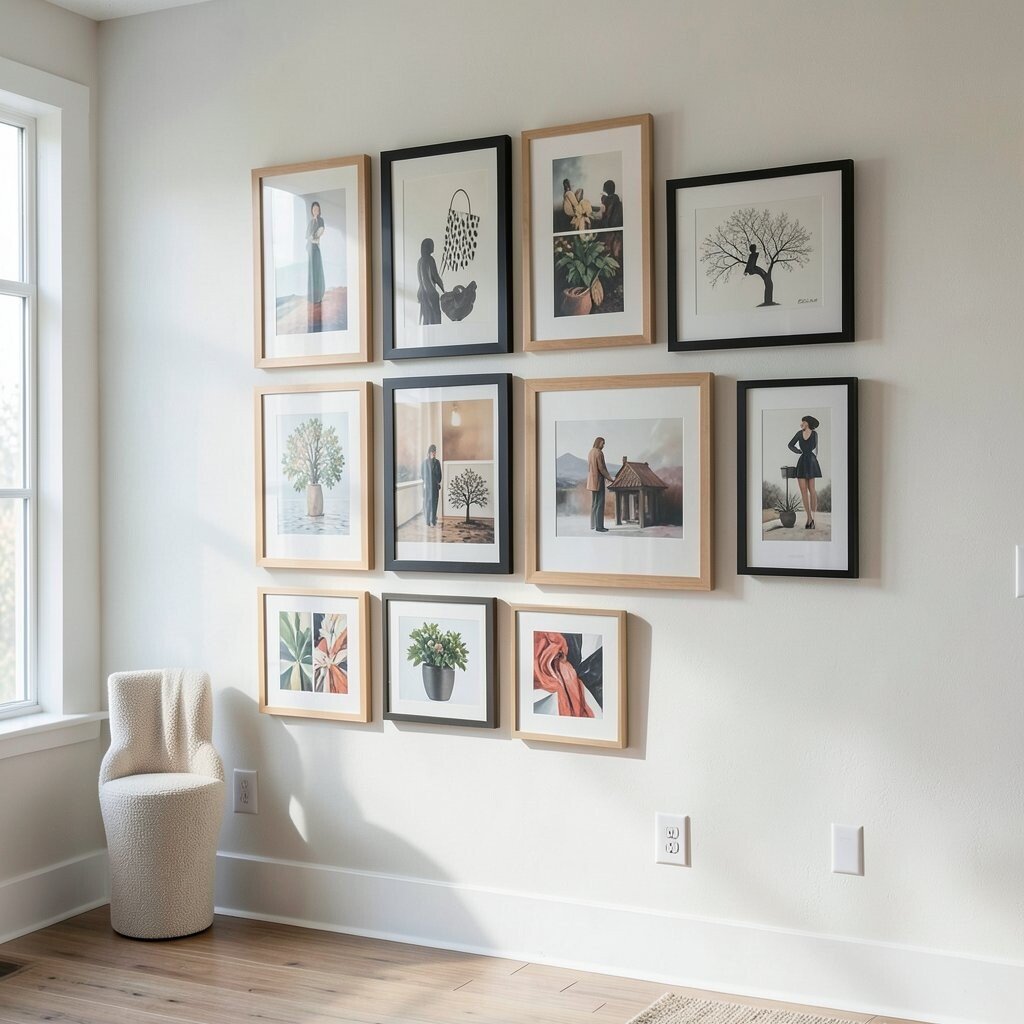
Think about how your life might change, because art collecting often becomes part of your routine. You may want to swap out photos, rotate seasonal prints, or add new memories over time.
Use hanging systems that make updates easier. Velcro strips, picture hanging hooks, and simple frame backs can make future changes faster and less stressful.
17. Decide the Hanging Height and Centering Method
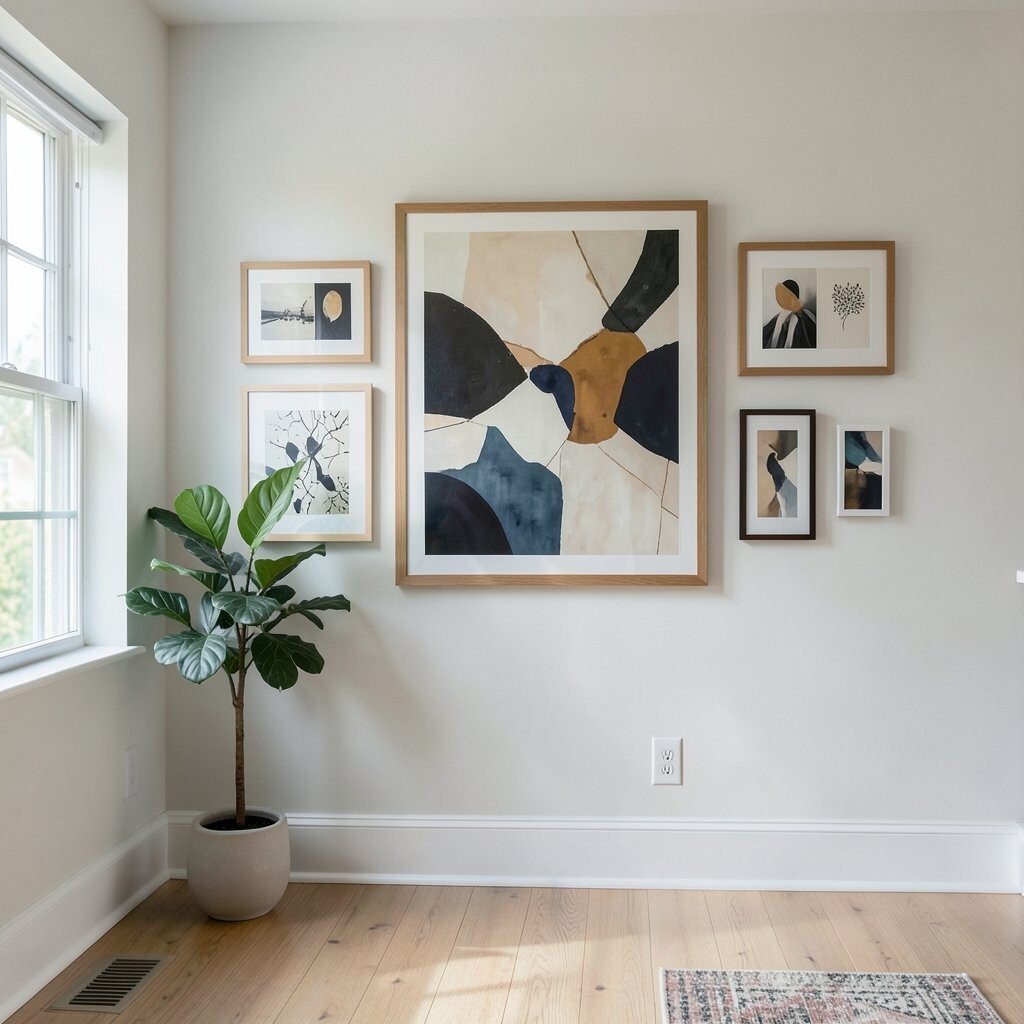
Hanging height affects how natural the wall feels, especially when you sit or stand near it. Start by centering the artwork around eye level for most spaces.
For multi-piece galleries, align your layout center rather than forcing each frame to match. A consistent visual center makes the entire set feel intentional.
After you hang, step back and check from different angles. A quick walk across the room helps you confirm the gallery looks great in real life, not just up close.