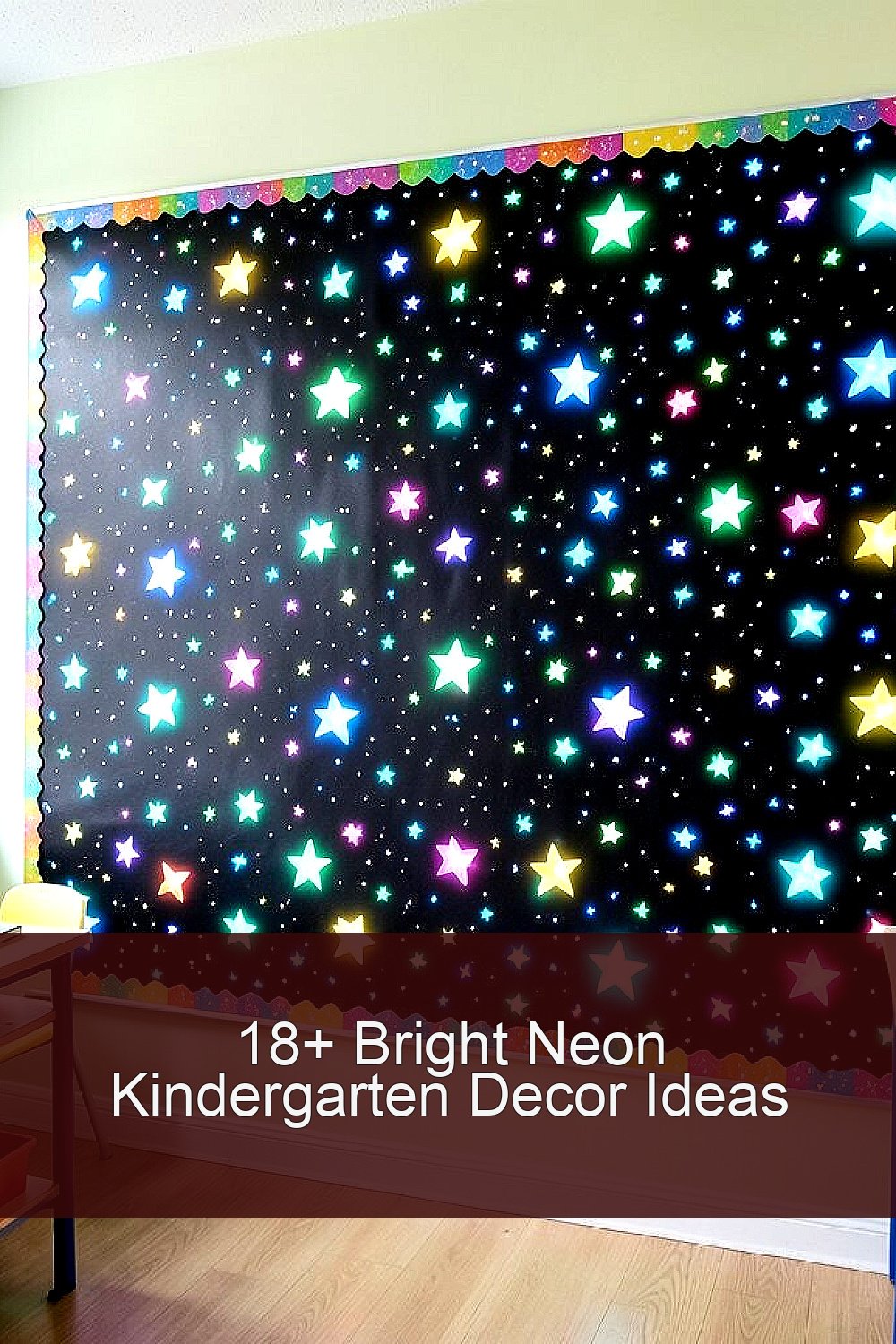
Neon color can make a classroom feel like a friendly game board. When the walls, corners, and desks glow with fun, kids feel more confident to learn and create.
Below are bright, practical ideas that keep things playful while still being organized. Each one includes easy ways to personalize, manage costs, and make the space feel truly yours.
1. Glow-in-the-Dark Star Wall Backdrop
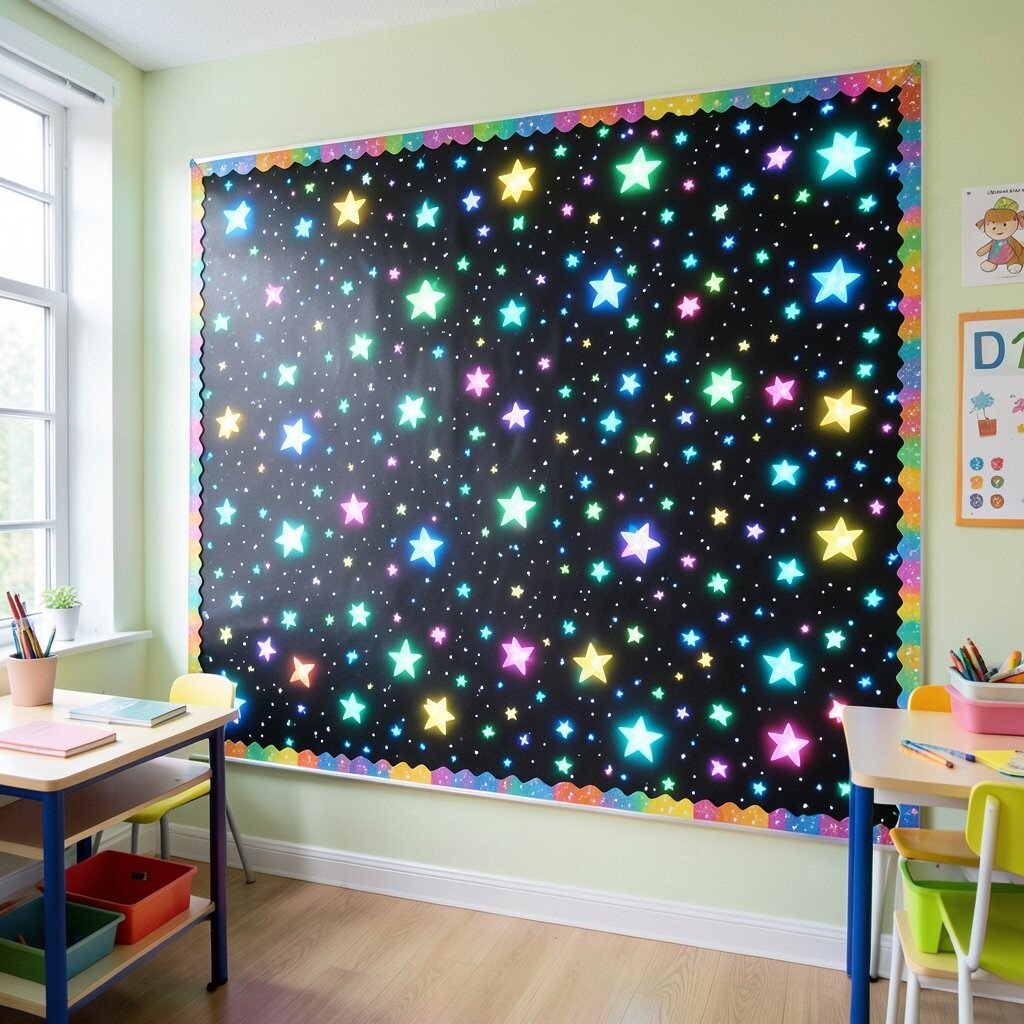
Paint a section of the wall with deep navy or black craft paint, then add neon stars using glow-in-the-dark dots. At reading time, the room looks magical even when the lights dim a little.
This setup creates a calm focus area and helps kids transition during story time. For practical results, choose self-adhesive glow decals so you can place them quickly and remove them later if needed.
2. Neon Rainbow Name Tags With Velcro
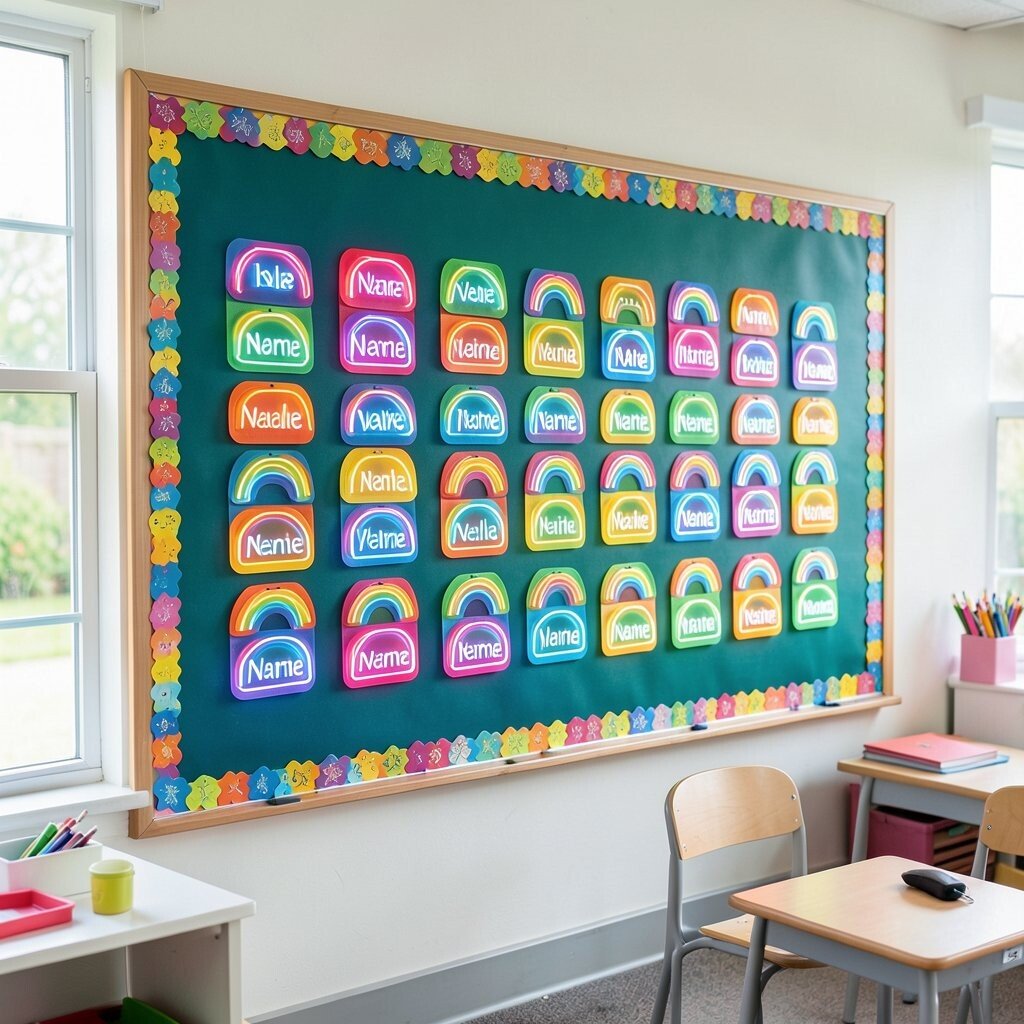
Use neon cardstock cut into rainbow stripes and add each child’s name in bright marker. Attach the tags with soft Velcro so kids can swap spots without struggling.
The benefit is huge for classroom routines, because it keeps the morning flow smooth and reduces lost-name anxiety. To keep it fresh, switch the tag colors every term and add small stickers that match the season.
Cost stays reasonable if you buy cardstock in bulk and reuse Velcro strips from year to year. Try laminating the tags for durability, especially if your group loves hands-on crafts.
3. Ceiling Hanging Confetti Streamers in Neon Colors
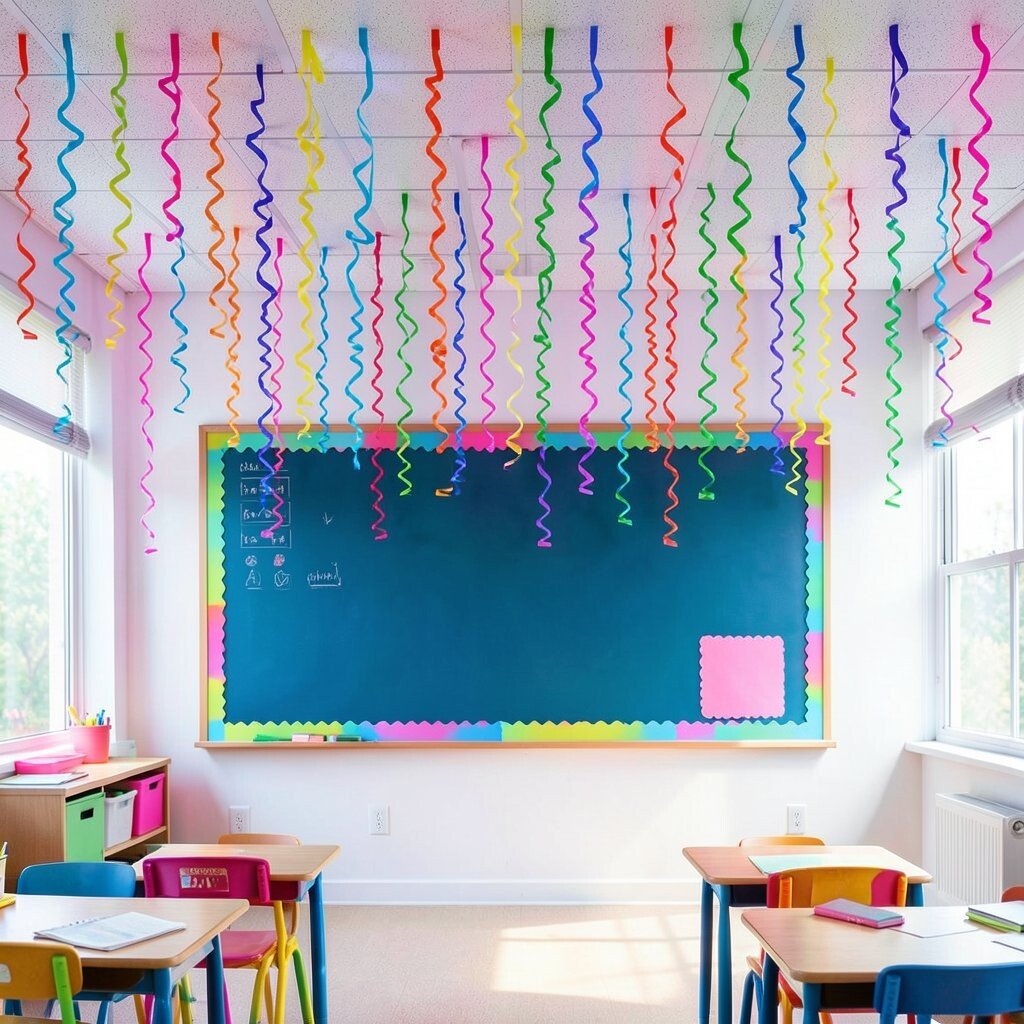
Hang lightweight streamers or tissue-paper strips from the ceiling in neon pink, lime, teal, and orange. When kids move around, the strips flutter and make the whole room feel alive.
This kind of movement grabs attention without needing lights or screens. Use fishing line and keep the strands short enough to avoid tangles during play.
For uniqueness, add a few star-shaped cutouts between the streamers and place them above quiet zones. If you want a budget win, cut shapes from inexpensive foam sheets and reuse them for multiple years.
4. Neon Color Block Learning Zones With Tape Lines
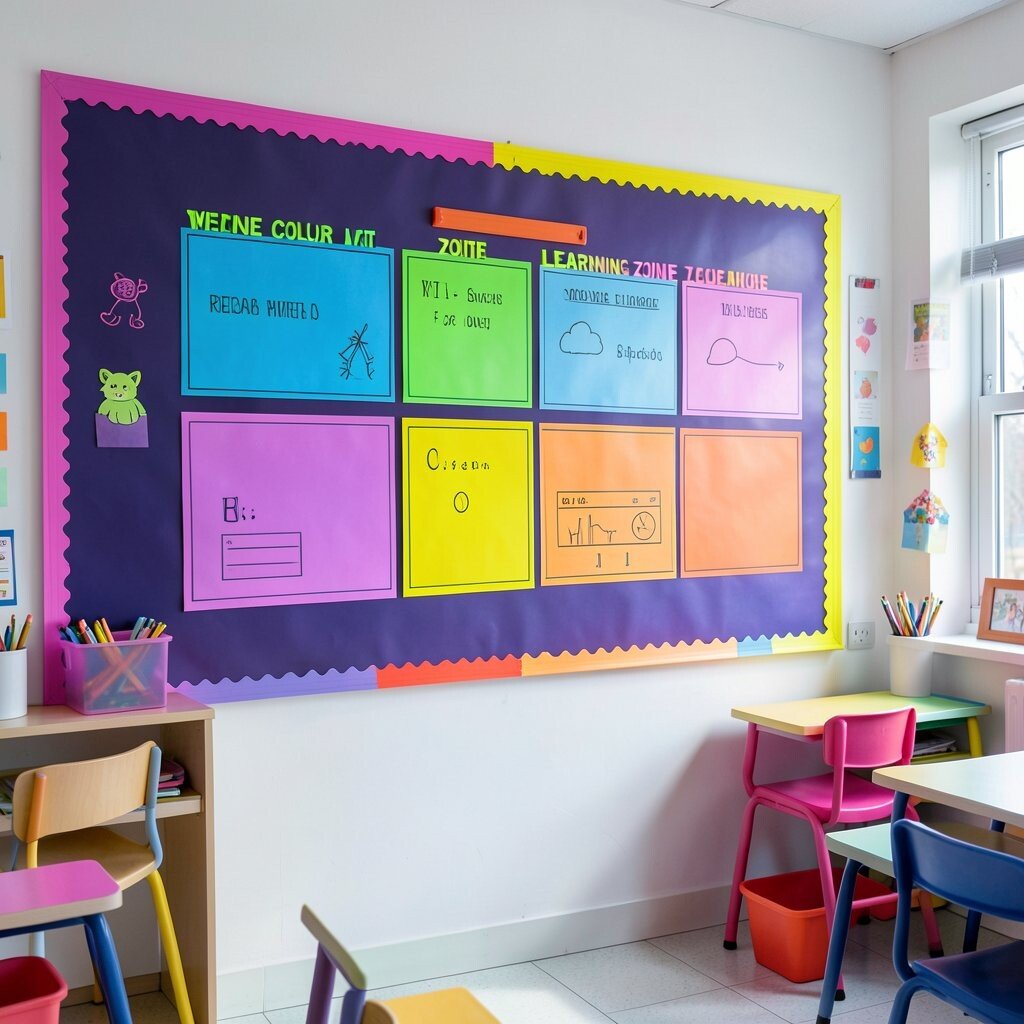
Mark classroom areas using neon painter’s tape, like a green line for math, pink for art, and blue for reading. The clean boundaries help kids know where to go and what to do.
Color blocking supports organization, and it also makes directions easier because kids can follow visual cues. Replace tape at the start of each semester so edges stay bright and neat.
5. Light-Up Letters Above the Board
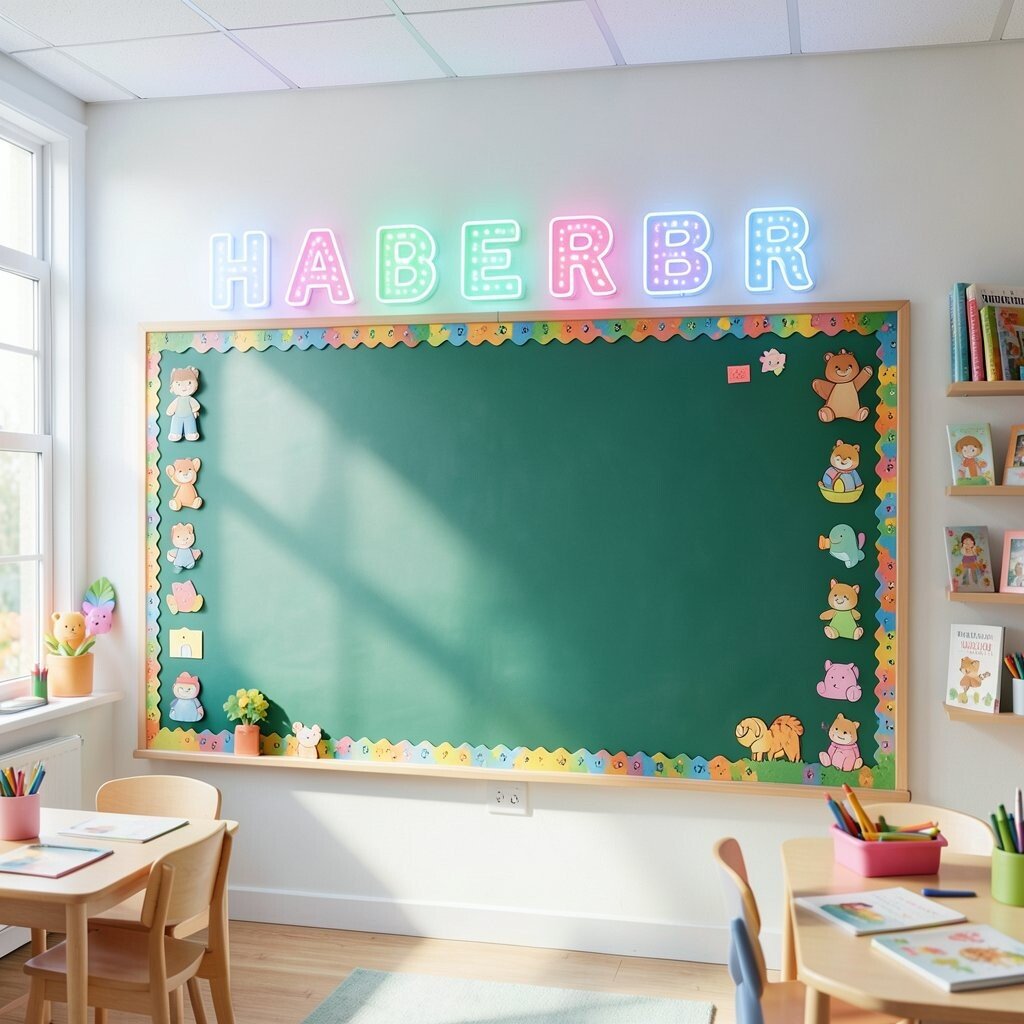
Place large letter shapes above the whiteboard and make them glow using battery LED letter lights. When you’re teaching phonics, the room feels like it’s cheering for each sound.
Kids often stay more engaged when the visuals pop, and glowing letters can make repeat practice feel playful. For practical setup, choose letters that are sturdy and have an easy on-off switch.
To personalize, add a small color code for vowels, consonants, or the weekly focus sound. If cost is a concern, buy one set and reuse the same letters across years, swapping the classroom theme colors around them.
6. Neon Art Supply Station With Labeled Bins
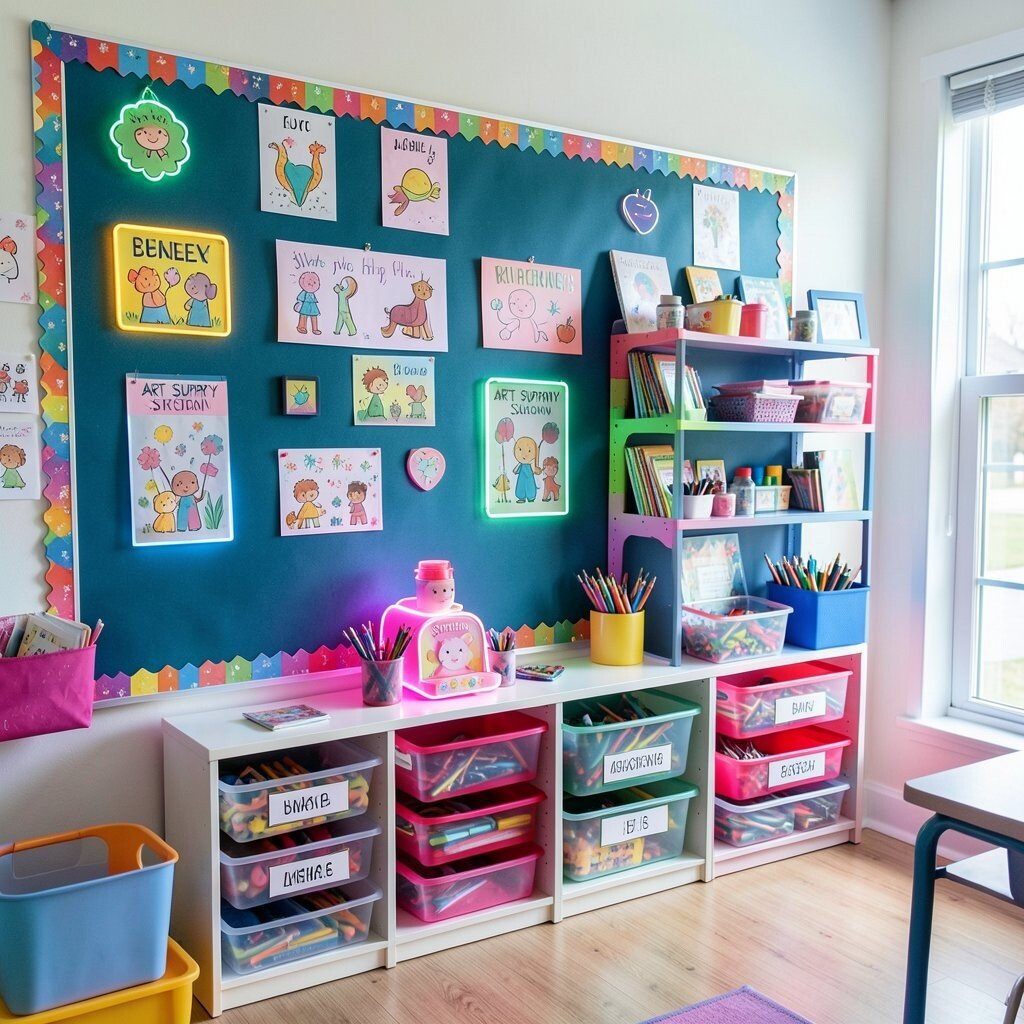
Set up a wall or cart with neon bins in different heights and colors, then label each bin with matching neon sticky notes. Fill them with crayons, markers, glue sticks, and scissors so art time starts fast.
Clear organization builds independence, because kids can find tools without asking every moment. Use color icons like a paintbrush, scissors, or a paper sheet so names are not the only way to sort.
7. Bright Geometric Rug With Sight-Word Pockets
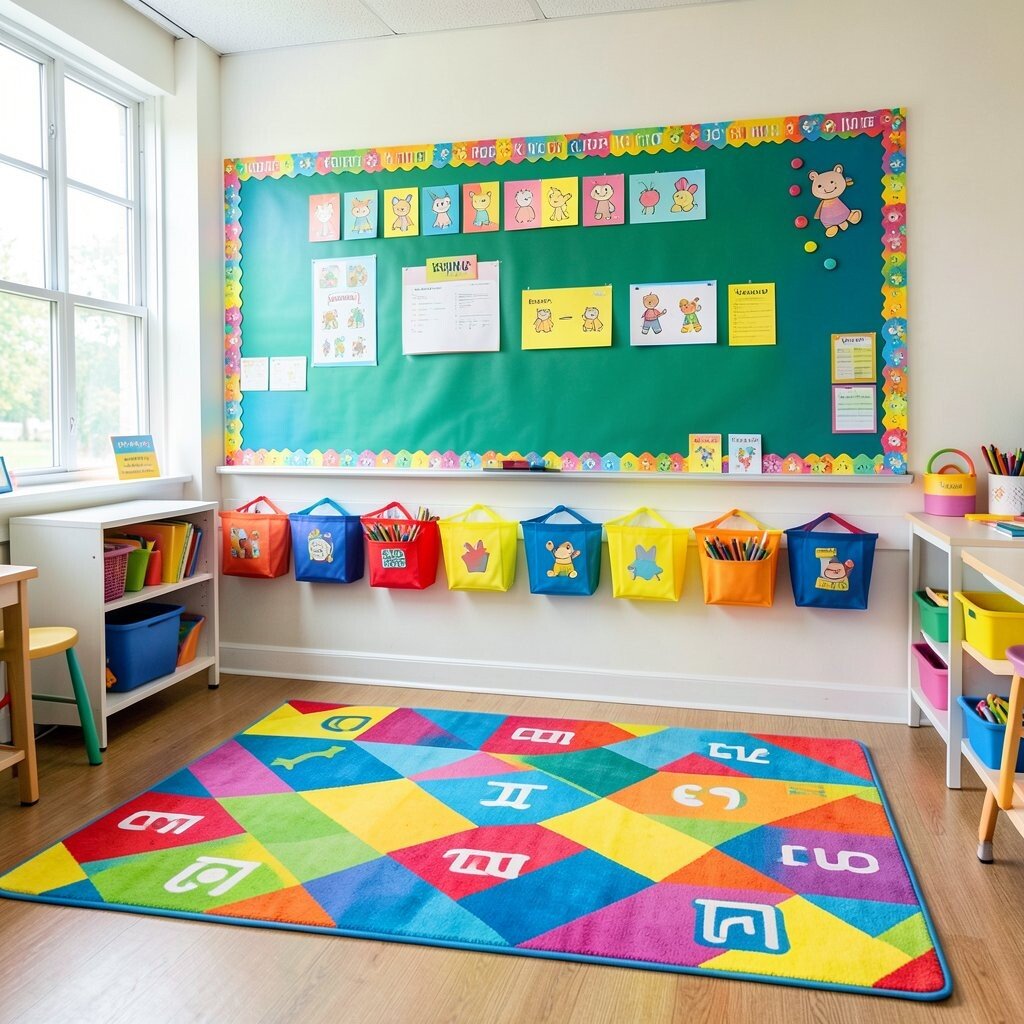
Choose a neon geometric rug for circle time, then add small fabric pockets or hook-and-loop squares for sight-word cards. Place the cards in pockets and let kids retrieve the right one together.
This makes practice hands-on, and it helps students remember words through movement. For practical care, pick a rug with a low pile and easy washable material.
Make it unique by matching the rug colors to your classroom theme, like sunshine yellow plus hot pink plus aqua. If you want to manage cost, repurpose an older rug by adding neon binding tape along the edges.
8. Neon Magnetic Calendar Board With Mini Backlights
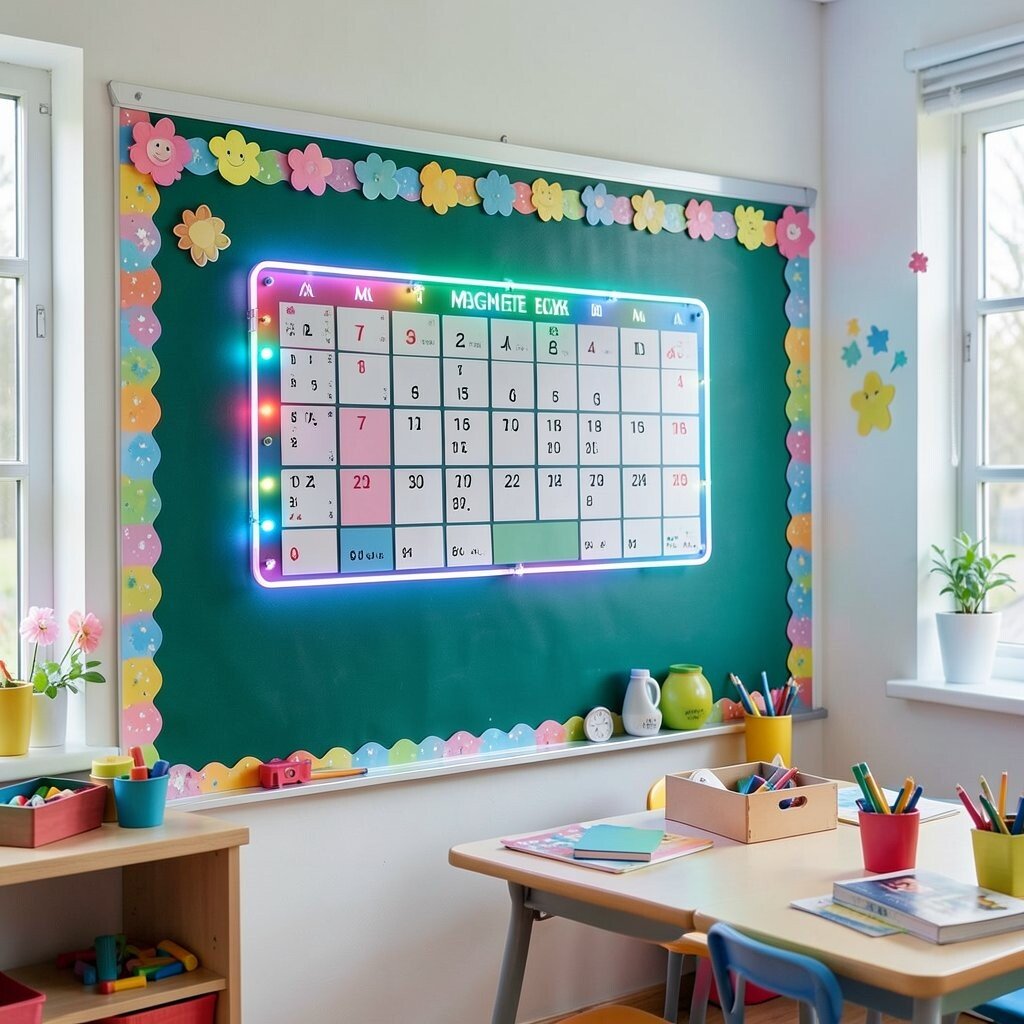
Create a magnetic calendar using neon foam board and add small battery LED puck lights behind the date squares. When the current day lights up, kids feel the routine is special.
This kind of bright focus helps with time concepts and supports daily transitions. Try using Velcro-backed number tiles so children can move them without pulling fragile parts.
9. Color-Changing Water Wall for Sensory Play
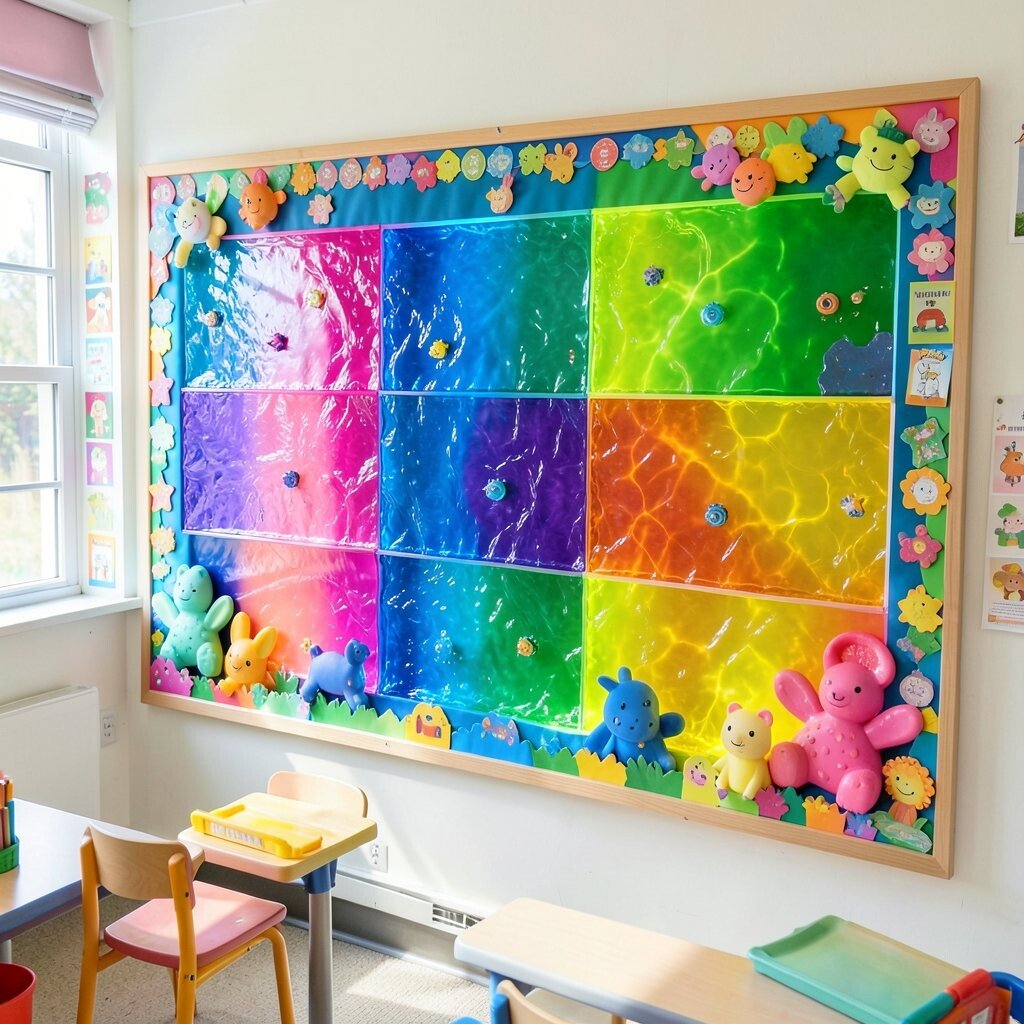
Set up a sensory water wall or tub station with neon cups and scoops, then add LED submersible lights for a soft glow. The visual effect makes even simple pouring practice feel exciting.
Neon light can encourage curiosity and calm, which is great for sensory breaks. Keep it practical by using a spill tray and providing towels nearby so cleanup feels easy.
For personalization, let each child choose a neon color scoop for their turn and rotate colors during the week. If budget is tight, use LED strips sealed in waterproof covers and reuse cups from craft stores.
10. Neon Bookshelf With Color-Coded Covers
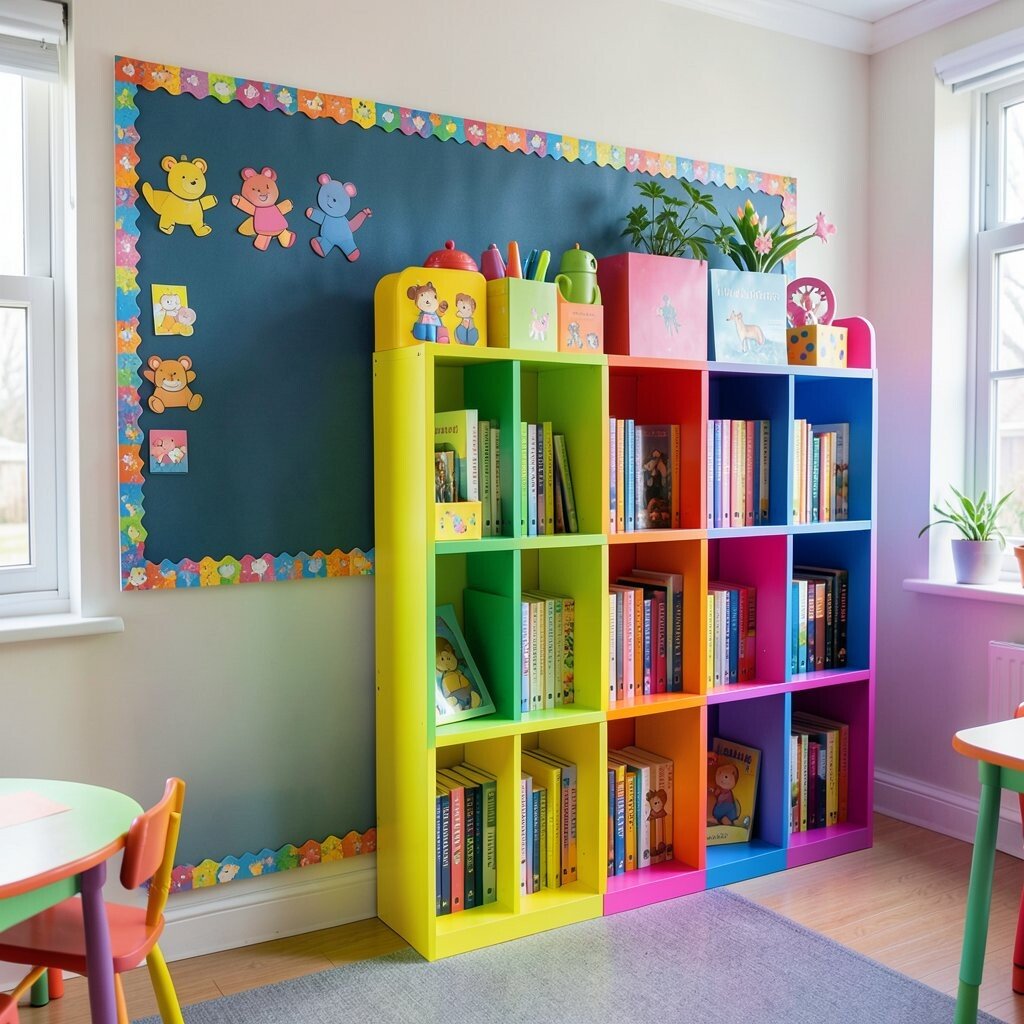
Paint the bookshelf back panel neon or add a neon contact paper background, then organize books by spine color using neon dots. Kids can find favorites quickly because the colors act like a simple map.
Color-coded browsing improves independence and helps kids return books to the right spot. Choose durable shelves and use book bins to prevent toppled stacks during energetic browsing.
To make it personal, add tiny nameplates above each category so the room feels like it belongs to the whole class. If you want a lower-cost approach, cover only the back panel and keep the shelf frame as-is.
11. Neon Word Wall With Clip-On Letter Cards
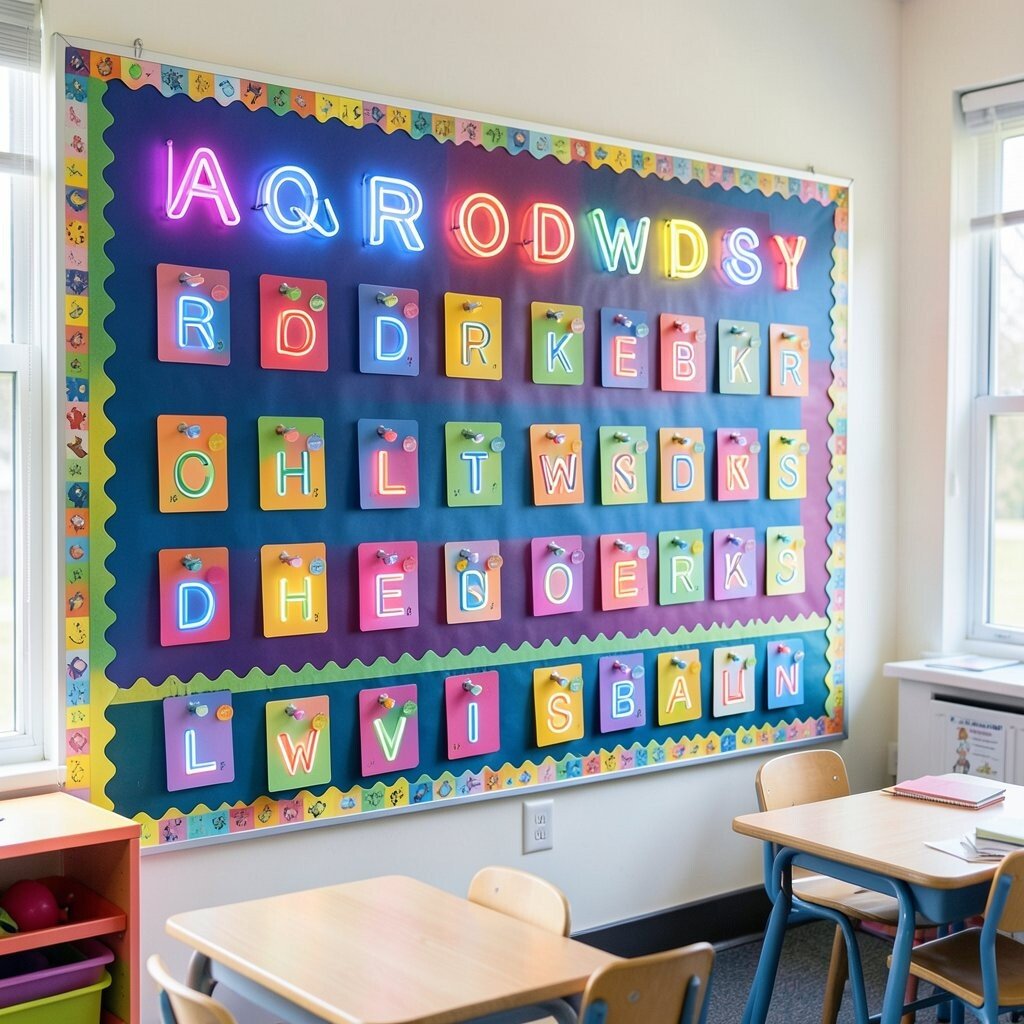
Build a word wall using neon foam strips and hang the letters with small clips or magnetic backing. Use different neon shades for categories like feelings, actions, or classroom helpers.
This helps kids connect vocabulary with visuals, and it’s easy to update without rewriting everything. Choose a clear, sturdy backing so clips hold firmly and don’t slip during daily use.
12. Glow Neon Tissue Paper Lanterns in Corners
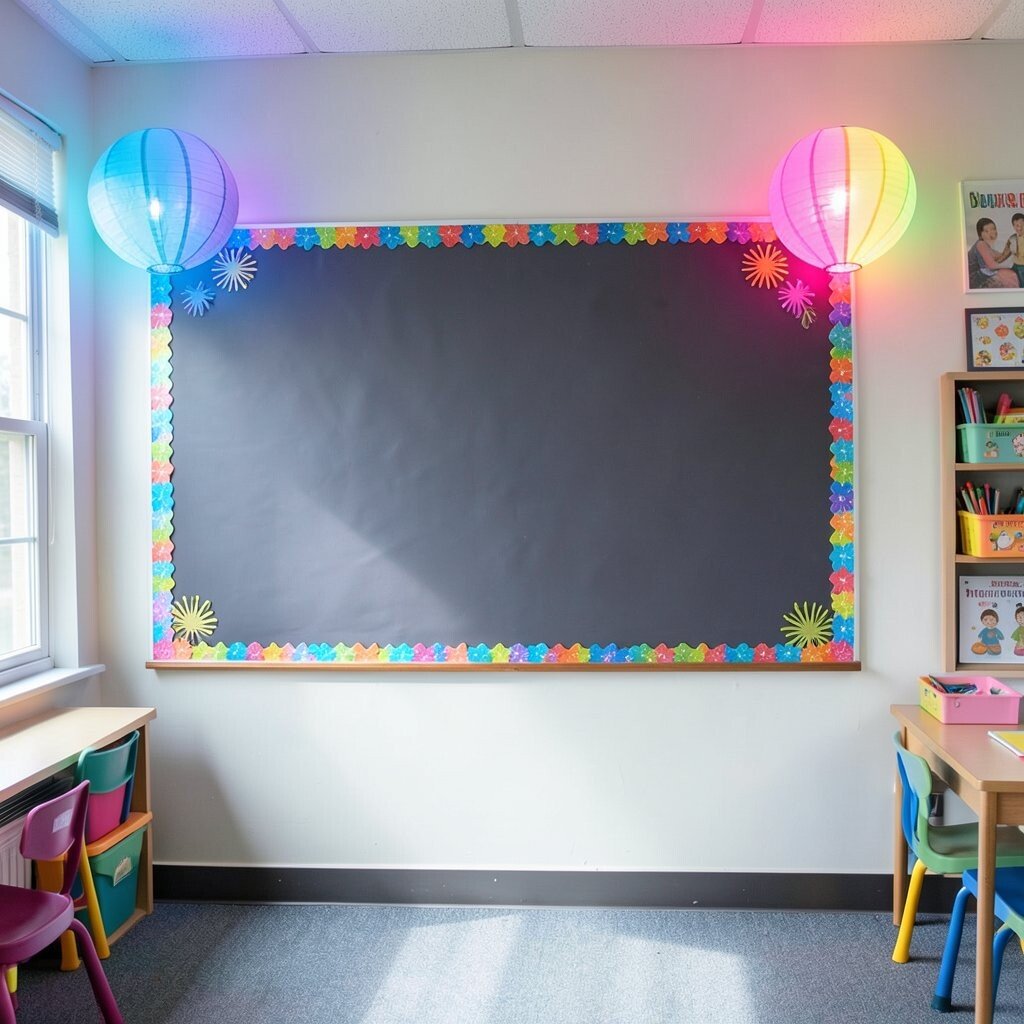
Hang neon tissue paper lanterns in a few corners of the room to add soft, friendly color. Even without direct sunlight, they create a cheerful atmosphere that feels cozy.
Corner decor gives kids visual calm and makes waiting time feel less boring. Keep safety in mind by using lightweight materials, sturdy hooks, and battery tea lights that are shielded.
For uniqueness, mix solid neon lanterns with patterned tissue paper and coordinate them with your art projects. Cost can stay low if you make a few lanterns with supplies you already have from school craft days.
13. Neon Checklist Posters for Daily Routines
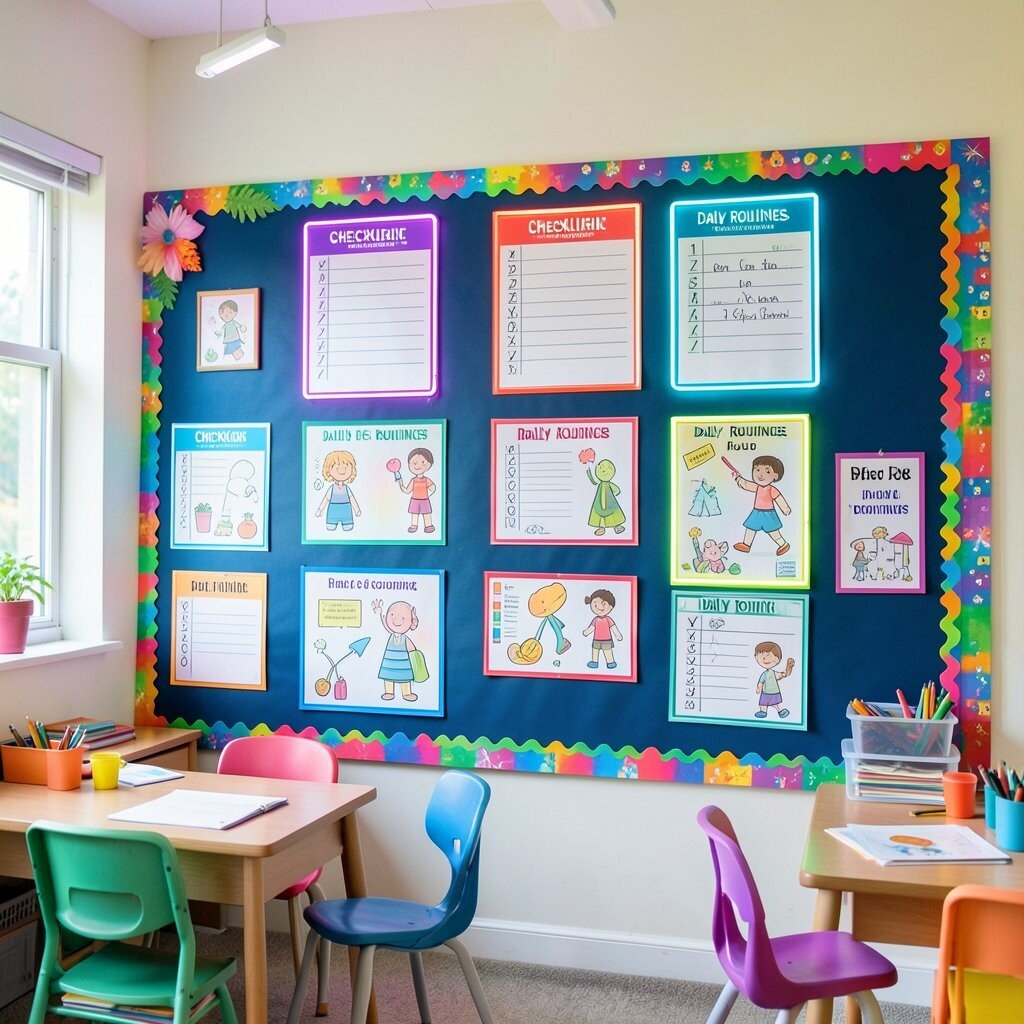
Design daily routine cards using neon borders and simple drawings, then post them at kid height. Examples include “wash hands,” “line up,” and “choose a book,” all in bright, readable colors.
Routines become easier when children can see steps, and that reduces repeated reminders. Make them practical by using lamination and dry-erase markers so you can change dates and activities fast.
To personalize, add one small rotating “today helper” icon in a neon color to match the class theme. For cost planning, print on cardstock and replace only the front cards instead of the entire system.
14. Neon Number Line Rug With Hopscotch Squares
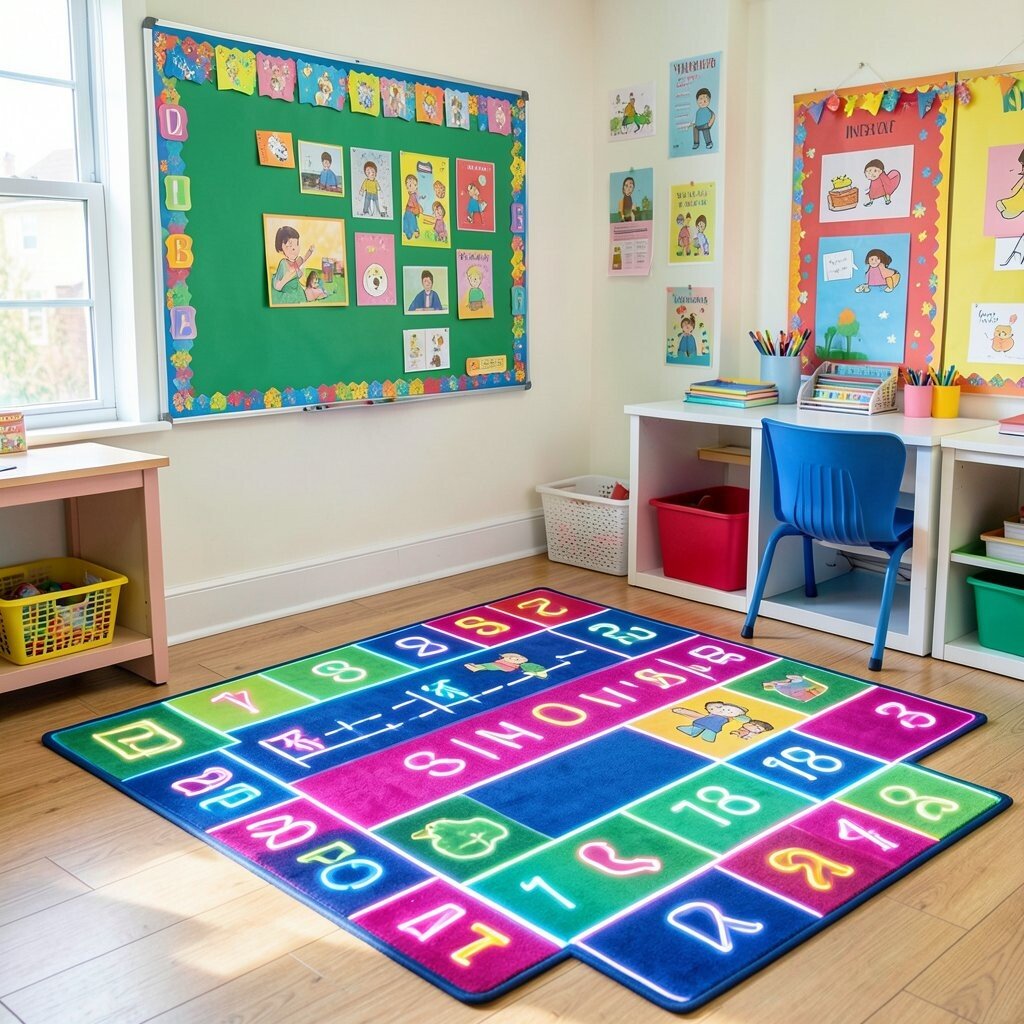
Create a neon number line on a rug using fabric paint or iron-on patches, and include hopscotch-style squares across it. When you teach counting, kids can step from number to number like a game.
This approach supports early math and makes practice feel energetic instead of repetitive. Keep it practical by using washable materials and testing paint on a small hidden section first.
15. Neon Photo Display Wall With Clothespins
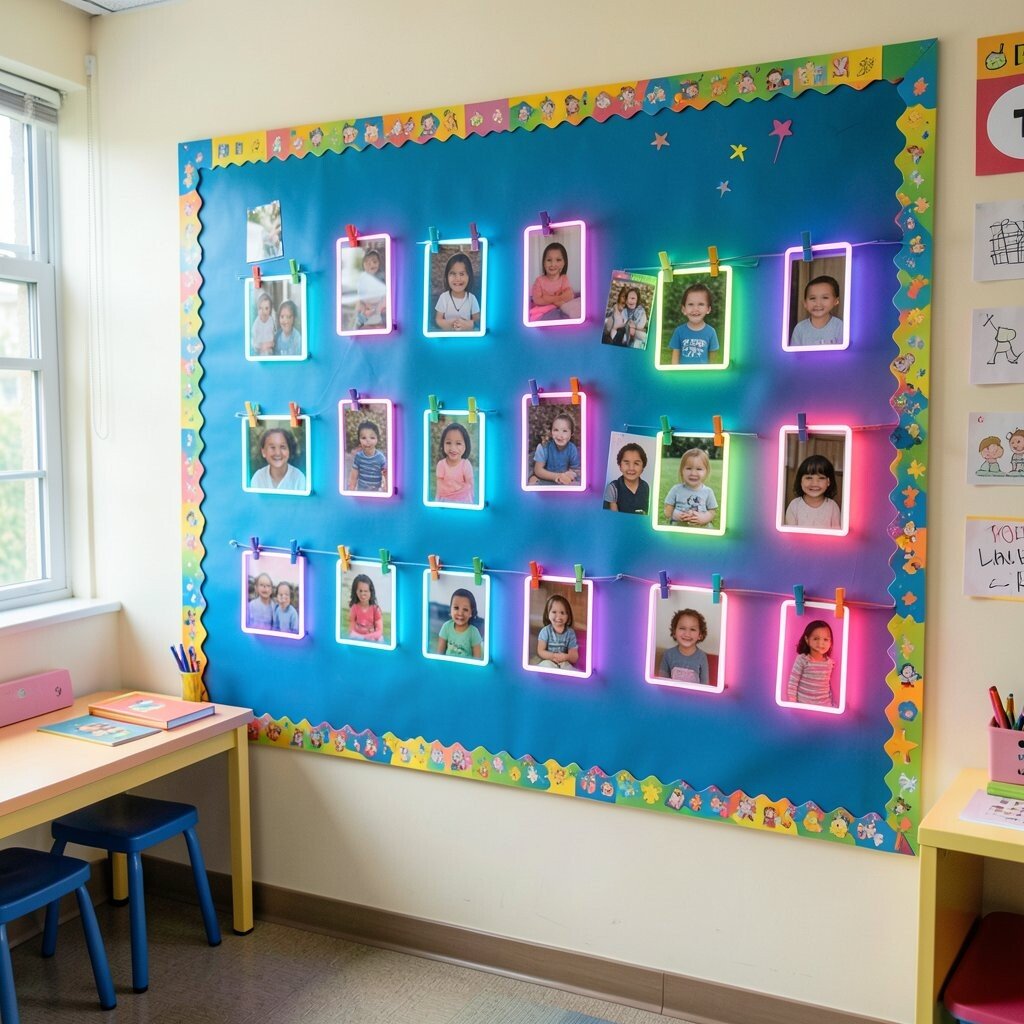
Use neon clothespins to hang child photos on a string or wire display across the room. Add neon borders behind each photo so the display looks bright and celebratory.
This decor boosts pride and belonging, which can lead to better participation during group activities. For practical tips, use clear name tags so you can quickly switch photos after projects are finished.
Make it unique by labeling photos with fun captions drawn by the class, like “our first mural” or “science bubble day.” Costs stay manageable if you print a few sets and reuse the same clothespin line year after year.
16. Neon Sensory Wall With Swappable Panels
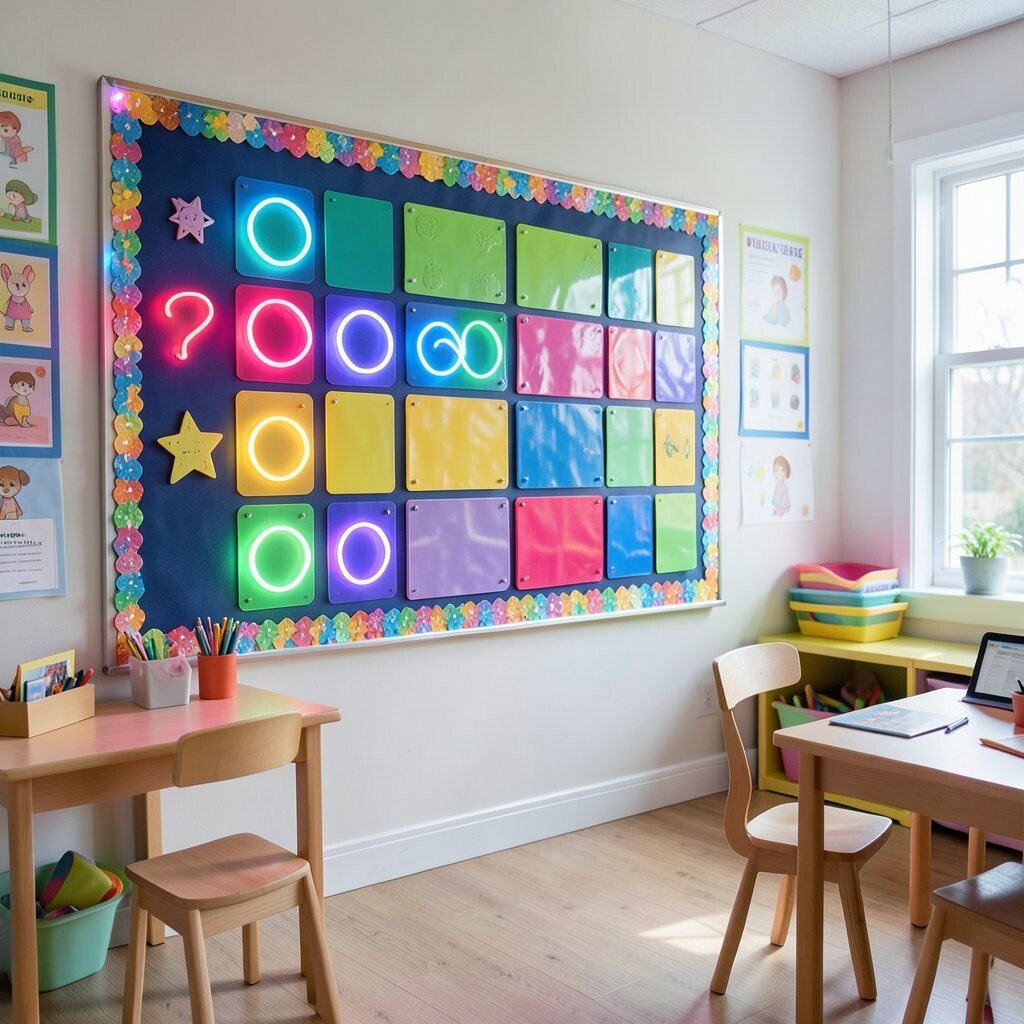
Build a sensory wall using a board covered with neon felt and add swappable panels like textured pockets, crinkle fabric, and soft brush strips. Each week, change the textures so the wall feels new again.
Swappable sensory areas help children regulate emotions and keep hands busy during restless moments. Use Velcro consistently so kids can handle pieces safely and so you can replace worn parts easily.
17. Bright Neon Chalkboard or Whiteboard With Glow Borders
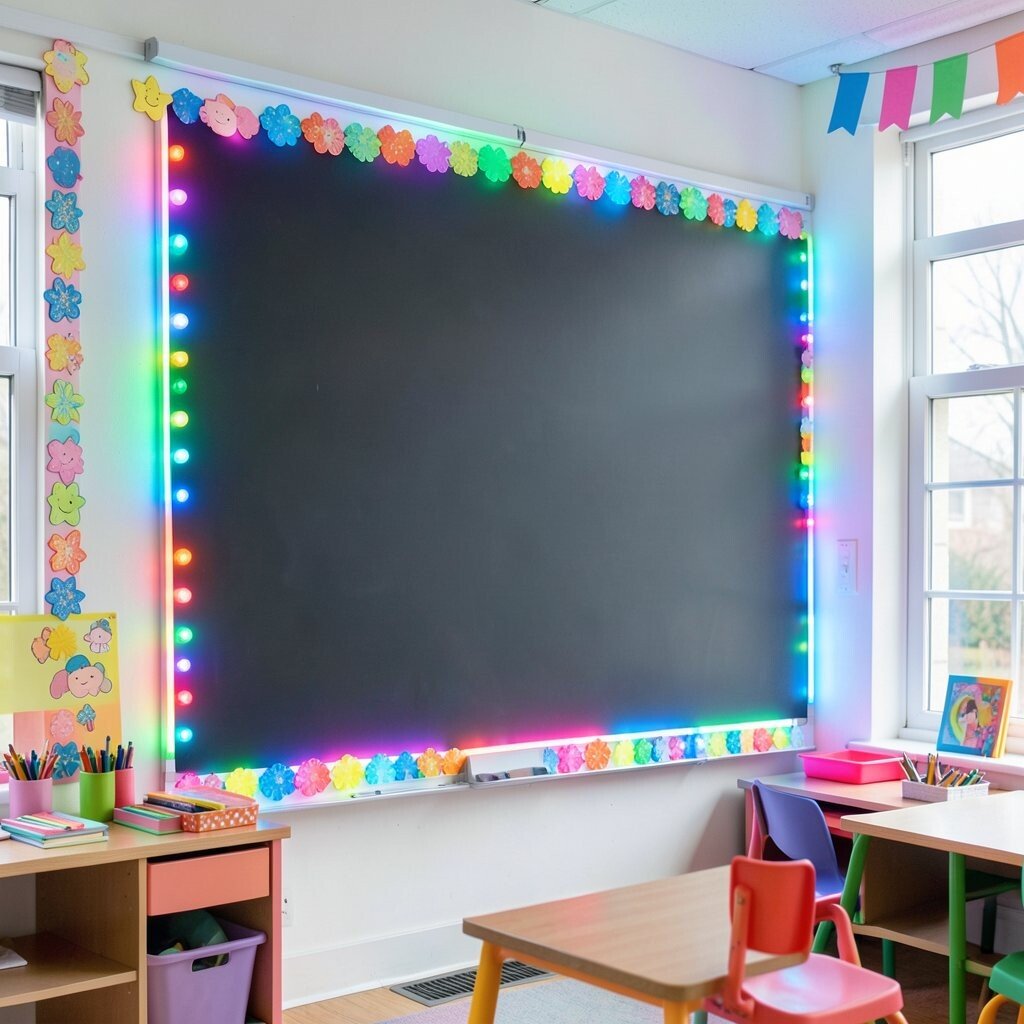
Choose a small neon-framed writing board and decorate it with glow-like edging tape around the writing area. Kids can practice drawing letters, shapes, and feelings with wet-erase markers or chalk.
This supports language and fine-motor practice while giving kids a place to express themselves freely. For practical use, pick the surface type that matches your cleaning routine and keep erasers and cloths right beside it.
Personalize by letting students choose one neon color per day for a “morning message” that you write together. If cost matters, focus on one board rather than multiple spots, then rotate the content to keep it exciting.
18. Neon Weather or Feeling Wheel With Spinner
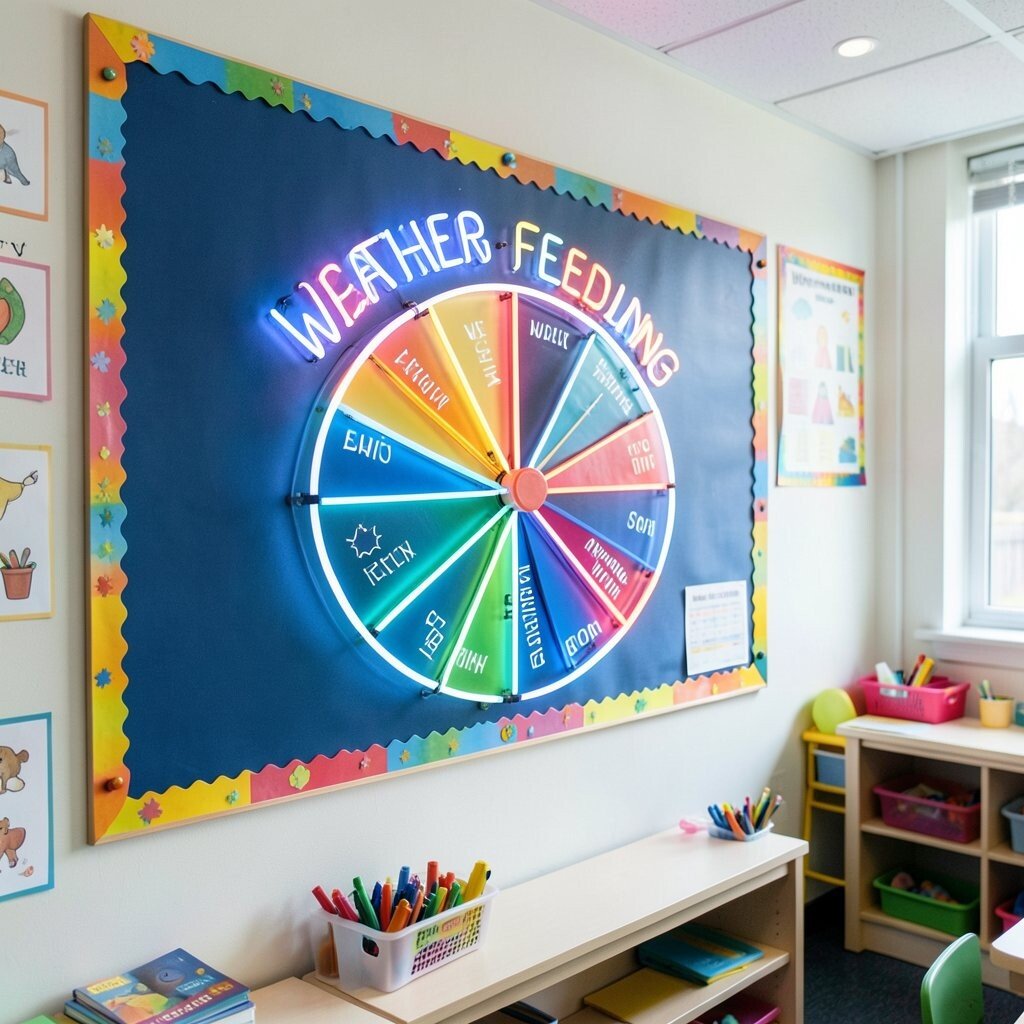
Create a neon weather or feeling wheel on a sturdy poster board and add a spinner arrow with a brad fastener. Use bright colors for each mood or weather type so kids can show how they feel quickly.
That quick visual check-in builds emotional awareness and supports smoother classroom communication. For practicality, mount it at an accessible height and check that the spinner moves smoothly but stays secure.
To make it unique, include a tiny class mascot or symbol for each option, like a rocket for excited or a cloud for calm. Keep costs in check by using one wheel for the year and updating the icons with laminated cards.
19. Neon Themed Growth Charts With Measurement Stickers

Set up neon growth charts using bright posters on the wall and add measurement stickers or height markers at kid eye level. Pair it with monthly routines, like “count your growth” or “pick your chart color.”
Seeing progress helps children feel motivated and encourages gentle goal thinking. Keep it practical by using waterproof markers and adding a clear protective layer where hands touch most often.
Personalize the chart by letting students choose a neon color for their own marker and adding a small photo or drawing each time you measure. For cost considerations, create the base once and print new sticker sets only when you need to update the visuals.