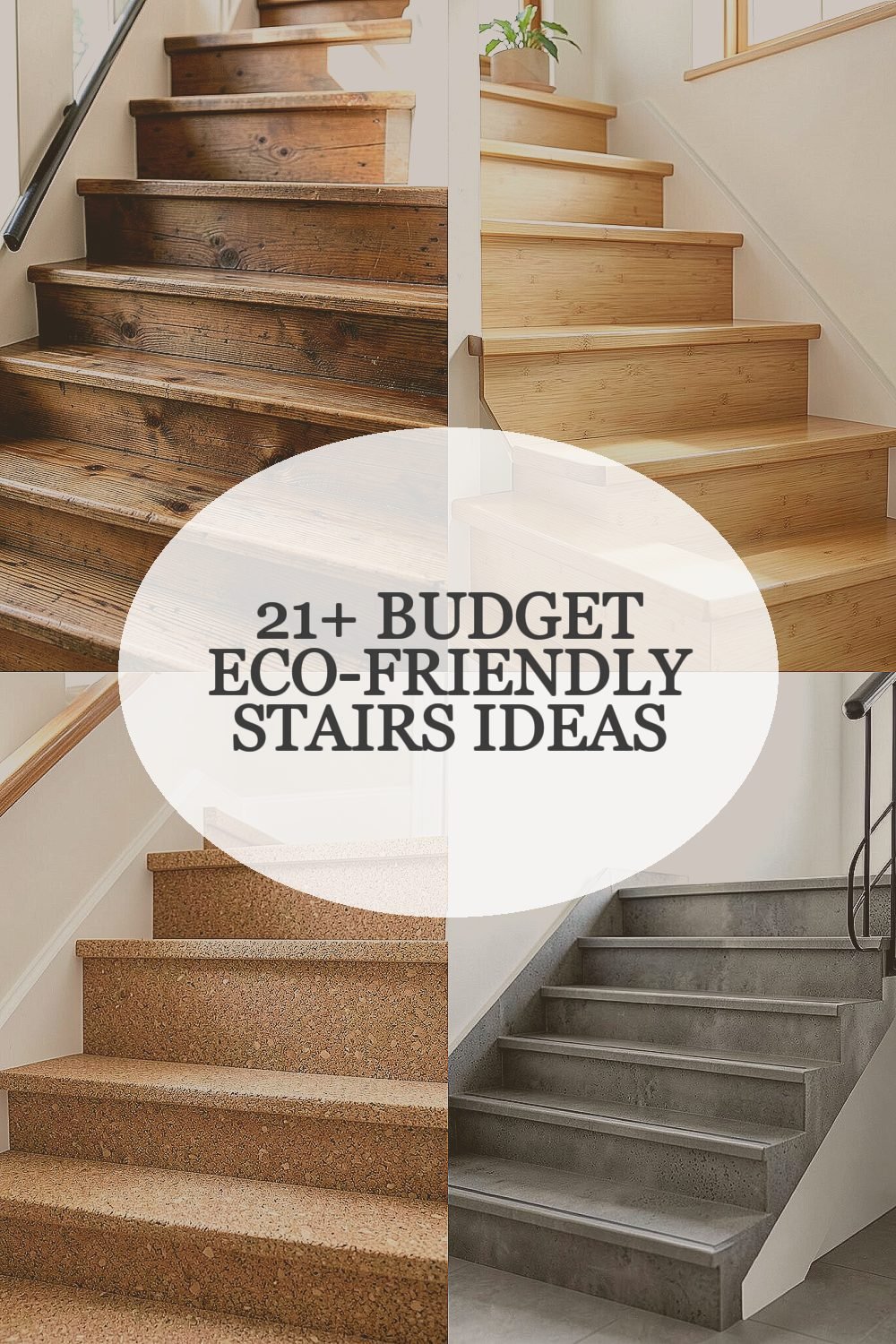
The stairs you walk every day can also be kinder to the planet. With a few smart materials and careful planning, you can make your home feel warm, stylish, and budget-friendly.
1. Reclaimed Wood Treads With Hand-Rubbed Finish
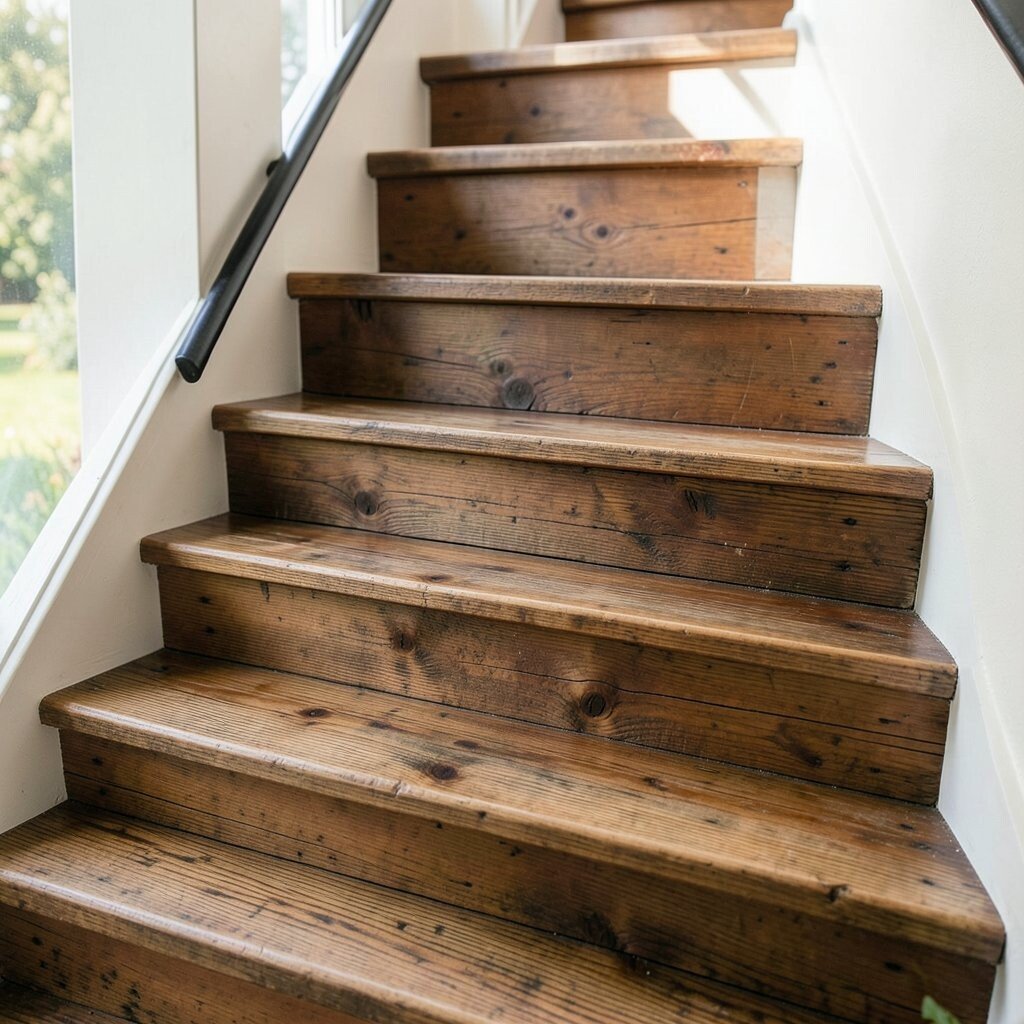
You can picture soft grain lines and tiny nail holes that look like little history stories. Using reclaimed boards for the treads gives your steps a one-of-a-kind look that feels inviting.
Choose pieces that are sturdy and check for cracks before you install them. Sand the surface smooth, then use a low-VOC stain or a simple oil finish so the wood keeps its natural character. For cost control, reuse matching offcuts for the risers and focus spending on the parts you touch most.
2. Bamboo Stair Nosing That Adds Light and Bounce
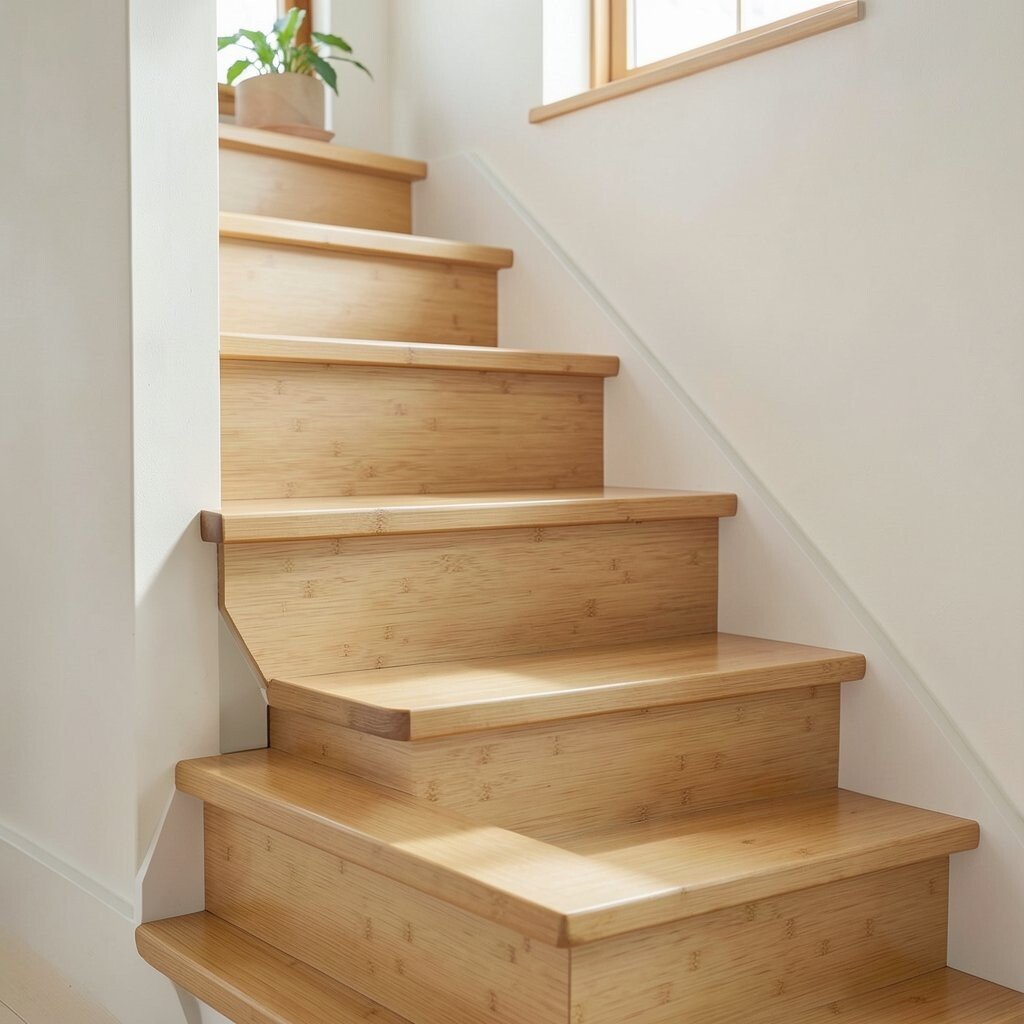
Bamboo has a tidy, stripe-like look that can make narrow stairs feel brighter. A budget-friendly way to update your steps is by adding bamboo nosing where your foot lands.
It offers good strength for everyday use and tends to resist warping when you keep humidity steady. Measure the overhang carefully, then pre-fit the strips so installation stays clean and fast. If you want a trend-forward vibe, pair the bamboo with simple black metal brackets for a modern edge.
To keep it affordable, buy a larger bamboo panel or flooring piece and cut it into nosing strips. Seal the edges well, because the sides take the most wear. Personalize the shade by testing a small offcut with your chosen finish so the tone matches your hallway walls.
3. Cork Underlayment for Cozy, Quiet Footfalls
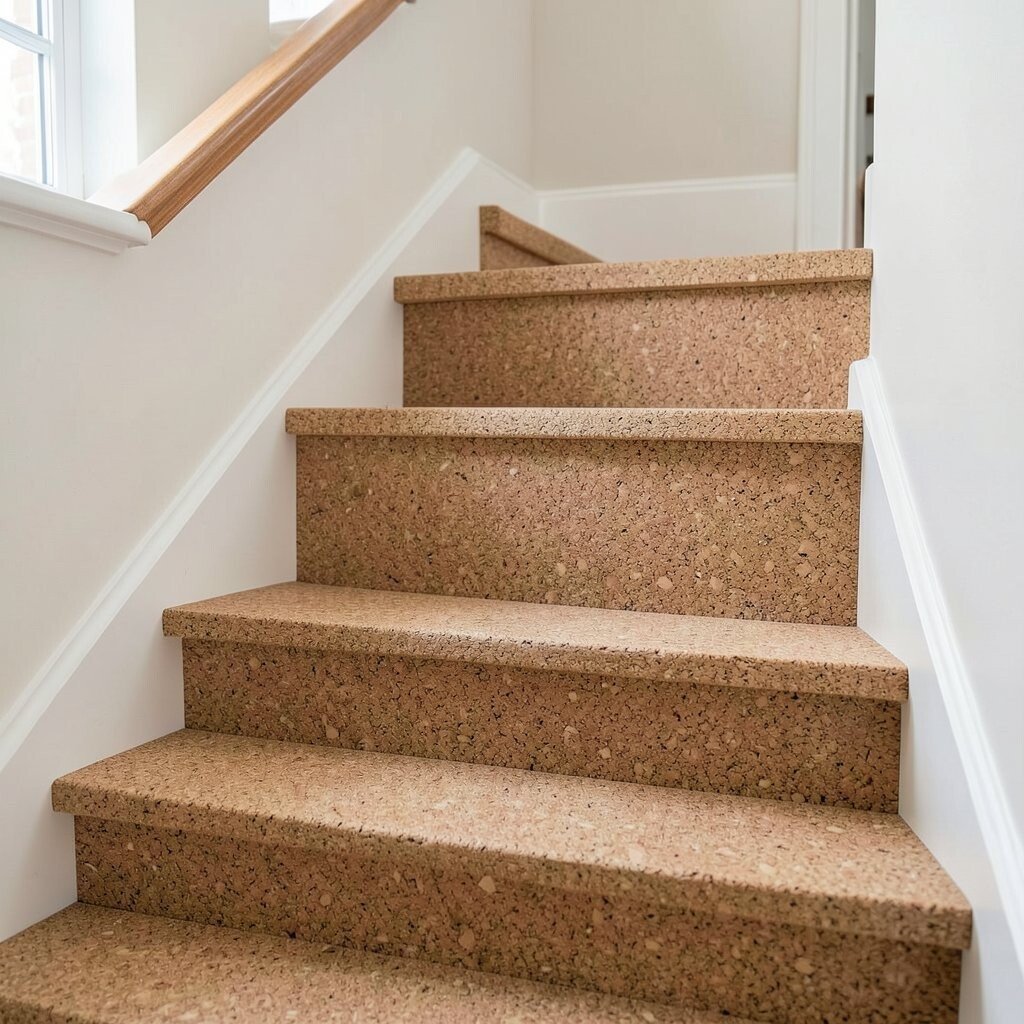
Cork can look like warm speckled sand, and it feels gentle underfoot. Even when used only as a layer, it can make stair landings sound less hollow and feel more cushy.
You get a calmer home because cork absorbs vibration and helps reduce noise. It’s also a renewable material, since cork comes from the bark of cork oak trees. Start with proper subfloor prep, then glue or staple thin cork sheets where they will be supported.
Keep thickness consistent so step height stays correct for comfort and safety. If your stairs get heavy traffic, choose a denser cork product and seal the top layer with a compatible coating. For personalization, cover the cork with a durable runner or a thin reclaimed-wood cap so the look stays crisp.
4. Recycled Plastic Composite Risers With Simple Lines
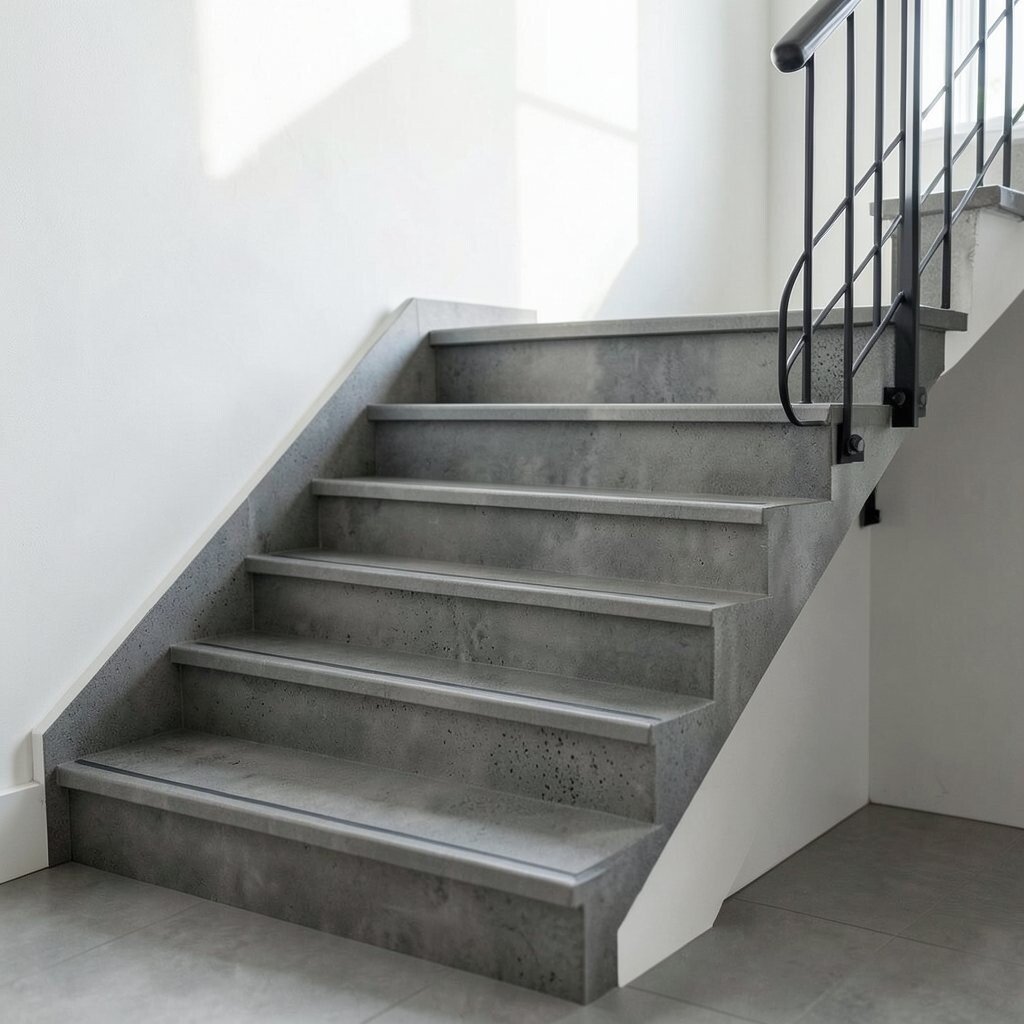
Recycled plastic composite can give your stairs straight, clean panels that look neat and modern. You might also love how it resists scuffs and keeps its color with less worry.
This material helps reduce waste by reusing plastics and can be easier to maintain than many untreated woods. It works especially well if your entryway gets wet shoes or muddy seasons. Install the risers with weather-resistant screws, and leave small gaps for expansion in dry and humid shifts.
5. Old Pallet Slats Turned Into Decorative Side Rails
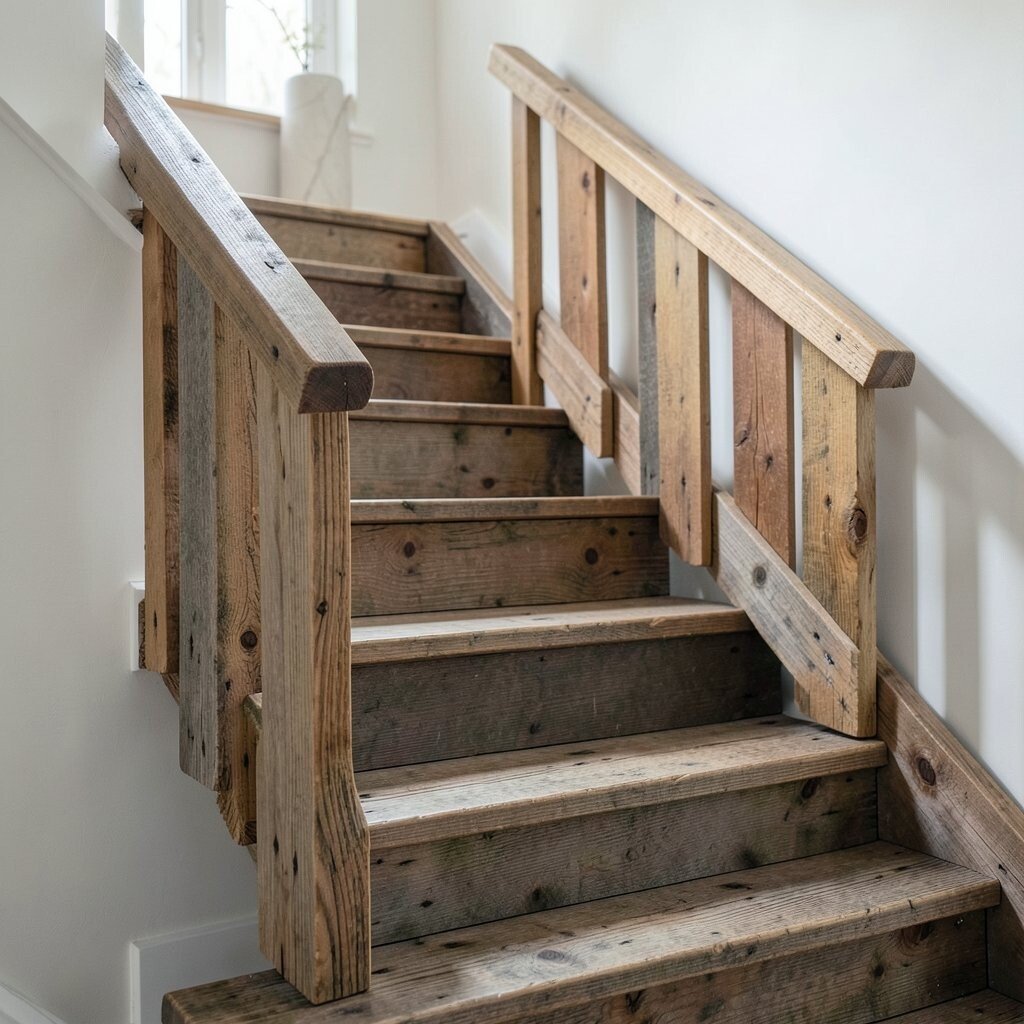
Pallet wood slats often have a friendly, weathered grain that looks great against fresh paint. Turning them into side rails can give your stairway a creative, lived-in style without spending much.
Using salvaged material keeps the footprint smaller while adding a natural texture you won’t find in big-box stair kits. Inspect each board, remove any damaged sections, and sand edges so hands feel smooth. For a practical finish, seal the rails with a clear outdoor-grade coating so they handle daily touch and cleaning.
To keep things safe, make sure the balusters and rail heights meet your local code. You can also personalize by staining one layer darker for contrast while leaving the rest lighter. If you want a current look, combine the rustic rails with sleek treads made from reclaimed wood or bamboo nosing.
6. Low-Carbon Plywood Treads With a Linseed Topcoat
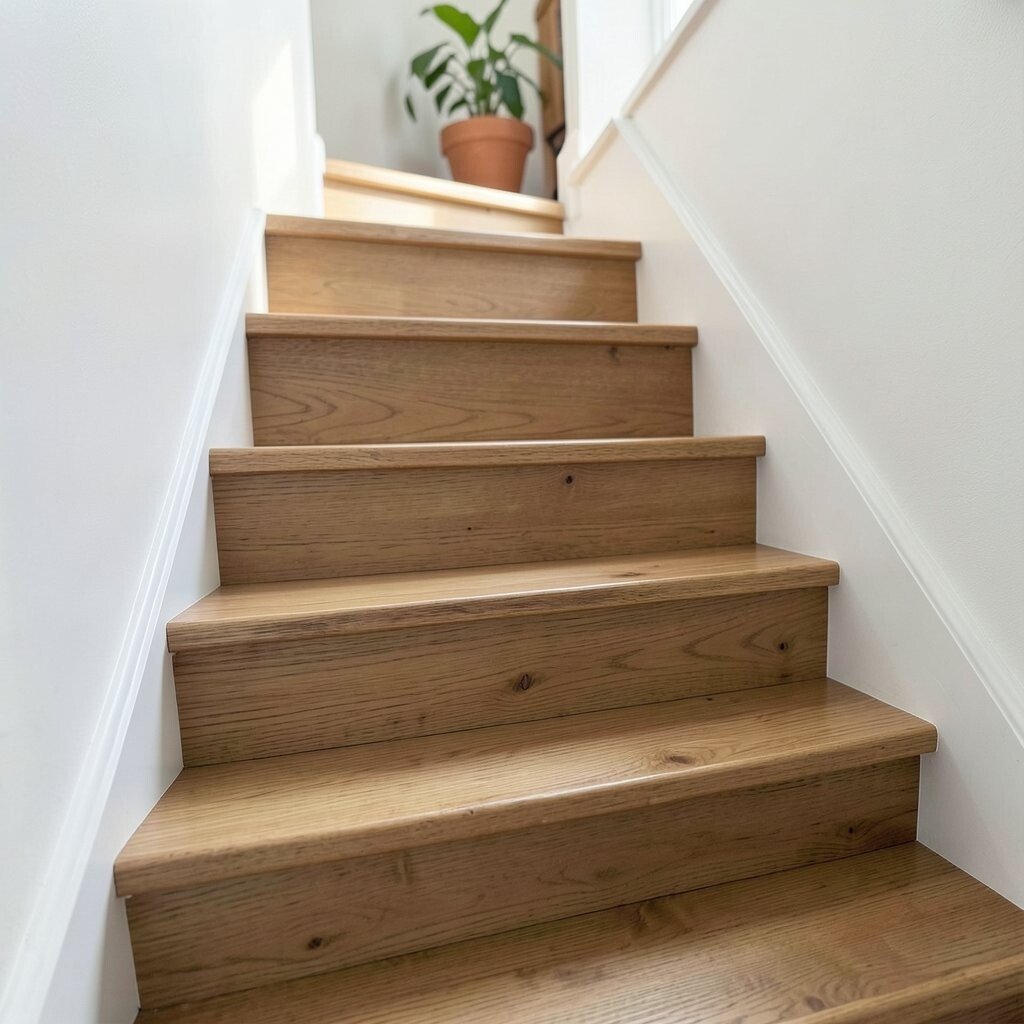
Think of smooth plywood layers under a soft, natural sheen. When you choose a responsibly made plywood and top it with a plant-based finish, your stairs look clean and warm.
Plywood can be budget-friendly because you can cut it into accurate tread shapes with less waste. Linseed oil and similar finishes can bring out the grain and help the surface feel less stark than bare sheet goods. Use a matte topcoat so glare stays low in hall lighting and the steps feel comfortable to look at.
7. Salvaged Stone Skims for Strong, Elegant Landing Touches
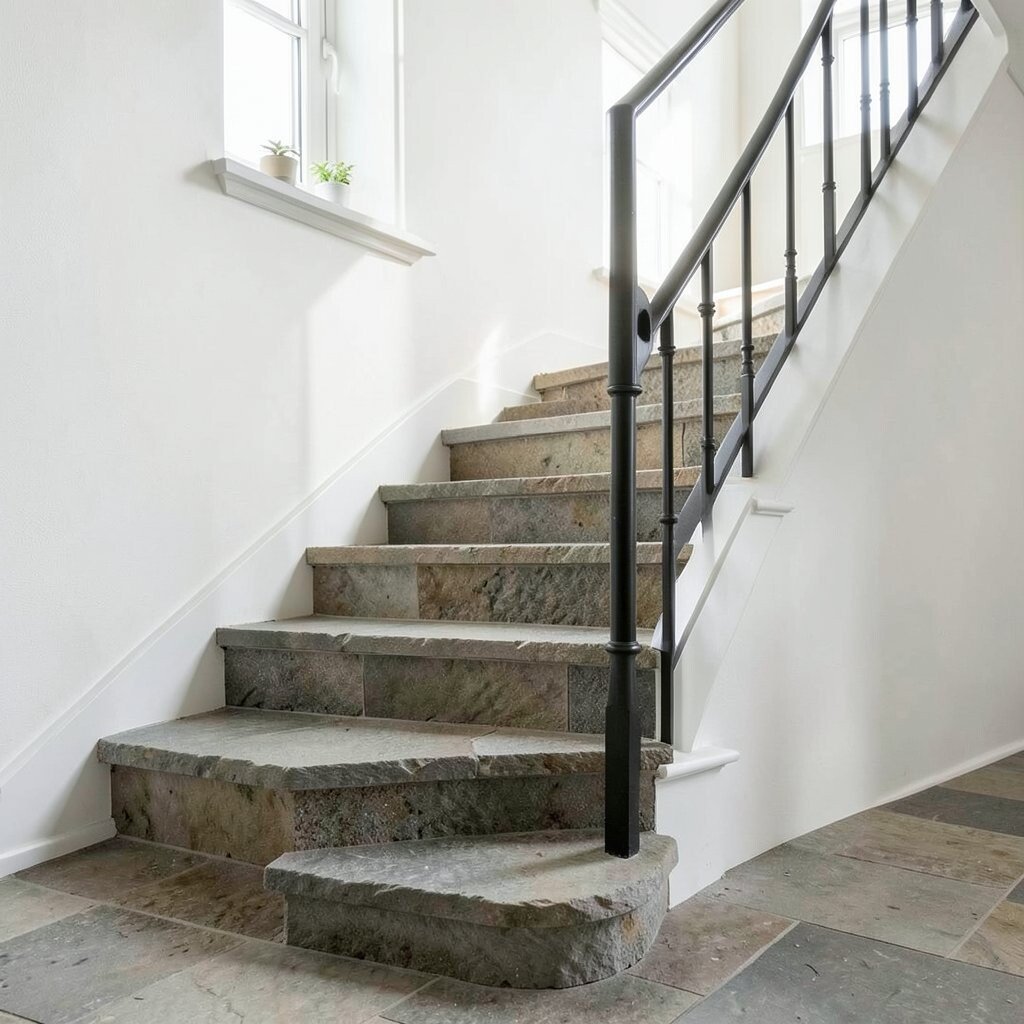
Stone pieces can add that cool, steady feeling you see in nature walks. If your budget is tight, you can still use small reclaimed stone skims on key spots like the first step or landing.
Stone stays tough and resists dents, so it can handle constant foot traffic. It also pairs well with eco-friendly materials like wood and cork, making the mix feel intentional rather than random. Ask for used stone offcuts from local suppliers or salvage yards to reduce cost and pick from different shades.
Set the stone with a mortar meant for indoor use, then grout or seal carefully to prevent moisture issues. For personalization, arrange the stone edges in a slightly staggered pattern to create movement without heavy design work. This trend of mixing textures brings a high-end look while keeping spending under control.
8. Denim Insulated Under-Runners for Warmth and Reduced Echo
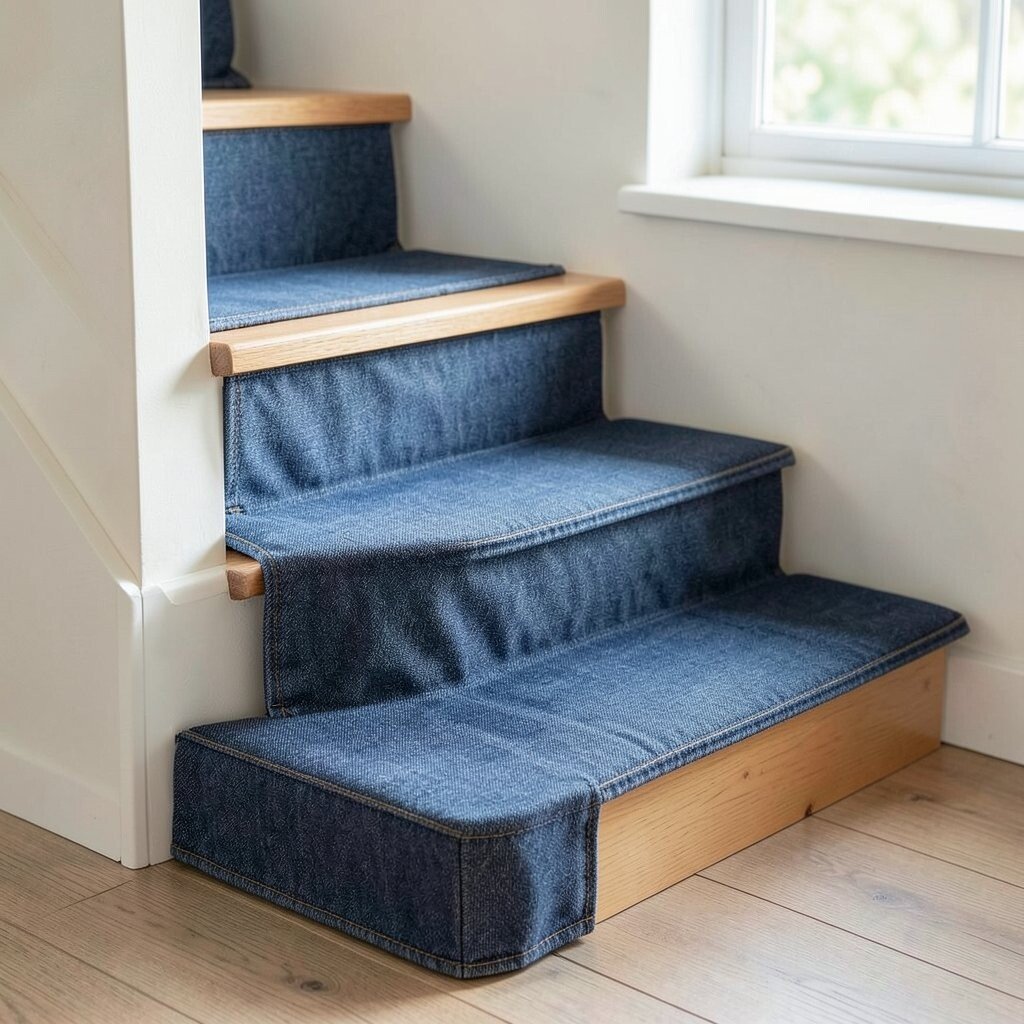
Denim has a casual, textured look, and it can also be a smart insulation choice. If your stairs feel echo-y, an insulated under-runner layer can make the whole hallway sound calmer.
Using recycled denim helps keep fabric waste out of landfills and supports a cozy feel in colder months. You’ll enjoy softer footfalls, especially if your home has hard surfaces. Fit the under-layer carefully so it won’t bunch at step edges, and secure it with non-slip tape made for flooring.
9. Bamboo Flooring Offcuts Turned Into Simple Riser Caps
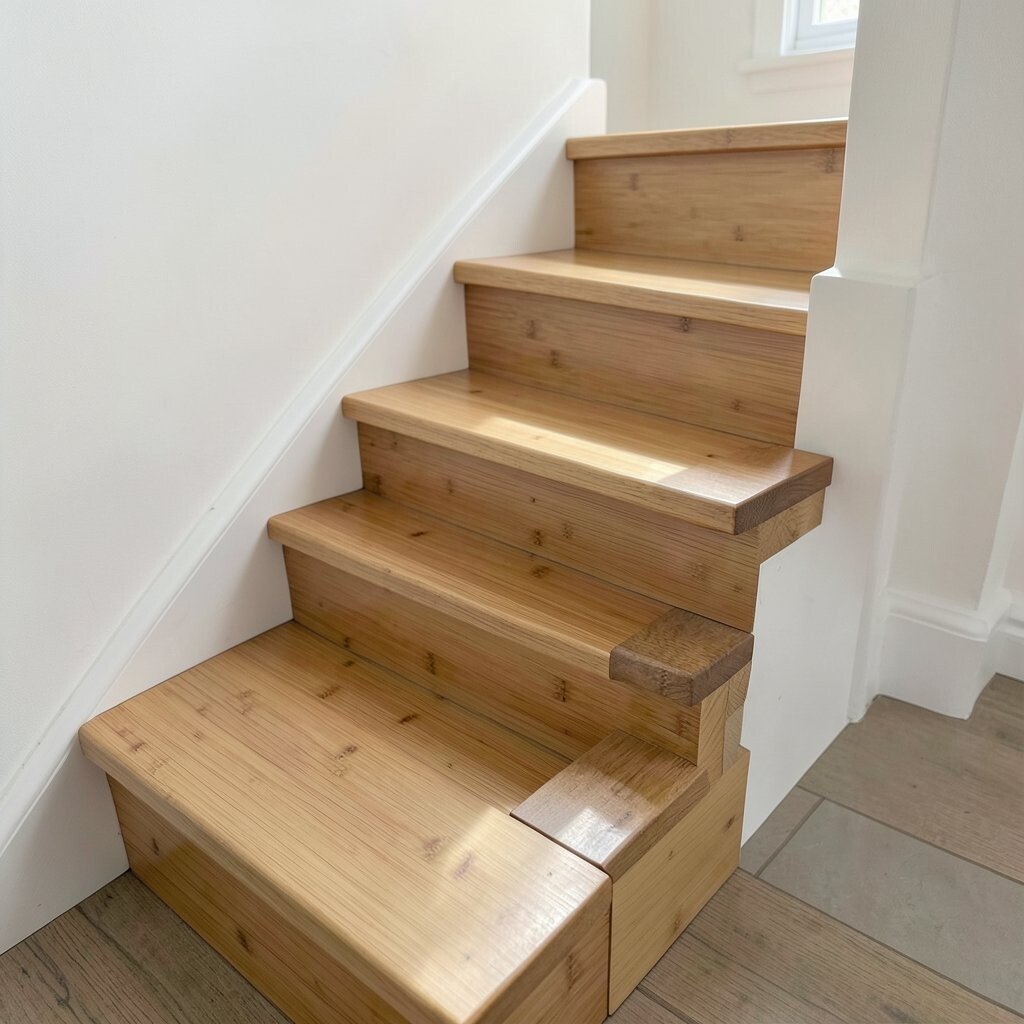
Bamboo offcuts can have a bold, striped pattern that looks lively even in small sections. By capping your risers, you keep the design consistent while using only what you already have.
This approach keeps material waste low, which is a big win for eco-minded projects. It also lets you adjust style easily by changing the cap width to suit your tread size. Measure each riser, cut accurately, and sand the edges so the caps sit flush.
For personalization, choose a bamboo finish that matches your floors or stair railing so the whole home feels connected. Use adhesive made for bamboo or wood surfaces, then check each riser for alignment before the glue sets. Cost stays friendly because you’re upgrading where it matters most: the visible face you see as you climb.
10. Fast-Drying Natural Oil Sealer to Preserve Reused Wood
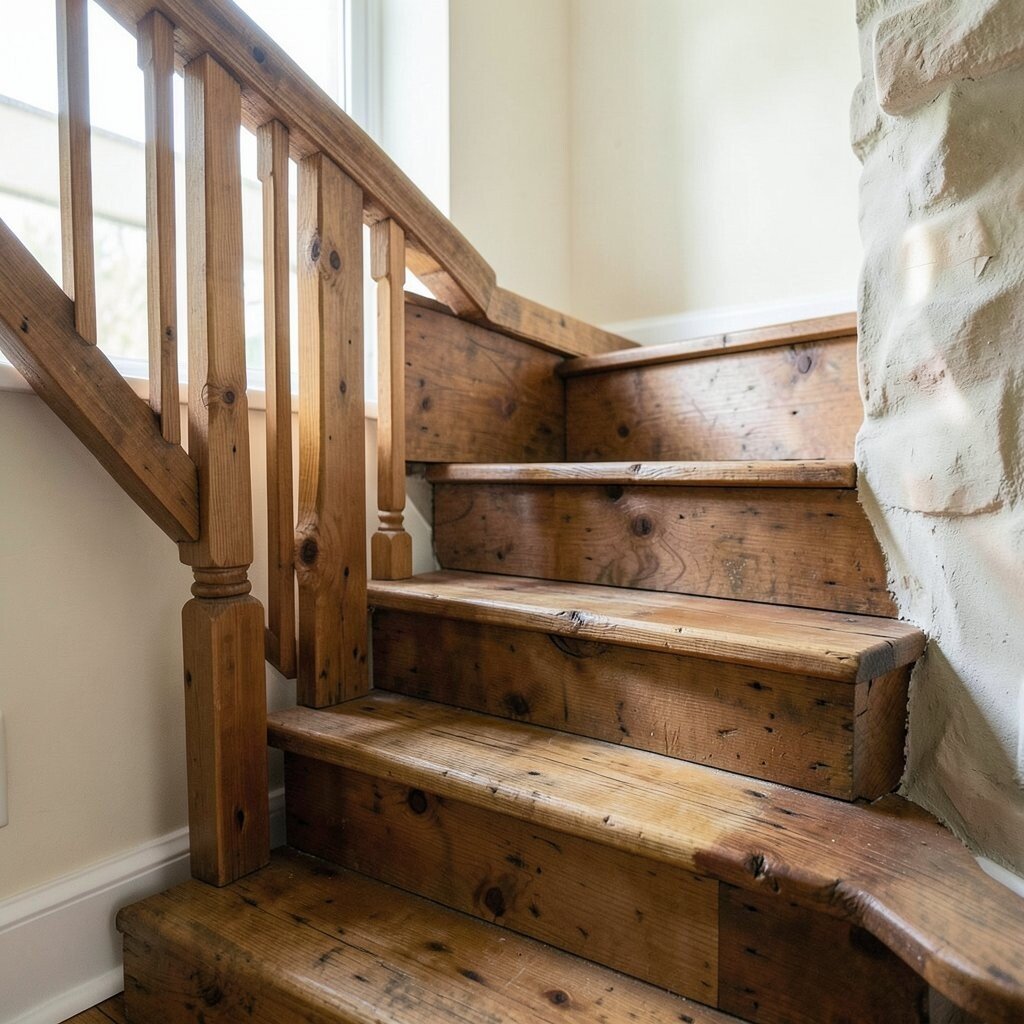
If your reclaimed wood looks a little dull, a good sealer can bring it back to life. Natural oil sealers can protect the grain while keeping the look organic and warm.
You benefit from better resistance to scuffs and moisture, which helps your stairs last longer and reduces the chance you’ll need replacements. Pick a product labeled as low odor and low VOC when you can, especially for homes with kids. Apply in thin coats, let each layer cure fully, and lightly buff between coats for an even finish.
11. Reclaimed Sheet-Laminate Treads With Clean Modern Edges
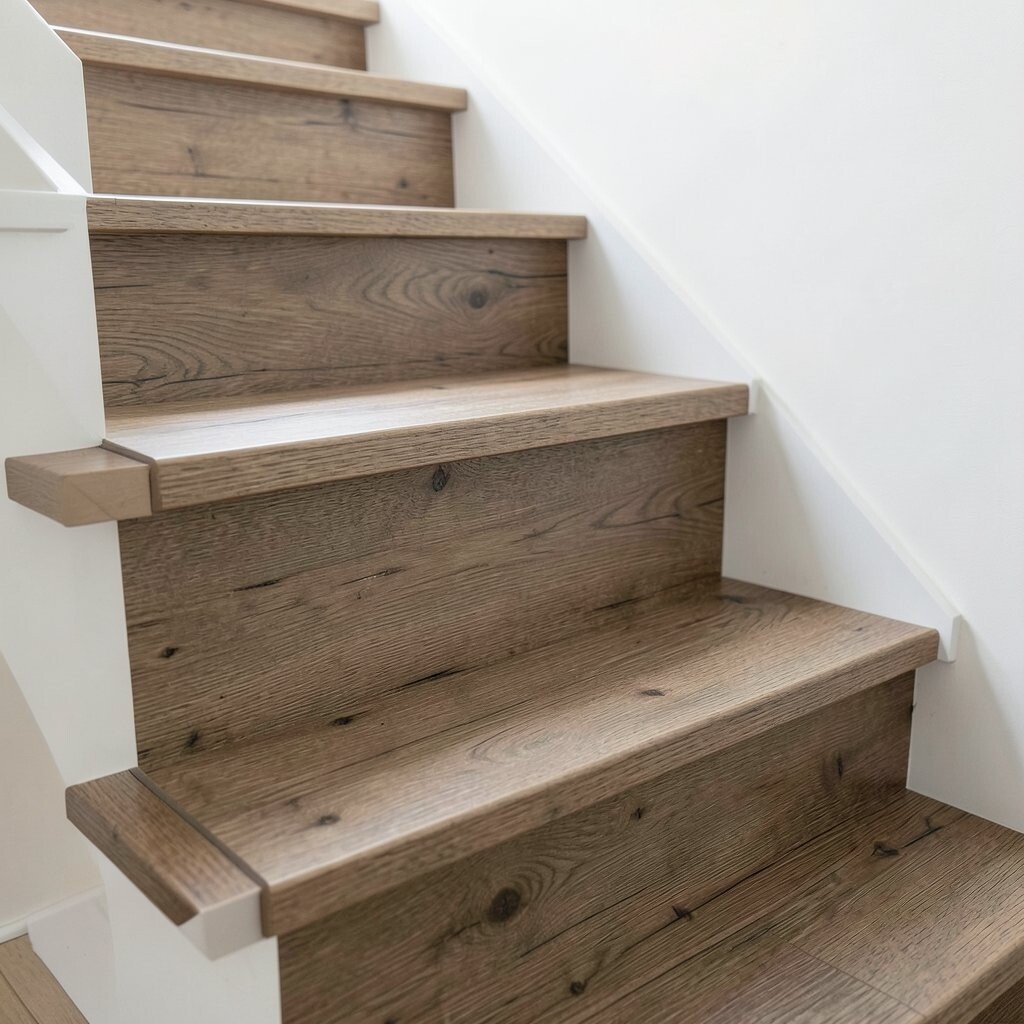
Some reused sheet materials show subtle patterns that make your stairs feel tailored. If you find durable laminate offcuts, you can create treads with crisp edges for a modern look.
Laminate can be a budget win because it resists everyday scuffs and requires less finishing than natural wood. It can also help you use materials that might have ended up in a landfill. Choose pieces that feel solid, then cut and seal the edges so water can’t creep in.
To make it feel custom, match the laminate color to your wall trim or the metal in your railing. Use a matching nosing strip, or create a slight contrast line with reclaimed wood for a sharper silhouette. This kind of makeover is popular right now because it blends eco reuse with neat design lines.
12. Wheat Straw Boards for Lightweight, Eco-Friendly Step Surfaces
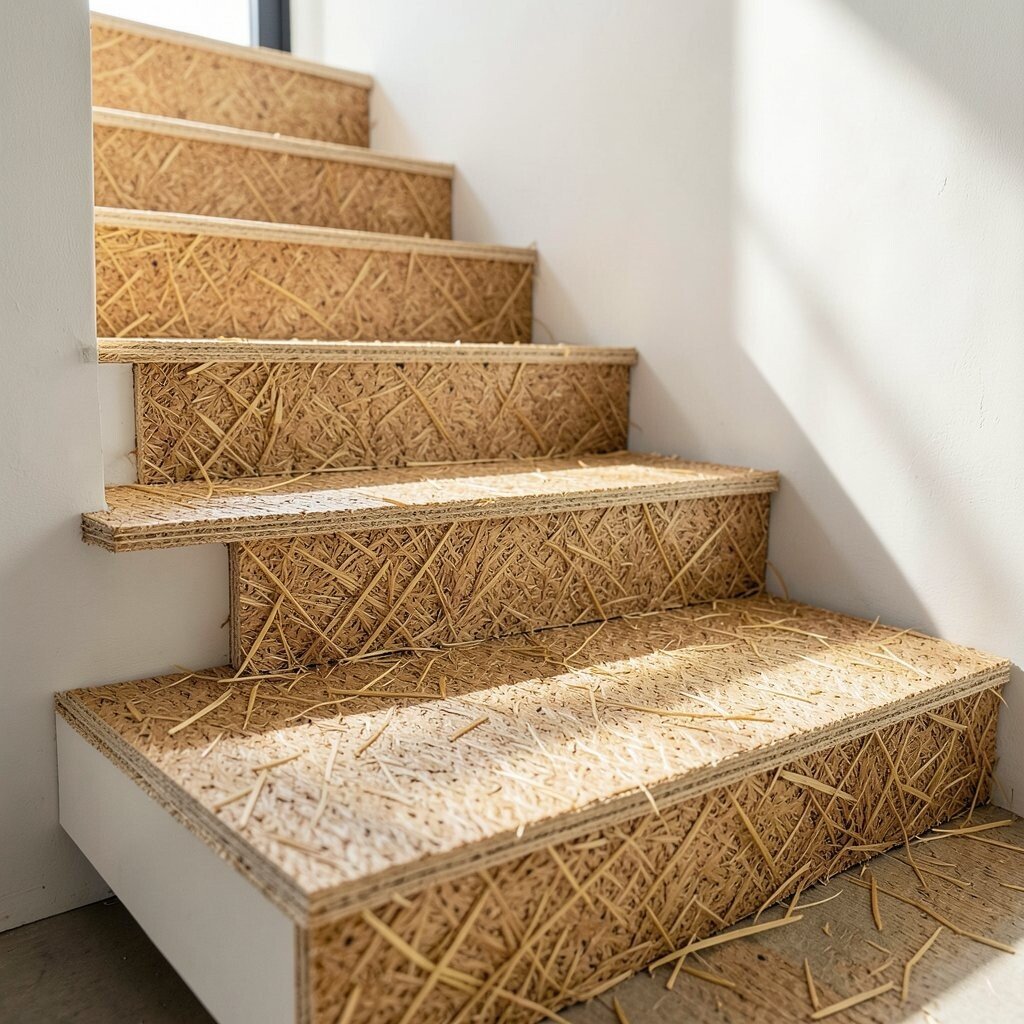
Wheat straw boards can look smooth and gently speckled, like a soft field texture. They’re lightweight, so handling and cutting can feel easier than heavy materials.
You get a renewable option that can reduce dependence on traditional timber. It’s a smart choice when you want a stable surface but don’t want heavy loads during DIY work. Seal the boards properly and pair them with a strong under-support so the tread stays solid.
13. Upcycled Metal Grating Panels for Open, Airy Steps

Metal grating can create an airy look, letting light pass through and making stairs feel less bulky. When you pair it with wood side rails or a runner, the mix feels bold and functional.
This design supports good drying if your home has entryway moisture, since air can move underfoot. Using scrap metal from local fabricators can reduce cost and give you a unique pattern. Wear gloves and check the spacing so shoes and feet feel safe and secure.
For a personalized touch, paint the metal with a low-VOC coating in a color that matches your hardware. Add wooden grips on the edges so the stairs feel warm even with a cool surface. With careful fastening, grating treads can handle busy households and still look stylish.
14. Recycled Rubber Stair Mats Set Into Tread Grooves
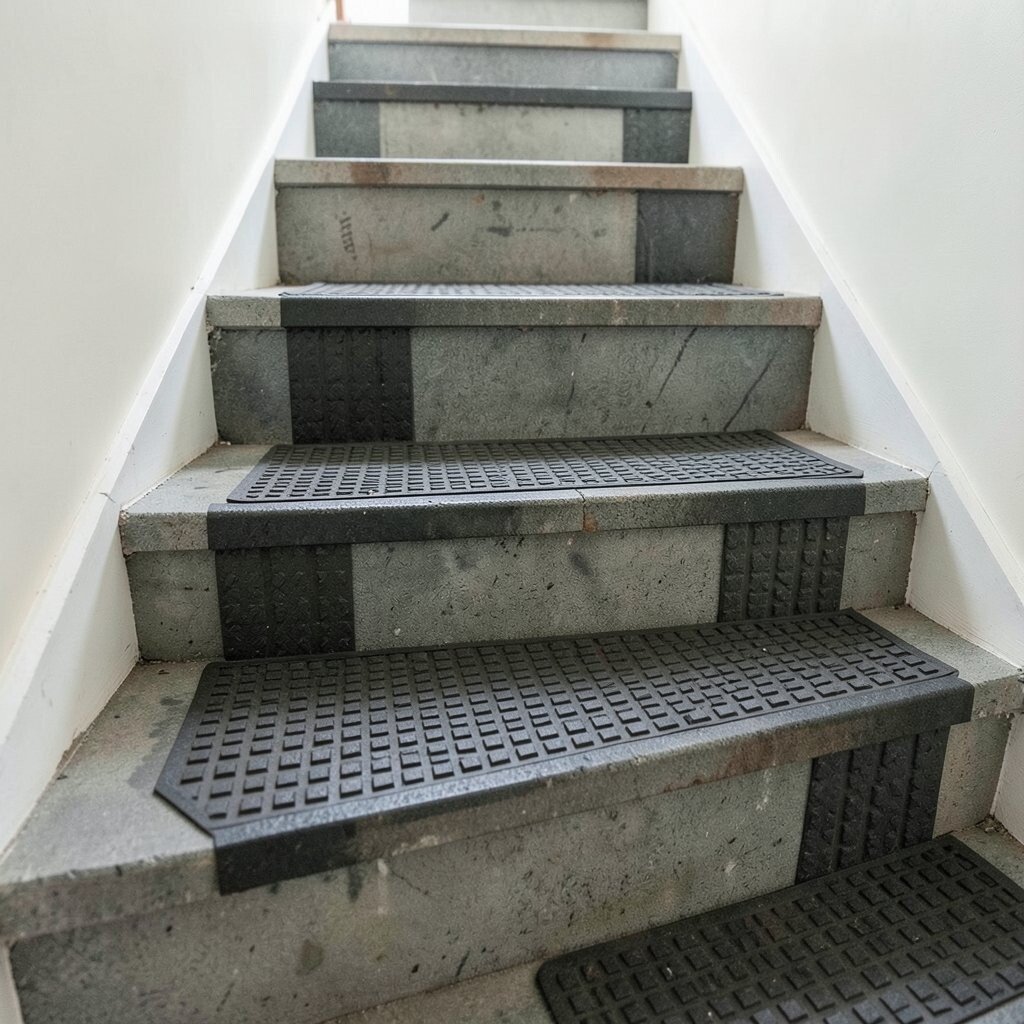
Recycled rubber can look dark and sleek, and it also feels grippy in daily use. Instead of replacing all your stairs, you can set rubber mats into shallow grooves for comfort.
You gain better traction, which helps on days when floors are damp or when you have pets. Rubber also tends to handle impact well, so it can reduce wear on the base material. Cut mats to fit, use strong adhesive made for rubber, and keep seams tight to prevent lifting.
15. Hemp-Cotton Composite Treads With a Protective Clear Layer
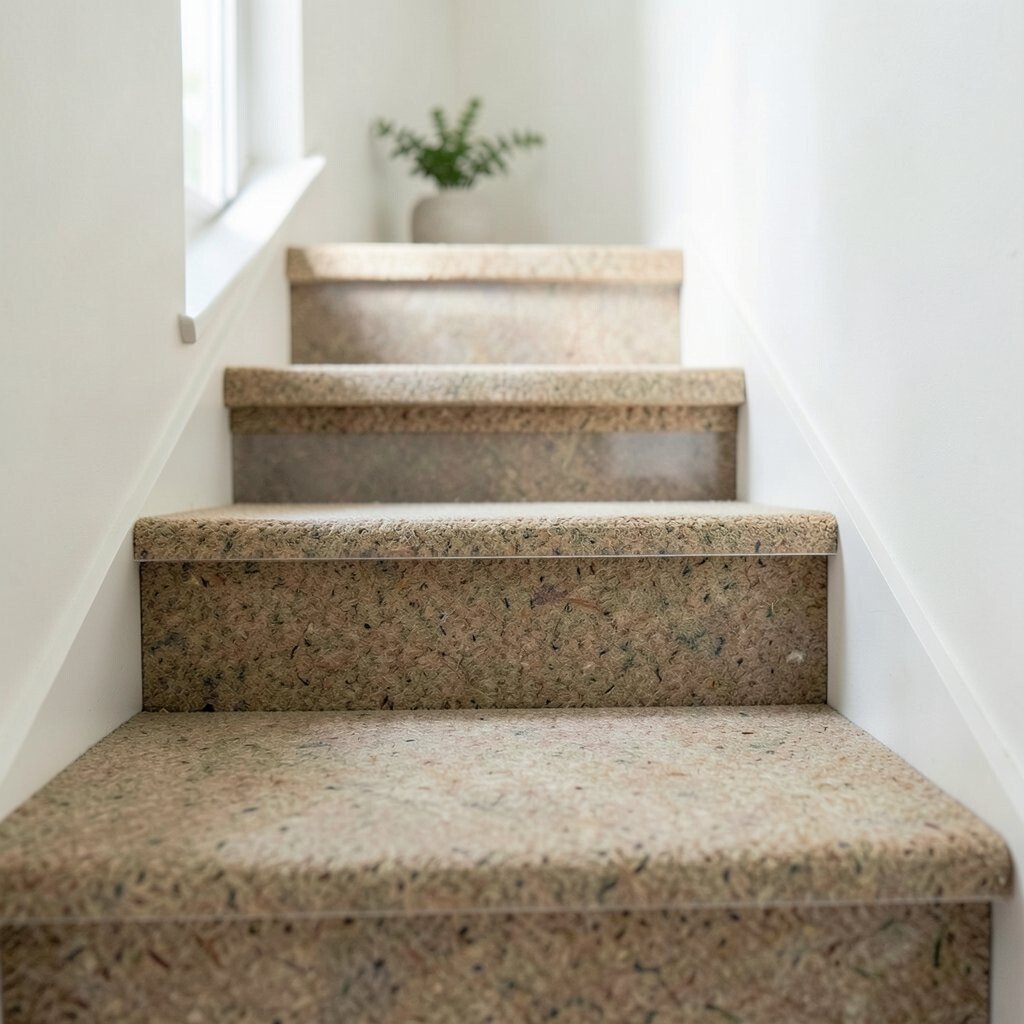
Hemp-cotton composites can have a soft, natural texture that looks more handmade than store-bought. With a clear protective layer, they can look tidy while still showing a warm fiber character.
These materials can be a lower-impact choice because hemp grows quickly and can require less input than some crops. You’ll also enjoy a comfortable feel that isn’t as hard as bare stone. Choose a composite meant for flooring, then install with secure support so the tread doesn’t flex too much.
Seal the top with a durable coating, and consider a removable runner for easy cleaning. Personalize by selecting a composite color that echoes your paint palette, or by adding a thin wood border. This style feels current because people love textures that look natural but function like modern materials.
16. Salvaged Door Slabs Turned Into Stair Steps

Old door slabs can carry panel shapes, hardware marks, and wood character that looks full of personality. Recutting them into stair steps can create a dramatic upgrade with minimal new material.
You get strong, thick wood that already proved its strength for years in another part of the home. Salvage sourcing also helps keep spending down, especially if you buy from demolition projects. Remove old finishes, flatten surfaces, and check for warping before you build.
For safety, route edges cleanly and ensure each tread sits level. You can personalize by keeping the panel details on the face toward the hallway, then sanding the rest smooth for comfort. Pair with simple painted risers so the reclaimed doors stay the star.
17. FSC-Certified Thin Wood Veneer Over Existing Steps

Veneer can give your stairs a fresh wood look without the cost of thick hardwood. When you apply a well-chosen veneer, you can make old steps feel brand new.
With FSC-certified options, you can align the project with more responsible forestry. Veneer works best on stable sub-surfaces, so inspect for any loose boards or squeaks before attaching. Use contact adhesive sparingly, press evenly, and trim edges carefully for a neat seam.
Personalization is easy because veneer comes in many grains and tones. Choose a matte finish for a modern look, or use a satin topcoat to add gentle warmth under lights. This trend of “refinish instead of replace” keeps waste low and budget friendly.
18. Natural-Fiber Rope Stair Accent for Grip and Charm
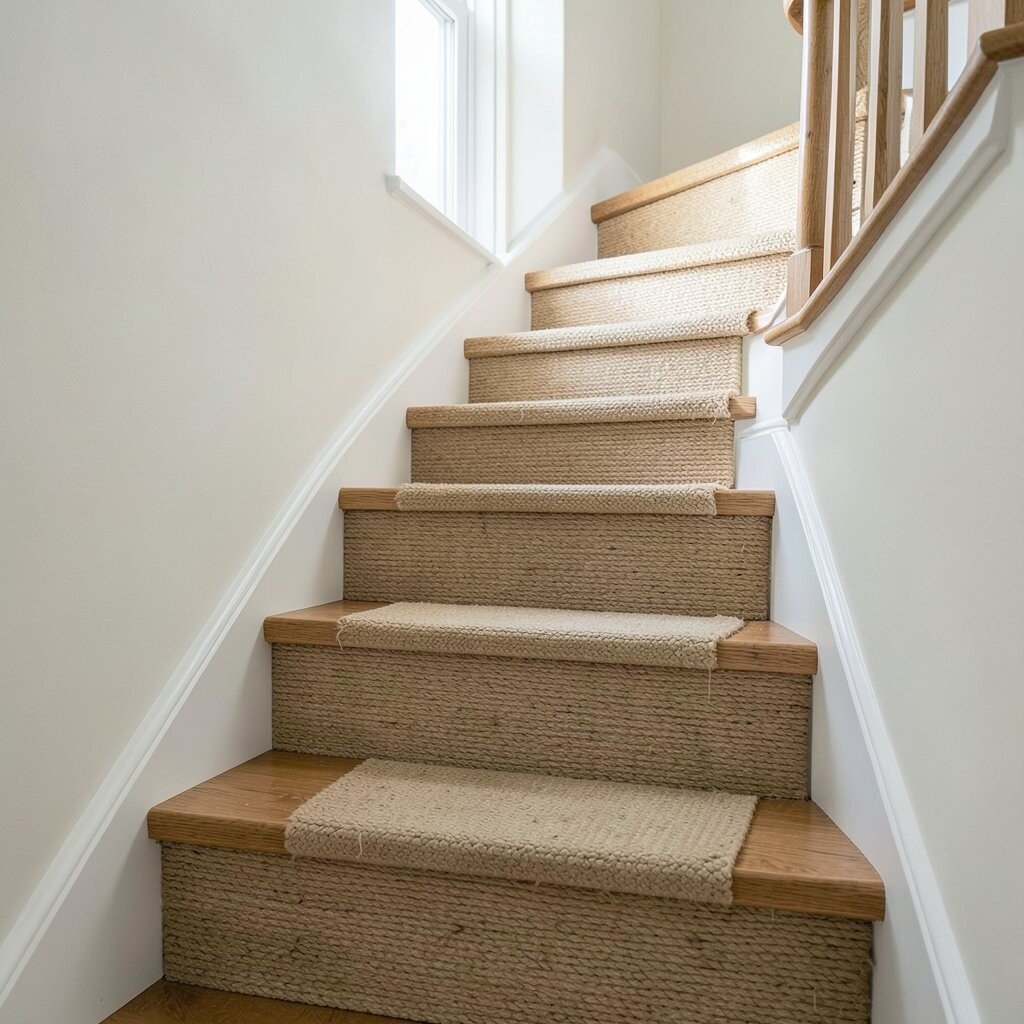
A rope accent can look playful and cozy, like a seaside craft brought indoors. When used as a runner guide or edge grip, it can add comfort and visual softness.
You benefit from extra traction in high-use zones, especially on the step edges. Natural fibers also bring a warm look that blends well with wood, bamboo, and earthy paint colors. Choose rope that’s designed for indoor wear, then secure it with strong anchors that can’t loosen over time.
Keep the rope lines consistent, and plan the spacing so it doesn’t create a trip hazard. For personalization, use a rope color that matches your decor accents, like terracotta, olive, or warm sand. Even a small rope detail can make your stairway feel more welcoming without a big budget.
19. Recycled Glass Mosaic Insets for One Special Step

Glass mosaic insets can sparkle in daylight and create a focal point without covering the whole staircase. Using small reclaimed glass pieces helps you keep the look artsy while controlling cost.
This idea brings a unique touch that feels like personal art, especially on the top landing or the first step. You also gain easy cleaning because sealed glass doesn’t absorb stains the way porous surfaces can. Collect pieces from local craft suppliers, reclaimed tile lots, or thrifted mosaic kits.
Embed the glass in a mortar bed made for indoor use, then seal grout carefully. Keep the inset small so maintenance stays simple and edges remain safe. Personalize by choosing colors that match your entryway wall or your rug pattern for a cohesive flow.
20. Low-Waste Cut Plan Using Measured Template Layouts
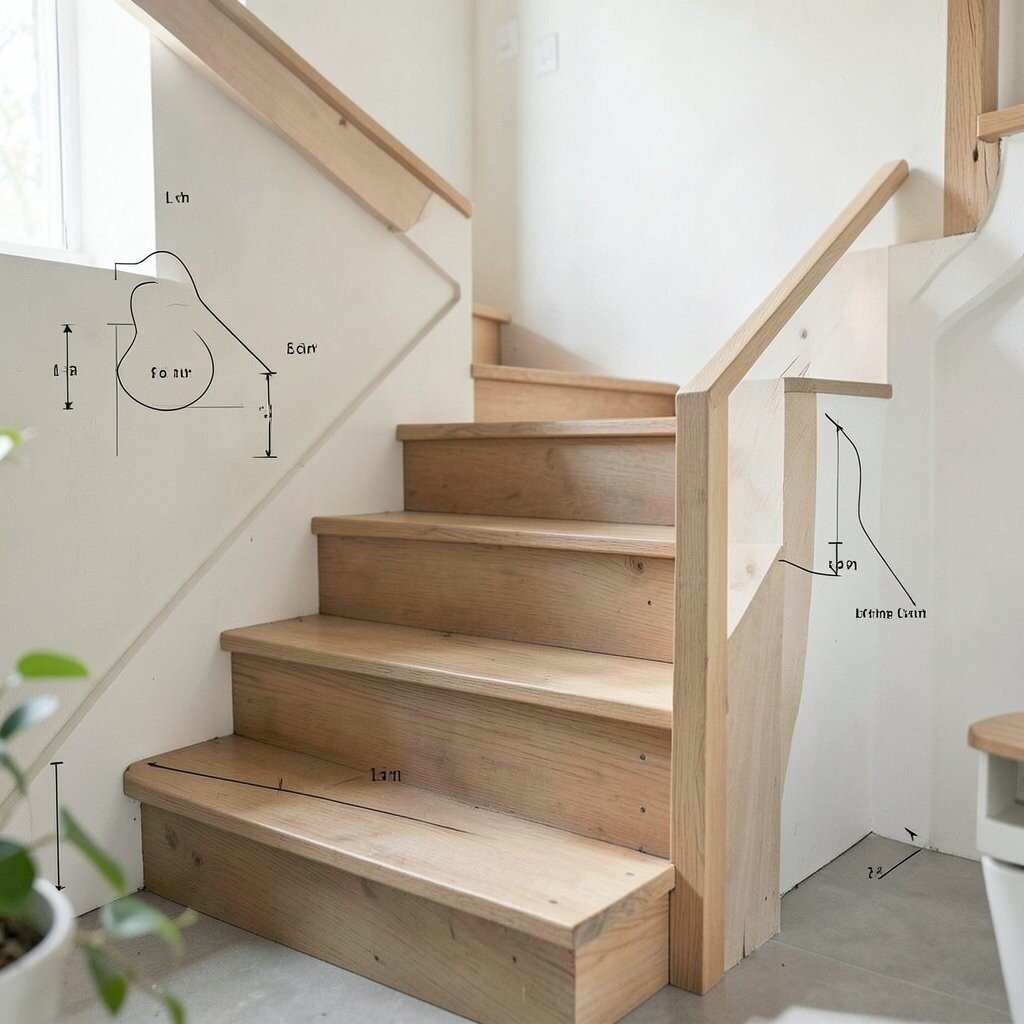
A tidy cut plan can make reclaimed materials look intentional instead of messy. When you template each tread and riser before cutting, you reduce mistakes and stretch your supplies.
This practical method saves money because every offcut can find a use somewhere else in the build. It also supports eco goals by lowering material waste and helping you use what you already sourced. Start by measuring tread depth, riser height, and step run, then sketch a layout that fits your stock sizes.
Personalize the design by deciding which boards become the “hero” treads where grain is most beautiful. Keep a small log of what you used for each step so finishing stays consistent across the staircase. If your project feels like it’s running over budget, the cut plan is often the first place to recover control.
21. Water-Based Stain for Even Color on Mixed Materials

Mixed eco materials can look uneven, but a water-based stain can help unify the tones. You’ll see the grain come through while keeping the finish light and fresh.
This approach helps you blend reclaimed wood, bamboo, and veneer so the stairs look like one design. Water-based stains also tend to have lower odor, which is helpful during long home projects. Test on scraps first, then apply in thin coats and wipe back to avoid dark blotches.
For personalization, consider using a glaze technique on the most visible treads so some steps feel deeper without changing the overall theme. Let each step cure fully before adding a topcoat, and protect stair edges during drying. With the right stain, your budget materials can look like they were always meant to be together.
22. Weather-Ready Outdoor Boards for Indoor Strength
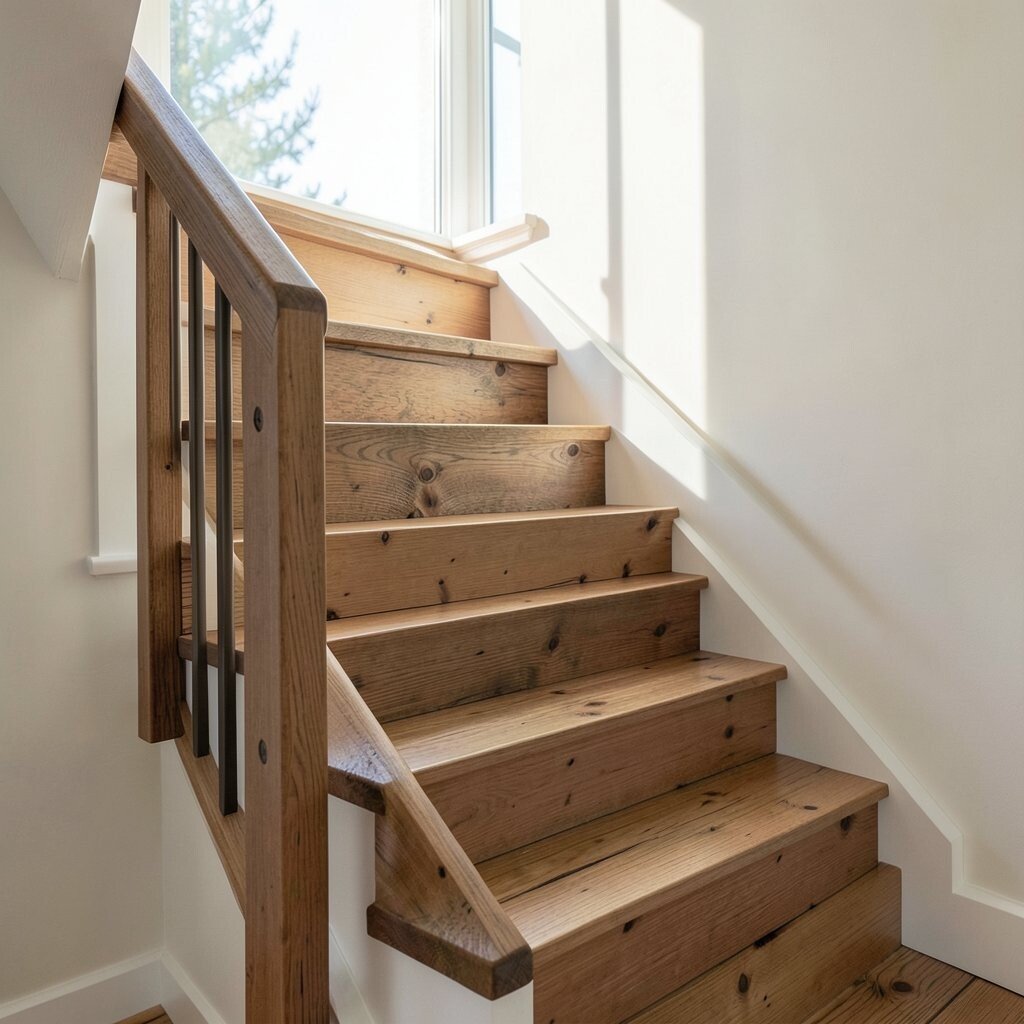
Outdoor boards often have sturdy construction, and they can bring a bold, durable feel to indoor stairs too. You may notice the grain is strong and the surface handles wear well.
When used inside, weather-ready materials can mean fewer future repairs and less time spent on maintenance. Look for boards treated with safer methods or choose naturally durable species sourced responsibly. Check straightness before buying, and acclimate the boards in your home so they settle without warping.
Personalize with a simple color scheme by matching the tread tone to your banister and baseboards. Consider a thin runner if you want extra comfort, especially for small kids or older family members. This is a smart current approach because many homeowners love the rugged, sturdy look without needing heavy remodeling.