
Stairs can be more than a path between floors. They can become one of the most talked-about features in your home.
With the right design, they add style, help daily life feel easier, and make your space feel truly yours.
1. Floating Steps With Warm Wood

Imagine stepping onto treads that seem to hover, with soft wood tones glowing against the wall. The underside stays clean, so the whole staircase feels light and modern.
Floating steps also make rooms feel more open, which is great for tighter entryways. Pick a warm wood finish to avoid the “too cold” look that some minimal designs can have. For comfort, choose a consistent tread depth and use slip-resistant coating on top.
To personalize the vibe, match the wood tone to your kitchen cabinets or living room shelving. If you want a more custom feel, vary the wall finish behind the steps with a limewash or smooth plaster texture. Budget-wise, floating stair builds can be mid to higher because hidden brackets and careful framing matter for safety.
2. Glass Riser Walls For Maximum Light
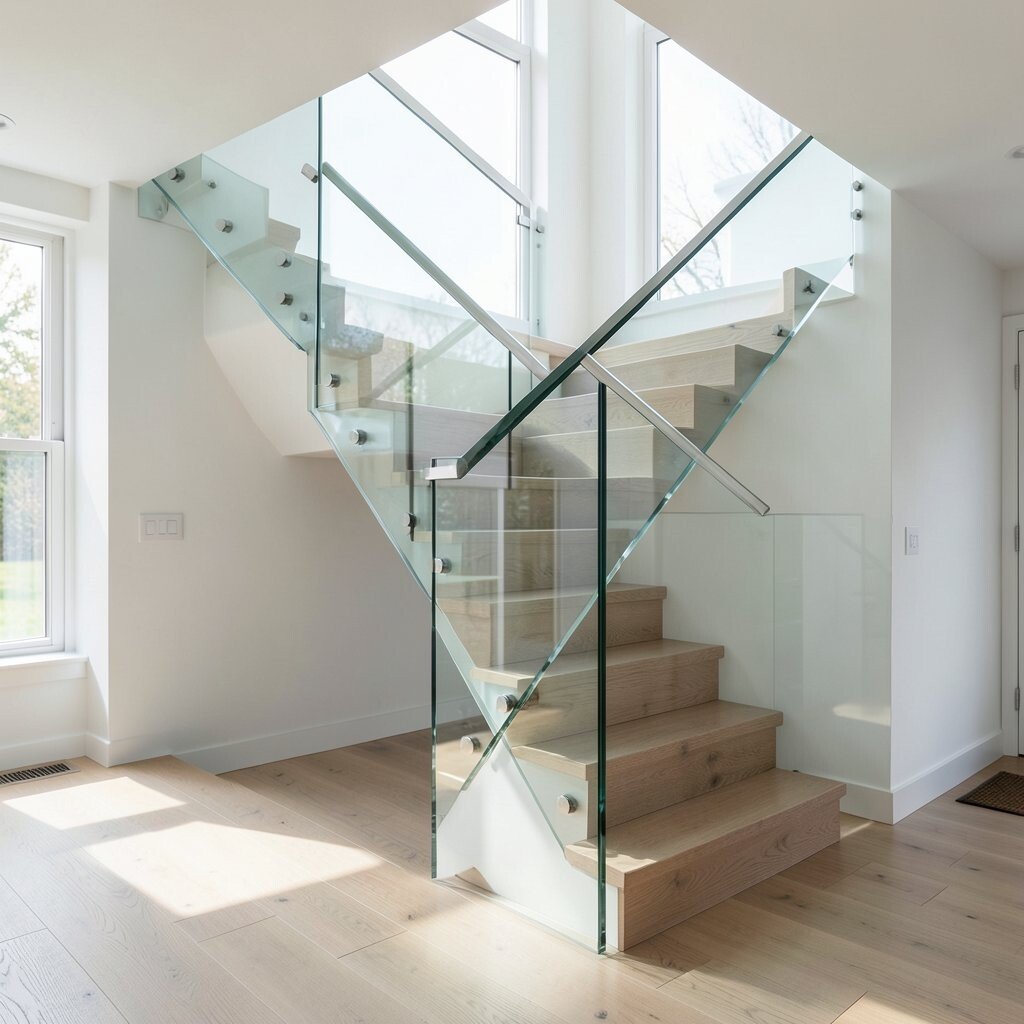
Picture bright daylight pouring through a staircase that uses glass risers. Your eyes can move upward, and the stair becomes almost invisible in the best way.
Glass risers keep sightlines open, making hallways feel bigger and less boxed in. They’re also a strong choice for modern homes that lean on clean lines and natural light. Choose tempered or laminated glass so the design stays safe and sturdy.
For practical use, plan for smudge cleaning by selecting finishes that hide fingerprints better. Pair the glass with brushed metal handrails for a sleek, current look. Cost can rise since glass fabrication and installation take precision, but the payoff in brightness is real.
3. Side-Slung Steel Treads With Matte Black Rails

Think of a staircase that looks bold and architectural, with steel supports that run along one side. Matte black hardware adds a crisp contrast against light floors and walls.
This style gives you a clear modern edge without needing heavy stone or large panels. It can also work well with open-plan layouts because the railing line visually guides the eye. Use a durable powder coat so the metal keeps its finish even with daily touch.
Personalize by adding subtle color accents like copper fasteners or a warm walnut stair face. If you have kids or pets, consider adding a more closed guard system for added reassurance. In terms of cost, expect mid-range to higher depending on the length of steel fabrication and the complexity of the railings.
For installation success, measure carefully around bends and wall offsets. You’ll also want to confirm grip comfort on the handrail, since steel can feel slick if it’s too smooth.
4. Textured Concrete Steps With Soft Lighting
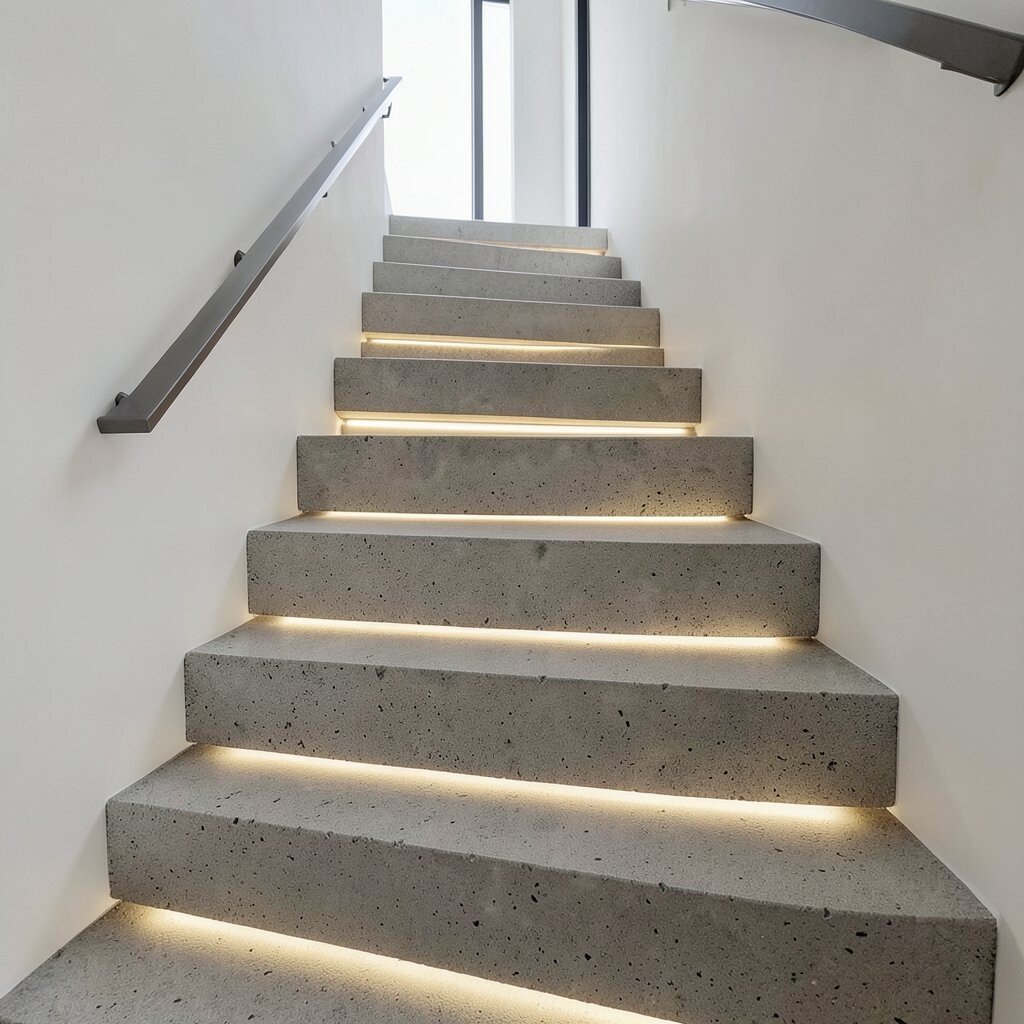
Visualize steps finished in textured concrete, where tiny grooves catch light as you walk. The surface feels modern and earthy at the same time, especially when paired with warm wall glow.
Concrete treads can handle heavy daily use and wear, which is a big practical win. You can also create a unique look by varying the texture, such as micro-trowel smoothing or light speckling. Add low-voltage lighting along the risers or under the handrail to make every step feel safer.
To keep it comfortable, choose a finish that doesn’t feel too gritty underfoot. You can also add slim rubber or cork underlay options beneath the top layer depending on construction. Cost considerations are all about finish and thickness, but concrete can be mid-range when planned early with your builder.
For a trend-forward touch, match concrete with minimal metal details and a simple railing design. If you love spa vibes, blend the steps with pale stone or warm neutral walls.
5. Monochrome Stone Steps With Hidden Storage

Picture stone treads in one refined color, flowing into a staircase that looks almost like a sculpture. The clean lines feel calm, and the stone pattern becomes the main decoration.
You can get both beauty and function by designing some volume underneath for storage. Hidden drawers or shelves near the landing help keep clutter off the floor. For safety and comfort, ensure the stair edges are well profiled and finished so they stay durable.
Personalization is easy with stone selection, since you can choose subtle veining or a more uniform look. If you have a small home, storage under stairs can make daily routines smoother. Cost can be higher with premium stone and custom carpentry, but the built-in organization often offsets the expense over time.
6. Staircase With A Built-In Bench Landing

Imagine a landing that doubles as a cozy bench, where you can sit while tying shoes. A cushioned seat adds comfort, and the staircase feels more like a room feature than a hallway pass-through.
This setup is great for family life, since the bench becomes a natural drop zone. It can also help accessibility by offering a place to rest. Choose durable upholstery that resists stains and pair it with a simple, easy-clean surface around the edges.
For personalization, add throw pillows in your favorite colors and include a small shelf for keys and bags. You can also build a cabinet under the bench for seasonal items. Cost is often mid-range because it depends on carpentry and cushion fabrication, but it can still fit many remodel budgets.
7. Curved Treads In A Soft Spiral Layout
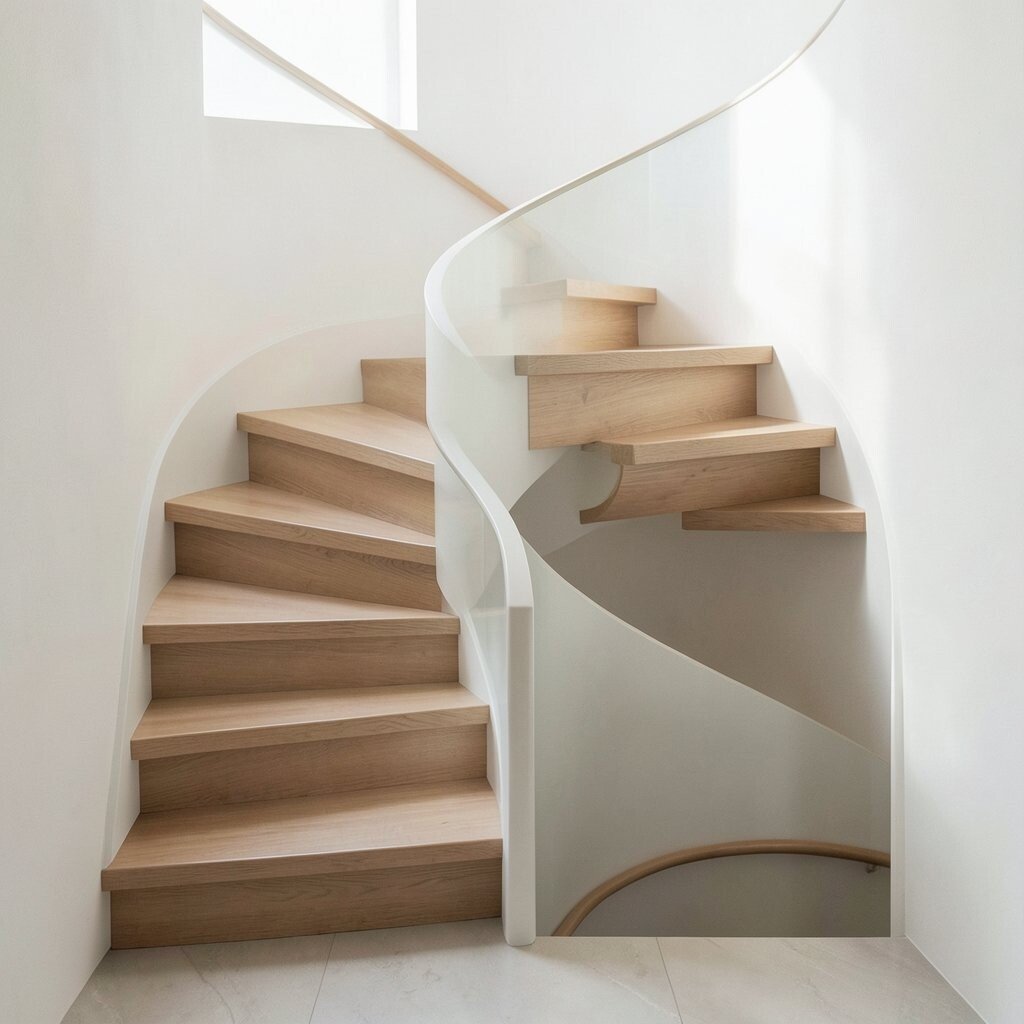
Visualize curved treads that wrap like a gentle spiral, with each step shaped to match the motion. The staircase feels artistic, and the curve softens sharp angles throughout the home.
A curved design can make a compact staircase feel more elegant and less cramped. It also allows you to use space efficiently, which is helpful in smaller areas. Make sure your treads are wide enough at the outer edge so stepping stays comfortable.
For practical tips, add a continuous handrail that guides you through the curve. You can also choose a contrast edge strip so step timing feels more intuitive. Costs vary widely, since custom fabrication may be needed, but the finished look is often worth the extra planning.
Personalize the curve by using wood grain direction or a subtle pattern on each tread. If you want a current style, pair curved steps with simple metal railings and minimal risers.
8. Open Risers With A Gallery-Wall Backdrop

Think of an open-riser staircase that frames artwork like a moving picture gallery. Since you can see through the steps, the hallway feels curated and bright.
Open risers are popular in modern homes because they give a light, airy feel. They also help visual flow, so the staircase doesn’t block the view from one room to another. For safety, choose a handrail height that fits your household and use non-slip coatings on treads.
To personalize, hang photos, framed prints, or even a subtle pattern on the wall behind the stairs. You can plan lighting so the art looks good both day and night. Cost considerations are usually lower for this concept because open risers can reduce material use compared to fully closed designs, though you’ll still pay for carpentry precision.
For trend relevance, combine this with modern frames that match your hardware finishes for a cohesive look.
9. Color-Blocked Steps With Matching Handrail Accents

Imagine stair treads painted in two or three bold tones, like a clean modern stripe across your home. The handrail ties everything together, so the design feels intentional rather than random.
Color-blocking adds personality fast and can help set the mood of your main living space. It also helps kids and guests recognize direction and step edges, which can feel practical. Use a durable floor paint or stain system made for high traffic so color stays crisp.
Personalize by choosing hues that match textiles like rugs and curtains. If you prefer subtle drama, pick a near-black and warm white combo rather than loud colors. Cost is often budget-friendly because paint and finishes are usually easier to adjust than structural changes.
10. Bamboo Or Composite Treads For Eco-Modern Comfort

Picture bamboo or composite treads with a smooth, modern grain and a warm feel underfoot. The look is clean, and the materials can fit an eco-friendly home style.
This idea works because bamboo and quality composites resist wear when installed correctly. You’ll also feel a more comfortable step compared with very hard stone surfaces. For practical tips, choose a finish made for slip resistance and confirm the product suits your climate.
Personalization is simple through color choices, since bamboo can range from honey to darker tones. You can also pair it with a minimalist metal railing for a current, light look. Cost considerations depend on the product grade, but eco-modern materials can be mid-range to higher while still offering long-term durability.
To keep maintenance easy, plan for regular cleaning and avoid harsh chemicals that break down protective layers.
11. Rope-Style Handrail With Natural Texture Steps
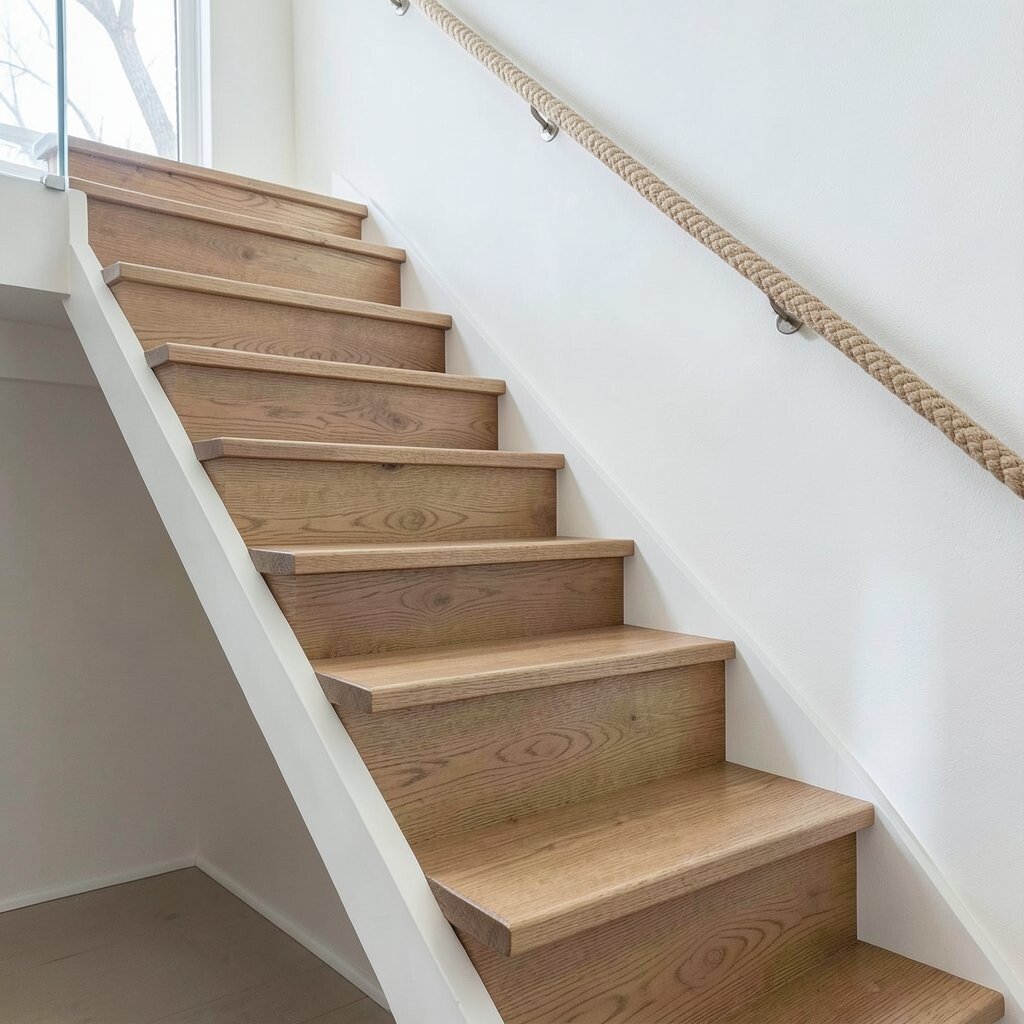
Imagine a handrail wrapped with thick rope, creating a soft, nautical-inspired modern feel. The steps might be wood or warm plaster, while the rope adds a tactile twist you’ll love touching.
This is a unique design choice that brings warmth and character without looking overly themed. Rope rail details can also soften the look of metal, making the staircase feel friendly rather than industrial. Use a tight wrap and quality rope rated for indoor use, and ensure the underlying structure is secure.
For personalization, choose rope color that matches your room accents, like natural jute tones or a darker charcoal. You can also add a wood wall panel nearby for a cohesive texture story. Cost can be mid-range since it often relies on good carpentry plus handrail custom work rather than expensive materials like stone or glass.
For practical safety, consider a smooth grip surface beneath the rope so the handrail stays comfortable for everyday use.
12. Backlit Steps With Subtle LED Strips

Picture steps that glow along their edges, with LED light guiding your feet at night. The effect feels futuristic but still cozy when the light color is warm and gentle.
Backlighting helps visibility, which is a real benefit for evening use and nighttime trips. It can also make narrow hallways feel more open because light spreads across surfaces. Choose a dimmable system so you can adjust brightness and avoid harsh glare.
Personalization is easy through lighting color and placement, like warm white under each tread or a thin line along the risers. Some homeowners prefer smart controls that turn on with motion for extra convenience. Cost can be higher because wiring and installation matter, but the daily comfort is hard to beat.
13. Reclaimed Barn Wood Treads With Sleek New Hardware

Imagine reclaimed wood steps with visible grain and gentle wear marks, paired with clean modern metal. The contrast feels trendy because it balances history with a crisp, updated look.
Reclaimed treads can add warmth and uniqueness that new materials often can’t match. The benefit is character, plus wood can be comfortable underfoot compared with hard stone. For practical tips, seal the wood properly and ensure the stair structure is sound before finishing.
Personalize by mixing wood tones, like a lighter tread set with darker riser accents. You can also choose hardware finishes that match your room, such as brushed nickel or matte black. Cost considerations depend on the source quality and milling needs, but reclaimed materials sometimes reduce material costs while increasing finishing labor.
To keep it looking modern, avoid overly ornate railing details and keep shapes simple and clean.
14. Wide Treads With A Gallery-Like Runner And No Risers
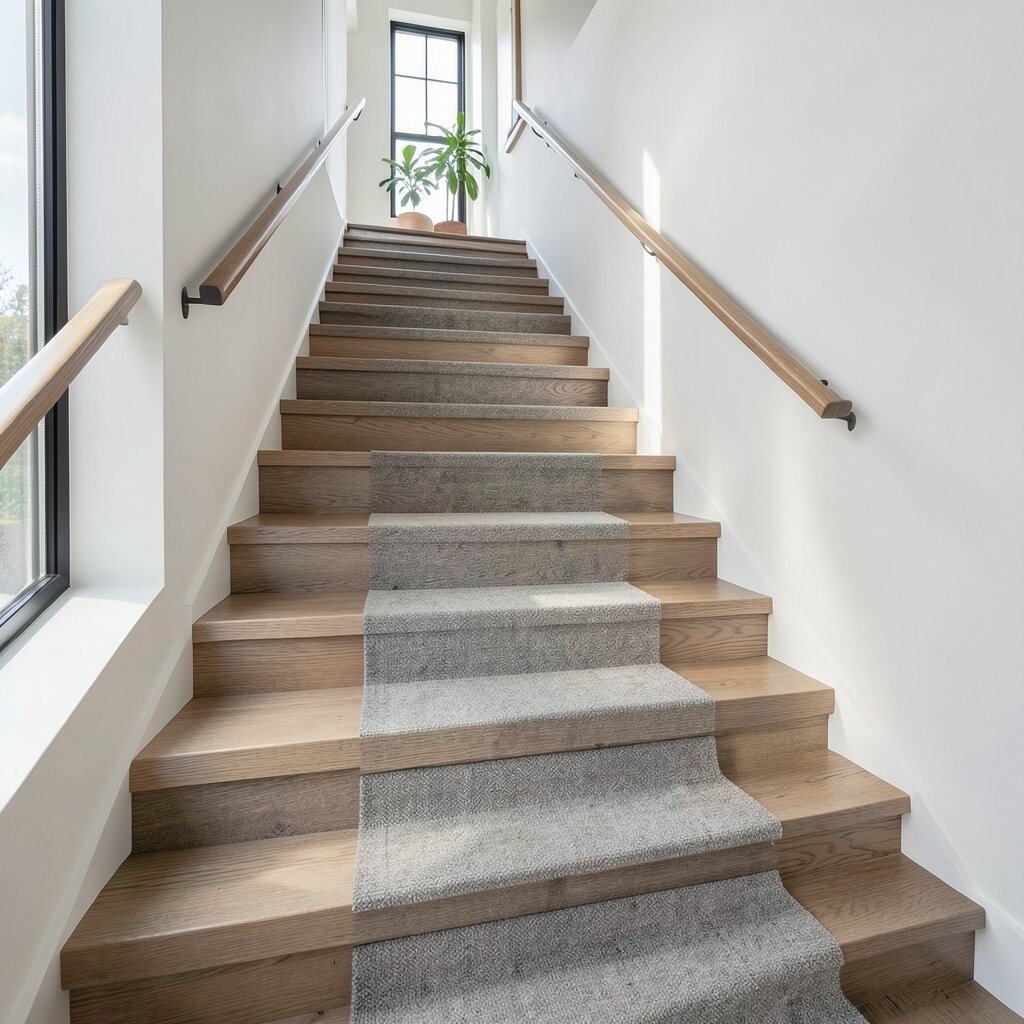
Picture a staircase that feels more like a walkway, with wide treads and minimal visual clutter. A sleek runner adds softness, while the open feel gives the home a calm, gallery vibe.
This design can be comfortable for slow steps, especially if you like carrying items upstairs or moving furniture. Wide treads can also feel easier for many people because your feet have more room. For practical tips, secure the runner with grippers designed for stairs so it stays in place.
Personalize by choosing a runner pattern that matches your style, like subtle geometric lines for a modern look. You can also go for a monochrome runner in a shade that blends with walls. Cost is usually mid-range, since you’re focusing on carpentry plus flooring covering rather than expensive custom glass or stone.
For trend relevance, the combination of open sightlines and textile softness keeps coming back in contemporary homes.
15. Statement Spiral Wall With Decorative Panels
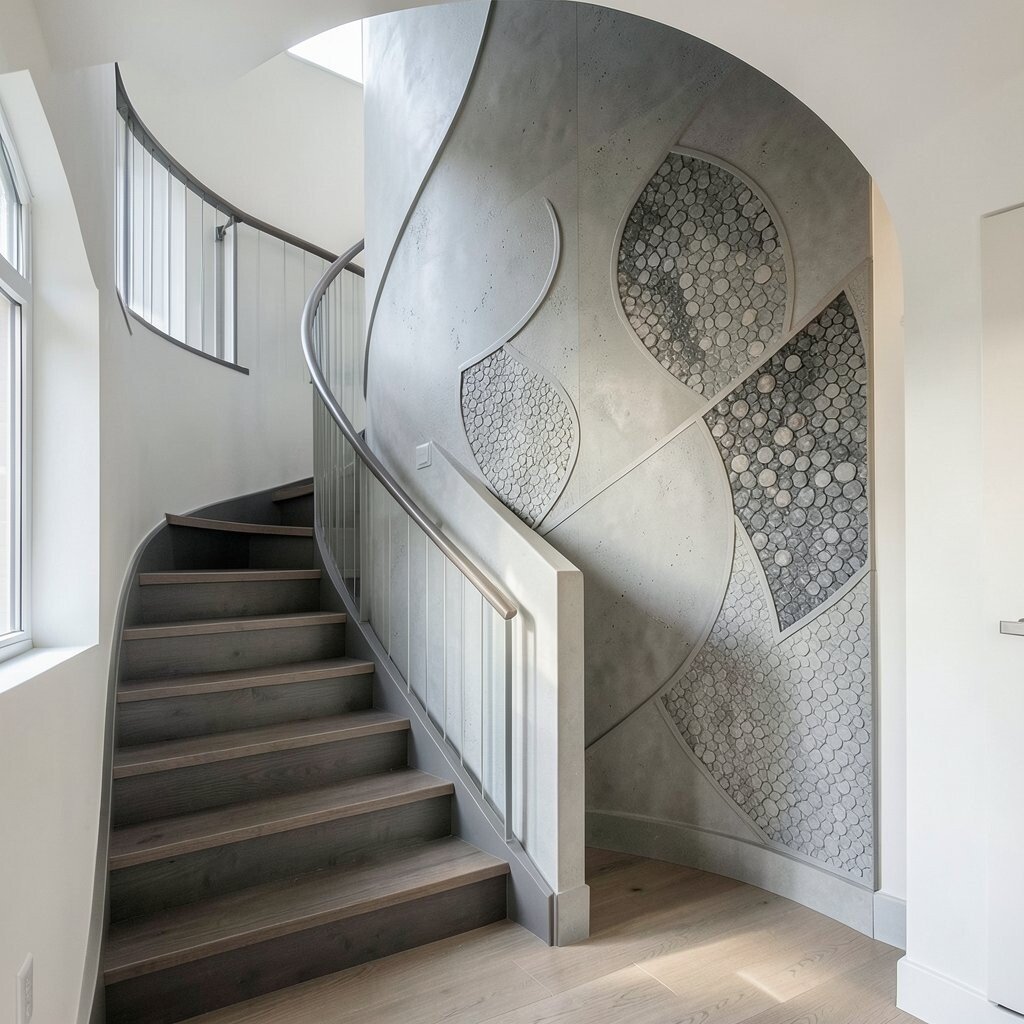
Imagine a staircase surrounded by a bold wall feature, like decorative panels or dimensional cladding. The steps move through the design, and the wall becomes the main art piece.
This approach creates uniqueness because the staircase feels custom to your home’s personality. It also helps hide construction details that you might otherwise need to cover with plain paint. Choose materials that are easy to clean and finish so the staircase stays looking fresh.
For personalization, select a panel style that matches your other features, such as fluted texture, geometric cutouts, or a soft plaster finish. You can also add a slim shelf at the landing for a plant or lamp. Cost can be mid-range to higher depending on panel material, but you can manage it by using a limited feature zone instead of covering everything.
Practical planning matters here, since panel installation should align with tread spacing and handrail placement.
16. Sleek L-Shaped Stair With A Floating Wall Niche

Think of an L-shaped staircase that turns smoothly, with a small floating niche built into the wall. The niche makes the stair feel designed, and it gives you a place to display something meaningful.
The L-shape is practical because it can fit many homes and make traffic flow easier than some straight designs. The floating niche also adds personalization without needing extra furniture. Use lighting inside the niche so the objects look good, especially in the evenings.
For personalization, add a display that suits your life, like a vase, a stack of books, or a framed photo. You can also match the niche finish to the handrail for a cohesive modern look. Cost considerations are usually manageable since you’re customizing built-in carpentry while still using straightforward stair geometry.
To keep it safe, make sure your niche doesn’t interfere with comfortable handrail access or clearances at the turn.
17. Patterned Tile Risers With Neutral Treads

Imagine neutral wood or stone treads paired with patterned tile risers that add a pop of character. Each step becomes a small canvas, and the overall staircase looks lively yet still balanced.
Tile risers bring uniqueness and let you control the visual theme, from subtle texture to bold motifs. The benefit is also practical because tile can be durable and easier to wipe clean. Choose slip-resistant tile or add protective mats on the tread surface where needed.
Personalize by selecting a tile pattern that ties into your kitchen backsplash or bathroom accents. If you prefer a modern look, choose simple patterns like small repeats, wave forms, or tonal lines rather than busy murals. Cost can vary based on tile quality and installation labor, but you can manage spending by keeping tile only on risers and using simpler finishes on treads.
For a current trend feel, pair patterned risers with slim metal handrails and keep walls in calm neutral shades so the tile remains the star.