Every pair of shoes has a home, even when your entryway feels packed. With the right storage, your mornings can turn calmer and brighter.
1. Over-the-Door Shoe Organizer With Clear Windows
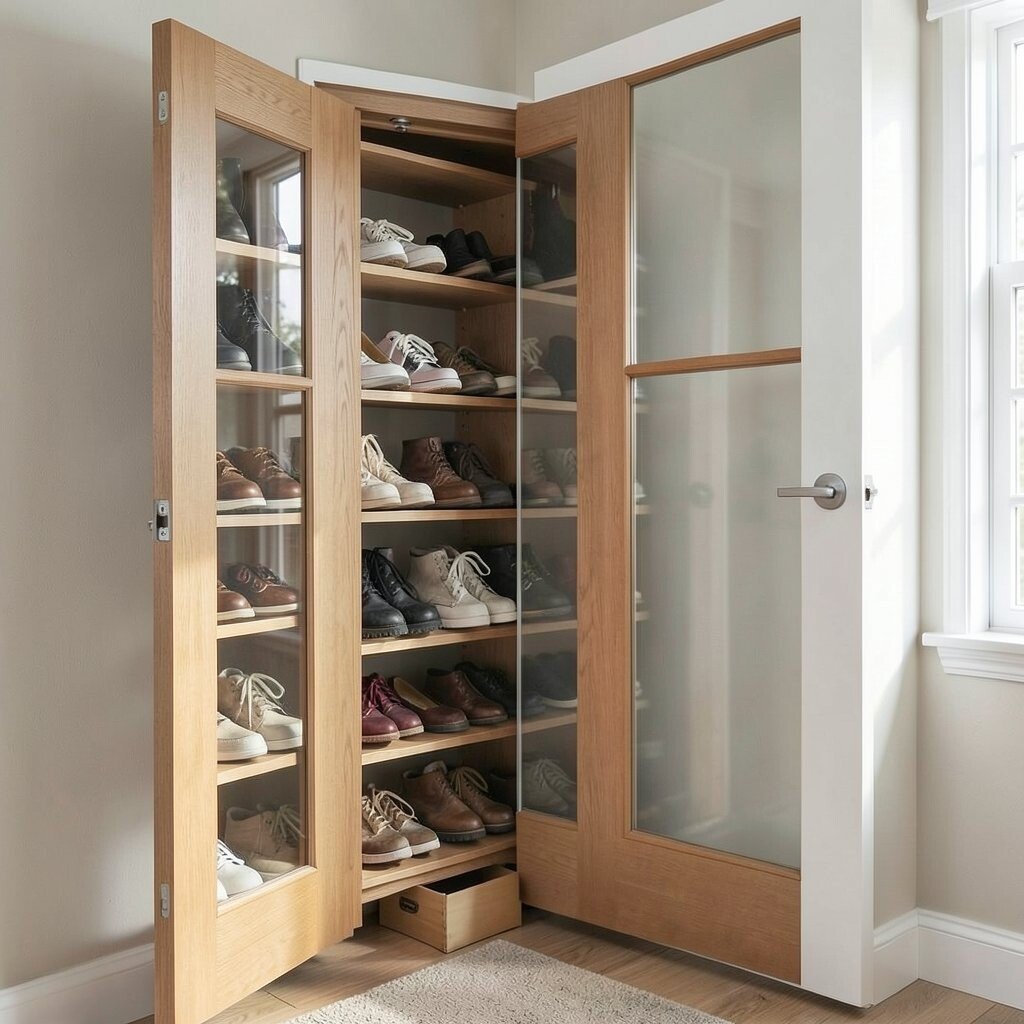
A simple over-the-door organizer can instantly make clutter feel under control. You can see each pair at a glance through the clear pockets, which makes grabbing the right shoes much faster.
The visual neatness is satisfying, and it works well for smaller spaces like apartments or mudrooms. Hang it with a sturdy hook, and keep heavier boots in the lower sections while lighter sneakers go higher. For personalization, use fabric labels or small color-coded tags inside the pocket edges so the whole family can shop their own shoes.
2. Wooden Crate Shoe Rack With Sanded Finish
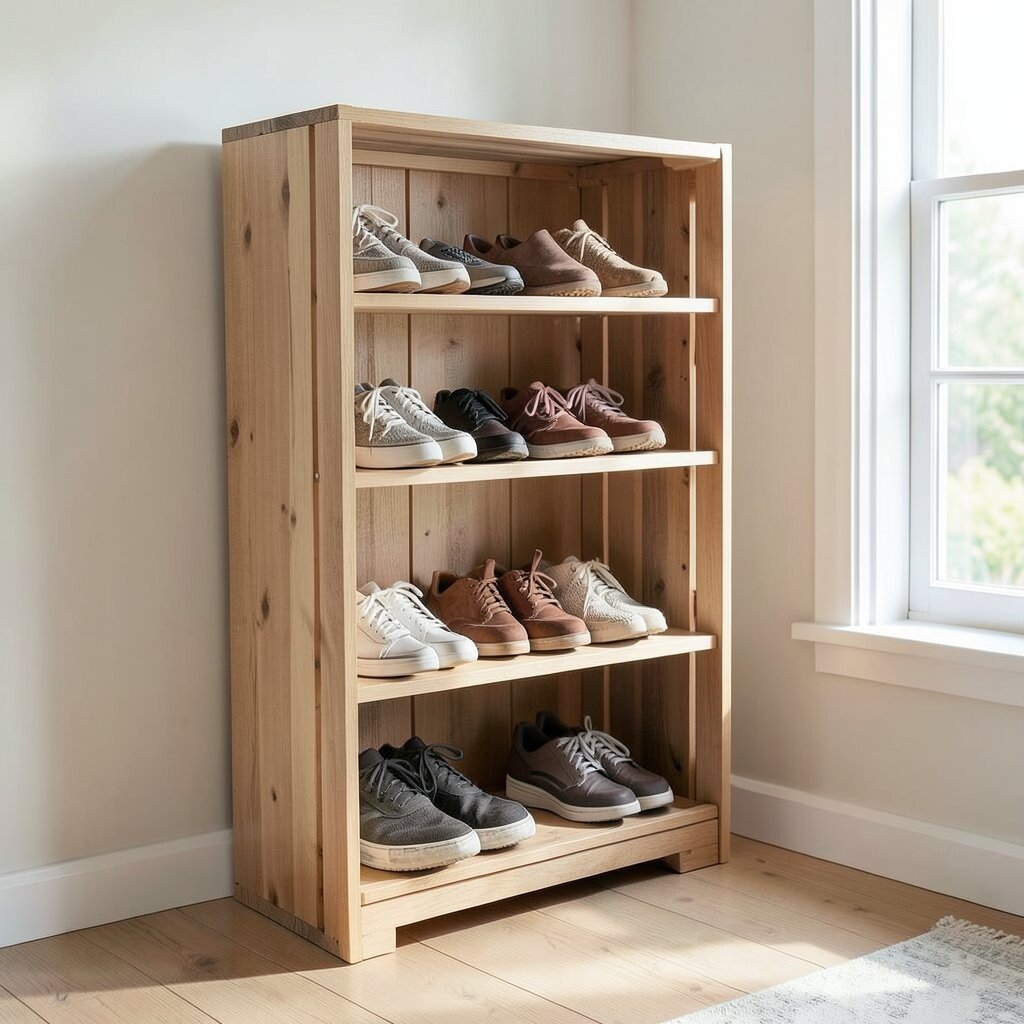
Stacked wooden crates bring a warm, rustic look that feels like a mini shelf wall for footwear. When you sand the edges and wipe on a light finish, the rack looks clean instead of rough.
This style is unique because you can arrange crate rows wide for boots or narrow for kids’ shoes. Line the inside with felt pads to prevent scuffs, and use small knobs or hooks to pull each crate section smoothly.
To keep it practical, measure your crate size against your entryway so you don’t block the door swing. Pair this rack with a matching bench or wall hook set for a pulled-together look. The cost can be low if you find used crates at a reuse shop, and you can upgrade with paint if you want a more modern vibe.
3. Hanging Pegboard for Shoes and Accessories
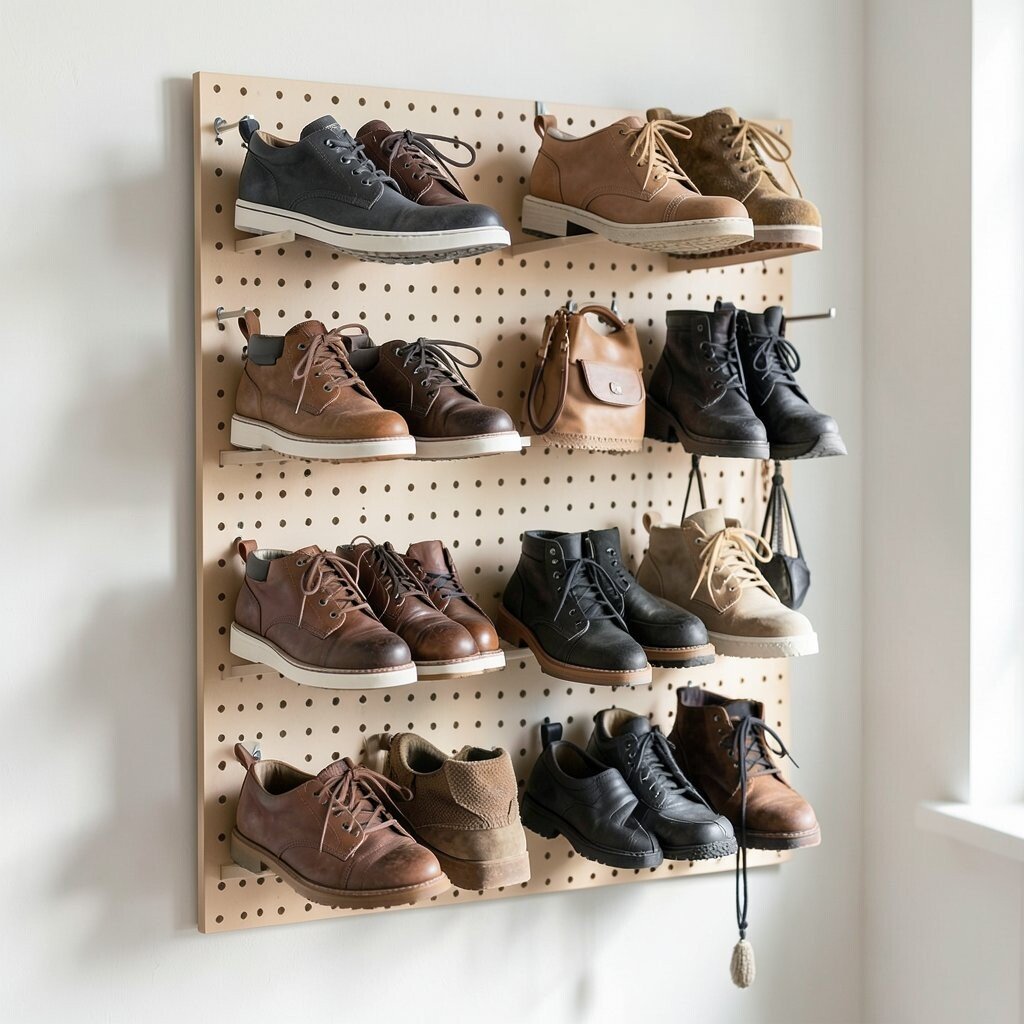
A pegboard turns your wall into a tidy display where shoes can hang neatly and off the floor. You can picture a grid of pegs holding sneakers, sandals, and even shoelace bags in one organized area.
It’s a great choice for quick access because everything is visible and within reach. Start by spacing pegs so toes don’t crowd, then add hooks for cleaning tools like brushes and wipes.
For personalization, paint the pegboard a fun color or add small baskets on the lower hooks for socks. If you’re following current trends, many homes are leaning into wall-based organization, and pegboard fits that style. This idea can be budget-friendly if you purchase a basic sheet and add only the peg accessories you need.
4. Slim Metal Pipe Rack With Adjustable Levels
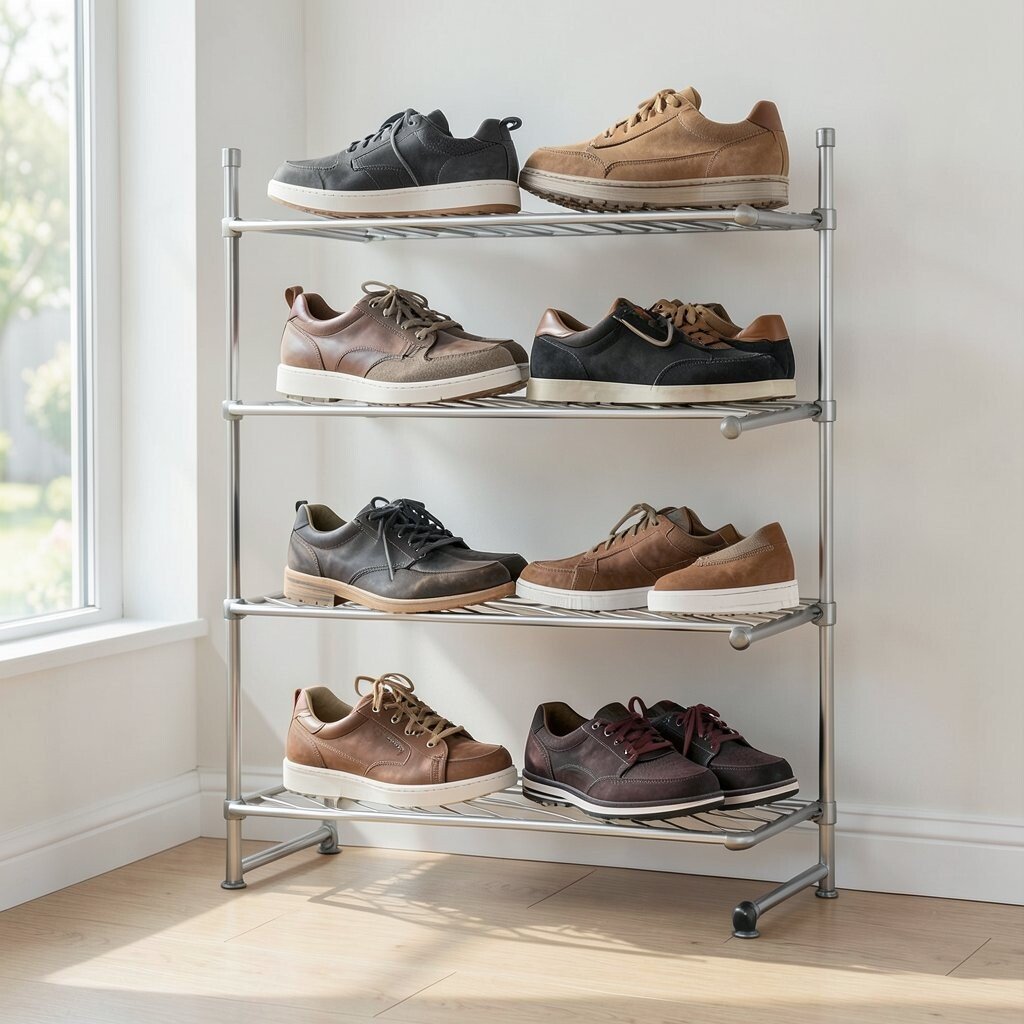
A pipe rack gives a clean, industrial look without taking up much floor space. You’ll notice how the open frame lets light pass through, so the area feels less crowded.
Adjustable levels are the key benefit because shoe heights vary so much across your closet. Use sturdy brackets and test the spacing for heels, flats, and bulky boots before tightening everything.
For practicality, add small rubber feet at the base to protect floors. You can personalize the style by wrapping the pipes with a matte finish or spray painting them to match your room. When it comes to cost considerations, you can build it in phases by starting with one level and adding more later as your shoe collection grows.
5. Under-Bed Rolling Drawer for Everyday Pairs
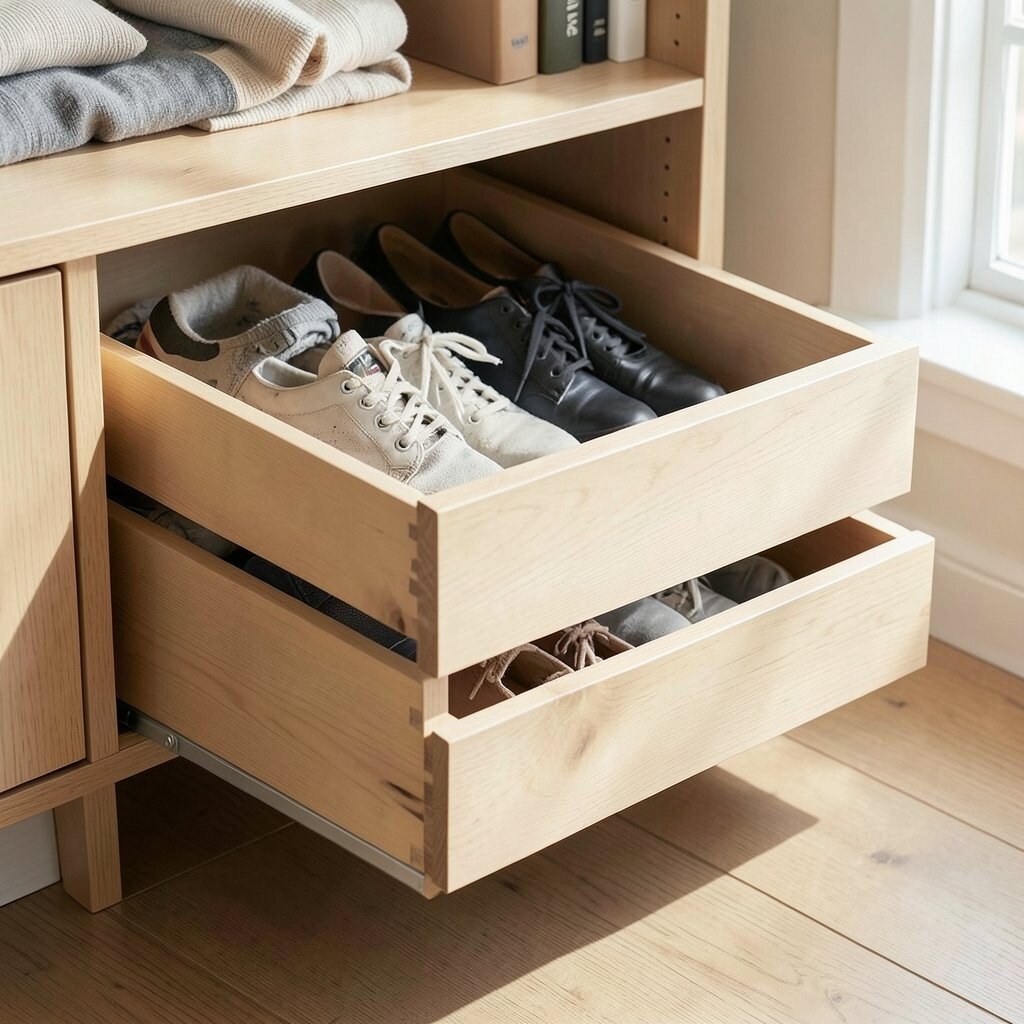
Sliding drawers under the bed keep shoes hidden yet easy to reach. When you pull the drawer out, you get a neat row of pairs stored away from dust.
This approach is great for daily rotation because you can tuck away shoes you use most often while keeping them from taking up entryway space. Choose a low-profile roller system so you can slide it smoothly even on carpet.
For personalization, label the drawer edges with a color marker so everyone knows where “home” is. If you wear a lot of athletic shoes, separate them by type using dividers or small fabric bins. The cost can be moderate depending on the drawer system, but it often saves money long-term by reducing the need for multiple storage pieces.
6. Ladder-Style Shoe Rack With Crossbars
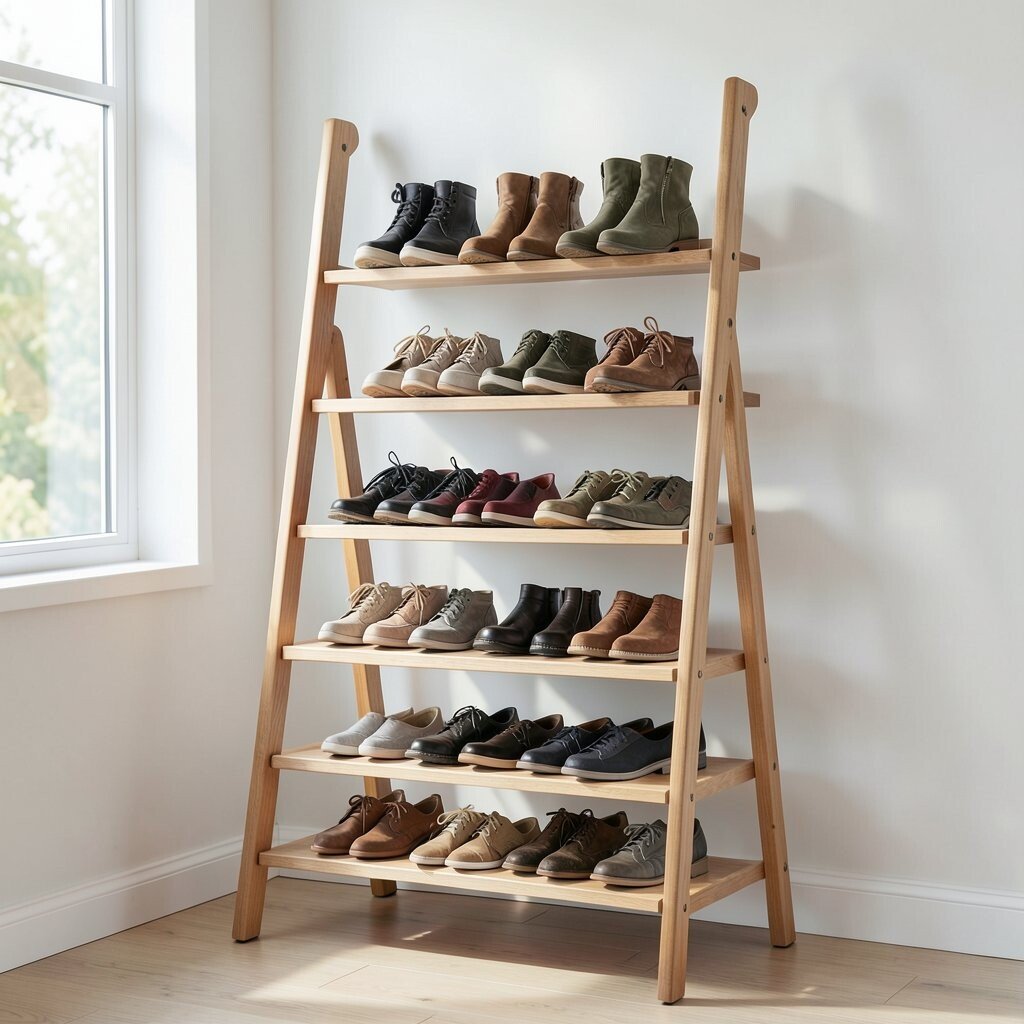
Alean ladder rack looks artsy and functional at the same time. You can imagine the rungs holding pairs like stepping stones, which makes footwear feel intentional and styled.
This idea is unique because you can use existing ladders from thrift stores and customize the spacing for your shoes. Sand any rough spots, then seal it with a clear coat or paint it for a fresh look.
7. Magnetic Boot Strip for Easy Storage
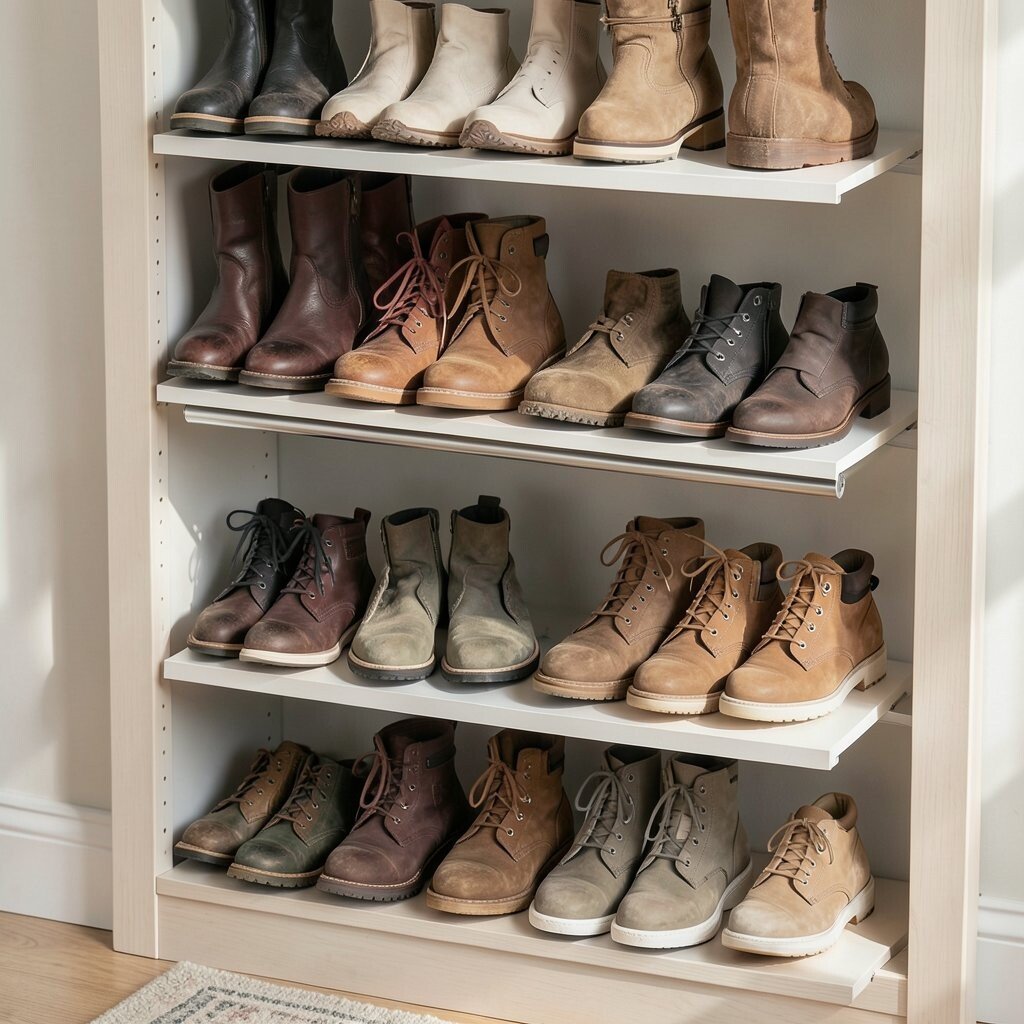
Magnetic strips can hold slim boots or metal-supported shoe forms right against the wall. Visually, it looks clean because shoes line up in a flat, organized row.
It’s especially helpful when you want shoes off the floor but still want quick access. Use strong magnets and ensure your shoes have a compatible surface or add thin metal inserts to the insole area.
For personalization, place the strip near a mirror so you can check outfits while you grab shoes. This can match current trends toward minimalist storage, since it keeps things visually light. Cost-wise, it can be a smart build if you buy just one strip and test how well it holds before expanding.
8. Fabric Shoe Bins on a Closet Rod
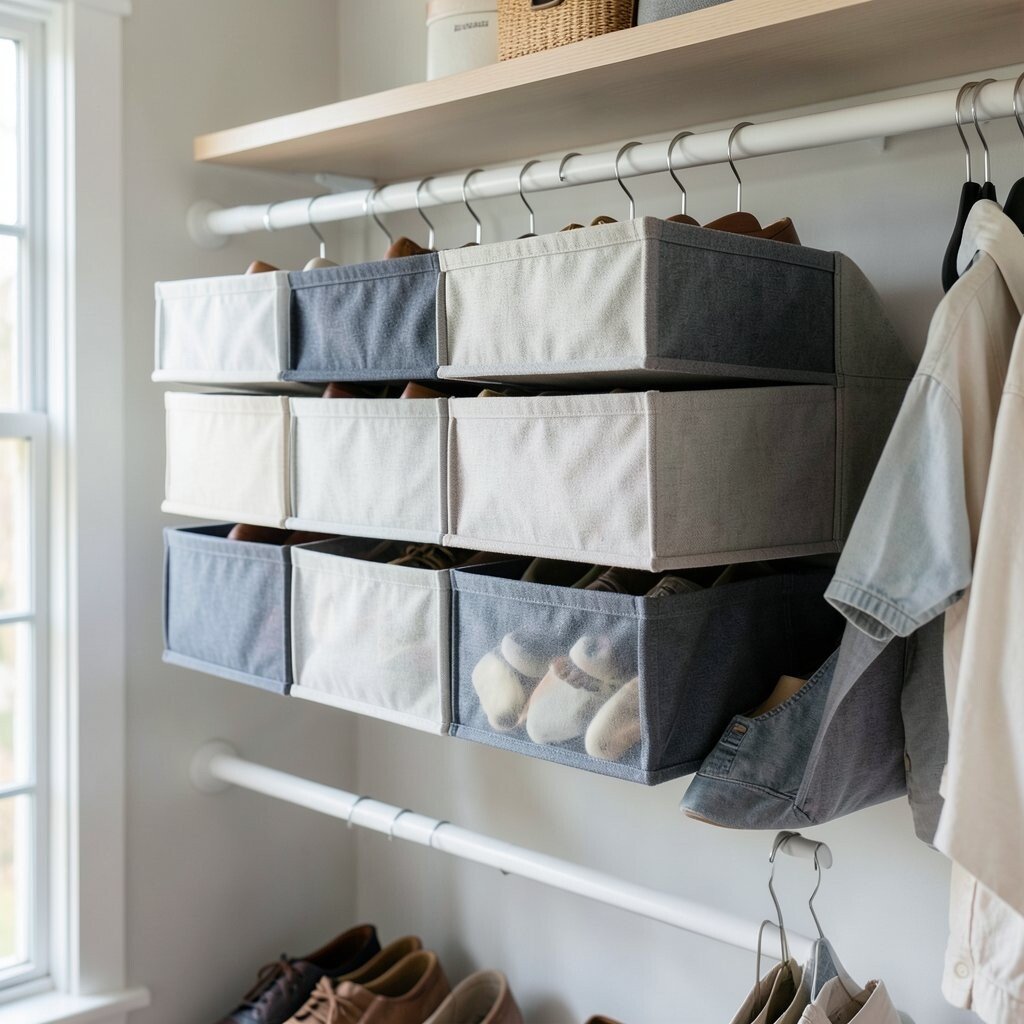
Soft hanging bins are gentle on shoes and easy to set up. You’ll see a neat row of compartments that keep pairs from rubbing against each other.
The benefit is that fabric helps absorb minor moisture and keeps items from getting scuffed. Clip the bins to a closet rod using strong rings or clips, and keep the bottom edges reinforced for stability.
9. Corner Shelf Rack With Shoe-Specific Nooks
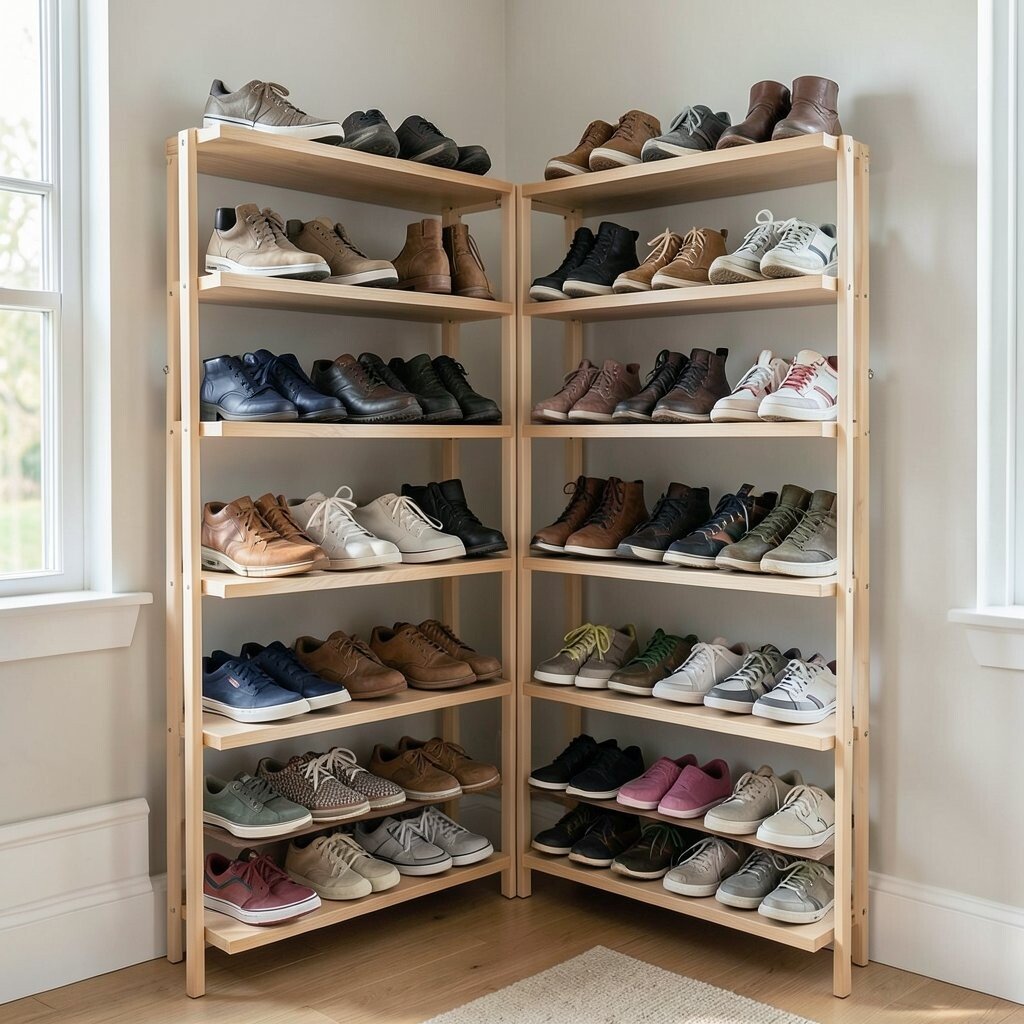
Corner shelving makes use of space that usually sits empty. It visually feels like a dedicated shoe corner, which helps your entryway look more designed.
These shoe nooks are beneficial because angled shelves can match different shoe shapes. Measure the corner and plan shelf depth so heels don’t tip forward and sandals stay secure.
For personalization, stain the wood in a color you already use in your home, like walnut or oak. If you want a modern trend, choose open shelves with clean lines rather than closed cabinets. Cost considerations depend on whether you buy prefab shelves or build custom ones, but DIY can be cheaper if you already have basic tools.
10. PVC Pipe Organizer With Individual Holes
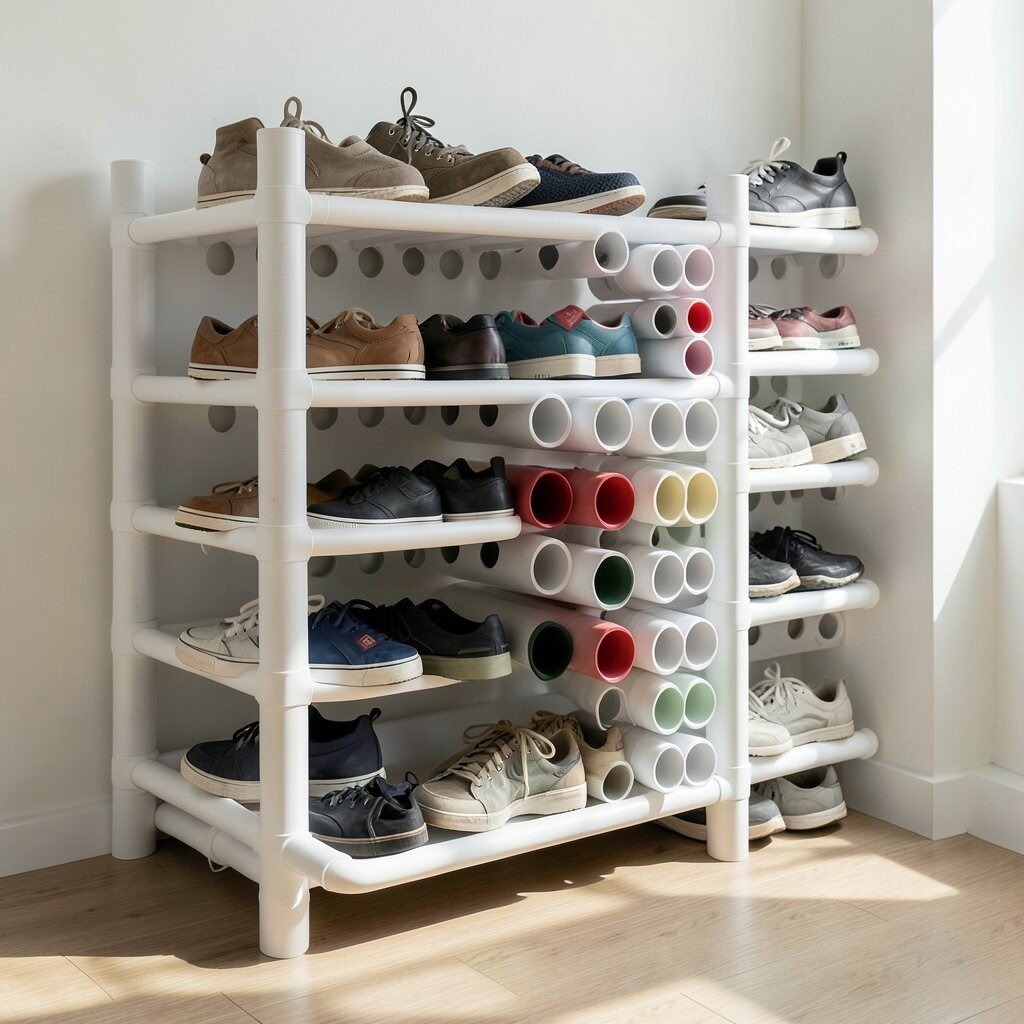
PVC pipe shoe storage looks surprisingly fun once it’s finished. You can picture a grid where each pair sits upright in its own circular cradle.
This is a practical option for sneakers and casual shoes because the holes keep pairs separated and easy to grab. Cut the pipes evenly, then sand and seal the edges for a smooth finish.
To personalize, paint the pipes with bright colors or match them to your room theme. Add a base board for stability, and keep small items like shoe horns nearby in a jar. The cost is often low because PVC is inexpensive, and it’s easy to adjust sizes as you reorganize.
11. Repurposed Record Shelf Shoe Display
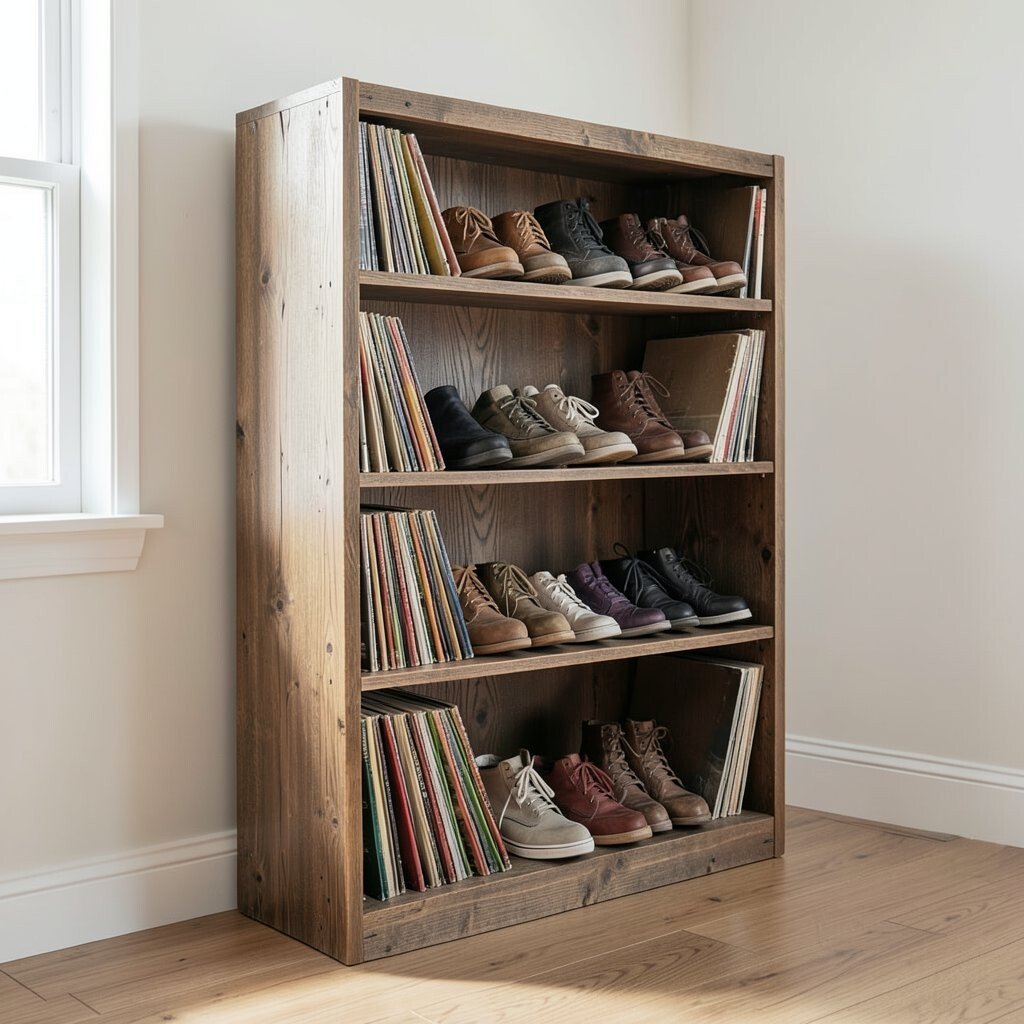
A record shelf can double as shoe storage, creating an eye-catching display. You’ll notice how the curved lines and snug compartments keep pairs neatly aligned.
This idea is unique because it turns something you already own or find into a stylish organizer. The shelving grid works well for flats, sneakers, and smaller boots, and you can rotate which pairs go where.
For practical tips, line shelves with felt or fabric so shoe soles don’t scratch. Add a small tray on top for keys and a brush, which keeps everything in one spot. Cost considerations are usually friendly if you find a secondhand shelf at a thrift store, and you can refresh it with paint for a modern look.
12. Built-In Bench With Flip-Down Shoe Doors
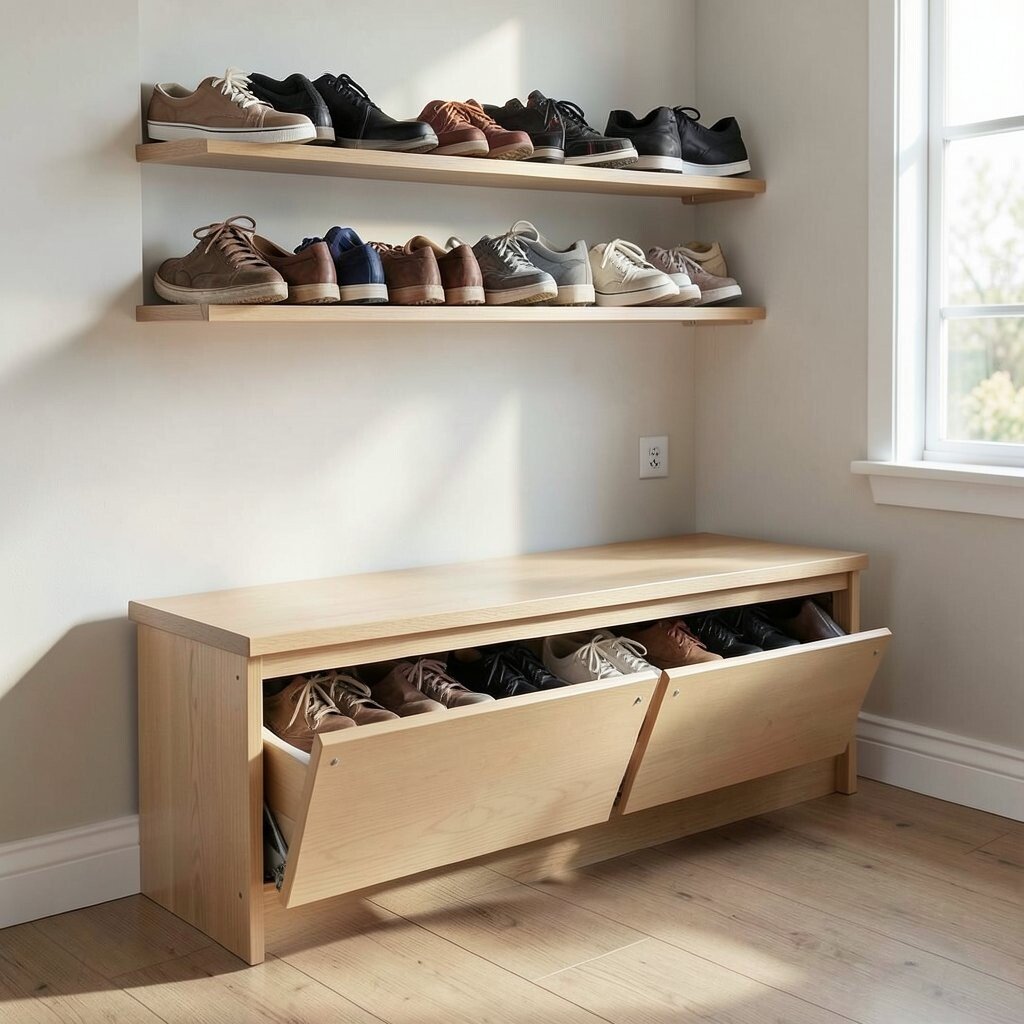
A bench with flip-down doors can hide shoes completely while still offering a comfy place to sit. Visually, it looks like a sleek piece of furniture instead of storage clutter.
The major benefit is that you reduce mess by keeping shoes behind a clean front. Plan the door openings so you can access pairs without bending too far, and add ventilation holes to prevent odor.
For personalization, choose a bench fabric or finish that matches your decor. If you follow current trends, more homeowners are adding furniture-style storage to entryways for a tailored look. Costs can be higher if you hire a carpenter, but DIY hardware kits and simple wood panels can lower the price.
13. Stackable Acrylic Shoe Steps With Transparent Layers
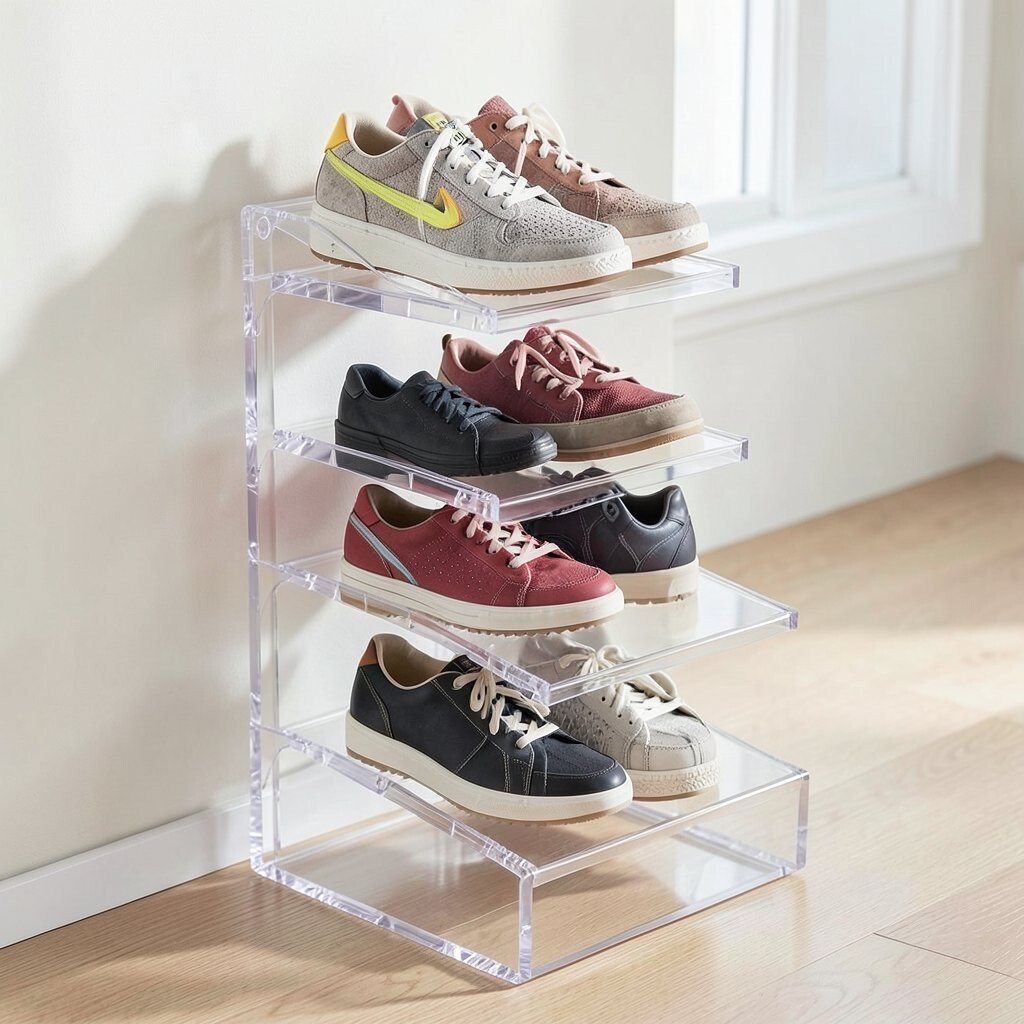
Clear acrylic shoe steps look like floating displays for your footwear. You can see each pair clearly, which makes outfit planning feel quick and fun.
This style is beneficial because it keeps shoes from piling and crushing each other. Arrange pairs by type, and keep the top level reserved for shoes you wear most often.
To personalize, group colors together for a “store window” vibe at home. Acrylic racks are trending in organized spaces because they look modern and tidy. Cost considerations depend on brand and size, but you can start small with one or two tiers and add more later.
14. Stair-Step Shoe Rack for Small Entrances
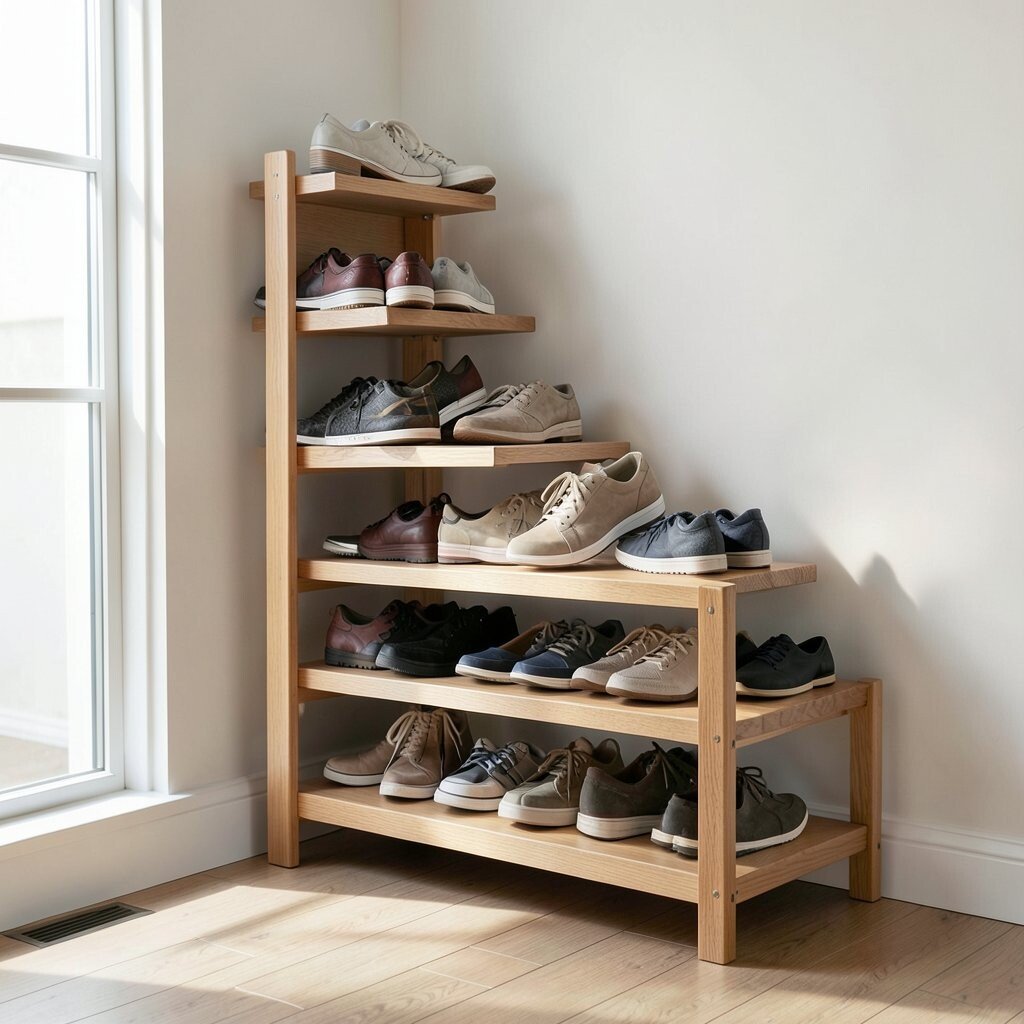
A stair-step rack creates a gentle slope that holds shoes without stacking directly on top of each other. Visually, it feels like a mini staircase dedicated to footwear.
This is practical because angled placement helps shoes stay visible while drying naturally. Build it with open steps so air can move, and keep the lower step slightly wider for bulkier pairs.
For personalization, use a mix of finishes like light wood for the steps and darker trim for a polished look. If you want a trending design, keep lines simple and add matching hardware pulls in a brushed metal tone. Cost is often moderate since it can be made from basic lumber and a few screws.
15. Shoe Storage Cubby Wall With Removable Bins
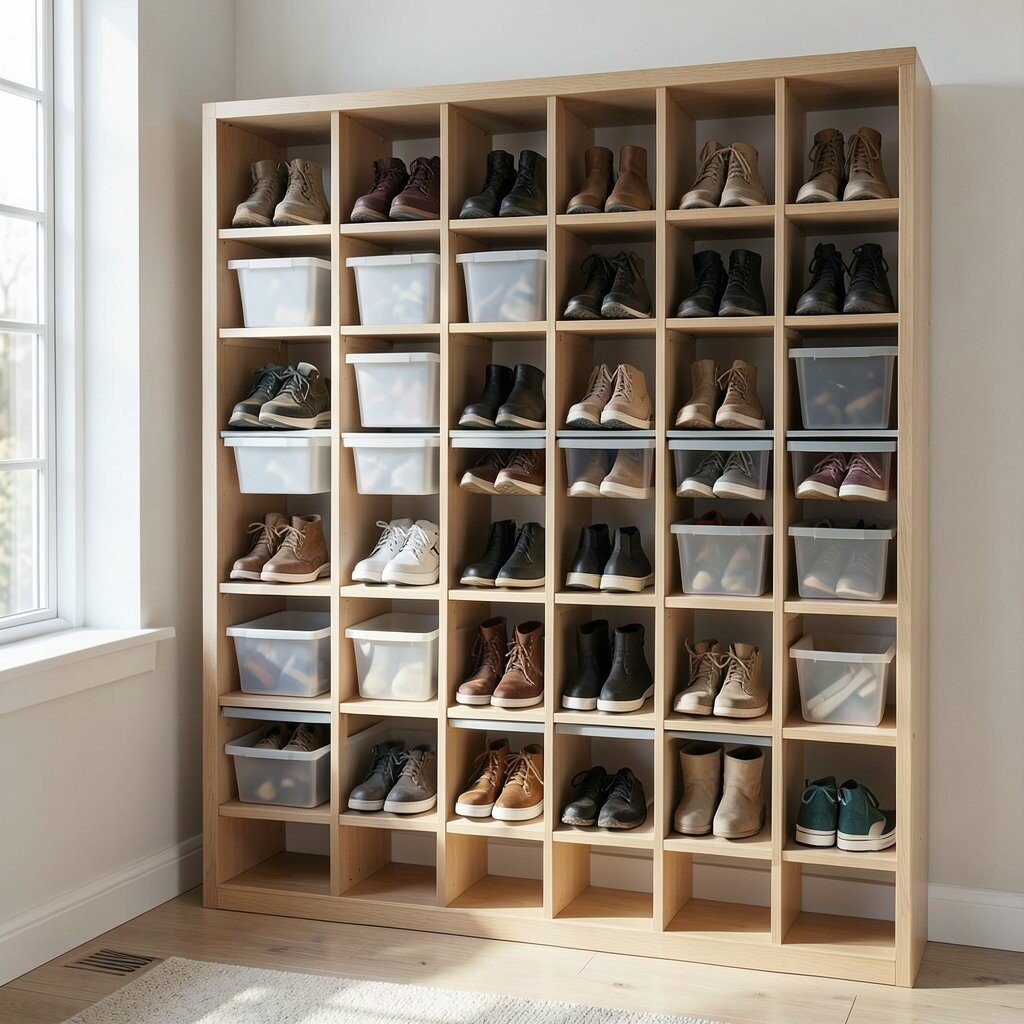
A cubby wall turns shoe organization into a clean, built-for-everyone system. You can picture each person having a space, with bins that slide out when you need something quickly.
The benefit is clear separation, which reduces the “pile” effect and keeps pairs from mixing up. Use removable bins so you can wash them or swap sizes as kids grow.
For personalization, add small name labels and color accents on each bin front. Many homes now aim for family-friendly organization, and cubbies make that easy. Cost considerations depend on whether you buy prefab cubbies or build from wood panels, but planning with your measurements can help you avoid waste.
16. Under-Sink Pull-Out Drawer for Cleaning Supplies Too
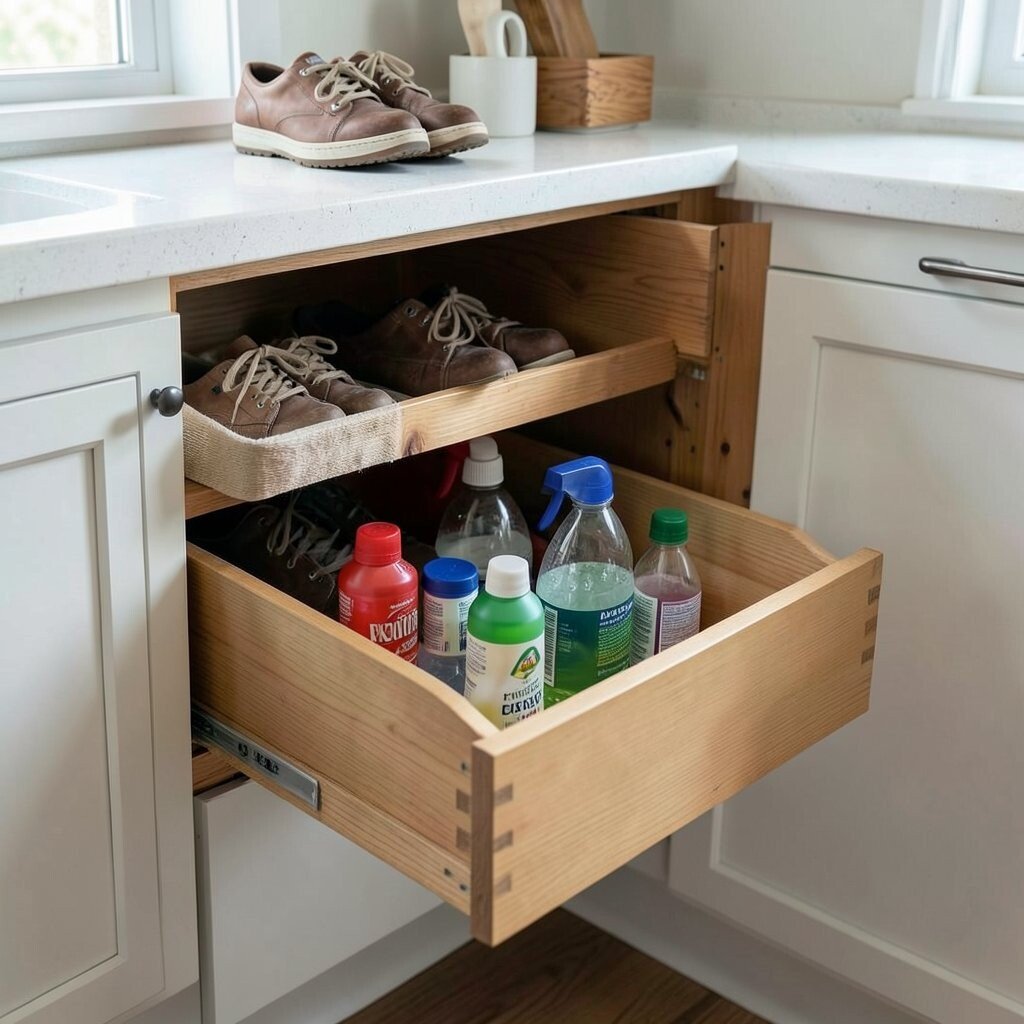
An under-sink pull-out drawer can hold shoe sprays, wipes, and even a few pairs for quick cleaning. The visual win is that it keeps messy care items away from the rest of your storage.
This setup is beneficial because shoes and supplies can share the same zone, which makes morning routines smoother. Use a small tray organizer inside so bottles don’t rattle and shoes stay separated.
To personalize, choose trays in a color that matches your bathroom or laundry theme. If you want a trend, more people are combining “care” storage with shoe storage to keep everything practical. Cost-wise, the biggest factor is whether you already have a drawer system, but even basic pull-out bins can work.
17. Wooden Slat Rack With Breathable Air Gaps
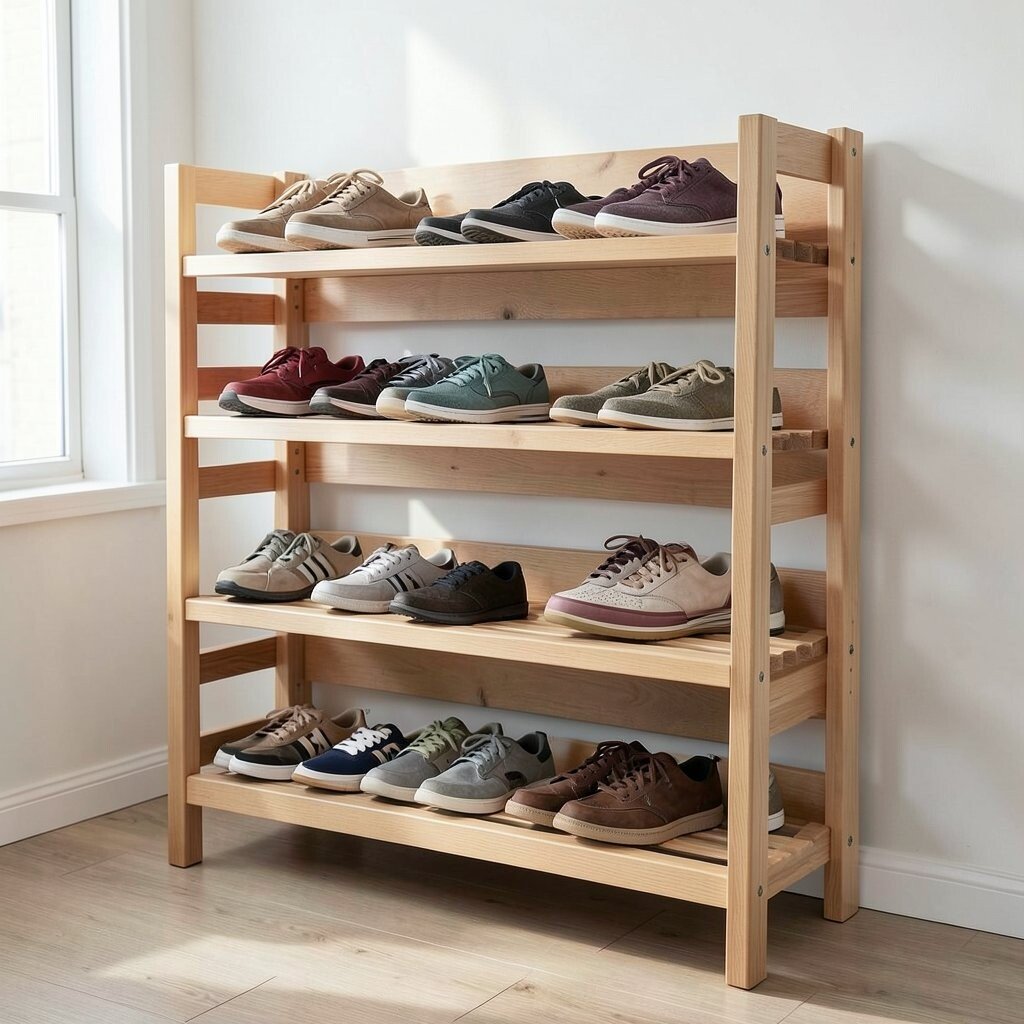
A wooden slat rack uses gaps between slats to keep shoes from trapping moisture. Visually, it looks airy, and shoes feel less cramped.
The benefit is improved airflow, which helps reduce that damp smell some pairs get after wear. Use rounded slats and smooth corners so leather and fabric stay protected.
For personalization, stain the wood to match your closet or paint it for a fresh seasonal look. Current trends often favor breathable materials, especially in entryways where shoes come in wet. Cost considerations are usually good because lumber can be affordable, and you can scale the rack to your collection.
18. Rotating Shoe Carousel for the Closet Corner
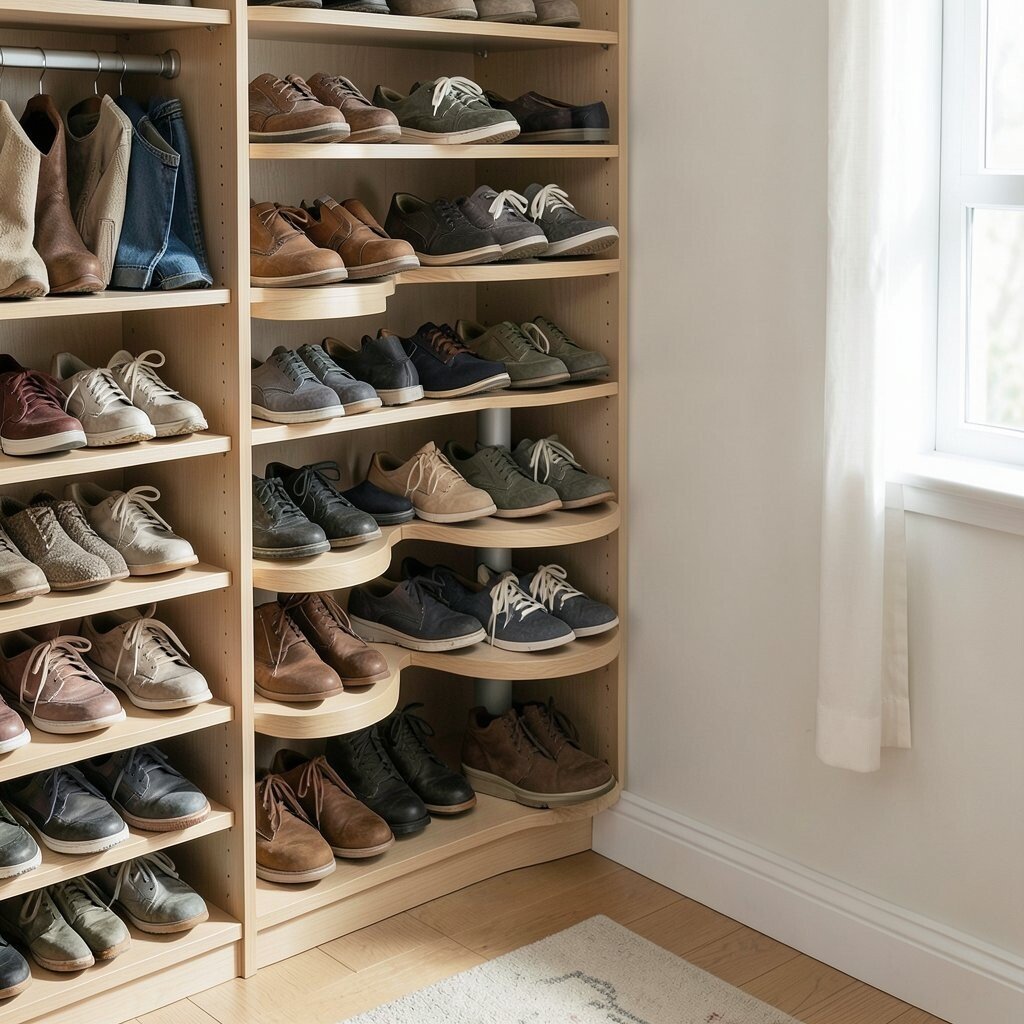
A rotating shoe carousel is like a lazy Susan for footwear. You can spin it and instantly find the exact pair you want without digging through a pile.
This approach is unique because it turns organization into a simple action. Choose a carousel with enough compartments for your largest shoes, then keep boot space separate so they don’t block smaller pairs.
For practical tips, place the carousel in a closet corner where you can spin it easily without hitting door swings. Personalize with labels around the rim so sorting is automatic. Cost is often higher than simple racks, but it saves time daily and keeps the area looking sleek.
19. Stack of Floating Wall Shelves With Shoe Ledges
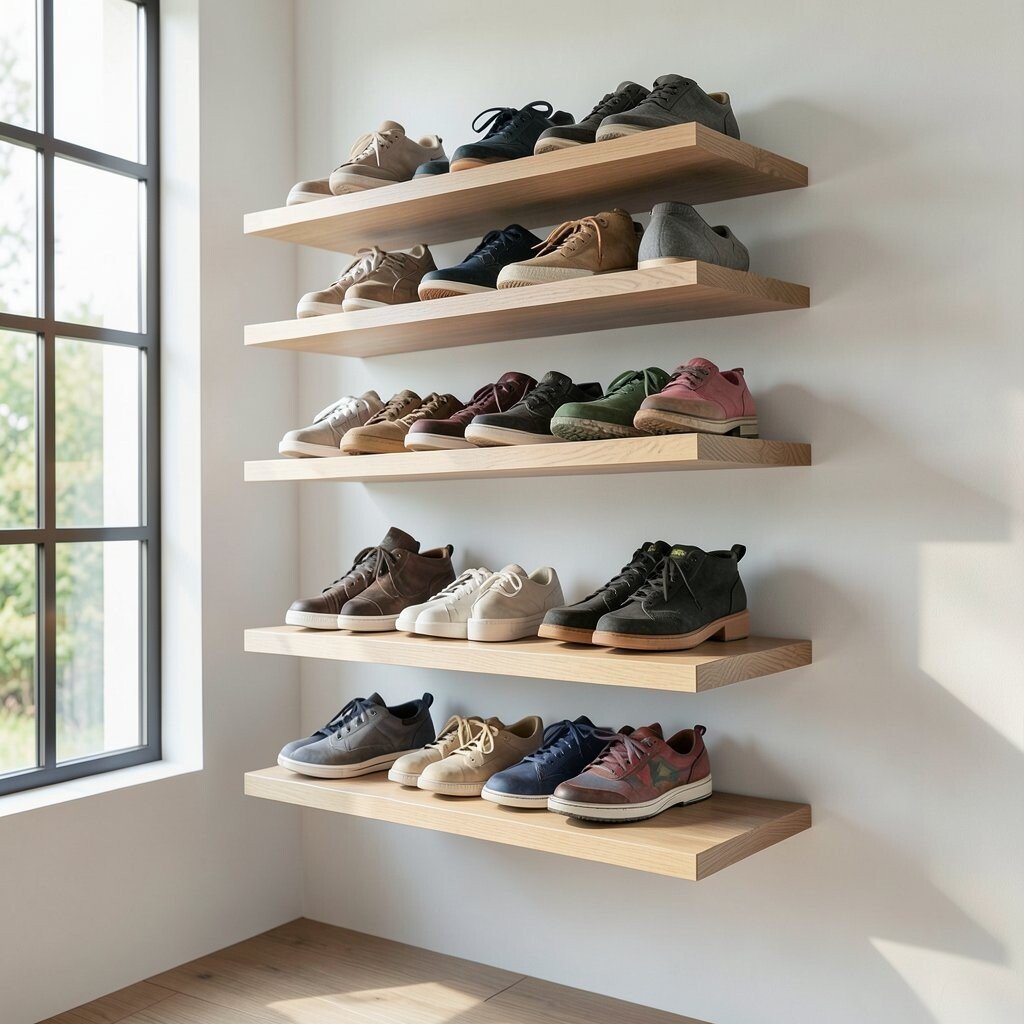
Floating shelves create a clean look, and shoe ledges keep pairs from sliding. You’ll see shoes sitting like decor, but still ready for everyday use.
The benefit is space saving, since the floor stays clear and the wall does the work. Install brackets securely into studs, and make sure the ledge depth matches your thickest soles.
To personalize, paint the shelf backs with a subtle pattern or solid color to add personality. If you follow current trends, wall-mounted storage with minimal hardware is very popular right now. Costs can vary based on how many shelves you add, but starting with just a few is a smart way to control spending.
20. Folding Fabric Shoe Organizer With Rigid Base
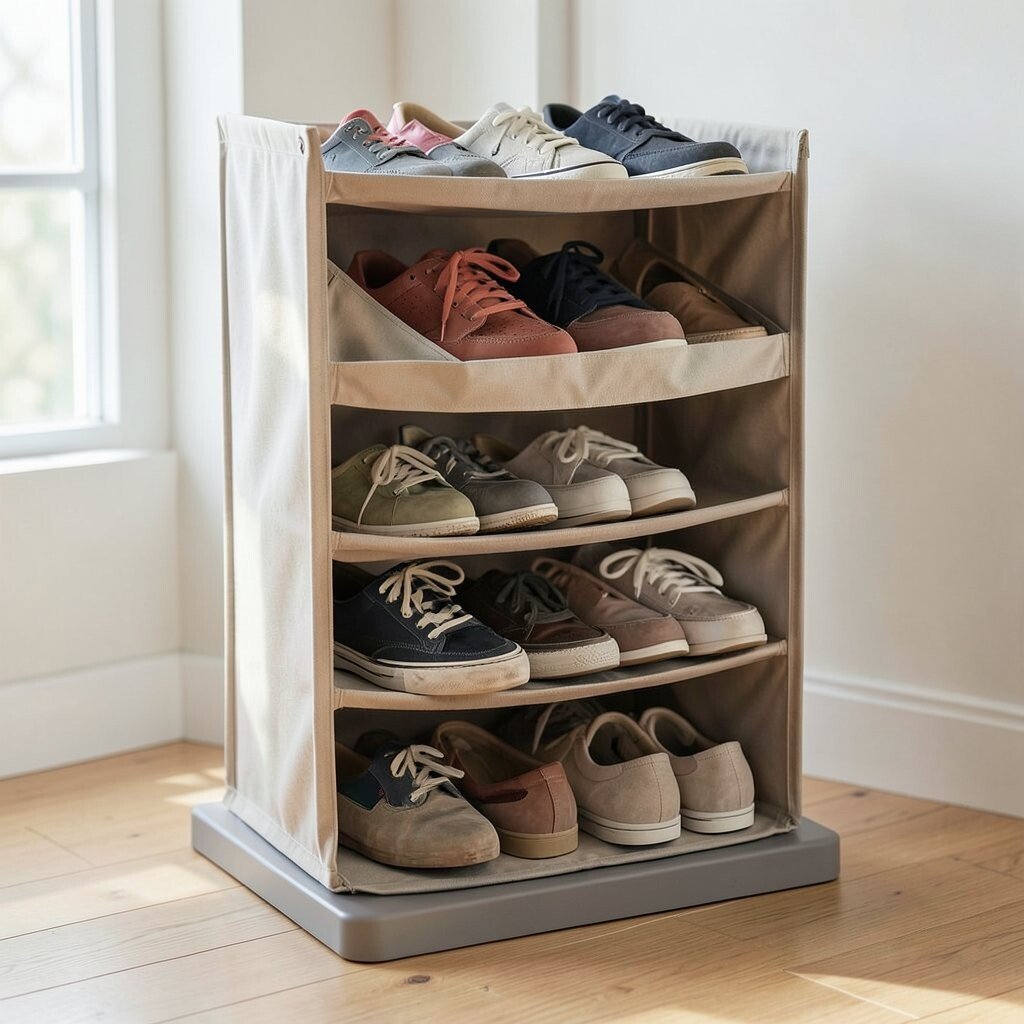
A folding fabric organizer is a lifesaver when you need storage that can change with seasons. Visually, it looks tidy when opened, and it folds down when you don’t need it.
This is beneficial for controlling clutter because each compartment keeps pairs separated and easy to shuffle. Choose one with a rigid base so the organizer stays stable and doesn’t sag under weight.
For personalization, select patterns that fit your style, like simple stripes or calm neutrals, and add small icons for kids’ shoes. This matches current home trends that favor flexible storage because people often reorganize by season. Cost considerations are usually affordable, and it can be a great first step before investing in permanent racks.
21. Shoe Rack With Chalkboard Labels for a Daily Reset
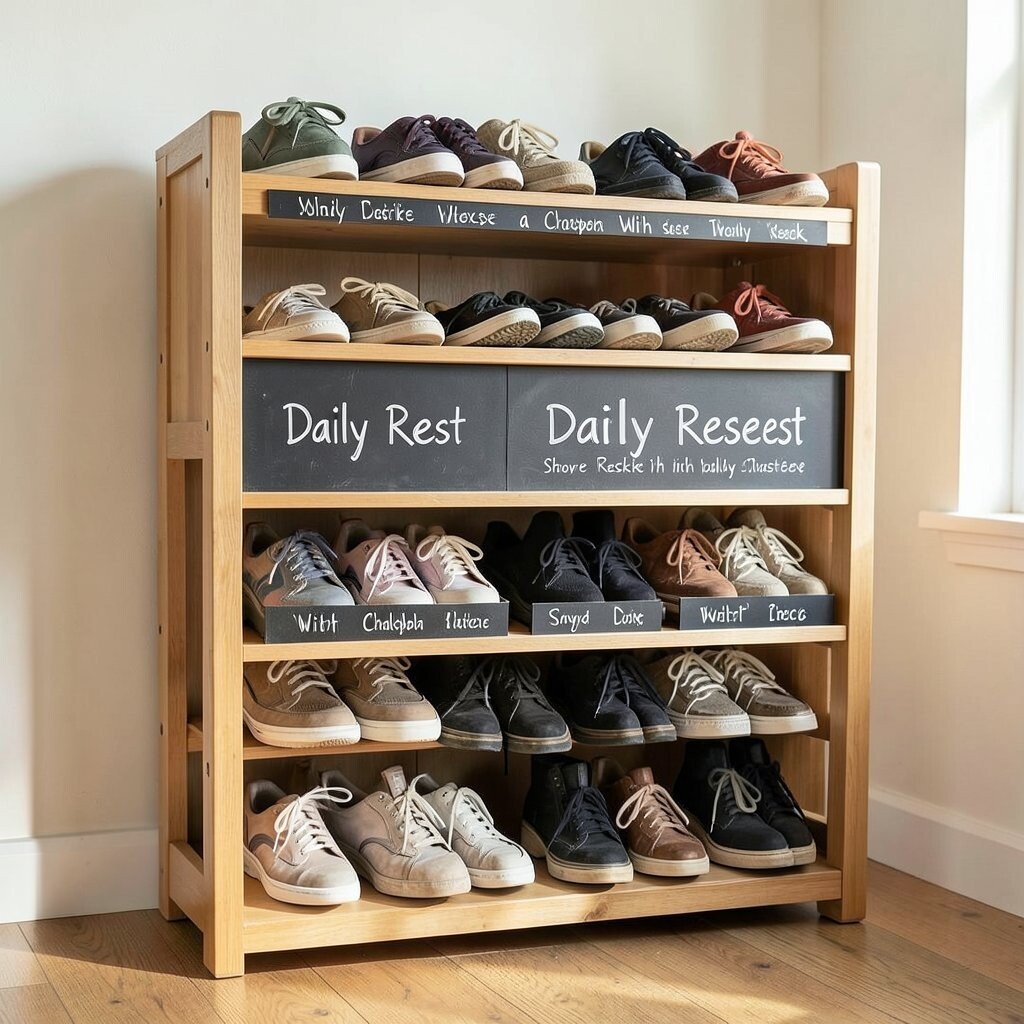
A shoe rack that includes chalkboard labels helps you keep pairs sorted day after day. You can picture each spot marked with tidy writing, making it feel like a friendly system.
The benefit is accountability without stress, because everyone can see where shoes belong. Wipe and rewrite labels as your routines change, such as switching from gym shoes to work shoes.
To personalize, use themed writing like simple icons or color chalk that matches your decor. If you want a trend, minimal label boards are becoming popular because they look clean and are easy to update. Cost is often low since chalkboards and chalk are inexpensive, and you can add them to a basic rack you already own.
22. Cork Board and Shelf Combo for Shoes and Seasonal Picks
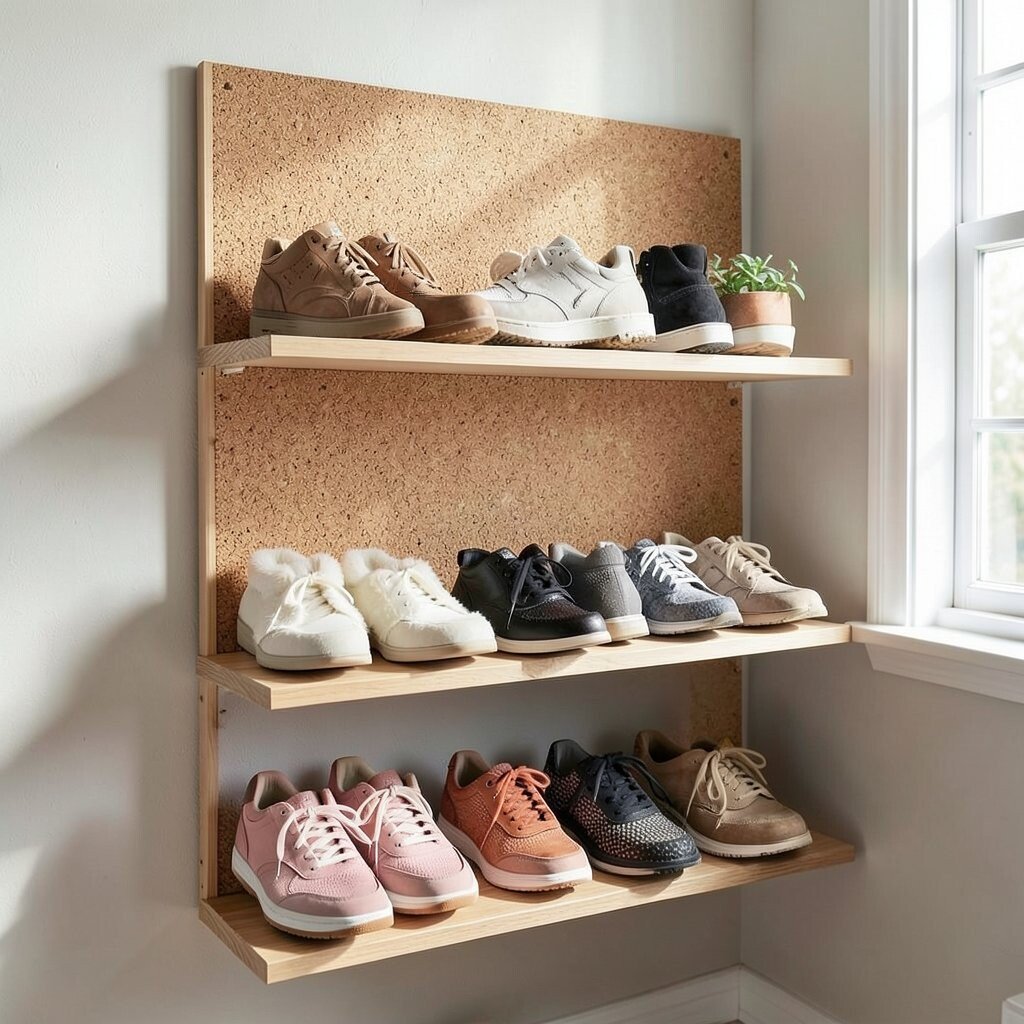
A cork board attached near a shelf can hold small items like shoelace bags, while the shelf holds actual pairs. Visually, it creates a practical wall station that feels warm and creative.
This setup is unique because it mixes “where shoes go” with “what you grab with shoes,” like cleaning wipes and insoles. Pin small mesh bags to the cork board for accessories so they don’t get lost under seats or in drawers.
For practical tips, keep a top shelf for seasonal picks and a lower shelf for the shoes you wear most. Personalize by pinning fabric swatches or using cork pushpins in matching colors. Cost considerations are usually moderate since cork board can be purchased relatively affordably, and pairing it with a simple shelf keeps the budget under control.