The right railing can make a park feel cared for. A floral metal pattern adds beauty without stealing space from the flowers.
You get a small change that feels big when you walk by each day, especially along paths, steps, and garden edges.
1. Vine-Twist Balusters for Garden Paths
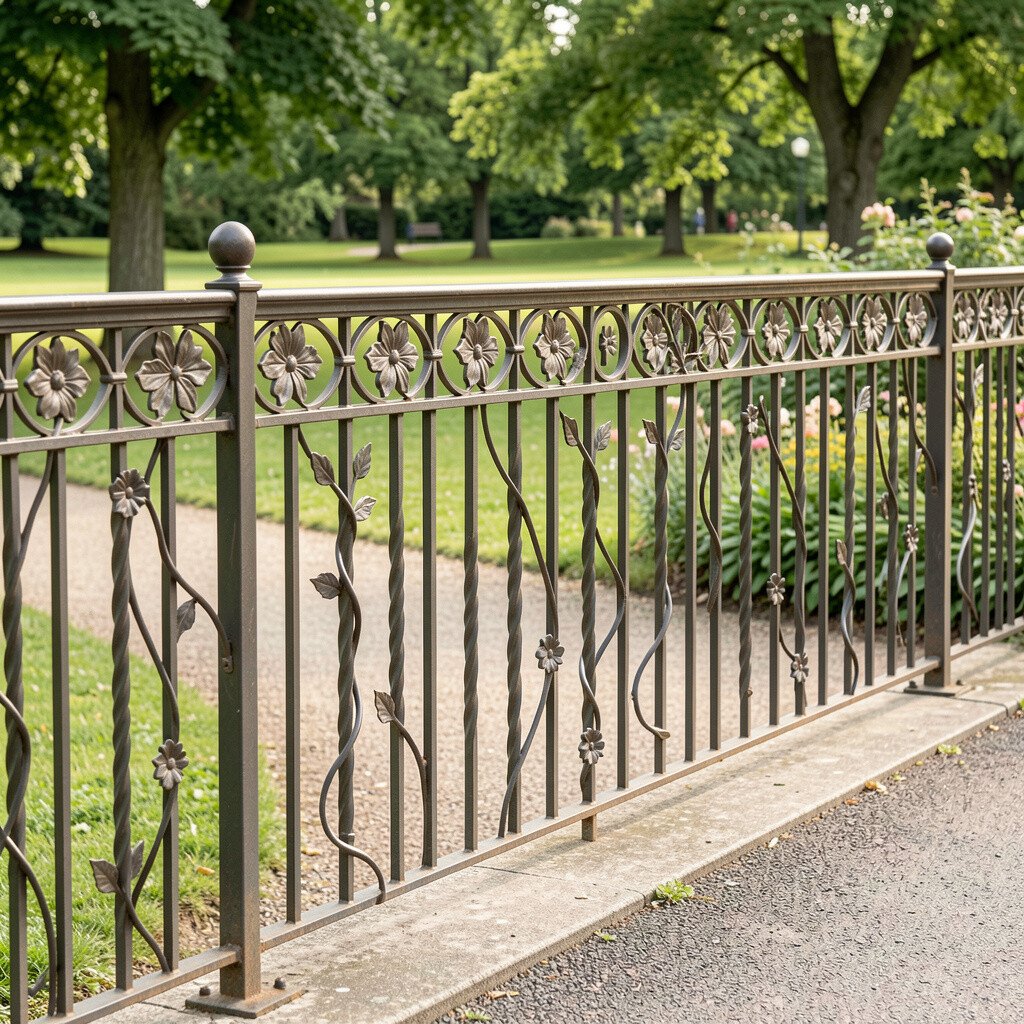
Imagine walking along a winding path where the railing looks like living vines. The metal twists upward, then curls into tiny leaf shapes that catch the light.
You will notice how the pattern frames the flowers instead of competing with them. These rails also help guide foot traffic and keep people safely near planting beds.
Choose powder-coated steel or aluminum so the design stays crisp after sun and rain. For practical installation, measure the span between posts carefully and keep the base plates level so the curls line up neatly.
If you want personalization, match the leaf style to the plants nearby, like soft curls for lavender or sharper lines for ornamental grasses. Keeping the color in the same family as your benches and lampposts makes the whole walkway look planned.
In many parks, this option hits a sweet spot on cost because the base system is standard and the floral detail is mostly in the balusters. Current trends lean toward nature-inspired motifs like vines and leaves, so this style fits right in.
2. Scrollwork Arches Above Stair Edges

At the top of a stair, a railing with floral scrollwork can act like a neat frame for every landing. Curved metal bands rise above the handrail and end in flower bursts.
The first thing you feel is comfort when you grip the smooth handrail. The second thing you notice is how the arch pattern makes the stairs look less harsh and more welcoming.
To make it practical, use a textured or satin finish on the handrail so it feels steady in humid weather. Check local height and spacing rules early so the design stays safe and easy for everyone.
Personalize the look by switching the flower size between sections, like smaller blossoms near the edges and larger ones at the center. You can also coordinate the bloom color theme through matching nearby planters or flags.
Budget-wise, stair railings often cost more because they need custom shapes and tighter fabrication. Still, the details can reduce the need for extra decorations because the railing itself becomes the focal point.
3. Rose Medallions on Vertical Panels
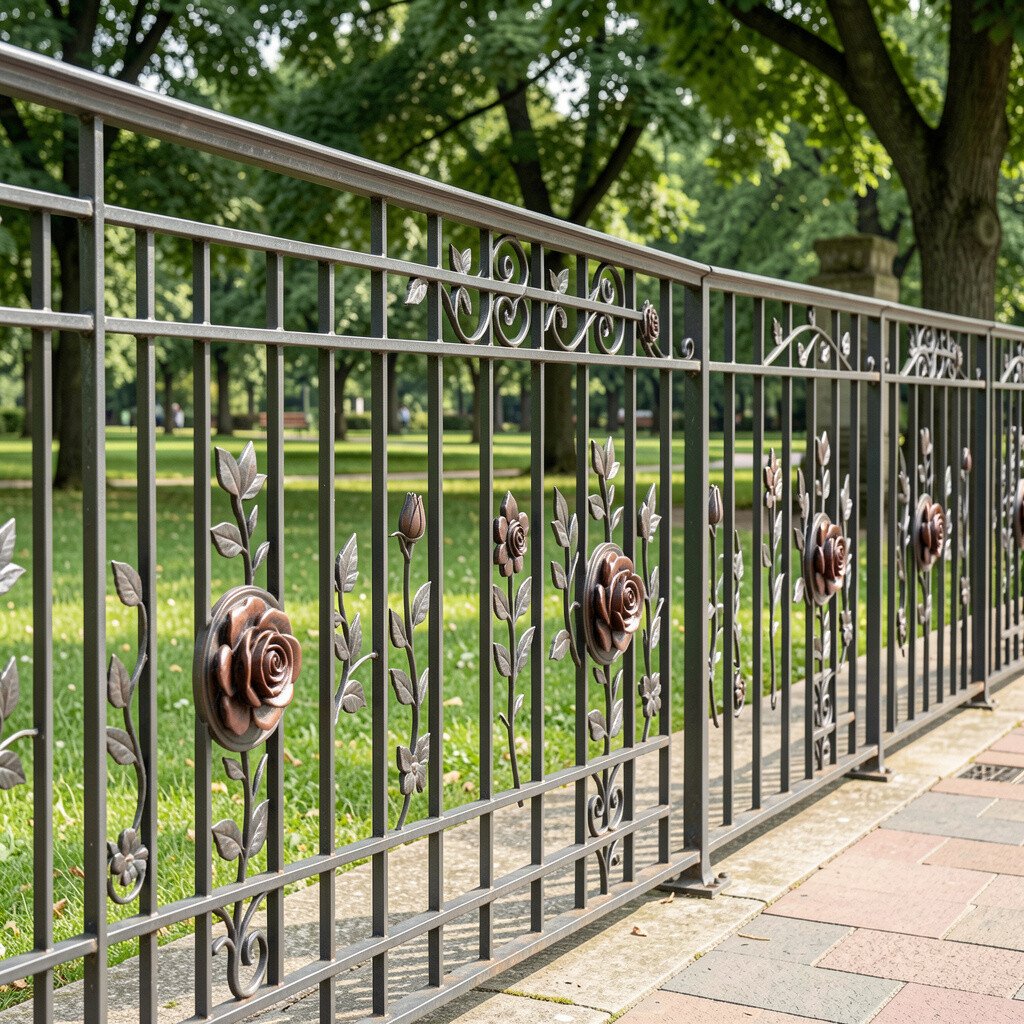
Picture a steady rhythm of metal panels, each one showing a centered rose medallion. The flowers look embossed, with petal lines that are visible even from a short distance.
This style has a classic park feel and works well when you want order and charm at the same time. It also adds a visual barrier that discourages accidental stepping near slopes.
Pick a design with a few bold medallions instead of many tiny ones, because big motifs read better in open spaces. Add simple vertical bars for strength, then let the roses sit like ornaments on the middle.
If your park has seasonal planting, choose powder coating in a tone that still looks good when the beds are bare. Dark bronze often looks rich, while soft sage or muted green can blend with foliage.
To personalize, vary the rose orientation so each medallion subtly angles toward the path. That small change helps the railing feel handcrafted, even when the base is a standard system.
Cost can be moderate, since panel fabrication is straightforward compared with complex curves. Parks that want a durable and timeless look often choose this for repeatable sections along long edges.
4. Watercolor-Look Blossom Panels With Cutout Butterflies
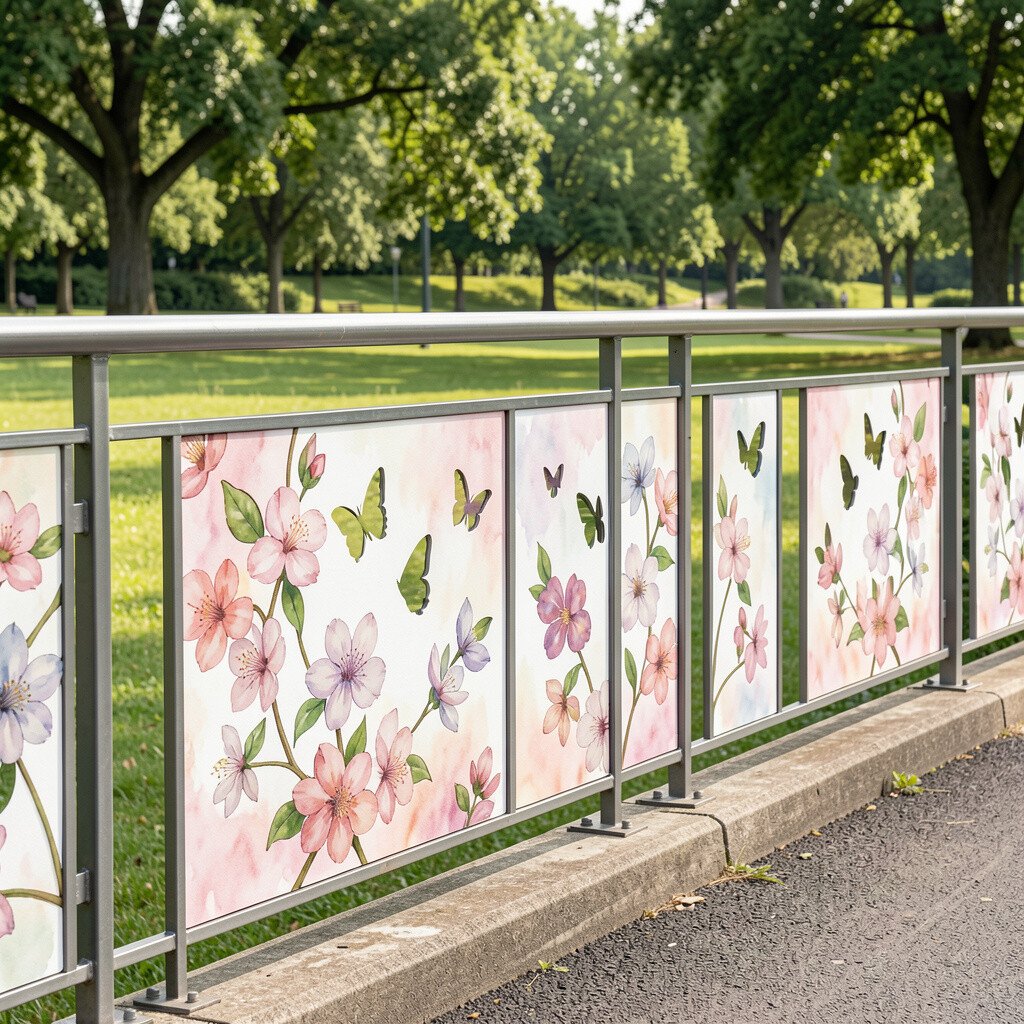
Some railings feel like they were painted onto the metal. With cutout butterflies and layered blossom shapes, the pattern creates a soft, airy look that moves with the breeze.
This design benefits parks because it stays light visually, especially when placed along open lawns. It also offers a fun moment for kids who like to point out shapes as they walk.
To keep it practical, use laser-cut or CNC-cut panels that resist warping and keep the edges clean. Make sure openings follow safety spacing so no one can fit a hand or object through.
Personalize the theme by choosing butterfly silhouettes that match local species, or by repeating a specific flower type across the whole run. A gentle color palette on the powder coat helps the cutouts stand out without looking loud.
When budgeting, expect a bit more for custom cutouts and finishing. Even so, parks often see value because the railing doubles as public art without extra installation.
5. Daisy Chain Railing for Low Fences and Edges
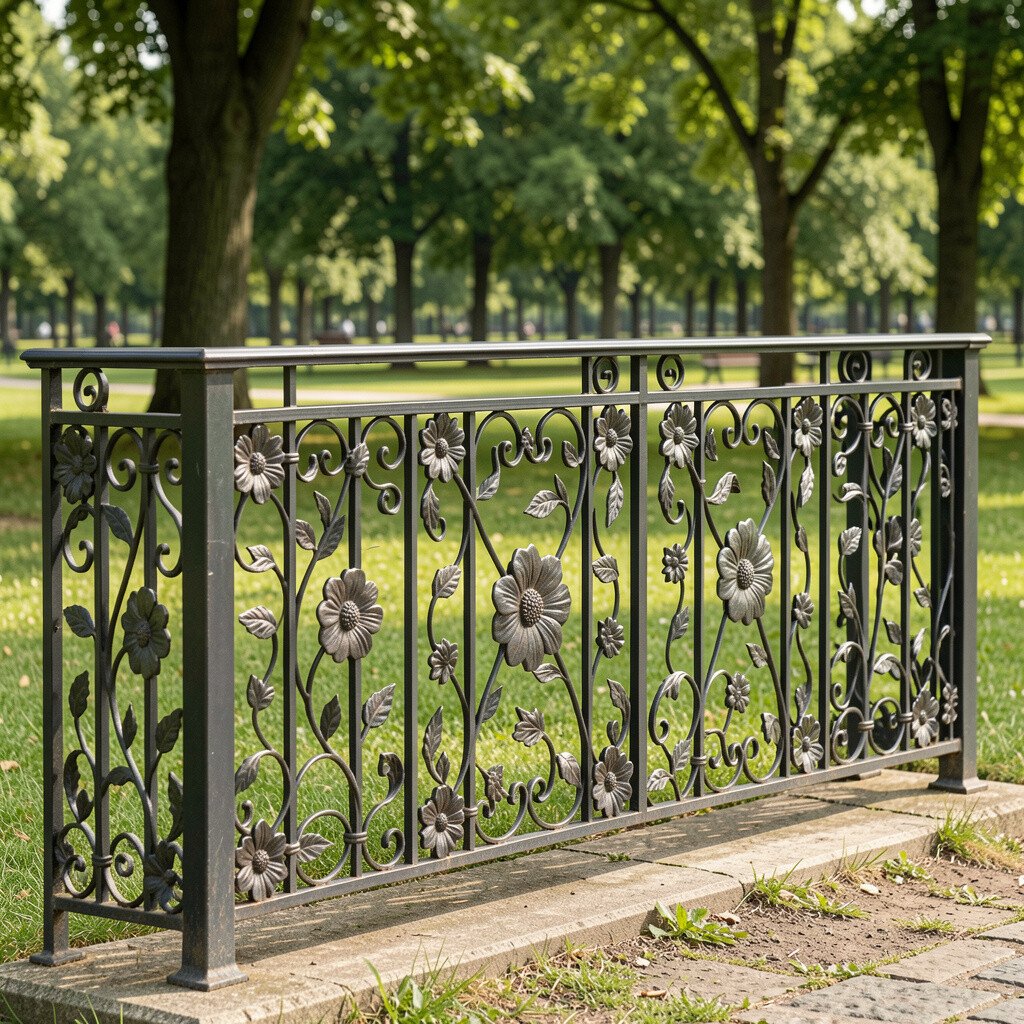
A low railing can still look special, especially with a daisy chain pattern that links from post to post. The metal daisies repeat like little landmarks along the border.
These rails bring benefits that feel everyday, not just decorative. They help define garden edges, guide paths near play areas, and add an easy smile to morning walks.
For practical tips, place the lowest rail at a height that adults can use as a steady handhold. Use sturdy footing and check ground level after storms so the daisies stay aligned and the structure stays firm.
To personalize, choose daisy centers in a contrasting finish, like bright brass or warm gold tones. You can also adjust the spacing so the pattern lines up with the planting layout.
Cost considerations are usually friendly for this style because it can be built in repeatable segments. It also fits current trends for cheerful, friendly motifs that feel welcoming in family-friendly parks.
6. Peony Burst Scrolls for Bench Neighborhoods
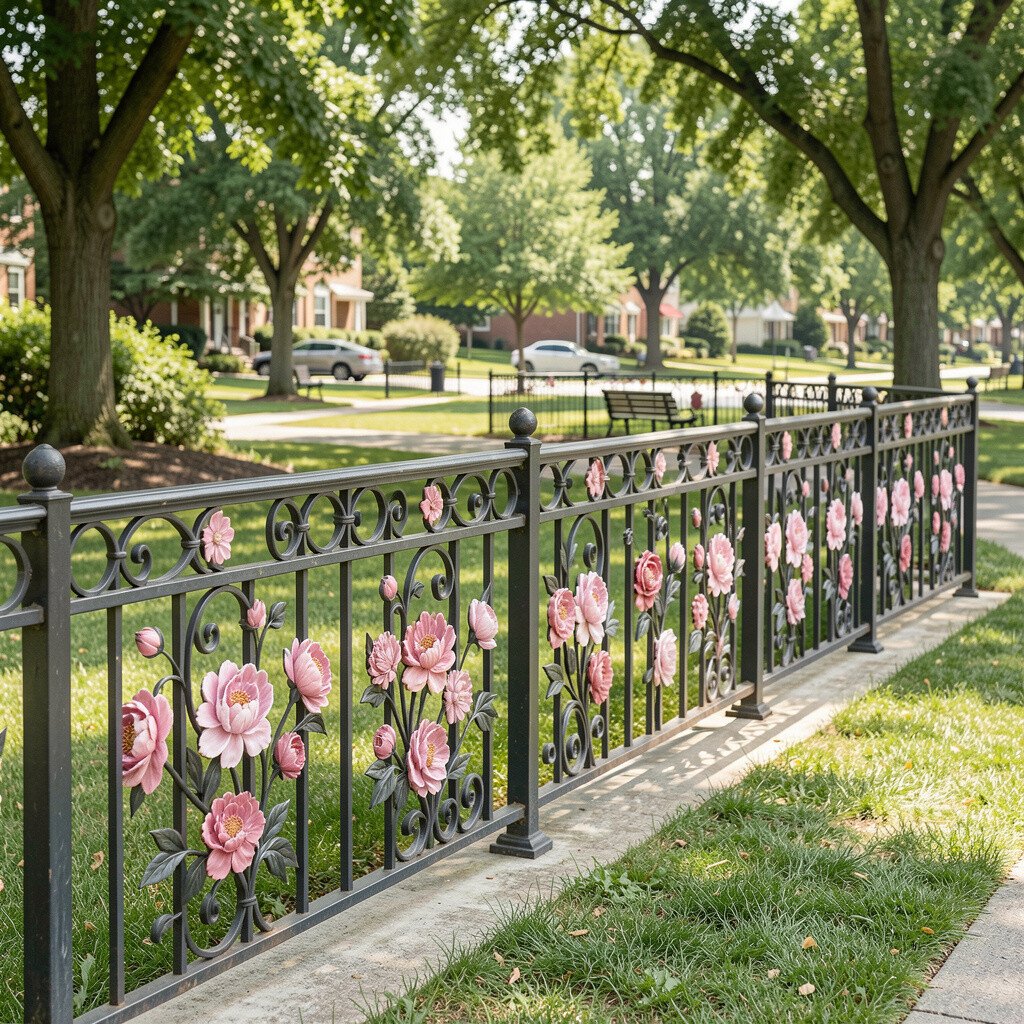
Near benches, a railing should feel like a backdrop, not a distraction. Peony burst scrolls do exactly that, with layered petals that create a soft halo around the handrail.
The visuals look romantic, and the practical side is strong too. Railings like this keep people from drifting too close to plant beds while still letting the scenery shine.
Choose a design where the petals are not too sharp, so the edges feel gentle and comfortable to look at. For installation, keep the railing height consistent so the flow from one bench area to the next feels smooth.
Personalize the pattern by repeating the same flower scale along one whole seating area, which makes the park feel designed. If you have different sections, switch to another bloom style for variety.
Cost can be balanced by using a simpler rail frame with detailed scrollwork only on select spans. This lets you place attention where people naturally linger.
7. Ornamental Lattice Panels With Hanging Flower Shapes
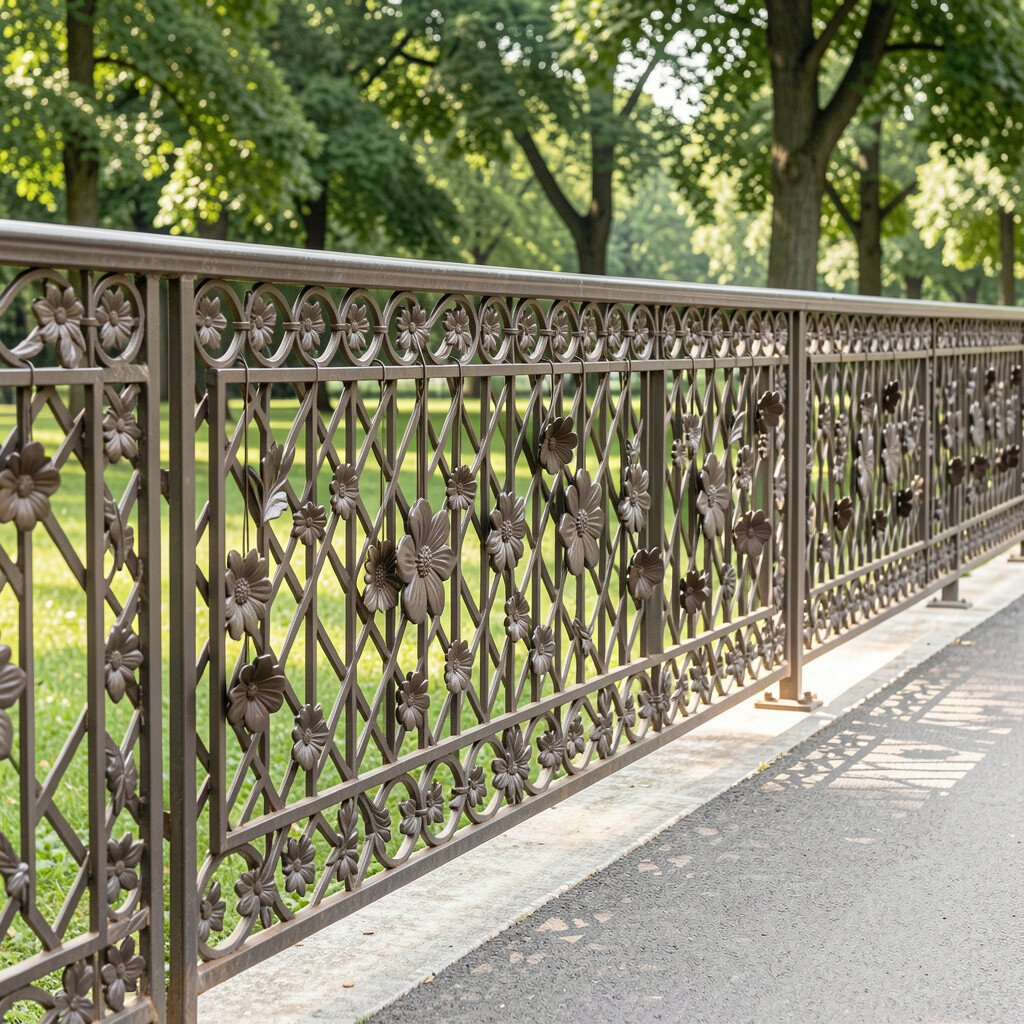
Lattice railings can make a park feel airy while still offering structure. Add hanging flower shapes that dangle slightly, and the whole design becomes playful and light.
This is a great choice if your park has climbing plants nearby. The lattice gives vines a place to grab, and the hanging pieces make the area feel like it is always in motion.
For practical tips, look for lattice spacing that supports plant growth but still maintains safety around walkways. Also consider maintenance, since openings can catch leaves and small debris if the lattice is too tight.
Personalize by using flower shapes that match what you plan to grow, like blossoms that echo your hanging baskets. You can also paint a small accent color on the flower centers for extra charm.
Cost considerations depend on panel size and finish, but lattice systems are often scalable. Many parks like this approach because it scales from short borders to longer themed runs.
Current trends often favor mixed textures like lattice and floral cutouts, since they look rich in both bright and cloudy weather.
8. Classic Clematis Loops With Tight Spacing
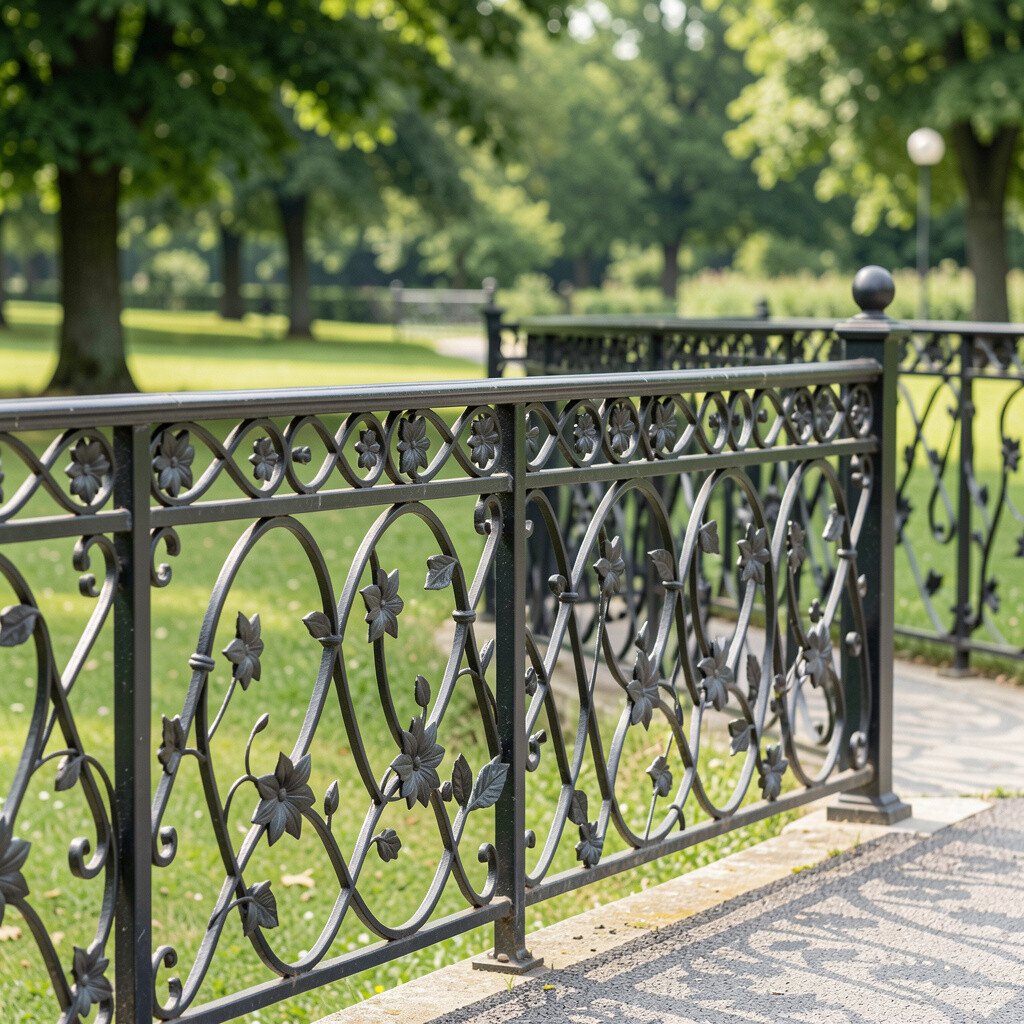
Clematis loops look refined, with thin metal curls that resemble climbing stems. When the loops repeat across a railing, the whole fence feels elegant but not heavy.
This style brings benefits in tight spaces because the pattern stays delicate and still provides clear guidance. It is especially useful along edges where you want safety without blocking sightlines to landscaping.
To keep it practical, choose loops with smooth edges and a consistent curve so the railing feels comfortable. Make sure the loop spacing matches safety needs and local requirements.
Personalize by choosing a color that blends with your plant palette, like deep forest green or aged black. You can also add a small leaf detail at each post to make the whole rail feel intentional.
Cost is often moderate, since the design uses slender elements that can be fabricated efficiently. If you want a budget-friendly upgrade, this is a strong pick because it looks detailed without requiring large medallions.
Trends in public landscaping favor lighter patterns that look good on photos, and looped clematis designs photograph beautifully.
9. Sunflower Crest Panels for Community Gardens
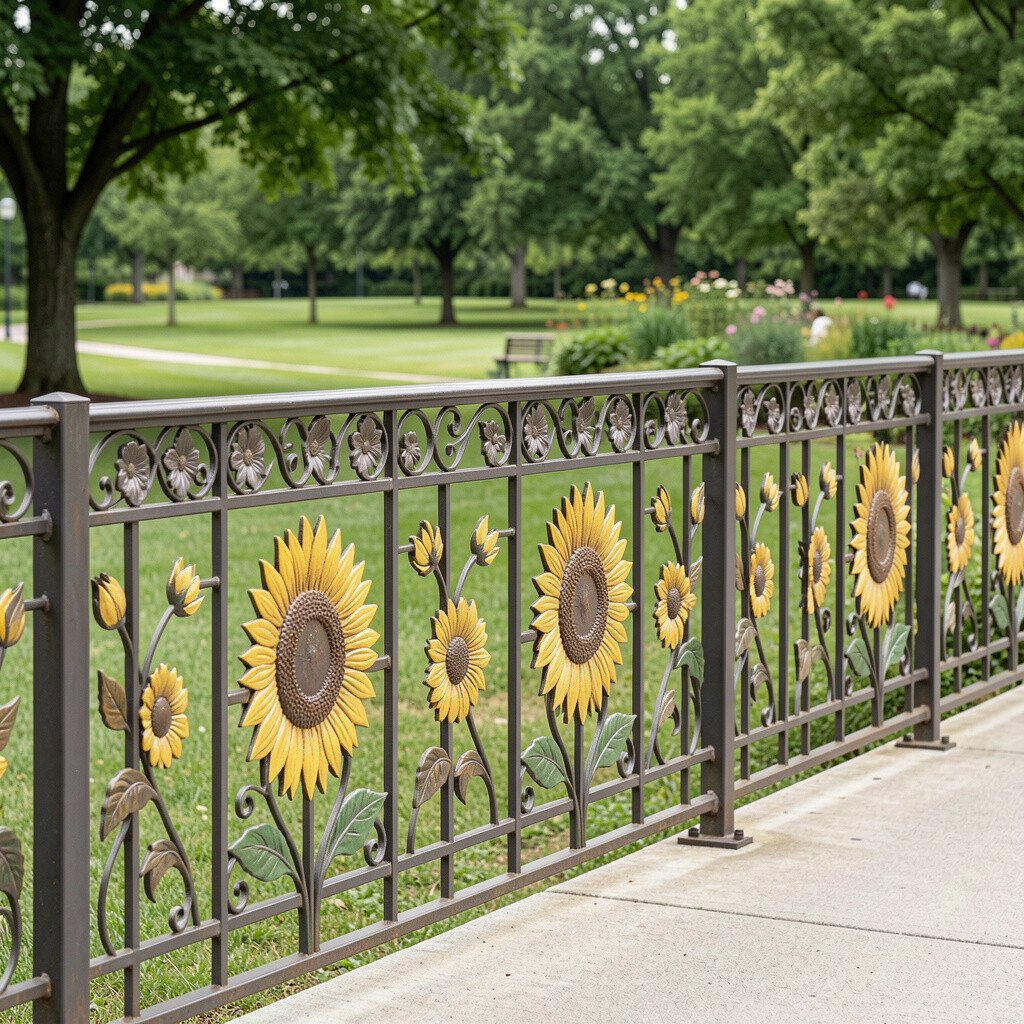
Sunflowers feel bright and welcoming, and a railing can carry that energy. Crest panels with sunflower centers make it clear where the community garden begins.
The visual impact is bold, yet it can still fit naturally into a park setting. The crest style also helps define zones, which is useful for crowd flow during events.
For practical tips, keep the crest shapes readable from a distance by choosing medium to large sunflower centers. Reinforce the panel frame so the decorative center does not feel fragile.
Personalize by matching the sunflower tone to your signage colors or community branding. If the park hosts markets or seasonal fairs, the sunny motif can make those moments feel special.
When thinking about cost, crest panels may require custom tooling, which can add to fabrication time. Still, the payoff is high because the railing can serve as a recognizable landmark.
Current trends lean toward bold emblem styles in shared spaces, and sunflower crests fit that mood perfectly.
10. Hydrangea Fronds With Soft, Layered Petals
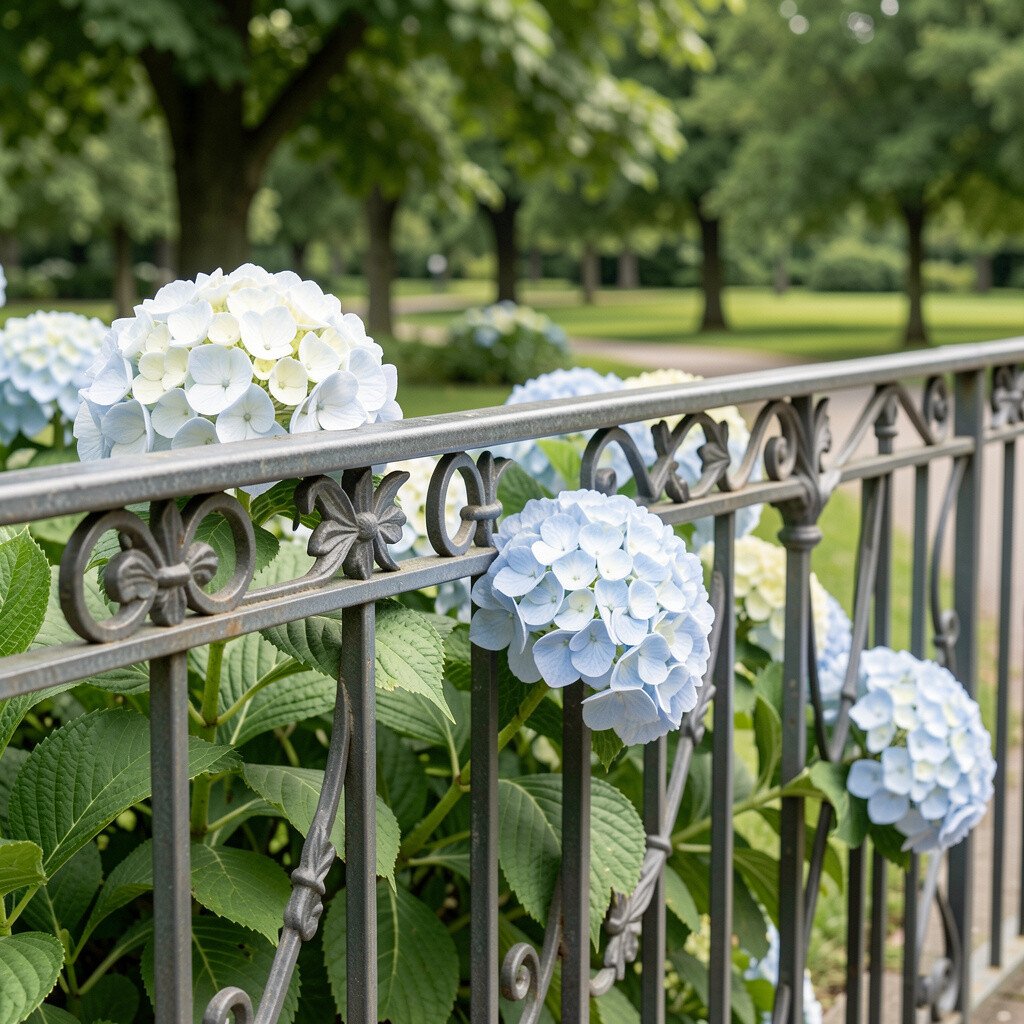
Hydrangea fronds bring a gentle look, like a cloud of flowers caught in metal. The layered petals can wrap around posts so the railing looks full even in winter.
This option has a calming effect and helps soften the edges of pathways. It also benefits visibility because the layered look gives depth without making the railing overly busy.
To make it practical, choose petal layers that are not too thin, since thicker details tend to last longer. Use a protective coating and inspect the finish once each season for chips.
Personalize by selecting a palette that matches your hydrangea colors, such as cool gray-blue or warm mauve tones. You can also create a repeating pattern that flows with the garden’s curve.
Cost considerations depend on the thickness and complexity of the layered petals. Often, you can save money by limiting the most intricate layering to the most visible sections.
11. Larkspur Linework Panels for Modern Parks
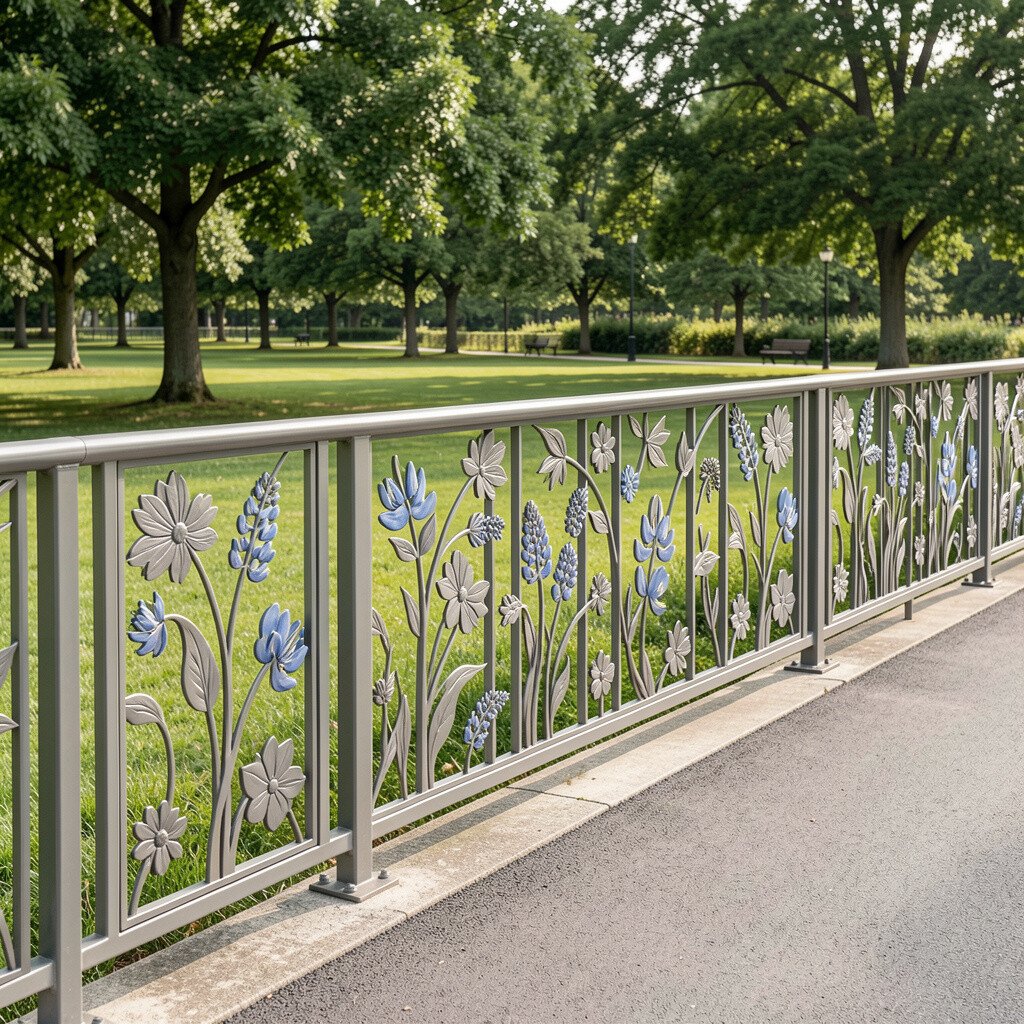
If your park style feels more modern, choose railings with clean linework. Larkspur patterns can be drawn as slim, repeating stems with flower tips that look crisp and contemporary.
This design benefits parks by keeping the space looking uncluttered. You still get personality, but the railing stays neat and sleek.
For practical tips, use consistent stroke widths in the design so the pattern looks balanced from every angle. Also consider adding a simple top rail shape with rounded edges for comfort.
Personalize by scaling the linework so it matches the surrounding architecture, like larger lines for wider paths. You can also repeat a single motif at each post for a rhythm that feels calm.
Cost is often manageable because linework can be laser-cut efficiently. This makes it a good choice when you want style without major budget surprises.
12. Art Nouveau Lily Scrolls With Curved Footings
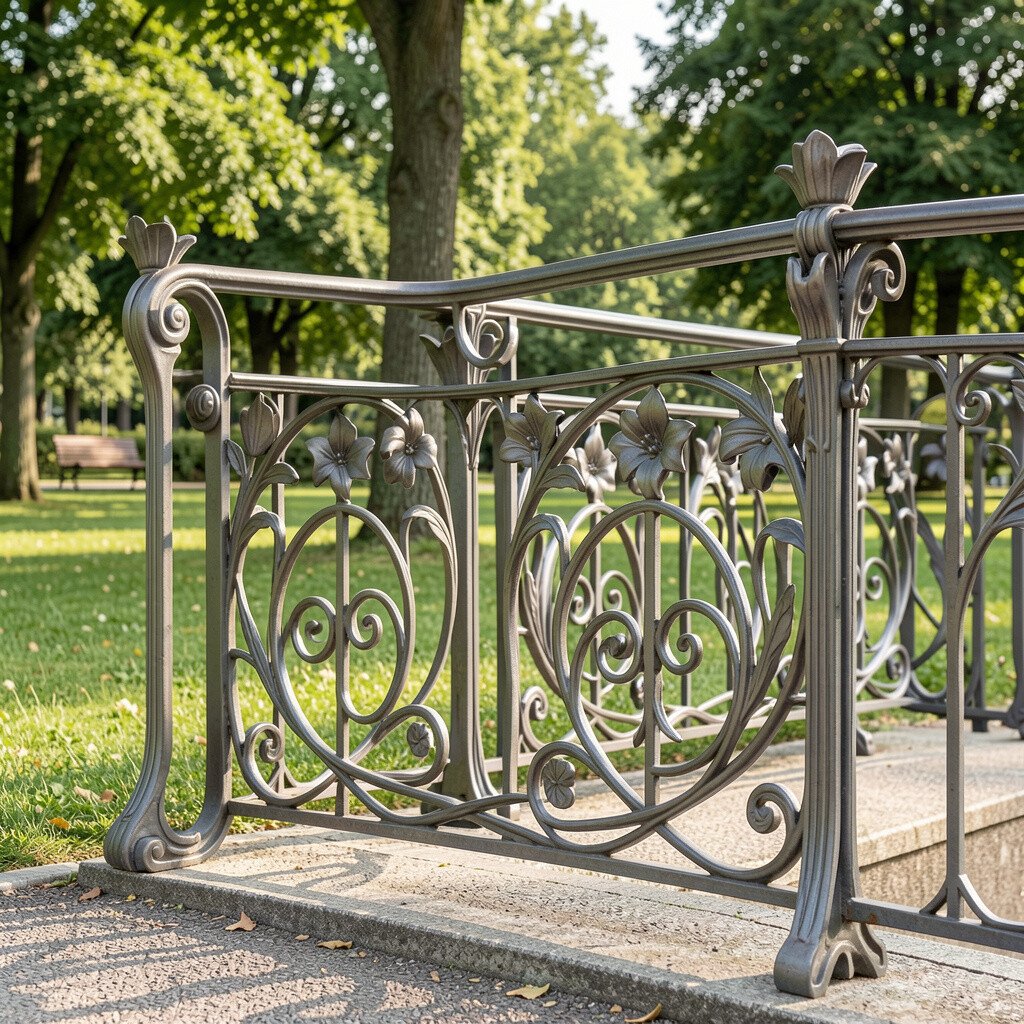
Art Nouveau lily scrolls feel like a piece of old-world art, right next to your daily walk. Curves flow into each lily, and the rail follows a graceful line like it was drawn with a pen.
These railings offer benefits beyond beauty by making spaces feel more elegant and inviting. Curved footings can also help the railing fit naturally around landscape bends.
To keep it practical, ensure the curved sections are securely anchored and leveled to prevent wobble. Choose corrosion-resistant materials, since parks see a lot of weather exposure.
Personalize by adjusting the lily size so it matches the scale of nearby trees and shrubs. If your park has an arched entry path, the railing can echo that shape for a connected look.
Cost considerations may run higher for Art Nouveau curves because curved fabrication takes more time. However, a few standout sections can deliver a strong impact without covering the entire park.
Current trends also favor timeless styles, and Art Nouveau motifs remain popular because they feel both creative and durable.
13. Garden Gate-Style Floral Frames for Entry Points

At park entrances, a gate-like railing design can set the tone right away. Floral frames that look like miniature garden gates guide visitors forward with charm.
This helps benefits like crowd flow and clear wayfinding when people arrive through one main route. It also creates a photo spot that feels naturally built-in rather than added later.
For practical tips, use sturdy hinges if you plan any opening sections, and keep the latch hardware weather resistant. Plan for accessibility by keeping any gates wide and smooth.
Personalize by choosing a flower theme that matches seasonal signage, like spring blossoms near seasonal planting displays. You can also add small decorative caps on top for a finished look.
Cost considerations depend on whether you include movable gates or just fixed frames. Fixed frame railings often cost less while still giving the “welcome” feel.
14. Butterfly Wing Floral Panels With Open Visibility

Some parks want a railing that feels light and airy, so open visibility matters. Butterfly wing floral panels bring both, with cutout shapes that let you see through while adding pattern.
The benefits show up in how the space feels bigger. You can still enjoy long sightlines to ponds, lawns, or flower fields while keeping a safe edge.
For practical tips, balance open cutouts with structural strength so the panel does not flex. Use durable fasteners and check tightening schedules so the railing stays aligned over time.
Personalize by selecting wing shapes that echo your park’s bird or butterfly garden theme. Adding a subtle finish variation like a lighter tone on the wings can make the pattern pop in evening light.
Cost may be moderate to higher due to the panel cutouts. Yet parks often find it worth it because the railing looks custom and artistic without needing extra sculptures.
Trends in outdoor design favor transparent or semi-transparent looks, and butterfly panels match that perfectly.
15. Maple Leaf and Blossom Mix for Seasonal Charm
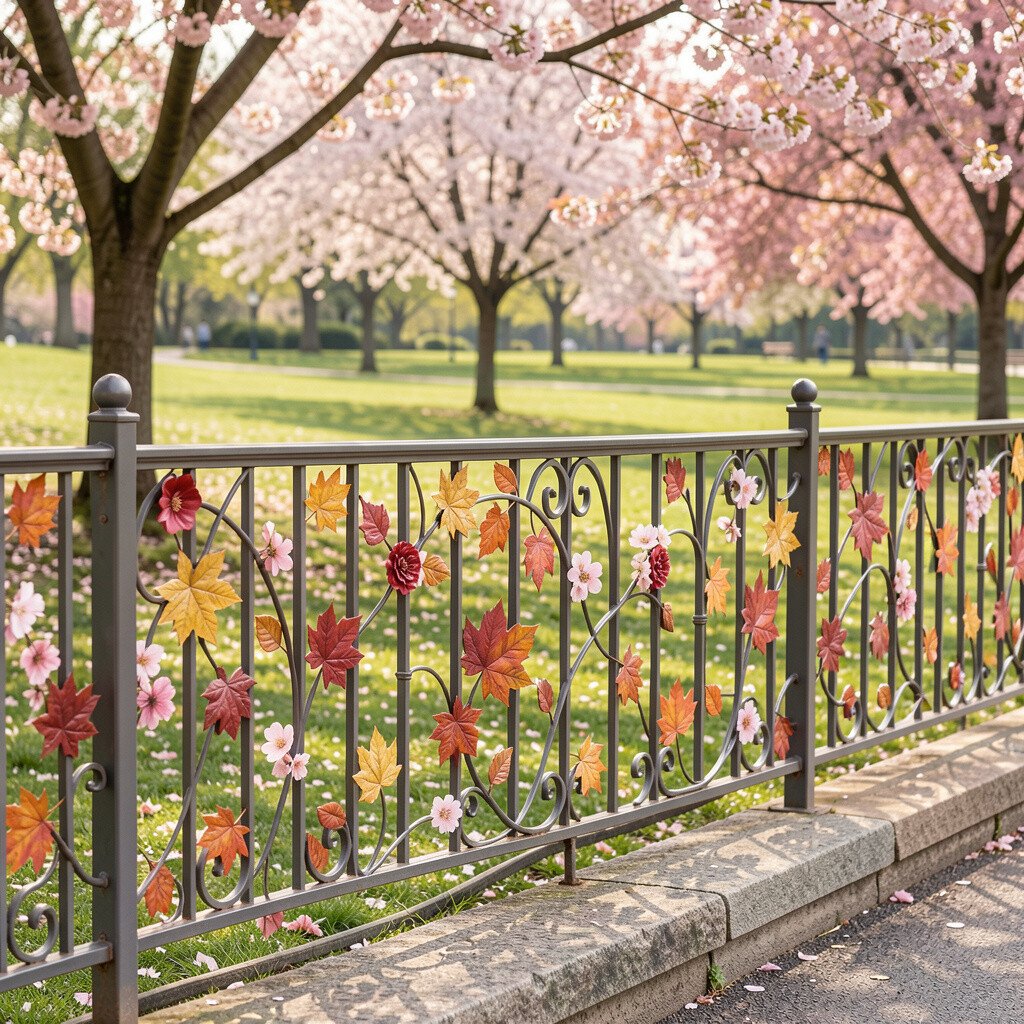
A mix of maple leaf and small blossoms can make a railing feel like it belongs in every season. The leaves add seasonal change, while blossoms add a cheerful touch near planting beds.
This style offers benefits that go beyond aesthetics because it keeps the railing interesting even when flowers are gone. It also pairs well with parks that host seasonal events and rotating plant displays.
To make it practical, choose a consistent pattern scale so the leaves do not crowd the blossoms. Keep the handrail finish smooth so it remains comfortable during different temperatures.
Personalize by changing the blossom color accent for different areas, like one section for spring tone and another for summer. If you want cohesive style, stick to one base metal color and let only the floral accents vary.
Cost considerations are often reasonable because the design uses familiar shapes that can be fabricated efficiently. This mix is also a smart trend alignment for parks that want year-round visual interest.
16. Blended Daisy and Rose Combo for Strong Visual Rhythm
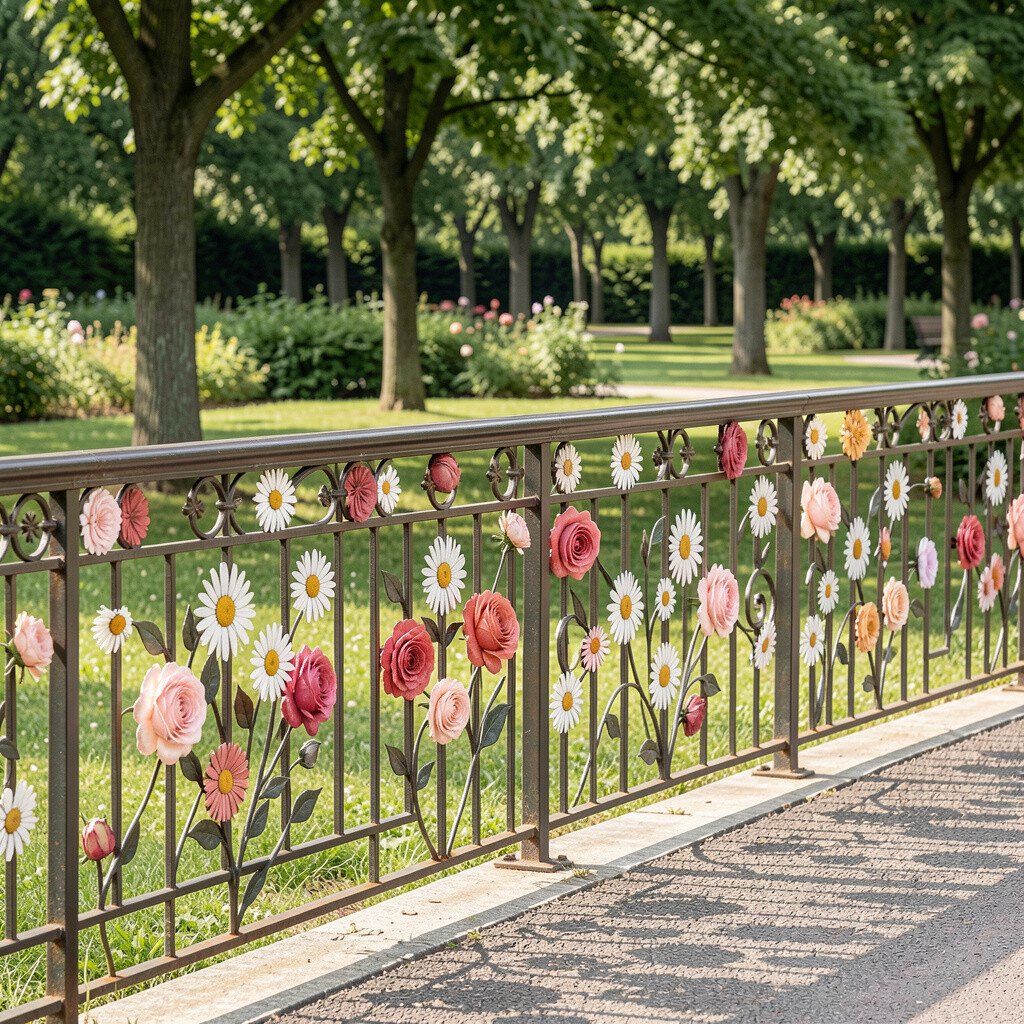
When you combine daisies and roses in one railing, you get a pattern that feels energetic but controlled. The daisies can repeat more often, while rose medallions appear at intervals like beats in a song.
This gives benefits like clear structure along long runs. People can easily track the railing’s rhythm, which helps navigation and adds a welcoming feel to walking loops.
For practical tips, plan the layout on paper first so the spacing between rose moments looks even. Also check that the metal thickness stays consistent so the design looks uniform and strong.
Personalize by using two paint tones, such as one for daisies and another for rose accents, while keeping the base railing color stable. That way, the pattern stays readable and does not become messy.
Cost considerations are usually manageable because the design relies on repeatable motifs. It can also be a budget-friendly way to get a “custom look” without the cost of fully unique art panels.
Current trends like layered motifs and mixed florals show up in many outdoor installations, making this combo feel very current.
17. Flower Chain Handrail With Rounded Petal Links
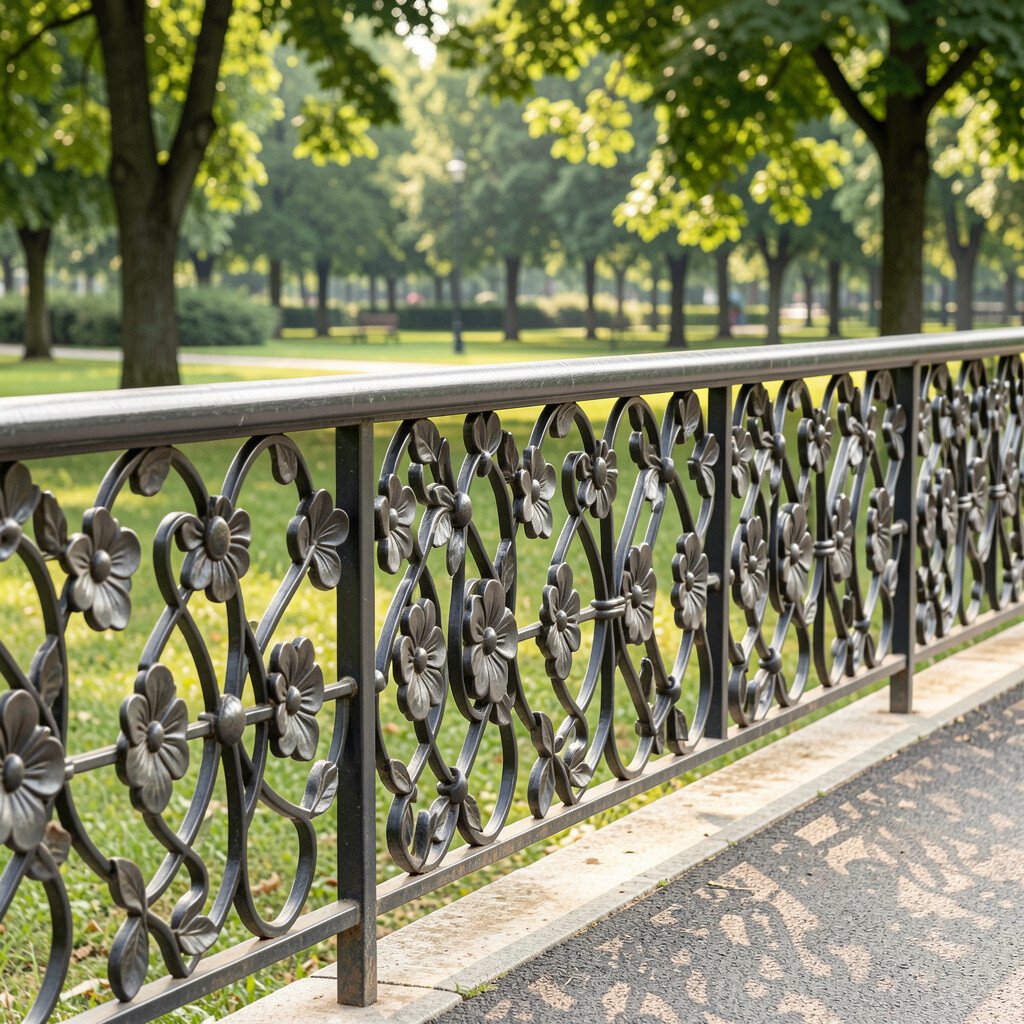
A chain-style handrail can look playful, especially when the links are shaped like rounded petals. As you walk, the pattern feels like it continues with you, guiding your pace along the path.
This style benefits comfort because rounded shapes tend to feel good to touch. It also adds a safe sense of separation from edging, especially near planters and raised borders.
For practical tips, choose a handrail profile that can handle weather and daily contact. Powder coating works well, but it’s also smart to ensure drainage holes or sealed joints prevent trapped moisture.
Personalize by adding small variations in petal size at turns or near corners, so the railing signals changes in direction. You can also include tiny leaf links near posts for a natural finish.
Cost considerations are often moderate since handrail systems can be standardized and customized with decorative links. This option can be a great value when you want the floral theme to feel continuous rather than occasional.
18. Peaches-and-Cream Floral Panels for Warm Toned Parks
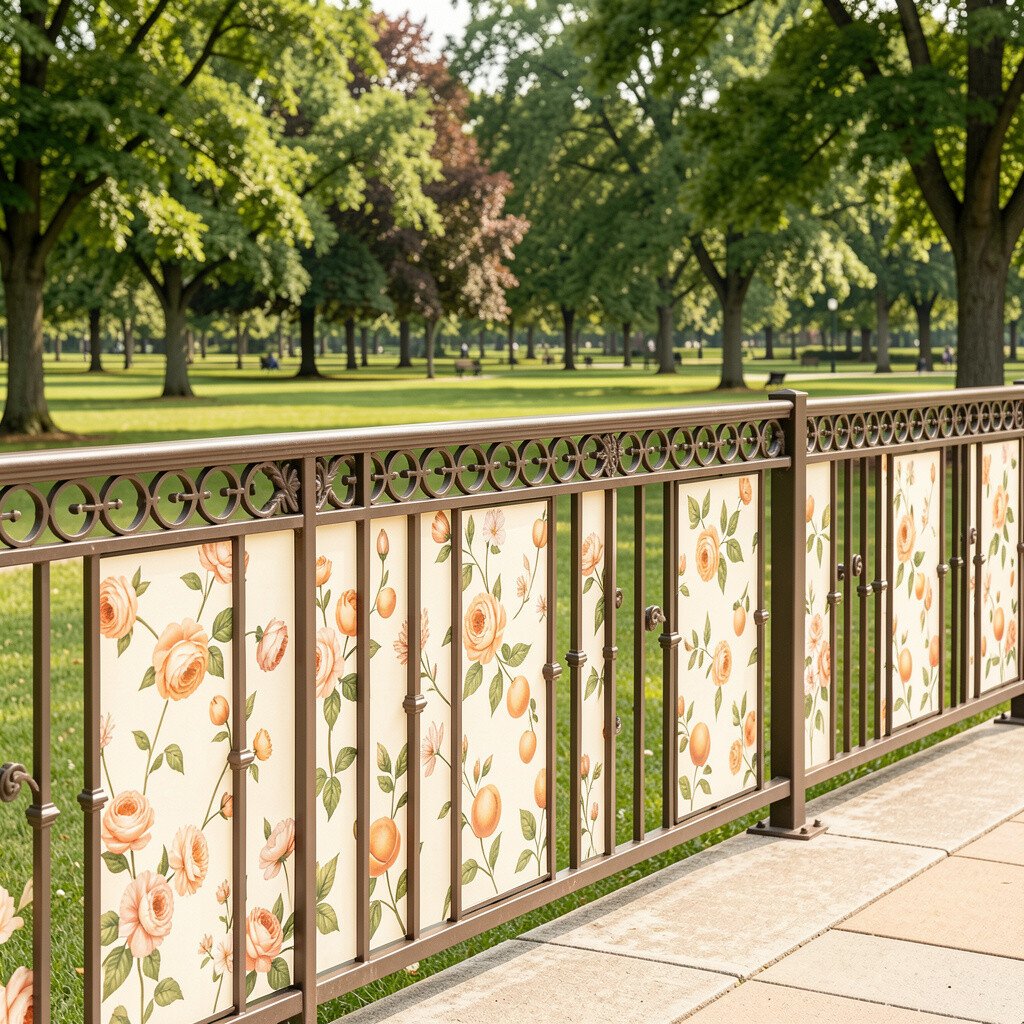
Warm parks shine with floral metal patterns that feel inviting. Peaches-and-cream style panels use soft tones and gentle bloom shapes that look friendly in sunlight.
The benefit is emotional, too, because warm colors can make people linger longer and feel relaxed. In practical terms, the railing helps keep visitors on paths while still letting the landscaping feel open.
To make it practical, choose a powder coating system that resists fading so the warm tones stay fresh. Also consider adding a clear protective topcoat if your park experiences intense sun.
Personalize by matching bloom shapes to nearby flower beds, like peachy tones paired with flowering shrubs. You can also coordinate accent colors with park signage or seasonal banners.
Cost considerations can be higher if you use multi-tone finishes, but you can manage it by keeping two colors maximum. This style is trending in parks that want cheerful, family-friendly vibes.
19. Waterfall Rose Columns for Curving Boundaries
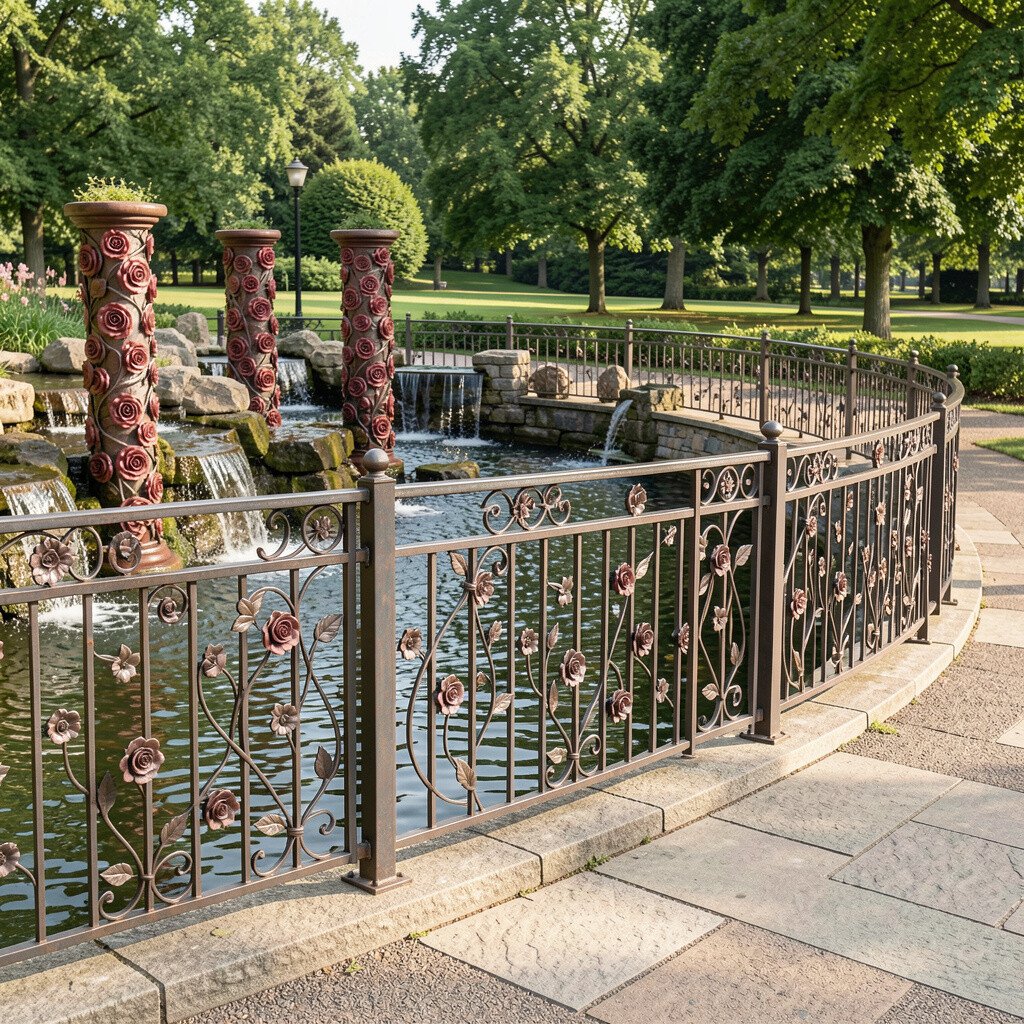
Curved boundaries need a railing that flows with the shape, and waterfall rose columns do that beautifully. Roses appear as if they climb down in a cascade, following the curve of the posts.
This design has benefits for parks with rounded walkways because it makes the space feel intentional. It also improves safety by creating a consistent barrier that matches the terrain.
For practical tips, plan for custom bent rails and curved post placement. Make sure each post is anchored firmly and that the decorative columns align so the cascade looks smooth.
Personalize by changing the number of rose drops per section, like fuller cascades where visitors slow down. You can also swap between rose styles to match different flower beds along the curve.
Cost considerations will likely be higher due to custom curvature and design fabrication. Still, for a park’s most visible curve, it can be one of the best investments.
Current trends often highlight sweeping lines and nature-inspired motion, and this cascading motif fits that mood well.
20. Mixed Floral Top Caps With Simple Uprights
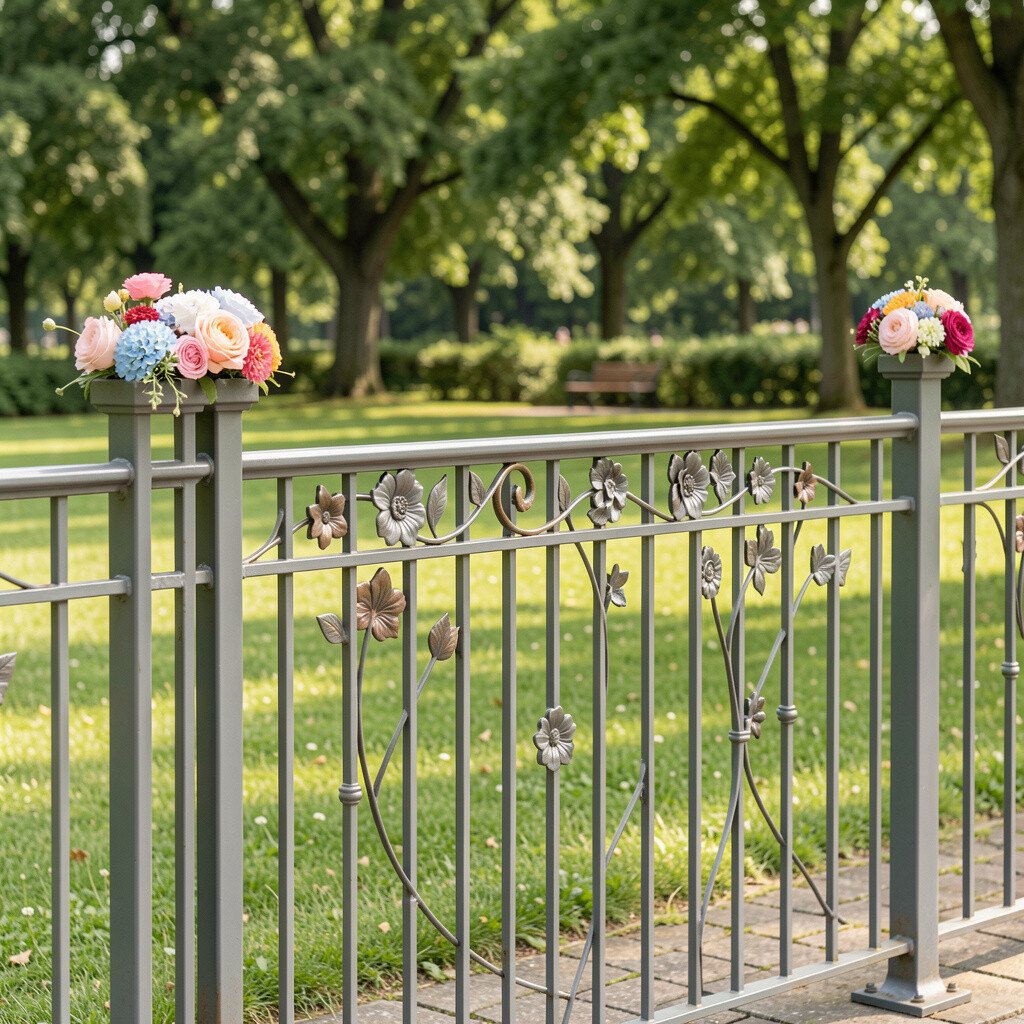
Sometimes the easiest way to get a decorative look is to keep the uprights simple and focus detail at the top. Floral top caps create a neat crown of blossoms above clean vertical bars.
This brings benefits like strong sightlines and low visual weight. Visitors can see through the railing while still getting the “wow” of floral detail at eye level.
For practical tips, choose top cap designs that shed water and resist pooling. Make sure the cap edges are smooth so the railing stays safe and comfortable for touch.
Personalize the caps by varying bloom types across segments, such as one section with daisies and another with small roses. Matching the top caps with nearby planters ties the whole scene together.
Cost considerations are often good because the main structure can be standard, and the floral work stays concentrated where it matters most. This approach also matches current trends that favor minimal frames with bold, targeted decoration.
If you want an option that looks expensive without feeling too costly, this is one of the smartest paths to take.