
A fresh door color can change the mood of a whole room. The right paint can make a simple entry feel bold, calm, or warm in just one weekend.
1. Satin Navy for a Clean Front Door Look

Satin navy gives a front door a deep blue finish that looks rich without feeling too shiny. It stands out against white trim and brick, and it can hide small marks better than a flat paint.
This shade works well for homes that want a classic style with a little modern edge. For a neat result, sand lightly, use a good primer, and paint when the weather is mild so the finish sets evenly.
2. Soft Sage for a Calm Interior Door

Soft sage brings a quiet green tone that feels fresh and easy on the eyes. It can brighten a hallway and make plain doors feel more thoughtful and cozy.
The color is unique without shouting for attention, which makes it a smart choice for busy homes. If you want to save money, this kind of shade often looks best with just one gallon for several doors, especially when the doors all stay inside and see light wear.
Many people like sage because it fits the current move toward nature-inspired colors. You can personalize it by pairing it with brass knobs, cream walls, or woven rugs for a warm, pulled-together feel.
3. Glossy Black for a Bold Statement
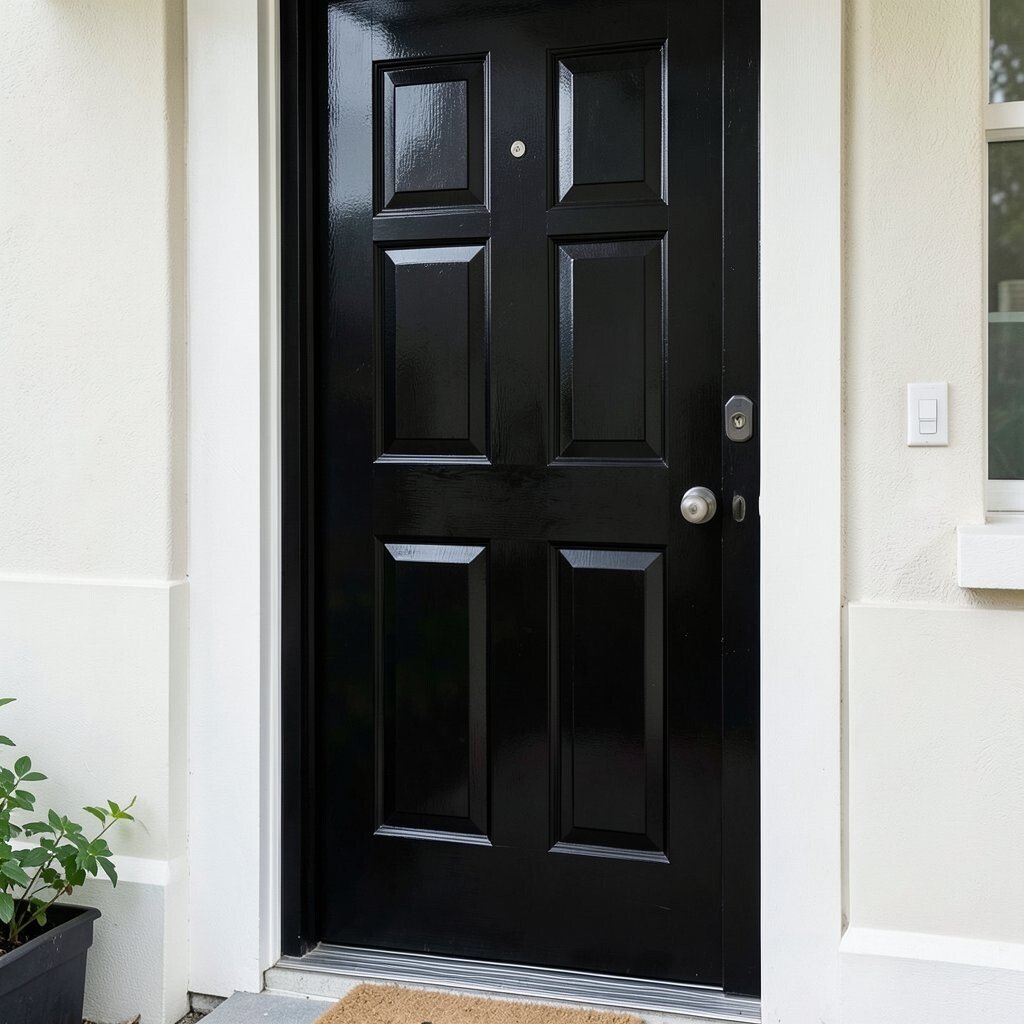
Glossy black makes a door look sharp, polished, and a little dramatic. The shine gives it a mirror-like depth that catches the light in a very dramatic way.
This choice is great when you want a door to feel like a strong design piece. Be ready to spend a bit more time on prep, since black shows dents and brush marks more easily than softer colors.
Using a smooth roller and a fine brush can help the finish look neat. Many homeowners enjoy this look because it works with modern spaces, vintage homes, and even simple rooms that need a strong focal point.
4. Warm White for an Easy Upgrade

Warm white gives a door a soft, sunny look that feels clean but not cold. It can make small rooms seem brighter and help old doors look new again.
This is a safe choice that still feels stylish, especially when paired with wood floors or black hardware. A good coat or two can keep the cost low, and careful taping around hinges will help the edges stay crisp.
5. Dusty Blue for a Relaxed Cottage Feel

Dusty blue has a gentle, weathered look that can make a door feel peaceful right away. It brings a little color without taking over the room, which is why it works so well in bedrooms and hallways.
The shade has a sweet, lived-in charm that feels different from brighter blues. You can make it your own with white trim, woven baskets, or even a small wreath that matches the soft tone.
This color fits well with the trend toward soft, muted paints that feel calm and easy to live with. If you want to keep the job affordable, test the color first on a sample board so you do not waste paint on a shade that looks too cool or too dull in your light.
6. Forest Green for a Rich, Natural Touch

Forest green gives a door a deep, earthy look that feels both cozy and strong. It can make a plain panel door look like a custom piece from a high-end home.
This color is especially nice near plants, stone, and wood tones. For the best result, use two thin coats and let each one dry fully so the green stays smooth and even.
It also offers a nice way to bring the outside in, which is a big style theme right now. If you want a personal touch, try matching the door with a plant stand, a dark mat, or small gold details that pop against the color.
7. Coral Peach for a Cheerful Entry
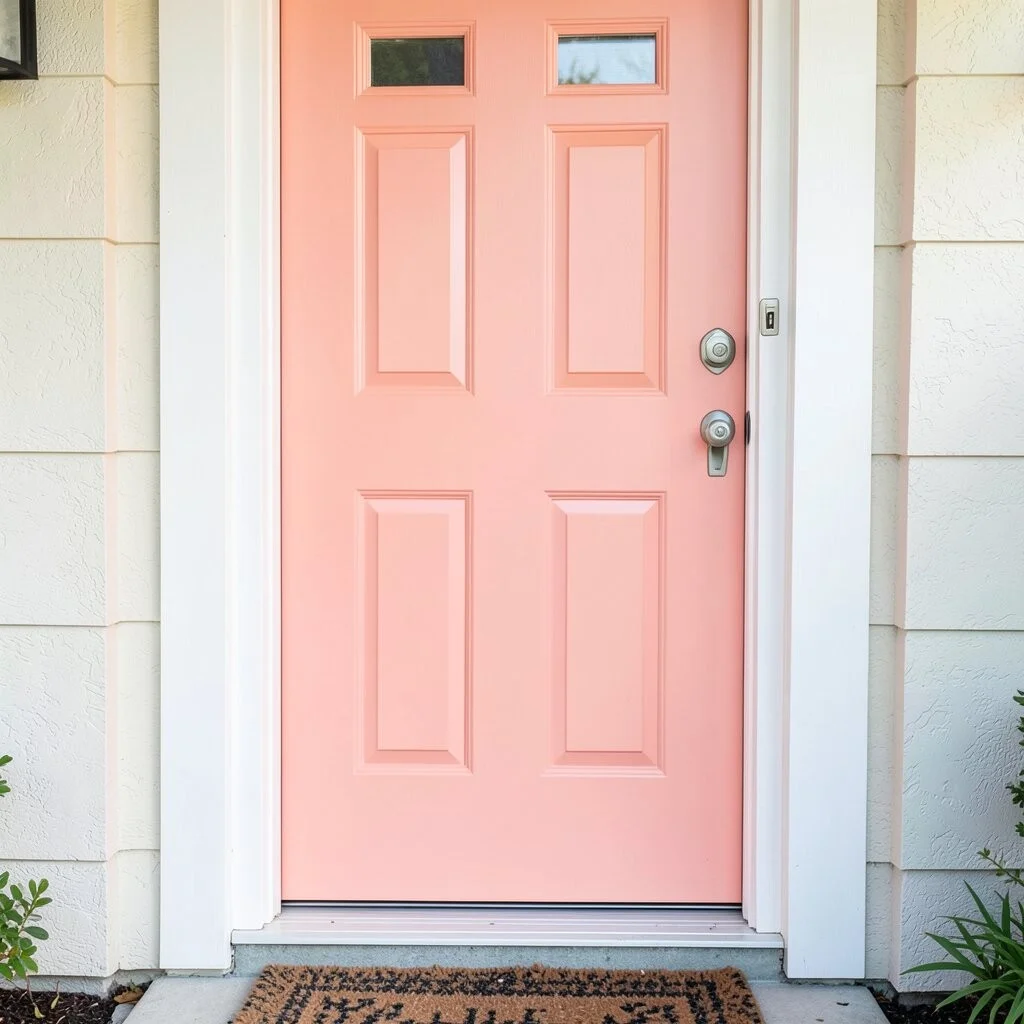
Coral peach makes a door feel bright, happy, and full of life. The color has a sunny glow that can lift a dull porch or add cheer to a simple interior doorway.
It is a playful choice that works best when the rest of the space stays simple. Since lively shades can need extra coats, it helps to budget for enough paint and primer so the final color looks rich.
This style feels very current because many people are using warm, friendly shades instead of plain basics. You can make it more personal with white planters, a colorful doormat, or matte black hardware for a neat contrast.
8. Charcoal Gray for a Modern, Smooth Finish

Charcoal gray gives a door a sleek look that feels calm and polished. It is darker than regular gray, so it adds depth without looking too heavy.
This shade works well in homes that want a modern feel but still need something easy to live with. A satin finish often looks best because it brings out the shape of the door while staying simple to clean.
The color can also help a door blend with many wall colors, which makes decorating easier. If you want to keep costs sensible, use it on one main door first and see how it changes the room before painting more doors in the same shade.
9. Butter Yellow for a Bright Welcome

Butter yellow brings a soft, sunny glow that can make a door feel friendly from the start. It looks especially lovely in rooms that need warmth or in entryways that do not get much natural light.
This shade has a happy look without feeling too loud, which makes it easier to live with than a brighter yellow. For a smooth finish, stir the paint well, keep your brush strokes even, and touch up small spots before the paint fully dries.
Many people are leaning toward cheerful colors that still feel gentle, and butter yellow fits that mood well. You can make it more personal with pale blue accents, simple art nearby, or a brass handle that adds a little shine.
10. Deep Plum for a Fancy, Cozy Feel

Deep plum gives a door a rich purple tone that feels warm and elegant at the same time. It can turn a plain door into something that looks almost like a piece of furniture.
This color is a smart pick for anyone who wants something unusual but still easy to enjoy every day. Dark jewel tones may cost a little more if they need extra coats, so it helps to choose a strong primer and a paint with good coverage.
Plum pairs well with cream, gold, and dark wood, which makes styling simple. If you want to give it a personal twist, use a vintage knob or hang a simple fabric ribbon that brings out the color.
11. Crisp Red for a Traditional Yet Fresh Look

Crisp red makes a door feel lively, bold, and full of welcome. It has a classic charm that has stayed popular for years, but the right shade can still feel fresh today.
This color works best when the rest of the home is calm enough to let it shine. Because red can be tricky to cover, plan for extra prep and a few careful coats so the finish looks smooth and bright.
It is a strong choice for anyone who wants a front door that feels friendly from the curb. You can personalize it with white trim, a dark mat, or a plant pot in a simple shape that keeps the look balanced.
12. Pale Taupe for a Soft, Easy Match
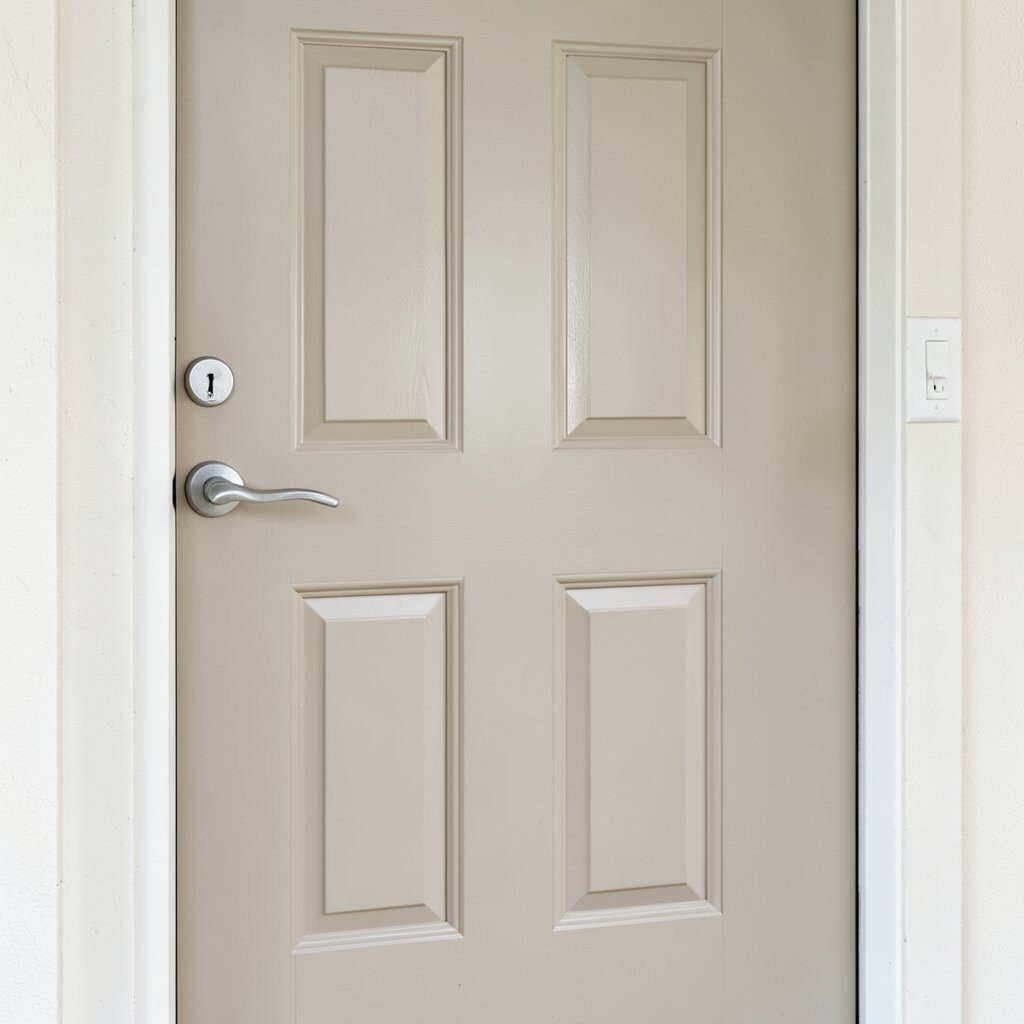
Pale taupe gives a door a soft beige-gray look that blends with almost anything. It feels gentle and warm, which makes it a good fit for homes that want a quiet, tidy finish.
This color is helpful when you want the door to look better without making a big change. It usually stays budget friendly because it works with many paints, many styles, and many kinds of trim, so you can refresh a whole area without spending much more than needed.
The look is subtle, but that is part of its charm. For a personal touch, try pairing it with natural wood accents, soft cream walls, or a textured runner that adds interest without fighting the color.