
The right staircase can set the whole mood of your home. Curves add drama, flow, and a little bit of magic without trying too hard.
1. Floating Curved Console Stair
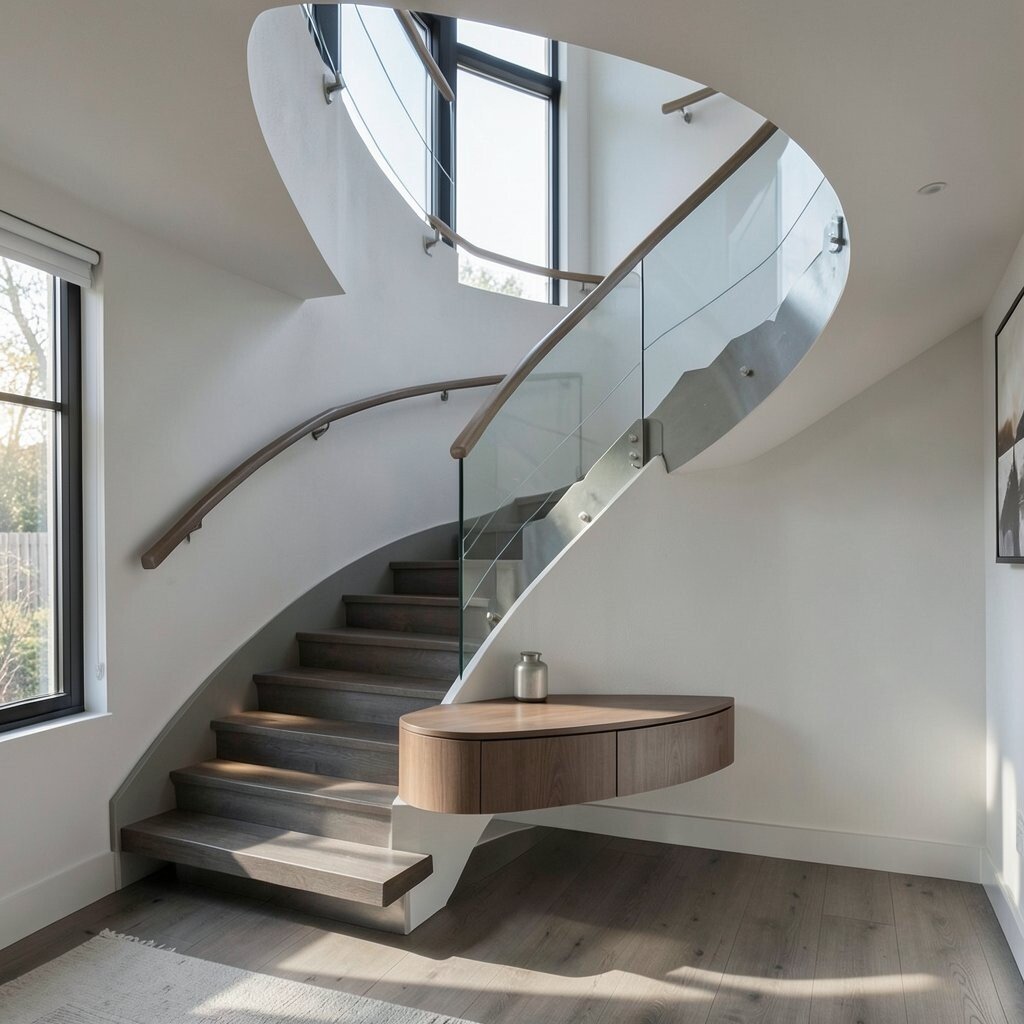
Picture a staircase that feels like it’s gliding in midair. Each tread follows a soft arc, and the open space under it makes your hallway look brighter.
You get an airy look that works especially well in modern homes with clean lines. For practical success, anchor the stringers deeply into wall studs and keep the treads thick enough to feel steady. To personalize it, choose matte oak for warmth or painted white for a crisp, gallery-style finish.
2. Helix-Inspired Spiral With Soft Rail

A spiral staircase can look dramatic even when it’s not huge. With curved balusters and a rail that hugs the form, the whole structure feels like one smooth gesture.
This style saves space while still feeling like a centerpiece. Use a consistent spacing for balusters and add a handrail shape that’s comfortable for everyday grip. For cost control, consider using a metal frame with fewer custom-cut parts, then spend on the rail finish where your hand actually touches.
To make it unique, wrap the center post in a contrasting material such as dark walnut or brushed black steel. Pair the glow of warm lighting under each turn to highlight the curve at night.
3. Rounded “S” Staircase Landing Flow
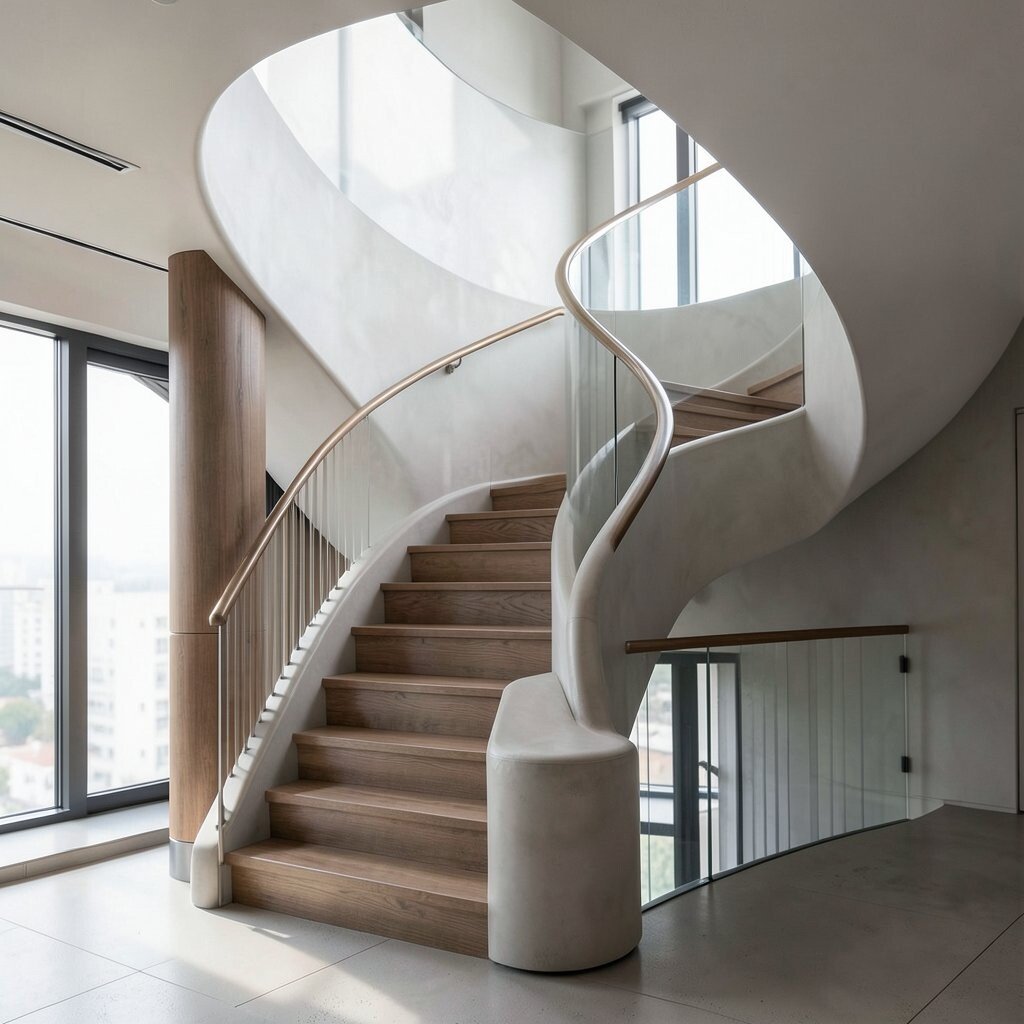
Imagine stairs that bend like a ribbon from one level to the next. The “S” curve creates movement, and the landing sits as a visual pause instead of a hard corner.
This layout can make an entry feel more inviting, especially in homes where people tend to rush in. Start by checking your available width because the most graceful curve needs planning before walls go up. If you’re remodeling, you’ll also want to line up the landing height with the flow of doors nearby.
For practical tips, keep the largest curve on the eye-catching side, then place steps so the center tread is easiest to reach. You can personalize the landing with a built-in bench, a small planter ledge, or a wall panel that matches the rail.
4. Curved Monolithic Tread With Hidden Stringer

Here’s a look that feels bold and solid. Thick, curved treads seem to float forward, while the stringer stays tucked away for a clean silhouette.
Because the structure hides the complexity, the staircase looks modern and uncluttered. Prioritize a professional fit because the tight seams and curve alignment need careful measuring. You can keep the budget steadier by using standard tread thickness and customizing only the end profiles.
5. Warm Wood Arc Stair With Brass Accents

A wide wood staircase with a gentle arc feels timeless and calm. The curve guides your eyes upward, and warm tones make the space feel welcoming right away.
Wood treads are also easy to personalize with stain choices, from honey to espresso. For day-to-day practicality, seal the finish well and add anti-slip strips in high-use areas. Brass accents on the rail or newel posts can bring a modern glow without needing a full remodel of the whole house.
To make it unique, play with grain direction so it follows the curve slightly. A subtle lighting strip along the side rail can make the brass look richer after dark.
6. Curved Floating Steps With Backlit Channel

Think of steps outlined by a soft line of light. Each curved tread catches the glow, and the result looks like a floating path in your home.
This trend is popular because it combines style with safer visibility. Plan the wiring early so channels for LED strips sit neatly under or behind the rail. Keep maintenance in mind by using accessible drivers and choosing LEDs designed for low heat.
For personalization, adjust brightness for evening comfort and pick a light color that matches your flooring tones. If you’re watching costs, use fewer light zones at first and expand later as you get more comfortable with the look.
7. Curved Steel Frame Stair With Glass Side Panels

A modern staircase can feel sleek and open when it uses glass. Curved lines in the steel frame give the structure a gentle, sculpted look without turning it bulky.
You get a visual pass-through that makes hallways feel larger. Choose tempered glass for safety and install with clamps that allow a clean sight line. To personalize, tint the glass slightly or pair it with a brushed steel rail finish.
For budgeting, keep the glass surface simple and let the steel do the heavy styling. Adding clear glass plus strong lighting can also reduce the need for extra decor since the staircase itself becomes the artwork.
8. U-Shape Stair With Rounded Edges and Niche Wall

This option balances classic and modern in a friendly way. A U-shaped stair with rounded edges feels structured, yet the curves keep it from feeling stiff.
It’s practical because the layout often fits well into common floor plans. Add a niche wall near the landing so you can display small art, books, or planters, which instantly adds personality. Measure carefully so the niche depth doesn’t interfere with rail posts or handrail comfort.
If you want a cost-conscious upgrade, use a simple wall finish and focus on trim details around the niche. Pick one hero material, like stone veneer or textured plaster, to make the stair area feel designed.
9. Curved Cantilever Stair With Patterned Risers

Risers don’t have to be boring, especially when the staircase curves. A cantilever design projects treads forward, while patterned risers add texture that looks crisp in daylight.
You can make the curve feel even more dramatic by choosing a pattern that subtly follows the stair shape. Keep installation practical by using a consistent riser height and ensuring each panel is securely fastened. For personalization, try ceramic tile, painted wood, or a slim metal insert depending on your style and budget.
If you want uniqueness without high cost, choose one patterned element for the most visible run. Then keep the rest simpler so the design looks intentional instead of overwhelming.
10. Rounded Corner Stair With Continuous Handrail
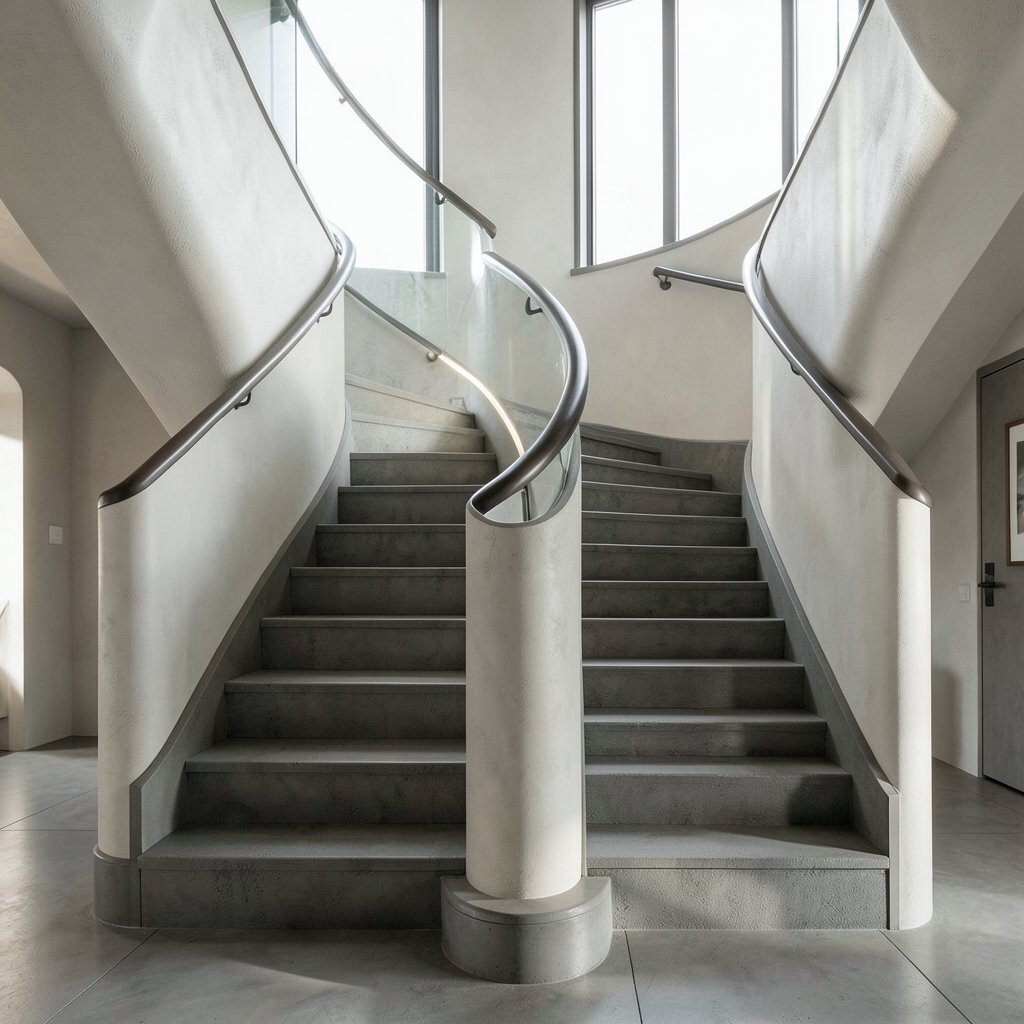
When your staircase needs to turn a corner, curved lines can soften the shift. A rounded corner stair creates a smooth path, and a continuous handrail helps people feel more secure.
This is a great choice for families because the handrail supports steady movement. Install the rail with smooth bends and avoid sharp transitions that feel awkward. If you’re remodeling, check clearances near doorways so the turn feels comfortable when carrying items.
11. Circular Staircase With Textured Plaster Backdrop
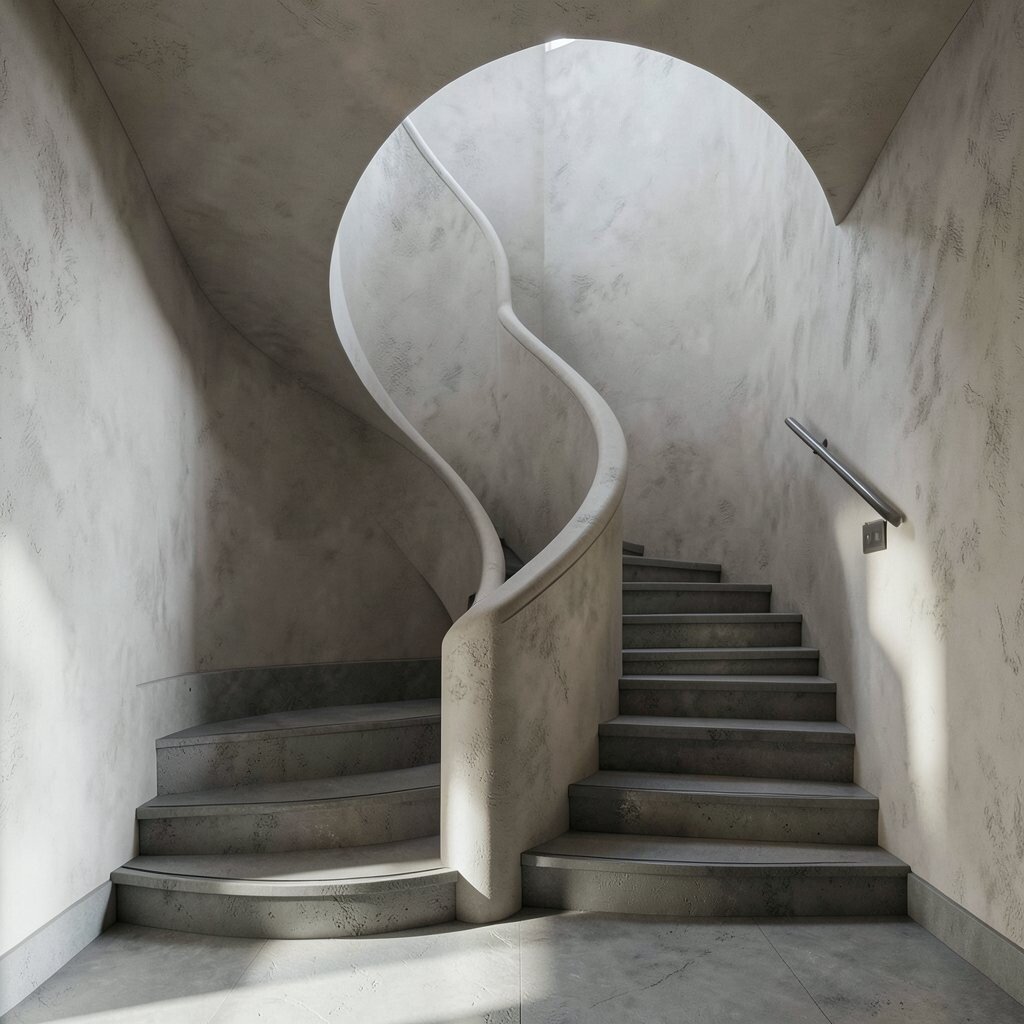
A circular staircase can feel like an architectural sculpture. When you pair it with a textured plaster backdrop, the curves look deeper and more dramatic from every angle.
The benefit is strong visual impact without relying on too many materials. Choose a plaster finish that you can clean easily, and seal it properly around high-touch areas. For personalization, match the texture to your living room wall style so everything feels connected.
Cost considerations matter here, since complex curved construction can run higher. To manage the budget, consider using a simpler central frame and focus your spending on the backdrop finish and lighting.
12. Curved Staircase With Slatted Side Balustrade
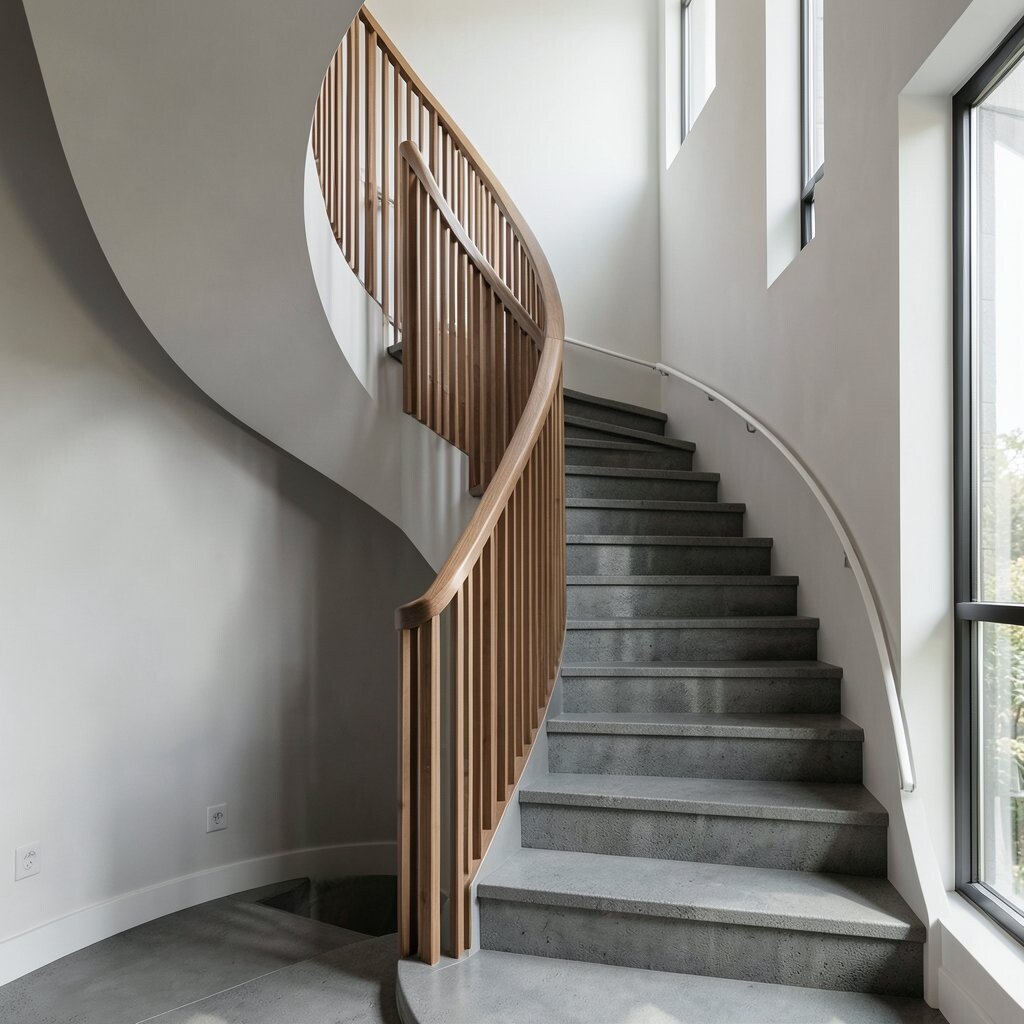
Slats along a curved staircase can look modern and light. The repeated lines wrap around the arc and create a rhythmic pattern that feels stylish and airy.
You get benefits that show up every day, like easier sight lines while still providing safety. Use weather-resistant finishes if your stair is near doors or a humid area. For personalization, vary slat spacing or choose wood, aluminum, or composite materials to match your home’s style.
If you want a practical tip, keep the top rail smooth and rounded because that’s what your hand will meet most often. A matte finish also hides fingerprints better than glossy options.
13. Curved Stair With Stone Skirt and Soft Underlighting

Stone and curves make a powerful pairing. A curved staircase with a stone skirt looks grounded and elegant, while soft underlighting lifts the mood.
This gives a dramatic contrast between weighty materials and gentle motion. For a practical approach, choose stone with good slip resistance and seal it so it stays easy to clean. Add small light fixtures under the skirt to highlight the curve without blinding anyone.
To personalize, blend stone colors with your flooring or fireplace tones. If cost is a concern, use a thinner stone veneer rather than full-thickness slabs, and let the lighting do part of the visual work.
14. Curved Staircase With Carpeted Treads and Leather Rail

Sometimes comfort wins, and a carpeted curved staircase feels cozy from the first step. Pair it with a leather-wrapped rail, and the whole stair becomes softer and more inviting.
This design is especially beneficial if you want quieter footsteps and a comfortable grip. Choose a low-pile carpet that resists wear and pick a neutral color that won’t show dust too quickly. For personalization, you can add a subtle edge trim that matches your rail color or your door hardware.
For cost considerations, carpet and leather can fit many budgets, but quality matters for longevity. Look for upholstery-grade leather or durable synthetic alternatives if you need a more budget-friendly option.
15. Rounded Stair With Minimal Steps and Wide Landings
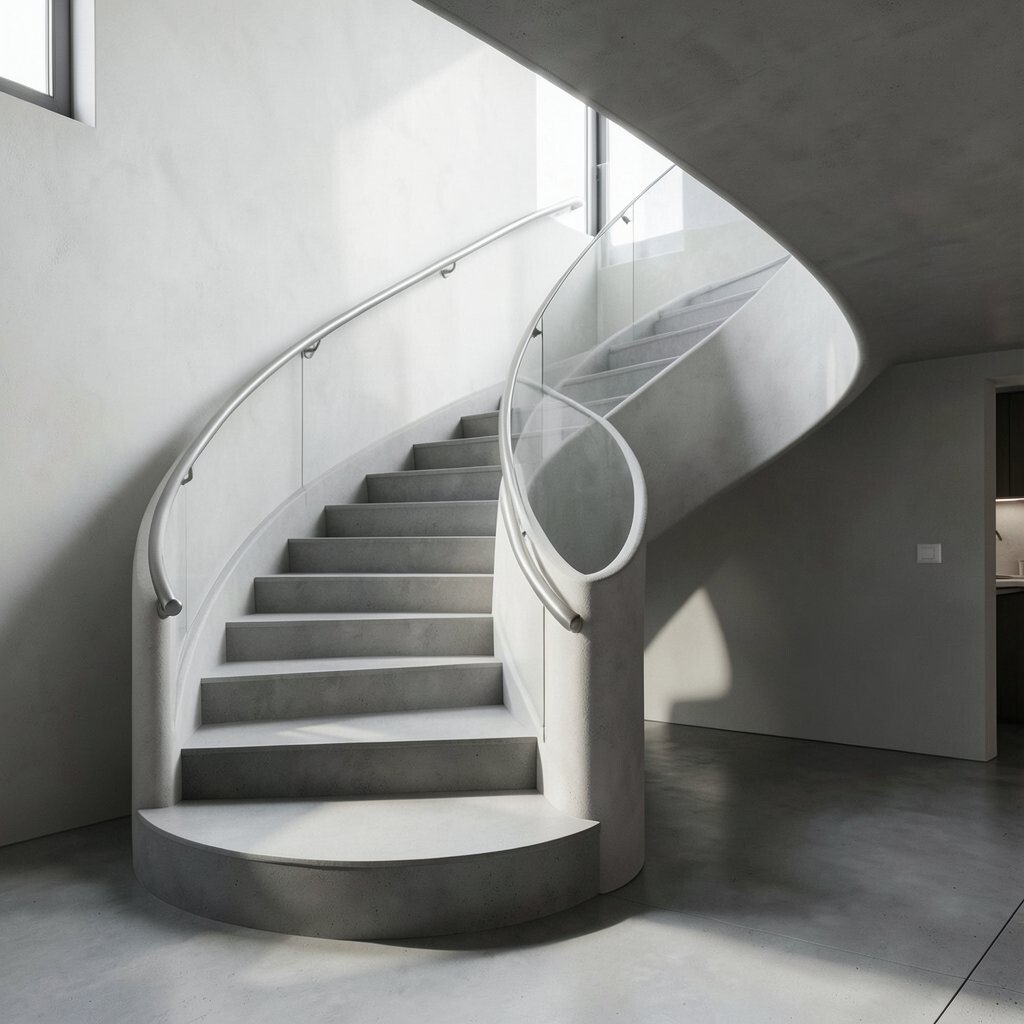
A minimal staircase can still be dramatic when the lines are curved and the plan is generous. Wide landings make the movement feel smooth, and the rounded edges keep everything visually calm.
This style works well in modern spaces because it avoids heavy ornamentation. Keep it practical by ensuring the wide landing supports comfortable turn steps for everyday use. When planning, think about where furniture will go during moving days since open landings can make transport easier.
To personalize, add a sculptural wall fixture near the landing or a large framed print. If you want a trend touch, choose architectural lighting with clean, angled shapes that match the modern feel.
16. Curved Floating Stair With Acrylic Balusters

Clear balusters can make a staircase feel futuristic, especially when they follow a curve. A floating setup combined with acrylic pieces creates a light, almost weightless look.
You benefit from open visibility, which helps narrow hallways feel less crowded. Use impact-rated acrylic and follow installation spacing rules so safety stays solid. For personalization, choose acrylic in tinted tones like smoke gray for a moody modern look.
Cost considerations are manageable if you keep the frame materials standard and focus your custom spend on the baluster style. A clean rail finish, like matte black or brushed aluminum, makes the clear elements pop.
17. Curved Stair With Built-In Lighting Nooks on Rail Posts

Small light details can make a staircase feel custom. Curved stair rail posts with built-in lighting nooks add a gentle sparkle that follows the stairs upward.
This is beneficial because it gives better guidance at night without turning the whole home into a bright bulb. Plan wiring carefully and hide it in the rail posts so the look stays neat. Use warm white lighting for a cozy effect, especially in living spaces.
To personalize, match the light tone to your kitchen or living room lights, so the home feels consistent. If you’re trying to control cost, start with lighting on only the most visible posts, then expand later if you love it.
18. Curved Staircase With Integrated Wooden Planter Wall

Bringing greenery into your stair space feels fresh and calming. A curved staircase paired with an integrated wooden planter wall makes the arc feel even more alive.
This design offers benefits beyond beauty, since plants can soften hard angles and improve the vibe in busy homes. Use proper waterproof liners in planter boxes and ensure drainage so roots stay healthy. For personalization, plant low varieties like herbs or small grasses that fit narrow spaces and look neat long-term.
Cost considerations vary depending on how many planters you add, so pick the most visible section first. A planter wall can still look dramatic even with only a few well-placed openings, especially when curved lines guide the eye.
19. Cinematic Curved Stair With Folded Metal Steps

For a true statement, consider folded metal steps that follow a curved path. The surface catches light in dramatic ways, making the staircase feel cinematic even in everyday rooms.
You get a unique look that stands out from typical wood or simple steel stairs. Choose powder-coated metal finishes for durability and easier cleaning, and make sure every step has a secure, safe traction surface. For personalization, select a color that matches your fixtures, or go bold with a warm tone that contrasts your walls.
If cost is a concern, you can keep the metal steps as a hero element while using simpler rail materials. Add one lighting feature, like a spotlight along the curve, to make the folded texture look even richer.