
The moment you step onto a marble staircase, the whole space feels more polished. A curved wall handrail can make that beauty feel even more effortless.
It adds comfort, guides movement, and brings a soft architectural rhythm to the design. Below are ideas you can adapt to your home, from bold veining choices to practical finishing details.
1. Veined Carrara Meets a Softly Rounded Handrail
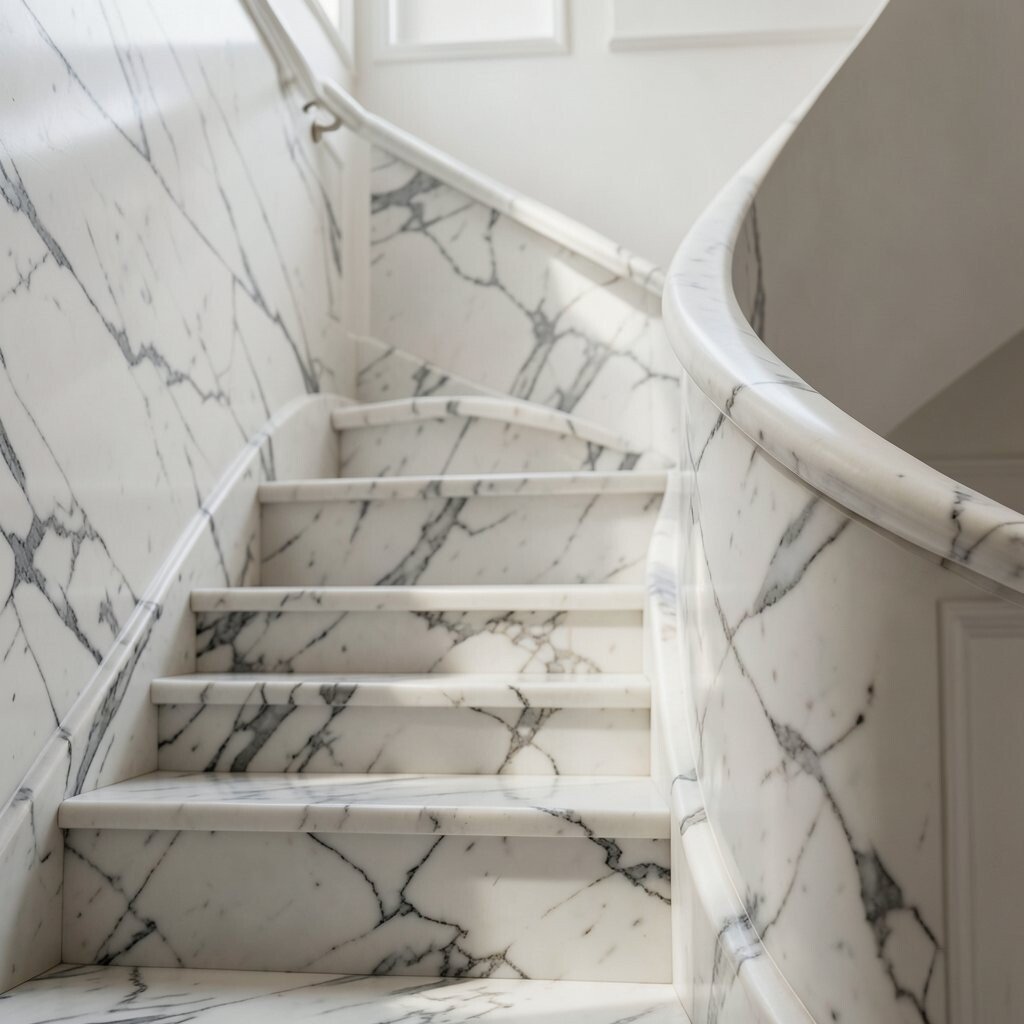
Imagine bright Carrara marble with delicate gray veins catching warm light. Now picture a curved wall handrail that mirrors the flow of the stair, creating a gentle path upward.
The look feels airy and clean, while the handrail adds comfort where your palm naturally rests. For practical fit, have the handrail follow the stair curve in smooth segments so it never feels like it “jumps” at each landing.
2. Warm Calacatta Tones With a Bronze-Glint Wall Rail
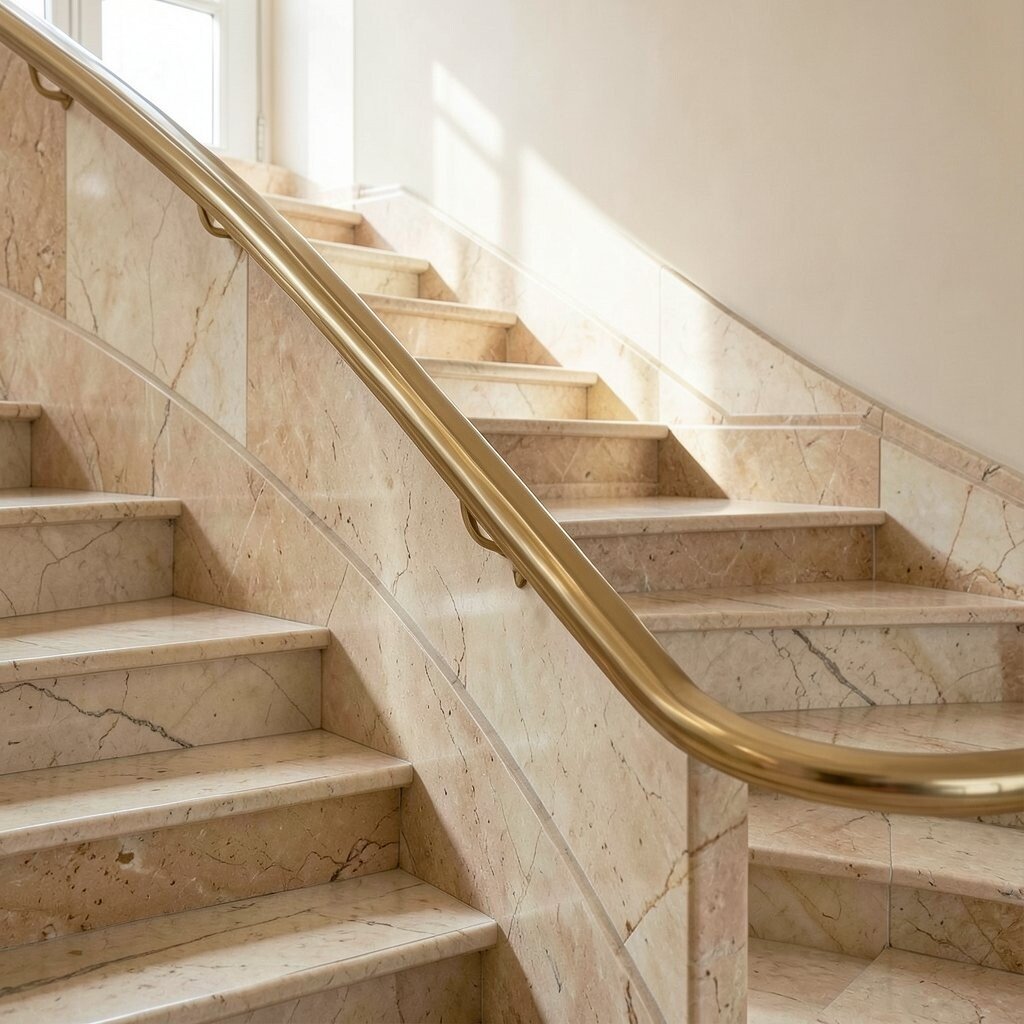
Calacatta marble brings richer drama with thicker, more expressive veining. When paired with a curved wall handrail, the bronze finish adds a cozy glow that balances the stone’s cool sheen.
Choose a finish that matches your lighting hardware so everything feels intentional. Keep the rail slightly thicker where fingers tend to grip, and use rounded edges so the contact feels comfortable rather than sharp.
To personalize, consider subtle inlays or matching accent bands near the bends. Even a small design tweak can make the curved section feel custom, not generic.
3. Cool Nero Marquina Marble With a Matte Black Curved Rail
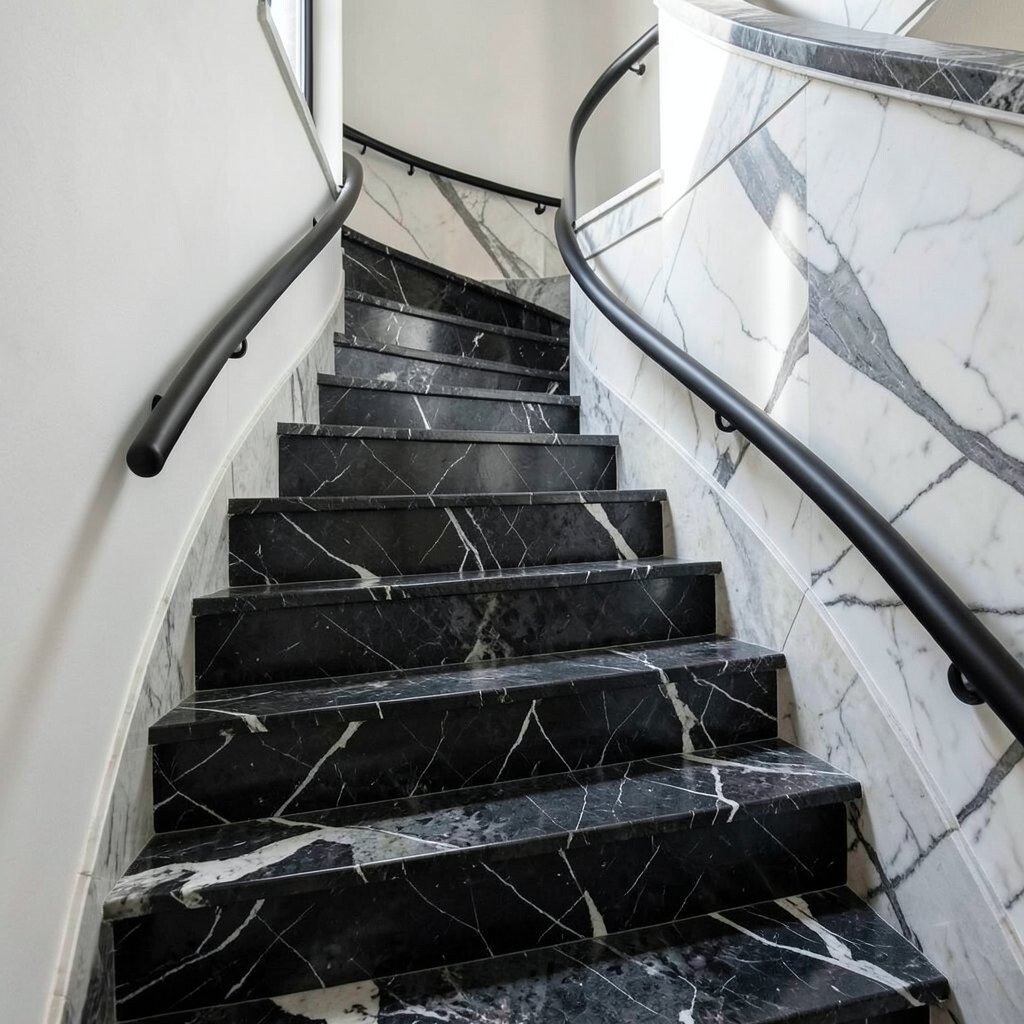
Deep black Nero Marquina marble looks striking against lighter walls. A matte black curved wall handrail ties the scene together while keeping the design modern and calm.
This pairing looks sleek, and it also benefits day-to-day use because matte surfaces hide smudges better than shiny finishes. Plan for consistent spacing between the rail and the wall so your hand has room, especially when carrying items.
If you want uniqueness, add a gentle contrast by choosing a slightly different black shade for the rail hardware. That small difference makes the staircase feel layered and thoughtfully styled.
4. Classic White Marble and a Channel-Edged Curved Handrail
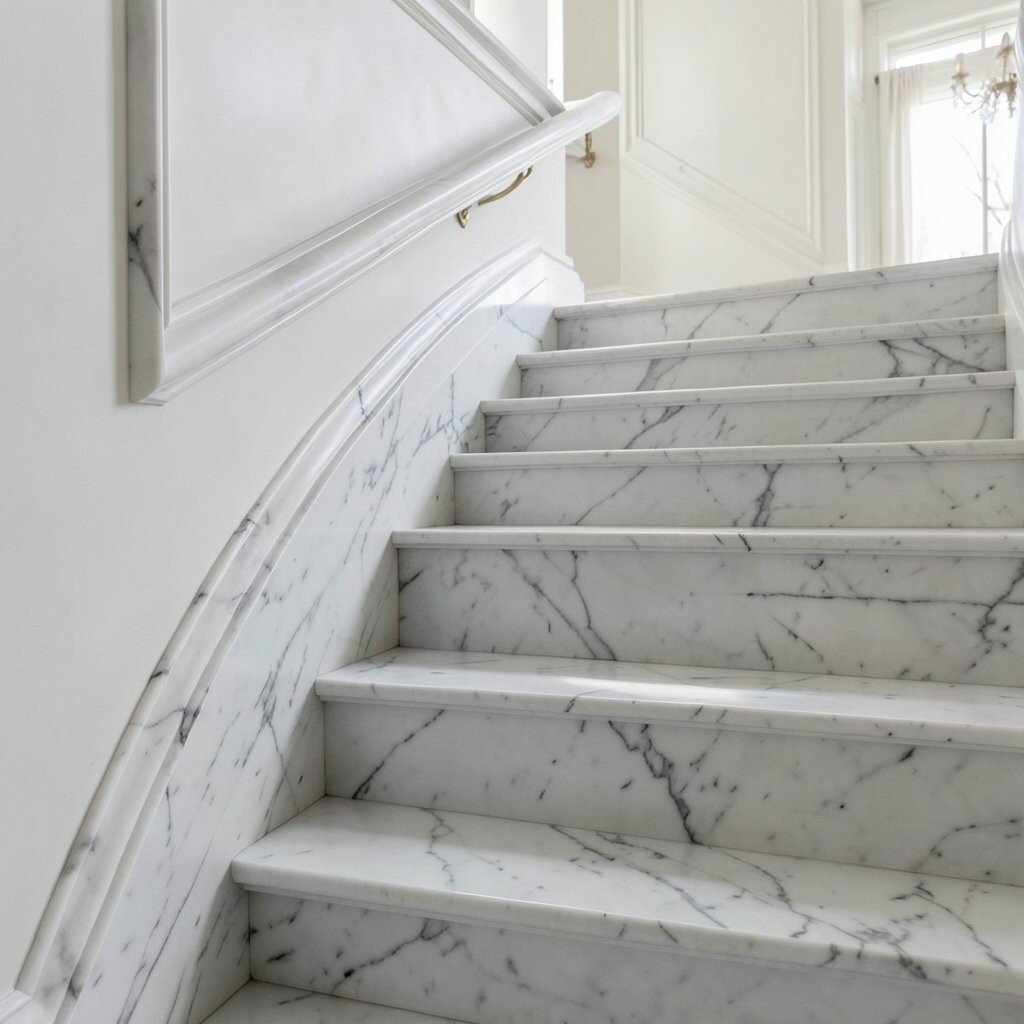
A classic white marble staircase can feel timeless the moment the handrail follows the arc of each step. With a channel-edged design, the curved rail gains structure, not just softness.
This idea works well in traditional homes and also in modern spaces that like clean lines. For practical use, smooth the rail edges where your palm lands, and test grip comfort with a quick hand placement during installation planning.
5. Light Emperador Marble With a Brushed Stainless Curved Rail

Light Emperador marble has a warm beige-brown tone that feels welcoming right away. A brushed stainless curved wall handrail adds a crisp highlight without taking over the stone’s natural charm.
The benefit is twofold: the rail looks modern, and stainless finishes clean up easily after daily life. Keep the curve consistent through landings, and make sure the mounting plate doesn’t create visual bumps along the wall line.
For personalization, you can choose a stainless shade that matches your faucets and lighting. That way the staircase feels connected to the rest of your home, not like a separate project.
6. Marble With Mixed Width Steps and a Two-Tone Curved Rail
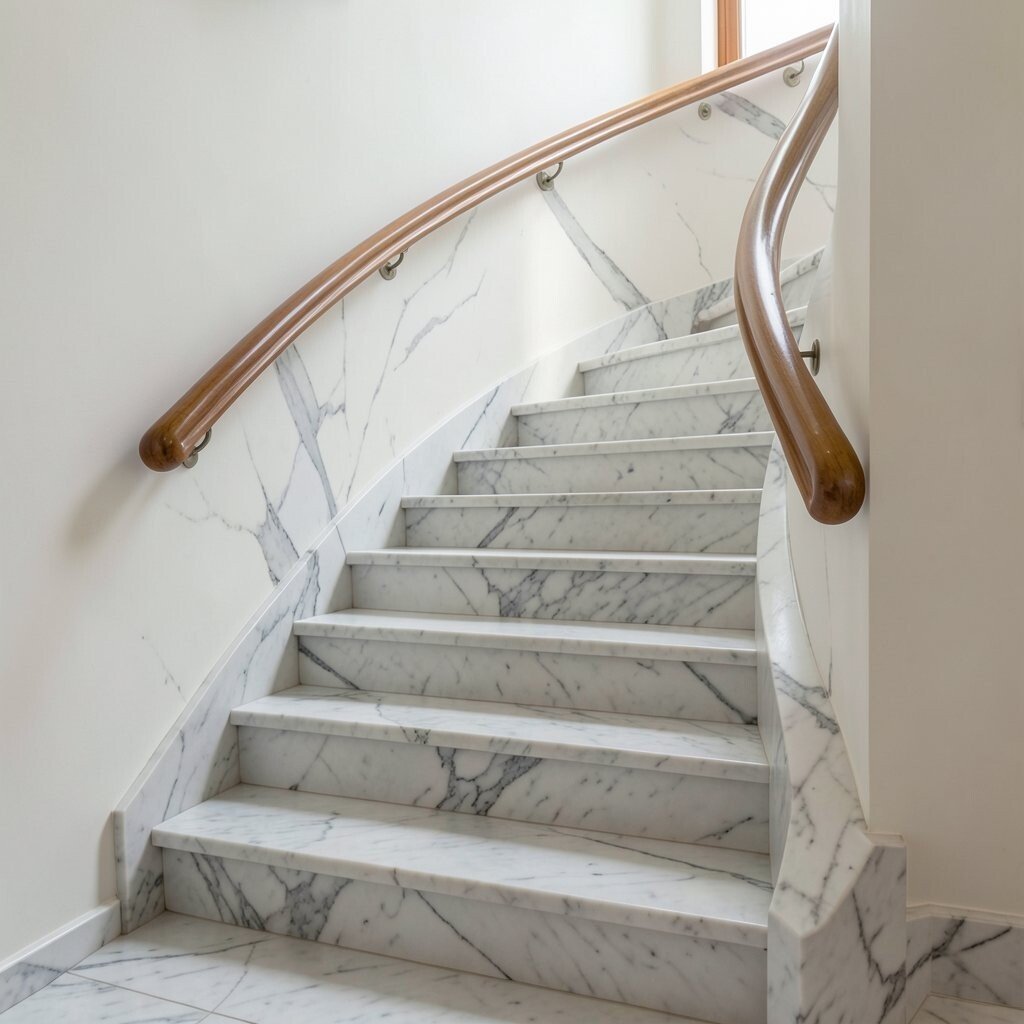
Some staircases look extra elegant when the step profile varies in width. Marble accent lighting along the edges makes those steps feel like part of a gallery display.
A two-tone curved wall handrail can echo that design, such as wood-toned grip panels with metal sides. This adds uniqueness and comfort, since wood-like touches feel warmer to the hand than cold metal.
Plan the join points carefully where the curve changes direction. Using a continuous grip surface around the bend keeps the experience smooth, especially for kids or anyone who uses the rail often.
7. Statuary Marble Beauty With a Curved Wall Rail in Painted Oak

Statuary marble has that softer, sculptural look that makes a hallway feel refined. Pair it with a curved wall handrail finished in painted oak for a gentle blend of stone elegance and home warmth.
This option benefits comfort because painted wood tends to feel more inviting than metal, especially in cooler seasons. Choose a paint color that matches trim details, like window frames or baseboards, so the rail looks built-in.
8. Marble Landing Spotlight and a Curved Rail With Hidden Brackets
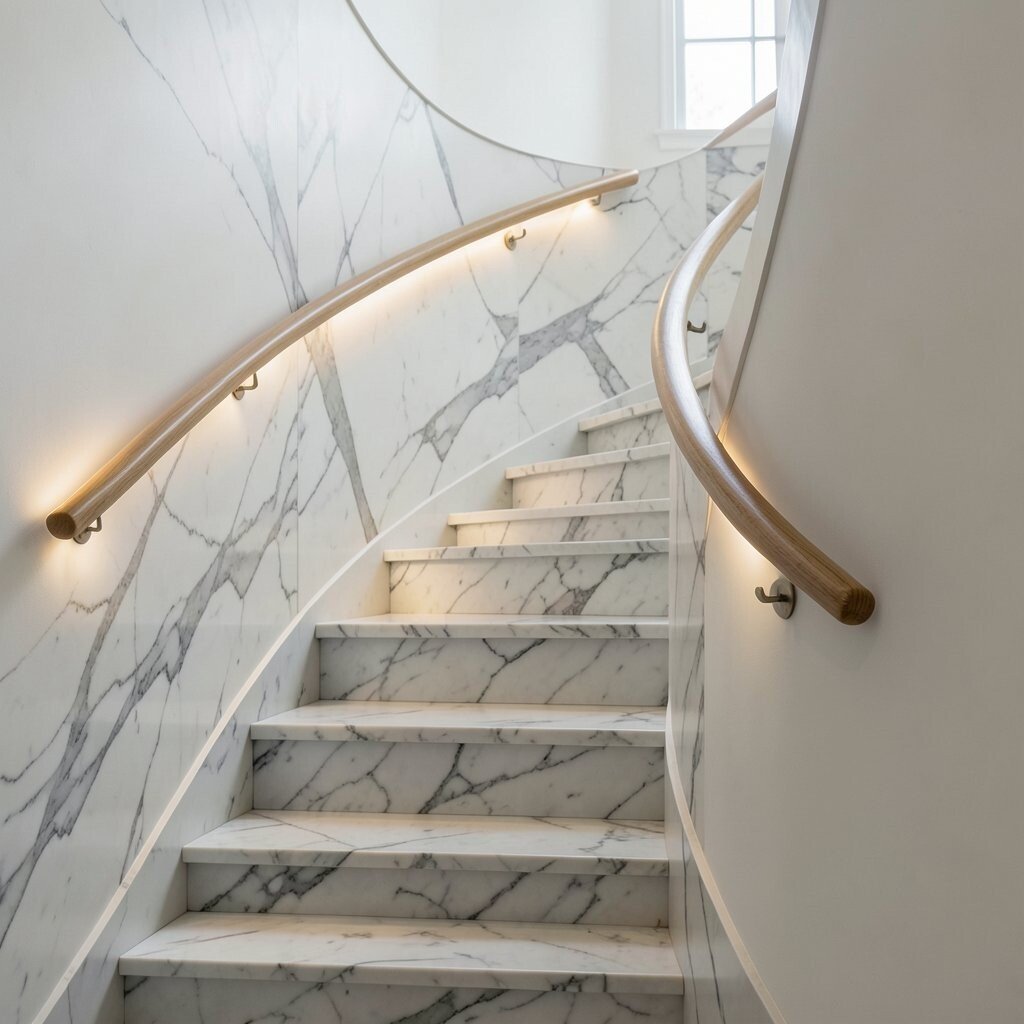
A marble landing deserves a moment to shine, and spot lighting can make veins appear to move. Add a curved wall handrail with hidden brackets so the visual focus stays on the stone and the arc.
When brackets are concealed, the staircase feels cleaner and more expensive. For practical tips, confirm wall material first, then pick anchors rated for the mount load so the rail stays secure over time.
9. Frosted Glass Accent Wall and a Minimal Curved Handrail
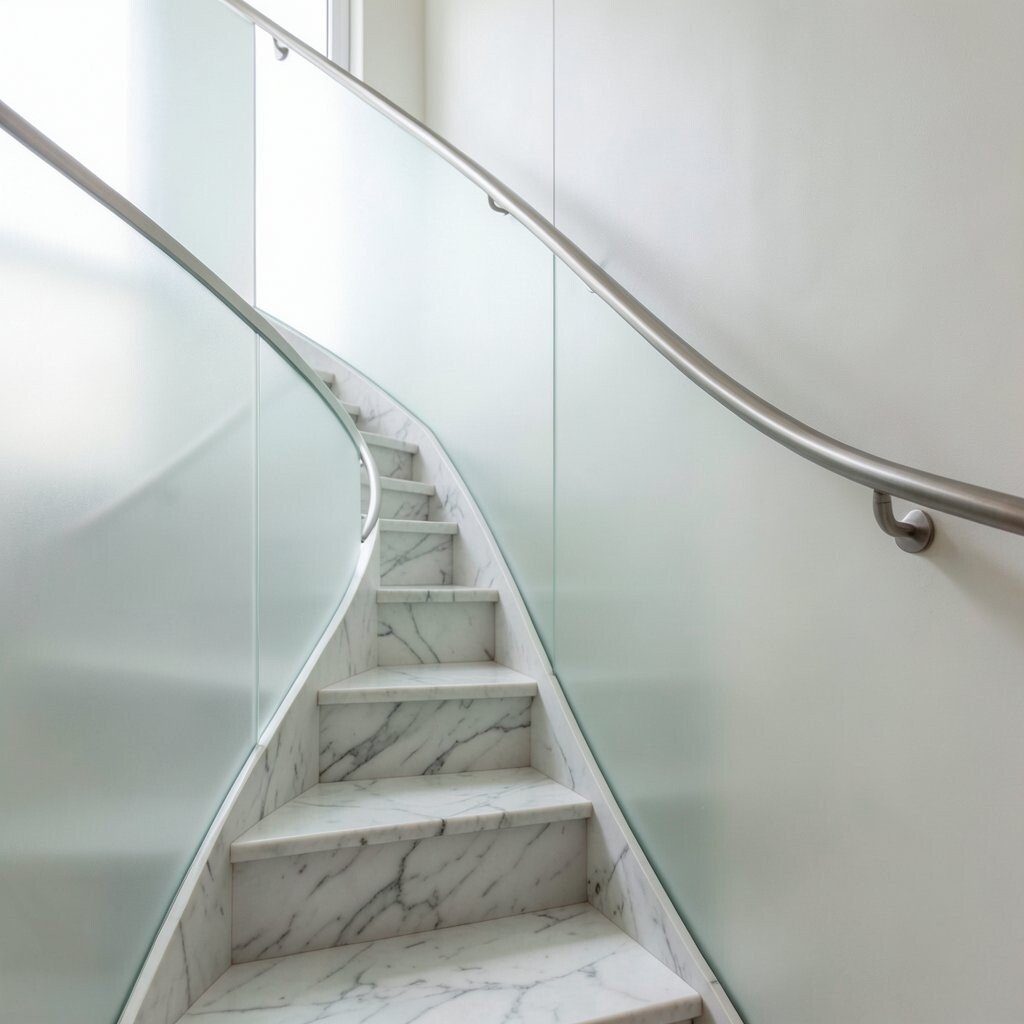
If your staircase has a glass-adjacent wall, marble becomes even brighter and more airy. A minimal curved handrail in brushed metal keeps the design light while still offering support.
This approach is unique because the rail feels like a thin line guiding you, not a bulky accessory. Choose a grip surface that prevents slipping, and consider a slightly textured top for rainy or humid days.
To personalize, match the rail’s tone to the glass frame color. That way, the staircase feels cohesive even as materials mix.
10. Thassos Marble Highlights With a Polished Chrome Curved Rail

Thassos marble often carries a creamy clarity that looks almost luminous. A polished chrome curved wall handrail adds crisp reflection, which can make the staircase feel taller and brighter.
This is a great benefit for darker homes because reflective finishes bounce light around the entry area. Keep the chrome fingerprint-friendly by planning wipe-down habits, or use a protective coating if your installer recommends one.
11. Soft Beige Marble and a Rounded Rubberized Grip Curve

A soft beige marble staircase can be both elegant and calming. Adding a curved wall handrail with a rubberized grip brings extra comfort without changing the overall style too much.
The advantage is practical: the hand grip feels secure, and it reduces slip for sweaty hands or quick daily use. Choose a grip color that matches the rail so it looks intentional rather than like an afterthought.
If you want uniqueness, go for a slightly warmer grip tone, like sand or light taupe, to harmonize with beige stone. Then the staircase feels gentle in look and feel.
12. Bold Green Marble Veins With a Curved Wrought Iron Wall Rail

Green marble veining adds energy, and it becomes even more dramatic when the handrail has classic metal character. A curved wrought iron wall rail can echo the natural movement of the veins.
This pairing is unique because it balances stone nature with a craft-like design. For practical tips, ensure the wrought iron is sealed well so it resists wear and keeps its finish looking crisp.
Personalize with delicate scroll motifs that stay subtle along the curve. The trick is to keep details consistent, so the curve feels smooth rather than busy.
13. Marble Steps With a Tonal Tread and a Curved Rail in Stained Walnut

Tonal tread design lets your marble staircase feel cohesive and visually calm. When the curved wall handrail is stained walnut, the staircase gets a richer, inviting contrast.
The benefit is that walnut brings warmth to the hand and helps hide minor marks. Keep the rail sheen low, such as a matte or satin finish, so it doesn’t glare under overhead lights.
To personalize, use walnut stain depth that matches your floor tone. When wood colors align, the staircase becomes part of a larger design story instead of a stand-alone feature.
14. Minimal White Marble and a Floating Curved Wall Rail
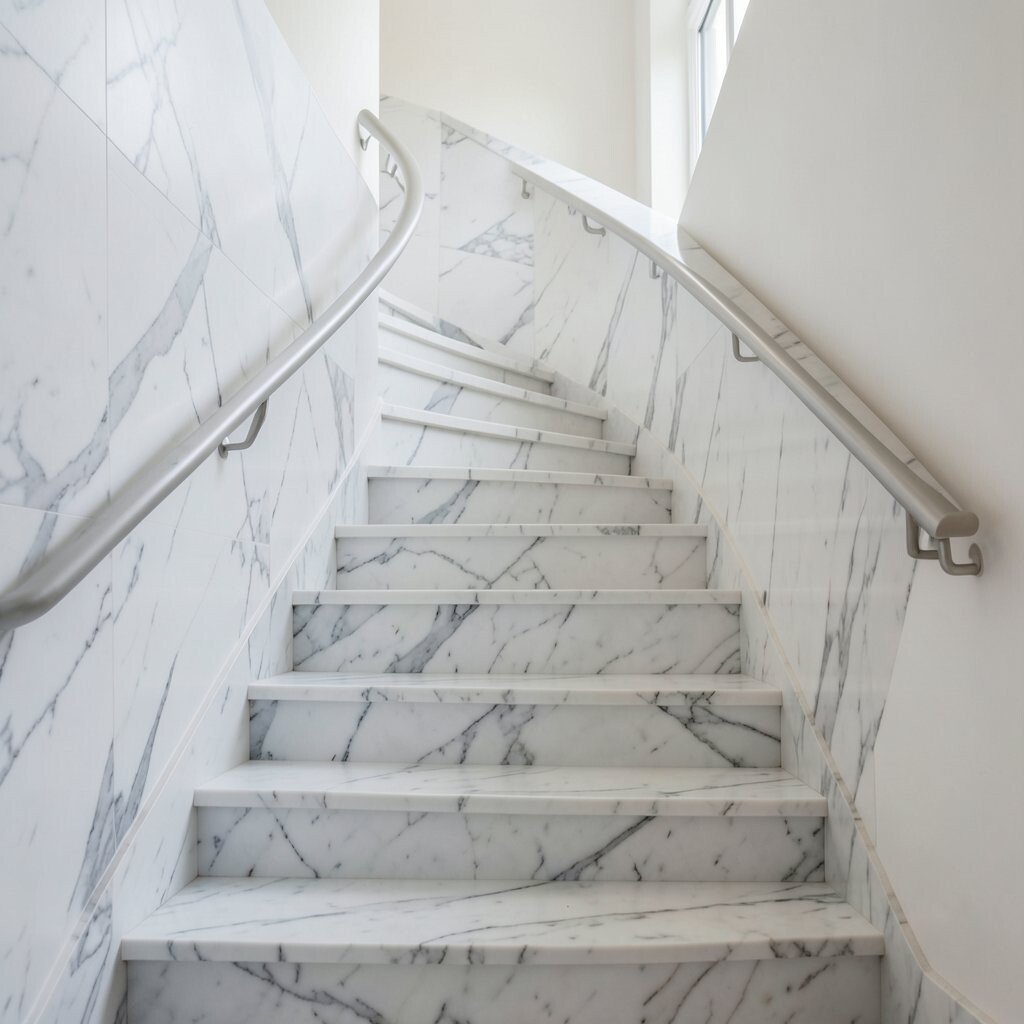
A minimal white marble staircase can feel modern, especially with clean wall lines. A floating-style curved wall rail creates an elegant gap that makes the rail look like it’s gliding above the surface.
This look is unique and stylish, but you’ll want to keep practicality in mind. Plan careful mounting and ask the installer about reinforcement so the rail remains steady along the full curve.
15. Marble With a Book-Match Vein Pattern and a Curved Rail in Brushed Brass
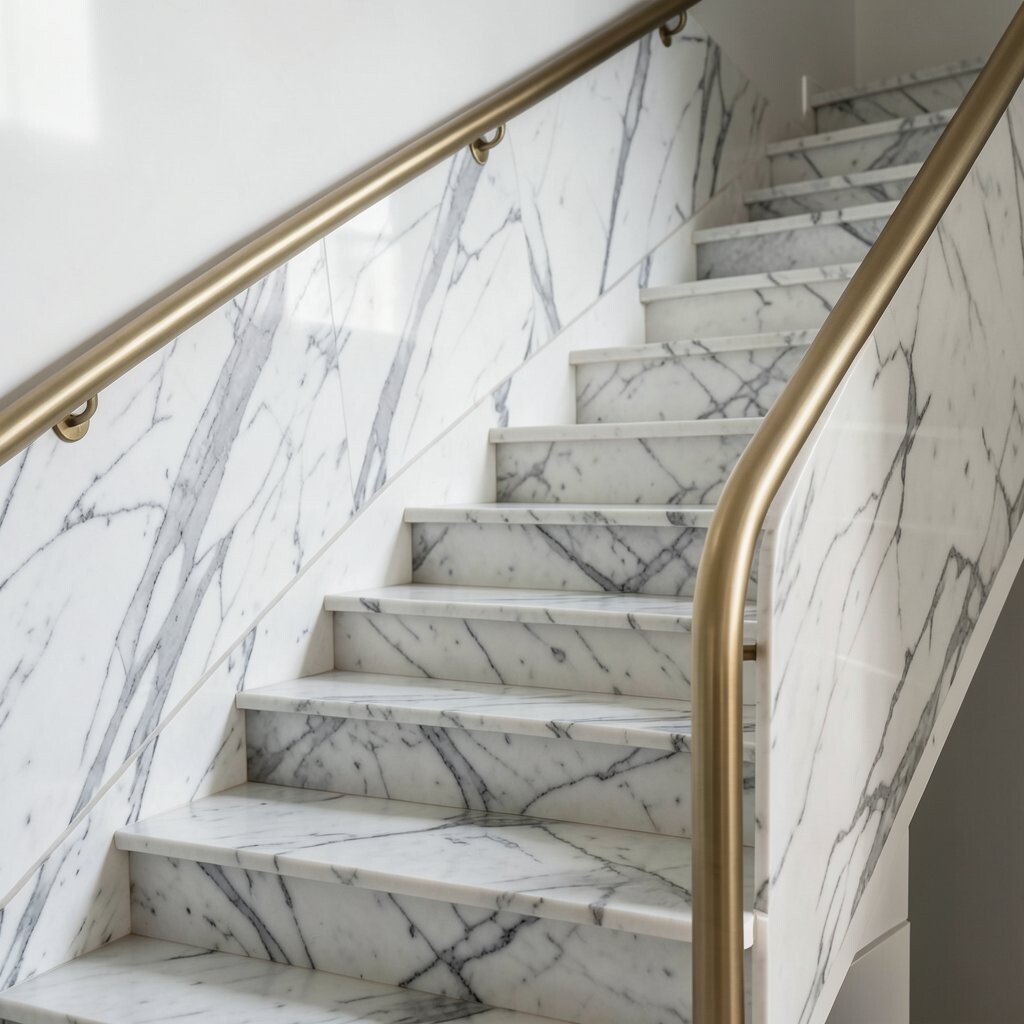
Book-matching marble panels make stair walls and risers feel like art. When you add a curved wall handrail in brushed brass, it warms the scene and highlights the veining pattern beautifully.
Brushed brass offers a benefit that’s easy on the eye while staying resistant to harsh glare. For practical tips, place brass near lighting so it glows softly, and wipe it regularly to avoid tarnish buildup in humid areas.
16. Slate-Gray Marble Treads With a Stone-Inset Curved Handrail Base
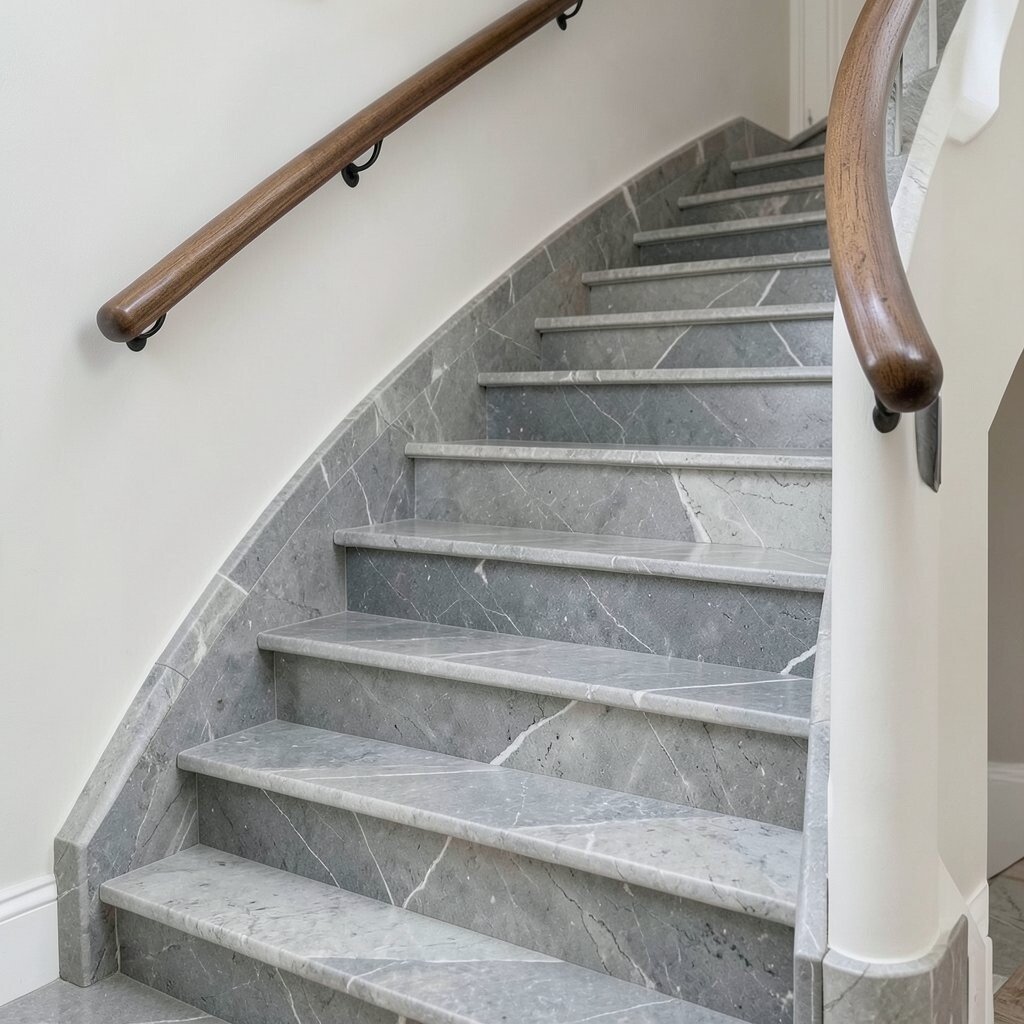
Slate-gray marble treads look calm and sophisticated, especially in open-plan homes. A curved wall handrail can become even more integrated if the base includes a stone inset that echoes the stair material.
This idea is unique because it blends the handrail into the architecture rather than treating it as a separate accessory. For personalization, choose an inset stone that matches the stair’s gray tone or slightly shifts it for tasteful contrast.
Cost considerations matter here, since stone-inset fabrication takes extra labor. Ask your installer for options like smaller inset segments along the curve to control budget while keeping the custom feel.
17. Marble Staircase Under a Skylight With a Long Curved Rail Line
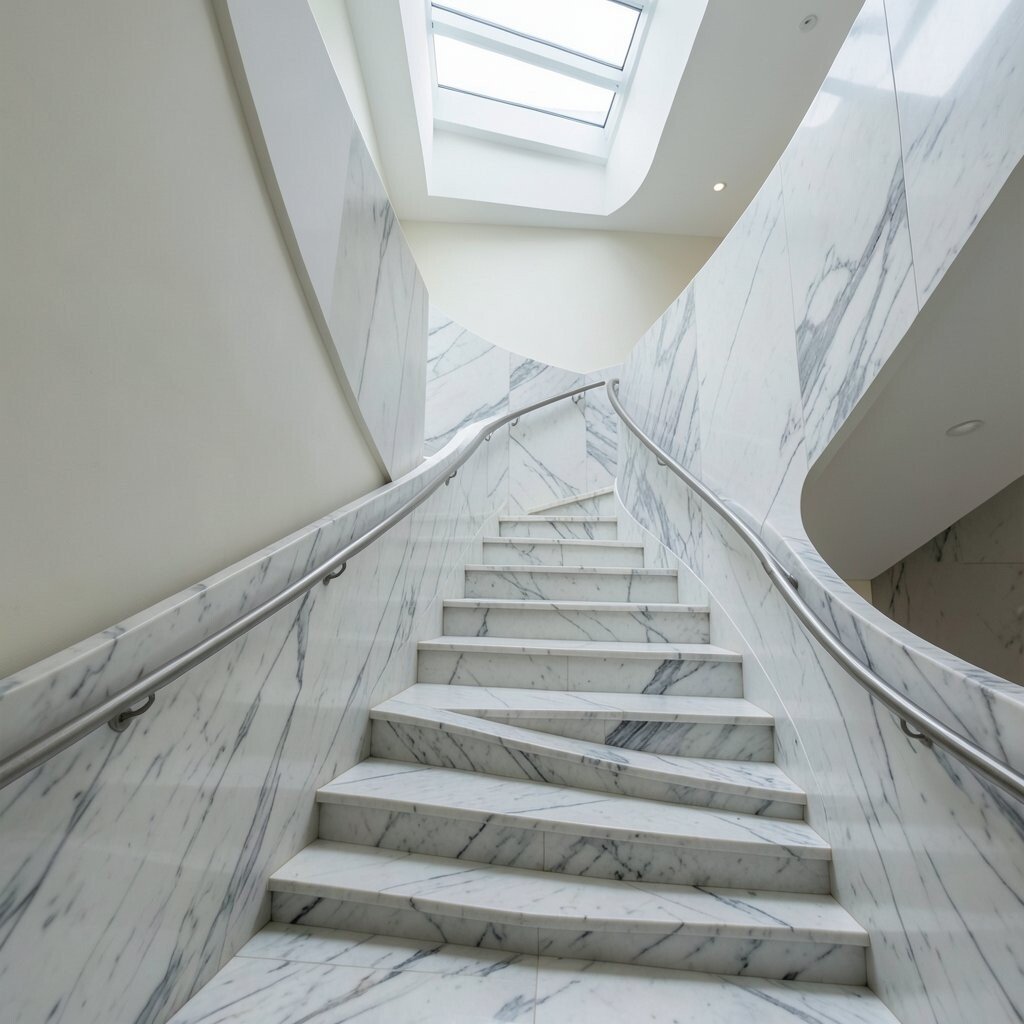
A skylight can turn marble into a moving canvas of light and shadow. With a long curved wall handrail that tracks the stair’s main line, the design becomes easy to follow from entry to landing.
This benefits safety and comfort because the rail feels continuous, especially during quick trips up and down. When designing the curve, check height levels so it fits the most used hand position in your household.
To personalize, consider a rail length that extends slightly beyond the top step. That small extension can make daily movement feel steadier and more welcoming.
18. Two-Story Staircase Drama With a Curved Wall Rail Encircling the Corner
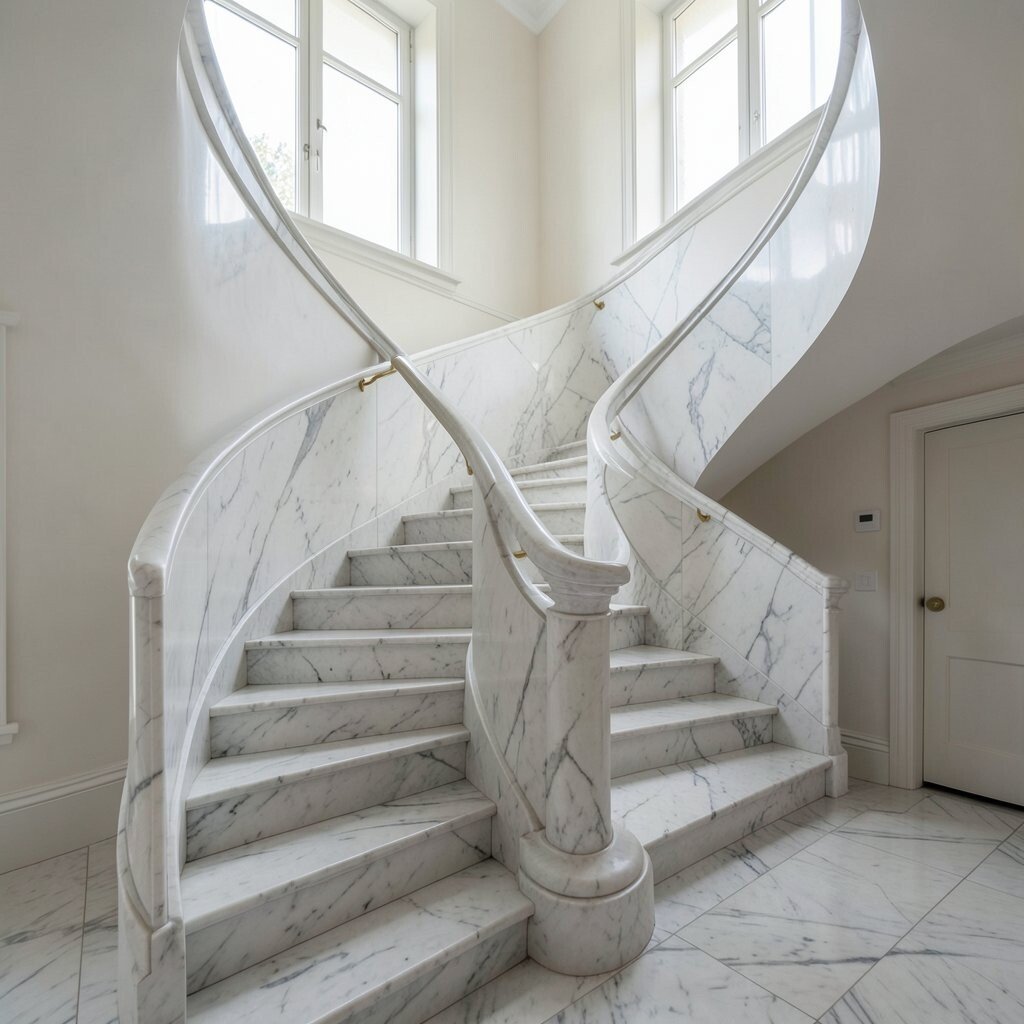
Two-story staircases demand design choices that feel grand but still practical. A curved wall handrail that wraps around the corner can guide movement smoothly while making the architecture feel deliberate.
This option is unique because it turns a normal corner into a focal design moment. For practical tips, ensure the rail curve aligns with how people naturally walk, not just how the wall geometry looks on paper.
Consider cost by comparing continuous rail fabrication to segmented sections. Continuous rails can be more seamless, while segmented rails may reduce cost and speed installation if they’re planned carefully.
19. Marble Staircase Edge Lighting and a Curved Rail With Warm-Glow Finish
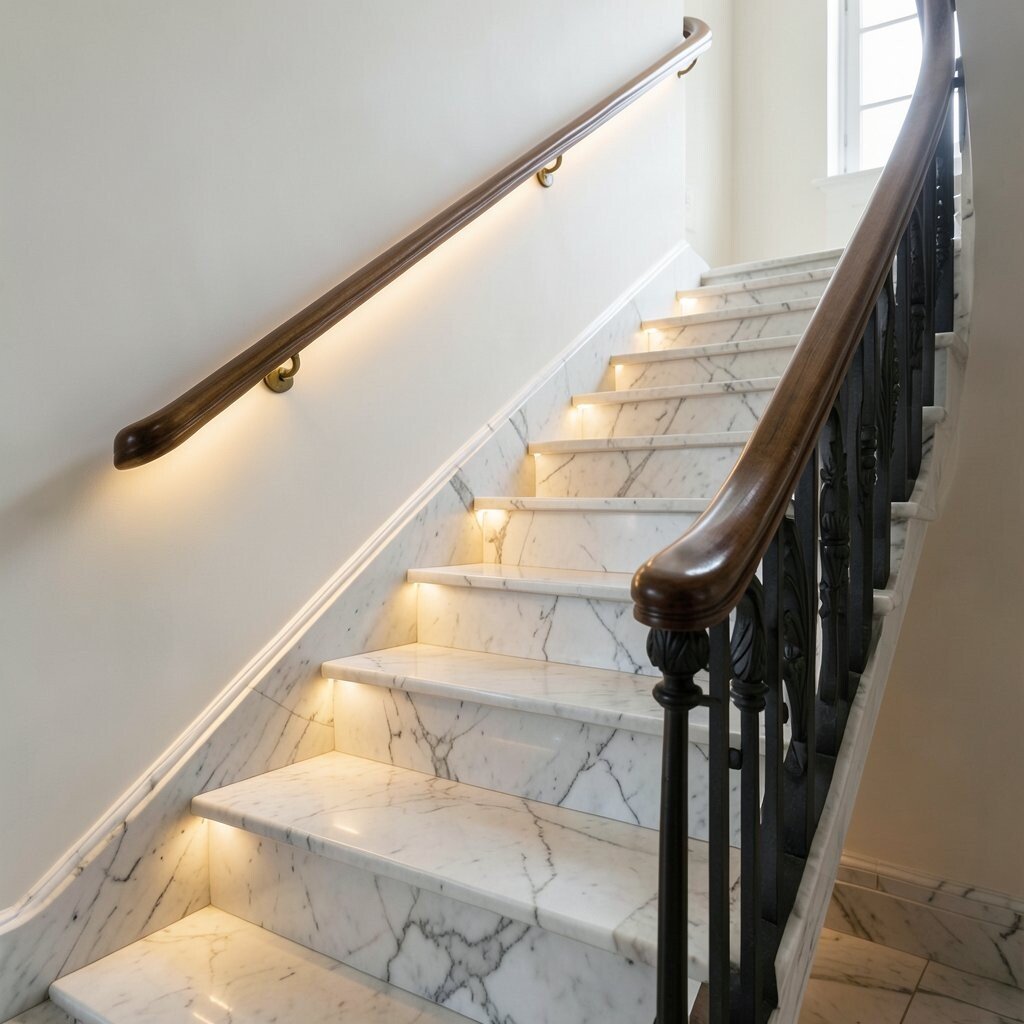
Edge lighting along marble steps makes even simple stone look luxurious. Pair it with a curved wall handrail finished in a warm tone so the rail looks cozy rather than harsh.
The benefit is that warm-glow finishes keep the staircase feeling friendly at night. For practical tips, position the lighting so it highlights the curve rather than blasting glare into eyes while climbing.
20. Patterned Marble Risers With a Curved Rail That Matches the Rhythm
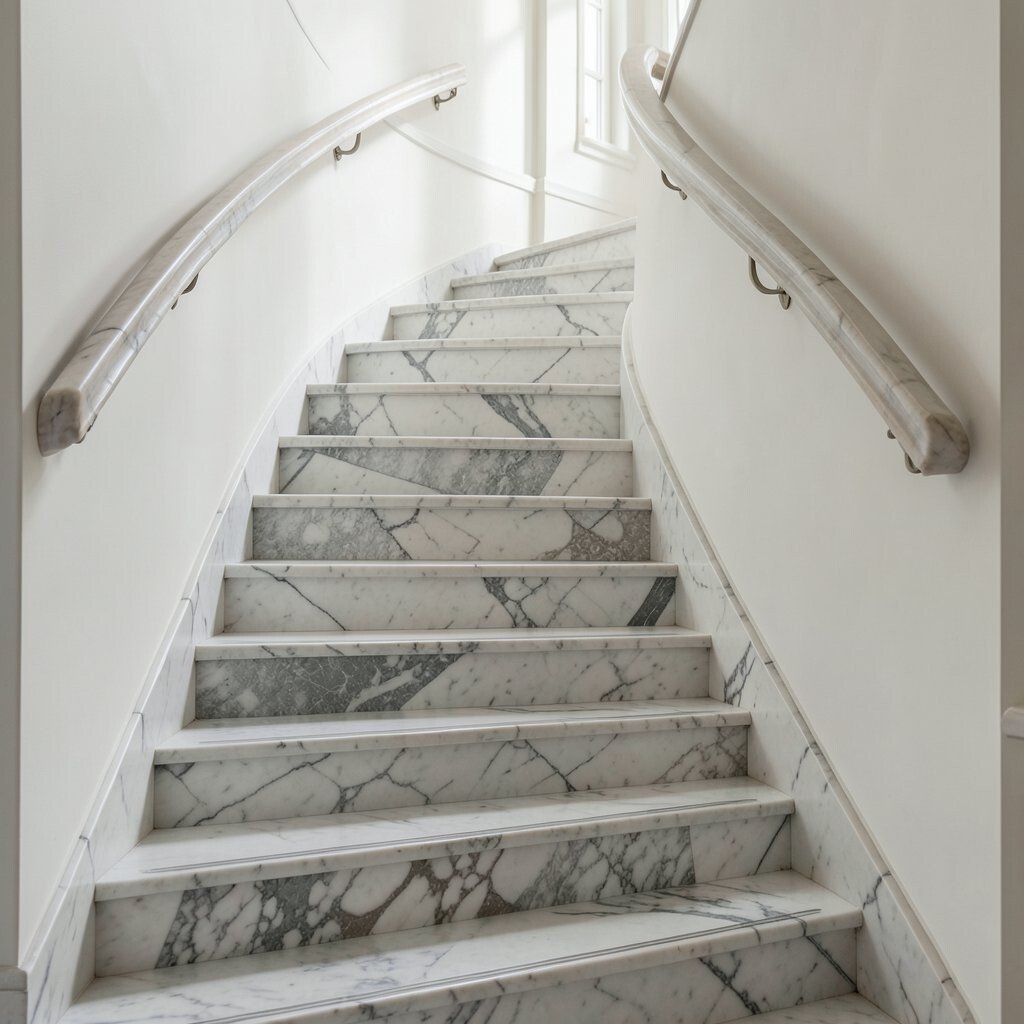
Patterned marble risers add visual rhythm, like a subtle wave repeating up the staircase. A curved wall handrail can echo that rhythm with its gentle bends and steady line.
This is a great way to make the staircase feel custom without relying on heavy ornament. To personalize, choose a rail shape that repeats the same spacing as your riser pattern, but keep the hand grip smooth so it stays comfortable.
Since patterned marble can be pricey, you can balance cost by using the most intricate pattern only on the visible riser sections. Then you still get uniqueness where it matters most.
21. Marble Staircase in a Narrow Entry With a Curved Wall Rail to Save Space
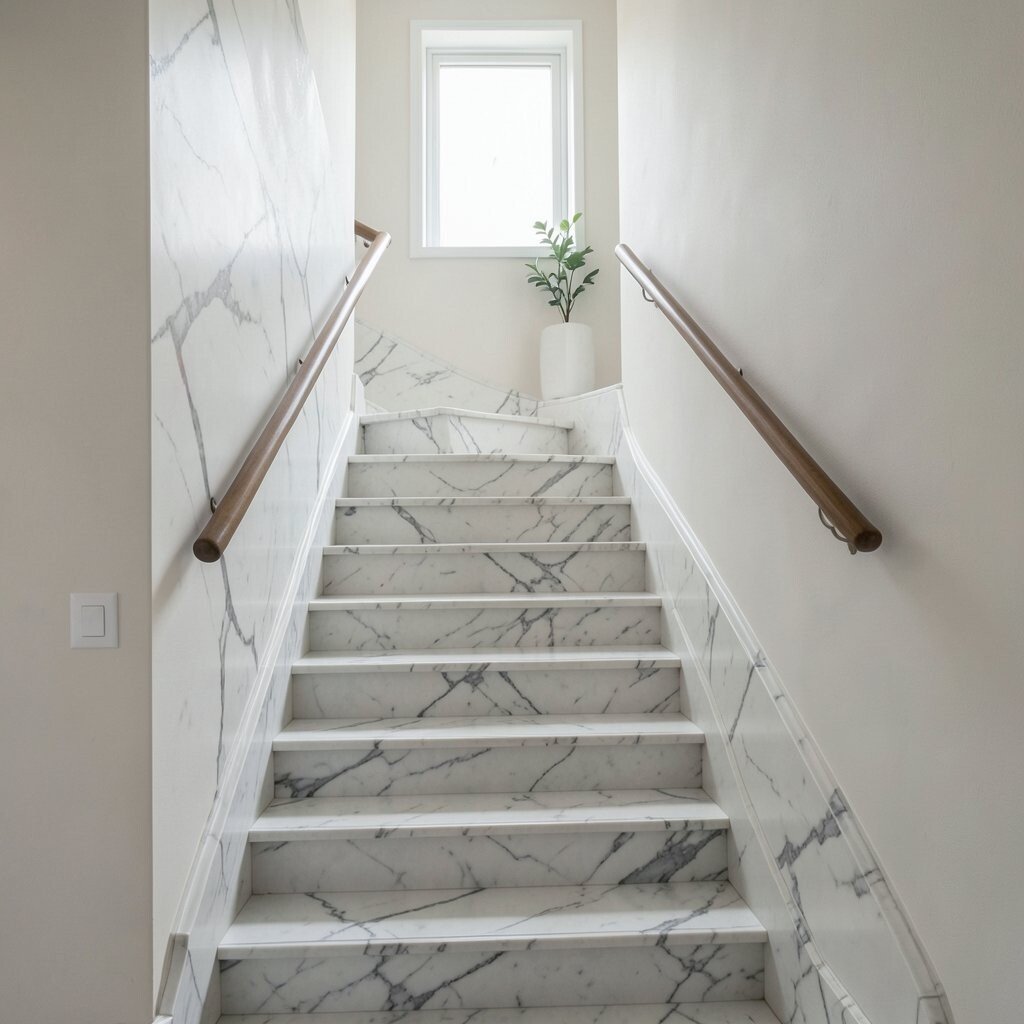
A narrow entry can feel tight, but marble staircase design can still look elegant when the rail is planned smartly. A curved wall handrail helps because it follows the movement path without requiring extra floor space.
This benefits daily flow by reducing awkward reaching and making turns feel safer. For practical tips, make sure the rail doesn’t intrude into sightlines or door clearances, and confirm there’s enough clearance for moving furniture past the staircase wall.
22. Custom Stair Height Options and a Curved Wall Rail Tailored to Your Family
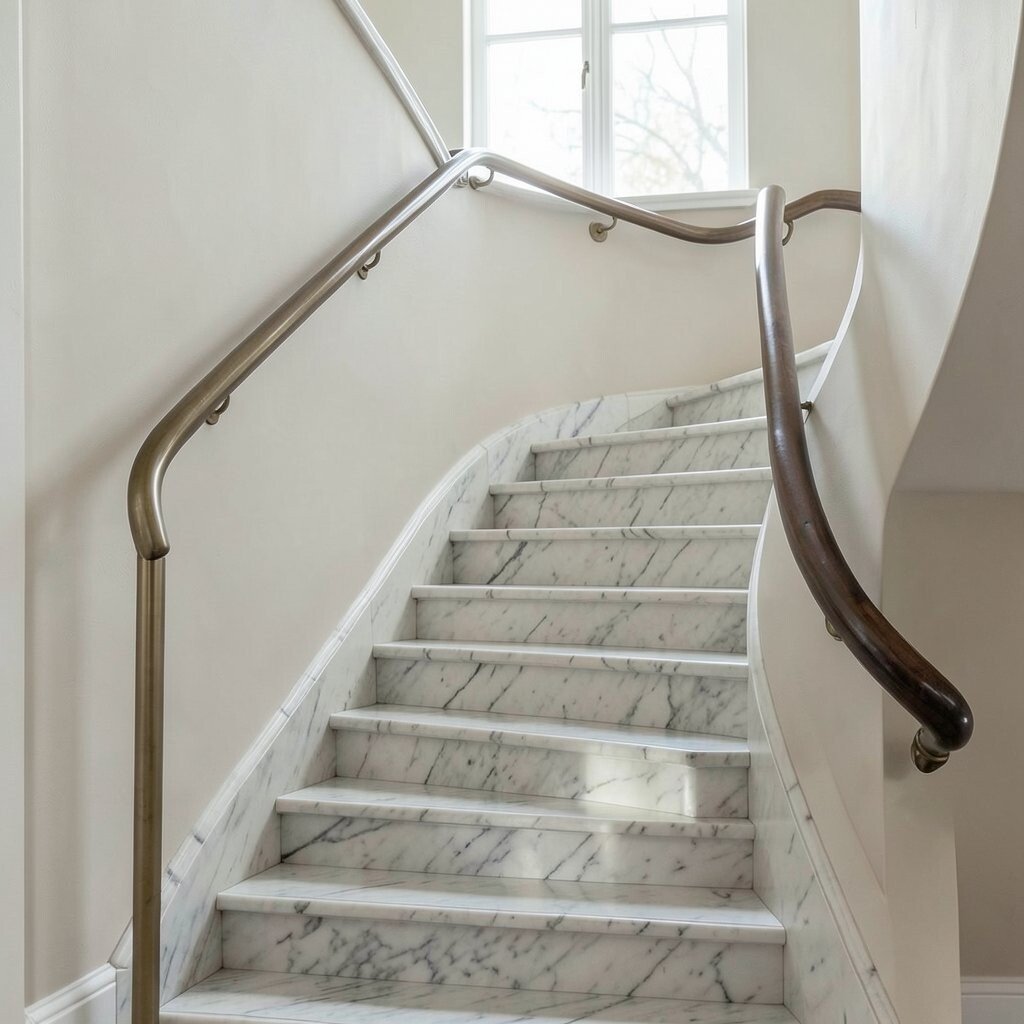
Every household uses a staircase differently, from kids to older adults to people who carry laundry baskets. A curved wall handrail tailored to your family’s typical reach makes marble feel more comfortable and more “yours.”
You can personalize by adjusting the rail height and curve radius so it supports natural hand placement. For cost considerations, ask about adjustability options like replaceable grip surfaces or modular rail sections that can be swapped later if your needs change.
To keep everything looking elegant, match the rail finish to your door hardware and light fixtures. When the details agree, the staircase reads as cohesive, refined, and ready for everyday life.