The classroom can feel like a living storybook when the walls, corners, and desks pull their weight. Each theme below gives kids a place to act brave, kind, and curious while learning happens in the background.
You can mix budgets, layouts, and ages so the magic feels real instead of expensive or stressful.
1. The Enchanted Map Marketplace
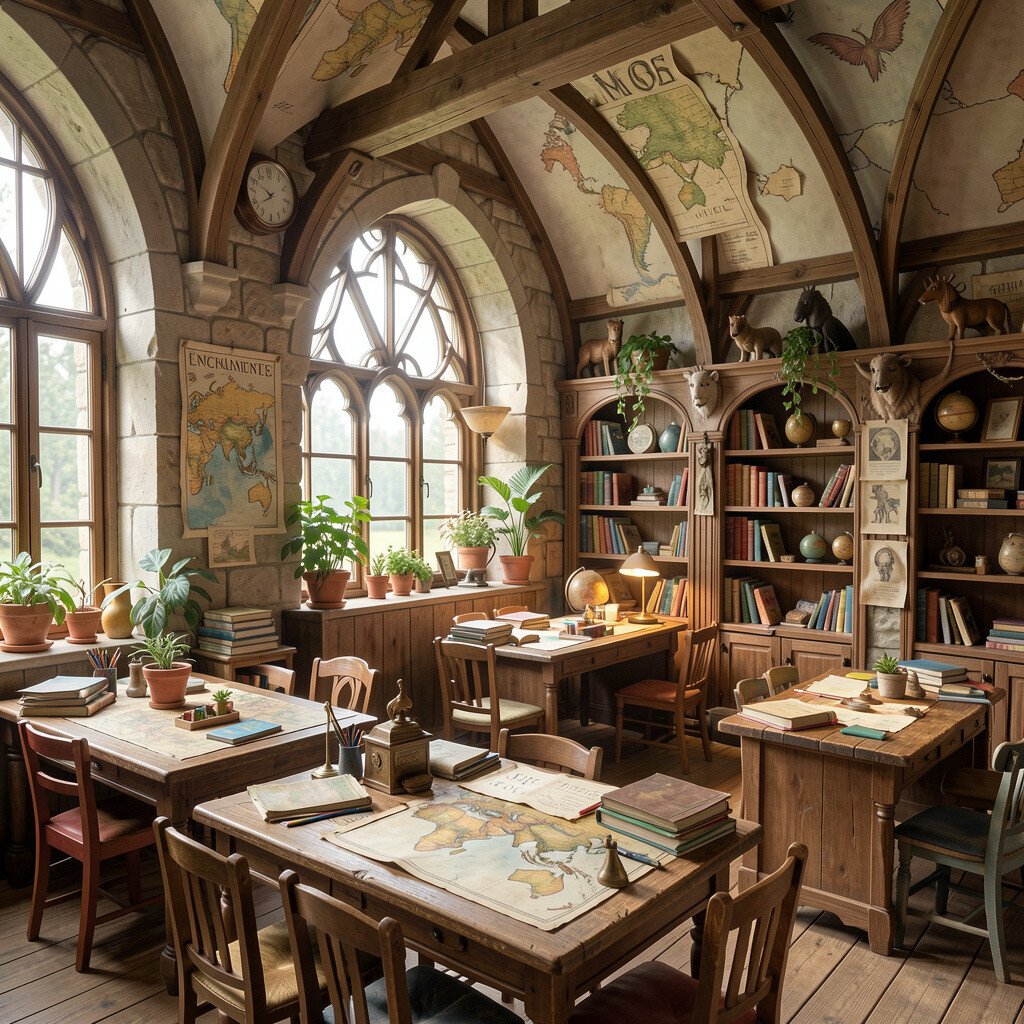
Imagine walking into a classroom where every wall looks like a hand-drawn map, complete with winding “roads” made from tape and paper paths. Little “stalls” can be baskets, shelves, or rug squares where students trade story clues like coins of knowledge.
To set this up, use colored craft paper to label zones with simple drawings such as a library tent, a snack inn, or a science caravan. Learning becomes natural when students “visit” zones to collect items for reading circles, math games, and writing tasks. Personalize by letting students design their own stall signs using markers, foam letters, or printed labels, then rotate themes each month so the room stays fresh.
2. Dragon-Back Reading Caves
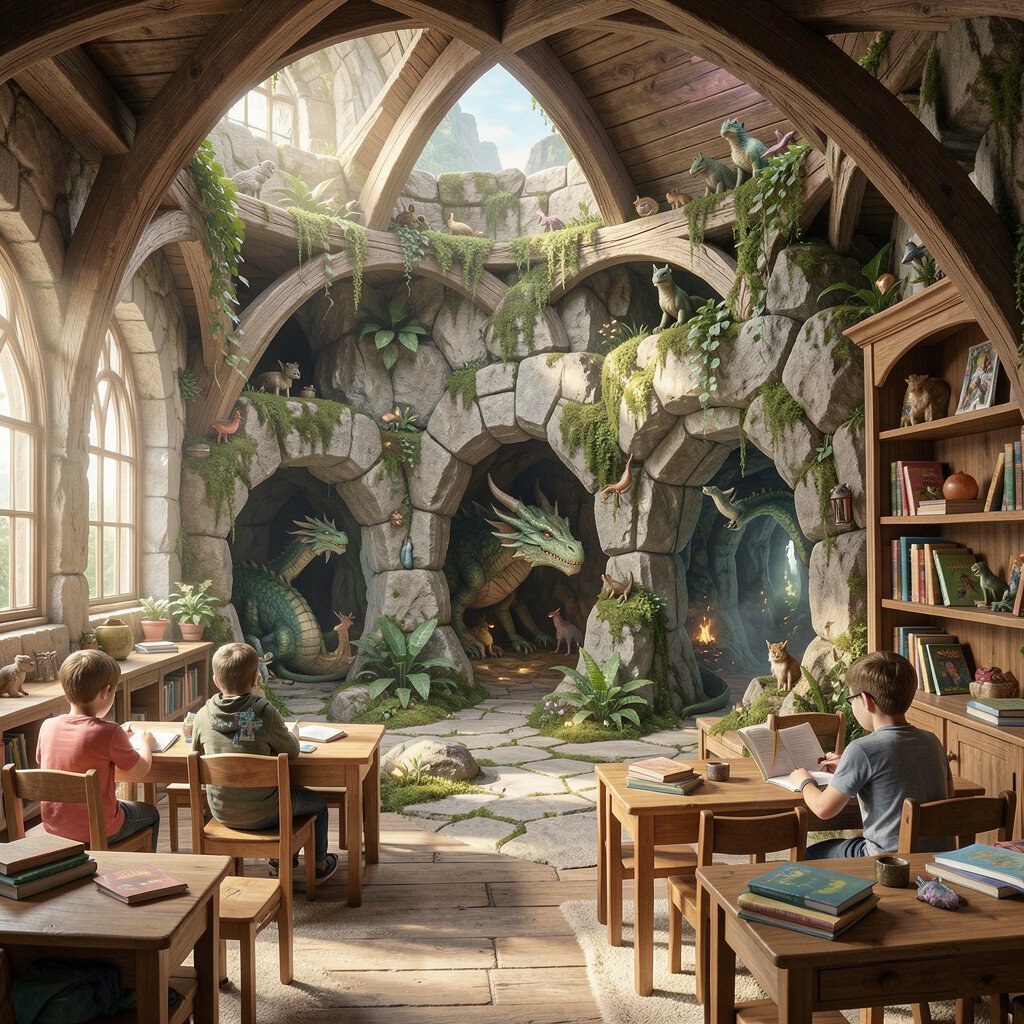
Picture deep, cozy cave corners with a “dragon spine” made from curved cardboard that runs along the floor near the reading area. Soft blankets drape like mountain shadows, and warm light from clip-on lamps creates a glow for quiet reading time.
For the reading benefits, the cave vibe helps students slow down, focus, and choose books with less restlessness. Try adding a small “spell shelf” where kids can check out guided reading books, picture word cards, or leveled readers. Keep it practical by using existing bookcases and covering them with fabric panels so the setup takes less time than a full rebuild.
Uniqueness comes from the story you attach to the cave, such as “Find three treasures to finish a quest” using reading logs. Consider low-cost upgrades like free printable cave art, thrifted lampshades, and paper rocks made from brown packing paper. Students can personalize by carving simple names into cardboard “boulders” and placing them near their favorite seating spot.
3. The Sky Observatory Science Deck
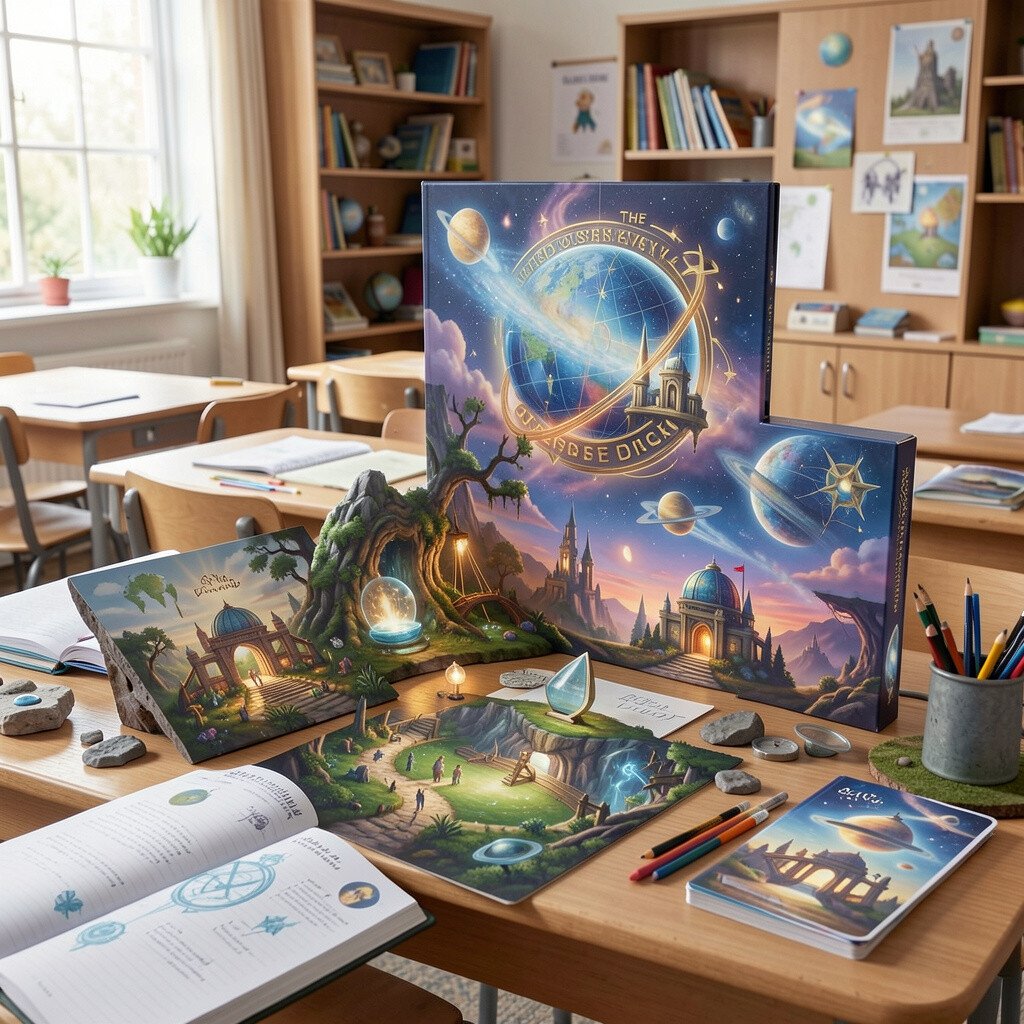
When you enter, the ceiling feels like a night sky with constellations made from star stickers and glow dots. Desks can line up like a telescope platform, with rolling stools and “control panels” made from old clipboards and cardboard frames.
Use this layout to support science learning and inquiry habits, because students can gather “data” right where they feel inspired. Add simple hands-on stations for weather charts, magnet games, or mini experiments, then record observations on reusable boards. For practicality, use dark paper or fabric for the backdrop and keep materials in labeled bins so cleanup stays easy.
Current trends in makerspace learning fit perfectly here, since kids love building and testing. A budget-friendly option is to swap expensive LED displays for battery tea lights behind mesh curtains. Personalization ideas include letting students “name” constellations using their initials or class favorites, then turning those names into writing prompts for nightly science journals.
4. Mermaid Tail Collaborative Sea Tables
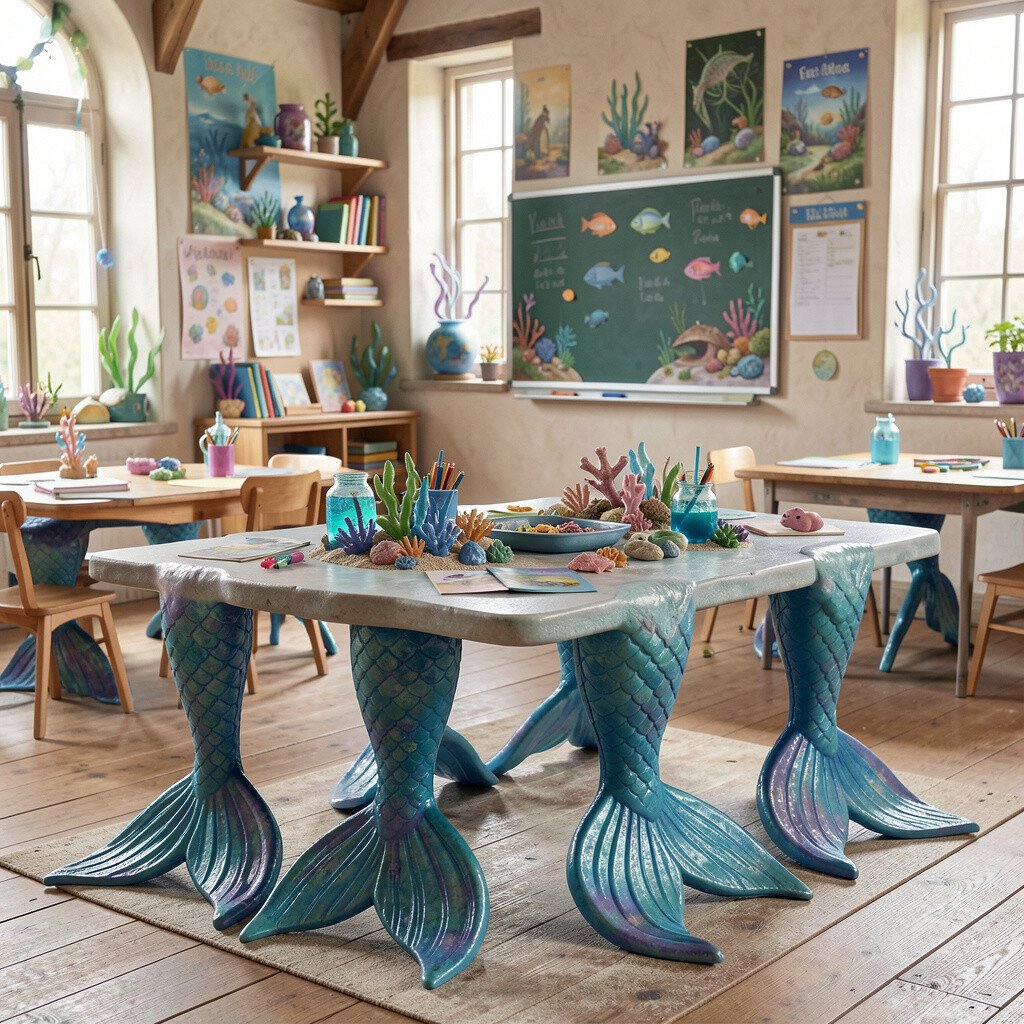
Think of team tables wrapped in ocean colors, where table legs look like mermaid tails painted in gradients of teal and purple. Around the room, hanging paper waves sway when doors open, making even waiting time feel playful.
Group work gets smoother because the sea theme naturally signals collaboration and turn-taking. Put sentence stems and roles inside each table caddy so students can practice speaking clearly during projects. For practical setup, use washable tablecloths, place a small “current” line with tape to guide shared supplies, and store papers in accordion folders to avoid clutter.
5. Wizard Tower Writing Workshops

Picture a tall, cozy corner built from stacked storage boxes, covered in textured paper bricks and topped with a small flag. The writing area feels magical, with hanging pockets for drafts, a rolling cart for supplies, and “spell rules” posted as friendly reminders.
Writing benefits from a clear process when students can move through drafts like climbing floors. Give each “level” a purpose, such as brainstorm floor, revise floor, and publish floor, so students always know what to do next. Keep it practical by using binder rings, clipboards, and plastic page protectors that hold up to heavy use.
Uniqueness shows up when students add their own spellbook pages, like mini posters of punctuation or character traits. Cost considerations can stay low by using cardboard, foam, and recycled paper instead of buying special decor. Personalization ideas include letting each child choose a color robe and adding their name to a “wardrobe” hook near their writing spot.
6. Knight Training STEM Tinker Zones
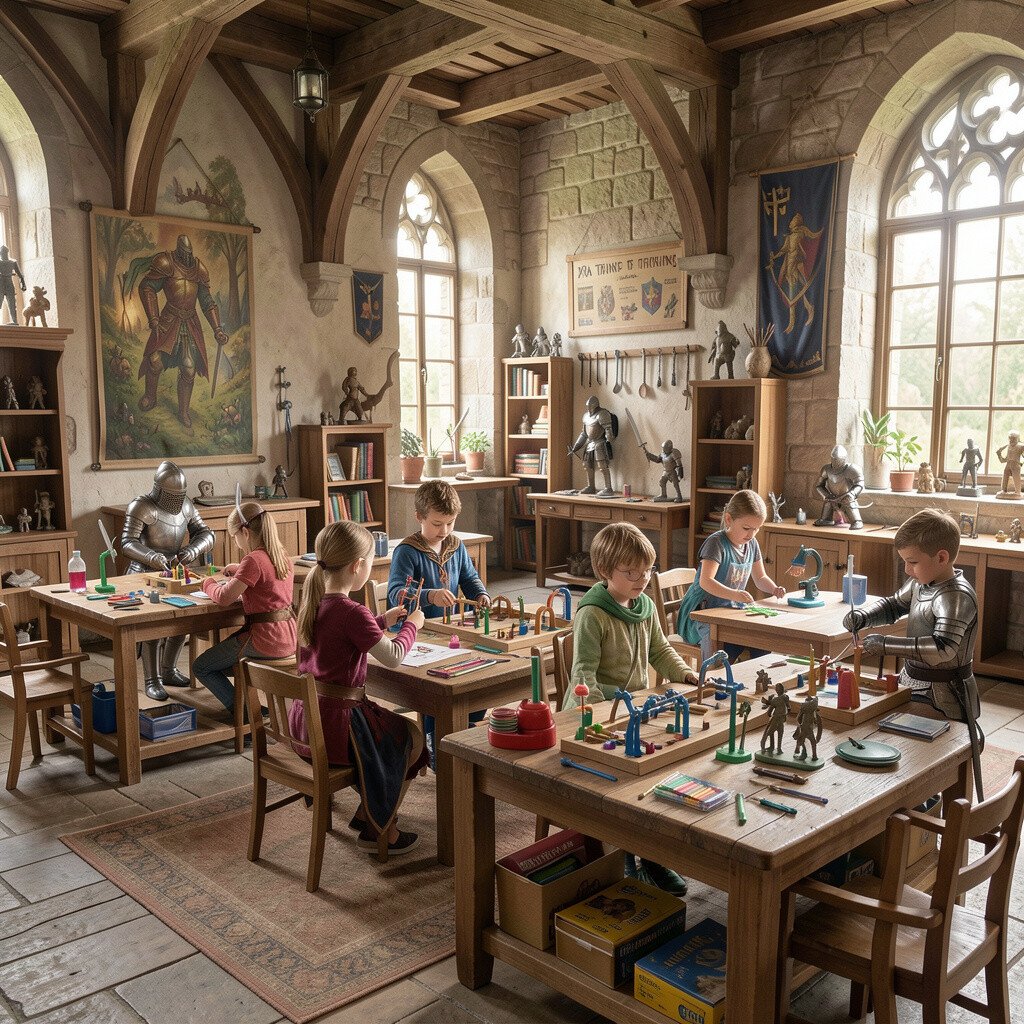
Imagine a “training yard” with foam mats, safe tool kits, and obstacle-shaped tape lines that guide movement between stations. The room can look like a castle courtyard, with banners made from old bedsheets and activity signs drawn in bold marker.
Students learn problem-solving when tasks feel like challenges, not worksheets. Set up build-and-test activities using simple materials like cardboard gears, straws, craft sticks, and tape, then encourage teams to record what worked. For practicality, use clear bins with pictures so younger kids can reset stations without adult help.
This theme stays unique because each “knight” can earn upgrades, such as new math strategies or coding steps, instead of real medals. Consider current trends in hands-on STEM and low-cost engineering prompts that align with classroom goals. Personalize by allowing students to design their own “rank banners” showing skills they practiced, using stickers and printed icons.
7. Spellbook Library With Rotating Portals

The library corner can feel like a spellbook shelf wall, with book spines arranged by “chapters” and small paper doorways leading to different genres. When you swap bookmarks weekly, it’s as if a portal opens, guiding kids toward new reading choices.
This design supports reading motivation by making browsing feel adventurous rather than random. Create “portal prompts” on small cards so students choose books that match a mood, theme, or character type. Practical setup is easier than you think because you can cover shelves with wrapping paper and use simple dividers made from cardboard.
8. Haunted Hallway Story Prompts
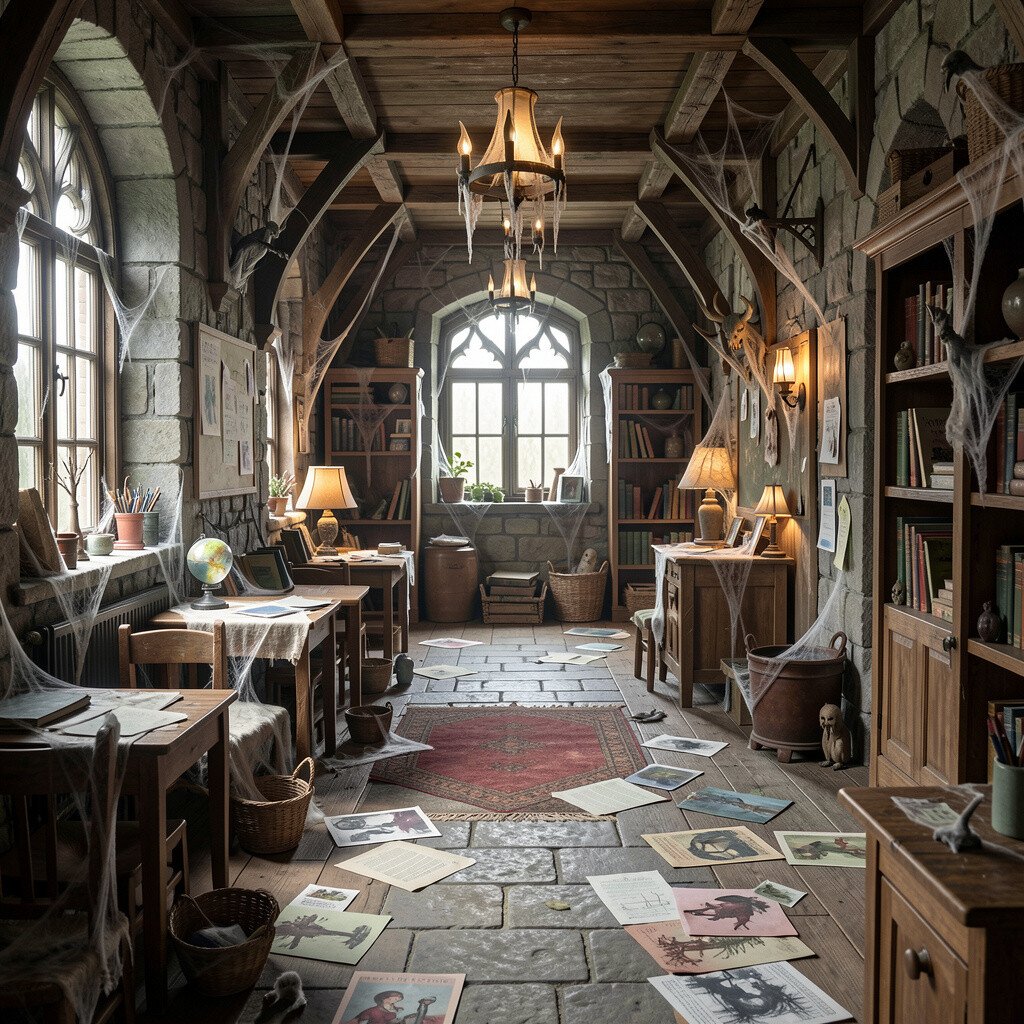
Set up a hallway or long wall where paper silhouettes of friendly ghosts hold story prompts at eye level. A soft “fog” can be created with a strip of sheer fabric along the floor, giving the whole space a playful spooky feel.
Storytelling improves because students have visual cues that spark ideas and keep writing moving. Use the prompt ghosts for quick warm-ups, such as describing a setting, writing dialogue, or choosing a beginning sentence. Keep materials budget-friendly by printing prompt sheets on cardstock, laminating them, and attaching them with removable clips so you can change themes often.
Uniqueness comes from the classroom rules you attach to the ghosts, like “No scary is allowed, only silly suspense.” Personalize by letting students craft one ghost each with a personal theme, such as their favorite animal or a dream place they want to write about. Trends in interactive writing align well here, especially when students revisit prompts over time and track growth.
9. Cloud Train Ticket Math Rows
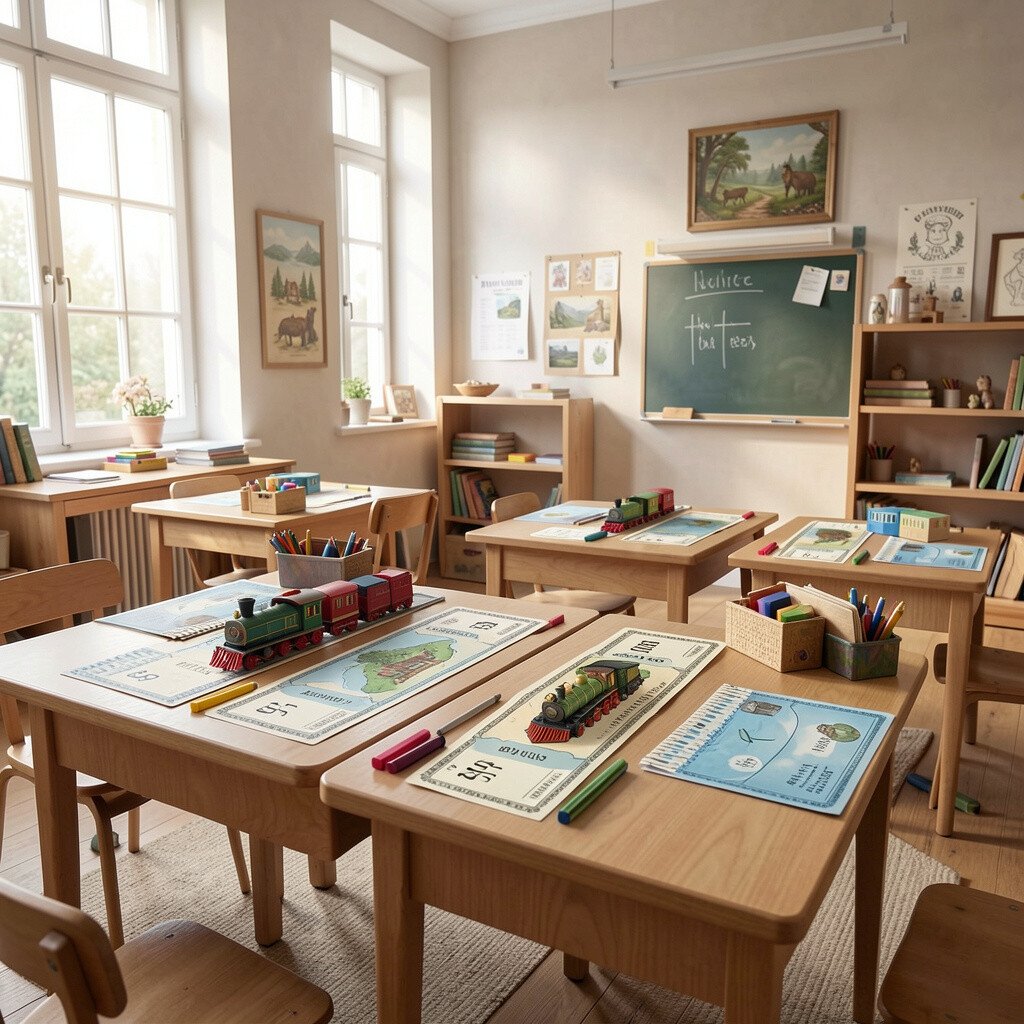
Imagine desks lined up like train cars, with paper ticket slots on each chair and a “platform” rug at the front. Colorful cloud decals can mark zones where students pick up “tickets” for math games.
This helps math practice feel like play, and it supports focus because students anticipate the next station. Try using number cards as tickets, then have students match them to problems, choose a strategy, and explain their reasoning. Keep it practical by using a simple ticket punch from craft supplies and storing card sets in envelopes labeled by skill.
Uniqueness can come from designing train routes around curriculum, such as fractions land, geometry mountain, and measurement coast. Cost considerations stay low because you can print tickets for a fraction of the cost of commercial games. Personalization is easy too, since students can decorate their ticket covers with drawings of favorite fictional trains, dragons, or stars.
10. Fairy Garden Maker Moods

Create a soft classroom oasis with a “fairy garden” shelf filled with tiny planters, fake moss, and jar lanterns made from recycled glass. Students can work at low tables where supplies sit in wicker baskets like mini treasure chests.
Hands-on creativity benefits fine motor skills and patience, especially when projects involve building, sorting, and careful writing. Use the garden to anchor maker time and reflection, with tools placed at child height and clear steps shown with icons. For practicality, choose durable materials like plastic greenery, washable glue sticks, and seed-shaped labels to reduce mess.
This design stands out because it blends calm and action, letting shy students feel safe and eager at the same time. Consider current trends like sensory-friendly spaces and station-based learning, which fit garden themes naturally. Personalize by letting each student create a “fairy stone” tag with a goal, then place it in the garden near their work area.
11. Giant Story Dice Roleplay Stage
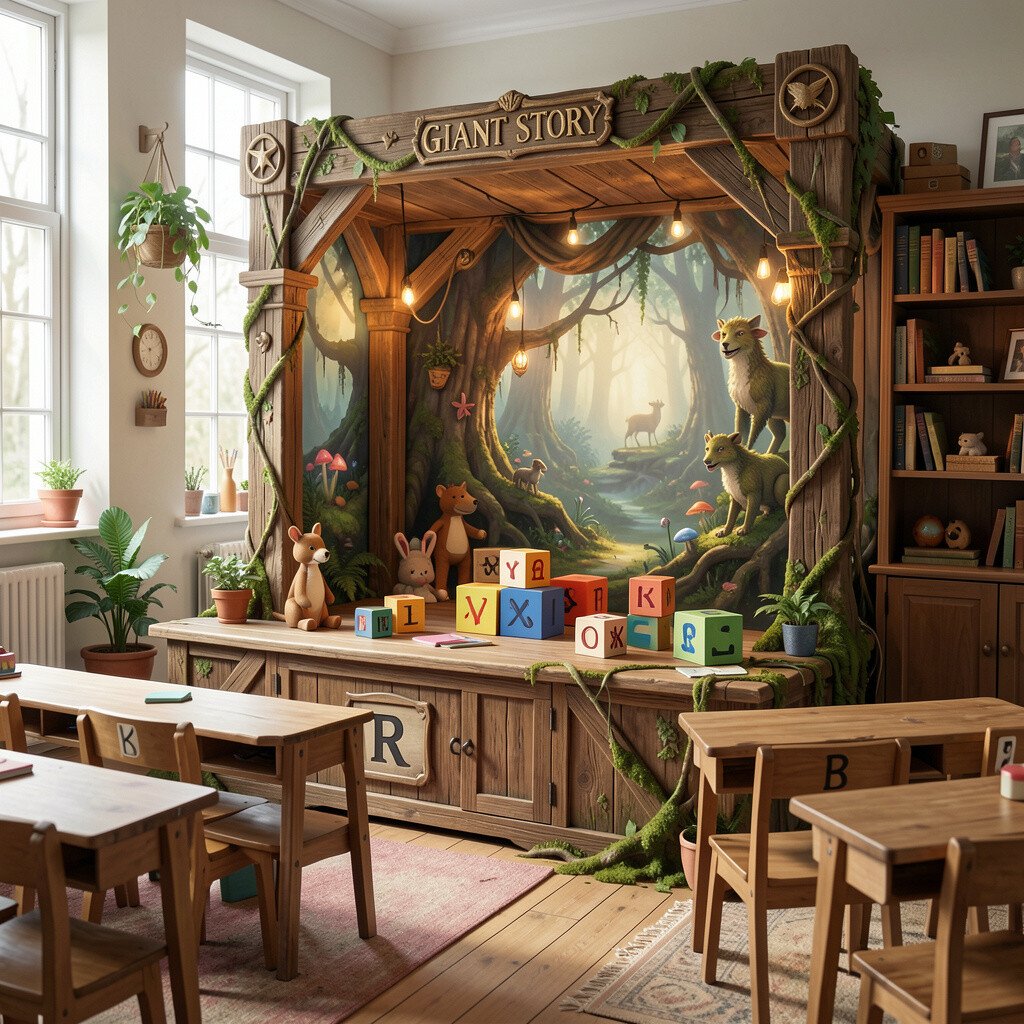
Design a mini stage using a rolling rug platform or a taped rectangle with “spotlight” circles made from paper lanterns. Overhead, hang large story dice made from cardboard, each face showing a character, place, or problem.
Roleplay boosts speaking confidence and helps students practice reading comprehension through acting. Use the dice for quick activities where students roll, build a short scene, and narrate what happens next. Practical tips include using lightweight dice so they are easy to roll safely and storing them in a bin with clear labels.
Uniqueness comes from letting the class write the dice prompts over time, so the stage becomes a living story tool. Cost stays manageable because cardboard and markers do most of the work, and you can recycle old packaging. Personalization can happen when students create mini name cards for their roles, then swap cards to play different parts in new scenes.
12. Viking Longhouse Team Maps
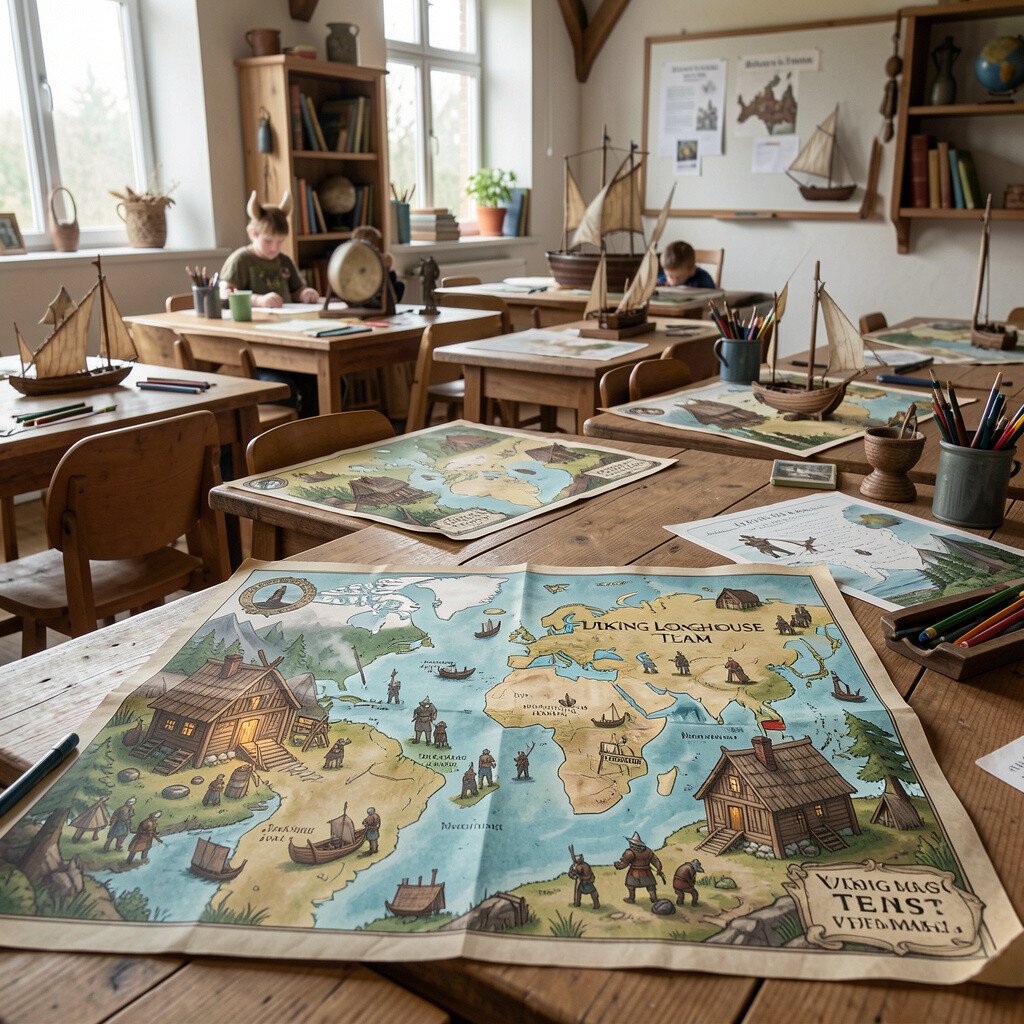
Set the scene with wall maps made from brown craft paper, showing “sea routes” marked with blue tape and little picture icons for each station. Along the room, group seating can resemble long benches, with oar-shaped decor made from foam boards or cardboard strips.
This classroom supports social skills because teams work together to navigate tasks and complete challenges. Build activities around collaboration, like trading clue cards, creating class atlases, or solving puzzles as a crew. Keep setup practical by using removable map sections so you can update routes for each unit without redoing the whole wall.
The longhouse theme is unique because it invites respectful teamwork like a crew that shares resources. For cost considerations, use inexpensive paper, tape, and printed icons rather than specialty decor. Personalize with student-made “runestones” where each child adds a drawing representing a skill they practiced.
13. Space Suit Collaboration Corner
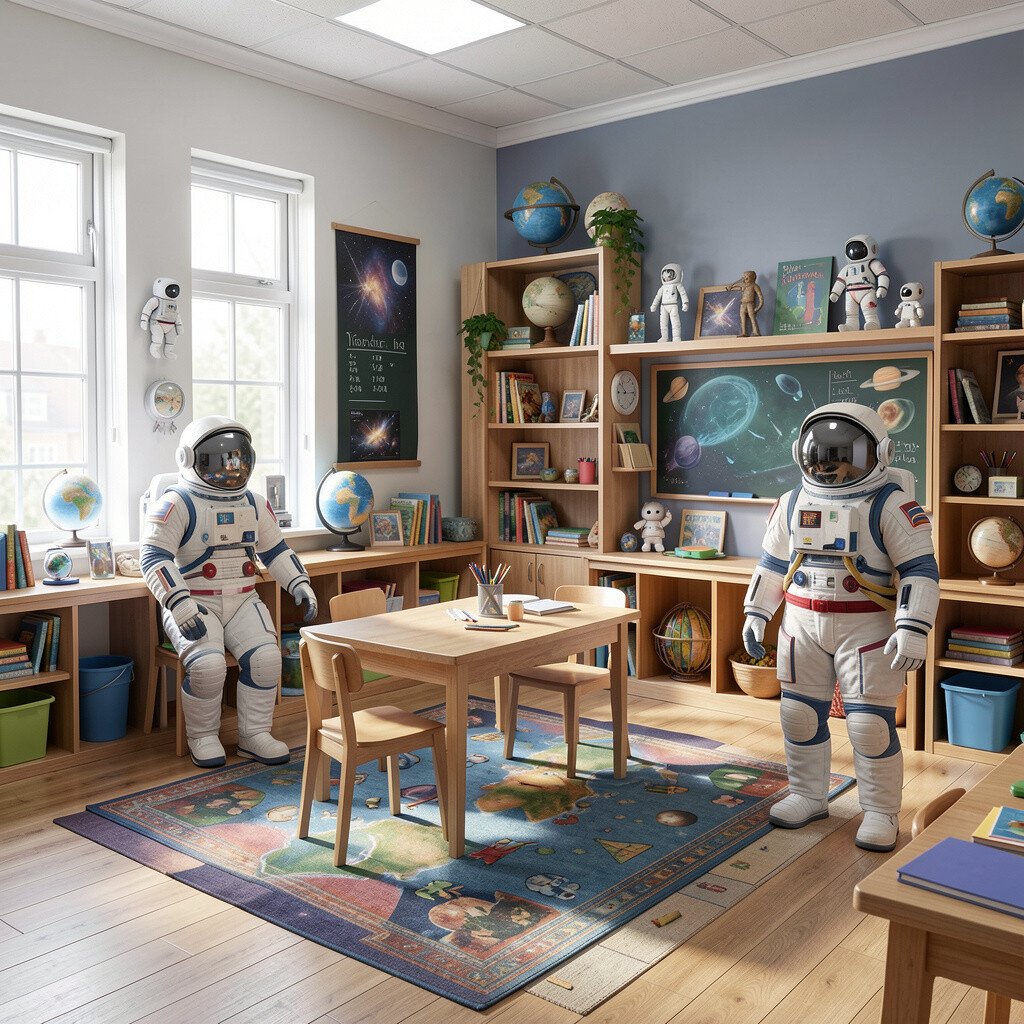
Imagine a corner that looks like a safe docking bay, with “space suit” chairs and supply bins wrapped in silver paper accents. A large circular rug can act as the planet base for group meetings and quick check-ins.
Students benefit from structured talk routines when the space theme makes it easy to see turn-taking. Use a simple “mission script” on a clipboard, then have students complete it during group work and presentations. Practical setup can rely on clipboards, name tags, and sturdy storage totes, plus a few silver table runners for the futuristic look.
Uniqueness shows up when you add personal mission patches that students earn for classroom goals like helping peers or using evidence in writing. Current trends in communication practice and student-centered roles fit well, since kids love acting like astronauts with responsibilities. Personalization ideas include letting students choose the color of their “suit,” then adding that color to their work folders so everything feels connected.
14. Forest Canopy Quiet Reading Boughs
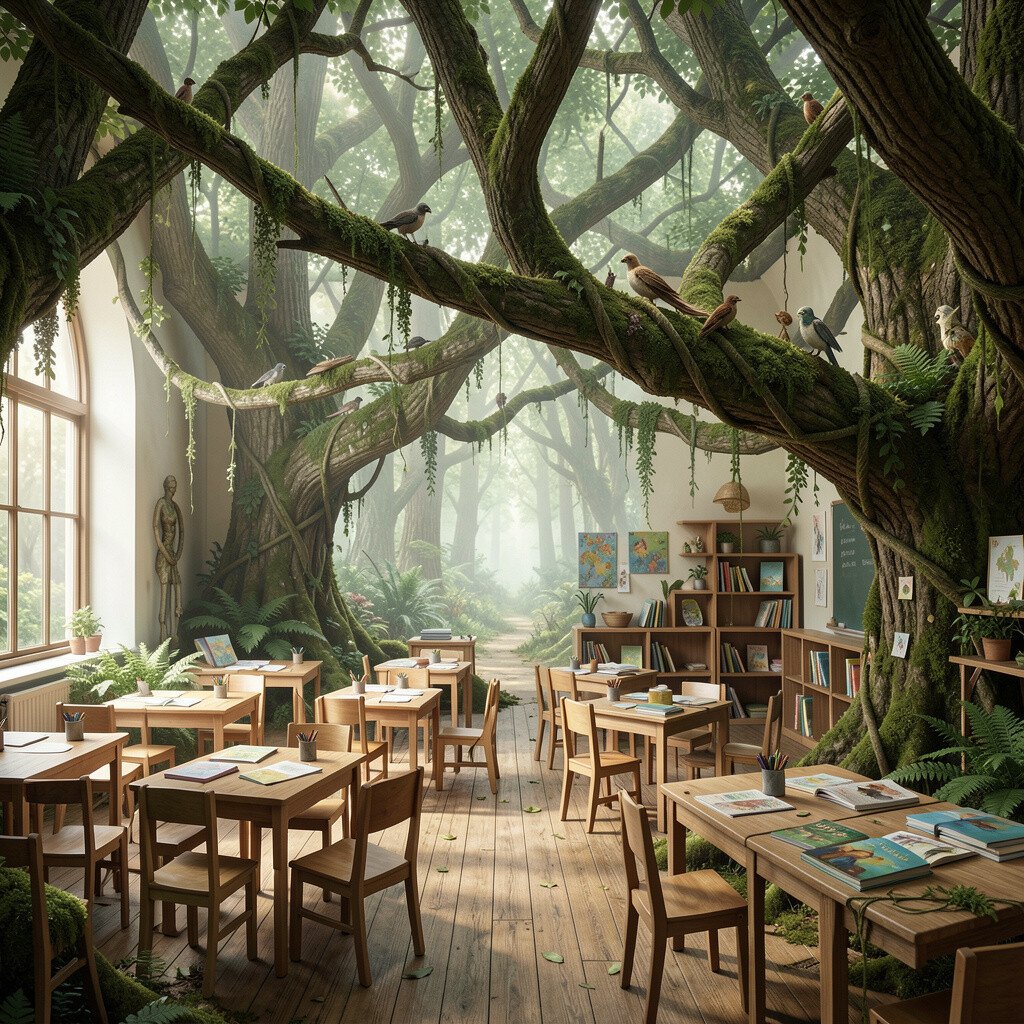
Create a calm reading area under a “forest canopy” using hanging paper leaves and lightweight fabric branches. Floor seating can be arranged like nests, and a small chalkboard can serve as the “tree diary” for daily reading reflections.
This design improves focus by giving students a gentle signal that it’s time for quiet, thoughtful reading. For practical tips, use soft lighting and keep reading bins within arm’s reach so movement stays minimal. Add comfort by using washable cushions, and place a small basket for returning books to reduce clutter.
Uniqueness comes from how you rotate the canopy leaves, turning it into an evolving display of classroom favorites. Cost considerations are friendly because paper leaves and fabric scraps cost far less than themed furniture. Personalize when students write one sentence about a book and pin it to a leaf using removable tape or clips.
15. Time Traveler Timeline Workshop Walls
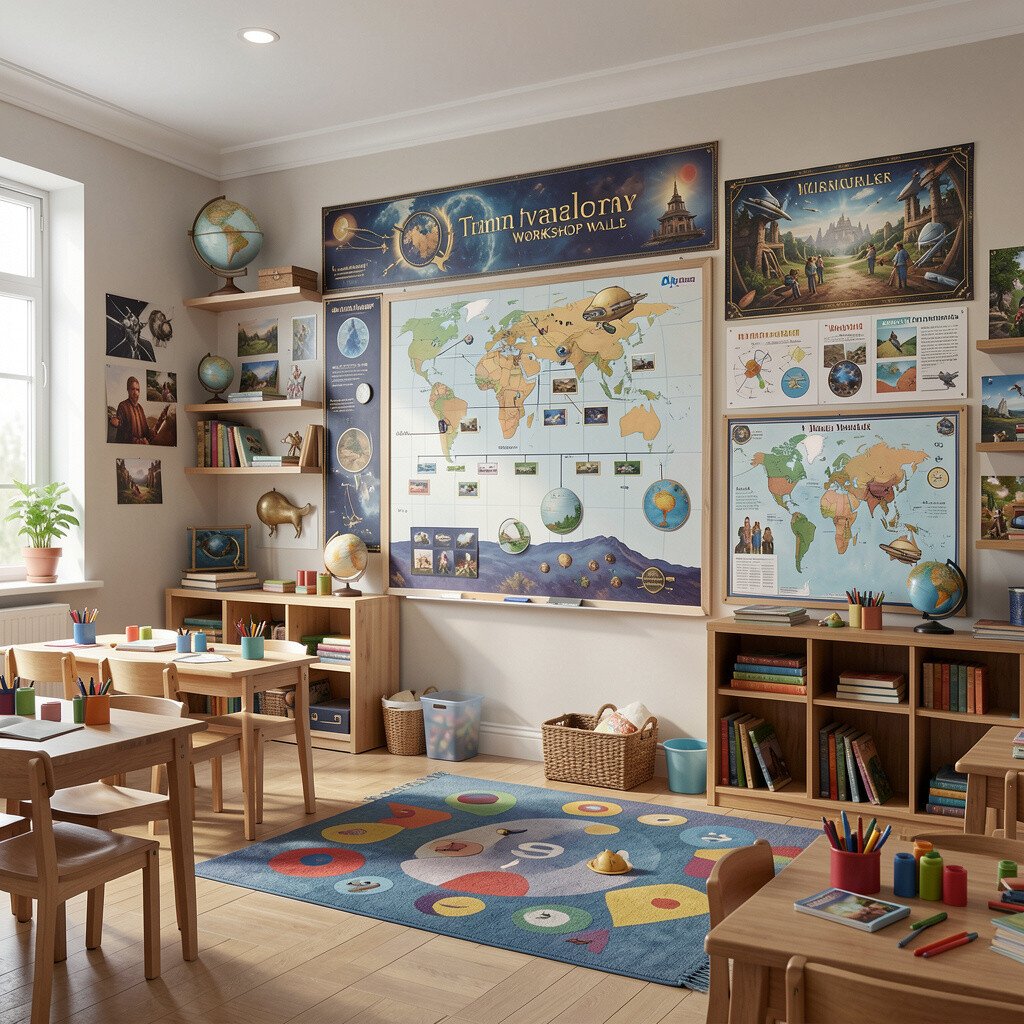
Turn one wall into a shimmering timeline with foil tape, paper “eras,” and small pocket cards that hold facts and writing prompts. The classroom can feel like a time station where students hop forward and backward in safe, playful steps.
Learning benefits are strong because timelines help students organize cause and effect in history and science topics. Use the timeline pockets for guided reading responses, vocabulary cards, and quick writing tasks that match the “era” of the week. Practical setup includes taping a timeline grid, then adding pockets made from envelopes so you can rearrange them easily.
This theme is unique when students create “time traveler passports” filled with the skills they used, like summarizing or measuring. Current trends in student agency match well because kids love choosing their “time stop” for an assignment. Personalization ideas include letting students draw symbols for their favorite moments and adding them to their own passport pages.
16. Alchemy Lab Sound-Explaining Stations
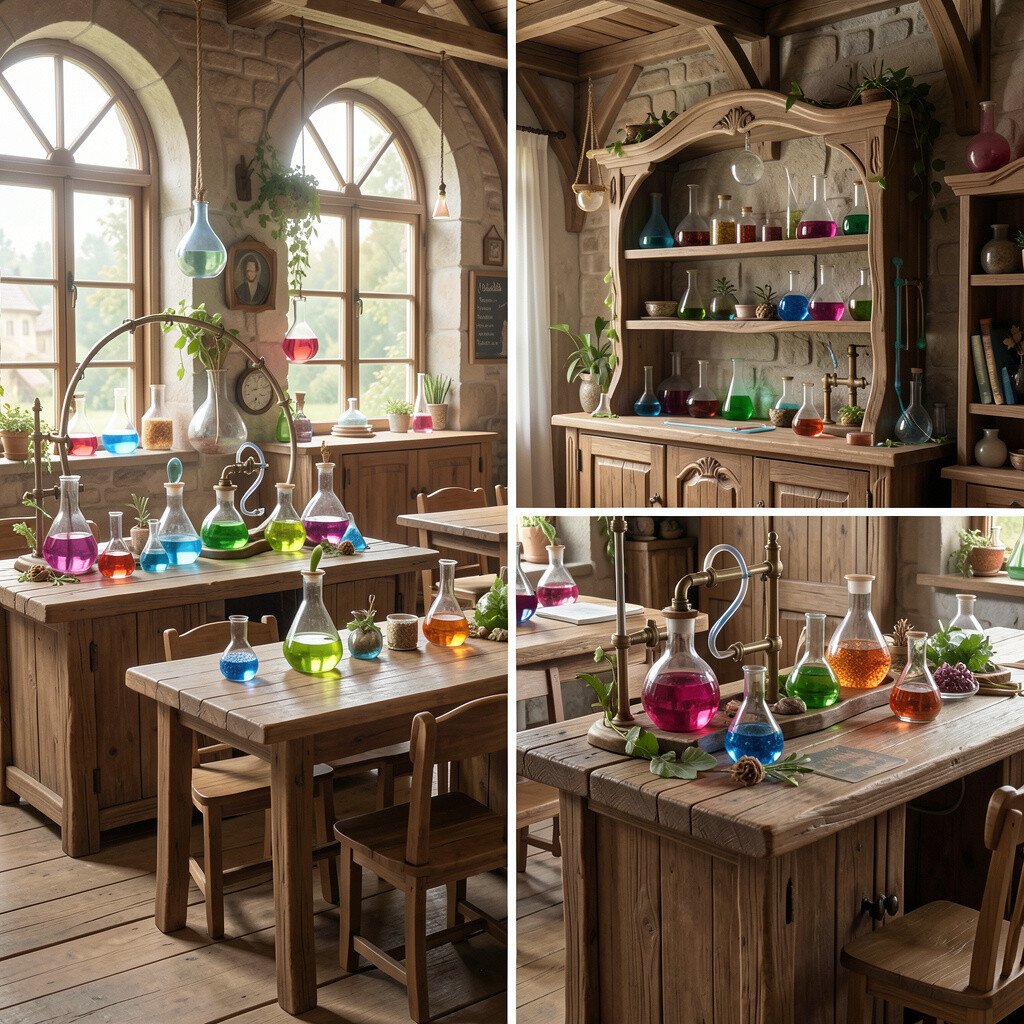
Picture a lab space with chalk “circles” on the floor, where each circle is a station for sound experiments, music rhythms, or vocabulary practice. Label jars can hold rhythm cards, sound word sets, and activity tools so the space feels magical and tidy.
Students learn best when they can explain what they observe, and alchemy visuals make that easier. Set up stations where kids listen, test, and then describe their results in simple sentences. Practical tips include using washable markers on boards, keeping supplies in labeled jars, and using timers so stations rotate smoothly.
Uniqueness arrives because “alchemy” becomes a story for curiosity, not a complicated science unit. Cost considerations can stay manageable since many tools can be everyday items like rubber bands, cups, paper, and straws. Personalize by having students add a “formula line” to a class wall where they share what helped them think clearly.
17. Castle Kitchen Math Snack Bar
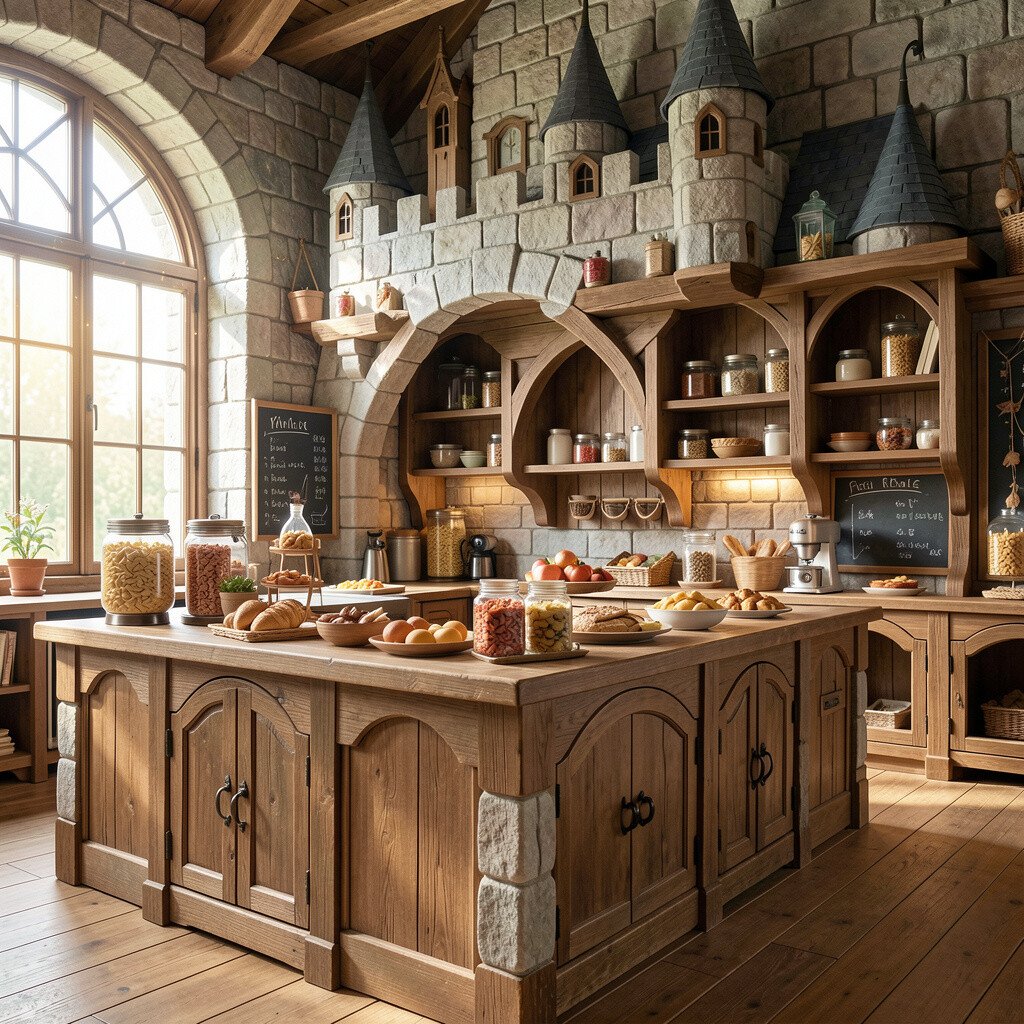
Set up a classroom snack area inspired by a castle kitchen, with mixing bowls, measuring spoons, and paper labels on shelves. A “chef’s counter” can be a long table where students serve fictional portions for story math and word problems.
Math becomes more memorable when students connect numbers to real actions like measuring, dividing, and comparing. Use prompts that relate to fair sharing, scaling recipes, and reading measurement units from simple charts. For practicality, plan for no-fuss cleanup by using wipeable mats, portioning tools, and low-mess materials like dry beans or paper counters.
Uniqueness is built in when kids design their own recipe cards and “cook” math strategies by choice. Current trends in experiential learning and nutrition education align well with snack-themed problem solving. Personalization can include letting students choose a house banner color and writing their name on a chef apron tag for confidence.
18. Jungle Temple Collaboration Clue Walls
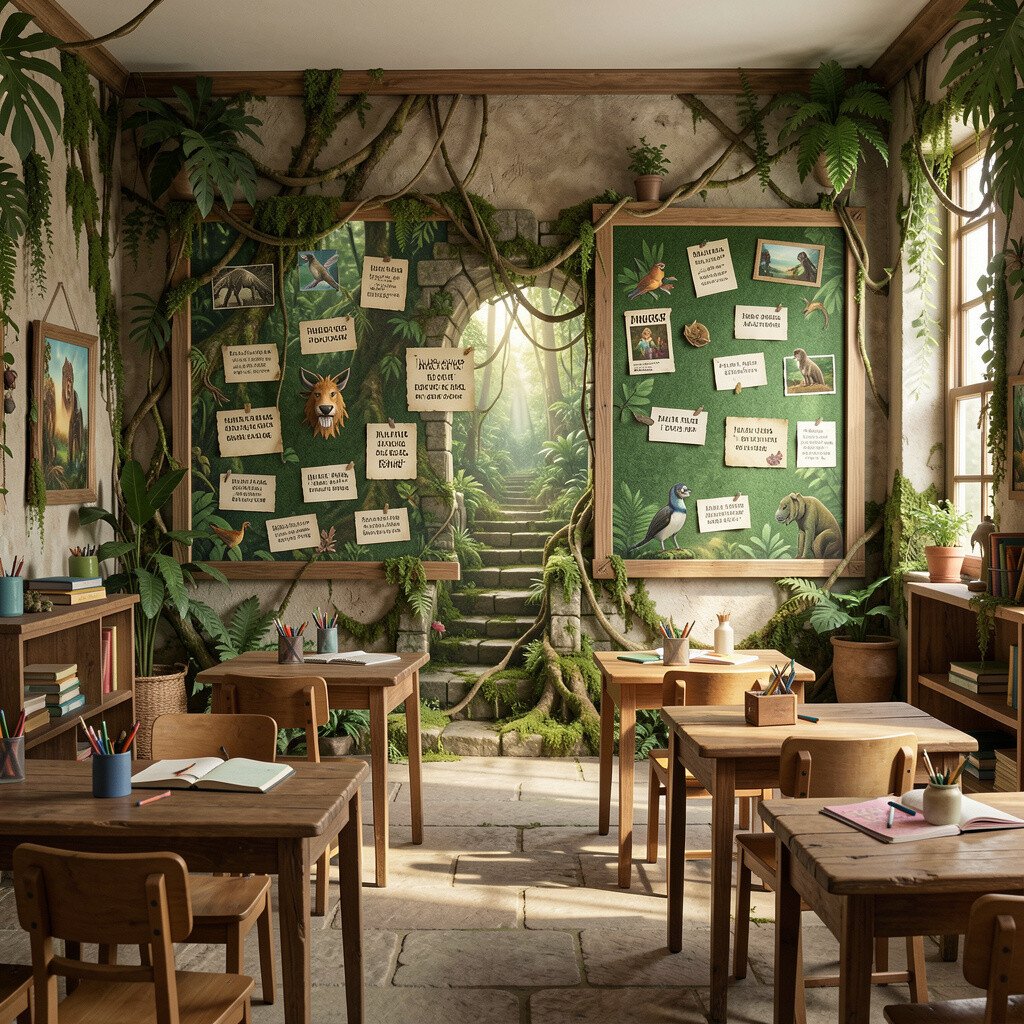
Imagine a jungle temple corner with layered paper vines climbing up the wall and a central space where group clues hang like offerings. Students can gather around a “moss circle” rug and work on cooperative tasks that feel like quest missions.
This layout supports teamwork and accountability, because every group has a clue to add and a role to complete. Use clue walls to store reading strategies, problem-solving steps, and character evidence for writing. Keep it practical by using sturdy adhesive hooks, laminating cards, and updating clue sets without repainting anything.
Uniqueness comes from the choices you give students, such as picking which vine represents their strategy for the day. Cost considerations are reasonable because you can create faux foliage from green paper, felt scraps, or thrifted scarves. Personalize when kids create “leaf notes” that share one helpful method they learned during the week.
19. Superhero Guarded Character Strength Stations
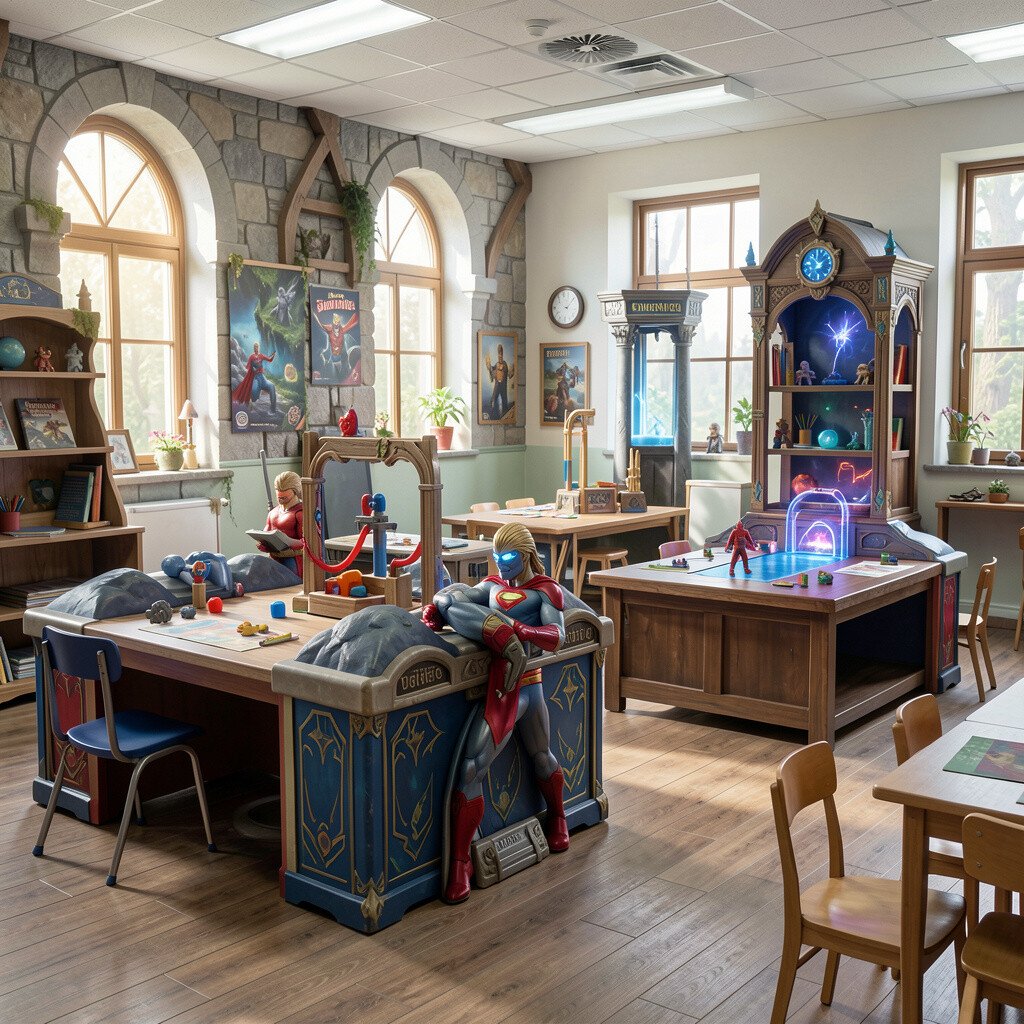
Bring in playful courage with a design that looks like a superhero HQ where each station is a “guard room” for a character strength. Bright posters, comic-style speech bubbles, and shield-shaped bins can guide kids to choose activities that match their needs.
Character education benefits show up when students practice empathy, responsibility, and confidence in small steps. Set up routines where kids pick a strength mission card, then complete a short writing or discussion activity tied to that mission. Practical setup can be done with clipboards, pocket charts, and printed cards so the system is easy to reset.
Uniqueness comes from letting students create their own superhero alter egos based on strengths they want to build. Current trends in social-emotional learning fit perfectly because students love actionable, story-based lessons. Personalization ideas include letting kids customize their shield with colors and symbols, then tracking growth with simple stickers.
20. Celestial Calendar Classroom Circles
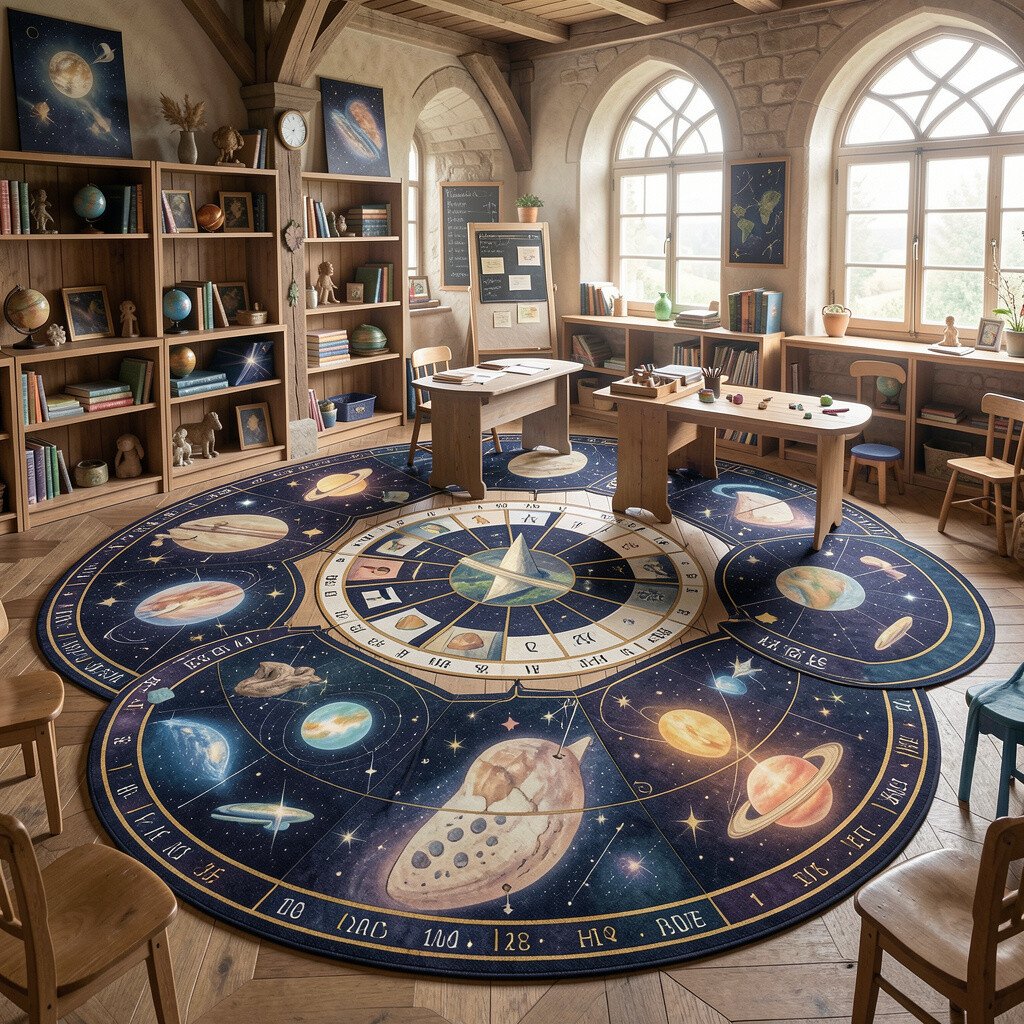
Picture a large circular calendar in the center of the room, decorated like a planet ring with dates as “moon phases” written on card pieces. Around the circle, small desk pads can act like stations for morning meetings, attendance, and quick review games.
This design helps routines feel smooth because the center circle gives students a consistent place to gather. Use the circle for interactive review where students answer questions, move to corners, or add cards to the right “constellation” of topics. Practical tips include using dry-erase markers, storing cards in a labeled carousel, and keeping supplies at student height for independence.
Uniqueness appears when you connect the calendar to class storytelling, like “today is a comet day” that matches a learning focus. Cost considerations are friendly because you can build the circle with poster board, craft foam, or tape and paper. Personalization can happen when students decorate their own “moon phase” card based on how they’re feeling or what they hope to learn.
21. Cursed Map Walls for Vocabulary Hunts
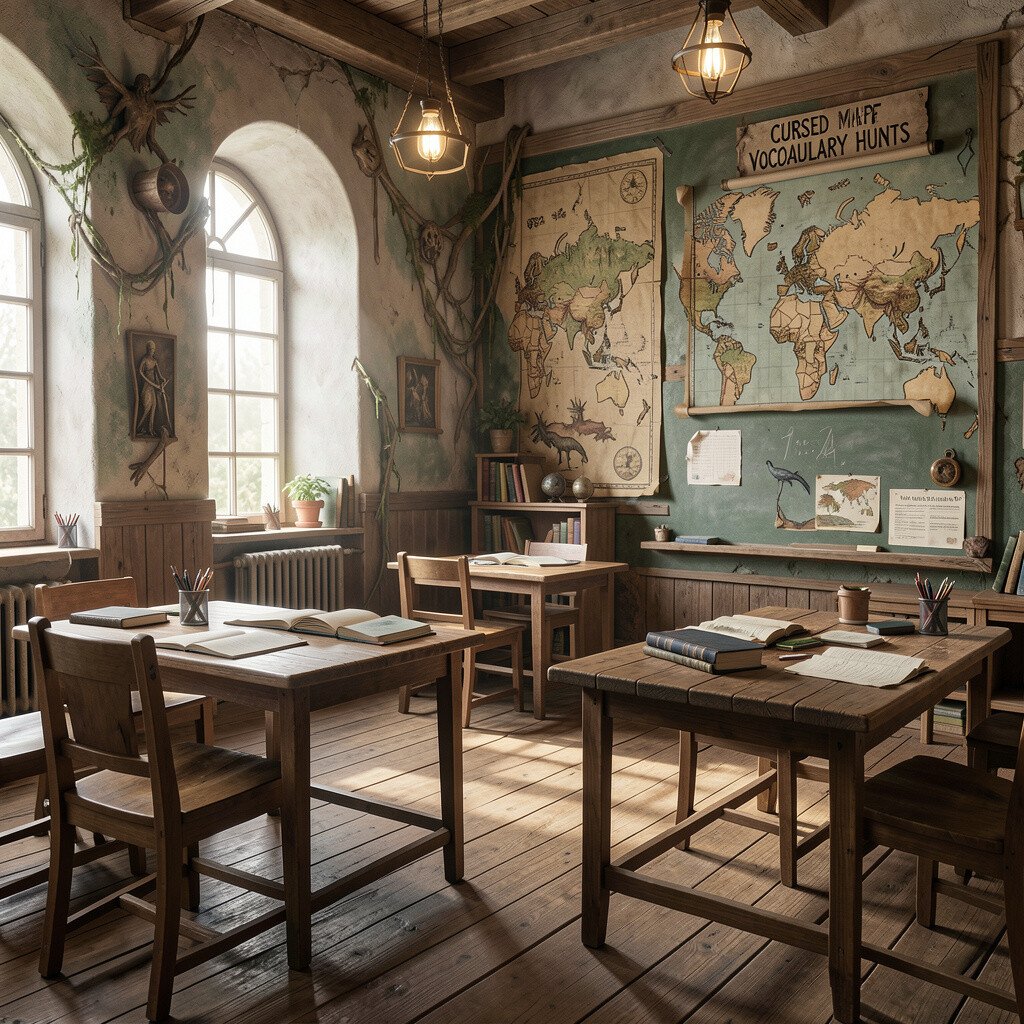
Transform the vocabulary wall into a “cursed map” where each word is trapped behind a small door, flap, or pocket. As students find and use words correctly, they can open new compartments with picture keys and simple success symbols.
Vocabulary grows faster when students see words in action and revisit them often. Use scavenger-style tasks where students search for words during reading, then match them to definitions or sentence frames during writing. Keep it practical by using index cards, removable flaps, and pocket folders so you can change word sets without costly redesign.
Uniqueness comes from the gentle suspense of the theme, which motivates even reluctant learners. Consider cost by printing word doors at home or on a school printer, then reusing the structure each term. Personalize when students choose one word to “free” and then create a tiny illustration that helps them remember the meaning.
22. Mythic Craft Banner Assembly Line
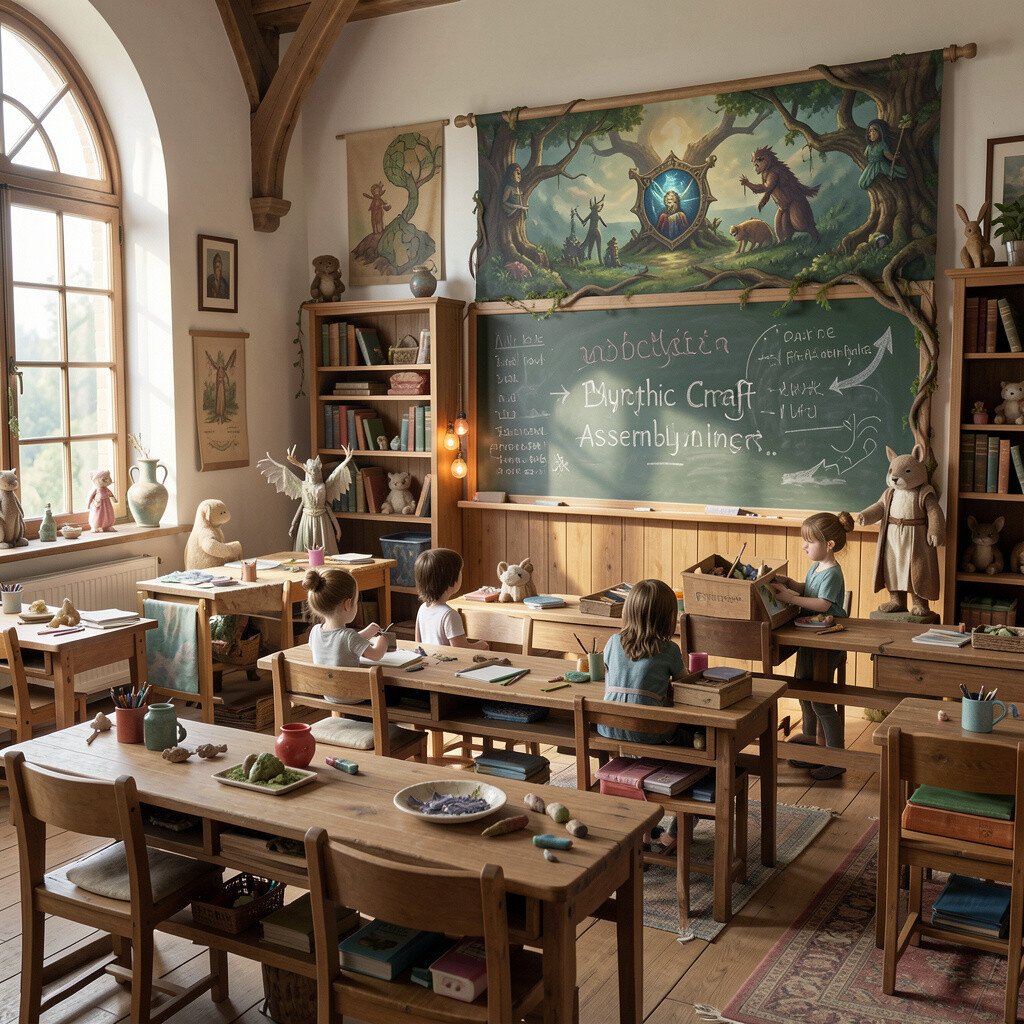
Set up an area where kids build and attach “myth banners” that hang across the classroom like heroic flags. The assembly line feeling can be created with a long table, supply stations, and clip holders where students add pieces in order.
This encourages purposeful making and boosts confidence because students see their work contribute to a growing display. Use it for unit wrap-ups where each group designs a banner panel representing a story element, a science concept, or a historical theme. Practical tips include using washable glue, pre-cut shapes when needed, and clear bins to keep supplies sorted by color or material.
Uniqueness comes from the mythic structure, where students can decide whether their banner represents a “sea legend,” “forest pact,” or “sky oath.” Cost considerations are manageable since banner materials can come from craft paper, fabric scraps, and recycled cardboard. Personalization ideas include letting students add their own symbol and name to a corner, then using a class vote to pick which banners get featured first.