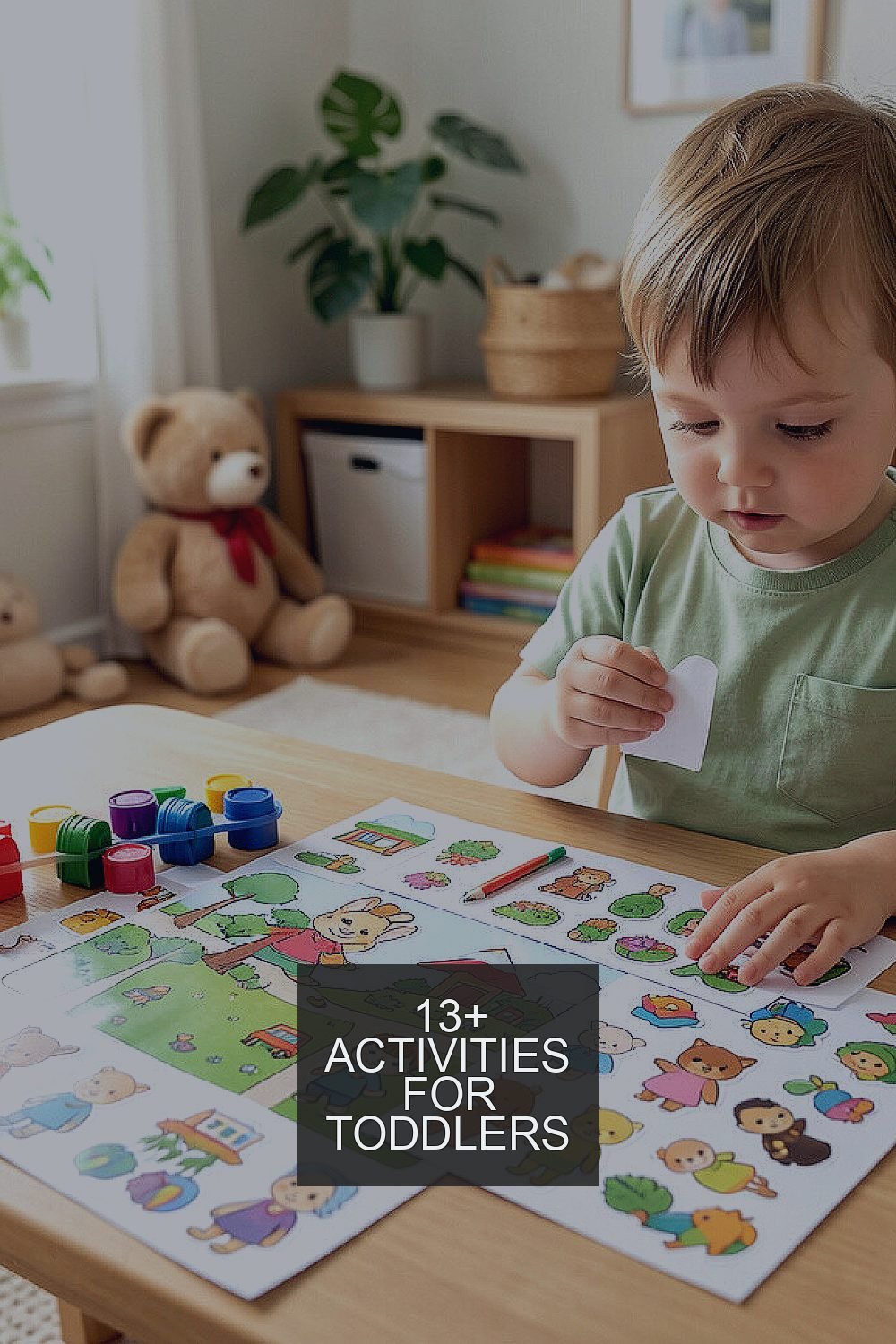
Toddlers learn best when their hands are busy and their eyes are wide. Home can feel like a tiny classroom with a lot of laughter.
1. Sticker Sorting and Scene Making
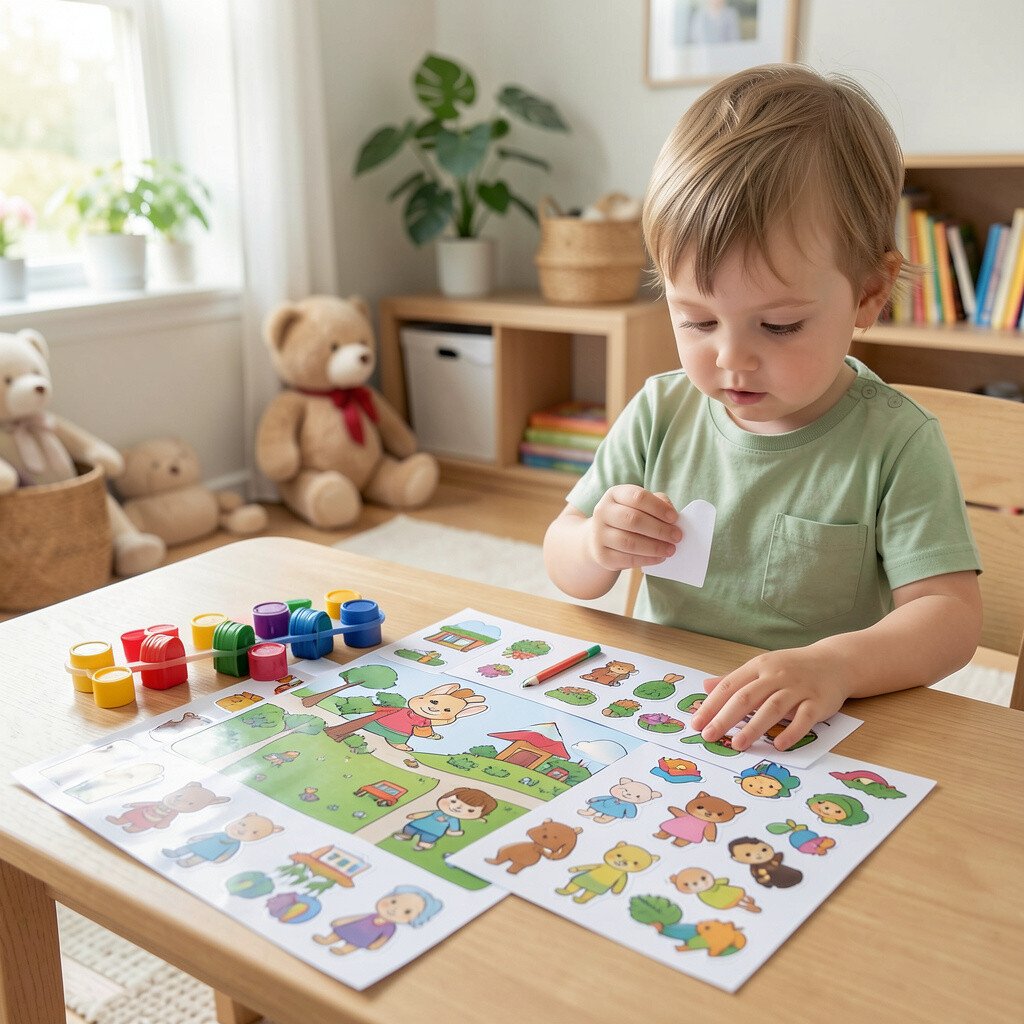
Sticker play looks bright and cheerful, with little hands peeling colorful shapes onto paper or a window. Toddlers get better at finger control, color matching, and early sorting while they build a picture that feels like their own little world.
This activity stands out because it feels like art without needing a big setup, and many sticker books are sold in reusable packs that keep costs low. You can personalize it by choosing animals, trucks, stars, or shapes that match your child’s favorite things, and you can guide them to place stickers by color or size for a small learning boost.
2. Sensory Bin Treasure Hunt
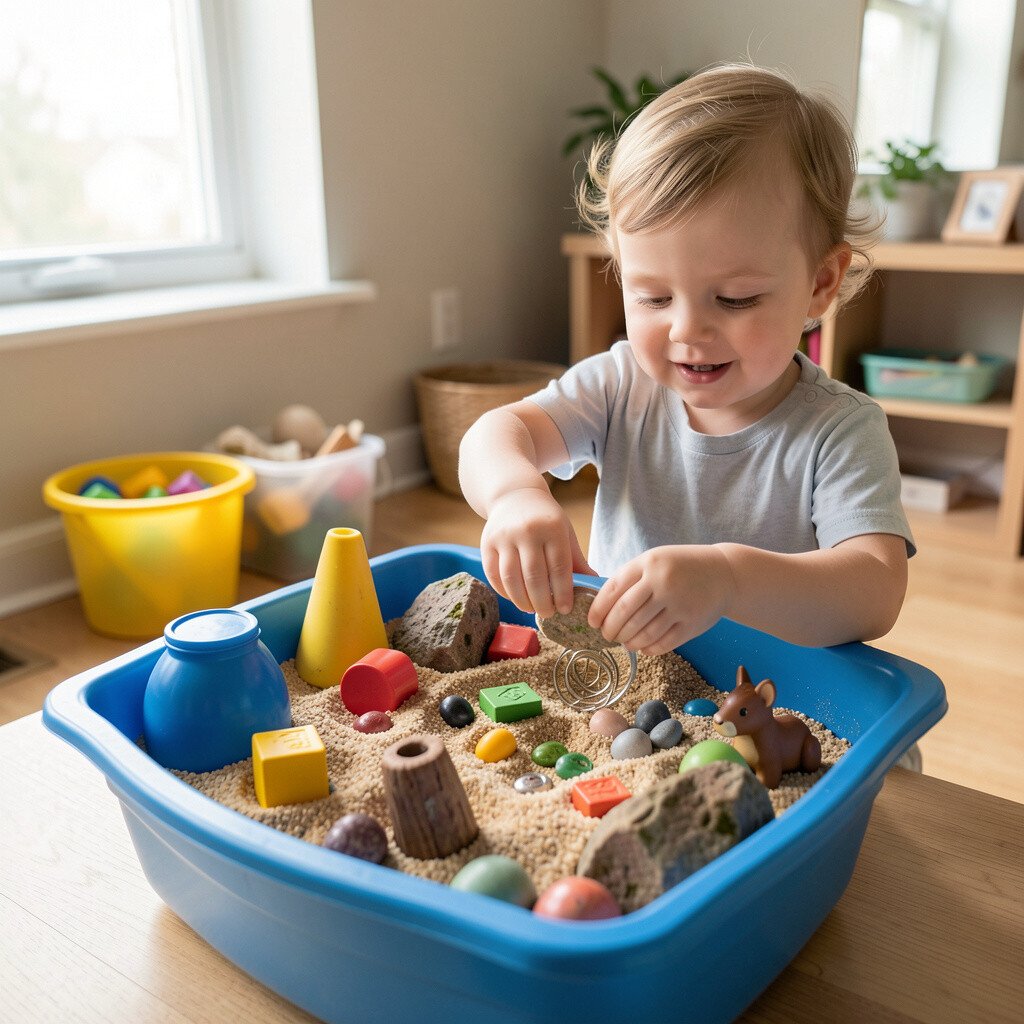
A sensory bin can look like a tiny beach, a cloud of rice, or a tray full of pasta, and that mix of textures is part of the fun. Toddlers learn through touch here, and they build focus, patience, and early problem-solving as they search for hidden toys.
You only need a shallow bin, a scoop, and a few safe items, so this can stay very budget friendly if you use dry beans, oats, or rice from the pantry. Many families like to switch themes with the seasons, such as fall leaves or winter pom-poms, which keeps the activity fresh without buying much each time.
For a personal touch, add spoonfuls of the child’s favorite color pieces or small animals that match a bedtime story they love. Keep the bin on a mat or towel for easy cleanup, and stay close so the play stays safe and calm.
3. Kitchen Counter Pretend Bakery
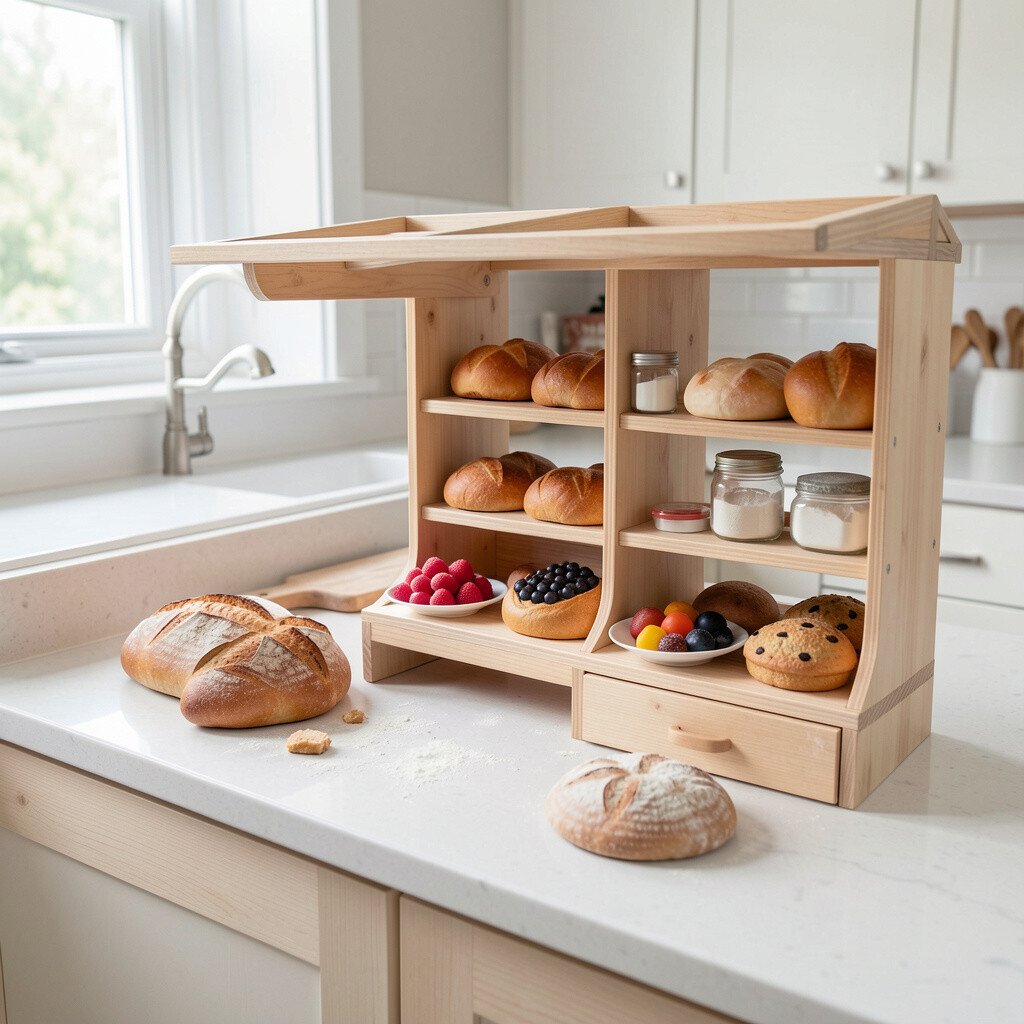
Play baking can turn your kitchen into a warm little shop with empty bowls, toy cups, and pretend muffins. Toddlers practice counting, mixing motions, and simple language while they act out roles like chef, customer, and helper.
The best part is how real it feels, even when nothing gets eaten, and that makes it very special for children who enjoy copying grown-up tasks. You can use dry measuring cups, wooden spoons, or recycled containers, which keeps the cost low and also gives the child a chance to handle different shapes and sizes.
Try naming the pretend treats after your child’s toys or pets to make the game feel personal and funny. When you talk about colors, sizes, and what happens first or next, the play becomes a gentle lesson without feeling like one.
4. Indoor Obstacle Course
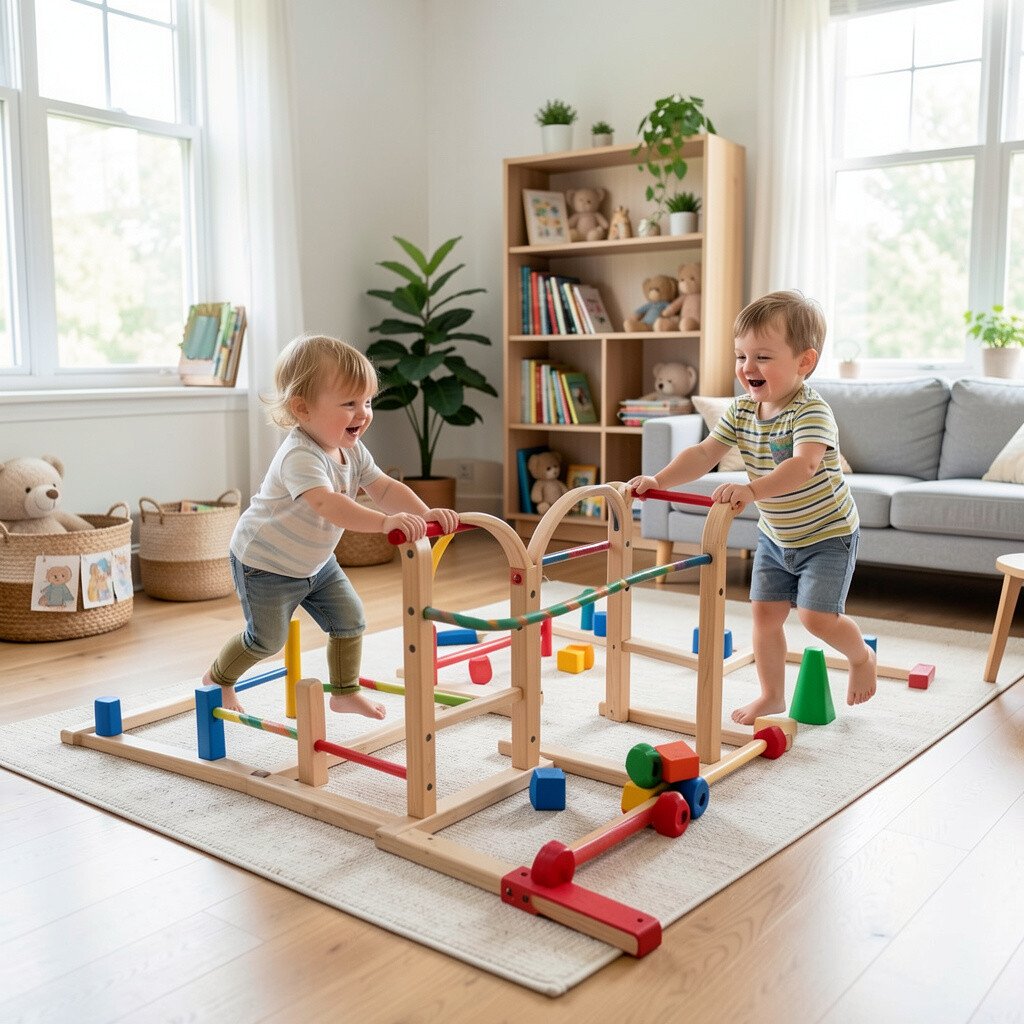
An indoor obstacle course can look like a path of pillows, tape lines, and chairs waiting to become a tiny adventure route. Toddlers gain balance, coordination, and listening skills as they crawl under, step over, and tiptoe through each part.
This kind of play is unique because it uses the furniture you already have, so it costs very little and can be changed in minutes. Many parents now make simple floor paths with painter’s tape because it is easy to remove and gives clear visual guides for little feet.
5. Story Basket and Puppet Talk
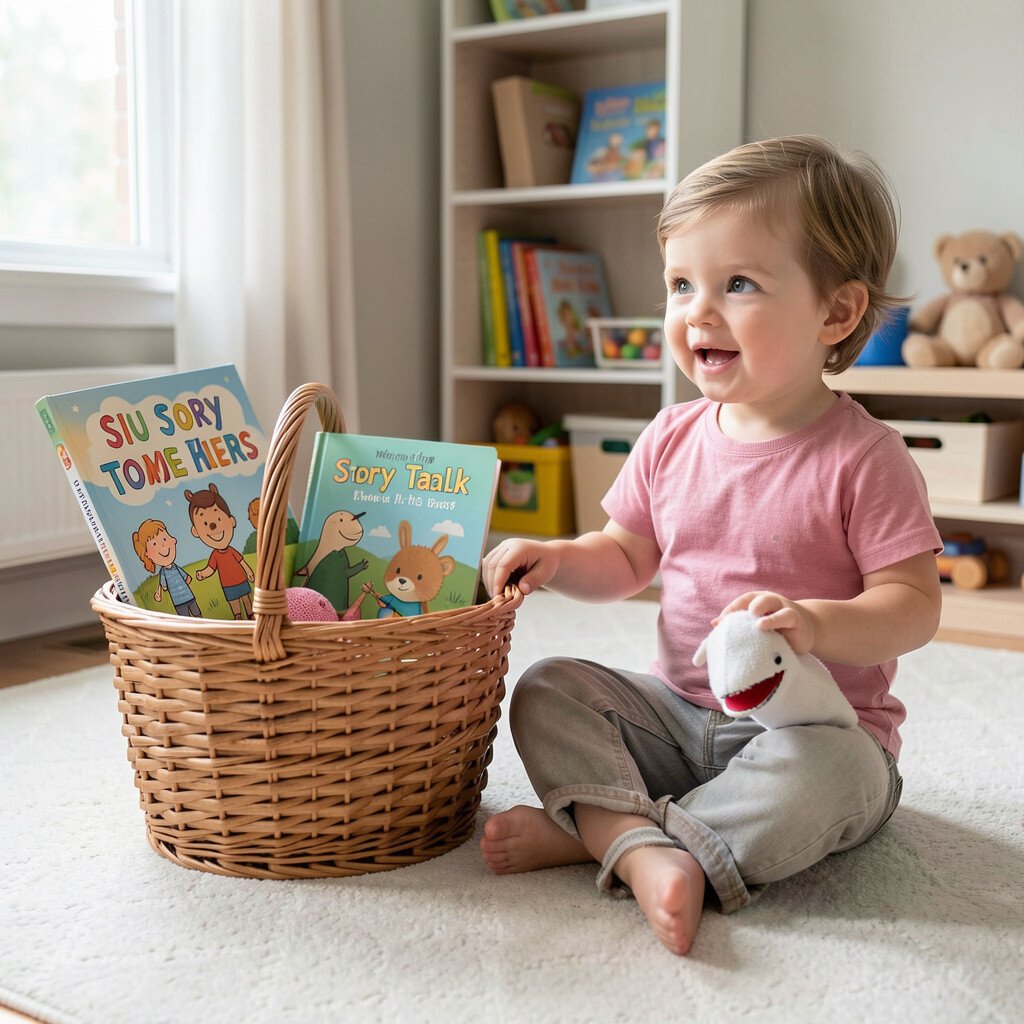
A story basket can hold a few small objects from a favorite book, and the mix of fabric, wood, and paper feels inviting to curious hands. Toddlers grow language skills here because they hear new words, repeat sounds, and connect pictures with real objects.
Using puppets or sock characters makes the activity feel playful and a little magical, which helps shy children join in more easily. You can keep costs down by making puppets from socks, paper bags, or old mittens, and you can change the characters to fit your child’s mood or current favorite story.
It helps to pause and ask what the character might do next, because that invites thinking without pressure. Some families use this kind of play for calm bedtime wind-downs, and the soft lighting and cozy visuals make it especially soothing.
If your child loves trucks, farm animals, or sea creatures, build the basket around that theme so the story feels familiar. The more personal it feels, the more likely your toddler is to stay engaged and keep trying new words.
6. Color Hunt Around the House
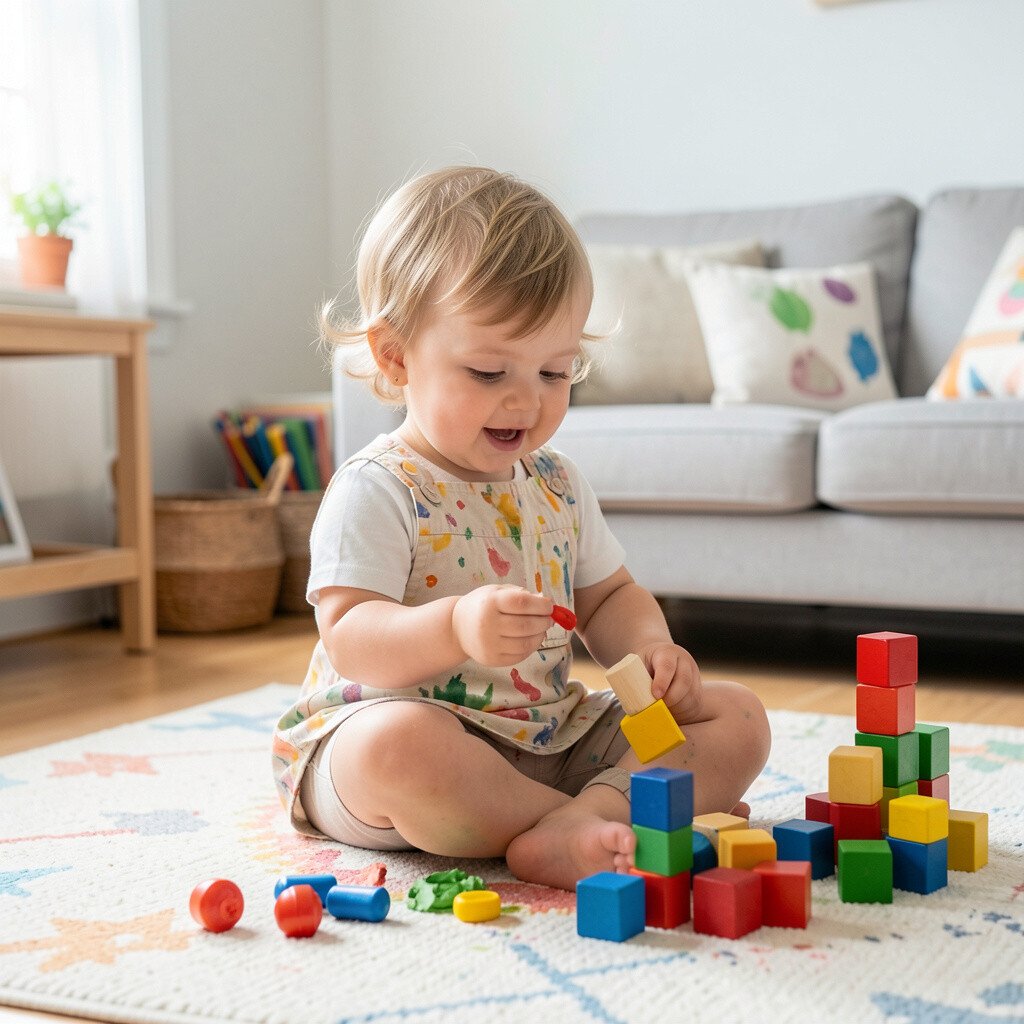
Color hunts turn the house into a bright search game, with everyday objects suddenly becoming learning tools. Toddlers practice matching, naming, and noticing details as they race to find something red, blue, yellow, or green.
This activity is easy to set up because almost anything in the room can be part of the game, which means the cost is almost nothing. It also fits a current trend in simple home learning, where parents use everyday routines for short, playful lessons instead of buying special supplies.
7. Water Play in the Sink or Tub
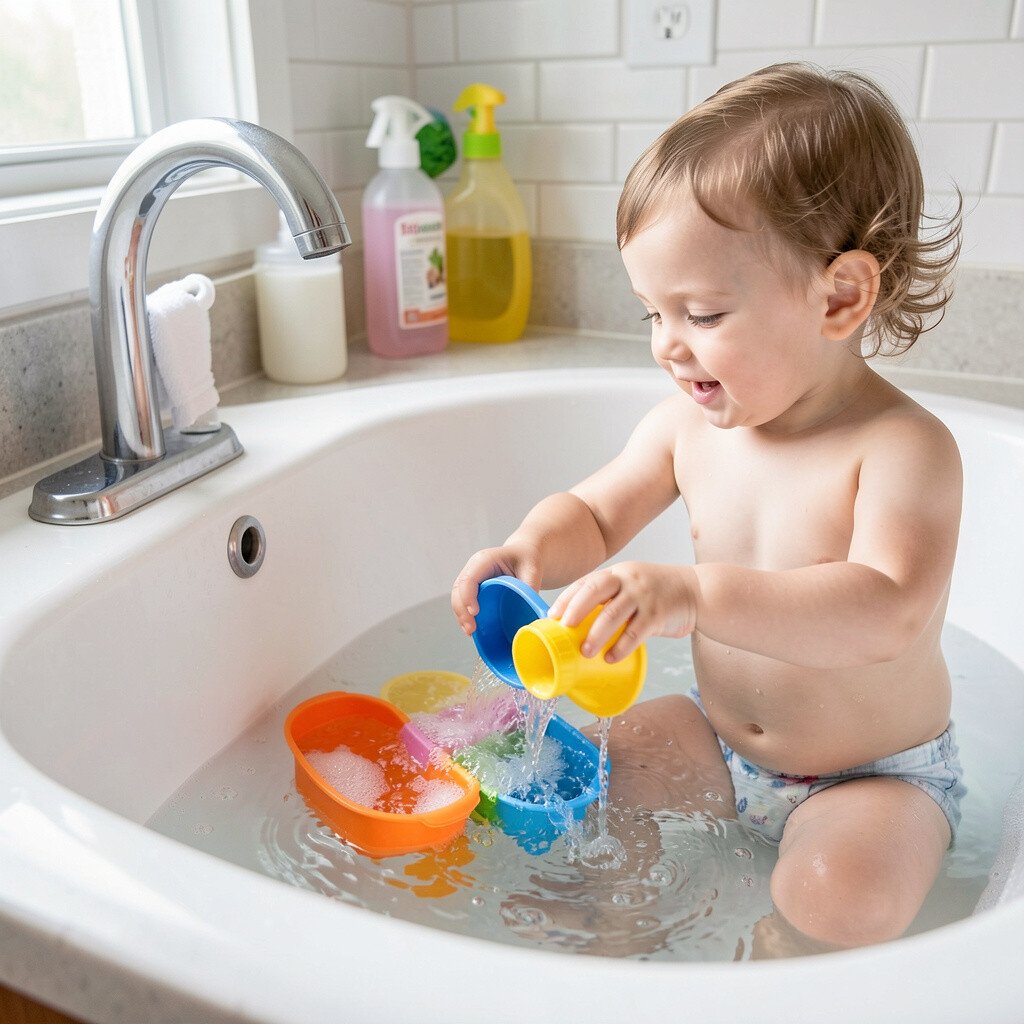
Water play can look peaceful and sparkling, with cups floating, bubbles rising, and spoons splashing gently. Toddlers learn about pouring, scooping, and cause and effect while they stay busy in a way that often feels soothing.
The uniqueness of this activity comes from how simple it is, yet it can hold attention for a long time if you add sponges, plastic animals, or measuring cups. Because you already have a sink or tub, the cost stays very low, and you can make it more personal by adding bath toys that match your child’s interests.
Keep towels nearby and use a small amount of water so the play stays easy to manage. Many families like to add a few drops of dish soap for bubbles, which makes the scene look extra fun without much effort.
If your child enjoys sensory play, this can be one of the best home activities for hot afternoons or quiet mornings. You can also narrate what happens when a cup fills, tips, or sinks, and that simple talk builds early science thinking.
8. Shape Matching with Household Items
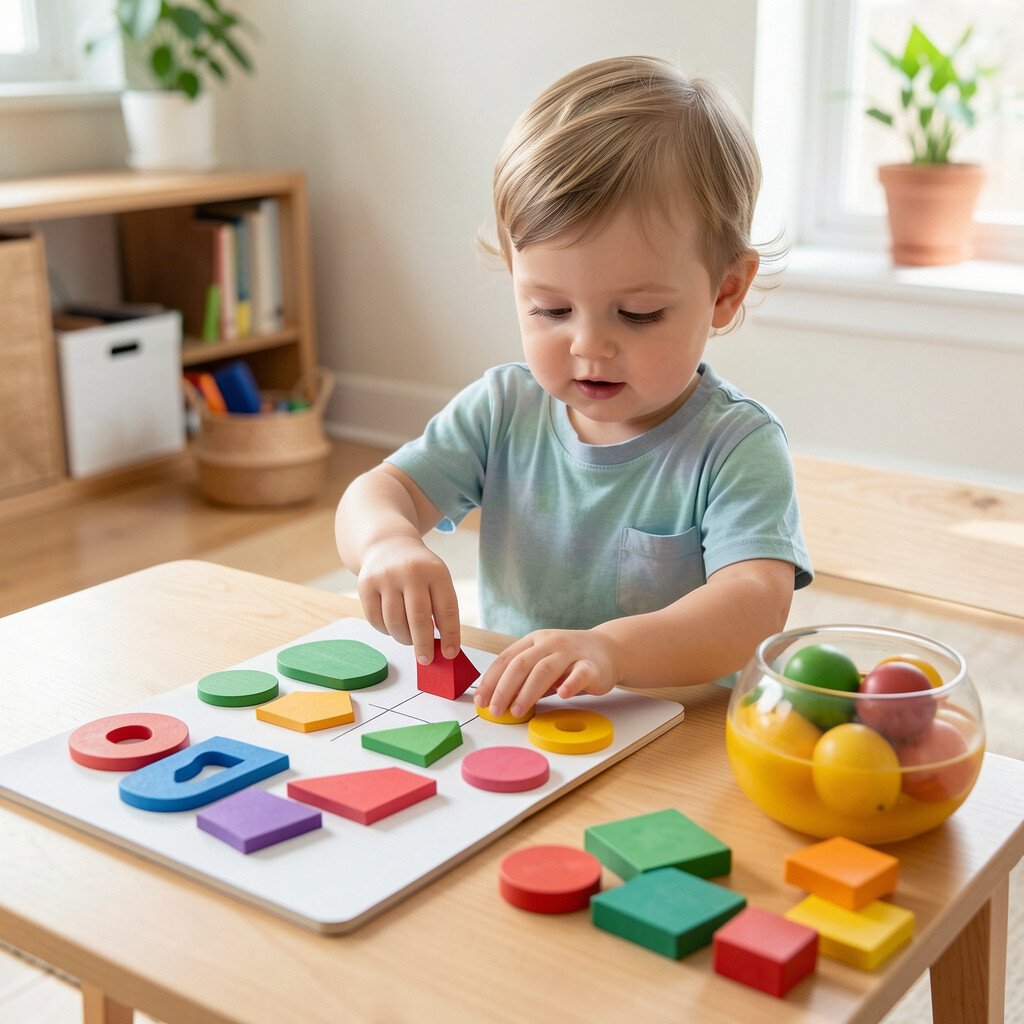
Shape matching can look like a little game board made from lids, boxes, and toy blocks spread across the table. Toddlers learn to notice circles, squares, and triangles while they build memory and sorting skills.
It is practical because you can use jar lids, cookie cutters, foam pieces, or cardboard cutouts from around the house. That makes it low cost and easy to personalize, especially if you pick shapes that connect to familiar things like wheels, windows, or slices of pizza.
When the shapes are colorful or textured, children often stay interested longer because the pieces feel more playful in their hands. This activity also fits modern minimalist play ideas, where small collections of simple items can create a lot of learning.
9. Dance Freeze and Movement Songs
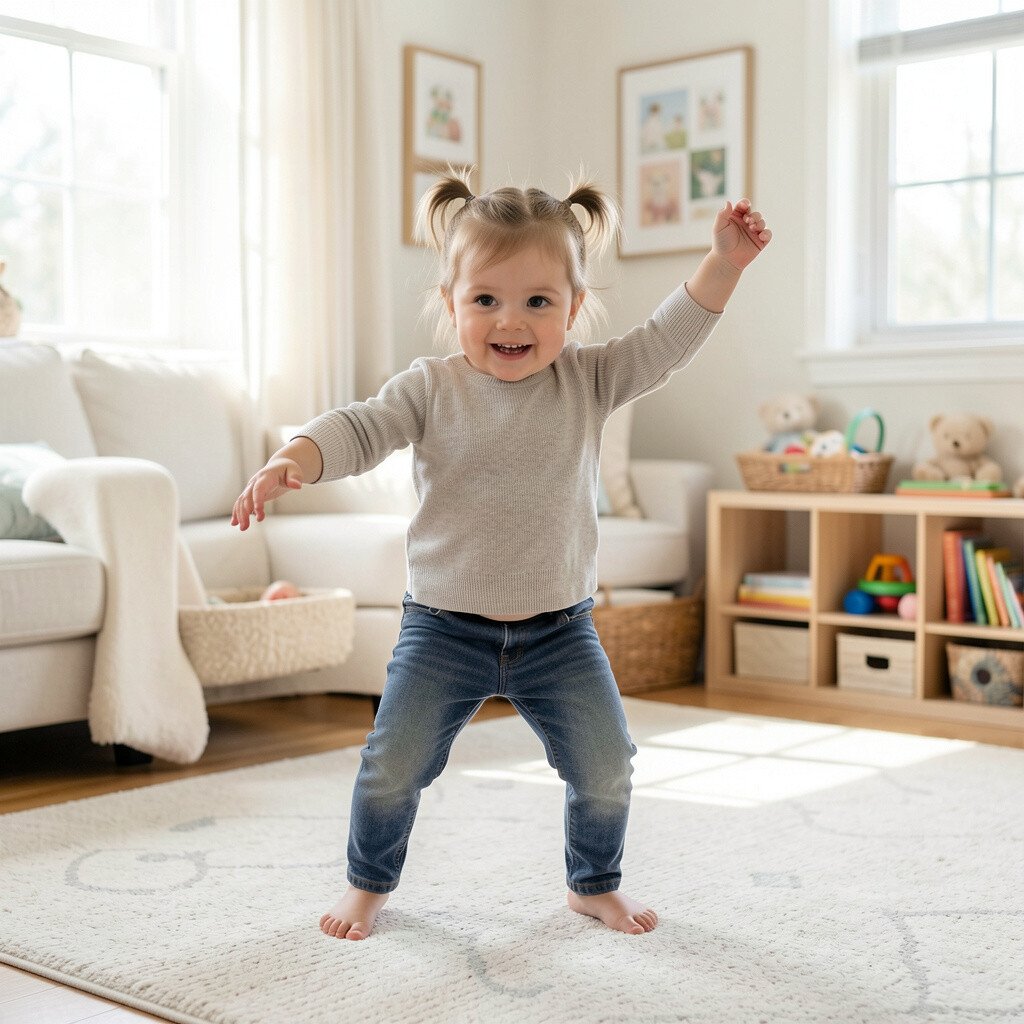
Dance time fills the room with motion, music, and happy noise, which is often exactly what toddlers need. They practice balance, rhythm, body awareness, and self-control when they dance freely and then stop on command.
What makes this activity special is that it can match any mood, from silly jumping to slow swaying, and it needs almost no supplies. You can use a speaker, a phone, or even sing yourself, which keeps the cost tiny and gives you room to choose songs your child already loves.
Personal touches make it better, such as dancing like animals, pretending to be raindrops, or copying family members in a funny way. A popular trend right now is short movement breaks throughout the day, and this one works well because it wakes up the body without needing a big plan.
10. Nature Tray and Leaf Sorting
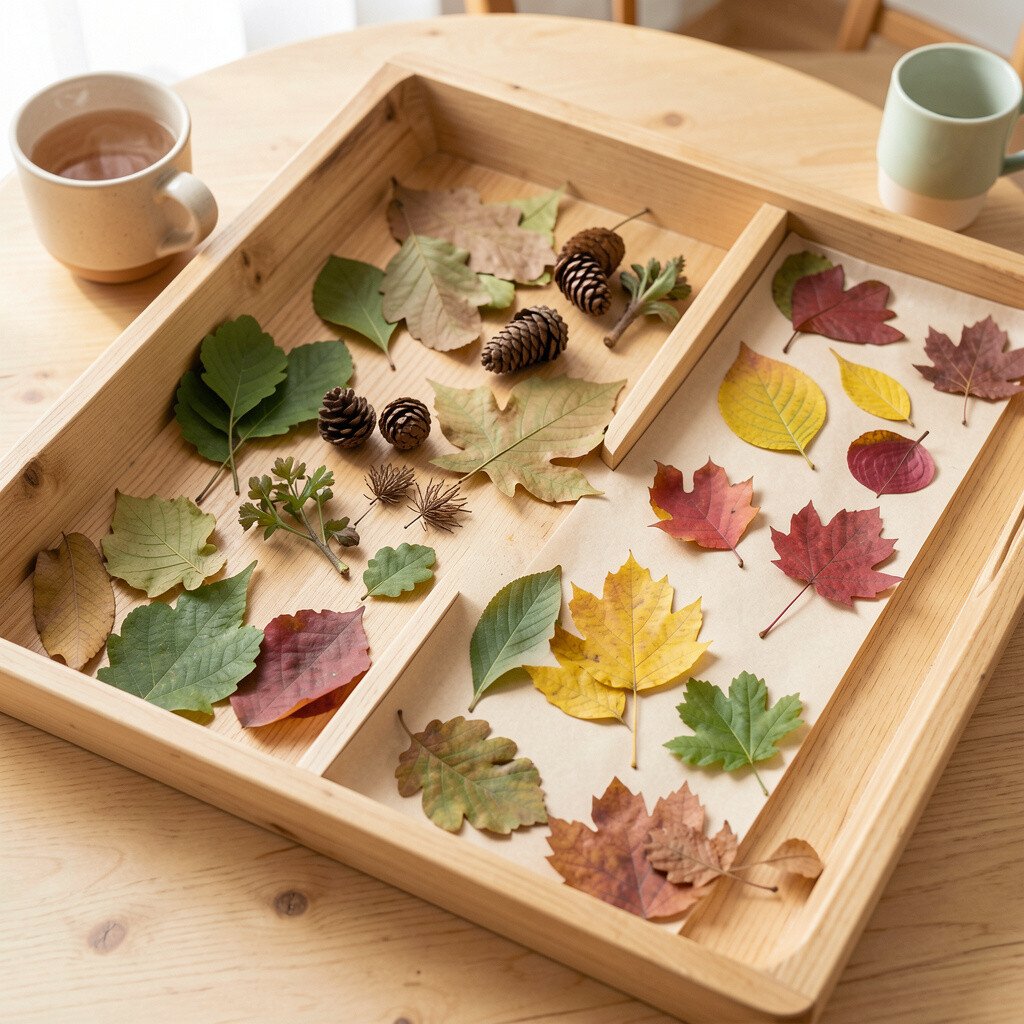
A nature tray can look beautiful, with leaves, pebbles, pinecones, or flower petals arranged on a shallow dish. Toddlers build observation skills and early science thinking when they compare textures, colors, and sizes.
This activity feels fresh because it brings the outdoors inside and helps children notice small details they might usually pass by. The cost can be almost nothing if you collect safe items on a walk, and you can personalize the tray by picking objects from your own yard or neighborhood.
It works well on rainy days, and it also fits families who like calm, screen-free play that still feels interesting. If you want to extend it, ask your toddler to group items by soft, rough, big, or small, which adds another layer of learning.
11. Magnet Play on the Fridge
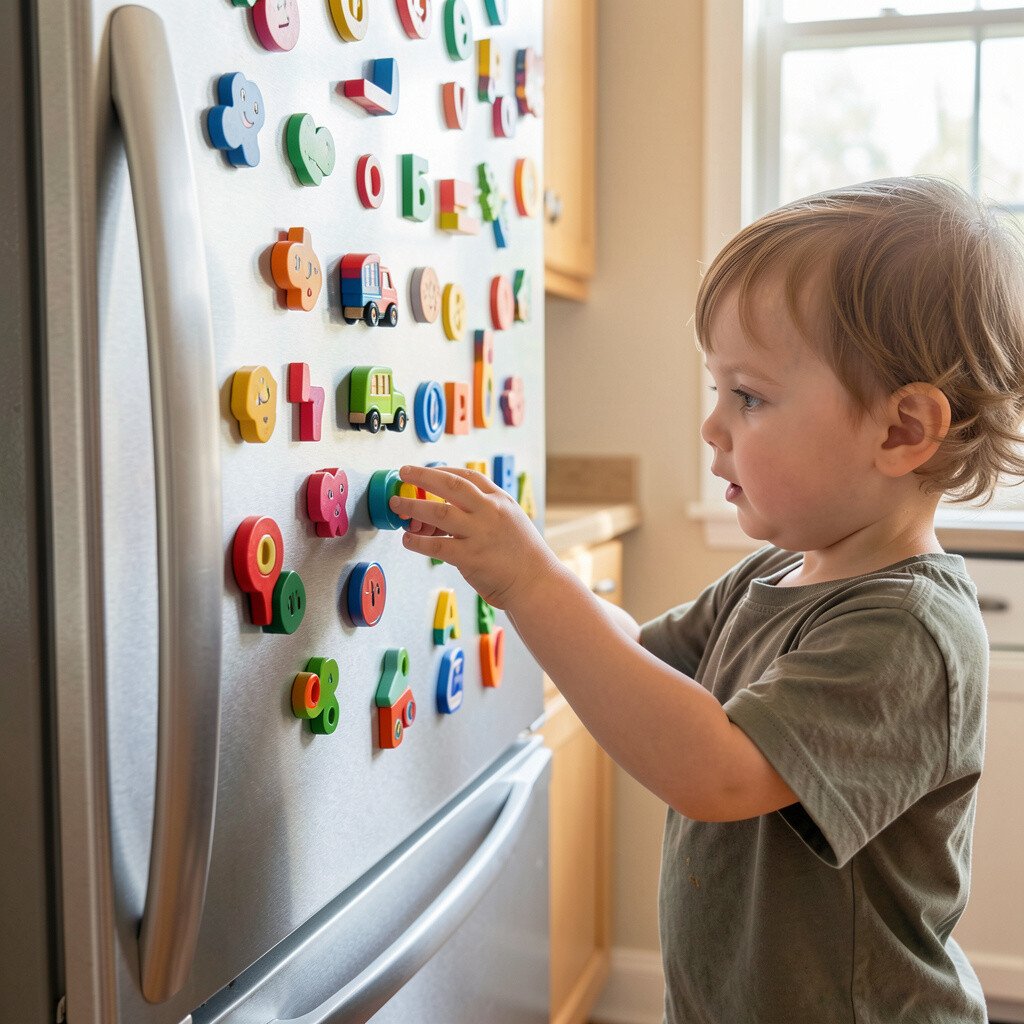
Magnet play turns the refrigerator door into a bright little canvas, with letters, shapes, and pictures ready to move around. Toddlers improve hand strength and coordination as they place pieces, lift them again, and try different arrangements.
This activity is unique because the board is already in your kitchen, so the setup is quick and the cost can stay very low. Many families now enjoy magnetic tiles, foam letters, or picture magnets because they are simple to store and easy to use in short play sessions.
You can personalize the game by making magnets from family photos, pet pictures, or favorite snacks drawn on cardboard. Keep the pieces large enough for safe handling, and use the play to talk about names, sounds, and matching pairs.
The visual appeal matters here because the bright magnets stand out against a plain fridge, which keeps a toddler’s attention. If your child likes repetition, this can become a favorite routine that feels new each time the pieces are moved around.
12. Bubble Foam Art
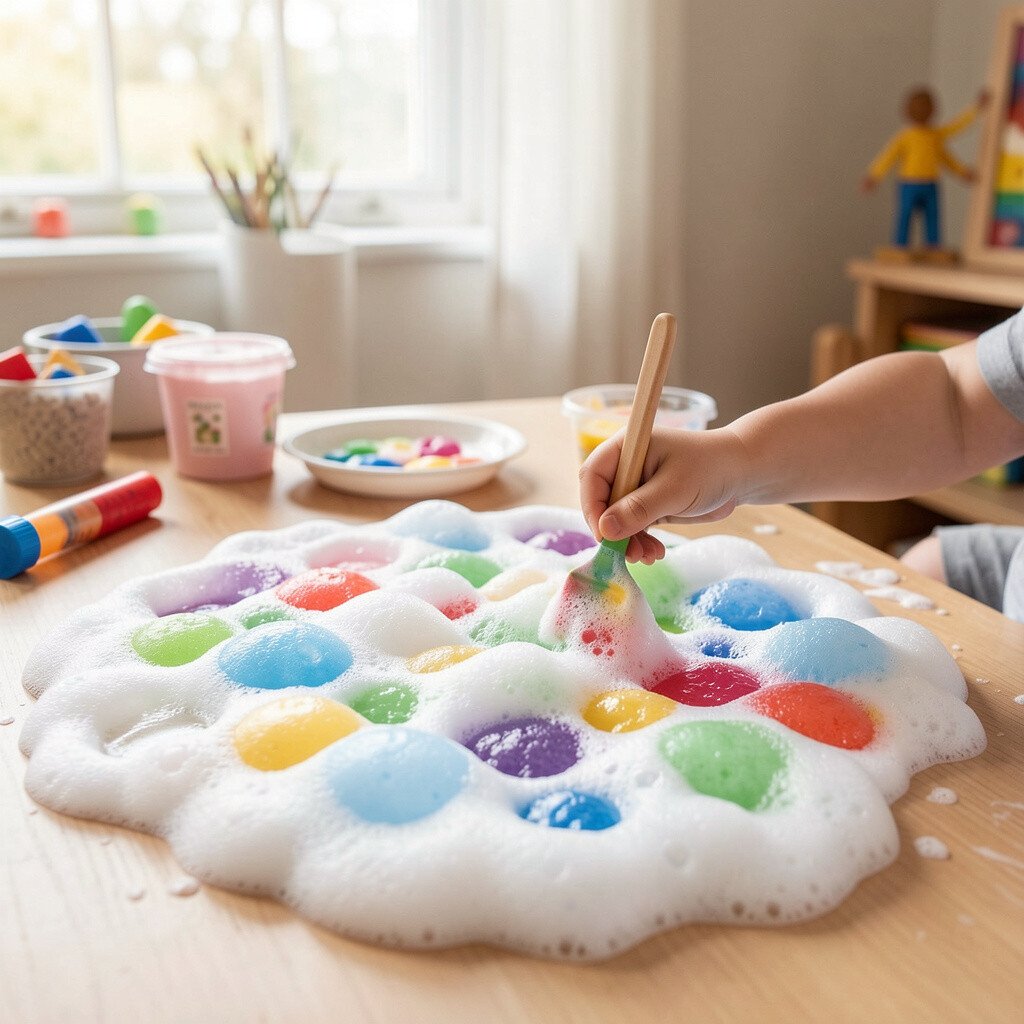
Bubble foam art looks soft and fluffy, almost like colorful clouds spread across a tray. Toddlers enjoy the squishy texture while they strengthen fingers, notice colors blending, and practice gentle squeezing.
You can make it with a little soap, water, and food coloring, so the cost stays low and the result feels exciting. The activity stands out because it is messy in a controlled way, and that often makes it feel extra special for little children.
Try using muffin tins, ice cube trays, or small cups to separate colors and make the setup feel more organized. If you want a personal twist, match the foam colors to a holiday, a favorite animal, or a child’s room theme.
Many parents like sensory art like this because it combines creative play with calm focus, which can be helpful on busy days. Keep a washcloth nearby and remind your toddler that the foam is for playing, not tasting, so the fun stays safe and easy.
13. Homemade Music Station

A homemade music station can look lively, with pots, spoons, shakers, and boxes lined up like a tiny band. Toddlers build rhythm, hearing, and timing while they tap, shake, and listen to different sounds.
This activity is wonderfully affordable because many instruments can be made from recycled items already in the house. It also feels current because more families are choosing open-ended play that lets children lead the way instead of following fixed steps.
For personalization, use containers of different sizes or decorate them with stickers in your child’s favorite colors. You can make a game out of loud and soft sounds, fast and slow beats, or copycat rhythms, which turns the music into learning without pressure.
The visual side matters too, since a row of shiny spoons, bright jars, or taped boxes can look inviting right away. If you want a quieter version, fill containers with rice or beads and keep the rhythm soft, which works well for small spaces.
Because toddlers enjoy repeating actions, this station can stay useful for a long time when you swap out the materials. It is a simple way to build confidence, and the child gets the joy of making something that feels like real music.
14. Simple Sorting and Cleanup Game
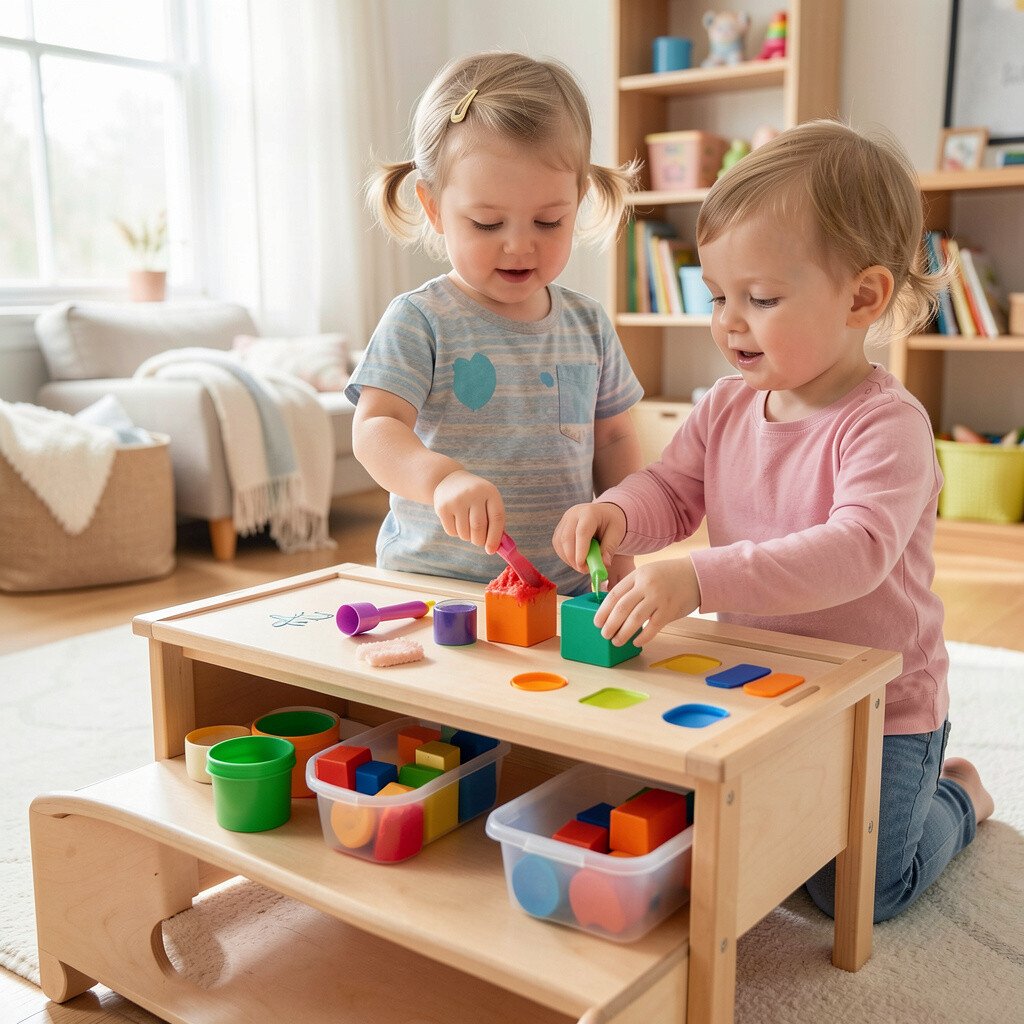
Sorting toys, socks, or blocks can look ordinary, but for toddlers it can feel like a big job with clear purpose. They learn categories, matching, responsibility, and early math ideas while they place items into baskets or piles.
This activity is unique because it blends play with daily life, so the lesson does not feel separate from the home routine. The cost is almost nothing, and you can personalize it by sorting things your child already loves, such as animals, cups, or colored scarves.
To keep it fun, use small baskets or bins and make the piles easy to see with bright containers or labeled pictures. Some families like this kind of practical play because it helps children feel capable, and that sense of success can make cleanup much smoother later on.