The classroom can feel both cozy and well-run when the decor has a job to do. Bean bags make that balance easier because they invite calm movement and quick learning routines.
When you arrange seating, storage, and display together, everything looks intentional and children can practice responsibility with less stress.
1. Reading Nook With Bean Bag Stacks
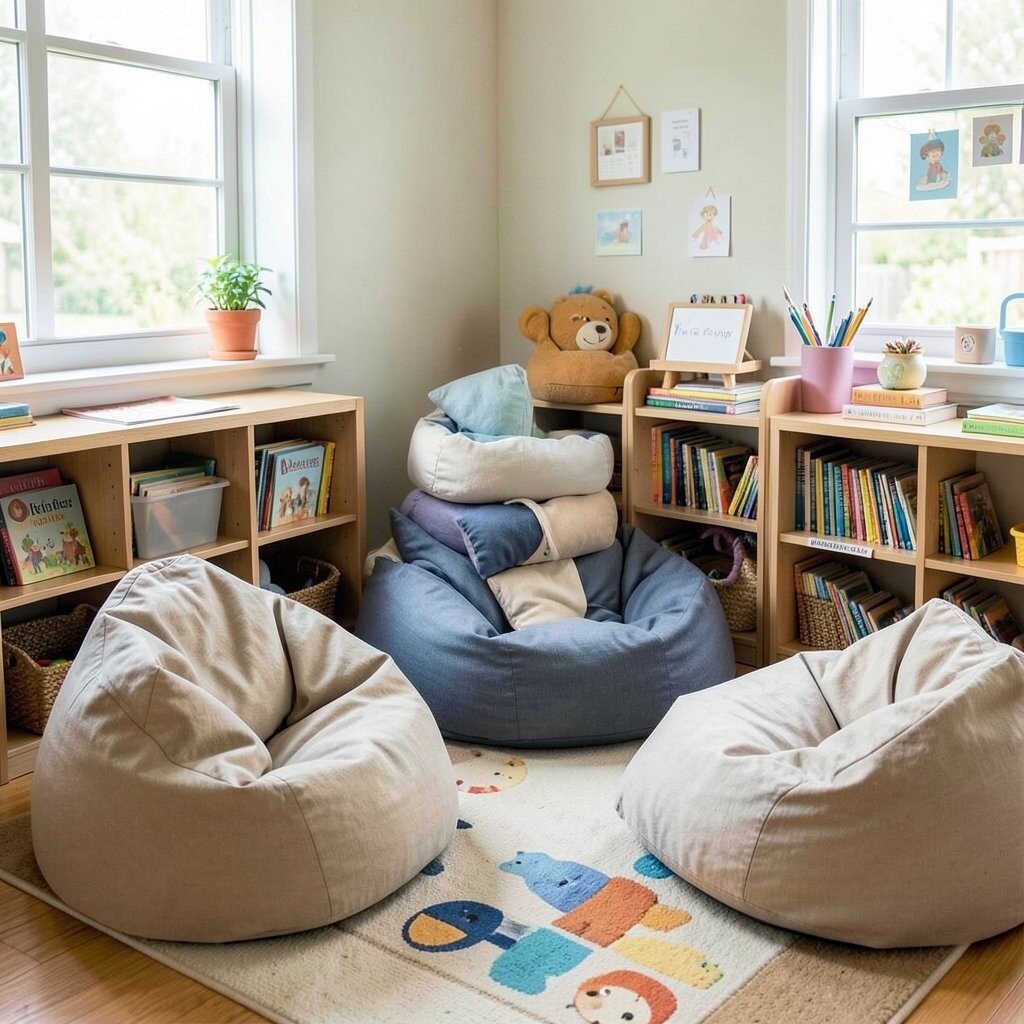
Turn one corner into a soft reading nook with a rug, a bean bag or two, and a low shelf that feels inviting. Add a small book display at child height so the covers face outward and look like an invitation.
Choose bean bags in two or three colors that match your classroom theme, such as rainbows or ocean blues, so the space feels coordinated. Use bins with clear labels on the shelf so kids can return books after story time without guessing. For an easy routine, keep bean bags in the same spot each day and teach a “sit, read, return” flow using simple body cues.
2. Color-Coded Cozy Seating Zones
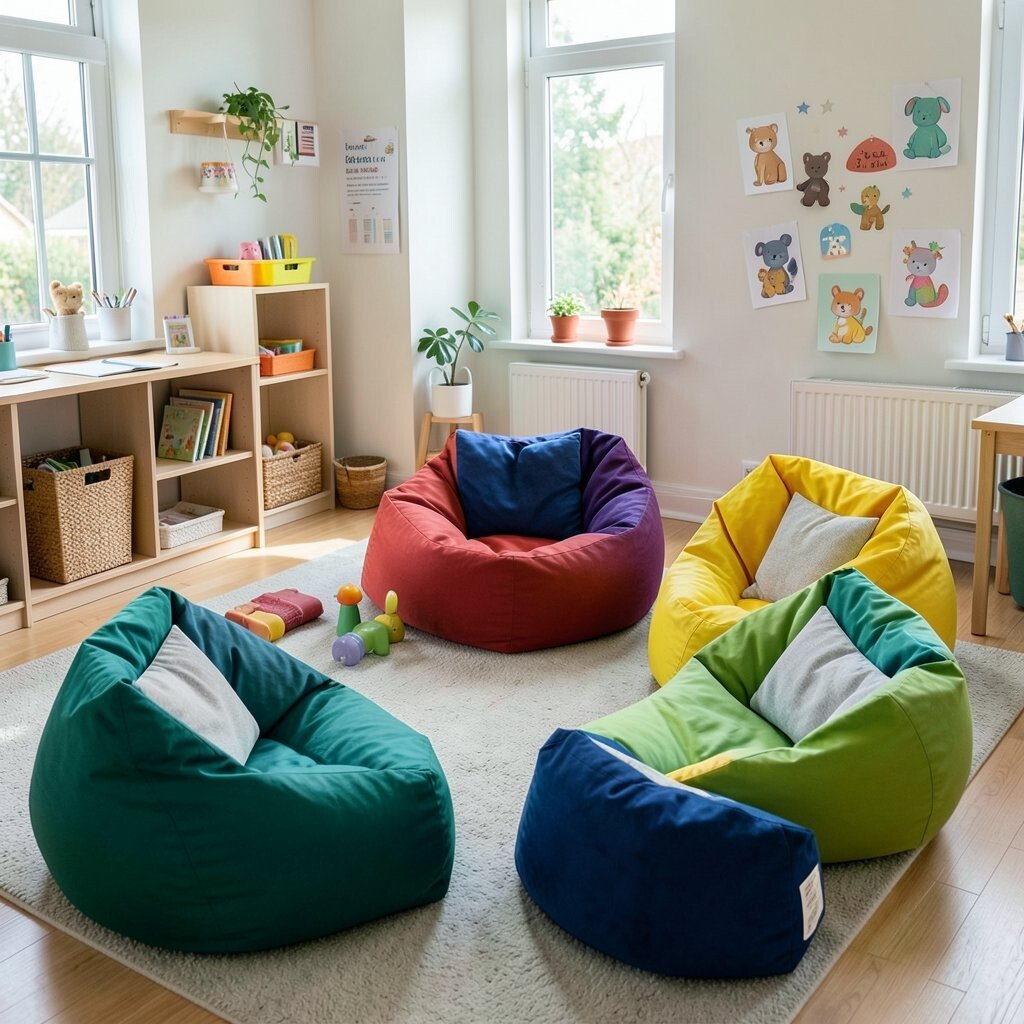
Create seating zones that use color like a gentle map for young learners. Place bean bags by zone and pair each color with a learning activity like puzzles, drawing, or calm listening.
When kids can see where to go, transitions feel smoother and the classroom stays tidy. Try using matching placemats or floor decals so the bean bag area looks organized even from across the room.
For personalization, let students vote on the zone colors at the start of the year, then print their first-name labels in matching stickers. Keep cost in mind by using removable vinyl shapes for the floor and fabric bean bags you can wash easily. A current trend in early education is flexible seating, and color zones support that idea while keeping expectations clear.
3. Bean Bag Word Wall Rug Circle
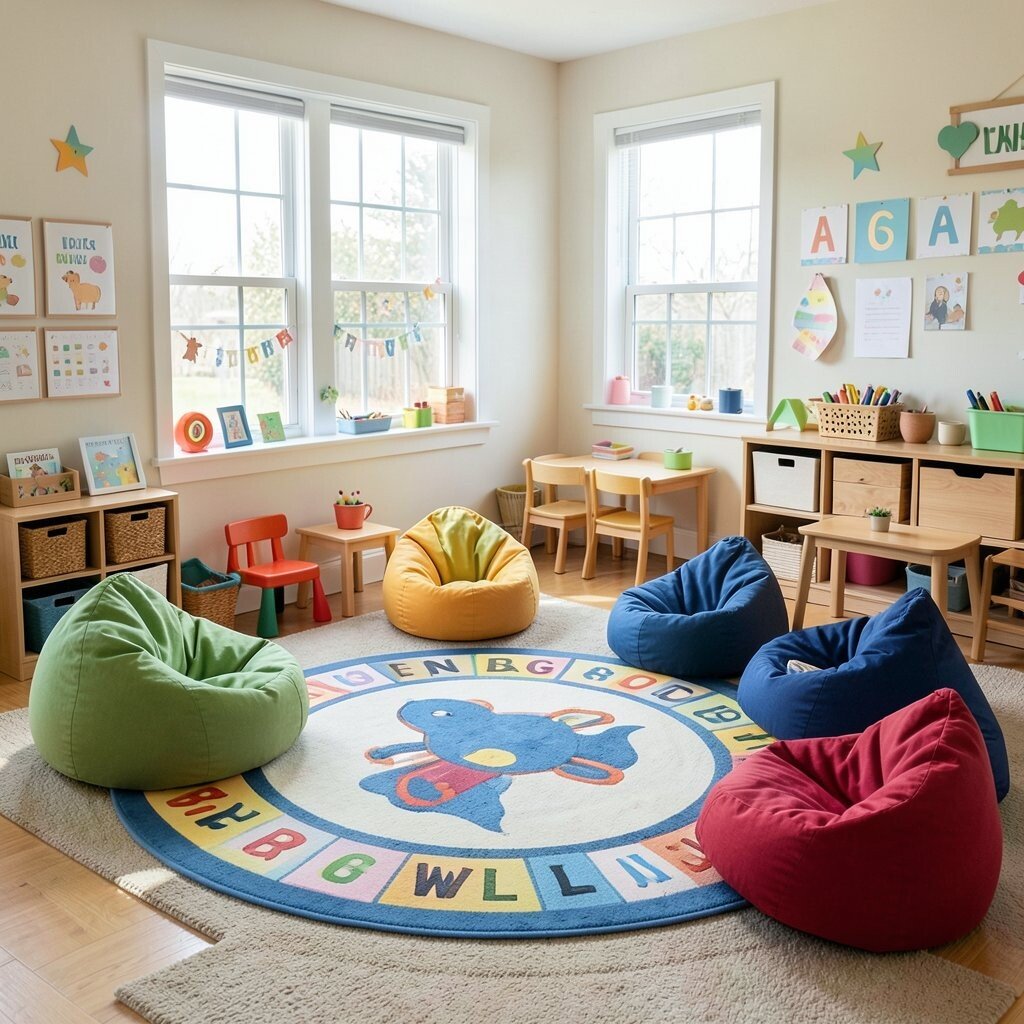
Build a “word wall” area using a large rug circle where bean bags sit around the edges. Display a few key sight words, picture-word cards, and simple phonics sounds on a wall panel that children can reach safely.
During morning meetings, kids can place a bean bag on their spot and practice saying the words together. The visual layout reduces distractions because everyone faces the same direction.
To make it unique, weave in seasonal images, like fall leaves or winter snowflakes, behind the word cards. For practical setup, attach velcro to cards so you can switch them quickly for different themes. If you want to save money, start with printed word cards and use affordable poster frames, then add bean bags gradually as budgets allow.
4. Storage Bins Under the Bean Bag Display
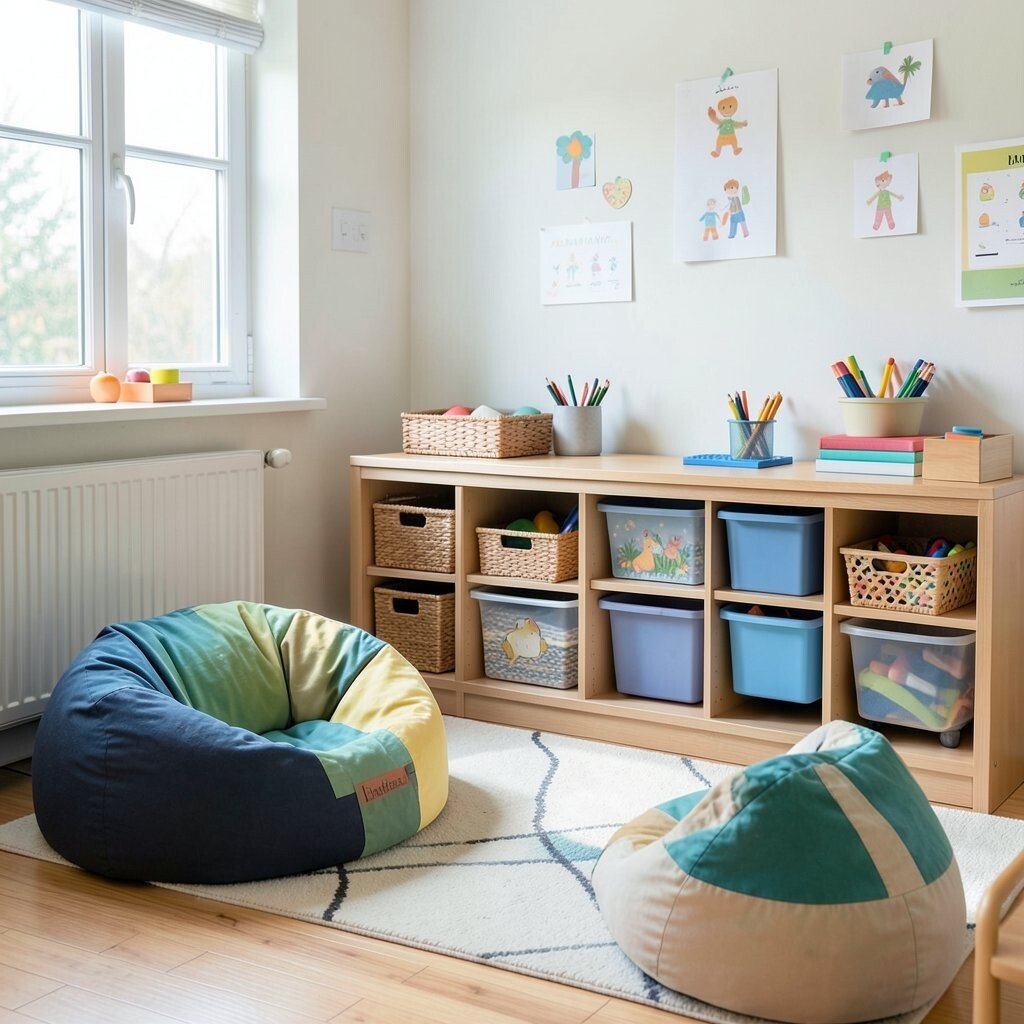
Use a low, open display ledge where bean bags sit on top and storage is hidden underneath. Kids can access materials quickly, while adults can keep the room looking neat and tidy.
Place matching bins underneath for paper, crayons, markers, and small manipulatives so everything has a home. Add photo icons on the bin fronts so children can identify what goes where without relying on reading.
5. Personal Bean Bag Name Tags Gallery
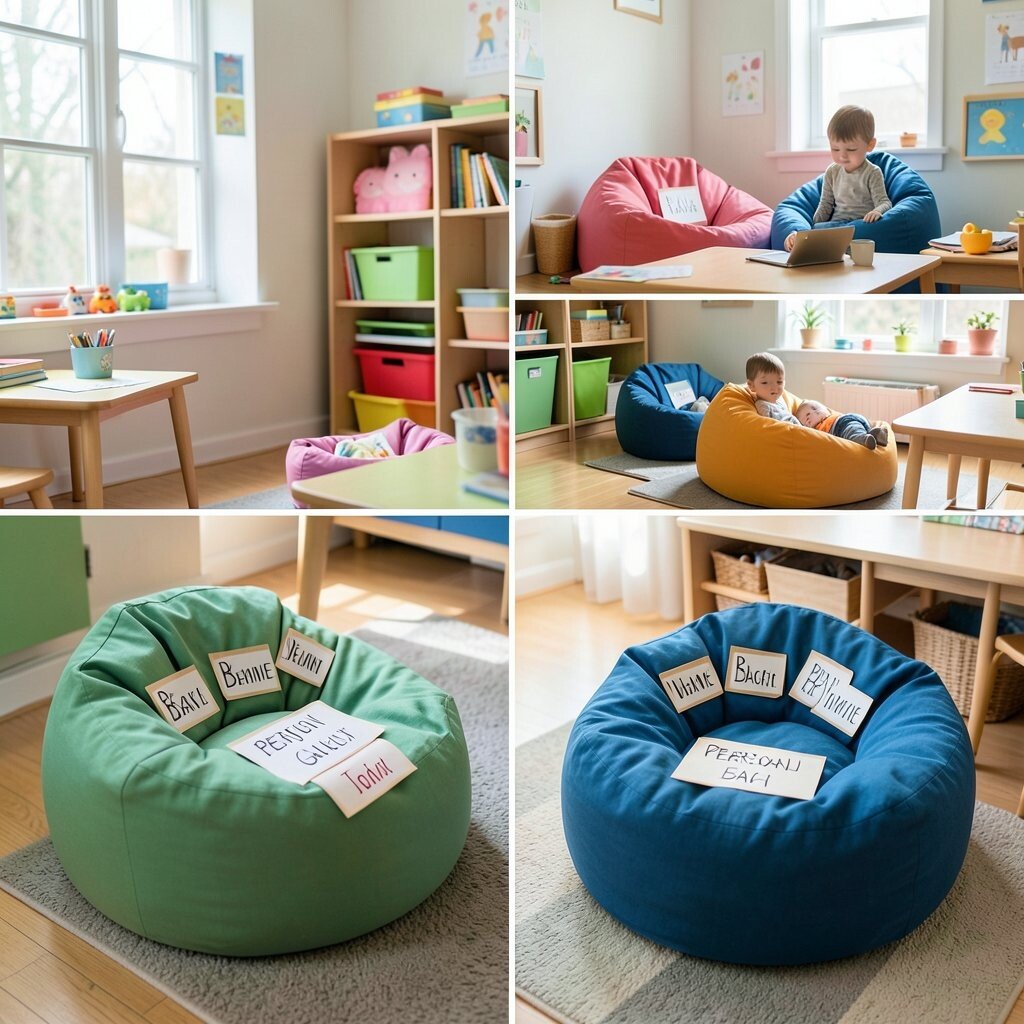
Make every bean bag feel special by adding a child’s name tag on the side or corner. Choose tag styles that match your decor, like polka dots, stars, or simple handwriting fonts.
Kids love seeing “their” seat, and that sense of ownership can reduce arguing and keep seating rules calmer. For organization, you can rotate which bean bags are used during groups so the gallery stays fresh but manageable.
To personalize on a budget, use clear tape for durability and print name tags on cardstock, then laminate if you can. A trend worth using is personalized learning spaces, and small touches like name tags make the room feel warm without big spending.
6. Quiet Corner With Bean Bag Calm Rules
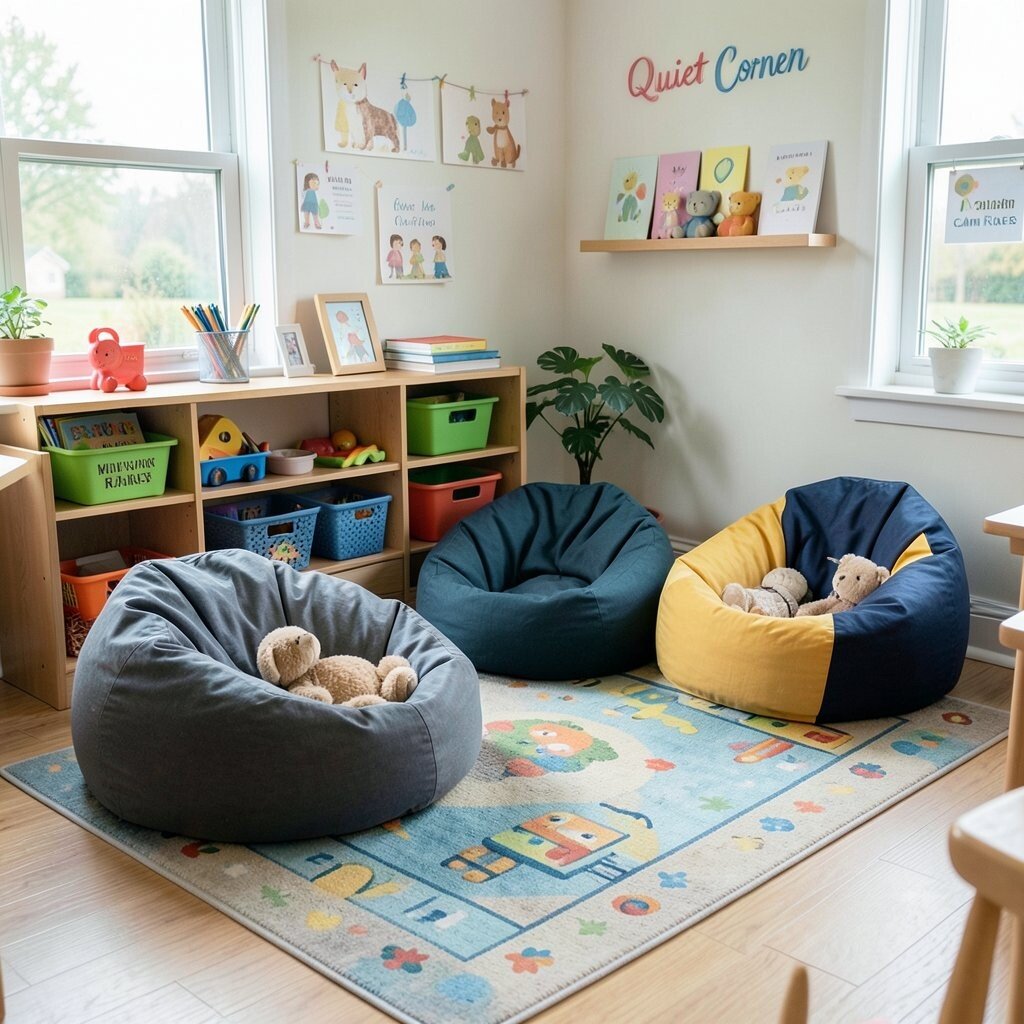
Set up a quiet corner with one or two bean bags and a calming visual on the wall nearby. Choose gentle colors like cream, sage, or soft blue and pair them with a small basket of sensory tools.
When students need a reset, bean bags offer a comfortable place to breathe, listen, or look at picture books. Keep the space practical by adding a simple visual chart that shows what to do first, next, and after.
For uniqueness, hang a “cloud” mobile above the corner made from felt shapes or paper cutouts. Use washable bean bag covers and easy-to-clean storage so the area stays inviting for months. This kind of calm space matches current classroom focus on social-emotional routines.
7. Bean Bag Sorting by Shape and Color
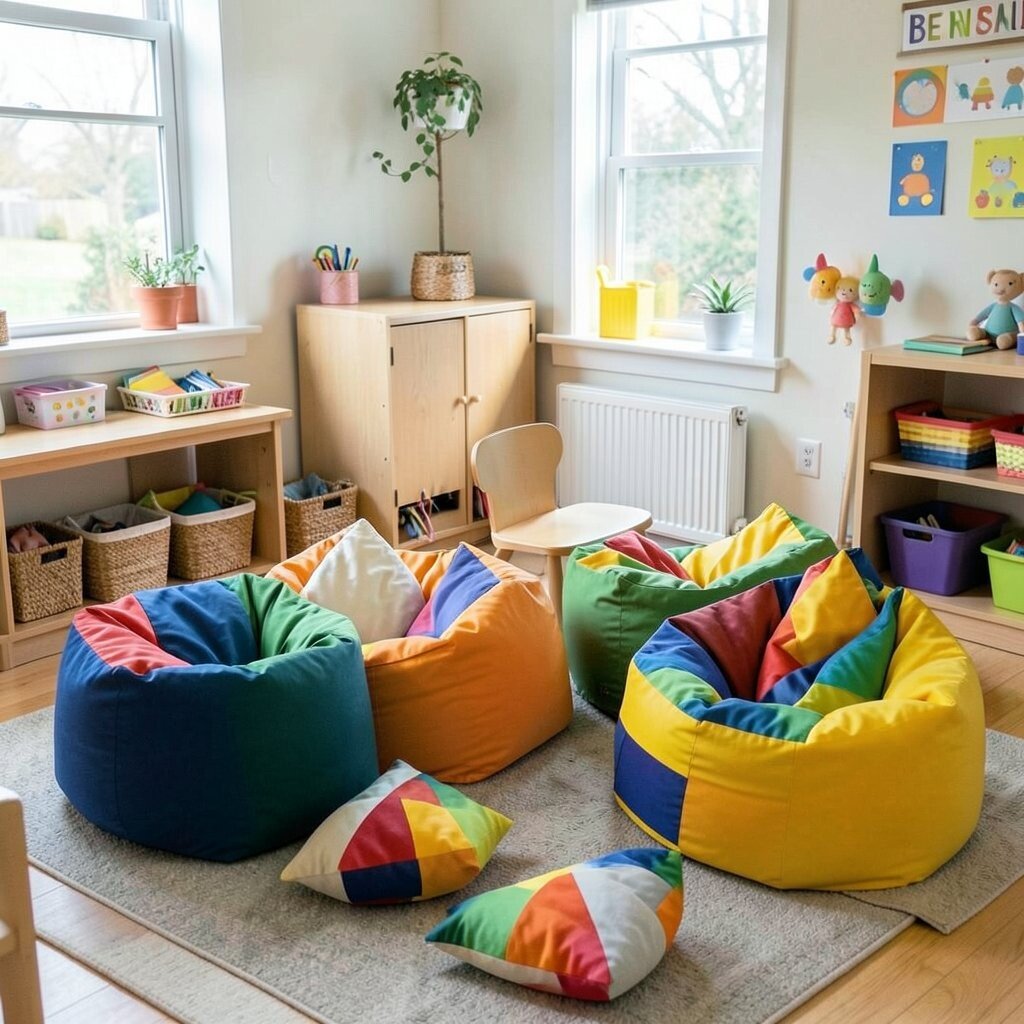
Turn bean bags into learning helpers by placing them in a pattern for sorting activities. For example, use circles on the floor or mats in groups of matching colors, then ask kids to place bean bags where they belong.
After sorting, the room becomes easier to clean because the floor guides show exactly where items should return. Keep it actionable by storing shape cards in the same basket so children can grab them during independent center time.
To add personalization, invite each child to help choose one shape theme for the month and print their favorite picture next to that shape. If you want to keep costs low, use recycled cardboard to make shape guides and reuse fabric scraps for small accents. This approach fits modern early learning because it blends movement, hands-on thinking, and organization.
8. DIY Bean Bag Carrier With Labeled Straps
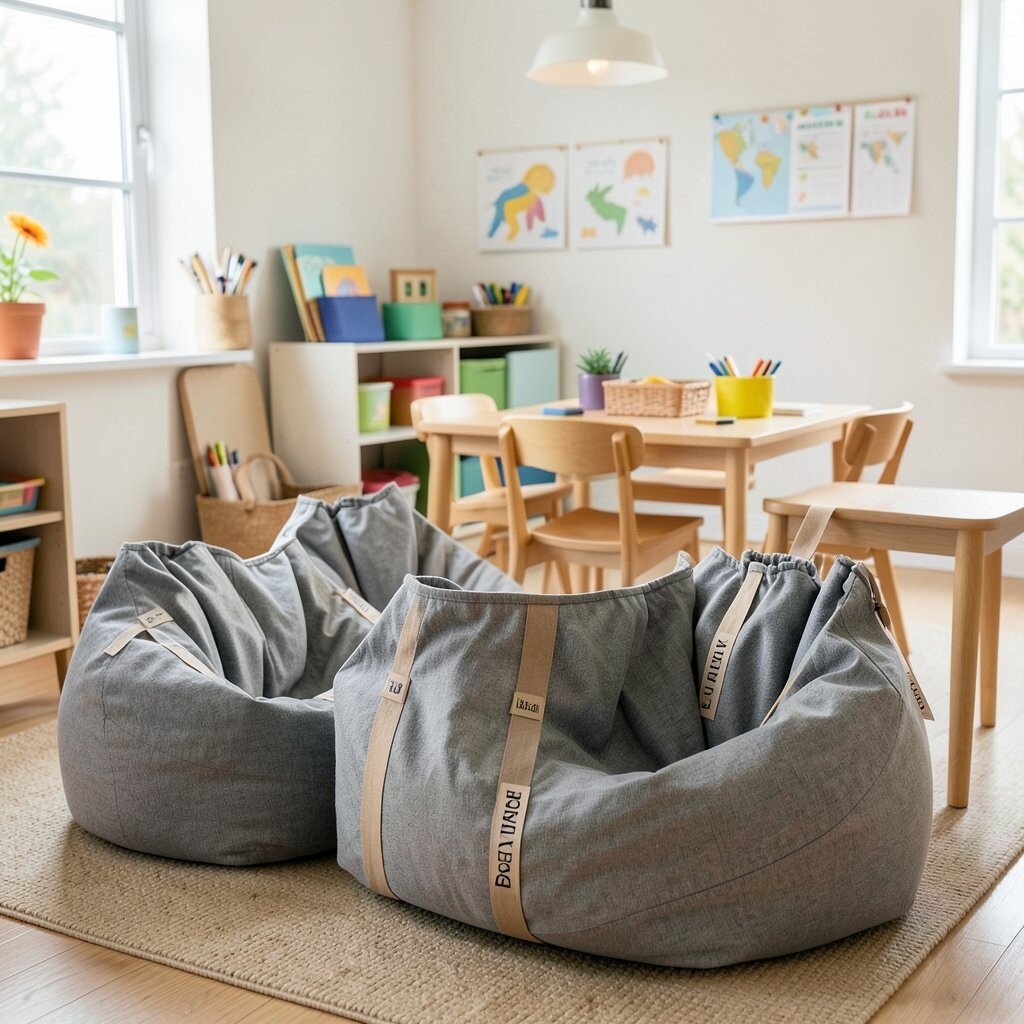
Use a sturdy canvas bag or fabric caddy with labeled straps to carry bean bags between areas. When the bean bags travel in one system, the classroom stays tidy and teachers spend less time chasing seating.
Attach simple icons to the straps for quick recognition, like a star for the art area or a pencil for writing practice. Children can help with cleanup by returning bean bags to the carrier with confidence.
9. Art Center Gallery Wall With Bean Bag Seating
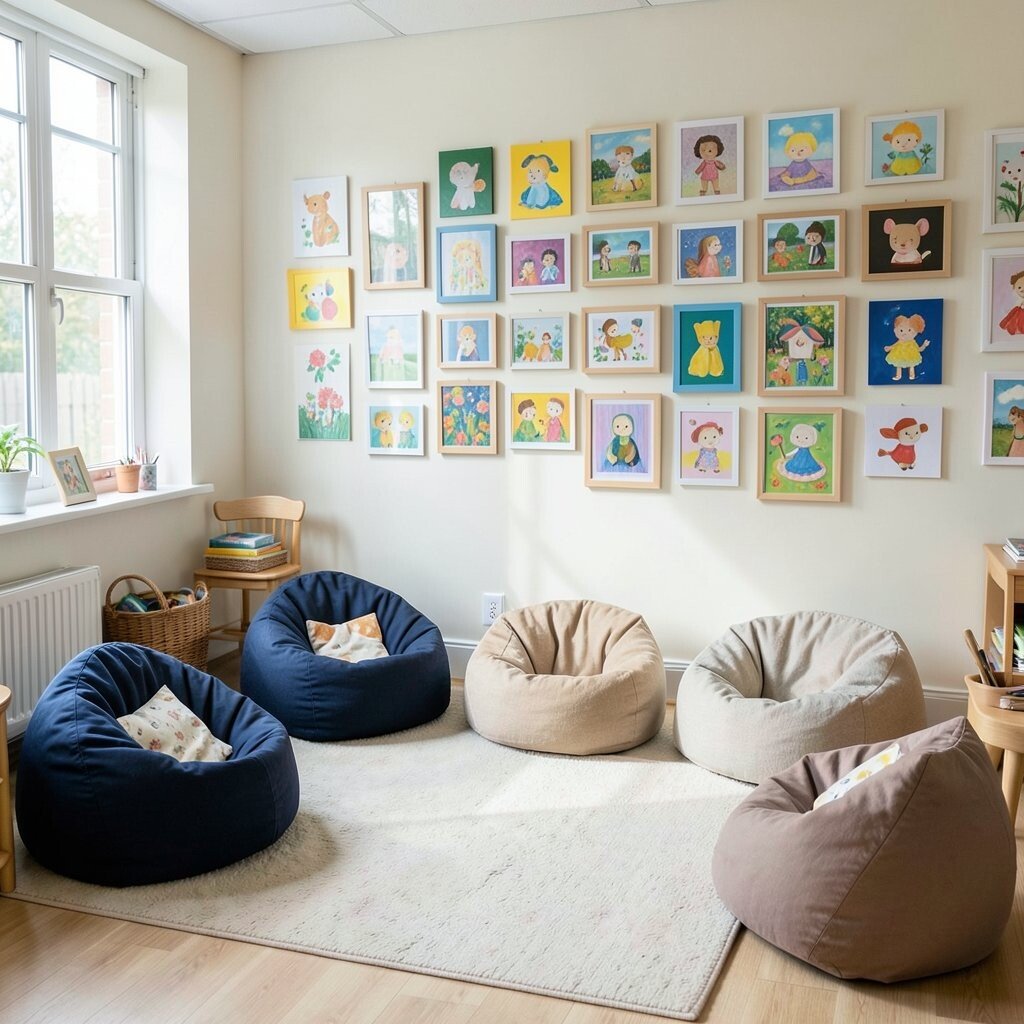
Create an art center that feels like a mini studio by pairing bean bag seating with a gallery wall. Display student artwork in frames that are easy to rotate, so the wall looks fresh throughout the year.
Choose bean bags that fit the art theme, such as bright paint splatter patterns or calm pastel stripes, and place them near the drawing table. When kids can watch a quick demonstration from a comfortable spot, behavior improves because expectations are clear.
For practical tips, keep a small bin of smocks and a separate bin for finished work right next to the bean bags. Personalize by letting families send in a small favorite color swatch for a class “palette” board. To manage cost, use repurposed frames from thrift stores and replace prints seasonally with quick photo updates.
10. Construction Corner With Bean Bag Building Zones
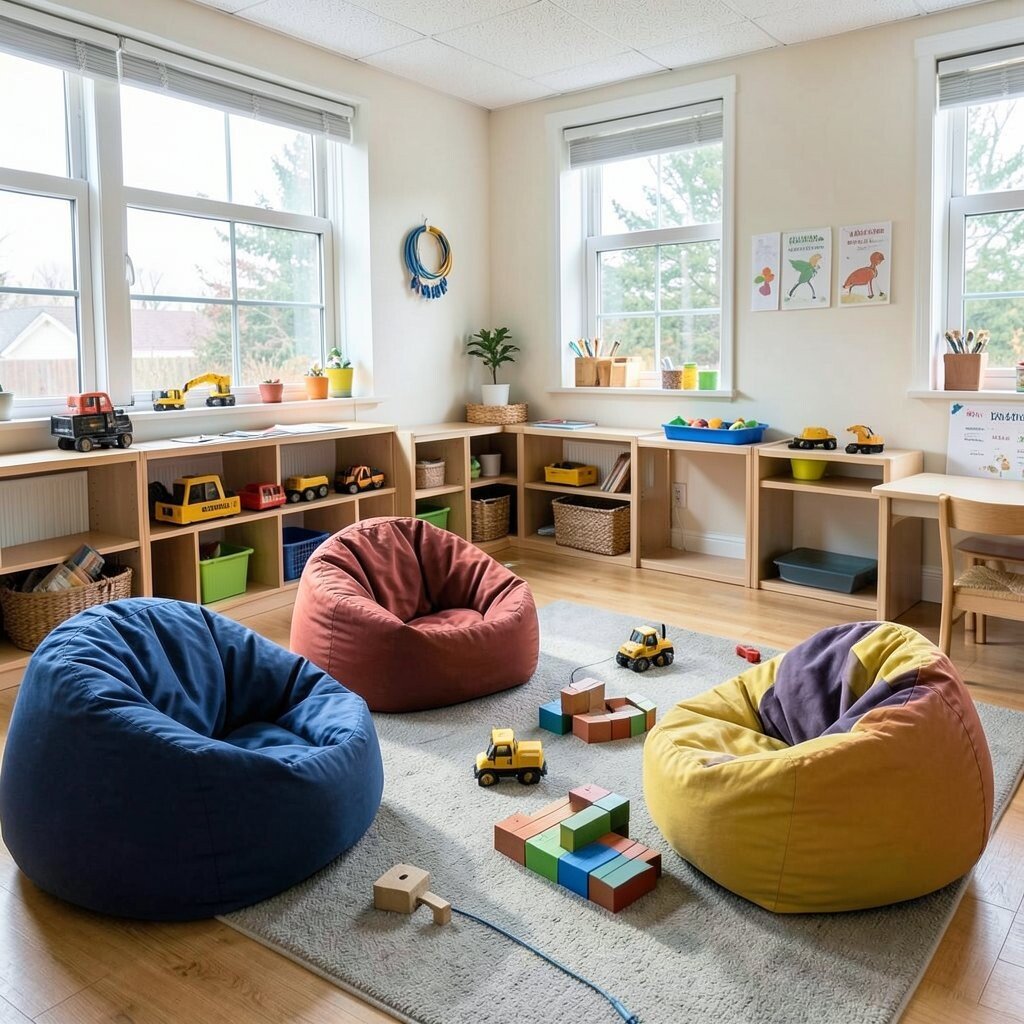
Design a building area using bean bags as “construction bays” where small groups gather. Place large bins of blocks, gears, and connectors within reach and use floor mats to show which set belongs where.
When groups have a clear spot to sit, it’s easier for teachers to manage materials and harder for pieces to wander off. Add a simple rotation schedule using pictures so kids know when it’s their turn at the building bays.
For uniqueness, decorate the wall behind the corner with a friendly “city skyline” made from foam shapes. Keep the cost reasonable by using cardboard buildings, paint, and washable markers for details. Many classrooms are leaning into maker-style learning right now, and organized seating supports that hands-on energy.
11. Math Center Bean Bag Number Path
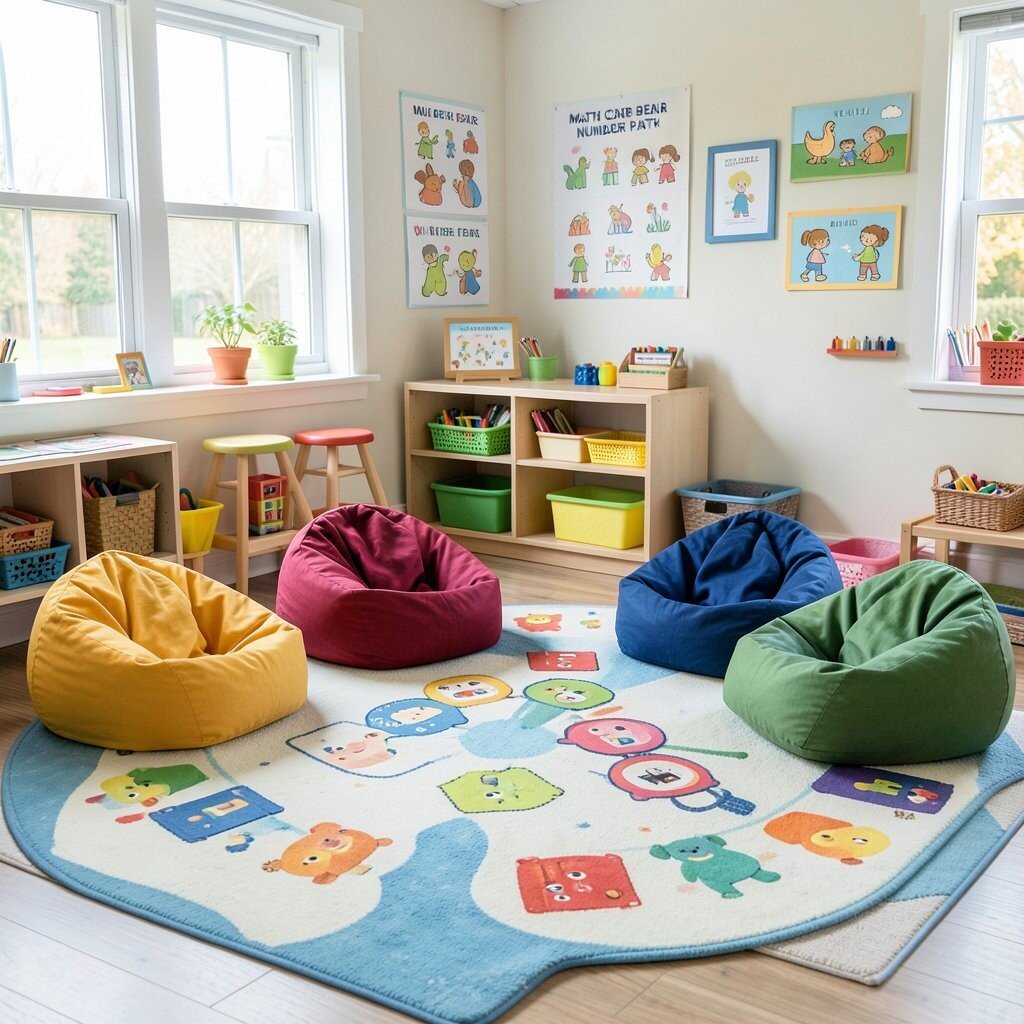
Lay down a number path on the floor with bean bags placed at intervals for guided practice. You can use large paper squares or removable tape outlines so it’s easy to set up and clean off.
When children step onto the correct number spots and sit on bean bags, math feels playful instead of intimidating. Use small cards near the path that show the counting goal for the day, like “count to five” or “find the missing number.”
12. Science Sensory Table With Bean Bag Waiting Space
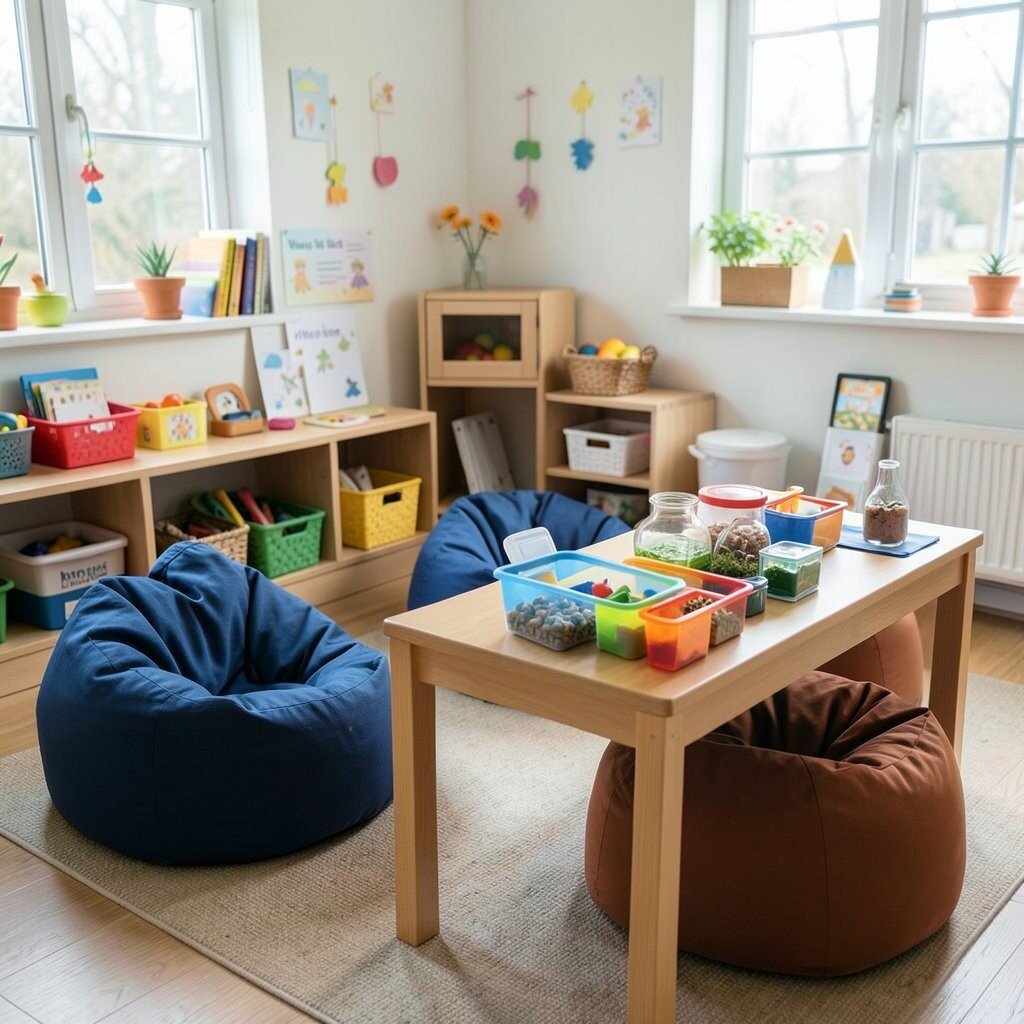
Place bean bags nearby so children can wait comfortably during science activities. This helps the sensory table stay focused, while kids who are ready can watch, predict, or listen.
Set up a tidy system by keeping tool trays and scoops in labeled containers that snap back into place. Add a picture checklist on the wall so kids can remember safety steps like “wear goggles,” “use gentle hands,” and “pour slowly.”
For personalization, add a “class animal of the week” card and match bean bag colors to that theme, like jungle greens or ocean teals. If cost is a concern, start with one science set of bean bags and rotate them through the classroom when needed. Current trends in early science emphasize observation and language, and a comfortable waiting space makes it easier to talk about what children notice.
13. Dramatic Play Stage With Bean Bag Audience Rows
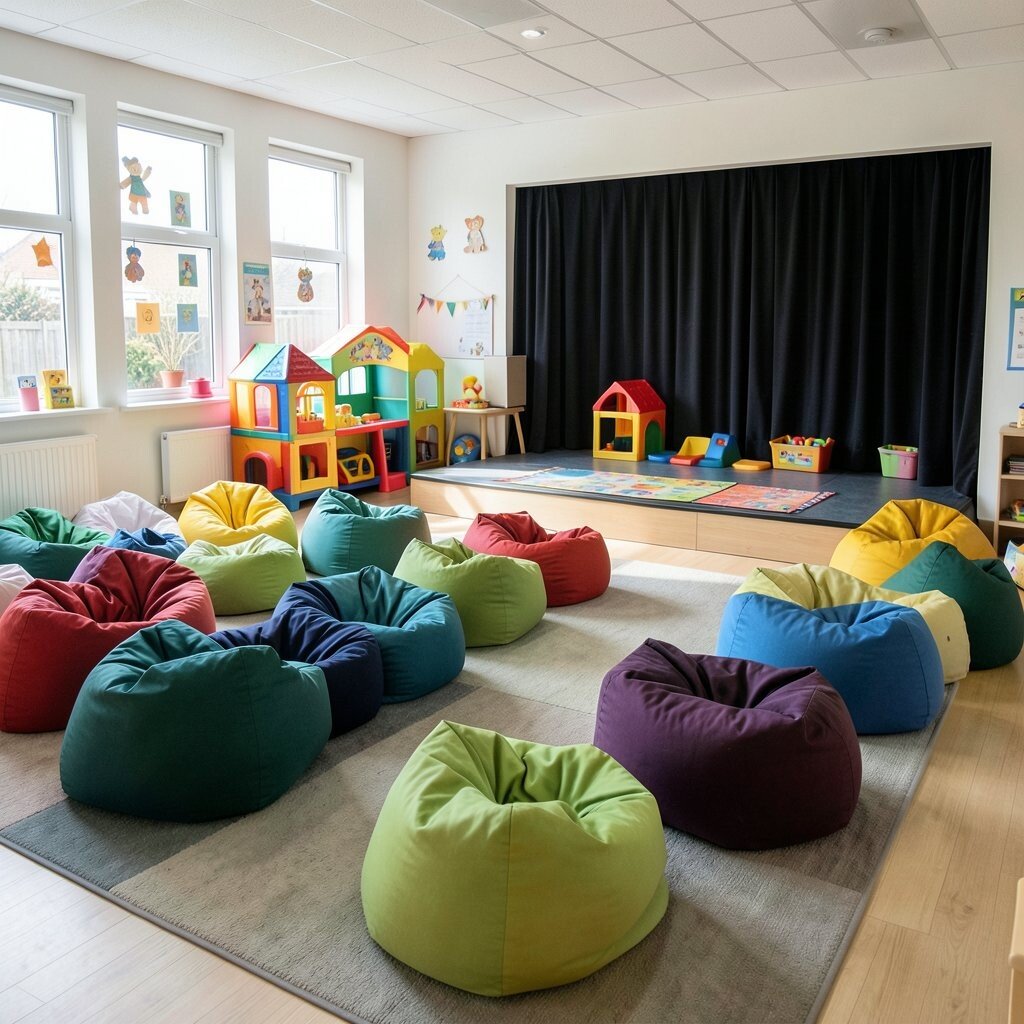
Turn dramatic play into a small stage area where bean bags form audience rows. Kids can practice storytelling, pretend ticket checks, or puppet shows while staying in their designated seating.
Use a low curtain or fabric backdrop and a simple “show checklist” card so roles stay organized. Keep transitions smoother by storing costumes, hats, and props in bins right next to the bean bags so performers and helpers can grab items quickly.
For uniqueness, paint a pretend marquee sign and update the “tickets” each week with student-written titles. To manage expenses, use sturdy cardboard and bright craft paper instead of buying new stage pieces. This aligns with the current trend of immersive play spaces that blend creativity with clear routines.
14. Writing Center With Bean Bag Confidence Cubbies
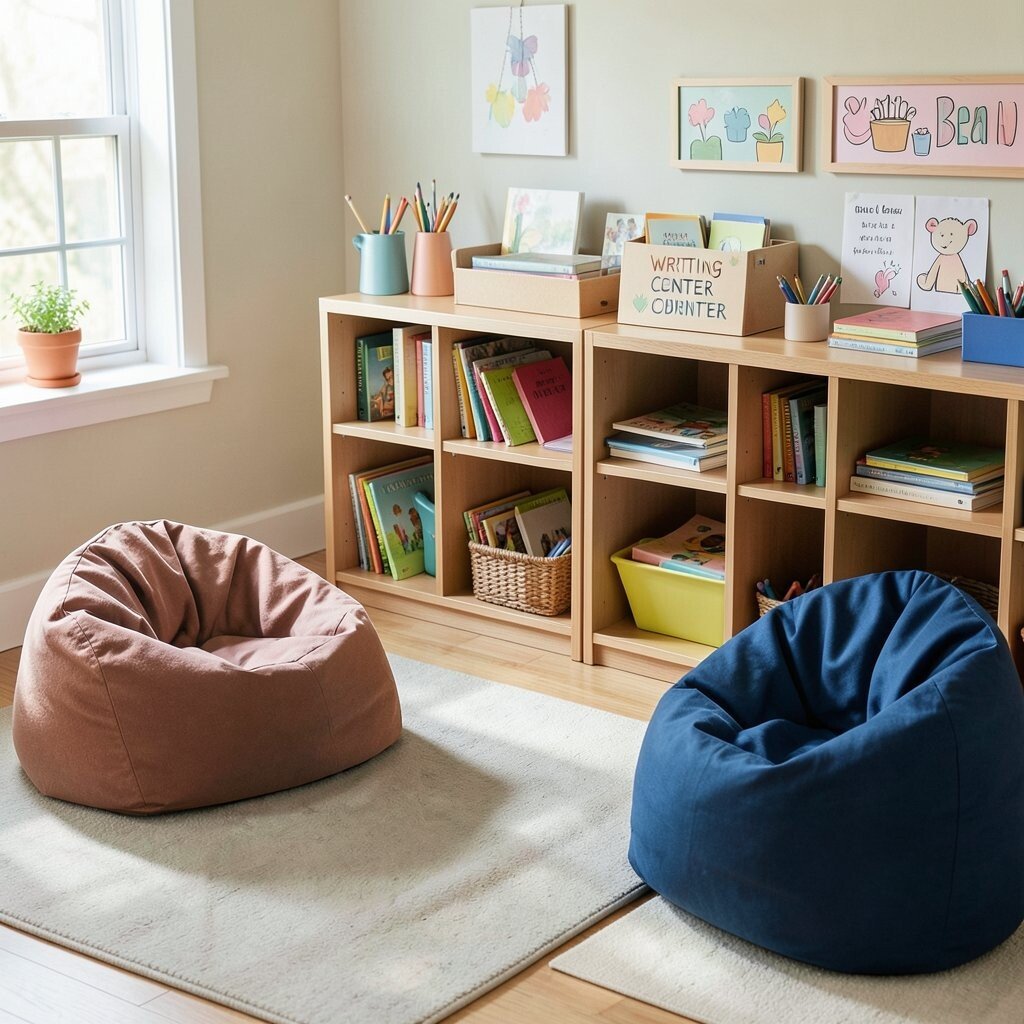
Create a writing center that feels safe by pairing bean bag seating with simple student cubbies. Choose a wall organizer with pockets for pencils, story starters, and small paper packs, so children can start without asking each time.
When kids can sit comfortably to brainstorm, they often try longer and erase less, which keeps the area calm and productive. Add a visual of writing steps near the bean bags, like draw first, add words, then share.
Personalize by using student handprints on a display strip that marks each month’s “class writing goal.” For cost, look for affordable foam letters for the wall and use printable writing prompts to refresh the center. A modern classroom approach is to support confidence-building practices, and a cozy bean bag corner helps students feel ready to try.
15. Morning Meeting Circle With Flexible Bean Bag Seats
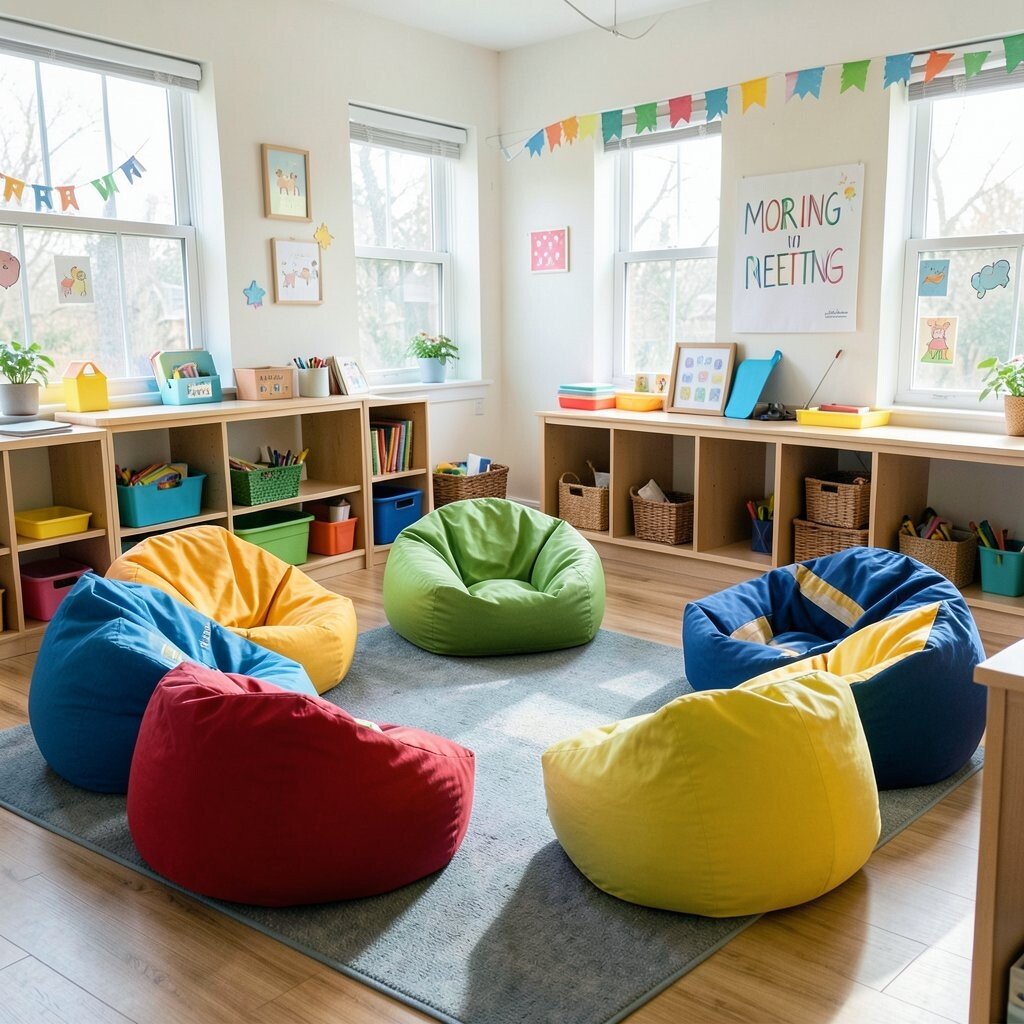
Use bean bags to create a flexible morning meeting circle that can grow or shrink based on the group. Arrange them in a consistent loop on the floor so children always know where to sit.
Circle time becomes easier to manage when seating is comfortable and predictable, especially during days when energy runs high. Keep it practical by using a small basket for meeting supplies like a pointer, calendar cards, and picture days so everything stays in one area.
To add a unique touch, coordinate bean bag colors with classroom themes and add a simple banner above the circle that you update monthly. If you’re budgeting, borrow a few bean bags from families or reuse existing cushions as “starter” seating while you plan future purchases. Flexible grouping and movement-friendly routines are trending, and bean bags support that without adding clutter.
16. Theme Wall With Bean Bag Tool Hooks and Trays
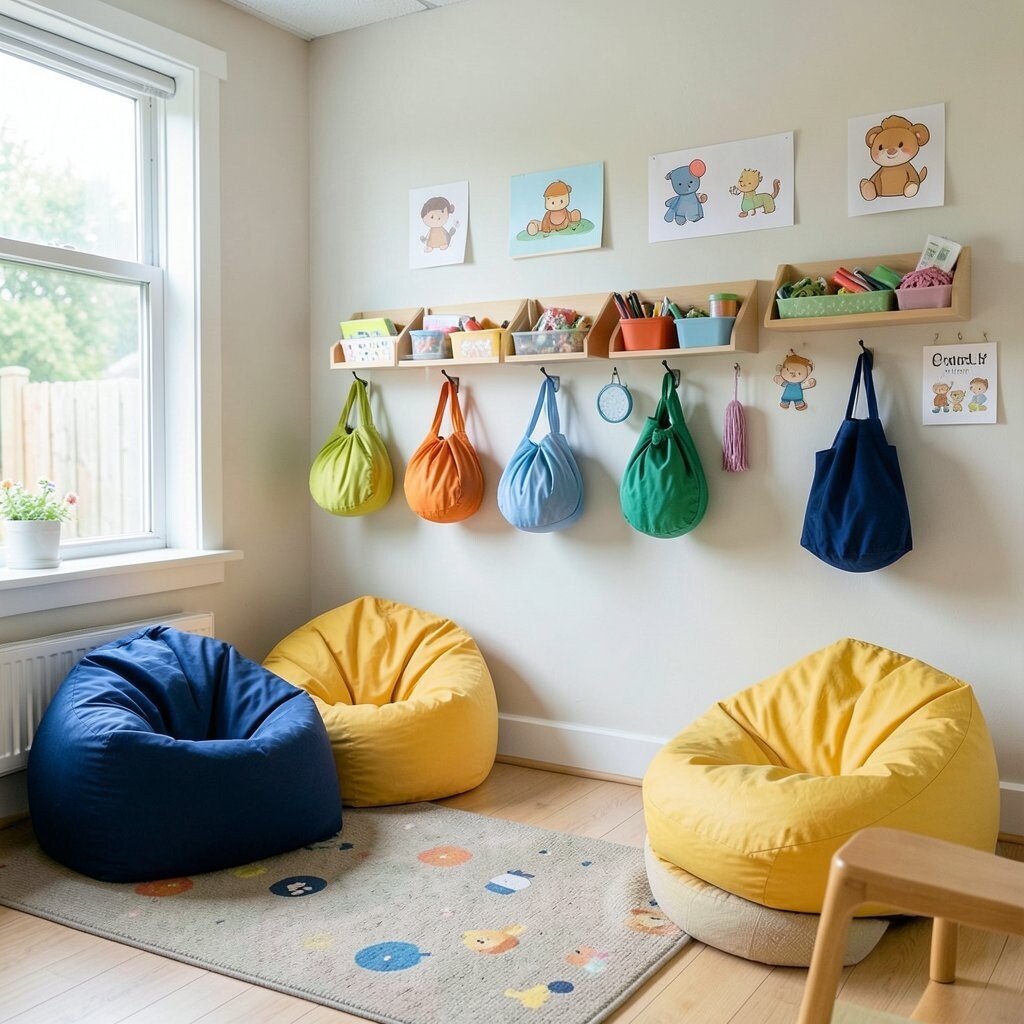
Build a theme wall system that combines decor with daily organization by adding bean bag tool hooks and trays nearby. A child-safe rail can hold small items like scissors, crayons, or stamping tools while bean bags anchor the seating spot.
When tools stay at arm level, children can work longer and cleanup feels quicker. For personalization, tie the theme wall to student photos, classroom artwork, or a rotating “month in review” strip that makes the space feel truly theirs.
Keep cost in mind by using budget-friendly materials like pegboard, paint, and clear plastic cups for tool storage. Add practical labels with pictures so children can match tools to the correct spot even when classroom lighting changes. This kind of integrated organization matches current trends toward tidy learning environments that still feel creative and welcoming.