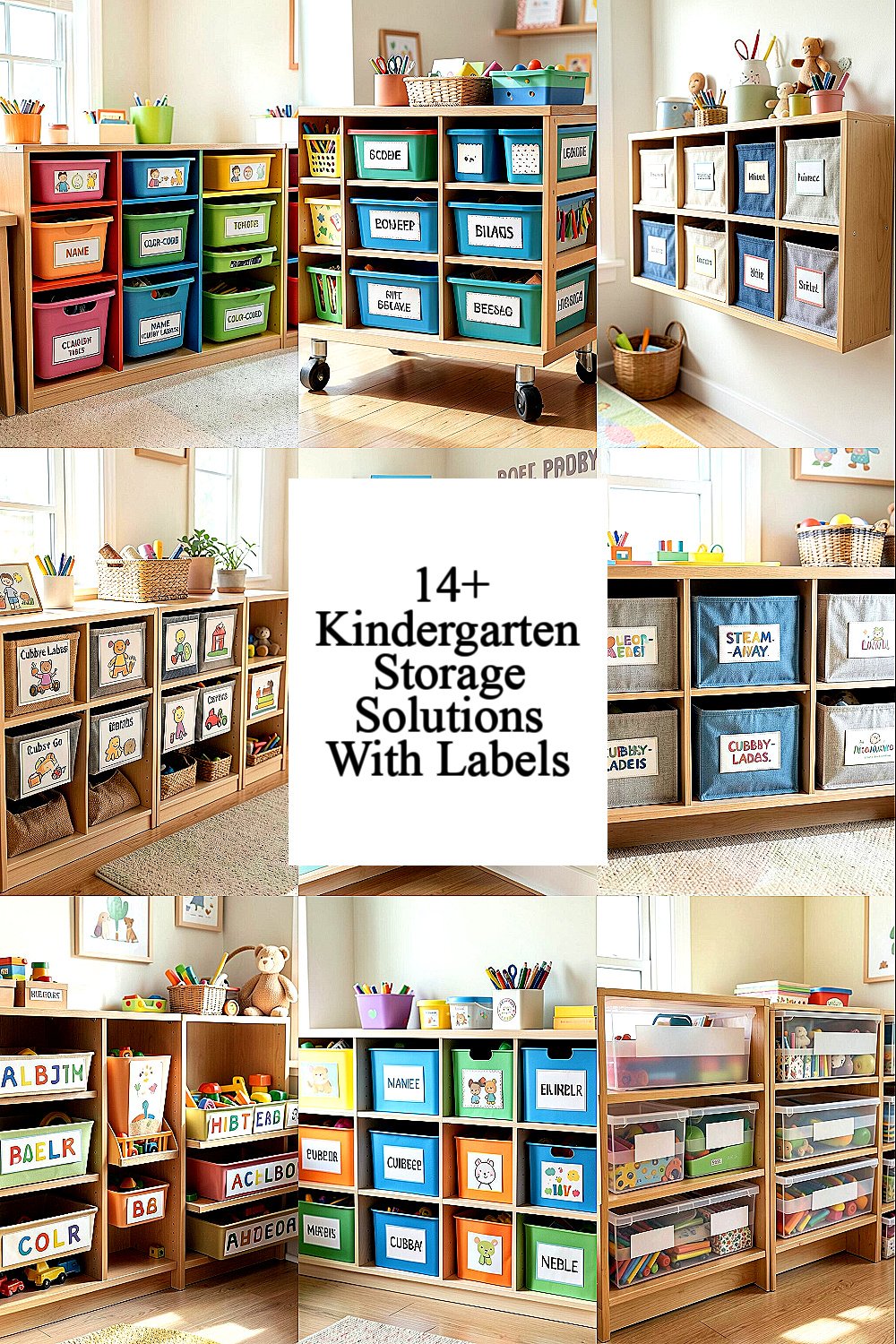
The room feels lighter when children can find what they need right away. With the right storage and cubby labels, everyday routines can become smooth and cheerful.
1. Color-Coded Tray System With Name-Cubby Labels
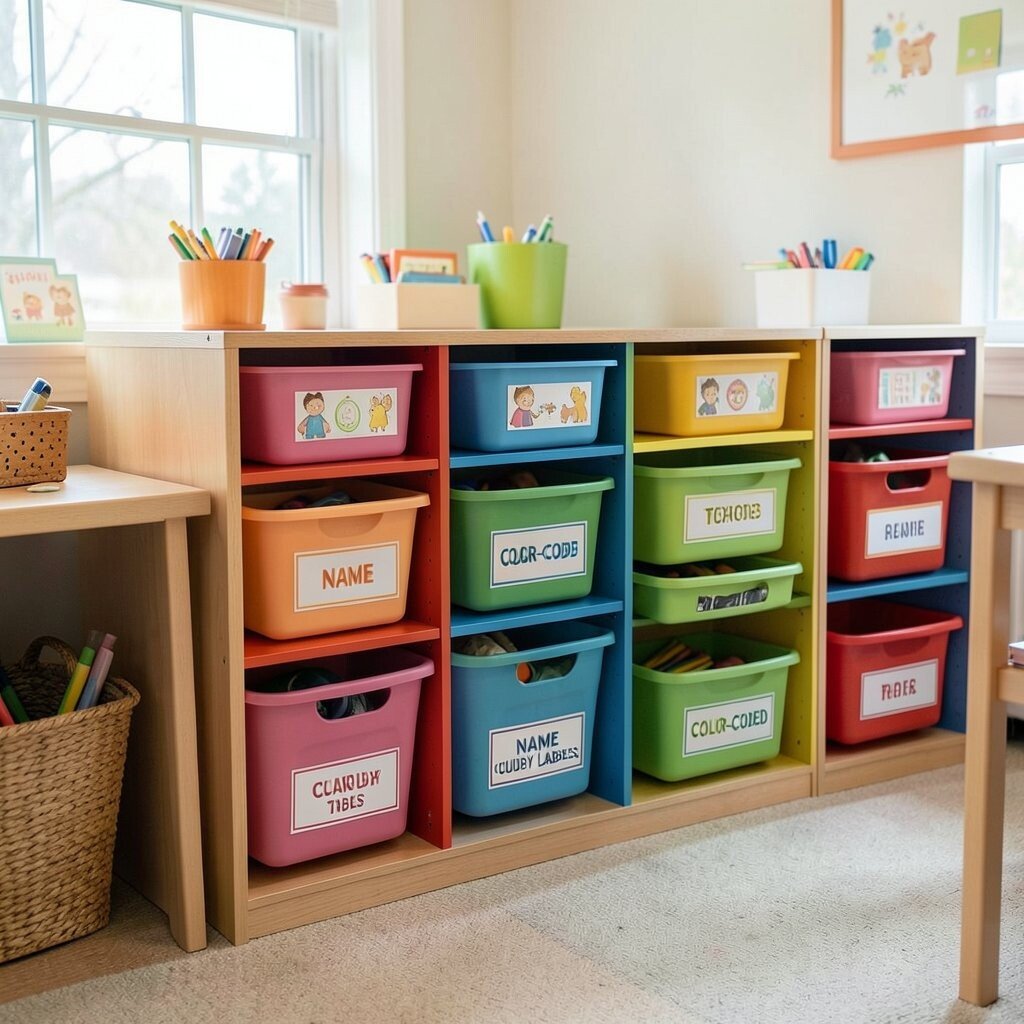
Think of a set of shallow plastic or fabric trays lined up like neat little stations along a shelf. Each tray has a clear label area for a child’s name, and the front edge catches the eye with bright, friendly colors.
When kids can match their name to the tray, cleanup stops feeling like a chore and starts feeling like a game. You’ll notice fewer items scattered on tables, because everything has a visible home right at their height.
Choose a simple color plan that fits your classroom theme, such as primary colors, ocean shades, or a “storybook” mix of warm tones. If you want it to feel extra special, add tiny sticker dots that match the tray color, then swap in seasonal art stickers for quick updates.
2. Rolling Storage Cart With Labeled Cubby Bins
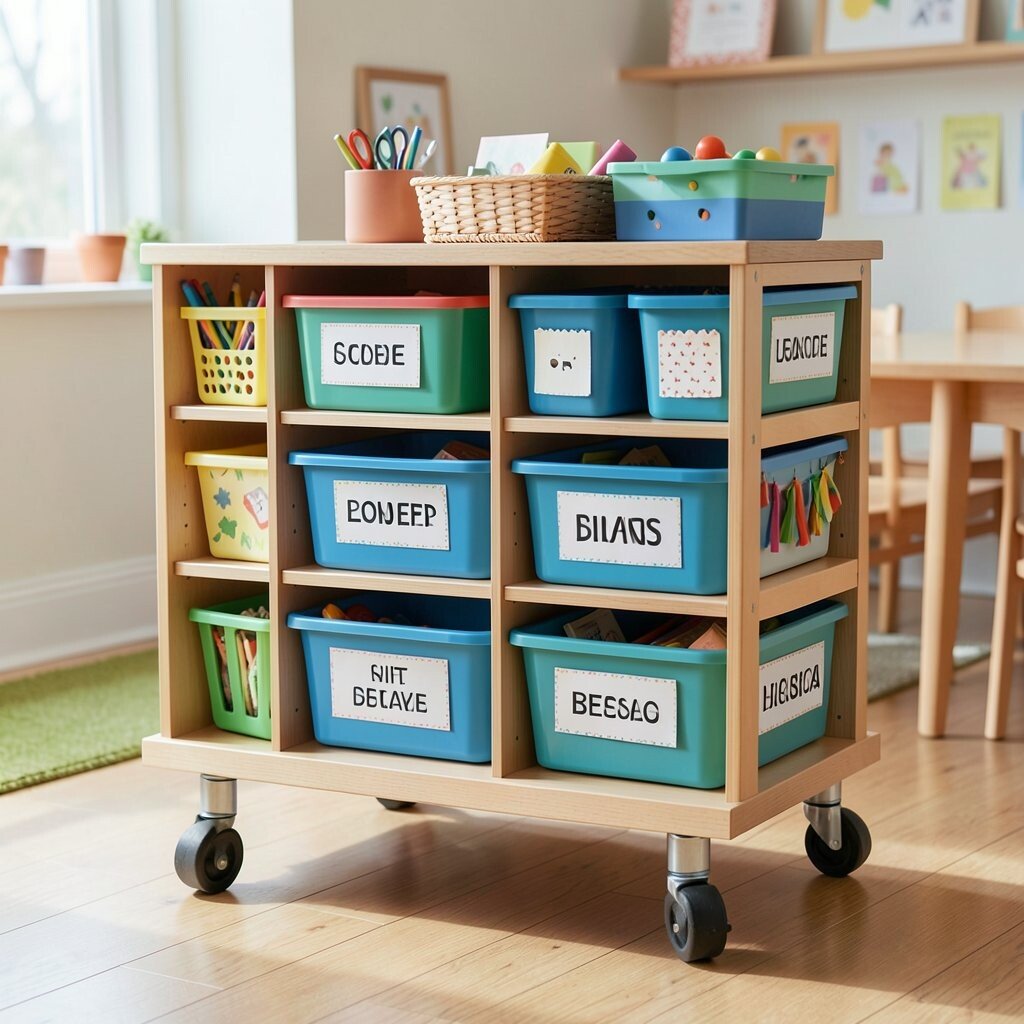
A rolling cart by your reading corner can look adorable and organized at the same time. Imagine several cubby-style bins with matching labels, plus a top shelf for display books and a handle that makes moving supplies easy.
With labeled cubbies, children can grab materials during centers without asking the same questions over and over. Teachers also save time because restocking becomes a clear, quick routine.
Pick bins that are easy to wipe and choose a cart height that matches your biggest group’s reach. For personalization, print labels with each child’s first name and a small picture icon, like a star, apple, or paintbrush, so early readers can check the cue quickly.
3. Wall-Mounted Cubby Decor With Fabric Cover Labels
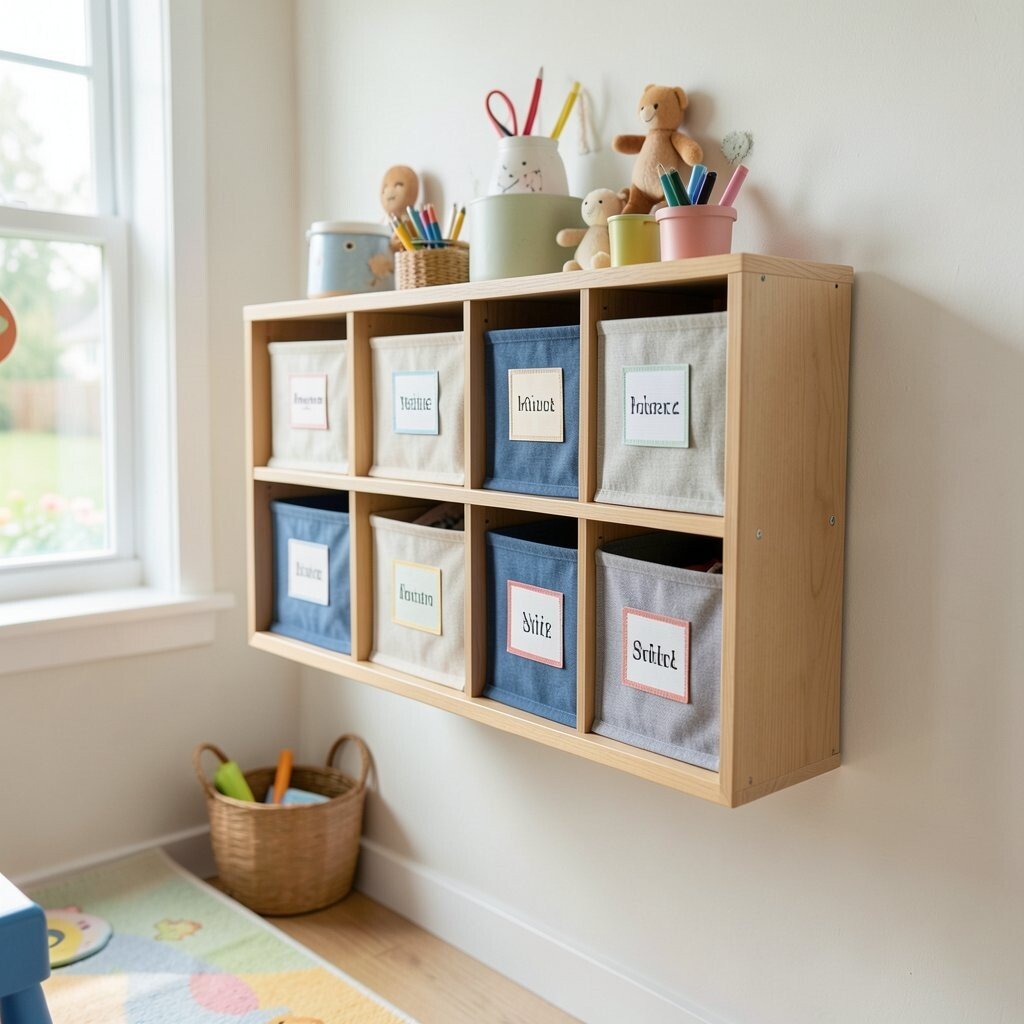
A wall-mounted cubby unit can turn blank space into a cozy learning zone. Picture cubbies with decorative trim and soft fabric label sleeves that protect the labels while still showing each name.
Because the cubbies are up high but still within reach, it keeps backpacks, hats, and small materials off the floor. The biggest win is routine building, since kids learn to look up, find their spot, and move on.
Use fabric label sleeves in a matching color palette so the unit looks intentional, not messy. Consider using Velcro-backed name cards so you can update them for the new school year without replacing everything.
4. Picture-Icon Cubby Labels for Ready-to-Go Centers
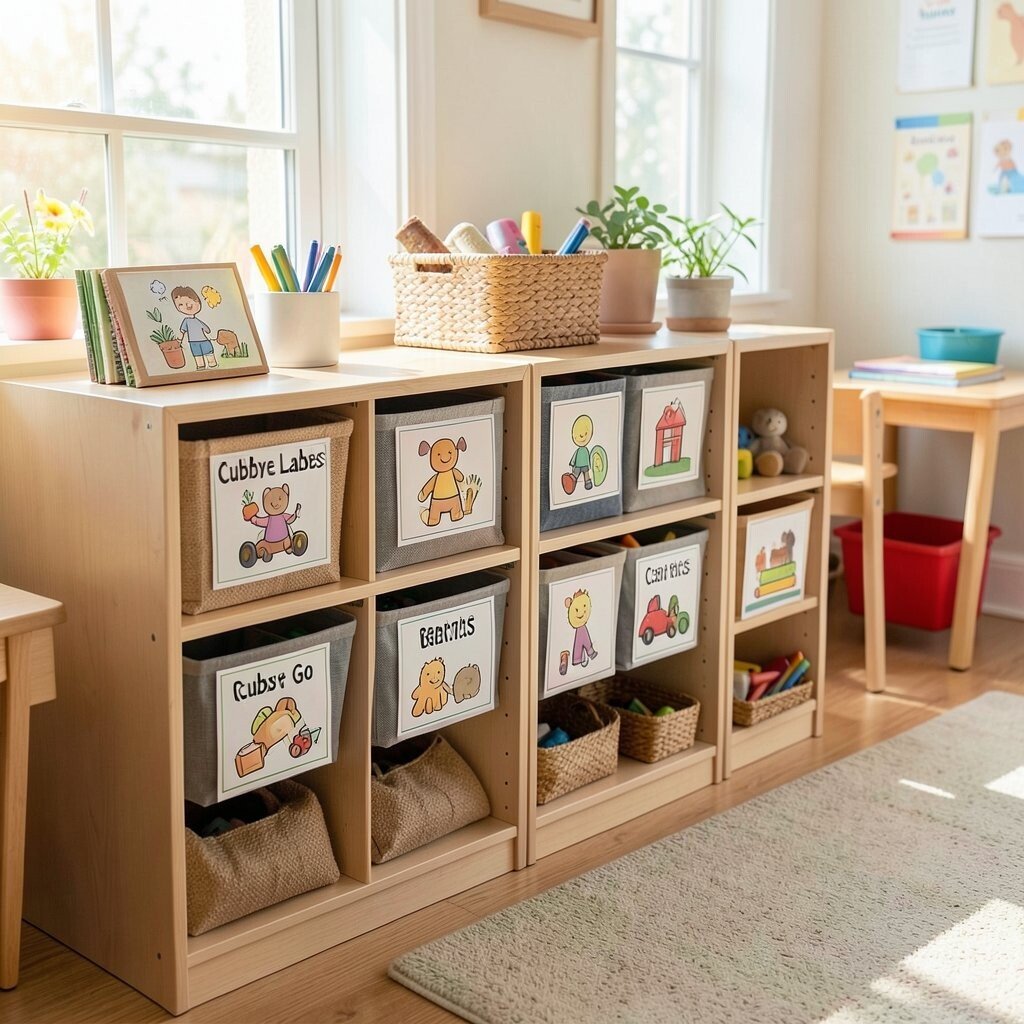
Instead of using only names, try pairing each cubby label with a simple picture icon. You might see a paintbrush for art supplies, a book for reading, and a block for building materials, all placed right under each child’s name.
This helps students who are still learning letters, because they can rely on visual cues. It also makes it easier for substitutes and new students to understand what goes where.
Keep the icons consistent and easy to recognize, using a small laminated card style so the images last through busy weeks. Personalize the icons with classroom theme touches, like adding mini “raincloud” icons for a weather unit or “rocket” icons for space week.
5. Corner Shelf Storage With Hanging Cubby Pouches

A corner shelf can be a secret organization powerhouse when paired with hanging cubby pouches. Imagine soft pouches with clearly labeled fronts, each one holding specific items like crayons, markers, or playdough tools.
Kids love seeing their things stored neatly, and you’ll love that small supplies are less likely to vanish. The pouches also help protect materials from getting crushed, especially paper and craft pieces.
Choose pouches with sturdy seams and a clear pocket window if you want the labels to stay visible. For cost-friendly upgrades, use printer labels and add a strip of colorful tape around each label for a polished look.
6. Steam-Away Fabric Bins With Removable Cubby Labels

Fabric storage bins look warm and friendly, especially in a kindergarten classroom. Visualize a row of bins tucked into a cubby shelf, each with removable name labels that are easy to switch out when groups change.
These bins help keep the room calm because they hide clutter while still making items easy to reach. You get the benefit of a clean look without needing expensive matching containers.
Make labels removable using adhesive-backed label holders or simple plastic sleeves, so you can replace them quickly. For personalization, print labels on colored cardstock based on classroom teams, then add a small border design that matches your decor.
7. Alphabet and Color Labeled Shelf Steps for Sorting Toys
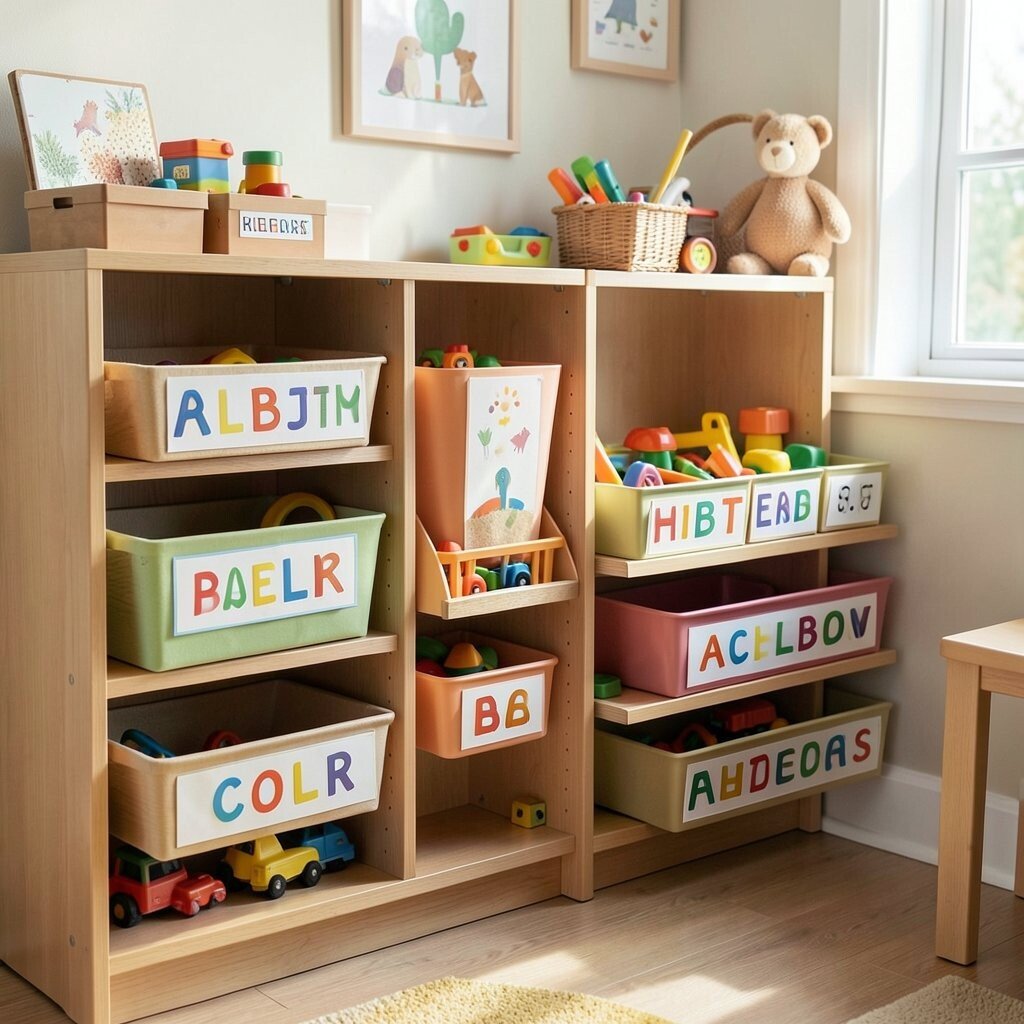
Sorting becomes simpler when children can see the goal in front of them. Picture a low shelf step system where each cubby slot has both a color label and an alphabet letter cue for toy sorting.
Students can practice early skills while organizing, which keeps them engaged during clean-up. You’ll likely notice that fewer items end up in the wrong bins because the cues are clear and repeated daily.
Use durable bins with rounded edges for safety and easy carrying. For a trend-forward look, choose modern neutral shelves with colorful label cards so the organization feels stylish rather than busy.
8. Classroom Mailbox Style Cubby Storage With Name Plates
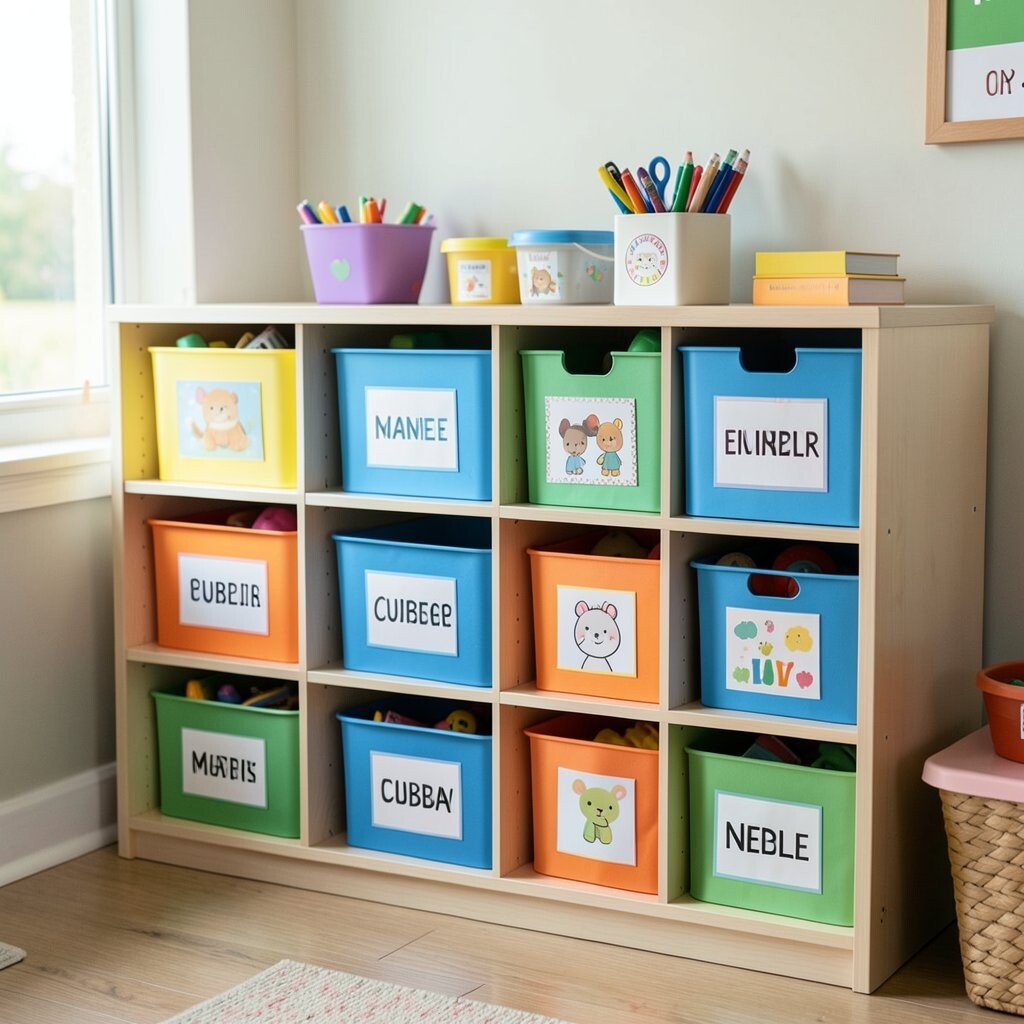
A mailbox-style unit can look like a tiny town where each child has a “stop.” Imagine cubbies shaped like open mail slots, each with a name plate label that matches the child’s locker or cubby theme.
When kids store papers and returned worksheets in their own mailbox, you can cut down on lost folders. It also supports independence because students can pick up their work without waiting.
Consider adding a small visual list on the wall showing what belongs in each mailbox, like “art” or “homework,” written in kid-friendly pictures. For cost considerations, you can even repurpose a lightweight organizer and add new label plates for a budget-friendly upgrade.
9. Transparent Storage Boxes With Frosted Cubby Label Strips
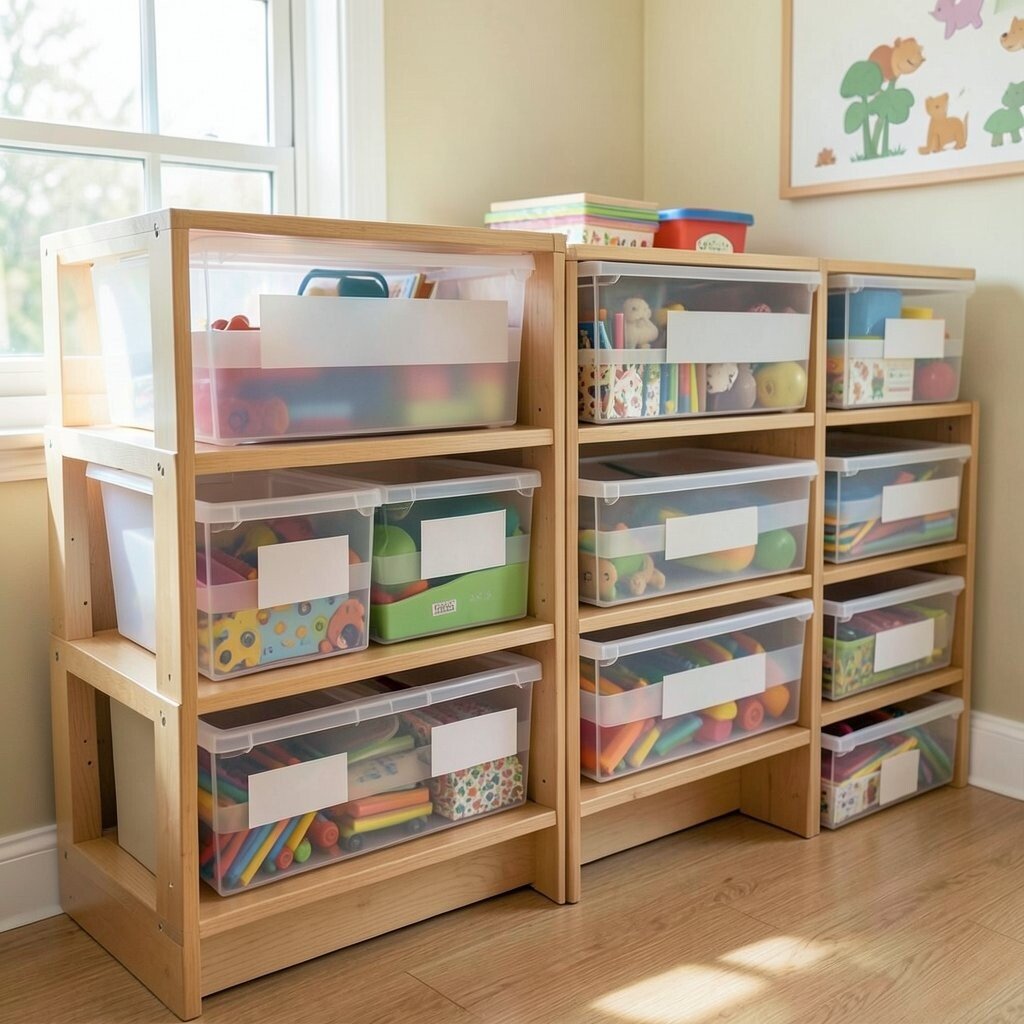
Clear bins can be surprisingly calming when they’re organized and labeled well. Picture transparent storage boxes stacked inside a cubby, with frosted label strips across the front so names and categories are easy to spot without glare.
Kids can see what’s inside, which reduces asking and helps them choose the right item the first time. Teachers benefit too, because it’s faster to locate supplies during group activities.
Use label strips with thick cardstock or plastic sleeves, then write using bold marker so the labels stay readable from a distance. Personalize by adding a tiny themed border around each label, like a “rainy day” border for a weather month or a “garden” border for spring.
10. Hanging Shoe Organizer Cubby Labels for Small Art Supplies
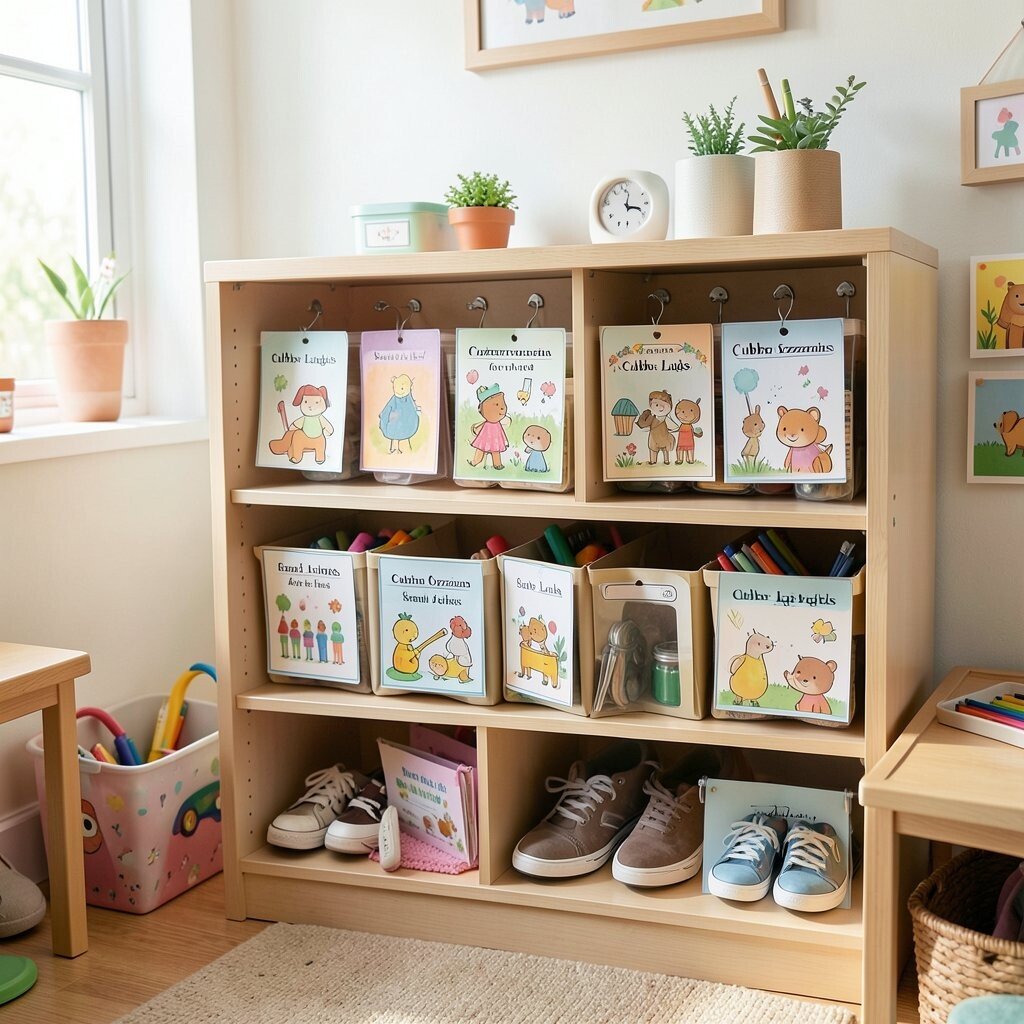
A hanging shoe organizer is a practical and surprisingly attractive storage tool. Imagine it mounted on a wall or closet door, with each pocket acting like a mini cubby and each one labeled with a name card or group label.
This works well for small items like stickers, glue sticks, erasers, and cutting tools, keeping them neat and off the floor. Because pockets are visible, children learn to return items to the right place quickly.
Choose organizers with sturdy fabric and pockets that don’t stretch, then add laminated label cards for durability. For trends, match label colors to your classroom palette and add a small decorative ribbon or pom trim at the top for a cozy look.
11. Magnetic Pegboard With Cubby Name Labels for Craft Kits
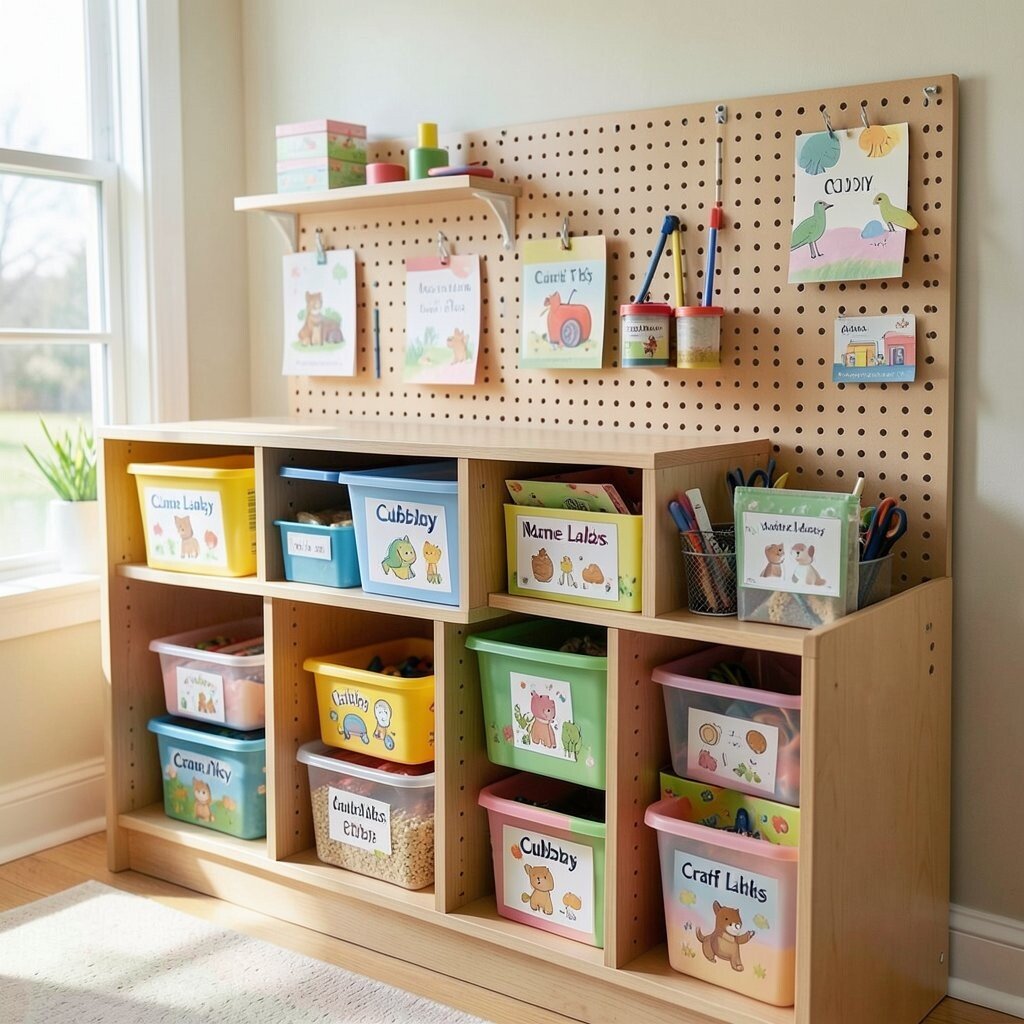
A pegboard storage wall feels tidy and modern while still being fun for kids. Picture a pegboard with small craft kits placed on hooks or baskets, each one with a cubby-style label that shows a child’s name.
The magnetic and hook setup makes it easy to adjust storage as activities change through the year. You also get a quick reset because baskets can be swapped for different lessons without rebuilding anything.
Use pegboard organizers with shallow baskets so items stay visible and safe from tipping. Personalize the labels with picture thumbnails of the kit contents, like “paper strips” or “glue and tape,” so children can sort correctly even when they can’t read yet.
12. Cubby Storage Bench With Fold-Down Art Apron Compartments
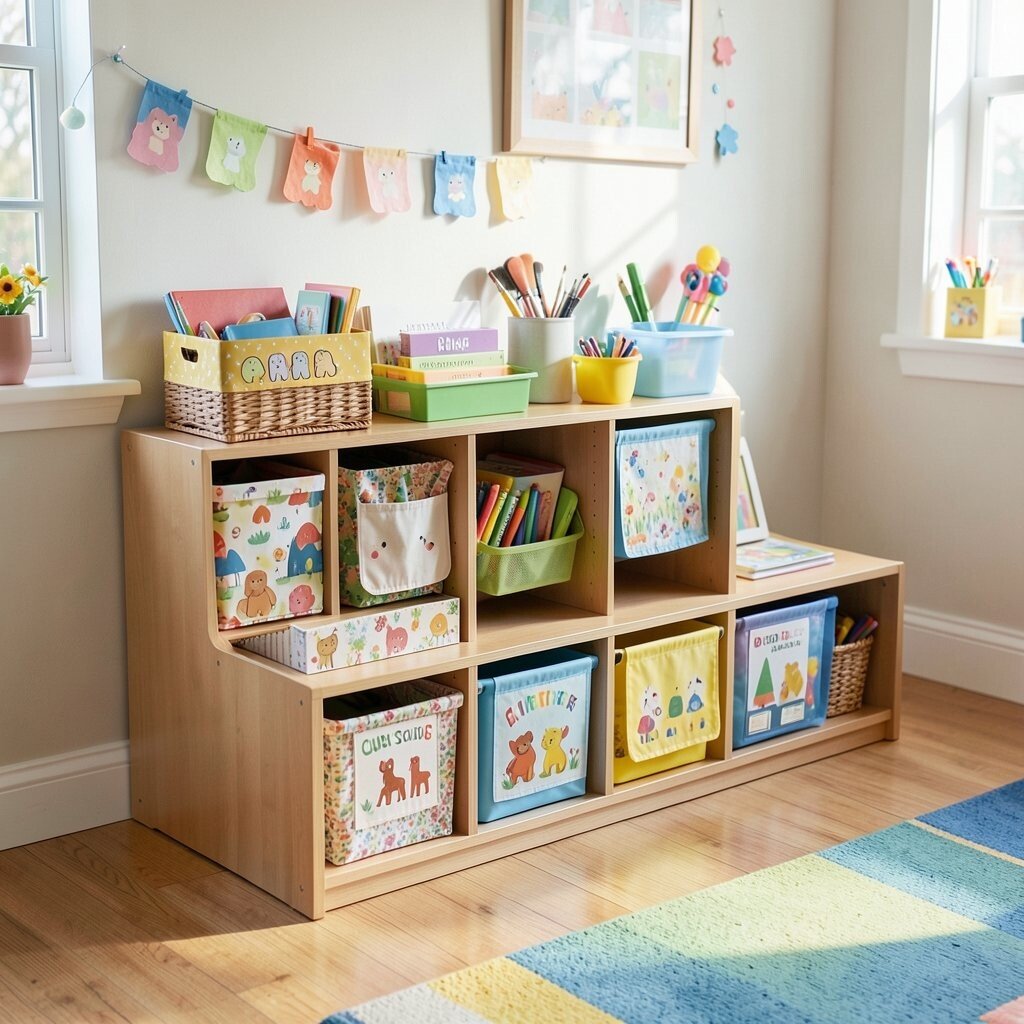
A storage bench can be both cute and helpful, especially for art time. Picture a bench seat with cubbies underneath, plus fold-down apron compartments where each child keeps their apron and smock materials in labeled sections.
This kind of organization protects clothing and keeps art supplies from spreading across the room. It also supports independence because kids can open their own compartment and get ready without rushing adults.
Label the compartments clearly on the front using thick laminated cards, and place a small icon for children who need extra visual help. For personalization, add a fabric patch in each child’s favorite color to make the bench feel like their own spot.
13. Stackable Nursery-Style Baskets With Tiered Name Labels
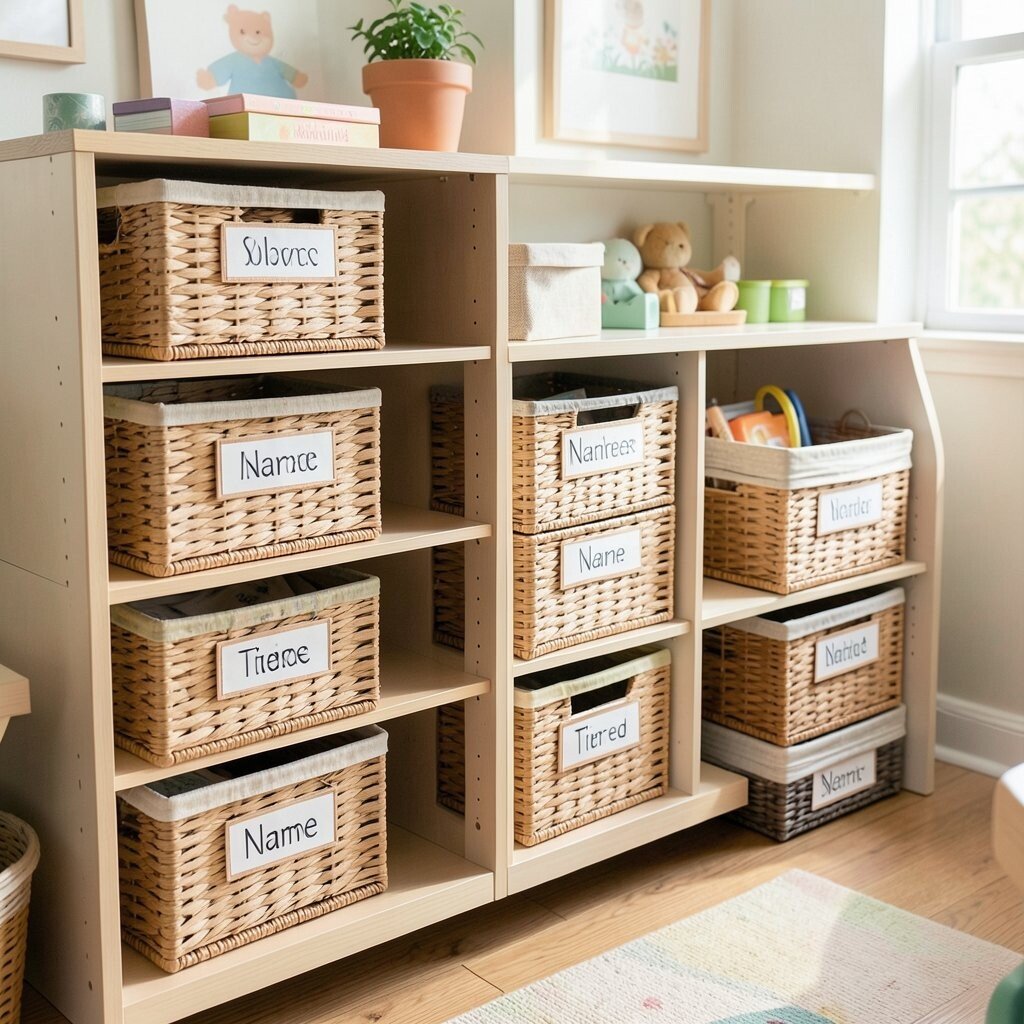
Stackable baskets create a soft, natural look that blends with many classroom themes. Imagine tiered shelves filled with baskets, each one labeled with a child’s name and a small category cue like “markers” or “blocks.”
This setup works great for managing supplies across different groups and learning stations. You’ll appreciate how quickly kids can put things away, because each basket has a clearly assigned home.
Choose baskets that stack neatly without wobbling, then use simple label tabs so the name stays visible even when baskets are full. For cost considerations, start with fewer baskets for the most-used supplies and add more as your budget allows.
14. Book Nook Cubby Storage With Reading Cubby Labels
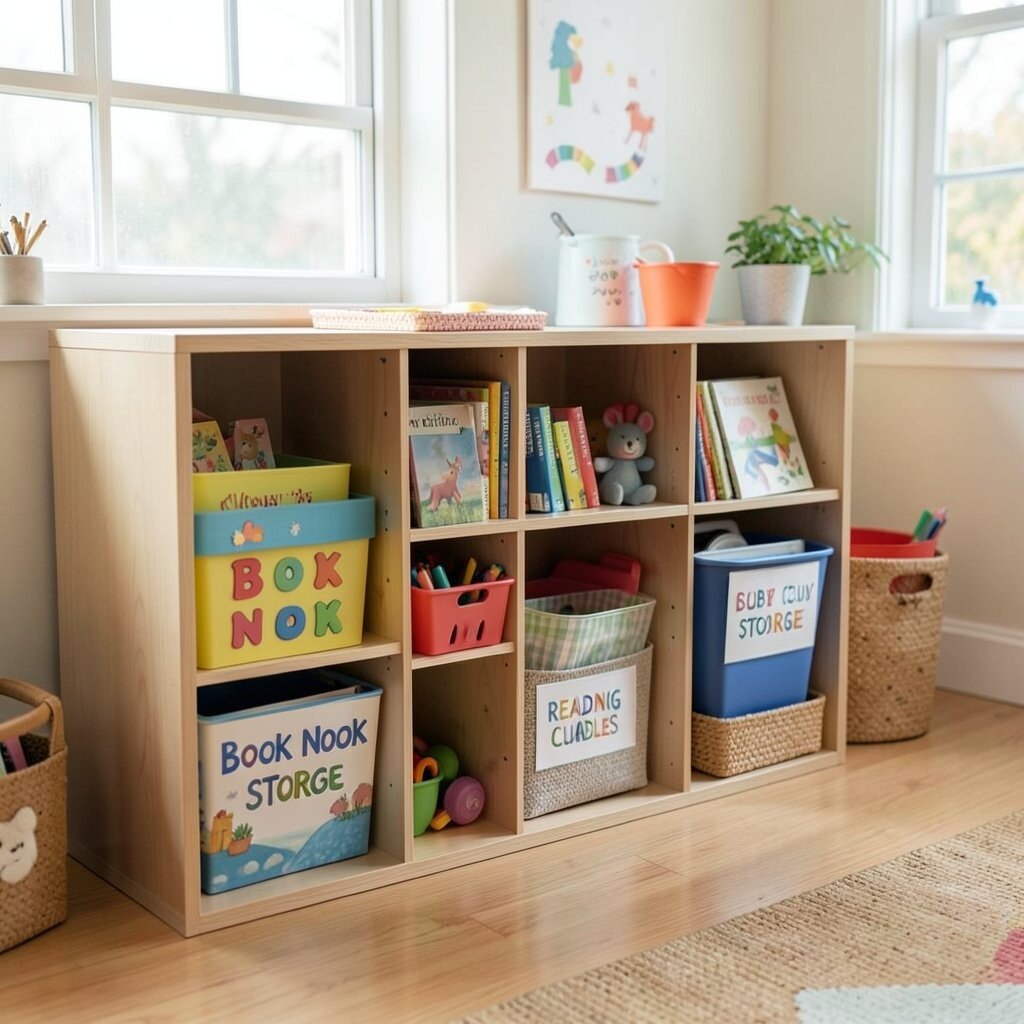
A book nook can be a cozy décor moment while serving serious organization needs. Picture a cushioned reading corner with a cubby shelf where each child’s books or reading materials go into labeled compartments.
When books are stored in a consistent, labeled place, kids treat them with more care because they know exactly where to return them. It also makes switching between read-aloud, independent reading, and quiet time much smoother.
Use labels with both name and a small symbol that matches the book type, like a star for favorite stories or a globe for nonfiction. Personalize the cubbies by adding mini “bookmark” ribbon tags or fabric bookmarks tucked beside the label for a playful touch.
15. Weather-Themed Cubby Bins With Seasonal Name Label Updates

Seasonal décor can still support real organization, especially with cubby bins. Imagine bins painted or covered in weather-inspired colors, like sunny yellows, rainy blues, or breezy greens, each holding supplies for a child’s daily routine.
By updating the cubby labels with each season, kids stay excited and routines feel fresh while still staying consistent. Teachers can also adjust categories for new projects without rethinking the whole system.
Print labels on easy-to-change cards so you can swap them in minutes when themes change. For personalization, add a seasonal picture icon next to the name, such as a snowflake, leaf, or cloud, so children enjoy checking the labels every day.